Archive

Yearly Archives: 2010


Updated 10 March 2018

The Catholic Church is the largest, most powerful, most efficient bureaucracy in the world…every child, from the day they’re baptised, is tracked wherever they go in the world; the Church catches up with them again upon confirmation, and later when they marry. The Church owns you! You didn’t really think baptism was about saving humans from ‘original sin’ did you, people? How else could the Church know when every new baby was born?

*********************************

At last the Vatican’s centuries of corruption and hypocrisy have caught up with it.   I guess that the Catholic Church has millions of  sexual abuse compensation claims outstanding and this close scrutiny of its bank could not have come at a worse time for it.

See my previous  posts:

Islam, Christianity & The Vatican Library

Vatican Bank or Office of Religious Works

Sexual Abuse;  The Pope & The Vatican


ARTICLE BELOW – Source:

VICTOR L. SIMPSON and NICOLE WINFIELD, Associated Press


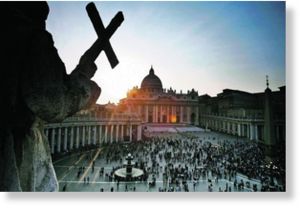
VATICAN CITY – This is no ordinary bank: The ATMs are in Latin. Priests use a private entrance. A life-size portrait of Pope Benedict XVI hangs on the wall.   Nevertheless, the Institute for Religious Works is a bank, and it’s under harsh new scrutiny in a case involving money-laundering allegations that led police to seize euro23 million ($30 million) in Vatican assets in September. Critics say the case shows that the “Vatican Bank” has never shed its penchant for secrecy and scandal.

The Vatican calls the seizure of assets a “misunderstanding” and expresses optimism it will be quickly cleared up. But court documents show that prosecutors say the Vatican Bank deliberately flouted anti-laundering laws “with the aim of hiding the ownership, destination and origin of the capital.” The documents also reveal investigators’ suspicions that clergy may have acted as fronts for corrupt businessmen and Mafia.  The documents pinpoint two transactions that have not been reported: one in 2009 involving the use of a false name, and another in 2010 in which the Vatican Bank withdrew euro650,000 ($860 million) from an Italian bank account but ignored bank requests to disclose where the money was headed.

The new allegations of financial impropriety could not come at a worse time for the Vatican, already hit by revelations that it sheltered paedophile priests. The corruption probe has given new hope to Holocaust survivors who tried unsuccessfully to sue in the United States, alleging that Nazi loot was stored in the Vatican Bank. Yet the scandal is hardly the first for the centuries-old bank. In 1986, a Vatican financial adviser died after drinking cyanide-laced coffee in prison. Another was found dangling from a rope under London’s Blackfriars Bridge in 1982, his pockets stuffed with money and stones. The incidents blackened the bank’s reputation, raised suspicions of ties with the Mafia, and cost the Vatican hundreds of millions of dollars in legal clashes with Italian authorities.

On Sept. 21, financial police seized assets from a Vatican Bank account at the Rome branch of Credito Artigiano SpA. Investigators said the Vatican had failed to furnish information on the origin or destination of the funds as required by Italian law.  The bulk of the money, euro20 million ($26 million), was destined for JP Morgan in Frankfurt, with the remainder going to Banca del Fucino. Prosecutors alleged the Vatican ignored regulations that foreign banks must communicate to Italian financial authorities where their money has come from. All banks have declined to comment.

In another case, financial police in Sicily said in late October that they uncovered money laundering involving the use of a Vatican Bank account by a priest in Rome whose uncle was convicted of Mafia association.  Authorities say some euro 250,000 euros, illegally obtained from the regional government of Sicily for a fish breeding company, was sent to the priest by his father as a “charitable donation,” then sent back to Sicily from a Vatican Bank account using a series of home banking operations to make it difficult to trace.

“I don’t trust them,” he said. “After the previous big scandals, they [The Vatican] said ‘we’ll change’ and they didn’t. It’s happened too many times.”   He said the structure and culture of the institution is such that powerful account-holders can exert pressure on management, and some managers are simply resistant to change.   The list of account-holders is secret, though bank officials say there are some 40,000-45,000 among religious congregations, clergy, Vatican officials and lay people with Vatican connections.

The bank chairman is Ettore Gotti Tedeschi, also chairman of Banco Santander’s Italian operations, who was brought in last year to bring the Vatican Bank in line with Italian and international regulations. Gotti Tedeschi has been on a very public speaking tour extolling the benefits of a morality-based financial system.  “He went to sell the new image … not knowing that inside, the same things were still happening,” Nuzzi said. “They continued to do these transfers without the names, not necessarily in bad faith, but out of habit.”  It doesn’t help that Gotti Tedeschi himself and the bank’s No. 2 official, Paolo Cipriani, are under investigation for alleged violations of money-laundering laws. They were both questioned by Rome prosecutors on Sept. 30, although no charges have been filed.  In his testimony, Gotti Tedeschi said he knew next to nothing about the bank’s day-to-day operations, noting that he had been on the job less than a year and only works at the bank two full days a week.

As the Vatican proclaims its innocence, the courts are holding firm. An Italian court has rejected a Vatican appeal to lift the order to seize assets.  The Vatican Bank was founded in 1942 by Pope Pius XII to manage assets destined for religious or charitable works. The bank, located in the tower of Niccolo V, is not open to the public, but people who use it described the layout to the AP.  Top prelates have a special entrance manned by security guards. There are about 100 staffers, 10 bank windows, a basement vault for safe deposit boxes, and ATMs that open in Latin but can be accessed in modern languages. In another concession to modern times, the bank recently began issuing credit cards.   In the scandals two decades ago, Sicilian financier Michele Sindona was appointed by the pope to manage the Vatican’s foreign investments. He also brought in Roberto Calvi, a Catholic banker in northern Italy.

Sindona’s banking empire collapsed in the mid-1970s and his links to the mob were exposed, sending him to prison and his eventual death from poisoned coffee. Calvi then inherited his role.  Calvi headed the Banco Ambrosiano, which collapsed in 1982 after the disappearance of $1.3 billion in loans made to dummy companies in Latin America. The Vatican had provided letters of credit for the loans.  Calvi was found a short time later hanging from scaffolding on Blackfriars Bridge, his pockets loaded with 11 pounds of bricks and $11,700 in various currencies. After an initial ruling of suicide, murder charges were filed against five people, including a major Mafia figure, but all were acquitted after trial.   While denying wrongdoing, the Vatican Bank paid $250 million to Ambrosiano’s creditors.

Both the Calvi and Sindona cases remain unsolved.

See  JP Morgan Closes Its Branch At The Vatican

___

Biblical Scene: 'Noah's Sacrifice' Giovanni Benedetto Castiglione known as Grechetto (early 17th Century)

The interesting and thought-provoking  article below reinforces musings on my previous post Are We But a Flock of Sheep?

I am sure that the beautiful religious images painted by Italian artists helped persuade many a young mind toward belief in Catholic dogma and biblical stories.  I know I was captivated by their depictions of saints and martyrdom.

Article below. Source: Council for Secular Humanism:

Author: Peter Singer

Freedom of speech is important, and it must include the freedom to say what everyone else believes to be false, and even what many people take to be offensive. Religion remains a major obstacle to basic reforms that reduce unnecessary suffering. Think of issues like contraception, abortion, the status of women in society, the use of embryos for medical research, physician-assisted suicide, attitudes towards homosexuality, and the treatment of animals. In each case, somewhere in the world, religious beliefs have been a barrier to changes that would make the world more sustainable, freer, and more humane.

So, we must preserve our freedom to deny the existence of God and to criticize the teachings of Jesus, Moses, Muhammad, and Buddha, as reported in texts that billions of people regard as sacred. Since it is sometimes necessary to use a little humor to prick the membrane of sanctimonious piety that frequently surrounds religious teachings, freedom of expression must include the freedom to ridicule as well.

Yet, the outcome of the publication of the Danish cartoons ridiculing Muhammad was a tragedy. More than a hundred people died in Syria, Lebanon, Afghanistan, Libya, Nigeria, and other Islamic countries during the ensuing protests and riots. In hindsight, it would have been wiser not to publish the cartoons. The benefits were not worth the costs. But that judgment is, as I say, made with the benefit of hindsight, and it is not intended as a criticism of the actual decisions taken by the editors who published them and could not reasonably be expected to foresee the consequences.

To restrict freedom of expression because we fear such consequences would not be the right response. It would only provide an incentive for those who do not want to see their views criticized to engage in violent protests in the future. Instead, we should forcefully defend the right of newspaper editors to publish such cartoons, if they choose to do so, and hope that respect for freedom of expression will eventually spread to countries where it does not yet exist.

Unfortunately, even while the protests about the cartoons were still underway, a new problem about convincing Muslims of the genuineness of our respect for freedom of expression has arisen because of Austria’s conviction and imprisonment of David Irving for denying the existence of the Holocaust. We cannot consistently hold that it should be a criminal offense to deny the existence of the Holocaust and that cartoonists have a right to mock religious figures. David Irving should be freed.

Before you accuse me of failing to understand the sensitivities of victims of the Holocaust or the nature of Austrian anti-Semitism, I should tell you that I am the son of Austrian Jews. My parents escaped Austria in time, but my grandparents did not. All four of my grandparents were deported to ghettos in Poland and Czechoslovakia. Two of them were sent to Lodz, in Poland, and then probably murdered with carbon monoxide at the extermination camp at Chelmno. Another one fell ill and died in the overcrowded and underfed ghetto at Theresienstadt. My maternal grandmother was the only survivor.

So, I have no sympathy for David Irving’s absurd denial of the Holocaust-which, in his trial, he said was a mistake. I support efforts to prevent any return to Nazism in Austria or anywhere else. But how is the cause of truth served by prohibiting Holocaust denial? If there are still people crazy enough to deny that the Holocaust occurred, will they be persuaded by imprisoning some who express that view? On the contrary, they will be more likely to think that views people are being imprisoned for expressing cannot be refuted by evidence and argument alone.

In the aftermath of World War II, when the Austrian republic was struggling to establish itself as a democracy, it was reasonable, as a temporary emergency measure, for Austrian democrats to suppress Nazi ideas and propaganda. But that danger is long past. Austria is a democracy and a member of the European Union. Despite the occasional resurgence of anti-immigrant and even racist views-an occurrence that is, lamentably, not limited to former Nazi nations-there is no longer a serious threat of any return to Nazism in Austria.

Austria should repeal its law against Holocaust denial. Other European nations with similar laws-for example, Germany, France, Italy, and Poland-should do the same, while maintaining or strengthening their efforts to inform their citizens about the reality of the Holocaust and why the racist ideology that led to it should be rejected.

Laws against incitement to racial, religious, or ethnic hatred, in circumstances where that incitement is intended to, or can reasonably be foreseen to, lead to violence or other criminal acts, are different, and are compatible with the freedom to express any views at all.

In the current climate in Western nations, the suspicion of a particular hostility towards Islam, rather than other religions, is well justified. Only when David Irving has been freed will it be possible for Europeans to turn to the Islamic protesters and say: “We apply the principle of freedom of expression evenhandedly, whether it offends Muslims, Christians, Jews, or anyone else.”


Peter Singer, professor of bioethics at Princeton University, New Jersey, is the author of, among other books: Pushing Time Away: My Grandfather,  and the Tragedy of Jewish Vienna.

Kahlil Gibran

Kahlil Gibran wrote of Lebanon  – ‘Pity the nation divided into fragments, each fragment deeming itself a nation’.

(Garden of the Prophet 1934)  (see my post: Lebanon – Pity The nation)

Nothing has changed, it seems. Lebanon is being fought over by Sunnis, Shia,  and Hezbollah.  Some Christian groups are aligned to Hezbollah.   Saudi Arabia jointly with Syria is involved in trying to find a ‘peaceful’ solution.   Iran is “vitally supporting Hezbollah”.   One has to question these three countries’ motives.  Druze is  another group putting in its two cents’ worth.   The Druze carried out massacres of Christian Maronites because of their increasing power, during the times my grandparents lived in Bcharre.  Even Turkey still appears to have a stake in Lebanon.

Jim Muir BBC News, Beirut:

Tensions are rising sharply in Lebanon, amid indications that the international Special Tribunal set up to prosecute the killers of former Prime Minister Rafik Hariri may soon issue indictments of members of the militant Shia movement Hezbollah in connection with the case.

Despite the dense dust-clouds already stirred in Lebanon by the tribunal and reactions to it, there are fears that the indictments, if and when they come, could still cause real trouble.  “Nobody knows what is going to happen, but the Shia in general, and Hezbollah in particular, can’t risk being accused, and it is bound to cause tension with the Sunnis,” said the Druze leader, Walid Jumblatt, who recently detached himself from alliance with [current Prime Minister],  Saad Hariri, improved relations with Hezbollah and is trying to stay neutral. “If Hezbollah is indicted, that will affect its image in the Muslim world as the heroic resistance against Israel,” he told the BBC. Mr Jumblatt accused the US and other Western powers of cynically using the tribunal to put pressure on Syria, Iran and others, and of trying to head off a compromise understanding among the Lebanese leaders.

“Whoever technically killed Rafik Hariri, those really responsible were [French President Jacques] Chirac and [US President George [W] Bush, who forced him to accept 1559,” he said, referring to the UN resolution passed in late 2004, just a few months before Mr Hariri’s murder. “It had three clauses in it which amounted to death sentences – the demand for Syrian troops to leave Lebanon, and for Hezbollah and the Palestinians to be disarmed,” Mr Jumblatt said.  “More important than finding out who killed Hariri, the most important thing now is to get out of this vicious circle which brings more tension every day, how to break this crisis between Sunnis and Shia.”

While the Saudis and Syrians are looked to as the most influential outside powers potentially able to foster an understanding and prevent the Lebanese factions taking to the streets again, others are also in a position to try to help. The Turkish Prime Minister, Recep Tayyip Erdogan, who had a hand in the Saudi-Syrian rapprochement, is currently on a two-day visit to Lebanon. And on Saturday, Prime Minister Hariri visits Tehran, his first such trip to the country that helped establish and still vitally supports Hezbollah.

Tensions have been steadily mounting over recent months as the expected indictments grew imminent, but the situation has been contained by an entente between Saudi Arabia and Syria, who exercise great influence respectively among Lebanon’s Sunnis and Shia.  The Iranian ambassador in Beirut has also been co-ordinating with his Saudi and Syrian counterparts to help keep the peace.

[Trying to keep the peace?  I would love to be a fly on the wall at these meetings].

Lebanese politicians had been hoping that Saudi-Syrian mediation at top level would very soon produce a formula that could be agreed on by the cabinet in Beirut to deal with the repercussions of the expected indictments.  But now there are fears that the Saudi role may fall victim to developments inside the kingdom. The monarch, King Abdullah bin Abdul Aziz, was flown to the US on Tuesday for medical treatment. He was personally overseeing his country’s rapprochement with Damascus and their joint sponsorship of peace efforts in Lebanon. The king has temporarily assigned his powers to his half-brother, Crown Prince Sultan, who is himself ailing.

Lebanese politicians believe that Prince Sultan and other prominent members of his Sudeiri wing of the ruling family are much less keen on cultivating good relations with Syria.  CBC said its months-long investigation was based on interviews with sources inside the UN inquiry and on documents leaked from the tribunal.

It said that evidence gathered by the Lebanese police and the UN “points overwhelmingly to the fact that the assassins were from Hezbollah”. To back that allegation, it contained detailed diagrams showing how investigators traced interlinking networks of mobile phones which they believed led from the vicinity of the massive explosion which killed Rafik Hariri and 22 others, ultimately to Hezbollah’s communications centre under a hospital in Beirut’s southern suburbs.

The CBC film had a bombshell effect in Lebanon, where it dominated news bulletins and front pages. It also prompted comments from key players, including Prime Minister Hariri and the international tribunal prosecutor.Israeli Prime Minister Benjamin Netanyahu even held a meeting of his inner cabinet to discuss the possibility that Hezbollah might stage a coup in Lebanon should some of its adherents be indicted.

On Tuesday, shortly after the CBC documentary was aired, the Lebanese communications minister Sherbel Nahhas (a Christian allied to Hezbollah) gave a three-hour news conference at which he and other officials and experts showed detailed technical evidence which they said indicated Israel had complete penetration of Lebanese communications, to the extent of being able to plant parasite lines within existing lines.

><

Lebanon's Minister of Telecommunications Sherbel Nahhas (l)
The country’s telecommunications minister said Israel had penetrated Lebanese telephone lines.
><

Hassan Fadlallah, a Hezbollah MP who heads parliament’s communications committee, said three Hezbollah operatives had been detained as suspected Israeli spies until it was realised their mobile phones had been infiltrated. All of this may make it easier for Hezbollah to shrug off possible indictments as Israeli-manipulated falsehoods.

The allegation that Col Wissam al-Hassan fell under suspicion has further muddied the waters. As Rafik Hariri’s chief of protocol, Col Hassan would normally have been in the convoy that was hit by the blast that killed Mr Hariri and his entourage. But he had taken the day off to sit a university exam – an alibi that CBC’s sources said was doubtful, and did not stand up under scrutiny.  But Saad Hariri, questioned by journalists about the allegations, said he had always had full confidence in Col Hassan, and still did.

One of the prime minister’s senior aides went as far as to suggest that both Hezbollah and Col Hassan should sue CBC for libel. Another prominent Hariri supporter, MP Iqab Saqr, said the CBC report should be ignored because it contained “poisoned information, aimed at disturbing the desired settlement”. He said everybody was concerned “not to target Hezbollah politically, while Hezbollah should stop the political assassination of Lebanese”.

With both sides apparently impugning the integrity of the court – or at least the CBC leaks – it almost looked as though there were some common ground between them.

The tribunal itself – or its prosecutor, Canadian judge Daniel Bellemare – took the unusual step of responding to the CBC documentary, saying he was “extremely disappointed” by it and was assessing its impact on the investigation. This was widely seen in Beirut as implicit confirmation that the CBC had indeed sourced its report on genuine tribunal documents and information.

The decision on whether and when to issue draft indictments lies in the hands of prosecutor Bellemare, and it is not clear whether the first step – referring them to the pre-trial judge for confirmation – would be made public.

What a mess!  All I can say is POOR LEBANON, what will become of you. Kahlil Gibran must be turning in his grave.


Well, the Pope must have read my post on Tuesday 23 November 2010………..I pondered why (actually I knew)  he only mentioned male prostitutes when he wrote in his book that they could wear condoms (see ...Catholic Dichotomy of Females

><

By Michael Day in Milan:

Wednesday, 24 November 2010

The Vatican has appeared to expand the Catholic Church’s tolerance of condoms as a means of fighting HIV, backing their use by female prostitutes, days after the Pope said their use by male sex workers was better than spreading the virus.

Pope Benedict XVI was quoted at the weekend saying condom use by male prostitutes could be a good thing, indicating the user’s intention to protect others from a deadly infection, apparently condoning the use of contraceptives for the first time. The Vatican yesterday confirmed that the same message applied to women sex workers.

><

Previous statements about condoms  issued by The Vatican:

March 28, 2009|By Faith Karimi CNN
  • Thousands of Facebook supporters plan to send condoms to the Vatican.
    Thousands of Facebook supporters plan to send condoms to the Vatican.

Critics took to the social networking site Facebook to voice their fury over Pope Benedict’s remark that condoms do not prevent HIV.

Thousands have pledged to send the pontiff millions of condoms to protest the controversial comment he made to journalists as he flew to Cameroon last week.

“You can’t resolve it with the distribution of condoms,” the pope told reporters. “On the contrary, it increases the problem.”

Pope Benedict XVI has made it clear he intends to uphold the traditional Catholic teaching on artificial contraception. The Vatican has long opposed the use of condoms and other forms of birth control and encourages sexual abstinence to fight the spread of the disease.

Pope Benedict & his cardinals

By Nick Squires in Rome and John Bingham 5:46PM GMT 21 Nov 2010 –
(My Comments)

In a book to be published this week, Benedict XVI said there could be “justified individual cases” in which condoms could be used, softening Rome’s blanket ban on contraception, one of the most controversial issues facing the Church.

“In certain cases, where the intention is to reduce the risk of infection, it can nevertheless be a first step on the way to another, more humane sexuality,” the head of the world’s 1.1 billion Catholics said, giving as an example a male prostitute having sex with a client.

I wonder about a female prostitute who has aids or any other STD!

But he gave no guidance on the long-standing moral and religious question of whether it would be permissible for a married couple, in which one partner is HIV positive, to use condoms in order to prevent the other partner from becoming infected.  Just more confusion.

While the Pope restates Catholicism’s objections to contraception and stresses its emphasis on abstinence as the best policy to fight Aids, he says that using a condom could be a responsible act if it is intended to prevent the spread of the virus.   What about the spread of unwanted children with no chance for a decent life?

The pontiff’s comments are made in a book to be published by the Vatican this week, which has been the subject of increasing anticipation.   The publicists were not exaggerating when they sent out an email last week saying the Pope delivers “answers that will surprise and impress both critics and his fans”.

“Benedict XVI has shown himself time and again to be the ‘Pope of surprises’,” it said. After decades of staunch opposition from the Catholic Church to the use of condoms, his comments are likely to cause astonishment.

Not only does it represent a hugely significant shift in the Church’s teaching, but the softening in its position is coming from a Pope who took office with a reputation for being hardline and fundamentalist.  Perceived as the Vatican’s enforcer after heading its Congregation for the Doctrine of the Faith – formerly known as the Holy Office of the Inquisition, he is challenging this image by showing himself willing to embrace change.

The Pope’s reluctant support for condom use in certain circumstances is likely to dismay the most conservative Catholics who believe it is impossible to distinguish the use of condoms as contraceptives and their use as preventers of the transmission of Aids.

Yet it reflects a growing consensus amongst theologians that the stance now adopted by the Pope can be morally justified.

Cardinals, such as Godfried Danneels and Lozano Barragan, have argued that it must be better for an infected man to use a condom if the intention is not to avoid life but to prevent death.      But what if a man is using a condom for both reasons?  Will he go to hell?

Earlier this year, the Most Rev Vincent Nichols, the Archbishop of Westminster, indicated he was sympathetic to a more tolerant approach to condom use, saying he could see “why, in the short term, [the] means that give women protection are attractive”.

Cardinal Cormac Murphy-O’Connor, his predecessor, was told by Pope Benedict XVI – who was then Cardinal Ratzinger – that the Church needed to reach an agreed position on the morality of the use of condoms.  How pathetic!  when we consider all the really significant  problems the world has to deal with at  present; rampant paedophilia,  terrorism, brutal wars, aids, dying children etc etc.

Although they acknowledged that there was a need to clarify the Church’s teaching on the use of condoms, cardinals and senior figures in Rome were ultimately too concerned that it was impossible to do so without being misinterpreted.

These concerns appeared to be well founded after Pope Benedict was fiercely criticised for his comments in Africa, which were effectively no more than repeating a well-established Church view that condoms are not the solution to Aids.   Forget about the solution to Aids – what about the reality of  children infected with Aids suffering and dying in their millions?

Rather than promulgate an edict he has chosen to do it in an interview with Peter Seewald, a German journalist whom he trusts and knows well from his time as Cardinal Ratzinger.  Speaking at the Frankfurt Book Fair earlier this year, Mr Seewald said: “The events in the news around the abuse scandals and the wider situation of the Church naturally give this conversation an incredible explosiveness and I can only reveal to you now that you are expecting a very exciting, very extensive book.”

While the Pope tackles many controversial subjects in the book, from the sex abuse crisis to the Church’s teaching on clerical celibacy, his comments on condoms are likely to cause the greatest shock.  They may not go far enough to appease Catholics such as Cherie Blair, who argue for a total acceptance of contraception.

His stance will help to distance the Church from some of its more embarrassing statements, such as the claim by a cardinal that the HIV  virus can pass through tiny holes in the rubber of condoms.   What on earth can these cloistered, brain washed men,  possibly know about pregnancy, giving birth and the hardships of  life in the real world!   And then there is the hypocrisy;  The Catholic Church has financial interests in the manufacturing of contraceptives through the all-powerful Vatican Empire.

Crucially, it may go further in ensuring the Church’s relevance in public debate, presenting it as more humane and more flexible – even at the risk of people thinking the Church has changed its mind on the issue. This desire to secure the Church’s place in the public square is at the heart of Pope Benedict’s thinking and no doubt the guiding reason behind such a brave move.

What does he mean by these statements? …….”I was, naturally, not always simply against things, exclusively and as a matter of principle” ……………….. “Ultimately someone who is in opposition could probably not endure life at all”, quotes the Pope in the book.

><

See More…

Females Sex Workers Recognised by the Pope

There is a debate currently going on in Australia about giving school students the choice between taking either classes in Ethics,  or in Religious Studies.  Apparently the respective Christian Churches are not at all happy about this development.  Well, they wouldn’t be would they? They believe they are losing their grip over young minds.

Ethics clarified

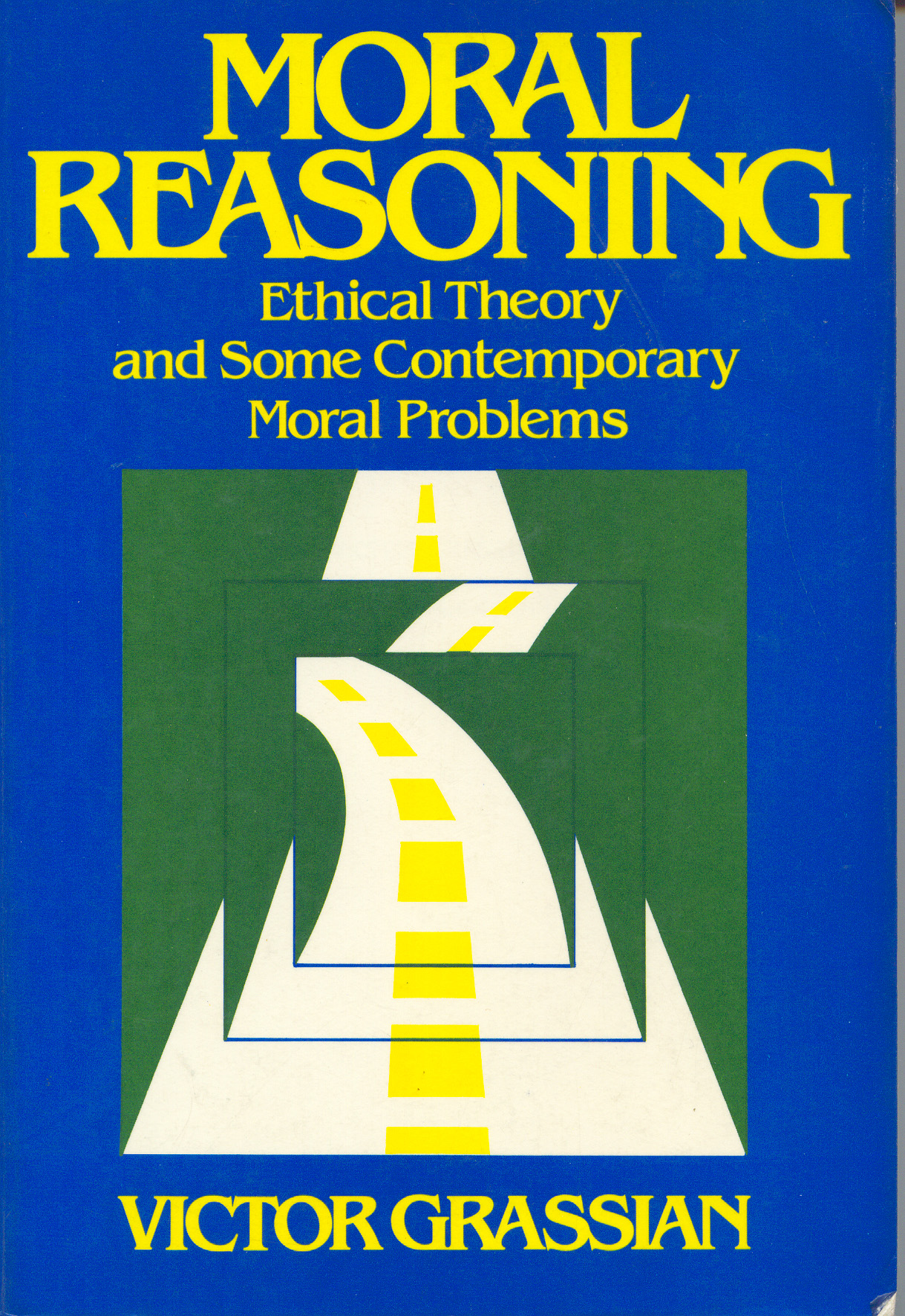
In his book  ‘Moral Reasoning; Ethical Theory And Some Contemporary Moral Problems’ Victor Grassian defines ethics as:

‘Ethics may be defined as the philosophical study of morality-that is, of right conduct, moral obligation, moral character, moral responsibility, moral justice, and the nature of the good life. The philosophical study of morality should be distinguished from the descriptive or scientific study of the same subject matter’.

Mr Grassian goes on to say… ‘Although a study of  ethics will not in itself make one into a good person, it can certainly provide us with more than the knowledge of abstract philosophical theories and terminologies that seem incapable  of aiding us in the solution of our own practical moral problems.  A study of ethics can serve to help us better understand and classify our own moral principles; most of all, it can help refine, develop, and sometimes change these principles’.

In other words it can help us to question and to think for ourselves.  I particularly identify with the following paragraph as I am sure a lot of my readers will do especially those who were indoctrinated with  Catholic dogma  from infancy:

‘The study of ethics can lead one from the blind and irrational acceptance of moral dogmas gleaned from parental and cultural influences, which were never subjected to logical scrutiny, into a development of a critical reflective morality of one’s own’.

Childhood ethics


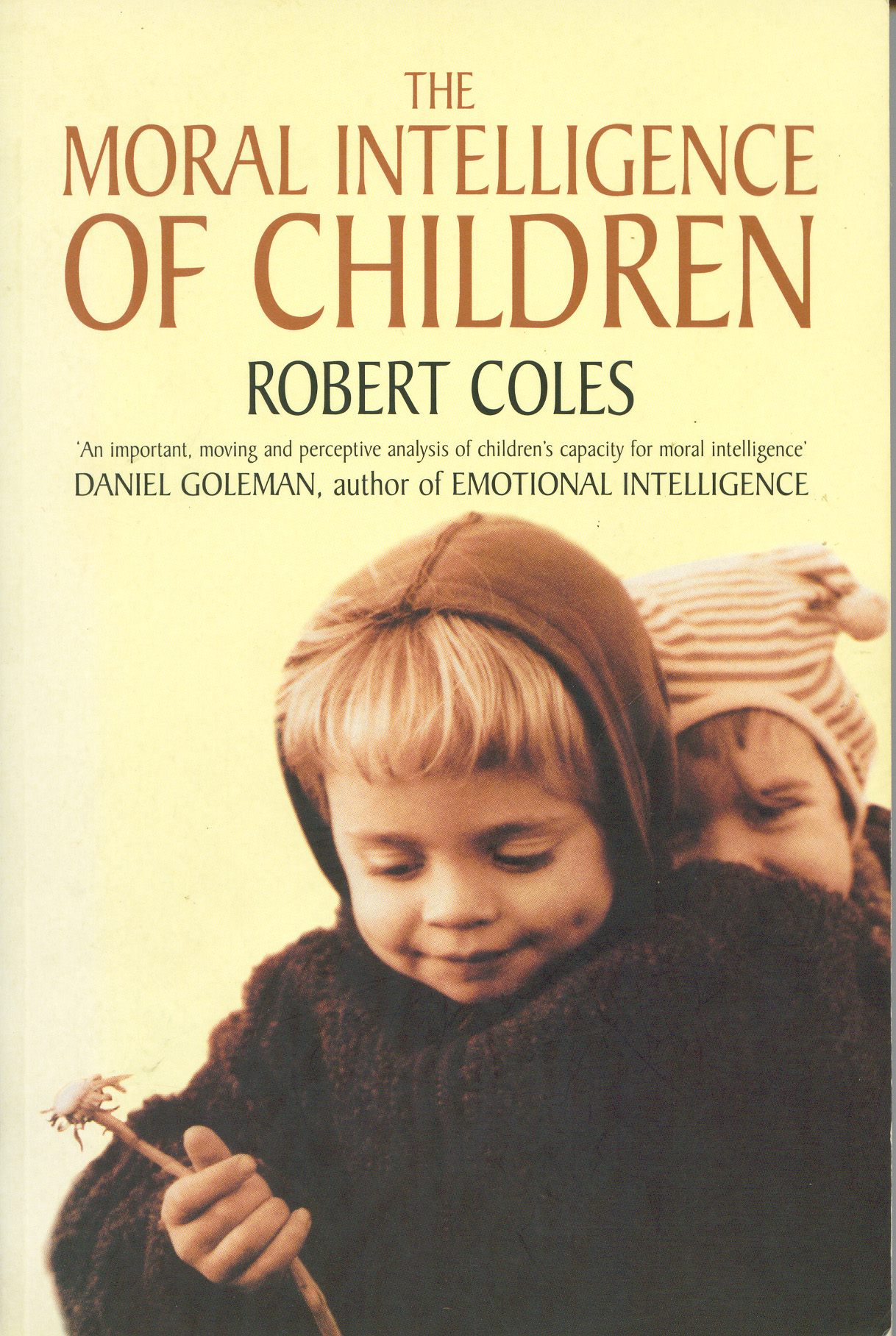
Robert Coles, who was a professor of psychiatry and medical humanities at Harvard Medical School,  also draws on his experience as a teacher and child psychiatrist in his book:

‘The Moral Intelligence of Children’. He writes about the confusion children feel when they are  caught between two parents who have different religious beliefs; who constantly clash over opinions  and values but who never-the-less expect their children to follow in their religious path unquestioningly.  Simply stated,  Mr Coles found in his research that children are morally intelligent and it is therefore beneficial to them to be raised in a home where they are encouraged to question and to think for themselves.  Parents who only see  issues in black and white can have a detrimental effect on their children’s outlook on life.  The problem begins when the child is expected to ‘learn by example’ from the adults in their family but has intelligently worked out for themselves that something is not right.  The atmosphere in the household is one in which the child is not permitted to question any ‘laws’ laid down by their parents and this includes religious beliefs.  At the same time the child is being bombarded by media images and peer group pressure.   Perhaps the high rates of depression in our young people is understandable when there is so much conflict in their world view.

Erik H Erikson, a child psychiatrist who knew only too well the psychological trauma caused by  strict and rigid upbringing in a religious household comments in ‘Moral Intelligence’:

It is a long haul, bringing up our children to be good; you have to keep doing that, bring them up, and that means bringing things up with them: asking; telling; sounding them out; sounding off yourself; teaching them how to go beyond why?……’

Lets hope then, that all schools will eventually allow students to choose Ethics over Religion in schools.  We might then see some changes taking place in the behaviour of young people and their readiness to take responsibility for their own actions.    <><><>

-Anne Frandi-Coory 20 October 2010

><><><

Also here on Anne Frandi-Coory’s Facebook page  

https://www.facebook.com/myhomelibrary/

See previous posts:  God in the Classroom?

&          Access Ministries Want Access to Childrens’ Minds

Updated 15 April 2015

Why is Mental Illness always at the bottom of the Public Health funding list when we all know that mental and physical health are intertwined!?

Mental health expert Patrick McGorry has just been voted Australian of the Year.  It is so good to see such a prevalent disorder as mental illness in the news and highlighted.  Mr McGorry  is also concerned with the plight of refugees, including women and children,  held for years in detention centres or ‘Asylums’.  It has been well documented how detrimental an effect long periods of  institutionalisation has on a person’s  mental health.

Xenophobia is alive and well but not just in Australia.  Western countries as well as developing countries are suspicious of, and fear those from different ethnic groups.  Throw in religion and it becomes a volatile mix which is evident in  the bloodshed in many countries around the world at the present time.

‘Unfortunate Folk; Essays on Mental Health Treatment 1863-1992’ is an  Otago University publication  researched and edited by postgraduate history students at University of Otago between 1972 and 2000.  Attitudes to mental illness in Australasia haven’t really changed that much I don’t think; political correctness has intervened and made the way we speak about mentally ill patients a little less hostile, that’s all.

My mother had a severe bi-polar disorder and spent many years in and out of a mental hospital where she often received Electro-Convulsive Therapy (ECT) in the 1950s and 1960s which eventually left her in a state of permanent mental lethargy.  Apparently it was important to keep her emotions tightly controlled in order to level out her mood swings, but in the process killed off all her creativity.  The right drugs were not available then.  My mother’s traumatic childhood and adolescence probably brought on the disorder and I am sure her stint in a Catholic convent trying unsuccessfully to outrun life in the natural world and become a nun,  added to the intensity of her affliction.  As I write in my book, Whatever Happened to Ishtar?’ mental illness and its attendant prejudices has had a lasting effect on subsequent generations of her family. The fact that she was Italian certainly played its part in other people’s perception of her displays of emotion.

ECT was introduced into mental hospitals in 1943 in Australasia and considerable experimentation with this method of treatment, and new drugs, was carried out on patients.  ECT  was first used without anaesthetic on patients who were suffering from “over excitability” and depression, both of which my mother “suffered” from.

A personal account from a medical student shown around Seacliff Mental Asylum in NZ in 1943:

“A consultant…brought them onto the stage and asked them about things and showed off how tragic they were, but I mean, it was a show and I think they were used to showing off as they were expected to. That was part of it, but the really awful thing was when we went around the wards.  One particular one that I remember…there was this great big ward and there were a whole lot of what looked like old and bedraggled women with white hair all over everywhere and they were all dressed the same, in white hospital things like you put on when you go for a  x-ray and they all came crowding round the trolley, clattering their spoons and tin plates and it was just like feeding the animals, it was absolutely horrendous.  That would have been around 1943 …it was just at the very earliest stages of shock treatment …it was certainly the first time of using unmodified ECT, and no anaesthetic, it was horrific”.

These places were worse than the prisons in which  criminals were incarcerated.  The sad thing is that many people still believe that the mentally ill should be locked away somewhere out of sight and out of mind.

Unfortunate  Folk;                          The Mentally Ill

The above book quotes many interesting statistics:  In 1874,  of in-patients in mental institutions in Otago NZ there were twice as many men as women (mostly gold miners) and the majority of the women were married.  “Most religious denominations were represented but the three major groups were Presbyterian, Anglican and Catholic. The numbers of Presbyterian and Anglican patients roughly mirrored their ratios to the general Otago population”…  “However, there were nearly twice as many Catholic patients as there should have been”… “The Irish, who made up the majority of Catholics,were over-represented to the same degree”.

The married women often had their children incarcerated with them in the mental institution.

In 1903, New Zealand’s then Prime Minister, Richard Seddon reported his genuine concern:

“To see the children in the asylum was heartbreaking.  Children of tender years were to be found with the adults, and, in some cases sitting on the floor. In any of the asylums they would find little boys and girls hopelessly and helplessly insane, and to keep them here with such surroundings as they had was not, to his mind, the right thing to do”.

The next significant group incarcerated in mental institutions were Chinese gold miners and they aroused strongly racist sentiment among some of the authorities.   The following is an inspector’s report which defies belief that it could be written by a government Health Official inspecting the institutions:

“There are seven Chinese lunatic patients in the Asylum [it is interesting that the term asylum is still being used in relation to refugees today] and considering the racial antipathy of the European to the leprous Mongolian, I am of the opinion that it is injurious to the European Lunatic being brought into daily contact with the Chinese, and that an additional ward and airing court should be provided for the latter without delay”


The last paragraph in the book is a summary regarding the boundaries between “madness and reason”:

“Patients, families, the public, politicians, and health professionals all upheld the boundaries between madness and reason. Progress in the decade under question was slow and fragmentary, although the seeds for more radical change were soon being laid. From the later 1950s, de-institutionalisation became the focus of mental health policy, and has remained in controversial favour ever since. Large and isolated mental hospitals became a thing of the past. But although this achieved some alteration in the social status of the mentally ill it has not completely destroyed the boundary between madness and reason. The legacy of madness as a separate world remains. In essence, the psychiatrist is still an ‘alienist’ treating those designated as ‘foreigners’ by their families, the public, and the medical profession”. Mr McGorry  might add here, “and the Australian Government’s  health system”.

-Anne Frandi-Coory  15 April 2015 

Charming book by author of ‘Romulus, My Father’, Raimond Gaita

Raimond Gaita tells illuminating stories about his dog and other animals he has known and loved, and the respect they earned from him.  He asks if we give animals and birds the credit they deserve and whether they are more like us than we think.  Can they think and love, and what of philosophy? He quotes Kato Indian creation story:  ‘ God went forth to create the world, and he took his dog with him’.

Catholic Nuns and priests taught us that we humans were made ‘special’  in the eyes of God and that animals were put on this earth to serve us.  Many of us  grew up with this Christian belief and the world has suffered for it; multiple extinctions, loss of habitats.  As someone said to me “animals and insects can live without us but we cannot live without them”.  Now, we understand ecology, the importance of balance in nature and bio-diversity.  I hope it is not too late.  The only saint I ever heard about who respected and loved animals was the hermit St Francis of Assisi, but I always felt as a child, that he was considered  a little bit strange compared to other saints.  Perhaps he knew more than those humans who lived  around him.

I have seen many instances overseas, where beasts of burden such as donkeys are treated with cruelty and virtually starved even though they are expected to work long hours.   People still believe that animals, if not here to serve us,  then they are here for us to eat, nothing more.  The conditions in which animals in some countries are slaughtered,  for human consumption, are heartbreaking. I cannot imagine how many millions of animals have been massacred in the name of sport; from the Romans and their blood sports in the coliseum to the safaris in Africa where men could prove their maleness and bravery by shooting elephants and lions, to name a few.

In  my book, Whatever Happened to Ishtar? I write about the time my father drowned two white mice in front of me.  I had brought them home from school, excited about my new pets. Without saying a word, he grabbed them from me, one in each hand and held them under a tubful of water, with me clinging to his arm and screaming as  I watched the little pink feet thrashing about.   My Lebanese extended family thought nothing of poisoning animals and I have my suspicions that my uncle killed my pet pigeon.   It wasn’t until I got married and had four children of my own, and we all lived with a menagerie of animals for many years,  with their birthing, sicknesses, and dying, that I learned to love and respect them.  We learned so much about life from our pets. Sometimes, I believe they are much smarter than humans and that they will probably be living on this earth long after humanity has extinguished itself.  I guess it is all about education and perspective;  thank goodness we have  TV,  the internet and science.  There is no excuse now.

Raimond Gaita has a forward in his book written by Cora Diamond:

“The difference between human beings and animals is not to be discovered by studies of Washoe or the activities of dolphins. It is not the sort of study or theology or evolutionary theory that is going to tell us the difference between us and animals; the difference is as I have suggested, a central concept for human life and is  more an  object of contemplation than observation (though that might be misunderstood; I am not suggesting it is a matter of intuition). One source of confusion here is that we fail to distinguish between ‘the difference between animals and people’ and ‘the differences between animals and people’;  the same sort of confusion occurs in discussions of the relationship of men and women. In both cases people appeal to scientific evidence to show that ‘the difference’ is not as deep as we think; but all that such evidence can show, or show directly, is that the differences are less sharp than we think. In the case of the difference between animals and people, it is clear that we form the idea of this difference, create the concept of the difference, knowing perfectly well the overwhelmingly obvious similarities”.

Updated 29 October 2018  

Two Princes: Jared Kushner, Donald Trump’s son-in-law and Crown Prince Mohammed bin Salman bin Abdulaziz Al Saud…

by Greg Olear, who asks: How complicit is the U.S. government in the murder of a Saudi journalist?    Read more here: MEDIUM POLITICS

safe_image

*********

THE HOUSE OF SAUD is a brilliant, well researched, and valuable historical record about the founding of the Kingdom of Saud, [Saudi Arabia], with detailed accounts of its early dealings with the USA,  Britain, what now is Turkey, and other Arab nations, and how it grew from a small desert tribe, into a powerful and obscenely wealthy Islamic state.  The authors also give readers insight into the Shiite disturbances that began in the 1970s  culminating in the seizure of the Grand Mosque, and the bloodshed that followed. “The siege of the Grand Mosque raised more fundamental questions relating to the legitimacy and credibility of the dynasty”.

Published 1981.

*****

house of saud

*****

The authors tell us that Saudi Arabia, as we know it today,  was founded around 1902 by a young, blood thirsty, Emir Abdul Aziz bin Abdul Rahman bin Feisal al Saud, better known by his given name, Abdul Aziz, Servant of the Beloved. Beloved being only one of the ninety-nine synonyms for the sacred name of Allah. Originally born of isolated Bedouin tribes of the desert, the House of Saud attaches great importance to the purity of the bloodline. Marriages between first cousins, or equivalent relations, are preferred, or else carefully selected partners of equal status and purity  in another tribe…

“As Islam permits each man to keep four wives at any one time, and as divorce is made easy for males under Koranic law, so that the magic number of four can be multiplied many times over in one man’s life, this custom begot not only large numbers of children by a single father, but also an immense ramification of family and tribal inter-relationships through several generations.  Nephews married aunts, uncles were wedded to nieces and their children married each other to form a close knit and, to the outsider, impenetrable mesh.” At the time of writing, the authors estimate that with about 500 princes descending from Abdul Aziz, together with wives, daughters and collateral branches of the family, “the House of Saud cannot number less than 20,000 people.” The number of Abdul Aziz’ wives has never been officially computed but official records show that he fathered 45 sons from 22 different women. In addition there were at least as many daughters from an even wider range of women, including no doubt some unacknowledged mothers among the various concubines and slave girls, not to forget ‘wives of the night’ whom it was customary [and still is] for Arabian men to enjoy whenever the opportunity arose. All they had to do was to ‘marry’ the woman or girl for as many hours as they desired, then divorce her by saying ‘I divorce you’.  Today, many women and girls are kidnapped from Yemen, and other surrounding Arab nations, for the purposes of this euphemism for a ‘one night stand’. [On the other hand, they can fly to western countries and pay huge money for the same ‘privilege’.]

In Islamic countries, the Koran and its inherent sharia law, or path to follow, supplies a total and explicit moral code but in Saudi Arabia it is even more than that. It remains there, the only recognised and enforceable code of law, so that the country is held in a ‘1300-year-old corset of town and desert morality that is deemed to be universally and eternally applicable.’ This desert morality is upheld and brutally enforced by Wahhabism:

“In the middle of the eighteenth century, in what now must be regarded as the most fateful meeting of minds in Arabia since  the time of Muhammad, Sheikh Muhammad bin Saud, ruler of Diriya, and great, great grandson of Mani, the first identifiable Saudi ancestor, gave shelter to an itinerant preacher of Nejd, named Sheikh Muhammad bin Abdul Wahhab. The preacher was a Muslim ‘revivalist’ and the world of Islam by then was much in need of rejuvenation and reform…Abdul Wahhab was a true zealot, come to cleanse the ‘stinking stables of Arabia’ once more with the Word of God. But the Word of God proved insufficient for the task. Like the Prophet, Abdul Wahhab needed a sword as well – and to his eternal joy, he found one in Muhammad bin Saud and his family…Although Muhammad bin Saud was only one of the numerous quarrelling Nejdi sheikhs at the time, little more important than the rest, he evidently grasped that a man who had a message would give him an edge over all his rivals, enabling him to unite Bedouin and townsfolk in a new jihad to extend his personal dominion…

…Accordingly, in 1744 Muhammad bin Saud married off his son, Abdul Aziz, to a daughter of the preacher and thus sealed a compact between the two families that has been continued unbroken by their descendants ever since…Contemporary Saudi Arabia, for all its money and the new corruption and idolatry that wealth has encouraged, remains in theory and to a surprising extent in practice, a Wahhabist state, officially dedicated to the preservation of pure Islam as propounded by Muhammad bin Abdul Wahhab.”

“A penetrating analysis and major contribution the the literature of the subject” – The Sunday Times.

“An impressive work by two distinguished British journalists” – New Statesman.

*****************************************************************************

2015

“The House of Saud…wealth and power to make the world tremble”… Saudi Arabia is USA’s partner in the Middle East… 

Saudi Arabia’s King Abdullah died on 23 January 2015  and Western governments lowered their countries’ flag to half mast…WHY? For a King who allowed women to be whipped, stoned, beheaded, or imprisoned for years for such things as being raped, driving a car, or speaking out about the Saudi Arabia’s disgusting treatment of women?  

Oh that’s right, Western Governments loved this King for his wealth and his oil! Who cares how he treats women, even his own daughters and granddaughters, as long as the oil keeps flowing?  And are we really sure slavery has been abolished in Saudi Arabia?

And what of the Saudi’s treatment of gays?

>>>>>>>>>>>>>>>>>>>>>>>>

When are Islamic countries going to face up to the fact that homosexuality exists in their countries  and that the majority of their people are just as human as most Westerners?  In my experience of life, religious righteousness and fervour only encourage hypocrisy.   Suppressing our true natures  and living a lie propped up by constant prayer and ritual can only cause grief and violence in the long run.  As I have stated previously on my blog,  many men from Islamic countries live a huge lie by following and enforcing Islamic laws and religious beliefs within their own countries, but once they step into  secular, liberated Western countries, they rape, or become the homosexuals they desire or pay for  glamorous prostitutes.  Some have mistresses and children in Western countries they would not like their Mullahs at home to find out about.

In their worlds  of make-believe, Islam and Catholicism are alike.

Prince Abdulaziz bin Nasser  Al Saud


News and prince’s photo from Express.Co.UK  and UK News:

The prince once beat his aide Mr Bandar Abdullah Abdulaziz so hard his right ear swelled up to three times its normal size, and after one attack, he had to wear a hat and sunglasses while eating at a top restaurant to hide his injuries, the jury was told.

It is alleged that Al Saud was caught on CCTV subjecting his aide to savage and prolonged beatings in the lifts at the five-star Landmark hotel in Mayfair.  The court had heard that behind closed doors, the hotel staff thought the two men were “just like a couple” who spent their time in bars and nightclubs.

Saud Abdulaziz bin Nasser al Saud, 34, is on trial in London after 32-year-old Bandar died during a brutal attack with a “sexual element” on February 15.  Two male escorts are alleged to have performed sex acts on the prince at the hotel in central London where he and Bandar were staying.  The jury in the case was told gay relationships are illegal under Saudi Arabia’s sharia law code.

In the early hours of February 15, fellow guests heard thuds coming from their room and the body of the servant was later found on a blood-spattered bed. His head and face were badly bruised, his teeth broken and his left eye swollen and closed. Bones in his neck had been fractured as if he had been strangled and there was deep bruising to his back, fractured ribs and “trauma” to his abdomen caused by punches or kicks, the court heard.

He had also suffered brain damage and there were bite marks to his cheeks, left arm and possibly to his ears, the jury was told. It was said that Al Saud stood over the body “very upset and crying” as he spoke on the telephone saying: “I don’t believe it”.

The prince  at first claimed he was not involved in the killing. He told police Bandar had died from injuries suffered in a street robbery three weeks earlier.

But blood stains suggested a series of assaults before the killing, the jury was told. Detectives also seized CCTV film said to show the prince beating him. Al Saud tried to make out that he was not gay and had a girlfriend in Saudi Arabia, the jury heard. Jonathan Laidlaw, QC, prosecuting, said: “The bare fact of his sexuality would ordinarily be of no relevance in a criminal trial.

But it is clear that his abuse of Bandar was not confined simply to physical beatings.” He added: “Concealing the sexual aspect to his abuse of the victim was for all together more sinister reasons.” Al Saud denies murder and causing grievous bodily harm. Mr Laidlaw told the jury the Saudi royal admits being responsible for his manservant’s death.

Follow-up World News Item 21/10/2010:

Saud Bin Abdulaziz Bin Nasir al Saud, 34, was jailed for life by a British court on Wednesday for murdering his male servant in a brutal attack at a London hotel after a long campaign of sexual abuse.  He was ordered to serve a minimum of 20 years by a judge at London’s Old Bailey, also known as the Central Criminal Court.

The court convicted Saud of beating and strangling Bandar Abdullah Abdulaziz to death on February 15 at the culmination of a lengthy period of sexual violence towards his employee. Saud – whose mother is a daughter of Saudi Arabia’s King Abdullah – had tried to claim diplomatic immunity when he was arrested following the discovery of his servant’s body in their shared suite at the luxury Landmark hotel.

The victim, also a Saudi, was left with severe injuries including bite marks on both cheeks which prosecutors said showed a clear “sexual element” to the killing. The prince’s lawyers argued that he could face the death penalty in Saudi Arabia over the revelations of homosexuality aired at the trial. (you mean the Saudi authorities aren’t too bothered about the brutal murder of another Saudi – it is homosexuality that is the major crime here!?) Witnesses had told the court that Bandar – an orphan who was adopted into the family of a low-ranking civil servant in Jeddah – was treated “like a slave”. A post-mortem found Bandar had suffered chipped teeth, heavy blows to the head, injuries to the brain and ears and severe neck injuries consistent with strangulation by hand, the trial heard.

The prince was subsequently sentenced to life imprisonment when in 2010, he was found guilty at the Old Bailey of murdering his servant Bandar Abdulaziz. In March, 2013 he was allowed to return to Saudi Arabia to serve the remainder of his term in a Saudi prison. According to the agreement between the U.K. and Saudi Arabia, he must serve at least 20 years before he can be released. 

Abdul Aziz [Ibn Saud] with the eldest of his grandsons in 1935

Quote from the blurb of  ‘The House of Saud’:

At Riyadh, in 1902 the Desert Raider Ibn Saud [Abdul Aziz] tossed  the head of the town governor from a parapet down to his followers below…thus was the Kingdom of Saudi Arabia founded. Two-thirds of the size of India, it holds a quarter of the world’s oil and has six times more overseas assets than the USA.   A land of desert unchanged for centuries, with wealth and power to make the world tremble…the domain of the House of Saud

-Anne Frandi-Coory – Visit my blog at: frandi.blog


Life in Australia in the 1950s and 1960s

This is a great read!   It is a story about two families with very little money who share a large, wooden, rambling house.  The house has been left to  one family in a will,  and they lease half to another family.  Each  family lives in one half of the house with a long hallway the dividing line.  It is set in a time when Australia was a raw country and so were its people.

The author, Tim Winton, makes all the characters come alive on the page and you can almost sense the atmosphere in the house as children and adults clash and tensions build.  Everyone knows what everyone else is up to on the other side of paper thin, dilapidated walls.  Added to that, the house has ghosts.  Tim Winton forgoes standard  punctuation throughout the book, but it doesn’t detract from the story at all, just seems to enhance the settings.

I think this is a truly Australian story with its share of  tragedy, religion, laughter and all too human flaws.

-Anne Frandi-Coory 5 October 2010