Archive

Yearly Archives: 2010

Australasian Catholic Orphanage in the 1940s

Updated 11 April 2017

In an  article about Catholic adoptions, written by a reporter at the Guardian Newspaper  in 2009, excerpts appear from the book: The Lost Child of Philomena Lee’ by Martin Sixmith. (This story has been made into a film Philomena –  starring Judi Dench).  It  tracks the heartbreak of an unmarried  mother (fallen woman) whose  son was adopted out as an infant.  After years of trying to come to terms with her loss, Philomena attempts to track down her son and he in turn looks for her.  They are thwarted by various institutions and cruel nuns, her son dies before she finds him, not knowing that she was searching for him too.  The book encapsulates the hardships experienced by young mothers and their infants following the adoption process which was often forced on them by the Catholic Church.  Stories such as this  were repeated over and over in the 40s & 50s, not only in Britain and other parts of Europe, but also in Australasia.  My mother, Doreen Frandi (see my post   ‘Whatever Happened To Ishtar?’), experienced a similar fate at the hands of the Catholic Church.

Philomena tells the reader that after giving birth, the girls were allowed to leave the convent, only after they or their families paid the nuns one hundred pounds.  The vast majority couldn’t afford this sum, so lived a life of  ‘pay back’ drudgery for three years while living  in the convent.  They made artifacts and rosary beads and the Church kept the profits from their sales. [See post July 2010 ... Carla Van Raay’s book God’s Callgirl]. The young mothers were forced to sign a document giving away all their rights to their infants and surrendering them to the nuns.

None of the mothers wanted to give their infants up, but instead of assisting them to keep their babies, the nuns reminded them that they would not be able to keep their babies and work for their upkeep at the same time.  Even though she was in her 70s when the article was written,  Philomena still cried at the thought of what happened on the day the nuns took her little boy from her.  Because her family refused to allow her to return home,   she was sent by the Church to work at a home for delinquent boys.

After marrying and having children, Philomena set on a path to find her lost son.  She returned again and again to the convent, but the heartless nuns  just kept reminding her that she had signed a legal document stating she relinquished all rights to her son and that she would never attempt to find him.

Philomena quotes in the book “Early on in the search, I realised that the Irish Catholic hierarchy had been engaged in what amounted to an illicit baby trade.  From the end of the second world war until the 1970s, it considered the thousands of souls born in its care to be the Church’s own property. With or without the agreement of their mothers, it sold them to the highest bidder. Every year, hundreds were shipped off to American couples who paid ‘donations’ (in reality, fees) …the only condition laid down by archbishop McQuaid was that “… [the adopting parents] should be practising Catholics”.

Separated by fate, mother and child spent decades looking for each other and were repeatedly thwarted by the refusal of the Church to reveal information about the family who adopted the boy, each unaware of the other’s heart-breaking search.   Her son spent his last years in a downward spiral; tormented by his inability to find his mother and the orphan’s sense of helplessness, he didn’t know where he came from, who he was, or how he should live. He felt unloved by his adoptive family, especially his father.  When he contracted aids, he made one last emotional plea to the convent orphanage for information about his mother but they steadfastly refused to oblige this dying man’s final request.  He asked therefore if they would at least grant him permission to be buried in the convent cemetery where upon his headstone he could place enough details so that if his mother ever came looking for him (my emphasis) she would know where he was buried.   The nuns callously  remained tight-lipped about the fact that his mother had been searching for him for decades and that his maternal aunts and an uncle lived just a few miles down the road from the convent.  His mother found his obituary in a US newspaper.

Philomena Lee’s story

delinquent-angel

Shelton Lea

Delinquent Angel,  a biography about a Melbourne poet, Shelton Lea,  written by Diana Georgeff in 2007, is another  tragic story about a man’s futile search for his birth mother, the  Lea  family (NSW Darrell Lea chocolate dynasty) who adopted him and whose ulterior motives  didn’t include a loving family life.  Yes, and another Christian institution was involved.

Lea Family dynamics proved disastrous for Shelton and his adoptive mother placed him in a psychiatric institution at the age of three.  But his biological heritage eventually shone through and although his was a  brilliant talent, tragically it never reached its full potential.

-Anne Frandi-Coory 28 August 2013
Also here on Anne Frandi-Coory’s Facebook page

https://www.facebook.com/myhomelibrary/

Updated 28 January 2016

<><><

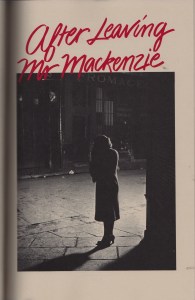
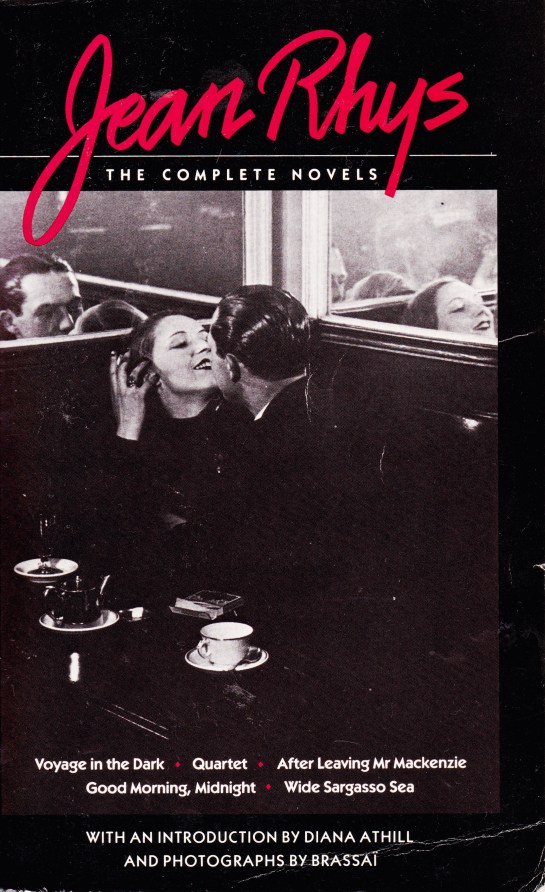
I loved every one of Jean Rhys novels listed on the book cover below.  I have read this book several times and each time find something new in each novel.

Rhys’ books are semi-autobiographical,  intensely personal and  often she utilises streams of consciousness to convey to the reader, her subject’s deep sense of rejection caused by the callousness with which she is treated by men. The women she writes about suffer from depression, although they don’t seem to be aware of this, which manifests itself in their lack of energy, and self esteem.  With no hope of a steady income, the women in her stories drift in and out of relationships with men who have no real love for them but who none the less finance the women’s accommodation, meals and clothes. The men obviously expect a sexual relationship in return, for only as long as it suits their own needs.

Complete Novels Jean Rhys_0001

Lovers, Place d’Italie – photograph by Brassai 1932

Jean Rhys The Complete Novels (including the classicWide Sargasso Sea’) are superbly written with an intense pathos, revealing the hardships single women experienced in Europe in the early Twentieth Century; loneliness, reliance on brief sexual relationships with various men for their living, difficult landladies, illegal abortions. Men had all the money, all the power and of course, all the best careers. Women were used and abused, by single and married men. Choices for women to earn their living were severely limited, and often young women resorted to prostitution and if they were lucky and attractive, the stage. Rhys, under several guises, daydreams and longs for her birthplace, and childhood, in the Caribbean. The Complete Novels is enhanced throughout with magnificent and scene-setting photography by Brassai.  Rhys also gives us a vivid picture of life in the London and Paris of the times.

Leaving Mr McKenzie

Streetwalker, Rue Quincampoix – photograph  Brassai 1932

Quartet

Two Girls Looking For Tricks, Boulevard Montparnasse – photograph Brassai 1931


“I would never be part of anything. I would never really belong anywhere, and I knew it, and all my life would be the same, trying to belong, and failing. Always something would go wrong. I am a stranger and I always will be, and after all I don’t really care.” – Jean Rhys

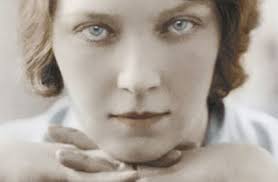
portrait Jean Rhys

Jean Rhys

Jean Rhys, who was born in the Carribean island of Dominica on 24 August 1890, wrote her early novels between 1927 and 1939. Her friend and editor Diana Athill, who believes the five novels listed above to be her best, continues: “Then Jean Rhys disappeared and was almost forgotten. The second part of her career begins in 1966 with the publication in London of Wide Sargasso Sea.  The success of this novel led to the publication of her earlier books.”

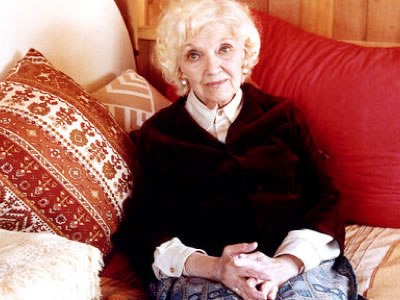
older jean-rhys

Jean Rhys died 14 May 1979 aged 88 in Devon, England

<>><><>><><><><

-Anne Frandi-Coory 28 January 2016

><><><><><><><><><><><><><

My review of…  Wide Sargasso Sea

Kayapo mother and child in the Brazilian rain forest. Photo: ‘MILLENNIUM’ David Maybury-Lewis

I have interviewed and spoken with many adults who were adopted out as babies, during the process of writing  my book Whatever Happened to Ishtar?’,  and only one man told me that he was not interested in tracing his birth mother or his biological roots.  I believe that most babies removed from their  mothers soon  after birth, suffer psychologically in some way and this in turn affects their personality.  How could it not?  We are after all, animals, with a sense of smell like any other, and mother and child have a special smell each recognises.   Our mothers carry us around in their wombs for nine months and the newborn knows its mother’s heart beat intimately.  We can learn many lessons about mother/child primordial bonds from animals in the wild, especially elephants.
Most Children’s  dis-connection with their biological families is a tragedy and sets them up for lifelong feelings of not quite  ‘fitting in’ anywhere.  Their self-identity is compromised. If an adopted child is lucky enough  to have an adoptive mother who is genuinely caring and who is supported by  a strong adoptive father and extended family, then the outcome can be reasonably good. But most of these children still need to know who their biological parents are and to know their genetic background.  Often, these adults I spoke with, told me that they became  more contented with their lives, and more fulfilled,  once they had discovered their roots and met members of their biological families, even if the relationships were not carried on for various reasons.  Just meeting with family members and learning about their heritage, was enough for some adoptees.  Others of course developed close relationships.  Unfortunately, far too many adoptions turned out to be nothing less than unmitigated disasters for both mothers and children.
The majority of mothers who adopted their babies out  in the past, carried feelings of guilt and loss for the rest of their lives.  Many descended into depression or severe mental illness.

Losing a child through adoption (and it is a loss) has a far more damaging effect on the mother than does abortion.  Mothers may think they have dealt with their loss, but often it is just buried deep within their sub conscious.  In the past, the general consensus was that if the baby was removed from their birth  mother soon after birth, neither would suffer any lasting psychological damage.  The child would grow up completely inculcated into the ways and traits of its adopted family, and that genetics didn’t come into it; nurturing was everything.  This has proved to be so utterly wrong.

I worked as a case worker for the Department of Social Welfare in New Zealand for a time.  And it was gratifying to see that children living apart from their parents and extended families in foster homes, were encouraged to keep family photograph albums along with scrap books of their biological family members’ lives.  Even allowing for the fact that in most cases the children were abused by those same families.  The children were proud of their families and loved showing case workers albums and scrapbooks, as though to reinforce their own identity.

I am not sure whether our cat Cleo thinks we are cats or she is human, but there is no doubt as to who is boss of the house.    Which ever room we are in, Cleo is there too, making sure we are behaving to her standards.  And sitting in the In Tray while we are working at our computers is just one way of ensuring we don’t forget who is in charge.  Those eyes!

><

See post: Ode To Cleopatra

Home Office Feline

><

Cleo and the in tray

><

The cover of Germaine Greer’s book

A quote from Germaine Greer’s  Sex And Destiny, p207, 1984 Secker & Warburg London:

And now sexuality has become a major commodity.  The sex merchants have a huge market among sexually repressed and starved people. While in earlier periods this market was restricted by Christian inhibitions, now that the sexual revolution has released us from the compulsions of secrecy, sexual commodities are flooding the market and are becoming the most profitable area of capitalism next to the market of aggression- the armaments industry. [Now, the largest and most recherché collections of pornography are owned by the sexually priveleged, not the sexually denied.]

Excerpts from an article by

Julie Bindel

Friday July 2 2010
The Guardian

The last time I saw Gail Dines speak, at a conference in Boston, she moved the  audience to tears with her description of the problems caused by pornography, and provoked laughter with her sharp observations about pornographers themselves. Activists in the audience were newly inspired, and men at the event,  many of whom had never viewed pornography as a problem  before, queued up afterwards to pledge their support. The scene highlighted Dines’s explosive charisma and the fact that, since the death of Andrea Dworkin, she has risen to that most  difficult and interesting of public roles: the world’s leading anti-pornography campaigner.

Dines is also a highly regarded  academic and her new book, Pornland: How Porn Has Hijacked Our Sexuality, has just come out in the US. She wrote it  primarily to educate people about what pornography today is really like, she says, and to banish any notion of it as benign titillation. “We are now bringing up a generation of boys on cruel, violent porn,” she says, “and given what we know about how images affect people, this is going to have a profound influence on their sexuality, behaviour and attitudes towards women.”  [We only have to read the news about young men (high porn viewers)  contracted to certain football codes to know this is true].

The book documents the recent  history of porn, including the technological shifts that have made it accessible on mobile phones, video games and laptops. According to Dines’s research the prevalence of porn means that men are becoming desensitised to it, and are therefore seeking out ever harsher, more violent and degrading images. Even the porn industry is shocked by how much violence the fans want, she says; at the industry conferences that Dines attends, porn makers have increasingly been discussing the trend for more extreme practices. And the audience is getting younger. Market research conducted by internet providers found that the average age a boy first sees porn today is eleven. “I have found that the earlier men use porn,” says Dines, “the more likely they are to have trouble developing close, intimate relationships with real women. Some of these men prefer porn to sex with an actual human  being. They are bewildered, even  angry, when real women don’t want  or enjoy porn sex.”

Porn culture doesn’t only affect men. It also changes “the way women and girls think about their bodies, their sexuality and their relationships,” says Dines. “Every group that has fought for liberation understands that media images are part and parcel of the systematic dehumanisation of an oppressed group . . . The more porn images filter into mainstream culture, the more girls and women are stripped of full human status and reduced to sex objects. This has a terrible effect on girls’ sexual identity because it robs them of their own sexual desire.” Images have now become so  extreme that acts that were almost non-existent a decade ago have  become commonplace. “To think that so many men hate women to the degree that they can get aroused by such vile images is quite profound,” says Dines. “Pornography is the perfect propaganda piece for  patriarchy. In nothing else is their  hatred of us quite as clear.”

Haifa,   in which pornography was shown changed her life forever. “I was astounded that men could either make such a thing or want to look at it,” she says. From then on, she knew she had to campaign about the issue. “Many on the liberal left adopt a view that says pornographers are not businessmen but are simply there to unleash our sexuality from state-imposed constraints,” she says. As a result of her research, Dines  believes that pornography is driving men to commit particular acts of violence towards women. “I am not saying that a man reads porn and goes out to rape,” she says, “but what I do know is that porn gives permission to its consumers to treat women as they are treated in porn.”

Sexual assault centres in US colleges have said that more women are reporting anal rape, which Dines attributes  directly to the normalisation of such practices in pornography. “The more porn sexualises violence against women, the more it normalises and legitimises sexually abusive behaviour. Men learn about sex from porn, and in porn nothing is too painful or degrading for women.” Dines also says that what she calls “childified porn” has significantly increased in popularity in recent years, with almost 14m internet searches for “teen sex” in 2006, an increase of more than 60% since 2004. There are legal sites that feature hardcore images of extremely young-looking women being penetrated by older men, with disclaimers stating all the models are 18 and over. Dines is clear that regular exposure to such material has an effect of breaking down the taboo about having sex with children.

She recently interviewed a number of men in prison who had committed rape against children. All were habitual users of child pornography. “What they said to me was they got bored with ‘regular’ porn and wanted something fresh. They were horrified at the idea of sex with a prepubescent child  initially but within six months they had all raped a child.” What can we expect next from the industry? “Nobody knows, including pornographers,” she says, “but they are all looking for something more extreme, more shocking.” In Dines’s view, the best way to  address the rise of internet pornography is to raise public awareness about its actual content, and name it as a public health issue by bringing together educators, health professionals, community activists, parents and anti-violence experts to create materials that educate the public. “Just as we had anti-smoking campaigns, we need an anti-porn campaign that alerts people to the individual and cultural harms it creates.”

“Myths about those of us who hate pornography also need to be dispelled in order to gain more support from progressives,” she says. “The assumption that if you are a woman who hates pornography you are against sex shows how successful the industry is at  collapsing porn into sex.” Would the critics of the employment practices and products at McDonald’s be accused of being anti-eating, she asks pointedly.

The backlash against Dines and her work is well-documented. Various pro-porn activists post accusations about her on websites, suggesting she is motivated by money, hates sex, and victimises women to support her supposed anti-male ideology. Dines is regularly criticised by pornographers in the trade magazines and on porn websites and she tells me that her college receives letters after any public event at which she is speaking, attacking her views.

Does she ever feel depressed by all this? “It gets me down sometimes, of course. But I try to surround myself with good things, my students,  colleagues, and my family.” She says the blueprint for her aims is the eradication of slavery in the US, which was achieved despite the fact that every single institution was geared to uphold and perpetuate it.   “What is at stake is the nature of the world that we live in,” says Dines.  “We have to wrestle it back.”

-Anne Frandi-Coory 13 July 2010

><><><><><><><><


God’s Callgirl-a memoir

My childhood was spent in Roman Catholic institutions and my mother was a novice nun before her marriage (see ‘Whatever Happened To Ishtar?’), so  this book was of personal interest to me.   But of course it is also a well written and interesting book in its own right, well worth the reading. Another great read I found in a second hand book shop.

Carla Van Raay’s book God’s Callgirl is a perspective of the depths, in my opinion,  of how far Catholicism has sunk since the beginnings of Christianity and the teachings of Jesus.  Carla tells us  about her life from her upbringing within a strict Catholic family,  sexual and physical abuse by her father,  to her entry into a convent as a teenager and her later life as a sex worker. Her life in the convent was spent in prayer and unpaid drudgery, such as cleaning, teaching and needlework (which the convent sold) and when she finally leaves the convent she discovers her parents, who were not well off, were charged by the nuns for Carla’s board and keep!  She re-enters the real world as an innocent in every sense of the word. The convent was run by spiteful and cruel nuns within a strict hierarchy.  The convent’s inhabitants were called ‘The Faithful Companions of Jesus’, ironic to say the least.  Carla triumphs despite the best efforts of her parents and Catholicism.

My mother’s life was also one of hardship and emotional abuse in her convent which was called the ‘Home Of Compassion’.  My mother and I,  like Carla,  never experienced or witnessed any real and heart-felt compassion in any Catholic institutions!  In light of what is being exposed within the Catholic Church in recent times, it brings to my mind that saying  ‘The higher you fly, the further you fall’.

-Anne Frandi-Coory 8 July 2010

<><><><><><><><><><><><><><><><><><><><><><><><><><><><><><><><><><><><><>


><

OLYMPUS DIGITAL CAMERA

><

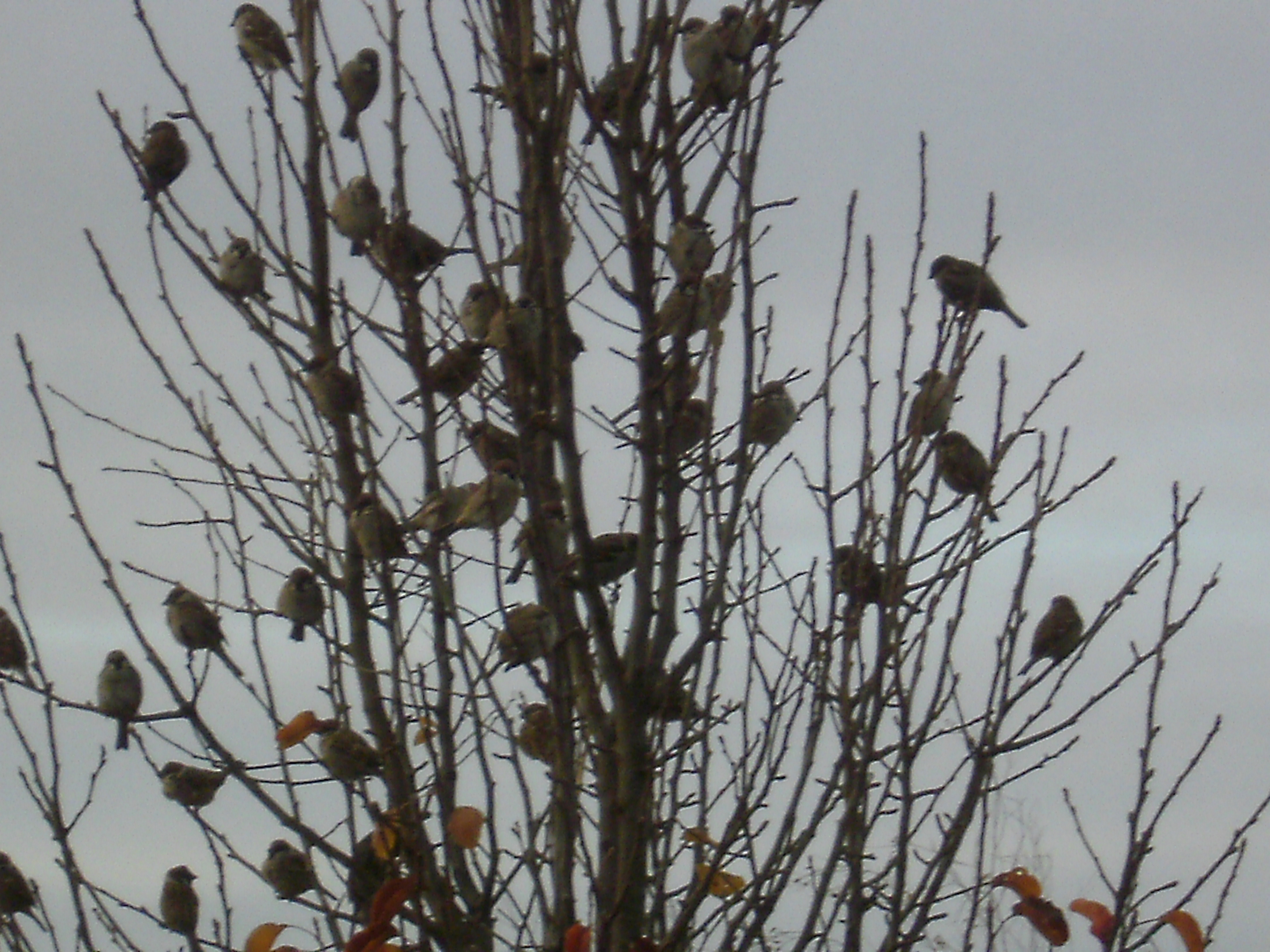
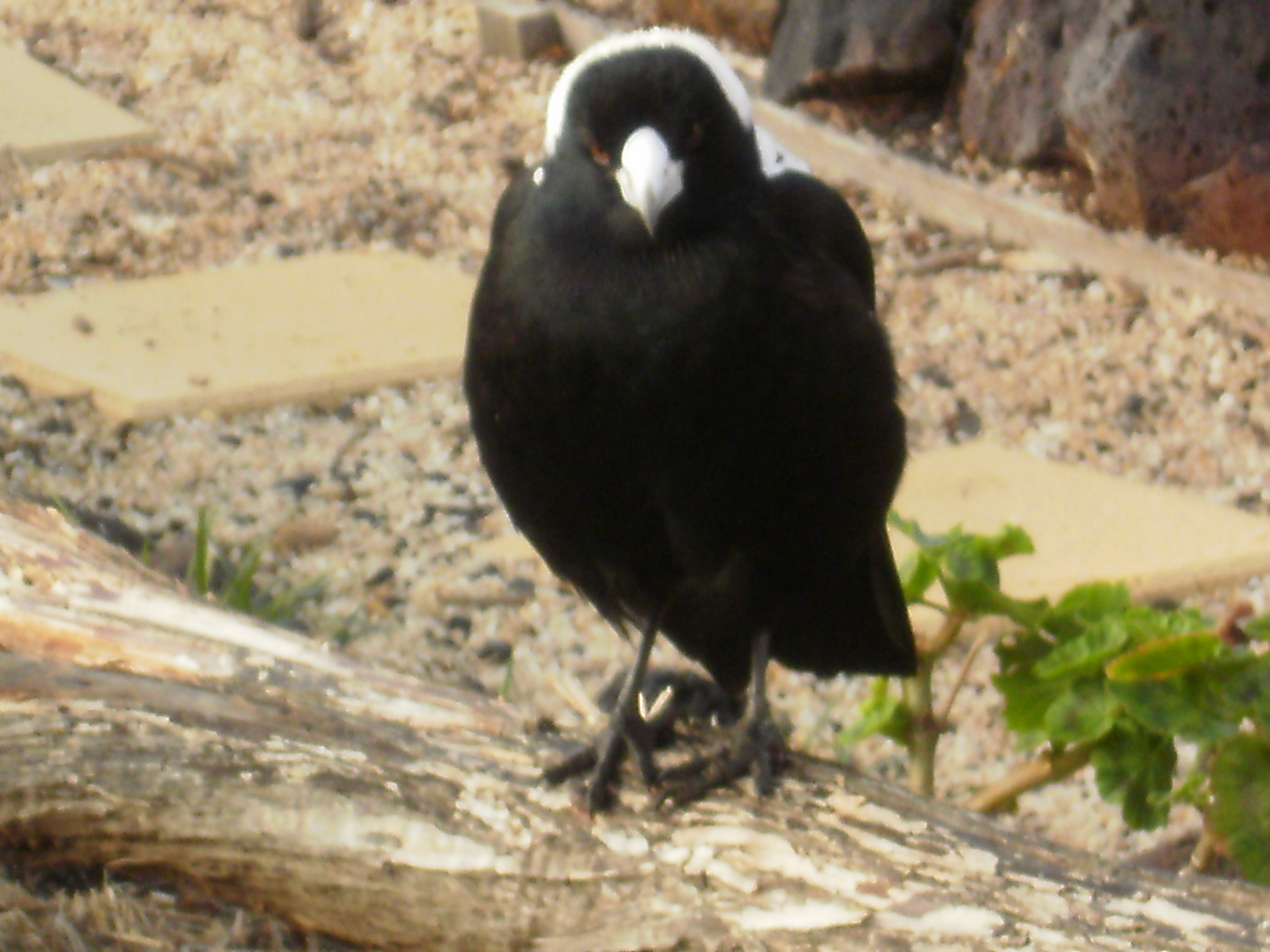
sparrow-tree-7As much as I prefer spring and summer, winter does have its compensations.  Our garden is visible through large windows around the house, including our office, so the bird life entertains us all day. I feed the small birds every morning and the magpies, Maggie and Mac,  come around three 0r four times a day and call out to me for my home baked grain bread.  They must be nesting at the moment because they are taking mouthfuls of bread away.  They are easy to tell apart; males are bigger and have white backs while females have grey speckled backs.  They sit on Cleo the cat’s log which does not please her one bit, but they tolerate each other.  The trees are full of sparrows today, a couple of bush warblers are singing their morning song on the roof and every so often a willy wagtail flits around on the bird bath or the outside table.  The pair of mudlarks who think they own the place, arrive with regular monotony to hover and strut around noisily telling all the  other birds to bugger off.  Not that they take any notice.   Since we built this house three years ago, we have been visited daily by a pair of grey doves who are quite happy to feed with the sparrows and we love the sound of their soft lovey dovey cooing in what I assume is their mating season in warmer weather.

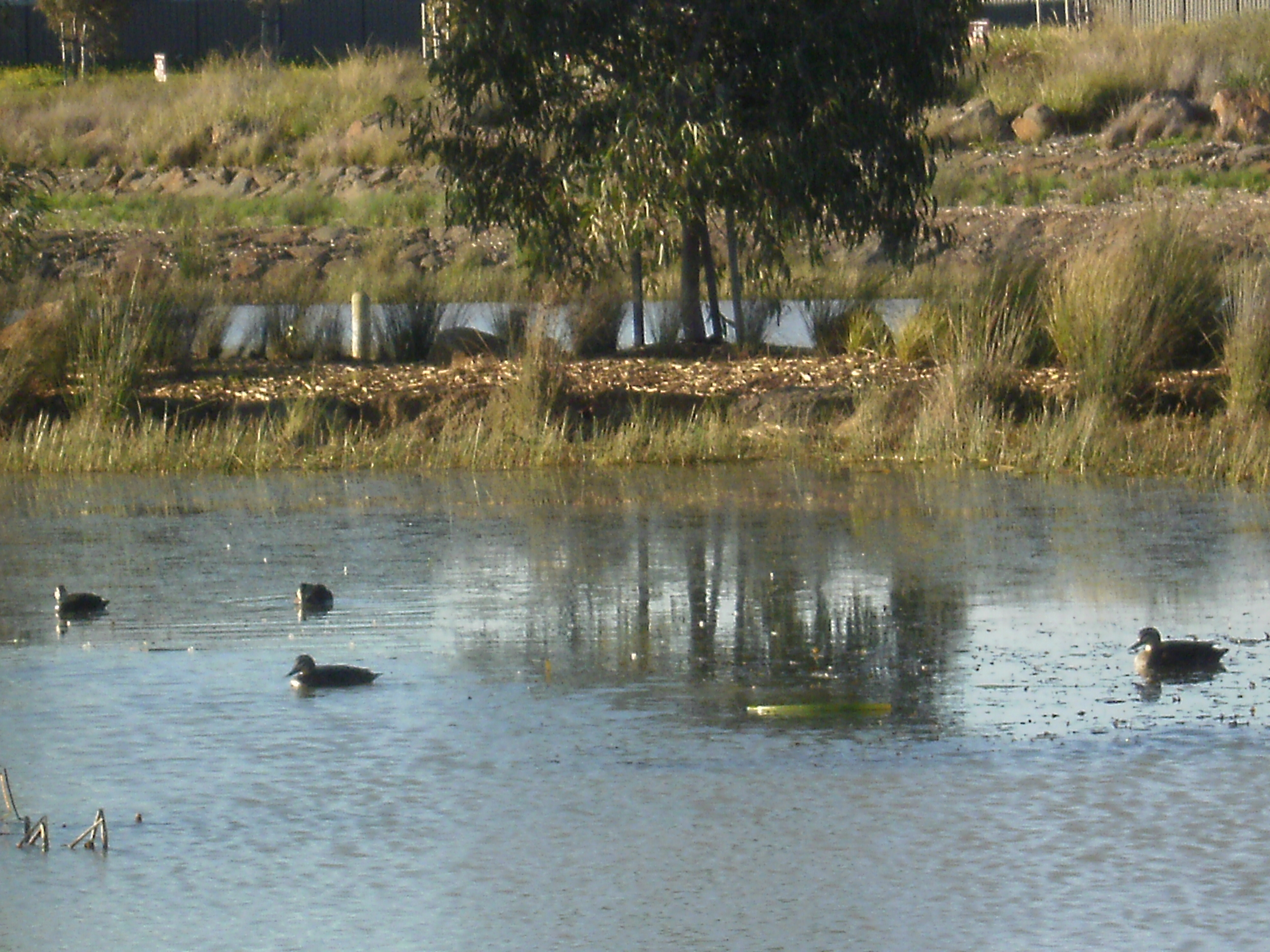
Most days Paul and I do a thirty minute walk around the wetlands across the park  from our home,  where ducks, swans, swamp hens, spur-winged plovers,   and a resident cormorant seem to spend their days in serenity.  The silence is broken only by bird chatter and frog  sounds.  That is until a flock of parrots, such as galahs,  corellas or cockatoos, decides to fly over or land in the park; such a cacophony of screeching and squawking.  Cheeky, chirpy  willy wagtails (black & white fantails) hop and skip all around us on our walk.

><

OLYMPUS DIGITAL CAMERA

Mac sitting on Cleo’s log waiting for a chat & a morsel

><><

OLYMPUS DIGITAL CAMERA

The table of the Fringilline mob in our garden

><><

serene wetlands

Cormorant, resident in the wetlands, awaits its supper

Wetlands

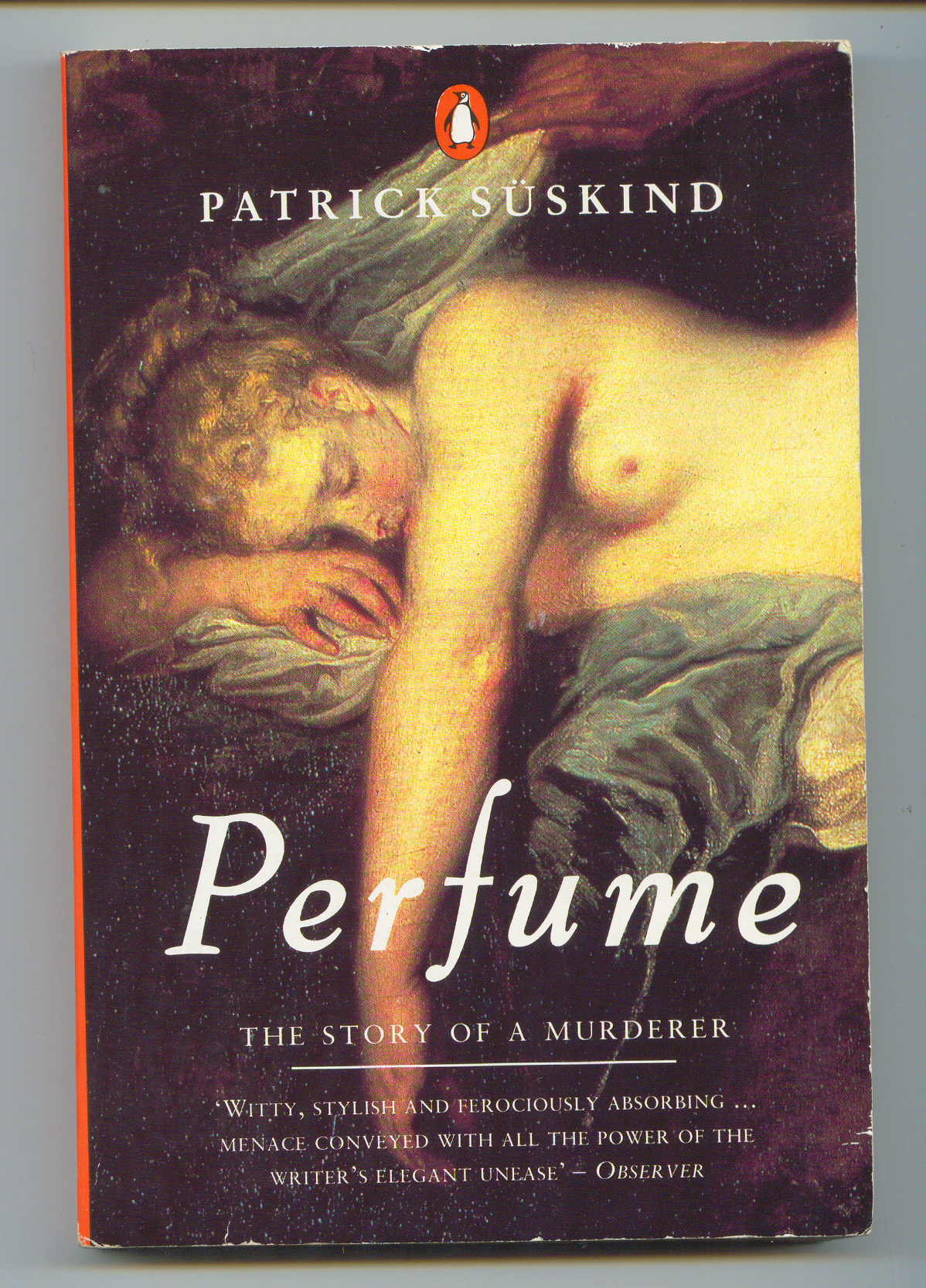
Perfume – not what you think

I first saw the movie Perfume and quite enjoyed it, especially the bits about how (a long and difficult process) and why,  perfumes were originally made; to mask body odours at a time in history when daily washing wasn’t an option.  I found a copy of the book of the same name by Patrick Suskind at one of the book stalls in Federation Square Atrium and discovered, as is often the case, there was so much more in the book that the movie omitted for obvious reasons.

Silly me!  I always thought perfume was a variety of sweet smelling scents extracted from flowers.  The book is not just about a cold and calculating murderer.  It is essentially about body odour; pleasant, not so pleasant and downright putrid if accounts in the book are anything to go by.  Pheromones are among consciously undetectable human odours and the book dwells on these.  It brings to mind a conversation I overheard one day.  A European man rather rudely remarked to an Indian man, “Why do you guys always smell like curry?”  I  smiled to myself when the Indian man replied, “Why do you people always smell like dairy products?”  I must confess until then, I didn’t think we humans had any personal odours other than unpleasant ones if we didn’t wash enough.

This is a great read. You will be aghast at the way people lived in the eighteenth century and how important it was to find the right perfume for personal and other uses.  The fact that some perfumes suit only certain  people and some perfumes are lost on others now  makes more sense to me. I will never view perfume from the same perspective again.

-Anne Frandi-Coory  28 June 2010

Also here on Anne Frandi-Coory’s facebook page: 

https://www.facebook.com/myhomelibrary/?ref=settings

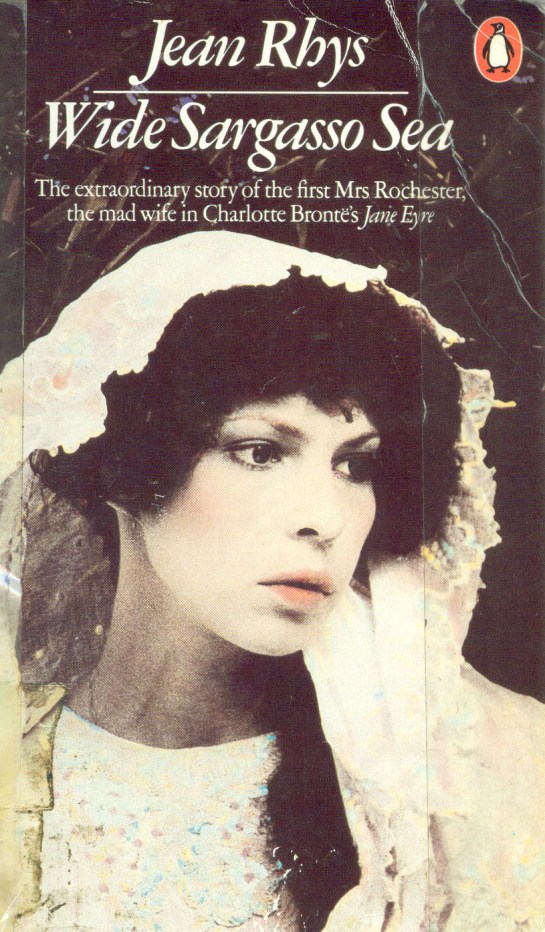
Wide Sargasso Sea

Updated 30 January 2016

*****

Years ago my daughter Gina gave me this second hand book which  I have now read at least three times.

The author Jean Rhys is acknowledged as a technically brilliant writer.   As you read the book, which is set in the Caribbean,  you can almost feel the muggy heat intertwined with the intensity of suspicion and mistrust between the whites, creoles, and blacks.  It tells the story of the early years of the heroine Antoinette Cosway’s tragic life before she marries Mr Rochester  as depicted in Charlotte Bronte’s Jane Eyre.  The story, which exists in  its own right,  ends as she and her new husband set off for England where Antoinette becomes the mad woman in the attic.  I recently read the history of the Caribbean which is fascinating and brutal at the same time, and it inspired me to re-read Wide Sargasso Sea,  the history of the Caribbean adding yet another dimension to that story.

My present copy of  Sargasso Sea is now falling to pieces with pages constantly falling out so I  decided to buy a new copy through Amazon.com as I couldn’t find a copy  in any of the second- hand book shops  that I regularly haunt.  Jean Rhys  has written other novels that I’ve also included in the purchase from Amazon.  Can’t wait to read them.

From Jean Rhys’s personal knowledge of the West Indies, and perhaps her reading of their history, she would have known about the mad creole heiresses living in the early nineteenth century, whose dowries were only an additional burden to them. These unfortunate heiresses were products of an inbred, decadent, expatriate society, resented by the recently freed slaves whose superstitions they inevitably shared.

*****

Jean Rhys quote

*****

In her introduction of the book  Jean Rhys – The Complete Novels   Diana Athill, editor and friend of Rhys for the last fifteen years of her life, writes:

Charlotte Bronte’s Jane Eyre had always disturbed Jean. She may not be the only reader of that novel to dislike its heroine, but is probably the only one to identify with Mr Rochester’s mad wife from the West Indies. Ever since Jean had come to school in England she had felt that the English had misunderstood and despised West Indians, and here was a West Indian woman so totally misunderstood and despised that she was presented as a monster. Impoverished English gentlemen had, in fact, married West Indian heiresses from time to time during the eighteenth and nineteenth centuries, and Jean thought it likely that Charlotte Bronte had known of one such marriage and had based her novel on it. What had really happened to that unhappy bride onto whom Bronte had projected such a cruel – such (in Jean’s eyes) a typically English version of that story? 

From that question grew Wide Sargasso Sea, the novel created over so many years, against such heavy odds, with which [Jean Rhys] made her comeback in 1966.

portrait Jean Rhys

To wring out of herself things so painful, in circumstances so cruel [in her earlier novels] and finally to hand us a novel [Wide Sargasso Sea] so lovely and haunting, which seems to alight on the page as easily as a bird on a branch: if she had nothing else but this, Jean Rhys would still be one of the most remarkable writers of the twentieth century.

-Anne Frandi-Coory 30 January 2016

><><><><><><

For more information on Jean Rhys novels  Visit Amazon Here

See my review of other Rhys novels … Complete novels by Jean Rhys

><


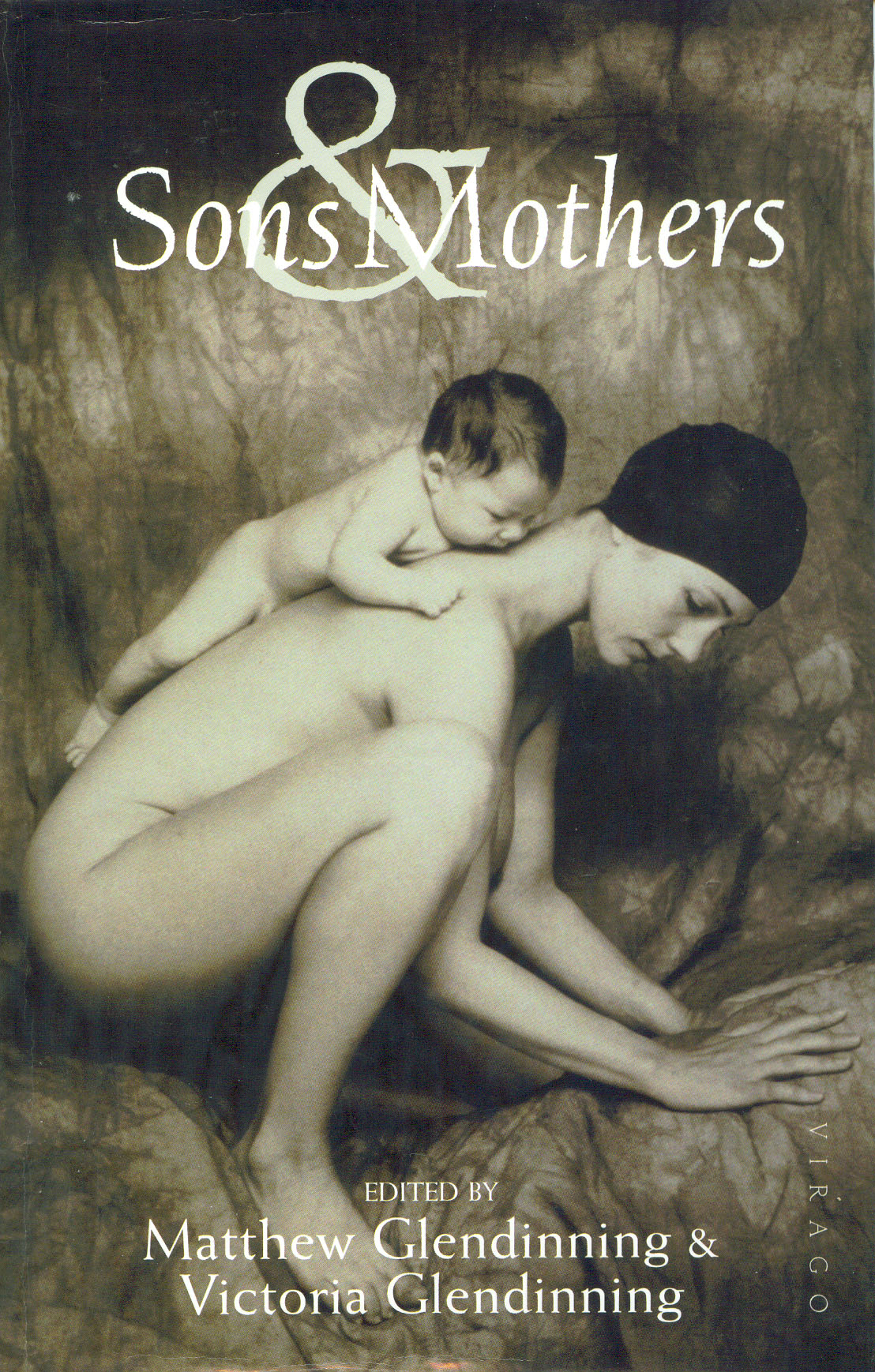
The Book  ‘Sons & Mothers’ – eds: M & V Glendinning

Updated 14 July 2014


Until the birth of  my long awaited daughter, I had three adorable sons.  But they were born to a mother who had been an emotionally damaged child.  As a little girl and teenager, I was quite frightened and mystified by the ways of boys and men.    What did I know of life, but especially of males, with my background of nunneries, convents and Bible stories?  But there was no doubt I loved each of my sons  deeply.

The relationships between sons and mothers can be intense and very, very loving, although sometimes fraught, and from this perspective of safety and comfort, as my little boys grew into men,  I learned the intricacies of the male psyche gradually over time. The sibling rivalry; the competition for dad’s respect and mum’s cuddles; the fisticuffs with each other and the wonder at the complexities and mysteries of the female.  When their sister arrived unannounced on the scene, (my eldest son was only four when I brought her home) my boys were aghast that she didn’t have a penis as they watched her first bath time at home, their eyes wide like saucers. Their male centred home  changed over night with this new fascination.

Then there comes the heartbreak they have to endure during adolescence and beyond, over this girl or that.  If only I could  spare them the pain they have to experience in life to become well-adjusted men, was then my angst.
My three boys are each very different personalities, so there is never a dull moment not even now when they are married with their own children.  How could a woman not understand men after raising three boys?  And now I am privileged indeed to have three grandsons to delight in and share anew their experience of life.  It is not an automatic right to share in your grandchildren’s lives as many grandparents will tell you.

As Victoria Glendinning tells us in a book of several mother/son personal stories edited by her and her son Matthew:  If I am anything to go by, all mothers are in love with their sons…it’s a savagely loving business.

-Anne Frandi-Coory 14 July 2014