Archive

Monthly Archives: February 2020

Out Of The Forest

**********

Most people who follow me on Social Media, and those who read my Blog ‘My Life and Rhymes; A Life in Two  Halves’ would find some common ground reading this engrossing biography ‘Out Of The Forest; The true story of a recluse’ written by Gregory P. Smith, about his childhood filled with violence and sexual abuse. And if that wasn’t soul searing enough, his mother one day out of the blue, piled Gregory and his sisters into the family car on the pretext of going on a road trip to visit an aunt they had never heard of. It eventually became apparent to the children that their mother had ‘dumped’ them like so much household garbage, at some sort of institution which resembled a small castle. She then hastily drove off never to be seen or heard of again for some time.

Once inside the orphanage, governed by the Catholic order of ‘Mercy’ nuns, Gregory is immediately separated from his sisters. The siblings do not see each other again while incarcerated in the orphanage, and Gregory soon realizes that the nuns hate all children, but more especially boys. Gregory is regularly sexually abused and humiliated by teenage girls who as ‘inmates’ have to bath the boys. He experiences, and witnesses, the cruel deprivation and humiliation of boys at the orphanage, particularly those boys who wet their beds.

When Gregory and his sisters are collected from the orphanage by their mother and taken home, they find everything is as it was before, only worse. Their father is even more violent after long sessions drinking at the pub…one of Gregory’s sisters later recalls that often after their father had severely beaten Gregory, usually while he was trying to protect his sisters from their father’s wrath, it left blood on the walls and her brother covered in blood. Teenaged Gregory finally ran away from home to live on the streets.

The next few years are spent living on the streets, stealing money and food, and running from the police. At one stage Gregory was incarcerated in a youth correction facility. As he grew older, his eruptions of violent anger involved him in countless drunken brawls. Occasionally he was able to find employment, at times earning a reasonable amount of money, but his demons wouldn’t let him be; his childhood trauma ran too deep.

While living on the streets, he mostly kept hunger at bay by rummaging through rubbish bins for discarded food. Calling himself ‘William H. Power‘ had enabled Gregory to hide from who he really was (albeit superficially),  and where he came from. There was too much of his past shadowing him in and around Tamworth where he was born so he wanted to put as much distance between that town and his battered mind and body as he could. There was also the matter of his juvenile police record; he didn’t want anyone to alert the police as to his whereabouts.

Homeless Gregory morphs into an anonymous, yet familiar vagabond wandering around  towns and byways; thumbing rides, walking for hundreds of  kilometres along lonely country roads, and skirting isolated homesteads. One day, while Gregory was sitting in one of the   parks he frequented, wearing disheveled clothing and sporting a long, scraggly beard; talking philosophy with a group of Indigenous people and ‘hippy backpacker types’ it seemed that he was creating quite the impression.  A few people believed he was Jesus Christ, returned to earth. “Come and listen to this! Come and listen. You should hear what he’s got to say! Hey, man, it’s Jesus! He’s back!” they shouted. He admits he was drinking port and smoking pot at the time:

“I was much more comfortable being plain old William H. Power than I was being Jesus H. Christ… While I was only a god for one night, there were plenty of other times I found myself around a fire on the beach with a group of people letting my inner guru out. The dope would flow and they’d inevitably start to share their thoughts on the deep stuff. Metaphysics is big in Byron Bay. Time and time again I’d be the centre of attention, the group in my thrall with the added drama of being able to see my mountain [up in the rain forest]  from the Byron Bay beach.“

Surely there is not such a great leap from there in the park, preaching to followers, to being a lecturer at a university?

However, Gregory spends most of the following years, in varying states of oblivion, homeless and later in the rain forest, most of the time spaced out on drugs and grog. There is a future episode which brings Gregory’s homeless and aimless life into sharp focus: he discovers, following a long period of socialization, an official record of his marriage to a woman, of whom he has no recollection, much less the actual marriage and later, the divorce.

The peace and solitude of the rainforest in northern New South Wales keeps calling  Gregory back and he subsequently makes himself a  permanent home there for more than a decade, where he survived mostly on bush tucker. He built a bed made from ferns and established a constant campfire.  He had decided earlier on not to kill any more animals for food after he had killed and eaten a small wallaby he caught in a trap. The guilt got to him; he missed the little creature which he often spied wandering around his camp. From that point on his health began to deteriorate rapidly.

The long process of rehabilitation back into human society had its genesis in an epiphany which the hermit experiences while lying beside his campfire, in a near comatose state, suffering from malnutrition and long-term gastroenteritis. His ancestors visit him, and while sitting around the camp fire, they tell him ancestral stories and then finally cajole him into leaving the forest and getting help. Otherwise, they caution him sternly, he will die.

With a mind cloaked in a dense fog, Gregory has no memory as to how he managed to walk out of the forest and find help; he had lost track of time and found it difficult to concentrate on anything at all. His body was emaciated and poisoned by rotten grog, drugs, and lack of food. His ancestors wouldn’t let him rest and hassled him with ghostly conversation.

After a long battle and considerable help from many people along the arduous road to recovery, Gregory finally achieves success as a scholar eventually gaining  a PhD in Social Sciences.  He is later employed as a university lecturer.  Oh how far this remarkable man has travelled.

The author informs the reader that he chose Social Sciences as the subject of his thesis because he wanted to study how human society actually functioned. It had been a mystery to him up to that time.

-Anne Frandi-Coory.  26 February 2020
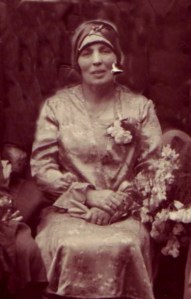
Anne Frandi-Coory’s maternal Italian great grandmother Raffaela Marisi Mansi Grego (Greco)

**********

Wow! That ‘Raffaela’s Last Dream’ in Dragons, Deserts and Dreams,   is just so, so beautiful, and I love it. But then again I love everything you do, my darling Anne. You have put me by her bedside. You have me holding and squeezing her hand as I read and hear her, drifting through the pages of her life, with all the love and emotion of a woman who knows she will soon be flying through heaven, alongside the author of all things in the universe.
For beautiful Raffaela has already experienced hell on earth. And I, the reader was there when it was all happening, so cleverly condensed in, ‘the present tense’. You’re such a great writer Anne, you always have the ability to stir up my emotions.
After I finished reading, in the dark now, I closed my eyes and wept and sobbed out loud, as I often do, when I awake from such dreams. Dreams I have of my grandmother, the one person who never stopped loving me.
Dreams, nowadays in my secret place I call ‘La La land’. A place I find myself a lot lately as my body too, is almost worn out. A place where I’m not really asleep, but then again I’m not altogether awake. All I have to do is remain quiet, usually in the afternoon, close my eyes as I rest alone on my sofa, and I’m there, in my beautiful ‘La La Land’, where anything can happen.
Thank you so very much for introducing me to your wonderful, courageous and most lovely, ‘Raffaela’ Anne, I am so grateful to find her at last. She, like you will remain forever with me, as I know I will never forget you both.

-Arabella Marx, @thatmarxtart Australia 2017

‘Raffaela’s Last Dream’ by Anne Frandi-Coory

From Dragons, Deserts and Dreams

emmies-wedding-2

Raffaela and Filippo  Greco [anglicised to Grego]

**********

More comments from Rita Roberts, Crete:

Rita Roberts: This is so beautiful Anne, Thank you for sharing.

Anne Frandi-Coory: Yes Rita, it’s a comment that really touches the heart strings…Arabella has since died as she was quite elderly when she wrote the comment. We followed each other on Twitter initially because we both liked reading similar books. And then she bought both my books: ‘Whatever Happened To Ishtar?’ and ‘Dragons, Deserts and Dreams’. RIP lovely Arabella Marx.

Rita: So nice she was in touch with you before she passed though, Anne.

Anne: Yes Rita, and I treasure the fact that Arabella connected with me and my writing…I do feel so humbled. She had a very sharp mind, with an erudition I envied. xx

********

The Blog Comments below were posted  by David Edward Anthony, USA  on page:

Lebanese Family Tree and Photos.  

More here: My Life and Rhymes – A Life In Two Halves

**********

David Anthony:

I LOVE your website. I’m of two worlds, too, in this case 1/2 Lebanese and 1/2 Irish. The Lebanese side arrived in the USA from Lebanon in 1892.

Amelia Coory, Joseph’s sister who died from TB at 17 yrs old.

The photo of Amelia Coory looks so very much like one of my cousins (who is 1/2 Lebanese and 1/2 Italian). Similarly to Amelia, my sitoo’s [grandmother] brother Peter died of “exposure” in the 1890s. He was perhaps 10 years old. In the USA at least, there was a terrible depression (the “Panic of 1892”) that led to widespread unemployment. In my great-grandparents’ case, they couldn’t get work have to live outside in a lean-to in the winter- it probably led to my grandmother’s brother’s death.

I see you have a Khalil Gibran – inspired drawing at the top of your page; interestingly enough, there are Gibrans in my family’s old parish.

Sketch by Khalil Gibran

Anne Frandi-Coory:

Hi David, good to hear your story. Khalil Gibran was born in my grandparents’ village in Bcharre and moved to USA when the Catholic Maronite minority were suffering persecution by muslims. We are related to his family through marriage [Khouri]. If your family came from Bcharre there is a good chance there will be a family connection because my grandfather’s sisters emigrated to the US. Lebanese/Irish combination would make for a volatile mix as does Lebanese/Italian, I would say?

David:

Hi! Thank you so much for the reply.

Yes! Irish-Lebanese is a volatile mix! My Irish mother could be very much the unstoppable force where my Lebanese dad was the immovable object. When she got excited, it was like a tornado was set loose in our living room- and that Tornado came up against the Mt. Everest that was my dad!

My family isn’t from Bcharre. It’s from a very similar town not that far away to the west- a town called Ehden.

I hesitated- strongly- on telling you about Ehden as Bcharre and Ehden are two very similar towns – Maronite Catholic and set in the mountains- photos of both towns make them even look similar- but they historically are two rival towns as well. I suspect you’ve heard in your life how Italian towns are rivals- very similar thing.

Both Ehden and Bcharre are *very* ancient towns. Both rightfully can boast an ancient heritage- with ancient buildings and such. Bcharre, if I remember right, boasts the oldest cedars in existence (and among many things, of course being the birthplace of Khalil Gibran)..while Ehden, for example, hosts Horsh Ehden, a very ancient nature preserve, and also the oldest Maronite church in the world.

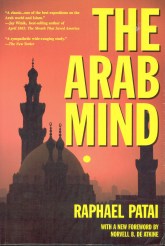
Now, the reaction of many old Bcharre people on hearing from someone from Ehden is usually something like, “Ehden! Those people are NO GOOD.” Which goes back to the book, The Arab Mind* and the author’s conclusion that there’s really not much middle ground between liking and dislike in the Middle East.

I hope (!) that my telling you I’m from Ehden (really Zghorta, which is its mirror town – Zghorta in the winter and Ehden in the summer) doesn’t give you a bad vibe!

Anne:

I was a bit like your mum when I was younger-very fiery, not sure many people understood me. But I didn’t inherit the ethnocentricity that my grandparents brought with them from Lebanon because I spent my formative years in an orphanage. My mother became mentally ill (not surprisingly) and dad’s family didn’t want me because my mother was Italian. However, I love the Lebanese people and the Italian people and consider myself blessed, and I am proud, because of the wonderful positive traits I and my children have inherited. Writing Whatever Happened To Ishtar? helped me to see that. So, David, the fact you are Lebanese is fantastic!

*READ my review here:

‘The Arab Mind’ by Raphael Patai – A Book Review by Anne frandi-Coory


David:

I’ve read this book as well – about two years ago. It helped me, too, connect to my Middle Eastern roots. As I’m half of Irish descent, and the Irish side of the family being HUGE, I tended to spend far more time with the Irish side than the Lebanese side. Plus my father, a very kind man, tended to be a very reticent man. As the Lebanese side of the family was very small, I tended to not get hardly any exposure to the Lebanese side; even though, quite frankly, I looked *very* Lebanese. I kind of stuck out when visiting my Irish cousins! 🙂

I remember reading in the above book an account that the author witnessed of Middle Eastern people leaving a movie theater. People leaving the movie often showed no middle ground. They either LOVED the movie, or they HATED it. That lack of a “middle ground” is very close to my own personal experiences- and reading the above, it seems that you had similar experiences? Either they accept you wholeheartedly..or not at all. Growing up, it confused me. I saw people being what I called “favorited” or not favorited at all. It took me many, many years (and some hurt) to figure out what was going on.

That said, I didn’t know that the tidbits of language I had picked up from my jidoo [grandfather] weren’t really Arabic until I was an older teen. What happened was that a distant cousin north Lebanon visited our family. When he spoke to my jidoo, they couldn’t understand a word they were saying to one another. My jidoo was raised to speak what he was believed as Arabic from a young age- in fact, it was his first language. Why couldn’t my cousin from Beirut understand him?

In the end, we figured it out. My cousin spoke modern Arabic. My jidoo spoke a form of Aramaic that was spoken more than a century ago, which was passed onto him in the USA by his family. Not only was my jidoo speaking another, older language, he was speaking a form of it that was about a century old!

I really like your site. I don’t have much time to check it out from top to bottom; I hope it’s okay if I come back and read through it some time! Thank you for posting so much interesting stuff!

Anne:

Here in my review of another book you may be interested in:

The Maronites in History by Matti Moosa 

The comments below were posted here on my Blog  by Miriam Burke, NZ on page:  Lebanese Family Tree and Photos.  

**********

Subjects: My father, Joseph Jacob Habib Eleishah Coory, his brother Michael Patrick Coory, Patrick’s wife, Harriet and their daughter, Yvonne.

Joseph and Michael Coory 1

Brothers Joseph and Michael Coory

The book: Whatever happened To Ishtar? – A Passionate Quest to Find Answers For Generations of Defeated Mothers

Miriam Burke is Michael Patrick Coory’s granddaughter and daughter of Yvonne Coory.

**********

Dear Anne

I just wanted to post you something beautiful and I know you love it:  (Blue Danube Ballet) http://www.youtube.com/watch?v=eSulONzgewQ

Dear Miriam

How did you know about the glass case? You’ve already read my book! The ballet brought tears to my eyes. Thank you so much, Miriam xxxxx

Dear Anne

I wanted to send you something you could keep and play over and over again without it getting taken off you. Yes Anne, I rushed out and got your book and I am part way through. It has touched me so very much, I only wish you had confided in my nanna Harriet, I’m so sad to know how very bad you and your brothers were treated. I relate to the screaming and yelling; I always remember I would get scared when all of a sudden one would start arguing and the rest would jump in like a pack of hyenas attracting prey.

Did you know your dad was my most favourite great uncle? I remember Mum took me to Cherry Farm to visit him and I was so disgusted the family had put him in such an awful place. I told Mum I never want to go back. Uncle Joe was so pale and thin looking, I didn’t want to believe it was him. 😦 I remembered Tim!!!! [Joseph’s beloved dog] Oh how I loved him but when I think of Tim he was very old.

I came across your blog by accident the other day. My sister-in-law Charmaine Burke (nee Coory) Victor Coory’s adopted daughter’s brother John had passed and I was looking on the ‘net for details of his funeral. I was drawn here after names came up that I was familiar with. I’m so very pleased I found you. 🙂 xxx

Dear Miriam

OMG! you knew my dad. He and uncle Mick [Michael Coory] were very close and had similar lives until my dad [Joseph Coory] married my mother [Doreen Frandi], and The Family never forgave him. . I know that uncle Mick was staying with the Coory family at Carroll Street when your Nana Harriet was so ill and after she died. However, he was so horrified by the way the family treated uncle Henry’s children after he died, Mick moved out and stayed with your mum. I am so glad you found me. Xxxxx

Dear Anne

Who could forget Uncle Joe, I was a young girl, Anne when Uncle Joe died but he was someone in the house I felt I connected to and felt comfortable being around….he had sparkling eyes, a friendly smile and a gentle soul. See my brothers and I are out casts also on the Todd side for the stupid reason our Mother and Father got divorced. When we were small children, why did we get the feeling we had done something wrong? Even now I’ve been in touch with my Dad’s side of the family and don’t feel I fit in anywhere. They look at me as though I’m an alien…I know they see Mum when they look at me, Mum did tell me they treated her so bad even when she was married to Bryan. I’ve been blessed with her looks and she lives on in me…oh and the other wonderful thing I’ve been blessed with is my Nanna Harriet’s nature…LOL She was a bit of a rebel, could stand up for herself and a wonderful sense of humour. I remember she did tell lies though, only to keep the peace but she would laugh and giggle like a small child at every time she told one.

I remember.one day Great Aunt Georgina was yelling out to us and Nanna said to me “oh no here’s the fog-horn coming”…I started to giggle and Nanna said just say nothing and go along with me. We were staying up in Wanaka at the holiday home and Nanna and I were in the small scamper on the section. Georgina came over and asked if we had been to church? Nanna said yes of course we had, “we were sitting near the back [of the church]”. Of course we didn’t go to church that day. I wonder if they knew of Nanna’s tattoo?. A small butterfly she had on her thigh…hence my love of anything to do with butterflies. I have one hanging on my wall and when I look up at it I think of Nanna. She was too modern to be a nanna in those days…I thought she was just the coolest Nanna in the world! They both did so much for Mum and us children especially when Dad left. We were so lucky to have wonderful grandparents.

Aunt Alma who really wasn’t our Aunt was Mum’s favourite to talk to…Aunt Alma we had more to do with and visit than the house in Carroll Street in later years when Nanna was in a retirement home. Mum and I would always make sure we called into visit Alma when visiting Granddad while he was living at Carroll St. You know Anne, think of yourself as a caterpillar slowly crawling along in your youth, everything seems a struggle, you don’t feel good about  yourself, you feel like you are going  nowhere, then one day you just get so tired of your struggle you just want to curl up into a ball and sleep forever away from the world; then the moment you awake you feel different, you have grown into a colourful butterfly that can now fly above all those struggles you once had…you’re beautiful…just keep spreading those wings! xx Miriam 

**********

Read more here about Joseph in an excerpt from  Whatever Happened To Ishtar? >>>>>>>>>>>>>> My Father Joseph Jacob Habib Eleishah Coory 


10334276_293513207505781_2346531765896938995_n

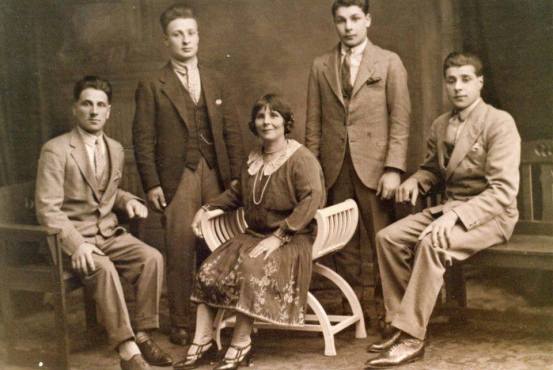
L to R: Joseph, Michael, Frederick and Philip Coory with their mother Eva Arida Coory.