Archive

Monthly Archives: April 2020


***********************************************

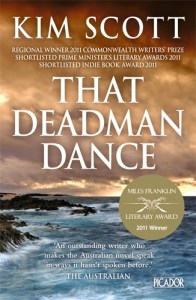
For me, it was a serendipitous  moment when I came across That Deadman Dance – a literary masterpiece by Kim Scott.

During this coronavirus lockdown, I was searching through my home library shelves for books I hadn’t yet read. I received this particular book as part of a prize for having one of my poems accepted for publication in a literary magazine.  It turned out to be one of the most beautifully and poetically crafted books I have ever read. The fact that it is set in the early colonization period of Australian history makes it even more relevant on this 250th anniversary year of James Cook’s arrival on the shores of Australia.

Bobby Wabalanginy is the spiritual protagonist throughout this incredible story; oh, there were others like Wanyeran, Dr Cross’ beloved friend.  Those two were like brothers and were even buried in the same grave on a mound…until settlers trampled and desecrated it instead of allowing Time to whiten the bones and Rain to wash them out to sea together. But even when he was a small child, Bobby could ‘see’ things others missed. He wanted so much to believe in the white colonists, even though not all in his extended family, especially its tribal elders, trusted the ‘Horizon People’ …but wasn’t Dr Cross just like one of his tribal elders, wise and just?

Dr Cross was one of the First Contact leaders; he, Bobby and Wunyeran, were united in their desire to share all things, and to learn from each other. After all, wasn’t that the peaceful, traditional way of Bobby’s tribe, and all other Aboriginal tribes throughout their country? Cross was a teacher of his white man’s history and he wanted to learn about Bobby’s people and their history in return. Bobby and Wunyeran grew close to Cross and could sleep in his hut or eat with him, and at times when they disappeared for days, Cross understood, always, even though it made other settlers nervous.

Cross was to write  of his dear friend Wunyeran; ‘He has the most intelligent curiosity…’ However, it was a characteristic they both shared. Cross and his superior agreed that their colonial outpost needed to build strategic relationships with the Indigenous peoples.  ‘We are outnumbered, and this is their home.’ One wonders at this point what might have been.

After the untimely death of Wunyeran, and subsequently the death of his dear friend Dr Cross due to that settler’s ‘cough’, everything began to change; dark days were emerging across the colonies.  Eventually, Aboriginals were again relegated by the colonizers to mere ‘blacks’ and ‘savages’; they could now be shot for climbing over fences the settlers had built to keep in their livestock and to keep the ‘blacks’ out. In the end, kangaroos disappeared, Aboriginal plants, tubers, were destroyed and their land trampled by livestock, their trees cut down for pasture. Even the whales had disappeared from their waterways.

Bobby was a dancer; light of limb, an actor, a storyteller, who could translate his ancestors’ lives and traditions through dance and cultural language.  In the final, humiliating years Bobby had left to him, he was reduced to ‘entertaining’ settlers  on the streets who sometimes ‘paid’ him a few coins if he pleased them. Yes, this is how Bobby’s ideals of mutual sharing and learning had ended…in a dead man’s dance of finality… evoking a time when the Aboriginal Noongar people of Western Australia first encountered the “Horizon People”: those British colonists, European adventurers, and whalers, ghost-like, intent on colonizing a land both harsh and seemingly of limitless future ‘civilized’ development.

“Bobby Wabalanginy never learned fear, not until he was pretty well a grown man. Sure, he grew up doing the Deadman Dance – those stiff movements, those jerking limbs – as if he’d learned it from their very own selves; but with him it was a dance of life, a lively dance for people to do together…”

Heartbreakingly, Bobby, deep down inside,  knew the outcome from the start. But Bobby being Bobby, embracing two very different cultures as he had, clung desperately to his belief in mutual understanding, until the smallest, remaining whiff of hope had vanished forever into senseless killing, rape of their spiritual land, and the rape of their women.  “We thought making friends was the best thing,” he says. “We learned your words and songs and stories, but you didn’t want to hear ours.”  But the colonizers could  not understand Bobby’s language, or interpret the deep significance of his dance.

“The man, scratching and making marks,” Wunyeran told them, “has hair like flame but keeps it covered. Cross.” It was a difficult word to pronounce. Wunyeran was patient, explaining it… “Yes, Dr Cross they call him. I slept in his shelter,” he said, and accepted the admiration of his fellows. “He is a man who scratches in his book all the time.”

“When Bobby Wabalanginy told the story, perhaps more than his own lifetime later, nearly all his listeners knew of books and the language in them. But not, as we do. You can dive deep into a book and not know just how deep until you return gasping to the surface, and are surprised at yourself, your new and so very sensitive skin.  As if you’re someone else altogether, some new self, trying on the words.”  That Deadman Dance is such a book in my view.

The last foreboding paragraph of the book is abstract in its telling, but we, the intuitive readers, know exactly what it foretells.

That Deadman Dance is set in the first decades of the 19th century in the area around what is now Albany, Western Australia. In poetic prose, it explores the early contact between the Aboriginal Noongar people and the first European settlers.

This is such a moving subject, and Scott’s research is impeccable. He uses settlers’ diary entries and traditional stories passed down through generations of Indigenous elders. However, you will not read about any vivid acts of violence; the words are sheer poetry, even when there is violence. Scott tells us so much with so few words.

Kim Scott has the moral authority to these stories of his country because he is a descendant of the Noongar People who have always lived on the south coast of Western Australia where the early whaling settlements brought in sailors, soldiers and scouting colonists. That Deadman Dance is the winner of the Miles Franklin Prize and many other awards.

**********************************************************

-Anne Frandi-Coory 29 April 2020
Blog Comments    My Life and Rhymes -A Life In Two Halves

Italian Connections

From Verna Crowley, Otaki, New Zealand.

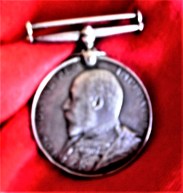
 The Mystery Surrounding Ateo Frandi’s Colonial Auxiliary Forces Long Service Medal.


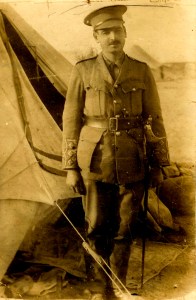
Ateo Giusto Leale Frandi – killed by a sniper at ‘the daisy patch’ Gallipoli 8th May, 1915

*****************************

Verna Crowley

18 May 2014

Hi Anne, I came across your story while I was researching Ateo Frandi, born 04 May 1873, died [8th] May 1915. I have in my possession a WWl medal with his name [inscribed] on it. It was issued in 1911 for his long service in the Colonial Auxiliary Forces. I would dearly love for it to be returned to his family, he has no direct issue but if you know of a family member I can pass it onto I would appreciate it…. Thanks, Verna.

Verna

20 May, 2014 .

Good morning Anne,
I have not heard from you via my email today so I thought I would try again through here.

I realise you might be thinking that maybe this is some sort of hoax, but I can assure you that I do have the medal and I am very much hoping to be able to return it to his family, where it rightfully belongs, (after 100 years).
I can tell you it came into my possession through my grandmother, how she happened to have it I do not know, but she kept it safe along with her first husband’s WWl medals. This year being significant for WWl veterans, I was going through all the paper work and medals and as this medal did not have a ribbon, I was going to have it re-ribboned, it was only then that I noticed Ateo’s name [inscribed] on the side and I thought I would try and locate his family to return it.
The inscription reads: No. 179 COL-SERG. A. FRANDI ZEALANDIA RIFLES (1911). 

Please let me know where you want me to send it
Thanks, Verna

********************************************************

Head inscription reads: EDWARD VS Vll REX IMPERATOR


Reverse and rim inscriptions read: For Long Service In The Auxiliary Forces; No 179

***************************************************************

Anne Frandi-Coory

Hello Verna, lovely to hear from you. I would so love that medal and I would treasure it as would my family. My mother, Doreen Frandi,was very close to Italia, Ateo’s sister, and Italia and Ateo were devoted to each other. Otherwise, I truly don’t know anyone else to recommend. Thank you for making contact.

I am so glad you found me, Verna, and I did not for one moment disbelieve you;  I would so love the medal which I would treasure as would my family.

Because of all the awful things that happened to my mother and me, I don’t have any mementos from the Frandi family, so this medal will mean a lot to me and the wider Frandi family.

The only memento I do have is a set of broken Rosary beads in a tiny leather case cherished by my mother, Doreen. Her father, Alfredo, was Ateo Frandi’s youngest brother and while Ateo died before she was born, Doreen knew Ateo’s sister, Italia, very well. By all accounts, Italia had a soft spot for the troubled Doreen. Ateo and his only sister, Italia, were close in age, both born in Pisa and devoted to each other.  Italia’s two daughters are long deceased and Italia’s only grandchild didn’t have any children. I truly don’t know anyone else to recommend.

Thank you once again, and please let me reimburse you for the cost of postage.

Kind regards, Anne.

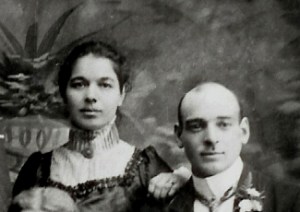
Italia and Ateo Frandi

****************************************************

Verna

Good morning Anne,

Ok …Firstly to answer your question: Where do I fit into the Frandi family? Simple answer , I don’t.

This may take a bit of explaining  but I will try and keep it as short as possible.

I’m sorry…when I did not receive your first email I thought maybe you did not believe I had a medal belonging to Ateo. I had to put myself in your shoes and think, who is this person who says (quite out of the blue) hey…I have a medal, it is more than 100 years old and does anyone in your family want it? So I thought if I told you what the inscription said it would let you know I was for real.

You may now be thinking that  if I don’t fit into your family anywhere, how do I happen to have the medal?

As I said it was in my grandmother’s possessions along with her first husband’s WWl medals and papers. I don’t know how she came to have Ateo’s medal and I don’t know if she knew him. She may have, the time frame fits. Back then in WWl and also in WWll  a lot of things associated with the wars were not kept.  The men did not talk about, or want  any reminders of their time fighting overseas. Well that was the case in our family, so as children we never knew about what our mothers and grandmothers kept hidden. But my grandmother had treasured the reminders of her husband that she had been given (married in 1916); he never came home. He is buried in Cologne cemetery in Germany.  She only had one surviving child to that marriage, my mother. My grandmother later remarried and had more children.

When my grandmother died, what she had in her possession was handed down to my mother, who had a life similar to my grandmother’s.  She also lost her first husband, in WWll;  he also never came home and is buried in Belgium.  My mother later remarried, and had three children. That’s where I come in.  My mother obviously kept her husband’s medals together with her father’s medals. She died in 1971 and my father remarried. We three children from his first marriage were not given anything of our mother’s after she died.

When my father died in 2009, my sister and I (my brother had since passed away) I had to contest his Will to receive some things  that belonged to our mother…long story.

Some of the few things we received were the war medals; not my father’s war medals, but my mother’s first husband’s medals and those of her father’s. The medals have been kept in the original box that my mother kept them in.

Verna continues …

in her letter which accompanied Ateo’s medal which she later posted to me:

I was looking through your blog and read your post, [link]: Letters To Anne Frandi-Coory  which included the two letters from your mother’s youngest sister, Anne Albert.  I was a bit blown away and I truly believe that Ateo’s medal was meant for you all along.   I am convinced a higher power, maybe my mother, encouraged me to find you. If all three circumstances hadn’t come together at around the same time, the medal would probably have been lost forever and never returned to its rightful home:

  • My sister and I received, in 2009, the few things that belonged to our mother:
  • Your memoir and Frandi family history  [link] Whatever Happened To Ishtar? was published in 2010.
  • This significant ANZAC year of 2014 prompted us to scrutinize carefully the papers and medals we received as a result of contesting our late father’s Will, discovering that one of the medals had a different name on it.

I couldn’t get that medal out of my mind and so I decided to research the name and other details inscribed on the medal. I found a few clues and of course your web site and Blog. If we had rightfully received our mother’s treasures years ago, and tried to find Ateo’s descendants at that time, we would not have been able to trace any and that would have been the end of it.

I now know that your mother, Doreen Frandi, lived at 56 Hewer Crescent, Naenae, Lower Hutt,  in Wellington …

56 Hewer Crescent, Naenae, Wellington, NZ


We lived at 28 Hewer Crescent. It seems from your aunty Anne’s letter that Doreen and her son Kevin lived there for some years prior to 1980. She also mentions that Doreen worked at a factory close by. I would think that would be the Philips factory; it was a large employer in Naenae for many years and most of Naenae worked there at some stage. They employed hundreds of people at any given time.  Doreen’s  next door neighbours at number 54 were the Hardies; a father and three children: Trevor, Roberta and Marianne.  Roberta worked at the factory for many years, possibly alongside Doreen.  

 Many connections, but the mystery remains: how did Verna’s mother come to have Ateo Frandi’s war service medal in her possession? Did Doreen give it to Verna’s mother for safe-keeping or perhaps Verna’s grandfather and Ateo were war mates and Italia gave the medal to him? Perhaps someone reading this post could enlighten us?

Verna.

***********************************

READ here about the naming of Frandi Street, Wellington, NZ, named in memory of Ateo Frandi and  the Frandi family who lived nearby for many years:

[Link here]   FRANDI STREET 

RIP Ateo Frandi

*Note: Anne Frandi-Coory has   since passed the medal onto Ateo Frandi’s great nephew who is currently serving in the New Zealand Armed Forces.

Aristodemo and Annunziata Frandi are the parents of Ateo Frandi and Anne Frandi-Coory’s maternal grandfather, Alfredo, who was Ateo’s youngest brother.

Aristodemo Frandi (Aristodemo from the Greek ‘Aristodemos’)

Annunziata Fabbrucci Frandi