Archive

ADOPTION & SEPARATION

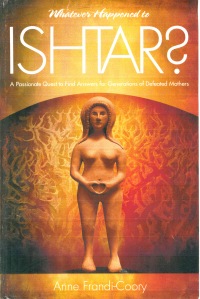
ishtar-front-cover‘Whatever Happened to Ishtar?’ by Anne Frandi-Coory  is a necessary read for any mother in order to help make an adjustment to your mindset in this information age filled with books on how to parent better.

Anne tells, in an honest and direct way, the reality of her childhood where her mother was largely absent; suffering neglect and abuse in the hands of the Catholic Church and her extended [Lebanese] family.  Despite this absence by her [Italian] mother, the rare moments Anne shared with her still gave her something enormous.

It is a balanced account such as she does acknowledge the education the Catholic Church introduced her to.

Why Anne’s story is one of redemption and healing is that, despite what she reveals of her childhood and subsequent adult quest to reach a place of understanding, Anne has in her, a life blood and intelligence that is vibrant and strong.  Anne knows how to live in the moment and embrace love and laughter to its full.

Anne is giving back to her children the opposite of what she was given which is a massive testament to her strength and sheer force of character.  So if you ever feel you are not giving enough to your child take a read of what Anne didn’t get from her biological parents.  Be encouraged by Anne’s story that even the most meagre rations her parents were able to give did make a difference to her.  How much more so, an available parent with intent to actively love her children, despite the inevitable mistakes you make along the way?  Such a mother  Anne has turned out to be, despite all odds.

<><><><

roseann cameron

Roseann Cameron, Christchurch New Zealand 25 November 2013

***********************************************************

Read here more about Anne Frandi-Coory’s mother: https://frandi.wordpress.com/2012/04/01/letters-to-anne-frandi-coory/

Read the latest, 4th edition of ‘Whatever Happened To Ishtar?’ published in 2020 HERE:

https://frandi.wordpress.com/category/whatever-happened-to-ishtar-fifteen-reviews/

SWITCHED AT BIRTH

by Frederick J George (or James F Churchman)

><

Who is this man?

><

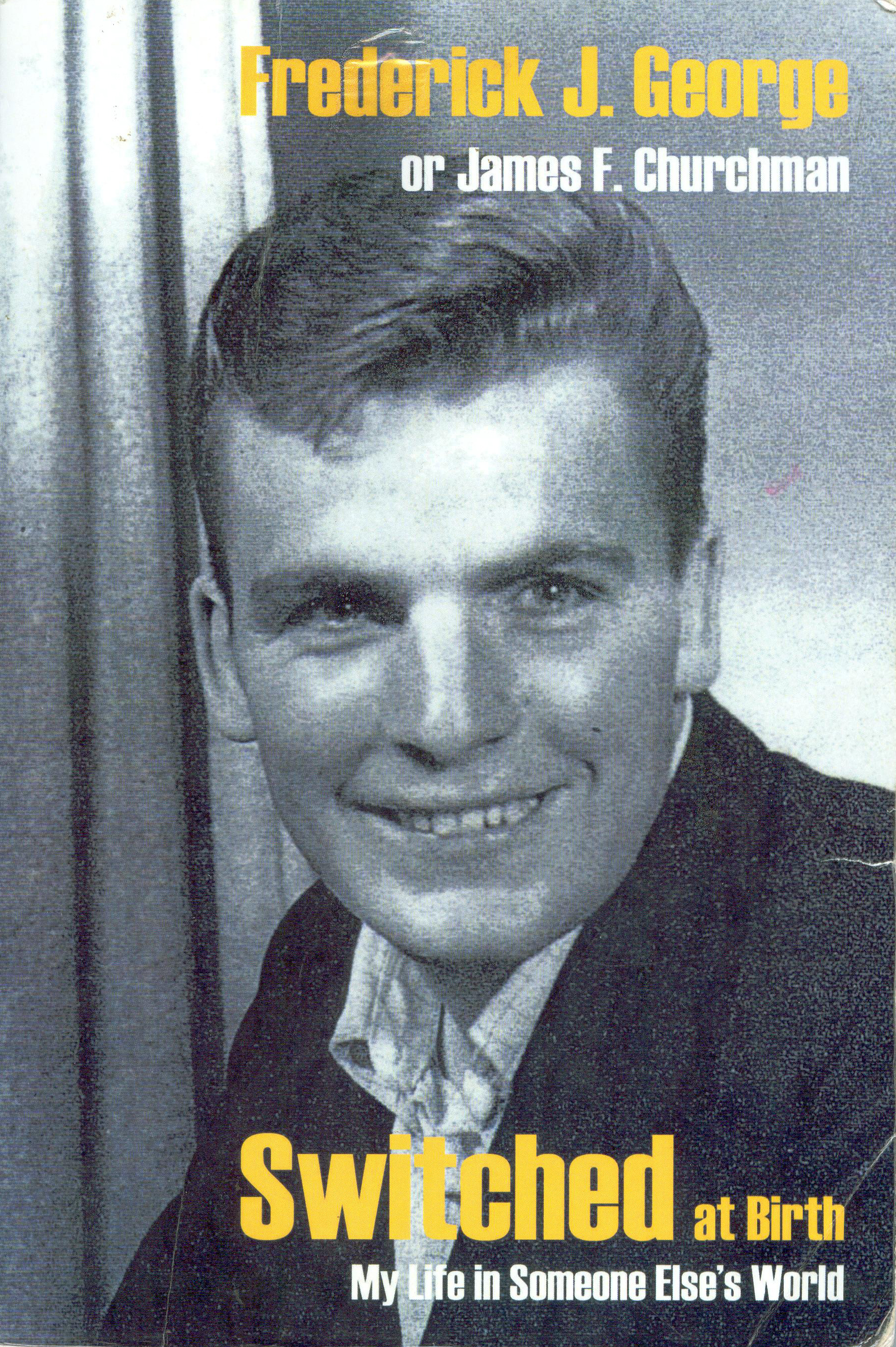
As a book lover I have been given many wonderful books, including biographies. One biography in particular stands out for its poignancy, Switched At Birth by Frederick J George in 2007.

Frederick George and James Churchman were switched at birth; we will never know the full story behind the switch. However, what we do know is that the respective mothers of Frederick and James loved their sons as they would their own flesh and blood.

It has meant much to Frederick that his biological mother, Helen Churchman was still alive when he discovered the truth of his birth. One of the things she was able to tell him was that although she never consciously doubted that James was her own son, she remembers remarking to the nurse a few days after the boys were born, ‘I think I may have Mrs George’s baby’ and that both women laughed.  Mrs Churchman’s ‘son’ James had a thatch of black hair, while Mrs George’s ‘son’ Frederick was blonde like Mrs Churchman and the rest of  her family.

In 2010 I had my own book published “Whatever Happened To Ishtar?” which like ‘Switched At Birth’ is about life in an immigrant Roman Catholic Lebanese family in Dunedin, New Zealand, during the mid to late 20th Century. At the time I wrote my book  I knew nothing of Frederick’s story, although I knew of the large extended George family, and often saw family members around the streets of Dunedin. For various reasons, I didn’t know any of them well enough to engage in conversation.  I had no knowledge of the Churchman family, even though James’ and Frederick’s families lived in close proximity to one another.  This, as it turns out, is one of the most poignant aspects of the whole saga, but also one of its saving graces: at least the boys grew up together and knew their biological parents, albeit superficially.

In the book, Frederick recalls in detail his life growing up with the George family. His has mixed feelings about his ‘father’ John George and his volatile temper, (Not I might venture to say, unusual in Lebanese men). He further writes that the subject of his ‘suspicious’ parentage only ever came up within his immediate family when his father was angry about something Frederick had done that had displeased him.  Then he would accuse his wife, Ngaire, of sleeping with another man when she conceived Frederick because he ‘sure doesn’t look Lebanese!’  Ngaire George, who was not Lebanese, would respond good naturedly and tell her husband not to be so ridiculous.

As fate would have it the George boys and the Churchman boys were good friends and hung around together playing sport and engaging in other social activities.  The main difference between the Churchman and George families, apart from ethnicity, was religion; Presbyterian and Roman Catholic respectively.

The boys from both families were involved in the hustle and bustle of family life and the issue of the blonde boy in the Lebanese family and the black- haired boy in the Anglo-Saxon family, by and large remained unquestioned, at least publicly. But privately, Frederick  writes: ‘I used to have these peculiar feelings …of being in another world, or in someone else’s identity’. He goes on to say ‘Actually, I was in someone else’s world, and so was Jim Churchman…he was in the world I belonged in and I was in the world he belonged in.’  James told Frederick that he used to have those same feelings.  Ngaire George often said to Frederick, ‘You live in your own world!’ … ‘She was right, I did’.

Both mothers genuinely believed that each of their boys’ odd-one-out complexions were some sort of throwback to their genetic roots.  Frederick writes of the many coincidences and parallel life experiences of members of the two families, and they are compelling, in hindsight and in light of knowledge of the switch.

Years later, the suspicion of a switch at birth became an urgent issue for ‘James Churchman’ (the real George boy) when he became seriously ill. In his fifties, he had a severe heart attack. This was particularly significant, because there was no history of heart attacks in the Churchman extended family, but there was in the George extended family.  While James was recovering in hospital, he asked his best friend, Frederick’s Lebanese brother, to contact Frederick who was then living in the US and ask him to organise a DNA test for himself, while he James would do the same. The tests proved beyond any doubt that Frederick and James had been switched at birth.

As you can imagine, the news was life-changing for both families, but particularly for the men themselves.  The saddest thing for James was that he never knew his biological parents intimately and never would. Out of both sets of parents, only Helen Churchman was still alive when the test results were revealed, and she was then in her eighties.  James often spoke to Ngaire George when he called on her sons, not knowing who she was in reality.

Frederick says at the end of the book that he is left wondering what life would have been like with his biological family.  What had he missed out on, if anything?  How different would his life have been? Questions that will remain unanswered.

-Anne Frandi-Coory  24 February 2012

Renoir: ‘On The Terrace’ 1879. In Memory of Missing Mothers

><

One of the saddest things for me that has come out of research for my book  Whatever Happened To Ishtar?  is the fact that some historical birth and marriage certificates only record the names of fathers and paternal grandparents.  It was indicative of an era when only males were considered important in the scheme of life.  Although I have built up an extensive family tree of both my Lebanese and Italian ancestors, there are many gaps where a mother’s name should be. And each gap represents not just a missing name but links to whole lineages.  As  examples: when, after many years of searching,  I located an ancient document of my maternal great grandmother’s birth,  her mother’s name was omitted;  a marriage certificate where both the mother of the bridegroom and of the bride were omitted.  In some other cases I was able to find the information in a baptism confirmation certificate or in immigration archives, but my family trees have several names missing.  My hope is that descendants of those families I have written about, will  read my book and help fill in some of the missing gaps for our descendants.

Familial Bonds. From Cultural Anthropology by Roger M. Keesing.

What  Adoption Dismisses: Biological Connections

Being related to someone, having that biological connection to a mother who has given birth to you, is what is called the primary bond.  This event of creation  is our connection to the human race through thousands of years of evolution.  It is the  innate and emotional blood-bond and instinctive mother-child relationship. The biological/genetic connection to a family, to a mother and a father,  is highly important in any society.   The basis of any successful society is the family unit; it is on this basic foundation that a society establishes itself, and has done so since human society began.   Aborigines and Moari have always known this.

Sometimes we just need to get back to the basics!   Perhaps Western society just got too complicated.

**************

See post Adoption & SeparationThe Wound That Never Heals

Motherhood - The Ideal. Massimo Stanzione,  Naples 1640s

Hello Elizabeth,

I do empathise with you although I wasn’t adopted myself, but two of my half siblings were. I wrote about them in my book Whatever Happened To Ishtar?. See more on my blog about the negatives of mother/child separation, adoption under category Adoption & Separation. I was abandoned by my mother and placed in an orphanage, but I at least knew who my biological parents were. In all the years I have met and spoken with adoptees, I only ever met one man who did not wish to trace his biological parents. What came of my talking to adoptees was that it didn’t matter how good or bad their parents were; what mattered to them was knowing who and what their bio parents were, and why they were given up for adoption. It seems to me that adoption itself isn’t always bad, it is how it is carried out.

In the past, women like my mother, were forced by Catholic nuns to give up their new born babies, and most of these mothers never recovered from their loss. See Philomena’s and Sheldon Lea’s stories on my blog. The nuns never allowed these mothers to contact their lost children; refused to pass on information about the adoptions or the mothers’ names. The suffering in these cases, for mothers, and children,  was  life-destroying.

I understand what you are saying when you talk about your dad’s spirit being with you. The father you didn’t get to meet. I feel the same about my mother. The emotional pain she transmitted to me, persisted until I finished writing the book and she finally was at peace. Take care. Anne.

Visit Adoption Critic for ‘Dear Incubator‘ letter and comments…….

Australasian Catholic Orphanage in the 1940s

Updated 11 April 2017

In an  article about Catholic adoptions, written by a reporter at the Guardian Newspaper  in 2009, excerpts appear from the book: The Lost Child of Philomena Lee’ by Martin Sixmith. (This story has been made into a film Philomena –  starring Judi Dench).  It  tracks the heartbreak of an unmarried  mother (fallen woman) whose  son was adopted out as an infant.  After years of trying to come to terms with her loss, Philomena attempts to track down her son and he in turn looks for her.  They are thwarted by various institutions and cruel nuns, her son dies before she finds him, not knowing that she was searching for him too.  The book encapsulates the hardships experienced by young mothers and their infants following the adoption process which was often forced on them by the Catholic Church.  Stories such as this  were repeated over and over in the 40s & 50s, not only in Britain and other parts of Europe, but also in Australasia.  My mother, Doreen Frandi (see my post   ‘Whatever Happened To Ishtar?’), experienced a similar fate at the hands of the Catholic Church.

Philomena tells the reader that after giving birth, the girls were allowed to leave the convent, only after they or their families paid the nuns one hundred pounds.  The vast majority couldn’t afford this sum, so lived a life of  ‘pay back’ drudgery for three years while living  in the convent.  They made artifacts and rosary beads and the Church kept the profits from their sales. [See post July 2010 ... Carla Van Raay’s book God’s Callgirl]. The young mothers were forced to sign a document giving away all their rights to their infants and surrendering them to the nuns.

None of the mothers wanted to give their infants up, but instead of assisting them to keep their babies, the nuns reminded them that they would not be able to keep their babies and work for their upkeep at the same time.  Even though she was in her 70s when the article was written,  Philomena still cried at the thought of what happened on the day the nuns took her little boy from her.  Because her family refused to allow her to return home,   she was sent by the Church to work at a home for delinquent boys.

After marrying and having children, Philomena set on a path to find her lost son.  She returned again and again to the convent, but the heartless nuns  just kept reminding her that she had signed a legal document stating she relinquished all rights to her son and that she would never attempt to find him.

Philomena quotes in the book “Early on in the search, I realised that the Irish Catholic hierarchy had been engaged in what amounted to an illicit baby trade.  From the end of the second world war until the 1970s, it considered the thousands of souls born in its care to be the Church’s own property. With or without the agreement of their mothers, it sold them to the highest bidder. Every year, hundreds were shipped off to American couples who paid ‘donations’ (in reality, fees) …the only condition laid down by archbishop McQuaid was that “… [the adopting parents] should be practising Catholics”.

Separated by fate, mother and child spent decades looking for each other and were repeatedly thwarted by the refusal of the Church to reveal information about the family who adopted the boy, each unaware of the other’s heart-breaking search.   Her son spent his last years in a downward spiral; tormented by his inability to find his mother and the orphan’s sense of helplessness, he didn’t know where he came from, who he was, or how he should live. He felt unloved by his adoptive family, especially his father.  When he contracted aids, he made one last emotional plea to the convent orphanage for information about his mother but they steadfastly refused to oblige this dying man’s final request.  He asked therefore if they would at least grant him permission to be buried in the convent cemetery where upon his headstone he could place enough details so that if his mother ever came looking for him (my emphasis) she would know where he was buried.   The nuns callously  remained tight-lipped about the fact that his mother had been searching for him for decades and that his maternal aunts and an uncle lived just a few miles down the road from the convent.  His mother found his obituary in a US newspaper.

Philomena Lee’s story

delinquent-angel

Shelton Lea

Delinquent Angel,  a biography about a Melbourne poet, Shelton Lea,  written by Diana Georgeff in 2007, is another  tragic story about a man’s futile search for his birth mother, the  Lea  family (NSW Darrell Lea chocolate dynasty) who adopted him and whose ulterior motives  didn’t include a loving family life.  Yes, and another Christian institution was involved.

Lea Family dynamics proved disastrous for Shelton and his adoptive mother placed him in a psychiatric institution at the age of three.  But his biological heritage eventually shone through and although his was a  brilliant talent, tragically it never reached its full potential.

-Anne Frandi-Coory 28 August 2013

Also here on Anne Frandi-Coory’s Facebook page

https://www.facebook.com/myhomelibrary/

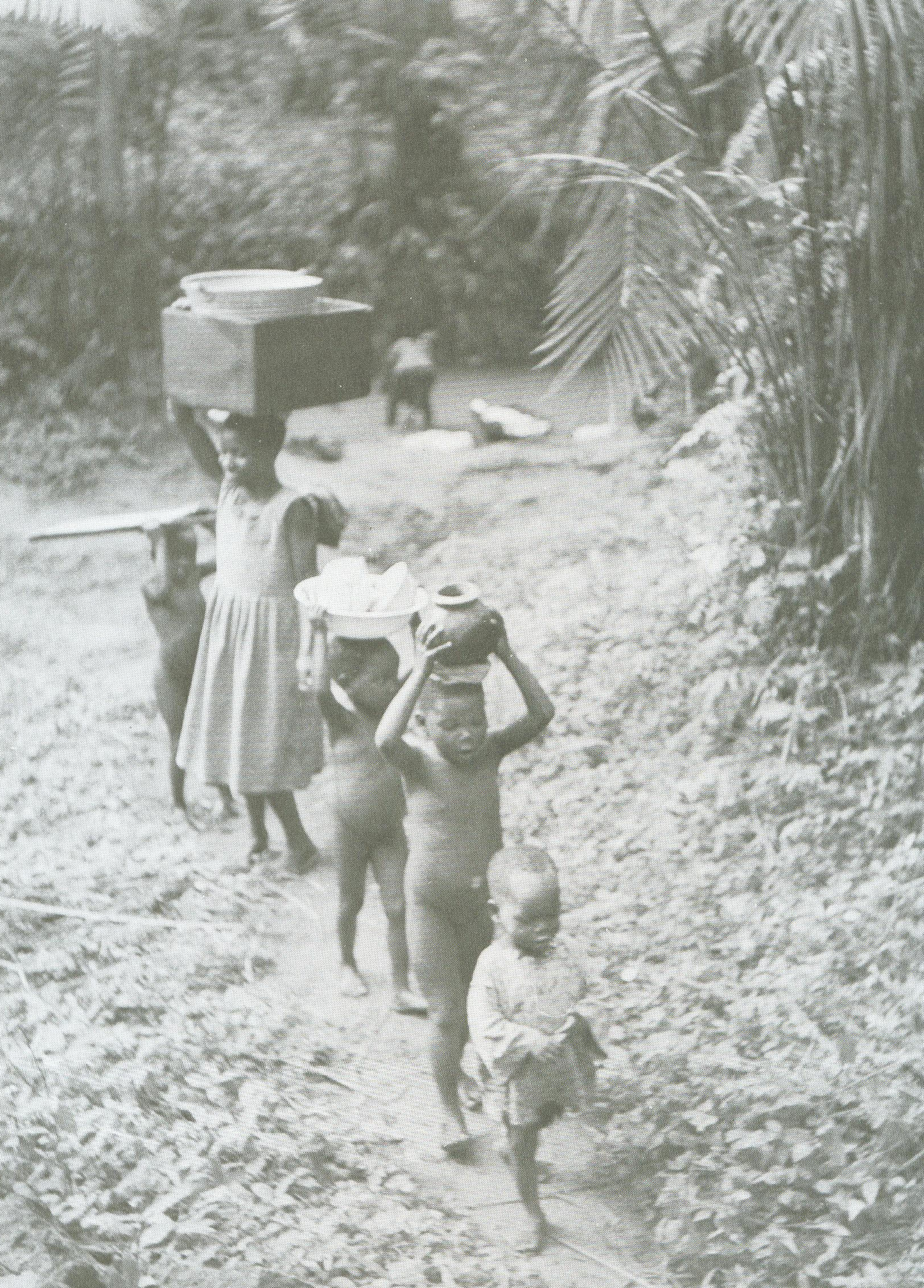
Kayapo mother and child in the Brazilian rain forest. Photo: ‘MILLENNIUM’ David Maybury-Lewis

I have interviewed and spoken with many adults who were adopted out as babies, during the process of writing  my book Whatever Happened to Ishtar?’,  and only one man told me that he was not interested in tracing his birth mother or his biological roots.  I believe that most babies removed from their  mothers soon  after birth, suffer psychologically in some way and this in turn affects their personality.  How could it not?  We are after all, animals, with a sense of smell like any other, and mother and child have a special smell each recognises.   Our mothers carry us around in their wombs for nine months and the newborn knows its mother’s heart beat intimately.  We can learn many lessons about mother/child primordial bonds from animals in the wild, especially elephants.
Most Children’s  dis-connection with their biological families is a tragedy and sets them up for lifelong feelings of not quite  ‘fitting in’ anywhere.  Their self-identity is compromised. If an adopted child is lucky enough  to have an adoptive mother who is genuinely caring and who is supported by  a strong adoptive father and extended family, then the outcome can be reasonably good. But most of these children still need to know who their biological parents are and to know their genetic background.  Often, these adults I spoke with, told me that they became  more contented with their lives, and more fulfilled,  once they had discovered their roots and met members of their biological families, even if the relationships were not carried on for various reasons.  Just meeting with family members and learning about their heritage, was enough for some adoptees.  Others of course developed close relationships.  Unfortunately, far too many adoptions turned out to be nothing less than unmitigated disasters for both mothers and children.
The majority of mothers who adopted their babies out  in the past, carried feelings of guilt and loss for the rest of their lives.  Many descended into depression or severe mental illness.

Losing a child through adoption (and it is a loss) has a far more damaging effect on the mother than does abortion.  Mothers may think they have dealt with their loss, but often it is just buried deep within their sub conscious.  In the past, the general consensus was that if the baby was removed from their birth  mother soon after birth, neither would suffer any lasting psychological damage.  The child would grow up completely inculcated into the ways and traits of its adopted family, and that genetics didn’t come into it; nurturing was everything.  This has proved to be so utterly wrong.

I worked as a case worker for the Department of Social Welfare in New Zealand for a time.  And it was gratifying to see that children living apart from their parents and extended families in foster homes, were encouraged to keep family photograph albums along with scrap books of their biological family members’ lives.  Even allowing for the fact that in most cases the children were abused by those same families.  The children were proud of their families and loved showing case workers albums and scrapbooks, as though to reinforce their own identity.