Archive

BOOKS In My Fiction Collection-REVIEWS

The Angel’s Game 

by Carlos Ruiz Zafón

The Angel's Game


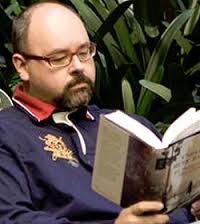
Carlos Ruiz Zafon

Carlos Ruiz Zafón


A few years ago a friend recommended a book by an author who up until then I had never heard of. The title of the book was The Shadow of the Wind  by Carlos Ruiz  Zafón. What a book, what an author! A sentence from a New York Times review said it all for me:

Gabriel Garcia Marquez meets Umberto Eco meets Jorge Luis Borges…Ruiz Zafón gives us a panoply of alluring and savage personages and stories…I couldn’t have put it better myself!

There is absolutely no doubt  Zafón is a book lover; only a lover of books could write with such intrigue around a ghostly, hidden “cemetery of forgotten books”!  Dark mists swirl in and out of every page, and this master story teller sets your imagination afire!

During my hauntings of book fairs and second hand book stores, I discovered The Angel’s Game, not realising at the time it was part of  Zafón’s Cemetery of Forgotten Books trilogy.  I have just finished reading it and once again I was lost in Zafón’s world of the most beautiful prose, passionate love, corrupt  police, unsolved murders, hapless humans possessed by what? Satan? Was Senor Sempere, of Sempere & Sons book store, right when he declared that authors’ souls are in the books that they write? Is that why he valued David Martin’s  book so much that he kept it in a locked glass case? I do think Zafón’s soul combines with the reader’s soul to create an alchemy that drags you into the story as though you were a bystander; perhaps just a little too close for comfort?

Zafón:  I write because I really have no other choice. This is what I do. This is what I am…Every book, every volume you see here, has a soul. The soul of the person who wrote it and of those who read it and lived and dreamed with it. Every time a book changes hands, every time someone runs his eyes down its pages, its spirit grows and strengthens.

Like The Shadow of the Wind, The Angel’s Game is set in Barcelona ‘the city of the damned’. And like every major city in the world, Barcelona has its dark and dangerous side. This is a book with an atmosphere of evil versus innocence in which mostly evil seems to be winning.  Yes, Senor Zafón I do believe the angels are treating human life as a game!

David Martin is an author who rents an abandoned towered mansion in the heart of Barcelona. The history of the previous owner is becoming an obsession and David is certain that a storage room in the house is ‘occupied’ with something sinister. He has no idea who owns the boxes of clothes and objects in the room, preferring to keep the door locked!  At the same time he is battling with his love for an unattainable young woman whom he has known since childhood.

A paragraph from The Angel’s Game gives an insight into author David’s despair at the realization that all of his life’s dreams have been shattered:

Two hours later sitting in the armchair of my study, I opened the case that had come to me years before and contained the only thing I had left of my father. I pulled out the revolver, which was wrapped in a cloth, and opened the chamber. I inserted six bullets and closed the weapon. I placed the barrel against my temple, drew back the hammer and shut my eyes. At that moment I felt a gust of wind whip against the tower and the study windows burst open, hitting the wall with great force. An icy breeze touched my face, bringing with it the lost breath of great expectations.

If David had known what was to come, surely he wouldn’t have allowed a mere icy breeze to put him off the task at hand!

I wondered, after reading this amazing book, that maybe there are times in our lives when we have no option but to sell our souls to the devil…what do you think?

-Anne Frandi-Coory 25 April 2016

*****

Please visit Anne Frandi-Coory’s facebook page here: 

https://www.facebook.com/myhomelibrary/

*****

 The Trilogy by Carlos Ruiz Zafón    http://www.carlosruizzafon.co.uk/


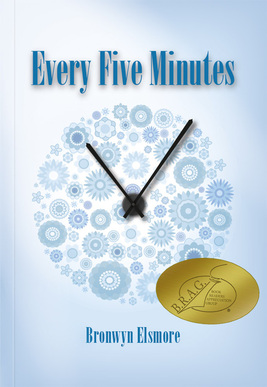
Every Five Minutes


Every Five Minutes

This is a beautifully crafted story about love, but it never-the-less cleverly leaves so much unsaid. Words like ‘I love you’ are unnecessary and time isn’t always about yesterday, tomorrow or next week …time is a touch, a smile, a smell, each  transporting  a lover to memories  they may want to sink into.  By these visceral descriptions the reader gains a clear insight into the thoughts and reactions of the two main characters, Gina and Mark.

Mark seems to know intuitively what is on Gina’s mind. Although he lives a very ordered life, and wears an “anti-wedding ring to repel predators”, he is gentle, extremely patient and he loves his dog, Electra.  Electra is an  intermediary  between two people skirting around a  love affair that wants so much to happen. It falters and stumbles because of the protective wall Gina has built around herself against the risks of intimacy. We never learn the detail of what has happened to Gina in her past, but you get the gist by her gestures and actions. Mark always seems to understand, lets Gina lead the way, well mostly. His minutely planned inventiveness in getting Gina to say ‘yes’ is surprising, when all she wants to do is to think about ‘it’ for two or three weeks.

The style of writing is refreshing, the format quirky. New Zealand author Bronwyn Elsmore  puts it all together in a way that allows the reader, from the first few sentences, to know Gina and her foibles well. We come to empathise with her deepest fears, respect why she needs her comfort zones that border on the neurotic. At the same time, her persistent suitor, Mark, manages to steal our hearts.

This is a relatively small book of 187 pages. The author could easily have written the same story with double the number of pages, and words, but it would have been a completely different work.  It may then have been thrown into the genres of either  Chick Lit or Romance. Instead, we have a powerful novel about a once-in-a-lifetime-love, which would sit comfortly on shelves dedicated to ‘Behavioural Psychology’ or perhaps even ‘The Philosophy of Relationships’ in a library

Such a bitter sweet story;  funny, heart-breaking, whimsical  and  endearing. You will find yourself alternatively smiling, tearing up, or sighing, as you turn the pages.

Available here: AMAZON 

Bronwyn Elsmore


More about Bronwyn Elsmore: http://www.flaxroots.com/


– Anne Frandi-Coory  9 March 2016


Please visit Anne Frandi-Coory’s facebook page here: 

https://www.facebook.com/myhomelibrary/


Rose Edmunds

Rose Edmunds


*****************************************

CONCEALMENT  by Rose Edmunds

Concealment 2

has everything I love in a psychological thriller, and more.

The author creates brilliant characterizations within the framework of high finance, taxation and corporate subterfuge. At the same time, she manages to convey to the reader, the emotions and background family dramas of individuals central to the plot, without over dramatization or sentimentality. She writes about the unraveling of a corporate high flier’s brilliant mind as though she had experienced a similar psychosis. Perhaps she herself has been there, but you will have to read the novel to find out!

This is a fast paced read, so much so that I couldn’t put the book down; one of those books that keep you reading into the wee small hours.

-Anne Frandi-Coory 7 November 2015

***************************************************************

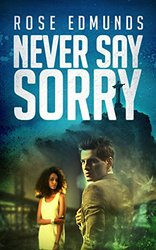
Never Say Sorry

Another great book by Rose Edmunds here: http://www.amazon.co.uk/Rose-Edmunds/e/B00766PN4O/ref=ntt_athr_dp_pel_1


<><><>><><>

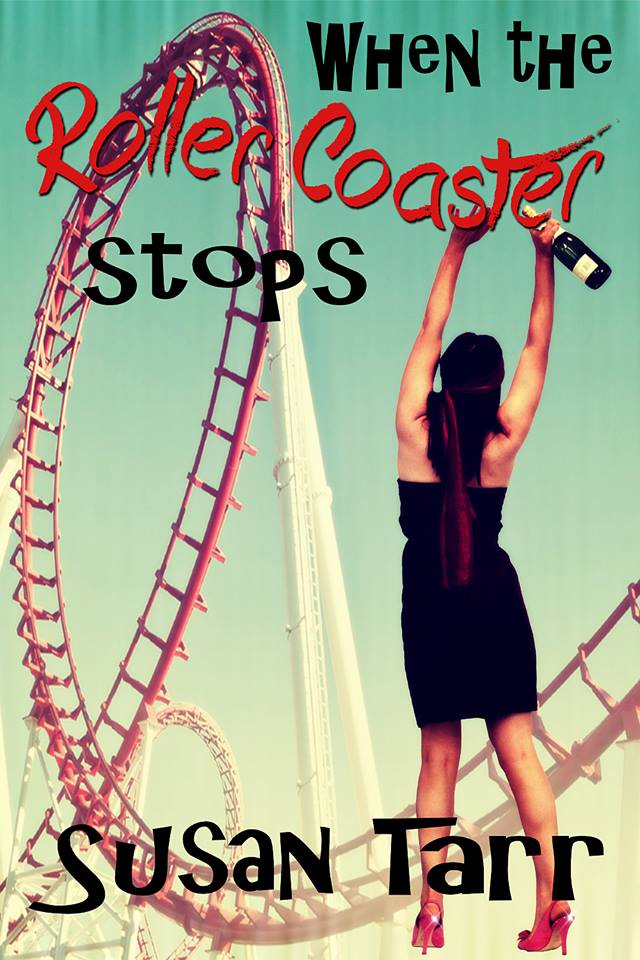
When The Roller Coaster Stops

<>><><><>

WHEN THE ROLLER COASTER STOPS  by Susan Tarr

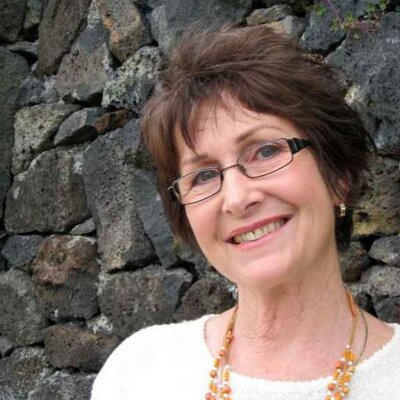
Susan Tarr

Susan Tarr

I normally shy away from books with a storyline around terminal illness; the emotional trauma, the suffering the illness causes and the despair of friends and family.  However, Susan Tarr, with her exquisite writing skills, manages to make ‘When The Roller Coaster Stops’ into an adventure full of life, hope and quirkiness.

The two main characters, Bethany and Kate, although from very different backgrounds, manage to bring the very best out in each other. Well maybe not in the early stages of their relationship, but certainly towards the end. Frumpy Kate meets stylish, perfectly coiffured Bethany when she is employed by Bethany to clean her luxury apartment.  There are so many ‘truths’ here, about personal interactions, ulterior motives, and co-dependency that I marvelled at how expertly the author managed to stay on track to keep the reader transfixed right to the last few words written.

Weaving in and out of the two women’s lives, are gay friends, Bethany’s ex husband, and other friends who are not always welcome. There are plenty of tranquil days when the two friends can relax at a beachfront holiday house or lie together in bed talking and sleeping. Contrasted with these days, are the never ending bitchy tiffs between Bethany and Kate, and gay friends, Simon and George.  During the different stages of her illness Bethany suffers episodes of depression and self pity which she takes out on soft targets Kate and George. Bethany could be manipulative and positively cruel to those who genuinely cared about her.

Even allowing for the subject matter, I thoroughly enjoyed this book from beginning to end. It is essentially a book about the brutal honesty of shared intimacy, human failings, and the untimely interruption of fate. Then again it could very well be interpreted as a story of loyalties in which sacrifices are made for another’s well being, or not.   But you know, I think it’s more about a vibrant, once selfish young woman’s terminal illness slowly shrinking her privileged, dazzling world into the confines of her apartment with a handful of people who she finally realises mean everything to her. Like all Susan Tarr’s books, you never know what to expect from one chapter to the next.

Anne Frandi-Coory  8 October 2015

><>><><><><><

***

A new Hero is in Town!

Serpent 1

This is another epic, spell binding story I could not put down! One of my favourite authors, Luciana Cavallaro writes in a way that places you smack in the middle of whatever is happening in Ancient Greece, Ancient Egypt, or in Perth, Western Australia!  There is nothing about Ancient Greek gods Luciana hasn’t researched and studied, and when Zeus appears before Evan Chronis to give him an urgent Herculean task, you are there to witness it! – Anne Frandi-Coory

Also on Anne Frandi-Coory’s facebook page https://www.facebook.com/myhomelibrary/

The Search for the Golden Serpent is on……… 

Read on *************************

Meet Evan Chronis, a talented architect from Perth, Australia with a chronic sleeping problem. His dreams are so vivid they feel real. Did he actually go for a swim while he slept? They begin to affect his work and health.  He seeks medical help to find out what’s happening to him.

In Search for the Golden Serpent (eBook published March 27) Evan meets Zeus, the King of the Gods. Zeus tells him in order to get back home he must journey through forgotten worlds, lost in antiquity.

***

Here’s more:

serpent 2It’s not where he appears, it’s when.

What if you’re born during another time, grew up in the 21st century and then were thrust back into the past? Confused? So is architect, Evan Chronis.

Evan, drawn by screams, ventures out to his backyard and sees blood trickling down the limestone stairs. He steps off the veranda and finds himself in the days of great and marvellous power, a time when the gods ruled the universe.

To return to the 21st century life he longs for, he must risk his life in search of powerful, treasured relics older than the Holy Grail. But what he finds might be more than he expected.

Will Evan find the relics and return home or will he remain forever stuck in a world so different from his own?

Order your copy from:

Amazon

Smashwords

Historical fiction fantasist Luciana Cavallaro, and a secondary teacher, meanders from contemporary life to the realms of mythology. Luciana has always been interested in Mythology and Ancient History but her passion wasn’t realised until seeing the Colosseum and the Roman Forum. From then on, her inspiration to write Historical Fantasy was borne.

She is the author of 5 ebooks and 1 paperback and has spent many lessons promoting literature and the merits of ancient history. Subscribe to her free short story at http://www.luccav.com.

You can connect with Luciana Cavallaro via:

serpent 3Website

Twitter

Facebook

Google+

LinkedIn

Pinterest

Amazon http://www.amazon.com/Search-Golden-Serpent-Servant-Gods-ebook/dp/B00TO8TT9W/ref=sr_1_6?ie=UTF8&qid=1424238434&sr=8-6&keywords=luciana+cavallaro

Smashwords https://www.smashwords.com/books/view/520605

MORE REVIEWS of books written by Luciana Cavallaro: https://frandi.wordpress.com/2013/12/30/accursed-women-book-review/

BOOK REVIEW:

Updated for new edition April 2018…

 MIRANDA BAY   by Susan Tarr  


><><><><

51Dv-iFcj4L._SY346_


  Well, what a book! From start to finish, reeling with every twist and turn, the reader never knows how Miranda Poole’s day to day running of her ‘resort’ is going to end, for her or her guests (poor fools)!  Resort-savvy guests wisely leave very quickly without so much as a backward glance after taking one look at the ramshackle ex-sanatorium Miranda has invested her life savings in.

I love author Susan Tarr’s characterisations. She obviously has an in-depth knowledge of what makes people tick in any given situation, without being over emotive or too over the top to be believable.  In other words, the author has a genuine understanding of the width and breadth of human nature.

I particularly relished New Zealand flavours throughout the saga: Auckland’s Queen Street, Pohutukawa trees, sandy beaches, and flax stands to name but a few. They paint a vibrant background canvas for characters like Neville Sykes, Jack the wavering priest, Hamilton Sofbotham, the colourful staff, all who conspire to make Miranda’s venture more like a roller coaster ride than a prime of life experience.  And then there are the paying guests. Enough said!

Miranda’s binge drinking increases as her debts pile up. But everything is exasperated by Hamilton’s obsession with her and his constant demeaning of her ability to run the resort.  Depression causes her to withdraw suppressing her once bubbly personality. Her cousin and best friend, Pansy Poole, gradually takes over most of the management of guests and staff. Unfortunately, easy going Pansy is fast losing patience with her cousin, and their friendship is being thoroughly tested. Both miss romance, cafés and the excitement of Auckland city.

I won’t give away the ending, but I will say that it surprised me.  As the story progresses, I was beginning to think Miranda’s quickening downward spiral was going to take her to the nearest psychiatric ward, never mind dilapidated sanatorium!

What a fabulous Peter Jackson movie this fabulous book could be made into…

By the way, I wouldn’t class this as a Chick Lit novel, it’s way too smart and knowing for that (sorry chick lit fans).  To my mind it’s more of a 30-something’s catapult into maturity.

– Anne Frandi-Coory 17 October 2014

Also here on Anne Frandi-Coory’s facebook page: 

https://www.facebook.com/myhomelibrary/

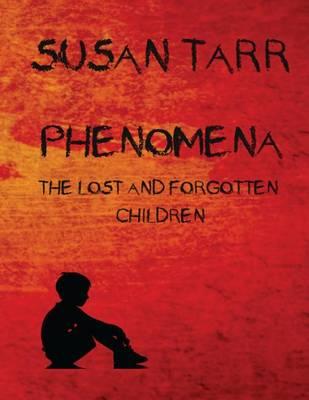
PHENOMENA: The Lost And Forgotten Children

 by Susan Tarr.
*****

Updated 3 July 2018 –  ‘PHENOMENA has been nominated for several book awards, and the latest is to be shortlisted for Book of the Month Amazon UK, Amazon US and Amazon CA …

*****

phenomena susan tarr

*****

At the heart of this book is the story of a ‘disabled’ little boy whose journey through life is narrated with empathy and compassion by author, Susan Tarr. Not long after the tragic death of his baby brother, followed closely by the death of his beloved mother, he is abandoned by his father at a railway station. When this severely traumatised little boy is picked up by authorities he can’t or won’t give his name.  In fact, he refuses to speak at all. The decision is made to admit him to the Seacliff Lunatic Asylum, a common practise in the 19th and early 20th centuries in New Zealand. Upon admission into Seacliff he is given the name, Malcolm, and there he withdraws completely into himself. He is subsequently diagnosed as being of below normal intelligence as well as having some kind of mental illness. He is incarcerated in the Asylum with other traumatised children; some with their mothers and others, like Malcolm, alone.

*****

seacliff 002

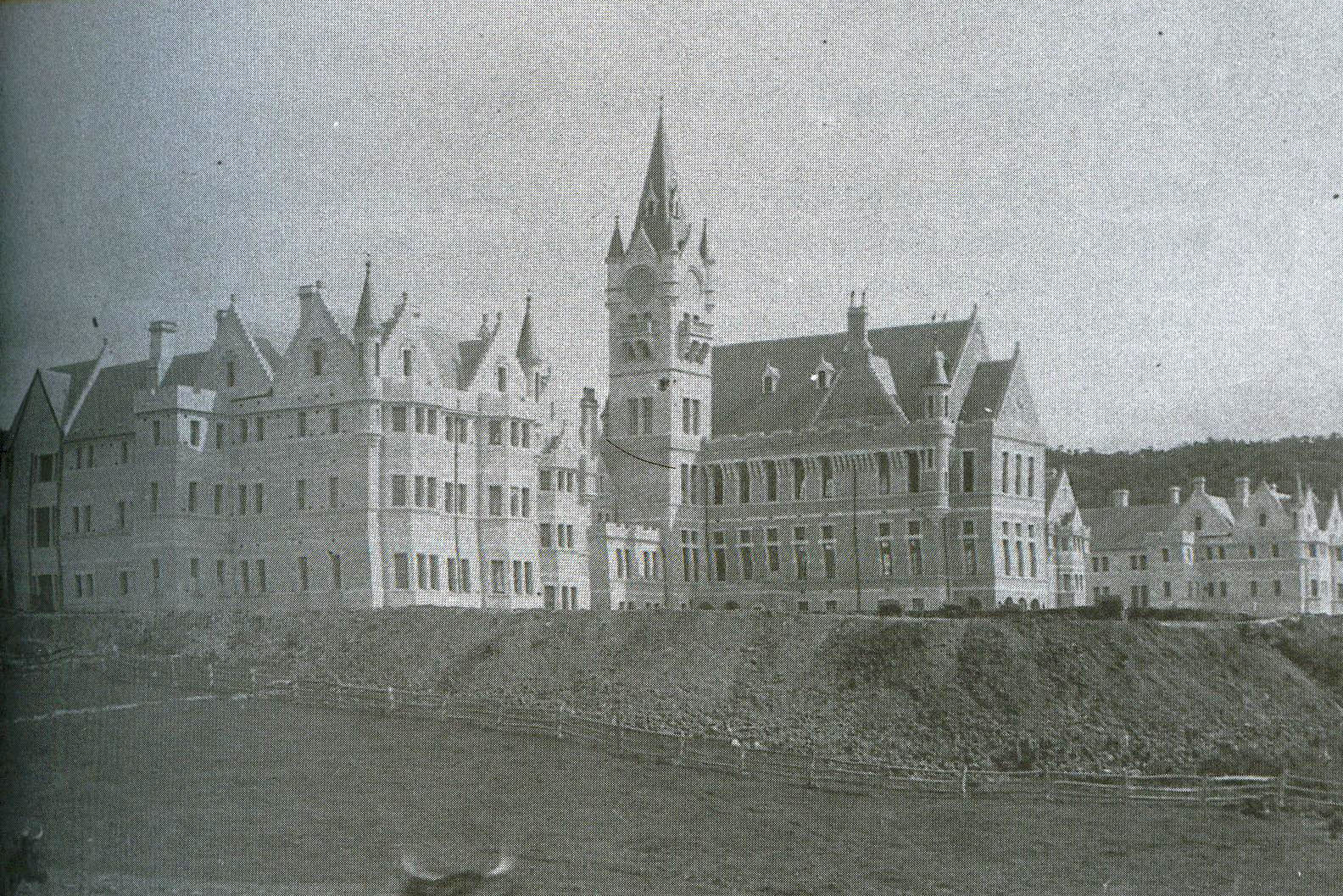
Seacliff Lunatic Asylum in Dunedin, New Zealand. Demolished in 1959.

*****

Although a work of fiction, Malcolm’s story is based on a true story. In actual fact, the author knows ‘Malcolm’ personally and she has made his story a composite of the lives of many children who grew up in the Gothic styled Seacliff Lunatic Asylum. This is partly to protect his true identity and partly to weave into the book the lives of other ‘lost and forgotten children’ in psychiatric institutions.

Susan Tarr lived in a small East Otago coastal settlement near the mouth of the Waikouaiti River, situated approximately 20 miles north of Dunedin city. Seacliff Village relied on Seacliff Lunatic Asylum nestled on the hill above it for its commercial existence. Many residents of the village worked at the asylum as attendants, nurses, cleaners, cooks, gardeners and tradespeople. Susan Tarr had relatives and friends who were employed as staff, and she has herself  previously worked at  Seacliff Asylum and other psychiatric hospitals.

I grew up in Dunedin and knew of Seacliff  the asylum although I knew of no-one who had been a patient there. Whenever anyone spoke of Seacliff, it conjured up for me, images of raving, salivating lunatics. However, I did have a school friend my own age who attended St Dominic’s College at the top of Rattray Street in the city at the same time I was there. She travelled by train to and fro between Waikouaiti train station and the College every school day.  On occasion I was invited to her home where I met her parents and siblings. Her father was a psychiatric nurse at Seacliff. It transpired that Susan Tarr also knew my  school friend and her family very well; they were near neighbours in the residential settlement at Seacliff/Waikouaiti.

I had never communicated with the author before I saw her post on Twitter with a link to information about Phenomena. So it was very much a chance connection. I bought and downloaded the book immediately onto my tablet and I couldn’t put it down. Not only because it is so well written, but also because it evoked memories of Dunedin which I had left behind many years ago.  Susan Tarr writes in detail about the parks and streets in and around Dunedin. She has accessed personal diaries, old letters, and interviewed ex-staff and former patients for the book. Personal and shared experiences with the author’s workmates, family and friends have added to the depth of this work.

To accompany Malcolm on his journey through the pages of Phenomena is to gain a remarkable insight into the thoughts and feelings of sufferers at a time when mental illness was little understood. The harsh treatment of children at Seacliff, an institution completely devoid of love and understanding, is heartrending. Most of the children suffered from nothing more than emotional trauma, or epilepsy. Some patients, admitted as children, spent their whole lives incarcerated at Seacliff, and died there. Women who succumbed to misdiagnosed post-natal depression were declared ‘insane’ and locked away from family support and their children which often deepened their depression, developed into psychotic states or far worse.  Ex-soldiers suffering battle fatigue and Post Traumatic Stress Disorder, (not properly diagnosed at the time) were also among patients at Seacliff.  There were also many ‘criminally insane’ inmates but they were locked up in a secure section of the hospital.

At the forefront of institutional care for the ‘insane’ in New Zealand in the late 19th and early 20th Centuries was Dr Frederic Truby King, known as Truby King. Malcolm’s story brings to vivid life the day to day existence for patients at Seacliff  under the radical ideas instituted by Dr King. The doctor was well qualified at the time, having gained a Bachelor of Medicine and Science, and Master of Surgery at Edinburgh University. In 1894 he returned to Edinburgh to study Brain Pathology, nervous and mental disorders. He became a Member of Psychological Association of Great Britain. During Dr King’s tenure as Medical Superintendent of Seacliff between 1889 and 1920, his energy and compassion towards patients earned him a ‘solid reputation’. But he ran the Asylum with the authoritarian and disciplinarian attitudes of the era. Concurrently, Dr King held the lectureship of mental diseases at Otago University and consultancies in Public Health and Medical Jurisprudence. As if that wasn’t enough, he was also responsible for the overall management of auxiliary institutions at Waitati, and The Camp on the Otago Peninsula.  In terms of the horror stories recorded at other lunatic asylums around the world, there is no doubt Dr King began a benign revolution in the care of the mentally ill.

Susan Tarr cleverly weaves the changes Dr King brought to institutional care through Malcolm’s eyes. The detail of his and other children’s lives growing up in the Asylum among severely disturbed and mentally ill adults is harrowing. More so because they were intelligent but had no idea why they were there or of life outside of Seacliff.  The treatments and bullying Malcolm endured are frightening and he eventually suppressed any curiosity about life, closing himself off from everybody and everything around him.  Because he had been institutionalised since childhood, his perceptions of life outside were incomplete, mystifying and alarming. Some attendants could be aggressive and violent and Malcolm felt the constant scrutiny unnerving. He saw events and heard discussions he had little internal resources to process.  In the children’s and adults’ minds, the uniformed staff were wardens, there to be obeyed and to inflict punishments on them when necessary. They were not there to offer comfort or give answers to any questions patients might have.

As Malcolm grew into manhood, life began to evolve even more at Seacliff. The  hospital complex had been run as a 900 acre farm, vegetable garden and orchard within its boundaries, with any produce used by the patients and staff as Dr King had envisaged. He firmly believed that mental illness was the result of the maltreatment and malnourishment of infants. So a healthy diet and plenty of fresh air were essential. Dr King had also established a fishing business at Karitane, a small coastal settlement a few miles north of Seacliff. Patients who enjoyed fishing  hitched rides in the hospital van and it was said that so much fish was caught on these regular trips that it ‘contributed greatly to the fishing industry’ and of course contributed to the patients’ healthy diet.

Malcolm was eventually allowed much more freedom around and outside the Asylum environs and he benefited greatly from his activities in the gardens and on the farm. His memory and speech slowly returned and he befriended members of  staff, particularly the head cook and one of the gardeners, who tried to assist Malcolm with answers to baffling questions which arose out of the return of disturbing memories. These memories were able to surface because Malcolm accumulated the sedative pills he was given daily, after his ‘foggy’ brain slowly realised these were what was befuddling him. He had to be careful though, because if the attendants had found out he would be given ‘the treatment’ again.

The ‘real’ person Malcolm is, for so long buried deeply, becomes evident towards the end of the book after a staff member helps him to recover fully, lost and painful memories, and to research his birth date and his full name. The author skilfully uses Malcolm’s long road to rehabilitation to highlight the later important developments in psychiatric care. Namely the emphasis on the medical classification of patients, the increase in patients’ liberty, the agitation for early and voluntary admission, more highly trained staff, and more female nurses. In the past, drugs, so important today, were used infrequently, mainly to calm patients. And psychoanalysis was seldom in use. One can’t help thinking how psychotherapy could have benefited Malcolm had he had access to this kind of treatment when he was first admitted to the Asylum as a deeply traumatised boy

Some of Dr King’s revolutionary ideas allowed patients to run the farm, orchard and gardens under supervision. Dr King originally replaced the attendant/gardener with a landscape gardener commissioned to develop an attractive bush setting for patients and staff to work and live in, with pleasant views out to sea. The idea was to banish all feelings of imprisonment from the patients’ minds. Dr King also designed and implemented a gravitational system of sewage irrigation which eliminated the foul-smelling gas that permeated the building. But the building itself was erected in 1874, on ‘shifting sands’ so there remained serious structural problems which Malcolm and the other patients had to live with. An ‘add-on’ structure behind the main building was consumed in a horrific fire in which many patients, locked in their rooms, were burned alive. The revivalist Gothic Seacliff Lunatic Asylum was finally demolished in 1959.

With a philosophy of efficiency and economy, Dr King had become actively involved in running the farm at Seacliff. Male patients worked outside on the farm and in the gardens while female patients did sewing and knitting, and worked in the laundry and kitchen although there was a male cook who produced delicious and nourishing meals while Malcolm lived there. Dr King held that farm work was unsuitable for women, but the chief reason for the ‘division of labour’ may have been that there was a concern about intimacy between patients of the opposite sex for various reasons. Of course close relationships between patients did exist, as well as antagonistic ones. Every summer a picnic was held for the patients while recreations and amusements were encouraged.  Dr King had to ‘vigorously defend’ the expense of maintaining a staff band, which continued to play at dances for the patients and other celebrations.

By 1895 Dr King was convinced that healthy diets and the general improvements in ventilation, drainage and other hygienic measures implemented at Seacliff were responsible for the almost entire eradication of erysipelas and ulcerated throats. Other doctors and scientists of the era had also known of the importance of hygiene, good nutrition and healthy environments, but Dr King reinforced his knowledge by putting his ideas to work at Seacliff.  Dr King has since been proven wrong in many of his beliefs about psychiatric illness, of which there was scant knowledge at the time. Environmental and social engineering could not and cannot, cure deep-seated psychological problems.

-Anne Frandi-Coory  5 August 2014

Also here on Anne Frandi-Coory’s facebook page:

https://www.facebook.com/myhomelibrary/

*****

For More about Seacliff Lunatic Asylum, see previous post


lucianacavallaro_accursedwomen_web_final-e1380531653175

I’m sure Mistress Mythology, Luciana Cavallaro, has ancient Greek blood flowing in her veins. Her knowledge of the Greek Classics is already legendary on social media; that’s how I discovered her. She can make readers believe that she knew the goddesses she writes about, intimately and personally.

Accursed Women contains five legends in one volume, and is one of my favourite and treasured books:


***************************************************

Luciana Cavallaro, who is a Perth teacher and historian, is adept at weaving ageless legends within a modern motif. Therefore her short stories are easy to read and allow us to see the ‘goddess’ in all women. Not only their feminine beauty and charm, but especially their jealousies, vindictiveness and intrigues. Have  we women all been cursed with these attributes and human weaknesses, one may well ask?

For instance, we all love Athene, the goddess known for her wisdom, courage, law and justice, just warfare, among many others. But she could also be heartless and capricious. It’s possible that Athene, the avowed virgin, was one of the earliest models for Christianity’s Virgin Mary. She was the chief priestess and protectress of the Temple built to honour the gods.

It was she, Athene, who welcomed the beautiful virgin sisters Medousa, Sthenno, and Euryale as priestesses into the safety of the Temple. They were in danger following Zeus’ declaration of war on the old gods. The three sisters were vivacious and competitive in all things, no different to the sibling rivalry we see in modern families. But when Medousa was raped by Poseidon in the Temple, everything changed for the sisters.  Poseidon sought revenge on an innocent girl. How dare the people of Athens choose Athene as their patron over he who had offered the precious gift of water. The goddess had merely offered the olive tree.  And wasn’t he, Poseidon, the most powerful god after Zeus? Through no fault of her own, Medousa, along with her sisters, were cruelly ejected from the Temple by Athene because of Medousa’s lost virtue. The ensuing horrors visited upon Medousa, which turned her into one of the Gorgones, are truly blood curdling.

Medousa the Gorgone

Medousa the Gorgone

The author mixes the chronology of events in Medousa’s story, Cursed By Treachery, which works well in highlighting the anger and power of ancient gods, and the vulnerability of their accursed female offspring caught in the throes of war and vengeance. Available here in e book format via AMAZON

<><><><><><><><><><><><><>

****************************

-Book Review Accursed Women by Anne Frandi-Coory 30 December 2013

serpent 3

Mistress Mythology, Luciana Cavallaro

I have listed below links to previous reviews I have written for each of the other four stories included in the anthology – Anne Frandi-Coory

Accursed Women by Luciana Cavallaro:

Cursed by Treachery (Medousa’s story above) 

Aphrodite’s Curse

The Curse Of Troy; Helen’s Story

A Goddess’ Curse

Boxed In A Curse

…………………………………………………………………

Published in March 2015 

serpent 2

BOOK REVIEW for Search For The Golden Serpent

https://frandi.wordpress.com/2015/03/02/search-for-the-golden-serpent/

******************************************************************************

ACCURSED WOMEN BOOK TRAILER:   http://www.youtube.com/watch?v=vTZVsoFkZPo&feature=youtu.be


toff towers 11

toff towers 10

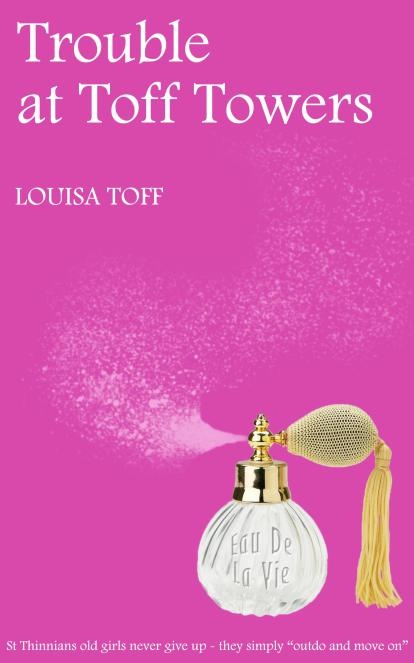
Trouble At Toff Towers books i & ii

I giggled my way through both of these books. As you read on you will understand why I am hanging out to read book iii in the trilogy.

….

Being married only once in my life, (that was enough for me) I found it hilariously funny reading about Louisa Toff’s two ex husbands and her soon to be third! I know it isn’t a good look to laugh at another woman’s disasters, but really, the men she chose to marry!

In book i Louisa is reasonably happily married to third husband Jack Toff ( yes,I knoooow) and the gods only knew about the goings on up at Toff Towers. What with the maid, Edna Bucket’s suspicious mind, not to mention the mysterious ‘undercrackers’ or the knitted peephole leggings, and other blunders galore. Don’t get me wrong, Louisa’s a honey, if not slightly giddy. I will say this though, being an ex-model from the Bone Idol Agency, Louisa knows how to ‘dress to kill’! Although unfairly called ‘Ell – The Glowering Inferno’ by the tabloids and magazines in the past, Louisa loves the limelight; her whole world revolves around her make up, her wardrobe and of course, her men.

I couldn’t help but laugh hysterically when reading Louisa’s diary notes about her three old school friends from St Thinnians. It’s not just their antics, but their names! I tell you, not one of them is scandal-free! Audra Street-Walker runs a private ‘Chamber of Commerce’; can you guess what her occupation is?  Then there’s Bette Noir, and of course Irene Prawn-Slaughter, heiress to the food dynasty. If you thought Medousa had ‘the glare’ wait until you read about the ‘Irene Effect’. It’s no wonder Louisa needs a shrink to help her get through every day. But I have my doubts about that shrink. I ask you, Di Laffin? Is that someone you could go to at a time of crisis in your life and tell her all your innermost secrets?  Poor Louisa, crisis should have been her middle name.

One thing I must stress here. Louisa Toff is all glamour, class and style. I can understand why men adore her. It’s just that she is an incurable romantic and believes everything they tell her.  The books are really Louisa’s published diaries, in which she bares her tormented soul. I am sure writing things down does help her state of mind, but that Bloody Mary …I’m sure is more of a hindrance than a help.  And just don’t get me started on Madame Cara Vin’s ‘predictions’ for Louisa. OMG! Or should one say MSG!?

I have to say, Louisa Toff has a heart of gold. Perhaps therein lies her biggest problem in life. Even though Edna is the general dog’s body about the Towers, Louisa often takes her out on social occasions for moral support. Could you ever imagine Elle Macpherson doing that!? It’s no wonder Edna and Louisa often get the wrong end of the stick, so to speak. The double entendres fly thick and fast throughout dialogues.

Oh, did I tell you about Sardino Codleone? Perhaps I shouldn’t….needless to say dead horses and white suits feature larger than life. But I will warn you here that there are more than clothes lurking in secret closets. And if only Louisa was a little more fussy about some of the venues she frequents. I mean, the Pizzeria Donatellanobodi?  I shall say no more.

If you love a good comedy with mature chick-lit overtones, you will love Toff Towers. Scandal and gossip fill the pages. The characters throughout the book are ‘absolutely fabulous’ while the frenetic pace is always set by Louisa herself. As I have said before, sometimes I have to lie down in a darkened room after reading certain sections of Toff Towers where the pace of writing is nothing less than feverish!

Is that the time? I am sorry I have to go. I’m meeting Louisa Toff at that swanky French restaurant, Fork Oeuf, to discuss the latest beau in her life (as if she needs another one).

-Anne Frandi-Coory 22 December 2013

>>>>>>>>>>>>>>>>>>>>>>>>>>>>>>>>>>>>>>>>>>>>>>>>>>>>>>>>>>>>>

Image of Anne Ullah

Anne Ullah

…….

My personal message to Anne Ullah, the author of Trouble At  Toff Towers books i & ii:

Please Anne, don’t make readers wait too long for book iii in the trilogy.

 ……

Aphrodites curse

APHRODITE’S CURSE  by Luciana Cavallaro – book review

See trailer below for  ‘Accursed Women’ anthology including this short story and 4 others by the same author…

My personal message to Phaedra:

Many of us mere mortals know that ‘unrequited love is a harsh companion’ but still…you made a promise to build a magnificent temple to Aphrodite beside the Akropolis in return for what?  To inflame your ‘bronze athletic’ step-son Hyppolytos with the same passionate lust you felt for him?  Oh, Phaedra, with your family history you should have known better. 

The author, Luciana Cavallaro allows the Princess Phaedra, daughter of King Minos, to tell her fateful life story in her own words.  She begins by taking the reader on a tour of the king’s ancestral palace, Knossos. Her vivid descriptions of the intensity of the colours and scenes gracing the walls must have dazzled and enthralled all visitors. Reading her words, as she walks us through porticos, endless corridors and the vast central court make me yearn to be there amidst the music, games, dancing and theatrics. Like her privileged mother and sisters, the princess enjoyed luxuries such as exquisite gowns, finest jewellery, and the most precious pottery.  These Kretan royals knew how to live!

Phaedra tells us proudly that the Kretans revered Nature and were conservationists. There are many contradictions in her accounts though; human and animal sacrifices were common.  The lives of superstitious ancient Greeks were just as fraught with all manner of subterfuges, intrigues, curses and violent jealousies as were their gods. The indefatigable thirst for vengeance, battles and assassinations taking place in this story make the strife in our modern world seem mere trifles by comparison.

The author weaves together many ancient Greek myths skilfully as the basis for Phaedra’s testimony about the lives and loves of members of her own family as well as others who play vital roles in her life story. This is a powerful autobiography in every sense of the word and makes for a very enjoyable read! The reader will recognise many names: Pallas, Ikaros, Ariadne, Theseus, Dionysos to name but a few. For a beautiful woman who had the world at her feet; fine husband, wealth, two dutiful sons, Phaedra risked it all only to be spurned. Her end was not a happy one.

One cannot even trust the Goddess of Love to get it right;  Aphrodite wasn’t above revenge!

Available here in e book format via AMAZON

  • Anne Frandi-Coory  23 September 2013

lucianacavallaro_accursedwomen_web_final-e1380531653175

Luciana Cavallaro has published an anthology of five Greek classics including ‘Aphrodite’s Curse’

‘ACCURSED WOMEN’ book trailer:   http://www.youtube.com/watch?v=vTZVsoFkZPo&feature=youtu.be