Archive

BOOKS In My Fiction Collection-REVIEWS

a-goddess-curse-by-luciana-cavallaro

A Goddess’ Curse by Luciana Cavallaro, author and historian.  

See trailer below for  ‘Accursed Women’ anthology including this short story and 4 others by the same author…

..

Drake Dabbler, a young journalist prone to theatrics, interviews an older woman of incredible beauty and stature. He reaches out to the studio audience to help him create a festive mood which he is sure will encourage  the interviewee to reveal innermost secrets about her life and loves. After all, no other person has ever been granted an interview with her and this could be a career-changing event for him.  As far as he’s concerned, this is rock star level entertainment.

But he is playing with fire, for she is no mortal woman; she is Hera, Olympian Goddess and Queen of the Gods. Wife and sister to no less a supreme being than Zeus!  As the interview progresses, Dabbler’s hubris begins to show as he flirts while Hera seems to play the game, albeit reluctantly at times.  Like most modern celebrities, Hera finds the media tedious with their probing questions and intrusions. Then Dabbler delivers a ‘Gotchya’ to the Queen which annoys her even more. One thing you do not want to do, is annoy Hera.  However, Dabbler misses the cue that his ‘quarry’ is inwardly seething; Hera so skilled in the art of revenge, narrows her ice blue eyes.  She who has battled with some of the most powerful gods and goddesses in history is pressed, by this young man,  to disclose the incestuous nature of her and her family’s relationships.

Dabbler doesn’t stop there, though. He brings up her husband Zeus’ numerous affairs and resultant illegitimate children. Her smile puts the young man at his ease, and this spurs him on. He then has the audacity to question Hera about their disabled child Hephaistos and the circumstances of his conception and birth.  Dabbler continues to embarrass the goddess with insults and questions about the intimate lives of her and her family. By now there is a disconnect between Hera’s smiles and her eyes.

Perhaps Dabbler’s preoccupation with thoughts of the awards he thinks he is going to win for this interview distract him from the changes in the Queen’s tone and the fixation of her eyes on his.  He dares to accuse her of what he sees as past excesses in war and her manipulative behaviour.  In her own defence, Hera protests: ‘We are divine…..We epitomise everything mortals aspire to be’.  It becomes alarmingly clear at the end of the staged drama just where Dabbler’s aspirations will lead him.

I enjoyed the detail about the lives and loves of gods and goddesses in this story. Tales about Hera’s far-reaching power are riveting and her  intrigues are sometimes surprisingly human.  Luciana Cavallaro is a wonderful short story-teller who knows her Greek gods intimately. If you are interested in ancient Greek history and the Olympian world, you will love this book as much as I do. Available here in e book format via AMAZON 

  • Anne Frandi-Coory 7 September 2013

lucianacavallaro_accursedwomen_web_final-e1380531653175

Luciana Cavallaro has published an anthology of five Greek classics including ‘A Goddess’ Curse

‘ACCURSED WOMEN’ book trailer: http://www.youtube.com/watch?v=vTZVsoFkZPo&feature=youtu.be

short-story-boxed-in-a-curse-by-luciana-cavallaro

Boxed In A Curse  –

Short Story by Perth author Luciana Cavallaro

See trailer below for  ‘Accursed Women’ anthology including this short story and 4 others by the same author…

Teacher and historian, Luciana Cavallaro, is adept at weaving ageless legends within a modern motif, and in this case, a fable that can also hold children spellbound.

Boxed In A Curse is a story most of us have known as ‘Pandora’s Box’. However, the vessel that held the curse was actually a pithos or large jar, sealed tightly with wax to keep ‘the evil’ within. Many archaeologists and Ancient Greek historians interpret the pithos as an analogy for Pandora’s vagina, and the fear that men associate with the wicked female temptress, the cause of man’s ‘downfall’.  The author’s title is a telling one; ever since Pandora unwittingly released ‘bad things’ [via menstruation] into the world, women have been confined by deep prejudice to a role as the ‘ruin’ of mankind.

The Greek mythological narrative informs us that numerous gigantic and powerful gods fought for supremacy over the earth and universe.  Wars were commonplace, but after a particularly vicious and bloody war that lasted ten years, Zeus entrusted loyal brothers Prometheos and Epimetheos with the task of creating creatures. The former constructed man in the image of the gods while the latter created all kinds of animals and birds. Zeus, an over-zealous and jealous god, was very concerned with Prometheos’ creation; man with intelligence and guile could challenge the will of the gods! And to make matters worse, Prometheos gave the gift of fire to man, after stealing it from the home of the gods.  Zeus was furious! In his anger he ordered Hephiastos, the divine smith, to make an entity that would ‘serve to be a gift of poison to man’.

Various gods in the hierarchy were summoned by Zeus to fashion this new entity with dexterity, sexuality, love, fertility and other qualities. Hera, queen of the gods and of marriage, endowed Hephiastos’ project with curiosity, a trait that would ultimately set off a chain of catastrophic events for mortals.  The first mortal woman, she who was infused with the gifts of the gods, was named Pandora. Both man and gods were enthralled and fascinated by Pandora’s beautiful perfection.

Pandora’s early life was filled with carefree days enjoying the wonders of the world until Zeus gave Pandora as a gift to Epimetheos, which didn’t exactly please her.  After a struggle with her desire to control her own life, Pandora accepted that she could not defy the gods. Later, during the marriage ceremony, the gods watched each other and Pandora, constantly making smart remarks laced with sarcasm and at times, snarls.  Needless to say, Zeus was not impressed with the heckling and bantering.

A quiet lull in the festivities enabled Hermes, on behalf of Zeus, to present the bridegroom with the sealed pithos. He warned Epimetheos not  to ever open it, but could say no more. Hermes advised him to issue the same warning to Pandora.

Over the years, Pandora and Epimetheos lived happily enough, although Pandora’s curiosity about what was contained in the un-opened wedding gift, never left her in peace. She thought it odd that she and her husband were forbidden from opening what was rightfully theirs. Cunning Zeus knew how to exploit the weaknesses of Hephiastos’ creation. When Pandora could resist temptation no longer, she broke the wax seal and opened the jar. From that moment on life changed for both mortals and immortals, but in the end, Pandora does manage to partly redeem herself.

Many Christian legends about the first man and woman on earth, and the creation of the world, have obviously been transposed from Ancient Greek mythology. Luciana Cavallaro juxtaposes the two in her own unique style.  She depicts many scenes between mortals and immortals with vivid detail, almost as though she was there in person at the time.  This, along with the modern setting in which she places Pandora’s story, made Boxed In A Curse such a relevant and enjoyable read for me. Available here in e book format via Amazon

Anne Frandi-Coory  22 August 2013

lucianacavallaro_accursedwomen_web_final-e1380531653175

Luciana Cavallaro has published an anthology of 5 Greek classics including: ‘Boxed In A Curse

‘ACCURSED WOMEN’ book trailerhttp://www.youtube.com/watch?v=vTZVsoFkZPo&feature=youtu.be

the-curse-of-troy-by-luciana-cavallaro

The Curse Of Troy;Helen’s Story  – book review

A Short Story by Perth author Luciana Cavallaro

See trailer below for  ‘Accursed Women’ anthology including this short story and 4 others by the same author…

I have always loved the story of Helen Of Troy. What free spirited woman wouldn’t?  But any story I have read about ‘the face that launched a thousand ships’ has been narrated by someone else; usually by a person who couldn’t possibly have known Helen.

Luciana Cavallaro has introduced a young and handsome historian to interview the Spartan beauty. Helen can finally speak for herself! She discusses her union with Menelaos and the reader can quickly ascertain that she was bored with her arranged marriage. Menelaos was a ‘good man’, but his interests were centred around war, decrees and intrigues within and outside the kingdom. These took up most of his conversation and energy.  Even though Helen was the rightful heir to the throne when her father died, her husband became king, and he refused to discuss the politics of the day with her. Helen was relegated to mere Queen in name only.

The Queen of Sparta had loathed Menelaos’ brother Agamemnon ever since she was a child. And now he always had the ear of Menelaos in secret talks she was excluded from. Her distrust of her brother-in-law would be vindicated in the future. Although the classic story of Helen of Troy is that the Trojan war was caused by Helen running off with Paris, Prince of Troy, or that she was abducted by him, Luciana Cavallaro allows Helen the scope to give her side of the story.   Needless to say, Agamemnon was heavily involved in the preparations for war with treasure rich Troy. As the reader will discover, the Battle of Troy had very little to do with Helen.

I have always had a passion for Greek Mythology and ancient history. Luciana Cavallaro’s books are easy to read and bring a new vitality to ancient Greek Classics.  So easy to download onto my tablet and to read on the train or when I want a change from the heavy reading & writing I am often engaged in. Available here in ebook format via Amazon

  • Anne Frandi-Coory 19 August 2013

lucianacavallaro_accursedwomen_web_final-e1380531653175

Author Luciana Cavallaro has published

an anthology of 5 Greek classics including ‘The Curse Of Troy; Helen’s Story’

‘ACCURSED WOMEN’ book trailer: http://www.youtube.com/watch?v=vTZVsoFkZPo&feature=youtu.be

Updated 9 April 2016

> <> <> <<> <> <> <

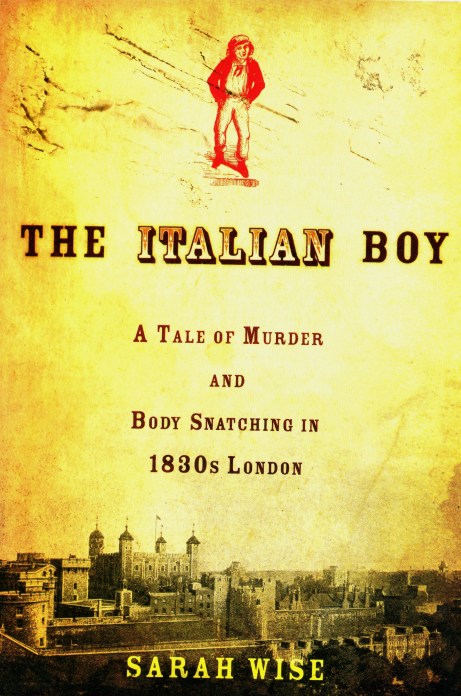
the Italian Boy 001

Sarah Wise documents life in early 19th Century London.  She has done meticulous research into such things as body snatching, murders and the filth of London Streets on which many homeless people spent their lives. She writes in the Preface:

Toward the end of 1831, London’s Metropolitan Police were alerted to a ghastly series of crimes… I first came across the London killings – or the Italian Boy case as it was known – in the course of writing a newspaper article about an East End council housing estate in Bethnal Green that had been built on the site of one of the nineteenth century’s most notorious slums. It was said that the surrounding district had been tainted for decades by the grisly crimes committed in Nova Scotia Gardens …and indeed, on investigation I learned that in the late autumn of 1831, No 3 Nova Scotia Gardens had had infamy thrust upon it by its residents, John Bishop and Thomas Williams, and an associate, James May – all of them body snatchers, or “resurrection men” who were charged with murdering a vagrant child. 

The case of the Italian boy and the subsequent investigations into the other horrific events at Nova Scotia Gardens highlighted the extremely unpleasant aspects of life in London. It was a city that had increased by one third between 1801 and 1831 to over one and half million inhabitants making it one of the most diverse populations anywhere on earth. This era in London was named ‘The Italian Boy’ by the author because as she says, it was an era without a name: Following the Italian Boy case in the newspapers of the day, I became curious about the type of people who had fallen into the path of the accused on their nightly prowls around the metropolis …What sort of city was London in 1831?

The author writes of the young children and young adults who could be picked up off the streets by body snatchers, brothel keepers, sex offenders, and press-gangs. This is the history of the nameless poor and destitute, and immigrant boys such as in the case of the Italian boy, who tried to survive on the streets. Sarah Wise asks the question we would all like answered: Why, even in death, did their identities remain mysterious? 

…….

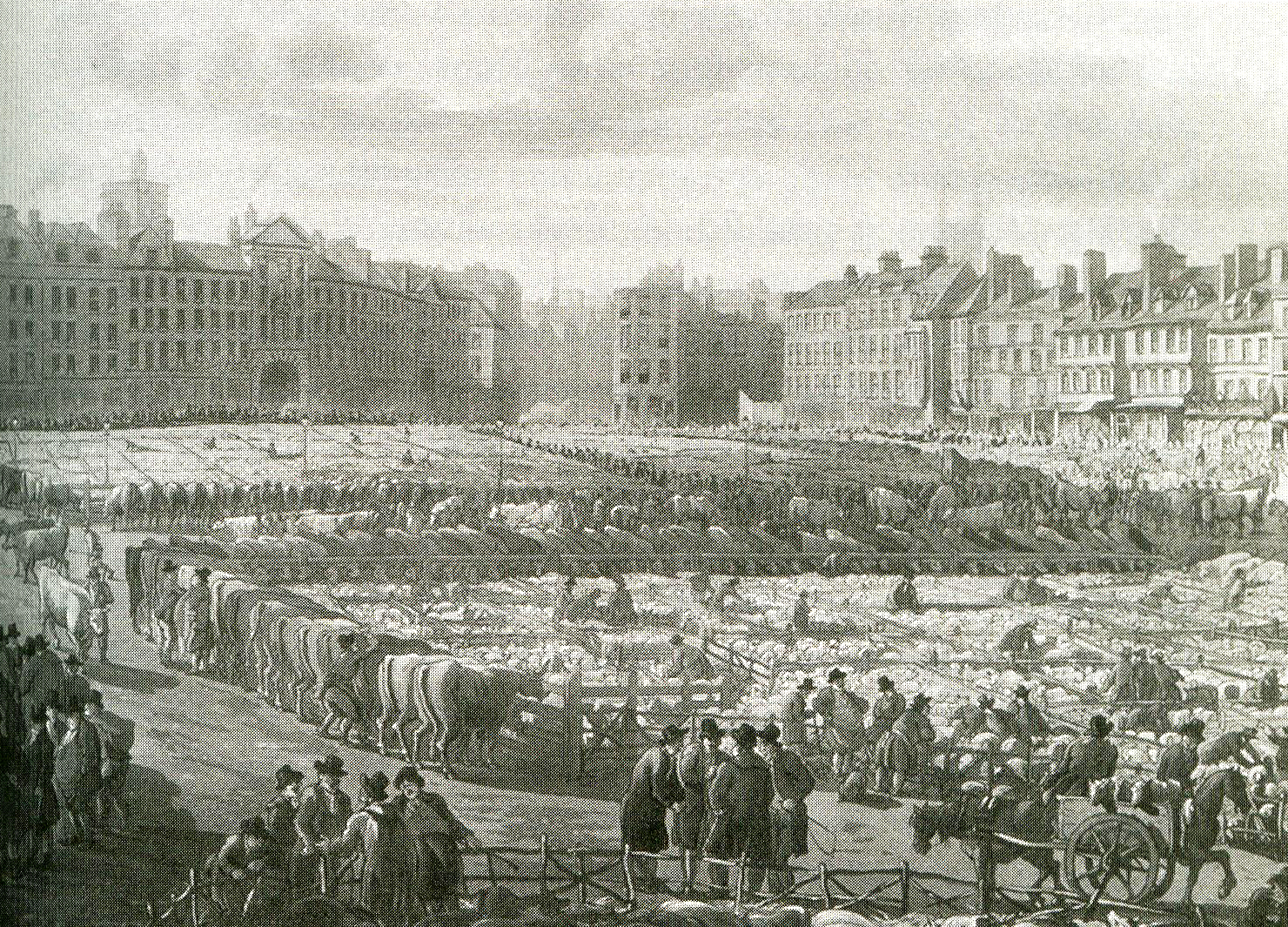
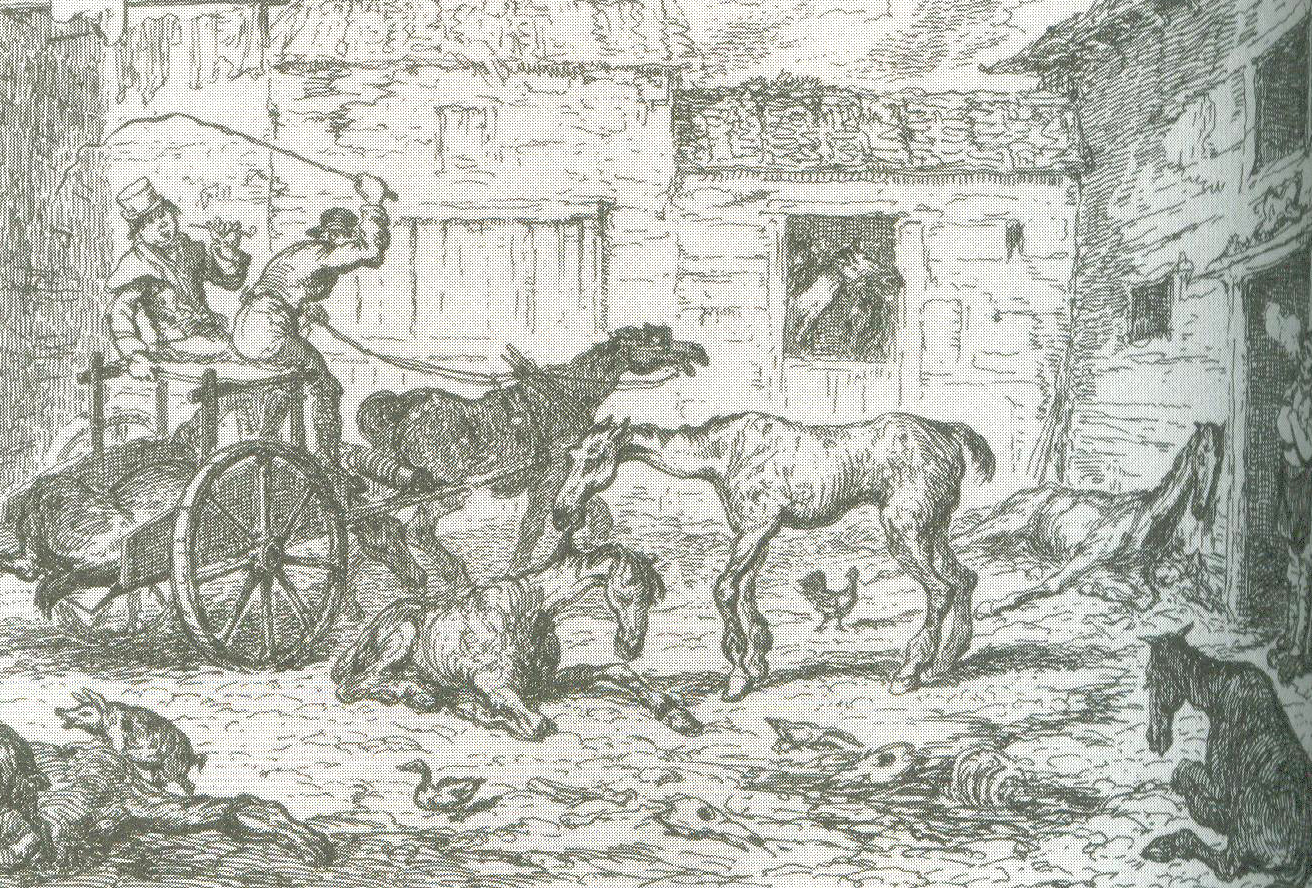
The chapters that particularly  interested me at the time I bought ‘The Italian Boy’ concerned the Smithfield Market.  Hundreds of thousands of cattle, sheep, pigs and horses were driven to Smithfield from all over England, and were slaughtered on the streets or in uncovered yards for all to see.  The cruelty these animals were subjected to is nothing less than barbaric.  But then life for humans in London at that time could be described as barbaric as well.

One passage reads:

‘Passersby glancing left or right into a court or yard, where a butcher worked could find themselves witnessing a killing.  It was alleged by various witnesses before the 1828 Select Committee on Smithfield that sheep were often skinned before being completely dead;  it was observed that an unskilled slaughterman could require up to ten blows with an axe to kill a bullock …horses were up to their knees in the weltering remains of their fellow creatures, maimed and starving and showing obvious signs of distress as their fate dawned on them.’

For me, there were similarities in the way the animals were treated as described at Smithfield, and those in the Indonesian abattoir in the 21st Century, where live Australian cattle were sent to be butchered.  Australian animals who had grown up on Australian farms trusting humans and being treated humanely. But that is another story.

Sarah Wise brings a dark and disturbing period of London history vividly to life. Even allowing for the brutality, this is a great read.

It was an eye opener for me on a personal level. Whilst researching my family tree, I discovered that some of my Italian ancestors lived in the slums of London during the Italian Boy era. My great grandfather, as a young man, was an ‘organ grinder’  with a performing monkey when the family first arrived in London. But again, that is another story.

-Anne-Frandi Coory  9 April 2016

><><><><><><><

See:   Indonesian Abattoir-A Lesson in Bloody Cruelty  &  Halal Butchery.


><><>><><><><

A View of Smithfield Market from 'The Italian Boy' by Sarah Wise

A View of Smithfield Market from ‘The Italian Boy’ by Sarah Wise

><


><><><><><>

George Cruikshank's The Horse's Last Home from 'The Italian Boy' by Sarah Wise

George Cruikshank’s The Horse’s Last Home from ‘The Italian Boy’ by Sarah Wise

…..

><><

the-dante-club-001

><><

This novel is a great read; one of suspense, horrendous murder and intrigue, poetry and war.  Set in the mid 19th Century, it revolves around poets and writers, who form the Dante Club to support and advise the American poet H W Longfellow, while he completes the first American translation of  Dante’s Divine Comedy.

The Dante Club takes us through the changes in Boston wrought by the American civil war including the huge increase in violent crime.  Slavery may have been  abolished but black Americans continued to suffer and the American people were bitterly divided on the issue.  Soldiers who fought in the war, aimlessly walk the streets of Boston, physically and mentally broken.  One soldier relives his experiences daily and I for one had no idea how brutal that war was considering it was mostly Americans fighting each other. The two sides were infiltrated by foreigners who had their own agenda for joining up.

American universities of the times were managed by wealthy and sometimes bigoted business men.  One particular university pressured the influential Longfellow to give up his quest to translate Dante’s work, believing he should concentrate instead on promoting American writers, not a foreign writer who dwells on ridiculous stories about hell and who has been exiled from his own country.

Matthew Pearl cleverly weaves all of these issues into his book.  For instance, the first black police officer in the Boston police force, who is involved in the search for a serial killer, is not permitted to wear a uniform, has to hide his badge under his jacket and is subjected to racial comments and bullying by fellow officers.  Strangers in the street hurl constant racial slurs at him.   Corrupt politicians change the law so that detectives could claim the substantial financial reward offered by the wealthy widow of one of the victims, for the killer’s capture.

On top of all of this, Mr Pearl manages to incorporate the fascinating subject of entomology to help solve one of the most gruesome murders.  The insect in question is Cochliomyia Hominivorax whose methods are as bloody as the killer’s.

Mr Pearl graduated from Harvard University summa cum laude in English and American Literature in 1997, and in 1998 he won the Dante Prize from the Dante Society of America. – Anne Frandi-Coory 15 March 2011

Life in Australia in the 1950s and 1960s

This is a great read!   It is a story about two families with very little money who share a large, wooden, rambling house.  The house has been left to  one family in a will,  and they lease half to another family.  Each  family lives in one half of the house with a long hallway the dividing line.  It is set in a time when Australia was a raw country and so were its people.

The author, Tim Winton, makes all the characters come alive on the page and you can almost sense the atmosphere in the house as children and adults clash and tensions build.  Everyone knows what everyone else is up to on the other side of paper thin, dilapidated walls.  Added to that, the house has ghosts.  Tim Winton forgoes standard  punctuation throughout the book, but it doesn’t detract from the story at all, just seems to enhance the settings.

I think this is a truly Australian story with its share of  tragedy, religion, laughter and all too human flaws.

-Anne Frandi-Coory 5 October 2010

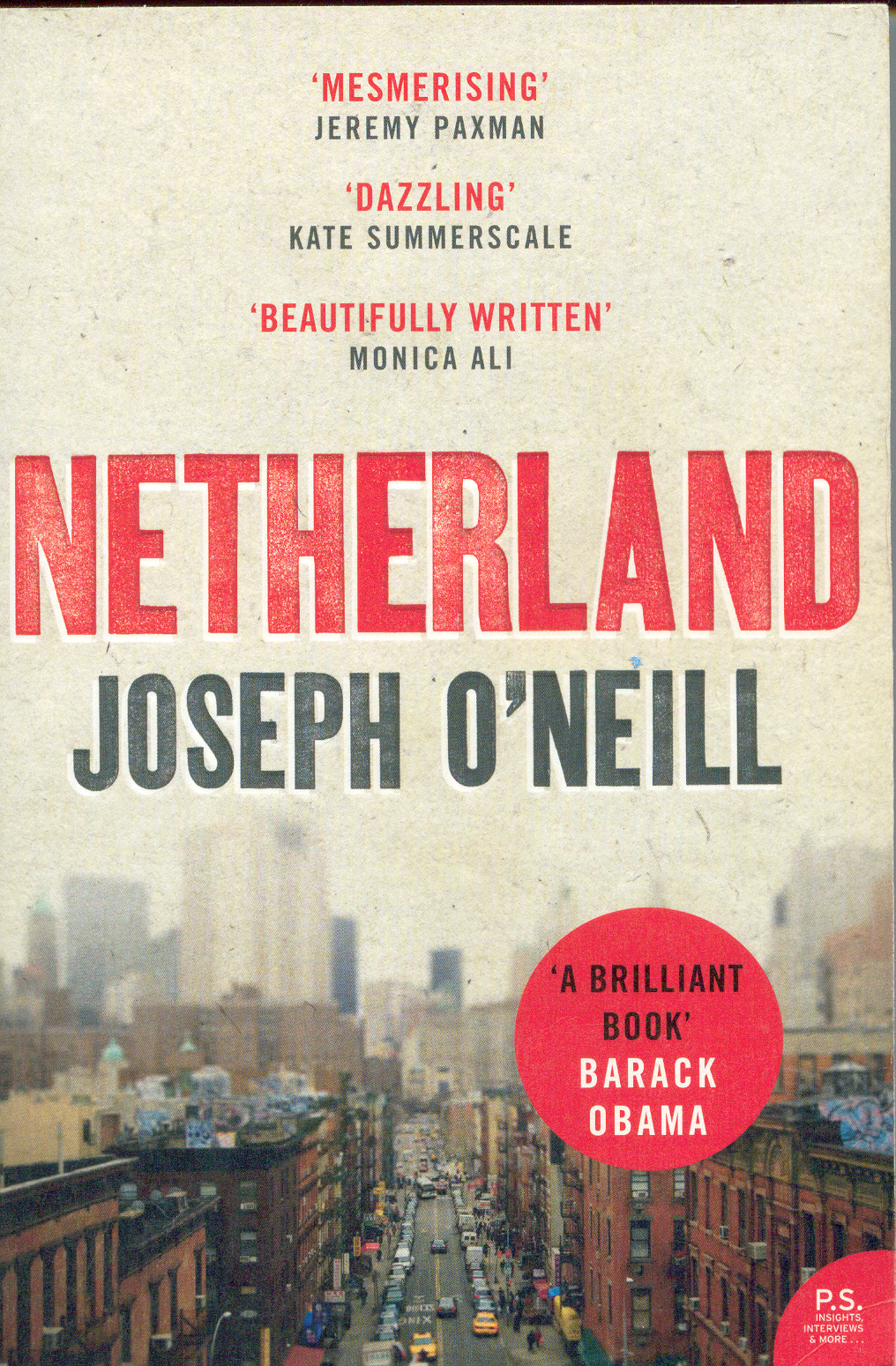
After 9/11

Apparently, this was a difficult book for the author, Joseph O’Neill,  to sell to publishers.  I only bought it because Jason on Tuesday Book Club tagged it as a book he enjoyed and recommended to viewers.  I have never been disappointed in any of his literary recommendations.

The critics variously describe Netherland as a story about love, marriage, the American dream, New York City and London after the bombing of the twin towers, cricket and to me, weakest of all, a murder mystery.  The storyline twists and turns with memorable  characters  from different ethnic backgrounds popping up here and there and whose respective philosophies  on life make the story so interesting.  In one extreme  example, there is the Turkish dramatic  ‘angel’ resplendent in white feathery wings and tights who lives upstairs in one of the apartments above Han’s, and who seeks Hans out for companionship.   Then there are those immigrant men who bring their passion for cricket with them to New York. They  make up ragtag teams to play the game whenever they get the chance and can find a venue that will allow such sacrilege on American playing fields.

The book features all of the above.  But to me the motif brought forth the old adage that  ‘the child maketh the man’.   All through the difficult times the narrator, Hans van den Broek of Dutch heritage, is propelled back to his childhood and the bittersweet memories of life with his devoted mother and without his father, who died when he Hans, was a young boy.   It is about the poignancy of sitting in the present and suddenly being transported into another place and time far back into the recesses of memory.  Whatever;  it is a good read.

– Copyright To Anne Frandi-Coory 7 September 2010

Updated 28 January 2016

<><><

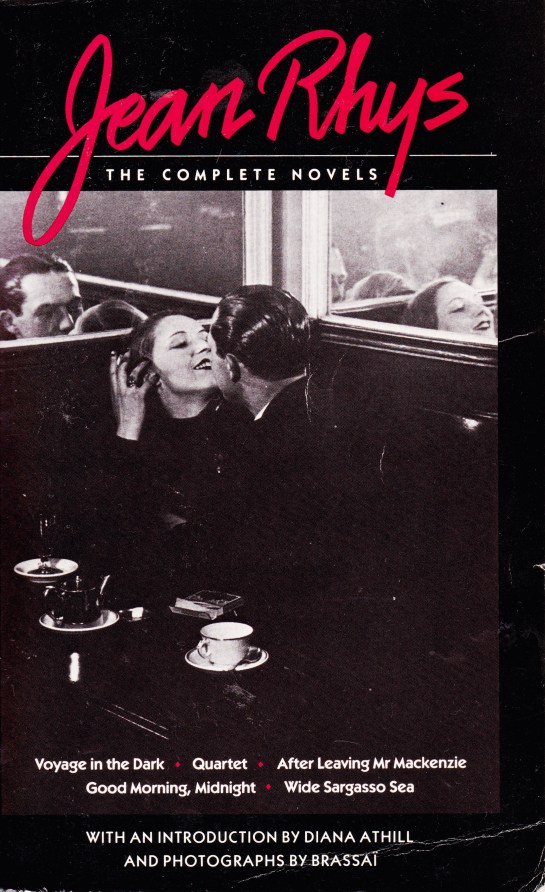
I loved every one of Jean Rhys novels listed on the book cover below.  I have read this book several times and each time find something new in each novel.

Rhys’ books are semi-autobiographical,  intensely personal and  often she utilises streams of consciousness to convey to the reader, her subject’s deep sense of rejection caused by the callousness with which she is treated by men. The women she writes about suffer from depression, although they don’t seem to be aware of this, which manifests itself in their lack of energy, and self esteem.  With no hope of a steady income, the women in her stories drift in and out of relationships with men who have no real love for them but who none the less finance the women’s accommodation, meals and clothes. The men obviously expect a sexual relationship in return, for only as long as it suits their own needs.

Complete Novels Jean Rhys_0001

Lovers, Place d’Italie – photograph by Brassai 1932

Jean Rhys The Complete Novels (including the classicWide Sargasso Sea’) are superbly written with an intense pathos, revealing the hardships single women experienced in Europe in the early Twentieth Century; loneliness, reliance on brief sexual relationships with various men for their living, difficult landladies, illegal abortions. Men had all the money, all the power and of course, all the best careers. Women were used and abused, by single and married men. Choices for women to earn their living were severely limited, and often young women resorted to prostitution and if they were lucky and attractive, the stage. Rhys, under several guises, daydreams and longs for her birthplace, and childhood, in the Caribbean. The Complete Novels is enhanced throughout with magnificent and scene-setting photography by Brassai.  Rhys also gives us a vivid picture of life in the London and Paris of the times.

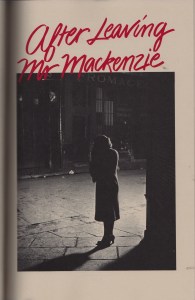
Leaving Mr McKenzie

Streetwalker, Rue Quincampoix – photograph  Brassai 1932

Quartet

Two Girls Looking For Tricks, Boulevard Montparnasse – photograph Brassai 1931


“I would never be part of anything. I would never really belong anywhere, and I knew it, and all my life would be the same, trying to belong, and failing. Always something would go wrong. I am a stranger and I always will be, and after all I don’t really care.” – Jean Rhys

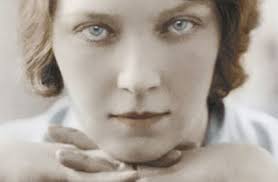
portrait Jean Rhys

Jean Rhys

Jean Rhys, who was born in the Carribean island of Dominica on 24 August 1890, wrote her early novels between 1927 and 1939. Her friend and editor Diana Athill, who believes the five novels listed above to be her best, continues: “Then Jean Rhys disappeared and was almost forgotten. The second part of her career begins in 1966 with the publication in London of Wide Sargasso Sea.  The success of this novel led to the publication of her earlier books.”

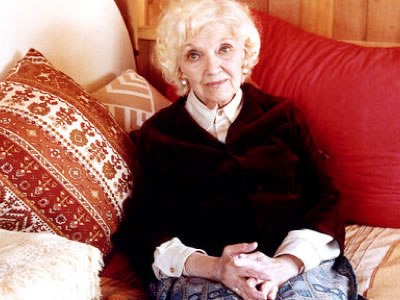
older jean-rhys

Jean Rhys died 14 May 1979 aged 88 in Devon, England

<>><><>><><><><

-Anne Frandi-Coory 28 January 2016

><><><><><><><><><><><><><

My review of…  Wide Sargasso Sea

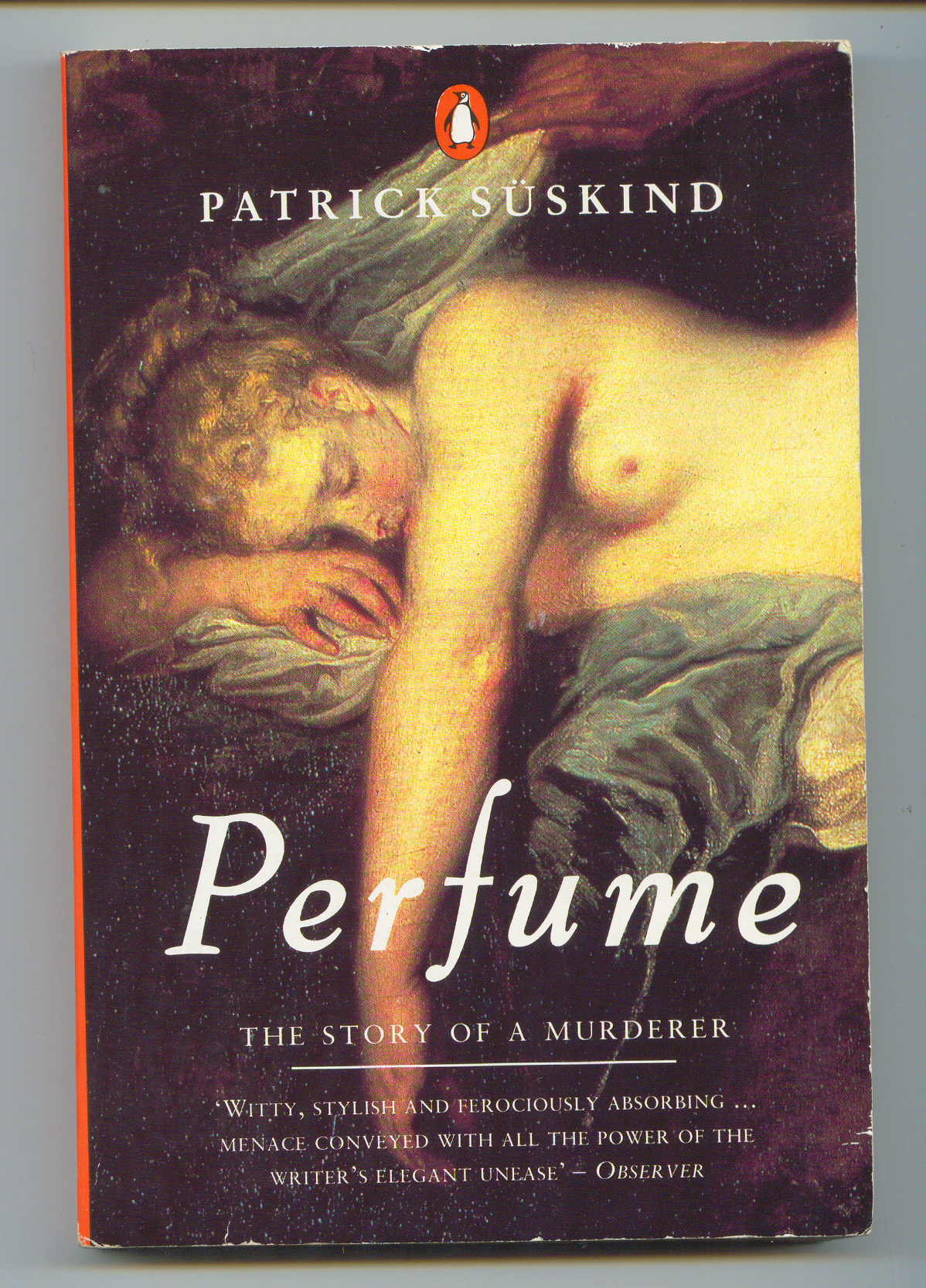
Perfume – not what you think

I first saw the movie Perfume and quite enjoyed it, especially the bits about how (a long and difficult process) and why,  perfumes were originally made; to mask body odours at a time in history when daily washing wasn’t an option.  I found a copy of the book of the same name by Patrick Suskind at one of the book stalls in Federation Square Atrium and discovered, as is often the case, there was so much more in the book that the movie omitted for obvious reasons.

Silly me!  I always thought perfume was a variety of sweet smelling scents extracted from flowers.  The book is not just about a cold and calculating murderer.  It is essentially about body odour; pleasant, not so pleasant and downright putrid if accounts in the book are anything to go by.  Pheromones are among consciously undetectable human odours and the book dwells on these.  It brings to mind a conversation I overheard one day.  A European man rather rudely remarked to an Indian man, “Why do you guys always smell like curry?”  I  smiled to myself when the Indian man replied, “Why do you people always smell like dairy products?”  I must confess until then, I didn’t think we humans had any personal odours other than unpleasant ones if we didn’t wash enough.

This is a great read. You will be aghast at the way people lived in the eighteenth century and how important it was to find the right perfume for personal and other uses.  The fact that some perfumes suit only certain  people and some perfumes are lost on others now  makes more sense to me. I will never view perfume from the same perspective again.

-Anne Frandi-Coory  28 June 2010

Also here on Anne Frandi-Coory’s facebook page: 

https://www.facebook.com/myhomelibrary/?ref=settings

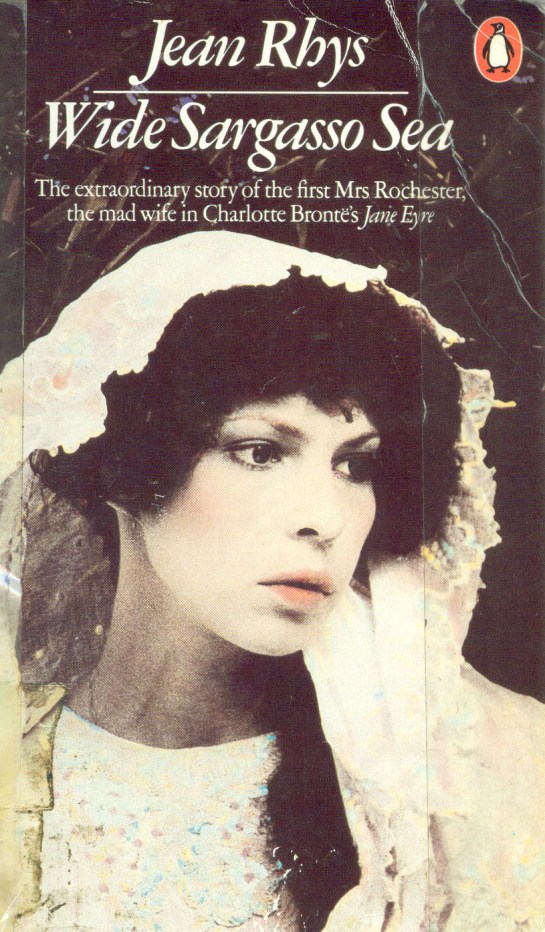
Wide Sargasso Sea

Updated 30 January 2016

*****

Years ago my daughter Gina gave me this second hand book which  I have now read at least three times.

The author Jean Rhys is acknowledged as a technically brilliant writer.   As you read the book, which is set in the Caribbean,  you can almost feel the muggy heat intertwined with the intensity of suspicion and mistrust between the whites, creoles, and blacks.  It tells the story of the early years of the heroine Antoinette Cosway’s tragic life before she marries Mr Rochester  as depicted in Charlotte Bronte’s Jane Eyre.  The story, which exists in  its own right,  ends as she and her new husband set off for England where Antoinette becomes the mad woman in the attic.  I recently read the history of the Caribbean which is fascinating and brutal at the same time, and it inspired me to re-read Wide Sargasso Sea,  the history of the Caribbean adding yet another dimension to that story.

My present copy of  Sargasso Sea is now falling to pieces with pages constantly falling out so I  decided to buy a new copy through Amazon.com as I couldn’t find a copy  in any of the second- hand book shops  that I regularly haunt.  Jean Rhys  has written other novels that I’ve also included in the purchase from Amazon.  Can’t wait to read them.

From Jean Rhys’s personal knowledge of the West Indies, and perhaps her reading of their history, she would have known about the mad creole heiresses living in the early nineteenth century, whose dowries were only an additional burden to them. These unfortunate heiresses were products of an inbred, decadent, expatriate society, resented by the recently freed slaves whose superstitions they inevitably shared.

*****

Jean Rhys quote

*****

In her introduction of the book  Jean Rhys – The Complete Novels   Diana Athill, editor and friend of Rhys for the last fifteen years of her life, writes:

Charlotte Bronte’s Jane Eyre had always disturbed Jean. She may not be the only reader of that novel to dislike its heroine, but is probably the only one to identify with Mr Rochester’s mad wife from the West Indies. Ever since Jean had come to school in England she had felt that the English had misunderstood and despised West Indians, and here was a West Indian woman so totally misunderstood and despised that she was presented as a monster. Impoverished English gentlemen had, in fact, married West Indian heiresses from time to time during the eighteenth and nineteenth centuries, and Jean thought it likely that Charlotte Bronte had known of one such marriage and had based her novel on it. What had really happened to that unhappy bride onto whom Bronte had projected such a cruel – such (in Jean’s eyes) a typically English version of that story? 

From that question grew Wide Sargasso Sea, the novel created over so many years, against such heavy odds, with which [Jean Rhys] made her comeback in 1966.

portrait Jean Rhys

To wring out of herself things so painful, in circumstances so cruel [in her earlier novels] and finally to hand us a novel [Wide Sargasso Sea] so lovely and haunting, which seems to alight on the page as easily as a bird on a branch: if she had nothing else but this, Jean Rhys would still be one of the most remarkable writers of the twentieth century.

-Anne Frandi-Coory 30 January 2016

><><><><><><

For more information on Jean Rhys novels  Visit Amazon Here

See my review of other Rhys novels … Complete novels by Jean Rhys

><