Archive

BOOKS In My Non-Fiction Collection-REVIEWS

********

Bruce Pascoe  is of Bunurong, Tasmanian, and Yuin heritage.

  Award winning Author, Writer and Film Producer.

********

I have lived in Australia for almost fifteen years and I am ashamed to say it is only in the last two or three years I have learned that although Australian Aboriginals were sometimes hunter-gatherers, they also lived in towns of up to a thousand people, they built houses, and they  were sedentary enough to have systems of agriculture and trading, to set large-scale fishing traps, and engaged in crop-saving irrigation practices. Archaeologists are now discovering artefacts, artworks and other evidence of Aboriginal life which attest to the fact that they were not solely hunter-gatherers. Author of Dark Emu,  Bruce Pascoe, through extensive research, has revealed the huge amount of information about the sedentary life of Aboriginals verified by early explorers and settlers in their diaries, in both the written word and sketches.

Dark Emu reveals how colonizers eventually destroyed the very settled Aboriginal way of life; their agriculture, their plants, their houses, their land; these supposedly ‘civilized’ invaders massacred First Australians in their thousands whenever they tried to defend their culture, their women, or their land. To justify this destruction of a culture that had survived in Australia for up to 80,000 years, successive writers and governments have set out to create the myth that Australian aboriginals were “savages” or “blacks” who aimlessly roamed the continent as hunter-gatherers.  Aboriginal children were taken from their families by Christian missionaries and placed in orphanages to “save them” from a “savage” and “heathen” upbringing.

Pascoe has much to say about the deliberate ‘cover-up’ of a pre-colonial Aboriginal democracy which had allowed ‘the great Australian peace’ across the continent for thousands of years. Tribes worked with each other sharing the land and whatever was harvested from it; flora and fauna alike. They stored and preserved food, they ground a type of flour and they baked a basic damper bread. David Maybury-Lewis, was professor of anthropology at Harvard University in the early 1990s when he included these statements about Australian Aboriginals in his book ‘MILLENIUM; Tribal Wisdom and the Modern World’ [pub. 1992]:

*If one were asked to state briefly and succinctly what are the outstanding positive features of Aboriginal civilization, I for one, would have no hesitation in answering:

*Respect for the individual, irrespective of age or sex.

*The amazing degree of social and political integration achieved by them.

*The existence there of a concept of personal security which transcends all governmental forms and all tribal group interests and conflicts.

*The possibility of conceiving of an individual alone in a tribal sense is ridiculous…the very complexity of tribal life and the interdependence of people on one another makes this conception improbable at best, a terrifying loss of identity at worst.

So much of what Pascoe writes about in Dark Emu is in harmony with the above academic statements; but further, he gives us an in depth analysis drawn from his own ancestral knowledge of pre-European Aboriginal life, and backs this up with compelling evidence gained from his research around the early explorers’ and settlers’ diary notes, stories and sketches held in libraries and museums around Australia. He also discusses how Australian Aboriginals managed the threat of bushfires and how they used the best land for agriculture and the poorer, less productive soils for growing trees, planted in specific formations. They had a spiritual and emotional connection to the land; a great understanding of fire and how to control it. Tribes harvested a variety of yam and many other ‘bush tucker’ plants across their land, but later all were destroyed by herds of cattle and sheep brought in by the early settlers.

In Dark Emu, Pascoe brings home to us that we can no longer assume our 21st century ‘developed’ way of life represents the most advanced stage of progress and that Aboriginal society was less successful, less meaningful than our ‘superior’ society today. Surely this knowledge will enlighten us, open up the richness and variety of what it means to be human and perhaps we can learn from the peace and harmony evident in pre-colonial Aboriginal tribal life.

To me, their spiritual beliefs such as ‘Dreamtime’ make far more sense than the religion of Christianity ever did; Aboriginal spiritual beliefs are intertwined with the land, and I wonder if we had followed their path in this regard instead of trampling all over it with introduced cattle and sheep, or by planting out pastures never suited to such a dry continent, would Australia be burning as it is right now, in catastrophic bushfires?

If you haven’t already read  Dark Emu please do so, and encourage your children and grandchildren to read it, or read it to them, like I have done.

– Anne Frandi-Coory.  9 January, 2020

*******************************************************

To some, Dark Emu seemed to come out of nowhere, but Pascoe’s latest book, SALT: Selected Stories And Essays, helps us to see how it grew from the author’s life experience and earlier storytelling. I’ve been a follower of his work since the early 1980s, when I read his fiction and subscribed to the literary magazine he edited and published with Lyn Harwood, Australian Short Stories. When Dark Emu was published in 2014, Bruce became a household name and many readers encountered him for the first time. One of the pleasures of Salt is that it weaves his earlier fiction writing together with his now-celebrated nonfiction. We meet — or rediscover — the pre–Dark Emu Pascoe, and we’re reminded that this powerful voice itself has a history. – Tom Griffiths. [Tom Griffiths is Emeritus Professor of History at the Australian National University.]

********

Lewis Carroll, born Charles Dodgson, was the son of a cleric and it appears that he had a rather boring and ‘funless’ childhood. He was deeply religious, eventually becoming a deacon in his church.  Paradoxically, this austere, possibly very lonely man, went on to write two of the most famous and popular children’s stories of all time: Alice’s Adventures In Wonderland and its sequel, Through The Looking-Glass. During and following his lifetime there were myriad plagiarized versions of his stories, many using the name ‘Alice’ and the word ‘Wonderland’ in their titles; 19th century England did not have copyright laws so plagiarism was rife. Before the Alice series, children’s stories were largely moralistic in tone or derived from biblical narratives.

Carroll’s drawings and sketches were childlike and did not meet his exacting standards, so he employed professionals to do the artwork for his published stories… and then later the first camera was invented. Carroll was inspired to add his own photographs, mainly of little girls, to his prolific writings, and it must be said, for his own enjoyment and collections.

To be a Victorian photographer, wrote Robert Douglas-Fairhurst, the author of The Story Of Alice – Lewis Carroll and the Secret History of Wonderland, required “the knowledge of a chemist, the eye of an artist, and the patience of a saint”. The new craft suited the meticulous Dodgson, and the art of photography further inspired his alter ego, Lewis Carroll the story teller. He could prolong his fascination with childhood by photographing little girls, ideally in the nude. “A girl of about 12,” he wrote towards the end of his life, “is my ideal beauty of form.” And he could never understand … “why the lovely forms of girls should ever be covered up”. It is true that Carroll preferred images of prepubescent girls to those on the cusp of womanhood.  It disturbed him greatly to witness the physical changes in his Alice …that is Alice Liddell, who inspired him to write about Alice’s Adventures.

Christ Church at Oxford was the epitome of an academic and social establishment, where the eccentric Dodgson fitted in perfectly. He never really left once he had moved in. In his reality, Charles Dodgson and Lewis Carroll were two separate people so he certainly did not appreciate his fans addressing letters to ‘Lewis Carroll’ at Charles Dodgson’s rooms at Oxford. He preferred to keep his two selves quite separate. In the opening pages of Alice’s Adventures in Wonderland, it is made very clear that Alice “was very fond of pretending to be two people”.

Pretty eight-year-old Alice Liddell, especially, captivated the young Charles. Her father was Dean of Christ Church and Dodgson often took Alice and her sisters boating on the river, while telling them enchanting stories he’d made up. Alice had dark, elfin features, and the kind of fashionable clothes that made her look, says Douglas-Fairhurst, “rather like a well-dressed doll”.

Author Robert Douglas-Fairhurst is also an Oxford don, which allowed  him a good perspective from which to explore the story of Alice and her brilliant creator, while Oxford itself is a kind of Wonderland  where figures like Humpty Dumpty might be found sitting on any of the high walls, instructing students that “a word means just what I choose it to mean – neither more nor less”.

While waiting for the proofs of Alice’s Adventures in Wonderland, Dodgson noted with distaste that “Alice seems changed a good deal, and hardly for the better”. She was then 13. Already, from 1858 to 1862, Dodgson’s peculiar intimacy with Miss Liddell had become the subject of intense Oxford gossip.

The charm of photography [for Dodgson] Douglas-Fairhurst suggests, is that it prevented children from changing; what photographs offered was “a new way of grappling with the power of time”. Adults, Dodgson noted, “look before and after, and sigh for what is not”, whereas a child can say “I am happy now” and that moment in time can be caught with a click. In this sense, writes Douglas-Fairhurst, photographs are like dreams; the dreamer sees the world once again through the eyes of a child. This dream-like effect is captured perfectly in the Alice books.

Just as Alice grows an incredibly long neck and then shrinks to the size of a mouse, language also alters and expands. The Oxford English Dictionary contains almost 200 examples of words and phrases from the Alice books, including ‘beamish’, ‘chortle’, ‘frabjous’, ‘galumphing’, ‘curiouser and curiouser’, and the now ubiquitous ‘We’re all mad here’.

Dodgson/Carroll forever changed stories written especially for children…from tedious moral lessons and formidable biblical characters, to nonsensical humans and animals inhabiting dreamlands full of mysteries and dramas. He was a brilliant master of the English language which, combined with his vivid imagination, made him the ultimate children’s story teller.

Douglas-Fairhurst is the latest recruit to an army of Alice analysts baffled to distraction by the quest for answers to the Alice conundrum. But Carroll’s apparently inconsequential wordplays which he loved sharing with his child friends, are replete with consequences. As the Queen of Hearts says: “Every joke should have a meaning.” Along with the Bible and Shakespeare, Alice’s Adventures in Wonderland and Through the Looking-Glass are among the most quoted works of English literature. “Nonsense” is a peculiarly English genre, and Virginia Woolf is said to have commented: ”…these are not books for children. They are the only books in which we become children”.

Was Charles Dodgson aka Lewis Carroll a ‘paedophile’ or a creative genius? Was it possible he could have been both? It is interesting to note that this particular word first appeared in public around this time.  Dodgson always insisted, following the success of his Alice in Wonderland tales,  that he was two different people, and maybe this allowed  him a Jekyll and Hyde existence; his wholesome alter ego Lewis Carroll wrote children’s stories, and played games with friends’ children, while the ‘real’ Charles Dodgson, the loner, the man who seemingly never wanted to become an adult,  harboured  private black thoughts.

However, the author of The Story Of Alice is having none of it! He argues that Charles Dodgson was not a paedophile and there is no evidence that he ever acted improperly with Alice the child, or any other children. Indeed, Alice Liddell never accused Dodgson of abusing her in any way and in fact she became a fund raiser after he died, helping to collate and organise his papers and works and install them in a museum. She also appeared at celebrations of Carroll’s life and his extensive works. In the end though, it is apparent that Alice Liddell was “tired” of the never-ending media hype surrounding her as being the ‘real’ Alice of Wonderland fame. However, there are the missing pages from Dodgson’s private diary which were removed after his death, probably by his family, so there will always be questions and suspicions swirling around Charles Dodgson’s close friendships with several young girls.

Robert Douglas-Fairhurst loves Carroll’s books and they motivated him to study Charles Dodgson with an open mind, despite the suspicion with which others may view Dodgson, particularly since the early 20th century. The Story of Alice is a comprehensive study into the enigma of Dodgson’s complicated life within a Victorian ‘wonderland’ encompassing the Victorian era’s methods of austere child rearing, alongside Christian belief systems; the fantastical dreamlands that Lewis Carroll’s Alice stories allowed bored and lonely children to escape into…a realm of make-believe and wide-eyed wonder.  Still, concludes Douglas-Fairhurst, the quest for answers “cannot be satisfied by anything we know” and he reaches “the probable conclusion” that Dodgson’s  “strongest feelings were sentimental rather than sexual”.

To me personally, this book is an in depth analysis of 19th Century English literature and how children’s stories and ‘fairytales’ developed over time as a specific genre which encouraged children to read and collect their favourite books.  Alice’s dream adventures instilled in children worldwide, the passion for reading; that thrill of opening a book full of weird and exciting characters who occupied a fantastical world of dream images. They also later inspired two Disney brothers to ‘dream up’ one of the most famous childhood cartoon characters, Micky  Mouse.  The catalyst was one eccentric, very intelligent loner, with a split personality, who preferred the company of little girls to that of adult women.

-Anne Frandi-Coory 11 November 2019


***************
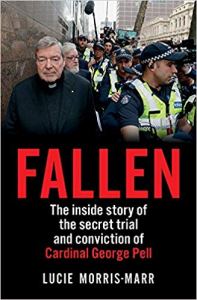
‘FALLEN’ written by investigative journalist Lucie Morris-Marr, follows the courtroom dramas of cardinal George Pell’s two closed court trials. The first trial was abandoned when the jury  could not reach a unanimous decision. Morris-Marr attended every court sitting over both trials. However,  only lawyers and barristers appearing for the Crown and for the Defence, along with the two juries, were permitted to hear the testimony of the surviving choir boy (‘Witness J’) in a closed court . He accused Pell of historical child sexual abuse offences committed when he and his friend were 13 years old.  The other choir boy involved in the sexual abuse offences at St Patrick’s Cathedral in Melbourne, died in 2014 of a heroin overdose.
Pell’s second  five-week trial ended in December 2018, when a jury found Pell guilty of sexual penetration of a child under 16, as well as four counts of committing an indecent act with, or in the presence of, a child. The verdict relates to two different incidents that took place when Pell was the archbishop of Melbourne.  Evidence was presented that Pell abused the two choirboys at St Patrick’s Cathedral after celebrating one of his first Sunday masses as archbishop. He abused Witness J a second time, two months later.  Parts of Witness J’s  testimony were read out by the prosecutor and Pell’s defence barrister during their closing arguments to the jury.
In Witness J’s  statement read by his lawyer outside the court following  the guilty verdict,  he dedicated the guilty verdict to his deceased friend and asked journalists to respect his privacy and that of his family including his young children, by not revealing his identity.
The harrowing accounts Morris-Marr writes about in her book relating to her investigation of George Pell over many months leading up to his secret trials, the loss of the job she loved at a Murdoch Media newsroom, and the physical strain on her mind and body, bear witness to the power that Pell and his supporters, both within and outside  the Catholic Church, wielded in Australia and around the world. The fact that the compelling testimony of  Witness J  swayed the jury to convict  such a powerful man must cement our faith in Australia’s  judicial system.

George Pell had the best Defence team money could buy and the onus was on the prosecution to prove Pell’s guilt, so the stakes were extremely high. When the unanimous guilty verdict was read out by the jury foreman, there was an audible collective gasp around the courtroom. It was evident that none was more shocked by the guilty verdict than Pell’s highly paid and over confident QC Robert Richter.  A subsequent Appeal by George Pell in the Victoria Court of Appeal  failed by two to one.

This book is a valuable record of the weeks and months leading up to the closed court trials and subsequent conviction at the second trial, of Australia’s highest ranking Catholic cleric and the third highest ranked Vatican official at the time of his arrest.

**********

Reviewer’s Note: I am surprised that the editor of the book  ‘FALLEN’   written by author/journalist Lucie Morris-Marr and published by Allen and Unwin,  did not pick up a significant error in the book before its publication. Another important book written by Chrissie Foster about her dealings with a callous George Pell when her two daughters had been repeatedly raped by a Catholic priest, is erroneously referred to in ‘FALLEN’ as  ‘Hell On The Way To Hell’  when in fact the correct book title is: 
Ms Foster also wrote the forward in Lucie Morris-Marr’s book.  Not a good look for either the author or the publisher of ‘FALLEN’. Hopefully this error can be corrected asap.
********
-Anne Frandi-Coory  3 November 2019

I first read In God’s Name in the early 1990s when I was at university, and although I was by then a lapsed, disillusioned Catholic, nothing prepared me for the revelations in the book. Until then I had no idea how deeply corrupt the Vatican/Catholic Church was, and specifically, the Vatican Bank. I have recently read it again.

Then I saw a Daily Mail post:

Mobster claims he helped Poison Pope John Paul I with cyanide and threatened to kill Pope John Paul II because they both tried to expose a billion dollar stock fraud scam involving cardinals and gangsters in Vatican City. (see full post below).

Needless to say, this time I was more prepared, what with the child sexual abuse scandal that has since rocked the Church to its core. The comments by the mobster confirm everything that investigative journalist David Yallop had revealed in  his book about the murder of a  pope… In summary:

During the late evening of September 28th or the early morning of September 29th,1978, Pope John Paul I, Albino Luciani, known as the smiling pope, died only thirty-three days after his election. The cause of death (Vatican officials refused to allow an autopsy) was announced to the world by the Vatican as ” myocardial infarction”. Yallop interviewed many people when he was writing In God’s Name including the pope’s  long  time personal physician. The doctor was absolutely shocked because as he told Yallop, his patient, a relatively young pope in his 60s,  was in perfect health and the only pills he took, were extra vitamins and  mild medication for low blood pressure.

During his research for the book, Yallop uncovered a huge chain of corruption  linking leading figures in financial, political, criminal, and clerical circles around the world in a conspiracy. The new pope was, although a humble man who enjoyed a simple lifestyle, a fierce opponent of corruption with an inner strength that must have alarmed his ‘minders’ when he ordered an investigation into the Vatican Bank, and the  methods employed by its President, Archbishop Paul Marcinkus. Yallop’s intensive research over three years maps the subsequent cover-ups and  upheavals within the Vatican,  and the actions of the mysterious and illegal branch of Freemasonry called P2  extending far beyond Italy in its accumulation of wealth and power , and also penetrating the Vatican.

In God’s Name is an informative and educational  read for Catholics and non-Catholics alike; for anyone who still believes that religious organisations are  in existence purely to set humanity’s moral compass or to direct the worship of culturally specific gods.  -Anne Frandi-Coory 

****************

The Daily Mail Post:
Mobster claims he helped Poison Pope John Paul I with cyanide and threatened to kill Pope John Paul II because they both tried to expose a billion dollar stock fraud scam involving cardinals and gangsters in Vatican City.

A mobster from the Colombo mafia family claims he helped poison Pope John Paul I with cyanide 33 days into his reign to stop the pontiff from exposing a billion dollar stock fraud scam. The startling revelation comes from 69-year-old Anthony Raimondi’s new novel When the Bullet Hits the Bone [published 2019].

Raimondi was a loyal member of the Colombo family – one of the notorious five Italian mafia families in New York City.

The Colombo family dealt in a host of criminal enterprises, including racketeering, contract killing, arms trafficking and loansharking.

The scene begins in 1978 when Raimondi, the nephew of infamous godfather Charles ‘Lucky’ Luciano, was recruited by his cousin Paul Marcinkus, who ran the Vatican bank in Vatican City.

The New York Post reports that Raimondi’s job was to learn the Pope’s daily habits and be there when Marcinkus spiked John Paul’s nightly cup of tea with Valium.

Raimondi notes that the Valium worked so well that the Pope wouldn’t have woken up ‘even if there had been an earthquake.’

He said: ‘I stood in the hallway outside the Pope’s quarters when the tea was served.’

‘I’d done a lot of things in my time, but I didn’t want to be there in the room when they killed the Pope. I knew that would buy me a one-way ticket to hell.’

Meanwhile, Marcinkus prepared a dose of cyanide for the Pope.

‘He measured it in the dropper, put the dropper in the Pope’s mouth and squeezed. When it was done, he closed the door behind him and walked away,’ Raimondi said.

Shortly after, a papal assistant reportedly checked on the Pope and screamed that ‘the Pope was dying!’

At which point, Marcinkus and two other cardinals rushed into the bedroom and pretended to be horrified by what they saw.

Raimondi said if the Pope had kept his mouth shut, ‘he could have had a nice long reign.’

Next on the list was John Paul II, who seemed set on exposing the inside job as well.

Raimondi, a [self] made man, was called back to the Vatican and told to prepare for a second murder at the behest of the fraudsters.

He reportedly told them: ‘No way. What are you going to do? Just keep killing popes?’

Knowing he risked being killed by the mobsters, John Paul II allegedly chose to keep quiet about the illegal dealings.

John Paul II would go on to serve the second longest reign in modern history before he died at age 84 in 2005.

This apparently prompted days of drunken partying for the mobsters and corrupt cardinals in Vatican City.

Raimondi said: ‘We stayed and partied for a week with cardinals wearing civilian clothes, and lots of girls.’

‘If I had to live the rest of my life in Vatican City, it would have been OK with me. It was some setup. My cousins all drove Cadillacs. I am in the wrong business, I thought. I should have become a cardinal.’

Raimondi dismisses those who question his story or say it closely resembles ‘The Godfather III.’

‘It was a terrible movie. To tell you the truth I don’t really remember it,’ Raimondi told The Post.

‘What I said in the book I stand by till the day I die. If they take [the pope’s body] and do any type of testing, they will still find traces of the poison in his system.’

Follow Anne Frandi-Coory’s blog HERE at: Frandi.blog

********

********

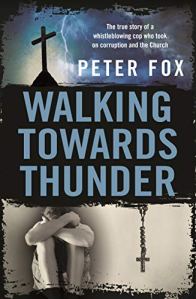
Author Peter Fox acknowledges in his book ‘Walking Towards Thunder’  that so many people supported  him, and joined with him, to pressure the then prime minister Julia Gillard to set  up the Royal Commission into Institutional Responses  into Child Sexual Abuse, but there is no doubt that Fox’s  fight to put children’s safety  ahead of the reputation of the Catholic  Church was the catalyst. As has often been stated since, only an atheist, female prime minister would have listened and acted; whatever the truth, the timing was crucial.

What is truly appalling is that a corrupt NSW Police Force destroyed Detective Chief Inspector Peter Fox’s exemplary career in order to protect the Catholic Church, its wealth and power in Australia. It’s difficult to fathom that this corruption could even take hold and destroy hundreds of children’s lives in a modern secular country like Australia.

Fox’s empathy for the children abused by Catholic clergy and their distraught families shines through the pages of this book.  The heart wrenching stories are even more soul destroying when no matter what Fox did, there was nowhere to turn to get help for these suffering children, while paedophile priests were shifted around from parish to parish, supported by bishops and archbishops. We now know that paedophile priests passed around the names of children they had abused to other priests so that some children were raped repeatedly by more than one priest and yet the NSW Police and the Church continued to attack Peter Fox and deny this was happening.

Fox’s attention to detail in writing reports and conducting interviews showed him to be an outstanding detective, but this did not save him from the endemic corruption within the NSW police force which allowed the Catholic Church to hide the crimes of its clergy for decades.  Peter Fox writes about the similar ‘brotherhoods’ operating within the Church and police force and how they close ranks to protect reputations at all costs, but these costs were too high for child victims, and for Detective Chief Inspector Peter Fox and his family.

The chapter on the NSW commission of inquiry into police corruption with Margaret Cunneen appointed as chief commissioner, will leave readers wondering just how deep corruption is within our justice system. The days of tortuous, seemingly aimless questioning  of Fox, whose health was visibly deteriorating;  a detective  who was doing his job and doing it diligently, is particularly harrowing to read. The intimidation of Fox’s wife in the courtroom during his interrogation is unsettling to say the least; it was devastating for Fox who was well aware of what was happening while he was being interrogated in the dock.

When the Child Abuse Royal Commission was finally announced many had expected the then NSW Premier Barry O’Farrell would abandon the planned  Cunneen NSW Police Inquiry as being a smaller inquiry covering the same matters.  However, the Police Inquiry proceeded.

Around the time the Cunneen Inquiry’s report was being  completed, and the Child Sexual Abuse  Royal Commission was about to begin, George Pell was promoted to cardinal by his Church and a “discreet farewell’ for him was attended by, among other dignitaries, NSW  Attorney General Greg Smith and NSW Premier O’Farrell, who expressed the “greatest respect” for George Pell and his Church.  One can only imagine how this made the victims and their families feel.  And  then O’Farrell made a statement that surely will go down in history as an indictment on the NSW state government which must have been  well aware of the children reportedly raped by Catholic clergy at the time, and in light of Pell’s later conviction for child sexual abuse: “In Australian society the [Catholic] Church always gets priority and central position.”

In my view, after reading ‘Walking Towards Thunder’ the Cunneen Inquiry appears to have been set up solely to destroy Peter Fox, along with the rape victims’ statements he recorded and other documented evidence he had collected.  Documents and statements mysteriously disappeared and police officers giving evidence at the Cunneen Inquiry claimed that those documents and statements never existed, even though victims, journalists and family members all confirmed Fox’s evidence which he gave under cross examination, which I have already noted was brutal.

These are my own assessments after reading ‘Walking Towards Thunder’ and I have no doubt that history will hold the NSW Police Inquiry up for what it was; a sham! The ABC later reported that the four-volume report, three volumes of which had been released by Commissioner Margaret Cunneen SC, uncovered no evidence to show that senior police ever tried to ensure child abuse offences were not properly investigated. History will not be kind to Commissioner Cunneen. We now know that Police did conceal evidence, destroyed or ‘lost’ statements by victims and witnesses, and police had evidence that the Catholic Church was intimidating witnesses and victims so they would not go to the police with their claims.  These matters were all later revealed during the Child Sexual Abuse Royal Commission.

It seems during the time covered in Peter Fox’s book, good priests who tried to expose child sexual abuse by fellow clergy were ostracised in their parishes, honest police were leaving the police force and school principals were driven out of their jobs for trying to protect children under their care. Every one of them paid a heavy price, some tragically more than others.

This is a well written book which may have been enhanced with a reference index notating names, important events and dates to enable the reader to traverse the wealth of information contained in the book.

‘Walking Towards Thunder’ will give readers a close up look at how a hard-working, honest police officer fought the powerful Catholic Church and the NSW police force to protect victims of clergy sexual abuse from further abuse and to stop more children being abused in the future. He and his family have paid a huge price. I have no doubt he will be vindicated. It is also a must read for all victims and survivors of child sexual abuse by Catholic clergy. Simply by victims revealing what had happened to them, meant they were vilified by people in their own parishes for tarnishing the reputation of their beloved church.  Most of the books about Catholic paedophilia I have read and reviewed, were written by victims and survivors or their families. Peter Fox’s book gives us a clear view of this Catholic scourge from a different angle, thereby revealing just how the Church hierarchy in Australia was able to coverup the rapes of hundreds of innocent children for decades.

-Anne Frandi-Coory 24 September 2019


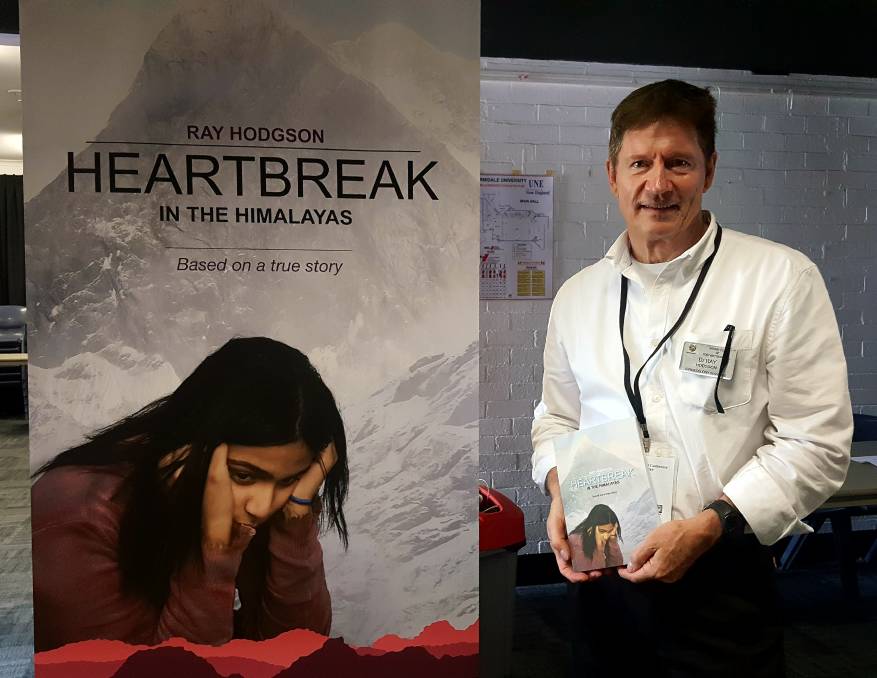
‘Heartbreak In The Himalayas’ by Dr Ray Hodgson


r0_0_3440_2660_w1200_h678_fmax

If nothing else, reading ‘Heartbreak In The Himalayas’ by Dr Ray Hodgson has made me realise how lucky I was to have the best prenatal care and my children delivered by well qualified doctors and nurses in a modern New Zealand hospital, with the best equipment. Postnatal care for mothers and babies is vital for their ongoing health and to detect any abnormalities in the babies’ or their mothers’ recoveries.  Not having ever travelled to Nepal, a patriarchal country with appalling rates of death in childbirth of both mothers and babies, I had no idea of the primitive conditions mothers and their babies still have to endure, even in this 21st century, and it is not surprising that so many do die. There is very scant basic prenatal or post-natal care, and often when women and girls are seen by a doctor, or midwife, it is too late to save their babies.

But this inspiring book is so much more than a reminder of how lucky we are to live in a wealthy and largely egalitarian country, which we take for granted. It is an insight into the enduring spirit of poor rural Nepali women and girls who suffer debilitating pain and social stigma from the horrific effects of pregnancy and childbirth as a result of giving birth too young, too many pregnancies, and with little spacing between those pregnancies. The most common problem among these mothers is uterine prolapse estimated to affect 850,000 females in the country. Amnesty International suggests that the condition impacts around 10 percent of the country’s total female population of almost 14 million and it is considered to be a human rights issue as well as a health issue by Nepal’s Supreme Court. Cultural attitudes favour males over females and as a result, according to the World Economic Forum, the 2016 Global Gender Index ranks Nepal 110th out of 144 countries on gender parity. Girls receive a basic formal education, or none at all, while boys are encouraged to stay at school and later to travel to cities or overseas to further their tertiary studies.

Females grow and harvest crops, take care of children, cook meals. Mothers carry heavy loads while pregnant, and also immediately after giving birth; there is no relief from their punishing workloads.

By comparison, unless men travel to India for seasonal work, their light work load entails selling any excess crops grown and harvested by females.

Dr Ray Hodgson is an associate professor in Obstetrics and Gynaecology based in Australia. Following his discovery of the appalling state of women’s health in Nepal in 2010, he founded the humanitarian organisation ‘Australians For Women’s Health’. As a specialist gynaecological surgeon and obstetrician, Dr Hodgson leads teams of volunteers on medical camps to remote regions of Nepal where they provide surgical care, and treatment of general female health issues, to underprivileged woman and girls. During the temporary camps, each member of the medical team even manages to pass on their skills to Nepali doctors, nurses and midwives.  They often have to work in tents using flashlights during power failures, and at times have had to donate their own blood in order to save dying patients.

Uterine prolapse is a debilitating condition which can cause years of excruciating physical, emotional, not to mention, social pain.  Uterine prolapse is also commonly referred to as pelvic organ prolapse or genital prolapse. Nepali men are generally uninterested in what they perceive as ‘female problems’, comfortable as they are in their total ignorance of what women actually suffer and endure. Added to that, cultural norms dictate that education is ‘wasted’ on girls, because they are expected to work with their mothers in the fields and at home. Their formal education is basic and they often marry too young, before their bodies are fully grown and ready for sex, or for giving birth.

Menstruating women and girls are evicted from their homes, with their babies, and young children, and even exiled from their villages, adding humiliation to their extreme physical suffering.

Nothing demonstrates the disregard men have for their wives’ and daughters’ suffering more than the banishing of menstruating females to the windowless, doorless, menstrual huts or chhaupadi, due to Nepali cultural rituals of impurity or menstrual taboos and Nepal has one of the most brutal cultural practices of this type in the world. The use of chhaupadi continues to cause the deaths of hundreds of women and girls from exposure, dehydration, snake bites, smoke inhalation, starvation, blood loss and many other health issues. One is left to wonder how Nepali husbands and fathers can be so cruel and uncaring about what happens to their wives and daughters banished to the outdoors in one of the harshest climates around the globe. These unfortunate females are expected to walk for hours, sometimes days, with uterine prolapse, and other debilitating internal injuries, to get the most basic health care. The great majority of pregnant women and girls do not receive any prenatal or postnatal care at all, so that their own ignorance in caring for themselves is exasperated and passed on from generation to generation.

Dr Hodgson promises to change that. His camps have already improved the lives of hundreds of mothers and their babies, and he wants to do so much more. Sadly, each day the short-term camps operate, there are endless queues of desperate women who have to be turned away, and this in itself is heart-breaking.  The doctor goes on to say that the severe gender imbalance in rural Nepal is one of the reasons he believes his team’s work is so crucial.  When the first camps were implemented the team focused primarily on helping women with prolapse but the extent of the problem loomed so large, their life-saving work extended to include general women’s, and maternal, health.

The author’s aim is to raise enough money to build a permanent hospital for mothers and babies in remote Nepal, not only as a base for his team’s life-changing surgery and maternal healthcare, and to end the frustration, the inadequacy, of the short-term camps, but also to provide a teaching hospital to train more midwives and surgeons. Dr Ray Hodgson hopes that the sale of his book ‘Heartbreak In The Himalayas’ will generate enough funds to finance his hospital, and perhaps in the future his project will influence cultural change, but he is also realistic: “The challenges are both medical and cultural in what is a highly patriarchal country.”

Dr Ray Hodgson’s story details the adventures and challenges that present themselves during a four-week surgical camp in a remote area of Nepal. The story is based on, and contracts, actual events that he and his volunteer group have faced over the years. But ‘Heartbreak’ is not all about the suffering of women and girls…it is also about hope for a better life for all females in Nepal in the future and Dr Hodgson is right when he says that when girls are better educated, Nepal will become a more equal society. His views are supported by historical evidence that well educated women make better and healthier mothers who in turn are delivered of healthier babies who in their turn pass this on to future generations.

To illustrate his prediction, Dr Hodgson has cleverly incorporated in his beautifully written book, a thread running through the main events, which helps to alleviate the horror the reader finds within these pages; it features an intelligent and resourceful 12 year old girl called Poppy.  Poppy helps in the camp’s kitchen, before and after school, to provide meals for the medical team and its staff, who have all come to love her.  This young girl has a particularly difficult life, living with her brother and father, without her mother who tragically died giving birth to Poppy. By this process, we are given a closeup, insightful view into the hardship young girls face, and what life is like living in a primitive one room hut with no privacy. Poppy’s future appears bleak indeed, but there is hope that Dr Hodgson might find a way to convince Poppy’s father that she deserves a good education, with the help of a scholarship, and that she in turn will be able to help the people of her country appreciate the contribution women could make in transforming Nepal into a more modern and egalitarian society.

**********

Please help author Dr Ray Hodgson raise enough funds to build his teaching hospital for mothers and babies in rural Nepal by buying his  book; you will not only be buying a great read, but most important  of all, you will be helping to save the lives of hundreds of mothers and babies which will in turn set rural Nepal on a path to a more equal society where females are valued  as much as males are.

************

-Anne Frandi-Coory 16  July 2019 


**

CARDINAL

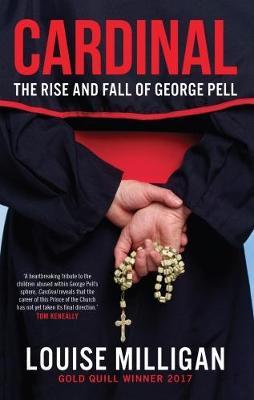
In June of 2017, the best-selling book Cardinal: The Rise and Fall of George Pell

 written by investigative journalist, Louise Milligan, was withdrawn from sale in bookshops across Victoria. Cardinal George Pell had just been charged with multiple historical sexual offences against children. The publisher, Melbourne University Press was concerned that the book could prejudice the case and be in contempt of court.

George Pell has since been convicted of child sexual abuse and is currently in custody awaiting sentencing on the 13 March 2019. Pell continues to maintain his innocence on all charges. His appeal hearing has been set for June 7-8, which critics claim is unfair as most inmates usually have to wait a year or longer before their challenging of a court verdict is heard.

Now that CARDINAL is available for sale again, I can finally post my review. This is a book that is even more relevant then ever, because Pell is now a convicted paedophile. His crimes are no longer just allegations.

One of the complainants Milligan interviewed for the book, whose criminal trial was recently dropped by prosecutors (due to insufficient evidence) has now elected to take the matter forward, via a personal civil action against Pell and other church and state entities, including the trustees of the Sisters of Nazareth (formerly St Joseph’s), the Catholic Archdiocese of Melbourne and the State of Victoria.

In another associated case, the father of one of two St Patrick’s Cathedral choir boys sexually assaulted by Pell, has announced that he intends to sue Pell and the Church following the death of his son due to an accidental drug overdose.

These victims’ accusations, along with many more against Pell and other Catholic clergy, and the resultant cover-ups, are also detailed by Milligan and her research is thorough; searching and reading through hundreds of documents, tracking down and interviewing victims and their families, Catholic clergy, teachers and principals.

So much of what Milligan writes about in CARDINAL is heart-breaking. e.g. Several generations of children abused by the same paedophile priest, children raped by priests at their school.  Pell’s Melbourne Response, which he established to compensate victims of Catholic clergy abuse is heavily criticised and considered dangerous. In one case, the victim was forced to confront her abuser, alone with him in a room with the door closed, before the Church would even consider compensation. And most critics say that compensation is woefully inadequate to pay for psychologists, psychiatrists, medication, etc.

It is very interesting to read about Pell’s rising authoritarianism and adherence to strict orthodoxy which enabled him to make the changes he carried out at Corpus Christi seminary in Clayton. When he was first appointed as rector, he sacked all the staff, and dismantled the strict screening processes for those young men wishing to join the priesthood. Vocations for the priesthood were plummeting so there was a worldwide shortage of parish priests.  All who wished to enter the seminary in Victoria were from then onwards accepted at face value! Someone who spoke to Milligan stated that Pell’s ‘exercise of power was ruthlessly destructive.’ The ‘veritable tsunami of child sexual abuse claims coming at the nation’s Catholic Church’ revealed that Victoria had more paedophile Catholic clergy, and victims, than in any other place in the country, and most of the paedophiles operated during Pell’s time as priest or bishop.

Yet Pell is persistent in his claims that his Melbourne Response procedures were the first to respond to help victims of clerical paedophilia, but this is hotly disputed by several critics of Melbourne Response in the book. The percentage of Catholic clergy in Australia, including Christian brothers and priests, accused of sexually abusing children, as revealed by the Royal Commission into Institutional Responses into Child Sexual Abuse, is staggering.

Another aspect of Pell’s governance of the Church which Milligan explores is Pell’s obsession that the Australian Catholic Church would disappear into obscurity because of its ‘egalitarian nature’ and he agreed with Pope John Paul ll that this egalitarian nature would undermine the authority of the clergy! Pope John Paul ll, Pope Benedict  XVl and George Pell,  are now suspected of having covered up thousands of cases of sexual abuse of children by paedophile Catholic clergy worldwide. None-the-less, by the year 2002, Pell had become a true Catholic celebrity; wined and dined by media and politicians, including Liberal prime ministers, by which time he had gained the epithet ‘a brilliant conversationalist’. But so rigid was Pell in his determination to keep the Australian Church within his parameters of strict orthodoxy, that many priests called him ‘Captain Catholic’; the Church’s reputation always came first above all else, including the safety of children. Pell had finally succeeded in making ‘his’ Australian Catholic Church in his own image. Meanwhile, hundreds of children around Australia had been raped and brutally abused by Catholic clergy, indeed were still being abused, and the Church was by this time well skilled in covering up that abuse.

Then in 2013 the Royal Commission into Institutional Responses to Child Sexual Abuse was established. The worm was turning.

During Cardinal Pell’s testimony at the Royal Commission, he repeatedly denied that he knew about paedophilia in his Church. The Commission’s Chair, Justice McClellan interrupted; ‘We have heard from others that paedophilia has been understood by some in the Church as sexual activity with prepubescent children but not adolescent children’. Pell said he was aware of the distinction.

‘It is not unknown, of course for priests to have engaged in sexual activity with adolescent boys, is it?’ McClellan asked. Pell replied that that was correct. So, although a priest having sex with prepubescent children was a sin and a crime of paedophilia, a priest having sex with adolescent boys was merely homosexuality? The people in the courtroom were reported to have responded with horror at this revelation. ‘So’, Milligan writes:

‘the Catholic Church that lectured to people that sexual intercourse was not permitted outside the bounds of marriage, that had railed against the contraceptive pill and condoms, this same Church had made granular distinctions between how it viewed sexual relations of whatever complexion, between adult priests and boys, depending on their age? Well, yes, it seems that it did.’ This is so very disturbing and goes some way in explaining how the Church has managed to trivialise and cover up the abuse and rape of children across the world, for decades.

The pomposity and arrogance of Pell is evident for all to see. His answers to questions during the Royal Commission, and at other public hearings, were evasive, with deliberate obfuscation and ‘I don’t recall’ replies. This can be attributed to a form of ‘mental reservation’ or ‘mentalis restrictio’ in the Latin; essentially a Catholic loophole in the truth. Many of Pell’s victims are convinced this is how he evades answering questions truthfully, even under oath. It is a theological strategy dating back centuries which involves the idea of truths ‘expressed partly in speech and partly in the mind’. Lying is considered a sin but it is a Christian’s ethical duty to tell god the truth …restricting part of that truth from human ears is okay if it serves the greater good i.e. protecting the Catholic Church’s wealth and its reputation.

The book also focuses on Pell’s propensity to blame others for the Church’s failings in protecting children from paedophile clergy. He appears to readily blame other bishops and priests, whenever he is questioned too closely. Although he often uses the phrase ‘I can’t recall’ when reminded of some particular episode or answer he has given in the past, he always has rapid recall of a name he can use to accuse another bishop or priest of negligence in using their powers to protect children e.g. bishop Mulkearns, who it is alleged frequently asked for Pell’s assistance to deal with serial paedophile priest Gerald Ridsdale from ‘Catholic Ballarat’. Mulkearns even travelled to the Vatican to consult with Pope Benedict XVl. When Mulkearns sat down with the pope, Mulkearns asked him for help to deal with Ridsdale. The pope stood up, turned his back on the bishop, and walked out of the room. That’s strict Catholic orthodoxy in practice!

Could Pell have devised and upheld the strict orthodoxy of the Australian Catholic Church in order, not only to augment his own power to protect the Church and its wealth and assets, but also to keep hidden his own dark secrets?

Reading this book shines a bright light on the extreme suffering of the child victims of clerical abuse, and the breach of trust; absolutely no empathy for victims is displayed by the Catholic Church’s hierarchy. There are many people within the Church who do not believe that Pell is guilty of paedophilia, and are certain that the victims are lying and are intent only on destroying the Church. Do these supporters of Pell not realise that they are enabling paedophiles?

In May 2015, child psychiatrist and associate professor from the University of New South Wales, Carolyn Quadrio, gave evidence at the Royal Commission. She is arguably Australia’s most experienced practitioner on the impact of childhood sexual abuse throughout a victim’s life. Milligan writes that the Commission had such confidence in Quadrio’s expertise that it devoted an entire day to her evidence.

Quadrio tells Milligan during an interview that ‘when a member of the clergy abuses a child it can be more profoundly unsettling for the victim than when it is an ordinary member of the community.’ She goes on to say that the ‘trauma of betrayal itself can be more traumatic than the memory of the physical act of sexual abuse.’ Quadrio explains at length in CARDINAL, the reasons for this.

Through her many years of practice, and intense study of local and international research, Quadrio has discovered that there is a distinct difference between the way that boys respond to abuse, compared to that of girls. As Quadrio states in her evidence to the Royal Commission: ‘There needs to be a huge amount of awareness that children who are troubled, are troubled for a reason.’

I recommend this book to all parents and families, whether Catholic, or any other faith, or indeed atheists, because it will not only instruct readers on the evil of paedophilia within the Catholic Church, but it will ensure that sexual abuse of children on this scale, never happens again. That children will be safe at school and families will be more aware of the signs that their child is being sexually abused.

– Anne Frandi-Coory 12 March 2019

********

Update 13 March 2019: Today, Cardinal George Pell was sentenced by Judge Kidd to six years in prison with a non-parole period of three years and eight months for historical sex offences against two choirboys. His name has been added to the Sex Offenders’ Register.

Update 21 August 2019:  On this date, Cardinal George Pell’s Appeal was dismissed by two of the three Court of Appeal Judges. 

img20190206_11165675
I received the wonderful Christmas gift of Michelle Obama’s autobiography, ‘BECOMING’.
and I did enjoy reading this beautifully written book. I  thoroughly recommend it.
What an inspirational and intelligent woman she is. Michelle Obama’s life journey begins with her childhood in a poor, black neighbourhood in Chicago, and takes us through her years at school, university, as a corporate lawyer, and on to the eight years in which she reluctantly gives up her much loved career to become the First Lady of the United States of America
.
Michelle (a descendant of African slaves) wastes not one minute of her time as First Lady, establishing:   a huge vegetable garden in the White House grounds to which she invites disadvantaged families to share in, mentoring programmes in schools and universities for disadvantaged children, healthy food delivered to schools for millions of children across the US, a movement to encourage schools to implement at least 60 mins of exercise every day… and these are just a few of her accomplishments. There is so much more that this amazing woman achieved, and most of it with an aim to better the lives of disadvantaged children, especially girls and young women. For as Michelle explains in her book, so many boards and influential meetings she attended over many years, were mostly made up of white males, where so often she was the only woman present, or the only African American or mixed race person in a group of world leaders.
I think readers will agree with me when they reach the last pages of this book, that Michelle Obama, by her example of selflessness and high standards in attaining her achievements, has inspired many women of mixed race in the USA to garner their inner strengths and voices, to explore their choices in life, and to aim for higher ideals.  One of the last paragraphs in the book reads:
“There are portraits of me and Barack now hanging in the National Portrait Gallery in Washington, a fact that humbles us both. I doubt that anyone looking at our two childhoods, our circumstances, would ever have predicted we’d land in those halls. The paintings are lovely, but what matters most is that they’re there for young people to see – that our faces help dismantle the perception that in order to be enshrined in history, you have to look a certain way. If we belong, then so too, can many others.”
-Anne Frandi-Coory

5 *****  

mind-behind-the-crime


Dr Helen McGrath is currently an adjunct professor at both Deakin and RMIT Universities.

Cheryl Critchley is a prolific investigative journalist.


The fifteen crimes analyzed in this book, all carried out in Australia,  involve three women and twelve men. The criminals were generally not diagnosed with a severe mental illness, however, they were all diagnosed as having a mental disorder, such as a personality disorder, and they were well aware that what they were doing was wrong. The difference between mental illness and a personality disorder is explained in detail at the beginning of the book.

The various personality disorders are delved into at length by the authors. MIND BEHIND THE CRIME is well set out, divided into chapters and parts  e.g. each chapter is devoted to one specific crime with the offender and victim/s involved in that particular crime listed at the beginning of the relevant chapter. Parts of the book are divided up into the specific, diagnosed disorders as they relate to each perpetrator’s behaviour and decision-making in the lead up to their horrendous crime.

PART 1: Filicide and familicide – Killing Your Own Family

‘Men commit nearly all familicides and filicides (92-97 %) and there is evidence that such mass murders are increasing in Australia.’

Filicide is the term used to describe a situation in which a parent intentionally kills one or more of their children …the parent may or may not then kill themselves. The motive and case history of each of these crimes is explored thoroughly.  Familicide and familicide-suicide are the two terms most commonly used to describe a situation in which one family member kills or attempts to kill all members of their direct family and then often suicides. Classification schemes are used to aid the reader in identifying the behaviours and mental disorders that motivated these murderers.

Family annihilation is described as a subcategory of mass murder, defined as the killing of four or more members of the one family in one location and during one event. Family annihilators are mostly men.

‘Associate professor Carolyn Harris Johnson, a leading expert in filicide and familicide…points out that the media frequently romanticises (saying they acted out of love) and sanitises this type of crime, to soothe the anxieties of the audience because the subject matter of child murder is taboo, or too confronting for most people. But this approach distorts the public’s understanding of why these events occur and the extent of the perpetrator’s responsibility. This makes it much more difficult to identify actions that can be taken as early warning signs and prevent such child murders in the future.’ [my emphasis]

A summary of each of four categories are:

The self-righteous killer-seeks to blame their partner for damage to family, breakdown of relationship, etc. Has been controlling and possessive in the past, engages in over- dramatic behaviour and comments, may attempt suicide to avoid facing the criminal justice system.

The disappointed killer – concludes their family has let them down, their family is an extension of their own needs and aspirations, self-obsession prevents them from seeing their children as separate entities.

The anomic killer – perceives they have damaged their family’s income or lifestyle, have lost their economic status, lost their job.

The paranoid killer – perceives there is an external threat (real or imagined) that will destroy their family e.g. social services may take their children.

 PART 2: Narcissistic personality disorder and malignant narcissism – arrogant, dangerous and sometimes vulnerable.

PART 3: Dependent personality disorder – desperately needy.

PART 4:  Paranoid personality disorder – you can’t trust anyone

PART 5: Antisocial personality disorder – Life outside the rules. People with ASPD can be dangerous and difficult to detect. They lurk in homes and workplaces, playing the role of the perfect partner or colleague until they decide to use and abuse those around them for their own ends.

PART 6: Criminal autistic psychopathy and sexual sadism disorder –

a dangerous combination:

1. autistic spectrum disorder.

2. Asperger’s syndrome.

3. pervasive developmental disorder.

A diagnosis of this disorder can be made when there is evidence of behaviours such as those listed in the following two categories:

1. behaviours that indicate deficits in social communication and interaction. (Deficits in social communication and interaction are listed in more detail in this section).

2. restricted and repetitive patterns of behaviour, interests or activities.

Every one of the above disorders is explained at length in each section to help the reader understand the mind and behaviours of the perpetrator at the time the crime was committed.

All of the cases chosen for this book are recent high-profile Australian murders most readers will already know about.  MIND BEHIND THE CRIME refers to the Diagnostic Statistical Manual and other classification schemes to help explain each disorder and the subsequent motives of the perpetrators involved.

The authors argue that no amount of mild to moderate depression excuses killing those closest to you. It is never justified and the perpetrators should be called what they are – murderers. They go on to say:

“A common myth about these crimes is that parents who kill their children do so out of love and that the extreme love they feel for their child/children means they can’t bear to be separated from them…loving fathers and husbands don’t kill their kids. And unless the public’s perception of these murderers changes, other men will continue to feel that if life gets too tough they, too, can take this option and be eulogized by their loved ones in the media rather than condemned  as they should be.’ Most children were killed in a brutal and violent way; in their last moments knowing that it was their father who killed them.

‘The positive way many of those who kill their children are described in the media has the potential to influence others to commit the same crimes. Such coverage also detracts from the victims’ suffering and makes the crimes seem less horrifying. It implies that nothing can be done about these killings because they are neither predictable nor preventable. This would not be the case if, as a society, we accepted the hard reality about these crimes and focused more on identifying potential warning signs.’

It is clear at the outset that the authors care deeply about the victims involved in these crimes. They warn of the dangers that men with these disorders pose to their wives/partners and children. There is an appendix at the rear of the book: ‘Where to go for help and support’.

This is a book for our times, and I recommend it to readers who may know of someone in their family who is at risk, or for anyone interested in trying to make sense of why these murders are occurring across Australia. There is also widespread concern that Australia’s Family Court system requires reform to ensure that justice is done and that families and children are better protected.

-Anne Frandi-Coory 14 December 2018


img20180814_11071256


**********

I have always been interested in why people do the things they do; why they commit crimes, particularly murder. Was it nature or nurture, or a combination of both? I have read many biographies for this reason, and I love British criminal investigation series like Vera and Silent Witness, to name only two. Criminal profiling has come into prominence in recent years, and I find this method of investigating crimes fascinating, ever since I watched the British TV series ‘Cracker’ about a psychologist/police profiler played by Robbie Coltrane.

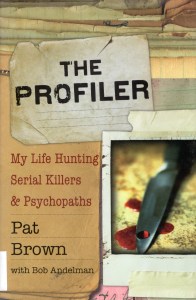
I spotted The Profiler by Pat Brown, on display in a book store, bought it and raced home to read it. I find reading books so relaxing and it helps clear my mind after I’ve spent the day as a key board warrior on social media taking politicians to task, posting my opinions on the state of the world in general. In between, answering questions on my blog, or my email accounts, and responding to various comments.

The cases Pat Brown has investigated and writes about in The Profiler are all very interesting and varied. She has also investigated suicides and, how, although they are relatively easy to investigate compared to complicated murder scenes, families find it difficult to believe that their loved ones would want to kill themselves. It is another level of heartbreak for them.

Pat Brown’s successful career as a criminal profiler intrigued me, especially the round-about-way she qualified and became such a success at it. To be honest, I didn’t expect that a large part of the book would be taken up with her story as a mother who not only home-schooled her three children but who also worked nights interpreting for deaf suspects being interviewed by police. She was a mother who wasn’t happy with the standard of education at the only school in the area and decided that she would home-school them. She describes herself as being an ‘earth mother’ and she relished the role. Not only that, she also took in foster children and a boarder to help finance their large home and their lifestyle. Once her children had left school and had embarked on their own life journeys, she decided to use the language skills she had honed, to study. I enjoyed this part of the book almost as much as I enjoyed the criminal profiling cases Brown actually got down to writing about. All-in-all Brown spent about ten years working in the emergency rooms at a Washington hospital centre and Howard University. In these establishments Brown says she learned a lot about forensics when her deaf clients rolled in on stretchers and she acted as interpreter. This was one of the most violent wards in Washington DC.  Subsequently, Brown studied criminal profiling in depth and was eventually proficient enough in the field to work with police, families, or to be hosted on TV shows to discuss various crimes and give her opinion using her skills. It took her several years to prove herself, and to be taken seriously, especially by police.

The cases Brown investigates in the book are varied, and she takes us through each stage meticulously. Many of the cases remain unsolved because of police carelessness in ’losing’ evidence, concentrating on the wrong suspect, or as in one case, possibly protecting the main suspect because of their connections ‘high up’. Brown wished to join the FBI as a criminal profiling agent, but she was too old among other things that I won’t delve into here. Brown largely educated herself by reading hundreds of books and studying various textbooks. She eventually earned a Masters degree in criminal justice from Boston University in order to “learn more about police operations and procedures and the challenges of the criminal justice system in general.”  She later developed the first accredited Criminal Profiling and Investigative Analysis programme in the country for Excelsior College where she is an adjunct professor.

It is alarming to discover how many brutal murders remain unsolved in the US and the reasons are many, but the majority are unsolved because of the lack of funds to investigate crimes in depth, and of course more serious crimes are happening more often and there just aren’t enough police or resources to continue on-going investigations for any length of time. Brown is aghast at the carelessness by which some police initially investigate serious crimes, such as not taking good photographic evidence of the crime scenes, not sealing off crime scenes, neglecting to interview all suspects, or take samples of blood or other body fluids left at the scene of the crime for DNA testing. Brown is constantly asked by families to investigate cold cases involving the murder or suspected suicide of a loved one because they don’t believe the police have done their job thoroughly enough and have reached the wrong conclusions.

I was a little disappointed that none of the crimes Pat Brown investigated resulted in an arrest or a conviction. The main reasons for this were because they were cold cases, in which evidence was lost or was insufficient to enable a conviction. From what I read, the police were at the very least, careless in their investigations of the crimes, and at best, negligent, especially at the initial stages when the crime scene was first discovered. The police who were involved were often not willing to assist Pat Brown by allowing her access to evidence when they did have it, and in one case, the judge sealed evidence and refused to release it. Never-the-less, Brown was able to proceed with criminal profiling  in spite of these set-backs, by interviewing police, suspects, family members, witnesses and obtaining autopsies. She also used lie-detectors on some suspects.

I recommend this as a great read for anyone who has a keen interest in criminal profiling.  There is no doubt that a female author writes criminal profiling from a whole new angle when compared to male authors. I have to admit to enjoying the change of perspective.

-Anne Frandi-Coory  15 August 2018