Archive

BOOKS In My Non-Fiction Collection-REVIEWS

BOOK REVIEW –

Susan Tarr


by Susan Tarr – Author, Editor and Proof Reader


><><><>

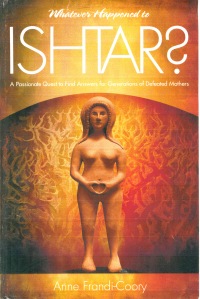
“WHATEVER HAPPENED TO ISHTAR? by Anne Frandi-Coory is a remarkable portrayal of New Zealand’s earlier Lebanese and Italian Catholic families. Although I was raised in the various vicinities this book covers, I had no idea there were established Lebanese families in New Zealand. And, for me, the whole Catholic religion was shrouded in mystique, so I had very little understanding of what was involved in being a part of the Catholic faith.

><><>><><

ishtar-front-cover

><><><><

Set in New Zealand, the spartan buildings of the Catholic St Vincent’s orphanage mirrored in some part those of Seacliff Mental Asylum (Otago, NZ) in both outlook and care of those in their charge. Both would seem to have lacked a close affection for those who needed it most: the vulnerable and unloved.

This work is an amazing testimony for all mothers, a testimony we can probably all relate to. How many times do we feel inadequate, or feel we could have done better? We should never have such constraints placed on us as a mother to feel either of these. Whatever a mother is capable of at that time, for her child, is sufficient for that time.

As Frandi-Coory bears out, it is always possible to break mindsets, or break the mould, as it is said. I.e. the sins of the father… All it takes is an invincible will, which clearly she had and has.

Frandi-Coory recounts the histories of both her Lebanese and Italian families. She explains how the various mindsets occurred and how they were passed down through the generations.

I found I kept referring to the photographs as I formed opinions on the various players in this tapestry of life.

What is astonishing here, is that Anne Frandi-Coory and I never made a connection until after our respective books were published, in separate countries. It was through reading each others work that we realised our lives were very closely linked. In fact we may well have known each other through a mutual friend (Italian) during our college years in Dunedin, NZ. That is why I can vouch for the events, scenery, time frames and cultures in this amazing work.

It’s absolutely raw in its honesty.

Very well written, it’s a compelling read, from start to finish.

Kudos to Anne Frandi-Coory.

-Susan Tarr 8 October 2014

More REVIEWS for Anne Frandi-Coory’s Memoir/Family History: 

WHATEVER HAPPENED TO ISHTAR?;

A Passionate Quest To Find Answers For Generation of Defeated Mothers

><><><

SEE BOOK REVIEW FOR Susan Tarr’s

PHENOMENA; The Lost And Forgotten Children 

phenomena susan tarr


Updated 7 Novemeber 2017

*****

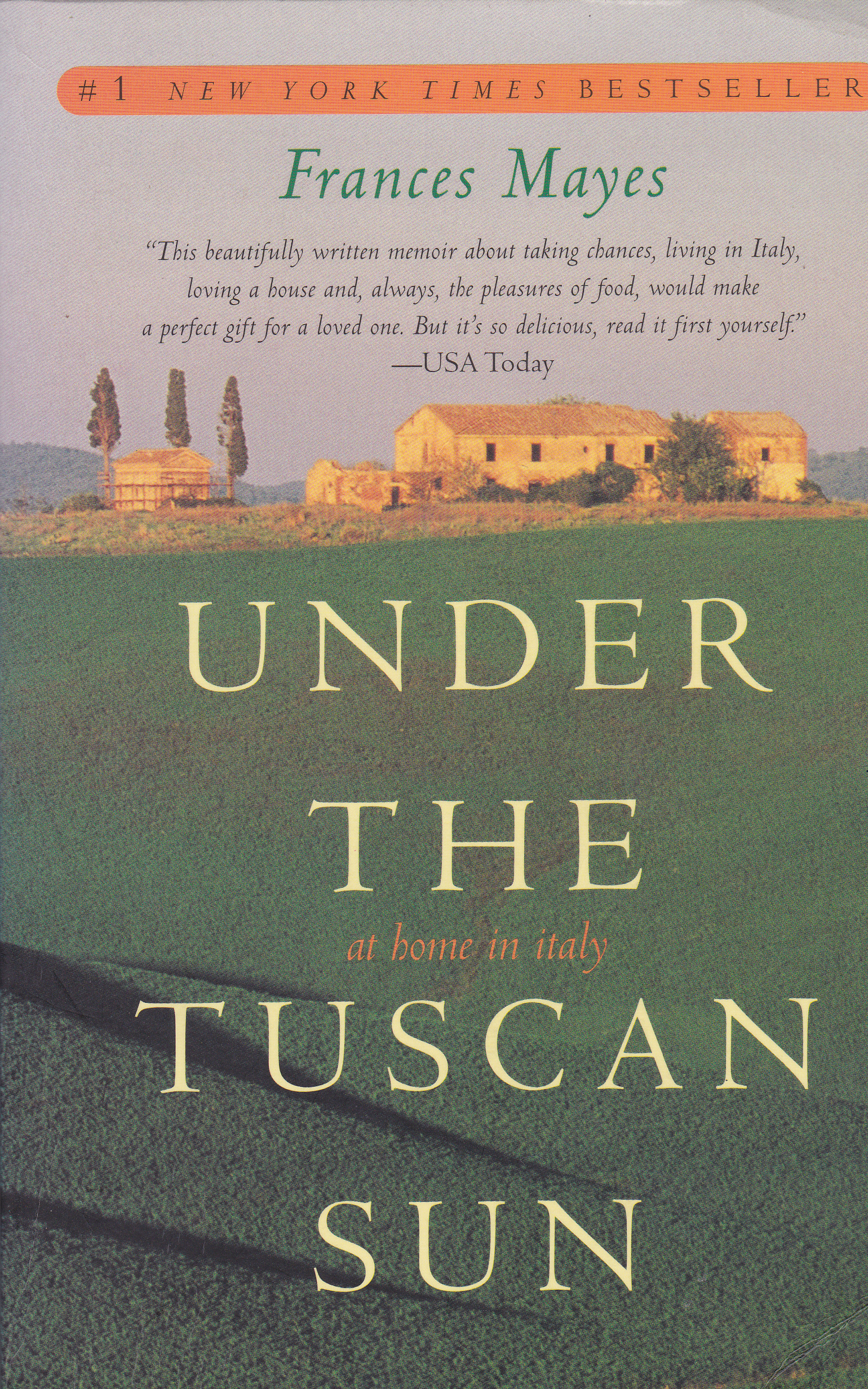
Tuscan Dreams

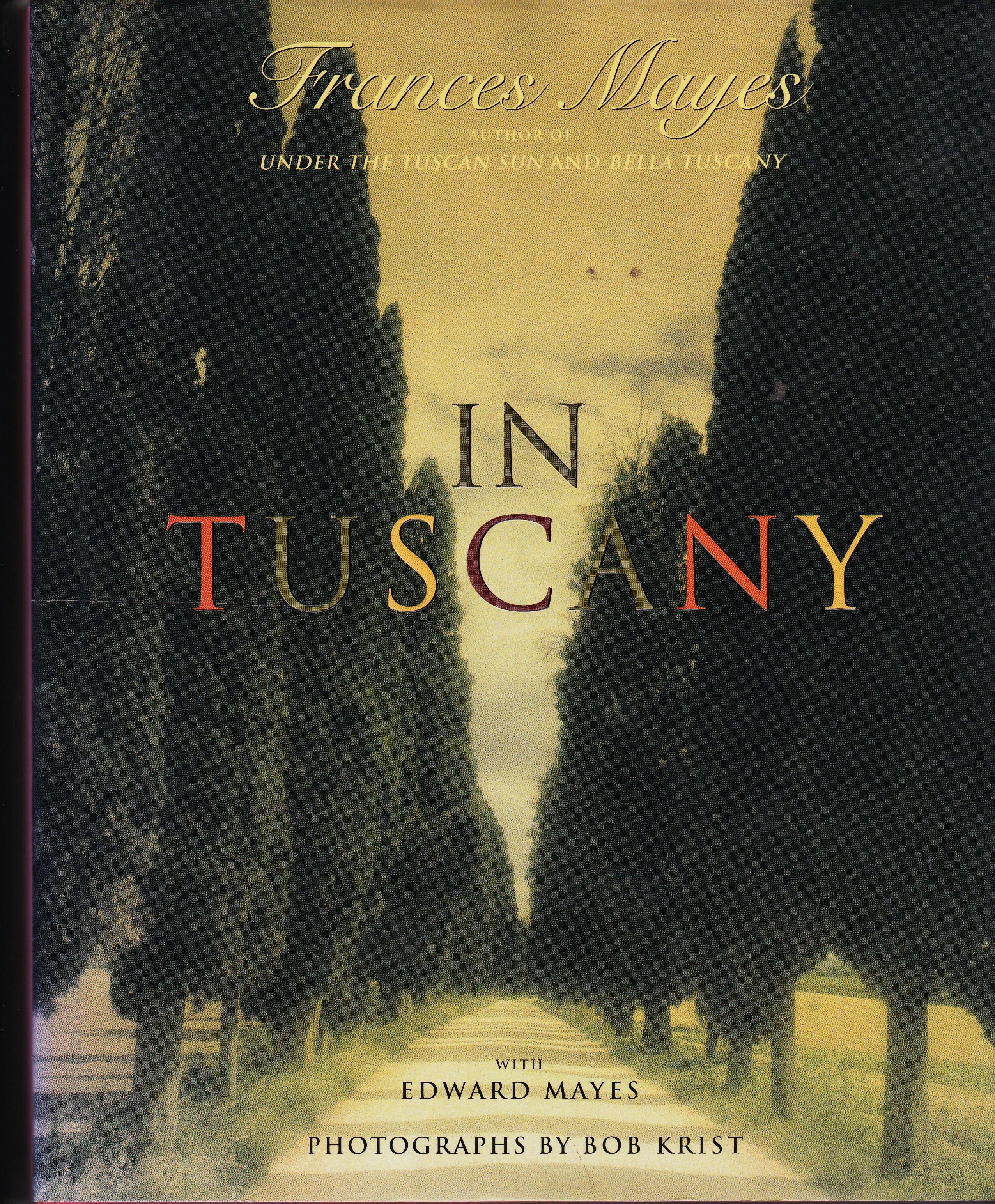
One of my favourite books on Tuscany

*****

My idea of heaven on earth is having the house to myself to write, paint, look up Italian recipes and dream of returning to Italy.

Today is such a day. The doors are locked, the phones off and all the windows are open wide. As I look up from my computer out at the grapevine, olive trees and pommegranate blossoms  in my garden, I am in Tuscany in spirit and mood.

In between touching up my latest painting (scenes of Tuscany, what else?) I am re-reading Frances Mayes’ book In Tuscany because her books transport me there. Recipes, pictures of her beloved Bramasole, the endless little specialist shops, the long tables of food, warm, talkative Italians…I could go on, but I think you get the picture.

*****

Bramasole

Photo of Bramasole, from ‘In Tuscany’ by Frances Mayes

><><><>

 If you want to transport yourself to Tuscany, then please buy this book. Frances Mayes writes with all the genuine love and affection she has for this beautiful province.

And if you would like to know more about how she came to buy Bramasole and the dramas of renovating this gorgeous villa, along with rejuvenating the gardens, then please read Under The Tuscan Sun. The author’s hilarious encounters with Italian and Polish artisans who worked on the villa, could fill another book! So much more to the book than the movie could ever impart.

Baci, baci, baci Frances Mayes, autore e Professore.

*****

Under the Tuscan sun*****

-Anne Frandi-Coory 12 February 2014


Also here on Anne Frandi-Coory’s facebook page:

https://www.facebook.com/myhomelibrary

A Book Review by Anne Frandi-Coory

…….

Michelangelo Pope's Ceiling_0001

….


Michelangelo Pope's Ceiling_0003

Michelangelo And Raphael In The Vatican. (Special edition for museums and papal galleries)

>><><><><><><><

‘Michelangelo & The Pope’s Ceiling’ by Ross King…  

…is a wonderful book all artists should read if they haven’t already. But then, anyone interested in the genius of Michelangelo would love it also.

The author, Ross King, intertwines Michelangelo’s private life and his many anxieties into the long and arduous travail that was the painting of the Sistine Chapel. And amidst all of this the disputes between the painter and Pope Julius II over money  and design give an insight into how closely the Vatican kept tabs on artists and the subjects of their works.

Compared to Raphael, Michelangelo was practically a saint. He worked long hours in Rome on the Pope’s most ambitious ‘project’ while at the same time handling all his family’s many problems, financial and otherwise, back at his home in Florence.

Michelangelo believed any sort of sexual liaison was dangerous to one’s wellbeing; ‘sapping’ a person’s vitality.  It is believed Michelangelo was celibate while his competitor Raphael, and Pope Julius, both had appetites for food, wine, and sex that were legendary. In fact, Raphael died in his late 30s from ‘a night of debauchery’. The pope suffered from syphilis and malaria. Many popes from that era suffered from syphilis and many had children. During this era, Rome, with a population of around 50,000, was infamous for the thousands of prostitutes working in that city. It goes without saying that among their clients were numerous Catholic clergy.

Often a pope’s son and heir, nephew,  or other relative, followed in his footsteps as head of the Roman Catholic Church. In those days, Popes and Bishops even went to war to win back papal states in Italy seized during invasions by other powerful countries. The fact that the Church used soldiers from ‘friendly’ countries to boost their own fighting power wasn’t a problem, neither were their looting and rampaging!

Being a history buff, I also enjoyed reading about the politics and life in Italy during the 15th and 16th Centuries. This book is well researched and equally well written.

In particular, I was fascinated by the techniques Michelangelo and Raphael used to paint their frescos. This method was used  to paint walls of palaces and churches, as well as the Sistine ceiling or ‘vault’. I always believed that the artists just painted the walls as though they were canvases. Not so. The method is painstaking, and requires much skill and patience. Several ‘plasterers’ are needed to assist the painter in mixing the correct ingredients and the painter applied pigments and sketches either to wet or dry plaster, depending on the effect required.

While I was in Rome in 1992, I bought a large book full of coloured glossy reproductions of Michelangelo’s and Raphael’s works during the reign of Pope Julius. I am so glad I did because there are no coloured plates in Ross King’s book,  therefore it would have been difficult for me to follow some of his more detailed discussions. For instance, as King explains in detail the various characters Michelangelo painted onto the Sistine ceiling, I was able to study them in this amazing book. It  made King’s book even more interesting from an artist’s perspective.

…….

Raphael-School-of-Athens

School of Athens by Raphael

The author also discusses at length, one of my favourite paintings by Raphael, ‘The School Of Athens’. This was commissioned by Pope Julius for a stanza in his new apartments. Donato Bramante, Pope Julius’ favourite architect helped Raphael paint the monumental and palatial scenes in ‘The School’. My glossy book of reproductions also has wonderful individual full coloured reproductions of the various students and ‘professors’ in ‘The School’, such as Plato and Aristotle.

plato aristotle twitter

Plato and Aristotle from ‘The School of Athens’


euclid

A glossy plate taken from ‘The School of Athens’ showing Euclid and his students


-Anne Frandi-Coory 25 November 2013

Also here on Anne Frandi-Coory’s Facebook Page:

https://www.facebook.com/myhomelibrary/


From Author Halim Barakėt:…
“We are a people who have lost their identity and their sense of manhood. Each of us is suffering from a split personality, especially in Lebanon. We are Arab and yet our education is in some cases French, in some cases Anglo-Saxon, and in others Eastern Mystic. A very strange mixture. We need to go back and search out our roots. We’re all schizophrenic…”

*******

For more ……..https://frandi.wordpress.com/2011/06/30/understanding-the-arab-mind/

Ezra Pound

I will always remember Ezra Pound;The Solitary Volcano by John Tytell for two reasons:

This is one of the most comprehensive and interesting biographies I have read, and I have read many.

The second and far less important reason, is a more tactile and visual one. The book was published by Anchor Press, Doubleday, USA and printed in 1988. A few pages had not been cut through along the bottom of the book, and the bottom edges of all the pages were so rough, they looked as though they had been cut with a chain saw. Normally I wouldn’t have bought such a book, but I spotted it at a book fair and was afraid I might not find another copy. I am surprised this edition was ever released for sale. The previous owner either didn’t bother to read the book at all or just read the accessible pages;either way they missed out on an exceptional biography!

However, I am happy to say that once I began reading about Ezra Pound, I soon forgot about the physical aspects of the book itself.

According to Poets.Org; From The Academy Of American Poets:

Ezra Pound is generally considered the poet most responsible for defining and promoting a modernist aesthetic in poetry. In the early teens of the twentieth century, he opened a seminal exchange of work and ideas between British and American writers, and was famous for the generosity with which he advanced the work of major contemporaries.
Pound admired Impressionist painters for their taking art out of the ‘dark ages’ and into the light of realism and he did the same for poetry. He believed earlier British poetry was stuffy and concentrated too much on set verses and rhyming. His mental energy was legendary and he left behind thousands of letters, a prolific amount of works including  poems, prose and translations.

Ezra Pound was a profoundly complicated man who didn’t listen easily to those whose opinions differed from his own; he could be very dogmatic and nasty, especially about political issues. He ranted and wrote throughout his adult life about his hatred of usury, Jews, banks, American politicians (especially Roosevelt) and America itself.   Pound’s vitriolic attacks against his own country began when as a student he alienated himself from the American university community with his strong political views and his sometimes outrageous behaviours. Later, he reveled in his powerful erudition and used it to discredit his country and its leaders.

He didn’t think much better of the British, informing Bertrand Russell that he was glad “you know your lousy country has paralysis” and wrote that the British Parliament was a collection of ‘six hundred apes’, and British universities were full of “hired pimps”.  During WW2, Pound relayed fascist propaganda across Italy’s radio waves, and openly wished that American and British politicians had the intelligence of his friend Mussolini (‘old Mussy’), whom he met only once and who actually believed Pound to be a nutcase.  Pound was convinced that because of Britain’s stupidity, Hitler and Mussolini were going to win the war. He was incensed that America would even consider entering the war. His reasoning for this might find favour with some readers.

That Pound’s friends and contemporaries were in awe of his works, and their sheer volume, there is no doubt. Apart from his poetry, prose and cantos, he translated Chinese and Japanese works into English, studied and translated Confucius (he believed Confucius to be infallible) and spent his early years in Paris and Italy supporting fellow poets and writers and promoting their works. Pound neglected his own work at times to find benefactors and publishers for his contemporaries such as James Joyce, WB Yeats, TS Eliot, and  Marianne Moore, to name but a few. Not surprisingly,  followers were well aware of Pound’s mercurial moods. It can’t have been easy listening to his long hateful diatribes on anything from anti-Semitism to miscegenation to Western economics. He could also be very insulting about  his friends’ friends and relatives. Even his letters to his friends and acquaintances consisted of pages of his views on what was wrong with America and Britain.  He didn’t think twice about writing to men in positions of power to offer advice on how their country should be run. Pound’s friends, fellow writers and poets nevertheless were loyal and were always there whenever he needed help, especially as he aged.  Pound could be very entertaining when he chose to be, and people would sit for hours listening to his recitations.  He received hundreds of letters from young poets and writers and ordinary citizens, addressed with such titles as ‘Dear Fatigued Prophet’.

In the last months of his life (he died in 1972 on his 87th birthday) he suffered from depression, and barely spoke. He was full of regret for the way he had neglected his children; a daughter by his lover Olga Rudge, who as an infant, was placed in the care of peasant farmers;  and a son by his wife, Dorothy Shakespear. Their son lived with Dorothy’s mother almost from birth and scarcely knew his father. Dorothy ‘understood’ that Pound’s numerous affairs with other women were a part of his ‘romantic, artistic nature’. Pound was also regretful about his strong political views and his public support of fascism and what it cost him: incarceration in a cage with iron bars for months, guarded by American soldiers in Italy,  until he could be taken to America to be tried for treason.  While in the cage, Pound suffered a complete mental breakdown and was never again the strong physical and mentally robust person he once was.   Upon arrival back in America psychiatrists assessed that Pound was insane and should not be imprisoned, so he was transferred to an asylum. He had his own room at the asylum and ran it like a Paris salon with all his books and papers on shelves around him. Poets, writers and followers visited him often under the watchful and caring eyes of his faithful wife, Dorothy.

It’s a testament to the respect fellow literati had for Pound in the way they rallied to have him released from the asylum. It’s interesting to read how for months they pressured powerful figures in America to have Pound’s indictment on treason charges dropped so he could be freed. Two of his psychiatrists at the asylum were also in sympathy with Pound and had ensured that  their weekly assessments of his mental condition would keep him from being transferred back to a high security prison and subsequent trial.  Though all agreed that they would ‘hate to see Ezra die ignominiously in that wretched place where he is for a crime which if proven couldn’t  have kept him all these years in prison’, they were also realistic… ‘neither you nor I would want to take him into our family or even into our neighbourhood’. He was finally released from the asylum after spending over twelve years there.

Soon after his release was finally secured, Pound set sail for Naples, declaring upon his arrival to assembled journalists “All America is an insane asylum!’. His friends were dismayed at Pound’s fascist salute and his ‘refusal to submit to forces more powerful than any single man’.

Pound outlived his friends Ford Madox Ford, Ernest Hemingway, Wyndham Lewis, TS Eliot, EE Cummings, WB Yeats, and William Carlos Williams. He died a semi recluse in Venice in the care of Olga, his mistress; his wife Dorothy was by then living in the UK with their son, Omar.

Anne Frandi-Coory 30 August 2013

Also here on Anne Frandi-Coory’s Facebook Page:

https://www.facebook.com/myhomelibrary/

….

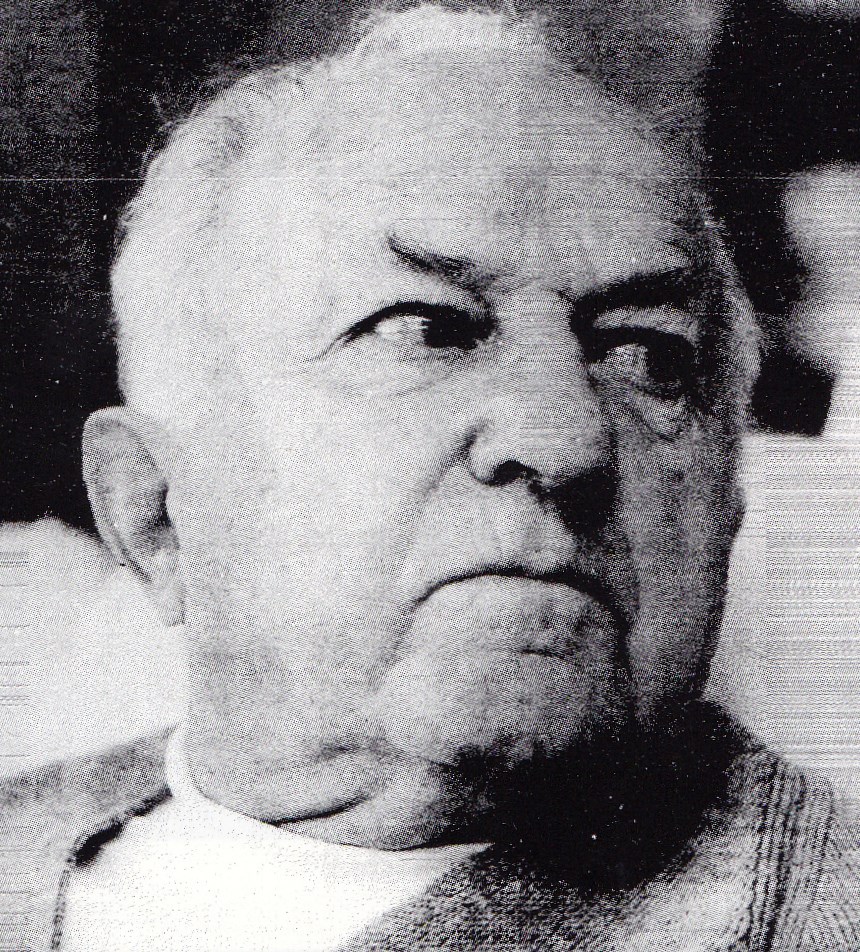
Father Kevin O'Donnell

Paedophile Father Kevin O’Donnell

><><><><><><><><><><><><><><><><><><><><><><><><><><><><

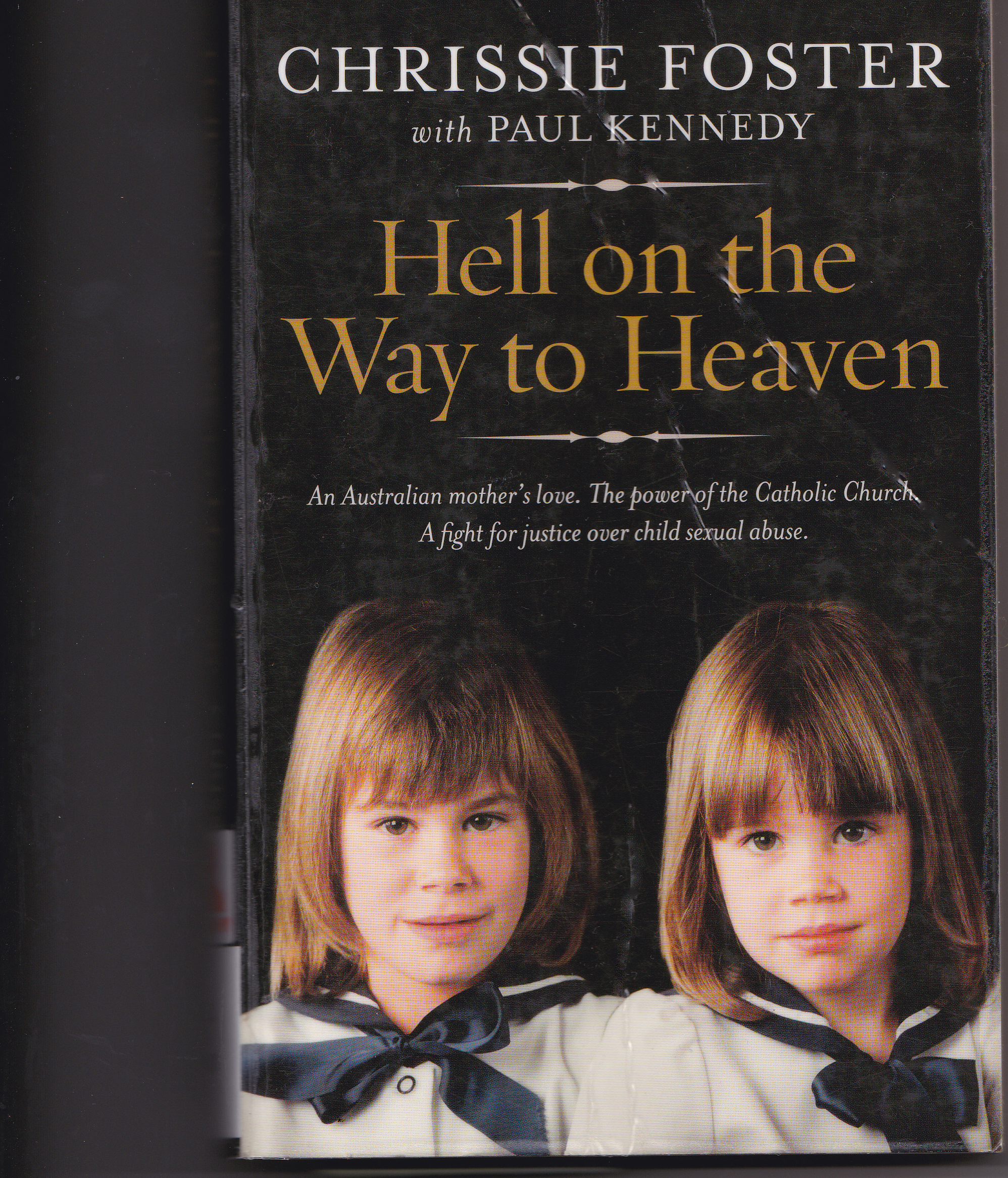
In my blog post dated 2 July 2013 How Catholic Dogma Aided Paedophile Priests’ I wrote about Chrissie and Anthony Foster’s book in which they describe how two of their daughters’ lives were destroyed when they were repeatedly raped from the age of five, by Catholic paedophile priest, Father Kevin O’Donnell.

<><><><><><><><><><><

Hell on way to heaven

><><><><>>><><

During the long battle to save their oldest daughter Emma, from more attempts at suicide by drug overdose and self-harm, she was admitted to one psychiatric unit / detox. clinic after another, over the years. Emma struggled, with some success, along with the loving help of her family, to overcome her addictions. It was a one-step-forward and a two-steps-back progress. Try as she might, Emma could not erase from her memory, what Father Kevin O’Donnell had done to her.

Emma was fast running out of psychiatric unit options because of her continual breaking of the units’ rules. However, one day in desperation, her mother found her a placement in a clinic run by the Catholic Church. Although she was hesitant about sending Emma there, she was comforted after being reassured that all the counsellors were professionals. But Emma had only been in the unit for a few days, when she phoned her mother and told her that a woman at her counselling sessions was a ‘practising Catholic and wore a cross’.  Emma was agitated and anxious. This woman was pressuring Emma to admit she was at fault for the abuse she was subjected to. Later that day, Mrs Foster rang the manager of the unit and explained her concerns about what Emma had told her. The manager stated that it wouldn’t have been a qualified counsellor and she had no idea who the woman was. She suggested Emma may have been speaking to a tea lady or cleaning staff.

A few months before she died at 26 years of age, from an overdose of her medication, Emma refused to see or talk to her mother. Chrissie Foster was hurt and bewildered. She was devoted to her daughter’s welfare and recovery, as was Mr Foster and their extended family. In the past, Emma had written many notes and diary entries, declaring how much she loves her family and how supportive of her they always are. But, she adds, her mother is the one she loves the most; she is always there for her.  That’s why Mrs Foster found it difficult to understand why Emma didn’t want to talk to her. She was hopeful that it meant Emma was trying to stand on her own two feet, and this could be a good turn of events.

Following Emma’s death, Mrs Foster had the heartbreaking task of packing up Emma’s belongings from her bedroom in the house she had loved, had decorated and furnished herself.  Loose sheets of paper were lying about all over the place. After collecting them up in a bundle, Mrs Foster sat reading the many notes Emma had jotted down in her neat hand writing.  A few of the diary notes covered her stay at the Catholic unit. She writes about the counselling sessions she attended and how traumatic they were because the counsellor was very critical and angry:  Why had she not run away? Why had she not told anyone about the abuse at the time? Why didn’t she call out?  Emma wrote: I told her I was five or six, he had all the power. Emma also wrote that she was made to feel it was her fault she had been abused. Anyone who has read Chrissie Foster’s book will know how those options would have been impossible for Emma given her age, the school environment in which the sexual abuse took place and her Catholic upbringing.  But most of all, they would have been impossible because Kevin O’Donnell was a paedophile with over 50 years experience. His victims describe him as an old man who was  frightening and angry. He continuously told them they were evil while he raped them.

Mrs Foster could not stop thinking about this ‘practising Catholic’ who was posing, unchallenged, as a psychiatric counsellor.   She believed no psychiatric unit in the 21st Century in Australia should be employing untrained counsellors. The woman obviously wouldn’t believe a priest was capable of sexually abusing children.  The ‘counsellor’ had intimated to a troubled Emma that she held priests in the highest esteem but despised the victims who claimed that priests had sexually assaulted them.

A distraught Mrs Foster phoned the Catholic Psychiatric Unit on a Sunday morning to enquire after a counsellor.  To her shock and horror, the helpful receptionist informed Mrs Foster that there was a nun on duty 24/7 to talk to patients.  So it was a nun who was employed as a professional counsellor at the unit and who was responsible for turning Emma against her mother. Emma had said to another person not long before her death, that the abuse was her mother’s fault, her own fault, and that the counsellor had angrily told her that Father O’Donnell had not raped her.

It becomes clear in Chrissie Foster’s book ‘Hell On The Way To Heaven’ how much Emma’s stay in the Catholic psychiatric unit affected and undermined her inner resolve to overcome her addictions and get her life back on track once again.  The years of addictions and self harm had taken their toll, but Emma was making progress, albeit slow. However, once she was coerced into severing ties with her family, and to rely completely on the unit for all her support,  she had come full circle; under the control of staff who preached Catholic dogma. Her fragile psychiatric condition could no longer put up a fight. She died alone in the house her parents had helped her buy with her share of the compensation money the Catholic Church had finally awarded to her and her family, after years of legal battles.

chrissieanthonyfoster1

Anthony and Chrissie Foster

I know full well, from my time as an observant and devout Catholic child, the esteem and reverence in which most nuns hold priests. They too believe that priests are representatives of God himself upon this earth, and can do no wrong. Nuns are true brides of Christ.

……….

-Anne Frandi-Coory 7 July 2013  …  Read more here: How Catholic Dogma Aided Paedophile Priests

Hell on way to heaven

Emma and Katie Foster 

.Updated 2 November 2016

*****Chrissie Foster, author of  Hell On The Way To Heaven has just been nominated for the 2017 Victorian Local Hero award

At the Royal Commission into Institutional Responses To Child Sexual Abuse, Catholic Archbishop of Melbourne, Denis Hart, made the astonishing statement that “celibacy has worked well for the Church…… men do not need a sexual outlet…..”

He went on to say that if priests couldn’t cope without sex, they were quickly defrocked.  Why were paedophile priests not instantly defrocked, but sent to poor parishes like Ballarat and Doveton, for instance?
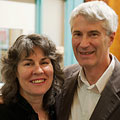
Chrissie&AnthonyFoster1

Chrissie and Anthony Foster

Well, I also want to know why thousands and thousands of girls and boys worldwide, over centuries, have been raped by Catholic priests? Celibacy is the biggest joke the Catholic Church has played on us…priests have mistresses, visit prostitutes and rape children!

 Jesus, if he existed at all, was not a celibate; in fact he married twice. Even the most saintly man finds celibacy difficult!

Former PM Tony Abbott, while LNP Leader of the Opposition, a failed Catholic priest, threatened to demolish the Royal Commission by withholding extra funding. It took an atheist female Prime Minister, Julia Gillard, to set up the Royal Commission into Institutional Responses To Child Sexual Abuse.

…………

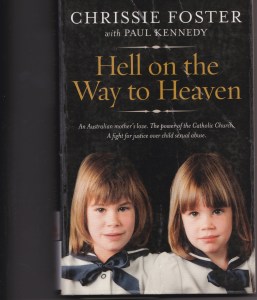
I have just finished reading  Hell On The Way To Heaven by Chrissie Foster.

Mrs Foster’s story was highlighted when there was a push in Victoria for an investigation into the sexual assault of hundreds of children throughout the state of Victoria by paedophile Catholic priests and Brothers, over several decades.

In the book, Mrs Foster describes how the lives of her two young daughters, Emma and Katie, were destroyed by a paedophile priest. They were both raped at around 5 years of age by Father Kevin O’Donnell who was then aged in his seventies.  Emma and Katie were raped repeatedly over several years and eventually Emma killed herself with an overdose of drugs. She had attempted suicide many times over the years.

><><><><><><>
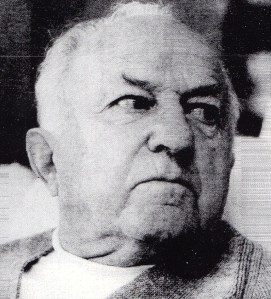
Father Kevin O'Donnell

Paedophile priest Father Kevin O’Donnell

><><><>><>

Katie tried to drown her memories of what Kevin O’Donnell did to her with alcohol and now suffers from severe brain damage.  When Katie was 15 years old she was hit by a car driven by a drunken driver while crossing a road after a drinking binge.  The resultant brain damage left her with no short term memory. The memories of her repeated rape by O’Donnell are the clearest and she lives with them everyday. If that isn’t hell, well I don’t know what is!  The book is harrowing reading because of what a Catholic priest did to these innocent young girls and the hundreds of other boys and girls he raped and sexually assaulted over a period of some 50 years.  There is also evidence that he had young men calling on him in the early hours of the morning for sex. Whether or not he had sexually assaulted these young men when they were boys, we will probably never know.

Mrs Foster blames herself for blindly following her Catholic faith which she believes prevented her from recognising the early signs that her daughters were being sexually assaulted by this beast.  But the really devastating truth about the sexual assault of hundreds of children is that the Catholic Church did nothing to stop it. Over the years several children and their parents complained to Bishops, including George Pell, and other priests, about Kevin O’Donnell’s behaviour, but they were not believed.  Or O’Donnell was shifted elsewhere. One priest told a worried parent to keep her accusation quiet.

Emma and Katie were attending a Catholic school in Victoria when Kevin O’Donnell was the priest in charge of the local diocese. His control was all-encompassing; the local church, local schools, principals and teachers. His commands were law. As Mrs Foster puts it, this was the perfect setup for a paedophile. Without the knowledge of parents, O’Donnell could call into any classroom he liked, request a particular child to go with him on some fictitious errand. Or he would simply walk amongst the children on the playground until he sighted a child who would fulfil his loathsome needs.  He would then take that girl or boy to a locked room at the back of the school hall or a disused Church cottage, and do whatever he liked with them. That was of course after they drank the drugged can of coke he offered them. He was cunning and experienced. To ply these very young children with alcohol would alert their teachers by smell and behaviour, that something was amiss. The children would all have to return to their classrooms after this disgusting excuse for a human being was finished with them. Mrs Foster and her husband, Anthony Foster, never found out what drug O’Donnell used to subdue their daughters, although a doctor did suggest that it was probably some form of valium.

If teachers complained about O’Donnell’s behaviour and his practice of taking children out of classrooms during school hours without parental consent, they bore the brunt of O’Donnell’s foul temper and some even lost their teaching positions. If nuns issued complaints to the Church hierarchy, they were ignored. There was nowhere else to turn; Father Kevin O’Donnell had the diocese and parish in his tight grip. Even when some parishioners were told of O’Donnell’s offending, they refused to believe it and so O’Donnell was able to continue sexually assaulting children with impunity.

Mr Foster is an atheist who had promised to bring his children up as Catholics and send them to Catholic schools as part of the marriage agreement with his future wife, a devout Catholic. Mrs Foster believes it was her own upbringing as a Catholic that allowed her to trust so much in priests. After all, weren’t they the representatives of God here on earth?  Weren’t priests placed in the Catholic community to protect children and support parents?  Even when she thought O’Donnell’s behaviour odd, Mrs Foster believed that he was always right in all things. He took his instruction from the pope who was infallible. To disobey a priest was a mortal sin.

You will be in disbelief, as were the Fosters, at some of the tactics used by the Catholic Church to exonerate itself from any blame for paedophile priests, such as the entrenched loophole in the truth called  Mental Reservation, or mentalis restrictio in the Latin. It is a theological strategy dating back centuries.  In effect, the idea of truths ‘expressed partly in speech and partly in the mind.’ e.g. A priest could answer with lies, obfuscation and ambiguity in court, under oath, but then under his breath tell Jesus that he lied to protect the Church.  This follows Canon Law, but not perjury laws of the Australian Legal system. Survivors of Catholic paedophilia who witnessed Pell and other clergy give evidence,  believe that George Pell, his priests and bishops, used Mental Reservation  time and again to protect paedophile Christian Brothers and Catholic priests, including when answering questions at the Melbourne Royal Commission Into Institutional Responses Into Sexual Abuse Of Children.

I have often wondered over the years if my mother had not been such a devout Catholic, would she have been able to overcome her traumatic childhood? She never stopped praying to God and relying on priests and nuns to help her through all the difficult times. And there were many of those.The Catholic Church always seemed to let her down when she most needed its support. Perhaps if she hadn’t been so indoctrinated, so reliant on a non-existent god, she may have sought some other avenue of support, like professional counselling. When you are in the Catholic system, it is very difficult to get off the treadmill. The spectre of committing a sin, with the prospect of going to hell, is a great deterrent for those with a strong faith. If you needed guidance or counselling, you visited your parish priest.  If you were having problems with your children, you sent them to a priest for a talking to.

Mr & Mrs Foster were hopeful of gaining support and empathy when they were finally given an appointment with Archbishop George Pell after numerous letters, and requests to talk to him, were ignored. They asked him to take action against O’Donnell and had prepared a huge file on the suffering of their two daughters at the hands of O’Donnell. But the newly promoted Archbishop Pell was arrogant, evasive and rude, while refusing to believe that O’Donnell was a paedophile. Pell insisted that…  ‘It’s all gossip until proven in court. And I don’t listen to gossip!’ The Fosters would have to go to court before the Catholic Church would give them financial assistance for all the doctors’, psychiatrists’ and hospital bills that were mounting around the disintegration of their daughters’ lives.  Much later they were offered $50,000 for Emma by Pell, but they would have had to sign a confidentiality clause and would not be able to sue the Church. The Fosters turned it down.

Eventually the Fosters did receive compensation after many years pursuing the Church with the help of lawyers. It’s a testament to this couple that their marriage has survived the years of suffering they and their three daughters have endured at the hands of the Catholic Church. Their youngest daughter only escaped O’Donnell’s debauchery because by the time she was at school, he had retired from the parish.  He died before the Fosters and police could take any action against him.  The Church would protect its priests and the reputation of the Catholic Church at all costs. It was clearly evident in Pell’s actions and his  treatment of the Fosters, that the welfare of the victims of paedophile priests was of no concern to him.  In fact one of the official excuses that the Church relied on was that it was unaware of the harmful effect sexual assault had on children and that’s the reason they hadn’t taken any action against offending priests! Their role was to support priests and shield them from State Law.

I can relate to Mrs Foster’s claim in the book that it was only in the years following the shock of discovering what had happened to her daughters, and the loss of her faith, that she realised how brainwashed she had been by the Catholic system. Going to church every Sunday, regular confessions even though she had committed no sin, prayers every night.  Of course total obedience to priests was mandatory under Canon Law, which she faithfully inculcated into her daughters, as her own mother had done with her. By the time she could see her past without the blinkers of blind trust, she was 40 years old. I was 17 and had just entered the workforce when I began to suspect that what I had been taught in all the Catholic institutions I’d lived in, on and off for the previous 17 years, was not based on reality. But it took much longer to throw off the yoke of indoctrination,

I too had it so clear in my mind, that when I went out into the world, I would be looked after by God because I had been such a good Catholic girl. This is what religious brainwashing does to you. You believe everything priests tell you, even if it overrules what your parents tell you. Or even what common sense might tell you!  I can still remember when I was a little girl in class asking the nun if I had to love God more than my own father. She had just told us that we had to love God more than anyone else in the world because he was our true ‘father’. She insisted that was the case. I never stopped thinking about it and even believed I was committing a sin because I didn’t think I could love God more than my father. But I still trusted in God for everything in life.

Through all that the Fosters were suffering, Mrs Foster researched the way paedophiles groom children for their own sexual gratification. She was part of a group that wanted to alert other parents to the dangers by giving them information to help identify the signs children might exhibit if they were being sexually assaulted. Meanwhile the Catholic Church did nothing to inform parents that O’Donnell may have sexually assaulted their children and to seek help if they had any suspicions.  Mrs Foster also used her daughters’ recollections of how O’Donnell was able to lure them away from safe environments. She tells us that no child can know how to protect themselves from a determined paedophile, and Father Kevin O’Donnell was a paedophile with 50 years’ experience.

Mrs Foster did her best while O’Donnell was still alive, to urge Archbishop Pell to defrock O’Donnell so that he could never use his priesthood to harm other children. But Pell would not hear of it, even though O’Donnell had recently been convicted for several counts of past sexual assaults on young boys. At the time O’Donnell was convicted for these particular sexual offences, the victims were grown men. The police informed the Fosters that these were representative charges only as there were so many it would have taken years for them all to be processed and heard in court! The police were anxious to do what Cardinal Pell & his church would not do; get O’Donnell behind bars where he could no longer sexually assault children. The Fosters’ other concern was that when O’Donnell was released from prison, the fact he was still a priest  would enable him to use his position of trust to go on offending.

When O’Donnell was retired he was sent to live in a unit close to St Mary’s Church in his former parish of Dandenong. He began officiating at Mass on Saturdays. When complaints were made to Father Noel O’Brady that children were visiting O’Donnell at his unit, he took those complaints to the archdiocese.  The ‘appropriate authority’ instructed Father O’Brady that  ‘It’s not happening on Church property…we’re not responsible.’  O’Donnell was supported and protected by the Catholic Church until he died.  It couldn’t have done this if he had been laicised. Obviously the Church knew what O’Donnell had been doing for decades, and right up until the end of his life, his welfare came before the hundreds of children whose lives he had totally destroyed. Many have committed suicide, many will never come forward, most continue to suffer.

I urge all parents who send their children to a Catholic school or intend sending their children to one, please read Chrissie Foster’s book ‘Hell On The Way To Heaven’ if only to be aware of the telling signs that your child might be vulnerable to sexual assault and to ensure that what happened to her beautiful girls will never happen again.

Think clearly and make sure you know what is contained in the Catholic Catechism the schools use to instruct the children in Catholic dogma.

-Anne Frandi-Coory … read more here about ‘Hell On The Way To Heaven’ 

*******************

Visit: Royal Commission Into Sexual Abuse Of Australian Children

><

A Remarkable Book In More Ways Than One

A Remarkable Book In More Ways Than One

>< It’s true – Terroni is a pejorative word as explained by Pino Aprile. However, this is the word Northern Italians use when referring to Southern Italians. The author has written about an Italy that I never knew existed. But then history is usually written by conquerors and oppressors. When I wrote my Italian family history, Whatever Happened To Ishtar?   I had no idea of the massacres, rapes and sackings which took place in the South in the name of RISORGIMENTO (Unification). My mother’s paternal grandfather, Aristodemo Giovanni Frandi from Pisa, (Born in Pistoia, 1833) fought with Garibaldi and before that, as a conscripted soldier with the Austrian army, in the north of Italy.  I know that he followed the Garibaldini to Southern Italy because he and others wanted to rid Italy of foreign armies fighting battles for supremacy in Italy. There was never any mention, as far as I am aware, of the North backing the Risorgimento for the sole purpose of oppressing the South. But then Garibaldi died a broken man, betrayed by politicians he trusted. Perhaps he was gullible too. Aristodemo emigrated with his wife and three children to New Zealand when known Garibaldi supporters were harassed and vilified following the Unification. ><

Aristodemo Frandi blog

Anne Frandi-Coory’s maternal great grandfather Aristodemo Giovanni Frandi

*****************************

One thing Aristodemo did speak of, was the betrayal of Garibaldi and his followers, by priests and nuns, as they looked for shelter and food on their way to the South “to convince Southerners to support the Risorgimento”.

My Greco (Grego) ancestors lost their lands in southern Italy and moved up the peninsula as did many of their compatriots. They eventually emigrated to the UK.

><

Emmie's wedding 2

Anne Frandi-Coory’s maternal great grandparents Raffeala (nee Mansi) and Filippo  Greco 

******************************

Terroni is full of the horrors of civil war, and today the oppression of the South by the North continues. Aprile even discusses the possibility that the ‘elitist’ North is doing everything in its power to divide Italy in half and jettison the South.  The author believes that the people of Southern Italy are set to fight back. Thirteen to twenty million Southerners fled the south during and after the Unification and their descendants now realise what has been taken from them.  Unlike in the past, Southern Italians and their descendants are proud to talk of their history in a pre-united Italy.

This book is a must-read for all Italians, inside and outside Italy, and for anyone who has a passion for Italy.

Thank you Pino Aprile for the courage you have shown in writing this book and for bringing us the ‘other side’ of the Risorgimento.

-Anne Frandi-Coory 23 January 2013

><

Updated 2 May 2019 …

I felt I had to write about this remarkable Australian doctor who has devoted her life’s work to treating women suffering from obstetric fistula, in Ethiopia.

********

Dr Catherine Hamlin

 ><

Dr Catherine HamlinAC, MBBS, FRCS, FRANZCOG, FRCOG, is an Australian obstetrician and gynaecologist who, with her late husband Dr Reg Hamlin, co-founded the Addis Ababa Fistula Hospital, the world’s only medical centre dedicated exclusively to providing free obstetric fistula repair surgery.

Dr Hamlin has been recognised by the United Nations agency UNFPA as a pioneer in fistula surgery, for which she developed specialist techniques and procedures. She, her husband, (a New Zealander) and the hospital’s medical staff, have treated more than 34,000 women.

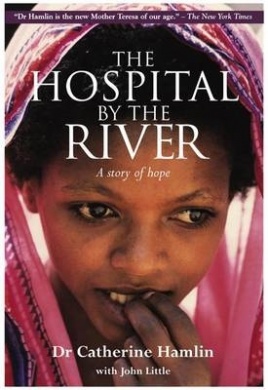
Read my review of Dr Catherine Hamlin’s book about her remarkable work here: The Hospital By The River    

The Hospital By The River

***********

Dr Hamlin, now in her late eighties, heads the Addis Ababa Fistula Hospital in Ethiopia. The surgical technique developed by the Dr Hamlin has a 93% cure rate for obstetric fistula cases. The Addis Ababa Fistula Hospital has established a purpose-built village called Desta Mender (Village of Joy) to provide long-term care for women whose condition is caused by giving birth at a very young age, and some sexual practises. The hospital is dedicated to improving health, reducing infant mortality and empowering women.

The Hamlin College of Midwives, set up by Dr Catherine Hamlin and Dr Reg Hamlin, trains young women as midwives to work in the Ethiopian countryside where there is presently no access to medical assistance during pregnancy and labour. The College’s mission is to have a midwife in every Ethiopian village.

The Hamlins’ long association with the College of Midwives began in 1958 when they answered an advertisement in the Lancet Medical Journal for an obstetrician and gynaecologist to establish a Midwifery School at the Princess Tsehay Hospital in Addis Ababa. They arrived in 1959 on a three-year contract with the Ethiopian Government but only about 10 midwives had been trained when the Government closed the midwifery school. The Hamlins went on to establish the College and fifteen years later they founded Addis Ababa Fistula Hospital.

Catherine Hamlin lives in her cottage on the grounds of the Addis Ababa Fistula Hospital as she has done for over thirty-five years. She is still very active in the work of the Hospital and operates every Thursday morning as well as running a clinic. Her son, Richard Hamlin is involved in the activities of the Hospital and sits on its Board of Trustees.

There is currently a dispute between three members of the Board of Trustees including the chair, and Dr Catherine Hamlin, regarding the direction the hospital is taking. Dr Hamlin has withdrawn support for her Australian fundraising trust over the religious dispute that threatens her charitable medical work in Ethiopia.  The board had moved to take a hardline Christian approach. As a result of the dispute, the board has halted all fund-raising in Australia.  Dr Hamlin believes the board was attempting to take control of the management of the hospital against her will.

><

Bernadette Lack

********

Bernadette Lack is a young Australian midwife who is running the Great Ocean Road marathon from Lorne to Apollo Bay; a gruelling 45km.  She is raising funds for the Hamlin College of Midwives, an organisation she is passionate about.  The College and Hospital rely heavily on funding from overseas.  When Ms Lack was informed that Hamlin Fistula Australia wouldn’t  accept her donation because the board was in disarray, she contacted Lucy Perry, official spokesperson for Dr Hamlin in Australia. Ms Lack has been assured by Ms Perry that the funds she raises in the marathon will be sent directly to Ethiopia.

Both Dr Hamlin and her hospital are the recipients of numerous awards. Dr Hamlin, known for her dedication and humility, says of the plaudits she has received ‘I’m doing what I love doing and it’s not a hardship for me to be working in Ethiopia with these women’.

**********

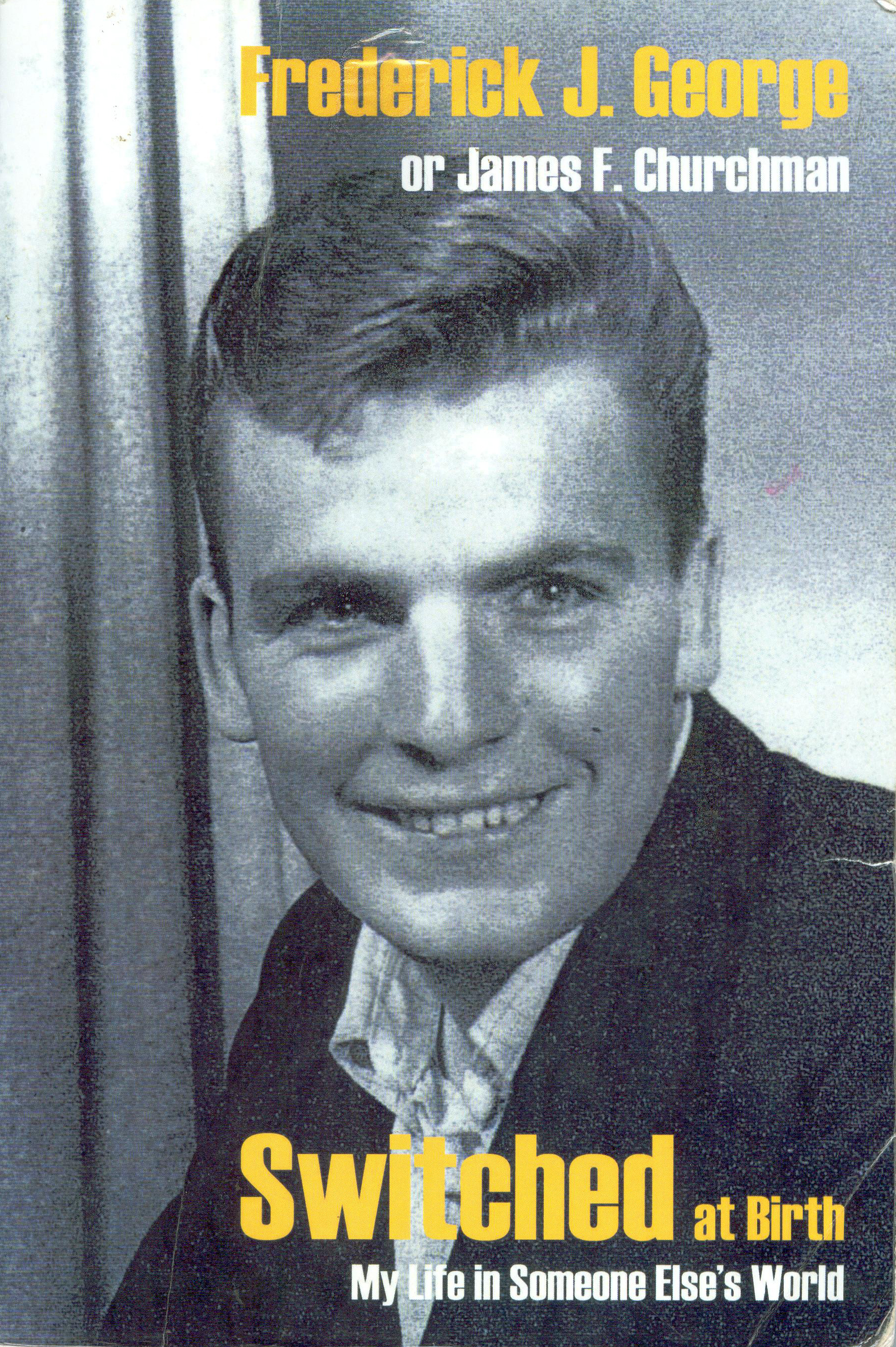
SWITCHED AT BIRTH

by Frederick J George (or James F Churchman)

><

Who is this man?

><

As a book lover I have been given many wonderful books, including biographies. One biography in particular stands out for its poignancy, Switched At Birth by Frederick J George in 2007.

Frederick George and James Churchman were switched at birth; we will never know the full story behind the switch. However, what we do know is that the respective mothers of Frederick and James loved their sons as they would their own flesh and blood.

It has meant much to Frederick that his biological mother, Helen Churchman was still alive when he discovered the truth of his birth. One of the things she was able to tell him was that although she never consciously doubted that James was her own son, she remembers remarking to the nurse a few days after the boys were born, ‘I think I may have Mrs George’s baby’ and that both women laughed.  Mrs Churchman’s ‘son’ James had a thatch of black hair, while Mrs George’s ‘son’ Frederick was blonde like Mrs Churchman and the rest of  her family.

In 2010 I had my own book published “Whatever Happened To Ishtar?” which like ‘Switched At Birth’ is about life in an immigrant Roman Catholic Lebanese family in Dunedin, New Zealand, during the mid to late 20th Century. At the time I wrote my book  I knew nothing of Frederick’s story, although I knew of the large extended George family, and often saw family members around the streets of Dunedin. For various reasons, I didn’t know any of them well enough to engage in conversation.  I had no knowledge of the Churchman family, even though James’ and Frederick’s families lived in close proximity to one another.  This, as it turns out, is one of the most poignant aspects of the whole saga, but also one of its saving graces: at least the boys grew up together and knew their biological parents, albeit superficially.

In the book, Frederick recalls in detail his life growing up with the George family. His has mixed feelings about his ‘father’ John George and his volatile temper, (Not I might venture to say, unusual in Lebanese men). He further writes that the subject of his ‘suspicious’ parentage only ever came up within his immediate family when his father was angry about something Frederick had done that had displeased him.  Then he would accuse his wife, Ngaire, of sleeping with another man when she conceived Frederick because he ‘sure doesn’t look Lebanese!’  Ngaire George, who was not Lebanese, would respond good naturedly and tell her husband not to be so ridiculous.

As fate would have it the George boys and the Churchman boys were good friends and hung around together playing sport and engaging in other social activities.  The main difference between the Churchman and George families, apart from ethnicity, was religion; Presbyterian and Roman Catholic respectively.

The boys from both families were involved in the hustle and bustle of family life and the issue of the blonde boy in the Lebanese family and the black- haired boy in the Anglo-Saxon family, by and large remained unquestioned, at least publicly. But privately, Frederick  writes: ‘I used to have these peculiar feelings …of being in another world, or in someone else’s identity’. He goes on to say ‘Actually, I was in someone else’s world, and so was Jim Churchman…he was in the world I belonged in and I was in the world he belonged in.’  James told Frederick that he used to have those same feelings.  Ngaire George often said to Frederick, ‘You live in your own world!’ … ‘She was right, I did’.

Both mothers genuinely believed that each of their boys’ odd-one-out complexions were some sort of throwback to their genetic roots.  Frederick writes of the many coincidences and parallel life experiences of members of the two families, and they are compelling, in hindsight and in light of knowledge of the switch.

Years later, the suspicion of a switch at birth became an urgent issue for ‘James Churchman’ (the real George boy) when he became seriously ill. In his fifties, he had a severe heart attack. This was particularly significant, because there was no history of heart attacks in the Churchman extended family, but there was in the George extended family.  While James was recovering in hospital, he asked his best friend, Frederick’s Lebanese brother, to contact Frederick who was then living in the US and ask him to organise a DNA test for himself, while he James would do the same. The tests proved beyond any doubt that Frederick and James had been switched at birth.

As you can imagine, the news was life-changing for both families, but particularly for the men themselves.  The saddest thing for James was that he never knew his biological parents intimately and never would. Out of both sets of parents, only Helen Churchman was still alive when the test results were revealed, and she was then in her eighties.  James often spoke to Ngaire George when he called on her sons, not knowing who she was in reality.

Frederick says at the end of the book that he is left wondering what life would have been like with his biological family.  What had he missed out on, if anything?  How different would his life have been? Questions that will remain unanswered.

-Anne Frandi-Coory  24 February 2012