Archive

BOOKS In My Non-Fiction Collection-REVIEWS

The Closing of the Western Mind; The Rise of Faith and the Fall of Reason

By Charles Freeman, published 2002

><

For anyone who is interested in the roots of Christianity, how it developed, and eventually swept the Western world, this book is the book to read. Greek philosophical tradition and paganism, were the losers.

To me personally, the most interesting chapters in the book, were those which dealt with the way in which a particular sect of Christianity became the state religion of the Roman Empire; Roman Catholicism.  It was largely because of political expediency; more power and control over the masses, by Roman emperors. I was fascinated by  the fierce in-fighting surrounding the  ‘correct’ early  interpretation and establishment of Christian dogma, as early as the 4th Century ACE.  It largely centred around the ‘Godhead’ of Christianity: God, Jesus, and the Holy Spirit, and whether or not all three were as ‘one’ or of three levels, (to put it very simply).  Part of the problem was that early Christian dogma was formulated from several different sources: scriptures, gospels, old testament, Greek philosophy, Hebrew, Latin and Greek translations.  Also  taken into account was the life and status of Jesus, and in this case, there were so many disputed ‘facts’ about who he was and how he lived, that it appears the Jesus we know, could have been a ‘collage’ of several different prophets or holy men who lived around the same time.

In the book, Freeman writes about Emperor Julian (who ruled from 361) – Dismayed by the vicious infighting he saw around him…Experience had taught him that no wild beasts are so dangerous to man as Christians are to one another.  Ammianus Marcellinus further suggests that  Emperor Julian believed that the Christians left to themselves would simply tear each other apart. Julian was well aware of the brutality of Christian generals and emperors.

-Anne Frandi-Coory 27 October 2011

><><><><

One more review of many:

“One of the best books to date on the development of Christianity…beautifully written and impressively annotated, this is an indispensible read for anyone interested in the roots of Christianity and its implications for our modern world view….Essential.”

-Choice

More here on Anne Frandi-Coory’s Facebook page 

https://www.facebook.com/myhomelibrary/

This is a great read, not only about Galileo & his daughters, but also about the rigid, religious era they lived in.

><

Galileo’s Daughter; A Drama of Science, Faith & Love


><

Galileo Galilei, that illustrious 17th Century  scientist, and devout Catholic, confined his eldest daughter from the age of thirteen (1616)  to San Matteo convent in Arcetri.  His daughter, Virginia was deemed unmarriageable because her father had never married her mother, the beautiful Marina Gamba of Venice.
Virginia (Sister Maria Celeste) lived out her life in poverty and seclusion in the convent (Order of St Clare) , as did her younger sister, Livia. Unlike Virginia, very little is heard from, or about, the “silent and strange” Livia.   Virginia  lost all her teeth by age 27  because of her lack of a nutritious diet.  It is worth reading  ‘Galileo’s Daughter’ by Dava Sobel, a gifted author, for more on these remarkable lives.  We know so much about Galileo and Virginia because of the correspondence between the two. 
Ms Sobel also covers the horror of Galileo’s life and his banishment to house arrest in Ravenna, at the hands of the Holy Inquisition headed by Pope Paul V.

-Anne Frandi-Coory 9 September 2011

><

Previous post:  Nuns: An Endangered Species?

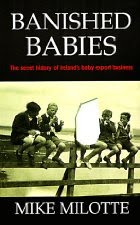
The book ‘Banished Babies’ by Mike Milotte, is about babies born in Ireland to unmarried mothers.   But we now know, banished babies were also born to illegitimate mothers in  New Zealand, Australia, America and England. More countries where this practise took place may yet come to light.  Australian Banished Babies want an apology. You might say “But this happened last Century”.  The thing is, the wounds left in these heartbreaking cases, never heal.

><

See Adoption: The Open Wound That Never Heals

><

‘Banished Babies’ were those babies taken from their unmarried mothers at birth.  I believe that the word ‘taken’ in this instance is a misnomer. It should read ‘ripped’, because that’s how it felt to the young mothers. I know this personally from my own mother’s case. This ‘baby snatching’ as others call it, was not for altruistic purposes; rather it was following Catholic dogma issued by the Vatican’s Office of the Congregation For the Doctrine of the Faith (formerly Office of the Holy Inquisition).   It was certainly not for the welfare of the infants, or their mothers.  No.  It was to remove these babies from their mothers who were seen by the Catholic Church as sinners who had to be punished. In the nuns’ minds, indoctrinated by the Church, the babies themselves were being saved from the clutches of satan and were ‘sold’, mostly to wealthy American couples, who, it was stipulated, had to be of the Catholic Faith.  It was strictly enforced by the Church, that neither mother or infant would ever be able to trace each other, and this caused even more heartbreak decades later.   (See my post about Philomena Lee). Large sums of money were exchanged for the privilege of ‘buying a newborn’, donation being the euphemism used. Ironic, isn’t it?  So much of that wealth the Church received, is now being paid out to even more victims of the Catholic Church; in the form of compensation  to  thousands of families whose children were sexually abused by paedophile priests.

><

For all the mothers and babies who never found each other

><

Between the end of WWII and 1965 more than 2,200 Irish infants were adopted out of the country, mostly by hopeful parents in the U.S. All the adoptive parents were, by mandate of the church in Ireland, Catholic. Until the late 1990’s and the work of Irish journalist Michael Milotte this was a fact known to few in Ireland and fewer in the U.S. In Ireland Milotte’s work, emphasising both the emotional and physical brutalisation of the birth mothers and the country’s loss of vital human capital, led to a great furor.

><

In 2001, the Washington Post reported:

Milotte, a senior reporter for the Irish television network RTE, says life was particularly hard for the mothers in these convents, which were largely self-sustaining thanks to the women’s labour but also received public funding. In some cases, he says, the priests and nuns received money from the adoptive parents, who paid “confinement and medical costs” associated with their child’s birth.

“Where did the money go?” he wonders. “It sustained the people who ran the institutions in a manner they wouldn’t have otherwise enjoyed.”  But money likely wasn’t the primary motivator, he says. Rather, there was a demand for children, and many of the nuns believed they were doing God’s work by sending some of Ireland‘s social outcasts to a better life in the land of opportunity.

“They thought they were doing good,” says Milotte in a phone interview from Dublin. “The fact that people might have rights didn’t enter into their thinking. They thought they knew best. If, in doing the best thing, there was an opportunity to make money, that was all the better.”  In those postwar days, it was not uncommon for Irish children to be adopted by U.S. military and government employees living abroad, Milotte says.

The birth mothers of these children spent their pregnancies and post-natal, pre-adoption lives in varioushomes, often convents, for girls and women who were seen by the conservative Catholic culture as shame-worthy moral degenerates. The horrific conditions that these women underwent was recently dramatized in the movie the Magdelene Sisters.

><


Milotte spoke with NPR’s Daniel Zwerdling upon release of his book Banished Babies in May of 1998:

Many of these women were seen as the next thing to prostitutes, and were very often told that when their identities became known. Even when girls got pregnant, very often they didn’t get married even if — because there was the stigma attached to having had sex before marriage. So even where a relationship endured, the child would be given up for adoption. And it was all done in secret.

I am one of those kids given up for adoption. It was in that interview in May of 1998, two days after I returned to Chicago following my mother’s funeral, that I learned of the controversy. I have always known that I was adopted, that I was a ‘true Irishman’, and I had always been proud and honored by the distinction. In the days immediately following my mom’s death I told my Dad that I had never for a second doubted who my ‘real’ parents were, that he and my mom were the only ones who can lay claim to me. I feel no different today.

None-the-less, as the NPR story continued I found myself getting information that I’m sure even they didn’t have.

ZWERDLING:  Here’s one of the most curious aspects of this story.It’s hard enough for most women to give up a baby for adoption during the first few hours or weeks of its life. But church officials forced the young mothers to stay in their convents and raise their own infants for at least one year or more before adoptive families could come and get them.Reporter Mike Milotte says he’s turned up cases where young women changed their minds after their babies were born and tried to leave the convents. (This also happened to my mother in New Zealand). But the nuns sent guards to capture the women and bring them back.For her part, Mary O’Connor says, she knew she’d have to give her baby away. She felt she literally had no choice. But by the time the nuns came to take her son, she’d been raising him for 17 months. Then one evening, O’Connor says, a nun told her, “Get him ready. We’re giving him away in the morning.”

O’CONNOR: So she just carried it over to the convent. There was two parts, like there was a hospital part where the children were kept and then there was the convent part. And the child was brought over to the convent part. And there was three steps up. You went in the side door and there were three steps up. And they went to the top of the steps and they said, “Just say goodbye now. That’s it.”

<

-Anne Frandi-Coory 25 July 2011

For more about my mother’s lost children & the heartlessness of the Catholic Church:

  ‘Whatever Happened to Ishtar? – A Passionate Quest to Find Answers for Generations of Defeated Mothers’.

Updated 2 March 2018


Anton Chekhov (Russia 1860-1904) and Katherine Mansfield (New Zealand 1888-1923), two of my favourite authors.  Tuberculosis killed them both. Chekhov had a tremendous influence on Mansfield, both on her life and in her writing.  Mansfield translated most of Chekhov’s letters and works into English.

><

*****

Anton Chekhov from ‘KATERINA’ by Joanna Woods

img20180314_09223807

If you are interested in the Russian phase of Mansfield’s life, Katerina; The Russian World of Katherine Mansfield, by Joanna Woods, is a must read.  Woods sets out this period of Mansfield’s life so meticulously that it serves as ready reference material for any questions which might come up regarding this phase of her life, and the other writers who featured in it.

‘”I would like to speak Russian with you” were among the last words written By Katherine Mansfield. She never travelled to Russia. However, her lifelong passion for everything Russian runs through her letters and notebooks in an unwritten thread.

Katya, Katoushka, Kissienka and Katerina were just some of the names that Katherine used at the height of her Russian pose, when she wore Russian dress, smoked Russian cigarettes, attended Russian concerts and embarked on a literary love affair with Chekhov that changed her writing – and her life.’

*************************

If Only We Could Know  by Vladimir Kataev – published 2002.

It is fascinating read and reveals what a great judge of character Anton Chekhov was.

I can understand why Katherine Mansfield was so passionate about his work. It is a double tragedy that they both died so young.  

Andrew R Durkin writes: Kataev’s work has been of fundamental importance in understanding Chekhov’s fiction and drama. Harvey Pitcher’s selection and careful translation of the core of Kataev’s studies make some of the best Russian Chekhov criticism available at last in English and should mark the beginning of a new level of understanding of Chekhov in the English-speaking world.

**********************************************


Katherine Mansfield

*****

The photo of Katherine Mansfield above is taken from the cover of  An Appraisal by Nariman Hormasji which gives another important aspect to Mansfield’s  writing including the influence of Chekhov and other Russian writers and authors.

*****

The Illustrated edition of THE GARDEN PARTYKatherine Mansfield Short Stories first published in 1987, is a beautiful, colourful bound book I treasure.


Katherine Mansfield 001


Visit Anne Frandi-Coory’s Facebook page here: https://www.facebook.com/myhomelibrary/

Updated 19 July 2017

The price you pay for a book bears no relation at all to the value of the stories and lessons held within!  I found The Arab Mind by Raphael Patai, [a prolific cultural anthropologist] marked down at a sale in a favourite NZ book shop.  I believe that, like cats, books find you, you don’t find them.  In all my travels I have never seen this book anywhere else.  And I found it while writing the final manuscript for ‘Whatever Happened To Ishtar?’

********

Fayez A. Sayegh comments in The Arab Mind: ‘…yet even more devastating… was the drying up of the creative and adventurous spirit within Arab society itself. The keen intellectual curiosity which characterised the preceding period, the passionate and untiring search for knowledge, and the joy of adventure were smothered under a hard crust of dogma and fundamentalism. Free thought was banished, traditionalism reigned in its place…’

><
One of the most enlightening books (for me) I have ever bought

><

I grew up without knowing my Italian mother as a person.  She suffered from severe bipolar disorder with psychotic episodes. So, at ten months old, I was placed in a Catholic  Orphanage for the poor, and was visited only by my devoted Lebanese father.  His extended family could not find any room in their hearts to love me.

My father often took me to visit his extended family, in the futile hope that  their frozen hearts might thaw, but the quiet, prayerful ways of a nun-studded convent does not prepare a young girl well for the noisy and multi-generational home of  Middle Eastern immigrants.  In their view I was “of another breed”.  I escaped Catholicism and “Little Lebanon” as a teenager and never returned.  However, you can take the girl out of her Lebanese extended family but you can’t take the Lebanese influence out of the girl, as the familiar cliché goes.  I picked up the Aramaic language they spoke and many positive aspects of their lives; great cooks, devotion to family (if you didn’t have a foreign mother that is) but those positives  were buried deep in my soul for many years, under all the negatives.

From The Arab Mind by Albert H. Hourani: To be a  Levantine is to live in two worlds or more at once, without belonging to either; to be able to go through the external forms which indicate the possession of a certain nationality, religion or culture, without actually possessing it. It is no longer to have a standard of values of one’s own, not to be able to create but only able to imitate; and not even to imitate correctly, since that also needs a certain originality. It is to belong to no community and to possess nothing of one’s own. It reveals itself in lostness, pretentiousness, cynicism and despair.

The Arab Mind was such a help in the final stages of writing   Whatever Happened To Ishtar? A Passionate Quest to Find Answers for Generations of Defeated Mothers.  Many of my Lebanese family’s ethnocentric behaviours suddenly took on new meaning; the hatred they exhibited toward my Italian mother and by association, to me, was the result of thousands of years of cultural prejudice.  Necessary in desert and mountain life in sectarian communities where brutal invasion and massacre were a common way of life.

To the Arab, saving face and honour are everything and when your beloved eldest son marries a sharmuta (Aramaic for prostitute-every woman who did not live up to the family’s cultural values was labelled sharmuta) then what can you do but exile from the family the issue of that union!  Being the only girl child made it easy for them to make me the scapegoat of all the family’s ills in a foreign country.

Historian Oswald Spengler: The Arab culture is a discovery . . . Its unity had been suspected by the late Arabs, but it escaped the Western historians so completely that one cannot find even a good designation for it. On the basis of the dominant language one could term the pre-culture and the early period Aramaic, the late period, Arabic . . . The Arab spirit however, mostly under a late-antique mask, cast its spell over the emerging culture of the West, and Arab civilization, which in the folk psyche of Southern Spain, Provence, and Sicily is superimposed that of antiquity…

In this current era of the ‘Arab Spring’, I recommend you find a copy and read The Arab Mind to gain an understanding of how differently we westerners from such very young countries, like Australia and New Zealand, view everyday life.  I think the half of my book that dealt with my father’s family was a much kinder book in the end because I read The Arab Mind before I sent my re-written manuscript off to the publishers.  So many of the events that played out in my childhood took on very different meanings, while suppressed memories re-surfaced.  I understood better, what it must have been like for my naive, fifteen year old Syrian/Lebanese grandmother, from the hills of Bcharre in Lebanon, to marry and follow my grandfather to the other side of the world. She was one tough, superstitious old woman when I met her.

How relevant to the lives of my Maronite Lebanese extended family, and by the same token, to the current Arab Spring,  are the following quotes in the book:

Nabih Amin  Faris and Mohammed Tawfik Husayn  write in The Arab Mind: ‘In some respects Arab absorption [particularly Arab Muslims] in their bygone days tends to be a chronic disease. It stems naturally from the general misery of the majority of the people and the wretched social and political conditions since the fall of the Abbasid empire and the Arab states in Spain and North Africa. They live in a splendid past as an escape from the miserable present…Until the closing years of the eighteenth century, the Arab world was in a state of near stagnation, ingrown, content with its prevailing conditions, resigned to its fate, and blissfully ignorant of the events unfolding around it. Then the West descended upon the Arab world as a conqueror, bringing its culture, civilisation, and science, its missionaries, its mercantile goods and commodities, and political, economic and military domination.’

I found chapter 15, The Question of Arab Stagnation particularly interesting. e.g. the Arab admiration for Israel; its excellence in scientific research, and its brilliant scholars and universities. Its global achievements in weaponry, commerce and banking, not to mention its organisational abilities in all walks of life. ‘The Jews, their rich people and their financial institutions…donate millions for their researches in Israel; but our rich people and our financial institutions,  our leaders, our rulers …do not contribute a single gursh [penny], but ask: Why donate to science?’  This chapter has several publications written by Arabs who are very critical of Arab stagnation since the early 14th century and why they believe Israel won the 1967 war. It may surprise readers to know that upwards of 200,000 Arabs a year regularly visit Israel because they love the place, and everything that it has to offer them, and which they cannot easily access in their own country.

Faris and Husayn further recognise that ‘the cultural famine which ravages Arab life is indeed not novel, nor is it the handiwork of colonial rule, feudal rapacity and local oppression alone…its roots go far back into the history of the Arab people.‘ …the low position in which Arab society keeps its women is an important contributing factor to this sorry state of affairs.  ‘No wonder,’ they exclaim, ‘that the Arab world remains backward, tradition-fettered, and limping behind the procession of human achievement, when women’s status is so low.’ [my emphasis]

It is not enough for Arabs to continue to blame the West for their stagnation…dam butlab dam feuds were so intense among the Arab tribes [blood demands blood or an eye for an eye] in pre-Islamic times, and were such a permanent feature of life…’that an important contributing factor to Muhammad’s success in rallying the people of the Arabian Peninsula around the banner of the new religion he preached was the fact that widespread feuding had weakened the Arab tribes and made it impossible for them to unite against him.’

From author Hisham Sharabi in The Arab Mind: …There is no turning away from Europe. This generation’s psychological duality, its bilingual, bicultural character are clear manifestations of this fact. It has to judge itself, to choose, and to act in terms of concepts and values rooted not in its own tradition but in a tradition that it has still not fully appropriated.

From Author Halim Barakėt in The Arab Mind:…We are a people who have lost their identity and their sense of  manhood. Each of us is suffering from a split personality, especially in Lebanon. We are Arab and yet our education is in some cases French [my grandfather, Jacob Coory’s second language was French], in some cases Anglo-Saxon and in others Eastern Mystic. A very strange mixture. We need to go back and search out our roots. We’re all schizophrenic…

The Arab Mind is a great read, very well written, and draws on accomplished writers and authors who know their topic well.   I urge anyone interested in Arab culture and history, to read this book.

I have lived a life in two halves, so I know what Barakėt means about being schizophrenic. Writing Ishtar? helped me to become one person and to discover the wonderful Italian and Lebanese genetic talents buried within me. The young Arabs of today have so many tools to use in their search for who they are; Facebook, Google, Twitter, blogging, mobile phones, formal education, etc etc.  Let’s hope their search for an identity won’t take as long as it did my generation.

 Follow Anne Frandi-Coory here on her blog:  frandi.blog

Also Here on Anne Frandi-Coory’s Facebook Page:

https://www.facebook.com/myhomelibrary/


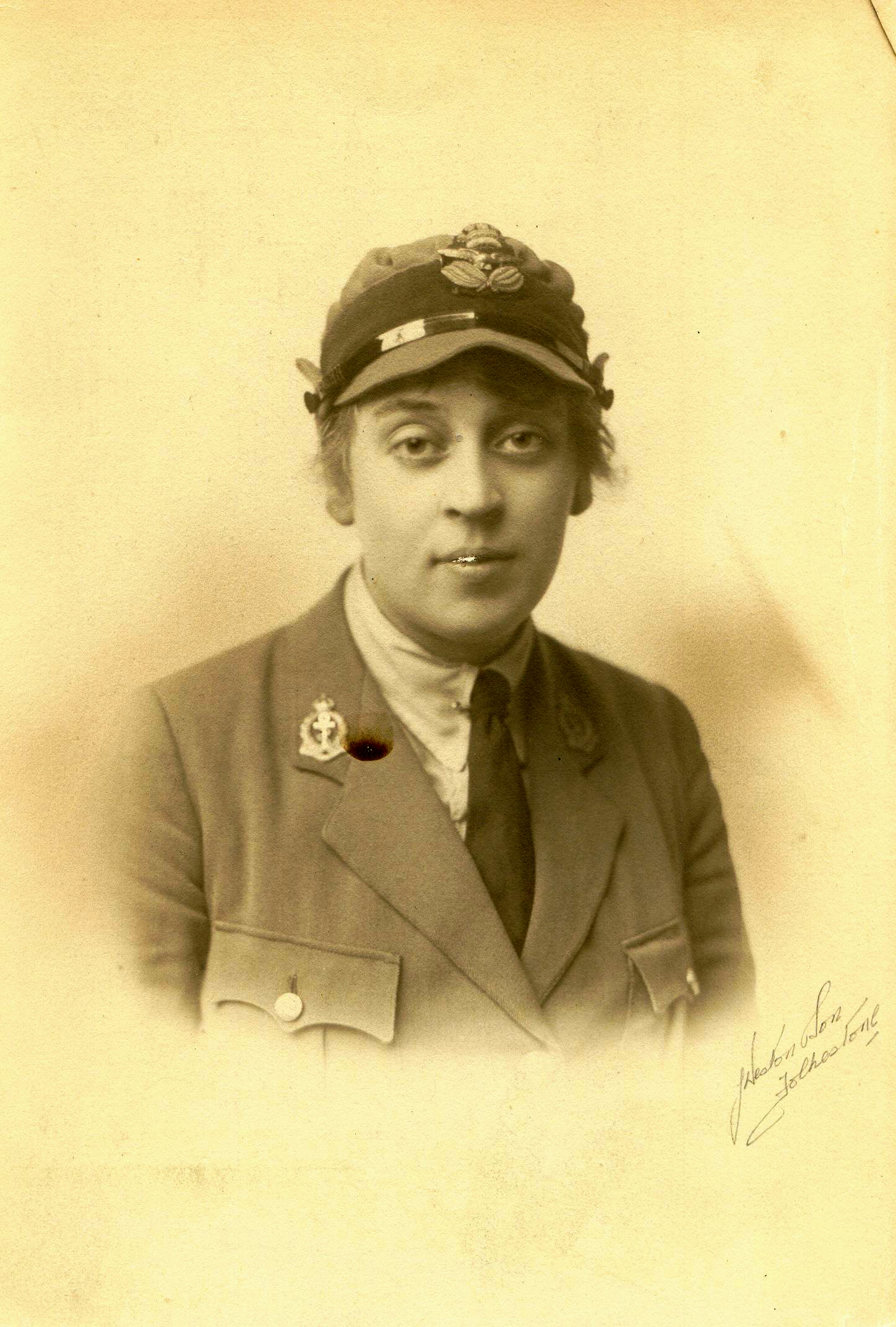
Portrait photograph copyright to J Weston & Sons, 20A Sandgate Road, Kent. UK.

><

I found this photo in an Egyptian Arabic/English manual printed by E Antoon Elias, Cairo in 1907.  El-Maaref Printing Office, Negib Mitri, Cairo – 3rd Edition.


Updated 8 October 2017

******************

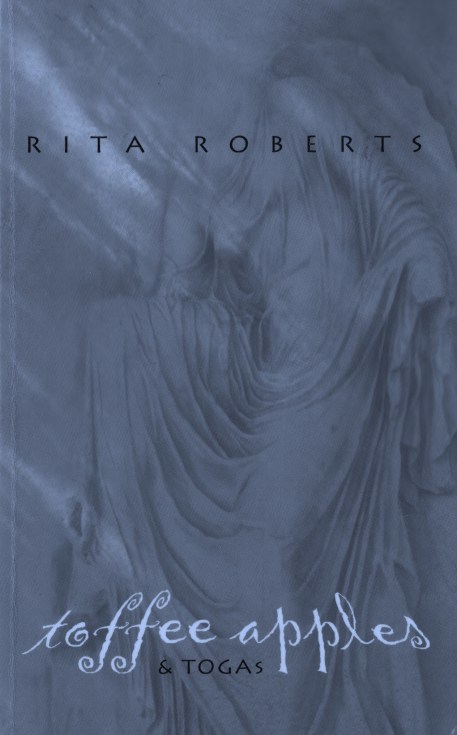
Toffee Apples and Togas

by Rita Roberts – A Book Review

Toffee Apples And Togas


This is only a small book, partly auto-biographical, packed full of so much living, loves, friendships, all bound together with tales of antiquity and ancient re-enactments.


Roman Legion by Rita Roberts

An Example of Ancient Rome re-enactments

Rita Roberts concludes this wonderful work with a selection of her favourite Roman and Medieval recipes. In conjunction, she gives an insight into Roman kitchens, cooking practices, and utensils. This book is worth buying for the recipes alone and for the insight into Roman cooking and the utensils they used.

><><><><><><><><><><
Toffee Apples And Togas 2


An excerpt from Toffee Apples and Togas:

About The Roman Gourmet

…Gaius Apicius lived during the rule of Emperor Tiberius in the 1st century AD. The cookery books which he wrote were published some three hundred years later and are the main source of our knowledge of Roman food.

Apicius was able to buy a large selection of herbs and spices from Roman and Greek traders who travelled to the spice markets of Southern Asia. These were then offered for sale in the markets of Rome. Some of the sauces made by Apicius were flavoured with up to twelve different herbs and spices. Many spices such as pepper, cinnamon, ginger, nutmeg, and cloves came from India, Sri Lanka, and China.

The highly flavoured sauces made by Apicius were often used to mask food which may have become stale or rancid because of over-storing. The most commonly used seasoning was called liquamen. Apicius became a very wealthy man, but it is believed he committed suicide by poisoning himself. As a result of his buying so many expensive foods from every part of the known world, he realised that he had only about ten million (10,000,000) sesterces left and he did not consider this enough to maintain his high standard of living…

Ms Roberts is a retired archaeologist (a specialist in identifying ancient pottery), antique dealer, teacher, maker, seller of Roman sauces, and a bit player in the  television series  The Island, the tragic story of inhabitants of the small island of Spinalonga which is a short, pleasant boat trip from the author’s home on Crete. As if that wasn’t enough, she also translates Linear B (Mycenae and Knossos) tablets.


See examples of Rita’s  translations of Linear B tablets here:   Linear B, Mycenae and Knossos


Rita Roberts 2.jpg

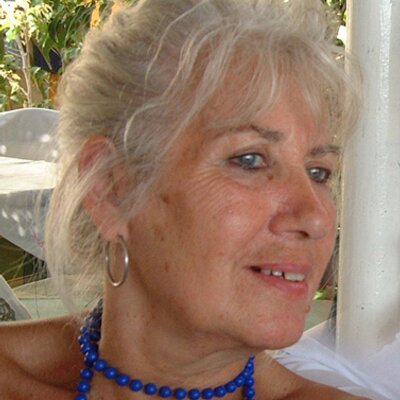
Rita Roberts

Rita Roberts was born in Birmingham in the UK, and now shares her home on the beautiful Greek island of Crete with her partner, John. She has always followed her dreams and age has never been a barrier.  I think her mantra is  ‘it’s never too late to learn or to follow your dreams’… she is an inspiration.

-Anne Frandi-Coory  17 April 2016

*****

Ms Roberts has since written a wonderful children’s book: 

The Minstrel John & The Squirrels

Visit her blog for more information on this delightful story.


*****

Toffee Apples And Togas is available from AMAZON Books Worldwide: 


Catch up on Rita’s latest archaeological finds, adventures and more wonderful recipes here:  RITA ROBERTS’ BLOG

Contemplating our own origins

><

I have just finished reading  ‘The Human Inheritance; Genes, Languages and Evolution‘ edited by Bryan Sykes.  If you love reading everything about genes, ethnic origins, and languages, you will love this book.  Although there is scientific jargon throughout  (if your mind doesn’t have a scientific bent) it is  easy to comprehend. Set out in brief chapters, each written by scientific experts in various fields, it explains how languages evolve as well as genetic mutations, which enable scientists to track differences,  and similarities, between populations from around the world.  With these processes, scientists can, with a reasonable degree of accuracy, tell us which part of the world a particular group of people originated from thousands of years ago.

For instance, I was especially fascinated by  the chapter entitled Human Genetic Diversity and Disease Susceptibility.  I wont talk about the latter part here, because I want to dwell on how stupid is the concept of racism.

In this chapter, Walter Bodmer writes about the time he and other scientists were making a documentary about population studies for the BBC  in London.  During their studies, they discovered that  Greek Cypriots had an essentially identical frequency of genetic variants as Turkish Cypriots.  These were markedly different from the comparable frequency distributions  amongst people on the mainlands of Greece and Turkey.  Mr Bodmer points out that this clearly indicates that the Greek and Turkish Cypriots are part of the same population ie a Cypriot population, which is neither Greek nor Turkish.  This was astonishing to the Orthodox Greek Cypriots involved in the studies who believed that they were generational Greeks.  It was explained to them that their Greek culture has most probably been acquired by a process called ‘elite dominance’, much the same process by which indigenous languages are taken over by a dominant one.  This refers to the situation whereby a small number of usually aggressive invaders impose their culture, but do not contribute many of their genes to the population that they have so strongly influenced with their culture.

“It seems that wherever there are political problems between population groups, they are often between those peoples that are most similar to each other genetically”, quotes Mr Bodner.

Most people know that  the Ottoman Turks were the last invaders of Cyprus and they still occupy a third of the Island while the Greeks occupy the other two-thirds.  Apart from the influx of  Turkish nationals from the mainland, and a few other nationals, the islanders share the same genetic history, all descendants of the Myceneans.  The island’s history can be traced  back 10,000 years and  has been invaded countless times including by Alexander the Great, Persians, Greeks, Armenians, Romans, Arabs and Venetians.  Even the Christian Crusaders took over the island at one stage.  As far as linguistics go in Cyprus, the dialect is reportedly more similar to Classical Greek  in vocabulary and grammar than that spoken in Greece.  The island’s isolation helped develop many linguistic characteristics.

><

The science that reveals our genetic ancestry

><

I read The Seven Daughters of Eve, before The Human Inheritance,  because I was interested in my own diverse ethnic heritage.   Bryan Sykes reveals how the identification of the particular strand of mitochondrial DNA that passes unbroken through the maternal line allows scientists to trace our genetic makeup all the way back to prehistoric times; to seven primeval women ie the “seven daughters of Eve”.   Pretty amazing stuff really!

-Anne Frandi-Coory 12 April 2011

Also here on Anne Frandi-Coory’s Facebook page:

https://www.facebook.com/myhomelibrary/

See Blog:  http://mathildasanthropologyblog.wordpress.com/

Hell holes. Man Made by Religion,Politics, or both?

I often contemplate whether there would still be wars if religion didn’t exist.  I guess there would be; the fight for power over people, land, and resources, human nature being what it is. Perhaps these days religion is just an excuse to fight.  But I too dislike the hypocrisy of religious beliefs and the divisions these beliefs cause. Most of all I resent those people who leave their own countries  to live a better life in ours, and then reject the way we live. They seem to believe that they are somehow superior beings, and history has shown us that this is a very dangerous mind-set.  Australia  is not the only country experiencing these problems.

A courageous man, a Muslim himself – Mahfooz Kanwar, Professor Emeritus of sociology at Mount Royal University in Calgary, commented angrily on the complaints made by Muslim families  to the school board  that music is un-Islamic and that physical education (coed) classes should be segregated by gender even in primary schools.  About a dozen immigrant Muslim families were demanding that the Louis Riel School Division in Winnipeg should not teach their children music for religious reasons.   Professor Kanwar stated “I’d tell them, this is Canada, and in Canada, we teach music and physical education in our schools. If you don’t like it, leave. If you want to live under sharia law, go back to the hell hole country you came from or go to another hell hole country that lives under sharia law.”  The Professor went on to say that as always,  the school authorities were trying to figure out a way to fit the demands of the Muslims into the curriculum rather than the other way around.  Is this just another form of segregation?

Perhaps religion is too narrow a focus, and Western Powers and their media are a large part of the problem.  A good place to try to understand the world dilemma is to read a recent history, that of Bosnia.  Bosnia – A Short History by Noel Malcolm “rigorously clarifies the various myths of racial, religious and political history which have so clouded the modern understanding of Bosnia’s past”.   Many recent wars in actual fact, may not have causes as simple as  the inevitable consequences of ancient ethnic and religious hatreds.  And why do so many of these wars result in burning books and destroying the cultural heritage of enemies? Much food for thought.  ><><><

– Anne Frandi-Coory 21 March 2011

*****

Also here on Anne Frandi-Coory’s Facebook Page:

https://www.facebook.com/myhomelibrary/


See post Burning Books Leads To More…

GARIBALDI  

by Jasper Ridley – A Book Review

Updated 6 December 2013

My  great grandfather, Aristodemo Giovanni Frandi, fought in Garibaldi’s ‘army’ and eventually emigrated to New Zealand in 1875. Many were the tales he told his family about the betrayals of the Catholic Church, of its priests and nuns, who informed on Garibaldi’s fighters time and again. Read more about Aristodemo and Annunziata Frandi


….

Garibaldi 001

The Catholic Church has the audacity to say that  Catholics made a fundamental contribution to creating a united Italy and a national identity, in a message marking the country’s 150th birthday.  Pope Benedict XVl has in the past stated that Christianity helped forge a national identity that resisted political fragmentation on the Italian peninsula,  and foreign domination.  He stated that the Church’s contribution came through education, literature and the arts in general, listing such personalities as Michelangelo, Caravaggio and Bernini, whose works were often commissioned for religious purposes.  Is the pope trying to publicise a dwindling Christianity in this age of free thinking and science?

Benedict obviously lives in a religious fantasy world.  Artists were stymied and never allowed to paint what they pleased in case it offended the Catholic Church.  Many artists lived a life of subsistence because of this and it is well documented how the Catholic clergy, including extremely wealthy popes and cardinals,  enforced their sexual proclivities on young artists.  The 19th Century Pope did all he could to quash any attempts at the unification of Italy.  It would mean that the papal states would shrink to the City of Rome and finally to Vatican City.  Giusseppe Garibaldi led the Risorgimento;  he and his followers hated the Catholic Church (Papal Rome) because so often they were betrayed by nuns, priests and cardinals.  It was Garibaldi and those politicians who supported his quest for unification, who finally forced Austria, papal sycophants, and France, out of Italy.  Garibaldi’s heartbreak was that Nice, his birthplace,  was ceded to France in 1861 by politicians, as part of the deal that they leave the peninsula.

It is such a joke that Pope Benedict could come out and say it was through Catholic education and literature that Italy was united.  The truth is, only ‘the list’ of books approved by the Church were available for the general populace to read.  Most literature that made its way to Italy was burned or hidden in heavily fortified libraries only accessible to Monks and Cardinals.  See previous post Vatican Library.   As for resisting political fragmentation; the only reason they exiled or brutalised any political opposition was because the Church did not want to lose the corrupted power base they possessed.   The Church was fully funded and supported by the Spanish, French and Austrians.

If any group can be held responsible for seeding the Risorgimento (resurgence) it was the people of Italy themselves; mostly peasant farmers, some elitists, and mercenaries who had fought with Garibaldi in South America.  Peasant farmers, led by Garibaldi, almost single-handedly drove foreign power out of Sicily, and this was the catalyst that began the unstoppable unification of the peninsula.  The Roman Catholic Church opposed unification simply because it would mean the end of the vice grip they held over Italy.  Read Garibaldi by Jasper Ridley, it is very enlightening and I would hazard a guess that it is not one of the Vatican’s favourite books.

– Anne Frandi-Coory 6 December 2013


See post:  Terroni by Pino Aprile    “All that has been done to ensure that the Italians of the South become ‘Southerners’…