Archive

BOOKS In My Non-Fiction Collection-REVIEWS

The cover of Germaine Greer’s book

A quote from Germaine Greer’s  Sex And Destiny, p207, 1984 Secker & Warburg London:

And now sexuality has become a major commodity.  The sex merchants have a huge market among sexually repressed and starved people. While in earlier periods this market was restricted by Christian inhibitions, now that the sexual revolution has released us from the compulsions of secrecy, sexual commodities are flooding the market and are becoming the most profitable area of capitalism next to the market of aggression- the armaments industry. [Now, the largest and most recherché collections of pornography are owned by the sexually priveleged, not the sexually denied.]

Excerpts from an article by

Julie Bindel

Friday July 2 2010
The Guardian

The last time I saw Gail Dines speak, at a conference in Boston, she moved the  audience to tears with her description of the problems caused by pornography, and provoked laughter with her sharp observations about pornographers themselves. Activists in the audience were newly inspired, and men at the event,  many of whom had never viewed pornography as a problem  before, queued up afterwards to pledge their support. The scene highlighted Dines’s explosive charisma and the fact that, since the death of Andrea Dworkin, she has risen to that most  difficult and interesting of public roles: the world’s leading anti-pornography campaigner.

Dines is also a highly regarded  academic and her new book, Pornland: How Porn Has Hijacked Our Sexuality, has just come out in the US. She wrote it  primarily to educate people about what pornography today is really like, she says, and to banish any notion of it as benign titillation. “We are now bringing up a generation of boys on cruel, violent porn,” she says, “and given what we know about how images affect people, this is going to have a profound influence on their sexuality, behaviour and attitudes towards women.”  [We only have to read the news about young men (high porn viewers)  contracted to certain football codes to know this is true].

The book documents the recent  history of porn, including the technological shifts that have made it accessible on mobile phones, video games and laptops. According to Dines’s research the prevalence of porn means that men are becoming desensitised to it, and are therefore seeking out ever harsher, more violent and degrading images. Even the porn industry is shocked by how much violence the fans want, she says; at the industry conferences that Dines attends, porn makers have increasingly been discussing the trend for more extreme practices. And the audience is getting younger. Market research conducted by internet providers found that the average age a boy first sees porn today is eleven. “I have found that the earlier men use porn,” says Dines, “the more likely they are to have trouble developing close, intimate relationships with real women. Some of these men prefer porn to sex with an actual human  being. They are bewildered, even  angry, when real women don’t want  or enjoy porn sex.”

Porn culture doesn’t only affect men. It also changes “the way women and girls think about their bodies, their sexuality and their relationships,” says Dines. “Every group that has fought for liberation understands that media images are part and parcel of the systematic dehumanisation of an oppressed group . . . The more porn images filter into mainstream culture, the more girls and women are stripped of full human status and reduced to sex objects. This has a terrible effect on girls’ sexual identity because it robs them of their own sexual desire.” Images have now become so  extreme that acts that were almost non-existent a decade ago have  become commonplace. “To think that so many men hate women to the degree that they can get aroused by such vile images is quite profound,” says Dines. “Pornography is the perfect propaganda piece for  patriarchy. In nothing else is their  hatred of us quite as clear.”

Haifa,   in which pornography was shown changed her life forever. “I was astounded that men could either make such a thing or want to look at it,” she says. From then on, she knew she had to campaign about the issue. “Many on the liberal left adopt a view that says pornographers are not businessmen but are simply there to unleash our sexuality from state-imposed constraints,” she says. As a result of her research, Dines  believes that pornography is driving men to commit particular acts of violence towards women. “I am not saying that a man reads porn and goes out to rape,” she says, “but what I do know is that porn gives permission to its consumers to treat women as they are treated in porn.”

Sexual assault centres in US colleges have said that more women are reporting anal rape, which Dines attributes  directly to the normalisation of such practices in pornography. “The more porn sexualises violence against women, the more it normalises and legitimises sexually abusive behaviour. Men learn about sex from porn, and in porn nothing is too painful or degrading for women.” Dines also says that what she calls “childified porn” has significantly increased in popularity in recent years, with almost 14m internet searches for “teen sex” in 2006, an increase of more than 60% since 2004. There are legal sites that feature hardcore images of extremely young-looking women being penetrated by older men, with disclaimers stating all the models are 18 and over. Dines is clear that regular exposure to such material has an effect of breaking down the taboo about having sex with children.

She recently interviewed a number of men in prison who had committed rape against children. All were habitual users of child pornography. “What they said to me was they got bored with ‘regular’ porn and wanted something fresh. They were horrified at the idea of sex with a prepubescent child  initially but within six months they had all raped a child.” What can we expect next from the industry? “Nobody knows, including pornographers,” she says, “but they are all looking for something more extreme, more shocking.” In Dines’s view, the best way to  address the rise of internet pornography is to raise public awareness about its actual content, and name it as a public health issue by bringing together educators, health professionals, community activists, parents and anti-violence experts to create materials that educate the public. “Just as we had anti-smoking campaigns, we need an anti-porn campaign that alerts people to the individual and cultural harms it creates.”

“Myths about those of us who hate pornography also need to be dispelled in order to gain more support from progressives,” she says. “The assumption that if you are a woman who hates pornography you are against sex shows how successful the industry is at  collapsing porn into sex.” Would the critics of the employment practices and products at McDonald’s be accused of being anti-eating, she asks pointedly.

The backlash against Dines and her work is well-documented. Various pro-porn activists post accusations about her on websites, suggesting she is motivated by money, hates sex, and victimises women to support her supposed anti-male ideology. Dines is regularly criticised by pornographers in the trade magazines and on porn websites and she tells me that her college receives letters after any public event at which she is speaking, attacking her views.

Does she ever feel depressed by all this? “It gets me down sometimes, of course. But I try to surround myself with good things, my students,  colleagues, and my family.” She says the blueprint for her aims is the eradication of slavery in the US, which was achieved despite the fact that every single institution was geared to uphold and perpetuate it.   “What is at stake is the nature of the world that we live in,” says Dines.  “We have to wrestle it back.”

-Anne Frandi-Coory 13 July 2010

><><><><><><><><


God’s Callgirl-a memoir

My childhood was spent in Roman Catholic institutions and my mother was a novice nun before her marriage (see ‘Whatever Happened To Ishtar?’), so  this book was of personal interest to me.   But of course it is also a well written and interesting book in its own right, well worth the reading. Another great read I found in a second hand book shop.

Carla Van Raay’s book God’s Callgirl is a perspective of the depths, in my opinion,  of how far Catholicism has sunk since the beginnings of Christianity and the teachings of Jesus.  Carla tells us  about her life from her upbringing within a strict Catholic family,  sexual and physical abuse by her father,  to her entry into a convent as a teenager and her later life as a sex worker. Her life in the convent was spent in prayer and unpaid drudgery, such as cleaning, teaching and needlework (which the convent sold) and when she finally leaves the convent she discovers her parents, who were not well off, were charged by the nuns for Carla’s board and keep!  She re-enters the real world as an innocent in every sense of the word. The convent was run by spiteful and cruel nuns within a strict hierarchy.  The convent’s inhabitants were called ‘The Faithful Companions of Jesus’, ironic to say the least.  Carla triumphs despite the best efforts of her parents and Catholicism.

My mother’s life was also one of hardship and emotional abuse in her convent which was called the ‘Home Of Compassion’.  My mother and I,  like Carla,  never experienced or witnessed any real and heart-felt compassion in any Catholic institutions!  In light of what is being exposed within the Catholic Church in recent times, it brings to my mind that saying  ‘The higher you fly, the further you fall’.

-Anne Frandi-Coory 8 July 2010

<><><><><><><><><><><><><><><><><><><><><><><><><><><><><><><><><><><><><>


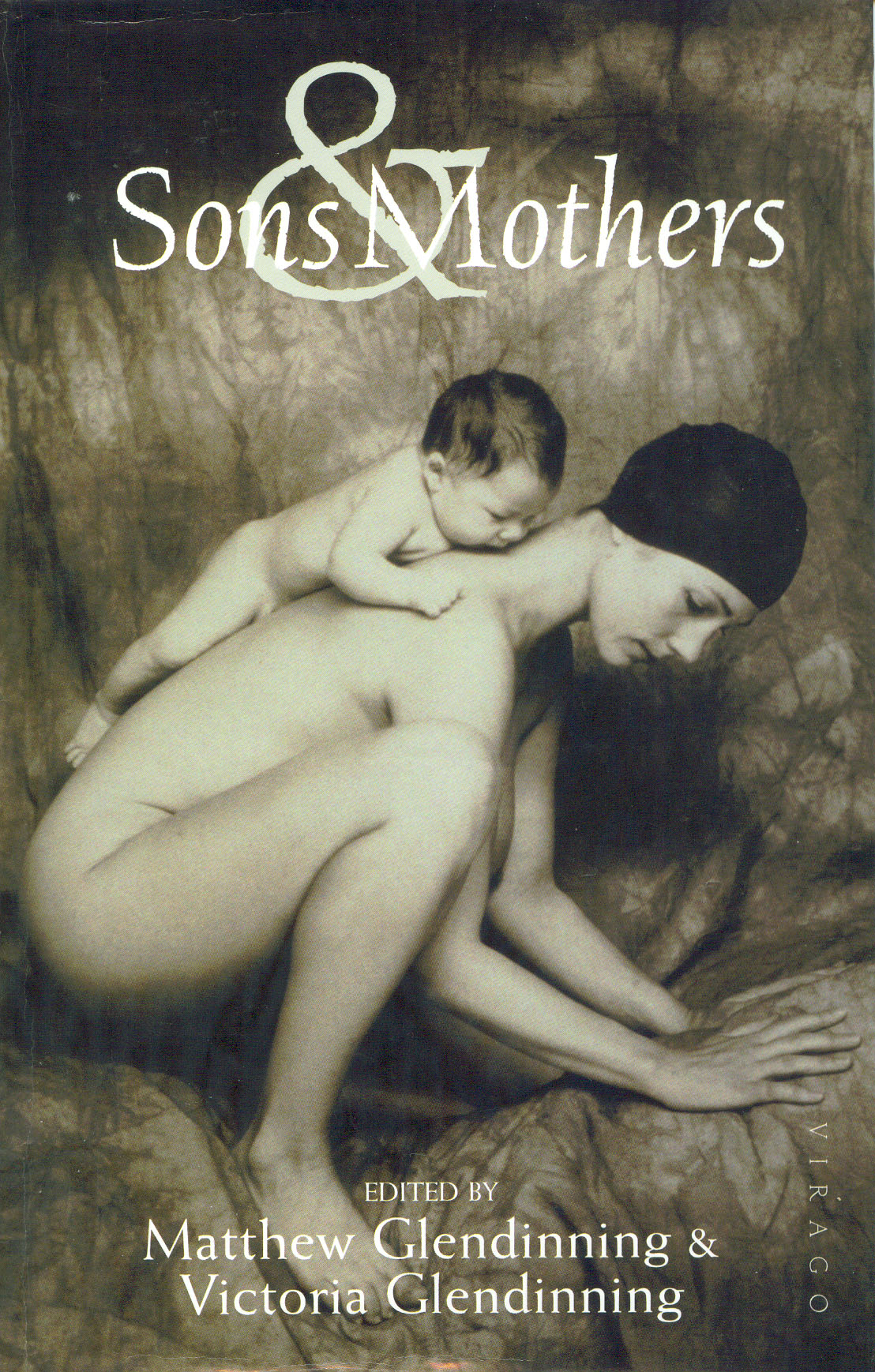
The Book  ‘Sons & Mothers’ – eds: M & V Glendinning

Updated 14 July 2014


Until the birth of  my long awaited daughter, I had three adorable sons.  But they were born to a mother who had been an emotionally damaged child.  As a little girl and teenager, I was quite frightened and mystified by the ways of boys and men.    What did I know of life, but especially of males, with my background of nunneries, convents and Bible stories?  But there was no doubt I loved each of my sons  deeply.

The relationships between sons and mothers can be intense and very, very loving, although sometimes fraught, and from this perspective of safety and comfort, as my little boys grew into men,  I learned the intricacies of the male psyche gradually over time. The sibling rivalry; the competition for dad’s respect and mum’s cuddles; the fisticuffs with each other and the wonder at the complexities and mysteries of the female.  When their sister arrived unannounced on the scene, (my eldest son was only four when I brought her home) my boys were aghast that she didn’t have a penis as they watched her first bath time at home, their eyes wide like saucers. Their male centred home  changed over night with this new fascination.

Then there comes the heartbreak they have to endure during adolescence and beyond, over this girl or that.  If only I could  spare them the pain they have to experience in life to become well-adjusted men, was then my angst.
My three boys are each very different personalities, so there is never a dull moment not even now when they are married with their own children.  How could a woman not understand men after raising three boys?  And now I am privileged indeed to have three grandsons to delight in and share anew their experience of life.  It is not an automatic right to share in your grandchildren’s lives as many grandparents will tell you.

As Victoria Glendinning tells us in a book of several mother/son personal stories edited by her and her son Matthew:  If I am anything to go by, all mothers are in love with their sons…it’s a savagely loving business.

-Anne Frandi-Coory 14 July 2014

Surrounded by books

Updated 20 September 2017

I can’t imagine a world without the printed book.   The printing press invented in the early 15th Century changed the world and I don’t believe you can say that about e books.   Johann  Gutenberg, master printer and visionary, suffered in his determination to perfect ‘artificial’ writing. His invention helped spread the Christian Word to all corners of the globe…and eventually made books available to rich and poor alike.

Hand-colored woodcut

The Ten Commandments was one of the first documents printed on the first printing press.    Bibles, which took monks months to write and decorate, Johann  could now reproduce in days.   Literacy within the masses had a world-changing ramification; the printing press arguably one of humanity’s greatest inventions.  Arab communication was left behind  because Arabic with all its squiggles and dots was difficult to type set.   Over 600 years ago Johann Gutenberg wrote:

Something of me as I am…

I have hair on my head, thinning,but no beard.

I am tall, five foot six inches.

I have skin white as vellum but less tough.

I am past sixty, one of the few hereabouts to live so long.

I speak German, read Latin and Greek, and struggle with English.

I  have no children I know of.

I owe money to none in Mainz, though some in Strasbourg pursue me for loans and have set the imperial court of Rottweilers at me.

I keep in health by eating plentifully of herbs – sage, rue, tansy, marjoram, southern wood, lemon-balm, mint, fennel and parsley

I do not trust my doctor, who for an aching tooth prescribes  mutton fat mixed with sea-holly.

I have eased my work to half a week.

I am poor in sight and growing worse.

I have no fear of dying.

What I fear is that death will rub out what I have done, till not a trace of me is left upon the earth.

We would never have known  Johann’s  thoughts if he’d not written the words on paper.  Articles and books duplicated on printing presses and ancient writings have survived for hundreds of years – will e books?  I can see the justification of e news displayed on hand-held devices able to be read while commuting on public transport.  But to lose the feel of prose and poetry bound up in a book to be read anywhere from bath to beach?!  I know of many young people who survived their brutal childhoods by reading books which carried them away to some other place to dream and be inspired.  No machine was needed to open a world to hide in.  Imagine no bookshelves lined with books-our hundreds of books which line bookshelves in our home add a vibrancy and many talking points. We never miss  First Tuesday Book Club on ABC 1. It is amazing how many classics reappear to be re-read time and again.  No, Johann, we wont give up our precious books to technology.

-Anne Frandi-Coory 23 November 2013

><><>><><><><


><><><

I was given two books last month:  The Atheist Manifesto; The case against Christianity, Judaism and Islam by Michel Onfray and Cleo; The uppity cat who healed a family by Helen Brown.

A beautiful book; this Cleo was so like our Cleo, must be in the name!


Michel Onfray


><><><><><

Looking at the titles, you would not immediately think of a connection between the two.  The three religions have inspired so much death and destruction over millennia and Catholicism, in my experience, gave me a terror of death and dying.  All that talk of hell fire and brimstone, the devil, and the ramifications of committing  a sin, no matter how small.  I was too afraid to look upon my dead father as he lay in his coffin.  Afraid of what?; I could not put it into words then.

Until  a cat entered our lives.  We also have a much loved cat called Cleo, the reason my daughter gave me the book.  We too have learned much from our Cleo; infinite patience, playfulness,   the healing virtue of time. But it was another cat called Sirius who taught me that death itself isn’t so scary.  Sirius was fifteen years old when his kidneys failed.  He had never spent a night away from our 3/4 acre lot in Marlborough; abundant trees, bamboo to hide and sleep in and plenty of field mice .  If ever we went away on holiday or overnight, he had a live-in baby sitter, just as Helen Brown’s Cleo did.  So when it was time for us to say goodbye to him, our children returned home and Paul and I stayed home from work.  We arranged for the vet to come to the house.  The vet gently inserted the needle into Sirius’ front paw and he instantly fell over on his side.  It was all so peaceful and I was truly amazed.  I don’t know what I expected but I was from that moment more accepting of death.  The new revelation did not stop me from sobbing along with the rest of the family.  Even the vet and his nurse had tears welling up in their eyes. As Helen Brown says in her book, we don’t choose a cat, they choose us.

Sirius in Gina’s arms, Anthony, Smokey with Doug, and Anne Frandi-Coory 

<><><><><><

cleopatra

Our beautiful cat Cleopatra


queen-in-training-001

Queen Cleopatra in training

*************************************************************

*Link here to review for The Atheist Manifesto * 

All images and text on this page copyright to Anne Frandi-Coory All Rights Reserved 10 March 2010


<><><><><><

Read here –  ODE TO CLEOPATRA