Archive

CATHOLIC CHURCH & Its Institutions

****************************

Since reading Sue Williams’ biography, Father Bob – The Larrikin Priest, I have taken the time to read a few reviews.

I began to wonder if the people who wrote those reviews of Williams’ book, had read the same book I had just read!  To me, this is about the life of a sincere and hardworking Good Samaritan who may have been a larrikin, but that moniker alludes to the very least of what drives this priest. Maybe ‘The Rebel Priest’ would have been more appropriate? From the very beginning it appeared that the Catholic Church was not a fan of Father Bob Maguire. The driving force behind Father Bob’s work with his many charities was the welfare of the hundreds of street kids in and around Melbourne during Father Bob’s tenure as parish priest of South Melbourne’s St Peter’s and St Paul’s Catholic Church.

Throughout the book, associates and others who worked with Father Bob over decades describe him as having a razor sharp wit and an irrepressible sense of humour.  These attributes surfaced frequently during his sermons from the pulpit, at weddings, funerals and baptisms …still his Sunday services were always well attended.  There were also many people who disliked the priest and some of his methods, but most could see that he genuinely cared and worked tirelessly raising money for his various charities and fighting for the safety and wellbeing of homeless children.

Bob Maguire’s own childhood was troubled ; his father was an alcoholic who spent most of any wages he earned on alcohol. The young  Bobby  often saw  his mother being beaten by his father, and there was very little food to feed herself and her children. On several occasions the  family were evicted from their rental accommodation because they couldn’t afford to pay the rent. There were many immigrant families in Melbourne at the time and most were struggling to survive.

There is so much life lived by this humble priest, readers will have to read his biography to gain an insight into this incredible man and what he has achieved in his lifetime. He did have a wicked sense of humour, but I can see how it may have helped to ameliorate the heartbreak he witnessed every day; children on the streets selling their bodies to paedophiles so they could buy food and drugs. Most had run away from home to escape violence, sexual abuse and extreme poverty. Death by suicide was not uncommon.  As children often said to him, “You helped us and didn’t want anything in return.”  He has worked in Melbourne since the 1960s and is still working with the poor and homeless in 2020.

Father Bob was constantly on the move working with high profile celebrities, business and sports men and women,  to raise funds for his Father Bob Maguire Foundation and his other charities, and humour was a large part of his repertoire, some being of the view that he would have been a great stand-up comic.   He also used shock tactics, such as jokes about his Catholic religion, to get his audiences’ attention, and then motivated, to part with their money. As he often remarked, he was used to begging for money and food. His jokes did not endear him to the Catholic hierarchy in Australia. Here is a description in the book of one of his irreverent comedic appearances:

“He dressed up as a nun and introduced himself as Sister Roberta… telling his audience that people were sometimes more willing to donate to causes introduced by women, because people assumed they’d be speaking from the heart rather than by men who spoke from the head. Other churches have women priests, but this is an opportunity to have a male nun. This goes to show how far I have to go to raise awareness and money for the Father Bob Maguire Foundation …I’m seventy-four, fat and bald but my face is my fortune, which is why I’m broke!”

When he was finally given his own permanent parish in South Melbourne, Father Bob decided very early on that he wanted to go out into the community and help homeless children because they certainly wouldn’t be coming into his church for help. However, his unorthodox methods were not approved of by Archbishop Denis Hart or George Pell, and eventually they would evict him from his parish presbytery in the grounds of St Peter’s and Paul’s Parish Church in his mid seventies. They threw him onto the streets of Melbourne to join the very homeless people he had worked so hard for, and was still helping.  Their excuse was that he was at retirement age for all priests, but this proved to be untrue, as many priests are permitted to work beyond the age of 75 years if they were able to. There is a dire shortage of Catholic priests across the world.  George Pell the ‘arch conservative’ opined that Catholicism in Australia had become “too lax” and he had been working to keep the Catholic Church in Australia  in the depths of conservatism whereas Father Bob was a great supporter of Vatican ll and his parish grew exponentially in response when he made changes to the celebration of the Mass, such as facing the congregation, and other modernisations.  Denis Hart and George Pell had Father Bob in their sights … they wanted him gone from the South Melbourne parish, the only secure home he had ever known. The conservative view was that prayer and blessings  were more beneficial to the Church and its coffers than raising money to help the homeless and the poor.

He was evicted with very little notice on 1 February, 2012, although he had known for some time that he was in the sights of ‘enemies’  who sought to destroy his lifetime’s work. His list of detractors and ‘haters’ was headed by Tony Abbott, Derryn Hinch, Denis Hart and George Pell. In a disgusting breach of trust, Derryn Hinch had earlier invited Father Bob onto his radio show and immediately attacked him, accusing him of stealing money from his trust funds for the poor and homeless. The priest had believed that Hinch would help him to raise funds for his Foundation and was devastated at the accusations; he barely knew what to say or how to respond.

Readers will be appalled like I was at the treatment Father Bob received by an extremely wealthy Church whose hierarchy was not pleased that Father Bob was working on the streets of Melbourne and raising huge amounts of money for the homeless and mentally ill instead of the Catholic Church!  In the end the years of Hinch’s “money laundering’ and “embezzlement”  attacks on Father Bob and his charities were proven to be groundless. Those who worked with Father Bob knew the accusations were vexatious. Even so, Derryn Hinch told his radio listeners that “Bob Maguire made a pact with the devil.” Most readers will know by now that Derryn Hinch will do anything to attract attention to himself; over the years he has proved to be a shallow man with absolutely no integrity whatsoever!

The ‘Night of the Long Knives’ as Father Bob and his supporters called it, was the culmination of a concerted effort to get rid of Father Bob, despite the outrage of his supporters, associates, benefactors,  and his South Melbourne parishioners. Archbishop Denis Hart  “… in a highly unusual move, completely without precedent,  issued a damning statement about Father Bob direct to the press. The first the priest knew about it was when he started receiving calls from journalists to gauge his reaction.” Is it any wonder the Catholic Church today is drowning in global scandals from money laundering, bank fraud, embezzlement and of course, the sexual abuse of thousands of children worldwide?

I think the corruption and sheer hypocrisy of Catholicism was made crystal clear by this: Over the years, George Pell has been accused by several boys of historical sexual abuse of which there is not enough evidence, apparently, to convict him, but one thing is very clear: The Royal Commission into Institutional Sexual Abuse of Children, found it was implausible that George Pell didn’t know that hundreds of children were being sexually abused by Catholic clergy on his watch.  Yet George Pell was recently invited to the Vatican and given the red carpet treatment, while the Church saw fit to evict Father Bob from his beloved parish. The irony is deep and disturbing. Denis Hart refuses to allow his priests to inform police of the sexual abuse of children confessed within the sanctity of the confessional!

After his eviction Father Bob became extremely ill with a life- threatening condition and had to stay in a rehab hospital for months. The illness was brought on by his extreme distress at being ‘sacked’ by his Church. But Father Bob had huge support within his community and outside it.  The Victorian Electoral Trades Union gave him a tiny back room of an office whose rent had been paid for the following three years. There Father Bob had a single bed, a rug on the floor for his beloved dog to sleep on and not much else. Later his supporters and associates, which included men and women he had helped years before when they were homeless, starving  children,   and who were now thriving, helped to set him up with a computer and he now communicates with his parishioners via the internet…he also has many followers on social media.

One of the biggest travesties and injustices in the whole saga of the harassment of Father Bob by the Catholic Church and the Vatican by the way, is that several paedophile priests and brothers in Australia, once they were released from prison,  were set up in accommodation and cared for by the Church, for the rest of their miserable lives. One of those who was never convicted in a court, because the Catholic Church, including George Pell, refused to take legal action against  him,  was Father Kevin O’Donnell  who raped the two daughters of Anthony and Chrissie Foster when they were five years old, including many other children, on the grounds of a Catholic School.  O’Donnell spent his last years well cared for and supported by his church, and the flat he was provided with had daily visits by young boys, and although complaints were made to the Church, again no action was taken.

Read the full post on my blog HERE about the case of Father Kevin O’Donnell: 

Just a note here about the sexual abuse of children by Catholic Clergy, and how much it affected Father Bob. He couldn’t fathom why the Church did not turn over those priests and brothers who sexually abused children. So when a young man came to see him at his presbytery to tell him he and other boys had been sexually abused by a man they called ‘Big George’ aka George Pell, father Bob immediately contacted someone he knew connected with Victoria Police and informed them of the allegation. He befriended and supported the man who later became one of his loyal volunteers. Father Bob believes in hindsight that this made George Pell a dangerous enemy  and set him on his course to undermine Father Bob and his Foundation. However, although George Pell and Denis Hart finally rid themselves of this ‘annoying’  priest, they could not destroy him or his charities; he was loved too much and there were now hundreds of grown men and women who remembered his love and kindness over past decades. He also was a talented  entrepreneur who was able to convert dormant, empty Church properties into sports facilities, a boxing club,  day care centre, produce store, affordable office space and of course cheap housing for the poor and homeless, space for community groups and a children’s playground. The income in turn helped him to finance his charities.

At least the secular sector of Australia has seen fit to bestow many awards upon Father Bob over the years. This is a biography about a truly remarkable, and humble  man who is quick to remind all and sundry, that his  life is guided by the teachings of Jesus,  not of Catholicism.
***************************************************************

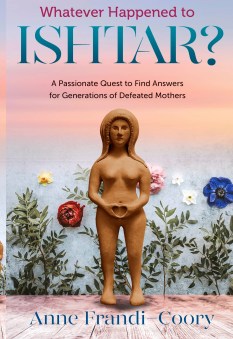
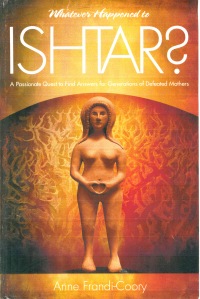
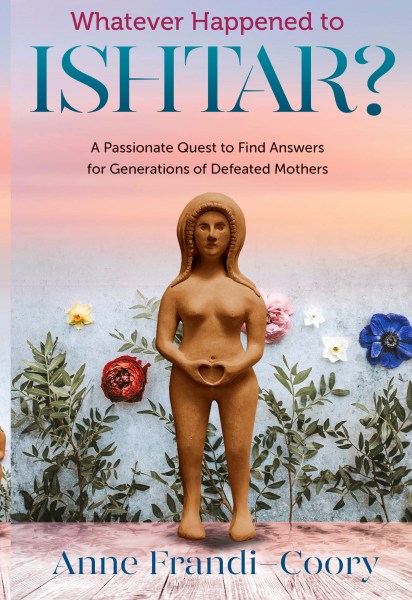
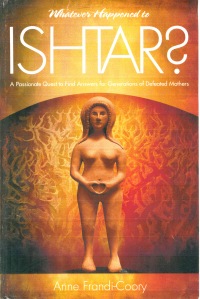
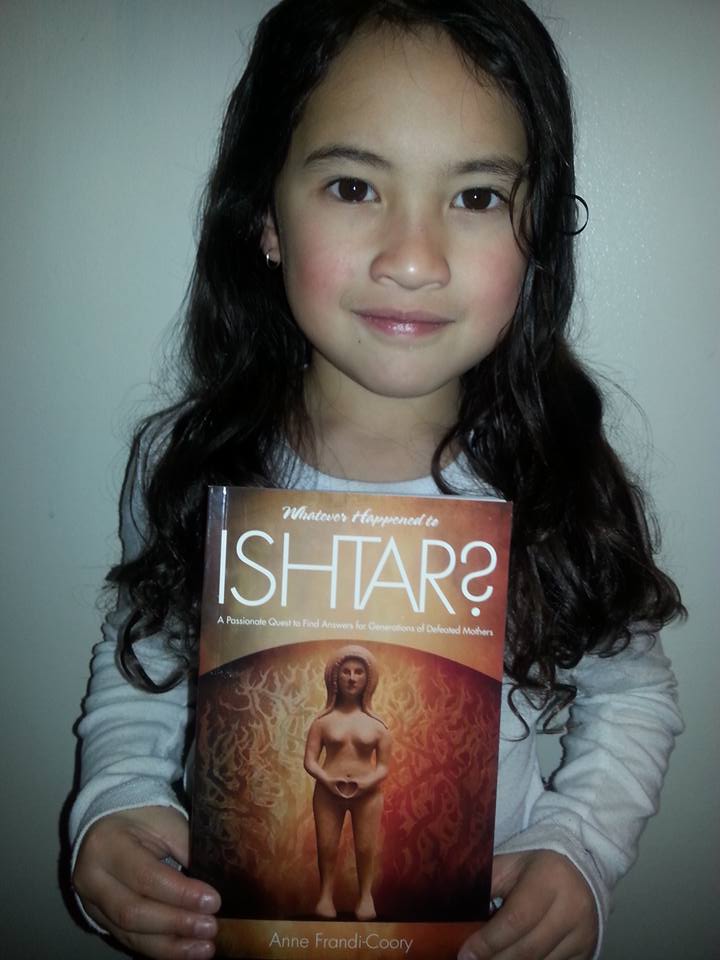
Whatever happened To Ishtar? – A Passionate Quest To Find Answers For Generations Of Defeated Mothers. 1st, 2nd and 3rd editions cover: pub.2010-2019

   Whatever Happened To Ishtar? A Passionate Quest To Find Answers For generations Of Defeated Mothers. 4th edition pub. 2020 in paperback and Kindle ebook.

Dragons, Deserts and Dreams: Poems, Short Stories & Artworks. 1st edition pub.2017. 2nd edition pub. 2020 in paperback and Kindle ebook.

********************************************************

For more information about the author of  these books, along with reviews:

Anne Frandi-Coory  works from her home studio in Melbourne as a painter, poet, short story writer and book reviewer. In 2010 she published the bestselling Whatever Happened To Ishtar? A Passionate Quest To Find Answers for Generations Of Defeated MothersIt is a raw and powerful memoir woven into her Italian and Lebanese family history, over-arched with the detrimental effects  patriarchal Catholic Church dogma  inflicted on generations of women and children…  Continued  HERE: 

**********************************************************

Anne’s story is one of lost generations…

What is most fascinating about ‘Whatever Happened To Ishtar?’ are the ancestral genealogies of the author’s Lebanese father and her Italian mother. This does assist readers to understand what hardships 19th century immigrants to the United Kingdom and New Zealand endured. With no access to birth control, women faced multiple pregnancies or secretly resorted to self-induced abortions.

The personal stories Anne has researched for this book go some way to explain why her parents were compelled to make the life choices they did. This memoir will stay in your memory as it covers universal issues of female sexuality, women’s roles and limited options, mental illness, and societal harsh judgments that have defeated mothers for generations… Continued HERE: 

*******************************************

All three books by Anne Frandi-Coory are available in paperback and Kindle ebook format here at  AMAZON BOOKS

****************************************

 *LEBANESE FAMILY TREE AND PHOTOS PAGE LINK HERE*

*ITALIAN FAMILY TREE AND PHOTOS PAGE LINK HERE*

I first read In God’s Name in the early 1990s when I was at university, and although I was by then a lapsed, disillusioned Catholic, nothing prepared me for the revelations in the book. Until then I had no idea how deeply corrupt the Vatican/Catholic Church was, and specifically, the Vatican Bank. I have recently read it again.

Then I saw a Daily Mail post:

Mobster claims he helped Poison Pope John Paul I with cyanide and threatened to kill Pope John Paul II because they both tried to expose a billion dollar stock fraud scam involving cardinals and gangsters in Vatican City. (see full post below).

Needless to say, this time I was more prepared, what with the child sexual abuse scandal that has since rocked the Church to its core. The comments by the mobster confirm everything that investigative journalist David Yallop had revealed in  his book about the murder of a  pope… In summary:

During the late evening of September 28th or the early morning of September 29th,1978, Pope John Paul I, Albino Luciani, known as the smiling pope, died only thirty-three days after his election. The cause of death (Vatican officials refused to allow an autopsy) was announced to the world by the Vatican as ” myocardial infarction”. Yallop interviewed many people when he was writing In God’s Name including the pope’s  long  time personal physician. The doctor was absolutely shocked because as he told Yallop, his patient, a relatively young pope in his 60s,  was in perfect health and the only pills he took, were extra vitamins and  mild medication for low blood pressure.

During his research for the book, Yallop uncovered a huge chain of corruption  linking leading figures in financial, political, criminal, and clerical circles around the world in a conspiracy. The new pope was, although a humble man who enjoyed a simple lifestyle, a fierce opponent of corruption with an inner strength that must have alarmed his ‘minders’ when he ordered an investigation into the Vatican Bank, and the  methods employed by its President, Archbishop Paul Marcinkus. Yallop’s intensive research over three years maps the subsequent cover-ups and  upheavals within the Vatican,  and the actions of the mysterious and illegal branch of Freemasonry called P2  extending far beyond Italy in its accumulation of wealth and power , and also penetrating the Vatican.

In God’s Name is an informative and educational  read for Catholics and non-Catholics alike; for anyone who still believes that religious organisations are  in existence purely to set humanity’s moral compass or to direct the worship of culturally specific gods.  -Anne Frandi-Coory 

****************

The Daily Mail Post:
Mobster claims he helped Poison Pope John Paul I with cyanide and threatened to kill Pope John Paul II because they both tried to expose a billion dollar stock fraud scam involving cardinals and gangsters in Vatican City.

A mobster from the Colombo mafia family claims he helped poison Pope John Paul I with cyanide 33 days into his reign to stop the pontiff from exposing a billion dollar stock fraud scam. The startling revelation comes from 69-year-old Anthony Raimondi’s new novel When the Bullet Hits the Bone [published 2019].

Raimondi was a loyal member of the Colombo family – one of the notorious five Italian mafia families in New York City.

The Colombo family dealt in a host of criminal enterprises, including racketeering, contract killing, arms trafficking and loansharking.

The scene begins in 1978 when Raimondi, the nephew of infamous godfather Charles ‘Lucky’ Luciano, was recruited by his cousin Paul Marcinkus, who ran the Vatican bank in Vatican City.

The New York Post reports that Raimondi’s job was to learn the Pope’s daily habits and be there when Marcinkus spiked John Paul’s nightly cup of tea with Valium.

Raimondi notes that the Valium worked so well that the Pope wouldn’t have woken up ‘even if there had been an earthquake.’

He said: ‘I stood in the hallway outside the Pope’s quarters when the tea was served.’

‘I’d done a lot of things in my time, but I didn’t want to be there in the room when they killed the Pope. I knew that would buy me a one-way ticket to hell.’

Meanwhile, Marcinkus prepared a dose of cyanide for the Pope.

‘He measured it in the dropper, put the dropper in the Pope’s mouth and squeezed. When it was done, he closed the door behind him and walked away,’ Raimondi said.

Shortly after, a papal assistant reportedly checked on the Pope and screamed that ‘the Pope was dying!’

At which point, Marcinkus and two other cardinals rushed into the bedroom and pretended to be horrified by what they saw.

Raimondi said if the Pope had kept his mouth shut, ‘he could have had a nice long reign.’

Next on the list was John Paul II, who seemed set on exposing the inside job as well.

Raimondi, a [self] made man, was called back to the Vatican and told to prepare for a second murder at the behest of the fraudsters.

He reportedly told them: ‘No way. What are you going to do? Just keep killing popes?’

Knowing he risked being killed by the mobsters, John Paul II allegedly chose to keep quiet about the illegal dealings.

John Paul II would go on to serve the second longest reign in modern history before he died at age 84 in 2005.

This apparently prompted days of drunken partying for the mobsters and corrupt cardinals in Vatican City.

Raimondi said: ‘We stayed and partied for a week with cardinals wearing civilian clothes, and lots of girls.’

‘If I had to live the rest of my life in Vatican City, it would have been OK with me. It was some setup. My cousins all drove Cadillacs. I am in the wrong business, I thought. I should have become a cardinal.’

Raimondi dismisses those who question his story or say it closely resembles ‘The Godfather III.’

‘It was a terrible movie. To tell you the truth I don’t really remember it,’ Raimondi told The Post.

‘What I said in the book I stand by till the day I die. If they take [the pope’s body] and do any type of testing, they will still find traces of the poison in his system.’

Follow Anne Frandi-Coory’s blog HERE at: Frandi.blog

********

Opinion piece by Geoffrey Robertson QC published in The Sydney Morning Herald

1st March 2019

Catholic symbol


News of George Pell’s conviction was a fitting end to a papal summit on child abuse which achieved nothing and began with other cardinals attributing the problem to homosexuals in the priesthood.

red George Pell

The reality is that priests abuse small boys not because they are gay but because they have the opportunity. Most are not even paedophiles, but rather sexually maladjusted, immature and lonely individuals unable to resist the temptation to exploit their power over children who are taught to revere them as the agents of God.

A church that has tolerated the sexual abuse of tens of thousands of children – a crime against humanity in any definition – needs to face unpalatable truths and to make drastic reforms.

Cover-ups are no longer an option. The magnitude of the crimes is well-established and the evidence of how the Vatican and its bishops hushed them up in order to protect the reputation and finances of the Catholic Church is fully proved.

By insisting upon its right to deal with allegations under medieval Canon Law weighted in favour of the defendant and providing no effective punishment, the church itself became complicit.

It has allowed abusive priests to confess without fear of any report to police; it has encouraged bishops to withhold information from prosecuting authorities; it has refused to allow Vatican envoys (papal nuncios) to co-operate with government inquiries on the excuse that it is a state [which it is not, according to International Law!] and hence they have diplomatic immunity.

The necessary reforms must begin with recognition that child sexual abuse is a crime, not just a sin, and must be reported to and dealt with by prosecuting authorities.

Canon Law, with its pathetic punishments of prayer and penitence, and its obligations to keep proceedings secret, must have no part in dealing with allegations of sex abuse.

Nor can the veil of confidentiality any longer be allowed to shroud the confessions of paedophiles, let alone the absolution of one priest by another (“Brother, can you spare a crime?”) The confessed abuser must be told to confess to the police or else be handed over to them.

Obviously, there should be zero tolerance for clerics who confess or are convicted. They must be defrocked and certainly not allowed any appeal to the Vatican, which in the past has permitted many to remain in holy orders – the sheep’s clothing in which they have often reoffended.

Even in countries where local bishops have announced that public prosecutors will be told of sex abuse allegations, there is always the qualification “only if the victim consents”.

It is all too easy for young victims and trusting parents to be counselled that their child’s best interests lie in allowing the church to deal with the matter “in its own way” without involving the police. They give in easily to pressure and persuasion that their complaints should be dealt with in secret under canon law.

Abolishing the role of Canon Law in dealing with sex crimes will take some papal courage, but will be relatively easy, beside the radical changes necessary to stop the abuse from happening in the first place.  The reform most often suggested is to abandon celibacy. This would not be doctrinally difficult – Christ’s disciples appear to have been married and the rule was a dogma introduced in the 11th century and almost abolished by 16th-century reformers.

But marriage does not “cure” paedophilia. Moreover, many abusive priests are not paedophiles: their disordered personalities can often be ascribed to conditions that would prevent them from forming satisfactory heterosexual relationships. Abuse happens because they are too weak or emotionally immature to resist temptation.

That temptation arises because the church indoctrinates children at an early age – as young as seven or eight – that the priest is the agent of God. Communion is an awesome miracle performed by the God-priest, and then the impressionable and nervous child is made to confess his sins and seek forgiveness, from God, represented again by the priest.

Anne.

The phenomenon of children’s unflinching obedience to sexual requests from the priest is induced by “reverential fear”: the victims have such emotional and psychological dependence on the abuser that they unquestionably obey and do not tell for many years afterwards.

It follows that the only reform that could tackle the evil of clerical sexual abuse at its source would be to raise the age at which children are first given communion and confession to, say, 13. Other churches, and the Jewish faith, leave indoctrination and spiritual commitment rituals until teenage-hood. By this stage young people are much more capable of resisting sexual advances and have more courage to report them.

Could the Pope ever contemplate this reform? The Jesuits say “Give me the boy at seven …” and now we know what this has meant. But if such reforms are not implemented, there must be consequences.

One consequence could be to reconsider, not the state, but the statehood of the Vatican. It is, after all, the only religion allowed this elevated status, with diplomatic immunities, expensive embassies and a role at the UN where it condemns programs that help homosexuals or propose family planning or gender equality.

Yet it is in reality no more than a religious enclave in Rome, without the attributes of sovereignty or even an indigenous population (no one is born there, except by accident). If it continues as an organisation that facilitates the abuse of children, it should have no immunities.

***********************************************************************************

Geoffrey Robertson QC

Geoffrey Robertson QC is a former UN Appeal Judge and author of The Case of the Pope (Penguin). See my review of his book here:  The Case of the Pope

*****Please Note: Text and images Copyright to Anne Frandi-Coory – All Rights Reserved 4 January 2019.

*****************************

Anne Frandi-Coory is interviewed by Chris Morris of the Otago Daily Times in November 2018 for the series ‘MARKED BY THE CROSS’ a research project. Part One.  [Part two HERE:]

***********
Email dated 8 November 2018:

Hi Anne,

Chris Morris here – I’m a reporter with the Otago Daily Times in Dunedin.

I’m doing some research and interviews on Catholic orphanages in Dunedin, as part of an ongoing series, “Marked by the Cross”, which explores the extent of historic abuse within the Dunedin diocese.

I’m interviewing a man shortly who spent time at the Doon St home, but have also just come across a mention of your book online and I wondered if you’d be willing to be interviewed about your experience and those of your brothers?

Look forward to hearing from you.

Chris Morris, Otago Daily Times, Dunedin.
**********************************************************************************
The three children involved:

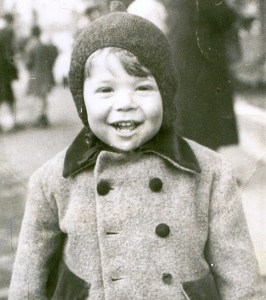
Kevin Joseph Coory 

Kevin blog 1

Kevin

Anne Marie Coory

Anthony Mervyn Coory 

1873-1915

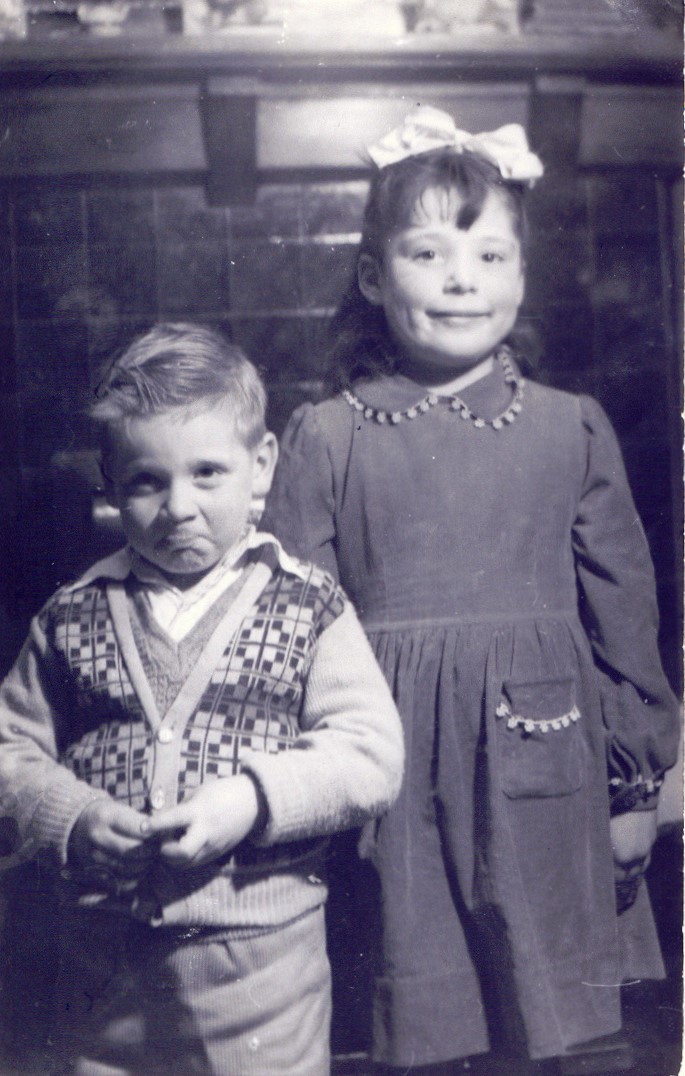
Anthony and Anne

Their ‘parents’:

Copy of Doreen & Joseph's wedding day

Joseph and Doreen

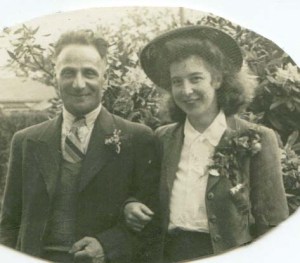
Joseph Jacob Coory and Doreen Marie Frandi were married on 7 November 1945.

The couple divorced on 1st July 1955.

********************************************************************************

Q1. What was the full name of the orphanage you were placed in, and where was it? Has it subsequently closed/had a name change/been redeveloped or demolished?

A. The original Mercy Orphanage for the Poor including a wooden school building, was situated in Macandrew Road, South Dunedin, beside St Patrick’s Basilica. The orphanage was officially opened in 1898 and in later years was named St Vincent de Paul Orphanage for Orphan and Destitute Children. Later, an additional wing for school girls, St Vincent’s, and a nursery for children under five years, St Agnes’, was added to the complex. These buildings were all demolished by the mid to late 1990s.

Q2. What year were you and your brother placed there, and for how long?

Q3. How old were you and your brother at the time?

A. I returned to the Mercy Orphanage complex in January 1992 with my partner and 21-year-old daughter as part of my quest to understand why my parents Doreen Frandi and Joseph Coory abandoned me there when I was an infant.

St Vincent's

St Vincent’s orphanage complex in Macandrew Road, South Dunedin

St Agnes' Nursery

St Agnes nursery in Macandrew Road, South Dunedin, where all three children were initially placed

When I entered the then derelict site in Macandrew Road, I met Sister Joanna (b. Maurya Laverty) who was walking around the derelict buildings, praying.  After asking for my name, which she immediately recognised, she spent some time talking with me, and answering my questions, as we continued to stroll around the pitted concrete paths. Sister Joanna knew of our family’s tragic story intimately. She told me that the nuns were very poor record keepers, but she did later find and send me a document which stated that my brother Kevin and I were first placed in the orphanage on 17th February 1949, and that ‘Kevin was taken by mother on 2 March 1949’. My brother Anthony first appears in the orphanage records on 13 May 1950. He was born in Wellington, where my mother had earlier traveled to live with her parents while awaiting his birth. At first I was hesitant in approaching this nun, but she looked so different to the nuns I was so afraid of during my childhood. Sister Joanna was dressed in a modernised version of a nun’s habit; knee-length black dress, with a veil that revealed her hair.

I believe I lived in the Mercy orphanage for approximately seven years; up until I was five years old in St Agnes’ Nursery, and after that in the St Vincent’s wing for school girls. I was taken to my first day at school by a ‘lady called Anita’, and I asked Sister Joanna if she knew of this person. She told me that Anita, whom she had fond memories of, was a senior girl at the adjacent Catholic Secondary School.

Anthony lived in St Agnes Nursery until he was five-years-old in 1954 when he was then transferred to St Joseph Boys’ Home and farm in Doon Street, Waverley. This was a very distressing time for both of us.

I recall that I didn’t know I had a baby brother until I was first introduced to Anthony at St Agnes’ Nursery as, ‘this is your new baby brother, Anthony’ and I can still picture his little head as he slept soundly in a portable cane bassinet which a nun placed beside me on the floor where I was sitting with other children.

I have a vivid memory of climbing on to the back of a truck to visit Anthony at the Boys’ Home and becoming very distressed when I saw where he was sleeping. I noted that the window above his bed was so high that I worried he wouldn’t be able to see out. Sometime in 1955 Anthony was sent to St Bernadette’s school in Forbury for ‘backward’ children. We saw each other very seldom after that. I had to ask Sister Joanna if my memory was correct about climbing onto the back of a truck with other children to visit Anthony at St Joseph’s Boys’ Home. She confirmed that there was a farm truck that took the children up to visit the Doon Street Boys’ Home, and to collect and distribute produce from the farm.

Rear view St Joseph's Boys' Home Waverley overlooking Harbour

St Joseph’s Boys’ Home in Doon Street, Waverley

When Kevin and I met up as teenagers, he recalled the time that Doreen, our mother,  took him to see Anthony at St Joseph’s Boys’ Home in Doon Street in 1954-55, where he had recently been transferred from St Agnes’ Nursery in Macandrew Road. They found him playing in a sandpit with other boys, after the nun pointed him out to a disbelieving Doreen…she hadn’t recognised her son; he appeared too small for his age, with untidy blonde hair and dressed in clothes that were far too big for him, wearing shoes that were obviously meant for much bigger feet than his. When Doreen spoke to him by name and tried to elicit a response from him, he could only grunt. Kevin told me that mum was agitated and absolutely devastated.

Q 4. Why were you placed there? What were the family circumstances which contributed to this?

A. Something momentous obviously happened on or just prior to 17th February 1949. Neither the Lebanese Coory extended family nor our parents have ever told us the reason for our subsequent abandonment at various Catholic orphanages and Homes in Dunedin.

Over the years, Kevin and I have had discussions about his recollections of what was happening around the time of our parents’ marriage break up in 1949. There are two possible explanations:

Kevin recalls that when he was approximately three and a half years old, Doreen accused Joseph of sexually abusing Kevin because he was badly bruised around his genital area. When Doreen first discovered the bruising, she became hysterical and called the police. Kevin told me that he looked across at Joseph while the police were there at the Coory family home, and that he looked very frightened. Several family members were in the room at the time. No charges were ever laid by the police, which I checked out at the courthouse in Dunedin in 1992. Kevin is unsure whether or not Joseph actually sexually abused him or whether he was a bit too rough with him while playing “this little piggy”. Personally, I suspect that Kevin, who loved his father, was trying to protect Joseph when he used this as a possible explanation for the bruising when we talked about it in later years as adults. But he also told me that he felt very intimidated by the police and the several Coory family members who stood over him while being questioned by police.

The other cause for the break up may have been that Doreen was caught having an affair with Joseph’s younger brother, Francis Coory, who was born in 1920, the same year as Doreen. Joseph was born in 1902 and was a simple, uneducated man, who wasn’t expected to live as a newborn, and therefore his birth was never registered, so he used another Lebanese man’s birth certificate. Joseph and Doreen were a mismatch, to put it mildly, but Joseph married her after she had followed his younger brother Phillip Coory to Dunedin not long after WW2 ended, because she was expecting his baby (Kevin). She had no idea that he was already married with a son, although separated from his wife. We have no proof of an affair between Francis and Doreen, but Kevin and I do believe that Francis Coory is Anthony’s biological father. Without a DNA test, we will probably never know the truth.

During research for my book Whatever Happened To Ishtar? – A Passionate Quest To Find Answers For Generations of Defeated Mothers a woman of my father’s generation who I had interviewed, and who lived in the Dunedin Lebanese community, told me that Francis Coory was well known as ‘the ram’ because of his sexual exploits within the community.

Added to our suspicion that Francis was Anthony’s biological father, both Kevin and I remembered that Joseph and Francis barely spoke to each other over the years, and that there was always a tension between them. Up until February 1949, Doreen and Joseph had been living at the Coory family home at 67 Carroll Street in Dunedin for a few months; it was a three-storey house where several generations of the [immigrant Lebanese] family lived, including Phillip and Francis, and which was a hostile environment for Doreen, and her children, there can be no doubt about that.  Joseph and Doreen had tried to live on their own in other accommodation in Christchurch and Dunedin for a short time, but I believe that Joseph was too immature to live his own life and to support a family, and subsequently he lived most of his life at 67 Carroll Street, where he was born.

Carroll St Dunedin c. 1956

8 year old Anne, at the front far right, outside the Coory family home at 67 Carroll Street, Dunedin

Whenever Joseph took me to Carroll Street, the family constantly referred to my mother as a ‘sharmuta’- Aramaic for prostitute. The family made it clear to Anthony and I that we were not welcome and that they didn’t want to care for us. They never visited us in the orphanages and later refused to allow Kevin to return to Carroll Street because he had chosen to live with his mother following her eviction from the Coory household.

Kevin remembers that when Doreen arrived back in Dunedin, after living with her parents in Wellington for a few months, before and after the birth of Anthony, they were in a taxi which had driven them from the airport to 67 Carroll Street. Doreen told Kevin to go down and ask Joseph to come and see his new son Anthony, but Joseph refused to do so. After that, Doreen tried to make a life with her three children on a meagre payment from Joseph, ordered by the court, but it didn’t work out and we children were once again returned to the various orphanages.

Q5. Did you know why you were placed there at the time, or (like others I’ve spoken to) were you simply dumped there and left wondering what was going on, etc?

For a young boy, Kevin knew too much, more than any little boy should know. But Anthony and I had no idea at first why our father’s immigrant Lebanese family were so cruel to us, why they beat us, and why they didn’t want us to live with them. Not until many years later. Family members never, ever visited us in the orphanage. Joseph occasionally visited me in the orphanage and boarding college, and often took me to 67 Carroll Street, far more often than he did Anthony, so that as I grew older, I realised how much they hated my Italian mother. And I gradually realised that I was paying for my mother’s ‘terrible sins’ as I was led to believe that daughters should do. Certainly, in future years, Kevin and Anthony had more contact with the Coory extended family, but then they were males. As the girl child, I wasn’t as valued by my father’s family [they tried to deprive me of half of my father’s house which he left me in his Will, which I engaged lawyers to fight, and won] … and as I grew into a woman, Joseph made my life hell, because there was no doubt in his mind that I was turning into a ‘sharmuta’ just like Doreen. But by the time I was in my teens, Joseph was showing signs of the dementia which would eventually see him committed by his sister to Cherry Farm Psychiatric hospital where he later died on 16th December 1974.

Q6. What sort of abuse did you suffer while there? Was it from the nuns, and can you give any specific examples. And how often would this happen?

Those of us who were incarcerated in the Mercy orphanage for all of our formative years i.e. until 7-8 years of age, were denied social integration, education free from religious bias, toys, play time and books [other than bible stories and scripture]. We were virtual slaves. Most of our days were spent kneeling in church praying, forced to listen to endless sermons, about heaven and the tortures of hell if we dared to sin. God always knew what we were doing, and so did the devil, we were constantly warned; he was intent on taking us away from holiness. In between times we cleaned and polished wooden floors, cleaned bathrooms and kitchens and bedrooms, operated the laundry, changed bed linen and made beds, assisted the nuns in the nursery with babies and toddlers, when we were barely out of babyhood ourselves. We also had cooking duties in the huge kitchens.

We suffered from gross neglect, lack of hygiene, and emotional abuse. We were never taught to clean our teeth, wash our hands, and very seldom had a bath, while hiding our naked bodies from other girls.  Girls like me who were totally institutionalised, didn’t really ‘know’ we had a body below our necks… we never saw a naked adult female, the nuns’ bodies completely hidden apart from their faces. I didn’t have a close emotional relationship with another female until my daughter was born in 1971, and this had severe consequences for me as I approached puberty.

When I was approximately four years old, I contracted a severe case of ringworm. My hair was completely shaved, and I had a purple unction smeared all over my head. The other children shunned me. Others told me in later years, including my brother Kevin, that I always stank, and was always disheveled, wearing clothes that didn’t fit me properly and which were obviously hand-me-downs. 

There was one particular nun I remember vividly; Sister Mary Alacoque who singled me out for her petty hatreds. e.g. We used to line up for fruit and one day I picked an orange which I had noticed was black in the middle when I began to peel it. It took all of the little courage I had to go back and show it to her. ”Sister Alacoque, my orange is rotten in the middle” …her reply was “well, that’s your bad luck, isn’t it?”  I was very upset at this, and other petty nastiness dished out by nuns. If we were sick, no-one even noticed, so we knew not to complain, as the answers were always, “well. you know how Jesus suffered because of our sins…it is good for our souls if we suffer, it’s god’s will.” I also suffered from bouts of childhood asthma.

I was born with a severe astigmatism in my left eye, which shows up in some photographs of me, as a severe squint in sunlight. It could have been corrected, according to an eye specialist I consulted when I was an adult, had it been diagnosed early in my childhood. It wasn’t picked up until I was eleven years old while I was a boarder at St Dominic’s College and had attended a government paid initiative; all adolescents attending Dunedin schools were to be given thorough medical examinations by appointed doctors.

One day I went to use the toilet in the orphanage, and a woman? was in there standing with her pants down, and holding her dress up. When she saw me, she did an indecent act upon herself. I am not sure how old I was at the time, but I was fairly small, as the woman or senior pupil? loomed very large above me. She made some comments to me, but I can’t recall what she said, and I clearly remember standing there, rooted to the spot, frightened and not knowing what to do.  I don’t remember anything else about the incident, or how long I stood there but it made me scared of going to the toilet for years after that.

Between the ages of eight and nine, after a few months staying with my father at his extended family home in Carroll Street, I was sent to board at St Dominic’s College in Rattray Street. I believe that my father did not want me to go out to St Joseph’s Home in Doon Street; Sister Joanna had informed me when I met her in the Mercy Orphanage grounds in 1992, that it was around this time, both girls and boys were then being sent out to St Joseph’s Home in Doon Street, as the numbers of  “orphan and destitute” children were dropping, and the orphanage complex in Macandrew Road was about to be closed down.

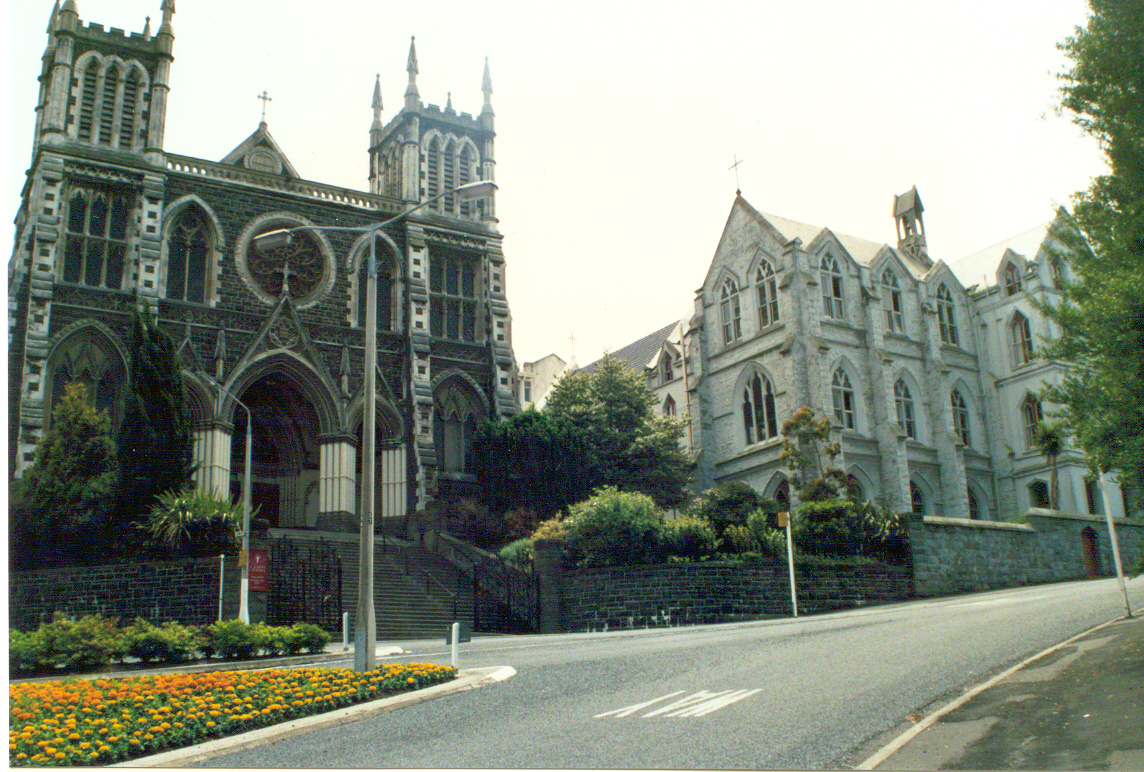
St Joseph's Cathedral & St Dominic's College

St Joseph’s Cathedral and St Dominic’s College in Rattray Street, Dunedin.

While I as a boarder at St Dominic’s College, life was a constant stream of early morning mass, before school, weekends, and evening prayers. We had daily classes of Catechism, where teaching focused on bible study, history lessons from the perspective of the Catholic Church, sin and redemption, the tortures of hell if we dared to commit sins.  e.g. We were instructed that we must love god more than anyone else, even more than our own father, because god was our true father in heaven. But I felt that I couldn’t love god more than my father, who was the only person who ever visited me and who I loved dearly. A psychologist I consulted when I was an adult, explained to me that this edict would have caused me much emotional distress as Joseph was my sole emotional lifeline throughout all of my childhood traumas. His visits, although infrequent, obviously meant so much to me. The psychologist, John Craighead, told me that “…your father was your saviour, not Jesus!” He went on to explain that he believed Catholicism and its teachings did me far more psychological and emotional damage than did my Lebanese extended family. We discussed this further at length.

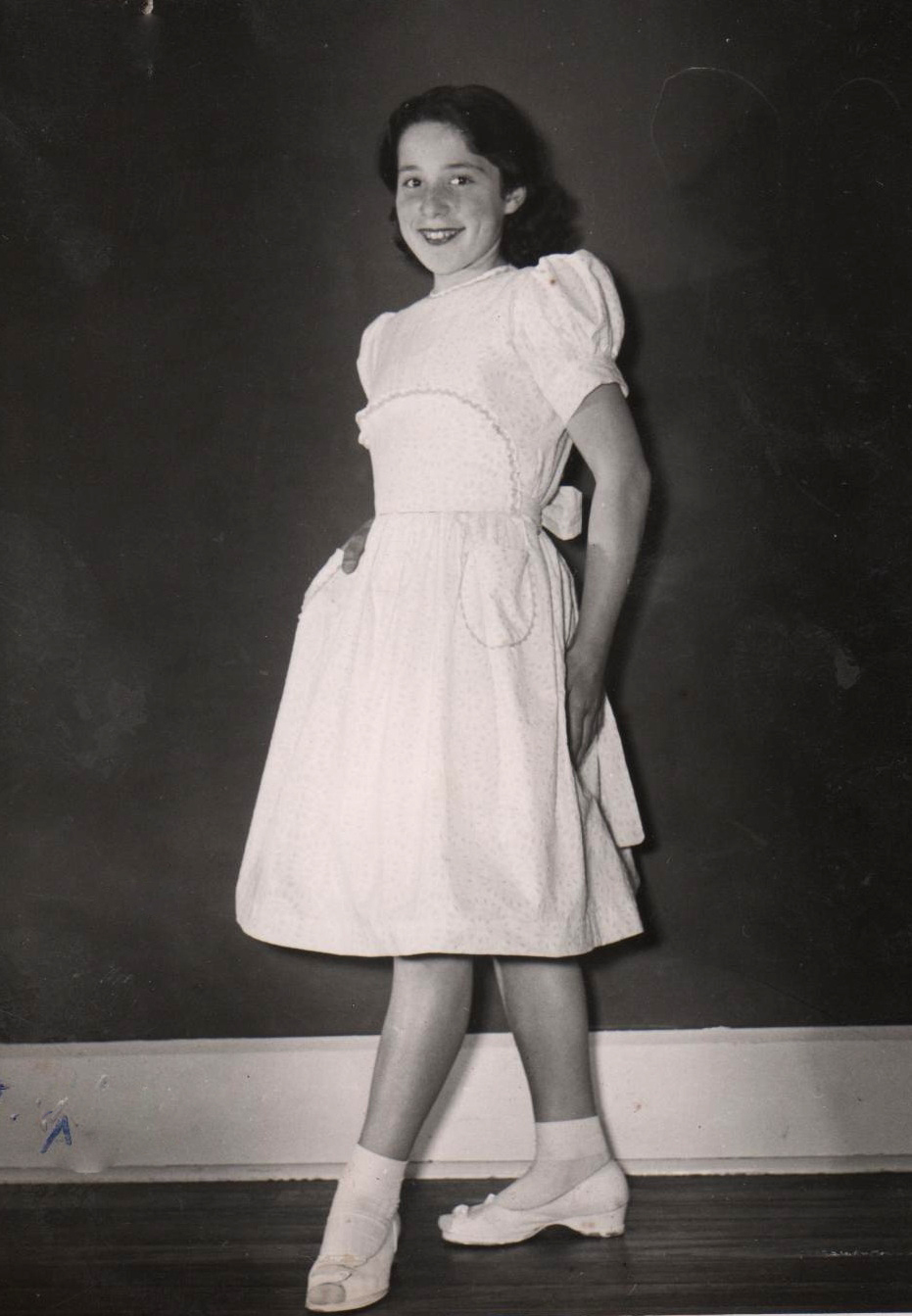
anne-frandi-coory-2

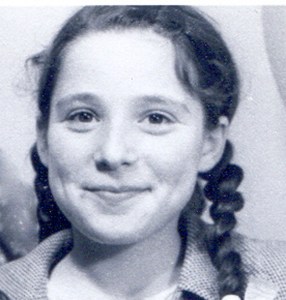
Anne Frandi-Coory at around 14 years old

Our attendance at mass in the adjacent St Joseph’s Cathedral every morning before school was mandatory for girls from form one upwards. We had to fast at least eight hours before taking the host, so no breakfast until after mass. Almost every morning in the church pews, or walking down the aisle to receive communion, one or more girls would faint, or suddenly start crashing into the rows of pews, faint from hunger.

I often received the strap, which was a huge 5mm thick strip of pale creamy leather, with a hole at one end, which left my hands numb for hours. The instruction to “hold out your hand” immediately conjured up a fight within me to either run away or to accept the physical pain to come. However, I was never brave enough to run. I was strapped by sister Gertrude often, and Mother Patricia pulled me around by my hair. Misdemeanours that deserved the strap on my part, were talking in the hallway while waiting for a class, or not picking up the rubbish in the school grounds satisfactorily.

I recall that I had begun to bite my nails, and the doctor suggested to my father that I use nail polish so that my nails would look so pretty I wouldn’t want to bite them, and it actually worked. Unfortunately, I wore nail polish to school, forgetting to remove it, and when I told the nun what the doctor had advised, I got the strap for ‘telling lies’. I was locked in a cleaning cupboard for hours, but I cannot remember the ‘crime’ just the punishment. I was bullied and ridiculed at St Dominic’s; “you haven’t got a mother” was a common playground taunt, and I suspect because I was ‘unclean’ and could barely speak, or walk properly. This I know, because people who knew me through my childhood and adolescence, marveled at my improved speech and vocabulary whenever we met up years later. They all recalled that I was labelled “backward” by the nuns and by the Lebanese community at large. My father had paid for me to have elocution lessons at St Dominic’s College to help improve my speech and vocabulary.

When I was nine years old, I was sitting in sewing class at St Dominic’s with other girls. I was burning hot with a fever and I had a very sore throat. My eyes became blurry, so that I could barely see the embroidery I was working on let alone the stitching. The nun in charge came up to me and said “Anne Coory, are you alright?” When I raised my head to look up at her, she must have realised how sick I was and told me to go up to the infirmary and see Sister Theresa, who instructed me to get into one of the beds while she called the doctor. I was diagnosed with scarlet fever and rushed to Wakari Hospital by ambulance and admitted into the isolation ward. There was no-one with me in the ambulance and I was terrified mainly because I had no idea what was going on.

I was so shy, and withdrawn, that when nurses came in and asked if I wanted to go to the toilet, I always said no…the last thing I wanted to do was go to a strange toilet. A nurse later brought in a bed pan and instructed me to sit on it, but although I sat there for quite some time, I didn’t pass any urine. A male doctor came it to check on me while I was sitting on the bed pan, and I was so shamed and humiliated, I could feel myself blushing. He asked me if I was okay, but I was too scared to answer him. Subsequently a couple of nurses came in, pulled off my covers, my panties and inserted a catheter into my bladder to drain urine; I was absolutely terrified. Nothing was explained to me, not even what the chest x-rays were for that I had to have. My Catholic indoctrination and total institutionalisation were such, that I still vividly remember the terror of that time in hospital and which caused many of my childhood nightmares.

My father was the only person who visited me in hospital…I heard him before I saw him; he was wailing “Where’s my Anna? Where’s my Anna?” At the infirmary, Sister Theresa had given me a phial of holy water to put under my pillow so the angels and god would watch over me…and so when Joseph threw himself on my bed sobbing, I retrieved the holy water from under my pillow and explained to him that I was putting the holy water over the red rash to make it better and that I was going to be fine. He calmed down after that. I had no idea about the real world outside, until I became a mother, and I have the Catholic Church to thank for that ignorance.

When I was about to leave St Dominic’s College at 16½ years, Sister Gertrude gave me a gift of a set of pale blue glass rosary beads, but I had a suspicion at the time that it was guilt on her part for the way she had mistreated me. I have to say those rosary beads didn’t make my life any easier.

*********************

Interview continued in Part Two – View here:  frandi.wordpress.com/2019/01/04/anne-frandi-coory-is-interviewed-by-chris-morris-otago-daily-times-part-two/ 

View Here for more about Anne Frandi-Coory’s memoir WHATEVER HAPPENED TO ISHTAR? 

THE VATICAN DIARIES  A Behind-The-Scenes Look At The Power, Personalities and Politics At The Heart Of The Catholic Church

A Book Review by Anne Frandi-Coory

Vatican Diaries


**********************

It really is a joke that the Vatican considers itself a city state in its own right! More like a private boarding institution full of petulant school boys with eccentric masters in control of such departments as Congregation For Catholic EducationCongregation For The Causes of SaintsCongregation For The Clergy, Congregation For Institutes of Consecrated Life And Societies Of Apostolic Life etc. and where the competition for supremacy  over doctrinal matters is fierce.

What bothered me the most about the goings on in the Vatican as revealed in this book, was the total shutdown of any discussion about the thousands of cases of sexual abuse of children in USA, Australia and Ireland; the total lack of any consideration of the harm done to children by paedophile priests. The Vatican is a well-oiled machine that protects the Church at all costs, and I mean ‘all costs’!

The only noteworthy global/political stance the Vatican has taken in recent times, in my view,  was when Pope John Paul ll warned the USA of the terrible consequences if it invaded Iraq: ‘Four years earlier [George W ] Bush had dismissed Pope John Paul’s cautionary warnings about war during the build-up to the invasion of Iraq, leaving deep resentment at the Vatican. In the aftermath of Saddam Hussein’s demise, as terrorism, factional fighting and anti-Christian attacks increased, the Vatican said, essentially, “We told you so.”‘

It is truly incredulous how petty and ridiculous are the secrecy, the bitchiness, and to think this is the headquarters that directs the Catholic Faith for followers around the world! What a waste of time and money!! All the money the Catholic Church rakes in globally would surely feed the world’s poor? Instead it allows the clergy and the pope, to live in palaces, eat like kings, and be waited on day and night!

Just like Mother Teresa was a ‘cash cow’ for the Catholic Church, so too was the Legion of Christ whose Mexican founder, Marcial Maciel Degollado,  fathered several children to several different women but who the Vatican sponsored and feted because of the huge numbers of new priests flocking to his seminaries and the vast amounts of money his order collected in donations. He also embezzled millions for his own private use, and was accused of sexual abuse, but the Vatican protected him until he died.

And heresy isn’t a problem for the Catholic Church either these days, not if it brings in billions of dollars worldwide like the Lefebvrists do. This schism within the Holy Church, for which several bishops and priests were excommunicated, strongly advocates for the pre-Vatican Council ll Tridentine Rites, including the use of Latin for Mass. For this faction of Catholicism, strict Tradition is everything. It does show how little the sexual abuse of children by paedophile priests concerns the Vatican hierarchy when compared to apostasy.

The chapter in the book titled SEX   lays open the arguments within the Church about the problem of homosexuality of priests and it’s  very interesting indeed. There is little doubt that homosexual relationships between priests are condoned within the Vatican, and within parishes. In one case, a priest was caught on a hidden camera, attempting to seduce a young man on a white couch in his office!  It was a set up, and the whole affair was broadcast on Italian TV.  A few years ago, an investigation carried out by the Church,  employing expert psychiatrists, confirmed what the Church has always denied; that the Catholic priesthood is a haven for homosexuals and that teenage seminarians are the attraction. Also, research has revealed that by far the largest numbers of child abuse victims are pre-pubescent boys. One particular psychiatrist believes that celibacy is the prime cause of the fact that so many paedophiles join the priesthood. Many followers are dismayed that the Church will not soften its stance on celibacy, even though it allows its Eastern Orthodox priests to marry. One psychiatrist went so far as to advise the Vatican that allowing priests to marry would encourage more ‘socially mature’ men to become priests. The following is a significant expert opinion quoted by the author: ‘Dr Martin P Kafka, a psychiatry professor at Harvard Medical School, said he thought homosexuality, while not a cause of sexual abuse, was a “likely risk factor” that deserved further study. He stated that in comparison with the general population, abuse cases in the Church disproportionately involved homosexual male adults who’d molested adolescent males. The no-gay-priests faction did its best to ignore the fact that Dr Kafka had also wondered whether celibacy could also be a ‘risk factor’ in sexual abuse.  [My emphasis]

Is there a secret document emanating from the Congregation for Catholic Education, which oversees seminaries around the world, stating the Vatican’s new position on admitting homosexuals into the priesthood? Nothing has been confirmed, but… “The document’s position is negative based in part on what the Catechism of the Catholic Church says in its revised edition, that the homosexual orientation is ‘objectively disordered.’ Therefore independently of  any judgment on the homosexual person, a person of this orientation should not be admitted to the seminary and, if it is discovered later, should not be ordained.” One can’t help wondering whether the Catholic Church is no longer attracting enough priests into its fold because of the dwindling faith of its congregations or perhaps because of its restriction on the ordination of homosexuals?

This chapter also reveals the Vatican’s rules on the use of condoms and other forms of contraception, and once again I am amazed at the ridiculous pettiness of the detail of what is and isn’t allowed! For instance: “condoms are acceptable for prostitutes, because the sex they engage in is already sinful”…but some in the Vatican are concerned because that “would lead the Church to support the use of condoms for all ‘fornicators’ including sexually active teenagers.” I won’t go into the detail of the Vatican’s rules about the use of condoms for the prevention of the spread of HIV/AIDS, but they border on the utterly ludicrous!

The Vatican Diaries is a must read, especially for the faithful, because you really should know the truth of what is happening within your own Church!  It is not just a salacious exposé…John Thavis has written an engaging and at times, very funny book. He obviously has friends within the Vatican whom he trusts and admires, and he has been working as a journalist in this field for over thirty years. I did enjoy the chapters about the Vatican Museum, and the character of an irreverent priest who translated documents into Latin, and who constantly embarrassed tourists and the Vatican hierarchy who  would have dearly loved to have fired him, if he hadn’t been such a brilliant Latinist!

The comings and goings, the antiquated white and black smoke  used to inform an anxiously waiting public about progress in the election of a new pope, are enlightening, humourous, and left me wondering why an extremely wealthy city state still used smoke signals, emitted from a belching, cough inducing stove. Oh that’s right, Tradition.


-Anne Frandi-Coory 31 August 2016

Also here on Facebook: https://www.facebook.com/myhomelibrary/


This page, including images and text,  is Copyright To Anne Frandi-Coory All Rights Reserved 27 November 2015

Update 7 June 2017:

This morning I received this email from Sister Joanna …and for some reason, it brought tears to my eyes:

Hello Anne,

My niece sent me your story on Facebook yesterday and I well remember our serendipity meeting.

I gather you are a writer in your own right….  Well done.

I am now a very old nun  on a walker, going blind and hearing is much to be desired.

Blessings on your continuing search,

Regards

Sr Joanna  (Maurya Laverty) Dn

*************************************************************************************

A  Card – From Sister Joanna 1992

Excerpt from  Whatever Happened To Ishtar?; A Passionate Quest To Find Answers For Generations of Defeated Mothers

**************************************

letter from Sister Joanna 3

letter from Sister Joanna

A CARD – from Sister Joanna “this image of Virgin Mary was a favourite kept by your ‘foster mother’ Sister Christopher.”

letter from Sister Joanna 2

*****

[Note from author: My mother named  me ‘Anne’ at birth, after her youngest sister, but it was changed to Jo-Anne by my Lebanese extended family when I was in my early teens because there were already “too many Annes in the family”, and because my father’s name was Joseph…you see?] 

*****

Dear Anne

In countless ways we are at the mercy of forces beyond our control, our existences given without our consent; our heredity and all that goes with it of temperament, mental outlook, opportunities and so forth are none of our choosing. We are frighteningly, pitifully dependent. Nevertheless we are answerable. We are free. In all this freedom and unfairness we are responsible for what we do. No-one can remove this responsibility from us. We are answerable not for our heredity, temperament or our natural capacity, but for what we do with these things…Your positive input to your children makes me blessed to have met you. You inspire me.  Don’t give up…the Italian connection will be important and not too late in your lifetime to make contact. The truth will set you free.

 Love and prayers

Sister Joanna (Maurya Laverty) 1992

*************************************

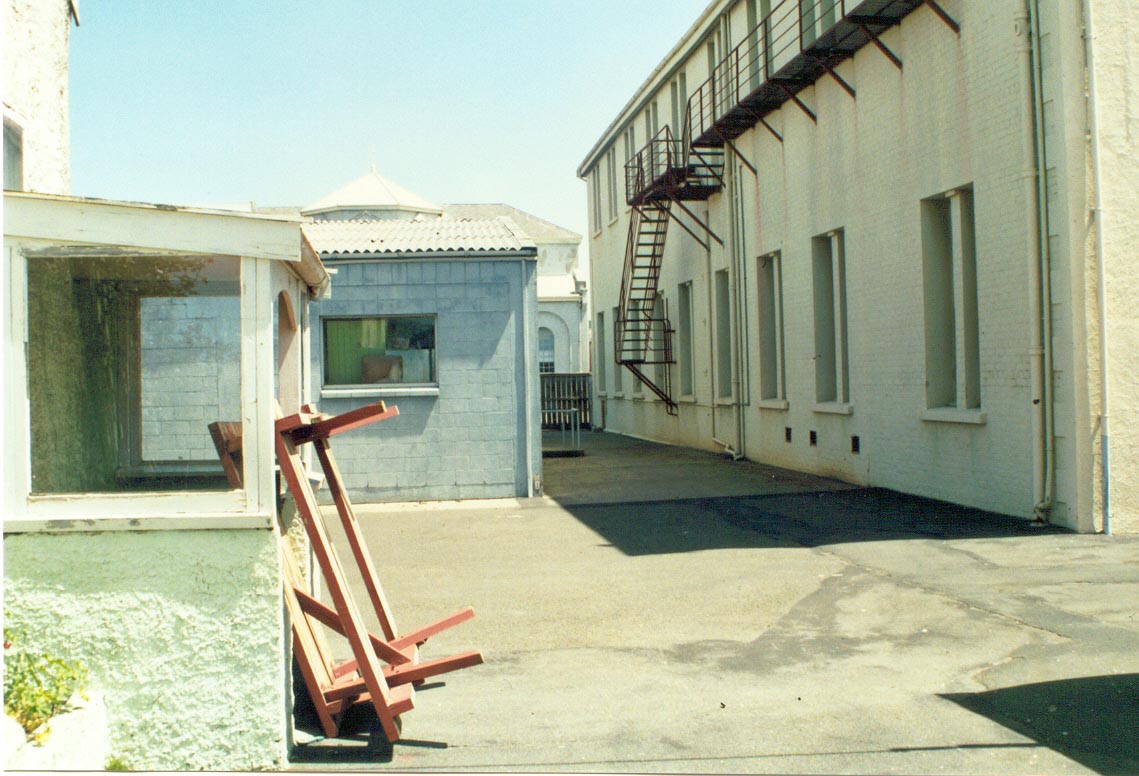
St Philomena's Dormitory

Rear view of St Philomena’s (image: AFCoory)

Dunedin, New Zealand 1992

The Mercy Orphanage for the Poor had to be my first port of call. So Paul, my daughter Gina and I set off from Blenheim to Dunedin on a mission to connect the dots that made up my early years. During the eight hour drive to Dunedin, my feelings were mixed. I was deeply anxious about facing nuns again. I always held them in awe, afraid of them in a superstitious way, much as one is afraid of the power of an omnipresent god. We pulled up outside the 1.9 metre high concrete walls of the Roman Catholic orphanage in Adelaide Street, Dunedin.  It was as if, by fencing off this relic from the past, the Catholic hierarchy could pretend it wasn’t there. It was right next door to the auspicious St Patrick’s Basilica, an incongruous sight.

As I peered over the top of the wall, I was at first struck by how small the yards and buildings appeared. An analogy of an abandoned movie set sprang to mind as I surveyed the scene below me. I turned and glanced at Paul and Gina, sitting in the car smiling at me and gesturing for me to go in. As usual they intuited that this was something I needed to do alone, so I went around the side of the fence and in through a slightly ajar, dilapidated gate.

Mercy Complex 4

St Vincent’s on the left and St Philomena’s on the right. (image: Sister Joanna)

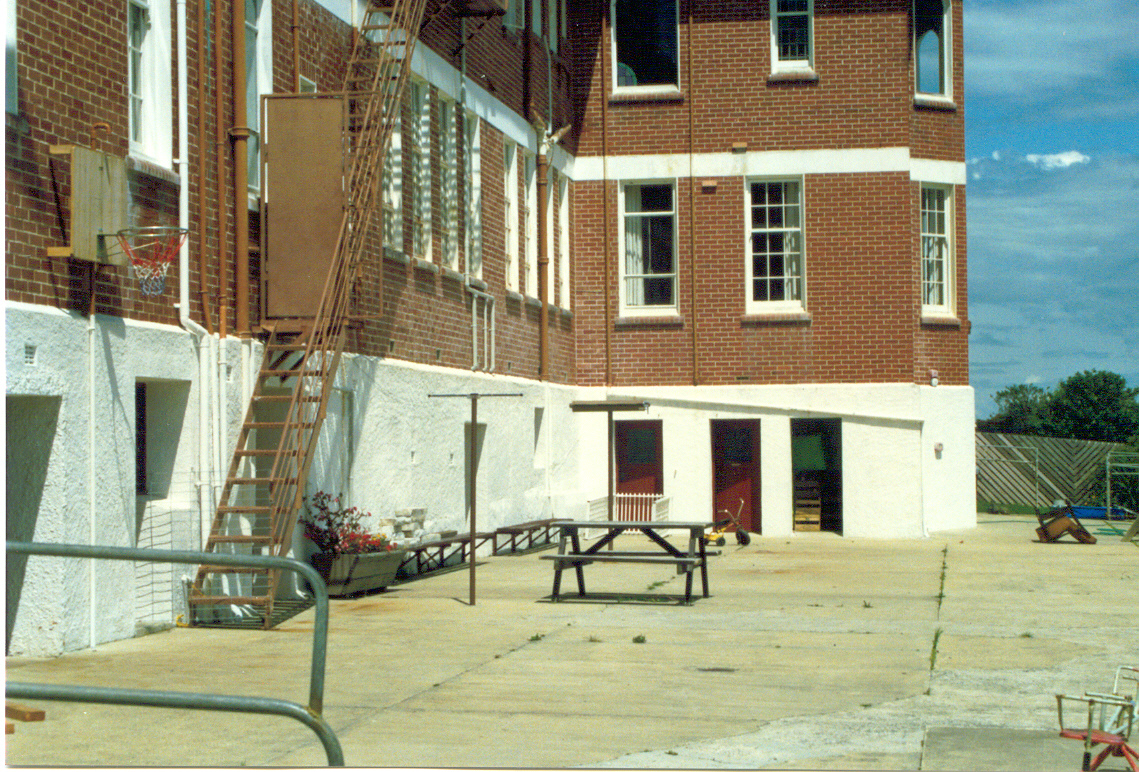
It was a strange feeling, going back there all these years later. My heart pounded wildly, seemingly out of any rhythm, and I felt hot even though it was a chilly Dunedin day. The first building I came across was the drab concrete steep-roofed, edifice that was St Philomena’s Dormitory. ‘Charles Dickens!’ I thought. Rust stains streaked down from the eroding exterior fire escape. Windows always played a significant part in my memories and I immediately recognised those tall, narrow sashes. But I just couldn’t reconcile in my mind how small that building was now, compared to my memories of it. When I used to run in and out of the dormitory, it seemed a massive structure, housing dozens of ‘big’ girls in school uniform and ubiquitous nuns in black and white habits. It was I remembered, a dormitory for older girls, mostly boarders, when I had been there.

I was deep in my thoughts when I spied a small nun dressed in a knee-length black habit, with a white-trimmed black headscarf partially covering her hair. Her modern but matronly mode of dress was not that of the nuns present during my incarceration there, that was for sure. The nun’s head was bowed as she walked around the perimeter of old St Philomena’s and I assumed that her constantly moving lips were chanting prayers as she fingered the rosary beads clasped in her hands.

As I summoned up the courage to do what I knew I had to, my eyes turned again to look at the disused building’s small windows, which were boarded up with yellowing ply, adding intensity to their derelict state.  It was like looking at a familiar face, but with its eyes poked out. I took in my surrounds: rusty corrugated iron, stained concrete, wire netting and high walls. It was like a deserted prison camp. I wondered how a once noisy and busy place could now be so devoid of life. In some ways I felt a little sad because it was a childhood home of sorts. My eyes scanned the yard for the moving nun, the environment heightening my feeling of lonely disquiet, like I had suddenly arrived at the end of the world, with only this nun and myself in existence.

As the nun gradually moved closer, I approached her and asked quietly if I could see inside St Philomena’s.

‘I used to live there when I was a child,’ I said. I waited for the rebuke, but she just motioned for me to walk with her as she continued her conversation with her God. Is she annoyed with my interruption? I wondered, child-like. After a few minutes she looked up at me with a patient look in her eyes.

‘Tell me your name’ she instructed softly. She bowed her head again, this time slightly over to the side I was walking on, a gesture that implied she was ready to listen.

‘Anne Coory’, I replied with inculcated reverence, scared stiff she may hate the name as much as I did.

Expecting her to ask for more information, I quickly went over the prepared details in my mind, nearly missing her almost whispered offering that her name was Sister Joanna and that she knew of my brothers and me. With all the children who passed through this place, what was it about the Coory children’s time there, that a young nun, over forty years later, would know of them at the mere mention of the name?

After a few moments of silence Sister Joanna, in a brighter voice, offered to show me around the other buildings, explaining that we couldn’t enter the dormitory itself as it was structurally unsafe. I began to feel more relaxed and comforted by Sister Joanna’s warming demeanour. This was the first time I had ever been able to have a conversation with a nun as an equal, woman to woman, and somehow this empowered me. The childish awe and reverence had been replaced with calm. I felt the unspoken acknowledgment of my troubled spirit quell my anxiety. Even childhood anxieties about the orphanage and nuns in general melted away as I walked and talked with Sister Joanna. As we rounded the corner of a red brick and wooden building my subdued heart leapt into a frenzy again. I stopped in my tracks. I had instantly recognised St Agnes’ Nursery, with its familiar row of wooden windows, three panes in each.

St Agnes' Nursery

St Agnes’ Nursery (image: AFCoory)

four nuns 001

Nursery supervisor Sister Christopher far right. The other three nuns are her biological sisters. (image: Sister Joanna)

**********************************************

My first orphanage home at St Agnes’ Nursery was for babies and toddlers, while the adjacent St Vincent’s housed the older children. The building was of similar construction to St Agnes’ although much larger. Because the children were separated by gender at five years of age, the inmates at St Vincent’s were mostly girls and a handful of boys under five. There were two other buildings in the Mercy complex, which stretched out to the east and behind the Basilica. Orphanages and boarding schools were always built in close proximity to Catholic churches so that daily visits to Mass and prayer were expedient in order to save souls.

**********************************************

Mercy Complex

Mercy Convent (image: Sister Joanna)

Behind the Basilica was the attractive and quite modern looking convent, also built of brick and concrete with a white trim. It was built in December 1901 to replace the old wooden cottage which the Sisters of Mercy occupied when they first arrived in Dunedin on 17 January 1897, a few months before my paternal grandparents Jacob and Eva Coory migrated to New Zealand from Lebanon. The nuns were very proud of their new convent, and it served them well over many years. New additions were added in1945. Those of us who lived permanently within the Mercy complex, devoid of television, radio, and non-Catholic perspectives, were totally institutionalised.

St Joseph's Cathedral & St Dominic's College blog 2

St Joseph’s Cathedral with St Dominic’s Boarding College on the right, at the top of Rattray Street in Dunedin (image: AFCoory)

[When I was nine years old, my father sent me to St Dominics Boarding College]

I told Sister Joanna  I had discovered, years later, that the cost of sending me to St Dominic’s was far greater than keeping me here at the orphanage, and that my father was concerned that he couldn’t afford the expense on top of the Sunday Pledge. I overheard my father talking to his Coory extended family (The Family) about it one day, although I can’t recall the conversation in detail. It was clear The Family were not about to assist, financially or otherwise.

Sister Joanna surmised that The Family may have been embarrassed by the fact that a close relative was living at an orphanage for the poor, when their station in life had improved remarkably in recent years.

‘Lebanese families had become very strong within the congregation of the cathedral,’ she told me. The cathedral was adjacent to St Dominic’s College, where many Lebanese daughters attended day classes. ‘Also,’ continued Sister Joanna, ‘at that time Middle Eastern Catholic priests, including those from Lebanon, had begun to train for holy orders in the seminary in Dunedin and were often consigned to duties at the cathedral. And of course the cathedral would have profited greatly from the Lebanese community’s generous financial contributions.’

St Vincent's

View of the kitchen double doors leading into St Vincent’s kitchen and dining room. On the left of the picture is the tree in which the mother cat and her kittens were hiding. (image: AFCoory)

My father’s childhood malnourishment caused him to insist Sister Christopher buy the best food for my brothers and me. It was something he was quite obsessive about. We were also to be given daily doses of malt and Lane’s Emulsion, which he supplied. Never-the-less, I still managed to contract scarlet fever, asthma, and ringworm. Anguish was the underlying cause of many of my father’s actions and, I am sure, some of his own ill-health. He harboured a deep resentment toward his extended family over their refusal to care for us while he worked long, hard hours. My father was a simple, uneducated man, but he wasn’t stupid. He could see the injustice and often lamented, when I was a child, that The Family never treated his children the way they treated our cousins. My father had other valid reasons for not speaking to particular members of his family. I didn’t know then of The Family’s history and I didn’t always understand what he was saying. I had no idea that most children lived completely different lives from me and the other children at the orphanage.

Sister Joanna showed much empathy and understanding of the distress I still felt when speaking about my parents. She took my sadness to heart, the fact I never knew my mother intimately and that she and I were prevented from seeing each other. She knew of my mother’s bipolar disorder and that she had spent much of her life in Porirua Mental Hospital, as it was then called. I think my pain was evident when I spoke of the way the Coory family had constantly demonised my mother, calling her a  sharmuta (Aramaic word for prostitute). I explained to Sister Joanna that, during all of my research into my mother’s life, there was never anything to suggest that my mother was a prostitute.  She did turn to men for love and affection because her own family had rejected her and the Coory family never accepted her. I believe that what went on in Carroll Street when my mother lived there was responsible for the initial severe manifestation of her disorder. She had never known such extremes until that part of her life.  I believe that my mother was the scapegoat for all the ills of The Family until she left and I took over the role, much as one takes over a heredity title.

  • Read more here in the memoir Whatever Happened To Ishtar? – A Passionate Quest by Anne Frandi-Coory to find answers for generations of defeated mothers, including her own.

Joseph and Doreen

Anne Frandi-Coory’s parents Joseph and Doreen

Kevin blog 1

Kevin

1873-1915

Anne and Anthony

The Maronites in History

by Matti Moosa

*************************************

The Maronites in History

**************************************************************************************************************

I bought this very expensive book because I have always been interested in the Maronite religion of my Lebanese Grandparents, Jacob and Eva Coory. They were born and raised in the small village of Bcharre where the Maronite religion appears to have gained a strong footing around the 6th Century. There are very few books written about Lebanon’s  Maronites but I believe I have found a well written and well researched one in Moosa’s original Syracuse University Press publication The Maronites in History. Various essays on this subject can be found on many websites, but I found them to be emotive and with little basis in fact. Certainly no source documents were quoted, and most were based on hearsay passed down through generations. Still more were so badly written, it was difficult to follow the writer’s line of thought.

Matti Moosa opens the Preface of his book The Maronites in History with a question: Who are the Maronites and what is their importance to the existence of the Lebanese Republic?  This is a very good question, because so much folklore has been added to fact that it’s very difficult to know for certain. However, the author has embarked on a marathon investigation after being awarded a scholarship. He has extensively studied source documents housed in the Vatican Library as well as written testimonies from writers who lived in Lebanon from the 5th Century onwards.

The author states: In essence this book is a study and analysis of the origin of the Maronites , indeed of their whole historical heritage, an examination based on ancient and modern sources written in many languages, many of which are still in manuscript form.

Moosa goes on to explain in the preface: This book attempts to place the history of the Maronites in historical perspective. Maronites today suffer from a serious identity problem. They haven’t been able to decide whether or not they are descendants of an ancient people called the Marada  (Mardaites) or Arabs or of Syriac-Aramaic stock. Unless the Maronites solve this identity problem their conflicts with other minority religious groups in Lebanon will never be remedied. 

 Essentially, historical documents show that the Maronites originally professed the faith of Monophysitism, and later through edicts and threats of death or exile by various religious and state rulers, changed their beliefs to Monothelitism, both considered heretical by the Roman Catholic Church. Monothelitism though, is close to Catholic doctrine, so it appears the Church in Rome turned a blind eye to this heresy by Maronites for various strategic reasons which Moosa discusses at length in The Maronites. [My emphasis]

There are even disputes among Maronites and scholars over the origin of the name Maronite. The Maronite’s beloved monk St Marun and a later patriarch John Marun, have question marks over their actual existence. There is nothing in available ancient sources to indicate the name and location of the place where the ascetic Marun lived. However, the author concedes, one might be tempted, upon reading Theodoret of Cyrus, to conclude that a certain Marun lived in the vicinity of Cyrus in what was then known as Syria Prima, many miles to the north-east of Antioch. The failure to positively identify this place has caused much speculation by Maronites  as to its whereabouts. The Maronite Bishop Pierre Dib states that Marun lived on top of a mountain near Apamea  in Syria Secunda, an area far distant from Cyrus. Others claim that Marun lived in a cave near the source of the river Orontes (al-Asi) close to the Hirmil in Lebanon; they cite as evidence the name of the cave known until this day as the cave of Marun.  Other Bishops and writers state with the same certainty various other places in which the cave of Marun may have been situated.  Maronites and others cannot even agree on where or when a monastery of Marun was built but we may conclude that in Syria toward the end of the 6th or early 7th Century there existed more than one monastery bearing the name of Marun. One of them was located in or near Hama and Shayzar. It gained some notoriety in the early 7th Century when it adopted Monothelitism. The abbot of this monastery was named Yuhanna (John) and he became a Monothelite with many followers in Syria leading to the slow spread of Monothelitism into Lebanon. Those who followed him were called Maronites. Whether this monastery had any connection with the fifth century ascetic Marun is doubtful.
***************************************************

Mar-maroun-4

******************************************************

Efforts to date the Monastery of Marun from the 5th Century are sheer speculation. However, we have three documents which refer to a Monastery of Marun in Syria Secunda and all three documents attest that the monastery of Marun related to the doctrine of Monothelitism.

Commemorated on July 31st each year by the Maronite Church is the mythical massacre of 350 monks, ‘martyrs and disciples’ of the ascetic Marun. They were believed to have been slaughtered but this atrocity lacks strong historical substantiation. In fact there is no evidence that these were monks from the monastery of Marun.  Indeed, there is no mention of this in any pope’s correspondence of the times, nor is it mentioned in any Vatican or Church official documents.

There is no evidence that the Maronite Church ever commemorated these ‘martyrs’ before the year 1744. Even the Maronite Council assembled in Lebanon in 1736, which among other matters instituted the festivals and commemoration days for Maronite saints, did not list a commemoration day for these ‘martyrs’.

It is the author’s judgment following extensive research that the Maronites were and are closely linked to Syrian Orthodoxy. Probably for largely political reasons and the Roman Catholic Church’s need to gain a foothold in the Middle East, it overlooked the Maronite’s heretical interpretation of the Council of Chalcedon’s strict canons. [My emphasis]

In the Vatican’s push to gain a foothold in the Middle East, it allowed the Maronites to maintain their traditional patriarchs as head of their Church in Lebanon as they had done since the middle of the 8th Century. But in reality Rome considered them less than a Catholic bishop in status. It appears that only in the 8th Century did ancient church writers refer to the Maronites as a distinct Christian sect. [My emphasis]

Fortified for many generations in their mountain of Lebanon, the Maronites could claim more independence in their ecclesiastical affairs and therefore were and still are in a much more favourable position to revive their Syriac tradition and language. But instead of encouraging the Maronites to retain and cherish their Syriac heritage and revive the Syriac language  in order to become once more the lingua franca of the Maronite people the Latin missionaries (sent by Rome) discouraged the use of this language and denigrated the Syriac heritage and added more woe to the state of the already Arabised Maronites by Latinisng their Church and eventually their prayer books. The Maronites thus almost completely lost their Syriac identity. Since the 16th Century instead of taking pride in their Syriac legacy, the Maronites,in their desperation to find a legitimate origin of their Church and people have claimed that they were the descendants of  Marada (Mardaites) which is historically groundless.

Like the Nestorians the Rum (Byzantine) Orthodox, and the Syrian Orthodox People, the Maronites are of Syriac-Aramaic origin. The Lebanese Council of 1736 emphasised the use of the Syriac language first and Arabic second in the Maronite Church services. But this emphasis was not intended nor did it contribute to the revival of the Syriac language as the national symbol of the Church. Perhaps if the Lebanese Council’s recommendations had been followed, Lebanon may not be suffering the loss of identity it’s suffering from today. The least one can say for certainty is that the names of the villages and towns of Lebanon, especially Bcharre and three neighbouring villages, used the Syriac-Aramaic language as their lingua franca.

At the end of the 16th Century Maronite Patriarchs have often interfered in Lebanon’s political affairs in the belief that they were more than just the head of their Church. This has often exacerbated sectarian rivalries.

Many Maronites maintain vigorously that they have always adhered to the faith of Chalcedon and that their Church has never deviated therefrom; they were always united with the Church of Rome.

Moosa’s  research uncovers documents that clearly refute this argument. It indicates that until the 16th century the Maronites did not separate clearly and decisively from the mother Syrian Orthodox church in its beliefs, rituals and traditions. In fact, according to the calendar of festivals of the Maronite Church, whether in manuscript form or published in Rome since the 16th Century, it shares certain commemorative dates with the Syrian Orthodox Church.

Monophysitism: One incarnate nature of the divine logos – a doctrine which the Syrian Orthodox Church of Antioch has maintained to the present day and which ancient Maronite Syriac-Aramaic ritual and prayer books prove was also the doctrine held by the early Maronites.

Monthelitism: The Incarnation of two natures of Christ, the divine and the human, were united in one will and one energy – Until the late 16th Century Maronite ritual books contained this doctrine, at which time they were ‘purged’ by missionaries from the Roman Catholic Church to restore the Maronites to its fold. 

Catholicism (Chalcedonian): The Incarnation of the two natures of  Christ, the divine and the human, were united in one person yet  remained distinct after the union

Orthodox liturgies, prayer books and prayers themselves also caused friction between the Church of Rome and the Syrian Orthodox Church, which Moosa writes about in detail.

 Moosa sums up:

Several conclusions may be deduced from the foregoing opinions and speculations. The evidence addressed by Maronites and those who support their claims that there existed in the 5th Century in Syria Secunda a Monastery of Marun whose monks were Chalcedonians [followers of Catholicism] is untenable. Maronites (and others) cannot even agree who built the monastery of Marun or its exact location. Most of the evidence they do produce has no historical foundation. Historical fact does indicate , however, that there were several monasteries named Marun in Syria, but not that they were named after the particular ascetic Marun. More important, available evidence does not support that there was a Maronite community in Syria before the 7th or even 8th Century. While historical evidence does support the thesis that the pious anchorite named Marun lived, died, and was buried in the district of Cyrus in northern Syria, there is nothing to indicate that this Marun ever founded a religious community or inspired the name Maronite. Further, there is no evidence that he or his followers ever built a monastery in his name. Those Maronites who describe their ascetic Marun as ‘the Father of the Maronite Nation’ do so from the totally sentimental predisposition rather than assert it as a claim derived from objective fact.

Doctrines found in ancient books reveal that Maronites were of the Syrian Orthodox faith who believed in the Monophysite doctrine before they became a distinct community:

From the time of the Council of the Chalcedon in 451 to the first half of the 7th Century the first Maronites –the monks of the Monastery of Marun – became Monothelites by imposition of Emperor Heraclius. The statement is clear and positive on the point that these Maronite monks had been Monophysites (Syrian Orthodox), and though the heated controversy over the mode of the union of the two natures of Christ was finally thought to have been resolved by the Council of Chalcedon, the monks of the Monastery of Marun were recalcitrant in accepting the Council’s transactions. This recalcitrance was exhibited in anger and defiance on the part of these Monophysite monks who, like the majority of the Church in Syria, renounced the Council of Chalcedon and the definition of the faith. They remained Monophysites until the beginning of the 7th Century when they became Monothelites under the Chalcedonian formula of faith imposed on them by Emperor Heraclius in the interests of religious harmony. Though appearing to accept this faith through coercion the monks remained faithful to their Monophysite faith, which they kept intact in their ritual books. Subsequently the new creed of Monothelitism did not separate them drastically from the bulk of the Syrian Orthodox Monophysites. The point of separation was their apparent acceptance of the Council of Chalcedon under imposition of imperial power. It is through this acceptance of Chalcedon and of Monothelitism  as a doctrine that they became a distinct religious group in the middle of the 8th Century and not before.

This is a mammoth scholarly work by Matti Moosa with full bibliography and notes.

Arab, Byzantine, Ottoman and French states all played their part in the formation and divisions of Lebanon as we know it today. You will have to read this impressive work to fully comprehend 21st Century Lebanon. I can assure you, it is riveting reading. Moosa separates Maronite historical fact from fiction in a format and style that is very easy to read and follow, even allowing for the few minor grammatical and typographical errors.

© To Anne Frandi-Coory All Rights Reserved. Follow my blog: frandi.blog


Eleven *****  Book Reviews for  …

WHATEVER HAPPENED TO ISHTAR? – A Passionate Quest To Find Answers For Generations of Defeated Mothers

ishtar-front-cover

ishtar rear cover

1st edition front and rear cover 2010

More Information about updated 4th edition (2020) of ‘Whatever Happened To Ishtar?’  CLICK HERE: 

************************************************

13532888_1872936609398092_8979311431005462309_n

Bella Albert

This is an old photo of my precious Bellaboo, holding our copy of a book written by my great aunty, Anne Frandi-Coory, about our italian family;
-I’m honoured to hear from my psychologist and good friend Brett, who has told me he purchased a copy and had received it and is currently reading it; it really warms my heart to know this.
P.S aunty Anne -Brett says you write really well and is very impressed xx Michael Albert. – 2019

Michael Albert

Michael Albert, Bella’s father

Thank you, Michael …that is good to hear. Your psychologist will understand you better after reading my book, ‘Whatever happened To Ishtar?’ The ripples in the generational pond have spread far and wide…❤️💜🧡 I hope to meet you and Bella one day; such a beautiful girl.

*********************

This review originally posted here on AMAZON BOOKS 28 March 2017

New Zealand’s Elena Ferrante?…

I don’t write many book reviews, I don’t usually have the time,  but I felt compelled to write this one. I’ve read both of Anne Frandi-Coory’s books; her memoir Whatever Happened To Ishtar? (2010) and her latest publication Dragons, Deserts and Dreams (2016) and it seems to me both are the kinds of books that you keep in order to read again and again. I also follow her book reviews on Facebook closely because she reads the genres I enjoy and she writes great, honest  book reviews.

The honesty with which Anne Frandi-Coory has written her memoir makes me think of her as New Zealand’s Elena Ferrante. The author is a virtual recluse who writes about her childhood living in Catholic institutions and whose existence is violently shaken up periodically when she is taken by her father into his Lebanese immigrant family’s household not far from the institutions she has lived in for most of her formative years. There she endures what she calls the hypocrisy and brutality the women of the household direct toward her and her absent Italian mother who has long since been banished from the home of her in-laws.  The reasons are complex and include the sexual harassment of the author’s mother, an innocent ex Catholic nun. Frandi-Coory’s story is set in a slightly later era than Ferrante’s and dolls eerily feature in her childhood as well. I felt the need to check Frandi-Coory’s book reviews to ascertain whether she had been influenced at all by the Italian author in any way.  Yes, she had reviewed the Neapolitan Quartet Novels by Ferrante, but she had only read and reviewed those books in 2016 six years after she wrote her memoir.  I am amazed at the similarities in writing style as well as in the content and minutiae of the lives of mothers and daughters, even allowing for the authors living on opposite ends of the world. I suppose at the end of the day, women’s lot is universal.

Frandi-Coory embarks on years of research into the lives of her mother and Italian extended family which she was never permitted to have contact with even though the Coory family didn’t want her living with them after her father’s marriage to her mother broke down when she was an infant. She finds that many women in both the Lebanese and Italian extended families lived in patriarchal cultures reinforced by devotion to the beliefs of the Roman Catholic Church. Too many children, brutal husbands and a blind faith in a god who never seemed to answer any of their prayers.

I wonder if these families had not left their home countries to settle in such a raw and young country as New Zealand would their lives ever have come under such scrutiny?  As another reviewer of Frandi-Coory’s memoir stated, this is a mammoth book and well worth reading. I also recommend the author’s latest book which, although it contains short stories and poems as well as some of her artworks, cleverly connects the reader to many of the topics she writes about in her memoir.

-Zita Barna, Australia.  28 March 2017

                   *****************************************************

Hi Anne, I expect you are thinking what on earth I am on about when I said I would e mail you.

Rita Roberts 2

Rita Roberts-Archaeologist

Well, I watched a film called  ‘Not Without My Daughter’.  For some reason it made me think about your book  ‘Whatever Happened to Ishtar?’  documenting your traumatic childhood and I had to begin reading it again, because this film helped me understand my confusion with regard to your extended family. I honestly don’t know how you coped with all that hassle You were so brave and I admire you tremendously. I am also so pleased you have Paul and your lovely children making your life now happy. If you haven’t already seen this film you can see it on U tube, and it is a true story. Take care, Rita Roberts (Crete)

******************************************************

 images

*Anne Frandi-Coory’s reply to Rita Roberts  30 November 2016:

Dear Rita

I finally located a copy of the dvd ‘Not Without My Daughter’ (1990) starring Sally Field. Thank you for recommending it to me. I can see why the Iranian family in the movie reminded you of my immigrant Lebanese family that I wrote about in my memoir ‘Whatever Happened To Ishtar?’ and why it gave you a better insight into what my childhood, and my mother’s life,  must have been like.

The movie brought so much of my childhood flooding back to me. First of all, the women wearing black burqas evoked images of the nuns in the Catholic Mercy orphanage where I spent my infancy and early childhood. I always get a strong visceral reaction whenever I see women dressed like this, or nuns in black habits, and not because the Mercy nuns were especially cruel; in fact the sister who ran the orphanage nursery was very kind to me. But because I was traumatised by being abandoned at the nursery by my mother, I always feel the same distress all these years later.

The hateful looks directed at the American mother, by the Iranian women in the movie also reminded me of my aunts. My paternal Lebanese family, (grandparents and their 11 children),  all lived, and later,  often visited,  in the same three storey house, so that whenever my father took me to visit his family, I not only had one or two adults abusing or yelling and screaming at me, there were several, all at once. My father rarely intervened, and he was born in that Dunedin house, living there most of his life along with his brother and unmarried sister.  A couple of times I sat on my father’s knee when I was a little girl, and the look my aunts gave me frightened me so much, I never hugged him, or sat on his knee ever again! They didn’t like me or my Italian mother, and I can only imagine what it was like for her, living with them all. Of course, you will remember that my mother’s severe bipolar disorder took hold while she lived with her in-laws, after she married my father. The family screamed abuse at me often, and reminded me every other day that my mother was a ‘sharmuta’ (prostitute) because she had an illegitimate son, and her Italian culture was also demonised. The family’s racism was something I remember vividly.

My aunts often attacked me in the streets of Dunedin if they thought my clothing was in any way ‘revealing’; once when I was a teenager, two of my aunts attacked me because I was wearing a dress with a skirt that fell below my knees, had a high neckline, but the long sleeves were made of a see-through flimsy fabric. They were so enraged they almost ripped the sleeves off my arms. In the end, I was afraid to walk down the street in case I met them and all I could think of was moving to another New Zealand city to escape them, which I eventually did.

While my father’s family weren’t Muslim like the family in the movie, they brought their very strict Catholic Maronite religion and culture with them. They went to church every Sunday and often during the week. My grandmother, Eva Arida, had an altar in her bedroom dedicated to the Virgin Mary with a lighted candle 24/7. She prayed constantly from a little Aramaic prayer book and was habitually fingering rosary beads. My grandfather, Jacob Fahkrey, of devout priestly lineage, prayed aloud early every morning while walking around the rear yard of the family home. I can honestly say that it was the women of the family who were the most physically and verbally brutal.
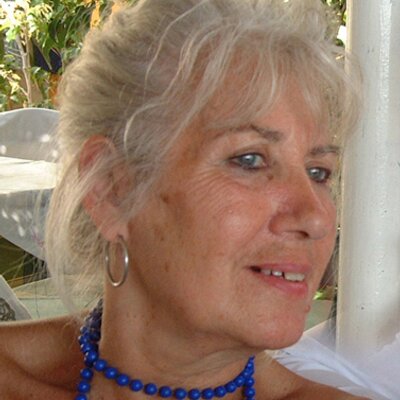
I did a bit more research into the true story behind the movie and book Not Without My Daughter, and that was also very interesting. The little American girl who so loved her Iranian father when they lived in the USA, had such a traumatic experience living with her father’s family in Iran, that she refused to ever see him again after she and her mother barely managed to escape to the States. Her father eventually travelled to Finland, a neutral country, with a documentary team hoping to film a reunion with his adult daughter, but she declined.   

****************************************************************

Another 5***** Book Review by Linnea Tanner…

Whatever Happened To Ishtar?  by Anne Frandi-Coory is a well-written and haunting memoir of a woman who finds herself by exploring her family’s heritage that contributed to her growing up without the love and nurture of a mother she most desperately wanted. What first attracted me to this book was the title, Whatever Happened To Ishtar?. She is the Ancient Sumerian Mother Goddess who celebrates love, fertility, and sexuality. This title haunted me as I read the memoir because Anne’s mother, like many woman of her generation and previous generations, was harshly judged for her sexuality and had limited options to treat her mental illness and to fulfill her potential. The first part of the memoir is Anne’s account of her childhood while the second part provides a historical account of her Lebanese (father’s side) and Italian heritage (mother’s side).

Anne was institutionalized at the Mercy Orphanage of the Poor at South Dunedin in her early childhood. At the time, her father could not adequately care for Anne after he divorced her mother for infidelity. At the age of eight, Anne was removed from the orphanage and introduced to the real world under the care of her father’s family. However, they shamed Anne and associated her with her mentally ill mother they considered a whore. This part of the memoir is gut-wrenching and haunting because Anne had to overcome loneliness and self-doubt to find her full potential after marrying, having four children, and finding her life partner after a divorce.

However, what is most fascinating is the rich heritage and ancestral genealogy of both her father and mother to understand what nineteenth century immigrants to Australia faced. With no access to birth control, women faced multiple pregnancies or secretly resorted to self-induced abortions with crude knitting needles. The historical accounts that Anne researched help explain why her father and her mother were compelled to make their choices. I recommend this memoir because the story will stay in your memory as it covers universal issues of female sexuality, women’s roles and options, mental illness, and society’s harsh judgment that has defeated mothers for generations.

-Linnea Tanner 25 April 2016

Linnea Tanner

Linnea Tanner

****************************************************************

Book Review by FLAXROOTS  14 July 2015

Whatever Happened To Ishtar?  by author Anne Frandi-Coory

Anne.

Anne Frandi-Coory –  7 years old

This book is a memoir of the life of Anne Frandi-Coory the daughter of an Italian mother and a Lebanese father.

Having spent a childhood, peppered with abuse and harassment, between a Dunedin orphanage for the poor and her father’s Lebanese family Anne was regarded as a backward child. She describes the panic she felt as a toddler as her father departed after one of his visits, and goes on to relate episodes from her strict upbringing in the orphanage where she was segregated from her two brothers once the boys turned five years old. Memory of the order of happenings in her early life is sketchy and this is aptly conveyed in her narrative.

She was not well received by her father’s family though she lived with her father at his family’s house intermittently, but never feeling at ease there and alleging various kinds of abuse.
Married in her teens Anne gave birth to four children and devoted herself to nurturing them during which time her marriage failed and she struggled to avoid a mental breakdown.

Later in life Anne devoted herself to researching the Lebanese history of her father’s family and the Italian forebears on her mother’s side, hoping to understand her relationship with her Italian mother who was shunned by Anne’s father’s family and who couldn’t look after her children except for very short periods.
The account of the arrival of the Frandi family as assisted immigrants to New Zealand in 1876, as opposed to those arriving in a self funding capacity, makes interesting reading.
The poems and quotations at the beginning of each chapter have obviously been chosen with care and sensitivity and give an added dimension to the book. The same can be said for the inclusion of family photographs mostly lent by other family members. There is a certain poignancy here as Anne had few, if any, family photos while she was growing up; thus emphasising what she refers to as ‘her paper-thin sense of identity’
There is a freshness about the author’s style and she succeeds in conveying emotion about the lack of emotion and caring shown to her in her formative years.

Having, as a child, lived in fear of dire consequences if she didn’t follow strict rules and try to emulate the saints she may have developed the discipline to achieve a good education which, no doubt, helped in her later endeavours to track her forebears and learn the history of their migration to New Zealand.
The bibliography includes useful references and illuminates the paths she travelled.

With regard to the publication the title is apt and the cover is eye-catching. The paper edition is perfect bound but the biggest drawback is the lack of an adequate gutter making the book difficult to hold open for any length of time. There are three very minor identical grammatical inconsistencies plus an odd discrepancy about two rivers.

The author is to be congratulated on her enterprise in producing a valuable resource for her family and an interesting and instructive read for the rest of us.

It seems Ishtar has risen from the ashes!

***********************************************

WHATEVER HAPPENED TO ISHTAR? by Anne Frandi-Coory – Book Review by Pauline Csuba published in issue no. 387 The Australian Writer March 2015

Anne Marie Coory 1958

Anne Frandi-Coory – 10 years old

Haunted by her mother’s restless spirit filtering through every thought and dream, this book was written not only for the appeasement of her mother but for her children and grandchildren.  Anne Frandi-Coory has embarked on a journey of genealogy taking on a rich history, research, and unpleasant memories.

Distressed at the hands of her Lebanese father’s extended family and The Mercy orphanage for the poor – this story of lost generations, abandonment, abuse and gross neglect by those who should have known better – is a story of a personal account and the connection with the Catholic Church and its institutions. Brutality, emotional deprivation and lack of nurturing all culminated in a dark side of two families unable to communicate with one another. With the history of these Lebanese and Italian families and how they settled in New Zealand, this makes for an interesting read.

It is a mammoth book and I felt by removing some areas of repetitions may have freed the flow of emotion that could allow the reader to connect much sooner with the powerful experience being shared. I congratulate Anne for taking on this traumatic journey of her past and the long process of research, writing and editing of her work. It is wonderful to see she now has a loving partner and family who have supported her in this passionate quest. I recommend this book to those who are or have embarked on a similar journey.

-Pauline Csuba

 ************************************************

WHATEVER HAPPENED TO ISHTAR? by Anne Frandi-Coory – 5 star

https://www.goodreads.com/review/show/1165480328

When I started reading this book, I expected to finish it quite quick but in truth, it took time to digest the words and their significance. It is a journey, both biographical and autobiographical in approach. The author seeks to find her place not only in society but who she is. This is an extraordinary search which uncovers the history of her maternal and paternal lineage.

What is revealed is both heart-rending and powerful, a personal narrative. Ms. Frandi-Coory’s pursuit as to why her mother abandoned her while a baby is a difficult journey of self-discovery. How could a mother leave her children is the driving question behind the author’s plight. That, and trying to understand who she is and to identify with the family nexus and her place within it.

Her father, ill equipped mentally and economically to rear his daughter and son, placed them in an orphanage run by catholic nuns. It was not a pleasant time for either and the author gives vivid descriptions of her time incarcerated. Her father’s family weren’t the most pleasant people, abusive both verbally and physically. Why? Her mother was considered a harlot and mentally unstable, therefore she was of the same ilk. The cultural mix of Italian and Lebanese blood, the author is driven to learn more about both sides of the family and why they behaved in such a contrary manner.

I admire Ms. Frandi-Coory for writing this book. She revealed secrets most families would prefer to remain hidden to detriment of those who were and are victims. This is a brave expository, which shows the cycles of abuse can be stopped with determination and strength of character.

-Luciana Cavallaro 11 January 2015

serpent 3

Luciana Cavallaro

More About Luciana Cavallaro here: https://www.amazon.com/Luciana-Cavallaro/e/B009QHIKN2

**************************************************************

Gerald Gentz

Gerald Gentz

WHATEVER HAPPENED TO ISHTAR? by Anne Frandi-Coory – AMAZON BOOK REVIEW by Gerald Gentz USA 30 December 2014   

*4th Edition (pub. 2020) Whatever Happened To Ishtar? now available here at Amazon in paperback and Kindle ebook 

‘Whatever Happened To Ishtar?’ is more than a book and more than a story. It is the telling of a remarkable journey of discovery of one person’s difficult life. Anne Frandi-Coory spent much of her life trying to find a place and the love of a family. Book ended between a caring but weak father and mentally ill mother unable to care for her financially or emotionally, Anne and her brother, Kevin, suffered childhoods that no child deserves to experience. In the end, even the scars would not prevent them from making stable and successful lives.

Anne’s long research into both the paternal and maternal sides of her family is remarkable for it’s depth and acceptance. In doing so, she exposed her demons and the dysfunctions of her maternal and paternal families. The result is a culmination of her difficult journey to understand herself. Her greatest victory is her coming to understand the love of her mother and the realization of her love for her mother. Anne’s was a journey of discovery and healing.

This can be a difficult book to read at times because of the emotions it elicits. It was particularly emotional for me because of my realization that Anne is actually my cousin that I was not aware I had, her mother being my mother’s older sister. Anne’s book gave me a deeper awareness of my maternal family, and thus my mother, than I had before. So Anne Frandi-Coory’s journey of discovery was also mine in 373 pages.

Gerald Gentz

***********************************************

WHATEVER HAPPENED TO ISHTAR? by Anne Frandi-Coory – 5 star *****GOODREADS BOOK REVIEW by Susan Tarr 

https://www.goodreads.com/book/show/11168865-whatever-happened-to-ishtar

“WHATEVER HAPPENED TO ISHTAR? By Anne Frandi-Coory is a remarkable portrayal of New Zealand’s earlier Lebanese and Italian Catholic families. Although I was raised in the various vicinities this book covers, I had no idea there were established Lebanese families in New Zealand. And, for me, the whole Catholic religion was shrouded in mystique, so I had very little understanding of what was involved in being a part of the Catholic faith.

Set in New Zealand, the spartan buildings of the Catholic St Vincent’s orphanage mirrored in some part those of Seacliff Mental Asylum (Otago, NZ) in both outlook and care of those in their charge. Both would seem to have lacked a close affection for those who needed it most: the vulnerable and unloved.

This work is an amazing testimony for all mothers, a testimony we can probably all relate to. How many times do we feel inadequate, or feel we could have done better? We should never have such constraints placed on us as a mother to feel either of these. Whatever a mother is capable of at that time, for her child, is sufficient for that time.

As Frandi-Coory bears out, it is always possible to break mindsets, or break the mould, as it is said. I.e. the sins of the father… All it takes is an invincible will, which clearly she had and has.

Frandi-Coory recounts the histories of both her Lebanese and Italian families. She explains how the various mindsets occurred and how they were passed down through the generations.

I found I kept referring to the photographs as I formed opinions on the various players in this tapestry of life.

What is astonishing here, is that Anne Frandi-Coory and I never made a connection until after our respective books were published, in separate countries. It was through reading each others work that we realised our lives were very closely linked. In fact we may well have known each other through a mutual friend (Italian) during our college years in Dunedin, NZ. That is why I can vouch for the events, scenery, time frames and cultures in this amazing work.

It’s absolutely raw in its honesty.

Very well written, it’s a compelling read, from start to finish.

Kudos to Anne Frandi-Coory.

-Susan Tarr 14 October 2014

Susan Tarr

Susan Tarr

More about Susan Tarr here:http://www.amazon.com/Susan-Tarr/e/B00I0I3M9U

************************************************

MOMO Photo ABC ‘Let’s Read’…

 I am a member of a photo group where we get a prompt for every day and have to take an appropriate picture. Because we had the alphabet one month, I decided to do a book theme. I always added either the link to my blog or to the books. I have decided to post a picture every week so my booky friends can enjoy them, as well.
A is for … Autobiography.  Two biographies by some very strong women:

Anne Frandi-Coory  Whatever Happened To Ishtar? 
Immaculée Ilibagiza  Left to Tell: Discovering God Amidst the Rwandan Holocaust
 ><><><><

Momo 2014

 ************************************************

‘Whatever Happened To Ishtar?’ is

“An amazing journey – challenging, painful, and ultimately unforgettable”  – Tanith Jane McNabb, Owner of Tan’s Bookshop Marlborough NZ, 27 October 2014 on

************************************************

See here

*MORE reviews for Whatever Happened To Ishtar? 

Whatever Happened to Ishtar_cover 2020

You can buy the updated 4th Edition (pub. 2020) in paperback & Kindle e book 

here at AMAZON

And Here from AbeBooks 

BOOK REVIEW –

Susan Tarr


by Susan Tarr – Author, Editor and Proof Reader


><><><>

“WHATEVER HAPPENED TO ISHTAR? by Anne Frandi-Coory is a remarkable portrayal of New Zealand’s earlier Lebanese and Italian Catholic families. Although I was raised in the various vicinities this book covers, I had no idea there were established Lebanese families in New Zealand. And, for me, the whole Catholic religion was shrouded in mystique, so I had very little understanding of what was involved in being a part of the Catholic faith.

><><>><><

ishtar-front-cover

><><><><

Set in New Zealand, the spartan buildings of the Catholic St Vincent’s orphanage mirrored in some part those of Seacliff Mental Asylum (Otago, NZ) in both outlook and care of those in their charge. Both would seem to have lacked a close affection for those who needed it most: the vulnerable and unloved.

This work is an amazing testimony for all mothers, a testimony we can probably all relate to. How many times do we feel inadequate, or feel we could have done better? We should never have such constraints placed on us as a mother to feel either of these. Whatever a mother is capable of at that time, for her child, is sufficient for that time.

As Frandi-Coory bears out, it is always possible to break mindsets, or break the mould, as it is said. I.e. the sins of the father… All it takes is an invincible will, which clearly she had and has.

Frandi-Coory recounts the histories of both her Lebanese and Italian families. She explains how the various mindsets occurred and how they were passed down through the generations.

I found I kept referring to the photographs as I formed opinions on the various players in this tapestry of life.

What is astonishing here, is that Anne Frandi-Coory and I never made a connection until after our respective books were published, in separate countries. It was through reading each others work that we realised our lives were very closely linked. In fact we may well have known each other through a mutual friend (Italian) during our college years in Dunedin, NZ. That is why I can vouch for the events, scenery, time frames and cultures in this amazing work.

It’s absolutely raw in its honesty.

Very well written, it’s a compelling read, from start to finish.

Kudos to Anne Frandi-Coory.

-Susan Tarr 8 October 2014

More REVIEWS for Anne Frandi-Coory’s Memoir/Family History: 

WHATEVER HAPPENED TO ISHTAR?;

A Passionate Quest To Find Answers For Generation of Defeated Mothers

><><><

SEE BOOK REVIEW FOR Susan Tarr’s

PHENOMENA; The Lost And Forgotten Children 

phenomena susan tarr