Archive

ITALIAN CONNECTIONS

Our Italian Surnames

****************************

This page and its contents, including photographs is Copyright To Anne Frandi-Coory All Rights Reserved 13 July 2015

…..

I bought this book to help with my research into the origins of our Italian ancestors’ surnames.

Our Italian Surnames by Dr Joseph G. Fucilla was originally published in 1949 and is still widely regarded as the definitive book on Italian Surnames. Professor Fucilla, who earned a doctorate in Romance Languages (University of Chicago 1928),  has written hundreds of articles and numerous books on Italian, Spanish, and Portuguese linguistics. Onomatology,  the study of the origin and history of proper names and another facet of Dr Fucilla’s vast erudition, was the field out of which emerged Our Italian Surnames.

The information contained in this wonderful book is vast. Many names are derived from animals, occupations, geography, birds, botanica, music and the arts. For the purposes of this post, I am concentrating on the origins of the names Frandi and Greco (later Anglicised to Grego).

****
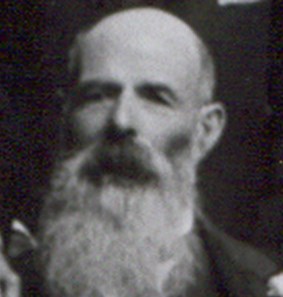
aristodemo-frandi

My maternal great grandfather Aristodemo Giovanni Frandi

********

The Evolution of Italian Surnames

Dr Fucilla writes: A surname or family name may be defined as an identification tag which has legal status and is transmitted by the male members of a family from generation to generation. It is a comparatively recent phenomenon.  It is in Italy perhaps more than any other nation that a person may be identified as a native of a definite section of the country or even of a particular province through his given name. 

Among the Hebrews, only one name used to be employed, but during the Greek and Roman dominations a second temporary name was adopted for individuals, such as Paul of Tarsus, Mary Magdalen (from Magdala). Christianity with its institution of a single baptismal name and the one-name system of the Germanic tribes who were soon to become the masters of Europe, eventually caused the collapse of the whole Roman name system. 

What causes names to be changed over time? Dr Fucilla posits that: These changes can be explained under six headings….

translations, dropping of final vowels, analogical changes, French influences, decompounded and other clipped forms, and phonetic re-spellings. By means of these it will be possible to explain the vast majority of those Italian surnames which we find in Anglicised form.

*********

Aristodemo Giovanni Frandi was born in Pistoia in Tuscany in 1833.  The original ‘Aristodemos’ is a Greco/Roman name. However, the only city in Italy I visited where there were people still living with the name Frandi was in Pisa, where two of Aristodemo’s children,  Ateo and Italia were born. The two men I traced worked for local government in Pisa.

The only historical name I could find that came even close to Frandi is Ferrandy or Ferrandi, which is very common in Italy, especially in the north. However, it does suggest Gallic origins and as was frequent in ancient times, Ferrandy/Ferrandi slowly became Frandi to fit in with other simplified Italian spellings which often end in ‘I’. When speaking to native Italians, they pronounce Frandi as Ferrrrrandi anyway, rolling their rrrs. Conversely, Ferrandi is a very common name in France!

Dr Fucilla studies add more weight to my view that the name Frandi/Ferrandy is a French derivative.  In his chapter headed Topographical Names, he writes: 

We may divide the natural and artificial topographical features that have given rise to Italian surnames …..   among them he lists several mineralogical and agrarian characteristics such as the prefix ferro which is the one we are interested in. This refers to iron (ore) generally but in the agrarian sense it refers specifically to the land and its minerals. We know that as a young man Aristodemo worked on the land as did most of his countrymen. When Aristodemo decided to emigrate with his family to New Zealand in 1875, the very real draw card was the allocation of 10 acres of free land on the West Coast. And later when the family settled in Wellington, their dream was to own a farm, which was eventually fulfilled.

In another chapter under the heading Geographical Names, which are frequently used in Italian surnames, Dr Fucilla  documents the French/Italian name La Fiandra which means ‘from Flanders’ which in parts of its history was ruled by the French. Italians with French connections added ‘La’ to their surnames. Aristodemo called his first born son, Francesco, a derivative of France.  It is possible that Frandi is a compound name of both La Fiandra and Ferrandy/Ferrandi. Dr Fucillo devotes a chapter to such compound names in which place names, nouns, occupations, religious references, and others, were compounded into abbreviated form.

In the mid 19th Century, when Aristodemo was in his 20s, all young men were conscripted into the regular army to protect territory in Northern Italy held at various times in more recent history by the Austrians, Germans, and the French. Most of the men were agricultural workers, and their loss was keenly felt by their families who needed them to tend the land.

Here are excerpts from my book ‘Whatever Happened To Ishtar?’ pages 286-287:

Aristodemo was conscripted into the regular army in 1859, 1865-1866 against the Austrians, at Ancona, a major port city at the base of the Apennines in the Marche region of the strategic East Coast of Italy which faced the Adriatic Sea. Then at Tirolo which is a tiny commune in the province of Bolzano-Bozen in the Italian region of Trentino-Alto-Adige in the far north of Italy, between Austria and Switzerland.

Aristodemo returned to Pisa to prepare for his marriage to Annunziata Gustina Fabbrucci in 1863. A year later the couple travelled north where Aristodemo was barracked with the regular army while Annunziata lived a few miles away in an Italian conclave.  It was during this conscription period that Annunziata gave birth to their first child Francesco, in 1866 at Lake Lugano.  Eventually, Aristodemo left the armed forces and worked for the fledgling Italian railways laying tracks, the best chance for work in an Italy in the throes of the industrial revolution and the confiscation of farmlands, which threw Italy into a new kind of poverty.

I have discounted Frandi as being derived from any form of the occupational prefix Ferra in its relationship to  Ferrari, metal worker, or Ferroviere, railway worker, as a surname. The use of  Ferroviere as a surname is very rare  and its use is a very recent phenomenon.

Interestingly, Aristodemo’s mother was named Caterina Degli Innocenti Cashelli …Italians often used their parents’ names, or other family names,  as middle names depending on where they come in the family hierarchy  eg firstborn etc. Degli Innocenti is not a family name. It is the name given to all babies who are orphaned or abandoned and who are placed as foundlings in convents or ‘foundling hospitals’ (Hospital of the Innocents) .  On one of our visits to Florence we came upon a beautiful building with coloured tiles depicting religious themes embedded above the doorway. Also written on the tiles were the words  ‘Ospedale Degli Innocenti’ and when I inquired as to what the purpose of the hospital was, this was the explanation...a foundling hospital or sanctuary. Children were only baptised with this name if they were foundlings. The origins of Caterina’s given surname, Cashelli, are unclear, but it is possibly related to casella or caselli meaning dairy

In 1928 a law was passed in Italy forbidding the imposition upon foundlings or illegitimates of names and surnames that might cast reflection on their origin. The law has probably stopped the increase of such names, but has hardly affected those already in existence. Ripples in a pond: this sort of stigma can and did affect the fortunes of  those so named.

Pistoia is an ancient city with remnants of Gallic, Ligurian and Etruscan settlements everywhere. It is possible to trace the origins of Pistoia back to the 2nd Century BC when the Romans established a settlement there for the provision of its militia during the wars against the Ligurians. The Oppidum Romano (fortified citadel) achieved a certain importance in the 4th Century AD and its growth was favoured by its position along the Via Cassia the road that connected Rome to Florence and Lucca. The origin of the name Pistoia is  possibly Pistoria Roman for bread oven. Roman troops were garrisoned and replenished there.

******
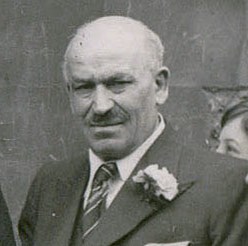
Filippo Grego

My maternal great grandfather, Filippo Grego (Greco)

Filippo Greco was born in 1869 in Amalfi, Italy. Amalfi had close connections with Gaeta, a Greek trading port, and Gaetano and Gaetana were Greco male and female family names respectively, so it’s more than likely Filippo’s extended family originated there. Gaeta has fortifications which date back to Roman times and these fortifications were extended and strengthened in the 15th century, especially throughout the history of the Kingdom of Naples (later the Two Sicilies). There is evidence that Filippo’s early ancestors came from original Greek settlements in Sicily.

Grego is the anglicised version of Greco, which was originally a name given to those living in Greek settlements in Southern Italy. Since the days of the Romans,  Greco has  been a synonym of astuteness and disloyalty and often connotes a stammerer.  Dr Fucilla suggests that some names such as Greco, have acquired a depreciative, figurative meaning which  may now and then have led to their application to native Italians.

To summarise Dr Fucilla’s  conclusions:

Anglicisation of Italian surnames is achieved by the drive of two strong forces converging upon their goal from opposite directions. One force, the most powerful of the two, represents non Italians who consciously or unconsciously in speech or in writing, make Italian names conform to English linguistic patterns, spelling, or individual names or types of names with which they happen to be acquainted. The other force represents the people of Italian origin who deliberately change their names or tolerate modifications made by outsiders as a concession to their new environment.

Finally, a very interesting paragraph from Dr Fucilla’s book:

Greek, Roman, Germanic and Hebrew Patronymical Names.

About 650 BC Ligurians, Illyrians, Umbrians, Etruscans, Sabini, Latini, Greeks, and Carthaginians occupied the various parts of Italy. They were all sooner or later, assimilated by Rome. After the fall of the Roman Empire a number of Germanic peoples including the Lombards, Franks and Normans, overran the peninsula. They too, were assimilated by their environment and with the others, through centuries of cross breeding fused into a fairly close-knit ethnical group now called the Italians. Yet despite fusion, traces still remain particularly in the guise of place names that carry us back to one or another of the stocks just mentioned. However, from the standpoint of personal surnames, a virtual monopoly is enjoyed only by three of the groups: Greeks, Romans and Germans. Their names eventually spread all over the country and from time to time through invasion, immigration, cultural tradition and religion, received reinforcements and accretions. A large mass of personal surnames was later adopted from an outside group, the Hebrews.

 See here: Mansi; My Fascination With Italian Surnames Part 1 

For more information about my book,

Whatever Happened To Ishtar? – A Passionate Quest to Find Answers for Generations of Defeated Mothers and to purchase a copy HERE is the link:  https://frandi.wordpress.com/2010/04/15/publicaton-of-whatever-happened-to-ishtar/
 

><<><><>

Remembering Them in Our Street Names – FRANDI STREET

***********************************************************************************

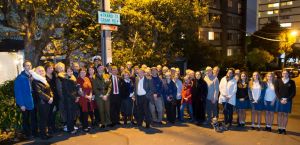
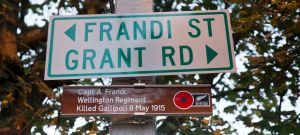
At 5.45pm on Friday 8th May 2015, the 100th anniversary of Ateo Frandi’s death at Gallipoli, a small ceremony to unveil a sign commemorating Captain Frandi was held at Frandi Street, Thorndon in Wellington, New Zealand.

Frandi Street in Thorndon is a quiet little residential cul de sac, once known as Grant Road North, and then briefly as High Street. On 14 June 1917 Wellington City Council confirmed a change of name to Frandi Street.

><<><><><>

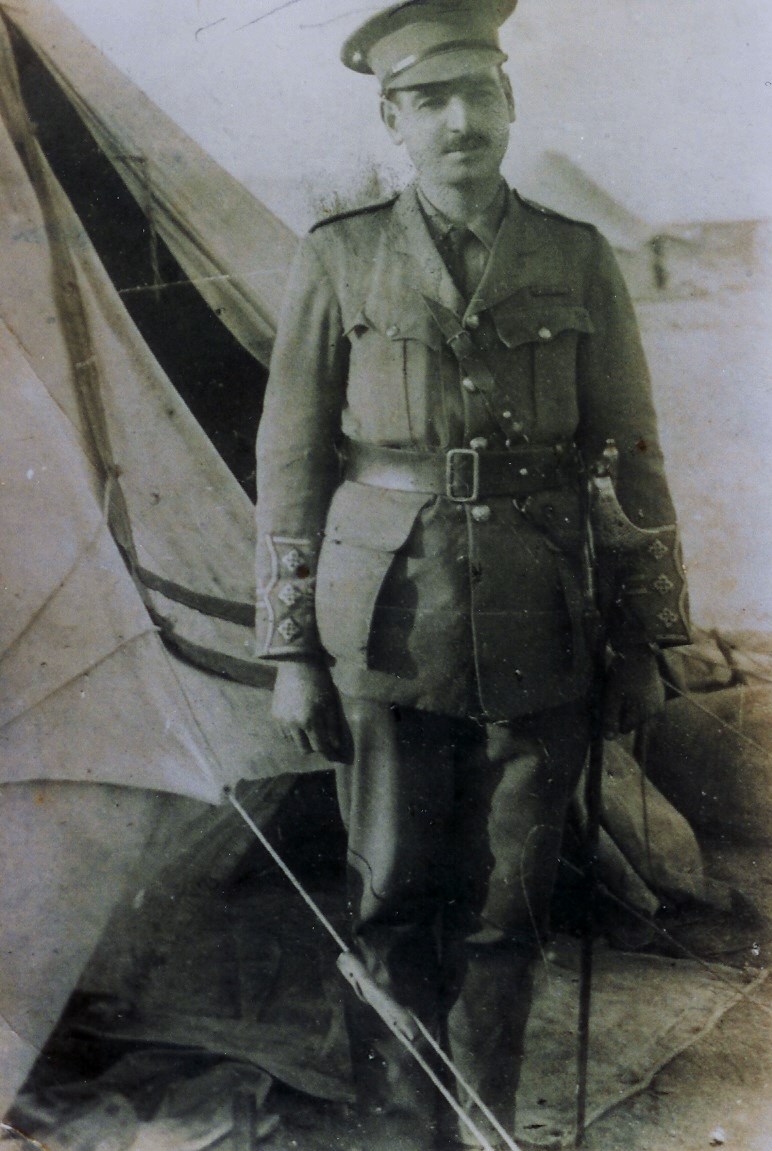
Ateo Giusto Leale Frandi 1873 – 1915

<><><><><><>

Frandi Street is named after Captain Ateo Giusto Leale Frandi, of the Wellington Infantry Battalion, who was killed at the second battle of Krithia. There are several versions of his death at the ’Daisy Patch’, either by machine gun fire or a sniper. Occasional references say he was killed on May 6th but the clear consensus is the 8th of May 1915.

With stalemate in the ANZAC area, ANZAC commander General Birdwood had sent Australian and New Zealand troops to support British, French and Indian troops attempting to capture the village of Krithia which lay between the ANZAC landing beaches and the British and French landings near Cape Helles at the southern end of the Gallipoli peninsula. Repeated attacks across open ground under heavy machine gun and rifle fire achieved temporary gains of barely a few hundred metres of ground and cost some 6300 Allied killed or wounded including 835 New Zealanders over just 4 days. Most of the dead including Captain Frandi were never identified, and were buried near where they died. After the war bodies were re-interred at nearby Twelve Tree Copse cemetery. One hundred and seventy-nine New Zealanders including Captain Frandi are commemorated there on the New Zealand memorial.

Ateo Frandi was born in Pisa, Italy on May 4th 1873, the second son of Annunziata and Aristodemo,  emigrating from Italy with his parents and two siblings to New Zealand in 1876. At the time of enlisting he was single, a piano tuner by trade, and was registered as living at 16 Murphy Street, Wellington. He had also worked for the DIC department store, and was an active member of the Garibaldi Club. See post re Frandi family’s arrival in New Zealand in 1876 OKURU SETTLEMENT

Captain Frandi had spent 24 years in the volunteers and territorials in Wellington, and for many years commanded the 31 Company (Wellington) Senior Cadets. He was rated as ‘one of the first authorities in infantry drill in New Zealand.’ His YMCA Cadets had won the New Zealand competitions for two years straight.

How Ateo Frandi’s lost Long Service medal was re-discovered: https://frandi.wordpress.com/2020/04/23/blog-comments-ateo-frandi-zealandia-rifles-1911-lost-long-service-medal/

In 1912 a dispute between Captain Frandi and the Defence Department over seniority between Captain Frandi and another officer was widely reported throughout the country and even referred to in Parliament on a number of occasions. Captain Frandi originally resigned over the dispute, but retracted his resignation and was able to resume his command of the Cadets.

Wellington was the embarkation port for some 60% of our soldiers, and Captain Frandi’s unit embarked for Egypt on 14 December 1914 with the Second Reinforcements. He arrived in Suez on 28 January 1915 and landed at ANZAC Cove on April 25th.

Major-General Godley, commanding the New Zealand Expeditionary Force at Gallipoli wrote, reporting Captain Frandi’s death – published in the Evening Post, “He did so much good service in Wellington that it should be known how well he did on active service” and “His company all say that they have never known any officer who gained so rapidly the confidence and liking of the men under him, and his bravery and fearlessness and qualities of leadership were most conspicuous.”

All the Frandi brothers enlisted; Lance Corporal Antonio Raffaello Frandi served in the 1st NZRB B Company, Driver.  Alfredo Giusseppe Frandi (Anne Frandi-Coory’s grandfather and youngest brother of Ateo) and nephew, Driver Ricciotti (Richard)  Frandi, were both in the Main Body Field Artillery. Nephew, Gunner William Donald Frandi, was in the 7th Field Artillery, and nephew Menotte Frandi also served. Nephew William Frandi, a gunner with the Field Artillery was reported wounded in the Evening Post of 27 September 1916 which said three others of the family were also serving at that point.

><><><><>

Menotte & William Frandi

Ateo’s nephews Ricciotti and William Frandi

><><><><>

Ateo’s Will named as first beneficiary  his sister Italia Corich and her daughters Helena and Elvira. The Pension Board granted his parents support in November 1915 on receiving confirmation that he had financially supported them. His father Aristodemo died aged 86 in 1919, and mother Annunziata aged 79 in 1920.

Captain Frandi was clearly held in high esteem. A concert in his memory was held by the Senior Cadets on the first of November 1915 in the Wellington Town Hall.

When the Carillon was built as a memorial to those who had served in the War, most of its 49 bells were named for specific battles, and in memory of individual soldiers. Captain Frandi’s sister, Italia, paid for bell number 30, ‘Krithia’, in his memory. His mother donated a memorial shield for the Cadets, now held at the Army Museum in Waiouru.

I saw Captain Frandi’s name on one of the white crosses of remembrance at each of several local school and community commemorations recently. At ANZAC commemorations we say ‘At the going down of the sun and in the morning, we will remember them.’ This Friday 8th as the sun goes down at 5.45, we will remember one of those men, as was intended when the Council of 1917 renamed a little street in Thorndon.

This post is taken from an article specially written by Wellington City Councillor, Andy Foster, for the commemoration of Frandi Street.

Photographs by Neil Price.

><><><><><><

Frandi St 4Frandi St 1

><><

Frandi St 5

Bugler, Andrew Weir, plays The Last Post

Frandi St 7

Left to right: Paul Glennie WCC, Andy Foster WCC, Italian Ambassador His Excellency Carmelo Barbarello, Captain Paul Prouse Officer Commanding Wellington Company 5/7 Battalion RNZ  Infantry Regiment, Sub Lieutenant Sean Audain (HMNZS Olphert)

Frandi St 2

The Last Post following Andy Foster’s reading of the dedication to Ateo Frandi.

><><><><><><><><

Frandi St 3

Wellington City Councillor Andy Foster reads a statement by Anne Frandi-Coory on behalf of descendants of Ateo’s parents, Annunziata and Aristodemo Frandi.

On behalf of all descendants of Aristodemo and Annunziata Frandi, I would like to thank Andy Foster along with Wellington City Council for this commemoration to Ateo Frandi for his long  and dedicated service to the New Zealand Armed Forces. Ateo was greatly influenced  by his father, Aristodemo, in fighting for a country he loved. Aristodemo was a brave fighter in Italy’s struggle to free itself from foreign rulers, before he and Annunziata emigrated to New Zealand in 1876.  Ateo in his turn was so proud to be a part of the  ANZAC contingent to Gallipoli, and he urged his brothers and nephews to join up as a duty owed to their country. Ateo Giusto Leale Frandi, we will never forget you or the ultimate sacrifice you made. —- Anne Frandi-Coory

Anne blog

Anne Frandi-Coory 2010

<><><><><>

All text and images are ©copyright  To Anne Frandi-Coory. All Rights Reserved 18 March 2015

<><><><><><><><>

During the Royal Commission into Institutional Sexual Abuse of Children in Melbourne, hundreds of victims have come forward to give evidence. Now adults, their testimonies are heart-rending and difficult to listen to. What has made their journey into adulthood so precarious (many have committed suicide) is that at the time, nobody believed they were being abused by those in positions of trust. None of the perpetrators has ever said they are sorry, much less the institutions in which they were incarcerated as children.  Only now can they talk about their traumatic childhoods. They are finally being listened to and believed. How healing it is to have your abuser, or in these cases, your Church, apologise to you, hopefully showing genuine remorse.  The Catholic Church has by far the worst record of any institution for blaming the children for what has happened to them, and for protecting paedophile priests and Christian Brothers.

As George Pell, Cardinal, once stated: “We had no idea the sexual abuse of children would do so much harm”.

Another Catholic Church official at the Vatican stated: “A priest leaving the priesthood to get married, is a far worse sin than a priest sexually abusing children”

I can empathise totally with what these victims have endured over their lifetimes. If only once, even one member of my devout Catholic Lebanese extended family had acknowledged my abandonment by my mother and the abuse meted out to her and me by them, it would have gone a long way to healing the wounds. Instead, I was not allowed to discuss the abuse, or if I did, told I was lying. It was to risk another beating if I dared to ask about my mother, or what happened to her. Many a time I was kicked  while on the floor, or had a swelling the size of an egg on my eyelid caused by a strap wielded by an aunt. Cousins often witnessed this abuse, but still, no apologies or acknowledgment.

Unfortunately, when you turn your back on an abusive family, there really isn’t any group you can join for support. You have to go it alone.

My childhood was filled with fear, abuse and gross neglect; some of it took place in institutions run by the Catholic Church, but most of it was carried out by my Lebanese extended family, herein called “The Family’. Not once has any member of The Family ever acknowledged my abuse and neglect at their hands, much less apologised. In the end, I decided to write a book Whatever Happened To Ishtar?; A Passionate Quest To Find Answers For Generations Of Defeated Mothers.  There were so many different versions of my and my brothers’ fractured childhoods doing the rounds, I wanted to put the record straight. Not only for my mental health, but so my children could breathe in clean air and know the truth.  Neither I nor my two brothers appear together in any family photos.  In fact, I had to put the few childhood photos of us on social media because relatives were placing photos on the site, with our names on them, but who were definitely not us!

There is no doubt that The Family hated my Italian mother. They made her life hell, and my father, a weak man, did nothing to protect her. Two of his brothers preyed on her, and for this she was evicted from the Coory family home. Because she had to work, my mother could not look after two children, so my father placed Kevin and me, then 3½ and 10 months old respectively  in the Mercy Orphanage for the Poor in South Dunedin. My mother was then pregnant with my brother Anthony.

However, I was the scapegoat child who as the only daughter paid dearly for my mother’s ‘sins’. The Family’s hatred for my Italian mother, and by default, me, was evident whenever my father took me to visit in that household. My mother was an ex Catholic nun and very naïve, so was an easy target. They ridiculed her constantly, the favourite word for her was “sharmuta” Aramaic for prostitute. As a very small child I didn’t understand what the word meant, but I knew by the way my aunts and grandmother spat it out, that it was nasty. I was totally devastated when I later discovered what it meant. My mother was never ever a prostitute, but after being sexually harassed and abused by two of my father’s brothers, to whom she had a son each, she was the ‘sinner’! My mother later developed bipolar disorder. Slowly over the years, with the help of occasional visits to a psychologist, I managed to live a mostly fulfilled life. You can never forget an abusive childhood but you can live with it. I still have panic attacks and suffer from periodic depression but I can deal with it by getting passionately involved in projects, like writing and painting. I married at 18 years and escaped Dunedin and largely turned my back on The Family. From time to time I have met relatives who persist in telling me to “get over it” or “move on”!  Funny isn’t it, how people who have had a loving mother and father, and a supportive family, can be so heartless!

<><><

Anne in convent clothes

Anne Frandi-Coory at 8 years old -just removed from the Mercy Orphanage for the Poor in Dunedin

<><><><

Children who have been abused and abandoned during their formative years have exceptional memories. While most people remember episodes of their childhoods from about four years of age, victims of abuse and abandonment can remember vividly, events from their infancy. Memories re-surface throughout adulthood as isolated vignettes of violence and sexual abuse with no context in time or place. For instance, I can remember standing in a cot in a room with many other toddlers in cots squeezed in around me. My father had just visited and I was distraught. I saw him walk past a window and even though it was dark outside, I recognised him and the hat he always wore. Until many years later when I went back to the orphanage to gather evidence for my book, I didn’t know what I was remembering, or even if it actually happened.  As soon as I saw the abandoned nursery, I recognised the windows through which I had watched my father leave; contexts of time and place began a healing process.

Other recurring memories emerge from an incident which involved my mother collecting us two children from the orphanage and taking us to Wellington to live with her parents.  I was eighteen months old at the time. For years a memory kept resurfacing of my mother carrying me onto a small plane. Often accompanying that memory was another memory of me standing in a cot in a tiny room watching my mother getting undressed. The details were vivid. She was smiling at me, and I remember that my cot was pressed up against the foot of her bed. Earlier, I had seen a man holding a little boy’s hand leading him out through the bedroom door. It wasn’t until decades later when Kevin and I were reunited and had sat up all night until the early hours of a morning, talking about our childhoods apart, did pieces of the puzzle come together. I related these latter events to him and he immediately knew the contexts in which they occurred.  He was four and half years old at the time and he was the child holding our Italian grandfather’s hand walking out of mum’s bedroom.  There is a rare photo of us at this time. Kevin is sitting in a little armchair he remembers well, with me sitting on the grass in front of him, in our grandparents’ overgrown rear yard.

><><><

kevin & Anne 2 at grandparent's house in Wadestown

Kevin and Anne, Wellington

><><><>

Apparently, our mother’s parents didn’t want her and her three children (Anthony was a newborn) staying there, so they paid for the airfares for her to “go back to your husband!”  However, it was what occurred beforehand that seared the memories so vividly into my brain, although I don’t consciously remember the events. Kevin told me that while we were all staying at our grandparents’ house, there was a lot of screaming and yelling by our grandmother, at her daughter. This was a household that had seen years of domestic violence from the time my mother was a young girl.

One day, mum, Kevin and I were sitting on mum’s bed while she was nursing Anthony.  She gave birth to him while staying at her parents’ home. Our grandparents entered the room and in Kevin’s words, our grandmother was screaming at mum “enough to wake the dead” while our grandfather ( a very violent man) was belting mum around her head with his hand.  After these and other revelations, many of the fractured memories stopped recurring. It’s as if once they have been acknowledged and verified, they are filed away in the sub-conscious.

<><><><><

the three of us cropped

A very rare photograph taken at St Kilda Beach, Dunedin of the The Three of Us together: Anne, Anthony, Kevin (image: Joseph Coory)

><><>>><>><

I had to research the facts surrounding my childhood before I could write the book, and the truth was devastating, but also liberating.

When I was ten years old, I was sexually abused in a car by the husband of one of my Lebanese aunts.  This episode illustrates the difference in childhood memories which occur after four years of age. I remember the context in which the abuse occurred, so my memory of it wasn’t fractured and it didn’t resurface as much as my infant memories did. I was very frightened of this uncle, but I was just as frightened of The Family, so I couldn’t tell them. I was too scared to tell my father, whom I adored because my uncle was a huge man and I thought he would kill my father; they argued all the time. The sexual harassment continued until I was eighteen and I left Dunedin.  After I published the book with this episode of sexual abuse in it, cousins laughed and said that he was just a “dirty old man”. Obviously, this paedophile was known by some members of the family.  Just recently, a cousin published many photos of the Coory family on social media, and this paedophile was in one of them. I was extremely upset and when I made the comment that this man was a paedophile, I was told once again to “get over it”!  As in the cases of institutional sexual abuse, unless we have zero tolerance for the sexual abuse of children in families, paedophiles will continue to abuse children and the child will continue to be told to “get over it” or will not be believed!  I thought I had managed to file away that particular childhood memory, but as always, it only takes a photograph, a look-alike person walking by or other stories of similar sexual abuse for the memory to flood back.

<><><><><><><><><><

lebanese-gathering

Under the red crosses I penned years ago: the paedophile and the cruel aunt. That’s me at 14 yrs sitting on the ground on the left.

><><><><><><><><><><

An analogy comes to mind when talking about trying to live a normal adult life following an extremely traumatic childhood:

It is as though there is a deep black hole behind you in your past. Unless you find passions in life to keep you busy, or become a workaholic, frightening memories will invade your dreams and many of your waking moments. Often it’s like running on the spot to keep the black hole from dragging you into drug and alcohol addiction, depression, anxiety, suicide, and in some cases becoming the very adult in your memories that you’re running away from.  I can understand why many victims ‘drown’ in that black hole.  Life can be a difficult journey for those who’ve had a happy and loving childhood, but for many so abused, it’s a constant day to day battle.  I am one of the more fortunate.

Please don’t ever tell victims of child sex abuse, gross neglect, or abandonment, to “get over it, move on” You have no idea what you are asking unless you have walked in their shoes!
 

All text and images are copyright  To Anne Frandi-Coory All Rights Reserved 18 March 2015

<><><><><><><><>

If Jason’s father Ateo (Arthur) Frandi had been reported and convicted for sexually abusing his sister and his step children,  (and possibly others) would Dagmar Pytlickova have been murdered?

_________________________________________________________________

Source for article below: The Christchurch Press 31 May 2012 & Herald Sun 30 May 2012

><

Jason Frandi

>< Waimate police were looking for Jason Frandi the day before his body and that of a Czech hitchhiker tourist were found. Frandi had earlier been informed by a member of the public that a sexual allegation had been made against him and police were worried about what action he might take. The bodies of Frandi, 43, and Dagmar Pytlickova, a 31-year-old woman from the Czech Republic, were found in a rugged forest area near Waimate, on New Zealand’s South Island last  Sunday. It’s alleged that Frandi raped Pylickova before cutting her throat. It’s also alleged that Frandi had admitted 12 years earlier that he planned to rape a young woman and then kill himself. This is a pretty chilling scenario considering what happened at the weekend. Frandi was jailed for three and a half years in 2000 for abducting a 19-year-old Oamaru woman, with the intent of having sex with her.  Media reports at the time said the woman was pushing her bicycle down the street when Frandi forced her into his vehicle. Police praised a bystander who heard her screams and tried to intervene, grabbing the door handle then taking the registration number of the car as it sped off.  Despite his previous convictions, police weren’t keeping a specific eye on Frandi.  Pytlickova, also known as Dasha, arrived in New Zealand in January and had been working at a Cromwell-area vineyard until recently, police said yesterday.  They said she left Cromwell on Saturday and was hitchhiking to the Timaru area when she was picked up by Frandi somewhere between Omarama and Kurow. His car was found parked among some trees near Waimate yesterday, and the hitchhiker’s back pack was found inside the car. ><

Czech Republic tourist, Dagmar Pytlickova

><

Police believe the pair walked from the car to the spot where their bodies were found by charity event riders, about 3km away. Empty alcoholic drink bottles were scattered around the scene.  Pytlickova’s mobile was turned off at 6.40pm.  Autopsies were conducted yesterday in Christchurch.

Frandi was known around the community as a man with a troubled past.  “I know he could be violent when he was drinking,” resident Annette Dungey, who had known him for many years, said.  “I know that because he told me himself.”

_______________________________________________________________________

See my essay   My Right To Write My Memoir is it right to expose inter-family abuse?


I found the above news item particularly disturbing in view of that fact that Jason Frandi  was a member  of my maternal extended family. I wrote a book  Whatever Happened To Ishtar?; A Passionate Quest To Find Answers For Generations Of Defeated Mothers’  (published 2010 and 2014) after interviewing descendants from the Lebanese and Italian branches of  my family tree, and perusing myriad documents.  In this post about Jason Frandi’s background, I am concentrating on the Italian branch.  During research for Ishtar? I discovered an Italian family history of abandonment, and sexual and physical abuse.

There were many reasons why I wrote ‘Ishtar?’ and although I started writing to exorcise past demons, among them to understand why my own mother, Doreen Frandi, abandoned me when I was an infant, it quickly developed into a far-reaching saga.  See  Letters to Anne Frandi-Coory

Jason Frandi  (43) was the son of Ateo (Arthur) Frandi, b. Wellington, 8 April 1934.  When I interviewed Arthur’s immediate family for my book, they told me that Arthur sexually assaulted his younger  sister in their family home when he was a  teenager.  The only reason the abuse stopped was because Arthur was caught abusing his sister by another brother. Consequently, no other family members knew of the abuse, and it was never reported to police. Following the failure of Arthur’s first marriage to Jason’s mother, Arthur married a woman who had four children from a previous relationship. The marriage broke up when his wife discovered he was a paedophile who had been molesting her children.  I have carefully contemplated this section of the Frandi family history and I wonder whether the rape and  murder of an innocent tourist, Dagmar Pytlickova, by Jason Frandi in May 2012 could have been prevented if his father had been brought to justice many years ago. It appears that Arthur was an abuser from a young age, and there is the possibility that there are many more of his victims out there who are yet to come forward.   It is also possible that Arthur sexually abused his own children, including Jason.

The Frandi family history seems to have taken a wrong turn when Jason’s ancestors, my great grandparents, Annunziata and Aristodemo Frandi fled Italy in 1875 and settled in the barren and wind-swept Okuru Settlement on the West Coast of the South Island of New Zealand.  I can’t know for absolute certainty, but according to the Frandi family, their life in Italy was privileged until  the aftermath of the Garibaldi uprising and Risorgimento (Unification). The environment  at Okuru was harsh with no medical facilities, no schools and a lack of food supplies. After persevering at a subsistence level for almost four years the family was moved to Wellington in the North Island, at the cost of the NZ government.  The three children Annunziata and Aristodemo brought with them from Italy were the stalwarts of the family, but later born siblings seemed to have been hewn from a different mould. During my research, I uncovered another paedophile within the family’s ranks, and I write about that extensively in my book.

My grandfather Alfredo Frandi was the youngest son of Annunziata and Aristodemo, and Arthur’s grandfather Francesco was their oldest son.   Francesco had three sons including William who was Arthur’s father.  I interviewed William’s middle son extensively, (Arthur was his oldest son) as well as his wife who told me that her husband had a violent ‘Frandi’ temper which terrified her and her children at times. He also had a severe speech impediment which he himself put down to very poor communication and his deep fear of speaking when he was a child.

This is a small window into the extended family my mother was born into; she witnessed horrendous violence toward her own mother at the hands of her father, Alfredo.  The question is, how much family violence is due to environment and how much is genetic? William Frandi  was abandoned by his mother when he was a toddler and he never really overcame his deprived childhood . She ran off with another man and later moved to Tasmania, and he never saw her again. He had a large extended family who did what they could for William, his two brothers and sister, but the damage was done. All four adult siblings were considered either ‘strange’ or ‘intellectually slow’. All had very troubled and unsettled early lives. According to William’s family, he was a man of very few words and barely spoke to his sons at all. He moved to Waimate soon after his marriage to escape the gossip about his mother.  William was too timid to approach a girl in person so he put an advertisement in the local paper, and eventually married a woman from England.

After writing Ishtar? I came to the conclusion that perhaps one of the best things that ever happened to me was that I was placed in an orphanage at ten months old, as traumatic as that turned out to be.  In my case, I hope it is nurture over nature.

><

Jason Frandi – He Was My Friend

***This page is ©copyright to author Anne Frandi-Coory. All Rights Reserved 8th  March 2012. No text or photograph can be copied or downloaded from this page without the written permission of Anne Frandi-Coory.***

Anne blog

Anne Frandi-Coory 2010

Since I wrote ‘Whatever Happened To Ishtar?’ in 2010, a tell-all book about life within immigrant Lebanese and Italian families, I have received thousands of hits on my blog. Some relatives’ views are critical of my baring family ‘secrets’ for all to read. Some refuse to read the book. Most descendants of the people, places, I write about, along with the photos that have come to light, are appreciative. The majority of readers say they empathise with what I have to say in the book; that it has influenced them to be more tolerant of mental illness, and to understand more deeply, the emotional harm that can be caused to children, when they and their mothers are constantly abused, vilified and demonised.

The very personal memoirs I write about, including my own, are told with heartbreaking honesty because sometimes you have to shock readers into the realities of life for those women and children who are abused, neglected, and who have no safe haven.

There are times in life, in every culture, when marriages fail, parents die or become ill, families fall on difficult times.  Everyone understands this, and we have to make the best of it. However, when physical and emotional abuse is meted out to innocent children by their own family, then that is entirely another matter.  The same is true when children witness that same level of abuse toward their mothers. The post traumatic stress that grips these vulnerable children, can be every bit as devastating as that suffered by children who have lived in the midst of a violent war.

><

Anne's first year at St Patrick's

Anne Frandi-Coory at Catholic Mercy Orphanage for the Poor in Dunedin, New Zealand

><

This is the premise of my book. Motherhood and childhood can be difficult enough, but when you are alone, with no family support, life is precarious. I researched my paternal Lebanese and maternal Italian family histories extensively for the book, but nothing could have prepared me for the soul destroying stories I uncovered; the brutality of husbands and fathers, the sexual abuse, the hypocrisy and heartlessness of the Catholic Church.  Not to mention the fateful abandonment of children by their mothers. But the most fundamental insight I gained from all the research, is that, like ripples in a pond, the ongoing psychological effects are transmitted down through succeeding generations.  As one of the reviewers of my book wrote:


“What is ironic is that she [Anne] uncovers the rich cultural history of these families and the fact that such wonderful traits and traditions were all but lost to modern generations as her family tree fractures again and again.”


Someone has to be brave enough to tell the truth. Powerful families can leave children they do not favour, on the scrapheap of life, with no prospect of being accepted into other good families within their community, either through marriage or friendships. They are ‘tainted’ goods, and have to break all family ties just to survive.  Few people who have not experienced this life event can comprehend the courage it takes to wipe all your extended family from your life, even an abusive family. It can take years for the emotional scars inflicted on such children, to heal. An adult deprived of a loving childhood has to learn how to play, to make lasting friendships, in effect, to be ‘socialised’ at the same time as healing is taking place. It takes enormous amounts of energy and soul searching. This is vital if they are to become a contributing member of the community they eventually choose to live in. Some of us make it, many of us don’t.

The answer isn’t just in education, although of course this is important. The answer lies in the memoirs left behind, the minutiae of everyday lives within abusive families, because if we don’t read our negative history, whether it’s family, country, or world history, how are we going to know what changes to make so that what happened in the past, isn’t perpetuated into the future.  Very often, personal stories can be the motivation to change behaviours and even laws. Because when we read these survivors’ biographies, we are in a way, walking in their shoes, reliving with them all the abuse and trauma. I know that it can take decades to change entrenched cultures. But even one person can make a difference, in one lifetime.

Published in The Australian Writer issue #377 December 2012

<><><><><><><><><><><><>

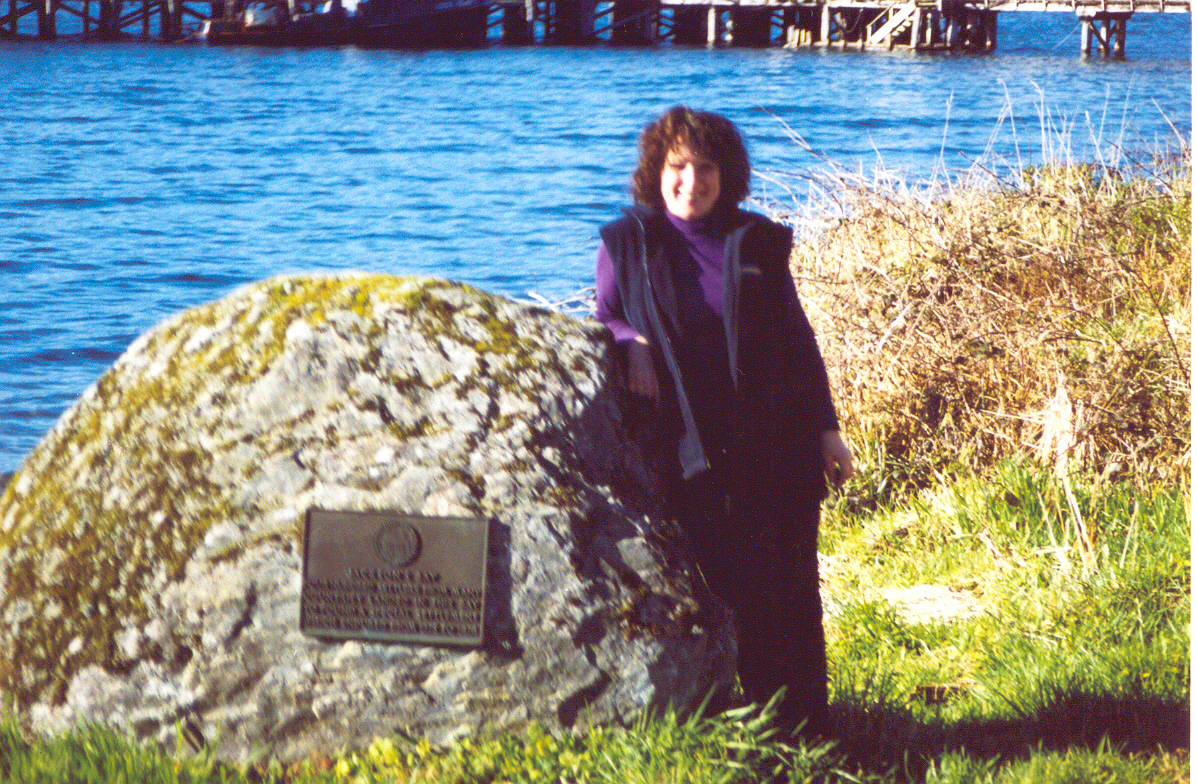
Author beside memorial to the Italians who landed at Jackson Bay, Westland, NZ in 1877 (2003)

>< ***This page, including text, map and photos is © copyright to author Anne Frandi-Coory All Rights Reserved 26 October 2011 and must not be copied in any shape or form without the written permission of the author.

*** ><

Please see here following posts for more information, on the triumphs & tragedies of the Frandi family: ‘WHATEVER HAPPENED TO ISHTAR? – A Passionate Quest to Find Answers for Generations of Defeated Mothers’   ***15+  Reviews***

><><>><

For more information on Grego and Frandi families:

  ‘ITALIAN FAMILY TREES AND PHOTOS’

>< ><

Aristodemo & Annunziata with their seven children (c. 1900).

L to R: Antonio, Enrico (Henry), Francesco, Italia, Ateo, Italo, Aristodemo, Annunziata and Anne Frandi-Coory’s grandfather, Alfredo, seated on rug at front. c.1900

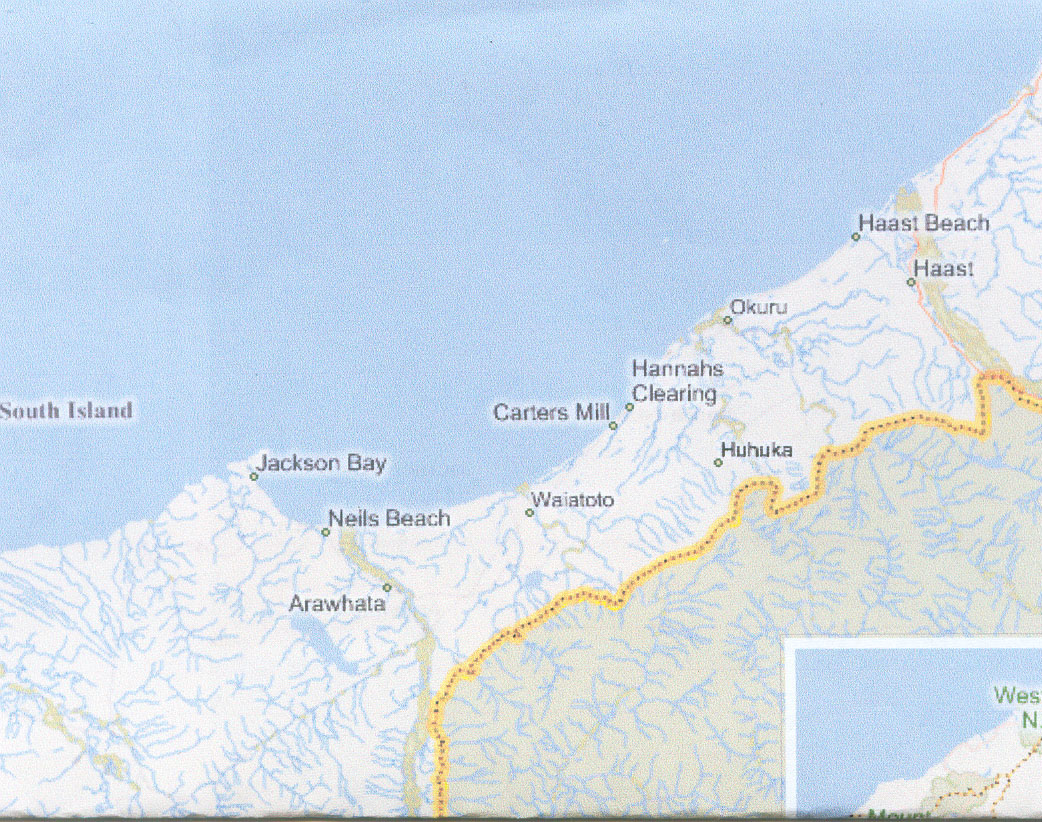
>< Aristodemo and Annunziata, with their three Italian born children, Francesco, Italia, and Ateo,   left Livorno on the Toscano Coast, Italy on the 15th December 1875  in the  SS Gutenberg and arrived in Wellington on 23rd March 1876. The family eventually docked at Jackson Bay, Westland, New Zealand in 1877, and travelled on foot, crossing two rivers, to begin a new life at the settlement at Okuru.  The promise of 10 acres of free land to grow grapes and other crops came to nothing; the land was a barren swamp then, and still is today.  There were no doctors, no school; hunger was common among families. Letters from the settlers to a Westland newspaper paint a graphic picture of the hardships of, not only the Italian families, but those of other nationalities as well.  The settlement was a complete failure.  Some of those letters are published in my book  Whatever Happened To Ishtar?

><><><><><

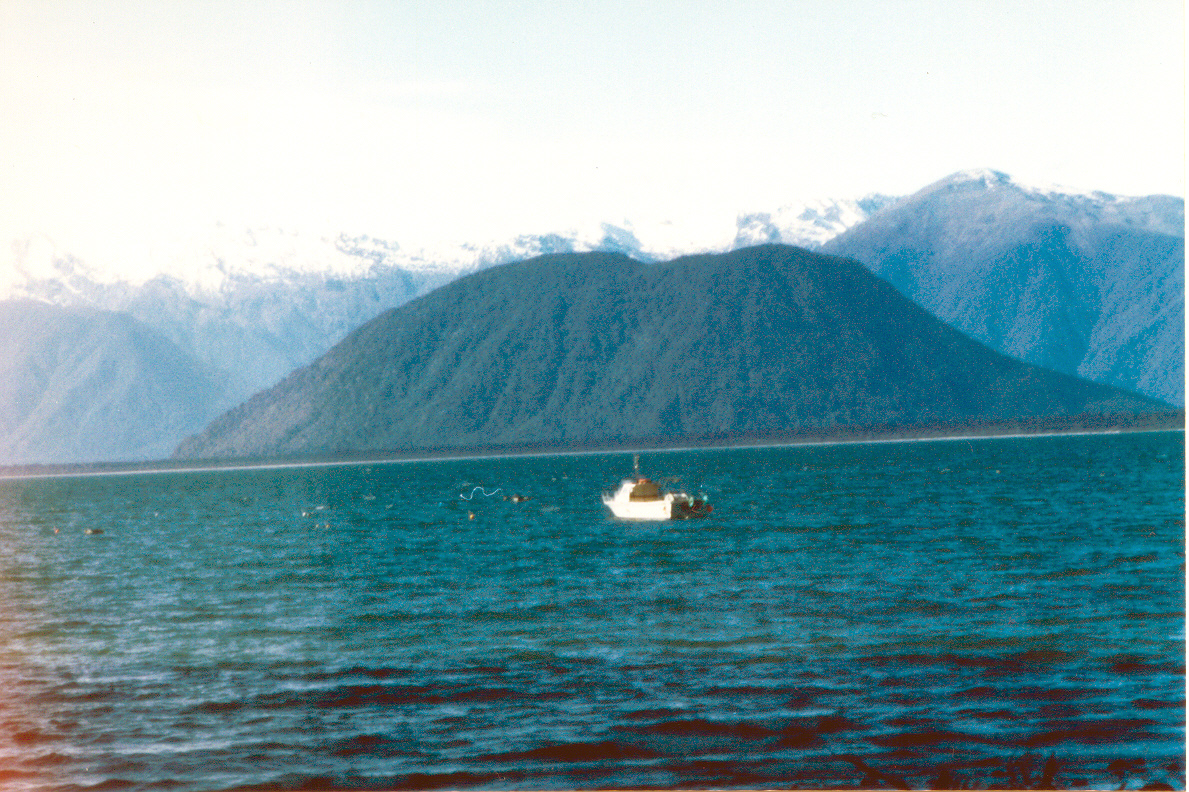
As we came into Okuru in 2003, there before us was an awesome sight: a vast desolate sandy swamp, where the Frandi family lived for three years. An emotional confrontation. Trees still fighting for survival, bowing low before the Great Coastal Wind.  How could Duncan McFarlane, New Zealand Government agent ever believe grapes and vegetables could  be harvested in such a god forsaken place. ><

The journey from the landing at Jackson Bay to the new settlement at Okuru; made on foot, and crossing two rivers, by the Frandi family; parents and three children, including a toddler, with all of their possessions (click on map to enlarge)

><

scan0006

Jackson Bay. Photo: afcoory 2003

><

Land Frandis were given as Settlers 1870's

Desolate Okuru. Photo: afcoory 2003

another view of swampland at jacksons Bay

Another view of the swamp land at Okuru Bay. Photo: afcoory 2003

><

>< Graves of children and adults buried near Jacksons Bay 1870's

>>>>>>>>>>>>>>>>>>>>>>>>>>>>>>>>>>>>>>>>>>>>>>>>>>>>>>>>>>>>>>>>>>>>>>>>>>>>>>>>>>>>>>>>>>>>>>>>>>>>>>>>

Above: Bush cemetery near Jackson Bay where the settlers’ babies and children are buried (Photo afcoory 2003) The Graveyard in the Bush – a section of a poem by Dinnie Nolan, descendant of another Okuru settler:

……………………

The place is a wayback countryside,

Just after the golden rush,

The scene is a little graveyard, a clearing in the bush.

The settlers they attended there on sad and mournful days.

I attended on those solemn days, then a little child I’d be

But outlines of those happenings, they still come back to me.

It was sad to view bereaved ones, but the sympathy was kind

And it left a great impression on my little childish mind.

Each time a soul departed the settlers felt they must

Assemble there, one and all, at that graveyard in the bush.

 ……….

The widower, he’s standing there, his little babe’s at home

It shall never now know its mother’s care, for the mother she has gone.

With grief he’s quite distracted, I heard him cry and rave

I saw stout men lay hands on him and drag him from the grave.

Another time a mother, she had lost a loving son

The rest had gone and left her, he was then the only one.

I don’t like to tell the story, it might make you sad and fret

But the passing at the graveside, I shall never more forget.

……………….

Many more were buried there in those pioneering days

I recall the lovely flowers that flourished near the graves.

All enclosed with wooden railings as neat as it could be

Seemed like a little paradise in its plain simplicity.

I returned there long years after, I was then an aged man

The place was quite deserted, all settlement was gone.

There in my seclusion old memories on me rushed

And my first impulse it was to seek that graveyard in the bush.

………………………………..

I feel that I should tell you what I gazed upon

The tangled scrub, it towered above, and the clearing all was gone.

And those crude wooden crosses which as a child I’d seen

Were buried ’neath that tangled mass, and oblivion reigned supreme.

I tried to force an entrance to locate the place

But blackberry it barred the way, and tore my hands and face.

I sat there sad and lonely, and I could not help ref lect

Is this remembrance after life, is this what we might expect.

When our span of life has ended, our voice forever hushed,

Will we lapse into oblivion in some graveyard in the bush?

-Dinnie Nolan

>< ><><><>><><><><><><><><><
We visited this lonely graveyard in 2003,  where souls have finally found peace.   Dappled light sneaked through the overgrown foliage, where I felt I could lie down upon the dried leaves and rest comfortably. Such quietness and solitude!  Graves of stone circles, wrought iron rails, headstones, wooden engraved crosses, stacks of stones, many wooden markers rotting away… A selection of  inscriptions read:

Murdoch McPherson, died 1884 aged one year.

Janet Smith, died 1899 aged 56 years.

In memory of James Heveldt, born 4 July 1881 died 31 July 1901.

William Burmeister.

Excerpt from ‘Whatever Happened To Ishtar?; A Passionate Quest To Find Answers For Generations Of Defeated Mothers’ 

(Anne Frandi-Coory’s brother Kevin wrote this true story when he was a teenager).

><

Kevin in tennis shoes blog

My brother Kevin at the time of his First Holy Communion…was it really more important to make his communion than for the Catholic Church to feed this hungry boy and our mother?

Tickets Please!

><><

Standing in the centre of the Wellington railway station foyer she stood searching the faces of people rushing by. Like a solitary rock in a fast flowing river, unnoticed by the torrent of human turmoil that buffeted around her. The boy sitting on a bench to the side of the foyer watched forlornly as his mother screened each face that passed by, hoping to glimpse someone she knew.

After an hour or so she gave up and made her way to the train platform. The boy followed a few paces behind. Boarding the carriage she crumpled into a seat and rested her head against the window. The boy did the same in a seat across the aisle two seats behind her. The train filled with passengers and began its journey. The boy watched as the guard shuffled from seat to seat clicking tickets in the swaying carriage edging ever closer to the listless woman. The guard reached out expecting to be handed a ticket, clippers at the ready.

‘Tickets please. Tickets please,’ he repeated, annoyed.

The woman lifted her head and stared at the guard for what seemed like an endless time.

‘I don’t have a ticket, or the money to pay for one,’ she said, glaring at the guard, arms folded in defiance. ‘Nor does my son,’ she said, pointing behind her to the boy.

The boy closed his eyes blocking out the silent travellers craning to hear but pretending to show no interest. The clack­ing of the train wheels became deafening in the silence.

‘Well you’d better give me your name and address,’ he said, policeman-like, pulling a pencil and pad from his pocket.

At Petone mother and son alighted from the train, the boy acutely aware of the incredulous stares that followed their departure as they slowly made their way along the platform to the street. A cold blustery wind blew in from the harbour as the pair, the boy a few paces behind, wearily began the long walk to Days Bay in the falling dusk.

She stood for a long moment outside the church in Jackson Street, her shoulders bent under the weight of the long and exhausting day. Her auburn hair shone brightly between the beret pulled down over her head and the wide collar of her coat in stark contrast to the haggard face and pasty complexion. She moved with a shrug to continue the journey then glanced over her shoulder to the boy. He was staring at the ground, unmoving, oblivious to her concern. His coat, much too large for him, hung in folds belted around the waist, one sock up, one down, cap askew atop the mop of untidy hair. He hadn’t spoken since meeting her after school at the station. He had just followed her without complaint or question, isolated in a cocoon of silence.

Pushing the loose fringe under her beret, she straightened her shoulders as much as the aching would allow and strode towards the building beside the church. The housekeeper finally opened the door after repeated knocking by the woman.

‘Can I help?’

‘I want to see the priest please.’

‘He’s just going to have dinner, is it urgent, could you not come back tomorrow when it’s a little more convenient?’

‘Not really, I have to see him now. Please ask him to see me. Please.’

‘Well alright, come and wait in here,’ she said, pointing towards a small room off the passage. ‘Whom shall I say is calling?’

The waiting room of the Presbytery was sparse and devoid of smells, except for the faint odour of incense. A picture of the ‘Sacred Heart of Jesus’ hung on the wall; a candle glowed softly on a small altar beneath the frame. The boy dragging his school bag shuffled to the wooden pew beside the altar and slumped onto the seat. Closing his eyes, his chin fell to his chest. Fatigue engulfed his body in a blanket of exhausted sleep. Through a numb haze he began to comprehend murmurings in the room.

‘You’ll have to go to your own Parish and ask for help, I can’t give you money,’ said a gravelly embarrassed voice.

‘But it is too far away and I have no way of getting there, I only need 10 shillings till I get paid tomorrow so I can feed the boy, he hasn’t eaten today. I don’t have food in the house and we still have to get home,’ pleaded the woman.

The boy struggled to open his eyes, the lids were stuck closed. The light burned into his pupils as the lids slowly prised themselves apart watering the vision of the two figures standing in the centre of the room. The priest dressed in a black suit had his hands thrust deep inside the jacket pockets, the buttons tearing at the fabric that stretched around the girth of his fat belly. The boy noticed his shiny bald head and thick rimless glasses that pressed into a puffy red nose. His pudgy face glowed crimson at the audacity of the unkempt woman.

‘But I don’t know you, are you a Catholic?’

His mother renewed her request, without emotion it seemed, her voice a monotone, not a plea, just a statement of fact.

‘I was a novitiate at the Home of Compassion before I had a breakdown and was forced to leave, I’ve never asked for money before, but surely in the name of Jesus you can—’

‘No!’ He interrupted, agitated, his face glowing. ‘I don’t know you; the church just can’t give out money to anyone who comes to the door. You should go to your family for help!’

The housekeeper in an apron wiping her hands on a tea towel strode into the room and in an impatient tone, said, ‘Father, your dinner is getting cold.’

She glanced momentarily towards the woman, then to the priest and then finally to the boy. Within that imperceptible time her demeanour had changed from anger at this bedraggled woman, to confusion at the flustered priest, to sympathy at the obvious distress of the child. Her tone changed.

‘I am sorry Father,’ she said, ‘when you’re ready, I’ll … whatever.’ She left.

A silent whimper only noticed by the boy escaped the resolve of the woman as she stared at the floor. Her shoulders slumped slightly as she turned towards the door. The look of despair in his mother’s eyes embedded itself into his memory. It was the look of dispassionate despair when the emotions have exhausted the gauntlet of feelings and the ability of the senses to register pain. All that is left is robotic numbness.

In the late hours of the night they reached the old house embedded into the side of a hill overlooking Days Bay. It was overhung with trees which blocked out the sunlight. The ground surrounding the house was continually wet and muddy from the water that leached from the clay bank. There was no electricity in the house except for one naked light in the sitting room. In one corner a sewing machine sat on a table cluttered with dirty dishes, unfinished dressmaking and newspapers. The wooden floor was an untidy mess of unpacked boxes, unwashed clothes and bits of furniture. In the centre of the room a tattered armchair sat close to an old kerosene heater that doubled as a stove to cook on. An ash­tray overflowing with ash and cigarette butts perched on one side of the chair, on the other, bits of notepaper and letters.

The woman slumped into the chair and pulled her coat around her shoulders. The boy sat shivering on the floor hugging his knees to his chest to keep warm. She picked up a box of matches from the floor and leaning forward tried to light the heater. Again and again she struck a match putting the flame to the dry wick till she had used all the matches. He knew there was no kerosene in the heater. The useless attempt to create warmth just seemed to epitomise her hopeless­ness. She folded her arms and rested her elbows on her knees and rocked slowly back and forth staring blankly at the cold lifeless heater. The boy watched his mother sink into depression, the silence the only dialogue between them. After a while he rose quietly and felt his way along the dark passage to his bedroom. The room had a dank odour from the moss growing on the walls. He crawled under the damp blankets without taking off his clothes, and curling up into the foetal position pulled the covers over his head to block out the smell of rotting wallpaper. When he woke in the morning his mother had gone. He wasn’t worried; he knew she was walking to work in Wellington.

><

Phillip Coory, with his wife Flo and their son Vas.

Note:

Such a staunchly Catholic Lebanese family where all children are not born equal!

Our mother, Doreen Frandi,  met Phillip Coory around the time the above photo was taken.

Phillip Coory was Kevin’s biological father, although Phillip never acknowledged this.  Joseph Coory, Phillip’s older brother,  adopted Kevin following his marriage to Doreen Frandi.  Two and a half years later I was born. Eventually, Joseph also abandoned Kevin.

><

Our parents, Doreen Frandi and Joseph Coory, on their wedding day.
><><><><><<
MORE…
Our mother was a Catholic nun
><><><><><>
Whatever Happened To Ishtar?; A Passionate Quest To Find Answers For Generations Of Defeated Mothers