Archive

OUR LEBANESE ANCESTRAL Short Stories

*****A short story *Immigration And The Promise*  Copyright To Anne Frandi-Coory – All Rights Reserved 17 January 2013*****

*****This page is copyright to author Anne Frandi-Coory. No text or photographs can be copied or downloaded from this page without the written permission of Anne Frandi-Coory.*****

jacob eva blog

Anne Frandi-Coory’s paternal Lebanese grandparents,        Jacob & Eva Coory (Fahkrey) soon after they arrived in Melbourne c. 1897

…..But you should also be proud that your mothers and fathers came from a land upon which God laid his gracious hand and raised his messengers.From a speech by Khalil Gibran  I believe in you (1926)

*****

Immigration And The Promise – “I love this moving piece on immigration by Anne Frandi-Coory … This is quality story-telling”

-Mark Swain UK. More here about books by Mark Swain: https://www.amazon.com/Mark-Swain/e/B008DRKT2G%3Fref=dbs_a_mng_rwt_scns_share

*********************

More reviews about Anne Frandi-Coory’s poems and short stories here in:

DRAGONS, DESERTS and DREAMS

***********

The first two paragraphs of a short story Immigration and The Promise by Anne Frandi-Coory…

Jacob’s new business venture was all contained in the leather suitcase the Chinaman in Little Bourke Street had made for him. He said goodbye to Eva and set off down the stairs and out into a chilly winter morning. He planned to begin selling his wares to domestic households in and around the suburb of Fitzroy. All he had to say to customers in English was ‘Buy something lady?’ and ‘Thank you lady.’  All was going well until a policeman demanded to see his hawker’s licence. ‘Well, you must get a licence! A licence! No more knocking until you get a licence! Do you understand?’  Jacob just nodded and handed him the piece of paper Mr Kahlil had given him with his address on it and a rough map of city streets. Unbeknown to Jacob, the ‘White Australia Policy’ dictated that all non-Europeans were required to carry ‘Certificates of Exemption’ which enabled them to work temporarily as assistants to local merchants. In any event, Jacob continued with his door to door trade as the policeman walked away in the opposite direction. At dusk he decided to head back home, with his case almost half empty and a reasonable day’s earnings in his pockets. He then realised with alarm that he had given the street map to the policeman. He was so tired he lay down on a street sheltered by a building and took a little nap, resting his head on the suitcase. People had assured him, ‘There are no murderers or robbers here.’

Close to midnight Jacob became aware of a man approaching. He jumped up and opened his case for the stranger to see the display of shirts, socks, hats, silks, towels and small items of haberdashery. He felt no fear when the man looked him up and down and intimated with words and gestures, ‘Hang on, I’ll get my friend, he might buy something as well.’ Jacob waited with a leather belt around his neck attached to the open suitcase ready for the two men to view upon their return. However, four men came back, one with a knife who deftly cut the belt from around Jacob’s neck and after the other three kicked and punched him, all ran off. Jacob called out for police but when he did find one, neither could understand each other. At 1am all the street lights went out and the moonless night smothered any possibility of Jacob navigating his way home. When he found suitable shelter in a doorway, he once again made his aching body as comfortable as he could. For the first time since he had departed his home country, Jacob had plenty of time to reflect on how immensely his and Eva’s lives had changed in only two months…

…This was just the beginning of Jacob’s and Eva’s journey into the 20th Century….read the rest of this short story here in Dragons, Deserts and Dreams.

Buy  DRAGONS, DESERTS and DREAMS

2nd edition (2020) Now available in Kindle e book and paperback

Here at AMAZON

*********

Read more about Anne Frandi-Coory’s paternal Lebanese grandparents in

Whatever Happened To Ishtar? – A Passionate Quest To Find Answers For Generations of Defeated Mothers

LINK HERE

Excerpt from ‘Whatever Happened To Ishtar?; A Passionate Quest To Find Answers For Generations Of Defeated Mothers’ 

><><

***This page is copyright to author Anne Frandi-Coory. No text or images can be copied or downloaded from this page without the written permission of Anne Frandi-Coory.***

><><>

Granddad Jacob, that’s an amazing spiritual journey….

jacob coory fb 2

Jacob Coory (Fahkrey), my grandfather, as I remember him. (photo: Wendy Coory Gretton)

><><

My extensive research into the murky past, which was partly buried in the Aramaic language and ancient names, reveals how much I didn’t know about my paternal grandfather, Jacob Habib El Khouri Eleishah Fahkrey. Nevertheless, my limited personal contact with Jacob left a significant impact. I deeply mourn that he died before I ever had the chance to talk with him about our extremely rich genetic and cultural heritage. If only I’d known as a child that he was such a valuable resource for our Lebanese family history. But then, what child can really comprehend such a thing? That, beyond their narrow sphere of existence, a family history has been woven as intricately as any tapestry, replete with human drama, personal tragedy and war, set in countries at opposite ends of the world. As a child my whole world stretched no further than a few urban blocks in Dunedin – The Catholic orphanage at one end and the Coory family home at the other.

Jacob and my grandmother, Eva, both spoke a Semitic language, an ancient form of Aramaic. Jacob’s forebears most likely descended from an ancient tribe of Israelites originating in the ancient Canaan, now known as Israel and Jordan. From there, some Canaanite clans including, I believe, those of Jacob’s distant ancestors, migrated to the rich and ancient area in the plains of Mesopotamia, close to the life-giving Euphrates River. There is linguistic evidence the Semitic tribes first arrived in Mesopotamia around 4000 BCE. The Aramaeans (speakers of Aramaic)  were a nomadic tribe when they first encountered Mesopotamia. Over the centuries they gradually moved in a westerly direction then south down the Euphrates River, eventually settling in to form kingdoms. The consolidation of the Aramaeans into settled kingdoms allowed the re-establishment of the trade routes through Palestine (Philistine) and Syria, and allowed the temporary Israelite expansion. Some of the Aramaean tribes continued to migrate west across Mesopotamia, their fortunes greatly improved due to the relative stability of the settlements in the area.

><<>

jacob&eva

Jacob Fahkrey (Coory) on his arrival in New Zealand c.1898

><><

Early Coory Clan

L to R: Amelia, Jacob with Phillip on his knee, Michael, Joseph (Anne Frandi-Coory’s father), Elizabeth, and standing at rear is Eva holding Neghia

><<><><><><                                                                                                                                                           ><><><><><><>

The Bible mentions the Aramaeans and links the Israelite Patriarchs with them. The ancient Israelites had to profess their faith by pronouncing ‘my father was a wandering Aramaean’. It was probably during their settlement in Mesopotamia that the clans mixed with the seafaring Phoenicians, recorded there as early as 2300 BCE. The first key port of the Phoenicians was at Sidon in Lebanon. For the remainder of the pre-Christian period, around 300 BCE, Mesopotamia was safely in the hands of the Seleucids (Greeks) while the two-millennia-old Babylonian civilisation was dying. Since the turn of the millennium, both socially and linguistically, Aramaeans had been penetrating Babylonia; their tribal systems overtook the cities, and their language eventually superceded the ancient Akkadian.

Some of the native Syriac dialects, as well as ancient Hebrew, merged with Aramaic, one of the Semitic languages which has been known since almost the beginning of human history. The Semitic languages, which include Hebrew, Arabic, Akkadian, Aramaic and Ethiope, were first glimpsed in ancient royal inscriptions around 900-700 BCE. The Aramaeans introduced their language to Syria when they settled there during the second millennia BCE. The Persians gave Aramaic official status, and throughout the Greek and Roman eras it remained the principal vernacular language. Babylonian and Persian Empires ruled from India to Ethiopia, and Assyrians employed Aramaic as their official language from 700-320 BCE, as did the Mesopotamians. The Aramaic script in turn derived from the Phoenicians, who most likely extracted it from the Canaanites. Writing derived from Phoenician, began to appear in Palestine around the tenth century BCE.

><><><><><><><><><><><><><><><><><><

map Middle East

National Geographic Map of Ancient Middle East

><><><><><><><><><>><><><><><><><><><><

There is general agreement among scholars that the linear alphabet had its beginnings somewhere in the Levant during the second millennium BCE. The Etruscans were the first among Italic Peoples to adopt the linear alphabet script and it spread rapidly throughout the Italian peninsula. The Phoenicians and the Etruscans had close trading and religious ritual links. These days, Aramaic is only spoken by small Christian communities in and around Lebanon, and in a small Christian village in Syria. The word Aramaic derives from the word Aram, fifth son of Shem, from which the word shemaya (semitic for ‘high up’ or ‘mountain’) is derived. Around 721-500 BCE, the ancient Hebrew language of the people of Palestine was overtaken by Aramaic, and much later the message of Christianity spread throughout Palestine, Syria, and Mesopotamia via this Semitic vernacular. Aramaic survived the fall of Babylon in 539 BCE and continued to be the predominant language. But Arabic spread and gradually took over as the lingua franca in the Middle East, around the thirteenth century CE. It seems reasonable to assume that, as speakers of this ancient language and in conjunction with their familial names, the Fahkrey forebears were originally members of a Judaic tribe, the Canaanites, who, over the centuries, mixed with other ethnic groups such as Hittites, Phoenicians, Akkadians, Greeks, and Macedonians to name a few. The word Fahkrey probably derives from the Aramaic word fagary, which means ‘the solid one’. There is plenty of evidence to support this, as Jacob and his descendants are of short, stocky build with strong arms and legs.

Many Canaanite menhirs (religious rock emblems) have been found in Lebanon and Syria. It’s interesting to note that at Baalbek, in the mountains of Lebanon, there is evidence of sacred ritual prostitution (male and female); a long-established Phoenician institution, associated with the cult of Astarte, the Goddess, also called Ishtar (Esther). Within the Phoenician realm, the great mother goddess Ishtar/Astarte was venerated in caves and grottos. A number of these sacred caves later evolved into sanctuaries dedicated to the Virgin Mary. Adoration grew into a cult, elevating Mary to the status of ‘Protectress of Lebanon’. My paternal family’s stocky build, soft round features and fairer complexion add a little mystery to their ancestry in a region where many inhabitants have dark features.

We have very little archaeological or written evidence, and so much of this history is conjecture. What we do know is that the Greeks overran and were prominent in the Levant from at least 1200 BCE. The Romans invaded in the first century BCE and Roman rule strengthened after this time. Judea later became a Roman province. And there were other ethnic groups which invaded the area from time to time in between. Ancient Damascus played an important role in the destiny of the Fahkrey tribe. Around the ninth century BCE, Damascus’s political and economic strength enticed both Palestinian Kingdoms , Israel and subsequently Judea, to seek alliance with it. At the time there was a direct and vital communication route between Tyre in Lebanon and Damascus via the Beqa (Bekka) Valley.  In 64 BCE Damascus had become part of the Roman Empire and thrived as a city-state, converting to Christianity very early on in the Christian era. The leaders of the Roman Empire would later see the infrastructure of the Catholic Church as a beneficial conduit of power for their vast empire and name it as their official religion…

During the 630s CE, Jacob’s distant ancestors were on the move again towards Damascus, ahead of the Muslim armies rampaging across the Arabian peninsula. Muslim armies attacked and eventually occupied Damascus in 635 CE, then converted Syria to Islam. Those tribes living in and around Damascus would have been familiar with the safe haven of Bcharre in the hills of Lebanon. Damascus is the oldest continuously inhabited city in the world and was once a central sphere of  influence and prosperity. Around the fourteenth century our Fahkrey ancestors moved on from Damascus and up into Lebanon’s protective mountains…

<><><><><

The Roman Catholic Church aligns itself with the Maronites  (the religion of my grandparents) in the mountains of Lebanon:…

More Here: THE MARONITES IN HISTORY

<><><><><><><

More…..Walking Around Lebanon With 2Famous

Excerpt  from ‘Whatever Happened To Ishtar?; A Passionate Quest To Find Answers For Generations Of Defeated Mothers’ 

><><>

***This page is copyright to author Anne Frandi-Coory. No text or photograph can be copied or downloaded from this page without the written permission of Anne Frandi-Coory.***

><><

[My paternal grandfather] Jacob Habib Eleishah El Khouri Fahkrey tells us in his diary that he was unhappy about going to live in his grandfather’s house when he was seven years old. His grandfather, Eleishah,  had great expectations of him for the future. Eleishah was a very holy and hard-working man who was attached to the [Roman Catholic] Saint Simon Monastery. Even within the peasant classes, selected men could become priests and marry as well. Eleishah’s status afforded Jacob the heredity right to anglicise Fahkrey to Coory (guttural Khouri meaning ‘priest’)

><

jacob&eva

Anne Frandi-Coory’s paternal Lebanese grandparents, Jacob and Eva Coory (Fahkrey)

><

Eleishah’s education of Jacob included teaching him to read and write in four languages and he planned to later school him in the art of translating Assyrian into Arabic. In his first years, Jacob bent to his grandfather’s wishes, working hard at his studies and fully expected to become a priest. The languages he studied were French (his second language) Latin and Greek, and under his grandfather’s dedicated tutelage, Jacob wrote and spoke fluently and eloquently in the ancient Syriac language, Aramaic, Bcharre’s native tongue. This language was, at that time, spoken mostly by Syrian peasants. The religious ideas of the Syrian and Italian peasantry were similar, confirmation of the integration of ideas and beliefs along the charted trade routes between Italy and the Fertile Crescent. Later, once Jacob had emigrated, he made the effort to learn English. The Arab world was a multicultural mix of language and peoples; Jacob’s heritage and talents reflected this. In retrospect, it’s sad to think that Jacob could have achieved so much more for his family and descendents if he had moved out of his cultural and priestly comfort zone.

In any event, Jacob changed his mind about following in The Family tradition of priestly services, but, cautiously at first, made the announcement that he would like to marry. It was not until his marriage to Eva (Khowha) Arida that he told his grandfather he did not wish to follow him into the priesthood, which made his grandfather very angry. Eleishah did not speak to him for sometime afterwards. Jacob’s rebellious change of heart may have had something to do with his frequent sojourns into Beirut with friends, in which he experienced the forbidden fruit of city life away from his grandfather’s strict philosophical and priestly instruction.

Other events transpired to influence Jacob’s fateful decision. When Jacob was twelve years old, his father, Habib, and uncle Tunnous El Khouri, visited Australia and New Zealand. His uncle eventually returned to New Zealand and bought a vineyard there. The family talked often about the exploits of this adventurous uncle and the young fertile country he had travelled to.

…The Fahkrey family in Bcharre must have been heartened then, following their earlier disappointment, by Jacob’s acceptance of their choice of a bride and the wedding was arranged to take place on a Sunday. Within a few months of their betrothal, the young couple had secretly planned to set sail for New Zealand after their wedding. This plan was obviously instigated by Jacob. I don’t believe that Eva fully understood what she was getting herself into, because her early life had been very different to Jacob’s. Eva had spent her early life cooking, cleaning, and praying, and was only 15 years old on her wedding day.

Jacob and Eva’s wedding ceremony was performed by Eleishah Fahkrey, who was still unaware of his grandson’s intentions to abandon his religious training and emigrate. Eleishah spoke after the ceremony, saying how proud he was that he would soon have a priestly grandson. The wedding ceremony lasted fifteen days, truly reminiscent of the pagan love feasts which so scandalised the early Christian Church. There was much celebrating and drinking, and many guests spent the nights sleeping under trees. Soon after the wedding celebrations had ended, Jacob and Eva continued with their plans to migrate to New Zealand to make their fortune, hoping to then return to Lebanon.

><

More….Walking Around Lebanon With 2famous

Updated 30 June 2015

Comment  on my post dated 9/12/2011,  from David Anthony in America:

To Anne Frandi-Coory: – What a touching note.   [from post: My Father, Joseph Jacob Habib Eleishah Coory].

Anne blog

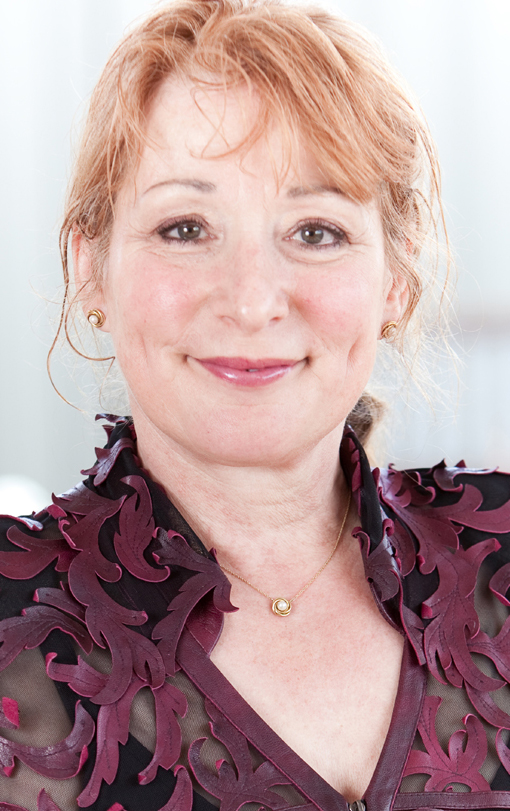
Anne Frandi-Coory

><><><><

David writes: You mention Aramaic: I have a little story for you…

About 30 years ago, about 1978-1980, my jidoo [grandfather] was visiting my house when a distant cousin from Lebanon visited.  My jidoo’s parents came to America in 1892. He was raised speaking what he and we thought was Arabic. He spoke it fluently- after all, it was what was spoken in his household growing up.

Well, when my cousin, who recently came from Lebanon fleeing the civil war, visited, they (my cousin and my grandfather) both spoke to each other in [what they thought was] Arabic. They couldn’t understand one another. My cousin said my grandfather wasn’t speaking Arabic, but a language much older. He said it was like an Italian listening to Latin.

So I came to find out that my jidoo didn’t really speak Arabic. The language he spoke so fluently was ancient Syriac- as you know, a version of Aramaic. The “Arabic” words I picked up as a youth tended much more towards Aramaic. In fact, many years after my jidoo passed away, a very good friend of mine from Zahle told me that the few Lebanese Aramaic words my dad and I spoke had a strong northern (Ehden) accent. :-)

Just one other note: Anxiety runs rampant in the Lebanese side of the family. For some, the levels of anxiety run so high that it’s disabling. I’m wondering if there’s a similar issue in your family.

Two reasons; 1) Lebanese boys were forced to sit in the back of all classes. Italian and Irish boys sat in front. 2) As my dad had terrible nearsightedness, and he wasn’t allowed to sit in the front of the class because of his skin color, he could never see the blackboard. In order to take any notes, he’d copy notes from the student sitting next to him. When he got caught by a nun, which was often, he’d get sent to the Principal for copying notes. The Principal would tell him to put out his hand, which would then get beaten pretty badly.

Finally,one day, when he was in 8th or 9th grade or so, he came home with such a beaten hand that my sitoo [grandmother] noticed. After she insisted he tell her what happened, my dad then explained what happened. Right away they went and bought him his first pair of glasses. After that, he could see the blackboard better- and his grades went sky high.

But the damage was done. By tenth grade, he left school to work in a factory, partly driven, I’m sure, by the beatings.– David Anthony.

><

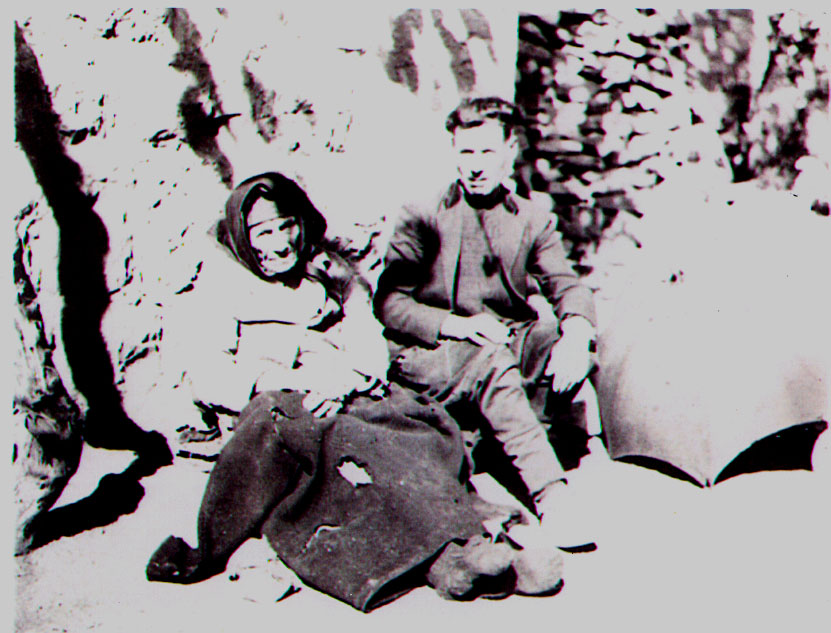
A very old photo of my grandmother, Eva Coory’s mother and brother, taken in Bcharre, Lebanon.

><

Dear David

How wonderful to hear your story. Yes, Aramaic is derived from an ancient form of Syriac and is now spoken only by small pockets of Syrian peasants and by Maronites in Bcharre, Lebanon. It was also the language that Jesus spoke. I did much research into my grandparents’ history and the history of Lebanon in general. My grandfather’s ancestors moved to the hills of Lebanon (Bcharre) around the 14th Century, from Iraq.

It is uncanny how similar are our fathers’ stories. My father, Joseph, was also beaten by the Catholic Brothers at school, and finally one day he ran home and refused to return to school. He was also shortsighted and told me he was often beaten because he couldn’t speak English, only Aramaic!

You may be interested in my book ‘Whatever Happened To Ishtar?’ A personal story, but which also delves deeply into the ancient history of my ancestors and the Aramaic language, which was eventually swamped by the advance of Islam and Arabic, which became the lingua franca of the Middle East.  BTW, Zahle is a name that pops up in my grandfather, Jacob Habib Fahkrey’s family tree.

Anxiety runs deep in my family tree as well.  In both the Lebanese and Italian sides of my family, volatile personalities reign.  My children have inherited the tendency to anxiety, although nowhere near as intense as preceding generations. Of course, both Lebanese and Italian peoples express the whole range of emotions vividly, which can sometimes be quite intimidating to others.

I agree with you about the blatant racism that thrived in those times. Once again, both my Lebanese and Italian ancestors experienced this.

I would love to hear more of your story.

Best wishes,
Anne

Read Here:  The Maronites In History 

Excerpt from ‘Whatever Happened To Ishtar?; A Passionate Quest To Find Answers For Generations Of Defeated Mothers’ 

><

Wherefore hidest thou thy face?…Wilt thou harass a driven leaf?    Job xiii: 24-25

….But you should also be proud that your mothers and fathers came from a land upon which God laid his gracious hand and raised his messengers.  – Kahlil Gibran, I believe in you (1926)

><

***This page is copyright to author Anne Frandi-Coory. No text or photograph can be copied or downloaded from this page without the written permission of Anne Frandi-Coory.***

><><

When I was a child, my father’s was the face I searched for whenever I heard heavy, non-nun-like footsteps echoing on the highly polished floors of the orphanage. I was always and forever tuned into the sound of footsteps. A nun’s footsteps sounded lighter, stress-free, and somehow patient, like they themselves were.  It was as if they had all the time in the world to get where they were going, praying as they went.

Once I was alerted that a nun was on her way, I would strain my ears for the accompanying rhythm, in tune with a particular nun’s footsteps, of the rosary beads clinking with the heavy crucifix hanging from a belt around her waist. I would know who she was before I saw her face. A visitor’s footsteps, on the other hand, were usually more purposeful, more intent on their course. Perhaps it was someone wishing to get the visit over with, to leave as quickly as possible. The fact that there were many children living there didn’t make the place any less sombre. Colours were an unnecessary luxury. ‘Interior décor’ was a phrase out of place and out of mind in that institution. My father, Joseph Jacob Habib Eleishah Coory, rarely visited me and I learned very early on not to expect to see anyone other than the Sisters of Mercy, day in and day out. Occasionally, a priest would visit the orphanage but I rarely had any significant contact with them. They were, as far as my child’s mind could fathom, so close to God and so holy that they would not want to bother with me. The nuns reinforced this perception by their subservient attitude whenever a priest or bishop made an entrance. But when my father came to visit me, I would feel a strange kind of comfort, almost a feeling of surprise, at the sight of him.

*****

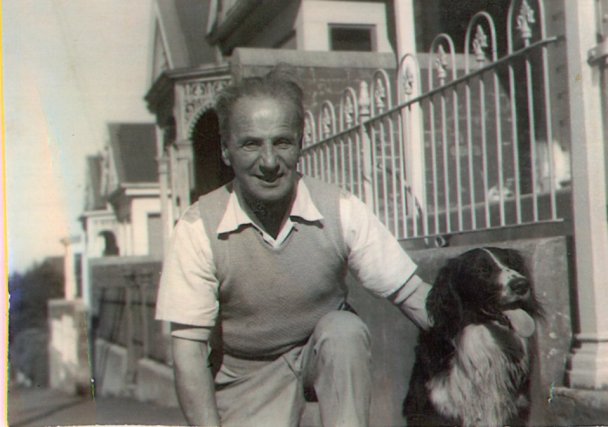
Joseph and Tim 103 Maitland St Dunedin

Anne’s father, Joseph Coory with his beloved dog Tim, outside his house at 103 Maitland Street, Dunedin NZ.

All through my childhood, I would reach out for his emotional support. and in his emotional immaturity, he would reach out for mine. As young as I was, I always sensed that he needed me as much as I needed him. In this way, we both survived my childhood. Perhaps it was my concern for him and his whereabouts when he left me that caused me so much anxiety. He could never stay for long and his leaving always caused my insides to churn, which I never really learned to deal with. A Catholic orphanage  was not the sort of place where your emotional needs were attended to. The most important thing here was the health of your soul. My father always seemed harassed and a bit lost, so eventually I avoided scenes of tears because it would only upset him. I had no idea what was happening to my father on the outside of the orphanage but it didn’t stop me from picking up on his moods and demeanour. Children like me become very adept at internalising emotions and hurts. But there were times when the dam burst, causing me to scream and yell so much that the nuns would lose their patience and lock me in a cupboard or a small room. There was always that air of emotional fragility about Joseph, my very being attuned and attentive to his every nuance. Too soon I would become the adult and he the child. Perhaps this was why I took so long to deal with my own emotional needs.

><

Joseph with his oldest & youngest sisters, Elizabeth & Pearl

><

Jacob and Eva Coory’s firstborn son, Joseph, followed two daughters, Elizabeth and Amelia. But sadly Joseph was not the healthy son his parents longed for. His sickly entry into the world was one of the reasons he suffered ill-health all of his life. According to his father’s diary, written in his native Aramaic, Joseph almost died when he was a newborn. He was so ill during his first two years that his mother wrapped him warmly and tightly and waited for him to die. Joseph suffered ill thrift all through his baby and toddler years because he could only suck small amounts of milk, sometimes bread soaked in milk. I was later to discover that Joseph’s birth had never been registered so there is no doubt that his parents expected that he would die. From his childhood to his death, he never ate a balanced diet, ever. He existed instead on bread and cheese, some fruit, and endless cups of sweet milky tea.  He was a simple man who attained the literacy levels only of a twelve-year-old. But he could speak English and Aramaic fluently. He left school at the age of nine and refused to return because of the beatings he says were meted out to him by the Christian Brothers. As a young boy he only spoke comfortably in Aramaic, so language was definitely a barrier to his learning. It has been confirmed by his cousins that his parents refrained from disciplining him because of his fragile health and that he, quite literally, got away with doing almost whatever he wanted to do at home. He in turn clung to them for the rest of their lives and he never left The Family home at 67 Carroll Street in Dunedin, where he was born.

Post by Robert Fisk in The Independent 3 December 2011

Updated by afcoory 16 September 2013

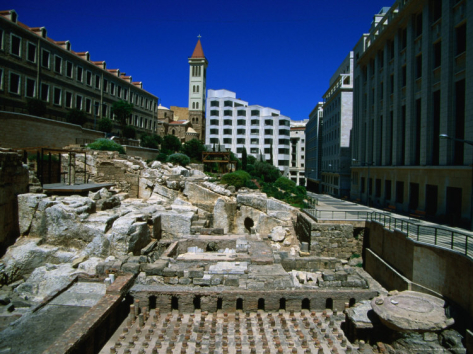
Photo: Jane Sweeney; Blogging Beirut

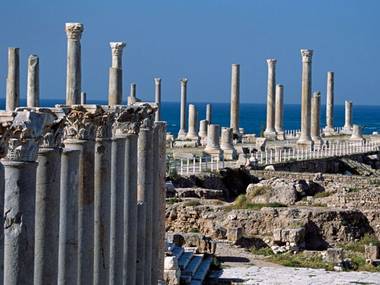
Ancient ruins of Beirut in the midst of modernity. Photo: Jane Sweeney; Blogging Beirut

><

On a clear day in Beirut, you can see back into its Phoenician past – Robert Fisk

><

Phoenician Footprints All Over Beirut – by Robert Fisk

I walked down a Phoenician street the other day, built under Persian rule.

A bit bumpy and uneven underfoot – like many a street in modern day Iranian and Lebanese cities – but this one happened to be about 2,600 years old. It ran down to a small harbour, lined by covered stone sewers and drainage ditches on each side, massive door lintels before private homes and a row of shops and warehouses and possibly a temple, five streets and 18 buildings over an area of 3000sq m.

I should say at once that this street constructed under Persian occupation is scarcely two miles from my home on the Beirut seafront, one of the great excavations which the rebuilding of the post-civil war city opened up for future generations, layer after layer of Paleolithic, Phoenician, Greek, Roman and Ottoman Beirut. The place was originally known as “byrt” – which possibly means cistern or well, according to researcher Josette Elayi – then it became Berytos in Greek, Berytus in Latin and now, of course, Beirut. The names are sandwiched together like the layers of streets. This street even yielded up terracotta figures of a woman with outstretched arms,  probably the [Goddess] ASHTART/ ISHTAR (see below) 

And, true to so much of Lebanese history, Beirut was, in effect, under occupation. In the first millennium BC (875-332BC), all the cities of Phoenicia were under first Assyrian and then Babylonian and then Persian control. Beirut belonged to Sidon – it always seems to belong to someone else – which is now a scruffy Crusader seaside port 30 miles to the south of the modern Lebanese capital. So the coins found in Beirut are Sidonian; the local military power was Sidonian; it was Sidon which dealt directly with the Persians. Beirut was a fishing and trading port, its wooden vessels with their high prows sliding out to Greece, Italy and distant Carthage.

Archaeologists have found sycamore wood here, Egyptian blue pigment, marble, silver, iron, jars for carrying Phoenician olives, olive oil, wheat, walnuts, grapes and wine across the Mediterranean. There’s even a stone with a carved graffito of a Phoenician merchant ship, mast fixed with ropes to the sides, two oars tied together as a rudder. It reminds me of the fishing boats carved into the Tudor wood of the old port of Rye, still visible today on the south side of the Sussex churchyard long after the sea has withdrawn from this cinque port.

Today, the Persian-ruled city in Lebanon is exposed beneath the new souks of Beirut. It is part of the city’s “Heritage Trail” – in Lebanon, the word heritage means what it says and does not carry the grotty reputation of Britain’s tawdry historical re-creations – so that future generations can walk around the old/new city and “watch” its creation over the centuries in Roman streets and Crusader walls, a project overseen by Amira Solh, the young Cornell-trained urban planner who works for Solidere, the company that rebuilt Beirut. She has dreams of an interactive film display behind the underground Persian streets – and promises me there will be no English-style guides flouncing around in Persian costumes. This is serious history for serious people.

Nothing, of course, could be more serious than finding yourself under Persian rule. Roula el-Zein, an archaeologist and consultant for Solidere, described Beirut at the time as “just a small city belonging to Sidon, the city which had all the power”. The Phoenicians, she says, “accepted Persian rule after the Babylonians left, and without any problem in assisting the Persian wars against Egypt. Sidon and Tyre were with the Persian kings” – King Baalshillem the Second and King Abdashart, for those who want to know. But when the Persians decided to attack Phoenician Carthage, things quickly went wrong.

“According to Herodotus,” el-Zein says, “the Phoenicians of Sidon refused to build ships for the Persians and help them. And because of this, the Persians never finished their north African project.” It makes sense. Why should the Phoenicians of Sidon and Beirut help their masters attack the Phoenicians of Carthage? It would be left to the Romans (“Carthaga delenda est”) to destroy the city whose remains lie in modern-day Tunisia and whose land was sown with salt so that it could never be re-inhabited.

It’s always the same when you think you’ve got the Lebanese on your side. First they are your friends – the French thought that after the 1914-18 war – and then they become subversive and upset all your military plans, the amiable historical mosquito that bites you when you least expect it and then poisons you. It doesn’t hurt until you realise what has happened. Message: leave the Phoenicians/ Lebanese alone. Ask the Israelis.

And so the Persians should have left the Beirutis to their dyeing trade – there are murex shells and wood charcoal aplenty to prove it – and their fishing boats. In the old Roman cities of Europe – in Rome or at Corbridge on Hadrian’s Wall – I like to run my hand along the rutted highways of antiquity, where the barrows and horse-drawn carts and chariot wheels of history slowly carved their passage into the great stone Roman roads. Humans didn’t just build this; they lived here and travelled here. Those double ruts in the road are fingerprints.

And old Phoenico-Persian Beirut has some “fingerprints” of its own. In the old port, now under rue Allenby – another imperial name, victor of Gaza and humble conqueror of Jerusalem – there is an ancient stone bollard, and cut into it are two natural slits, created during the decades of Persian power. They are the marks worn down by the ropes tying Phoenician ships to the quayside, the stone gradually worn away as the hawsers cut into it, pulled back and forth by the same Mediterranean tide which sloshes away outside my home.

Thank you Robert Fisk- A great post about a great civilization

************************************

*Read more about Goddess Ishtar HERE*


Updated 19 March 2018

*****

Scattered Cedars

*****

Once again the so-called Lebanese ‘genealogists’ of Dunedin failed miserably in providing the correct names of Jacob Coory’s grandchildren, in a book about the Lebanese migrant community in Dunedin in the late nineteenth and twentieth centuries, published in 2013.

In the earlier book published, entitled Lebanon’s Children (see below) I, nee Anne Marie Coory, was in a group photo but alas was the only child not named. I took that as an insult to my grandfather, Jacob Coory, one of the original settlers, and to his oldest son, my father, Joseph Coory. But I assumed any later books published would correct the mistakes in this first book. But no!

Any genealogist worth their salt, knows that you do not publish family trees with incorrect information. Fact checking and date checking takes much time, and expense, if you have to purchase original documents, but it must be done! Looking through this latest edition, Scattered Cedars, I saw that there were not many photos of our branch of the Coory family and very little other information. But there was a family tree of sorts: ‘Joe Coory’ there under his parents’ Eva Arida’s and Jacob Coory’s names.  Not even my father’s proper name, ‘Joseph’, just ‘Joe’, and under his name ‘Kasey’, whose name is actually ‘Kevin Joseph Coory’ not his nickname KC, which were his initials! Kevin was actually Phillip Coory’s son, Phillip being Joseph’s younger brother.  My father adopted Kevin after he married my Italian mother, Doreen Marie Frandi, whom Phillip had abandoned when he found she was pregnant. He was already married with a son, you see? My name in the family tree is listed as JoAnne, which upset me greatly. I have written a book Whatever Happened To Ishtar? 

4th edition (2020) now available in Kindle e book and paperback 

Here from AMAZON BOOKS

in which all this tragic saga is explained in full. To cut a long story short, my mother was kicked out of the Coory family home in Carroll Street, Dunedin and I, my father’s only biological child, was dumped in an orphanage at ten months old. When I was about nine years  old, the Coory family decided that they needed me to be trained up as a future housemaid for the family, and I was sent to St Dominic’s College in Rattray Street Dunedin, (fees which my father could barely afford) with many of the other Lebanese girls in the Dunedin community at that time, although I was certainly not their equal as they made very clear to me. When I was fourteen years old, two of my aunts decided that Ann Cockburn, my aunt, and her daughter, Anne Marie, were enough ‘Annes’ in the family, so my name would henceforth be changed to “Joe’s Anne’ shortened to JoAnne! My mother, and Kevin, (who was kicked out along with our mother), and her Italian extended family always called me Anne, named after my mother’s youngest sister, who was very special to my mother, as she practically raised her. Many years later when I visited Italian family members around the world, for information for my book Whatever Happened To Ishtar? they also knew me as Anne, which is the name on my birth certificate if anyone writing up Jacob Coory’s family tree would have discovered!

As it happens, the only correct name given to the three children under Joseph Coory’s name on the family tree, is my younger brother’s name, Anthony. My mother did not rate a mention!

-Anne Frandi-Coory

*****

Lebanese expats in New Zealand mark their reunion in October 2011: Descendants of 19th Century Lebanese settlers in Dunedin, on New Zealand’s South Island, have unveiled a Cedars of Lebanon Grove at the city’s botanical garden:

…about 250 people gathered on the edge of the Botanic Garden’s Mediterranean Garden to witness the ceremonial opening of a new grove dedicated to the community’s history in Dunedin. The grove’s centrepiece was a large bronze sculpture of the cone of a cedar, the national tree of Lebanon, as well as two cedar trees and a wooden park bench on which to sit and contemplate the area.

Dunedin also has its own ‘Lebanon-town’:

The gathering also included exhibitions of family history, a reception and black tie ball in the Dunedin Town Hall, as well as a tour of the “Lebanese precinct” between Carroll, Maitland, Stafford and Hope Streets in Dunedin. As Reported by LebTweets

Jacob & Eva Coory c.1897

<

Anne Frandi-Coory’s grandparents Eva and Jacob Coory (Fahkrey) and their extended family lived in Carroll Street for over 100 years, following their emigration from Bcharre, Lebanon. Kahlil Gibran came from the same village as Eva and Jacob, and were related by marriage. Anne would have liked to have gone to the reunion, but too many past ghosts are forever  haunting her.

…………………..

><><><><><><><><><><><><><><><><><><><><><

Notes from Anne Frandi-Coory:

Thank you Wendy Joseph, for attending the Lebanese Reunion,  I know how hard that must have been for you; We never would have found each other again if you hadn’t been so brave. Both our mothers abandoned us, we paid a heavy price, but survived. Sadly, with no help from the wider Lebanese community.  That’s not to say that I am not proud to be Lebanese, but I cannot speak for Wendy.

******************************************************************

The question I ask of the Lebanese community, which endlessly heralds its “sense of family”, is this: Why was there not enough love and compassion from aunts to close in around me and Wendy? True, our mothers were ‘outsiders’ and found life difficult (to put it mildly) among so many ethnocentric Lebanese immigrants, with their different style of living and eating. I remember the ‘racism’ well. Everyone was well aware within the community at the time,  that preference for marriage partners was for those from within the Lebanese community itself or from those families back in Lebanon.  But the truth was, many did marry “unglese” and life could be very difficult for them unless they were strong and independently minded, which my mother certainly wasn’t. ><

Anne Coory 8

><><><><><><><><><><><><>

After a Lebanese community celebration c 1956 (the date on the photo is incorrect), photos of family groups were taken on the steps of St Joseph’s Cathedral at the top of Rattray Street, Dunedin.   I am the only child there who is not named. Why?  If I was publishing such an important work, I would have left no stone unturned until I found the name of the unnamed child.

><><><><><><><><><><><><

Photo below: Ann Coory Cockburn, Eva Arida Coory’s daughter at rear on left,  Eva in front of her in furs, and beside Eva on the right is her daughter, Neghia Coory Dale with me standing in front of neghia with her hands on my shoulders.

Carroll St Dunedin c. 1956

><><><><><><><><><><><><><><

The photo above was obviously taken on the same day as the Lebanese Community group photo on the Cathedral steps, this one taken outside the Coory family home at 67 Carroll Street, Dunedin…

The Coory family were beginning to show off their hard-earned prosperity at this stage.

And there again is 8 year old Anne Frandi-Coory, in the same dress, the odd one out and as usual looking bewildered, but still no-one knew who I was?  I was not long extracted from the Mercy Orphanage for the Poor in South Dunedin, but still, my father lived in the Carroll Street house most of his life! 

It is not for me I mourn, but for my children and their children who missed out on so much! That is my heartbreak.

Anne blog

Anne Frandi-Coory

>><><><><><><><><><><><><><><><><><><><><><><><><><><><><><><><><><><><><><><><><><><><><><><><><><><><><><><><><><><><><><><><><><><>

An apology to my grandfather Jacob Coory, a pillar of the Dunedin Lebanese community.  The above group photograph of Lebanese families appeared in a publication Lebanon’s Children’ in 2004. The front row proudly displays their children. Unfortunately, Granddad, there I, Anne Frandi-Coory, 5th child from the left, stood holding the hand of my little cousin Anne-Marie Cockburn, but no-one knew who I was.  Even though I was the only daughter of your oldest son, Joseph, I was the only child in the whole book not to be named.  One of your sons was on the committee that produced the book, but even he didn’t  recognise me! The reason could be that my Lebanese family dumped me when I was 10 months old, in an orphanage for the poor a few blocks from their family home because they hated my Italian mother.  Out of sight, out of mind, I guess. Still, I was devastated to discover I didn’t exist as far as my own extended family was concerned. Obviously, not all of  ‘Lebanon’s Children’ are born equal. As a writer, genealogist and author,  I would not have published Lebanon’s Children’  until I had identified the the unnamed child. Enough of that community saw me often walking with my father, holding his hand, as he stopped to talk to Lebanese compatriots, around the streets of Dunedin. And what of my brothers, Kevin and Anthony? The point is, the abuse and neglect I suffered as a child, at the hands of my Lebanese extended family, has had an adverse effect on following generations. That is what I find very difficult to come to terms with. 

………………………………………..

jacob-coory-fb-2

My Lebanese grandfather, Jacob Habib El Khouri Eleishah Coory (Fahkrey) as I remember him

Thank you Granddad Jacob for treating me with love and respect and protecting me from the family’s hatred when you could. Even though I was only 8 years old when you died, you had a profound effect on my life.  It only takes one good man…

>><> More….photos, stories …. Catholic schools, churches and orphanages

*****************************************************************************************

Read more about Anne’s story here: Whatever Happened To Ishtar?;  A Passionate Quest To Find Answers For Generations of Defeated Mothers – throughout Anne’s family tree; both Lebanese and Italian