Whatever Happened To Ishtar? – A Passionate Quest To Find Answers For Generations of Defeated Mothers …
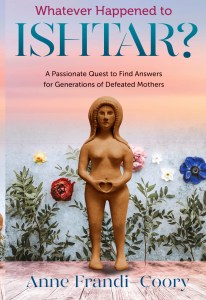
Updated 4th edition paperback plus Kindle ebook
Now available here on AMAZON BOOKS
***********************************
Whatever happened To Ishtar? 4th Edition Updated Rear Cover:
Anne’s story is one of lost generations…
What is most fascinating about ‘Whatever Happened To Ishtar?’ are the ancestral genealogies of the author’s Lebanese father and her Italian mother. This does assist readers to understand what hardships 19th century immigrants to the United Kingdom and New Zealand endured. With no access to birth control, women faced multiple pregnancies or secretly resorted to self-induced abortions.
The personal stories Anne has researched for this book go some way to explain why her parents were compelled to make the life choices they did. This memoir will stay in your memory as it covers universal issues of female sexuality, women’s roles and limited options, mental illness, and societal harsh judgments that have defeated mothers for generations.
Historical personal stories within the pages of this book explore the emotional pain felt by abandoned, abused children, along with the guilt and helplessness felt by mothers struggling within hostile environments with little or no support.
The author’s formative years spent in Catholic institutions has given her a heartfelt and very personal insight into the harm Catholicism can inflict on traumatised children. She was abandoned by her mother when she was ten months old, and from then on, she lived a life of abuse and gross neglect in the Mercy Orphanage For The Poor, and at the hands of her paternal extended Coory family in Dunedin, New Zealand.
In the Coory family’s ethnocentric mindset, Anne’s greatest shortcoming was her demonised Italian mother.
***
‘Whatever Happened To Ishtar?’ by Anne Frandi-Coory is a well-written and haunting memoir of a woman who finds herself by exploring her family’s heritage that contributed to her growing up without the love and nurture of a mother she most desperately wanted. What first attracted me to this book was the title; Ishtar was the Ancient Sumerian Mother Goddess who celebrated love, fertility, and sexuality. This title haunted me as I read the memoir because Anne’s mother, like many women of her generation and previous generations, was harshly
judged for those same attributes. – Linnea Tanner USA. HERE on Amazon
See *****15 book reviews below….
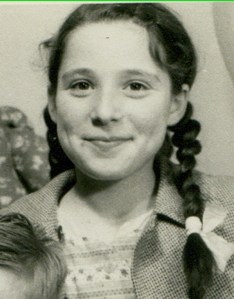
Anne Frandi-Coory – 10 years old
This story about an abandoned girl will lead you to stories about generations of defeated mothers …

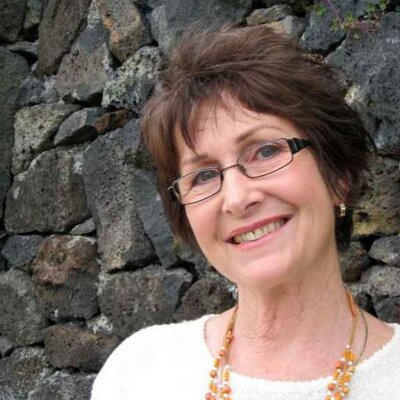
Anne Frandi-Coory – 2010
><><><><><><><><><><><><><><><><><><><><
WHATEVER HAPPENED TO ISHTAR?; A Passionate Quest To Find Answers For Generations of Defeated Mothers…

1st Edition Cover
***********************
***********************
‘
************************
Lebanese Settlers Reunion Dunedin, NZ 2011
Photos: Catholic Churches, Schools & Orphanages
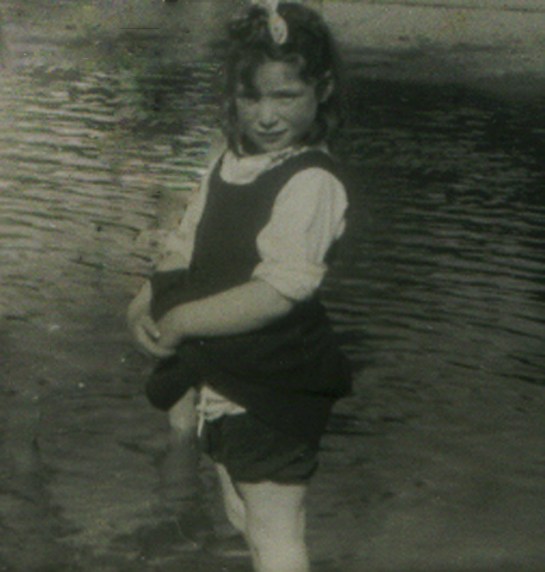
Anne in Mercy Orphanage clothes aged about eight years old
*****
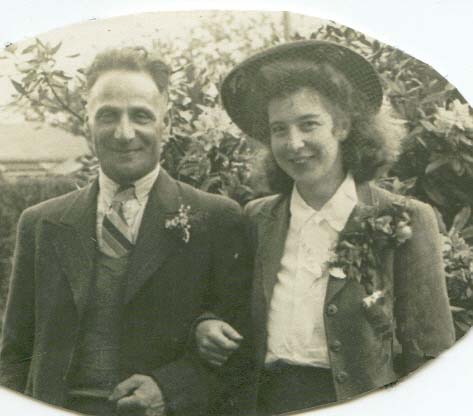
Joseph Coory and Doreen Frandi at their marriage ceremony
*****
Whatever Happened to Ishtar? is made up of two books:
- In Book I, Anne Frandi-Coory traces her father Joseph Coory’s Lebanese family history back through the mists of time to various places in the Middle East, including Iraq and Damascus, then to Bcharre, from where her paternal grandparents Eva and Jacob Fahkrey (Coory) emigrate to Melbourne in 1897. Khalil Gibran, Lebanon’s most famous poet, came from the same village as Jacob and was related to him through marriage. The couple eventually travel to Dunedin, New Zealand and subsequently had twelve children. Family members live on in the same house at 67 Carroll Street for a hundred years. In many ways it becomes a house of horrors for Anne’s mother Doreen Frandi and her children.
……….
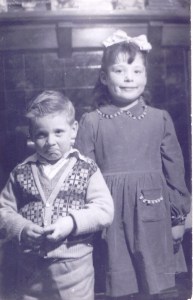
Doreen Frandi’s two children Anthony and Anne during their years in Catholic institutions
******************************
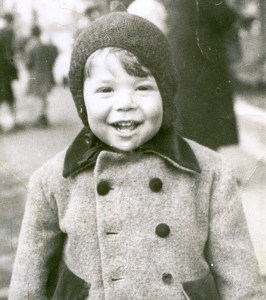
Kevin Coory, son of Phillip Coory and Doreen Frandi, adopted by Joseph Coory after his marriage to Doreen.
******************************
Lebanese Family Tree here
………
In Book II, Anne Frandi-Coory traces her mother Doreen Frandi’s Italian roots back decades to such places as southern Italy, Sicily, Pistoia, Lucca, Pisa, Florence, and northern Italy’s border with Switzerland. Anne’s personal story begins when her mother, a former nun, falls pregnant to a Lebanese soldier, Phillip Coory, at the close of WWll. Phillip, already married with a small son, abandons Doreen, who then decides to follow him to Dunedin, New Zealand. Phillip’s older brother Joseph marries Doreen against the extended Coory family’s wishes, and adopts Phillip’s second son. Anne’s subsequent birth sets off a series of consequences still reverberating through several generations. Anne also documents her mother’s tragic descent into severe bipolar disorder when her marriage to Joseph disintegrates following Anne’s birth.
………
Italian Family Tree here
><><><><><><><><><><><><><><><>><><
- 21 Black and white photos in the book
- Extensive Lebanese and Italian family trees
- Some of Anne Frandi-Coory’s favourite poems are woven into chapters; each poem relevant and poignant
><><><><><
Most of all, this book proves two things: Our lives can be pre-ordained by the tragedies of our ancestors’ lives, and a child’s spirit can survive the cruelest of beginnings, to take on the world
*********************FIFTEEN BOOK REVIEWS***********************
5 star ***** AMAZON BOOK REVIEW by Deianira 11 January 2015
When I started reading Whatever Happened To Ishtar?, I expected to finish it quite quick but in truth, it took time to digest the words and their significance. It is a journey, both biographical and autobiographical in approach. The author seeks to find her place not only in society but who she is. This is an extraordinary search which uncovers the history of her maternal and paternal lineage.
What is revealed is both heart-rending and powerful, a personal narrative. Ms. Frandi-Coory’s pursuit as to why her mother abandoned her while a baby is a difficult journey of self-discovery. How could a mother leave her children is the driving question behind the author’s plight. That, and trying to understand who she is and to identify with the family nexus and her place within it.
Her father, ill equipped mentally and economically to rear his daughter and son, placed them in an orphanage run by catholic nuns. It was not a pleasant time for either and the author gives vivid descriptions of her time incarcerated. Her father’s family weren’t the most pleasant people, abusive both verbally and physically. Why? Her mother was considered a harlot and mentally unstable, therefore she was of the same ilk. The cultural mix of Italian and Lebanese blood, the author is driven to learn more about both sides of the family and why they behaved in such a contrary manner.
I admire Ms. Frandi-Coory for writing this book. She revealed secrets most families would prefer to remain hidden to detriment of those who were and are victims. This is a brave expository, which shows the cycles of abuse can be stopped with determination and strength of character.
**************************************************
4.5 Stars ***** AMAZON BOOK REVIEW by Gerald Gentz USA 30 December 2014

Gerald Gentz
Whatever Happened To Ishtar? is more than a book and more than a story. It is the telling of a remarkable journey of discovery of one person’s difficult life. Anne Frandi-Coory spent much of her life trying to find a place and the love of a family. Book ended between a caring but weak father and mentally ill mother unable to care for her financially or emotionally, Anne and her brother, Kevin, suffered childhoods that no child deserves to experience. In the end, even the scars would not prevent them from making stable and successful lives.
Anne’s long research into both the paternal and maternal sides of her family is remarkable for it’s depth and acceptance. In doing so, she exposed her demons and the dysfunctions of her maternal and paternal families. The result is a culmination of her difficult journey to understand herself. Her greatest victory is her coming to understand the love of her mother and the realization of her love for her mother. Anne’s was a journey of discovery and healing.
This can be a difficult book to read at times because of the emotions it elicits. It was particularly emotional for me because of my realization that Anne is actually my cousin that I was not aware I had, her mother being my mother’s older sister. Anne’s book gave me a deeper awareness of my maternal family, and thus my mother, than I had before. So Anne Frandi-Coory’s journey of discovery was also mine in 373 pages.
><><><><>
“An amazing journey – challenging, painful, and ultimately unforgettable”
– Tanith Jane McNabb, Owner of Tan’s Bookshop Marlborough NZ, 27 October 2014 on
><><><>><><
Goodreads 5 Star ***** Book Review by Susan Tarr – 14 October 2014
https://www.goodreads.com/book/show/11168865-whatever-happened-to-ishtar
Author, Editor and Proofreader
**********
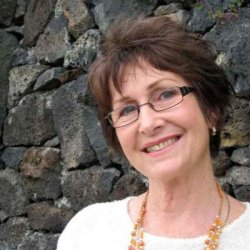
Susan Tarr
“WHATEVER HAPPENED TO ISHTAR? By Anne Frandi-Coory is a remarkable portrayal of New Zealand’s earlier Lebanese and Italian Catholic families. Although I was raised in the various vicinities this book covers, I had no idea there were established Lebanese families in New Zealand. And, for me, the whole Catholic religion was shrouded in mystique, so I had very little understanding of what was involved in being a part of the Catholic faith.
Set in New Zealand, the spartan buildings of the Catholic St Vincent’s orphanage mirrored in some part those of Seacliff Mental Asylum (Otago, NZ) in both outlook and care of those in their charge. Both would seem to have lacked a close affection for those who needed it most: the vulnerable and unloved.
This work is an amazing testimony for all mothers, a testimony we can probably all relate to. How many times do we feel inadequate, or feel we could have done better? We should never have such constraints placed on us as a mother to feel either of these. Whatever a mother is capable of at that time, for her child, is sufficient for that time.
As Frandi-Coory bears out, it is always possible to break mindsets, or break the mould, as it is said. I.e. the sins of the father… All it takes is an invincible will, which clearly she had and has.
Frandi-Coory recounts the histories of both her Lebanese and Italian families. She explains how the various mindsets occurred and how they were passed down through the generations.
I found I kept referring to the photographs as I formed opinions on the various players in this tapestry of life.
What is astonishing here, is that Anne Frandi-Coory and I never made a connection until after our respective books were published, in separate countries. It was through reading each others work that we realised our lives were very closely linked. In fact we may well have known each other through a mutual friend (Italian) during our college years in Dunedin, NZ. That is why I can vouch for the events, scenery, time frames and cultures in this amazing work.
It’s absolutely raw in its honesty.
Very well written, it’s a compelling read, from start to finish.
Kudos to Anne Frandi-Coory.” – Susan Tarr HERE on Amazon
************************************************
AMAZON BOOK REVIEW 16 August 2014:
Whatever Happened To Ishtar? is a raw and powerful memoir/family history by author Anne Frandi-Coory. She spent 15 years travelling, researching her family tree, interviewing extended family members, haunting libraries and museums. Some of what Anne discovers is devastating, but mostly she is proud of the cultures and heritage of her ancestors.
Anne believes that the Catholic Church’s Dogma with its divine elevation of the ‘Virgin Mary Mother of God’, changed the image and value of the female across the world. Gone forever were the powerful, pagan goddesses. Instead we humans were left with the Roman Catholic black and white dichotomy of whore/virgin. Anne Frandi-Coory was born into a Lebanese Maronite migrant family in Dunedin, New Zealand. Prior to Anne’s birth, her Lebanese father, Joseph, married Anne’s Italian mother who’d already given birth to a son whose father was Joseph’s younger brother, Phillip. Unfortunately, Phillip was already married with another son! From the time of her birth, Anne is caught up in a vortex of hatred, neglect, physical and sexual abuse. At only ten months old, she is separated from her parents when she is placed in a Catholic orphanage for the poor run by the Sisters Of Mercy.
Anne’s research into her mother’s, grandmothers’ and great-grandmothers’ lives reveal their extreme hardships largely brought about by giving birth to too many children, xenophobia, and abusive husbands.
><><><
Book Review by Roseann Cameron;
Christchurch, New Zealand. 25 November 2013

Whatever Happened to Ishtar? by Anne Frandi-Coory is a necessary read for any mother in order to help make an adjustment to your mindset in this information age filled with books on how to parent better.
Anne tells, in an honest and direct way, the reality of her childhood where her mother was largely absent; suffering neglect and abuse in the hands of the Catholic Church and her extended family. Despite this absence by her mother, the rare moments Anne shared with her still gave her something enormous.
It is a balanced account such as she does acknowledge the education the catholic church introduced her to.
Why Anne’s story is one of redemption and healing is that, despite what she reveals of her childhood and subsequent adult quest to reach a place of understanding, Anne has in her, a life blood and intelligence that is vibrant and strong. Anne knows how to live in the moment and embrace love and laughter to its full.
Anne is giving back to her children the opposite of what she was given which is a massive testament to her strength and sheer force of character. So if you ever feel you are not giving enough to your child take a read of what Anne didn’t get from her biological parents. Be encouraged by Anne’s story that even the most meagre rations her parents were able to give did make a difference to her. How much more so, an available parent with intent to actively love her children, despite the inevitable mistakes you make along the way? Such a mother Anne has turned out to be, despite all odds.
><><><><
Note from my nephew, Dean Marshel-Courté 1 May 2013…….

Dean Marshel-Courté
Hi Anne, l’m sitting at a cafe in Sofia, Bulgaria, and thought l’d let you know that l just finished re reading properly, Whatever Happened To Ishtar? last weekend and like l’ve already mentioned to you, your work is outstanding. l have a complete picture now of yours and Tony’s and my dad’s lives in that difficult time. l just can’t believe how terrible your situation was and the way they treated you all. Just for your info, my adopted mother lived in Dunedin too and was a dress maker for your aunties; she remembers them very well.
Luv. Deano
><><><><><
MOMOBOOKBLOG REVIEW of Whatever Happened To Ishtar? 22 June 2011… How much can a person endure, especially a little child. This heart-rendering account of Anne-Frandi Coory’s life is a proof that we can live through a lot of hardship and still turn out to be passionate and affectionate people, in this case a wonderful woman and mother of four children even though she was an abandoned and abused child herself.
The author goes back to the history of her Lebanese-Italian family and all the troubles her ancestors went through before reaching New Zealand… MORE…
><><><><><

Rita Roberts
Rita Roberts,retired archeologist, Crete, and author of ‘Toffee Apples & Togas’ –
Whatever Happened to Ishtar? by Anne Frandi-Coory is a book I could not put down. It tells of Anne’s terrifying upbringing as a child and later on in life the long quest to trace her family. Written with such passion that once read one thinks of the old saying, ‘There for the grace of god go I’. This book I would recommend to all families,especially mothers, in fact, to everyone. – Rita Roberts 2011
><><><><><><
I am loving Whatever Happened To Ishtar? – I started reading it straight away… Isn’t it amazing that when you know someone, you don’t know what is really going on in their life? I always saw you as a fun loving mother of 4 busy kids, with the wonderful Paul by your side. I loved staying with you all. I loved your home and its romantic decoration, I loved your sense of warmth and your zest for life. When you went off to Uni, you inspired me to be a life long learner – its never too late! You are amazing and have had the most incredible journey to become and even more amazing grandmother and mature woman. I love you and will always hold you in such high esteem.- 2011
Rachael Dunphy Van Asch, Marlborough on her facebook page
><><><><><><
MOMO – International Book Group Online 2011– Location: The Netherlands:
Whatever happened to Ishtar? by Anne Frandi-Coory, the biography of a woman from New Zealand with Lebanese-Italian parents. This book was recommended to me by a person in Australia. Not for the faint-hearted but very good.
><><><><><><
__________________
><

Dean Marshel-Courté
Dean Marshel-Courté, Hungary facebook comment:
Reading my Aunty’s [Anne Frandi-Coory] book; Whatever Happened to Ishtar? Its fab and very informative regarding the family history. Dad [Kevin Coory], its worth a read buddy. (-:
><><
_______________________________________
><
Marion Groves’ Tweets:

30/08/2011 > Night girls, dying to get back to my book. Am reading Whatever Happened to Ishtar? by Anne Frandi-Coory @afcoory … Highly recommend! @lunarchic @externallylaws
6/09/2011 > @PhilosophyQuotz @MarionGroves Your descendants shall gather your fruits. Virgil (ping @afcoory ) > Maybe I should have used this title for ‘Whatever Happened To Ishtar?’
6/09/2011 >No, your title is provocative & thought-provoking, as is your book. I was sorry when I had finished it. @afcoory
><
*****Book Review by Wendy O’Hanlon – Click – A Cultural Connection [September 2010]: Whatever Happened To Ishtar?

Wendy O’Hanlon
ISHTAR, according to Phoenician legend, is the great mother goddess. But author Anne Frandi-Coory grew up without close contact with her mother. In this painful re-telling of her family history, the author explores how generations of her family have lived thwarted, sad and unfulfilled lives because of a cruel twist of fate and even crueller family behaviours.
The author grew up in an orphanage, ostracised by her Lebanese father’s family. She rarely saw her Italian mother who spent many years in asylums and endured horrific shock treatments. She has tried to trace her siblings and re-establish relationships – with and without success, with heart-rending surprises and tragedies.
The author is now living a fulfilled life but needed to face these demons of her family history to try to make sense of life and purpose. There is true courage in her words. Her childhood was very lonely. Hers is such a searing, heart-tearing story.
The author painstakingly documents the history of her family back through the generations of Italian and Lebanese faces and stories. What is ironic is that she uncovers the rich cultural history of these families and the fact that such wonderful traits and traditions were all but lost to modern generations as her family tree fractures again and again.
For the reader, there is much to learn about the history of these great cultures as Frandi-Coory meticulously delves into ancient stories and legends. There is also much to learn about the strength of the human spirit – that a life with purpose can be lived despite a crippling beginning.
– ………………………….
JOHN MORROW’S PICK OF THE WEEK September 2010
This is an autobiography cum family history from a strong woman who has overcome the odds to come out a successful and wonderfully strong person.
There are not many happy childhood memories when Anne recalls her earlier life in Dunedin. Anne spent her formative years at the Orphanage for the Poor. There she was indoctrinated into the world of the Roman Catholic religion. Prayers, bible study and chores were not the practical things that would prepare a damaged young girl for life out in the wide world.
Anne’s story is a revelation of cruelty and mind games which set her on a path of self-doubt. It is little wonder that she has been on a life journey that has been harrowing, but ultimately, triumphant.
Anne’s story is painful and, at times, difficult to read. However, she has my absolute admiration for rising above the adversity of her childhood to become the confident woman she is today.
Thanks Anne, for sharing your story.
**********
**********

Anne Frandi-Coory… Author Photograph: Robb Duncan 2010
BRIEF BIO OF AUTHOR:
Growing up in an orphanage, raised by strict Catholic nuns, abused by her father’s Lebanese family in Dunedin. This beginning did not prepare Anne Frandi-Coory well for the realities of life. But she overcame the continual threat of hellfire and brimstone, escaping into marriage and children as a teenager, while trying to find out who she was. Then followed divorce, and diverse short careers; interior decorator, estate agent, joint owner of a café/caterer. Always looking for new challenges while becoming bored with the old, Anne then went to university and gained a degree in Sociology after which she worked for a short time as a child case worker in the NZ Dept of Social Welfare. Not content with that, she travelled the world with her partner and daughter, and then wrote her first book ‘Whatever Happened To Ishtar? – A Passionate Quest To Find Answers For Generations Of Defeated Mothers’. The book was the result of fifteen years of research, interviews, and note-taking, and is selling worldwide.
******************************************
-
The updated 4th edition of my book
-
published in 2020
-
in paperback and Kindle ebook is now available
********
*Please note: If you have trouble purchasing a 4th edition paperback copy, contact me here on my blog by leaving a comment.*
***********************************







 anne frandi-coory