Eleven ***** Book Reviews for …
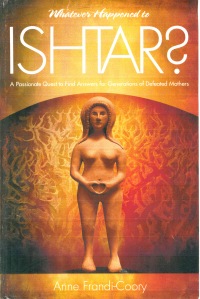
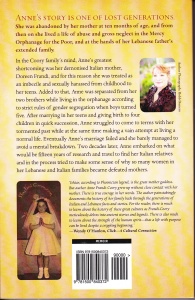
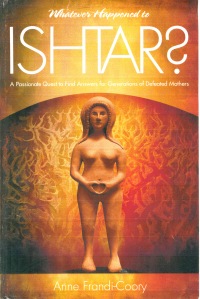
1st edition front and rear cover 2010
More Information about updated 4th edition (2020) of ‘Whatever Happened To Ishtar?’ CLICK HERE:
************************************************
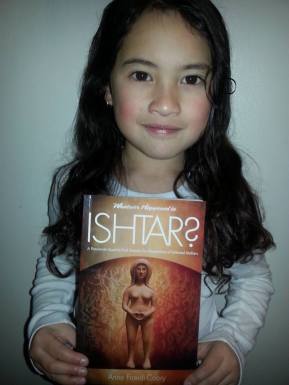
Bella Albert
This is an old photo of my precious Bellaboo, holding our copy of a book written by my great aunty, Anne Frandi-Coory, about our italian family;
-I’m honoured to hear from my psychologist and good friend Brett, who has told me he purchased a copy and had received it and is currently reading it; it really warms my heart to know this.
P.S aunty Anne -Brett says you write really well and is very impressed xx Michael Albert. – 2019

Michael Albert, Bella’s father
Thank you, Michael …that is good to hear. Your psychologist will understand you better after reading my book, ‘Whatever happened To Ishtar?’ The ripples in the generational pond have spread far and wide…❤️💜🧡 I hope to meet you and Bella one day; such a beautiful girl.
*********************
This review originally posted here on AMAZON BOOKS 28 March 2017
New Zealand’s Elena Ferrante?…
I don’t write many book reviews, I don’t usually have the time, but I felt compelled to write this one. I’ve read both of Anne Frandi-Coory’s books; her memoir Whatever Happened To Ishtar? (2010) and her latest publication Dragons, Deserts and Dreams (2016) and it seems to me both are the kinds of books that you keep in order to read again and again. I also follow her book reviews on Facebook closely because she reads the genres I enjoy and she writes great, honest book reviews.
The honesty with which Anne Frandi-Coory has written her memoir makes me think of her as New Zealand’s Elena Ferrante. The author is a virtual recluse who writes about her childhood living in Catholic institutions and whose existence is violently shaken up periodically when she is taken by her father into his Lebanese immigrant family’s household not far from the institutions she has lived in for most of her formative years. There she endures what she calls the hypocrisy and brutality the women of the household direct toward her and her absent Italian mother who has long since been banished from the home of her in-laws. The reasons are complex and include the sexual harassment of the author’s mother, an innocent ex Catholic nun. Frandi-Coory’s story is set in a slightly later era than Ferrante’s and dolls eerily feature in her childhood as well. I felt the need to check Frandi-Coory’s book reviews to ascertain whether she had been influenced at all by the Italian author in any way. Yes, she had reviewed the Neapolitan Quartet Novels by Ferrante, but she had only read and reviewed those books in 2016 six years after she wrote her memoir. I am amazed at the similarities in writing style as well as in the content and minutiae of the lives of mothers and daughters, even allowing for the authors living on opposite ends of the world. I suppose at the end of the day, women’s lot is universal.
Frandi-Coory embarks on years of research into the lives of her mother and Italian extended family which she was never permitted to have contact with even though the Coory family didn’t want her living with them after her father’s marriage to her mother broke down when she was an infant. She finds that many women in both the Lebanese and Italian extended families lived in patriarchal cultures reinforced by devotion to the beliefs of the Roman Catholic Church. Too many children, brutal husbands and a blind faith in a god who never seemed to answer any of their prayers.
I wonder if these families had not left their home countries to settle in such a raw and young country as New Zealand would their lives ever have come under such scrutiny? As another reviewer of Frandi-Coory’s memoir stated, this is a mammoth book and well worth reading. I also recommend the author’s latest book which, although it contains short stories and poems as well as some of her artworks, cleverly connects the reader to many of the topics she writes about in her memoir.
-Zita Barna, Australia. 28 March 2017
*****************************************************
Hi Anne, I expect you are thinking what on earth I am on about when I said I would e mail you.
Rita Roberts-Archaeologist
Well, I watched a film called ‘Not Without My Daughter’. For some reason it made me think about your book ‘Whatever Happened to Ishtar?’ documenting your traumatic childhood and I had to begin reading it again, because this film helped me understand my confusion with regard to your extended family. I honestly don’t know how you coped with all that hassle You were so brave and I admire you tremendously. I am also so pleased you have Paul and your lovely children making your life now happy. If you haven’t already seen this film you can see it on U tube, and it is a true story. Take care, Rita Roberts (Crete)
******************************************************
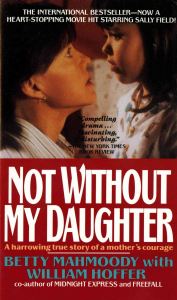
*Anne Frandi-Coory’s reply to Rita Roberts 30 November 2016:
Dear Rita
I finally located a copy of the dvd ‘Not Without My Daughter’ (1990) starring Sally Field. Thank you for recommending it to me. I can see why the Iranian family in the movie reminded you of my immigrant Lebanese family that I wrote about in my memoir ‘Whatever Happened To Ishtar?’ and why it gave you a better insight into what my childhood, and my mother’s life, must have been like.
The movie brought so much of my childhood flooding back to me. First of all, the women wearing black burqas evoked images of the nuns in the Catholic Mercy orphanage where I spent my infancy and early childhood. I always get a strong visceral reaction whenever I see women dressed like this, or nuns in black habits, and not because the Mercy nuns were especially cruel; in fact the sister who ran the orphanage nursery was very kind to me. But because I was traumatised by being abandoned at the nursery by my mother, I always feel the same distress all these years later.
The hateful looks directed at the American mother, by the Iranian women in the movie also reminded me of my aunts. My paternal Lebanese family, (grandparents and their 11 children), all lived, and later, often visited, in the same three storey house, so that whenever my father took me to visit his family, I not only had one or two adults abusing or yelling and screaming at me, there were several, all at once. My father rarely intervened, and he was born in that Dunedin house, living there most of his life along with his brother and unmarried sister. A couple of times I sat on my father’s knee when I was a little girl, and the look my aunts gave me frightened me so much, I never hugged him, or sat on his knee ever again! They didn’t like me or my Italian mother, and I can only imagine what it was like for her, living with them all. Of course, you will remember that my mother’s severe bipolar disorder took hold while she lived with her in-laws, after she married my father. The family screamed abuse at me often, and reminded me every other day that my mother was a ‘sharmuta’ (prostitute) because she had an illegitimate son, and her Italian culture was also demonised. The family’s racism was something I remember vividly.
My aunts often attacked me in the streets of Dunedin if they thought my clothing was in any way ‘revealing’; once when I was a teenager, two of my aunts attacked me because I was wearing a dress with a skirt that fell below my knees, had a high neckline, but the long sleeves were made of a see-through flimsy fabric. They were so enraged they almost ripped the sleeves off my arms. In the end, I was afraid to walk down the street in case I met them and all I could think of was moving to another New Zealand city to escape them, which I eventually did.
While my father’s family weren’t Muslim like the family in the movie, they brought their very strict Catholic Maronite religion and culture with them. They went to church every Sunday and often during the week. My grandmother, Eva Arida, had an altar in her bedroom dedicated to the Virgin Mary with a lighted candle 24/7. She prayed constantly from a little Aramaic prayer book and was habitually fingering rosary beads. My grandfather, Jacob Fahkrey, of devout priestly lineage, prayed aloud early every morning while walking around the rear yard of the family home. I can honestly say that it was the women of the family who were the most physically and verbally brutal.
I did a bit more research into the true story behind the movie and book Not Without My Daughter, and that was also very interesting. The little American girl who so loved her Iranian father when they lived in the USA, had such a traumatic experience living with her father’s family in Iran, that she refused to ever see him again after she and her mother barely managed to escape to the States. Her father eventually travelled to Finland, a neutral country, with a documentary team hoping to film a reunion with his adult daughter, but she declined.
****************************************************************
Another 5***** Book Review by Linnea Tanner…
Whatever Happened To Ishtar? by Anne Frandi-Coory is a well-written and haunting memoir of a woman who finds herself by exploring her family’s heritage that contributed to her growing up without the love and nurture of a mother she most desperately wanted. What first attracted me to this book was the title, Whatever Happened To Ishtar?. She is the Ancient Sumerian Mother Goddess who celebrates love, fertility, and sexuality. This title haunted me as I read the memoir because Anne’s mother, like many woman of her generation and previous generations, was harshly judged for her sexuality and had limited options to treat her mental illness and to fulfill her potential. The first part of the memoir is Anne’s account of her childhood while the second part provides a historical account of her Lebanese (father’s side) and Italian heritage (mother’s side).
Anne was institutionalized at the Mercy Orphanage of the Poor at South Dunedin in her early childhood. At the time, her father could not adequately care for Anne after he divorced her mother for infidelity. At the age of eight, Anne was removed from the orphanage and introduced to the real world under the care of her father’s family. However, they shamed Anne and associated her with her mentally ill mother they considered a whore. This part of the memoir is gut-wrenching and haunting because Anne had to overcome loneliness and self-doubt to find her full potential after marrying, having four children, and finding her life partner after a divorce.
However, what is most fascinating is the rich heritage and ancestral genealogy of both her father and mother to understand what nineteenth century immigrants to Australia faced. With no access to birth control, women faced multiple pregnancies or secretly resorted to self-induced abortions with crude knitting needles. The historical accounts that Anne researched help explain why her father and her mother were compelled to make their choices. I recommend this memoir because the story will stay in your memory as it covers universal issues of female sexuality, women’s roles and options, mental illness, and society’s harsh judgment that has defeated mothers for generations.
-Linnea Tanner 25 April 2016
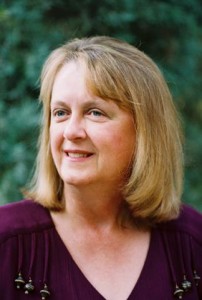
Linnea Tanner
****************************************************************
Book Review by FLAXROOTS 14 July 2015
Whatever Happened To Ishtar? by author Anne Frandi-Coory –
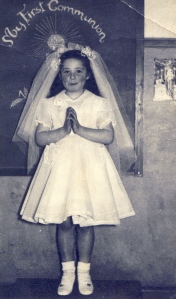
Anne Frandi-Coory – 7 years old
This book is a memoir of the life of Anne Frandi-Coory the daughter of an Italian mother and a Lebanese father.
Having spent a childhood, peppered with abuse and harassment, between a Dunedin orphanage for the poor and her father’s Lebanese family Anne was regarded as a backward child. She describes the panic she felt as a toddler as her father departed after one of his visits, and goes on to relate episodes from her strict upbringing in the orphanage where she was segregated from her two brothers once the boys turned five years old. Memory of the order of happenings in her early life is sketchy and this is aptly conveyed in her narrative.
She was not well received by her father’s family though she lived with her father at his family’s house intermittently, but never feeling at ease there and alleging various kinds of abuse.
Married in her teens Anne gave birth to four children and devoted herself to nurturing them during which time her marriage failed and she struggled to avoid a mental breakdown.
Later in life Anne devoted herself to researching the Lebanese history of her father’s family and the Italian forebears on her mother’s side, hoping to understand her relationship with her Italian mother who was shunned by Anne’s father’s family and who couldn’t look after her children except for very short periods.
The account of the arrival of the Frandi family as assisted immigrants to New Zealand in 1876, as opposed to those arriving in a self funding capacity, makes interesting reading.
The poems and quotations at the beginning of each chapter have obviously been chosen with care and sensitivity and give an added dimension to the book. The same can be said for the inclusion of family photographs mostly lent by other family members. There is a certain poignancy here as Anne had few, if any, family photos while she was growing up; thus emphasising what she refers to as ‘her paper-thin sense of identity’
There is a freshness about the author’s style and she succeeds in conveying emotion about the lack of emotion and caring shown to her in her formative years.
Having, as a child, lived in fear of dire consequences if she didn’t follow strict rules and try to emulate the saints she may have developed the discipline to achieve a good education which, no doubt, helped in her later endeavours to track her forebears and learn the history of their migration to New Zealand.
The bibliography includes useful references and illuminates the paths she travelled.
With regard to the publication the title is apt and the cover is eye-catching. The paper edition is perfect bound but the biggest drawback is the lack of an adequate gutter making the book difficult to hold open for any length of time. There are three very minor identical grammatical inconsistencies plus an odd discrepancy about two rivers.
The author is to be congratulated on her enterprise in producing a valuable resource for her family and an interesting and instructive read for the rest of us.
It seems Ishtar has risen from the ashes!
***********************************************
WHATEVER HAPPENED TO ISHTAR? by Anne Frandi-Coory – Book Review by Pauline Csuba published in issue no. 387 The Australian Writer March 2015
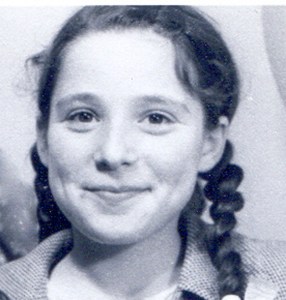
Anne Frandi-Coory – 10 years old
Haunted by her mother’s restless spirit filtering through every thought and dream, this book was written not only for the appeasement of her mother but for her children and grandchildren. Anne Frandi-Coory has embarked on a journey of genealogy taking on a rich history, research, and unpleasant memories.
Distressed at the hands of her Lebanese father’s extended family and The Mercy orphanage for the poor – this story of lost generations, abandonment, abuse and gross neglect by those who should have known better – is a story of a personal account and the connection with the Catholic Church and its institutions. Brutality, emotional deprivation and lack of nurturing all culminated in a dark side of two families unable to communicate with one another. With the history of these Lebanese and Italian families and how they settled in New Zealand, this makes for an interesting read.
It is a mammoth book and I felt by removing some areas of repetitions may have freed the flow of emotion that could allow the reader to connect much sooner with the powerful experience being shared. I congratulate Anne for taking on this traumatic journey of her past and the long process of research, writing and editing of her work. It is wonderful to see she now has a loving partner and family who have supported her in this passionate quest. I recommend this book to those who are or have embarked on a similar journey.
-Pauline Csuba
************************************************
WHATEVER HAPPENED TO ISHTAR? by Anne Frandi-Coory – 5 star
https://www.goodreads.com/review/show/1165480328
When I started reading this book, I expected to finish it quite quick but in truth, it took time to digest the words and their significance. It is a journey, both biographical and autobiographical in approach. The author seeks to find her place not only in society but who she is. This is an extraordinary search which uncovers the history of her maternal and paternal lineage.
What is revealed is both heart-rending and powerful, a personal narrative. Ms. Frandi-Coory’s pursuit as to why her mother abandoned her while a baby is a difficult journey of self-discovery. How could a mother leave her children is the driving question behind the author’s plight. That, and trying to understand who she is and to identify with the family nexus and her place within it.
Her father, ill equipped mentally and economically to rear his daughter and son, placed them in an orphanage run by catholic nuns. It was not a pleasant time for either and the author gives vivid descriptions of her time incarcerated. Her father’s family weren’t the most pleasant people, abusive both verbally and physically. Why? Her mother was considered a harlot and mentally unstable, therefore she was of the same ilk. The cultural mix of Italian and Lebanese blood, the author is driven to learn more about both sides of the family and why they behaved in such a contrary manner.
I admire Ms. Frandi-Coory for writing this book. She revealed secrets most families would prefer to remain hidden to detriment of those who were and are victims. This is a brave expository, which shows the cycles of abuse can be stopped with determination and strength of character.
-Luciana Cavallaro 11 January 2015

Luciana Cavallaro
More About Luciana Cavallaro here: https://www.amazon.com/Luciana-Cavallaro/e/B009QHIKN2
**************************************************************

Gerald Gentz
WHATEVER HAPPENED TO ISHTAR? by Anne Frandi-Coory – AMAZON BOOK REVIEW by Gerald Gentz USA 30 December 2014
*4th Edition (pub. 2020) Whatever Happened To Ishtar? now available here at Amazon in paperback and Kindle ebook
‘Whatever Happened To Ishtar?’ is more than a book and more than a story. It is the telling of a remarkable journey of discovery of one person’s difficult life. Anne Frandi-Coory spent much of her life trying to find a place and the love of a family. Book ended between a caring but weak father and mentally ill mother unable to care for her financially or emotionally, Anne and her brother, Kevin, suffered childhoods that no child deserves to experience. In the end, even the scars would not prevent them from making stable and successful lives.
Anne’s long research into both the paternal and maternal sides of her family is remarkable for it’s depth and acceptance. In doing so, she exposed her demons and the dysfunctions of her maternal and paternal families. The result is a culmination of her difficult journey to understand herself. Her greatest victory is her coming to understand the love of her mother and the realization of her love for her mother. Anne’s was a journey of discovery and healing.
This can be a difficult book to read at times because of the emotions it elicits. It was particularly emotional for me because of my realization that Anne is actually my cousin that I was not aware I had, her mother being my mother’s older sister. Anne’s book gave me a deeper awareness of my maternal family, and thus my mother, than I had before. So Anne Frandi-Coory’s journey of discovery was also mine in 373 pages.
–Gerald Gentz
***********************************************
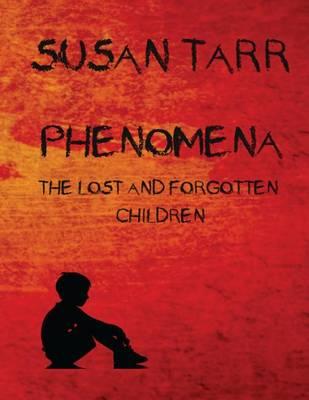
WHATEVER HAPPENED TO ISHTAR? by Anne Frandi-Coory – 5 star *****GOODREADS BOOK REVIEW by Susan Tarr
https://www.goodreads.com/book/show/11168865-whatever-happened-to-ishtar
“WHATEVER HAPPENED TO ISHTAR? By Anne Frandi-Coory is a remarkable portrayal of New Zealand’s earlier Lebanese and Italian Catholic families. Although I was raised in the various vicinities this book covers, I had no idea there were established Lebanese families in New Zealand. And, for me, the whole Catholic religion was shrouded in mystique, so I had very little understanding of what was involved in being a part of the Catholic faith.
Set in New Zealand, the spartan buildings of the Catholic St Vincent’s orphanage mirrored in some part those of Seacliff Mental Asylum (Otago, NZ) in both outlook and care of those in their charge. Both would seem to have lacked a close affection for those who needed it most: the vulnerable and unloved.
This work is an amazing testimony for all mothers, a testimony we can probably all relate to. How many times do we feel inadequate, or feel we could have done better? We should never have such constraints placed on us as a mother to feel either of these. Whatever a mother is capable of at that time, for her child, is sufficient for that time.
As Frandi-Coory bears out, it is always possible to break mindsets, or break the mould, as it is said. I.e. the sins of the father… All it takes is an invincible will, which clearly she had and has.
Frandi-Coory recounts the histories of both her Lebanese and Italian families. She explains how the various mindsets occurred and how they were passed down through the generations.
I found I kept referring to the photographs as I formed opinions on the various players in this tapestry of life.
What is astonishing here, is that Anne Frandi-Coory and I never made a connection until after our respective books were published, in separate countries. It was through reading each others work that we realised our lives were very closely linked. In fact we may well have known each other through a mutual friend (Italian) during our college years in Dunedin, NZ. That is why I can vouch for the events, scenery, time frames and cultures in this amazing work.
It’s absolutely raw in its honesty.
Very well written, it’s a compelling read, from start to finish.
Kudos to Anne Frandi-Coory.
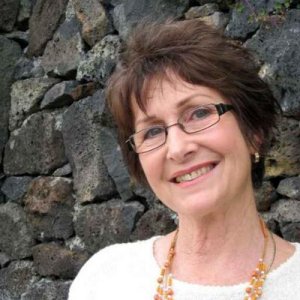
-Susan Tarr 14 October 2014
Susan Tarr
More about Susan Tarr here:http://www.amazon.com/Susan-Tarr/e/B00I0I3M9U
************************************************
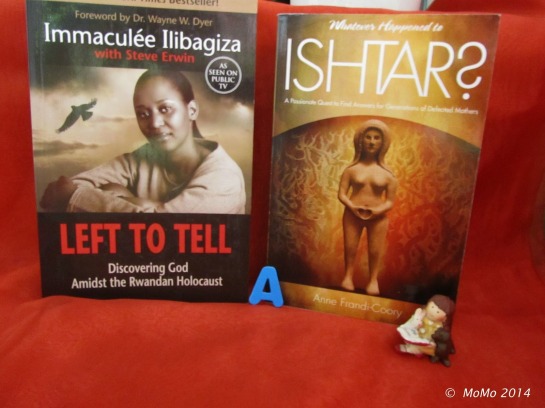
A is for … Autobiography. Two biographies by some very strong women:
><><><><
************************************************
‘Whatever Happened To Ishtar?’ is
“An amazing journey – challenging, painful, and ultimately unforgettable” – Tanith Jane McNabb, Owner of Tan’s Bookshop Marlborough NZ, 27 October 2014 on
************************************************
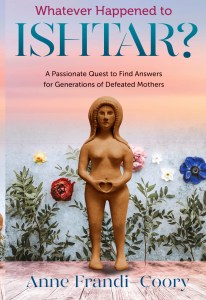
You can buy the updated 4th Edition (pub. 2020) in paperback & Kindle e book


 anne frandi-coory