Archive

Tag Archives: Anne Frandi-Coory

Emotional Female

EMOTIONAL FEMALE by Yumiko Kadota

“A young doctor’s account of what it was like to train in the Australian public hospital system, and how it made her walk away from her dream of becoming a surgeon.”

“A Brilliant young surgeon’s journey through ambition and dedication to exploitation and burnout.”

Yumiko Kadota was a brilliant and hard-working student throughout her school years, always achieving  top exam marks. She continued her scholarly dedication when she was accepted into Medical School with a passionate goal to become a plastic surgeon (Plastics).

Yumiko’s family moved from their home in Japan to Singapore, then on to London, and finally to Australia, as her father’s employment advancements required.  Yumiko came to love Australia, so that even when her parents and sisters eventually returned to live in Japan following  her father’s retirement, Yumiko continued working hard and learning new  surgical skills whenever  she was given the opportunity. Nevertheless,   her dream of getting on to the relevant  Programme eluded her, even though she was proving herself to be an outstanding young surgeon.  Was it racism, sexism, or the constant bullying tactics standing in her way? Was it more to do with who you knew rather than what you knew?

She was expected to work punishingly long hours as well as to study. Not all senior surgeons would give her the opportunity to take part in operations or to perform those within her scope as junior surgeon.  She needed more practice to enable her to get on to the Programme. Why was she constantly thwarted in her ambitions?                                                  

However, after some very tough assignments, both emotional and exhausting, Yumiko did achieve  two of her dream goals and moved onto Plastic Surgery for her surgical resident year and then as plastic surgery registrar in Melbourne.

“I realised too as I left her room, that she was friends with everyone at the hospital…It seemed unlikely that she would stick up for me to the plastic surgeons, her fellow consultants at the hospital. Maybe she was used to this kind of behaviour from them. So what was going on here? Was it me at fault, or these major players at the hospital? I knew I couldn’t complete my Plastics term successfully without their support, their teaching, at the very least without them giving me some of their time. Did that mean that I just had to put up with all the degrading treatment I’d seen…” and that which Yumiko had had to endure herself?                                                                                                                                                       


In spite of all these hurdles, and the sacrifices, Yumiko makes it through to her new term as plastic surgery registrar. She was well on her way to becoming a Plastic Surgeon and she continued to strive to fulfil her dream of getting on to the Programme to become a fully qualified and registered plastic surgeon. However, despite all of these successes, twice she missed out getting onto the Programme and it appeared to have nothing to do with her exam results or her surgical experience.   

Tragically, Yumiko has a complete physical and mental breakdown largely due to burnout; her total exhaustion and lack of sleep from working at times, end to end 24 hour shifts with no down time, or even time to eat properly. At times Yumiko became tearful during these extremely difficult and stressful  times, and once was told by an Emergency Registrar to “…Calm down, you’re being an emotional female.”                                                                                                                                                                                                                                                                                                          

The author discusses at length the sexual harassment, racism, sexism, and malicious manipulation from senior doctors and surgeons, which will shock readers. She also gives examples of situations involving bullying, and the rorting of public hospital  taxpayer funding carried out by surgeons and senior registrars.                      

 I must say that as a reader of Dr Yumiko’s journey I felt the power imbalances and the misogyny she writes about, to be similar to those experienced by women in the  Australian political scene. As the author comments at the end of her book, why doesn’t the Royal College of Surgeons address the lack of institutional leadership shown by her bosses, fellows of RACS, that had led to her poor treatment, and more importantly, which had in turn lost the services of a brilliant young plastic surgeon to the public hospital system.

-Anne Frandi-Coory, 11 January, 2022

                    Painting by Anne Frandi-Coory
           acrylic on canvas
Painting and Poem 'A Rare Jewel' is Copyright to Anne Frandi-Coory -All Rights Reserved 21 January 2016

                  (This painting has been sold)    
     A RARE JEWEL

You were a dark beauty
a mother goddess, no less
tho’ you wore no wings
nor diaphanous dress

Jewel, you were so named
so fitting and so pure
your love shone for others
your hands they did nurture

Into my life you appeared
when a babe-in-arms I held
a lost child myself
out-running the citadel


                    Read more of this poem HERE in

                       ‘DRAGONS, DESERTS AND DREAMS’
                            *Now available on Kindle e book and paperback 
                                          *here at AMAZON*
                                      
    Read reviews for DRAGONS, DESERTS AND DREAMS here:                               https://frandi.wordpress.com/2017/03/07/reviews-for-dragons-deserts-and-dreams/                                                                                   


The legal system is designed to protect men from the superior power of the state but not to protect women or children from the superior power of men. – Judith Lewis Herman 

All of the references to violent domestic abuse by men in See What You Made Me Do are qualified by this very important statement.

*********************************************

****************************************

“When it comes to family conflict and domestic hostility in heterosexual relationships, women are just as capable of being physically and psychologically abusive…to their male partners. But when it comes to coercive control – the most dangerous form of domestic abuse, suffered by 60 to 80 per cent of women who seek help – women make up an extremely small minority of perpetrators. Domestic abuse is gendered. In its most dangerous forms, it is a crime perpetrated by men against  women. “

The gender gap in domestic homicide is crucial, and this is discussed at length in the book, by Jess Hill and others.

Shame and humiliation experienced by young boys, extensive research finds, can predispose them to extreme violence in adulthood.  When abusive men are confronted with these deep-seated feelings, women and children can suffer horrific abuse, and sometimes death, at the hands of those men who refuse to deal with the true source their own pain and frustration. In this well researched book, Jess Hill delves into theories and extensive research investigating why domestic abuse is so prevalent  and escalating in Australia and other countries around the world.  

Studies of domestic abuse perpetrators “do show a higher than average incidence of personality disorder, especially so-called ‘antisocial’ disorders such as sociopathy, psychopathy and borderline personality. “ However, in one major study, the vast majority of abusers were no more disordered than ‘regular people’.

Another study found that  “when abusive men emerge out of violent childhoods…the man is addicted to brutality to keep his shaky self-concept intact…The only times he feels powerful and whole,  is when he is engaged in violence.” A psychoanalyst goes further: “The passion to have absolute and unrestricted control over a living being…is the transformation of impotence into omnipotence.”

Patriarchy …after decades of research and work with victims, it was found that men who subscribe to rigid gender stereotypes are more likely to abuse their partners. ”Study after study finds that men are more prone to abusing if they’ve been: a) socialised into rigid gender roles, b) believe that men are naturally superior, or c) feel their masculinity or superiority has been threatened, particularly if women have not complied with their gender-role expectations. ”

Karen Willis, “a legend of the gender abuse sector” states that those who use violence in their relationships are into power and control … they want to “hurt, humiliate and dominate.”  Where does this sense of entitlement come from? Why this need for control and sense of entitlement?  According to Willis … “Good old fashioned  patriarchy.” …the system of patriarchy gives some men, what they perceive as permission, to use power and control and be dominant…”women and children within their families should be subjugated to them.”

Pornography

Violent pornography is freely available on the internet  and can be accessed by children. Why isn’t it banned?  The past twenty years has seen hardcore porn go mainstream. It is extremely violent, and degrading to women.  There are alarming and harmful effects manifesting in men and boys who watch it and data from rape and sexual assault  centres…”show  that in the past five years the severity of sexual violence they are dealing with has increased exponentially.”

The chapters on police culture  and  Family Court failings  are harrowing reading. So many women and children have died because police did not do their job, even when a woman was in extreme danger, in fear of her and her children’s lives and had phoned police many times.   Too many violent and dangerous men are given the benefit of the doubt, and are granted custody by Family Courts.

There are statements emerging from those children, now adults,  who were forced to live with their violent  and sexually abusive fathers  because Family Court judges chose to believe the violent perpetrator over the testimonies of their children and the testimonies of abused female partners, who were the children’s protectors.  Family Courts put too much credence on only one  psychiatrist’s report; who often tends to believe the violent perpetrator rather than the obviously terrified children who do not want to live with their fathers,  A too common  accusation aimed at  mothers is that they are ‘guilty ‘ of ‘alienating’ their children against their fathers.

Tech savvy violent men have found new ways to hound and terrify their ex-partners and children. “Tech-facilitated abuse has become so ubiquitous that refuges and domestic violence services are teaming up with specialist risk and safety assessors trained to detect concealed devices and apps, which can even be concealed in a child’s favourite  toy…Most commonly though, a perpetrator tracks his partner though her phone. For $45 per month, you can see everything on someone’s phone, including stuff that’s been deleted.”

This is a must read for all those women fleeing domestic abuse, and for those who wish to help them. There is also a chapter on the last page of the book on which the author has listed help lines in all states and territories, including Immigrant Women’s Health Service and translation services. These numbers include  help with urgent accommodation and transport.

There is also an excellent chapter on successful Women’s Police Stations in other countries and we can only hope that Australian Police and the government see the benefits in these specialized police systems in the battle against the alarming rates of domestic abuse and subsequent deaths of women and children.

Aboriginal Women and Girls.

One chapter concentrates on the domestic abuse and other violent abuse of Aboriginal women and girls. The abuse of Aboriginal women and girls, by their partners, other family members, and white men, is particularly horrific. And once again, police culture, and the police response, to cries of help from these women and girls and their families, is woeful and it has to be said, racist! I can find no other plausible explanation as to why police minimise  the terrible plight of Aboriginal women and children, especially if the perpetrator is a white man.

“The culture that arrived with the tall ships in Sydney Cove was not only deeply patriarchal, but sexist…it was a type of violence introduced to Australia like an invasive species,” writes Robert Hughes. “The brutalization of women in the colony had gone on so long, that it was virtually a social reflex by the end of the 1830s.”

In some ways, nothing has changed in the 21st century Australia.  

In my personal experience, patriarchal religions have institutionalised  the power imbalances between men and women, which in turn helped socialise gender role expectations, all of which perpetuate domestic, and other forms of violence, against women. The ubiquitous spectre of the ‘fallen woman’ with all of its societal connotations,  has also aided and abetted some men’s deeply rooted subjugation of women.    

The author discusses several options for lowering the alarming and ever-increasing rates of domestic abuse and homicides in Australia, while advocating for cultural change in wider society.

This is a remarkable book by Jess Hill, and testifies to her extensive investigative research into the deeply rooted causes of domestic abuse.  The personal stories she has uncovered and writes about are truly heart-rending, and I as a reader, now realise just how little I know about  the suffering that domestic abuse is causing to women and children, not just in Australia, but around the world.

Thank you, Jess Hill, for writing this very important work. 

-Anne Frandi-Coory. 7 June 2021

WITNESS; An Investigation Into the Brutal Cost of Seeking Justice

by Louise Milligan.

Louise Milligan is an investigative journalist  with ABC  Four Corners and is the bestselling author of CARDINAL; The Rise and Fall Of George Pell  which won the Walkley Book Award and broke massive international news preceding the court case and successive appeals involving Cardinal George Pell.

In February 2021, WITNESS was awarded the Victorian Premier’s Literary Awards People’s Choice Prize.

In August 2021, WITNESS won the Davitt Award for Best Non-Fiction Crime Book.

*********************************************

*******************************************************************************************

At times, I found WITNESS  very difficult to read. The treatment of victims of sexual abuse in the court room is brutal and intimidating; the seemingly endless humiliation of children in the witness box,  who have come forward to report that they have been sexually abused, is all at once, shocking and heart-breaking.

This book is first and foremost an analysis and critique of the failures of the criminal justice system in sexual assault trials. A masterful and deeply troubling exposé, WITNESS  is the culmination of almost five years’ investigative work for Louise Milligan. Charting the experiences of those who have the courage to come forward and face their abusers in high-profile child abuse and sexual assault cases, Milligan was profoundly disturbed by what she ultimately discovered.

Throughout the book there is a justified sense of outrage at those who choose to treat complainants and witnesses with a hostility causing its own trauma; a special kind of systemic abuse.

Milligan has two decades of experience as an investigative journalist, including her specialist work as a media court reporter and her sustained coverage of the trials of George Pell. Her analysis of the Criminal Justice System in Australia  instructively affirms how the system is outdated and fails to meet the needs of complainants.  She records in-depth interviews with prosecutors, defence counsel, solicitors, judges and academics. It is a gripping revelation of rarely-heard experts’ public opinions about the realities and flaws of criminal judicial procedure.

Why is the cost of seeking justice so monstrously high? Milligan asks.

Her visceral description of the attempted destruction of her own character and credibility in cross-examination by Robert Richter QC relating to her investigative journalism surrounding the case of George Pell, testifies to the brutality of many witnesses’ encounters with the criminal trial process. As Milligan states in the book, she had the ABC legal team supporting her in court and yet she found the experience traumatic. She kept thinking what a deeply traumatic experience it must be for children and young women who have no legal support whatsoever in court.

In her case, virtually every question was asked, she writes, in a belittling or insulting way. By the end of the day, she “had never felt more alone”, despite all her experience, preparation, and team of lawyers. What hope do complainants have, she asks, who lack these resources, and who were already traumatised?

Milligan’s account of her own cross-examination during the Pell committal hearing by Robert Richter QC is exhaustive and compelling. Reflecting on the experience, she repeatedly references the Evidence Act S41 which imposes a duty on the court to disallow improper questions and improper questioning, including questions that are intimidating or humiliating, or are asked in an insulting way.

The author makes it clear that she felt insufficiently protected by this section of the Act, and by other laws giving the court control over how witnesses should be questioned.

“The system is broken. For sex crimes, rates of complaints, prosecutions, and convictions are persistently low. Sexual assault trials require more fundamental changes. Protections against humiliating treatment of witnesses need to be properly enforced by judges and prosecutors. As one QC admits to Milligan, reforms about judicial directions and improper questioning “don’t mean anything if the prosecutor doesn’t intervene and the judge or magistrate isn’t in control of the courtroom.”

Milligan also suggests that complainants would benefit from an expert advisor to assist them in navigating the system, and to protect against unduly “intimidatory tactics”. She argues that sexual abuse victims who are required to give evidence against the accused, should have the right to legal advocates in court. She discusses this issue with several barristers and judges as an integral part of her research and the way forward.

So many of the formal protections that witnesses deserve already exist: judicial intervention powers; legislative protections against demeaning and misleading questioning; complaints mechanisms. She delves into the “emotional architecture” of Australia’s criminal courts, in particular, the trial culture of élite defence barristers, which one source memorably describes as “a very lucrative psycho-politics of humiliation”.

“[Witnesses/Victims] come before the court, to be cross-examined, potentially by a fierce advocate, with years of experience, completely alone.  To have to relive their disgusting trauma and to have it doubted again, with no one to make sure that their human rights are not being abrogated, that the Evidence Act is not being breached, that the barrister isn’t acting in a way that breaks the rules he or she is bound by. “

“Yes, there is a judge and a prosecutor, but so often, for a multitude of reasons, they do not do it as well as they might.”

Dr Mary Iliades, a criminologist from Melbourne’s Deakin University writes in a 2019 paper on the subject: “The reluctance to recognise victims as anything other than a prosecution witness, stems from a concern that victims will invite potentially subjective and thus prejudicial submissions on matters of state concern which could compromise the objective and public nature of the criminal justice system and hinder an accused  person’s due process rights to a fair and impartial trial.”

“Essentially, this means that the law is concerned that elevating the role of the complainant witnesses – victims – will give an unfair advantage to the Crown in proving the prosecution case beyond reasonable doubt and that people accused of, say, child rape, won’t get justice. But the flow-on consequences of these concerns are not good for victims.”  Testament to which this impressive investigation by Milligan lays bare.

***************************

This is a book that had to be written. Thank you, Louise Milligan, for taking on this monumental task.

-Anne Frandi-Coory.  5 February, 2021


****************************

The Infinite Passion Of Life is a compelling story, set in real locations in Northern Italy, where life is accurately portrayed in language, idioms, places and historical events.  The author, D.J. Paolini,  lays bare  the passions,  theatrics and dramas that members of Italian families experience  on a near daily basis. Anyone not born into an Italian extended family such as Angelina’s,  probably wouldn’t  hang around for long after witnessing some of the dramas, unless of course they loved Angelina with a passion and were prepared to fight for her.  Maybe that’s why Italian fathers prefer arranged marriages; they last longer because the chosen groom knows what to expect, and he is given free reign by the bride’s father to exert absolute control over his daughter, just like he had.

But what actually happens when a knight in shining armour like Benjamin does arrive unexpectedly upon the scene? The big question is, can his love for Angelina  survive  her fiery emotions, and her troubled generational family history? Then there is her ever present, and sometimes threatening  godmother, Valentina, whose long career in law enforcement only adds intrigue to her mysterious past which  also involves  Angelina’s mother from the time they were teenagers.  What secrets lie hidden?

The Infinite Passion of Life does indeed reveal lives lived with infinite passion, an Italian family saga that has all the usual ingredients of brutal husbands, arranged marriages, Catholicism, fiery emotions, long held family secrets. I should know; my Italian mother, like Angelina, was a beautiful redhead and in my own experience of Italian life and culture, a handsome young man exuding sexuality and  independence seeking a daughter’s hand in marriage, can cause a family eruption of volatile emotions and inter-familial warfare affecting succeeding generations like ripples in a pond. 

The author has arranged the book chapters in an interesting pattern and I love the Italian phrases dotted throughout this book …my favourite foreign language and the one I have studied out of pure love, so in my view, it adds a richness to the reading experience.

More HERE on Amazon: https://www.amazon.com/Infinite-Passion-Life-Rock-Rose/dp/1736119516

I am so looking forward to reading Books ll & lll: Within Me An Invincible Summer and Knowing She Hath Wings in THE ROCK & THE ROSE SAGA

****

****************************

Since reading Sue Williams’ biography, Father Bob – The Larrikin Priest, I have taken the time to read a few reviews.

I began to wonder if the people who wrote those reviews of Williams’ book, had read the same book I had just read!  To me, this is about the life of a sincere and hardworking Good Samaritan who may have been a larrikin, but that moniker alludes to the very least of what drives this priest. Maybe ‘The Rebel Priest’ would have been more appropriate? From the very beginning it appeared that the Catholic Church was not a fan of Father Bob Maguire. The driving force behind Father Bob’s work with his many charities was the welfare of the hundreds of street kids in and around Melbourne during Father Bob’s tenure as parish priest of South Melbourne’s St Peter’s and St Paul’s Catholic Church.

Throughout the book, associates and others who worked with Father Bob over decades describe him as having a razor sharp wit and an irrepressible sense of humour.  These attributes surfaced frequently during his sermons from the pulpit, at weddings, funerals and baptisms …still his Sunday services were always well attended.  There were also many people who disliked the priest and some of his methods, but most could see that he genuinely cared and worked tirelessly raising money for his various charities and fighting for the safety and wellbeing of homeless children.

Bob Maguire’s own childhood was troubled ; his father was an alcoholic who spent most of any wages he earned on alcohol. The young  Bobby  often saw  his mother being beaten by his father, and there was very little food to feed herself and her children. On several occasions the  family were evicted from their rental accommodation because they couldn’t afford to pay the rent. There were many immigrant families in Melbourne at the time and most were struggling to survive.

There is so much life lived by this humble priest, readers will have to read his biography to gain an insight into this incredible man and what he has achieved in his lifetime. He did have a wicked sense of humour, but I can see how it may have helped to ameliorate the heartbreak he witnessed every day; children on the streets selling their bodies to paedophiles so they could buy food and drugs. Most had run away from home to escape violence, sexual abuse and extreme poverty. Death by suicide was not uncommon.  As children often said to him, “You helped us and didn’t want anything in return.”  He has worked in Melbourne since the 1960s and is still working with the poor and homeless in 2020.

Father Bob was constantly on the move working with high profile celebrities, business and sports men and women,  to raise funds for his Father Bob Maguire Foundation and his other charities, and humour was a large part of his repertoire, some being of the view that he would have been a great stand-up comic.   He also used shock tactics, such as jokes about his Catholic religion, to get his audiences’ attention, and then motivated, to part with their money. As he often remarked, he was used to begging for money and food. His jokes did not endear him to the Catholic hierarchy in Australia. Here is a description in the book of one of his irreverent comedic appearances:

“He dressed up as a nun and introduced himself as Sister Roberta… telling his audience that people were sometimes more willing to donate to causes introduced by women, because people assumed they’d be speaking from the heart rather than by men who spoke from the head. Other churches have women priests, but this is an opportunity to have a male nun. This goes to show how far I have to go to raise awareness and money for the Father Bob Maguire Foundation …I’m seventy-four, fat and bald but my face is my fortune, which is why I’m broke!”

When he was finally given his own permanent parish in South Melbourne, Father Bob decided very early on that he wanted to go out into the community and help homeless children because they certainly wouldn’t be coming into his church for help. However, his unorthodox methods were not approved of by Archbishop Denis Hart or George Pell, and eventually they would evict him from his parish presbytery in the grounds of St Peter’s and Paul’s Parish Church in his mid seventies. They threw him onto the streets of Melbourne to join the very homeless people he had worked so hard for, and was still helping.  Their excuse was that he was at retirement age for all priests, but this proved to be untrue, as many priests are permitted to work beyond the age of 75 years if they were able to. There is a dire shortage of Catholic priests across the world.  George Pell the ‘arch conservative’ opined that Catholicism in Australia had become “too lax” and he had been working to keep the Catholic Church in Australia  in the depths of conservatism whereas Father Bob was a great supporter of Vatican ll and his parish grew exponentially in response when he made changes to the celebration of the Mass, such as facing the congregation, and other modernisations.  Denis Hart and George Pell had Father Bob in their sights … they wanted him gone from the South Melbourne parish, the only secure home he had ever known. The conservative view was that prayer and blessings  were more beneficial to the Church and its coffers than raising money to help the homeless and the poor.

He was evicted with very little notice on 1 February, 2012, although he had known for some time that he was in the sights of ‘enemies’  who sought to destroy his lifetime’s work. His list of detractors and ‘haters’ was headed by Tony Abbott, Derryn Hinch, Denis Hart and George Pell. In a disgusting breach of trust, Derryn Hinch had earlier invited Father Bob onto his radio show and immediately attacked him, accusing him of stealing money from his trust funds for the poor and homeless. The priest had believed that Hinch would help him to raise funds for his Foundation and was devastated at the accusations; he barely knew what to say or how to respond.

Readers will be appalled like I was at the treatment Father Bob received by an extremely wealthy Church whose hierarchy was not pleased that Father Bob was working on the streets of Melbourne and raising huge amounts of money for the homeless and mentally ill instead of the Catholic Church!  In the end the years of Hinch’s “money laundering’ and “embezzlement”  attacks on Father Bob and his charities were proven to be groundless. Those who worked with Father Bob knew the accusations were vexatious. Even so, Derryn Hinch told his radio listeners that “Bob Maguire made a pact with the devil.” Most readers will know by now that Derryn Hinch will do anything to attract attention to himself; over the years he has proved to be a shallow man with absolutely no integrity whatsoever!

The ‘Night of the Long Knives’ as Father Bob and his supporters called it, was the culmination of a concerted effort to get rid of Father Bob, despite the outrage of his supporters, associates, benefactors,  and his South Melbourne parishioners. Archbishop Denis Hart  “… in a highly unusual move, completely without precedent,  issued a damning statement about Father Bob direct to the press. The first the priest knew about it was when he started receiving calls from journalists to gauge his reaction.” Is it any wonder the Catholic Church today is drowning in global scandals from money laundering, bank fraud, embezzlement and of course, the sexual abuse of thousands of children worldwide?

I think the corruption and sheer hypocrisy of Catholicism was made crystal clear by this: Over the years, George Pell has been accused by several boys of historical sexual abuse of which there is not enough evidence, apparently, to convict him, but one thing is very clear: The Royal Commission into Institutional Sexual Abuse of Children, found it was implausible that George Pell didn’t know that hundreds of children were being sexually abused by Catholic clergy on his watch.  Yet George Pell was recently invited to the Vatican and given the red carpet treatment, while the Church saw fit to evict Father Bob from his beloved parish. The irony is deep and disturbing. Denis Hart refuses to allow his priests to inform police of the sexual abuse of children confessed within the sanctity of the confessional!

After his eviction Father Bob became extremely ill with a life- threatening condition and had to stay in a rehab hospital for months. The illness was brought on by his extreme distress at being ‘sacked’ by his Church. But Father Bob had huge support within his community and outside it.  The Victorian Electoral Trades Union gave him a tiny back room of an office whose rent had been paid for the following three years. There Father Bob had a single bed, a rug on the floor for his beloved dog to sleep on and not much else. Later his supporters and associates, which included men and women he had helped years before when they were homeless, starving  children,   and who were now thriving, helped to set him up with a computer and he now communicates with his parishioners via the internet…he also has many followers on social media.

One of the biggest travesties and injustices in the whole saga of the harassment of Father Bob by the Catholic Church and the Vatican by the way, is that several paedophile priests and brothers in Australia, once they were released from prison,  were set up in accommodation and cared for by the Church, for the rest of their miserable lives. One of those who was never convicted in a court, because the Catholic Church, including George Pell, refused to take legal action against  him,  was Father Kevin O’Donnell  who raped the two daughters of Anthony and Chrissie Foster when they were five years old, including many other children, on the grounds of a Catholic School.  O’Donnell spent his last years well cared for and supported by his church, and the flat he was provided with had daily visits by young boys, and although complaints were made to the Church, again no action was taken.

Read the full post on my blog HERE about the case of Father Kevin O’Donnell: 

Just a note here about the sexual abuse of children by Catholic Clergy, and how much it affected Father Bob. He couldn’t fathom why the Church did not turn over those priests and brothers who sexually abused children. So when a young man came to see him at his presbytery to tell him he and other boys had been sexually abused by a man they called ‘Big George’ aka George Pell, father Bob immediately contacted someone he knew connected with Victoria Police and informed them of the allegation. He befriended and supported the man who later became one of his loyal volunteers. Father Bob believes in hindsight that this made George Pell a dangerous enemy  and set him on his course to undermine Father Bob and his Foundation. However, although George Pell and Denis Hart finally rid themselves of this ‘annoying’  priest, they could not destroy him or his charities; he was loved too much and there were now hundreds of grown men and women who remembered his love and kindness over past decades. He also was a talented  entrepreneur who was able to convert dormant, empty Church properties into sports facilities, a boxing club,  day care centre, produce store, affordable office space and of course cheap housing for the poor and homeless, space for community groups and a children’s playground. The income in turn helped him to finance his charities.

At least the secular sector of Australia has seen fit to bestow many awards upon Father Bob over the years. This is a biography about a truly remarkable, and humble  man who is quick to remind all and sundry, that his  life is guided by the teachings of Jesus,  not of Catholicism.

The origin of this Babylonian-Assyrian main goddess was a Semitian vegetation- and Moon goddess with lower influence, but when these tribes arrived at the land of the Sumerian kingdom, her cult reached the Sumerian capital Uruk. The Sumerian people identified Ishtar easily with their own goddess, Inanna. After some time Ishtar became in the second Millenium, the highest and widest worshipped goddess of the Babylonians. The myths of Inanna became the myths of Ishtar:


Song of Ishtar – Descent to the Goddess


Me the woman he has filled with dismay

Has filled me the queen of heaven

with consternation…

I, the woman who circles the land-

Tell me where is my house,

Tell me where is the city in which I may live…

I, who am your daughter…The heirodule,

who am your bridesmaid

Tell me where is my house…The bird has its nesting place

But I – my young are dispersed

The fish lies in calm waters,

but I – my resting place exists not,

The dog kneels at the threshold, But I – I have no threshold…

– Ancient Anon.

************************************

The Greek name for dove, peristera, almost certainly derives from the Semitic perah Ishtar (bird of Ishtar). It is likely that Aphrodite originated in ancient Cyprus and  is a derivation of the Phoenician name Ashteroth (Hellenised as Astarte).

Innana, Ishtar and Astarte, the ancestors of Aphrodite, were the celestial beings originally associated with the planet Venus.  Ancient communities believed that their goddess returned to Venus at night and that is why the star shone so brightly in the night sky.

Ancient Semitic goddess Ishtarwas honoured with the Ishtar Gate at Babylon,  engraved with the title ‘she who vanquishes all’.

Eventually statues of Ishtar, Mesopotamian goddess, along with other pagan goddesses, would be taken from her grottos and replaced with statues of the Virgin Mary. The ramifications for women would be nothing less than catastrophic.

**See post HERE:  Catholic Dichotomy of the Female**

*******************************************

Search around the internet enough and you will find some “heretical” videos by archaeologists, working in Israel. These are fascinating. They have found absolute proof that the Hebrews did not worship one YHWH, but a husband and wife team. Monotheists went through the scriptures to erase her presence, but they didn’t catch all the verses. In the Holy Bible today there are still forgotten references to “the wife of YHWH.” Even in the time of Yeshua (Jesus) they have found shrines to the Hebrew equivalent of Ishtar in Jewish homes – typically in the kitchen. While the men went to the synagogue, the women prayed to the female mirror image of YHWH in their homes. Constantine wanted one religion to unite the empire, so merged the practices of worshiping Solus Invictus, Isis, Ishtar, etc. into an imperial version of Christianity. Ishtar became Mary. The Christian day of worship was moved to Sunday – the day of worshiping the sun god, etc. Bishops and cardinals began wearing the garbs of Isis priests. Now you know why there was a Protestant Reformation. – Richard Thornton; LinkedIn.

***********************

 
I love reading your stories about ancient goddesses, Luciana Cavallaro, AMAZON ; they espouse the best and worst attributes in human females. But then in ancient myth, as now, females had to compete with all-powerful males, and maybe it was this that brought out the avenging spirit of various ancient goddesses. 
 
Hi Anne,

Thank you! I do enjoy the research on the goddesses and have learned interesting information. It seems the more we try for equality the more resistance we have. It also reflects the male ego and not wanting to be seen as weak. Some things never change.

******************************

For more information about my book, HERE is the link: ‘Whatever Happened To Ishtar? A Passionate Quest To Find Answers For Generations Of Defeated Mothers’ 


***************************************************************

Whatever happened To Ishtar? – A Passionate Quest To Find Answers For Generations Of Defeated Mothers. 1st, 2nd and 3rd editions cover: pub.2010-2019

   Whatever Happened To Ishtar? A Passionate Quest To Find Answers For generations Of Defeated Mothers. 4th edition pub. 2020 in paperback and Kindle ebook.

Dragons, Deserts and Dreams: Poems, Short Stories & Artworks. 1st edition pub.2017. 2nd edition pub. 2020 in paperback and Kindle ebook.

********************************************************

For more information about the author of  these books, along with reviews:

Anne Frandi-Coory  works from her home studio in Melbourne as a painter, poet, short story writer and book reviewer. In 2010 she published the bestselling Whatever Happened To Ishtar? A Passionate Quest To Find Answers for Generations Of Defeated MothersIt is a raw and powerful memoir woven into her Italian and Lebanese family history, over-arched with the detrimental effects  patriarchal Catholic Church dogma  inflicted on generations of women and children…  Continued  HERE: 

**********************************************************

Anne’s story is one of lost generations…

What is most fascinating about ‘Whatever Happened To Ishtar?’ are the ancestral genealogies of the author’s Lebanese father and her Italian mother. This does assist readers to understand what hardships 19th century immigrants to the United Kingdom and New Zealand endured. With no access to birth control, women faced multiple pregnancies or secretly resorted to self-induced abortions.

The personal stories Anne has researched for this book go some way to explain why her parents were compelled to make the life choices they did. This memoir will stay in your memory as it covers universal issues of female sexuality, women’s roles and limited options, mental illness, and societal harsh judgments that have defeated mothers for generations… Continued HERE: 

*******************************************

All three books by Anne Frandi-Coory are available in paperback and Kindle ebook format here at  AMAZON BOOKS

****************************************

 *LEBANESE FAMILY TREE AND PHOTOS PAGE LINK HERE*

*ITALIAN FAMILY TREE AND PHOTOS PAGE LINK HERE*

****************************

True life and make-believe.
I love this colourful little book Dragons, Deserts and Dreams containing poems and short stories, written and illustrated by Anne Frandi-Coory.
She has cleverly woven her poems into evocative, self-contained vignettes and portraits; brief episodes that are obviously dear to her heart. The short, true life stories, in beautiful prose, convey a passion and a vividness that make you feel as though you were right there when the events were actually happening. Readers will meet Ms Frandi-Coory’s paternal Lebanese grandparents in the hills of Lebanon and later in the story, join them on their sea voyage to Melbourne then on to New Zealand in ‘Immigration And The Promise’. On the other hand, the life of Ms Frandi-Coory’s maternal Italian great grandmother is very different. ‘Raffaela’s Last Dream’ is more of a drawn out nightmare which begins in Rome when Raffaela is 13 years old. In this short story, Raffaela is on her death bed surrounded by family, and as her long life flashes before her; readers are there to accompany her every step of the way.
The author also enters into a world of make-believe, giving readers a glimpse of her affinity with children and animals in her poems about childish imagination, the antics of animals and the value of Nature here on earth.
This is a book to treasure.
-Zita Barna
**************************


***********************************************

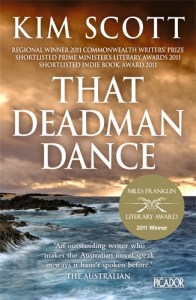
For me, it was a serendipitous  moment when I came across That Deadman Dance – a literary masterpiece by Kim Scott.

During this coronavirus lockdown, I was searching through my home library shelves for books I hadn’t yet read. I received this particular book as part of a prize for having one of my poems accepted for publication in a literary magazine.  It turned out to be one of the most beautifully and poetically crafted books I have ever read. The fact that it is set in the early colonization period of Australian history makes it even more relevant on this 250th anniversary year of James Cook’s arrival on the shores of Australia.

Bobby Wabalanginy is the spiritual protagonist throughout this incredible story; oh, there were others like Wanyeran, Dr Cross’ beloved friend.  Those two were like brothers and were even buried in the same grave on a mound…until settlers trampled and desecrated it instead of allowing Time to whiten the bones and Rain to wash them out to sea together. But even when he was a small child, Bobby could ‘see’ things others missed. He wanted so much to believe in the white colonists, even though not all in his extended family, especially its tribal elders, trusted the ‘Horizon People’ …but wasn’t Dr Cross just like one of his tribal elders, wise and just?

Dr Cross was one of the First Contact leaders; he, Bobby and Wunyeran, were united in their desire to share all things, and to learn from each other. After all, wasn’t that the peaceful, traditional way of Bobby’s tribe, and all other Aboriginal tribes throughout their country? Cross was a teacher of his white man’s history and he wanted to learn about Bobby’s people and their history in return. Bobby and Wunyeran grew close to Cross and could sleep in his hut or eat with him, and at times when they disappeared for days, Cross understood, always, even though it made other settlers nervous.

Cross was to write  of his dear friend Wunyeran; ‘He has the most intelligent curiosity…’ However, it was a characteristic they both shared. Cross and his superior agreed that their colonial outpost needed to build strategic relationships with the Indigenous peoples.  ‘We are outnumbered, and this is their home.’ One wonders at this point what might have been.

After the untimely death of Wunyeran, and subsequently the death of his dear friend Dr Cross due to that settler’s ‘cough’, everything began to change; dark days were emerging across the colonies.  Eventually, Aboriginals were again relegated by the colonizers to mere ‘blacks’ and ‘savages’; they could now be shot for climbing over fences the settlers had built to keep in their livestock and to keep the ‘blacks’ out. In the end, kangaroos disappeared, Aboriginal plants, tubers, were destroyed and their land trampled by livestock, their trees cut down for pasture. Even the whales had disappeared from their waterways.

Bobby was a dancer; light of limb, an actor, a storyteller, who could translate his ancestors’ lives and traditions through dance and cultural language.  In the final, humiliating years Bobby had left to him, he was reduced to ‘entertaining’ settlers  on the streets who sometimes ‘paid’ him a few coins if he pleased them. Yes, this is how Bobby’s ideals of mutual sharing and learning had ended…in a dead man’s dance of finality… evoking a time when the Aboriginal Noongar people of Western Australia first encountered the “Horizon People”: those British colonists, European adventurers, and whalers, ghost-like, intent on colonizing a land both harsh and seemingly of limitless future ‘civilized’ development.

“Bobby Wabalanginy never learned fear, not until he was pretty well a grown man. Sure, he grew up doing the Deadman Dance – those stiff movements, those jerking limbs – as if he’d learned it from their very own selves; but with him it was a dance of life, a lively dance for people to do together…”

Heartbreakingly, Bobby, deep down inside,  knew the outcome from the start. But Bobby being Bobby, embracing two very different cultures as he had, clung desperately to his belief in mutual understanding, until the smallest, remaining whiff of hope had vanished forever into senseless killing, rape of their spiritual land, and the rape of their women.  “We thought making friends was the best thing,” he says. “We learned your words and songs and stories, but you didn’t want to hear ours.”  But the colonizers could  not understand Bobby’s language, or interpret the deep significance of his dance.

“The man, scratching and making marks,” Wunyeran told them, “has hair like flame but keeps it covered. Cross.” It was a difficult word to pronounce. Wunyeran was patient, explaining it… “Yes, Dr Cross they call him. I slept in his shelter,” he said, and accepted the admiration of his fellows. “He is a man who scratches in his book all the time.”

“When Bobby Wabalanginy told the story, perhaps more than his own lifetime later, nearly all his listeners knew of books and the language in them. But not, as we do. You can dive deep into a book and not know just how deep until you return gasping to the surface, and are surprised at yourself, your new and so very sensitive skin.  As if you’re someone else altogether, some new self, trying on the words.”  That Deadman Dance is such a book in my view.

The last foreboding paragraph of the book is abstract in its telling, but we, the intuitive readers, know exactly what it foretells.

That Deadman Dance is set in the first decades of the 19th century in the area around what is now Albany, Western Australia. In poetic prose, it explores the early contact between the Aboriginal Noongar people and the first European settlers.

This is such a moving subject, and Scott’s research is impeccable. He uses settlers’ diary entries and traditional stories passed down through generations of Indigenous elders. However, you will not read about any vivid acts of violence; the words are sheer poetry, even when there is violence. Scott tells us so much with so few words.

Kim Scott has the moral authority to these stories of his country because he is a descendant of the Noongar People who have always lived on the south coast of Western Australia where the early whaling settlements brought in sailors, soldiers and scouting colonists. That Deadman Dance is the winner of the Miles Franklin Prize and many other awards.

**********************************************************

-Anne Frandi-Coory 29 April 2020