Archive

Tag Archives: Anne Frandi-Coory

download

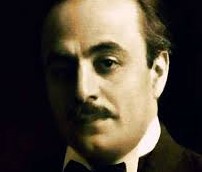
Khalil Gibran

Even Khalil Gibran, Lebanon’s most famous poet, understood his country’s multiple personalities.

****************************************

Khalil Gibran

                                                  One of my favourite books in my home library.

(Unfortunately ‘Khalil’ has been misspelt on the book cover)

**********************************************

The following is a short story and poem taken from:

Khalil Gibran, The Garden of the Prophet (written 1934)

***********************

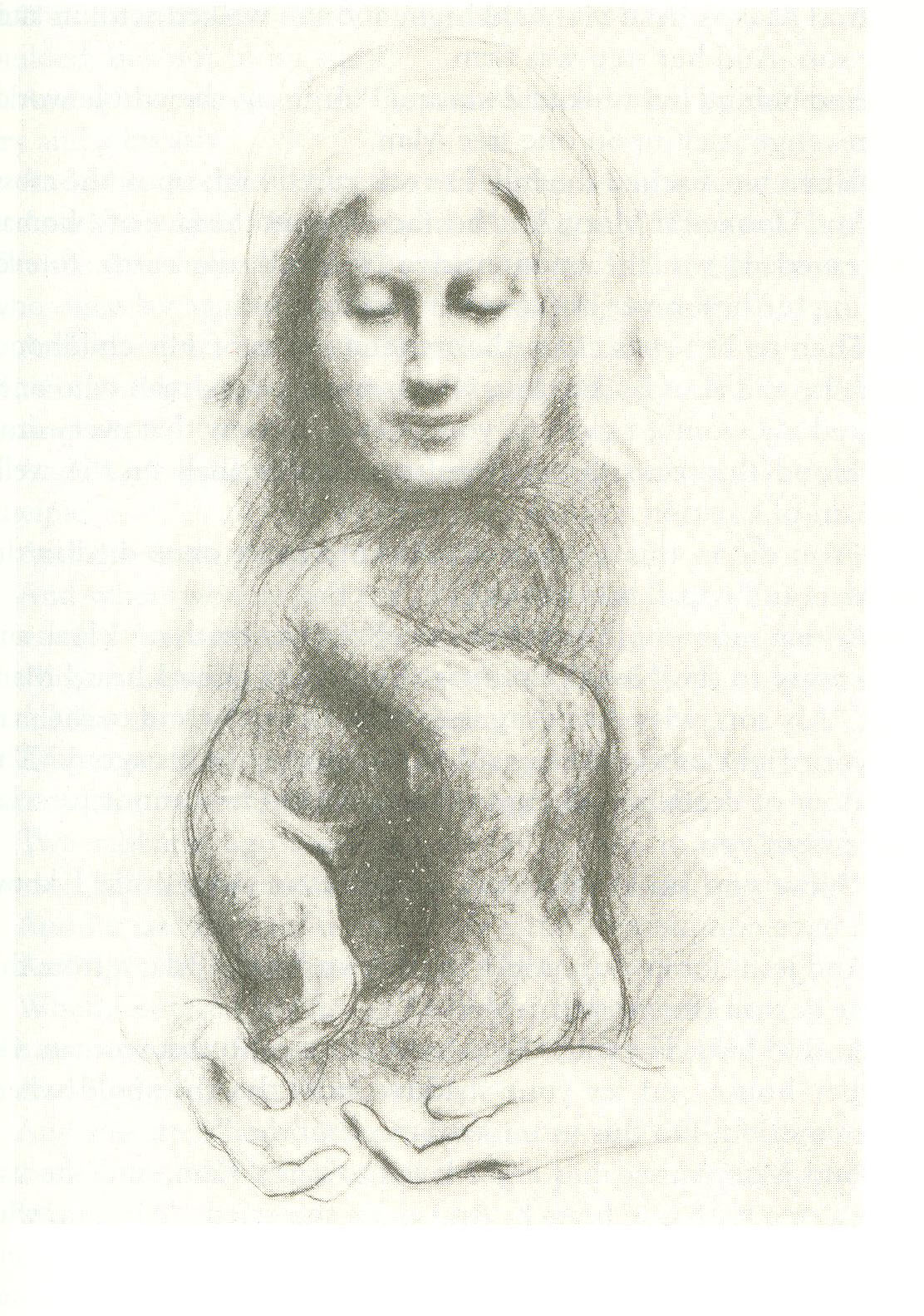
Sketch by Khalil Gibran

And Almustafa came and found the Garden of his mother and his father, and he entered in and closed the gate that no man might come after him.

And for forty days and forty nights he dwelt alone in that house and that Garden, and none came, not unto the gate, for it was closed, and all the people knew that he would be alone.

And when the forty days and forty nights were ended, Almustafa opened the gate that they might come in.

And there came nine men to be with him in the Garden; three mariners from his  ship; three who had served in the Temple; and three who had been his comrades in play when they were but children together. And these were his disciples.

And on the morning his disciples sat around him, and there were distances and remembrances in his eyes. And that disciple who was called Hafiz, said unto him: “Master, tell us of the city of Orphalese, and of that land wherein you tarried those twelve years.”

And Almustafa was silent and looked away toward the hills and toward the vast ether, and there was a battle in his silence.

Then he said:

My friends and my road-fellows

Pity the nation that is full of beliefs and empty of religion,

Pity the nation that wears a cloth it does not weave, eats a bread it does not harvest,

And drinks a wine that flows not from its own wine press.

Pity the nation that acclaims the bully as hero, and that deems the glittering conqueror bountiful.

Pity the nation that despises a passion in its dream, yet submits in its awakening.

Pity the nation that raises not its voice save when it walks in a funeral, boasts not except among its ruins, and will rebel not save when its neck is laid between the sword and the block.

Pity the nation whose statesman is a fox, whose philosopher is a juggler, and whose art is the art of patching and mimicking.

Pity the nation that welcomes its new ruler with trumpetings and farewells him with hootings, only to welcome another with trumpetings again.

Pity the nation whose sages are dumb with years and whose strong men are yet in the cradle.

Pity the nation divided into fragments, each fragment deeming itself a nation.

***********************************

Sketches by Khalil Gibran, Lebanon’s most famous poet HERE

***************************************

Anne Frandi-Coory’s  Lebanese Family tree and photos HERE: 

Updated 19 July 2017

The price you pay for a book bears no relation at all to the value of the stories and lessons held within!  I found The Arab Mind by Raphael Patai, [a prolific cultural anthropologist] marked down at a sale in a favourite NZ book shop.  I believe that, like cats, books find you, you don’t find them.  In all my travels I have never seen this book anywhere else.  And I found it while writing the final manuscript for ‘Whatever Happened To Ishtar?’

********

Fayez A. Sayegh comments in The Arab Mind: ‘…yet even more devastating… was the drying up of the creative and adventurous spirit within Arab society itself. The keen intellectual curiosity which characterised the preceding period, the passionate and untiring search for knowledge, and the joy of adventure were smothered under a hard crust of dogma and fundamentalism. Free thought was banished, traditionalism reigned in its place…’

><

One of the most enlightening books (for me) I have ever bought

><

I grew up without knowing my Italian mother as a person.  She suffered from severe bipolar disorder with psychotic episodes. So, at ten months old, I was placed in a Catholic  Orphanage for the poor, and was visited only by my devoted Lebanese father.  His extended family could not find any room in their hearts to love me.

My father often took me to visit his extended family, in the futile hope that  their frozen hearts might thaw, but the quiet, prayerful ways of a nun-studded convent does not prepare a young girl well for the noisy and multi-generational home of  Middle Eastern immigrants.  In their view I was “of another breed”.  I escaped Catholicism and “Little Lebanon” as a teenager and never returned.  However, you can take the girl out of her Lebanese extended family but you can’t take the Lebanese influence out of the girl, as the familiar cliché goes.  I picked up the Aramaic language they spoke and many positive aspects of their lives; great cooks, devotion to family (if you didn’t have a foreign mother that is) but those positives  were buried deep in my soul for many years, under all the negatives.

From The Arab Mind by Albert H. Hourani: To be a  Levantine is to live in two worlds or more at once, without belonging to either; to be able to go through the external forms which indicate the possession of a certain nationality, religion or culture, without actually possessing it. It is no longer to have a standard of values of one’s own, not to be able to create but only able to imitate; and not even to imitate correctly, since that also needs a certain originality. It is to belong to no community and to possess nothing of one’s own. It reveals itself in lostness, pretentiousness, cynicism and despair.

The Arab Mind was such a help in the final stages of writing   Whatever Happened To Ishtar? A Passionate Quest to Find Answers for Generations of Defeated Mothers.  Many of my Lebanese family’s ethnocentric behaviours suddenly took on new meaning; the hatred they exhibited toward my Italian mother and by association, to me, was the result of thousands of years of cultural prejudice.  Necessary in desert and mountain life in sectarian communities where brutal invasion and massacre were a common way of life.

To the Arab, saving face and honour are everything and when your beloved eldest son marries a sharmuta (Aramaic for prostitute-every woman who did not live up to the family’s cultural values was labelled sharmuta) then what can you do but exile from the family the issue of that union!  Being the only girl child made it easy for them to make me the scapegoat of all the family’s ills in a foreign country.

Historian Oswald Spengler: The Arab culture is a discovery . . . Its unity had been suspected by the late Arabs, but it escaped the Western historians so completely that one cannot find even a good designation for it. On the basis of the dominant language one could term the pre-culture and the early period Aramaic, the late period, Arabic . . . The Arab spirit however, mostly under a late-antique mask, cast its spell over the emerging culture of the West, and Arab civilization, which in the folk psyche of Southern Spain, Provence, and Sicily is superimposed that of antiquity…

In this current era of the ‘Arab Spring’, I recommend you find a copy and read The Arab Mind to gain an understanding of how differently we westerners from such very young countries, like Australia and New Zealand, view everyday life.  I think the half of my book that dealt with my father’s family was a much kinder book in the end because I read The Arab Mind before I sent my re-written manuscript off to the publishers.  So many of the events that played out in my childhood took on very different meanings, while suppressed memories re-surfaced.  I understood better, what it must have been like for my naive, fifteen year old Syrian/Lebanese grandmother, from the hills of Bcharre in Lebanon, to marry and follow my grandfather to the other side of the world. She was one tough, superstitious old woman when I met her.

How relevant to the lives of my Maronite Lebanese extended family, and by the same token, to the current Arab Spring,  are the following quotes in the book:

Nabih Amin  Faris and Mohammed Tawfik Husayn  write in The Arab Mind: ‘In some respects Arab absorption [particularly Arab Muslims] in their bygone days tends to be a chronic disease. It stems naturally from the general misery of the majority of the people and the wretched social and political conditions since the fall of the Abbasid empire and the Arab states in Spain and North Africa. They live in a splendid past as an escape from the miserable present…Until the closing years of the eighteenth century, the Arab world was in a state of near stagnation, ingrown, content with its prevailing conditions, resigned to its fate, and blissfully ignorant of the events unfolding around it. Then the West descended upon the Arab world as a conqueror, bringing its culture, civilisation, and science, its missionaries, its mercantile goods and commodities, and political, economic and military domination.’

I found chapter 15, The Question of Arab Stagnation particularly interesting. e.g. the Arab admiration for Israel; its excellence in scientific research, and its brilliant scholars and universities. Its global achievements in weaponry, commerce and banking, not to mention its organisational abilities in all walks of life. ‘The Jews, their rich people and their financial institutions…donate millions for their researches in Israel; but our rich people and our financial institutions,  our leaders, our rulers …do not contribute a single gursh [penny], but ask: Why donate to science?’  This chapter has several publications written by Arabs who are very critical of Arab stagnation since the early 14th century and why they believe Israel won the 1967 war. It may surprise readers to know that upwards of 200,000 Arabs a year regularly visit Israel because they love the place, and everything that it has to offer them, and which they cannot easily access in their own country.

Faris and Husayn further recognise that ‘the cultural famine which ravages Arab life is indeed not novel, nor is it the handiwork of colonial rule, feudal rapacity and local oppression alone…its roots go far back into the history of the Arab people.‘ …the low position in which Arab society keeps its women is an important contributing factor to this sorry state of affairs.  ‘No wonder,’ they exclaim, ‘that the Arab world remains backward, tradition-fettered, and limping behind the procession of human achievement, when women’s status is so low.’ [my emphasis]

It is not enough for Arabs to continue to blame the West for their stagnation…dam butlab dam feuds were so intense among the Arab tribes [blood demands blood or an eye for an eye] in pre-Islamic times, and were such a permanent feature of life…’that an important contributing factor to Muhammad’s success in rallying the people of the Arabian Peninsula around the banner of the new religion he preached was the fact that widespread feuding had weakened the Arab tribes and made it impossible for them to unite against him.’

From author Hisham Sharabi in The Arab Mind: …There is no turning away from Europe. This generation’s psychological duality, its bilingual, bicultural character are clear manifestations of this fact. It has to judge itself, to choose, and to act in terms of concepts and values rooted not in its own tradition but in a tradition that it has still not fully appropriated.

From Author Halim Barakėt in The Arab Mind:…We are a people who have lost their identity and their sense of  manhood. Each of us is suffering from a split personality, especially in Lebanon. We are Arab and yet our education is in some cases French [my grandfather, Jacob Coory’s second language was French], in some cases Anglo-Saxon and in others Eastern Mystic. A very strange mixture. We need to go back and search out our roots. We’re all schizophrenic…

The Arab Mind is a great read, very well written, and draws on accomplished writers and authors who know their topic well.   I urge anyone interested in Arab culture and history, to read this book.

I have lived a life in two halves, so I know what Barakėt means about being schizophrenic. Writing Ishtar? helped me to become one person and to discover the wonderful Italian and Lebanese genetic talents buried within me. The young Arabs of today have so many tools to use in their search for who they are; Facebook, Google, Twitter, blogging, mobile phones, formal education, etc etc.  Let’s hope their search for an identity won’t take as long as it did my generation.

 Follow Anne Frandi-Coory here on her blog:  frandi.blog

Also Here on Anne Frandi-Coory’s Facebook Page:

https://www.facebook.com/myhomelibrary/


Updated 9 April 2016

> <> <> <<> <> <> <

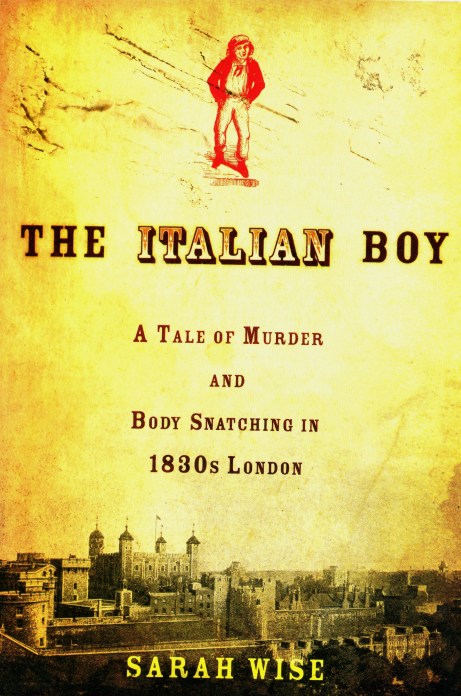
the Italian Boy 001

Sarah Wise documents life in early 19th Century London.  She has done meticulous research into such things as body snatching, murders and the filth of London Streets on which many homeless people spent their lives. She writes in the Preface:

Toward the end of 1831, London’s Metropolitan Police were alerted to a ghastly series of crimes… I first came across the London killings – or the Italian Boy case as it was known – in the course of writing a newspaper article about an East End council housing estate in Bethnal Green that had been built on the site of one of the nineteenth century’s most notorious slums. It was said that the surrounding district had been tainted for decades by the grisly crimes committed in Nova Scotia Gardens …and indeed, on investigation I learned that in the late autumn of 1831, No 3 Nova Scotia Gardens had had infamy thrust upon it by its residents, John Bishop and Thomas Williams, and an associate, James May – all of them body snatchers, or “resurrection men” who were charged with murdering a vagrant child. 

The case of the Italian boy and the subsequent investigations into the other horrific events at Nova Scotia Gardens highlighted the extremely unpleasant aspects of life in London. It was a city that had increased by one third between 1801 and 1831 to over one and half million inhabitants making it one of the most diverse populations anywhere on earth. This era in London was named ‘The Italian Boy’ by the author because as she says, it was an era without a name: Following the Italian Boy case in the newspapers of the day, I became curious about the type of people who had fallen into the path of the accused on their nightly prowls around the metropolis …What sort of city was London in 1831?

The author writes of the young children and young adults who could be picked up off the streets by body snatchers, brothel keepers, sex offenders, and press-gangs. This is the history of the nameless poor and destitute, and immigrant boys such as in the case of the Italian boy, who tried to survive on the streets. Sarah Wise asks the question we would all like answered: Why, even in death, did their identities remain mysterious? 

…….

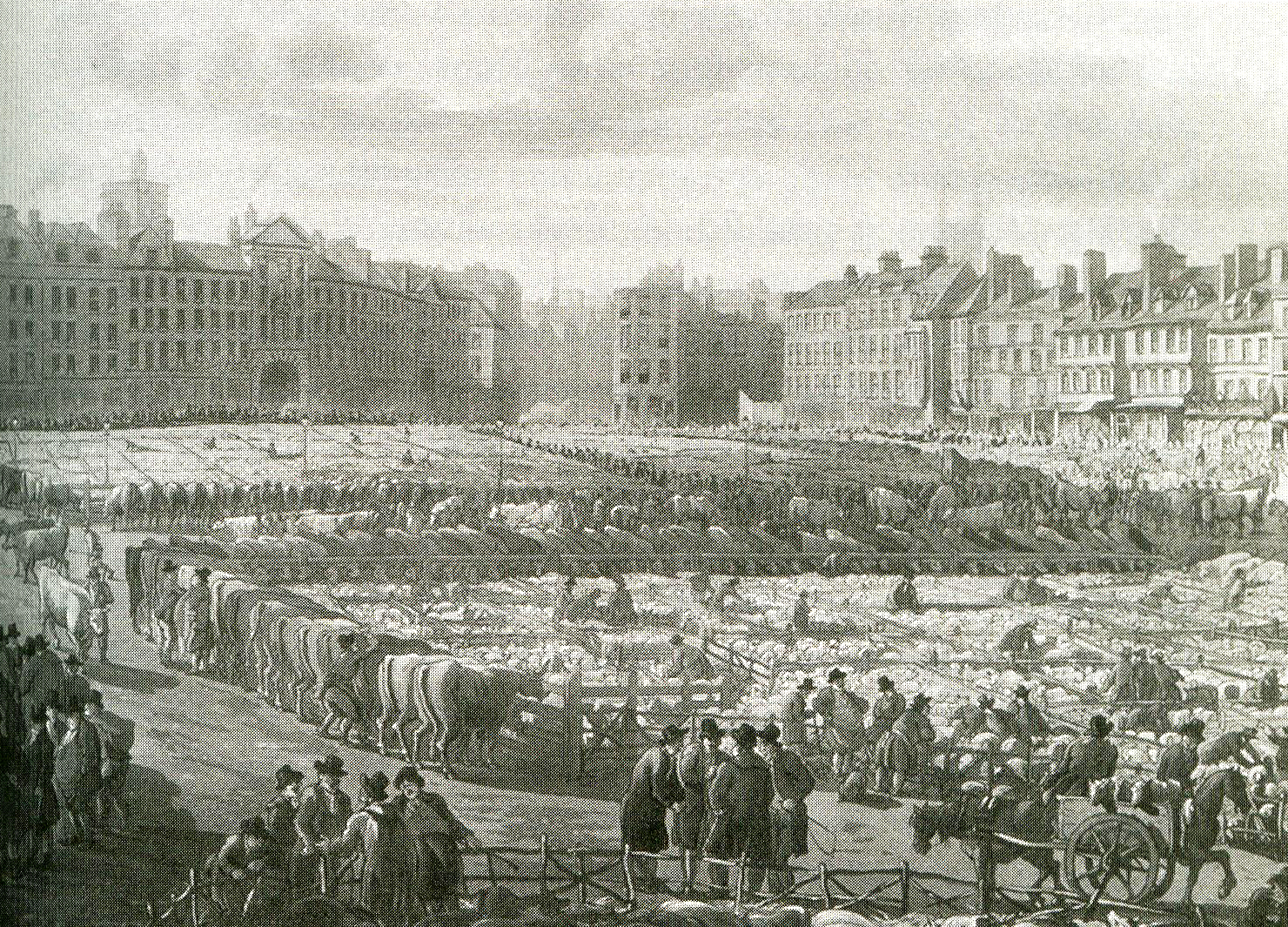
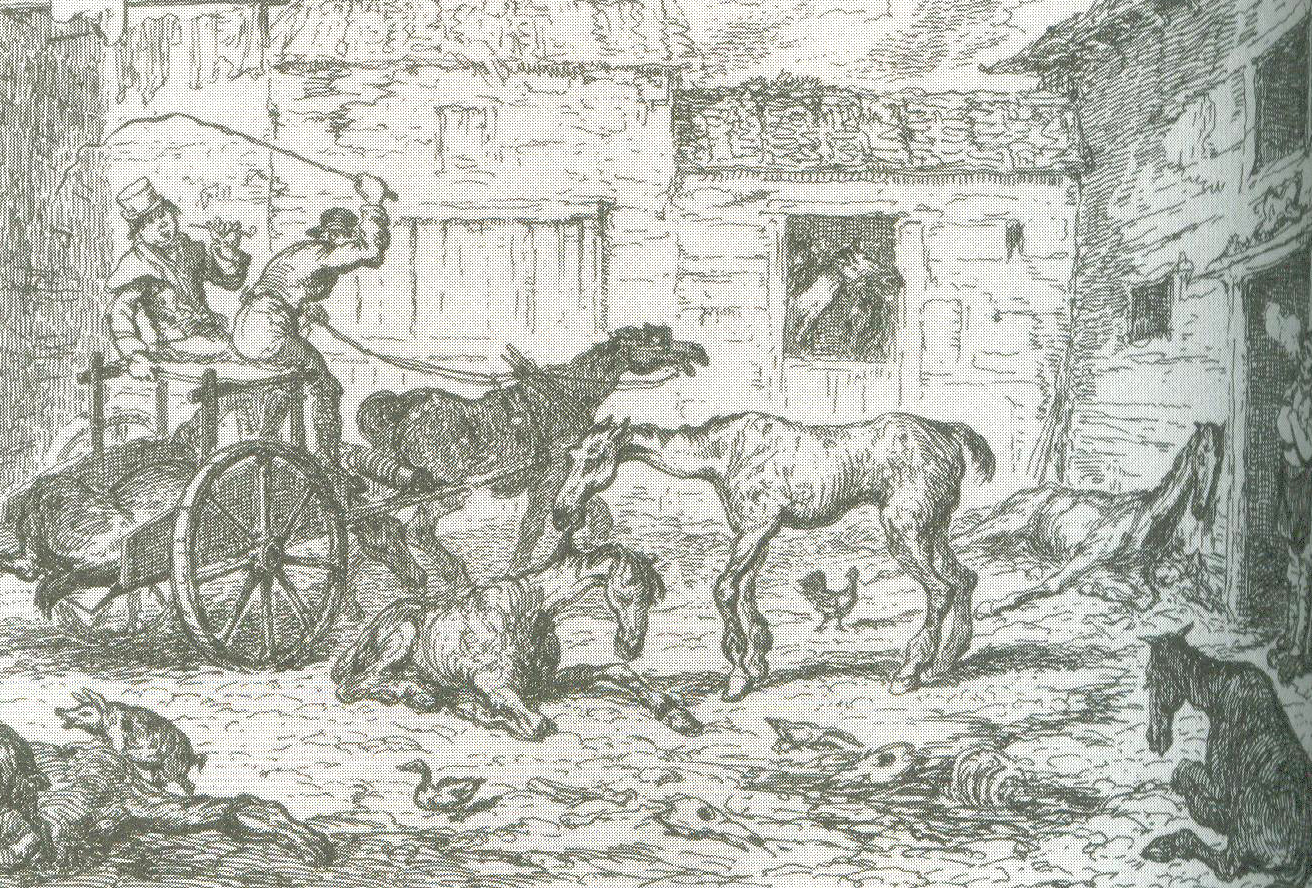
The chapters that particularly  interested me at the time I bought ‘The Italian Boy’ concerned the Smithfield Market.  Hundreds of thousands of cattle, sheep, pigs and horses were driven to Smithfield from all over England, and were slaughtered on the streets or in uncovered yards for all to see.  The cruelty these animals were subjected to is nothing less than barbaric.  But then life for humans in London at that time could be described as barbaric as well.

One passage reads:

‘Passersby glancing left or right into a court or yard, where a butcher worked could find themselves witnessing a killing.  It was alleged by various witnesses before the 1828 Select Committee on Smithfield that sheep were often skinned before being completely dead;  it was observed that an unskilled slaughterman could require up to ten blows with an axe to kill a bullock …horses were up to their knees in the weltering remains of their fellow creatures, maimed and starving and showing obvious signs of distress as their fate dawned on them.’

For me, there were similarities in the way the animals were treated as described at Smithfield, and those in the Indonesian abattoir in the 21st Century, where live Australian cattle were sent to be butchered.  Australian animals who had grown up on Australian farms trusting humans and being treated humanely. But that is another story.

Sarah Wise brings a dark and disturbing period of London history vividly to life. Even allowing for the brutality, this is a great read.

It was an eye opener for me on a personal level. Whilst researching my family tree, I discovered that some of my Italian ancestors lived in the slums of London during the Italian Boy era. My great grandfather, as a young man, was an ‘organ grinder’  with a performing monkey when the family first arrived in London. But again, that is another story.

-Anne-Frandi Coory  9 April 2016

><><><><><><><

See:   Indonesian Abattoir-A Lesson in Bloody Cruelty  &  Halal Butchery.


><><>><><><><

A View of Smithfield Market from 'The Italian Boy' by Sarah Wise

A View of Smithfield Market from ‘The Italian Boy’ by Sarah Wise

><


><><><><><>

George Cruikshank's The Horse's Last Home from 'The Italian Boy' by Sarah Wise

George Cruikshank’s The Horse’s Last Home from ‘The Italian Boy’ by Sarah Wise

…..

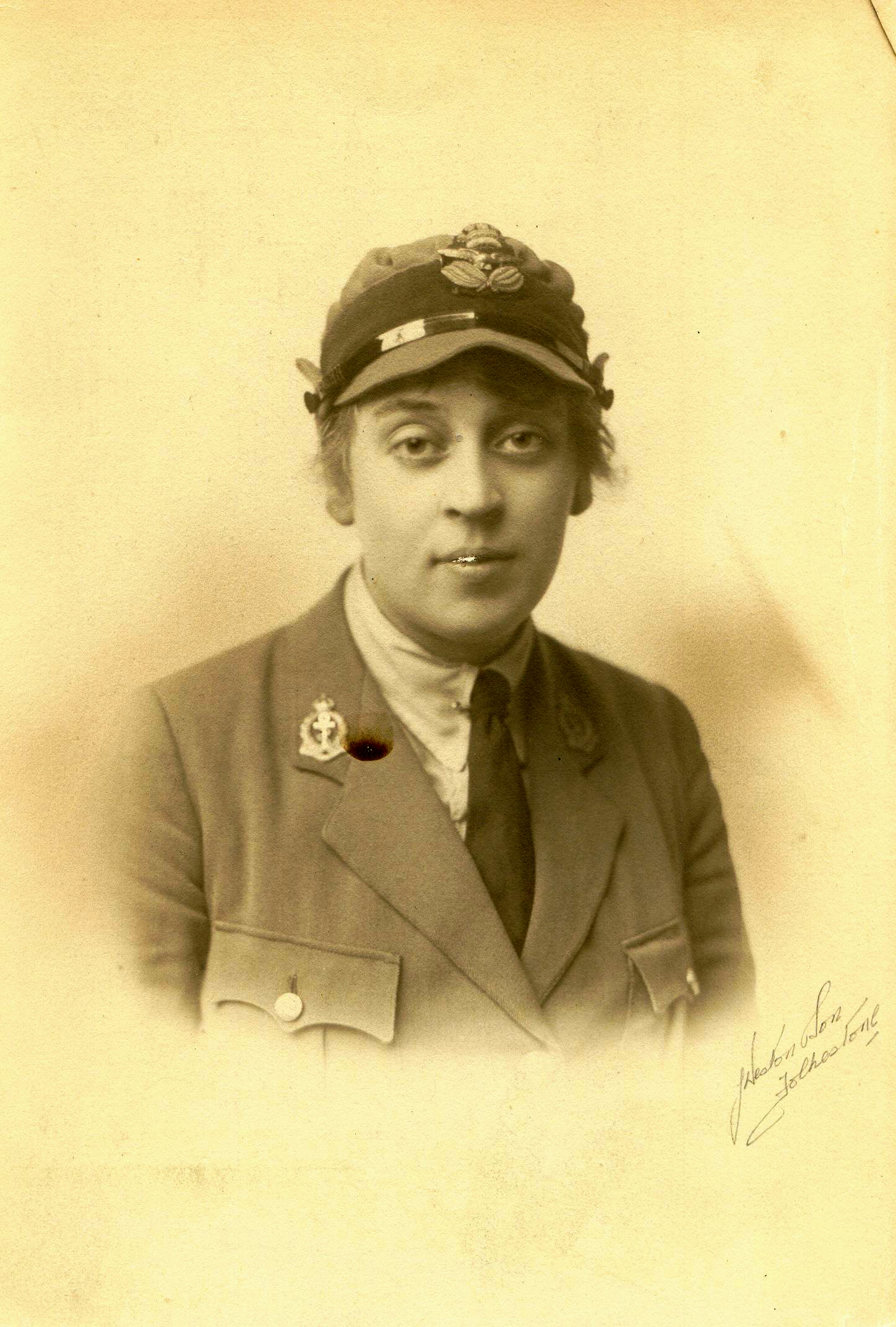
Portrait photograph copyright to J Weston & Sons, 20A Sandgate Road, Kent. UK.

><

I found this photo in an Egyptian Arabic/English manual printed by E Antoon Elias, Cairo in 1907.  El-Maaref Printing Office, Negib Mitri, Cairo – 3rd Edition.

GARIBALDI  

by Jasper Ridley – A Book Review

Updated 6 December 2013

My  great grandfather, Aristodemo Giovanni Frandi, fought in Garibaldi’s ‘army’ and eventually emigrated to New Zealand in 1875. Many were the tales he told his family about the betrayals of the Catholic Church, of its priests and nuns, who informed on Garibaldi’s fighters time and again. Read more about Aristodemo and Annunziata Frandi


….

Garibaldi 001

The Catholic Church has the audacity to say that  Catholics made a fundamental contribution to creating a united Italy and a national identity, in a message marking the country’s 150th birthday.  Pope Benedict XVl has in the past stated that Christianity helped forge a national identity that resisted political fragmentation on the Italian peninsula,  and foreign domination.  He stated that the Church’s contribution came through education, literature and the arts in general, listing such personalities as Michelangelo, Caravaggio and Bernini, whose works were often commissioned for religious purposes.  Is the pope trying to publicise a dwindling Christianity in this age of free thinking and science?

Benedict obviously lives in a religious fantasy world.  Artists were stymied and never allowed to paint what they pleased in case it offended the Catholic Church.  Many artists lived a life of subsistence because of this and it is well documented how the Catholic clergy, including extremely wealthy popes and cardinals,  enforced their sexual proclivities on young artists.  The 19th Century Pope did all he could to quash any attempts at the unification of Italy.  It would mean that the papal states would shrink to the City of Rome and finally to Vatican City.  Giusseppe Garibaldi led the Risorgimento;  he and his followers hated the Catholic Church (Papal Rome) because so often they were betrayed by nuns, priests and cardinals.  It was Garibaldi and those politicians who supported his quest for unification, who finally forced Austria, papal sycophants, and France, out of Italy.  Garibaldi’s heartbreak was that Nice, his birthplace,  was ceded to France in 1861 by politicians, as part of the deal that they leave the peninsula.

It is such a joke that Pope Benedict could come out and say it was through Catholic education and literature that Italy was united.  The truth is, only ‘the list’ of books approved by the Church were available for the general populace to read.  Most literature that made its way to Italy was burned or hidden in heavily fortified libraries only accessible to Monks and Cardinals.  See previous post Vatican Library.   As for resisting political fragmentation; the only reason they exiled or brutalised any political opposition was because the Church did not want to lose the corrupted power base they possessed.   The Church was fully funded and supported by the Spanish, French and Austrians.

If any group can be held responsible for seeding the Risorgimento (resurgence) it was the people of Italy themselves; mostly peasant farmers, some elitists, and mercenaries who had fought with Garibaldi in South America.  Peasant farmers, led by Garibaldi, almost single-handedly drove foreign power out of Sicily, and this was the catalyst that began the unstoppable unification of the peninsula.  The Roman Catholic Church opposed unification simply because it would mean the end of the vice grip they held over Italy.  Read Garibaldi by Jasper Ridley, it is very enlightening and I would hazard a guess that it is not one of the Vatican’s favourite books.

– Anne Frandi-Coory 6 December 2013


See post:  Terroni by Pino Aprile    “All that has been done to ensure that the Italians of the South become ‘Southerners’…

><><

the-dante-club-001

><><

This novel is a great read; one of suspense, horrendous murder and intrigue, poetry and war.  Set in the mid 19th Century, it revolves around poets and writers, who form the Dante Club to support and advise the American poet H W Longfellow, while he completes the first American translation of  Dante’s Divine Comedy.

The Dante Club takes us through the changes in Boston wrought by the American civil war including the huge increase in violent crime.  Slavery may have been  abolished but black Americans continued to suffer and the American people were bitterly divided on the issue.  Soldiers who fought in the war, aimlessly walk the streets of Boston, physically and mentally broken.  One soldier relives his experiences daily and I for one had no idea how brutal that war was considering it was mostly Americans fighting each other. The two sides were infiltrated by foreigners who had their own agenda for joining up.

American universities of the times were managed by wealthy and sometimes bigoted business men.  One particular university pressured the influential Longfellow to give up his quest to translate Dante’s work, believing he should concentrate instead on promoting American writers, not a foreign writer who dwells on ridiculous stories about hell and who has been exiled from his own country.

Matthew Pearl cleverly weaves all of these issues into his book.  For instance, the first black police officer in the Boston police force, who is involved in the search for a serial killer, is not permitted to wear a uniform, has to hide his badge under his jacket and is subjected to racial comments and bullying by fellow officers.  Strangers in the street hurl constant racial slurs at him.   Corrupt politicians change the law so that detectives could claim the substantial financial reward offered by the wealthy widow of one of the victims, for the killer’s capture.

On top of all of this, Mr Pearl manages to incorporate the fascinating subject of entomology to help solve one of the most gruesome murders.  The insect in question is Cochliomyia Hominivorax whose methods are as bloody as the killer’s.

Mr Pearl graduated from Harvard University summa cum laude in English and American Literature in 1997, and in 1998 he won the Dante Prize from the Dante Society of America. – Anne Frandi-Coory 15 March 2011

Updated 15 November 2013

Pope Benedict preaches forgiveness again, albeit centuries too late! Has anything really changed in the Catholic Church?

In the last year or so the Pope has forgiven Joan of Arc (possibly mistaken identity) Galileo, and Martin Luther, their alleged heresy against The Church.

See previous posts: Joan of Arc; &  Galileo’s Daughter

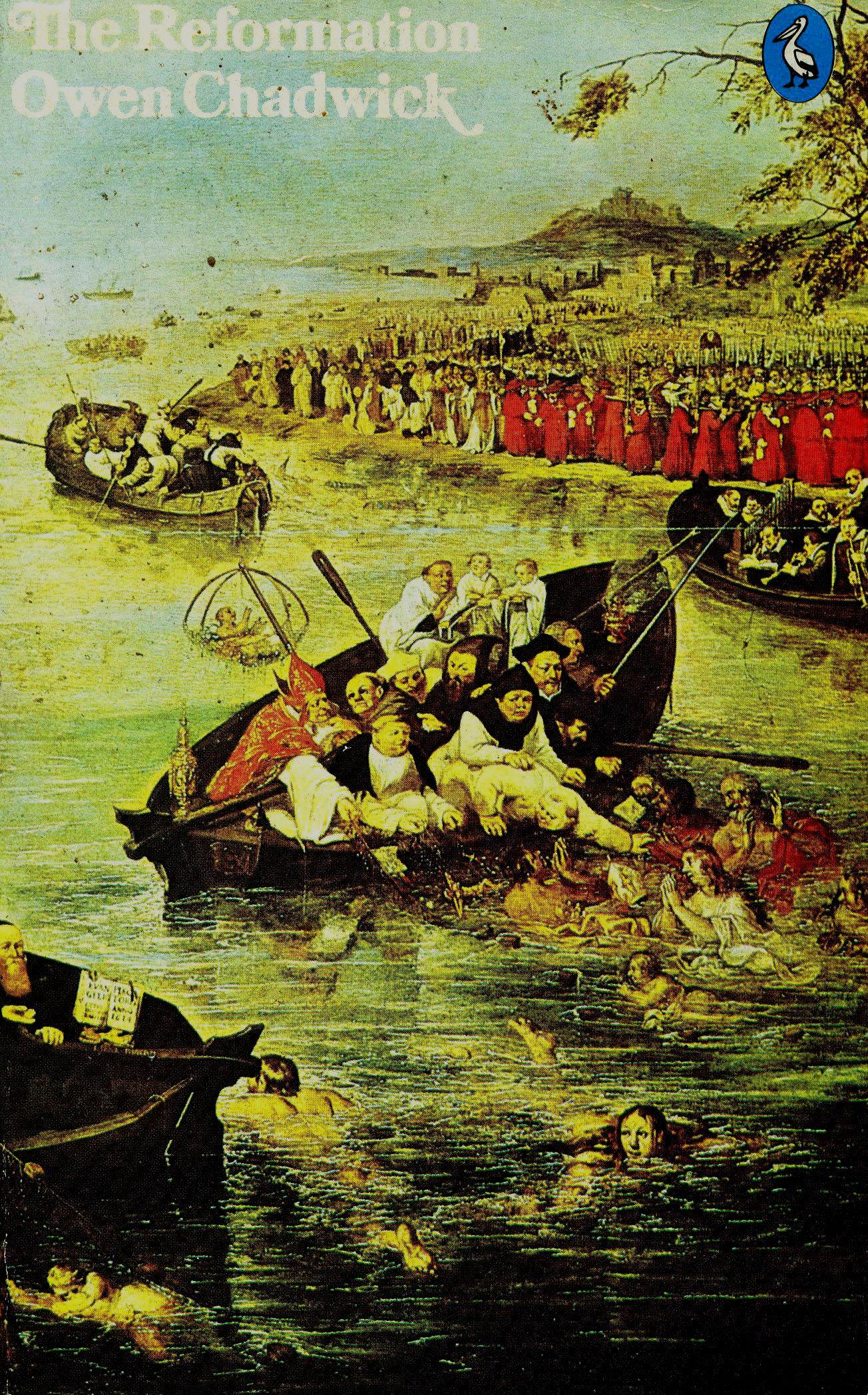
The Reformation

The Reformation

THE REFORMATION by Owen Chadwick

– A Book Review

Martin Luther, a former Catholic priest, the Pope now says, did not intend to split the Catholic Church. Luther (1483-1546)  wanted to purge The Church of corruption.  The poor were forced to contribute to the Church’s coffers at Sunday Mass,  and starved, while the clergy grew fat on that income and the wealth given to them by the privileged in order that those who sinned (like paedophile priests) may take a short cut around penances for their mortal sins, and still get to heaven.  Luther preached that whether we go to either heaven or hell,  is preordained when we are born.  We cannot bribe our way into heaven.  This was Luther’s way of stopping the corruption of indulgences within the Catholic Church. Luther believed the Bible to be the sole source of religious authority and made the Bible accessible to the masses by translating it into the vernacular and arranging hundreds of copies to be printed; made possible by Johann Gutenberg’s invention of the printing press.

See previous post: Justification of Johann Gutenberg

The whole thing is rather sickening and hypocritical really. The move by the Pope is believed to be the Vatican PR Machine’s way of softening Pope Benedict’s image as arch conservative hardliner, ex-head of the Holy Office of the Inquisition, and pro nazi sympathiser during World War ll.  It is no secret that the Catholic Church supported Nazism.  The Pope is also erecting a statue in the Vatican gardens, to Galileo, another  “heretic” excommunicated by the Church, and who lived out his last years in poverty under house arrest.  His crime was his belief in heliocentrism: the planets and the earth revolve around a relatively stationary sun at the centre of the solar system.  I think the only reason Galileo wasn’t tortured to death by the Holy Fathers of the Inquisition was that he was much loved by the people and a brilliant scientist. Nevertheless Galileo was forever alienated from his church, the pope, and the Jesuits in particular.

Luther was excommunicated by Pope Leo X, who dismissed him initially as “a drunken German who will change his mind when sober”.  Many thousands of the poor were tortured and killed in the purges that followed.  A brutal war erupted which divided Christendom; but it was not about religion, it was about POWER!  Nothing has changed in the 21st Century.

St Bartholomew's Day twitter

MERCY

MERCY: St Bartholomew’s Day, Paris, 1572. ‘Ill-fated love affair between a Catholic & a Protestant’. John Everett Millais 1829-96. This is the day thousands of Protestants were slaughtered by Catholics.

……………………………

-Anne Frandi-Coory  15 November 2013

><

The Abbess was of noble blood

Catholic Sisters of Mercy; four biological sisters.The nun on the right was the closest Anne Frandi-Coory came to a mother figure; her face is the one she remembers as an infant in a Catholic Orphanage nursery. (see ‘Whatever Happened To Ishtar?’ below.)

But early took the veil and hood

Ere upon life she cast a look

Or knew the world that she forsook

Fair too she was, and kind had been

As she was fair, but ne’er had seen

For her a timid lover sigh

Nor knew the influence of her eye

Love, to her ear, was but a name

Combined with vanity and shame

Her hopes, her fears, her joys, were all

Bounded within the cloister wall:

The deadliest sin her mind could reach

Was of monastic rule the breach;

And her ambition’s highest aim

To emulate St Hilda’s fame

For this she gave her ample dower,

To raise the convent’s eastern tower;

For this, with carving rare and quaint,

She decked the chapel of the saint,

And gave the relic-shrine of cost,

With ivories and gems embost.

The poor her convent’s bounty blest,

The pilgrim in its halls found rest.

Black was her garb, her rigid rule

Reformed on Benedictine school;

Her cheek was pale, her form was spare;

Vigils, and penitence austere,

Had early quenched the life of youth,

But gentle was the dame in Sooth

From: Sir Walter Scott, ‘Marmion’, The Immolation of Constance De Beverley

><

My mother was a defeated nun and a defeated mother. She entered a convent to escape the inescapable: LIFE.  (See Previous Post: My Mother Was A Catholic Nun. 

For hundreds of years, young women and girls have been entering convents for various reasons.  Fathers and other patriarchs sent unmarriageable or unmanageable daughters into a cloistered life. Daughters whose mothers had died were also sentenced to this life of imprisonment, with or without their consent.
“A Drama of Science, Faith and Love”

Even Galileo, that illustrious 17th Century  scientist, and devout Catholic, confined his eldest daughter from the age of thirteen (1616)  to San Matteo convent in Arcetri.  His daughter, Virgina was deemed unmarriageable because her father had never married her mother, the beautiful Marina Gamba of Venice. Virginia (Sister Maria Celeste) lived out her life in poverty and seclusion in the convent (Order of St Clare) , as did her younger sister, Livia. Unlike Virginia, very little is heard from, or about, the “silent and strange” Livia.   Virginia  lost all her teeth by age 27  because of her lack of a nutritious diet.  It is worth reading  ‘Galileo’s Daughter’ by Dava Sobel, a gifted author, for more on these remarkable lives.  We know so much about Galileo and Virginia because of the correspondence between the two.  Ms Sobel also covers the horror of Galileo’s life and his banishment to house arrest in Ravenna, at the hands of the Holy Inquisition headed by Pope Paul V.

The Florentine poet, Dante Alighieri, was exiled from his beloved Florence in the early 14th Century by Pope Boniface Vlll (Cardinal Caetani), with support from the French.  Dante’s only daughter, Antonia, was confined to a convent in Ravenna where he was living at the time in 1320.  Antonia took the name Sister Beatrice, the name of Dante’s beloved.

In this day and age, the numbers of young Catholic women wishing to give up their freedom “for God” is dwindling.

What is worrying is that sexual harassment and abuse from priests and bishops continues, particularly in third world countries.  Rape is common because the clergy believe these nuns to be free from aids, unlike prostitutes. If the nuns’ abuse is uncovered, or they become pregnant, they are the ones to be thrown out onto the roads.

(See previous post  ‘Kiss of Betrayal’)

In an extreme case of double standards, always rife in the catholic Church, a nun at a Catholic hospital in Arizona was excommunicated because she approved an emergency abortion last year to save the life of a critically ill young patient.  Imagine the hundreds of  sexually abused girls and boys who could have been spared lives of misery, if paedophile priests had been excommunicated and reported to police, instead of being shifted around from parish to parish?

><

From the pen of  The Ethical Nag The Vatican has now launched an “apostolic visitation,” or investigation, of every one of America’s 60,000 religious sisters, accused with having what Vatican spokesman Cardinal Franc Rodé calls “a feminist spirit” and “a secular mentality”. At a time when the male leadership can be blamed for bringing the church to a state of global crisis, even the modest roles accorded to female clerics have come under attack from these men.

Not surprisingly, the appeal of joining a Catholic religious order as a career choice is plummeting. Fewer than 4% of North American Catholic women have even considered becoming a nun, according to 2008 data from the Center for Applied Research in the Apostolate. And that’s less than half the number compared to just five years earlier.

And no wonder. Dr. Tina Beattie, who teaches Catholic Studies at Roehampton University in the U.K., gives far more disturbing examples of how the Vatican treats its nuns.  For example:

“In 2001, senior leaders of women’s religious orders presented evidence to Rome of the widespread rape and abuse of nuns by priests and bishops, with a particular problem in Africa which has no cultural tradition of celibacy, and where the threat of HIV and Aids means that priests are more likely to prefer sex with nuns than with prostitutes. The Vatican acknowledged the problem and there was a brief flurry of media interest, but this is a scandal which has disappeared without a trace.”

I don’t know whether any Mercy nuns were sexually abused by Catholic clergy when I was a child  in their care, but I well remember the awe and deference the nuns exhibited in the presence of priests, bishops, and cardinals.  Once I understood the hypocrisy and double standard encouraged by the Church’s teachings, I found these displays sickening.

-Anne Frandi-Coory 3 February 2011

Read more about ‘Whatever Happened To Ishtar?’  

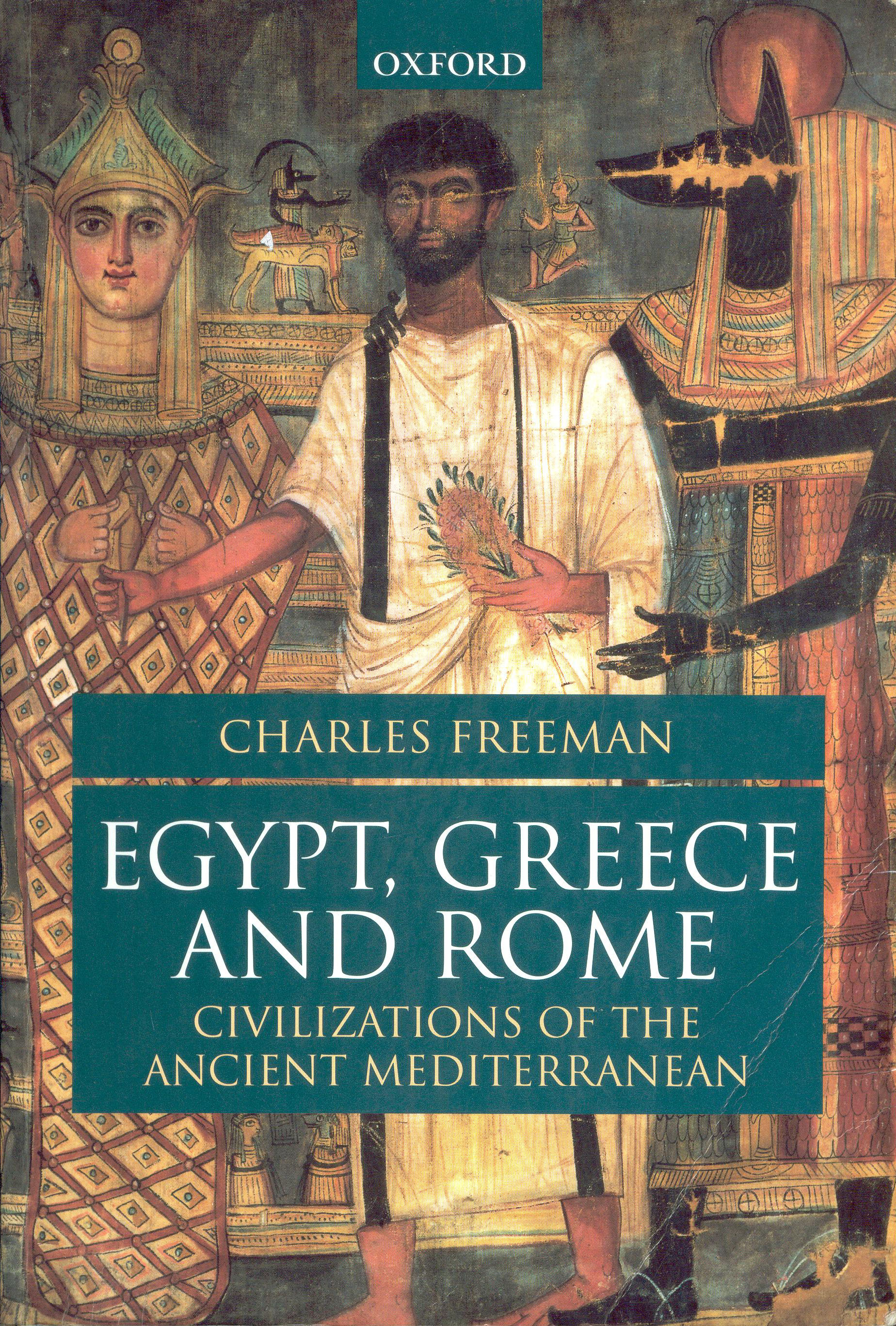
Charles Freeman’s book about civilisations of the Ancient Mediterranean

I have just been reading Egypt, Greece and Rome; Civilisations of the Ancient Mediterranean by Charles Freeman , published 1999.  What an amazing book of 638 pages.

Not as much of a chore to read as you might think. The author breaks the book into easy to follow chapters and titled paragraphs.  He uses date charts, date lists, events and maps to great effect and to which I referred constantly during the reading of the book.

The book has given me a better insight into the pre-history of these amazing civilisations, and to their relevance today. Mr Freeman takes the reader on an epic journey from Egypt in 4,500 BC to Eastern and Western Empires up to 1000 AD.  He brings together the most interesting and salient stories. In one sense, not much has changed.  Constant wars, plagues, atheism, religious diversity,polemics, politics, the fight for democracy, all played a part.

Carthage (now Tunisia) , for instance, was a prosperous and thriving Phoenician city in the 5th Century BC, and Greece was pioneering philosophy and   theatre.   Greek philosophers travelled the Mediterranean teaching students to “look” at both sides of an argument.  Trading goods between the various states was the chief activity that brought so many disparate groups together.  What I also loved about this book, are the references to legend and myth, and how they intertwined everyday life across the Mediterranean world. I especially enjoyed the sections on Classical Greece, a favourite era of mine, and the references to its literature.

In Chapter 14, Mr Freeman expands on the 5th Century origins of drama (one of the greatest of Athenian Inventions, by no means a universal human experience),  poetry, tragedy, theatre with such names as Aeschylus, Sophocles and Euripides, and Aristophanes, that satirical playwright extraordinaire.

During these times, beliefs in various gods were tied in with natural events,  human frailty and excesses.  Travel was relatively easy throughout Greece and the Mediterranean, and even non-citizens could find skilled work. Differing versions of the genealogy of gods wasn’t a hindrance, and most visitors ‘slotted in’ with local lore.

It was interesting to read the section on Sophists. The original meaning of the word ‘Sophist’ was anyone with exceptional talent.  However, members of this group were attacked  by both Plato and Aristophanes (satirically) for daring to present arguments  for and against any motion. Sophists can be credited with pioneering the study of religion as a social and anthropological phenomenon according to Mr Freeman. They disagreed strongly with the belief that there was some divine principle at work in the Universe. (Modern atheists, take note!) The Sophist, Protagoras, spent most of his life as a travelling teacher. He wrote: “Concerning the gods, I am unable to discover whether they exist or not, or what they are like in form; for there are many hindrances to knowledge, the obscurity of the subject and the brevity of human life.”  He proclaimed: “Man is the measure of all things.”   Athens was implementing democratic governance at this time and Protagoras’ proclamation could be taken as the slogan of democratic Athens.  Other Sophists suggested that gods originated in man’s experience of nature. The various gods had been created as personifications of natural phenomena such as the sun, moon, rivers, water and fire. To the Sophists men of shrewd and subtle minds invented for man the fear of the gods, to “frighten the wicked even if they acted, spoke or thought in secret.”  By the end of the century free thinking on religious matters was less tolerated.  Pestilence, war, tyrants and destruction killed optimistic fervour.

I wonder, is this what is happening in our world now?


-Anne Frandi-Coory  1 February 2011


*****

Also here on Anne Frandi-Coory’s Facebook page: 

https://www.facebook.com/myhomelibrary/

Mary & Jesus? No, actually Ancient Greek statue Tyche or Fortuna, the centre figure of a flourishing cult

There is a debate currently going on in Australia about giving school students the choice between taking either classes in Ethics,  or in Religious Studies.  Apparently the respective Christian Churches are not at all happy about this development.  Well, they wouldn’t be would they? They believe they are losing their grip over young minds.

Ethics clarified

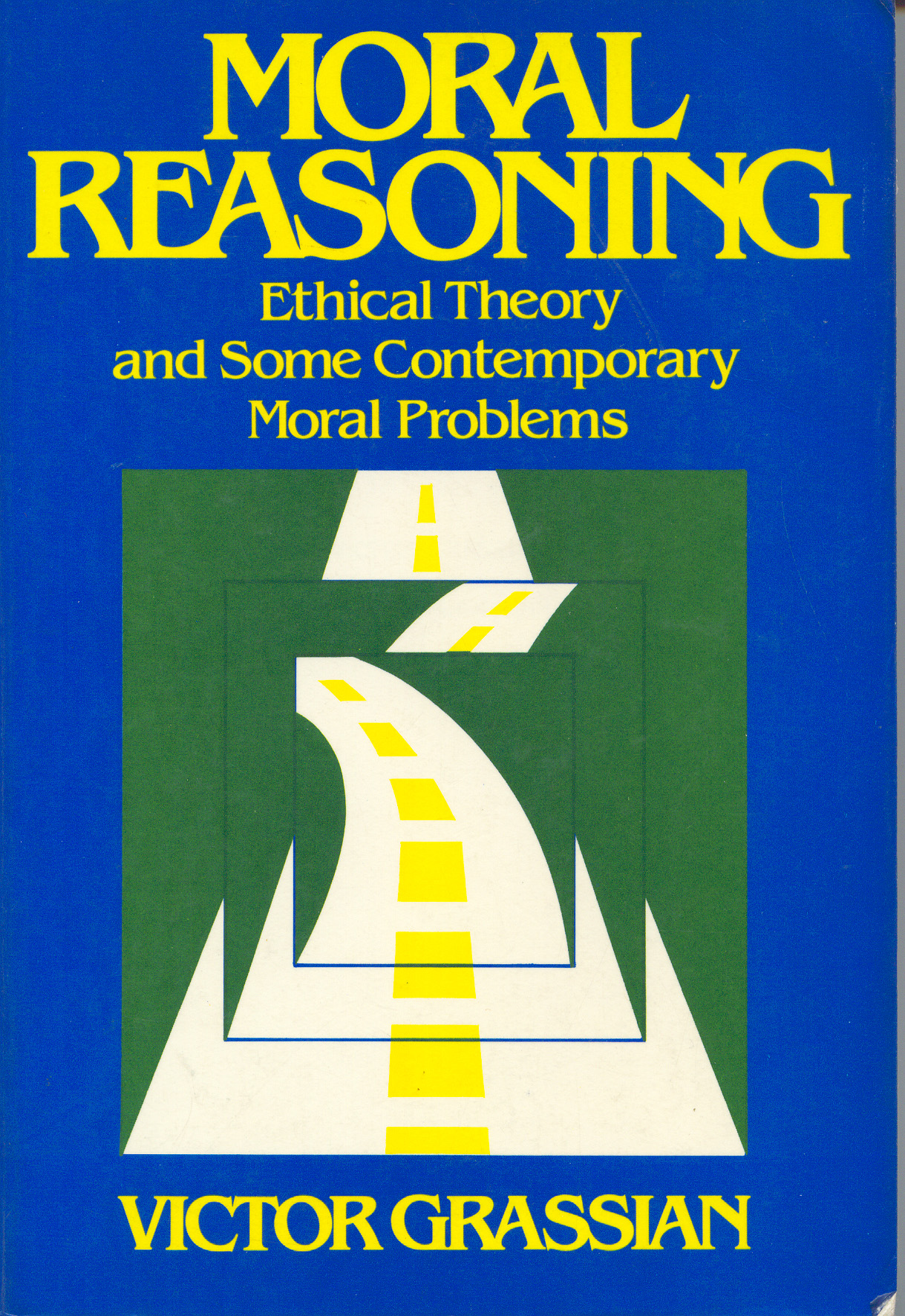
In his book  ‘Moral Reasoning; Ethical Theory And Some Contemporary Moral Problems’ Victor Grassian defines ethics as:

‘Ethics may be defined as the philosophical study of morality-that is, of right conduct, moral obligation, moral character, moral responsibility, moral justice, and the nature of the good life. The philosophical study of morality should be distinguished from the descriptive or scientific study of the same subject matter’.

Mr Grassian goes on to say… ‘Although a study of  ethics will not in itself make one into a good person, it can certainly provide us with more than the knowledge of abstract philosophical theories and terminologies that seem incapable  of aiding us in the solution of our own practical moral problems.  A study of ethics can serve to help us better understand and classify our own moral principles; most of all, it can help refine, develop, and sometimes change these principles’.

In other words it can help us to question and to think for ourselves.  I particularly identify with the following paragraph as I am sure a lot of my readers will do especially those who were indoctrinated with  Catholic dogma  from infancy:

‘The study of ethics can lead one from the blind and irrational acceptance of moral dogmas gleaned from parental and cultural influences, which were never subjected to logical scrutiny, into a development of a critical reflective morality of one’s own’.

Childhood ethics


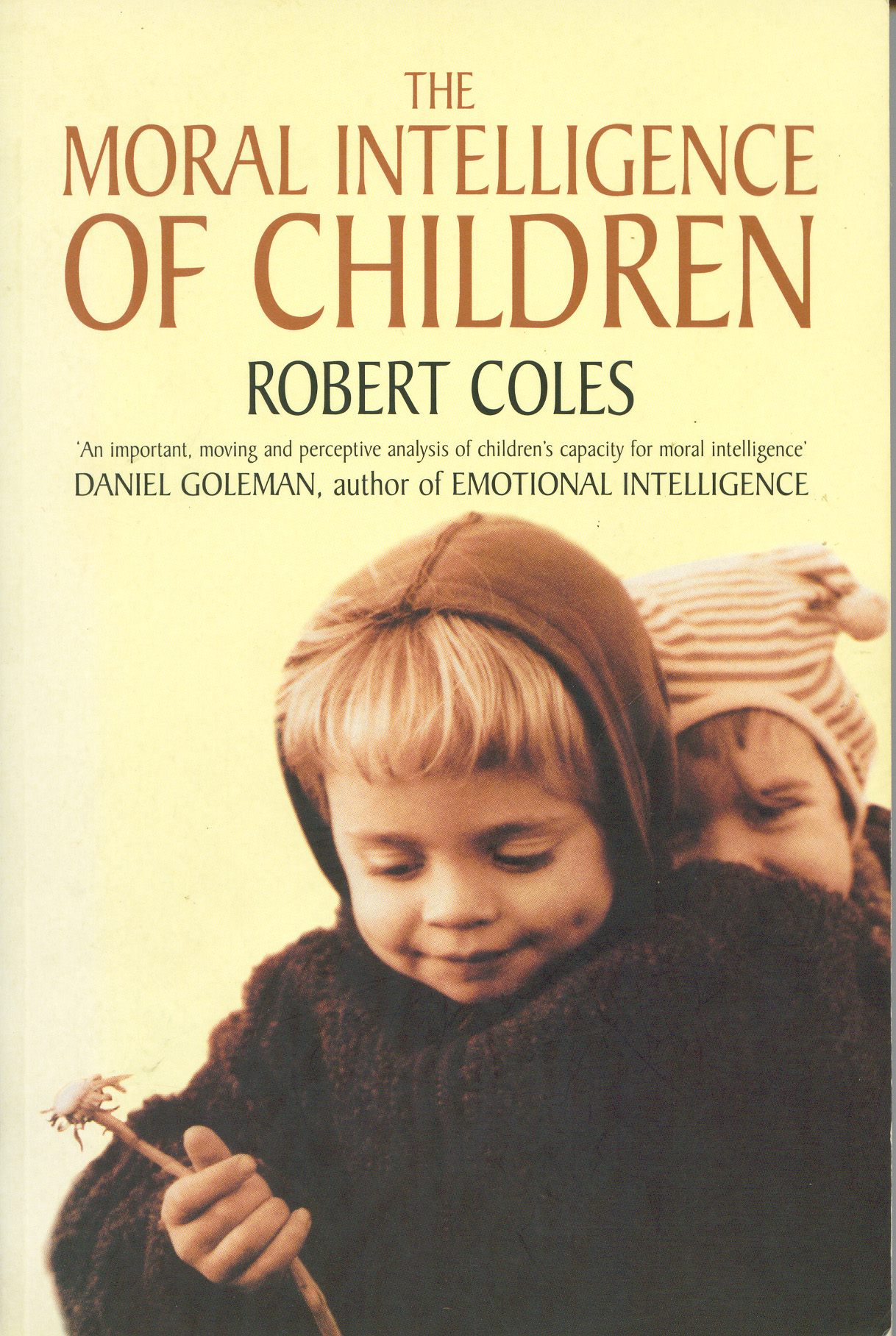
Robert Coles, who was a professor of psychiatry and medical humanities at Harvard Medical School,  also draws on his experience as a teacher and child psychiatrist in his book:

‘The Moral Intelligence of Children’. He writes about the confusion children feel when they are  caught between two parents who have different religious beliefs; who constantly clash over opinions  and values but who never-the-less expect their children to follow in their religious path unquestioningly.  Simply stated,  Mr Coles found in his research that children are morally intelligent and it is therefore beneficial to them to be raised in a home where they are encouraged to question and to think for themselves.  Parents who only see  issues in black and white can have a detrimental effect on their children’s outlook on life.  The problem begins when the child is expected to ‘learn by example’ from the adults in their family but has intelligently worked out for themselves that something is not right.  The atmosphere in the household is one in which the child is not permitted to question any ‘laws’ laid down by their parents and this includes religious beliefs.  At the same time the child is being bombarded by media images and peer group pressure.   Perhaps the high rates of depression in our young people is understandable when there is so much conflict in their world view.

Erik H Erikson, a child psychiatrist who knew only too well the psychological trauma caused by  strict and rigid upbringing in a religious household comments in ‘Moral Intelligence’:

It is a long haul, bringing up our children to be good; you have to keep doing that, bring them up, and that means bringing things up with them: asking; telling; sounding them out; sounding off yourself; teaching them how to go beyond why?……’

Lets hope then, that all schools will eventually allow students to choose Ethics over Religion in schools.  We might then see some changes taking place in the behaviour of young people and their readiness to take responsibility for their own actions.    <><><>

-Anne Frandi-Coory 20 October 2010

><><><

Also here on Anne Frandi-Coory’s Facebook page  

https://www.facebook.com/myhomelibrary/

See previous posts:  God in the Classroom?

&          Access Ministries Want Access to Childrens’ Minds