Archive

Tag Archives: Anne Frandi-Coory

Updated 15 April 2015

Why is Mental Illness always at the bottom of the Public Health funding list when we all know that mental and physical health are intertwined!?

Mental health expert Patrick McGorry has just been voted Australian of the Year.  It is so good to see such a prevalent disorder as mental illness in the news and highlighted.  Mr McGorry  is also concerned with the plight of refugees, including women and children,  held for years in detention centres or ‘Asylums’.  It has been well documented how detrimental an effect long periods of  institutionalisation has on a person’s  mental health.

Xenophobia is alive and well but not just in Australia.  Western countries as well as developing countries are suspicious of, and fear those from different ethnic groups.  Throw in religion and it becomes a volatile mix which is evident in  the bloodshed in many countries around the world at the present time.

‘Unfortunate Folk; Essays on Mental Health Treatment 1863-1992’ is an  Otago University publication  researched and edited by postgraduate history students at University of Otago between 1972 and 2000.  Attitudes to mental illness in Australasia haven’t really changed that much I don’t think; political correctness has intervened and made the way we speak about mentally ill patients a little less hostile, that’s all.

My mother had a severe bi-polar disorder and spent many years in and out of a mental hospital where she often received Electro-Convulsive Therapy (ECT) in the 1950s and 1960s which eventually left her in a state of permanent mental lethargy.  Apparently it was important to keep her emotions tightly controlled in order to level out her mood swings, but in the process killed off all her creativity.  The right drugs were not available then.  My mother’s traumatic childhood and adolescence probably brought on the disorder and I am sure her stint in a Catholic convent trying unsuccessfully to outrun life in the natural world and become a nun,  added to the intensity of her affliction.  As I write in my book, Whatever Happened to Ishtar?’ mental illness and its attendant prejudices has had a lasting effect on subsequent generations of her family. The fact that she was Italian certainly played its part in other people’s perception of her displays of emotion.

ECT was introduced into mental hospitals in 1943 in Australasia and considerable experimentation with this method of treatment, and new drugs, was carried out on patients.  ECT  was first used without anaesthetic on patients who were suffering from “over excitability” and depression, both of which my mother “suffered” from.

A personal account from a medical student shown around Seacliff Mental Asylum in NZ in 1943:

“A consultant…brought them onto the stage and asked them about things and showed off how tragic they were, but I mean, it was a show and I think they were used to showing off as they were expected to. That was part of it, but the really awful thing was when we went around the wards.  One particular one that I remember…there was this great big ward and there were a whole lot of what looked like old and bedraggled women with white hair all over everywhere and they were all dressed the same, in white hospital things like you put on when you go for a  x-ray and they all came crowding round the trolley, clattering their spoons and tin plates and it was just like feeding the animals, it was absolutely horrendous.  That would have been around 1943 …it was just at the very earliest stages of shock treatment …it was certainly the first time of using unmodified ECT, and no anaesthetic, it was horrific”.

These places were worse than the prisons in which  criminals were incarcerated.  The sad thing is that many people still believe that the mentally ill should be locked away somewhere out of sight and out of mind.

Unfortunate  Folk;                          The Mentally Ill

The above book quotes many interesting statistics:  In 1874,  of in-patients in mental institutions in Otago NZ there were twice as many men as women (mostly gold miners) and the majority of the women were married.  “Most religious denominations were represented but the three major groups were Presbyterian, Anglican and Catholic. The numbers of Presbyterian and Anglican patients roughly mirrored their ratios to the general Otago population”…  “However, there were nearly twice as many Catholic patients as there should have been”… “The Irish, who made up the majority of Catholics,were over-represented to the same degree”.

The married women often had their children incarcerated with them in the mental institution.

In 1903, New Zealand’s then Prime Minister, Richard Seddon reported his genuine concern:

“To see the children in the asylum was heartbreaking.  Children of tender years were to be found with the adults, and, in some cases sitting on the floor. In any of the asylums they would find little boys and girls hopelessly and helplessly insane, and to keep them here with such surroundings as they had was not, to his mind, the right thing to do”.

The next significant group incarcerated in mental institutions were Chinese gold miners and they aroused strongly racist sentiment among some of the authorities.   The following is an inspector’s report which defies belief that it could be written by a government Health Official inspecting the institutions:

“There are seven Chinese lunatic patients in the Asylum [it is interesting that the term asylum is still being used in relation to refugees today] and considering the racial antipathy of the European to the leprous Mongolian, I am of the opinion that it is injurious to the European Lunatic being brought into daily contact with the Chinese, and that an additional ward and airing court should be provided for the latter without delay”


The last paragraph in the book is a summary regarding the boundaries between “madness and reason”:

“Patients, families, the public, politicians, and health professionals all upheld the boundaries between madness and reason. Progress in the decade under question was slow and fragmentary, although the seeds for more radical change were soon being laid. From the later 1950s, de-institutionalisation became the focus of mental health policy, and has remained in controversial favour ever since. Large and isolated mental hospitals became a thing of the past. But although this achieved some alteration in the social status of the mentally ill it has not completely destroyed the boundary between madness and reason. The legacy of madness as a separate world remains. In essence, the psychiatrist is still an ‘alienist’ treating those designated as ‘foreigners’ by their families, the public, and the medical profession”. Mr McGorry  might add here, “and the Australian Government’s  health system”.

-Anne Frandi-Coory  15 April 2015 

Charming book by author of ‘Romulus, My Father’, Raimond Gaita

Raimond Gaita tells illuminating stories about his dog and other animals he has known and loved, and the respect they earned from him.  He asks if we give animals and birds the credit they deserve and whether they are more like us than we think.  Can they think and love, and what of philosophy? He quotes Kato Indian creation story:  ‘ God went forth to create the world, and he took his dog with him’.

Catholic Nuns and priests taught us that we humans were made ‘special’  in the eyes of God and that animals were put on this earth to serve us.  Many of us  grew up with this Christian belief and the world has suffered for it; multiple extinctions, loss of habitats.  As someone said to me “animals and insects can live without us but we cannot live without them”.  Now, we understand ecology, the importance of balance in nature and bio-diversity.  I hope it is not too late.  The only saint I ever heard about who respected and loved animals was the hermit St Francis of Assisi, but I always felt as a child, that he was considered  a little bit strange compared to other saints.  Perhaps he knew more than those humans who lived  around him.

I have seen many instances overseas, where beasts of burden such as donkeys are treated with cruelty and virtually starved even though they are expected to work long hours.   People still believe that animals, if not here to serve us,  then they are here for us to eat, nothing more.  The conditions in which animals in some countries are slaughtered,  for human consumption, are heartbreaking. I cannot imagine how many millions of animals have been massacred in the name of sport; from the Romans and their blood sports in the coliseum to the safaris in Africa where men could prove their maleness and bravery by shooting elephants and lions, to name a few.

In  my book, Whatever Happened to Ishtar? I write about the time my father drowned two white mice in front of me.  I had brought them home from school, excited about my new pets. Without saying a word, he grabbed them from me, one in each hand and held them under a tubful of water, with me clinging to his arm and screaming as  I watched the little pink feet thrashing about.   My Lebanese extended family thought nothing of poisoning animals and I have my suspicions that my uncle killed my pet pigeon.   It wasn’t until I got married and had four children of my own, and we all lived with a menagerie of animals for many years,  with their birthing, sicknesses, and dying, that I learned to love and respect them.  We learned so much about life from our pets. Sometimes, I believe they are much smarter than humans and that they will probably be living on this earth long after humanity has extinguished itself.  I guess it is all about education and perspective;  thank goodness we have  TV,  the internet and science.  There is no excuse now.

Raimond Gaita has a forward in his book written by Cora Diamond:

“The difference between human beings and animals is not to be discovered by studies of Washoe or the activities of dolphins. It is not the sort of study or theology or evolutionary theory that is going to tell us the difference between us and animals; the difference is as I have suggested, a central concept for human life and is  more an  object of contemplation than observation (though that might be misunderstood; I am not suggesting it is a matter of intuition). One source of confusion here is that we fail to distinguish between ‘the difference between animals and people’ and ‘the differences between animals and people’;  the same sort of confusion occurs in discussions of the relationship of men and women. In both cases people appeal to scientific evidence to show that ‘the difference’ is not as deep as we think; but all that such evidence can show, or show directly, is that the differences are less sharp than we think. In the case of the difference between animals and people, it is clear that we form the idea of this difference, create the concept of the difference, knowing perfectly well the overwhelmingly obvious similarities”.

Updated 29 October 2018  

Two Princes: Jared Kushner, Donald Trump’s son-in-law and Crown Prince Mohammed bin Salman bin Abdulaziz Al Saud…

by Greg Olear, who asks: How complicit is the U.S. government in the murder of a Saudi journalist?    Read more here: MEDIUM POLITICS

safe_image

*********

THE HOUSE OF SAUD is a brilliant, well researched, and valuable historical record about the founding of the Kingdom of Saud, [Saudi Arabia], with detailed accounts of its early dealings with the USA,  Britain, what now is Turkey, and other Arab nations, and how it grew from a small desert tribe, into a powerful and obscenely wealthy Islamic state.  The authors also give readers insight into the Shiite disturbances that began in the 1970s  culminating in the seizure of the Grand Mosque, and the bloodshed that followed. “The siege of the Grand Mosque raised more fundamental questions relating to the legitimacy and credibility of the dynasty”.

Published 1981.

*****

house of saud

*****

The authors tell us that Saudi Arabia, as we know it today,  was founded around 1902 by a young, blood thirsty, Emir Abdul Aziz bin Abdul Rahman bin Feisal al Saud, better known by his given name, Abdul Aziz, Servant of the Beloved. Beloved being only one of the ninety-nine synonyms for the sacred name of Allah. Originally born of isolated Bedouin tribes of the desert, the House of Saud attaches great importance to the purity of the bloodline. Marriages between first cousins, or equivalent relations, are preferred, or else carefully selected partners of equal status and purity  in another tribe…

“As Islam permits each man to keep four wives at any one time, and as divorce is made easy for males under Koranic law, so that the magic number of four can be multiplied many times over in one man’s life, this custom begot not only large numbers of children by a single father, but also an immense ramification of family and tribal inter-relationships through several generations.  Nephews married aunts, uncles were wedded to nieces and their children married each other to form a close knit and, to the outsider, impenetrable mesh.” At the time of writing, the authors estimate that with about 500 princes descending from Abdul Aziz, together with wives, daughters and collateral branches of the family, “the House of Saud cannot number less than 20,000 people.” The number of Abdul Aziz’ wives has never been officially computed but official records show that he fathered 45 sons from 22 different women. In addition there were at least as many daughters from an even wider range of women, including no doubt some unacknowledged mothers among the various concubines and slave girls, not to forget ‘wives of the night’ whom it was customary [and still is] for Arabian men to enjoy whenever the opportunity arose. All they had to do was to ‘marry’ the woman or girl for as many hours as they desired, then divorce her by saying ‘I divorce you’.  Today, many women and girls are kidnapped from Yemen, and other surrounding Arab nations, for the purposes of this euphemism for a ‘one night stand’. [On the other hand, they can fly to western countries and pay huge money for the same ‘privilege’.]

In Islamic countries, the Koran and its inherent sharia law, or path to follow, supplies a total and explicit moral code but in Saudi Arabia it is even more than that. It remains there, the only recognised and enforceable code of law, so that the country is held in a ‘1300-year-old corset of town and desert morality that is deemed to be universally and eternally applicable.’ This desert morality is upheld and brutally enforced by Wahhabism:

“In the middle of the eighteenth century, in what now must be regarded as the most fateful meeting of minds in Arabia since  the time of Muhammad, Sheikh Muhammad bin Saud, ruler of Diriya, and great, great grandson of Mani, the first identifiable Saudi ancestor, gave shelter to an itinerant preacher of Nejd, named Sheikh Muhammad bin Abdul Wahhab. The preacher was a Muslim ‘revivalist’ and the world of Islam by then was much in need of rejuvenation and reform…Abdul Wahhab was a true zealot, come to cleanse the ‘stinking stables of Arabia’ once more with the Word of God. But the Word of God proved insufficient for the task. Like the Prophet, Abdul Wahhab needed a sword as well – and to his eternal joy, he found one in Muhammad bin Saud and his family…Although Muhammad bin Saud was only one of the numerous quarrelling Nejdi sheikhs at the time, little more important than the rest, he evidently grasped that a man who had a message would give him an edge over all his rivals, enabling him to unite Bedouin and townsfolk in a new jihad to extend his personal dominion…

…Accordingly, in 1744 Muhammad bin Saud married off his son, Abdul Aziz, to a daughter of the preacher and thus sealed a compact between the two families that has been continued unbroken by their descendants ever since…Contemporary Saudi Arabia, for all its money and the new corruption and idolatry that wealth has encouraged, remains in theory and to a surprising extent in practice, a Wahhabist state, officially dedicated to the preservation of pure Islam as propounded by Muhammad bin Abdul Wahhab.”

“A penetrating analysis and major contribution the the literature of the subject” – The Sunday Times.

“An impressive work by two distinguished British journalists” – New Statesman.

*****************************************************************************

2015

“The House of Saud…wealth and power to make the world tremble”… Saudi Arabia is USA’s partner in the Middle East… 

Saudi Arabia’s King Abdullah died on 23 January 2015  and Western governments lowered their countries’ flag to half mast…WHY? For a King who allowed women to be whipped, stoned, beheaded, or imprisoned for years for such things as being raped, driving a car, or speaking out about the Saudi Arabia’s disgusting treatment of women?  

Oh that’s right, Western Governments loved this King for his wealth and his oil! Who cares how he treats women, even his own daughters and granddaughters, as long as the oil keeps flowing?  And are we really sure slavery has been abolished in Saudi Arabia?

And what of the Saudi’s treatment of gays?

>>>>>>>>>>>>>>>>>>>>>>>>

When are Islamic countries going to face up to the fact that homosexuality exists in their countries  and that the majority of their people are just as human as most Westerners?  In my experience of life, religious righteousness and fervour only encourage hypocrisy.   Suppressing our true natures  and living a lie propped up by constant prayer and ritual can only cause grief and violence in the long run.  As I have stated previously on my blog,  many men from Islamic countries live a huge lie by following and enforcing Islamic laws and religious beliefs within their own countries, but once they step into  secular, liberated Western countries, they rape, or become the homosexuals they desire or pay for  glamorous prostitutes.  Some have mistresses and children in Western countries they would not like their Mullahs at home to find out about.

In their worlds  of make-believe, Islam and Catholicism are alike.

Prince Abdulaziz bin Nasser  Al Saud


News and prince’s photo from Express.Co.UK  and UK News:

The prince once beat his aide Mr Bandar Abdullah Abdulaziz so hard his right ear swelled up to three times its normal size, and after one attack, he had to wear a hat and sunglasses while eating at a top restaurant to hide his injuries, the jury was told.

It is alleged that Al Saud was caught on CCTV subjecting his aide to savage and prolonged beatings in the lifts at the five-star Landmark hotel in Mayfair.  The court had heard that behind closed doors, the hotel staff thought the two men were “just like a couple” who spent their time in bars and nightclubs.

Saud Abdulaziz bin Nasser al Saud, 34, is on trial in London after 32-year-old Bandar died during a brutal attack with a “sexual element” on February 15.  Two male escorts are alleged to have performed sex acts on the prince at the hotel in central London where he and Bandar were staying.  The jury in the case was told gay relationships are illegal under Saudi Arabia’s sharia law code.

In the early hours of February 15, fellow guests heard thuds coming from their room and the body of the servant was later found on a blood-spattered bed. His head and face were badly bruised, his teeth broken and his left eye swollen and closed. Bones in his neck had been fractured as if he had been strangled and there was deep bruising to his back, fractured ribs and “trauma” to his abdomen caused by punches or kicks, the court heard.

He had also suffered brain damage and there were bite marks to his cheeks, left arm and possibly to his ears, the jury was told. It was said that Al Saud stood over the body “very upset and crying” as he spoke on the telephone saying: “I don’t believe it”.

The prince  at first claimed he was not involved in the killing. He told police Bandar had died from injuries suffered in a street robbery three weeks earlier.

But blood stains suggested a series of assaults before the killing, the jury was told. Detectives also seized CCTV film said to show the prince beating him. Al Saud tried to make out that he was not gay and had a girlfriend in Saudi Arabia, the jury heard. Jonathan Laidlaw, QC, prosecuting, said: “The bare fact of his sexuality would ordinarily be of no relevance in a criminal trial.

But it is clear that his abuse of Bandar was not confined simply to physical beatings.” He added: “Concealing the sexual aspect to his abuse of the victim was for all together more sinister reasons.” Al Saud denies murder and causing grievous bodily harm. Mr Laidlaw told the jury the Saudi royal admits being responsible for his manservant’s death.

Follow-up World News Item 21/10/2010:

Saud Bin Abdulaziz Bin Nasir al Saud, 34, was jailed for life by a British court on Wednesday for murdering his male servant in a brutal attack at a London hotel after a long campaign of sexual abuse.  He was ordered to serve a minimum of 20 years by a judge at London’s Old Bailey, also known as the Central Criminal Court.

The court convicted Saud of beating and strangling Bandar Abdullah Abdulaziz to death on February 15 at the culmination of a lengthy period of sexual violence towards his employee. Saud – whose mother is a daughter of Saudi Arabia’s King Abdullah – had tried to claim diplomatic immunity when he was arrested following the discovery of his servant’s body in their shared suite at the luxury Landmark hotel.

The victim, also a Saudi, was left with severe injuries including bite marks on both cheeks which prosecutors said showed a clear “sexual element” to the killing. The prince’s lawyers argued that he could face the death penalty in Saudi Arabia over the revelations of homosexuality aired at the trial. (you mean the Saudi authorities aren’t too bothered about the brutal murder of another Saudi – it is homosexuality that is the major crime here!?) Witnesses had told the court that Bandar – an orphan who was adopted into the family of a low-ranking civil servant in Jeddah – was treated “like a slave”. A post-mortem found Bandar had suffered chipped teeth, heavy blows to the head, injuries to the brain and ears and severe neck injuries consistent with strangulation by hand, the trial heard.

The prince was subsequently sentenced to life imprisonment when in 2010, he was found guilty at the Old Bailey of murdering his servant Bandar Abdulaziz. In March, 2013 he was allowed to return to Saudi Arabia to serve the remainder of his term in a Saudi prison. According to the agreement between the U.K. and Saudi Arabia, he must serve at least 20 years before he can be released. 

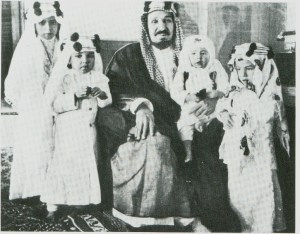
Abdul Aziz [Ibn Saud] with the eldest of his grandsons in 1935

Quote from the blurb of  ‘The House of Saud’:

At Riyadh, in 1902 the Desert Raider Ibn Saud [Abdul Aziz] tossed  the head of the town governor from a parapet down to his followers below…thus was the Kingdom of Saudi Arabia founded. Two-thirds of the size of India, it holds a quarter of the world’s oil and has six times more overseas assets than the USA.   A land of desert unchanged for centuries, with wealth and power to make the world tremble…the domain of the House of Saud

-Anne Frandi-Coory – Visit my blog at: frandi.blog


Pope Benedict the chief hypocrite of the Catholic Church

Updated 21 May 2015….the pope may have changed, but the Catholic Church hasn’t. Pope Francis appears to be making changes at the Vatican, but nothing convinces me that the welfare of child sex abuse victims has been put at the front and foremost by the Church.  In fact, it is still protecting paedophile priests, and Cardinal George Pell. Canon Law states that the sexual abuse of children must be covered up; this is the reason the current pope cannot do anything apart from advising these criminals to “spend the rest of their lives in prayer and penance, and to ask god for forgiveness”. 

Can you believe that  Pope Benedict,  ex chief of the  Office of the  Inquisition until 2005, (re-named the Office of the Congregation for the Doctrine of the Faith or CDF) truly believes that homosexuality between consenting adults is evil, along with divorce and abortion, yet through Canon Law, exonerates, forgives and protects from the criminal law of legitimate nations, paedophile priests who have  raped and ruined the lives of thousands of children. In his warped view, paedophile  priests are afflicted with an illness they cannot control!  It says much about the Catholic religion and its Canon Law; it considers gay relationships within the priesthood as  the most grievous of sins and  offending priests are to be excommunicated immediately! Yet those priests sodomising boys are protected by the Vatican while the victims are forced into silence.  As long as the paedophile priests  say extra hail marys after confession they will be protected forever by the Vatican.  This is the pope who has publicly stated that to ordain women as priests is an equivalent evil to sodomising children.

The Pope  visited African countries recently and warned against the evils of divorce and contraception but neglected to warn the people  about the paedophile priests who have been sent to that continent in their hundreds to shield them from certain imprisonment in Europe, Ireland,  America and other countries,  for the sexual abuse of innocents;  in order to protect the Vatican’s   vast assets and the reputation of the Catholic Church.  The welfare of the children so sexually abused is not considered.  It is estimated that when the child sexual abuse scandals do break in developing countries (in Asia as well) the total number of victims added to those already uncovered, could reach in excess of 100,000, and will as usual be the tip of the iceberg.

The little book with so much to say about Catholic paedophile priests and the Vatican ‘State’ which protects them

If you are, or have been,  a Catholic, this book will stun you.  I had believed the Vatican to be corrupt in the past, but I am absolutely incredulous at what the author has uncovered in his book.  That the pope and the officials at the Vatican could be so hypocritical and uninterested in the plight of all those hundreds of innocent victims is criminal.

The Vatican and the pope protect,  from outside scrutiny, their highly secret documents and decisions regarding  abusive priests, through the process of Canon Law and  constantly declare that the Vatican is a sovereign state and by definition beyond the reach of the national criminal law of other countries.  However, Geoffrey Robertson the author of  ‘The Case Of The Pope; Vatican Accountability for Human Rights Abuse’ explores the legality of recognising the Vatican as a state.  He documents the vast numbers of child sex abuse cases around the globe which reached new heights during the reign of  the two previous popes before Pope Benedict, when he as Joseph Ratzinger, headed the Office of  Congregation for the Doctrine of the Faith.   The three were a formidable team.  When the first sex abuse scandals involving numerous priests erupted in America in 2001, various cardinals, Bishops and other Vatican spokesmen blamed: “Jewish journalists working on the  New York Times”, “petty gossips”, “natural enemies” of Catholics, “the American problem”, modernity, “the media’s treatment of Catholic church leaders is comparable to Hitler’s treatment of the Jews”.  When scandals broke in Ireland these spokesmen had to re-think who to blame.

“……Congratulations sent to Bishop Pican, with the approval of Pope John 2nd and Cardinal Ratzinger, for refusing to  report his paedophile  priest to the police; congratulations were also circulated to bishops to encourage them to do likewise.  This really disposes of the  fallacious argument that the Vatican would be quite content for law enforcers to arrest its guilty priests.”

I won’t quote any more from the book because you really need to read the book to grasp the extent of the scandals and the extreme failure of the Catholic Church to protect the innocent.  It is all about the protection of reputations, and wealth; no matter what the pope tells the families in his audiences, children are well down the list of priorities in the Vatican machine.  You will be overwhelmed by the sheer numbers of victims that individual priests abused.  The sections on the extensive results of research carried out into  celibacy and the effect on priests, the fact that around 80% of victims are boys,  and the lifelong consequences of the damage done to victims, is both heartbreaking and riveting.

How corrupt is the Vatican?  This so-called state which appears to be above international law, is currently being investigated for money laundering and several million dollars  have been seized! Robertson documents in detail how  the Holy See uses threats of excommunication towards Catholic politicians in foreign countries who do not follow the edicts of the pope and he explains graphically why e.g. the Catholic Church is so powerful in Australia.

You will also be amazed at how the Vatican and Holy See have managed to  maintain such a powerful hold over decisions made at the United Nations, World Health Organisation and other world groups even though the Vatican is not a recognised state: it has intervened time and again  to prevent family planning clinics from opening in third world countries and has banned the use of condoms for the prevention of aids.

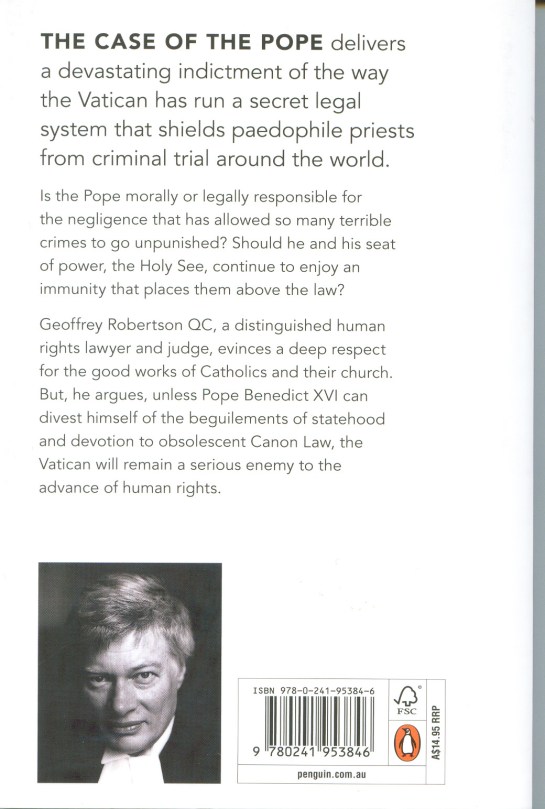
reverse of book

The back cover

Read Opinion piece by Geoffrey Robertson QC Here:
Reverential fear’: The only reform that could tackle Catholic clerical sexual abuse

Australasian Catholic Orphanage in the 1940s

Updated 11 April 2017

In an  article about Catholic adoptions, written by a reporter at the Guardian Newspaper  in 2009, excerpts appear from the book: The Lost Child of Philomena Lee’ by Martin Sixmith. (This story has been made into a film Philomena –  starring Judi Dench).  It  tracks the heartbreak of an unmarried  mother (fallen woman) whose  son was adopted out as an infant.  After years of trying to come to terms with her loss, Philomena attempts to track down her son and he in turn looks for her.  They are thwarted by various institutions and cruel nuns, her son dies before she finds him, not knowing that she was searching for him too.  The book encapsulates the hardships experienced by young mothers and their infants following the adoption process which was often forced on them by the Catholic Church.  Stories such as this  were repeated over and over in the 40s & 50s, not only in Britain and other parts of Europe, but also in Australasia.  My mother, Doreen Frandi (see my post   ‘Whatever Happened To Ishtar?’), experienced a similar fate at the hands of the Catholic Church.

Philomena tells the reader that after giving birth, the girls were allowed to leave the convent, only after they or their families paid the nuns one hundred pounds.  The vast majority couldn’t afford this sum, so lived a life of  ‘pay back’ drudgery for three years while living  in the convent.  They made artifacts and rosary beads and the Church kept the profits from their sales. [See post July 2010 ... Carla Van Raay’s book God’s Callgirl]. The young mothers were forced to sign a document giving away all their rights to their infants and surrendering them to the nuns.

None of the mothers wanted to give their infants up, but instead of assisting them to keep their babies, the nuns reminded them that they would not be able to keep their babies and work for their upkeep at the same time.  Even though she was in her 70s when the article was written,  Philomena still cried at the thought of what happened on the day the nuns took her little boy from her.  Because her family refused to allow her to return home,   she was sent by the Church to work at a home for delinquent boys.

After marrying and having children, Philomena set on a path to find her lost son.  She returned again and again to the convent, but the heartless nuns  just kept reminding her that she had signed a legal document stating she relinquished all rights to her son and that she would never attempt to find him.

Philomena quotes in the book “Early on in the search, I realised that the Irish Catholic hierarchy had been engaged in what amounted to an illicit baby trade.  From the end of the second world war until the 1970s, it considered the thousands of souls born in its care to be the Church’s own property. With or without the agreement of their mothers, it sold them to the highest bidder. Every year, hundreds were shipped off to American couples who paid ‘donations’ (in reality, fees) …the only condition laid down by archbishop McQuaid was that “… [the adopting parents] should be practising Catholics”.

Separated by fate, mother and child spent decades looking for each other and were repeatedly thwarted by the refusal of the Church to reveal information about the family who adopted the boy, each unaware of the other’s heart-breaking search.   Her son spent his last years in a downward spiral; tormented by his inability to find his mother and the orphan’s sense of helplessness, he didn’t know where he came from, who he was, or how he should live. He felt unloved by his adoptive family, especially his father.  When he contracted aids, he made one last emotional plea to the convent orphanage for information about his mother but they steadfastly refused to oblige this dying man’s final request.  He asked therefore if they would at least grant him permission to be buried in the convent cemetery where upon his headstone he could place enough details so that if his mother ever came looking for him (my emphasis) she would know where he was buried.   The nuns callously  remained tight-lipped about the fact that his mother had been searching for him for decades and that his maternal aunts and an uncle lived just a few miles down the road from the convent.  His mother found his obituary in a US newspaper.

Philomena Lee’s story

delinquent-angel

Shelton Lea

Delinquent Angel,  a biography about a Melbourne poet, Shelton Lea,  written by Diana Georgeff in 2007, is another  tragic story about a man’s futile search for his birth mother, the  Lea  family (NSW Darrell Lea chocolate dynasty) who adopted him and whose ulterior motives  didn’t include a loving family life.  Yes, and another Christian institution was involved.

Lea Family dynamics proved disastrous for Shelton and his adoptive mother placed him in a psychiatric institution at the age of three.  But his biological heritage eventually shone through and although his was a  brilliant talent, tragically it never reached its full potential.

-Anne Frandi-Coory 28 August 2013

Also here on Anne Frandi-Coory’s Facebook page

https://www.facebook.com/myhomelibrary/

God’s Callgirl-a memoir

My childhood was spent in Roman Catholic institutions and my mother was a novice nun before her marriage (see ‘Whatever Happened To Ishtar?’), so  this book was of personal interest to me.   But of course it is also a well written and interesting book in its own right, well worth the reading. Another great read I found in a second hand book shop.

Carla Van Raay’s book God’s Callgirl is a perspective of the depths, in my opinion,  of how far Catholicism has sunk since the beginnings of Christianity and the teachings of Jesus.  Carla tells us  about her life from her upbringing within a strict Catholic family,  sexual and physical abuse by her father,  to her entry into a convent as a teenager and her later life as a sex worker. Her life in the convent was spent in prayer and unpaid drudgery, such as cleaning, teaching and needlework (which the convent sold) and when she finally leaves the convent she discovers her parents, who were not well off, were charged by the nuns for Carla’s board and keep!  She re-enters the real world as an innocent in every sense of the word. The convent was run by spiteful and cruel nuns within a strict hierarchy.  The convent’s inhabitants were called ‘The Faithful Companions of Jesus’, ironic to say the least.  Carla triumphs despite the best efforts of her parents and Catholicism.

My mother’s life was also one of hardship and emotional abuse in her convent which was called the ‘Home Of Compassion’.  My mother and I,  like Carla,  never experienced or witnessed any real and heart-felt compassion in any Catholic institutions!  In light of what is being exposed within the Catholic Church in recent times, it brings to my mind that saying  ‘The higher you fly, the further you fall’.

-Anne Frandi-Coory 8 July 2010

<><><><><><><><><><><><><><><><><><><><><><><><><><><><><><><><><><><><><>


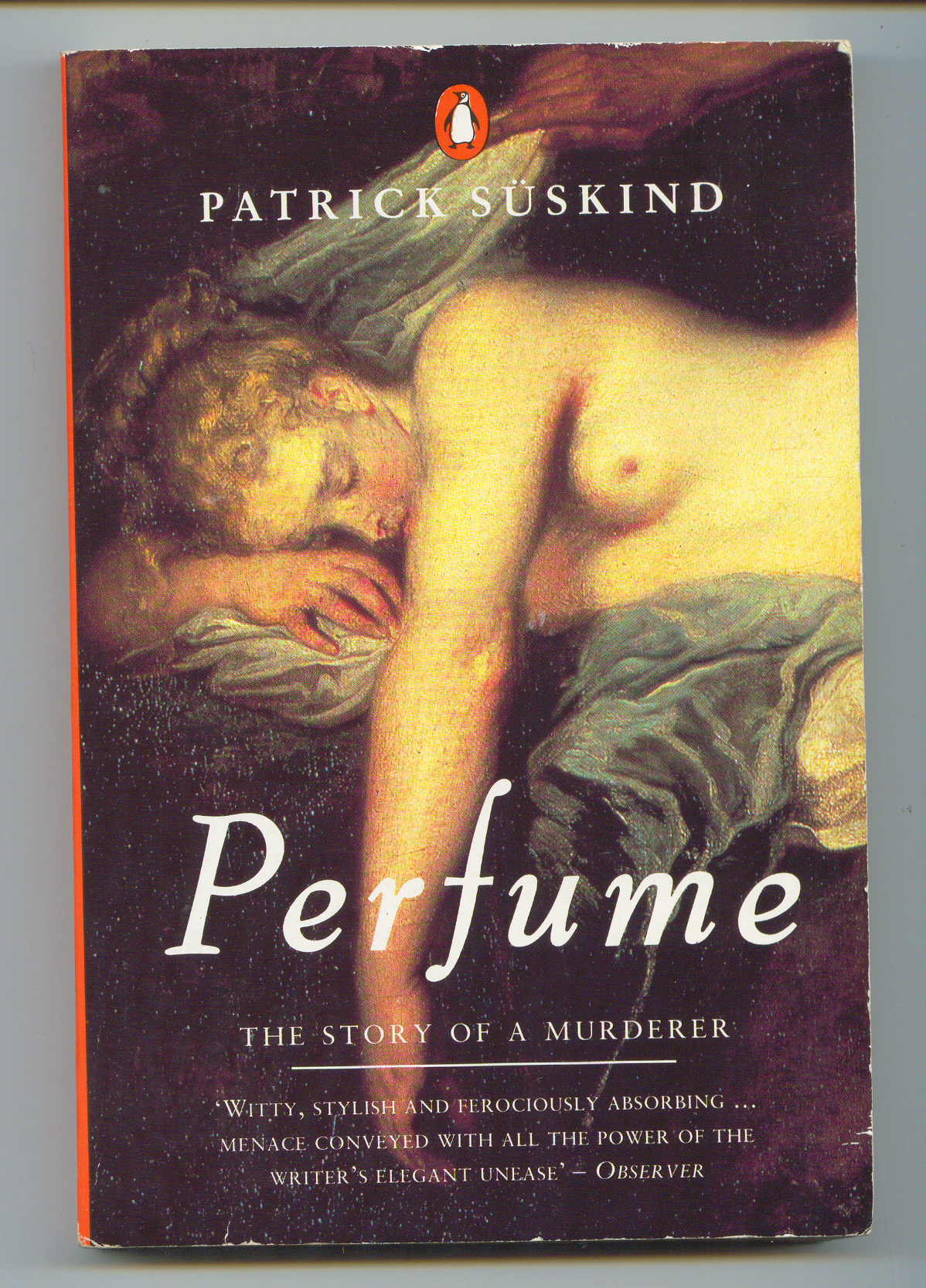
Perfume – not what you think

I first saw the movie Perfume and quite enjoyed it, especially the bits about how (a long and difficult process) and why,  perfumes were originally made; to mask body odours at a time in history when daily washing wasn’t an option.  I found a copy of the book of the same name by Patrick Suskind at one of the book stalls in Federation Square Atrium and discovered, as is often the case, there was so much more in the book that the movie omitted for obvious reasons.

Silly me!  I always thought perfume was a variety of sweet smelling scents extracted from flowers.  The book is not just about a cold and calculating murderer.  It is essentially about body odour; pleasant, not so pleasant and downright putrid if accounts in the book are anything to go by.  Pheromones are among consciously undetectable human odours and the book dwells on these.  It brings to mind a conversation I overheard one day.  A European man rather rudely remarked to an Indian man, “Why do you guys always smell like curry?”  I  smiled to myself when the Indian man replied, “Why do you people always smell like dairy products?”  I must confess until then, I didn’t think we humans had any personal odours other than unpleasant ones if we didn’t wash enough.

This is a great read. You will be aghast at the way people lived in the eighteenth century and how important it was to find the right perfume for personal and other uses.  The fact that some perfumes suit only certain  people and some perfumes are lost on others now  makes more sense to me. I will never view perfume from the same perspective again.

-Anne Frandi-Coory  28 June 2010

Also here on Anne Frandi-Coory’s facebook page: 

https://www.facebook.com/myhomelibrary/?ref=settings

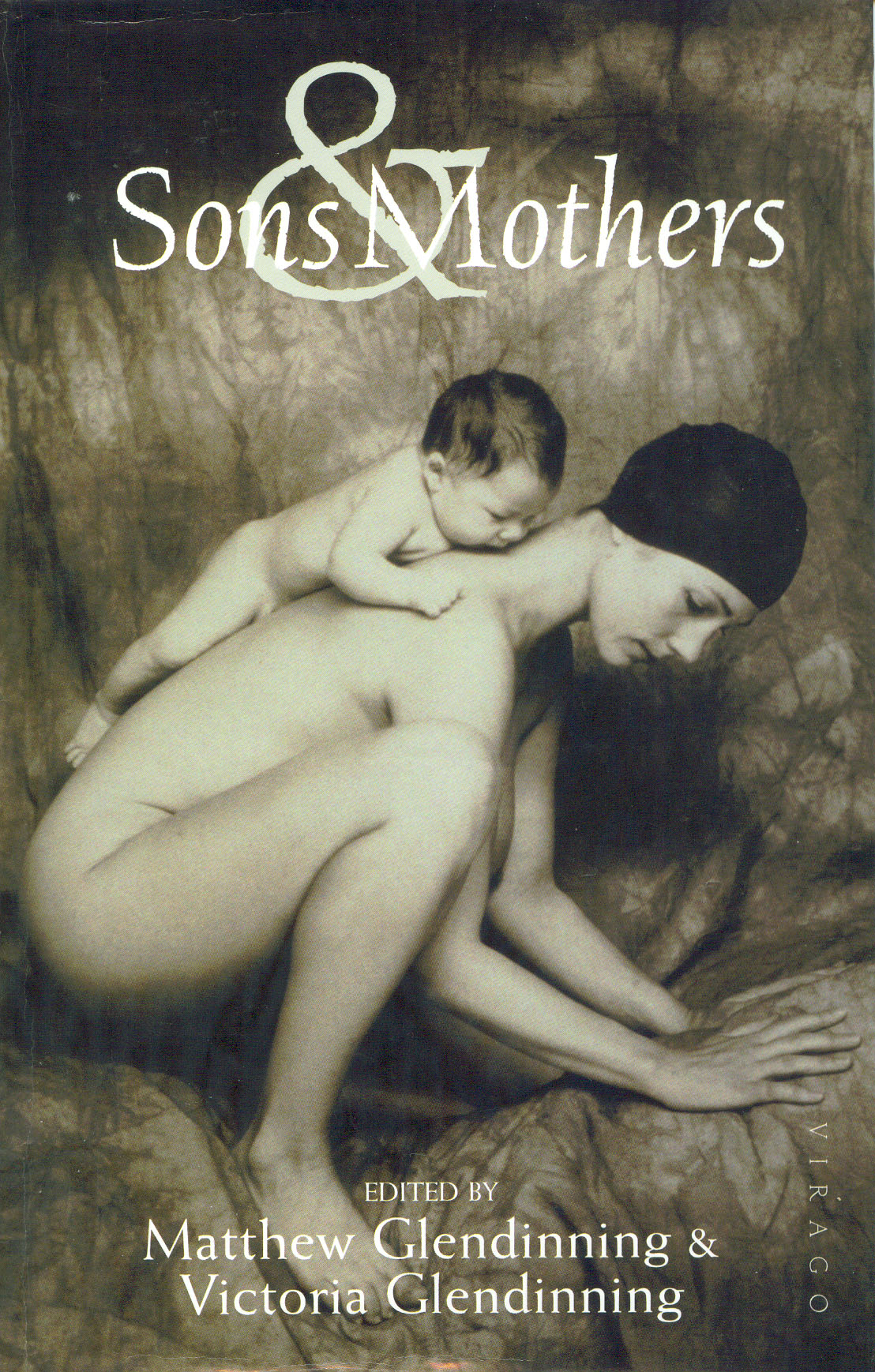
The Book  ‘Sons & Mothers’ – eds: M & V Glendinning

Updated 14 July 2014


Until the birth of  my long awaited daughter, I had three adorable sons.  But they were born to a mother who had been an emotionally damaged child.  As a little girl and teenager, I was quite frightened and mystified by the ways of boys and men.    What did I know of life, but especially of males, with my background of nunneries, convents and Bible stories?  But there was no doubt I loved each of my sons  deeply.

The relationships between sons and mothers can be intense and very, very loving, although sometimes fraught, and from this perspective of safety and comfort, as my little boys grew into men,  I learned the intricacies of the male psyche gradually over time. The sibling rivalry; the competition for dad’s respect and mum’s cuddles; the fisticuffs with each other and the wonder at the complexities and mysteries of the female.  When their sister arrived unannounced on the scene, (my eldest son was only four when I brought her home) my boys were aghast that she didn’t have a penis as they watched her first bath time at home, their eyes wide like saucers. Their male centred home  changed over night with this new fascination.

Then there comes the heartbreak they have to endure during adolescence and beyond, over this girl or that.  If only I could  spare them the pain they have to experience in life to become well-adjusted men, was then my angst.
My three boys are each very different personalities, so there is never a dull moment not even now when they are married with their own children.  How could a woman not understand men after raising three boys?  And now I am privileged indeed to have three grandsons to delight in and share anew their experience of life.  It is not an automatic right to share in your grandchildren’s lives as many grandparents will tell you.

As Victoria Glendinning tells us in a book of several mother/son personal stories edited by her and her son Matthew:  If I am anything to go by, all mothers are in love with their sons…it’s a savagely loving business.

-Anne Frandi-Coory 14 July 2014

Surrounded by books

Updated 20 September 2017

I can’t imagine a world without the printed book.   The printing press invented in the early 15th Century changed the world and I don’t believe you can say that about e books.   Johann  Gutenberg, master printer and visionary, suffered in his determination to perfect ‘artificial’ writing. His invention helped spread the Christian Word to all corners of the globe…and eventually made books available to rich and poor alike.

Hand-colored woodcut

The Ten Commandments was one of the first documents printed on the first printing press.    Bibles, which took monks months to write and decorate, Johann  could now reproduce in days.   Literacy within the masses had a world-changing ramification; the printing press arguably one of humanity’s greatest inventions.  Arab communication was left behind  because Arabic with all its squiggles and dots was difficult to type set.   Over 600 years ago Johann Gutenberg wrote:

Something of me as I am…

I have hair on my head, thinning,but no beard.

I am tall, five foot six inches.

I have skin white as vellum but less tough.

I am past sixty, one of the few hereabouts to live so long.

I speak German, read Latin and Greek, and struggle with English.

I  have no children I know of.

I owe money to none in Mainz, though some in Strasbourg pursue me for loans and have set the imperial court of Rottweilers at me.

I keep in health by eating plentifully of herbs – sage, rue, tansy, marjoram, southern wood, lemon-balm, mint, fennel and parsley

I do not trust my doctor, who for an aching tooth prescribes  mutton fat mixed with sea-holly.

I have eased my work to half a week.

I am poor in sight and growing worse.

I have no fear of dying.

What I fear is that death will rub out what I have done, till not a trace of me is left upon the earth.

We would never have known  Johann’s  thoughts if he’d not written the words on paper.  Articles and books duplicated on printing presses and ancient writings have survived for hundreds of years – will e books?  I can see the justification of e news displayed on hand-held devices able to be read while commuting on public transport.  But to lose the feel of prose and poetry bound up in a book to be read anywhere from bath to beach?!  I know of many young people who survived their brutal childhoods by reading books which carried them away to some other place to dream and be inspired.  No machine was needed to open a world to hide in.  Imagine no bookshelves lined with books-our hundreds of books which line bookshelves in our home add a vibrancy and many talking points. We never miss  First Tuesday Book Club on ABC 1. It is amazing how many classics reappear to be re-read time and again.  No, Johann, we wont give up our precious books to technology.

-Anne Frandi-Coory 23 November 2013

><><>><><><><

Whatever Happened To Ishtar? – A Passionate Quest To Find Answers For Generations of Defeated Mothers …
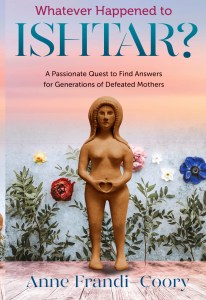
Whatever Happened to Ishtar_cover 2020

Updated 4th edition paperback  plus Kindle ebook 

Now available here on AMAZON BOOKS

***********************************

Whatever happened To Ishtar? 4th Edition Updated Rear Cover:

Anne’s story is one of lost generations…

What is most fascinating about ‘Whatever Happened To Ishtar?’ are the ancestral genealogies of the author’s Lebanese father and her Italian mother. This does assist readers to understand what hardships 19th century immigrants to the United Kingdom and New Zealand endured. With no access to birth control, women faced multiple pregnancies or secretly resorted to self-induced abortions.

The personal stories Anne has researched for this book go some way to explain why her parents were compelled to make the life choices they did. This memoir will stay in your memory as it covers universal issues of female sexuality, women’s roles and limited options, mental illness, and societal harsh judgments that have defeated mothers for generations.

Historical personal stories within the pages of this book explore the emotional pain felt by abandoned, abused children, along with the guilt and helplessness felt by mothers struggling within hostile environments with little or no support. 
The author’s formative years spent in Catholic institutions has given her a heartfelt and very personal insight into the harm Catholicism can inflict on traumatised children. She was abandoned by her mother when she was ten months old, and from then on, she lived a life of abuse and gross neglect in the Mercy Orphanage For The Poor, and at the hands of her paternal extended Coory family in Dunedin, New Zealand.
In the Coory family’s ethnocentric mindset, Anne’s greatest shortcoming was her demonised Italian mother.
***
‘Whatever Happened To Ishtar?’ by Anne Frandi-Coory is a well-written and haunting memoir of a woman who finds herself by exploring her family’s heritage that contributed to her growing up without the love and nurture of a mother she most desperately wanted. What first attracted me to this book was the title; Ishtar was the Ancient Sumerian Mother Goddess who celebrated love, fertility, and sexuality. This title haunted me as I read the memoir because Anne’s mother, like many women of her generation and previous generations, was harshly 
judged for those same attributes. – Linnea Tanner USA.  HERE on Amazon

See *****15 book reviews below….
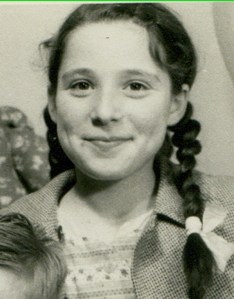
anne-1

Anne Frandi-Coory – 10 years old

This story about an abandoned girl will  lead you to  stories about generations of defeated mothers …

Anne blog

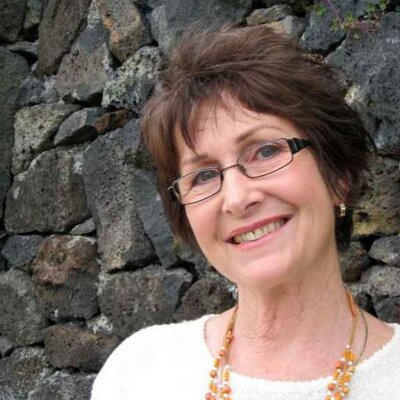
 Anne Frandi-Coory – 2010

><><><><><><><><><><><><><><><><><><><><

 WHATEVER HAPPENED TO ISHTAR?; A Passionate Quest To Find Answers For Generations of Defeated Mothers…

ishtar-front-cover

1st Edition Cover

***********************

Anne Frandi-Coory is interviewed by Chris Morris of the Otago Daily Times November 2018 for project ‘Marked By The Cross’ – Part One and Two Here: 

***********************

************************

Lebanese Settlers Reunion Dunedin, NZ 2011

Photos: Catholic Churches, Schools & Orphanages
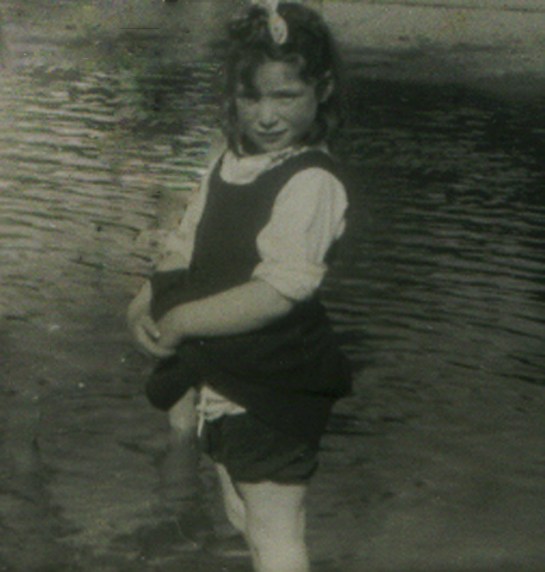
Anne in convent clothes

Anne in Mercy Orphanage clothes aged about eight years old

*****
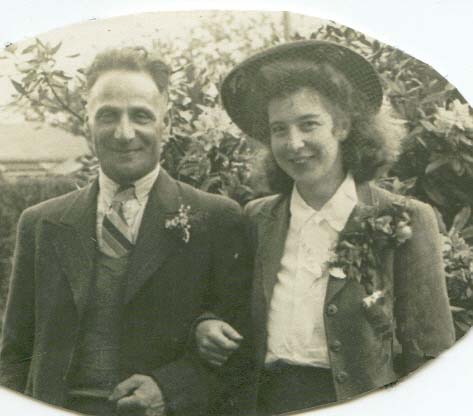
Copy of Doreen &amp; Joseph's wedding day

Joseph Coory and Doreen Frandi at their marriage ceremony

*****

 Whatever Happened to Ishtar? is made up of two books:

  • In Book I, Anne Frandi-Coory traces her father Joseph Coory’s Lebanese family history back through the mists of time to various places in the Middle East, including Iraq and Damascus, then to Bcharre, from  where her paternal grandparents Eva and Jacob Fahkrey (Coory) emigrate to Melbourne in 1897.  Khalil Gibran, Lebanon’s most famous poet,  came from the same village as Jacob and was related to him through marriage. The couple eventually travel to Dunedin, New Zealand and subsequently had twelve children. Family members live on in the same house at 67 Carroll Street for a hundred years.  In many ways it becomes a house of horrors for Anne’s mother Doreen Frandi and her children.

……….
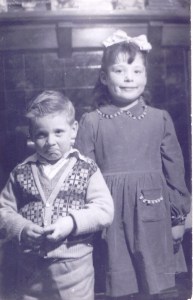
Anne & Tony

Doreen Frandi’s two children Anthony and Anne during their years in Catholic institutions

******************************
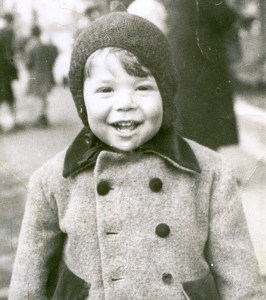
Kevin blog 1

Kevin Coory, son of Phillip Coory and Doreen Frandi, adopted by Joseph Coory after his marriage to Doreen.

******************************

Lebanese Family Tree here

………

In Book II, Anne Frandi-Coory traces her mother Doreen Frandi’s Italian roots back decades to such places as southern Italy, Sicily, Pistoia, Lucca, Pisa, Florence,  and northern Italy’s border with Switzerland.   Anne’s personal story begins when her mother, a former nun, falls pregnant to a Lebanese soldier, Phillip Coory, at the close of WWll.  Phillip, already married with a small son, abandons Doreen, who then decides to follow him to Dunedin, New Zealand. Phillip’s older brother Joseph marries Doreen against the extended Coory family’s wishes, and adopts Phillip’s second son. Anne’s subsequent birth sets off a series of consequences still reverberating through several generations. Anne also documents her mother’s tragic descent into  severe bipolar disorder when her marriage to Joseph disintegrates following Anne’s birth.

………

Italian Family Tree here

><><><><><><><><><><><><><><><>><><

  • 21 Black and white photos in the book
  • Extensive Lebanese and Italian family trees
  • Some of Anne Frandi-Coory’s favourite poems are woven into chapters; each poem relevant and poignant

Song Of Ishtar

><><><><><

Most of all, this book proves two things: Our lives can be pre-ordained by the tragedies of our ancestors’ lives, and a child’s spirit can survive the cruelest of beginnings, to take on the world

*********************FIFTEEN BOOK REVIEWS***********************

5 star ***** AMAZON BOOK REVIEW by Deianira 11 January 2015

When I started reading  Whatever Happened To Ishtar?, I expected to finish it quite quick but in truth, it took time to digest the words and their significance. It is a journey, both biographical and autobiographical in approach. The author seeks to find her place not only in society but who she is. This is an extraordinary search which uncovers the history of her maternal and paternal lineage.

What is revealed is both heart-rending and powerful, a personal narrative. Ms. Frandi-Coory’s pursuit as to why her mother abandoned her while a baby is a difficult journey of self-discovery. How could a mother leave her children is the driving question behind the author’s plight. That, and trying to understand who she is and to identify with the family nexus and her place within it.

Her father, ill equipped mentally and economically to rear his daughter and son, placed them in an orphanage run by catholic nuns. It was not a pleasant time for either and the author gives vivid descriptions of her time incarcerated. Her father’s family weren’t the most pleasant people, abusive both verbally and physically. Why? Her mother was considered a harlot and mentally unstable, therefore she was of the same ilk. The cultural mix of Italian and Lebanese blood, the author is driven to learn more about both sides of the family and why they behaved in such a contrary manner.

I admire Ms. Frandi-Coory for writing this book. She revealed secrets most families would prefer to remain hidden to detriment of those who were and are victims. This is a brave expository, which shows the cycles of abuse can be stopped with determination and strength of character.

**************************************************

4.5 Stars ***** AMAZON BOOK REVIEW by Gerald Gentz USA 30 December 2014

Gerald Gentz

Gerald Gentz

Whatever Happened To Ishtar? is more than a book and more than a story. It is the telling of a remarkable journey of discovery of one person’s difficult life. Anne Frandi-Coory spent much of her life trying to find a place and the love of a family. Book ended between a caring but weak father and mentally ill mother unable to care for her financially or emotionally, Anne and her brother, Kevin, suffered childhoods that no child deserves to experience. In the end, even the scars would not prevent them from making stable and successful lives.

Anne’s long research into both the paternal and maternal sides of her family is remarkable for it’s depth and acceptance. In doing so, she exposed her demons and the dysfunctions of her maternal and paternal families. The result is a culmination of her difficult journey to understand herself. Her greatest victory is her coming to understand the love of her mother and the realization of her love for her mother. Anne’s was a journey of discovery and healing.

This can be a difficult book to read at times because of the emotions it elicits. It was particularly emotional for me because of my realization that Anne is actually my cousin that I was not aware I had, her mother being my mother’s older sister. Anne’s book gave me a deeper awareness of my maternal family, and thus my mother, than I had before. So Anne Frandi-Coory’s journey of discovery was also mine in 373 pages.

><><><><>

“An amazing journey – challenging, painful, and ultimately unforgettable”  

– Tanith Jane McNabb, Owner of Tan’s Bookshop Marlborough NZ, 27 October 2014 on  

><><><>><><

Goodreads 5 Star ***** Book Review by Susan Tarr  – 14 October 2014

https://www.goodreads.com/book/show/11168865-whatever-happened-to-ishtar 

Author, Editor and Proofreader

**********
Susan Tarr

Susan Tarr

“WHATEVER HAPPENED TO ISHTAR? By Anne Frandi-Coory is a remarkable portrayal of New Zealand’s earlier Lebanese and Italian Catholic families. Although I was raised in the various vicinities this book covers, I had no idea there were established Lebanese families in New Zealand. And, for me, the whole Catholic religion was shrouded in mystique, so I had very little understanding of what was involved in being a part of the Catholic faith.

Set in New Zealand, the spartan buildings of the Catholic St Vincent’s orphanage mirrored in some part those of Seacliff Mental Asylum (Otago, NZ) in both outlook and care of those in their charge. Both would seem to have lacked a close affection for those who needed it most: the vulnerable and unloved.

This work is an amazing testimony for all mothers, a testimony we can probably all relate to. How many times do we feel inadequate, or feel we could have done better? We should never have such constraints placed on us as a mother to feel either of these. Whatever a mother is capable of at that time, for her child, is sufficient for that time.

As Frandi-Coory bears out, it is always possible to break mindsets, or break the mould, as it is said. I.e. the sins of the father… All it takes is an invincible will, which clearly she had and has.

Frandi-Coory recounts the histories of both her Lebanese and Italian families. She explains how the various mindsets occurred and how they were passed down through the generations.

I found I kept referring to the photographs as I formed opinions on the various players in this tapestry of life.

What is astonishing here, is that Anne Frandi-Coory and I never made a connection until after our respective books were published, in separate countries. It was through reading each others work that we realised our lives were very closely linked. In fact we may well have known each other through a mutual friend (Italian) during our college years in Dunedin, NZ. That is why I can vouch for the events, scenery, time frames and cultures in this amazing work.

It’s absolutely raw in its honesty.

Very well written, it’s a compelling read, from start to finish.

Kudos to Anne Frandi-Coory.” – Susan Tarr HERE on Amazon

************************************************

AMAZON BOOK REVIEW  16 August 2014:

Whatever Happened To Ishtar? is a raw and powerful memoir/family history by author Anne Frandi-Coory.  She spent 15 years travelling, researching her family tree, interviewing extended family members, haunting libraries and museums.  Some of what Anne discovers is devastating, but mostly she is proud of the cultures and heritage of her ancestors.

Anne believes that the Catholic Church’s Dogma with its divine elevation of the ‘Virgin Mary Mother of God’, changed the image and value of the female across the world. Gone forever were the powerful, pagan goddesses. Instead we humans were left with the Roman Catholic black and white dichotomy of whore/virgin. Anne Frandi-Coory was born into a Lebanese Maronite migrant family in Dunedin, New Zealand. Prior to Anne’s birth, her Lebanese father, Joseph,  married Anne’s Italian mother who’d already given birth to a son whose father was Joseph’s younger brother, Phillip. Unfortunately, Phillip was already married with another son! From the time of her birth, Anne is caught up in a vortex of hatred, neglect, physical and sexual abuse. At only ten months old, she is separated from her parents when she is placed in a Catholic orphanage for the poor run by the Sisters Of Mercy.

Anne’s research into her mother’s, grandmothers’ and great-grandmothers’ lives reveal their extreme hardships largely brought about by giving birth to too many children, xenophobia, and abusive husbands.

><><><

Book Review by Roseann Cameron;

Christchurch, New Zealand. 25 November 2013

Roseann Cameron

Whatever Happened to Ishtar? by Anne Frandi-Coory  is a necessary read for any mother in order to help make an adjustment to your mindset in this information age filled with books on how to parent better.

Anne tells, in an honest and direct way, the reality of her childhood where her mother was largely absent; suffering neglect and abuse in the hands of the Catholic Church and her extended family.  Despite this absence by her mother, the rare moments Anne shared with her still gave her something enormous.

It is a balanced account such as she does acknowledge the education the catholic church introduced her to.

Why Anne’s story is one of redemption and healing is that, despite what she reveals of her childhood and subsequent adult quest to reach a place of understanding, Anne has in her, a life blood and intelligence that is vibrant and strong.  Anne knows how to live in the moment and embrace love and laughter to its full.

Anne is giving back to her children the opposite of what she was given which is a massive testament to her strength and sheer force of character.  So if you ever feel you are not giving enough to your child take a read of what Anne didn’t get from her biological parents.  Be encouraged by Anne’s story that even the most meagre rations her parents were able to give did make a difference to her.  How much more so, an available parent with intent to actively love her children, despite the inevitable mistakes you make along the way?  Such a mother  Anne has turned out to be, despite all odds.

><><><><

Note from my nephew, Dean Marshel-Courté 1 May 2013…….

dean

Dean Marshel-Courté

Hi Anne, l’m sitting at a cafe in Sofia, Bulgaria, and thought l’d let you know that l just finished re reading properly, Whatever Happened To Ishtar?  last weekend and like l’ve already mentioned to you, your work is outstanding. l have a complete picture now of yours and Tony’s and my dad’s lives in that difficult time. l just can’t believe how terrible your situation was and the way they treated you all. Just for your info, my adopted mother lived in Dunedin too and was a dress maker for your aunties; she remembers them very well.

 Luv. Deano

><><><><><

MOMOBOOKBLOG REVIEW   of  Whatever Happened To Ishtar? 22 June 2011…  How much can a person endure, especially a little child. This heart-rendering account of Anne-Frandi Coory’s life is a proof that we can live through a lot of hardship and still turn out to be passionate and affectionate people, in this case a wonderful woman and mother of four children even though she was an abandoned and abused child herself.

The author goes back to the history of her Lebanese-Italian family and all the troubles her ancestors went through before reaching New Zealand… MORE

><><><><><

Rita Roberts

Rita Roberts,retired archeologist, Crete, and author of  ‘Toffee Apples & Togas’  –

Whatever Happened to Ishtar?  by  Anne Frandi-Coory  is a book I could not put down. It tells of Anne’s terrifying upbringing as a child and later on in life the long quest to trace her family. Written with such passion that once read one thinks of the old saying, ‘There for the grace of god go I’. This book I would recommend to all families,especially mothers, in fact, to everyone. – Rita Roberts 2011

><><><><><><

I am loving  Whatever Happened To Ishtar? – I started reading it straight away… Isn’t it amazing that when you know someone, you don’t know what is really going on in their life? I always saw you as a fun loving mother of 4 busy kids, with the wonderful Paul by your side. I loved staying with you all. I loved your home and its romantic decoration, I loved your sense of warmth and your zest for life. When you went off to Uni, you inspired me to be a life long learner – its never too late! You are amazing and have had the most incredible journey to become and even more amazing grandmother and mature woman. I love you and will always hold you in such high esteem.- 2011

Rachael Dunphy Van Asch, Marlborough on her facebook page

><><><><><><

MOMO – International Book Group Online 2011– Location: The Netherlands:

Whatever happened to Ishtar? by Anne Frandi-Coory, the biography of a woman from New Zealand with Lebanese-Italian parents. This book was recommended to me by a person in Australia. Not for the faint-hearted but very good.
><><><><><><
__________________
><
dean

Dean Marshel-Courté

        Dean Marshel-Courté, Hungary  facebook comment:

Reading my Aunty’s [Anne Frandi-Coory] book; Whatever Happened to Ishtar? Its fab and very informative regarding the family history. Dad [Kevin Coory], its worth a read buddy. (-:

><><

_______________________________________

><
Marion Groves’ Tweets:

30/08/2011 > Night girls, dying to get back to my book. Am reading Whatever Happened to Ishtar? by Anne Frandi-Coory @afcoory … Highly recommend! @lunarchic @externallylaws

6/09/2011 > @PhilosophyQuotz @MarionGroves Your descendants shall gather your fruits. Virgil (ping @afcoory ) > Maybe I should have used this title for ‘Whatever Happened To Ishtar?’

6/09/2011 >No, your title is provocative & thought-provoking, as is your book. I was sorry when I had finished it. @afcoory

><

*****Book Review by Wendy O’Hanlon –   Click – A Cultural Connection [September 2010]: Whatever Happened To Ishtar?

Wendy O'Hanlon

Wendy O’Hanlon

ISHTAR, according to Phoenician legend, is the great mother goddess. But author Anne Frandi-Coory grew up without close contact with her mother. In this painful re-telling of her family history, the author explores how generations of her family have lived thwarted, sad and unfulfilled lives because of a cruel twist of fate and even crueller family behaviours.

The author grew up in an orphanage, ostracised by her Lebanese father’s family. She rarely saw her Italian mother who spent many years in asylums and endured horrific shock treatments. She has tried to trace her siblings and re-establish relationships – with and without success, with heart-rending surprises and tragedies.

The author is now living a fulfilled life but needed to face these demons of her family history to try to make sense of life and purpose. There is true courage in her words. Her childhood was very lonely. Hers is such a searing, heart-tearing story.

The author painstakingly documents the history of her family back through the generations of Italian and Lebanese faces and stories. What is ironic is that she uncovers the rich cultural history of these families and the fact that such wonderful traits and traditions were all but lost to modern generations as her family tree fractures again and again.

For the reader, there is much to learn about the history of these great cultures as Frandi-Coory meticulously delves into ancient stories and legends. There is also much to learn about the strength of the human spirit – that a life with purpose can be lived despite a crippling beginning.

–                                               ………………………….

JOHN MORROW’S PICK OF THE WEEK September 2010

This is an autobiography cum family history from a strong woman who has overcome the odds to come out a successful and wonderfully strong person.

There are not many happy childhood memories when Anne recalls her earlier life in Dunedin.   Anne spent her formative years at the Orphanage for the Poor.  There she was indoctrinated into the world of the Roman Catholic religion. Prayers, bible study and chores were not the practical things that would prepare a damaged young girl for life out in the wide world.

Anne’s story is a revelation of cruelty and mind games which set her on a path of self-doubt.  It is little wonder that she has been on a life journey that has been harrowing, but ultimately, triumphant.

Anne’s story is painful and, at times, difficult to read.  However, she has my absolute admiration for rising above the adversity of her childhood to become the confident woman she is today.

Thanks Anne, for sharing your story.

**********

Click Here: for more of the latest reviews for  ‘Whatever Happened To Ishtar?‘ 

**********

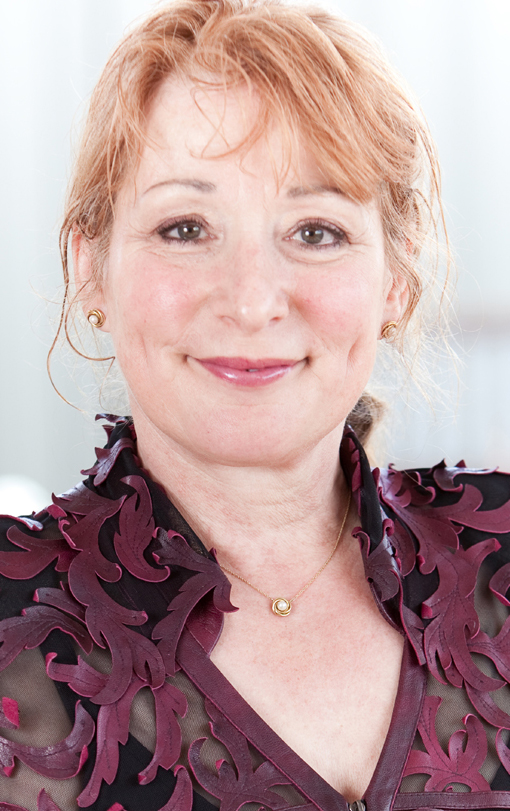
Anne Frandi-Coory… Author Photograph: Robb Duncan 2010

BRIEF BIO OF AUTHOR:

Growing up in an orphanage, raised by strict Catholic nuns, abused by her father’s Lebanese family in Dunedin. This beginning did not prepare Anne Frandi-Coory well for the realities of life.  But she overcame the continual threat of hellfire and brimstone, escaping into marriage and children as a teenager, while trying to find out who she was.  Then followed divorce, and diverse short careers;  interior decorator, estate agent, joint owner of a café/caterer. Always looking for new challenges while becoming bored with the old, Anne then went to university and gained a degree in Sociology after which she worked for a short time as a child case worker in the NZ Dept of Social Welfare.  Not content with that, she travelled the world with her partner and daughter, and then wrote her first book ‘Whatever Happened To Ishtar? – A Passionate Quest To Find Answers For Generations Of Defeated Mothers’.   The book was the result of fifteen years of research, interviews, and note-taking, and is selling worldwide.

******************************************

*Please note: If you have trouble purchasing a 4th edition paperback copy, contact me here on my blog by leaving a comment.*

***********************************