Archive

Tag Archives: Anne Frandi-Coory

Out Of The Forest

**********

Most people who follow me on Social Media, and those who read my Blog ‘My Life and Rhymes; A Life in Two  Halves’ would find some common ground reading this engrossing biography ‘Out Of The Forest; The true story of a recluse’ written by Gregory P. Smith, about his childhood filled with violence and sexual abuse. And if that wasn’t soul searing enough, his mother one day out of the blue, piled Gregory and his sisters into the family car on the pretext of going on a road trip to visit an aunt they had never heard of. It eventually became apparent to the children that their mother had ‘dumped’ them like so much household garbage, at some sort of institution which resembled a small castle. She then hastily drove off never to be seen or heard of again for some time.

Once inside the orphanage, governed by the Catholic order of ‘Mercy’ nuns, Gregory is immediately separated from his sisters. The siblings do not see each other again while incarcerated in the orphanage, and Gregory soon realizes that the nuns hate all children, but more especially boys. Gregory is regularly sexually abused and humiliated by teenage girls who as ‘inmates’ have to bath the boys. He experiences, and witnesses, the cruel deprivation and humiliation of boys at the orphanage, particularly those boys who wet their beds.

When Gregory and his sisters are collected from the orphanage by their mother and taken home, they find everything is as it was before, only worse. Their father is even more violent after long sessions drinking at the pub…one of Gregory’s sisters later recalls that often after their father had severely beaten Gregory, usually while he was trying to protect his sisters from their father’s wrath, it left blood on the walls and her brother covered in blood. Teenaged Gregory finally ran away from home to live on the streets.

The next few years are spent living on the streets, stealing money and food, and running from the police. At one stage Gregory was incarcerated in a youth correction facility. As he grew older, his eruptions of violent anger involved him in countless drunken brawls. Occasionally he was able to find employment, at times earning a reasonable amount of money, but his demons wouldn’t let him be; his childhood trauma ran too deep.

While living on the streets, he mostly kept hunger at bay by rummaging through rubbish bins for discarded food. Calling himself ‘William H. Power‘ had enabled Gregory to hide from who he really was (albeit superficially),  and where he came from. There was too much of his past shadowing him in and around Tamworth where he was born so he wanted to put as much distance between that town and his battered mind and body as he could. There was also the matter of his juvenile police record; he didn’t want anyone to alert the police as to his whereabouts.

Homeless Gregory morphs into an anonymous, yet familiar vagabond wandering around  towns and byways; thumbing rides, walking for hundreds of  kilometres along lonely country roads, and skirting isolated homesteads. One day, while Gregory was sitting in one of the   parks he frequented, wearing disheveled clothing and sporting a long, scraggly beard; talking philosophy with a group of Indigenous people and ‘hippy backpacker types’ it seemed that he was creating quite the impression.  A few people believed he was Jesus Christ, returned to earth. “Come and listen to this! Come and listen. You should hear what he’s got to say! Hey, man, it’s Jesus! He’s back!” they shouted. He admits he was drinking port and smoking pot at the time:

“I was much more comfortable being plain old William H. Power than I was being Jesus H. Christ… While I was only a god for one night, there were plenty of other times I found myself around a fire on the beach with a group of people letting my inner guru out. The dope would flow and they’d inevitably start to share their thoughts on the deep stuff. Metaphysics is big in Byron Bay. Time and time again I’d be the centre of attention, the group in my thrall with the added drama of being able to see my mountain [up in the rain forest]  from the Byron Bay beach.“

Surely there is not such a great leap from there in the park, preaching to followers, to being a lecturer at a university?

However, Gregory spends most of the following years, in varying states of oblivion, homeless and later in the rain forest, most of the time spaced out on drugs and grog. There is a future episode which brings Gregory’s homeless and aimless life into sharp focus: he discovers, following a long period of socialization, an official record of his marriage to a woman, of whom he has no recollection, much less the actual marriage and later, the divorce.

The peace and solitude of the rainforest in northern New South Wales keeps calling  Gregory back and he subsequently makes himself a  permanent home there for more than a decade, where he survived mostly on bush tucker. He built a bed made from ferns and established a constant campfire.  He had decided earlier on not to kill any more animals for food after he had killed and eaten a small wallaby he caught in a trap. The guilt got to him; he missed the little creature which he often spied wandering around his camp. From that point on his health began to deteriorate rapidly.

The long process of rehabilitation back into human society had its genesis in an epiphany which the hermit experiences while lying beside his campfire, in a near comatose state, suffering from malnutrition and long-term gastroenteritis. His ancestors visit him, and while sitting around the camp fire, they tell him ancestral stories and then finally cajole him into leaving the forest and getting help. Otherwise, they caution him sternly, he will die.

With a mind cloaked in a dense fog, Gregory has no memory as to how he managed to walk out of the forest and find help; he had lost track of time and found it difficult to concentrate on anything at all. His body was emaciated and poisoned by rotten grog, drugs, and lack of food. His ancestors wouldn’t let him rest and hassled him with ghostly conversation.

After a long battle and considerable help from many people along the arduous road to recovery, Gregory finally achieves success as a scholar eventually gaining  a PhD in Social Sciences.  He is later employed as a university lecturer.  Oh how far this remarkable man has travelled.

The author informs the reader that he chose Social Sciences as the subject of his thesis because he wanted to study how human society actually functioned. It had been a mystery to him up to that time.

-Anne Frandi-Coory.  26 February 2020
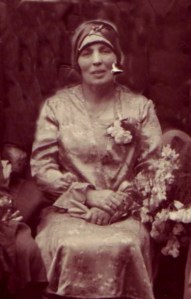
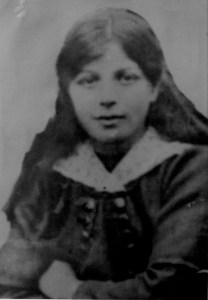
Anne Frandi-Coory’s maternal Italian great grandmother Raffaela Marisi Mansi Grego (Greco)

**********

Wow! That ‘Raffaela’s Last Dream’ in Dragons, Deserts and Dreams,   is just so, so beautiful, and I love it. But then again I love everything you do, my darling Anne. You have put me by her bedside. You have me holding and squeezing her hand as I read and hear her, drifting through the pages of her life, with all the love and emotion of a woman who knows she will soon be flying through heaven, alongside the author of all things in the universe.
For beautiful Raffaela has already experienced hell on earth. And I, the reader was there when it was all happening, so cleverly condensed in, ‘the present tense’. You’re such a great writer Anne, you always have the ability to stir up my emotions.
After I finished reading, in the dark now, I closed my eyes and wept and sobbed out loud, as I often do, when I awake from such dreams. Dreams I have of my grandmother, the one person who never stopped loving me.
Dreams, nowadays in my secret place I call ‘La La land’. A place I find myself a lot lately as my body too, is almost worn out. A place where I’m not really asleep, but then again I’m not altogether awake. All I have to do is remain quiet, usually in the afternoon, close my eyes as I rest alone on my sofa, and I’m there, in my beautiful ‘La La Land’, where anything can happen.
Thank you so very much for introducing me to your wonderful, courageous and most lovely, ‘Raffaela’ Anne, I am so grateful to find her at last. She, like you will remain forever with me, as I know I will never forget you both.

-Arabella Marx, @thatmarxtart Australia 2017

‘Raffaela’s Last Dream’ by Anne Frandi-Coory

From Dragons, Deserts and Dreams

emmies-wedding-2

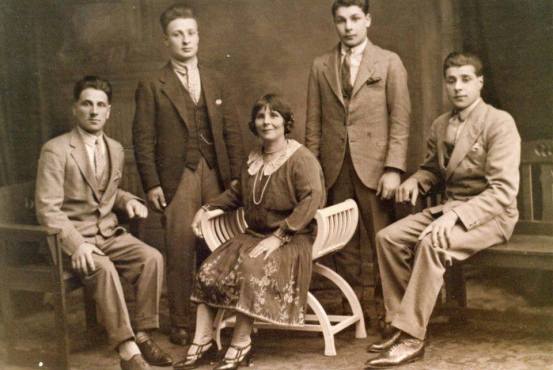
Raffaela and Filippo  Greco [anglicised to Grego]

**********

More comments from Rita Roberts, Crete:

Rita Roberts: This is so beautiful Anne, Thank you for sharing.

Anne Frandi-Coory: Yes Rita, it’s a comment that really touches the heart strings…Arabella has since died as she was quite elderly when she wrote the comment. We followed each other on Twitter initially because we both liked reading similar books. And then she bought both my books: ‘Whatever Happened To Ishtar?’ and ‘Dragons, Deserts and Dreams’. RIP lovely Arabella Marx.

Rita: So nice she was in touch with you before she passed though, Anne.

Anne: Yes Rita, and I treasure the fact that Arabella connected with me and my writing…I do feel so humbled. She had a very sharp mind, with an erudition I envied. xx

********

The Blog Comments below were posted  by David Edward Anthony, USA  on page:

Lebanese Family Tree and Photos.  

More here: My Life and Rhymes – A Life In Two Halves

**********

David Anthony:

I LOVE your website. I’m of two worlds, too, in this case 1/2 Lebanese and 1/2 Irish. The Lebanese side arrived in the USA from Lebanon in 1892.

Amelia Coory, Joseph’s sister who died from TB at 17 yrs old.

The photo of Amelia Coory looks so very much like one of my cousins (who is 1/2 Lebanese and 1/2 Italian). Similarly to Amelia, my sitoo’s [grandmother] brother Peter died of “exposure” in the 1890s. He was perhaps 10 years old. In the USA at least, there was a terrible depression (the “Panic of 1892”) that led to widespread unemployment. In my great-grandparents’ case, they couldn’t get work have to live outside in a lean-to in the winter- it probably led to my grandmother’s brother’s death.

I see you have a Khalil Gibran – inspired drawing at the top of your page; interestingly enough, there are Gibrans in my family’s old parish.

Sketch by Khalil Gibran

Anne Frandi-Coory:

Hi David, good to hear your story. Khalil Gibran was born in my grandparents’ village in Bcharre and moved to USA when the Catholic Maronite minority were suffering persecution by muslims. We are related to his family through marriage [Khouri]. If your family came from Bcharre there is a good chance there will be a family connection because my grandfather’s sisters emigrated to the US. Lebanese/Irish combination would make for a volatile mix as does Lebanese/Italian, I would say?

David:

Hi! Thank you so much for the reply.

Yes! Irish-Lebanese is a volatile mix! My Irish mother could be very much the unstoppable force where my Lebanese dad was the immovable object. When she got excited, it was like a tornado was set loose in our living room- and that Tornado came up against the Mt. Everest that was my dad!

My family isn’t from Bcharre. It’s from a very similar town not that far away to the west- a town called Ehden.

I hesitated- strongly- on telling you about Ehden as Bcharre and Ehden are two very similar towns – Maronite Catholic and set in the mountains- photos of both towns make them even look similar- but they historically are two rival towns as well. I suspect you’ve heard in your life how Italian towns are rivals- very similar thing.

Both Ehden and Bcharre are *very* ancient towns. Both rightfully can boast an ancient heritage- with ancient buildings and such. Bcharre, if I remember right, boasts the oldest cedars in existence (and among many things, of course being the birthplace of Khalil Gibran)..while Ehden, for example, hosts Horsh Ehden, a very ancient nature preserve, and also the oldest Maronite church in the world.

Now, the reaction of many old Bcharre people on hearing from someone from Ehden is usually something like, “Ehden! Those people are NO GOOD.” Which goes back to the book, The Arab Mind* and the author’s conclusion that there’s really not much middle ground between liking and dislike in the Middle East.

I hope (!) that my telling you I’m from Ehden (really Zghorta, which is its mirror town – Zghorta in the winter and Ehden in the summer) doesn’t give you a bad vibe!

Anne:

I was a bit like your mum when I was younger-very fiery, not sure many people understood me. But I didn’t inherit the ethnocentricity that my grandparents brought with them from Lebanon because I spent my formative years in an orphanage. My mother became mentally ill (not surprisingly) and dad’s family didn’t want me because my mother was Italian. However, I love the Lebanese people and the Italian people and consider myself blessed, and I am proud, because of the wonderful positive traits I and my children have inherited. Writing Whatever Happened To Ishtar? helped me to see that. So, David, the fact you are Lebanese is fantastic!

*READ my review here:

‘The Arab Mind’ by Raphael Patai – A Book Review by Anne frandi-Coory


David:

I’ve read this book as well – about two years ago. It helped me, too, connect to my Middle Eastern roots. As I’m half of Irish descent, and the Irish side of the family being HUGE, I tended to spend far more time with the Irish side than the Lebanese side. Plus my father, a very kind man, tended to be a very reticent man. As the Lebanese side of the family was very small, I tended to not get hardly any exposure to the Lebanese side; even though, quite frankly, I looked *very* Lebanese. I kind of stuck out when visiting my Irish cousins! 🙂

I remember reading in the above book an account that the author witnessed of Middle Eastern people leaving a movie theater. People leaving the movie often showed no middle ground. They either LOVED the movie, or they HATED it. That lack of a “middle ground” is very close to my own personal experiences- and reading the above, it seems that you had similar experiences? Either they accept you wholeheartedly..or not at all. Growing up, it confused me. I saw people being what I called “favorited” or not favorited at all. It took me many, many years (and some hurt) to figure out what was going on.

That said, I didn’t know that the tidbits of language I had picked up from my jidoo [grandfather] weren’t really Arabic until I was an older teen. What happened was that a distant cousin north Lebanon visited our family. When he spoke to my jidoo, they couldn’t understand a word they were saying to one another. My jidoo was raised to speak what he was believed as Arabic from a young age- in fact, it was his first language. Why couldn’t my cousin from Beirut understand him?

In the end, we figured it out. My cousin spoke modern Arabic. My jidoo spoke a form of Aramaic that was spoken more than a century ago, which was passed onto him in the USA by his family. Not only was my jidoo speaking another, older language, he was speaking a form of it that was about a century old!

I really like your site. I don’t have much time to check it out from top to bottom; I hope it’s okay if I come back and read through it some time! Thank you for posting so much interesting stuff!

Anne:

Here in my review of another book you may be interested in:

The Maronites in History by Matti Moosa 

The comments below were posted here on my Blog  by Miriam Burke, NZ on page:  Lebanese Family Tree and Photos.  

**********

Subjects: My father, Joseph Jacob Habib Eleishah Coory, his brother Michael Patrick Coory, Patrick’s wife, Harriet and their daughter, Yvonne.

Joseph and Michael Coory 1

Brothers Joseph and Michael Coory

The book: Whatever happened To Ishtar? – A Passionate Quest to Find Answers For Generations of Defeated Mothers

Miriam Burke is Michael Patrick Coory’s granddaughter and daughter of Yvonne Coory.

**********

Dear Anne

I just wanted to post you something beautiful and I know you love it:  (Blue Danube Ballet) http://www.youtube.com/watch?v=eSulONzgewQ

Dear Miriam

How did you know about the glass case? You’ve already read my book! The ballet brought tears to my eyes. Thank you so much, Miriam xxxxx

Dear Anne

I wanted to send you something you could keep and play over and over again without it getting taken off you. Yes Anne, I rushed out and got your book and I am part way through. It has touched me so very much, I only wish you had confided in my nanna Harriet, I’m so sad to know how very bad you and your brothers were treated. I relate to the screaming and yelling; I always remember I would get scared when all of a sudden one would start arguing and the rest would jump in like a pack of hyenas attracting prey.

Did you know your dad was my most favourite great uncle? I remember Mum took me to Cherry Farm to visit him and I was so disgusted the family had put him in such an awful place. I told Mum I never want to go back. Uncle Joe was so pale and thin looking, I didn’t want to believe it was him. 😦 I remembered Tim!!!! [Joseph’s beloved dog] Oh how I loved him but when I think of Tim he was very old.

I came across your blog by accident the other day. My sister-in-law Charmaine Burke (nee Coory) Victor Coory’s adopted daughter’s brother John had passed and I was looking on the ‘net for details of his funeral. I was drawn here after names came up that I was familiar with. I’m so very pleased I found you. 🙂 xxx

Dear Miriam

OMG! you knew my dad. He and uncle Mick [Michael Coory] were very close and had similar lives until my dad [Joseph Coory] married my mother [Doreen Frandi], and The Family never forgave him. . I know that uncle Mick was staying with the Coory family at Carroll Street when your Nana Harriet was so ill and after she died. However, he was so horrified by the way the family treated uncle Henry’s children after he died, Mick moved out and stayed with your mum. I am so glad you found me. Xxxxx

Dear Anne

Who could forget Uncle Joe, I was a young girl, Anne when Uncle Joe died but he was someone in the house I felt I connected to and felt comfortable being around….he had sparkling eyes, a friendly smile and a gentle soul. See my brothers and I are out casts also on the Todd side for the stupid reason our Mother and Father got divorced. When we were small children, why did we get the feeling we had done something wrong? Even now I’ve been in touch with my Dad’s side of the family and don’t feel I fit in anywhere. They look at me as though I’m an alien…I know they see Mum when they look at me, Mum did tell me they treated her so bad even when she was married to Bryan. I’ve been blessed with her looks and she lives on in me…oh and the other wonderful thing I’ve been blessed with is my Nanna Harriet’s nature…LOL She was a bit of a rebel, could stand up for herself and a wonderful sense of humour. I remember she did tell lies though, only to keep the peace but she would laugh and giggle like a small child at every time she told one.

I remember.one day Great Aunt Georgina was yelling out to us and Nanna said to me “oh no here’s the fog-horn coming”…I started to giggle and Nanna said just say nothing and go along with me. We were staying up in Wanaka at the holiday home and Nanna and I were in the small scamper on the section. Georgina came over and asked if we had been to church? Nanna said yes of course we had, “we were sitting near the back [of the church]”. Of course we didn’t go to church that day. I wonder if they knew of Nanna’s tattoo?. A small butterfly she had on her thigh…hence my love of anything to do with butterflies. I have one hanging on my wall and when I look up at it I think of Nanna. She was too modern to be a nanna in those days…I thought she was just the coolest Nanna in the world! They both did so much for Mum and us children especially when Dad left. We were so lucky to have wonderful grandparents.

Aunt Alma who really wasn’t our Aunt was Mum’s favourite to talk to…Aunt Alma we had more to do with and visit than the house in Carroll Street in later years when Nanna was in a retirement home. Mum and I would always make sure we called into visit Alma when visiting Granddad while he was living at Carroll St. You know Anne, think of yourself as a caterpillar slowly crawling along in your youth, everything seems a struggle, you don’t feel good about  yourself, you feel like you are going  nowhere, then one day you just get so tired of your struggle you just want to curl up into a ball and sleep forever away from the world; then the moment you awake you feel different, you have grown into a colourful butterfly that can now fly above all those struggles you once had…you’re beautiful…just keep spreading those wings! xx Miriam 

**********

Read more here about Joseph in an excerpt from  Whatever Happened To Ishtar? >>>>>>>>>>>>>> My Father Joseph Jacob Habib Eleishah Coory 


10334276_293513207505781_2346531765896938995_n

L to R: Joseph, Michael, Frederick and Philip Coory with their mother Eva Arida Coory.


********

Bruce Pascoe  is of Bunurong, Tasmanian, and Yuin heritage.

  Award winning Author, Writer and Film Producer.

********

I have lived in Australia for almost fifteen years and I am ashamed to say it is only in the last two or three years I have learned that although Australian Aboriginals were sometimes hunter-gatherers, they also lived in towns of up to a thousand people, they built houses, and they  were sedentary enough to have systems of agriculture and trading, to set large-scale fishing traps, and engaged in crop-saving irrigation practices. Archaeologists are now discovering artefacts, artworks and other evidence of Aboriginal life which attest to the fact that they were not solely hunter-gatherers. Author of Dark Emu,  Bruce Pascoe, through extensive research, has revealed the huge amount of information about the sedentary life of Aboriginals verified by early explorers and settlers in their diaries, in both the written word and sketches.

Dark Emu reveals how colonizers eventually destroyed the very settled Aboriginal way of life; their agriculture, their plants, their houses, their land; these supposedly ‘civilized’ invaders massacred First Australians in their thousands whenever they tried to defend their culture, their women, or their land. To justify this destruction of a culture that had survived in Australia for up to 80,000 years, successive writers and governments have set out to create the myth that Australian aboriginals were “savages” or “blacks” who aimlessly roamed the continent as hunter-gatherers.  Aboriginal children were taken from their families by Christian missionaries and placed in orphanages to “save them” from a “savage” and “heathen” upbringing.

Pascoe has much to say about the deliberate ‘cover-up’ of a pre-colonial Aboriginal democracy which had allowed ‘the great Australian peace’ across the continent for thousands of years. Tribes worked with each other sharing the land and whatever was harvested from it; flora and fauna alike. They stored and preserved food, they ground a type of flour and they baked a basic damper bread. David Maybury-Lewis, was professor of anthropology at Harvard University in the early 1990s when he included these statements about Australian Aboriginals in his book ‘MILLENIUM; Tribal Wisdom and the Modern World’ [pub. 1992]:

*If one were asked to state briefly and succinctly what are the outstanding positive features of Aboriginal civilization, I for one, would have no hesitation in answering:

*Respect for the individual, irrespective of age or sex.

*The amazing degree of social and political integration achieved by them.

*The existence there of a concept of personal security which transcends all governmental forms and all tribal group interests and conflicts.

*The possibility of conceiving of an individual alone in a tribal sense is ridiculous…the very complexity of tribal life and the interdependence of people on one another makes this conception improbable at best, a terrifying loss of identity at worst.

So much of what Pascoe writes about in Dark Emu is in harmony with the above academic statements; but further, he gives us an in depth analysis drawn from his own ancestral knowledge of pre-European Aboriginal life, and backs this up with compelling evidence gained from his research around the early explorers’ and settlers’ diary notes, stories and sketches held in libraries and museums around Australia. He also discusses how Australian Aboriginals managed the threat of bushfires and how they used the best land for agriculture and the poorer, less productive soils for growing trees, planted in specific formations. They had a spiritual and emotional connection to the land; a great understanding of fire and how to control it. Tribes harvested a variety of yam and many other ‘bush tucker’ plants across their land, but later all were destroyed by herds of cattle and sheep brought in by the early settlers.

In Dark Emu, Pascoe brings home to us that we can no longer assume our 21st century ‘developed’ way of life represents the most advanced stage of progress and that Aboriginal society was less successful, less meaningful than our ‘superior’ society today. Surely this knowledge will enlighten us, open up the richness and variety of what it means to be human and perhaps we can learn from the peace and harmony evident in pre-colonial Aboriginal tribal life.

To me, their spiritual beliefs such as ‘Dreamtime’ make far more sense than the religion of Christianity ever did; Aboriginal spiritual beliefs are intertwined with the land, and I wonder if we had followed their path in this regard instead of trampling all over it with introduced cattle and sheep, or by planting out pastures never suited to such a dry continent, would Australia be burning as it is right now, in catastrophic bushfires?

If you haven’t already read  Dark Emu please do so, and encourage your children and grandchildren to read it, or read it to them, like I have done.

– Anne Frandi-Coory.  9 January, 2020

*******************************************************

To some, Dark Emu seemed to come out of nowhere, but Pascoe’s latest book, SALT: Selected Stories And Essays, helps us to see how it grew from the author’s life experience and earlier storytelling. I’ve been a follower of his work since the early 1980s, when I read his fiction and subscribed to the literary magazine he edited and published with Lyn Harwood, Australian Short Stories. When Dark Emu was published in 2014, Bruce became a household name and many readers encountered him for the first time. One of the pleasures of Salt is that it weaves his earlier fiction writing together with his now-celebrated nonfiction. We meet — or rediscover — the pre–Dark Emu Pascoe, and we’re reminded that this powerful voice itself has a history. – Tom Griffiths. [Tom Griffiths is Emeritus Professor of History at the Australian National University.]

********

Lewis Carroll, born Charles Dodgson, was the son of a cleric and it appears that he had a rather boring and ‘funless’ childhood. He was deeply religious, eventually becoming a deacon in his church.  Paradoxically, this austere, possibly very lonely man, went on to write two of the most famous and popular children’s stories of all time: Alice’s Adventures In Wonderland and its sequel, Through The Looking-Glass. During and following his lifetime there were myriad plagiarized versions of his stories, many using the name ‘Alice’ and the word ‘Wonderland’ in their titles; 19th century England did not have copyright laws so plagiarism was rife. Before the Alice series, children’s stories were largely moralistic in tone or derived from biblical narratives.

Carroll’s drawings and sketches were childlike and did not meet his exacting standards, so he employed professionals to do the artwork for his published stories… and then later the first camera was invented. Carroll was inspired to add his own photographs, mainly of little girls, to his prolific writings, and it must be said, for his own enjoyment and collections.

To be a Victorian photographer, wrote Robert Douglas-Fairhurst, the author of The Story Of Alice – Lewis Carroll and the Secret History of Wonderland, required “the knowledge of a chemist, the eye of an artist, and the patience of a saint”. The new craft suited the meticulous Dodgson, and the art of photography further inspired his alter ego, Lewis Carroll the story teller. He could prolong his fascination with childhood by photographing little girls, ideally in the nude. “A girl of about 12,” he wrote towards the end of his life, “is my ideal beauty of form.” And he could never understand … “why the lovely forms of girls should ever be covered up”. It is true that Carroll preferred images of prepubescent girls to those on the cusp of womanhood.  It disturbed him greatly to witness the physical changes in his Alice …that is Alice Liddell, who inspired him to write about Alice’s Adventures.

Christ Church at Oxford was the epitome of an academic and social establishment, where the eccentric Dodgson fitted in perfectly. He never really left once he had moved in. In his reality, Charles Dodgson and Lewis Carroll were two separate people so he certainly did not appreciate his fans addressing letters to ‘Lewis Carroll’ at Charles Dodgson’s rooms at Oxford. He preferred to keep his two selves quite separate. In the opening pages of Alice’s Adventures in Wonderland, it is made very clear that Alice “was very fond of pretending to be two people”.

Pretty eight-year-old Alice Liddell, especially, captivated the young Charles. Her father was Dean of Christ Church and Dodgson often took Alice and her sisters boating on the river, while telling them enchanting stories he’d made up. Alice had dark, elfin features, and the kind of fashionable clothes that made her look, says Douglas-Fairhurst, “rather like a well-dressed doll”.

Author Robert Douglas-Fairhurst is also an Oxford don, which allowed  him a good perspective from which to explore the story of Alice and her brilliant creator, while Oxford itself is a kind of Wonderland  where figures like Humpty Dumpty might be found sitting on any of the high walls, instructing students that “a word means just what I choose it to mean – neither more nor less”.

While waiting for the proofs of Alice’s Adventures in Wonderland, Dodgson noted with distaste that “Alice seems changed a good deal, and hardly for the better”. She was then 13. Already, from 1858 to 1862, Dodgson’s peculiar intimacy with Miss Liddell had become the subject of intense Oxford gossip.

The charm of photography [for Dodgson] Douglas-Fairhurst suggests, is that it prevented children from changing; what photographs offered was “a new way of grappling with the power of time”. Adults, Dodgson noted, “look before and after, and sigh for what is not”, whereas a child can say “I am happy now” and that moment in time can be caught with a click. In this sense, writes Douglas-Fairhurst, photographs are like dreams; the dreamer sees the world once again through the eyes of a child. This dream-like effect is captured perfectly in the Alice books.

Just as Alice grows an incredibly long neck and then shrinks to the size of a mouse, language also alters and expands. The Oxford English Dictionary contains almost 200 examples of words and phrases from the Alice books, including ‘beamish’, ‘chortle’, ‘frabjous’, ‘galumphing’, ‘curiouser and curiouser’, and the now ubiquitous ‘We’re all mad here’.

Dodgson/Carroll forever changed stories written especially for children…from tedious moral lessons and formidable biblical characters, to nonsensical humans and animals inhabiting dreamlands full of mysteries and dramas. He was a brilliant master of the English language which, combined with his vivid imagination, made him the ultimate children’s story teller.

Douglas-Fairhurst is the latest recruit to an army of Alice analysts baffled to distraction by the quest for answers to the Alice conundrum. But Carroll’s apparently inconsequential wordplays which he loved sharing with his child friends, are replete with consequences. As the Queen of Hearts says: “Every joke should have a meaning.” Along with the Bible and Shakespeare, Alice’s Adventures in Wonderland and Through the Looking-Glass are among the most quoted works of English literature. “Nonsense” is a peculiarly English genre, and Virginia Woolf is said to have commented: ”…these are not books for children. They are the only books in which we become children”.

Was Charles Dodgson aka Lewis Carroll a ‘paedophile’ or a creative genius? Was it possible he could have been both? It is interesting to note that this particular word first appeared in public around this time.  Dodgson always insisted, following the success of his Alice in Wonderland tales,  that he was two different people, and maybe this allowed  him a Jekyll and Hyde existence; his wholesome alter ego Lewis Carroll wrote children’s stories, and played games with friends’ children, while the ‘real’ Charles Dodgson, the loner, the man who seemingly never wanted to become an adult,  harboured  private black thoughts.

However, the author of The Story Of Alice is having none of it! He argues that Charles Dodgson was not a paedophile and there is no evidence that he ever acted improperly with Alice the child, or any other children. Indeed, Alice Liddell never accused Dodgson of abusing her in any way and in fact she became a fund raiser after he died, helping to collate and organise his papers and works and install them in a museum. She also appeared at celebrations of Carroll’s life and his extensive works. In the end though, it is apparent that Alice Liddell was “tired” of the never-ending media hype surrounding her as being the ‘real’ Alice of Wonderland fame. However, there are the missing pages from Dodgson’s private diary which were removed after his death, probably by his family, so there will always be questions and suspicions swirling around Charles Dodgson’s close friendships with several young girls.

Robert Douglas-Fairhurst loves Carroll’s books and they motivated him to study Charles Dodgson with an open mind, despite the suspicion with which others may view Dodgson, particularly since the early 20th century. The Story of Alice is a comprehensive study into the enigma of Dodgson’s complicated life within a Victorian ‘wonderland’ encompassing the Victorian era’s methods of austere child rearing, alongside Christian belief systems; the fantastical dreamlands that Lewis Carroll’s Alice stories allowed bored and lonely children to escape into…a realm of make-believe and wide-eyed wonder.  Still, concludes Douglas-Fairhurst, the quest for answers “cannot be satisfied by anything we know” and he reaches “the probable conclusion” that Dodgson’s  “strongest feelings were sentimental rather than sexual”.

To me personally, this book is an in depth analysis of 19th Century English literature and how children’s stories and ‘fairytales’ developed over time as a specific genre which encouraged children to read and collect their favourite books.  Alice’s dream adventures instilled in children worldwide, the passion for reading; that thrill of opening a book full of weird and exciting characters who occupied a fantastical world of dream images. They also later inspired two Disney brothers to ‘dream up’ one of the most famous childhood cartoon characters, Micky  Mouse.  The catalyst was one eccentric, very intelligent loner, with a split personality, who preferred the company of little girls to that of adult women.

-Anne Frandi-Coory 11 November 2019


I first read In God’s Name in the early 1990s when I was at university, and although I was by then a lapsed, disillusioned Catholic, nothing prepared me for the revelations in the book. Until then I had no idea how deeply corrupt the Vatican/Catholic Church was, and specifically, the Vatican Bank. I have recently read it again.

Then I saw a Daily Mail post:

Mobster claims he helped Poison Pope John Paul I with cyanide and threatened to kill Pope John Paul II because they both tried to expose a billion dollar stock fraud scam involving cardinals and gangsters in Vatican City. (see full post below).

Needless to say, this time I was more prepared, what with the child sexual abuse scandal that has since rocked the Church to its core. The comments by the mobster confirm everything that investigative journalist David Yallop had revealed in  his book about the murder of a  pope… In summary:

During the late evening of September 28th or the early morning of September 29th,1978, Pope John Paul I, Albino Luciani, known as the smiling pope, died only thirty-three days after his election. The cause of death (Vatican officials refused to allow an autopsy) was announced to the world by the Vatican as ” myocardial infarction”. Yallop interviewed many people when he was writing In God’s Name including the pope’s  long  time personal physician. The doctor was absolutely shocked because as he told Yallop, his patient, a relatively young pope in his 60s,  was in perfect health and the only pills he took, were extra vitamins and  mild medication for low blood pressure.

During his research for the book, Yallop uncovered a huge chain of corruption  linking leading figures in financial, political, criminal, and clerical circles around the world in a conspiracy. The new pope was, although a humble man who enjoyed a simple lifestyle, a fierce opponent of corruption with an inner strength that must have alarmed his ‘minders’ when he ordered an investigation into the Vatican Bank, and the  methods employed by its President, Archbishop Paul Marcinkus. Yallop’s intensive research over three years maps the subsequent cover-ups and  upheavals within the Vatican,  and the actions of the mysterious and illegal branch of Freemasonry called P2  extending far beyond Italy in its accumulation of wealth and power , and also penetrating the Vatican.

In God’s Name is an informative and educational  read for Catholics and non-Catholics alike; for anyone who still believes that religious organisations are  in existence purely to set humanity’s moral compass or to direct the worship of culturally specific gods.  -Anne Frandi-Coory 

****************

The Daily Mail Post:
Mobster claims he helped Poison Pope John Paul I with cyanide and threatened to kill Pope John Paul II because they both tried to expose a billion dollar stock fraud scam involving cardinals and gangsters in Vatican City.

A mobster from the Colombo mafia family claims he helped poison Pope John Paul I with cyanide 33 days into his reign to stop the pontiff from exposing a billion dollar stock fraud scam. The startling revelation comes from 69-year-old Anthony Raimondi’s new novel When the Bullet Hits the Bone [published 2019].

Raimondi was a loyal member of the Colombo family – one of the notorious five Italian mafia families in New York City.

The Colombo family dealt in a host of criminal enterprises, including racketeering, contract killing, arms trafficking and loansharking.

The scene begins in 1978 when Raimondi, the nephew of infamous godfather Charles ‘Lucky’ Luciano, was recruited by his cousin Paul Marcinkus, who ran the Vatican bank in Vatican City.

The New York Post reports that Raimondi’s job was to learn the Pope’s daily habits and be there when Marcinkus spiked John Paul’s nightly cup of tea with Valium.

Raimondi notes that the Valium worked so well that the Pope wouldn’t have woken up ‘even if there had been an earthquake.’

He said: ‘I stood in the hallway outside the Pope’s quarters when the tea was served.’

‘I’d done a lot of things in my time, but I didn’t want to be there in the room when they killed the Pope. I knew that would buy me a one-way ticket to hell.’

Meanwhile, Marcinkus prepared a dose of cyanide for the Pope.

‘He measured it in the dropper, put the dropper in the Pope’s mouth and squeezed. When it was done, he closed the door behind him and walked away,’ Raimondi said.

Shortly after, a papal assistant reportedly checked on the Pope and screamed that ‘the Pope was dying!’

At which point, Marcinkus and two other cardinals rushed into the bedroom and pretended to be horrified by what they saw.

Raimondi said if the Pope had kept his mouth shut, ‘he could have had a nice long reign.’

Next on the list was John Paul II, who seemed set on exposing the inside job as well.

Raimondi, a [self] made man, was called back to the Vatican and told to prepare for a second murder at the behest of the fraudsters.

He reportedly told them: ‘No way. What are you going to do? Just keep killing popes?’

Knowing he risked being killed by the mobsters, John Paul II allegedly chose to keep quiet about the illegal dealings.

John Paul II would go on to serve the second longest reign in modern history before he died at age 84 in 2005.

This apparently prompted days of drunken partying for the mobsters and corrupt cardinals in Vatican City.

Raimondi said: ‘We stayed and partied for a week with cardinals wearing civilian clothes, and lots of girls.’

‘If I had to live the rest of my life in Vatican City, it would have been OK with me. It was some setup. My cousins all drove Cadillacs. I am in the wrong business, I thought. I should have become a cardinal.’

Raimondi dismisses those who question his story or say it closely resembles ‘The Godfather III.’

‘It was a terrible movie. To tell you the truth I don’t really remember it,’ Raimondi told The Post.

‘What I said in the book I stand by till the day I die. If they take [the pope’s body] and do any type of testing, they will still find traces of the poison in his system.’

Follow Anne Frandi-Coory’s blog HERE at: Frandi.blog

********

© Poetry, photographs and painting Copyright To Anne Frandi-Coory. All Rights Reserved 3 June 2019 

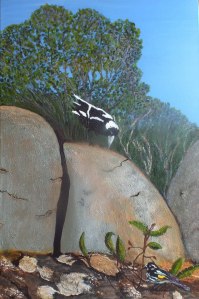
Bird Life In The You Yangs  *Painting acrylic on canvas*

***(This painting has been sold)

*************************************

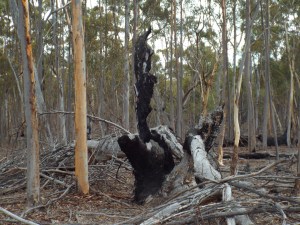
You Yangs…

Yellow, blue, eucalypts

ancient river red gums,

centuries in the making; naked branches,

petrified arms, gnarled and grey

beckoning, pleading, monster-like

awaiting more fire to sprout new life

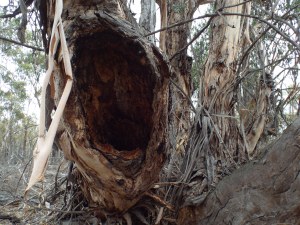
darkened cavities like gaping mouths,

homes for many a creature.

***

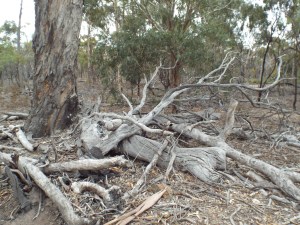
Seems a graveyard for once-thriving

river red gums, companion granite rock

cracked and sentry-like, guarding;

fossilized years of earthly rumblings  

groaning low Wadawurrung mountains 

weathered skeletons hovering, creaking

trunks given up on survival?

Crashed to earth, limbs flailing

***

so dry, roots no longer gripping

many moons of rainless clouds

tortured, pitiful, writhing gums; so

much crumbling charcoal clinging;

kindling amassing for a future

conflagration that one day must come

alas what wildlife lurks beneath?

Koala cling high amongst the thinning gums.

***

Myriad birds thrive in this strange landscape

in harmony and yet, noisy squabbling,

from long shared and distant pasts;  

Magpies’ melodious carolling,

New Holland honey eaters chattering

colourful feathers fleetingly observed

camouflaged in the skyward flowering gums,

laughing Kookaburra and croaking Wattlebird.

***

Silence unobserved atop granite peaks in the midst of a sweeping lava plain.

**********************************

Photos taken in the You Yangs by Anne Frandi-Coory:                                                                                   


*Poetry and artwork copyright to Anne Frandi-Coory – All Rights Reserved 9th May 2019*

Dedicated to my grandchildren, Amber and Jack, who inspire me to join them in the most fantastical dramas* 

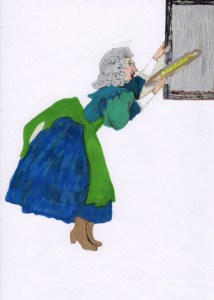
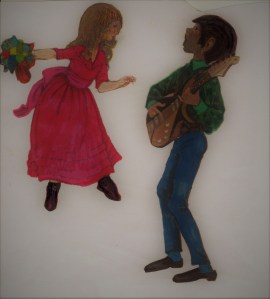
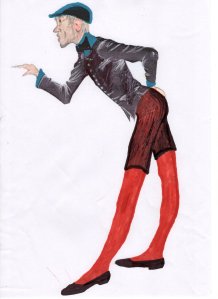
THE BUTLER AND THE NANNY

Not far away, in a pretty town, ‘twas uncanny

Lived the Butler of some repute, and the Nanny

She who could cook up many a tasty feast

Her pastry, pies, and rice dishes not the least

*****

The Butler, as always he answered a knock

In his best bow tie, his head he would cock

“Coffee, tea or milk” he’d ask those who came to visit

“Come, take a seat, here at table” he’d politely insist

*****

Miss Amber and Master Jack often came by to play

Ready to paint or to sketch, they’d spend mostly a day

As well Master Jack liked to sing, drama was his want

While Miss Amber was a dancer, her love,  en pointe

*****

Clever Little Miss and astute Little Master,

Always knew the Butler could avert disaster

And when his index finger was raised above

They both knew it was time to listen, and behave

*****

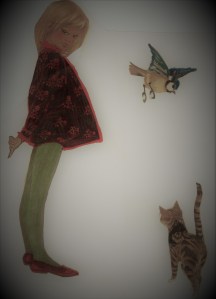
The Butler and the Nanny loved birds in their garden

If Zak the cat stalked them, he’d not get a pardon

*****

Birds large and small searching for grubs to eat

Zak was only allowed to watch from the window seat

*****

That Little Miss she’d scold Zak if birds he chased

To kill such beautiful creatures would be such a waste

******

While Little Master instructs Zak “give mice a chance”

They’ll freeze or shiver when Zak takes a glance

*****

Dressing up in costumes and acting out stories galore

Was drama Master Jack, Miss Amber, loved to explore

*****

Of course, she always wanted to be a royal queen

He preferred to fight monsters in nearly every scene

*****

Such a musical family, they love dancing and singing

With mummy on piano and daddy guitar-a-strumming

*****

Master Jack dreams one day he’ll join the family band

But for now he and Miss Amber join in, hand in hand

*****

At night when daddy, mummy finally arrive at the door

The Butler serves a snack, to their delight and more

So tired and weary after several hard-working weeks

Just to sit down, relax, and is all every grown up seeks

************************

Poetry and Artwork Copyright To Anne Frandi-Coory.

All Rights Reserved 9 May 2019

img20190206_11165675
I received the wonderful Christmas gift of Michelle Obama’s autobiography, ‘BECOMING’.
and I did enjoy reading this beautifully written book. I  thoroughly recommend it.
What an inspirational and intelligent woman she is. Michelle Obama’s life journey begins with her childhood in a poor, black neighbourhood in Chicago, and takes us through her years at school, university, as a corporate lawyer, and on to the eight years in which she reluctantly gives up her much loved career to become the First Lady of the United States of America
.
Michelle (a descendant of African slaves) wastes not one minute of her time as First Lady, establishing:   a huge vegetable garden in the White House grounds to which she invites disadvantaged families to share in, mentoring programmes in schools and universities for disadvantaged children, healthy food delivered to schools for millions of children across the US, a movement to encourage schools to implement at least 60 mins of exercise every day… and these are just a few of her accomplishments. There is so much more that this amazing woman achieved, and most of it with an aim to better the lives of disadvantaged children, especially girls and young women. For as Michelle explains in her book, so many boards and influential meetings she attended over many years, were mostly made up of white males, where so often she was the only woman present, or the only African American or mixed race person in a group of world leaders.
I think readers will agree with me when they reach the last pages of this book, that Michelle Obama, by her example of selflessness and high standards in attaining her achievements, has inspired many women of mixed race in the USA to garner their inner strengths and voices, to explore their choices in life, and to aim for higher ideals.  One of the last paragraphs in the book reads:
“There are portraits of me and Barack now hanging in the National Portrait Gallery in Washington, a fact that humbles us both. I doubt that anyone looking at our two childhoods, our circumstances, would ever have predicted we’d land in those halls. The paintings are lovely, but what matters most is that they’re there for young people to see – that our faces help dismantle the perception that in order to be enshrined in history, you have to look a certain way. If we belong, then so too, can many others.”
-Anne Frandi-Coory