Trauma survivors want friends, loved ones, and partners. We want a social life which fits into our own comfort zone. We may not be able to adapt to your social preferences in the same way you are able to adapt to ours. This can be for many reasons. For instance, something you enjoy may cause us anxiety. This is where you will need to be willing to accompany us while at the same time accepting we cannot always accompany you.
We want the same things in our lives that most people do: happiness, peace, and security. We just sometimes require them under different circumstances, and we need you to both understand and accept this.
As a trauma survivor heals, we also gain a maturity and an understanding that not everyone is equipped to be in our lives. We respect you when you are honest about this. If you don’t feel a trauma survivor is the right fit to be in your life, that is okay. You do us a favor when you do not enter our lives if you are not invested emotionally.
If you do decide that you want to enter our life, be willing to take things very slow. We need your patience. The more we heal, the more we grow, release triggers and can bloom. Connecting with a healing trauma survivor can be a rewarding and celebratory experience. We really do appreciate when someone cares about us with the intent of supporting our way forward.
2. We need to know we can trust you.
Survivors of child abuse are conditioned from very young ages that we cannot trust people who claim to love us. This is because the people we were supposed to be able to trust were the same people who hurt us. Sometimes a child abuse survivor is still learning to define what the meaning of love is. Many of us who have suffered sexual abuse were groomed lovingly into being coercively raped. This can cause confusion when an abuser is also loving toward a child, resulting in confusion when we reach adulthood.
It will take more time and open communication to gain our trust.
For trauma survivors, things can sometimes be very black and white. When trust is broken with us, it can either take us a long time to regain it, or we do not ever regain it with you again. I am one of those types of people. If someone shows me their true colors are rooted in manipulation, ill intent or disloyalty, I will most likely never interact with that individual again.
You may find that many of us have a deep need for loyalty and strong ethics in the people we relate to. When we are in a trusting space with someone, we feel safe. Because we rarely felt safe as children, feeling safe as adults can be a major factor in the balance of our mental health. Be trustworthy and loyal. It can be an honor to be in our lives since many of us rarely allow others in deeply.
3. Know our trauma.
Get to know what happened to your friend or significant other. Be genuinely interested. You may not understand our childhood experiences. It may feel horrible to you. It is natural to feel disgust at hearing about abuses happening to children. This makes you human. It means you care. We appreciate you for feeling WITH us. When we are healed, many of us survivors do not live a daily private life of continually speaking of our trauma. However, understanding the depth of what has happened to us and how it has affected us will help you understand who we are.
Some of the things you might hear may be difficult to wrap your head around. Imagine having experienced it. We survivors often feel the same way about our own experiences.
Be willing to listen with acceptance. Remember that you do not need to have the same experiences as someone else to understand and accept their experiences.
If we write about our trauma, be willing to read it. Once, I dated a man who asked me about my childhood. I suggested that he read my book, Cult Child, which would let him know everything that happened in my childhood. I spent seven years writing my biography. While I can give a summary of my experiences, if someone is going to be in my life on a romantic level, they should be willing to know the details of what I endured. His retort was that he shouldn’t have to read a “manifesto” of my life. He didn’t get any more of my time. Do not speak to us this way. It’s an honor to read our journals and experiences since it is not easy for us to write about it.
Healed trauma survivors can be very strong together as friends, business partners and in romantic relationships. Because both have experienced traumas, they will most likely have a higher level of mindfulness and understanding with one another. This can be a strong dynamic. If you are healing, strive to connect with other healing survivors. Healed survivors most often inspire one another.
4. Educate yourself about our impairments.
Many child abuse survivors carry impairments such as Complex PTSD, Anxiety, Agoraphobia, Dissociative Identity Disorder, Hypersensitivity, Startle Response, OCD, Depression or other bi-products of what mentally ill people did to us. Because an abuse survivor’s scars are not visible, many people forget their friend or significant other carries such impairments. This can be difficult for us. We want and need you to remember that we have impairments.
For example, I am deaf in my right ear. Because of this, I can have higher vocal volumes, especially in loud spaces, or I need others to speak up, so I can hear. Once, when I was watching a movie with a friend, she remembered my hearing impairment and put on subtitles, without me even asking. It warmed my heart. These small moments of mindfulness mean the world to me.
If you are interested in personally connecting with a child abuse survivor, educate yourself on what our impairments are about. Read credible information. Learn what the signals are for triggers and how you can be a support person if a trigger happens. The brain is an amazing organ. Learning how trauma affects the brain of a developing child is astronomic in understanding why child abuse survivors operate the way we do.
When you can speak our language, it is easier for us to communicate with you. This creates an ease for us. We do not have to struggle in communicating what we may be going through, because we are aware that you get it. For example, a couple signs of a trigger could be the pupils of the eyes becoming larger and a frozen body stance. Knowing these symptoms can help you recognize them if they arise. Sometimes a trauma survivor feels shame and stays quiet about what is happening in our head. When you recognize the signs of our triggers, and softly rein us in, it creates an open channel for us to move through it.
As we heal, you will notice that changes occur. Things which once triggered us may not trigger us anymore. We may have highs and lows of anxiety or depressive periods depending on what happens in our lives. We don’t deal with situations or see the world the same way as non-trauma adults do. Knowing how our impairments work can give you the tools to support us through this journey. Plus, nerding out on the way the human brain functions can be super fun.
5. Don’t take our abuse personally or try and fix it.
You may want to fix everything. You may become frustrated that you cannot fix some things. You will meet child abuse victims who are still in their abuse base. You get to choose what your own comfort level is. Don’t make a victim your pet project. Victims must choose their healing as they learn the tools to do so. You will find yourself exhausted if you fall into the belief that you can fix a person who has not chosen to heal themselves. It is okay to softly move on before you become vested. It is better for all parties involved when you decide responsibly to do so.
It can be difficult to watch someone you love have days of crying or silence; a state of being that you may not understand, or even think might be your fault. Remember that not everything is about you. Sometimes we just need to be heard or hugged. Sometimes we need to cry. Let us. This is where holding space is a necessity. A healing survivor will possibly ask for your input for self-care. We may be more open with what we are feeling and dealing with in our head when you hold space for us.
There is a saying; Let the past go. I disagree. If trauma survivors could wave a wand and make the past go away, oh, how we would. No. The past holds onto us, and we spend our lives prying its fingers away.
As we heal and face our trauma, we learn the art of taking dominion over our memories. We learn that we do not have to relive the flashbacks when they arrive. It takes time to accomplish this state of being.
Connecting with a trauma survivor requires a great amount of empathy and patience. If you don’t understand us, study and read up on what we live with each day. I personally respect when someone is honest with me about whether they are or are not a good fit in my life.
Be kind. Be gentle. Most of all, be real.
– Vennie Kocsis
********************
I would just like to say here, that the above post resonates with me…and although I have written in my memoir and family history HERE inWhatever Happened To Ishtar? -A Passionate Quest To Find Answers For Generations Of Defeated Mothersabout the sexual abuse, abandonment and gross neglect I suffered as a child, I have been unable to write or describe the full account of what an uncle (married to one of my Lebanese aunts) did to me in the back seat of his car when I was ten years old. Survivors cannot always talk about what they suffered, so imagine if you had to explain this traumatic experience in a court of law?! But there was poetic justice for me in the end; my abuser later died of a massive heart attack after he was involved in a car crash. – Anne Frandi-Coory.
**************************
Vennie Kocsis is the best-selling author of Cult Childand other publications. She is also a poet.
***** Please Note: Text and images copyright to Anne Frandi-Coory – All Rights Reserved 4 January 2019.
Q7. Did you witness other incidents, forms of abuse (psychological, physical/violence, sexual) by nuns or others there, and if so, how often and against whom?
A.The kinds of child abuse I witnessed at the Mercy orphanage were more psychological and emotional; traumatised little children being re-traumatised over and over again, by religious women dressed in intimidating habits, who offered us no love, or affection, no comfort and who also allowed us to suffer from gross neglect. They terrorised us into submission and into ‘holiness’ and ‘piety’… These issues must have been raised by other children incarcerated in these orphanages, in the years since, because Sister Joanna volunteered in 1992 when I met her, that Sister Christopher, who managed St Agnes Nursery, was “far too busy to give individual children special attention.”
An example of the psychological and emotional abuse involving my brother Anthony and me at the Mercy orphanage occurred during one of the only times I remember both Joseph and Doreen visiting us at the orphanage in c.1952 when I was around four and a half years old, Anthony three years old. Joseph and Doreen brought Kevin with them, but I am not sure where Doreen and Kevin were living at that time. We were taken to St Kilda beach playground where Doreen took a photo of the three of us children on a swing. I remember that day, because we were all together, we had equipment to play on and we were given the very rare treats of ice creams and soft drinks, and Kevin told me many years later that it was one of the happiest days of his childhood.
Afterwards, Anthony and I were dropped at the entrance to the convent, but Anthony was starting to cry, he didn’t want to leave Doreen, to whom he clung. The nuns instructed me to take Anthony inside to the toilet.
All the while my heart was breaking because I didn’t want them to leave us there. I took Anthony to the toilet but when we came out, and he saw that Joseph and Doreen had gone, he screamed and screamed, the tears streaming down his little pale face…I started to cry as well, but the nuns offered no comfort, told me to stop that nonsense (or words to that effect) and dragged Anthony off to the nursery and told me to go into another room. It took me days to get over this, but I was not allowed to ask about my mother. My brother and I were not even permitted to comfort one another.
On another occasion, I was sitting on the floor with other children and there was a nun sitting in front of us in a chair, when another nun came in carrying a small gold bangle, approached me and told me that my mother had arrived at the door of the orphanage with the bangle as a gift for me. The nun tried to get it over my hand but it was too small. I was too frightened to ask about my mother, who I wanted to see, and then I saw the nun put the bangle up high in a cupboard which I knew I could never reach. Once again, I bottled up my feelings of, how shall I describe those feelings…infinite sadness, and when I did summon up the courage to ask the nun, after she had put the bangle in the cupboard, if I could see my mother, she replied that no, she had already left.
I remember a little girl in my primer class, Ann Tye (of Asian descent), who like me, was laughed at and bullied by other children because we wet our pants and obviously stank, yet the nuns treated us as though we were ‘sinners’ or ‘lepers’ which I certainly felt like, and who failed to provide treatment for us or to protect us, or even to clean us up. The nuns never ceased to tell us stories about lepers in colonies that Catholic missionaries ‘looked after’ and I certainly believed, from what they told me, that lepers were sinners and that the sores they suffered from were as punishment from god and that missionaries were there to convert these ‘pagan sinners’ to Christianity so that they might be cured. I cannot stress enough the harm these ‘stories’ caused us already ‘suffering’ children.
St Patrick’s Primary School class in orphanage complex
We learned about the intimate lives of saints, how they were tortured and died because they refused to deny god or Jesus. All of these saintly stories were designed to keep us pure and to provide role models for us children. To sacrifice ourselves for Jesus or god, was to ensure that we entered the kingdom of heaven when we died so I aspired to be a chosen one after movies we were shown of ‘unblemished’girls in biblical times, being chosen for sacrifice.
We had to help cook meals for all the children when I was living at St Vincent’s wing for junior school girls which was then managed by Mother Boniventure. I believe I was around six or seven years old. Another girl and I had helped to prepare and cook lemon sago pudding for dinner, and as she removed the heavy, boiling dish from the oven with oven gloves on, which I remember were huge, she dropped the boiling dish and I watched in horror as the sticky orange goo slowly ran down her bare legs as she screamed. There was chaos everywhere and later an ambulance came and took her to hospital. When I next saw her, her legs were covered in bandages. I will never forget that smell of lemon sago pudding which we all hated!
The thing is, we were little slaves, and the impression I was left with was that we were worthless and that no-one really cared what happened to us. Our mothers were ‘fallen’ women, and in so many ways, we were reminded of this daily. Very few children were actually orphans …and some children were there because their mothers were ill, or who had died, and they were the ones who went home for holidays. On the other hand, children like me, whose mothers had ‘sinned’, well we knew we were different, because we were treated with indifference.
Anne Frandi-Coory 5-6 years old…note the squint.
Q8. Can you describe the atmosphere of the place and the impact you saw this experience having on others around you?
In the Mercy orphanage, it was that lack of affection, the knowing that we were not special to anyone, and the nightmares we experienced. I especially remember the nightmares, of burning in hell, and that god would not bring another flood to the earth, like he did in the bible, as the nuns and priests loved to tell us; no, the next time humans were bad, it would be the end of the world and there would be fire like the fires of hell. Every time we heard fire engines, we thought it could be the end of the world. There were those children who were dressed better, and who spoke with better diction, and had better vocabularies, than those of us who were abused and traumatised. They went home for holidays and the nuns and priests favoured them; that was obvious to us, the cursed ones.
St Philomena’s Dormitory for girls in Macandrew Road, South Dunedin
The Mercy orphanage was always busy with people; children, college girls, nuns, priests, visitors. I also remember large dormitories, with rows of beds, and when I was a toddler, I remember many cots in the nursery, not in rows, but placed this way and that and I was probably more than three years old and still sleeping in a cot, because I can remember standing up in the cot for what seemed like hours. Most of us were scared of the dark. We were not happy children … and we didn’t have toys or play equipment. We didn’t even know how to play, or to smile. When photos were taken, and someone said smile, I honestly didn’t know how to. My most vivid memories are of children crying and us small children polishing floors, and me waiting for Joseph to visit me. We hardly ever ventured outdoors.
Kevin’s First Holy Communion
When I was a boarder at St Dominic’s, around 1957, the whole building began to fill with smoke, and we children were all terrified that the building was engulfed in flames. We heard sirens and nuns rushed in and ordered us to vacate the building at once. We all raced down the stairs and out onto the concrete steps behind St Joseph’s Cathedral. We had been in bed and were half asleep, so we were all shivering in our nighties standing outside on a cold winter’s night. This seemed to go on forever, with firemen running in and out of the building and nuns seemingly rushing about everywhere, red faced and in mild panic. Once everything had calmed down, we were instructed to go back to bed, it was only a chimney fire which had been caused by a blocked chimney which hadn’t been cleaned for some time.
The dormitory at the rear of St Dominic’s College and the boarded up dining/kitchen area.
When we were back in bed, lacking comforting words to allay our fears, the girl in the bed next to mine began to talk about how frightened she was. We discussed what it would it be like at the end of the world when it was all on fire and there weren’t enough fire engines to put all the fires out. We stayed awake for hours after that; I am sure her heart was racing as fast as mine was. We talked about animals and birds and people being burned to death. It was a long night.
Q9. What was the impact on you at the time? And since then?
Fear and loneliness were what I lived with every day as a child … fear of things, fear of the end of the world, fear of dying, fear that the devil and god were always watching me, fear of animals. I was so afraid of the dark, because I often ‘saw’ the devil watching me to see if I was a bad girl. Many were the nights I lay awake in terror, hiding under the bed covers, with my heart pounding in my throat, after a nightmare. I was even afraid to go outside at night because I believed that either god or the devil lived on the moon; I could see someone there…and I was always sure that the moon followed me in the dark.
Anne Frandi-Coory in Mercy Orphanage clothes aged about eight years old
One of the worst nightmares, which recurred again and again during my childhood, was of me sitting on a swing which was swinging higher and higher, and I am screaming for it to stop, while trying to look around to see who was pushing the swing, but I could never see who it was although I knew someone was there. Another recurring dream was me being locked in a tiny space, my screaming waking me up. This happened once when I was staying at my cousins’ house when I was about 13 years old, and my screams woke the whole house.
I would sit alone somewhere, completely zoned out, I don’t know in what mind space, so that if someone called me, I couldn’t hear them. This happened many times and often I was punished for not coming when called. I suppose it was no wonder that my family, nuns and priests thought I was ‘backward’.
Anne Frandi-Coory 10 years old
I was still afraid to go to the toilet and continued to wet my pants until I was about 11 years old. We didn’t have access to animals or birds, and knew nothing of the natural world. We were never read nursery rhymes or fairy tales, so in later years when my children were young, I used to read to them every day, and I learned so many fairy tales and stories that I’d never heard of. … the only stories about animals that we heard in the orphanage were abstract e.g. St Francis loved animals and birds, and sheep and goats were looked after by shepherds.
As a young mum, (I was married at 18 and gave birth to my first child at 19) I’d race to the church to have my babies baptised, because I ‘knew’ that god would take them from me if I didn’t have them baptised asap and that they would go to Limbo forever. I was still having nightmares about the end of the world and of one or more of my children dying. I was jumpy and over emotional, with a very quick temper…I could become very angry over the slightest thing, which often left me screaming and crying. I felt intense pressure to be a good mother which was the cause of much anxiety and depression on my part. I asked our family doctor if he could help me, but he didn’t suggest counselling, which now when I think about it, he should have done. However, he prescribed me amitriptyline in 1972, which calmed me down and I did sleep better. I stopped taking this medication in 1980, and later I consulted psychologists; the best and most helpful was John Craighead who worked from the public hospital in Blenheim, Marlborough. I remember well my opening words at my first appointment with John Craighead: “I have been paying for my mother’s sins for years” …his silence was deafening.
Anne Frandi-Coory 23 years old with three of her four children
Up until the late 1990s, a nightmare, a triggered memory, could make me cry for what seemed like hours, but the next day the depression that had been building, would lift, until the next time. All through my childhood, and early adulthood, I was socially inept and behind all of my peers in all other milestones. I was bullied at school, laughed at, humiliated and had no close friends all through my school years. However, I could read, I loved learning, especially English grammar which I excelled at, and once I learned to read, I stole children’s books from cousins and a neighbour, and sometimes to be alone, I’d take the books and sit somewhere alone to read them. I am an avid reader but this has had its drawbacks, especially when I was younger. I take things literally, which often caused confusion and which meant I was very slow to understand colloquialisms and sarcasm.
I find it difficult to engage with people I hardly know, at an intimate level, because of trust issues. I am a virtual recluse, with only a few close family members and my life partner sharing my life. I loathe being the centre of attention so social media and writing are very important aspects of my life.
I experienced anxiety, nightmares, panic attacks, a deep sense of loss and fears of abandonment, interspersed with bouts of crying, which abated in my forties. I had attended Canterbury university in Christchurch, enrolling when I was 42-years-old, commuting from my home in Marlborough, with the support of my partner. I started a degree in psychology, but I changed my major to sociology because I wanted to understand more about life and the socialisation process. I completed my degree through Massey University while working for Social Services full time in Blenheim. It was around this time that the nightmares finally ceased. I felt safe and secure…but the journey was too long and too arduous.
Q10. Why was your Italian mother never allowed to visit you? Did you know this at the time, or just wonder why she never did?
According to my paternal Lebanese family, my mother was a ‘sharmuta’ (a prostitute) and needless to say my father passed this information onto the nuns at the Mercy orphanage. There was no secret about my mother being a ‘fallen’ woman, and although I didn’t fully understand what those particular words meant, I knew they were about sinful, impure women; we as children had been read many stories of what happened to sinful women.
Doreen Marie Frandi
Doreen was evicted from the Coory house at 67 Carroll Street for some reason, and I have listed Kevin’s and my thoughts on the possible reasons above. Kevin was 3+ and I was ten months old and it appears at that time she was about 6 weeks pregnant with Anthony. I saw Doreen a couple of times as a very young child; Joseph occasionally took me to visit his family at 67 Carroll Street and while I was there on one occasion, Doreen crept down the concrete steps at the side of the house, and found me in the rear yard, where she smiled her dazzling smile and gave me three picture books, said goodbye and left. I was perplexed, and when Joseph asked me where I got the books, I told him about the lady with red hair… ”Oh, that was your mother” he said, but I truly didn’t understand who or what a mother was then. Then later there was the trip to St Kilda playground, one of the few times we were all together, parents and three children. I knew she was my mother at that stage, and I loved being with her.
I think I understood while still living at the orphanage that Doreen was a sinful woman and that is why she wasn’t allowed to see me, but of course I didn’t understand then, what she had done to make her a “sinful, impure” woman. If ever I asked Joseph why he and Doreen were not together he would just say that “she broke my heart” and my aunts would tell me that she was a sharmuta. Although I didn’t fully understand the meaning of that word, I knew it meant something very bad.
My father took me to visit Doreen a few times; when she lived in a boarding house in St Kilda at the corner of Forbury Road and Valpy Street, where I remember Joseph taking me up a curved flight of stairs, and he obviously had been there before, because he knew which room Doreen lived in. I have a stark memory of standing there in front of her and watching her smoke one cigarette after another, while she chatted to me. And once when I was about three years old he took me to visit her in hospital after she had been knocked over by a car and had her leg broken. She always had a warm smile for me. However, I knew not to tell the nuns or the Coory family about these visits.
Q11. Did you have contact with your mother later in life?
I met my mother occasionally when I was a teenager and after I was married, usually at her state house in 56 Hewer Crescent, Naenae where she lived with Kevin, later at his house after he married, and not long before she died, at her government flat in Newtown, Wellington.
56 Hewer Crescent, NaeNae, Lower Hutt
Joseph died in December 1974 and I went to his funeral, although Doreen didn’t attend. However, the following year in 1975 she flew to visit me and my family in Marlborough. She was very well then and on medication for her bipolar disorder. It was only for a few days, but it was very healing. We talked a lot about her marriage to Joseph, and when she had custody of the three of us children in Dunedin.
At that time, I hadn’t done any research for my book ‘Whatever Happened To Ishtar?’ so I knew nothing of her Italian background, her childhood etc, so our conversations were concentrated around her marriage to Joseph, and my birth. She told me that I only weighed five pounds at birth but that I quickly doubled my weight, which astounded everyone. While she was pregnant with me, Joseph raced around to shops to buy the food that would satisfy her cravings and that she lost a lot of blood during my birth. She breastfed both Kevin and me. I didn’t ask more about Anthony because I did not know much about him, apart from when he was a baby, and a very small boy. These conversations conveyed to me that she tried to be a good mother, she had done her best with what she had, and photos of Kevin as a baby, show a happy, chubby boy. There are no photos of Anthony or me as infants.
Doreen told me that Joseph was good to her at first and that she believed having a daughter “made a man a man”, but apart from that did not say much about the Coory family or why they evicted her and I didn’t like to ask. She talked about being admitted to Porirua Mental Hospital as it was called then, and how during one admission, she screamed out that the lady in the other bed was her sister Anne (whom I was named after) although the staff did not believe her and told her to stop screaming. Finally, Aunty Anne saw her, and she began to scream as well. Anne was suffering from severe depression. Doreen had become a nun at nineteen, to escape the violence at home; her mother was sexually abused and beaten by her father, and one day he dragged Doreen, the eldest daughter, out of school at 13-years-old to take care of her siblings and her mother. She witnessed her mother self-aborting with a knitting needle on more than one occasion and was forced to clean up the bloody mess.
Of course, entering a convent when she was 19 years old, did not help Doreen (then called Sister Martina) to escape from the realities of life as she had hoped. She left the convent a very naïve and troubled woman, but remained a devout Catholic from then on, which I believe hindered her rather than helped. Doreen prayed endlessly, instead of seeking the professional help she so desperately needed. She subsequently spent the next few years looking for love, but instead was used and abused by several men. I believe that Joseph did love her, but he was a simple man, socially unaware, with the vocabulary and reading age of a twelve-year-old. He certainly had no idea how to treat a woman or how to raise children! Doreen kept in close contact with an order of nuns when she moved to Wellington, until the day she died.
Doreen said that she never stopped thinking about us children and when Anthony and I were taken from her, and she was forbidden to have any contact with us, it worsened her illness and caused her to be deeply depressed. She also told me that it was Joseph who originally placed us children in the Mercy orphanage. This and other information was verified by Doreen’s psychiatrist, Dr Bridget Taumoepeau at Porirua Psychiatric Hospital when I spoke to her in 1995 about two weeks after Doreen’s funeral. She told me that whenever Doreen was admitted to the hospital “she never stopped talking about Anne and Tony” and how she was never allowed to live with us or to have contact with us, and she often didn’t know where we were. Not being able to be a mother to Anthony and me caused her to be consumed with guilt which in turn deepened her depression.
Sometime after Doreen and Joseph had moved to Wellington to live, Doreen was admitted to Porirua Psychiatric Hospital for the first time, suffering from deep depression, on 25th February until the 2nd of April in 1947 according to Dr Taumoepeau …and this was when her bipolar disorder with psychotic episodes was first diagnosed. After that first admission, Doreen was re-admitted almost every two or three years (sometimes at her own request), usually for months at a time, and she received ECT on many occasions for severe depression. During her first admission, Doreen had wanted her son Kevin to stay with her Italian family in Wellington, but Joseph insisted that Kevin should stay with his own Lebanese family, although he had not yet officially adopted Kevin. Doreen’s psychiatrist also told me that Doreen had a very settled period in the late 1980s, up until about two years before her death.
I was always told by the Coory family that Kevin was illegitimate and that his father was an old man with a walking stick who lived further up Carroll Street. As I child I believed this to be true and Joseph never disputed these lies. In my teens, my cousin who is the same age as me, told me that our uncle Phillip, Joseph’s younger brother, was Kevin’s father and that he couldn’t marry Doreen because he was already married. In 1975, when Doreen came to Marlborough to visit me, I already knew the truth about who Kevin’s father was and that Joseph had adopted him before I was born.
Kevin told me that when they heard that Joseph was possibly dying from pneumonia and pleurisy in 1957, Doreen and Kevin flew to Dunedin, where Doreen dropped twelve-year-old Kevin off at 67 Carroll Street and then went on to find a hotel. I remembered that day because I was there visiting Joseph. There was a knock on the door, my uncle answered it and I saw there standing on the doorstep, Kevin, whom I hadn’t seen in years, carrying a suitcase. Two aunts were standing on either side of me and one of them asked what he was doing here. Kevin answered that he had come to see “my father” … my aunt told him that he couldn’t come in because he had made the choice to go and live with his mother… “but I don’t know where she is” Kevin replied. They told him in no uncertain terms that he couldn’t come in. I was scared and once again rooted to the spot, unable to move although my body ached to go and hug Kevin, who later described this to me as the most humiliating time of his life. He had to walk some distance to the police station and ask them to find his mother, and in the meantime the police found him a place to sleep at the YMCA while they searched all the hotels for Doreen. At that time, I had no idea where by brother Anthony was.
That image of Kevin standing at the threshold of the Coory family home carrying a suitcase, and which had caused me so much anguish at the time, has never left me. I have lost touch with Kevin over the last few years.
I was constantly indoctrinated by priests and nuns, both at St Dominic’s and at the Mercy orphanage, that I had to be pure, not to have impure thoughts and certainly not to have sex before marriage, and by implication, not to end up like my mother, so much so that my teenage years were utterly miserable. I was completely and utterly lost, going from one job to the next trying to avoid boys and men at all costs. So terrified was I of becoming like my mother, who of course at that time, I scarcely knew. However, after I met her in the Coory family’s backyard in Carroll Street, we re-connected and after that episode I began to search for her red hair whenever I walked around the streets of Dunedin.
During one of my visits to see Doreen and Kevin when I was a teenager, (which we had to keep secret from the Coory family, some of who lived in Wellington) they told me about the time they were struggling to survive while living in the state house at 56 Hewer Crescent, Naenae, in Lower Hutt, and Doreen was working at the Zip factory close by.
Q12. How old was your younger brother when he, in turn, came to the orphanage, and what year was that? What was his experience?
Anthony was about seven months old, and was first admitted to St Agnes’ Nursery on 13 May, 1950, which was managed by Sister Christopher who was very fond of Joseph due to his supposed devotion to Anthony and me. Sister Gregory was in charge of St Joseph’s Boys’ Home when Anthony lived there, and I interviewed her at the Catholic convent at 19 McAuley Crescent, Waikiwi, Invercargill in 1992. She remembered Anthony well, as I in turn remembered her from those days. At the time I interviewed her, she was elderly and very softly spoken, and also a little hesitant to say much. I got the impression from her that nuns were receiving a lot of harsh criticism for their treatment of children in Catholic homes in the past, but told me that they thought they were doing the right thing. I detected a fair amount of guilt in the way she said it. There is no doubt Anthony was a deeply traumatised little boy. Whenever Kevin and I have asked him about what he remembers of the past, he says he remembers nothing about his early childhood. He did not have a good formal education, but now has a steady career, and he kindly looked after Joseph until he was admitted to Cherry Farm, even though in the early days Joseph wanted to have nothing to do with Anthony because “…he is not my son”. Anthony also looked after Joseph’s dog Tim until he died. Anthony moved to Wellington permanently around the late 1970s and early 1980s.
Anne Frandi-Coory’s father Joseph Coory with his beloved dog, Tim.
Anthony also worked with Kevin in his high profile and successful restaurant, The Bacchus, in Wellington for a few years, and built a close adult relationship with Doreen, who also worked at the restaurant as a dishwasher.
I have only met up with Anthony occasionally over the years, because he is very close to the Coory family, whereas I am still terrified of them, so much so that when I am in their company, I can barely put a sentence together and then only with a voice I can barely muster. Kevin and I do have suspicions that Anthony was sexually abused during his childhood in Catholic institutions. He is gay and lives alone. You will have to contact Anthony for more complete answers to those questions concerning him. I do not know where he lives in Wellington.
As I have related above, Anthony could barely speak until he was five or six years old. He was severely beaten with a belt by uncle Phillip in my presence, but he says he doesn’t remember that either. That particular beating left him screaming and sobbing, which he ‘asked for’ because he and I had stolen two empty soft drink bottles to take to the dairy to cash in to buy lollies, while I was so terrified, I hid.
Q13. When were your brothers moved to the Doon St orphanage and why? What was their experience like there?
I do not have a memory of ever visiting Kevin at St Joseph’s Boys’ Home in Doon Street, although I do know he was living there for a very short time. Anthony was moved from St Agnes’ Nursery to the Doon Street Home when he was five years old in 1954 while Sister Gregory was in charge there. There was gender segregation when boys turned five, and siblings were separated regardless of the emotional damage it might cause. I interviewed Sister Gregory in Invercargill in 1992 and she remembers Anthony and me very well. As I have said above, Anthony has blocked out all memories of his time at the Doon Street orphanage, and I can only relate what I, Kevin and Doreen witnessed whenever we visited him there and when he lived with me at St Agnes Nursery.
Q14. What year were you finally able to leave, and how did this come about?
My father told me one day in 1955 at St Vincent’s Orphanage when I was about seven or eight years old that I would soon be going to school at St Dominic’s Boarding College in Rattray Street. I remember being very anxious when he told me this but I don’t recall him giving me a reason. When I met Sister Joanna at the disused orphanage in Macandrew Road in 1992, I asked her what the reason might have been for my father shifting me to St Dominic’s after all those years. She explained that at that time the Lebanese community was well settled in Dunedin and many Maronite priests were coming to Otago for further education. The Lebanese community were by then largely well off and were contributing some of their wealth to St Joseph’s Cathedral and the attached Dominican primary and secondary Catholic schools, and while most of their children attended those schools, I was the only Lebanese girl who was a boarder. I became a boarder at St Dominic’s around 1956.
Sister Joanna informed me that the Vatican had made changes to Canon Law, and there were other big changes afoot within the Catholic Church. Numbers of orphans and destitute families were dwindling, and there were fewer nuns and priests taking up those vocations.
Q15. What do you think motivated the treatment dished out by the nuns, and what do you think of their behaviour, and of the Catholic Church, now, looking back?
The habits worn by the Mercy nuns when Anne and her brothers were living in the Mercy orphanage
I believe that Catholic nuns and priests were unfit to have full charge of young children. While living in these Catholic total institutions, we were indoctrinated to the point that we could not think for ourselves, were terrorised daily about what awaited us in the fires of hell if we sinned. We were preached at daily, about how Jesus died on the cross because we were born with Original Sin …that we had to suffer here on earth to have any chance of getting into heaven. Graphic images of Christ hanging on a cross, with blood dripping down his side and out of his hands and feet, not to mention the blood on his head from the crown of thorns, were everywhere, to remind us daily what we had done to this poor man. Every nun had a large crucifix hanging around her waist.
These Catholic men and women (priests and nuns) had no idea how to educate and raise healthy and well-adjusted children, let alone children who were deeply traumatised.
Corporal punishment was barbaric, especially when it involved children who had done nothing more than talked in the hallways or at the table during meals when we were forbidden to talk other than to say grace, or some other minor ‘sin’. These men and women took it upon themselves to separate siblings from each other by gender when boys reached five years old, which added to the despair and anguish felt by children already suffering deep trauma.
From research I’ve done, and from knowing my own mother’s reasons for entering a convent, many nuns and priests took up their vocations because they were either indoctrinated themselves from childhood, wanted to escape violent home lives, or had some sort of anti-social disorders. Then there were the sexual perverts who believed that having control over so many children meant that they could do anything they wished to them and no-one would care because no-one wanted them, not even their own families.
The fact that the teaching nuns labelled traumatised children ‘backward’ or ‘feebleminded’ or ‘imbeciles’ was especially cruel. In Anthony’s case he was sent to a special school at St Bernadette’s because he couldn’t read or write when his peers were able to, and I can remember at St Dominic’s time and time again, when I excelled at some subject, I was queried as to whether it was all my work. I remember in one case in form one, in an art class we had to sketch a copy of a famous work of art, and when the teacher saw my effort, she asked if it was my own work, and when I said yes, she asked, “…are you sure?” I didn’t know how to cheat, even if I had wanted to!
On many occasions the nuns took their anger and spite out on us children… we were lost children but were seen as slaves to do their bidding, even when we were supposed to be learning in the classroom. They had total power over us and we could never escape their control 24 hours a day. All the nuns and priests cared about were our souls, they had to be white but if we committed sins, our souls would have black spots on them and god would not be happy.
I didn’t even know that I had a body from the neck down because as the nuns told us, our bodies could lead us to sin. The nuns always wore habits that covered their whole bodies except for their faces so we never saw a naked adult body and of course to look at another child’s body was a sin too.
Q16. What has been the lasting impact on your life, and the lives of your brothers, from all of this?
Anthony and I completely missed out on any form of normal socialisation during our formative years in Catholic institutions. There can be no doubt about that. It has taken me almost my entire lifetime to overcome the impact that spending all of my formative years in a Catholic institution has wrought upon me. Only now at age 70 years, can I truly say that I feel secure and safe. I have written two books, taught myself to paint, but not until I was in my sixties, and I only wish that I had begun to really live a full life so much earlier, because now I am running out of time, and going blind, because of the neglect and deprivation I experienced during my childhood years. Neither my brothers, or I, have ever reached our full potential.
You would have to ask my brothers this question for a full answer, but what I do know is that Kevin had a dreadful life living with Doreen when he was a child, and that he never was able to visit Joseph, the only father he ever knew. I remember Joseph talking about Kevin all the time and for Kevin’s first five or so years he had a close relationship with Joseph. Photos certainly show a happy little boy and I do remember Joseph taking me to Carroll Street when Kevin lived there and he did seem happy, playing in his peddle car and laughing at the time. When Doreen decided eventually, after her divorce from Joseph, to return to Wellington where her extended family lived, Kevin wanted to go with his mother. The Coory family from that moment on refused to allow any contact between Kevin and Joseph.
Kevin
When they moved to Wellington, Kevin often stayed all night at movies which ran 24 hours if Doreen was in hospital and he also had to deal with her sexual liaisons with other men, and of course her mood swings. None-the-less he was always loyal and caring towards her, but it wasn’t the kind of life any young boy should have had to endure. Kevin has never been able to sustain a happy personal life with a woman, although he does have two children with whom he keeps in touch. Anthony has no children and from what I know, he lives a lonely life on his own, although he still has contact with some Coory family members.
My two brothers and I grew up living separate lives for the most part, and so have never really been siblings in the true sense of the word i.e. having the same reference groups, shared memories of a happy home life, or been able to offer support to each other. That sense of loss is always with me.
A friend recently introduced me to author Essie Fox and I’m so glad she did. The first of Fox’s books that I have since read, is The Goddess And The Thief and I am so looking forward to reading another of her books The Somnambulist.
The Goddess And The Thiefis set in the time of Queen Victoria, when Great Britain was in the throes of plundering India and exiling the Maharajah (Great Ruler) with the inestimable assistance of the Honourable East India Company, during the early days of the British Empire. This very fine example of a well researched historical novel is my favourite genre; a way of learning about world history via a great story.
I wouldn’t be at all surprised if Essie Fox was herself a Hindu goddess …every line she has written in this book, is evocative of wonderful, sumptuous India, juxtaposed with the corset-laced Victorian age; an era fixated with death, opium and all things exotic.
Readers will be able to instantly identify with the motherless heroine, Alice, who after her father had died, moved permanently back to Windsor, England. Hindu mysticism along with childhood memories of India travel over the seas with her; apparent reincarnations and a sculptured goddess whose eyes appear to follow her every move in her father’s house, confuse Alice. And her Aunt Mercy, who at best is ambivalent towards Alice, is obsessed with the mysterious and intense Lucian Tilsbury. When the troubled Alice reaches her teens, she finds herself reluctantly attracted to him, also a little afraid of the intense, sexual affect he has on her, no matter how much she fights it. What are Tilsbury’s true intentions? Why are her aunt and Tilsbury so intent on stealing the Koh-i-Noor diamond from Queen Victoria and returning it to India where he believes it rightfully belongs and which Britain had claimed as its own at the end of the Anglo-Sikh wars? There is also mystery surrounding Mini, her ayah, whom Alice adored. Her heart broke when she had to leave her behind in India, and she yearns to return to be re-united with her beloved Mini, whose parting gift was a bangle made of glass beads and sacred brown rudraksha seeds, given with her last words:
Always wear this my dearest, it shall be a token of our love. And every time you touch a bead you shall know that Mini thinks of thee, and that Mini shall be praying still for her beloved’s safe return.
Aunt Mercy, a spiritualist medium, wants Alice to be her assistant during séances held for broken-hearted women, including Queen Victoria, who has a compulsive yearning to re-connect with her beloved Prince Albert who has recently died so young. Although Alice agrees to aid her aunt during séances initially, she finds the experience unnerving and unethical, and the relationship between Alice and her demanding aunt deteriorates rapidly. Mystery and suspense evocative of India fill every page of this book, and Fox’s superb writing sucks the reader into the sensuous depths of this beguiling story. I especially loved Fox’s use in the book of asides with such titles as The Letter Never Sent and The Prayer Never Answeredto unobtrusively give the reader some insight into the past.
Eventually Alice begins to experience bizarre ‘dreams’ in Mercy’s house and later in Tilsbury’s, where he eventually confines her in a strange bedroom under what she believes is some sort of spell, although the stupor that envelops her renders her unable to think clearly. Added to that, ghosts appear in odd places, seemingly to warn Alice of danger. Statues of the goddess Parvati and her consort Shiva sometimes seem to move; are they just figments of her vivid imagination, reincarnations if you will, of the stories Mini used to tell her?
There is no-one apart from Mrs Morrison, Aunt Mercy’s cook, who Alice feels she can trust. But then, how can she find the words to explain the mysterious and devastating effect that Lucian Tilsbury has over her body and soul?
Italia was the second child and only daughter of Aristodemo and Annunziata Frandi (née FABBRUCCI) and had an older brother (Francesco Garibaldi, 1866), and a younger one (Ateo, 1873) born in Pisa before the family left Italy for the other side of the world:
*Author Anne Frandi-Coory’s maternal great grandparents.
“The Frandi family travelled to New Zealand on an assisted passage upon the steamship Gutenberg, which left Livorno, Toscano Coast, Italy, on 15 December 1875 and arrived in Wellington, on the North Island of New Zealand, on 23 March 1876. From there they travelled by ship to Jackson Bay on the west coast of the South Island and then on to the ‘Special Settlement’ at Okuru…….”
“While living in the Okuru Settlement Aristodemo built a hut for his family to live in and Annunziata gave birth to two more sons, Italo Giovanni in 1877 and Antonio Raffaelo in 1878. When the Okuru settlement failed the family moved to Wellington, where Annunziata gave birth to four more sons: Enrico Carlo in 1880, Benito Ranieri in 1883 (lived for three months), Alfredo Guiseppe (my grandfather) in 1884 and Giovanni (stillborn) in 1887.”
****************************************
Aristodemo appeared on the 1896 Wellington electoral roll as a fishmonger with premises in Molesworth Street, a business that he continued for at least 15 years.
Italia Frandi married on Christmas Day 1886 in what was then known as St Mary’s Cathedral, Hill Street (i), when she was 18. Her husband, John CARRENGE/CURRANGE, originally KARENTZE, was also a native of Pisa who had migrated to New Zealand. It appears that he was of Greek heritage and was employed as a wharf labourer. The couple had a daughter in 1888, registered with the name Ellen Harriet but from at least the time she was enrolled for school, she was known formally as Helena Arethusa and within the family and at school, usually as Lena. A son, named Aristidemo Leo, was also born to the marriage in 1890 but died at 7 months old around February 1891.
Lena grew up in Thorndon, attending Thorndon School from 1896 until 1901, when according to her school record she left on ‘doctor’s orders’. The family lived either in the same or adjoining houses with Italia’s parents and some of Lena’s uncles in Murphy Street or Wingfield Street (a narrow street that used to run off Molesworth Street towards Murphy Street, alongside what is now the National Library). This would have been a convenient location for Lena, close to school, handy for her grandfather working at his fish shop, and convenient also for her father working on the wharves.
**********************************
‘Fernglen’ – 16 Murphy Street Wellington
As a young girl, however, Lena may have witnessed scenes of domestic violence. In April 1900, Lena’s mother appeared before the divorce court seeking a dissolution of her marriage on grounds of cruelty and drunkenness. Lena’s father had deserted his family some 6 weeks earlier (ii). The Evening Post reported (on 9 April 1900) that almost from the start of the marriage, Italia’s husband ‘had given way to drink’ and that he had frequently ill-treated her. When she had remonstrated with him, he told her to clear out. The judge granted a decree nisi.
In the following year, Italia married a second time. Her new husband was Peter CORICH, a seaman of Austrian descent who had come to New Zealand in about 1885 and who was naturalised in 1899. The new couple had a daughter, Elvira Maria, known as Vera, in 1902.
Elvira and Helena on the right, dressed in clothes designed and made by their mother Italia
In 1889 (iii) Italia had established a dressmaking business to support herself, working from home, and around the time of the divorce she was advertising for ‘improvers’ (or apprentice workers or more likely, beginners) as well as a girl for housework. With the business being run from home, it is likely that Lena would have made herself useful with small sewing tasks and creative uses of fabric from an early age. Peter Corich died in 1906 and was buried in the Catholic section of Karori Cemetery. It was fortunate therefore that the enterprising Italia had developed her own income-generating business.
When she left school, Lena found work in a related occupation, as a milliner. She was employed by Cenci’s, primarily a millinery establishment when it was founded in about 1900 in premises in Vivian Street, but business growth over the next few years led to a broadening of its range to ladies’ outfitting in general and relocation to new premises at the corner of Lambton Quay and Panama Street. In 1905, at the firm’s annual picnic, Lena was reported to be the winner of the 440 yards handicap race for junior millinery hands (New Zealand Times 18 March 1905).
On 7 October of that year, Lena married Frank Hubert WOODWARD in St Paul’s Cathedral. The Social Gossip column in the Free Lance (3 November 1916) reported on the wedding. Lena wore ‘a pretty cream gabardine suit, with a wide Leghorn hat’ (that is, one made of fine plaited bleached straw), and her sister Elvira acted as bridesmaid. The paper added:
The bride is a niece of the late Captain Frandi(iv), who was last year killed at Gallipoli. She has many other relatives whose names are on the Roll of Honour, and some of whom have made the supreme sacrifice. Naturally, the luncheon after the wedding in the Rose Tea Rooms was of a very quiet kind, only relatives and very intimate friends being present(v).
Lena’s husband Frank was the eldest son of Helen and Charles Woodward, then living in Ellice Street, Mount Victoria. Like Lena, Frank was aged 28 when they married. Born in Lewisham, London, he migrated with his parents after serving with the East Surrey Regiment in 1904–05 and joined the Zealandia Rifles, one of the volunteer groups set up during the 1900s. At the beginning of 1914 he wrote to the Army District Headquarters in Palmerston North seeking a place on a course for aviation instructors, explaining that had studied the principles of ‘mechanical flight’ and as an amateur pilot had experience with two types of monoplane. It is not clear what came of this request, but in September 1914 he attested in Awapuni with the Main Body of the NZEF. In March of the following year he was transferred back to the District as unfit for camp duty. He re-attested in Trentham on 2 October 1916 and embarked for Plymouth (England) later that month, less than 2 weeks after his marriage. He served in Europe until his discharge in April 1918 when he was deemed no longer physically fit for war service because of ‘defective vision’. He was then taken on the strength of the Wellington Military District as Area Sergeant-Major and so continued to serve as a soldier.
Not long after Frank’s return Lena became pregnant and on 26 November 1918 she gave birth to a premature daughter, whom they named Helena, but the infant lived for just 6 hours. Lena was probably already sick with influenza and she died 2 days later, on 28 November, at the age of 30. Lena and Frank were living with her mother Italia in Murphy Street, Thorndon, at the time. Lena and her daughter were both buried on the same day, 28 November, in plot 142E in the Anglican section at Karori Cemetery. The headstone on Lena’s grave incorporates a Latin quotation ‘Anchoram habeus animae tutam ac firman’ (translated as ‘The anchor we have of the soul, safe and firm’) based on Hebrews 6:19 about the central importance of hope.
Byzantion of Greece’s ancient past, the capital of the Christian Byzantine Empire, famed Constantinople of New Rome and Muslim Ottoman Empire that today goes by the name of Istanbul, Turkish republic.
‘Istanbul is the city of many names’, writes Bettany Hughes: Byzantion, Byzantium, New Rome, Stambol, Islam-bol are just a few of them. And Istanbul today ‘is lapped by the Golden Horn, the Bosphorus, and the Sea of Marmara; to the north is the Black Sea and to the south, through the Hellespont or Dardanelles, the Mediterranean.’
A diamond mounted between two sapphires and two emeralds…the precious stone in the ring of a vast dominion which embraced the entire world as described in ‘The Dream of Osman’ c. AD 1280.
Hughes guides the reader around the city that I wish I had visited. It is obvious from reading this book that the author has walked Istanbul’s streets and knows the city well, and she has meticulously researched its 8000 years of history. I can assure you that this is no dreary history book the likes of which bored us to tears at school. The ancient town of Byzantion’s King Byzas (legend has it that his father was Poseidon, his grandfather, Zeus) was well located at the intersection of trade routes. Eventually the Roman emperor Constantine decided that ‘Old Rome’ was too far away from all the action and over time the City of Constantine became Constantinople, the New Rome, capital of the Roman Empire itself. The gateway between East and West. Constantinople’s Christian name was changed to Istanbul around 1923 after the fall of the Ottoman Empire.
The book has short chapters with clear and helpful titles, dated in both Western and Islamic calendar formats where appropriate. It enables readers to navigate this vast book in piecemeal fashion, but I found it difficult to put this book aside; it is so well researched and written, with personal written accounts from people who were present during many of the historical events, which made the book all the more fascinating. I particularly enjoyed the frequent references to current and recent archaeological digs the findings of which verify historical accounts. Hughes includes several maps and colour plates, which I constantly referred to as I was reading. It is evident that the West owes far more to Eastern cultures than we have been ready to believe in the past. The Roman Empire pillaged much wealth from Egypt and the East and in turn the Ottomans pillaged from Roman territories. It is arguable that the rabble that made up early Western civilisation reached a turning point when it invaded and colonised Egypt.
*****
Ottoman and Byzantine territory in the east Mediterranean c. AD 1451
*****
Muslim and Christian lived in relatively peaceful harmony during the Ottoman era but both sides could be extremely brutal whenever their territories or power were threatened. The Ottomans, however, were far more than their harams and baths, which titillated and attracted travellers; they were skilled diplomats and traders. Christian slave boys ‘harvested’ from the West were trained as interpreters. Called Dragomans, one of their critical attributes was their facility with languages, and some of them could speak up to seven languages which enabled the empire to spread its culture and bargain with valuable commodities to negotiate peace. When the Ottoman Empire began to crumble at the beginning of the twentieth century, Germany, France and Britain ‘fought over the spoils’ and it is apparent that the after-effects of this breaking up of once cohesive territories helped to turn Christianity and Islam against each other which we are still witnessing in modern times. Millions of refugees were displaced during the carve up of territories, and millions died.
This book, as well as being a great read, informs readers on how the current geo-political era came into being, and it does not always put the West in a good light. We owe so much of the great advances and wealth in our Western civilisation to the East, and let us not forget, to Islam
The God Delusion is a great read; funny and witty in places and deadly serious in others. The author, Richard Dawkins is a professor and a scholar of renown and of course the brilliant writer of several significant books.
**********
The God Delusion is divided into chapters with the several headings within each chapter making the book easy to read. Dawkins is an atheist who has written, and lectured on, a great deal about the harm religion does to children, by religious indoctrination, which he believes is a form of child abuse. This book was right up my alley, so to speak. Christianity, just as much as Islam, teaches that unquestioned faith is a virtue.
Religion, whether either one or other of the three Abrahamic religions, Judaism, Christianity or Islam, is full of contradictions…no wonder children are confused. And it’s not just Muslims who are inspired to become martyrs. I can remember as a child revering those Christian martyrs whose stories we heard every day from the pulpit or in catechism classes. These three monotheistic religions have engaged in extreme violence against their respective ‘infidels’ and apostates. One only has to read the Qur’an to know that Islam is not a religion of peace. Dawkins quotes Ralph Waldo Emerson “ …the religion of one age is the literary entertainment of the next”…Except, writes Dawkins, ‘we are not allowed to laugh at Islam, under threat of fatwas!’ And anyway, Dawkins comforts his fellow atheists by promising us that monotheism is doomed to subtract one more god and become atheism. It cannot come soon enough for me and the millions of other atheists around the world.
Another thing about monotheistic religions that has no place in 21st century in my view, is that they enjoy tax-free status and as Dawkins states: ‘… far better to abandon tax-free status for religions altogether… because it helps to promote them while allowing them to avoid the rigorous vetting imposed on secular charities.’ Dawkins has researched the huge amounts of money amassed by TV evangelists in USA unscrupulously ‘stolen’ from believers. And believe me, the amounts of tax-free ‘donations’ these religious thieves steal from the true believers are the only ‘awe’ inspiring thing about the capitalist religion of televangelists.
I was especially interested in the chapter in which the author, who is a biologist and supporter of the Darwinian theory of evolution, discusses his views on religion as a ‘by-product’ of something else. Once again evolution of the human species comes into play and indeed does make sense to me. A theory that posits a selective advantage to children’s brains that possess a ‘rule of thumb’ in order to keep children safe and so preserve human life; e.g. the experience of previous generations. Obey your parents, obey your tribal elders, ‘especially when they adopt a solemn minatory tone.’ This makes perfect sense to me having been indoctrinated since infancy into Catholicism which ensures children do not question anything they are told, and never learn to think for themselves. It has perhaps allowed so many children to be sexually abused by clergy with impunity, for centuries. Believe, and obey without question!
I love Dawkins’ description: ‘The god of the Old Testament is arguably the most unpleasant in all fiction: Jealous and proud of it, a petty, unjust, unforgiving control freak. A vindictive, blood thirsty, ethnic cleanser. A misogynistic, homophobic, racist, infanticidal, genocidal, filicidal, pestilential, megalomaniacal, sadomasochistic, capriciously malevolent bully!’ What chance do children have when they are inculcated from infancy, to believe in, and fear, this vile father figure of a god?
Many scholars, including the author, are of the view that it’s the very moderate inculcation of religious teachings that inspire suicide bombers, and Dawkins discusses this at length. He also enlightens the reader on the many arguments that arise between creationists and atheists, and this was intriguing and at times gobsmacking that creationists actually believe such pie in the sky fairy tales in the face of proven and widely accepted scientific research and findings.
Scientists posit that we humans have evolved and so are products of natural selection; so ‘we should ask what pressure or pressures exerted by natural selection originally favoured the impulse to religion’ and Dawkins gives us compelling answers. The roots of morality and why we are good is also a riveting chapter and I urge all those who believe that religion acts as humanity’s ‘moral compass’ to at least read this chapter. Morality was a factor in human existence long before religions came into being. Dawkins asks if our moral sense has a Darwinian origin, and he suggests that readers will find no surprises in this chapter if they are well read and open minded, which of course those indoctrinated with religious dogma throughout their childhoods very likely won’t be! In any case, writes Dawkins, his purpose in analysing scriptures is to demonstrate that most religious people who claim to derive their morals from scripture do not really do so in practice. But, he adds, ‘suicide bombers obviously do.’
As Dawkins states, the Bible and Qur’an are ‘plain weird…as you would expect of chaotically cobbled together anthologies of disjointed documents composed, revised, translated, distorted and improved by hundreds of different authors, writers, copyists, unknown to us and mostly unknown to each other, spanning several centuries.’ He also discusses at length the Old Testament stories taken from much older mythologies, which I found especially interesting.
One of the most ridiculous statements Dawkins elicited from an interview with a well-known televangelist, was that he blamed the disastrous flooding of New Orleans during Hurricane Katrina, on a lesbian who lived in the city at the time. And he recalls the statement by a certain Anglican bishop, ‘thank god Jesus spoke the Queen’s English.’ Historic Mecca, the cradle of Islam is being buried in an unprecedented onslaught by religious zealots, but as Dawkins avows, there isn’t an atheist in the world who would want to bulldoze Mecca or the Buddhas of Bamiyan,in the mountains of Afghanistan, for example.
And of course we all know that scriptures are blatantly misogynist and the author highlights relevant, horrific passages, full of rapes incest, sodomy, which would have been enough to add to my childhood nightmares if I’d read them at that time. For instance, in one chapter, two male angels (whatever they are) were sent to Sodom to warn Abraham’s nephew, Lot, to leave that city. Lot invited the angels into his house and when all the men of Sodom gathered around outside and demanded that Lot hand over the angels so they could sodomise them, Lot refused and instead offered his two daughters ‘which have not known men’ to do with whatever they wanted. However, he warned them to do nothing to the two men whom he was protecting under his roof! Eventually Lot’s wife is turned into a pillar of salt and Lot commits incest with his two daughters. Dawkins suggests here that parents do not use the bible to teach their children morality. It’s obvious that zealous protectors of the Bible and Qur’an cherry pick chapters pertaining to peace whenever it suits them, because neither of these books can support their claims that their religion is a religion of peace and morality. Nothing could be further from the truth. And the latest ludicrous claim by some Muslim women that Islam is not only a religion of peace, but also a ‘feminist’ one, is laughable! And how does it help to engender equality of the sexes, when the men of Jewish faith pray and thank god every day, for not making them a woman?
Dawkins provides the reader with clear and concise reasons why he believes moderation in faith fosters fanaticism, and I found his reasons for this perfectly feasible. He uses the phrase ‘moral zeitgeist’, spirit of change, or ‘enlightened consensus’, of which the opposite is the dark side of religious absolutism or extremism. His point is, and this is important in [the 21st century], that even mild or moderate religion helps to provide the climate of faith in which extremism naturally flourishes. It goes without saying of course, that indoctrination begins in early childhood because parents inflict their religious beliefs onto their children.
In his book, Dawkins quotes respected journalist, Muriel Gray, writing in the Glasgow Herald, 24 July 2005, with reference to the London bombings: Everyone is being blamed, from the obvious villainous duo of George W Bush and Tony Blair, to the inaction of Muslim ‘communities’. But it has never been clearer that there is only one place to lay the blame and it has ever been thus. The cause of all this misery, mayhem, violence, terror and ignorance, is of course religion itself, and it seems ludicrous to have to state such an obvious reality, the fact is that the government and the media are doing a pretty good job of pretending that it isn’t so.
Religious indoctrination and absolutism has, in my humble opinion, allowed children of all Abrahamic religions to be sexually abused by their own paedophile clerical minders and others of their own faith. Dawkins writes: ‘More generally, (and this applies to Christianity no less than to Islam), what is really pernicious is the practice of teaching children that faith itself is a virtue. Faith is an evil precisely because it requires no justification and brooks no argument. Teaching children that unquestioned faith is a virtue primes them, given certain other ingredients that are not too hard to come by, to grow up into potentially lethal weapons for future jihads or crusades. Faith can be very dangerous, and deliberately to implant it into the vulnerable mind of an innocent child is a grievous wrong. It is purely and simply a violation of childhood by religion.’
Dawkins quotes another scholar, Patrick Sookhdeo, director of the Institute for the Study of Islam and Christianity: The mantra, ‘Islam is peace’ is almost 1,400 years out of date. It was only for about 13 years that Islam was peace and nothing but peace…For today’s radical Muslims – just as for the mediaeval jurists who developed classical Islam, it would be truer to say ‘Islam is war’. One of the most radical Islamic groups in Britain, al-Ghurabaa, stated in the wake of the two London bombings, ‘Any Muslim that denies that terror is a part of Islam is kafir.’ A kafir is an unbeliever ( i.e. a non-Muslim), a term of gross insult…Could it be that the young men who committed suicide were neither on the fringes of Muslim society in Britain, nor following an eccentric or extremist interpretation of their faith, but rather that they came from the very core of the Muslim community and were motivated by a mainstream interpretation of Islam?
Food for thought: Is the reason Muslims murder and torture those who criticise or make fun of Islam and their prophet, because they know that if Islam endures the same scholarly scrutiny that Christianity and Judaism have in recent decades, that it will be revealed as the sham that it really is? I urge readers to place their Bible, Qur’an or Torah in their home library on shelves alongside other great classics of literary fiction.
The other night I watched an Australian TV news item showing a Muslim child, barely five years old, at a kindergarten, dressed in a black hijab and full length black dress….while the other children around her were dressed in pretty, colourful clothing, their pretty hair tied up in dainty ribbons and bows …how is this conducive to a small child feeling a part of the community she lives in? And why do Muslim women insist on wearing clothing that makes them stand out from the crowd and attract negative and sometimes abusive reaction from extremists of other religions? Surely religion is a private matter to be celebrated at home or in a church or mosque?
Today, I would like to introduce to you an amazing lady and friend, Anne Frandi-Coory. We connected on Twitter five years ago, when another equally lovely lady, Melanie Selemidis, recommended Anne to read my short stories. It was from then on, we found we had not only a common interest in ancient history and mythology, but we also shared the same culture, an Italian heritage. I’ve since read her heart-wrenching autobiographical/memoir, Whatever happened to Ishtar? and more recently, read her latest publication, Dragons, Deserts, and Dreams: poems, short stories and artworks. Her latest book, is a unique collection of poetry, artwork and stories of her familial heritage. Click here for my review of the book.
Anne Frandi-Coory *author *writer *poet *painter *genealogist
I asked Anne if she’d honour me with an interview, and she said yes! In this candid interview, Anne is honest and her answers will make you want to reach out and hug her. Enough with my ramblings, and over to Anne…
Why did you write this book in this unique compilation?
For a few years after publishing Whatever Happened To Ishtar? in 2010 I felt a deep seated need to paint and write poetry incorporating some of the memories and family stories I’d written about. Writing Ishtar? helped me to organise my childhood trauma into some kind of chronological order and gave many of the fractured memories context and adult understanding. That’s when poems and brush strokes just flowed from me although I’d never written poetry or painted on a canvas in my life before. Any task or project I have embarked upon, be it career, marriage, motherhood, writing or painting, I have done with a passion, I know of no other way. Once a particular passion grips me, I let no one, or nothing, stand in my way.
I loved reading to my children when they were little and later I read to my grandchildren, whenever I helped out with their care. My grandchildren love to share their vivid imaginings with me so when I had completed the painting and poetry of the painful past, I was inspired to paint images of my young grandchildren’s imaginative stories, along with the natural world around us, and to write poetry to enhance them all.
Whenever family came to visit they were keen to see whatever painting I was working on and how it was progressing. I kept a record of these and the rest of my works in a folder. I had intended to write another book when I realised one day looking through my folder, that I had already written and illustrated another book! Somehow, all the different poems and stories just seemed to fit when I re-arranged them into a certain order. I felt that everything I’d written and painted summed up my whole life. I could see the pain of the past, and the joy that my grandchildren had brought into my life and how much we loved walking around the lakes near my home, watching wildlife and learning together.
How do the poems and short stories relate to each other?
There are two short stories in the book. One relates to my Lebanese grandparents’ emigration from Lebanon to Australia then on to New Zealand, based on my grandfather Jacob Coory’s diary. I wrote the other story especially for the book because I wanted to encapsulate all the research I’d done into my Italian family history which highlighted the heartbreaking lives of mothers and daughters, especially that of my great grandmother, Raffaela Mansi Grego. Compared to the Italian women in my family tree, my Lebanese grandmother and her daughters had a relatively happier existence. The poems pick up some of the hardships the women suffered, and how it impacted upon following generations. Catholicism featured largely in the lives of both my paternal and maternal families, much of it detrimental and in my view, added greatly to the suffering of the women and their daughters. The societies they lived in were patriarchal and certain cultures and conventions hadn’t changed for centuries. I believe that when a Christian god was installed as the Almighty One and Only God, and pagan gods and goddesses were relegated to nothing more than Classical Studies, life for females became much darker. In this way, the short stories and many of the poems are a literary reflection of my maternal Italian and paternal Lebanese heritage.
The first third of your book is dedicated to the wrongs done to others and to Mother Nature. I thought the poem, a homage to Daniel, Zahra and Caylee was particularly moving. How does your own childhood manifest in these poems?
The tragic deaths of Daniel, Zahra and Caylee were front page world news during the years I was writing my first few poems, and their stories really affected me and stayed with me. I couldn’t get them out of my mind, so I sat down one day and wrote a poem especially for them. The words just poured out, and I dedicated it to all abused children. Only then could I get on with my other writings. My own childhood was full of fear, loneliness and gross neglect by family and others who should have been caring for me, and I felt deeply the horrors Zahra and Caylee had endured in their short lives from their own families. Daniel came from a loving family, but his last moments at the hands of the stranger who murdered him would have been terrifying. All because a bus driver decided not to stop and pick him up at the bus stop. Likewise, the cruelty that some humans inflict on animals I find deeply disturbing. Life can be fickle, children and animals so vulnerable. Humans have the intelligence and power to do so much good on this wonderful planet earth, but sometimes it seems to me that greed and evil are winning. I fight depression by putting my thoughts down on paper. Sometimes they develop into stories and poetry.
It was evident to me from reading your book and from your artwork, this project was filled with love, heartache and triumphs. What experience are you hoping readers will gain from your book?
I wanted women, especially mothers, to soak in my words, to be able to relate to them and for those of us who were raised within strict Catholic institutions, to know that others share the harm done to us and understand. I would like readers in general to see the balance in my works…that love and the kindness shown by others can overcome tragedy.
Of course I have also written poems which celebrate the imagination of children and the allure of animals and the natural world. I hope readers can share the joys I have found in my affinity with animals and children, and the solace that the natural world can bring to our lives if we can accept that we are a part of nature and that we must live in harmony with it.
How difficult was it confronting your own troubled childhood and that of your familial history, when writing the poems, short stories and painting? Did you learn anything while on this journey?
It was much easier than writing Ishtar? because then I was confronting a jumble of fractured memories without any context. Each time I discovered new information it was another emotional hit and it left me exhausted, depressed and emotionally troubled. However, painting always leaves me in a state of equilibrium and the poems are already formed, seemingly, in my subconscious, so that I am merely transferring them onto an empty page.
Did I learn anything? If I did, it was that much of the emotional pain that I had carried around with me for most of my life, had largely dissipated.
There is a search for innocence, love of a family and tribute to beloved pets in the latter part of the book. Does this reflect contentment and happiness in your life now or are you still seeking solace and answers to your abusive childhood?
When I was a child incarcerated in various Catholic institutions, the natural world and animals did not feature in my life at all. Any reference to animals or nature were in abstract, that is, told through the prism of religion: God made everything on earth, Noah saved animals on the Ark during the great flood and St Francis of Assisi loved animals. Most of the children’s books we were given to read were illustrated bible stories, the images always of perfect human beings and animals. We knew nothing at all about the actual world outside. When I was a young mum, we had a menagerie of many different animals; as my children grew up and learned to cherish animals, so did I. There is no doubt in my mind that animals taught me so very much about motherhood, life, death and loyalty. For instance, as a child, I was terrified at the thought of death. My nights were filled with nightmares of my own and others’ deaths. Having witnessed many times the death of beloved pets due to old age or accident while bringing up my children, I realised how animals accept death as a part of life. Not for them the maniacal scenes of death and destruction nuns and priests often imposed on us as a warning against sin. At first, I could not believe how peaceful death was when our first pet cat was euthanised after a long and happy life. I expected writhing and meowing in agony and as the tears streamed down my face I waited in trepidation; instead our beloved feline died quietly in my arms. I had paid for the vet to come to our house so our pet who had never left our gardens could be surrounded by that which he loved. The vet too had tears in his eyes, witnessing my distress. Not everyone I come into contact with is so gracious about my emotional states or as understanding of my passions. It has been a long process, but yes, the happiness and contentment reflected in Dragons, Deserts and Dreams, is real. I remain a bit of a recluse, preferring to strictly control who comes into my life because I still live with trust issues which prevent me from having a normal social life.
What is your next writing project? Will it be inspired by your family’s history or of your life today?
I have correspondence from hundreds of readers, and both Lebanese and Italian descendants living around the world which has the potential to be transcribed into a very powerful book.
I’ll await and see what spirits contrive to move me.
Split At The Root – A Memoir of Love and Lost Identity
Dear Catana
I loved your book; so sad and yet uplifting to know the wonderful person you have become. I could relate to the essence of your story even though our stories are set in different parts of the world. It doesn’t matter what race or creed, life affects us in the same way, for better or for worse, for we are all too human and need love, just as much as nourishment, to thrive.
I find the hardest thing for me is that I cannot return to my childhood and change that which I yearn to do. Our identities were snatched from us and even after a lifetime, we still seem to be searching for something. Oh, we know our family history, I too researched mine for years before I wrote Whatever Happened To Ishtar?
I too was prevented from having any contact with my mother. The reasons are as varied as yours: her shame of unwed motherhood, and of course ethnocentric prejudice. I know that your German parents loved you, but what right did they have to rob your mother of you, and you of your mother? Your poor mother was used as nothing more than a slave, and that is what my Lebanese father’s family surely wanted of me? You write about your mother Rosa, as being so tired from cooking and cleaning for your German family, that she must have lamented the time that she couldn’t spend with you. I wonder, did she believe that she wasn’t worthy enough to love and care for you, her baby, as Mutti and Ruth did? My Lebanese extended family didn’t have a black slave, but they had me, a scapegoat child who would surely do the job!
Although your German family appeared to love you, and you had everything you could possibly have wanted, they stole your heritage, purely and simply. I too had a good, formal education, and I am grateful for that, but it could never make up for being separated from my mother as an infant, and never knowing her extended Italian family. A primal cut leaves a primal wound, which never stops bleeding. Our young mothers were vulnerable, both were naïve; more than likely coerced into an act they were not ready for, by sexually experienced men. I find it interesting that your mother also became pregnant after one sexual encounter with your father. My mother was an innocent ex Catholic nun while the father of her firstborn son was a soldier returning from the Second World War. He was already married with a young son, so she was left to fend for herself. It is true that the relationship a mother has with her child is intimately affected by how that child was conceived.
Like your German family convinced you in subtle ways, your mother was to be shunned or even feared, my Lebanese family made sure that I knew my mother was a ‘fallen’ woman and that it was inevitable I would follow in her footsteps unless rigid controls were put in place. No man would want to marry me, so best that I become the family dogsbody who remains unmarried and cares for the household. I too was given another name, which I have now largely rejected.
Your German mother’s life goal was to make sure you married a man who, like her, could ‘frame’ you as being well educated, well brought up, in spite of your black skin. The nickname she gave you absolutely appals me. How could it not enter into your subconscious mind and influence your deep feelings of self-worth later in life?
Even though we had very different upbringings…yours infused with love and mine with hatred, the end result was the same; we lost our souls, our cultural and personal identity. I love that the Carib’s, your mother’s people, embraced you when you finally returned to her village, decades later. This I know takes enormous courage.
You write about dreaming of your mother Rosa being ‘at my bed’ and your Carib siblings talk of being aware of the scent of her favourite Jasmine flower whenever her spirit hovered in the vicinity. While writing Ishtar? my mother’s nightly spiritual nagging urged me on whenever the book took too much of an emotional toll on my well-being and I just wanted to give the whole thing up. She wanted me to tell her heart-breaking story. I too believe, like your sister Adela does: ‘Back home we believe that there is no death, that when life in the body ends we return to our real essence; that of being spirits.’
All memories of the excluded mother who gave us birth are erased from the surface of our minds only to be buried deeply within us. Our lives were controlled, and as one of your reviewers has written: ‘Those who control the present control the past, and those who control the past, control the future.’
I am sure that our mothers’ spirits are now at peace. As I read your beautiful words within the pages of Split at the Root, they evoked vibrant images and enabled me to accompany you on your journey ‘home’. Thank you, Catana for sharing your life with us.
Publisher’s Forward: Anne Frandi-Coory’s poetry, short stories and paintings, embody the emotional pain of abandoned, abused children, along with the guilt and helplessness felt by mothers struggling within a hostile environment with little or no support. Her childhood years spent in Catholic institutions has allowed Anne a heartfelt and very personal insight into the harm the Catholic Church has inflicted, and can still inflict, on children without the protection of a loving family. This talented writer, artist also manages to capture the vibrancy of the Natural World, and the fantastical imagination of children and their world.
Dragons, Deserts and Dreams updated 2nd edition (2020)
I received the books with much love and gratitude: Let me firstly say, congratulations to you and your wonderful works of art! You’re a very talented lady, artistic, intelligent and inspirational! To be honest l read the book within two days and I loved it, especially the poem ‘Photograph‘ and the short story of ‘Raffaela’s Last Dream‘. My favourite art composition in the book is your painting next to ‘Sands of Fate‘, the eyes, (your eyes l’m sure), the colours, and the symbols in this work are magic. No detail is lost on me.
Oh and Just so you know l have studied the early Gnostic writings of the divine feminine and its subsequent obfuscations and covering up by the Catholic Church in the name of their men-centric control religion. (John Lash Lamb and his work of ‘Not in his Image‘). So I resonate with you in many many ways. So please allow me to thank you for the kind present to read your book and the wonderful genealogy work you’ve done to bring to life our family’s legacy.
-Dean Marshel-Courté
Dean Marshel-Courté
****************************************
True life and make-believe
I love this colourful little book Dragons, Deserts and Dreamscontaining poems and short stories, written and illustrated by Anne Frandi-Coory.
She has cleverly woven her poems into evocative, self-contained vignettes and portraits; brief episodes that are obviously dear to her heart. The short, true life stories, in beautiful prose, convey a passion and a vividness that make you feel as though you were right there when the events were actually happening. Readers will meet Ms Frandi-Coory’s paternal Lebanese grandparents in the hills of Lebanon and later in the story, join them on their sea voyage to Melbourne then on to New Zealand in ‘Immigration And The Promise’. On the other hand, the life of Ms Frandi-Coory’s maternal Italian great grandmother is very different. ‘Raffaela’s Last Dream’ is more of a drawn out nightmare which begins in Rome when Raffaela is 13 years old. In this short story, Raffaela is on her death bed surrounded by family, and as her long life flashes before her; readers are there to accompany her every step of the way.
The author also enters into a world of make-believe, giving readers a glimpse of her affinity with children and animals in her poems about childish imagination, the antics of animals and the value of Nature here on earth.
This is a book to treasure.
-Zita Barna … zitabarna70@gmail.com GOODREADS, AMAZON Book Reviews 2017
***********************************
Unique, thought-provoking and heart-wrenching is how I describe Ms. Frandi-Coory’s latest book, Dragons, Deserts and Dreams. It is a collection of poems, short stories and endearing artwork. The author has compiled extraordinary creative prose and artwork that compliment and evoke an emotional response.
I am not a big poetry reader and have only recently begun to appreciate the nuances and beauty in poems, and after reading Ms. Frandi-Coory’s poems, I applaud her for the imagery that is evident in her works.
Some are tributes to those who were wronged or abused, other poems were reminiscences, and then there were the personal and painful expressions of a life experienced none too pleasantly by those who inflicted physical and psychological trauma.
The personal short stories, is how I perceive them, especially having read the author’s first book, Whatever happened to Ishtar?– A passionate quest to find answers for generations of defeated mothers, a memoir come family history. The stories are windows into the back-story of her family’s plight, especially the women. It also gives insight into the person who wrote this book.
As for the artwork, they complement the poems and short stories, and demonstrate the remarkable creativity and gift of the creator of this book.
I did not know what to expect when I started reading this book, the mix of poetry, artwork and short stories is an unusual blend, however it works really well. This book will make you smile, angry, and saddened. This is an amazing endeavour undertaken by the author, and a fabulous book that I highly recommend to readers who appreciate and enjoy something a little different.
-GOODREADS, AMAZON book reviews…Luciana Cavallaro, Perth. 7 March 2017
Luciana Cavallaro, Perth
************************************
When I read Anne Frandi-Coory’s first book Whatever Happened to Ishtar? I was so moved by her courage in divulging to the world, secrets of the traumatic life which she had so bravely struggled through since being abandoned by her mother, and institutionalized at such a young age at the Mercy Orphanage for the Poor at South Dunedin. Anne tells her story with such passion that you will want to read it again and again. But wait there is more.
Anne has now built a successful life in accomplishing all that she does, she is a Poet,Painter,Author, Book Reviewer and Genealogist and has recently published Dragons,Deserts, and Dreams. This book covers poems, short stories and Artworks and is so cleverly put together. Anne weaves her poems around her life and family,all beautifully written. I love them all but there are two of her poems I especially like:
No Summer Will They See- Not Daniel, Zahra or Caylee
and Ode to Cleopatra
– Rita Roberts, Crete. 21 February 2017
Rita Roberts, Crete
***********************************************
Wow! That ‘Raffaela’s Last Dream’ in Dragons, Deserts and Dreams, is just so, so beautiful, and I love it. But then again I love everything you do, my darling Anne. You have put me by her bedside. You have me holding and squeezing her hand as I read and hear her, drifting through the pages of her life, with all the love and emotion of a woman who knows she will soon be flying through heaven, alongside the author of all things in the universe.
For beautiful Raffaela has already experienced hell on earth. And I, the reader was there when it was all happening, so cleverly condensed in, ‘the present tense’. You’re such a great writer Anne, you always have the ability to stir up my emotions.
After I finished reading, in the dark now, I closed my eyes and wept and sobbed out loud, as I often do, when I awake from such dreams. Dreams I have of my grandmother, the one person who never stopped loving me.
Dreams, nowadays in my secret place I call ‘La La land’. A place I find myself a lot lately as my body too, is almost worn out. A place where I’m not really asleep, but then again I’m not altogether awake. All I have to do is remain quiet, usually in the afternoon, close my eyes as I rest alone on my sofa, and I’m there, in my beautiful ‘La La Land’, where anything can happen.
Thank you so very much for introducing me to your wonderful, courageous and most lovely, ‘Raffaela’ Anne, I am so grateful to find her at last. She, like you will remain forever with me, as I know I will never forget you both.


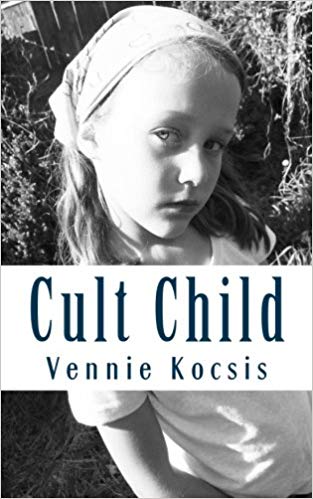
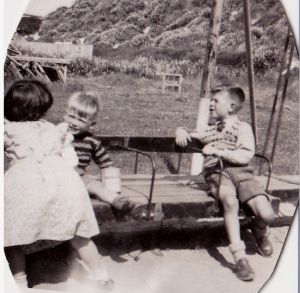
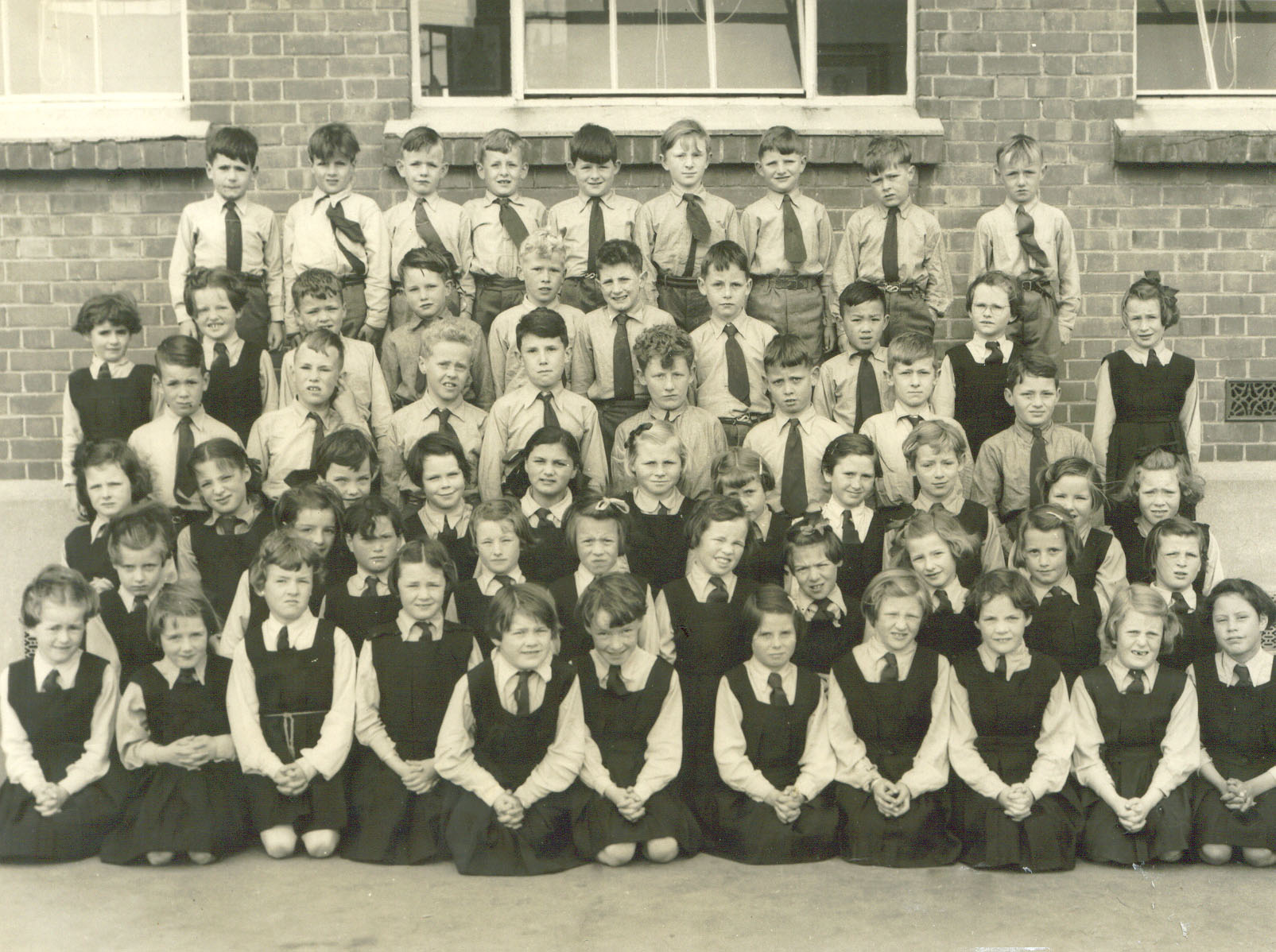


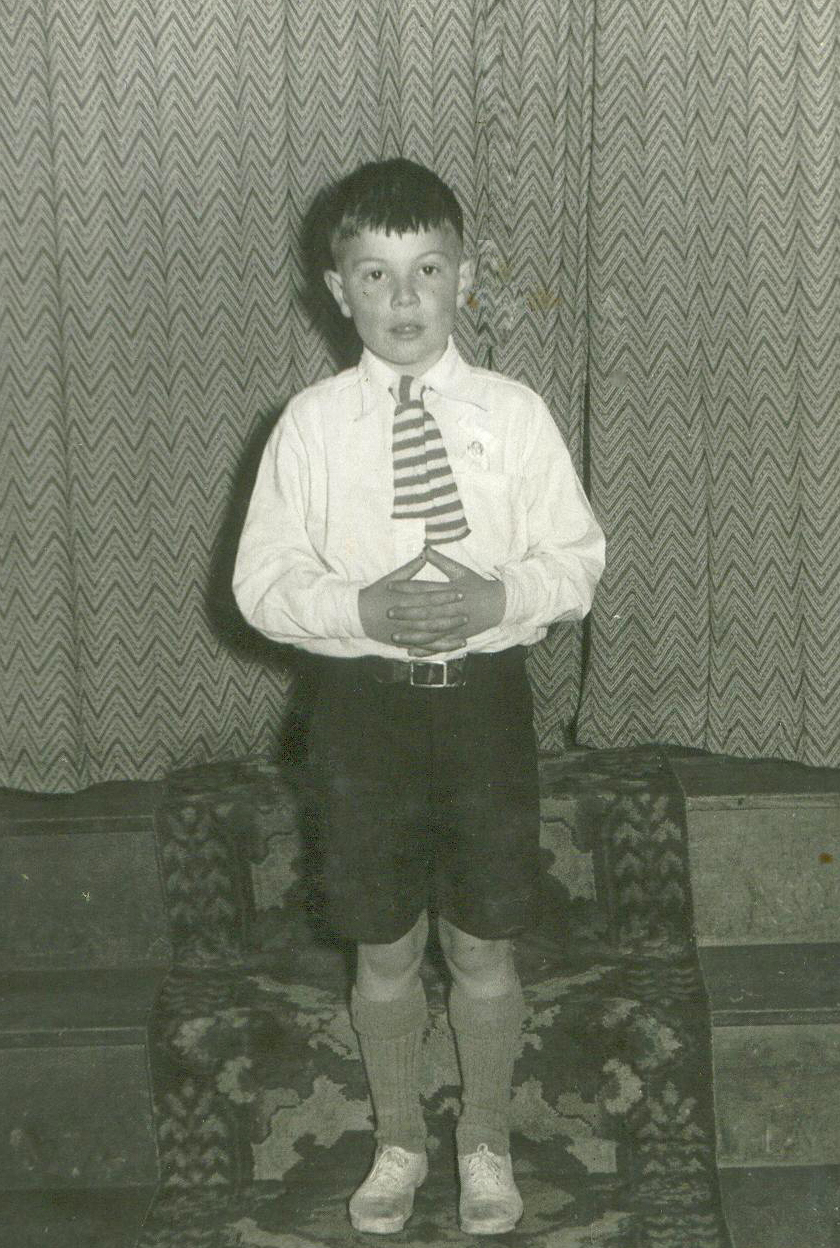
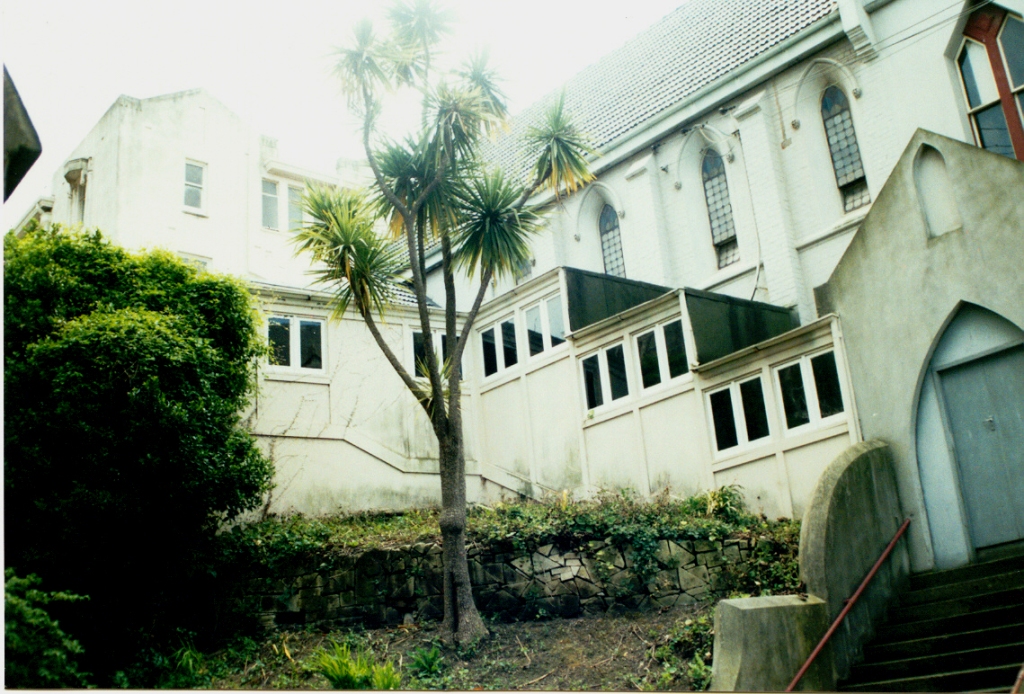


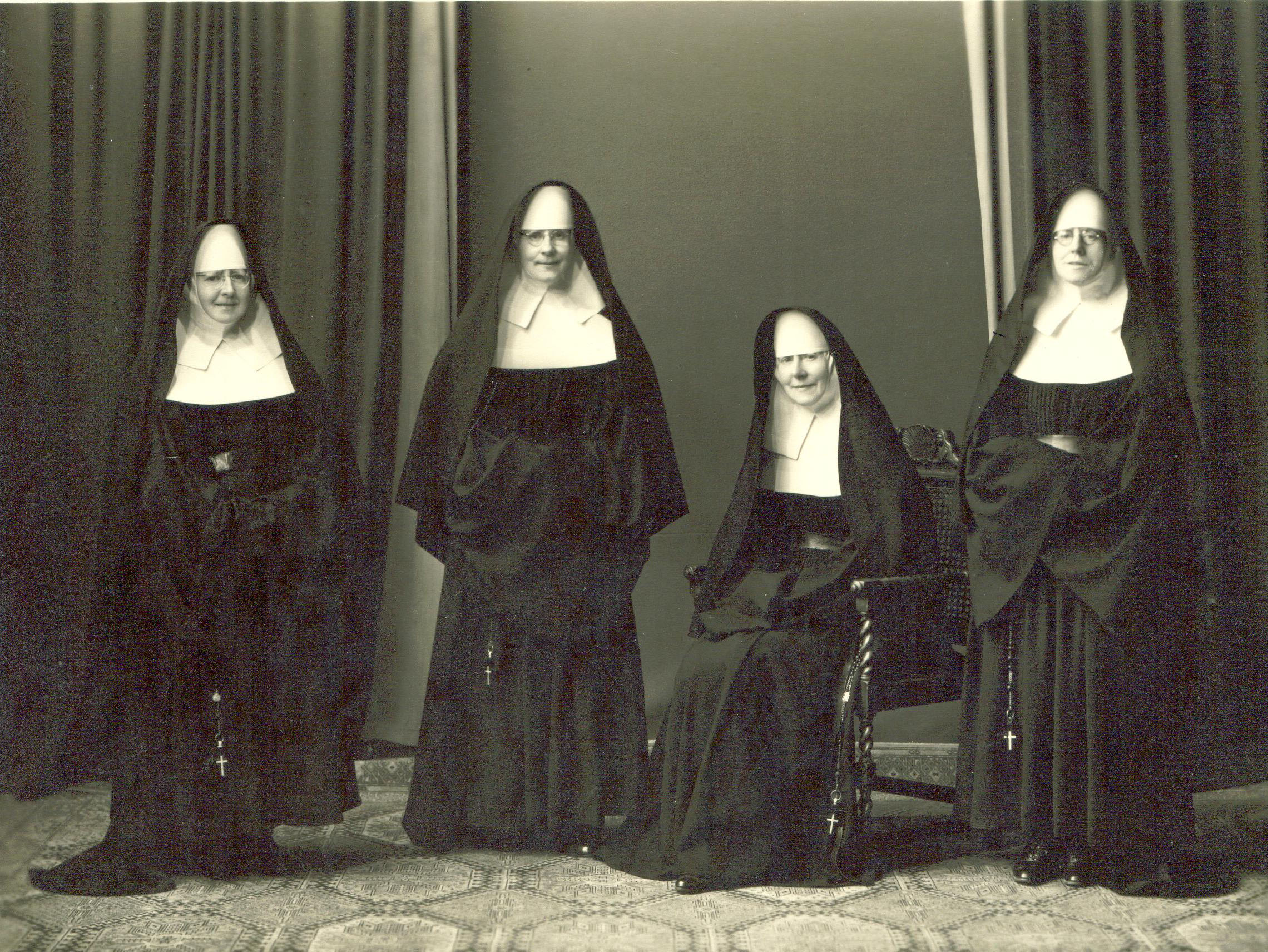
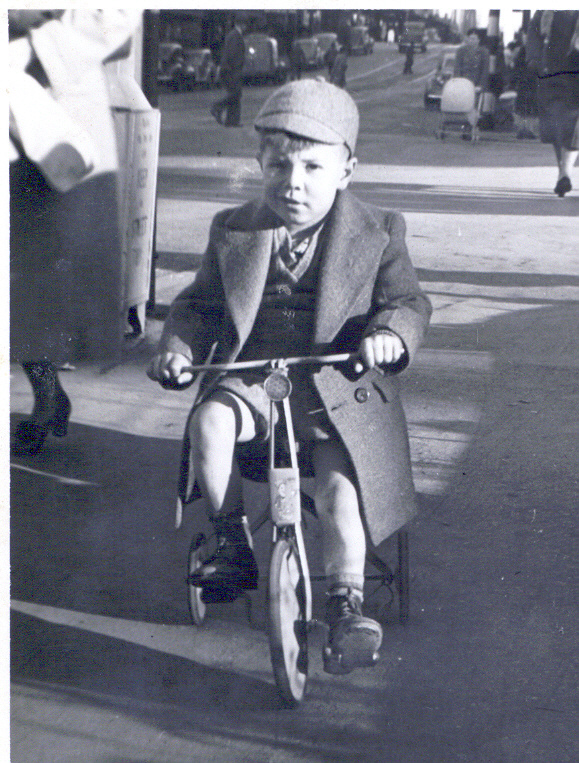
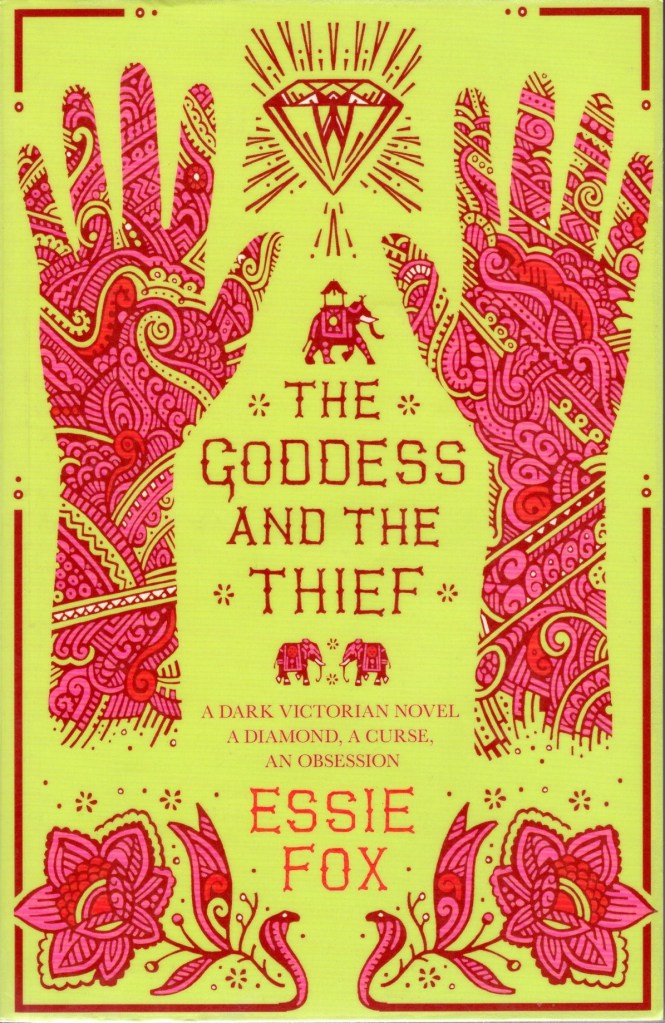
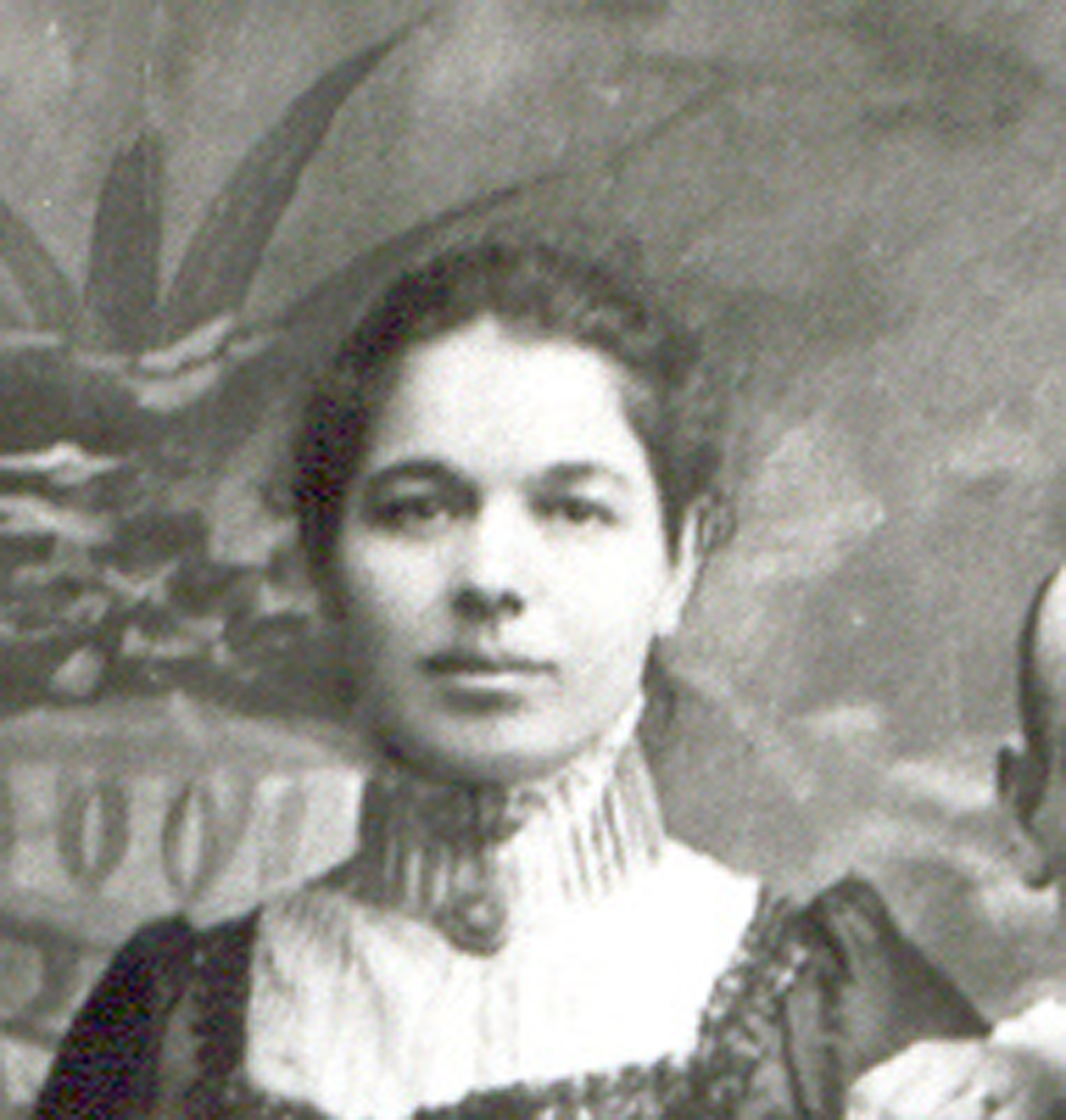

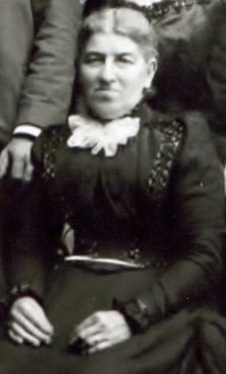



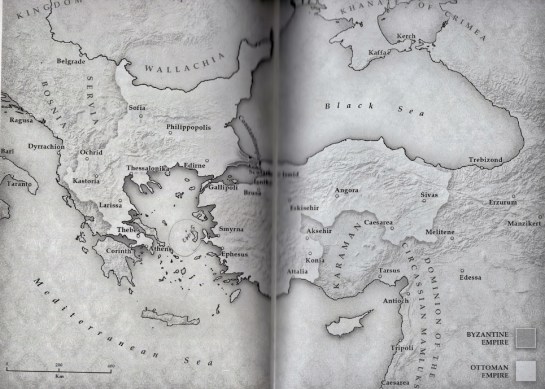
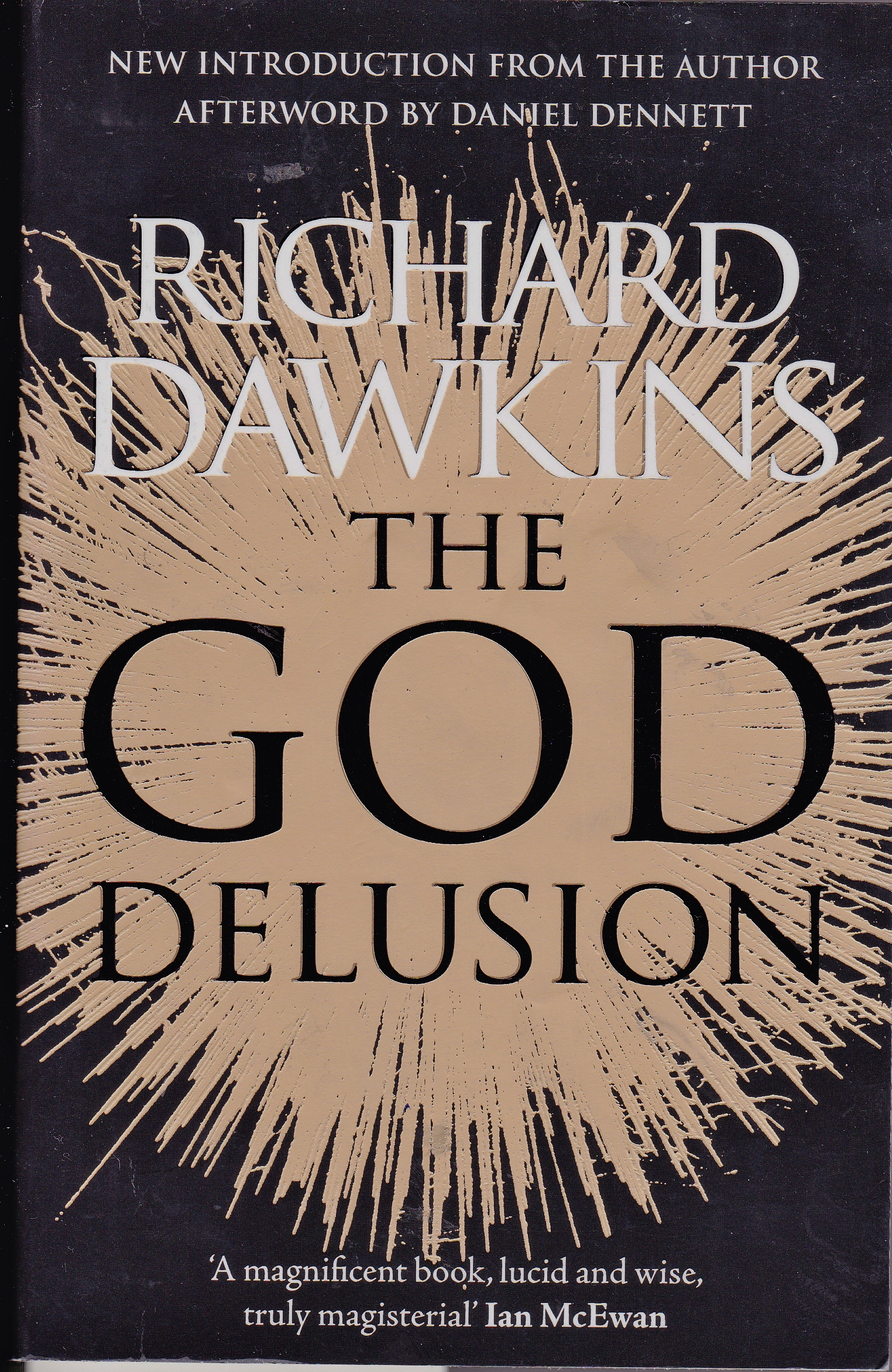
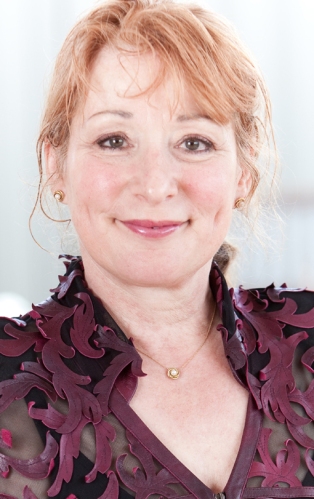
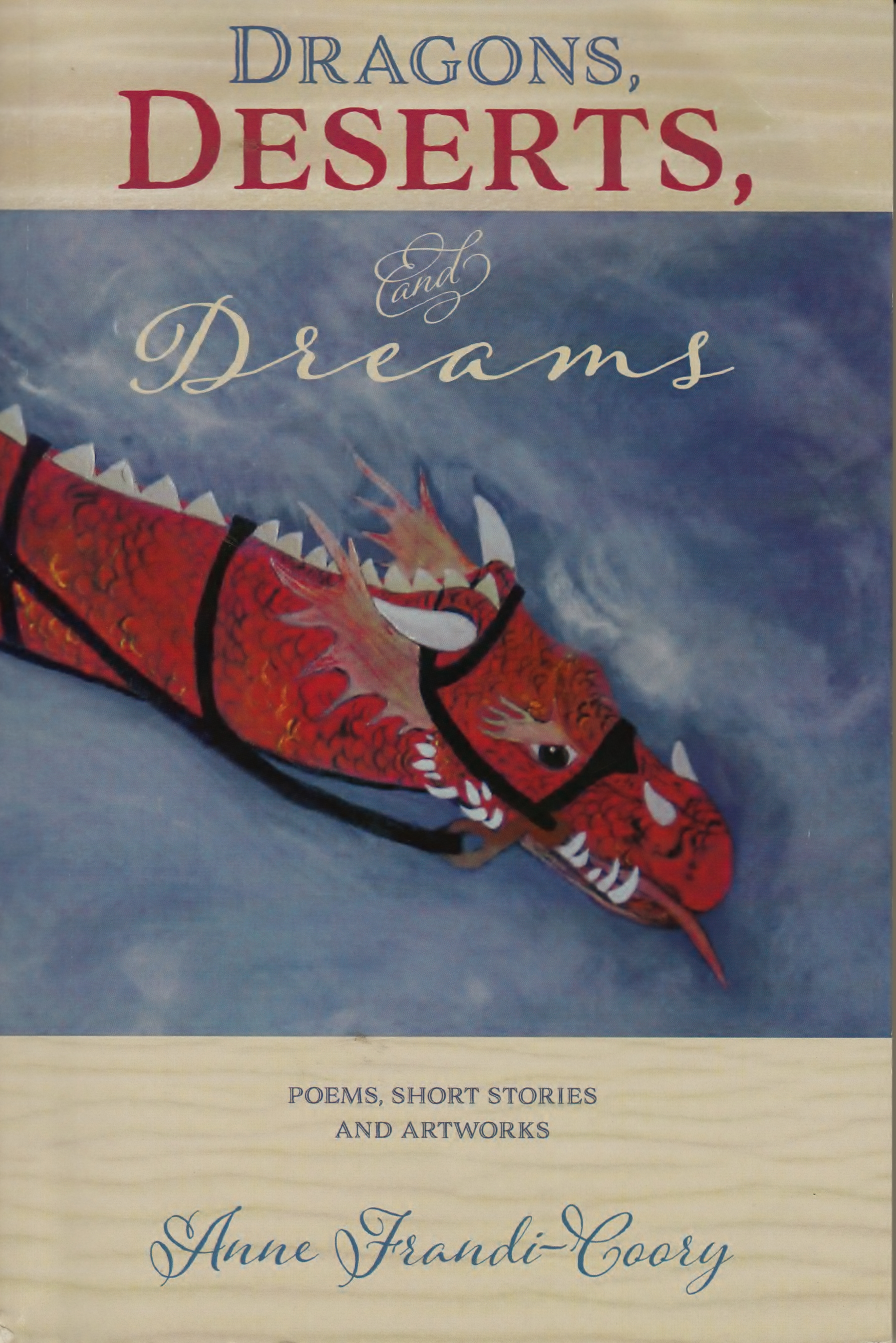


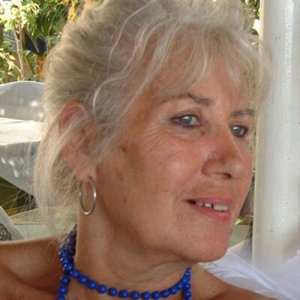

 anne frandi-coory