Archive

Tag Archives: Anne Frandi-Coory

I’m Your Man; The Life Of Leonard Cohen

is an authorised biography by Sylvie Simmons published 2012, four years before Leonard Cohen’s death on 7 November 2016.

*************************************************************************************

leonard-cohen-im-your-man

****************************************************************************************

I have just finished reading this wonderful book which I bought at the Clunes Book Fair earlier this year.

What a book, what a man Leonard Cohen was. Poet, philosopher, author, scholar of the Hebrew Bible and Jewish Kabbalah. Simmons, a renowned music journalist and award winning writer, has written the ultimate Leonard Cohen biography of  531 pages, incorporating his life, his music, poetry and prose, and his deep spirituality. She records word for word, many of the dialogues she had with him, which add to the intimacy of the book. He was a humble man who valued his solitude, a frugal way of life  hidden from the limelight, and of course, his love for women. A man with a magnetic personality, he had many lovers, most of whom he remained close friends with. He could not live too long in a relationship with a woman though, not even with Suzanne Elrod (not the Suzanne who inspired his most famous song), the mother of his two children. But she says that he was a devoted father, generous and loving, although there were recriminations, for a time, following the breakup of their relationship.

The leading rabbi of Montreal’s Jewish community who knew the Cohen family well, understood Cohen’s devotion to a Buddhist monk and to Buddhism, and believed that Cohen would’ve made a brilliant rabbi because of his poetical way with words and his authoritative knowledge of the Hebrew Bible. Cohen was a very disciplined man who also loved to fast. He enjoyed vegetarian food and was always very slim, of quite a slight build; ‘There’s no excess to him at all” observed Simmons.

This is a riveting read for Leonard Cohen fans and anyone who is interested in the music scene of the 1960s through to the 1990s. Such artists as Janis Joplin, Jimmy Hendrix, Bob Dylan, Joni Mitchell, Judy Collins, Jeff Buckley and various music entrepreneurs; people like Phil Spector, John Lissauer, Nick Cave, and background singers such as Jennifer Warnes, Sharon Robinson, the Webb sisters,  and Anjani Thomas to name a few. Cohen preferred subtle musical instrumentation to accompany his works, and many of his songs feature him playing his beloved synthesiser, and his Spanish guitar. He had a ‘good ear’ for the sound he wanted; simple, so that his voice, poetry/lyrics were enhanced, not drowned out.

When Cohen began recording an album with Phil Spector, it developed into a worst nightmare for him.  Simmons recorded a dialogue she had with Cohen:

There were lots of guns in the studio [during the recording of the album ‘Death of a Ladies’ Man 1977] and lots of liquor [and drugs]. It was a somewhat dangerous atmosphere…he liked guns. I liked guns too, but I generally don’t carry one. There was no firing but it’s hard to ignore a .45 lying on the console. The more people in the room the more wilder Phil would get. I couldn’t help but admire the extravagance of his performance. But my personal life [before he entered the monastery] was chaotic, I wasn’t in good shape at the time mentally, and I couldn’t really hold my own in there [the recording studio].

Almost without exception, people who came into contact with Cohen describe him as being very kind, a gentleman and very generous; a seductive man. His friends and family told his biographer that Cohen was constantly writing and sketching. Many of his books and album sleeves are enhanced with his sketches and paintings. Cohen was always beautifully dressed, and he loved wearing suits, with his shoes always highly polished. Cohen’s extended family were tailors and owned up-market clothing stores, and he worked in one or two stores for a short time, but he really hated being involved in the family business. He once said to his biographer, Simmons, “Darling, I was born in a suit”.  But Cohen was too trusting of others. He signed one his most famous songs, Suzanne  over to a record label, believing he was just signing a ‘normal’ recording contract and later in his career, his then manager stole all of his money (approx.7.5 million) while he was living in the Buddhist monastery after he had given her power of attorney over his affairs. He then had to go on tour, which he never enjoyed in the past, to earn money for his retirement years. He was at that stage, aged in his early seventies. The tour, with handpicked musicians and background singers he felt comfortable with, lasted over three years. He and his band played to packed global audiences and he made much more money than had been stolen from him. At that time he had a personal friend, Robert Kory, as his very competent tour manager, who understood Cohen’s shyness and his need for solitude. Only those who had to be backstage were allowed there, no interviews were arranged, and there were  plenty of breaks for Cohen to recharge his batteries somewhere in solitude.

A deeply spiritual man who was proud of his Jewish heritage, Cohen spent about five years  as a monk (he was ordained) in a Buddhist Monastery, and he felt that Buddhism and Judaism complimented each other. Cohen lost his lifelong depression after his sojourn in the  monastery, belatedly in his sixties. For years Cohen had used a variety of drugs like  maxiton/speed, LSD, Mandrax, acid, amphetamines to lift him out of his dark depression, and many of his poems/songs reflect his angst and those dark periods. Then there were his experiences in the famous Chelsea Hotel in New York City, his home away from home in the early years, and which could fill a book on their own. Simmons also explores this time with Cohen throughout the book.

Cohen’s father died when he was nine years old, and he didn’t believe that his father’s death had a profound effect on him, because he was often ill in hospital or away somewhere else. But after having read this book, I believe his father’s death did have a profound effect on his life, even though he had very strong male role models within his family and the Montreal Jewish community. He was very close to his mother, and was also surrounded by loving women, in his private life and later in his musical life.

Cohen liked to live in simple cottage-like homes, and he spent his last years living in Los Angeles in a small sparsely furnished duplex where he lived upstairs while his daughter, Lorca lived downstairs. He also owned a very small cottage on the Greek island, Hydra which he bought in his thirties with money left to him by a relative, and in which he wrote many of his works and spent many happy days with Marianne, his lifelong muse and one time lover.

Always nervous on stage, Cohen preferred to be supported by musicians he knew well and who understood his type of simple music; music that didn’t drown out the lyrical poetry of his songs. He won numerous global and Canadian awards during his lifetime, for literature, poetry and music albums. He didn’t always believe he deserved them. He has written 12 books of poetry and prose.

Something Leonard Cohen said stayed with me while I read his biography. He said he didn’t rebel when he was growing up because essentially he had a privileged life brought up as he was in a wealthy and close Jewish neighbourhood in Canada, and that he had nothing to rebel against. But maybe he was too much the dutiful son, and maybe if he had rebelled, he wouldn’t have spent most of his life taking all manner of drugs to get him through life, the desperate need to spend so much of his time alone, and his fearfulness of making any kind of commitment to another person.  He was too polite, too shy, too forgiving and far too hard on himself. But then we wouldn’t have his legacy of poetry and songs, would we?

-Anne Frandi-Coory 1 December 2016


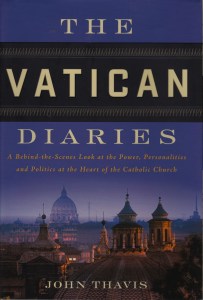
THE VATICAN DIARIES  A Behind-The-Scenes Look At The Power, Personalities and Politics At The Heart Of The Catholic Church

A Book Review by Anne Frandi-Coory

Vatican Diaries


**********************

It really is a joke that the Vatican considers itself a city state in its own right! More like a private boarding institution full of petulant school boys with eccentric masters in control of such departments as Congregation For Catholic EducationCongregation For The Causes of SaintsCongregation For The Clergy, Congregation For Institutes of Consecrated Life And Societies Of Apostolic Life etc. and where the competition for supremacy  over doctrinal matters is fierce.

What bothered me the most about the goings on in the Vatican as revealed in this book, was the total shutdown of any discussion about the thousands of cases of sexual abuse of children in USA, Australia and Ireland; the total lack of any consideration of the harm done to children by paedophile priests. The Vatican is a well-oiled machine that protects the Church at all costs, and I mean ‘all costs’!

The only noteworthy global/political stance the Vatican has taken in recent times, in my view,  was when Pope John Paul ll warned the USA of the terrible consequences if it invaded Iraq: ‘Four years earlier [George W ] Bush had dismissed Pope John Paul’s cautionary warnings about war during the build-up to the invasion of Iraq, leaving deep resentment at the Vatican. In the aftermath of Saddam Hussein’s demise, as terrorism, factional fighting and anti-Christian attacks increased, the Vatican said, essentially, “We told you so.”‘

It is truly incredulous how petty and ridiculous are the secrecy, the bitchiness, and to think this is the headquarters that directs the Catholic Faith for followers around the world! What a waste of time and money!! All the money the Catholic Church rakes in globally would surely feed the world’s poor? Instead it allows the clergy and the pope, to live in palaces, eat like kings, and be waited on day and night!

Just like Mother Teresa was a ‘cash cow’ for the Catholic Church, so too was the Legion of Christ whose Mexican founder, Marcial Maciel Degollado,  fathered several children to several different women but who the Vatican sponsored and feted because of the huge numbers of new priests flocking to his seminaries and the vast amounts of money his order collected in donations. He also embezzled millions for his own private use, and was accused of sexual abuse, but the Vatican protected him until he died.

And heresy isn’t a problem for the Catholic Church either these days, not if it brings in billions of dollars worldwide like the Lefebvrists do. This schism within the Holy Church, for which several bishops and priests were excommunicated, strongly advocates for the pre-Vatican Council ll Tridentine Rites, including the use of Latin for Mass. For this faction of Catholicism, strict Tradition is everything. It does show how little the sexual abuse of children by paedophile priests concerns the Vatican hierarchy when compared to apostasy.

The chapter in the book titled SEX   lays open the arguments within the Church about the problem of homosexuality of priests and it’s  very interesting indeed. There is little doubt that homosexual relationships between priests are condoned within the Vatican, and within parishes. In one case, a priest was caught on a hidden camera, attempting to seduce a young man on a white couch in his office!  It was a set up, and the whole affair was broadcast on Italian TV.  A few years ago, an investigation carried out by the Church,  employing expert psychiatrists, confirmed what the Church has always denied; that the Catholic priesthood is a haven for homosexuals and that teenage seminarians are the attraction. Also, research has revealed that by far the largest numbers of child abuse victims are pre-pubescent boys. One particular psychiatrist believes that celibacy is the prime cause of the fact that so many paedophiles join the priesthood. Many followers are dismayed that the Church will not soften its stance on celibacy, even though it allows its Eastern Orthodox priests to marry. One psychiatrist went so far as to advise the Vatican that allowing priests to marry would encourage more ‘socially mature’ men to become priests. The following is a significant expert opinion quoted by the author: ‘Dr Martin P Kafka, a psychiatry professor at Harvard Medical School, said he thought homosexuality, while not a cause of sexual abuse, was a “likely risk factor” that deserved further study. He stated that in comparison with the general population, abuse cases in the Church disproportionately involved homosexual male adults who’d molested adolescent males. The no-gay-priests faction did its best to ignore the fact that Dr Kafka had also wondered whether celibacy could also be a ‘risk factor’ in sexual abuse.  [My emphasis]

Is there a secret document emanating from the Congregation for Catholic Education, which oversees seminaries around the world, stating the Vatican’s new position on admitting homosexuals into the priesthood? Nothing has been confirmed, but… “The document’s position is negative based in part on what the Catechism of the Catholic Church says in its revised edition, that the homosexual orientation is ‘objectively disordered.’ Therefore independently of  any judgment on the homosexual person, a person of this orientation should not be admitted to the seminary and, if it is discovered later, should not be ordained.” One can’t help wondering whether the Catholic Church is no longer attracting enough priests into its fold because of the dwindling faith of its congregations or perhaps because of its restriction on the ordination of homosexuals?

This chapter also reveals the Vatican’s rules on the use of condoms and other forms of contraception, and once again I am amazed at the ridiculous pettiness of the detail of what is and isn’t allowed! For instance: “condoms are acceptable for prostitutes, because the sex they engage in is already sinful”…but some in the Vatican are concerned because that “would lead the Church to support the use of condoms for all ‘fornicators’ including sexually active teenagers.” I won’t go into the detail of the Vatican’s rules about the use of condoms for the prevention of the spread of HIV/AIDS, but they border on the utterly ludicrous!

The Vatican Diaries is a must read, especially for the faithful, because you really should know the truth of what is happening within your own Church!  It is not just a salacious exposé…John Thavis has written an engaging and at times, very funny book. He obviously has friends within the Vatican whom he trusts and admires, and he has been working as a journalist in this field for over thirty years. I did enjoy the chapters about the Vatican Museum, and the character of an irreverent priest who translated documents into Latin, and who constantly embarrassed tourists and the Vatican hierarchy who  would have dearly loved to have fired him, if he hadn’t been such a brilliant Latinist!

The comings and goings, the antiquated white and black smoke  used to inform an anxiously waiting public about progress in the election of a new pope, are enlightening, humourous, and left me wondering why an extremely wealthy city state still used smoke signals, emitted from a belching, cough inducing stove. Oh that’s right, Tradition.


-Anne Frandi-Coory 31 August 2016

Also here on Facebook: https://www.facebook.com/myhomelibrary/


Blue ishtar

Blue Ishtar

*****

Painting and Poem Blue Ishtar Copyright  To Anne Frandi-Coory 

All Rights Reserved 19 August 2016

Painting Blue Ishtar  100cm x 100cm acrylic on canvas 

***(This painting is not for sale)

*****

earthly Ishtar, ancients’ Venus of the heavens

the allure of your brightness, beguiled and tormented.

Babylonian goddess shameless fertility on display

star of morning dew and daughter of Terra

more flesh and blood than any halloed spirit

*****

Read the rest of my poem

*Blue Ishtar* 

here in DRAGONS DESERTS and DREAMS

Now available on Kindle ebook or in paperback

here at AMAZON

***************

***** Read more about Ishtar here: Goddess Ishtar – Her Story  *****

The Atheist Manifesto

by Michel Onfray

Born to a family of Norman farmers, Michel Onfray was abandoned by his parents to a Catholic institution from age 10 to 14. Overcoming these early hardships, Onfray graduated with a PhD in philosophy. He has written over 80 books and teaches philosophy at a French university.

Michel Onfray portrait

Michel Onfray

A friend gave me The Atheist Manifesto not long after he had finished reading Whatever Happened To  Ishtar? which I had written in 2010, a book spawned of seventeen years of an indoctrinated childhood spent in various Catholic institutions.  ‘I know you will enjoy this book’, he told me, ‘but it’s a little too intellectual for me.’  He was right; I have since read it twice.

****************************

Michel Onfray

Was Monotheism born of the sand? Two paragraphs in  Manifesto’s  preface attempt to partly answer this question:

Desert Memory: After a few hours on the trail in the Mauritanian desert, I saw an old herdsman traveling with his family. His young wife and his mother-in-law rode camels; his sons and daughters were on donkeys. The group carried with them everything essential to survival-and therefore to life. The sight of them gave me the impression that I had encountered a contemporary of Muhammad. Burning white sky, scattered, scorched trees, uprooted thorn bushes blown by the desert wind across unending vistas of orange sand…the spectacle evoked the geographical and psychological background of the Koran, in the turbulent period of camel caravans, nomad encampments, and clashing desert tribes.

I thought of the lands of Israel, Judaea, and Samaria, of Jerusalem and Bethlehem, of Nazareth and the Sea of Galilee. Places where the sun bakes men’s heads, desiccates their bodies, afflicts their souls with thirst. Places that generate a yearning for oases where water flows cool, clear and free, where the air is balmy and fragrant, where the food and drink are abundant. The afterlife suddenly struck me as a counter world invented by men exhausted and parched by their ceaseless wanderings across the dunes or up and down rocky trails baked to white heat. Monotheism was born of the sand.

Michel Onfray analyses the fanatical belief in the afterlife by followers of Christianity, Judaism and Islam. The lives of these early followers of one God  were, every single day, a struggle for survival in a harsh and unforgiving climate, where death inflicted different kinds of terror in the living. Was the promise of an afterlife meant to alleviate that terror? For instance the Koran’s fantastic description of paradise: rivers of milk and wine, beautiful virgins, beds of luxurious cloth, celestial music and magnificent gardens? Why wouldn’t a man want to die and leave this endless struggle?

What better way to avoid looking at reality and inevitable death in the face, than to construct fantastical tales that the three religions are built on. And I love this from Onfray, so relevant to our 21st Century concerns over human-made Climate Change: The invention of an afterlife would not matter so much were it not purchased at so high a price: disregard of the real, hence wilful neglect of the only world there is. While religion is often at variance with immanence, with man’s inherent nature, atheism is in harmony with the earth – life’s other name.  For those of us who have given up on believing in the existence of God, saving planet earth is our passion, science our saviour.

The author tells us about the first tentative atheists, who weren’t really fully fledged atheists for one reason or another, which he outlines with some humour and sarcasm. And then along came Nietzsche! Onfray uses the sub-heading Philosophical Earthquake to describe this period  which is a perfect description of the upheaval this one man caused. But so much made sense to intelligent, thinking people!

Onfray goes on to ‘teach’ the case for atheism. He writes: Talmud and Torah, Bible and New Testament, Koran and the Hadith offer insufficient grounds for the philosopher to choose between Jewish, Christian or Muslim misogyny. Or to opt against pork and alcohol but in favour of the veil or the burka, to attend the synagogue, the temple, the church, or the mosque, all places where intelligence is ailing and where, for centuries, the faithful have practiced obedience to dogma and submission to the Law-and therefore obedience and submission to those who claim to be the elect, the envoys and the word of God. He suggests that instead of teaching monotheistic religions in schools we should be teaching atheism. He prefers the teachings of The Genealogy of Morals (1887) rather than the epistles to the Corinthians.  I happen to agree with him. Along with world conservation, less exploitation of this wonderful planet we live on!

In the chapter Towards an Atheology: Thirty centuries from the earliest texts of the Old Testament to the present day, teach us that the assertion of one God, violent , jealous, quarrelsome, intolerant and bellicose, has generated more hate, bloodshed, deaths, and brutality than it has peace…[for example] There is the Jewish fantasy of a chosen people, which vindicates colonialism, expropriation, hatred, animosity between peoples, and finally an authoritarian and armed theocracy.

The author pleads for the world to have an end to the linkage of the world’s woes to atheism:  God’s existence it seems to me, has historically generated in his name more battles, massacres, conflicts and wars than peace, serenity, brotherly love, forgiveness of sins, and tolerance. To my knowledge, no popes, princes, kings, caliphs, or emirs have excelled in the practice of virtue, so outstandingly did Moses, Paul, and Muhammad excel in murder, torture, and orgies of plunder-I call the biographies to witness. So many variations on the theme of loving one’s neighbour.

Onfray suggests that the times we live in are no longer atheist. We instead are in the midst of the era of  nihilism, which stems from the ‘turbulence of the transit zone between still very present Judeo-Christianity and timidly blooming post-Christianity…Jews, Christians and Muslims, construct for themselves, a made-to-measure morality. This implies selective borrowings (tailored to fit their needs) from their holy books in order to establish rules of play and participation by the community.’

Christians, particularly Catholics, know all too well, religious concepts of ‘purity’, and how it relates to sex, and we can mostly thank Paul of Tarsus/St Paul for that! The dichotomy of the female, whore/virgin, is still constantly preached as Canon Law by an ancient and all-male Vatican. The author delves into this topic with relish, and coming from a background of a childhood in Catholic institutions, I could relate to these chapters intimately.

Onfray explains that  Muslims share many of their fixations on purity with Jews; all food must be ritually prepared. Why the absolute prohibition of the consumption of pork, but not camel meat? Even on that matter, there is much disagreement. Some suggest the pig was emblematic of certain unpleasant memories of Roman legions, others believe it was the pig’s omnivorous diet, its consummation of public refuse. I have also read of another theory: the squeals of the pig as it was led to slaughter, was too reminiscent of the darkest days of sacrificial slaughtering of children in attempts to appease more ancient gods. The rituals connected to the cleansing of the body are rational, especially for life in the desert. The author explains in detail the similar ritualistic rules for respect of one’s body and bodily hygiene.

I found the chapter entitled Bonfires of the Intelligence; producing the holy books, particularly interesting. Onfray: The three monotheisms are seen as the religions of the book-but their three books are far from mutually supportive… Naturally they all preach brotherly love. Thus from the very start it seems to appear beyond reproach to our brethren of the Abrahamic religions. None of these books is a work of revelation. Who would have done the revealing? Their pages no more descend from heaven than those of Persian fables or Icelandic sagas.

The Torah is not as old as tradition claims; Moses is improbable. Yahweh dictated nothing-and in any case, Moses could not have written what Yahweh said unless he wrote in hieroglyphics, since the Hebrew script did not exist in the time of Moses. None of the evangelists personally knew Jesus. The testamental canon arose from later political decisions, particularly those reached when Eusebius of Caesarea, mandated by the emperor Constantine, assembled a corpus stitched together from twenty-seven versions of the New Testament in the first half of the fourth century. The apocryphal writings are more numerous than those that constitute the New Testament proper.

Muhammad did not write the Koran. Indeed, that book did not exist until twenty-five years after his death. The second source for Muslim authority, the Hadith, saw the light of day in the ninth century, two centuries after the Prophet’s death. Hence we must infer the very active presence of men in the shadows of these three Gods.

Science does not sit well within the three monotheistic religions, and the author discusses this at length and in detail. If they do embrace science, it is usually to enhance their dogma and this instrumentalisation of science  ‘subjects reason to domestic and theocratic uses’. For example, one Hadith indeed celebrates the quest for scientific knowledge as far afield as China, but always in the logic of its instrumentalisation via religion, never for the human ideal of social progress. The Catholic religion impeded the forward march of Western civilisation, inflicting on it, incalculable damage.

Then there is the female problem that the religions of the book have in common. Only mothers and wives are venerated. Judeo-Christianity promotes the idea that Eve was an afterthought, made from Adam’s rib; ‘an inferior cut off the prime beef, a humble spare rib‘.  She appears in the Koran as Adam’s wife but the fact that she is never named is revealing, because, as Onfray says, ‘the unnamed is unnameable.’

The ridiculous tenets of these three religions engender the worst kind of hypocrisy because we are all too human. The possibility of sex divorced from conception, and thus of sex alone, of pure sexuality-that is absolute evil. For the monotheist there can be no more hideous oxymoron than a barren, sterile woman! In the name of this same principle the three monotheisms condemn homosexuals to death…For his part, Paul of Tarsus saw in the solitary male the perils of lust, adultery and free sexuality. Hence given the impossibility of chastity, his endorsement of marriage –the least objectionable justification for the libido.

Onfray discusses at length the barbaric mutilation of female and male genitalia, practiced by monotheistic religions and their literature abounds in references to the extinction of libido and the destruction of desire. Onfray refers to them as ‘variations on the theme of castration’. From what I’ve read and seen on world news every day, none of these religions is achieving the total sexual control over their adherents that they initially set out to achieve. Catholic paedophile priests, Muslim child marriages, polygamy, Jewish paedophilia, to name a few.

All three religions have burnt books, whole libraries, whole towns, citizens, mosques, temples, churches, synagogues, slaughtered millions, and all for what or who? What God? There is no archaeological proof Jesus existed. The author covers this period in Christianity’s history in depth, with all of its subterfuges.

In the chapter headed Selective Exploitation of the Texts, Onfray writes:

Everyone knows of monotheism’s three books, but very few know their dates of origin, their authors, or the ups and downs attendant on establishing the three texts-the absolutely final, immutable texts. For the Torah, Old Testament, New Testament, and Koran took an unthinkably long time to emerge from history and claim that their texts issued from God alone, that they had no need to explain themselves to those who entered their prayer temples armed only with faith, unburdened of reason and intelligence. Considering Muhammad was illiterate it is ridiculous to believe that he wrote the Koran as God dictated it. And let’s be clear, there were several Korans from different periods which were merged into one, hundreds of years after Muhammad’s death!

We do not possess an official date of birth for the worship of one God…Jean Soler insists on the neighbourhood of the fourth and third century BCE-in other words very late…but the family line is very clear: the Jews invented it to ensure the coherence, cohesion and existence of their small, threatened people. The mythology they fashioned engendered belief in a warrior God, a fighter, blood thirsty, aggressive, a war leader highly effective at mobilising a people without a land. The myth of a chosen people thereafter blessed with a destiny.

Of that labour of invention, several thousand pages of canonical text survive-very few considering their worldwide influence over the course of more than twenty centuries. The Old Testament boasts a total of 3,500 pages, the New Testament 900 pages, the Koran 750, that is, little more than 5000 pages in which everything and its opposite is said once and for all. In each of these three founding texts, contradictions abound and Onfray gives us many examples of these.

Love of one’s neighbour as espoused by all three religions, was non-existent, and still does not exist in the 21st century! The Pauline texts, so useful in justifying submission to de facto authority, triggered results that went far beyond the legitimisation of wars and persecution. In the field of slavery, for example, which Christianity did no more than the other two monotheisms to deter. Indeed, in later centuries the small-scale slavery resulting from tribal raids evolved into the slave trade pure and simple, the sale and deportation of whole populations for use as chattels and beasts of burden.’

More than twenty centuries later has anything changed? Onfray:  ‘The commandments do not advocate any particular respect for one’s neighbour if he looks different, if he is not branded in the flesh by the rabbi’s knife. The non-Jew did not enjoy the same rights as members of the covenant. So that outside the confines of the book, the Other may be called on to account for himself, to be treated like an object, a thing: the goy by the Jew, the polytheist or animist by the Christian, the Christian by the Muslim, and the atheist, needless to say, by everyone.’ [My emphasis]

Onfray likens the three monotheisms to death cults. He asks ‘How can we escape the domination of [the death instinct] after so effectively killing off the life urge both within and outside of ourselves?’ Are we so terrified by the horror and void of death, that we believe in the ‘consoling fables and fictions that incite us to deny the use of our full powers?’ He posits that this ‘false world’ forces us to live in the here and now ‘buttressed by the hopes of a tinsel afterlife.’ Finally, he suggests that we are in the flux of a ‘post-Christian’ era, but that we must beware ‘religious secularism’ in which ‘the essential remains Judeo-Christian.’  He believes that the 21st Century has opened on a merciless war. On one side is a Judeo-Christian West, on the other side, a Muslim world. Monotheist religions are waging this war, and Onfray asks: Must we choose a side? There is much more to read in these chapters, but I will leave you to buy the book.

In the final chapter of MANIFESTO Onfray sums up where we are at in the fight for a genuine post-Christian secularism:

At this hour when the final battle –already lost-looms for the defence of the Enlightenment’s values against magical propositions, we must fight for a post-Christian secularism, that is to say, atheistic, militant and radically opposed to choosing between Western Judeo-Christianity and its Islamic adversary-neither Bible nor Koran. I persist in preferring philosophers to priests, imams, ayatollahs and mullahs. Rather than trust their theological hocus-pocus, I prefer to draw on alternatives to the dominant philosophical historiography: the laughers, materialists, radicals, cynics, hedonists, atheists, sensualists, voluptuaries. They know that there is only one world, and that promotion of an afterlife deprives us of the enjoyment and benefit of the only one there is. A genuinely mortal sin.


-Anne Frandi-Coory  18 August 2016

Also here on Facebook: https://www.facebook.com/myhomelibrary/


The NEAPOLITAN NOVEL quartet

by Elena Ferrante


Elena Ferrante

<><><><><

I have recently been introduced to Elena Ferrante novels, beginning with the Neapolitan Novel quartet: My Brilliant Friend, The Story of a New Name, Those Who Leave and Those Who Stay, and The Story of the Lost Child There is such an unsettling and brutal honesty in Ferrante’s writing, firstly about growing up poor and female in Naples, and subsequently trying to escape that seemingly inevitable life. The novels’ narrator, Elena Greco, recalls her childhood and her brilliant friend Lila, whom she at once loves and hates, first sexual experiences, the brutal men in their lives, their dreams of escaping the ‘neighbourhood’ and the fervent hopes that they will never become their mothers. Ferrante’s exquisite writing thoroughly engages the reader through girlhood fears, first boyfriends, harsh family lives, the deep seated religious division of whore and virgin, constant threats from local bullies, men and boys, and tensions of repressed sexual desires.

The mysterious author [Ferrante’s true identity is unknown] lays bare the psychological trauma of growing up female in the south; the culture of being owned by your father and then your husband. The expectation that a girl must get married, and bear children, the resultant crushing of her intellect and her creativity. There are only two ways to escape the hardships: excel at school, and gain access to universities and a better life in Pisa, Milan or Florence, even though every move to escape the inevitable life of poverty and domestic grind is greeted with age old suspicions and hatreds by family and friends. Elena Greco is one of the lucky ones. She excels at school, goes to university in the north, eventually marries into a well known northern Italian family, but is her life really any better than that of her brilliant friend Lila, who refuses to leave Naples? Lila chose instead to marry a local boy from a powerful, wealthy family, and even though she has sold her soul for a beautiful new house and everything that money can buy, her life becomes unbearable and the inherent dangers seem to multiply.

These novels contain the story of modern Italy…about those who left and those who stayed.

I have never read four books so quickly! I read all of the books with a total enthrall…impatiently wanting to do nothing else but be involved in the lives of Elena and Lila,  right to the very end.

-Anne Frandi-Coory 1 August 2016


Also here on Facebook: https://www.facebook.com/myhomelibrary/

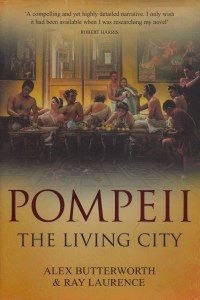
   POMPEII – The Living City

by  Alex Butterworth & Ray Laurence

Pompeii book cover

<><><><><p

Reviewed by Anne Frandi-Coory

(Click on images to enlarge)

About the authors:

Alex Butterworth is a writer and dramatist, who holds degrees from the University  of Oxford and the Royal College of Art. Ray Laurence is a Research Fellow in the Institute of Archaeology  and Antiquity at the University of Birmingham. He was previously a Senior Lecturer in Ancient History at the University of Reading. He has published seven academic books on Roman archaeology  and history.

I bought this wonderful book a few years ago and I must admit to only now getting around to reading it. The authors have written a compelling, valuable  book for any treasured collection.  I visited the partially reconstructed Pompeii in the early nineties, and even then I was amazed at how ‘modern’ and well equipped the ancient city had been.

Archaeologists have literally dug up a plethora of data out of what’s left of Pompeii revealing so much about life within the Roman Empire. Although there is a huge amount of excavation still to take place, there is enough information gathered so far, allowing scientists to gain an intimate insight into what life was like in a Roman city at that time.

Authors Butterworth and Laurence tell us that Pompeii contains probably the greatest density of data of any archaeological site in the world, but that only augments the challenge facing contemporary scholars. The sheer volume of material that can be drawn upon, along with the shortcomings in technique and record-keeping  of many of those who have worked on the site in the past, make the task of bringing all the disparate evidence into some meaningful relationship especially difficult. But the authors have managed to achieve that brilliantly,  bringing carefully selected data  together  into an enjoyable and informative read.  

Pompeii was a city ‘full of political tensions, and very strange customs.’ It was a place where competitive merchants vied for the best customers and trade routes.  Wealthy, powerful citizens pursued all manner of pleasures. But pleasures were legal only for the rich; the poor and slaves were denied such luxury. Successful merchants and renowned magistrates owned comfortable villas along the coast, exotic goods and food at their disposal. In the meantime, Emperor Nero sinks further into murder, despotism and debauchery.  Citizens of Pompeii certainly couldn’t rely on help from their Emperor after the earthquake, although he did visit some time later. Even then, although his empire was carrying massive debt because of his spending sprees, including  the building of his golden palace, he was treated to a massive orgiastic feast in one of the few luxurious villas still left standing.

Combining  the most recent archaeological and historical research,  POMPEII’s  story sucks the reader into a vivid portrait of the doomed city during the twenty five years in which the city suffered a massive, devastating  earthquake  followed 17 years later by the eruption of Mt Vesuvius which completely destroyed the city and surrounding areas beneath it. Only the wealthy living in well-built villas could afford to have their homes and water pipes repaired so that fresh water flowed  again, in the years after the earthquake.  Others moved away before the mountain blew its top. What modern scientists have learned  about earthquakes, with the help of the latest technology, is used to compare what the eruption of Vesuvius would have been like to witness and the damage it wreaked upon its environs. There is no doubt that the earthquake caused significant damage to the land on the mountain side as well as below on the plains. The death toll from the quake would have been huge, and those bodies which could not be retrieved, created even more nauseating smells with the high risk of disease . Following the upheaval livestock died from lethal fumes boiling up from the centre of the mountain through fissures opened up by the earthquake. The smell of sulphur added to the other foul odours that citizens of every city had to endure.  And since the earthquake, the people of Pompeii also had to live through frightening aftershocks which continued right up until the eruption 17 years later.

‘The earthquake that struck Pompeii and the surrounding region on 5 February,  AD 62, is thought to have measured over 7.5 on the Richter scale. In all likelihood it was the result of an upward flow of magma within the earth’s crust along the geological fault that ran under Vesuvius: having vented its fury it then subsided before finally forcing its way out in dramatic fashion during the mountain’s eventual eruption… In the cities that bore the brunt of the devastation, Pompeii and Herculaneum, the archaeological evidence suggests that scarcely a single building was left untouched.

Snippets from a couple of paragraphs in chapter entitled ‘Apocalypse’ convey  vividly the eruption of Mt Vesuvius:

‘An eruption of such force occurs, on average, only once in a thousand years: there would have been no precedent in recorded history and mythology afforded the only point of reference. It is greatly to the credit of the Younger Pliny and his scientific training that, even while he watched his uncle set sail to his death, [while attempting to rescue citizens from the erupting volcano] he was able to categorise his observations calmly enough to produce an accurate report sometime later. His account provided the textbook case of volcanic eruptions for decades to come. ..The sight of fire and stone roaring up to the heavens that Pliny witnessed from across the bay “thrusting, bulging and uncoiling , as if the hot entrails of the earth were being drawn out and dragged towards the heavens” would have been massively more terrifying when seen from Pompeii.’


************************************************

Graffiti Pompeii 1

********************************************

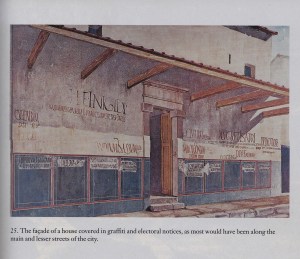
Much graffiti written on walls around Pompeii has been found which gives further insight into what ordinary citizens thought of officials and neighbours, among other things.

Rather than the ancient graffiti and political posters that once covered the walls and summoned the flavour of the lost world, the most resonant graffiti still visible in excavated Pompeii today is perhaps that in the toilets of the cafeteria: “If I’d wanted ruins I could have gone to Kabul.” ‘

However, ancient ‘graffiti, signs and especially electoral notices offer clues as to the ownership of particular dwellings within the city walls, but in the villas outside the city evidence is usually in the form of rings with name-stamps that were left there by freedmen who were most probably their bailiffs.’

A visitor seeking directions outside the city would find help in a graffito such as –  “At Nuceria ask for Volvellia  Primigenia in the Vicus Venerius by the Rome Gate.”  According to other graffiti,  Primigenia was an especially desirable prostitute.  Pompeii’s ‘red light’ district was known as the ‘Venus District’. Political graffiti were also very common inside and outside the city walls. “For the health, return, and victory of Gaius Julius Phillipus, here, to his lares, Publius Cornelius Felix and  Vitalis Cuspius make an offering .”

What makes this book even more interesting are the many vignettes of life in real time, in which are revealed the hardships  of a few slaves, freedmen and the money worries and tasks of magistrates, taken from notes  on clay tablets:

Stories had been circulating of the deadly vapours that had poured from the cracks in the hillside the previous year engulfing the flocks but also spreading pestilence to the farms and into the city. Magonimus, a doctor, trusted in his own theories though, and was glad when he and his companion had begun their climb through the vines and towards the thinner air of the mountains.He knew how the shepherds in their hilltop cabins lived to a ripe age while the dwellers on the plain and in the marshes died young and miserable. And he was relieved for awhile to be free of the mosquitos that swarmed down below, endlessly disturbing his sleep with the angry sound of their flight. …Gazing down into the broken city, its walls and gates still in ruins Magonimus’s mind drifted to the many stricken victims of the quake whom his ministrations had failed to save – their limbs twisted and bloody, their breath rasping and their clothes soiled from terror…The doctor could not rid himself of the feeling that the whole world was ailing. Pompeii was full of rumours. It was said that the subterranean cisterns that stored rainfall from the wet months were cracked and seeping, and the landowners unable to afford their repair. Water was  scarce while wine was simply being poured away. Whether from death or sudden impoverishment, buyers were failing to collect their part paid goods and so, as the law allowed, the vignerons were throwing out thousands of gallons to make space for the coming year’s vintage. And this was only the beginning of the landowners’ troubles.

Life for slaves was harsh and many barely survived. Only the luckiest were freed in adulthood and even then, if they were once the object of their master’s sexual proclivities,   some were required to be on call whenever their ex master desired. If a slave worked in the kitchens or as waiters at drunken feasts, the only food they could consume was at the end of a long  day, when they were permitted to eat the leftovers. Slaves were commodities to be traded; men, women and children, it didn’t matter, and during orgiastic feasts, were fair game to be groped, raped, or whatever the drunken guests desired.

It was not until two years earlier when Receptus had been promoted to vilicus at Fannius Synister’s farm that he had grasped the full misery that the master’s arrival could provoke. For eleven months out of twelve, Receptus’s word was law on the estate and he was loathed for it by every slave and hired hand who worked under him. It was he who saved money by cutting the rations to the sick; he who set a day-labourer adrift the instant they’d got their feet under the table; he who drove the slaves out in the face of storms and hailstones to dig pits for manure or scrub the farmstead clean, and who ordered the beatings of those who slackened at the task.

…And now , at dawn on the fourth day of his master’s visit, Receptus found himself at the Vesuvius Gate of Pompeii, dispatched to hire day-labourers from where they gathered beside the muleteers’ inn just inside the walls; specialists to graft the vines, even though he knew that the stems weren’t ready for it and wouldn’t be for another week at least…Knowing that even the best men would fail to win Synistor’s approval, Receptus chose carefully but quickly; better not to give his master time to scrutinise the slave gangs’  performance without him there to drive them on, or to intimidate the young slave girl Chloe who had been nervous for weeks since hearing that she was to meet her master for the first time. Synistor had not yet broken the news that he had decided to take her back to Rome with him as a gift for a friend.

Only certain officials such as magistrates and priests were permitted to wear the special purple of the  toga praetexta, and a man could be put to death for disobeying this law.


****************************************

Pompeii 1


***************************************************************************************************************

The detailed index at the back of the book is a great aid for future references. With an excellent bibliography for follow-up reading. The book contains several coloured plates and helpful maps.

-Anne Frandi-Coory  13 July 2016

Also here on Facebook: https://www.facebook.com/myhomelibrary/

******************************************************

As an aside:

While reading this book, I could not help comparing the Holy Roman Empire and its efficient bureaucracy with the Catholic Church. After all, the Catholic Church was the state religion of the Roman Empire, and the Church had centuries in which  to copy and implement many of the Empire’s cultures and laws [Canon Law]. The Catholic Church is one of the most far reaching and well organised religions in the world. Patriarchal, altar boys/slaves, temple priests, the popes as emperors in silk gowns and hats, purple also a significant colour within the Church’s hierarchy, still  today. That the Church has in modern times been engulfed in scandals relating to the rapes of hundreds of children mostly boys, over  decades, possibly centuries, adds another comparison that cannot really be ignored. – Anne Frandi-Coory

Anne blog

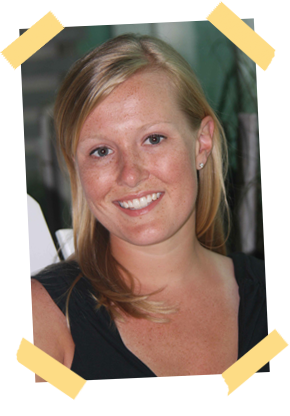
Author Anne Frandi-Coory


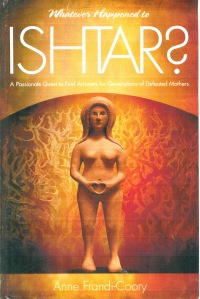
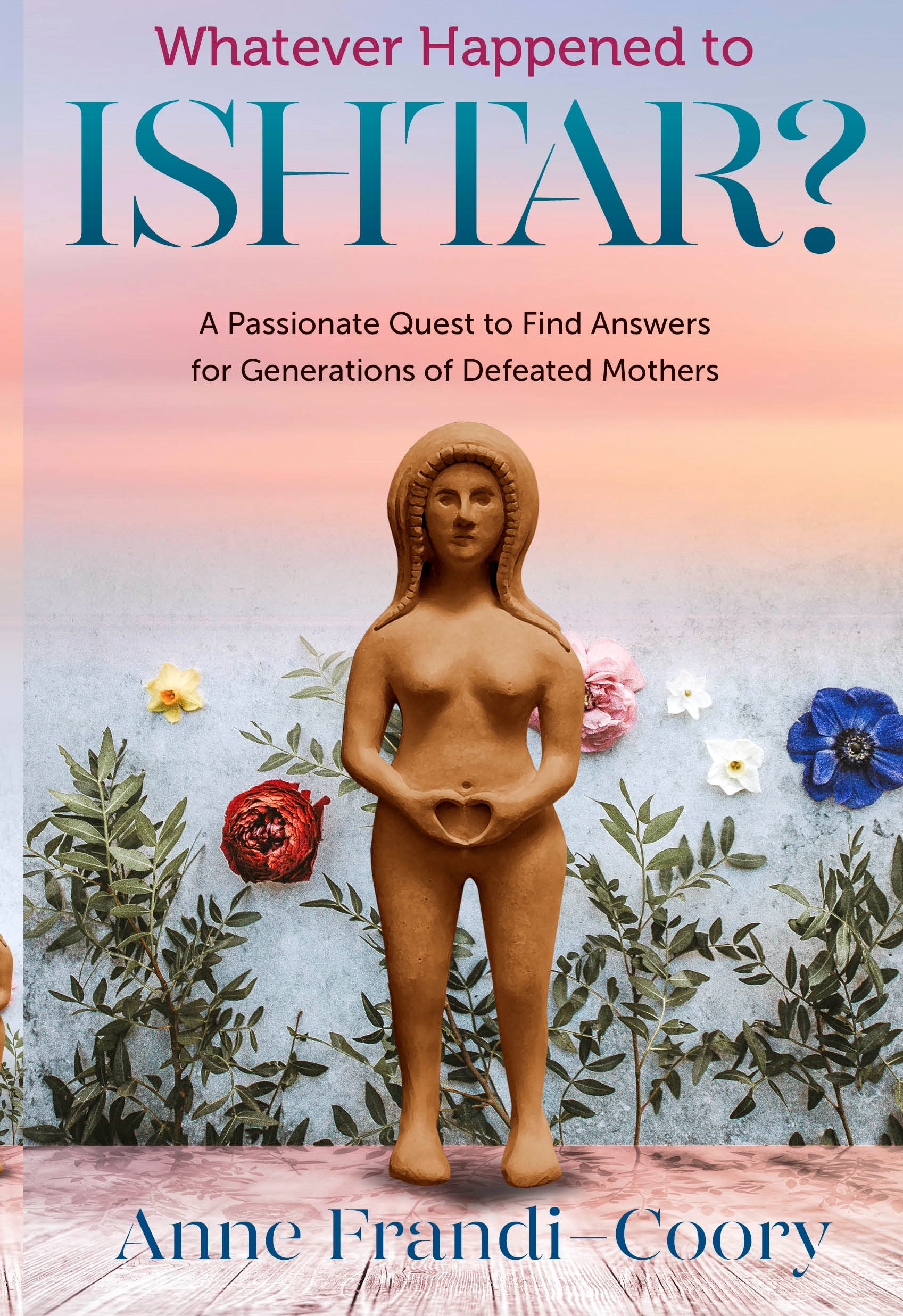
ishtar-front-cover (200x299)ANNE FRANDI-COORY is interviewed by Erika Liodice  for Beyond The Gray:

12 January 2011

For some, writing is a dream. For others, it’s a way to heal. For Anne Frandi-Coory it’s both. Abandoned by her mother at ten months of age, Anne endured a childhood of abuse and neglect in an orphanage and at the hands of her extended family. Through researching her lost heritage and writing a memoir about her tormented past, she found closure as well as a new career path for the future. Today, I’m thrilled to be talking with Anne about her journey…

Beyond the Gray: Tell us about yourself. What is your dream?

Anne Frandi-Coory: My maiden name is Anne Frandi-Coory. I have four adult children who are all married and have children of their own. I now consider myself to be an author, although I do part-time nannying under “Nanny Jo Services”, which I enjoy and which supplements my small income from sales of my book Whatever Happened To Ishtar? This arrangement allows me the space and time to write my next book.

I was born in New Zealand and moved to Australia five years ago with my partner. I was previously an interior decorator and then moved into the real estate industry in NZ and Australia. My partner and I owned a successful café and catering business in NZ in the late 1980s. I have had many dreams throughout my life.

My current dream is to paint the beautiful red river gum trees that surround me in Melbourne, where I now live. I am just beginning the charcoal sketching phase. I am studying all the different painting techniques and media. I have always been interested in art and have visited many art galleries in Italy and France.

When I decide on a challenge, I usually teach myself. In the past I have taught myself, among other things, the Italian language and how to write a book. The biggest challenge of my life was raising four children because I had no experience of normal family life. I read everything I could on child rearing, which helped give me the confidence that I was doing the right thing.

Self-teaching is a habit I learned as a child because there was never anyone around to guide me. I love reading – for pleasure and guidance on life issues.  All this reading means I understand everything in a strictly literal sense, which isn’t always a good thing when having conversations with other people.

Beyond The Gray: Tell us about a time you found yourself in “the gray”.

Anne: My childhood and adolescence were extremely traumatic and I can truly say I was a “lost” child – neglected, abandoned by my mother and abused by my father’s Lebanese extended family. Loneliness was a steady companion. However, as a critic once said about my memoir, “there were enough people in Anne’s life who cared about her.”

I knew very early on that if I was going to survive into the future I had to find a place for myself in the world. I had to find an identity. I escaped at the age of eighteen into marriage and, although I chose the wrong man for me, the four children we had together helped shape my life for the better and made me a stronger person. They taught me as much about life as I taught them.

Because of the tragedy of my mother’s life, I passionately strived to avoid being a defeated mother. I gained inspiration from the many biographies I read about women who found themselves in similar situations to mine. My disastrous marriage lasted 16 years, mostly because I could not leave my young children. I now see it was also because I did not want to believe my marriage had failed and that I may become a defeated mother too. However, as difficult a decision as it was at the time, when I did leave my life changed for the better. I had matured, was finding out who I was, and knew what I wanted for the future. I met someone who allowed me the space to go out and achieve the things I wanted from life: a university degree, a career and to search for my past. My passionate determination helped me to achieve all three.

My latest dream was to write and publish a book. And in 2010 I achieved that dream.

Beyond The Gray: Tell us about your memoir, Whatever Happened to Ishtar? 

Anne: I began writing Ishtar about five years ago. I spent many years before that tracking the history of my Lebanese and Italian ancestors in a quest to find out why my mother abandoned me and two of my brothers, and why she adopted out another son and daughter.

I had read enough books to know that her life was exceptionally difficult and that she never managed to “move beyond the gray.” I wanted so much to know her and the reasons why she failed so badly at motherhood and life in general. I’d heard many negative comments about her from my father’s family but I never had the chance to know her as a person.

After traveling overseas and around New Zealand interviewing Lebanese and Italian family members, and searching records in local museums and libraries, I was armed with enough information to visit places in Italy and the United Kingdom where members of my extended families once lived. I also managed to collect and record an extensive Lebanese/Italian family tree. After filling many notebooks and collecting countless photographs, I realized I had enough material to write a book. The theme that ran throughout the various family stories was that of defeated mothers. I explored this further and the book grew from being a memoir to several personal stories within a geographical and genealogical framework, beginning with my abandonment and abuse.

Whenever I found writing the book too difficult, I would leave it for many months. Then I would wake at night with inspiration to get up in the early hours and write several chapters. I felt that I needed to write down what was invading my thoughts. I wanted to leave a family history for my descendants so they would grow up understanding what had gone before them, their wonderfully rich heritage and the places that left a mark on their ancestors. I hoped that my book would inspire others to follow their passions, to search for answers – in other words, to go beyond the gray.

The actual writing of the book was an extremely painful experience emotionally. It brought up many childhood memories, but in the end all the information I was able to piece together helped me heal.

Soon after the book was published, it began to sell well online. Part of this success was due to my blog, Lebanese & Italian Connections, where I posted excerpts from Ishtar?.

Many readers from the Lebanese and Italian communities found family connections in the family tree, which appears on my blog and in the book’s appendix.

Beyond The Gray: How can we get our hands on a copy of Whatever Happened to Ishtar? …

******4th edition          Whatever Happened to Ishtar_cover 2020            HERE from AMAZON and ABE Books:  https://frandi.wordpress.com/2010/04/15/publicaton-of-whatever-happened-to-ishtar/

*******************************************************************************

Beyond The Gray: According to Ishtar’s book jacket, you believe that a life with purpose can be lived despite a crippling beginning. What would you tell other people who’ve had a “crippling beginning”?

Anne: Actually, that statement was made by a book reviewer. I can only pass on what I have experienced in life. One of the main lessons I have learned is that it’s not what life throws at you – that cannot be changed – it’s how you deal with the start you’ve been given.

I’ve found that there are many people in the world who have had far greater suffering than I. For me, loving and understanding animals has brought me another level of acceptance. We had a menagerie when our children were growing up and animals have taught me so much about life and death. They have no control over who cares for them and have to accept their fate. Caring for animals has made me a calmer person in the process.

Finally, I refused to be a victim. In hindsight, I can see that it’s not always a good personal philosophy because I haven’t in the past allowed friends and work colleagues to get close enough to help me through the bad times. They rarely got to see the real me. I internalized all the negativity and emotional pain and tried to deal with them on my own. I became extremely efficient at work and running a household, while fighting at all costs not to become a victim. All this takes enormous amounts of energy and it distanced me from those around me. Thankfully, my children and grandchildren have made my life so full, and the older I get the calmer I become.  My advice is to trust others and accept their help.

Beyond The Gray: What fears have you faced as you chase your dreams? How do you overcome them?

Anne: My biggest fear is that of the unknown. I read all I can about other people’s experiences of pursuing their dreams and this helps. Biographies of my favourite writers, artists, mothers and mentors have always inspired me. I have never been one to listen to negative comments about my dreams. I keep my own counsel and have a strong sense of self belief. I value my solitude and strictly control who I let into my life and my personal space. I think this comes from always having had to do things on my own. I have always had this incredible insight into things, like seeing well ahead that something wasn’t right and that I needed to make changes. I am not sure where this gift comes from, but I believe it is a gift. In other words, believe in yourself and trust your intuition. There were many times in the past when I didn’t trust my judgement but I learned quickly from my mistakes.

Beyond The Gray:  What are your hopes for the future?

Anne: To publish a book of my paintings, short stories and poems

Beyond The Gray: If you could give one piece of advice to someone else who is struggling to move beyond the gray and follow a dream, what would it be?

Anne: Find something that you are passionate about – something that almost consumes you – and a lot of negativity in your life will dissipate because you don’t have any mental energy left to dwell on it. If you are not passionate about what you are doing, you will be distracted by other issues in your life. And when one passion cools, find another.

In my case, my first dream was to have children of my own – to be a good mother. Then I searched for my lost Italian family. I wouldn’t let anything stand in my way and I’m sure it drove everyone around me to distraction because it was a fifteen year physical and mental journey. Even though not everything I discovered about my extended family was encouraging, the fact remained that I was searching and, in the process, learning a lot about myself. As a result, the micro picture of my childhood that I carried around in my head was replaced by a macro view. And it took the focus off me.

Once I had completed my search, I changed tack and that dream was replaced by another: to write a book. Each new photograph, each new person I found, each new bit of information, re-energized me. I still experienced depression and days of tears and frustration, but I tended to get over them more quickly than I had in the past. I still preferred to hide away from people most of the time, but when I felt like company and facing people, I was so much more confident.

-Erika Liodice is the founder of the award-winning motivational blog, Beyond the Gray, where she shares her journey to publication while encouraging readers to reach for their own dreams. She is a contributor to literary and travel sites, including Writer Unboxed, The Savvy Explorer, and Lehigh Valley InSite. She received a B.S. in Business and Economics from Lehigh University and studied fiction writing at Gotham Writers’ Workshop. Erika lives in Emmaus, Pennsylvania with her husband.

-Erika Liodice 12 January 2011 Dream Chaser https://erikaliodice.com/blog/

About_Me_ErikaPhoto

Erika Liodice

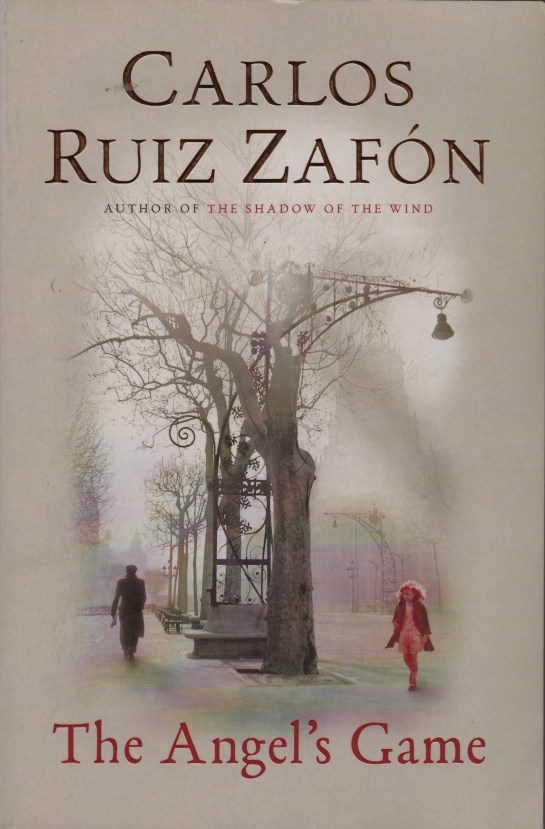
The Angel’s Game 

by Carlos Ruiz Zafón

The Angel's Game


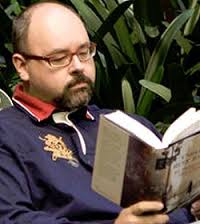
Carlos Ruiz Zafon

Carlos Ruiz Zafón


A few years ago a friend recommended a book by an author who up until then I had never heard of. The title of the book was The Shadow of the Wind  by Carlos Ruiz  Zafón. What a book, what an author! A sentence from a New York Times review said it all for me:

Gabriel Garcia Marquez meets Umberto Eco meets Jorge Luis Borges…Ruiz Zafón gives us a panoply of alluring and savage personages and stories…I couldn’t have put it better myself!

There is absolutely no doubt  Zafón is a book lover; only a lover of books could write with such intrigue around a ghostly, hidden “cemetery of forgotten books”!  Dark mists swirl in and out of every page, and this master story teller sets your imagination afire!

During my hauntings of book fairs and second hand book stores, I discovered The Angel’s Game, not realising at the time it was part of  Zafón’s Cemetery of Forgotten Books trilogy.  I have just finished reading it and once again I was lost in Zafón’s world of the most beautiful prose, passionate love, corrupt  police, unsolved murders, hapless humans possessed by what? Satan? Was Senor Sempere, of Sempere & Sons book store, right when he declared that authors’ souls are in the books that they write? Is that why he valued David Martin’s  book so much that he kept it in a locked glass case? I do think Zafón’s soul combines with the reader’s soul to create an alchemy that drags you into the story as though you were a bystander; perhaps just a little too close for comfort?

Zafón:  I write because I really have no other choice. This is what I do. This is what I am…Every book, every volume you see here, has a soul. The soul of the person who wrote it and of those who read it and lived and dreamed with it. Every time a book changes hands, every time someone runs his eyes down its pages, its spirit grows and strengthens.

Like The Shadow of the Wind, The Angel’s Game is set in Barcelona ‘the city of the damned’. And like every major city in the world, Barcelona has its dark and dangerous side. This is a book with an atmosphere of evil versus innocence in which mostly evil seems to be winning.  Yes, Senor Zafón I do believe the angels are treating human life as a game!

David Martin is an author who rents an abandoned towered mansion in the heart of Barcelona. The history of the previous owner is becoming an obsession and David is certain that a storage room in the house is ‘occupied’ with something sinister. He has no idea who owns the boxes of clothes and objects in the room, preferring to keep the door locked!  At the same time he is battling with his love for an unattainable young woman whom he has known since childhood.

A paragraph from The Angel’s Game gives an insight into author David’s despair at the realization that all of his life’s dreams have been shattered:

Two hours later sitting in the armchair of my study, I opened the case that had come to me years before and contained the only thing I had left of my father. I pulled out the revolver, which was wrapped in a cloth, and opened the chamber. I inserted six bullets and closed the weapon. I placed the barrel against my temple, drew back the hammer and shut my eyes. At that moment I felt a gust of wind whip against the tower and the study windows burst open, hitting the wall with great force. An icy breeze touched my face, bringing with it the lost breath of great expectations.

If David had known what was to come, surely he wouldn’t have allowed a mere icy breeze to put him off the task at hand!

I wondered, after reading this amazing book, that maybe there are times in our lives when we have no option but to sell our souls to the devil…what do you think?

-Anne Frandi-Coory 25 April 2016

*****

Please visit Anne Frandi-Coory’s facebook page here: 

https://www.facebook.com/myhomelibrary/

*****

 The Trilogy by Carlos Ruiz Zafón    http://www.carlosruizzafon.co.uk/

Bcharré And Her King of Trees

Goodbye Bcharré  

*****

Poem and Painting  Goodbye Bcharré  

Copyright To Anne Frandi-Coory All Rights reserved 19 April 2016

Painting 500cm x 410cm  Acrylic on canvas

******************************

There we stood above Bcharré the land of our fathers

in the shadow of a magnificent tree of kings, scarred and riven

beyond which stretched the Qadesha Valley deep below

beckoning, engulfing all with its lonely mists of woe

***

Long have blood thirsty invaders stormed poor Lebanon

fortifications  of rocky cliffs and great King  Cedrus Libani

his powerful roots hidden in caves and rocky outcrops

once protected animal and peasant alike, for millennia

***

Phoenicians and Romans, to name warriors but a few

decimated Lebanon’s cedars for agile fighters’ garrisons

mighty, heavenly temples,  fleets of foreboding ships

their planks they withstood thousands of salty tides

***********************

**Read the rest of my poem in DRAGONS, DESERTS and DREAMS

{SEE BELOW}

Dedicated to my Lebanese grandparents

Jacob Habib El Khouri Eleishah Fahkrey and Eva Arida Fahkrey

**Read more about my poems and short stories …  

Here in DRAGONS, DESERTS and DREAMS  

*Available here at AMAZON  in Kindle e book or paperback 


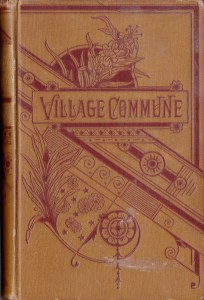
While doing research into my Italian ancestry for my book, Whatever happened To Ishtar? I read somewhere that if you wanted to know what it was like living in 19th Century Italy, you might wish to read Village Commune by Maria Louise Ramé, otherwise known by her pseudonym, Ouida. It turned out to be very good advice. I searched for the book online and found it  in a tiny obscure USA second hand book shop. When I received what is now a prized possession, I discovered it was a First Edition published 1881 by J. B. Lippincott & Co.  Philadelphia/

The Commune 2

Published in 1881

My great grandparents, Aristodemo and Annunziata Frandi experienced similar hardships to those described by Ouida in Village Commune. Many young men from poor families were conscripted into the regular army to fight against the Austrians, as was Aristodemo, who came from a family of farmers. The Frandi family, by then including three young children, emigrated to New Zealand in 1876 and I now fully understand why.  Although Aristodemo talked to family about life in Italy, both of his hated time barracked with the regular army  in the far north of Italy, and his time fighting in the south of Italy with Garibaldi, I had no real understanding of just how difficult life was at that time.

I had always thought of Italy as a wonderful country, full of poetry, art, fabulous food and generous citizens. I have visited the country often and I have never been disappointed. But of course there was, and is, another side to Italy altogether.

Ouida’s eloquently written and absorbing stories of life in northern Italy are heart-rending. Farmers and agriculturists, whose families had lived on the land for generations, had their land taken at the whim of wealthy, corrupt government officials and were left homeless and hungry. The burgeoning Industrial Revolution needed land for factories, and dwellings for workers moving onto the countryside. Land was also needed to build mansions for wealthy officials, and for railways.

<><><><><><><><><><><><><><><><><><><><><><><><><><><><><><><><><><><><><><><><><><><><><><><><><><>

The Commune

Note the prices listed for Ouida’s publications. The handwritten name and date came with the book.


><><><><><><><><><><><><><><><><><><><><><><><><><><><><><><><><><><><><><><><><><><><><><><><><><><><><><><><><>

The author connects on an emotional level with the reader, as she relates beautifully crafted, albeit harrowing, life stories.  One such story is of a young Florentine farming peasant :

He was a peasant who had been taken by conscription just as a young bullock is picked out for the shambles, and he had never understood why very well. His heart has always been with his fields, his homestead, his vines, his sweetheart. He had hated the barrack life, the dusty aimless marches, the drilling and the bullying, the weight of the knapsack and the roar of the guns; he had been a youth, ere the government had made him a machine…If the enemy had come into his country he would have held his own hamlet against them to the last gasp; but to be drafted off to Milan to wear a fool’s jacket and to eat black bread while the fields were half tilled, and the old people sore driven…no, he was not a patriot, if to be one, he must have been a contented conscript. 

 Ouida gives a vivid portrayal of the numerous Roman Catholic and other festivals:

Italian merry-making is never pretty. The sense of colour and of harmony is gone out of our people, whose forefathers were models of Leonardo and Raffaelle, and whose own limbs too, have still so often the mould of the Faun and the Discobolus. Italian merry-making has nothing of the grace and brightness of the French fairs, nor even of the picturesqueness and colour of the German feasts and frolics; even in Carnival, although there are gayety [sic] and grotesqueness, there is little grace and little good colouring. But the people enjoy themselves; enjoy themselves for the most part very harmlessly and very merrily when they forget their tax-papers, their empty stomachs, and their bankrupt shops.

Ouida writes extensively and in detail about the corruption and cronyism of government officials, and the cruelty they meted out to hapless villagers. If citizens had wealth, and were well connected, they had plenty of food and their sons escaped conscription! But peasants lived frugally off the land, and life for them was harsh and often brutal.

One of  Ouida’s famous quotes “petty laws breed great crimes” highlights her intimate knowledge and understanding of what life was like for the peasant landowner (agrario).

The commune of Vezzaja and Ghiralda, whose centre is the village of Santa Rosalia, is, like all Italian communes, supposed to enjoy an independence that is practically a legislative autonomy. So long as it contributes its quota to the Imperial taxes, the Imperial government is supposed to have nothing to do with it, and it is considered to be as free as air to govern itself. So everybody will tell you; and so inviolate is its freedom that even the prefect of its province dare not infringe upon it – or says so when he wants to get out of any trouble.

Anybody who pays five francs’ worth of taxes has a communal vote in this free government and helps to elect a body of thirty persons who in turn elect a council of seven persons, who in turn elect a a single person called a syndic, or as you would call him in English, a mayor. This distilling and condensing process sounds quite admirable in theory. Whoever has the patience to read the pages of this book will see how this system works in practice.

Now, in Vezzaja and Ghiralda the thirty persons do nothing but elect the seven persons, the seven do nothing but elect the one person, and the one person does nothing but elect his secretary; and the secretary, with two assistants dignified respectively by the titles of chancellor and conciliator, does everything in the way of worry to the public that the ingenuity of the official mind can conceive. The secretary’s duties ought to be the duties of a secretary everywhere, but by a clever individual can be brought to mean almost anything you please in the shape of local tyranny and extortion; the chancellor (cancelliere) has the task of executing every sort of unpleasantness against the public in general, and sends out his fidus Achates, the usher, all kinds of summons and warrants at his will and discretion; as for the conciliator (giudice conciliatore) his office as his name indicates, is supposed to consist in conciliation of all local feuds, disputes and debts, but as he is generally chiefly remarkable for an absolute ignorance of law and human nature, and for a general tendency to accumulate fees anywhere and anyhow, he is not usually of the use intended, [my emphasis] and rather is famous for doing what a homely phrase calls setting everybody together by the ears…Power is sweet and when you are a little clerk you love its sweetness quite as much as if you were an emperor, and maybe you love it  a good deal more.   

She elaborates further: Tyranny is a very safe amusement in this liberated country. Italian law is based on that blessing to mankind, the Code Napoleon, and the Code Napoleon is perhaps the most ingenious mechanism for human torture that the human mind has ever constructed. In the cities, its use for torment is not quite so easy, because where there are crowds there is always the fear of a riot and besides there are horrid things called newspapers , and citizens wicked enough and daring enough to write in them. But away in the country, the embellished and filtered Code Napoleon can work like a steam plough; there is nobody to appeal and nobody to appeal to. The people are timid and perplexed; they are as defenceless as the sheep in the hand of the shearer; they are frightened at the sight of the printed papers and the carabinier’s [sic} sword. There is nobody to tell them they have rights , and besides, rights are very expensive luxuries anywhere and cost as much to take care of as a carriage horse.

In Village Commune Ouida dissects the family lives of unfortunate peasants in 19th Century Italy. I believe that many of these soul destroying Italian tragedies are on a par with the famous Greek plays left to us by Aeschylus or Sophocles. There is much irony within the pages of Village Commune

There are far too many long sentences, semi-colons and commas in this book, but they take nothing away from the wit, sarcasm and  beautiful prose flowing from Ouida’s pen. I highly recommend this wonderful little book… if you can find a copy.

* *********************************************************************

Ouida's headstone.jpg

OUIDA’S HEADSTONE


Ouida Tomb

OUIDA’S TOMB in Bagni di Lucca

**********************************************************************

‘Nature she knew by heart: on birds and flowers
She could discourse for hours and hours and hours.
Sententious, sentimental, repetitious, she
Would never choose one word if there were three. Pith was her weakness;
clichés were her strength. And here she lies now, as she wrote, at length.’
– Christopher Stace, from ‘At first seeing Ouida’s tomb in Bagni di Lucca’ as published in The New Yorker 


*****

Please visit Anne Frandi-Coory’s facebook page here: 

https://www.facebook.com/myhomelibrary/