Archive

Tag Archives: Anne Frandi-Coory

Fay Eggeling

A Card – from Fay Eggeling

letter from Faye Eggeling

Okuru, Haast

I thought I would write and let you know how much I enjoyed reading your book, Whatever Happened To Ishtar? – A Passionate Quest To Find Answers For Generations Of Defeated Mothers.

********************************

Whatever Happened to Ishtar_cover 2020

Updated 4th edition (2020) available in paperback and Kindle ebook from AMAZON 

and here from ABE BOOKS  

***********************************************

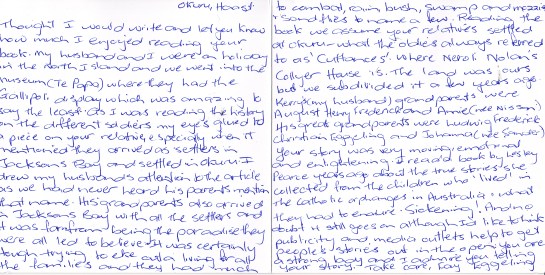
My husband and I were on holiday in the North Island and we went into the museum (Te Papa) where they had the Gallipoli display which was amazing to say the least. As I was reading the history of the different soldiers my eyes glued to a piece on your relative,   Ateo Frandi   especially when it mentioned they [Frandi family] arrived as settlers in Jackson Bay and settled in  Okuru. I drew my husband’s attention to the article as we had never heard his parents mention that name [Frandi]. His grandparents also arrived in Jackson Bay with all the settlers and it was far from being the paradise they were all led to believe. It was certainly tough trying to eke out a living for all the families and they had much to combat; rain, bush, swamp, mozzies, and sandflies to name a few.

Reading the book we assume your relatives settled at Okuru – what the oldies always referred to as ‘Cuttances’, where Neroli Nolan’s Collyer House is. The land was ours but we sub-divided it a few years ago.

Kerry’s, (my husband) grandparents were August Henry Frederick and Annie (nee Nisson). His great grandparents were Ludwig Frederick Christian Eggeling and Johanna (nee Sander).

Your story was very moving, emotional and enlightening. I read a book by Lesley Pearce years ago about the true stories she collected from the children who ‘lived’ in the Catholic orphanages in Australia and what they had to endure. Sickening! And no doubt it still goes on although I like to think publicity and media outlets help to get people’s stories out into the open. You are a strong lady and I admire you telling your story.

Take care

– Fay Eggeling – 16 November 2015

Read more about Anne Frandi-Coory

and her Italian family history here:

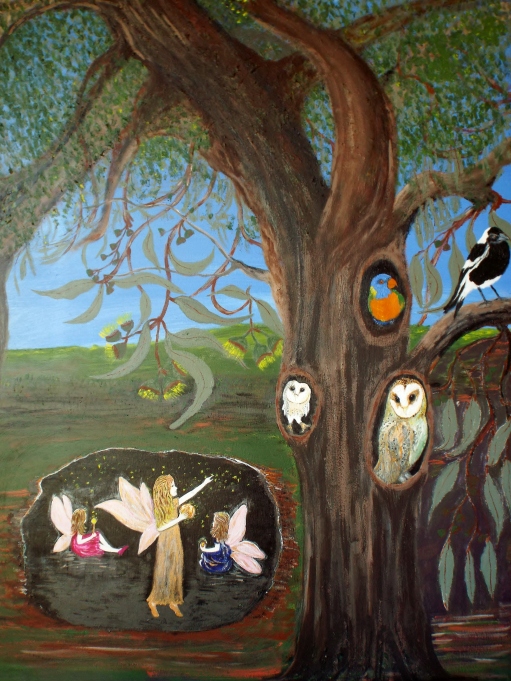
Garden Fairies At Gumtree Apartment 2

Garden Fairies at Gum Tree  Apartment

 *****

Painting and Poem Garden Fairies At Gum Tree Apartment Copyright to Anne Frandi-Coory -All Rights Reserved 21 January 2016

Painting: Garden Fairies At Gum Tree Apartment  Acrylic on canvas 102cm x 76cm

*****

Read my poem *Garden Fairies At Gum Tree Apartment 

Dedicated to Amber Cathro

here in DRAGONS DESERTS and DREAMS

**********************

2nd edition (2020) now available in Kindle e book and paperback 

HERE at AMAZON

Anne blog

Author Anne Frandi-Coory


In 2010 I wrote a book ‘Whatever Happened to Ishtar?’ – A memoir and family history told in two books entitled  ‘Italian Connections’  ‘Lebanese Connections’ … My Catholic childhood filled with fear, abuse, and gross neglect.

“Give me a child for seven years and I will give you the [woman]”

Anne in convent clothes

Anne Frandi-Coory at 8 years of age – just removed from Mercy Orphanage for the Poor in Dunedin


ishtar-front-cover

The theme running through the book relates to my passionate quest to find answers for generations of defeated mothers on both sides of my family tree. It’s about the brutal men in their lives, the endless pregnancies, and the women’s strict adherence to CathoIicism. In the end, the patriarchal Catholic Church betrayed their trust. Would Ishtar the Babylonian goddess have been a better role model and protector of female rights than the Virgin Mary turned out to be?

I know that in my mother’s case, if she had sought help from professionals rather than endlessly praying to her imaginary god, her life would have been far different.

I now live in Melbourne with my partner, Paul.


This page, including images and text,  is Copyright To Anne Frandi-Coory All Rights Reserved 27 November 2015

Update 7 June 2017:

This morning I received this email from Sister Joanna …and for some reason, it brought tears to my eyes:

Hello Anne,

My niece sent me your story on Facebook yesterday and I well remember our serendipity meeting.

I gather you are a writer in your own right….  Well done.

I am now a very old nun  on a walker, going blind and hearing is much to be desired.

Blessings on your continuing search,

Regards

Sr Joanna  (Maurya Laverty) Dn

*************************************************************************************

A  Card – From Sister Joanna 1992

Excerpt from  Whatever Happened To Ishtar?; A Passionate Quest To Find Answers For Generations of Defeated Mothers

**************************************

letter from Sister Joanna 3

letter from Sister Joanna

A CARD – from Sister Joanna “this image of Virgin Mary was a favourite kept by your ‘foster mother’ Sister Christopher.”

letter from Sister Joanna 2

*****

[Note from author: My mother named  me ‘Anne’ at birth, after her youngest sister, but it was changed to Jo-Anne by my Lebanese extended family when I was in my early teens because there were already “too many Annes in the family”, and because my father’s name was Joseph…you see?] 

*****

Dear Anne

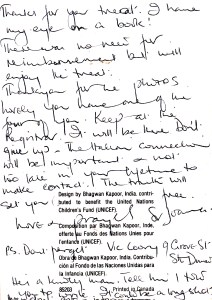
In countless ways we are at the mercy of forces beyond our control, our existences given without our consent; our heredity and all that goes with it of temperament, mental outlook, opportunities and so forth are none of our choosing. We are frighteningly, pitifully dependent. Nevertheless we are answerable. We are free. In all this freedom and unfairness we are responsible for what we do. No-one can remove this responsibility from us. We are answerable not for our heredity, temperament or our natural capacity, but for what we do with these things…Your positive input to your children makes me blessed to have met you. You inspire me.  Don’t give up…the Italian connection will be important and not too late in your lifetime to make contact. The truth will set you free.

 Love and prayers

Sister Joanna (Maurya Laverty) 1992

*************************************

St Philomena's Dormitory

Rear view of St Philomena’s (image: AFCoory)

Dunedin, New Zealand 1992

The Mercy Orphanage for the Poor had to be my first port of call. So Paul, my daughter Gina and I set off from Blenheim to Dunedin on a mission to connect the dots that made up my early years. During the eight hour drive to Dunedin, my feelings were mixed. I was deeply anxious about facing nuns again. I always held them in awe, afraid of them in a superstitious way, much as one is afraid of the power of an omnipresent god. We pulled up outside the 1.9 metre high concrete walls of the Roman Catholic orphanage in Adelaide Street, Dunedin.  It was as if, by fencing off this relic from the past, the Catholic hierarchy could pretend it wasn’t there. It was right next door to the auspicious St Patrick’s Basilica, an incongruous sight.

As I peered over the top of the wall, I was at first struck by how small the yards and buildings appeared. An analogy of an abandoned movie set sprang to mind as I surveyed the scene below me. I turned and glanced at Paul and Gina, sitting in the car smiling at me and gesturing for me to go in. As usual they intuited that this was something I needed to do alone, so I went around the side of the fence and in through a slightly ajar, dilapidated gate.

Mercy Complex 4

St Vincent’s on the left and St Philomena’s on the right. (image: Sister Joanna)

It was a strange feeling, going back there all these years later. My heart pounded wildly, seemingly out of any rhythm, and I felt hot even though it was a chilly Dunedin day. The first building I came across was the drab concrete steep-roofed, edifice that was St Philomena’s Dormitory. ‘Charles Dickens!’ I thought. Rust stains streaked down from the eroding exterior fire escape. Windows always played a significant part in my memories and I immediately recognised those tall, narrow sashes. But I just couldn’t reconcile in my mind how small that building was now, compared to my memories of it. When I used to run in and out of the dormitory, it seemed a massive structure, housing dozens of ‘big’ girls in school uniform and ubiquitous nuns in black and white habits. It was I remembered, a dormitory for older girls, mostly boarders, when I had been there.

I was deep in my thoughts when I spied a small nun dressed in a knee-length black habit, with a white-trimmed black headscarf partially covering her hair. Her modern but matronly mode of dress was not that of the nuns present during my incarceration there, that was for sure. The nun’s head was bowed as she walked around the perimeter of old St Philomena’s and I assumed that her constantly moving lips were chanting prayers as she fingered the rosary beads clasped in her hands.

As I summoned up the courage to do what I knew I had to, my eyes turned again to look at the disused building’s small windows, which were boarded up with yellowing ply, adding intensity to their derelict state.  It was like looking at a familiar face, but with its eyes poked out. I took in my surrounds: rusty corrugated iron, stained concrete, wire netting and high walls. It was like a deserted prison camp. I wondered how a once noisy and busy place could now be so devoid of life. In some ways I felt a little sad because it was a childhood home of sorts. My eyes scanned the yard for the moving nun, the environment heightening my feeling of lonely disquiet, like I had suddenly arrived at the end of the world, with only this nun and myself in existence.

As the nun gradually moved closer, I approached her and asked quietly if I could see inside St Philomena’s.

‘I used to live there when I was a child,’ I said. I waited for the rebuke, but she just motioned for me to walk with her as she continued her conversation with her God. Is she annoyed with my interruption? I wondered, child-like. After a few minutes she looked up at me with a patient look in her eyes.

‘Tell me your name’ she instructed softly. She bowed her head again, this time slightly over to the side I was walking on, a gesture that implied she was ready to listen.

‘Anne Coory’, I replied with inculcated reverence, scared stiff she may hate the name as much as I did.

Expecting her to ask for more information, I quickly went over the prepared details in my mind, nearly missing her almost whispered offering that her name was Sister Joanna and that she knew of my brothers and me. With all the children who passed through this place, what was it about the Coory children’s time there, that a young nun, over forty years later, would know of them at the mere mention of the name?

After a few moments of silence Sister Joanna, in a brighter voice, offered to show me around the other buildings, explaining that we couldn’t enter the dormitory itself as it was structurally unsafe. I began to feel more relaxed and comforted by Sister Joanna’s warming demeanour. This was the first time I had ever been able to have a conversation with a nun as an equal, woman to woman, and somehow this empowered me. The childish awe and reverence had been replaced with calm. I felt the unspoken acknowledgment of my troubled spirit quell my anxiety. Even childhood anxieties about the orphanage and nuns in general melted away as I walked and talked with Sister Joanna. As we rounded the corner of a red brick and wooden building my subdued heart leapt into a frenzy again. I stopped in my tracks. I had instantly recognised St Agnes’ Nursery, with its familiar row of wooden windows, three panes in each.

St Agnes' Nursery

St Agnes’ Nursery (image: AFCoory)

four nuns 001

Nursery supervisor Sister Christopher far right. The other three nuns are her biological sisters. (image: Sister Joanna)

**********************************************

My first orphanage home at St Agnes’ Nursery was for babies and toddlers, while the adjacent St Vincent’s housed the older children. The building was of similar construction to St Agnes’ although much larger. Because the children were separated by gender at five years of age, the inmates at St Vincent’s were mostly girls and a handful of boys under five. There were two other buildings in the Mercy complex, which stretched out to the east and behind the Basilica. Orphanages and boarding schools were always built in close proximity to Catholic churches so that daily visits to Mass and prayer were expedient in order to save souls.

**********************************************

Mercy Complex

Mercy Convent (image: Sister Joanna)

Behind the Basilica was the attractive and quite modern looking convent, also built of brick and concrete with a white trim. It was built in December 1901 to replace the old wooden cottage which the Sisters of Mercy occupied when they first arrived in Dunedin on 17 January 1897, a few months before my paternal grandparents Jacob and Eva Coory migrated to New Zealand from Lebanon. The nuns were very proud of their new convent, and it served them well over many years. New additions were added in1945. Those of us who lived permanently within the Mercy complex, devoid of television, radio, and non-Catholic perspectives, were totally institutionalised.

St Joseph's Cathedral & St Dominic's College blog 2

St Joseph’s Cathedral with St Dominic’s Boarding College on the right, at the top of Rattray Street in Dunedin (image: AFCoory)

[When I was nine years old, my father sent me to St Dominics Boarding College]

I told Sister Joanna  I had discovered, years later, that the cost of sending me to St Dominic’s was far greater than keeping me here at the orphanage, and that my father was concerned that he couldn’t afford the expense on top of the Sunday Pledge. I overheard my father talking to his Coory extended family (The Family) about it one day, although I can’t recall the conversation in detail. It was clear The Family were not about to assist, financially or otherwise.

Sister Joanna surmised that The Family may have been embarrassed by the fact that a close relative was living at an orphanage for the poor, when their station in life had improved remarkably in recent years.

‘Lebanese families had become very strong within the congregation of the cathedral,’ she told me. The cathedral was adjacent to St Dominic’s College, where many Lebanese daughters attended day classes. ‘Also,’ continued Sister Joanna, ‘at that time Middle Eastern Catholic priests, including those from Lebanon, had begun to train for holy orders in the seminary in Dunedin and were often consigned to duties at the cathedral. And of course the cathedral would have profited greatly from the Lebanese community’s generous financial contributions.’

St Vincent's

View of the kitchen double doors leading into St Vincent’s kitchen and dining room. On the left of the picture is the tree in which the mother cat and her kittens were hiding. (image: AFCoory)

My father’s childhood malnourishment caused him to insist Sister Christopher buy the best food for my brothers and me. It was something he was quite obsessive about. We were also to be given daily doses of malt and Lane’s Emulsion, which he supplied. Never-the-less, I still managed to contract scarlet fever, asthma, and ringworm. Anguish was the underlying cause of many of my father’s actions and, I am sure, some of his own ill-health. He harboured a deep resentment toward his extended family over their refusal to care for us while he worked long, hard hours. My father was a simple, uneducated man, but he wasn’t stupid. He could see the injustice and often lamented, when I was a child, that The Family never treated his children the way they treated our cousins. My father had other valid reasons for not speaking to particular members of his family. I didn’t know then of The Family’s history and I didn’t always understand what he was saying. I had no idea that most children lived completely different lives from me and the other children at the orphanage.

Sister Joanna showed much empathy and understanding of the distress I still felt when speaking about my parents. She took my sadness to heart, the fact I never knew my mother intimately and that she and I were prevented from seeing each other. She knew of my mother’s bipolar disorder and that she had spent much of her life in Porirua Mental Hospital, as it was then called. I think my pain was evident when I spoke of the way the Coory family had constantly demonised my mother, calling her a  sharmuta (Aramaic word for prostitute). I explained to Sister Joanna that, during all of my research into my mother’s life, there was never anything to suggest that my mother was a prostitute.  She did turn to men for love and affection because her own family had rejected her and the Coory family never accepted her. I believe that what went on in Carroll Street when my mother lived there was responsible for the initial severe manifestation of her disorder. She had never known such extremes until that part of her life.  I believe that my mother was the scapegoat for all the ills of The Family until she left and I took over the role, much as one takes over a heredity title.

  • Read more here in the memoir Whatever Happened To Ishtar? – A Passionate Quest by Anne Frandi-Coory to find answers for generations of defeated mothers, including her own.
Joseph and Doreen

Anne Frandi-Coory’s parents Joseph and Doreen

Kevin blog 1

Kevin

1873-1915

Anne and Anthony

ishtar-front-cover‘Whatever Happened to Ishtar?’ by Anne Frandi-Coory  is a necessary read for any mother in order to help make an adjustment to your mindset in this information age filled with books on how to parent better.

Anne tells, in an honest and direct way, the reality of her childhood where her mother was largely absent; suffering neglect and abuse in the hands of the Catholic Church and her extended [Lebanese] family.  Despite this absence by her [Italian] mother, the rare moments Anne shared with her still gave her something enormous.

It is a balanced account such as she does acknowledge the education the Catholic Church introduced her to.

Why Anne’s story is one of redemption and healing is that, despite what she reveals of her childhood and subsequent adult quest to reach a place of understanding, Anne has in her, a life blood and intelligence that is vibrant and strong.  Anne knows how to live in the moment and embrace love and laughter to its full.

Anne is giving back to her children the opposite of what she was given which is a massive testament to her strength and sheer force of character.  So if you ever feel you are not giving enough to your child take a read of what Anne didn’t get from her biological parents.  Be encouraged by Anne’s story that even the most meagre rations her parents were able to give did make a difference to her.  How much more so, an available parent with intent to actively love her children, despite the inevitable mistakes you make along the way?  Such a mother  Anne has turned out to be, despite all odds.

<><><><

roseann cameron

Roseann Cameron, Christchurch New Zealand 25 November 2013

***********************************************************

Read here more about Anne Frandi-Coory’s mother: https://frandi.wordpress.com/2012/04/01/letters-to-anne-frandi-coory/

Read the latest, 4th edition of ‘Whatever Happened To Ishtar?’ published in 2020 HERE:

https://frandi.wordpress.com/category/whatever-happened-to-ishtar-fifteen-reviews/

Also here on Anne Frandi-Coory’s Facebook page 

https://www.facebook.com/myhomelibrary/


*****

img06052017_001

Updated 5 June 2017 

******************

A must read for anyone interested in the background of the three monotheistic religions spawned in the Middle East:

Judaism, Christianity and Islam

Christopher Hitchens’ quotes from the book:

“There would be no such churches in the first place, if humanity had not been afraid of the weather, the dark, the plague, the eclipse, and all manner of other things now easily explicable. And also if humanity had not been compelled, on pain of extremely painful consequences, to pay the exorbitant tithes and taxes that raised the imposing edifices of religion.”

“What is religion, if not political in terms of governing the people?”

“As far as I am aware, there is no country in the world today where slavery is still practiced, where the justification of it is not derived from the Qur’an.”

Read about the blatant plagiarism by Christianity and Islam from ancient Judaism and Paganism, and the violence perpetrated by all of these religions against non-believers. Christopher Hitchens is a gifted writer, historian and philosopher; I could not put this book down once I began reading it. Now more than ever, this is a book for our times, with our world in jeopardy because of the war being waged between the Christian West and Islam.

There can no longer be any doubt that the religious indoctrination of children is child abuse.

– Anne Frandi-Coory

“Merciless…quite comical…trenchant and witty… God Is Not Great is a treasure house of zingers worthy of Mark Twain or Mencken.” – Daniel C. Dennett, Boston Globe

><><><><><><><><><><><><>

Are USA, Australia, Secularist or Theocratic Countries?

Although the following discussion refers to USA, it could easily refer to

LNP far right conservative  government of Australia in 2017: 

The Catholic Church, Jesus, Religion in State Schools, Nazi alliance with the Vatican, Islam, Jihad, Christianity

><><><><><><><><><><><><><><><><><><><><>

dawkins_hitchens in conversation photo Newstatesman

Richard Dawkins’ last interview with Christopher Hitchens in 2011 (photo; New Statesman)

*****

“Never be afraid of stridency”:

Richard Dawkins’ interview with Christopher Hitchens

Is America heading for theocracy?

How worrying is the rise of the Tea Party?

Christopher Hitchens and Richard Dawkins discuss God and US politics.

Transcribed by Richard Dawkins

RD: As an Orwell scholar, you must have a particular view of North Korea, Stalin, the Soviet Union, and you must get irritated – perhaps even more than I do – by the constant refrain we hear: “Stalin was an atheist.”

CH: We don’t know for sure that he was. Hitler definitely wasn’t. There is a possibility that Himmler was. It’s very unlikely but it wouldn’t make any difference, either way. There’s no mandate in atheism for any particular kind of politics, anyway.

RD: The people who did Hitler’s dirty work were almost all religious.

CH: I’m afraid the SS’s relationship with the Catholic Church is something the Church still has to deal with and does not deny.

RD: Can you talk a bit about that – the relationship of Nazism with the Catholic Church?

CH: The way I put it is this: if you’re writing about the history of the 1930s and the rise of totalitarianism, you can take out the word “fascist”, if you want, for Italy, Portugal, Spain, Czechoslovakia and Austria and replace it with “extreme right Catholic party”. Almost all of those regimes were in place with the help of the Vatican and with understandings from the Holy See. It’s not denied. These understandings quite often persisted after the Second World War was over and extended to comparable regimes in Argentina and elsewhere.

RD: But there were individual priests who did good things.

CH: Not very many. You would know their names if there were more of them. When it comes to National Socialism, there’s no question there’s a mutation, a big one – the Nazis wanted their own form of worship. Just as they thought they were a separate race, they wanted their own religion. They dug out the Norse gods, all kinds of extraordinary myths and legends from the old sagas. They wanted to control the churches. They were willing to make a deal with them. The first deal Hitler made with the Catholic Church was the Konkordat. The Church agreed to dissolve its political party and he got control over German education, which was a pretty good deal. Celebrations of his birthday were actually by order from the pulpit. When Hitler survived an assassination attempt, prayers were said, and so forth. But there’s no doubt about it, [the Nazis] wanted control – and they were willing to clash with the churches to get it. There’s another example. You swore on Almighty God that you would never break your oath to the Führer. This is not even secular, let alone atheist.

RD: There was also grace before meals, personally thanking Adolf Hitler.

CH: I believe there was. Certainly, you can hear the oath being taken – there are recordings of it – but this, Richard, is a red herring. It’s not even secular. They’re changing the subject.

RD: But it comes up over and over again.

CH: You mentioned North Korea. It is, in every sense, a theocratic state. It’s almost supernatural, in that the births of the [ruling] Kim family are considered to be mysterious and accompanied by happenings. It’s a necrocracy or mausolocracy, but there’s no possible way you could say it’s a secular state, let alone an atheist one.

Attempts to found new religions should attract our scorn just as much as the alliances with the old ones do. All they’re saying is that you can’t claim Hitler was distinctively or specifically Christian: “Maybe if he had gone on much longer, he would have de-Christianised a bit more.” This is all a complete fog of nonsense. It’s bad history and it’s bad propaganda.

RD: And bad logic, because there’s no connection between atheism and doing horrible things, whereas there easily can be a connection in the case of religion, as we see with modern Islam.

CH: To the extent that they are new religions – Stalin worship and Kim Il-sungism – we, like all atheists, regard them with horror.

RD: You debated with Tony Blair. I’m not sure I watched that. I love listening to you [but] I can’t bear listening to . . . Well, I mustn’t say that. I think he did come over as rather nice on that evening.

CH: He was charming, that evening. And during the day, as well.

RD: What was your impression of him?

CH: You can only have one aim per debate. I had two in debating with Tony Blair. The first one was to get him to admit that it was not done – the stuff we complain of – in only the name of religion. That’s a cop-out. The authority is in the text. Second, I wanted to get him to admit, if possible, that giving money to a charity or organising a charity does not vindicate a cause. I got him to the first one and I admired his honesty. He was asked by the interlocutor at about half-time: “Which of Christopher’s points strikes you as the best?” He said: “I have to admit, he’s made his case, he’s right. This stuff, there is authority for it in the canonical texts, in Islam, Judaism.” At that point, I’m ready to fold – I’ve done what I want for the evening. We did debate whether Catholic charities and so on were a good thing and I said: “They are but they don’t prove any point and some of them are only making up for damage done.” For example, the Church had better spend a lot of money doing repair work on its Aids policy in Africa, [to make up for preaching] that condoms don’t prevent disease or, in some cases, that they spread it. It is iniquitous. It has led to a lot of people dying, horribly. Also, I’ve never looked at some of the ground operations of these charities – apart from Mother Teresa – but they do involve a lot of proselytising, a lot of propaganda. They’re not just giving out free stuff. They’re doing work to recruit.

RD: And Mother Teresa was one of the worst offenders?

CH: She preached that poverty was a gift from God. And she believed that women should not be given control over the reproductive cycle. Mother Teresa spent her whole life making sure that the one cure for poverty we know is sound was not implemented. So Tony Blair knows this but he doesn’t have an answer. If I say, “Your Church preaches against the one cure for poverty,” he doesn’t deny it, but he doesn’t affirm it either. But remember, I did start with a text and I asked him to comment on it first, but he never did. Cardinal Newman said he would rather the whole world and everyone in it be painfully destroyed and condemned for ever to eternal torture than one sinner go unrebuked for the stealing of a sixpence. It’s right there in the centre of the Apologia. The man whose canonisation Tony had been campaigning for. You put these discrepancies in front of him and he’s like all the others. He keeps two sets of books. And this is also, even in an honest person, shady.

RD: It’s like two minds, really. One notices this with some scientists.

CH: I think we all do it a bit.

RD: Do we?

CH: We’re all great self-persuaders.

RD: But do we hold such extreme contradictions in our heads?

CH: We like to think our colleagues would point them out, in our group, anyway. No one’s pointed out to me in reviewing my God book God Is Not Great that there’s a flat discrepancy between the affirmation he makes on page X and the affirmation he makes on page Y.

RD: But they do accuse you of being a contrarian, which you’ve called yourself

CH: Well, no, I haven’t. I’ve disowned it. I was asked to address the idea of it and I began by saying it’s got grave shortcomings as an idea, but I am a bit saddled with it.

RD: I’ve always been very suspicious of the left/right dimension in politics.

CH: Yes; it’s broken down with me.

RD: It’s astonishing how much traction the left/right continuum [has] . . . If you know what someone thinks about the death penalty or abortion, then you generally know what they think about everything else. But you clearly break that rule.

CH: I have one consistency, which is [being] against the totalitarian – on the left and on the right. The totalitarian, to me, is the enemy – the one that’s absolute, the one that wants control over the inside of your head, not just your actions and your taxes. And the origins of that are theocratic, obviously. The beginning of that is the idea that there is a supreme leader, or infallible pope, or a chief rabbi, or whatever, who can ventriloquise the divine and tell us what to do. That has secular forms with gurus and dictators, of course, but it’s essentially the same. There have been some thinkers – Orwell is pre-eminent – who understood that, unfortunately, there is innate in humans a strong tendency to worship, to become abject. So we’re not just fighting the dictators. We’re criticising our fellow humans for trying to short-cut, to make their lives simpler, by surrendering and saying, “[If] you offer me bliss, of course I’m going to give up some of my mental freedom for that.” We say it’s a false bargain: you’ll get nothing. You’re a fool.

RD: That part of you that was, or is, of the radical left is always against the totalitarian dictators.

CH: Yes. I was a member of the Trotskyist group – for us, the socialist movement could only be revived if it was purged of Stalinism . . . It’s very much a point for our view that Stalinism was a theocracy.

RD: One of my main beefs with religion is the way they label children as a “Catholic child” or a “Muslim child”. I’ve become a bit of a bore about it.

CH: You must never be afraid of that charge, any more than stridency.

RD: I will remember that.

CH: If I was strident, it doesn’t matter – I was a jobbing hack, I bang my drum. You have a discipline in which you are very distinguished. You’ve educated a lot of people; nobody denies that, not even your worst enemies. You see your discipline being attacked and defamed and attempts made to drive it out.

Stridency is the least you should muster . . . It’s the shame of your colleagues that they don’t form ranks and say, “Listen, we’re going to defend our colleagues from these appalling and obfuscating elements.” If you go on about something, the worst thing the English will say about you, as we both know – as we can say of them, by the way – is that they’re boring.

RD: Indeed. Only this morning, I was sent a copy of [advice from] a British government website, called something like “The Responsibilities of Parents”. One of these responsibilities was “determine the child’s religion”. Literally, determine. It means establish, cause . . . I couldn’t ask for a clearer illustration, because, sometimes, when I make my complaint about this, I’m told nobody actually does label children Catholic children or Muslim children.

CH: Well, the government does. It’s borrowed, as far as I can see, in part from British imperial policy, in turn borrowed from Ottoman and previous empires – you classify your new subjects according to their faith. You can be an Ottoman citizen but you’re a Jewish one or an Armenian Christian one. And some of these faiths tell their children that the children of other faiths are going to hell. I think we can’t ban that, nor can we call it “hate speech”, which I’m dubious about anyway, but there should be a wrinkle of disapproval.

RD: I would call it mental child abuse.

CH: I can’t find a way, as a libertarian, of saying that people can’t raise their children, as they say, according to their rights. But the child has rights and society does, too. We don’t allow female – and I don’t think we should countenance male – genital mutilation. Now, it would be very hard to say that you can’t tell your child that they are lucky and they have joined the one true faith. I don’t see how you stop it. I only think the rest of society should look at it with a bit of disapproval, which it doesn’t. If you’re a Mormon and you run for office and say, “Do you believe in the golden plates that were dug up by Joseph Smith?” – which [Mitt] Romney hasn’t been asked yet – sorry, you’re going to get mocked. You’re going to get laughed at.

RD: There is a tendency among liberals to feel that religion should be off the table.

CH: Or even that there’s anti-religious racism, which I think is a terrible limitation.

RD: Romney has questions to answer.

CH: Certainly, he does. The question of Mormon racism did come up, to be fair, and the Church did very belatedly make amends for saying what, in effect, it had been saying: that black people’s souls weren’t human, quite. They timed it suspiciously for the passage of legislation. Well, OK, then they grant the right of society to amend [the legislation]. To that extent, they’re opportunists.

RD: But what about the daftness of Mormonism? The fact that Joseph Smith was clearly a charlatan –

CH: I know, it’s extraordinary.

RD: I think there is a convention in America that you don’t tackle somebody about their religion.

CH: Yes, and in a way it’s attributed to pluralism. And so, to that extent, one wants to respect it, but I think it can be exploited. By many people, including splinter-group Mormons who still do things like plural marriage and, very repulsively, compulsory dowries – they basically give away their daughters, often to blood relatives. And also kinship marriages that are too close. This actually won’t quite do. When it is important, they tend to take refuge in: “You’re attacking my fundamental right.” I don’t think they really should be allowed that.

RD: Do you think America is in danger of becoming a theocracy?

CH: No, I don’t. The people who we mean when we talk about that – maybe the extreme Protestant evangelicals, who do want a God-run America and believe it was founded on essentially fundamentalist Protestant principles – I think they may be the most overrated threat in the country.

RD: Oh, good.

CH: They’ve been defeated everywhere. Why is this? In the 1920s, they had a string of victories. They banned the sale, manufacture and distribution and consumption of alcohol. They made it the constitution. They more or less managed to ban immigration from countries that had non-Protestant, non-white majorities. From these victories, they have never recovered. They’ll never recover from [the failure of] Prohibition. It was their biggest defeat. They’ll never recover from the Scopes trial. Every time they’ve tried [to introduce the teaching of creationism], the local school board or the parents or the courts have thrown it out and it’s usually because of the work of people like you, who have shown that it’s nonsense. They try to make a free speech question out of it but they will fail with that, also. People don’t want to come from the town or the state or the county that gets laughed at.

RD: Yes.

CH: In all my tours around the South, it’s amazing how many people – Christians as well – want to disprove the idea that they’re all in thrall to people like [the fundamentalist preacher Jerry] Falwell. They don’t want to be a laughing stock.

RD: Yes.

CH: And if they passed an ordinance saying there will be prayer in school every morning from now on, one of two things would happen: it would be overthrown in no time by all the courts, with barrels of laughter heaped over it, or people would say: “Very well, we’re starting with Hindu prayer on Monday.” They would regret it so bitterly that there are days when I wish they would have their own way for a short time.

RD: Oh, that’s very cheering.

CH: I’m a bit more worried about the extreme, reactionary nature of the papacy now. But that again doesn’t seem to command very big allegiance among the American congregation. They are disobedient on contraception, flagrantly; on divorce; on gay marriage, to an extraordinary degree that I wouldn’t have predicted; and they’re only holding firm on abortion, which, in my opinion, is actually a very strong moral question and shouldn’t be decided lightly. I feel very squeamish about it. I believe that the unborn child is a real concept, in other words. We needn’t go there, but I’m not a complete abortion-on-demand fanatic. I think it requires a bit of reflection. But anyway, even on that, the Catholic Communion is very agonised. And also, [when] you go and debate with them, very few of them could tell you very much about what the catechism really is. It’s increasingly cultural Catholicism.

RD: That is true, of course.

CH: So, really, the only threat from religious force in America is the same as it is, I’m afraid, in many other countries – from outside. And it’s jihadism, some of it home-grown, but some of that is so weak and so self-discrediting.

RD: It’s more of a problem in Britain.

CH: And many other European countries, where its alleged root causes are being allowed slightly too friendly an interrogation, I think. Make that much too friendly.

RD: Some of our friends are so worried about Islam that they’re prepared to lend support to Christianity as a kind of bulwark against it.

CH: I know many Muslims who, in leaving the faith, have opted to go . . . to Christianity or via it to non-belief. Some of them say it’s the personality of Jesus of Nazareth. The mild and meek one, as compared to the rather farouche, physical, martial, rather greedy . . .

RD: Warlord.

CH: . . . Muhammad. I can see that that might have an effect.

RD: Do you ever worry that if we win and, so to speak, destroy Christianity, that vacuum would be filled by Islam?

CH: No, in a funny way, I don’t worry that we’ll win. All that we can do is make absolutely sure that people know there’s a much more wonderful and interesting and beautiful alternative. No, I don’t think that Europe would fill up with Muslims as it emptied of Christians. Christianity has defeated itself in that it has become a cultural thing. There really aren’t believing Christians in the way there were generations ago.

RD: Certainly in Europe that’s true – but in America?

CH: There are revivals, of course, and among Jews as well. But I think there’s a very long running tendency in the developed world and in large areas elsewhere for people to see the virtue of secularism, the separation of church and state, because they’ve tried the alternatives . . . Every time something like a jihad or a sharia movement has taken over any country – admittedly they’ve only been able to do it in very primitive cases – it’s a smouldering wreck with no productivity.

RD: Total failure. If you look at religiosity across countries of the world and, indeed, across the states of the US, you find that religiosity tends to correlate with poverty and with various other indices of social deprivation.

CH: Yes. That’s also what it feeds on. But I don’t want to condescend about that. I know a lot of very educated, very prosperous, very thoughtful people who believe.

RD: Do you think [Thomas] Jefferson and [James] Madison were deists, as is often said?

CH: I think they fluctuated, one by one. Jefferson is the one I’m more happy to pronounce on. The furthest he would go in public was to incline to a theistic enlightened view but, in his private correspondence, he goes much further. He says he wishes we could return to the wisdom of more than 2,000 years ago. That’s in his discussion of his own Jefferson Bible, where he cuts out everything supernatural relating to Jesus. But also, very importantly, he says to his nephew Peter Carr in a private letter [on the subject of belief]: “Do not be frightened from this inquiry by any fear of its consequences. If it ends in a belief that there is no God, you will find incitements to virtue in the comfort and pleasantness you feel in its exercise and the love of others which it will procure you.” Now, that can only be written by someone who’s had that experience.

RD: It’s very good, isn’t it?

CH: In my judgement, it’s an internal reading, but I think it’s a close one. There was certainly no priest at his bedside. But he did violate a rule of C S Lewis’s and here I’m on Lewis’s side. Lewis says it is a cop-out to say Jesus was a great moralist. He said it’s the one thing we must not say; it is a wicked thing to say. If he wasn’t the Son of God, he was a very evil impostor and his teachings were vain and fraudulent. You may not take the easy route here and say: “He may not have been the Son of God and he may not have been the Redeemer, but he was a wonderful moralist.” Lewis is more honest than Jefferson in this point. I admire Lewis for saying that. Rick Perry said it the other day.

RD: Jesus could just have been mistaken.

CH: He could. It’s not unknown for people to have the illusion that they’re God or the Son. It’s a common delusion but, again, I don’t think we need to condescend. Rick Perry once said: “Not only do I believe that Jesus is my personal saviour but I believe that those who don’t are going to eternal punishment.” He was challenged at least on the last bit and he said, “I don’t have the right to alter the doctrine. I can’t say it’s fine for me and not for others.”

RD: So we ought to be on the side of these fundamentalists?

CH: Not “on the side”, but I think we should say that there’s something about their honesty that we wish we could find.

RD: Which we don’t get in bishops . . .

CH: Our soft-centred bishops at Oxford and other people, yes.

RD: I’m often asked why it is that this republic [of America], founded in secularism, is so much more religious than those western European countries that have an official state religion, like Scandinavia and Britain.

CH: [Alexis] de Tocqueville has it exactly right. If you want a church in America, you have to build it by the sweat of your own brow and many have. That’s why they’re attached to them.

RD: Yes.

CH: [Look at] the Greek Orthodox community in Brooklyn. What’s the first thing it will do? It will build itself a little shrine. The Jews – not all of them – remarkably abandoned their religion very soon after arriving from the shtetl.

RD: Are you saying that most Jews have abandoned their religion?

CH: Increasingly in America. When you came to escape religious persecution and you didn’t want to replicate it, that’s a strong memory. The Jews very quickly secularised when they came. American Jews must be the most secular force on the planet now, as a collective. If they are a collective –which they’re not, really.

RD: While not being religious, they often still observe the Sabbath and that kind of thing.

CH: There’s got to be something cultural. I go to Passover every year. Sometimes, even I have a seder, because I want my child to know that she does come very distantly from another tradition. It would explain if she met her great grandfather why he spoke Yiddish. It’s cultural, but the Passover seder is also the Socratic forum. It’s dialectical. It’s accompanied by wine. It’s got the bones of quite a good discussion in it. And then there is manifest destiny. People feel America is just so lucky. It’s between two oceans, filled with minerals, wealth, beauty. It does seem providential to many people.

RD: Promised land, city on a hill.

CH: All that and the desire for another Eden. Some secular utopians came here with the same idea. Thomas Paine and others all thought of America as a great new start for the species.

RD: But that was all secular.

CH: A lot of it was, but you can’t get away from the liturgy: it’s too powerful. You will end up saying things like “promised land” and it can be mobilised for sinister purposes. But in a lot of cases, it’s a mild belief. It’s just: “We should share our good luck.”

RD: I’ve heard another theory that, America being a country of immigrants, people coming from Europe, where they left their extended family and left their support system, were alone and they needed something.

CH: Surely that was contained in what I just . . .

RD: Maybe it was.

CH: The reason why most of my friends are non-believers is not particularly that they were engaged in the arguments you and I have been having, but they were made indifferent by compulsory religion at school.

RD: They got bored by it.

CH: They’d had enough of it. They took from it occasionally whatever they needed – if you needed to get married, you knew where to go. Some of them, of course, are religious and some of them like the music but, generally speaking, the British people are benignly indifferent to religion.

RD: And the fact that there is an established church increases that effect. Churches should not be tax-free the way that they are. Not automatically, anyway.

CH: No, certainly not. If the Church has demanded that equal time be given to creationist or pseudo-creationist speculations . . . any Church that teaches that in its school and is in receipt of federal money from the faith-based initiative must, by law, also teach Darwinism and alternative teachings, in order that the debate is being taught. I don’t think they want this.

RD: No.

CH: Tell them if they want equal time, we’ll jolly well have it. That’s why they’ve always been against comparative religion.

RD: Comparative religion would be one of the best weapons, I suspect.

CH: It’s got so insipid in parts of America now that a lot of children are brought up – as their parents aren’t doing it and leave it to the schools and the schools are afraid of it – with no knowledge of any religion of any kind. I would like children to know what religion is about because [otherwise] some guru or cult or revivalists will sweep them up.

RD: They’re vulnerable. I also would like them to know the Bible for literary reasons.

CH: Precisely. We both, I was pleased to see, have written pieces about the King James Bible. The AV [Authorised Version], as it was called in my boyhood. A huge amount of English literature would be opaque if people didn’t know it.

RD: Absolutely, yes. Have you read some of the modern translations? “Futile, said the preacher. Utterly futile.”

CH: He doesn’t!

RD: He does, honestly. “Futile, futile said the priest. It’s all futile.”

CH: That’s Lamentations.

RD: No, it’s Ecclesiastes. “Vanity, vanity.”

CH: “Vanity, vanity.” Good God. That’s the least religious book in the Bible. That’s the one that Orwell wanted at his funeral.

RD: I bet he did. I sometimes think the poetry comes from the intriguing obscurity of mistranslation. “When the sound of the grinding is low, the grasshopper is heard in the land . . . The grasshopper shall be a burden.” What the hell?

CH: The Book of Job is the other great non-religious one, I always feel. “Man is born to trouble as the sparks fly upward.” Try to do without that. No, I’m glad we’re on the same page there. People tell me that the recitation of the Quran can have the same effect if you understand the original language. I wish I did. Some of the Catholic liturgy is attractive.

RD: I don’t know enough Latin to judge that.

CH: Sometimes one has just enough to be irritated.

RD: Yes [laughs]. Can you say anything about Christmas?

CH: Yes. There was going to be a winter solstice holiday for sure. The dominant religion was going to take it over and that would have happened without Dickens and without others.

RD: The Christmas tree comes from Prince Albert; the shepherds and the wise men are all made up.

CH: Cyrenius wasn’t governor of Syria, all of that. Increasingly, it’s secularised itself. This “Happy Holidays” – I don’t particularly like that, either.

RD: Horrible, isn’t it? “Happy holiday season.”

CH: I prefer our stuff about the cosmos.

***

The day after this interview, I was honoured to present an award to Christopher Hitchens in the presence of a large audience in Texas that gave him a standing ovation, first as he entered the hall and again at the end of his deeply moving speech. My own presentation speech ended with a tribute, in which I said that every day he demonstrates the falsehood of the lie that there are no atheists in foxholes: “Hitch is in a foxhole, and he is dealing with it with a courage, an honesty and a dignity that any of us would be, and should be, proud to muster.” – Richard Dawkins

><><><><><><><><><><><><><>

The 2011 Christmas issue of the New Statesman was guest edited by Richard Dawkins. 

It was to be Christopher Hitchens’ final interview; he died as it was published.

Christopher Hitchens was  a former journalist at the New Statesman

***

-Anne Frandi-Coory  3 September 2015

<><><>><><>


All images and text on this page are Copyright To Anne Frandi-Coory

All Rights Reserved 10 August 2015

><><><><><><><><><><><><><><><><><><><

REGINALD ALFRED FRANDI 1919 – 1975: They Built Them Tough In Those Days.

><><><><>><><><><><><><><><

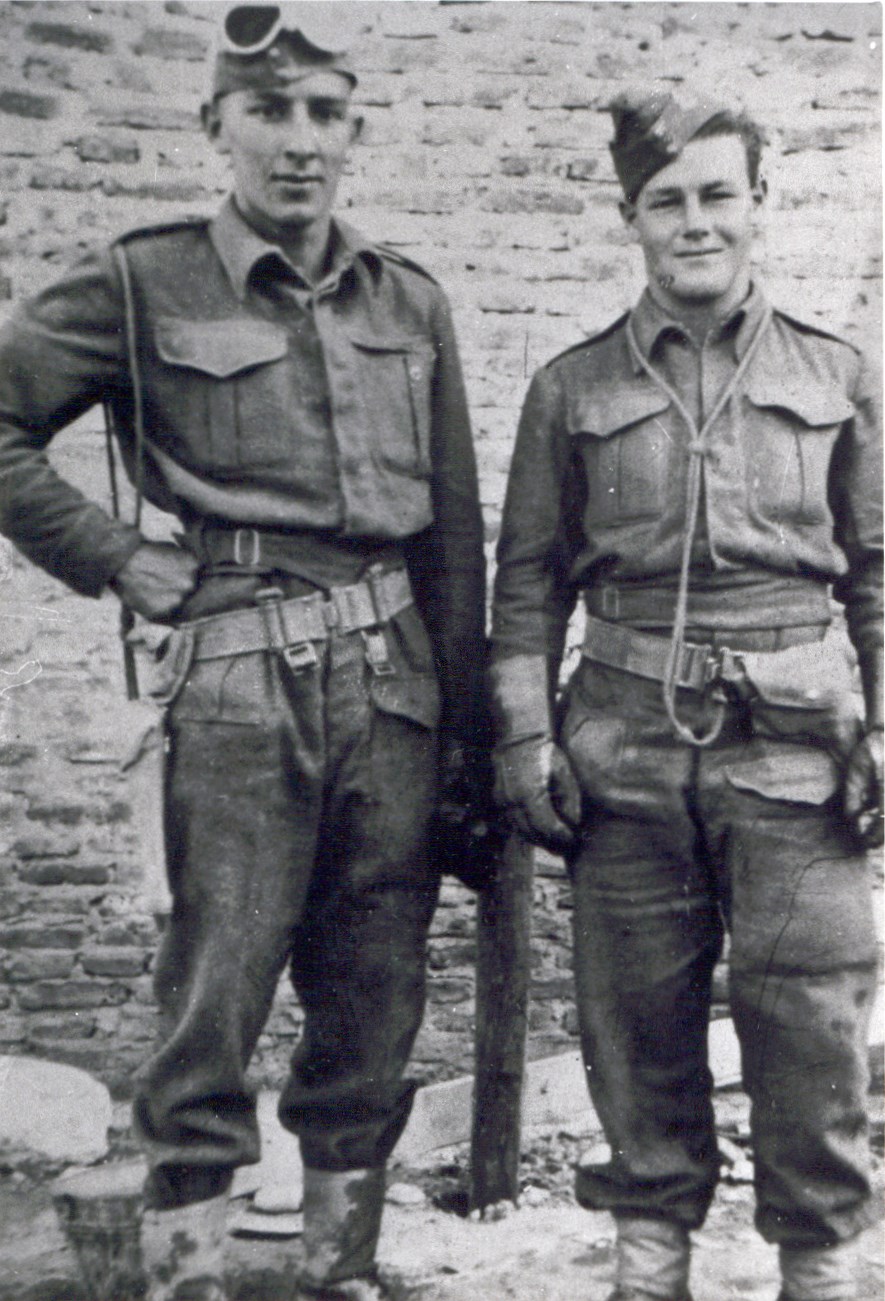
Reg Frandi on the left of photo

Before he fought in the Second World War, my maternal uncle Reginald (Reg) Frandi trained as a fitter and turner at Cable Price. However, he returned from the war with very serious injuries and had to stay in Wellington hospital for quite some time, after which he was transferred to Rotorua for a long period of rehabilitation. He was advised to work out in the open air as he had spent three to four years in the desert during the war which left him with long term adverse effects on his lungs and stomach.

><><><><><><><><><><><><><><><><

Reg Dawn wedding

Reg and Dawn Frandi (20 June 1945)

><><><><><><><><><><><

When he had regained his health and strength, Reg decided he wanted to become a farm cadet and was subsequently placed on a farm which was situated about 30 miles from Gisborne. It was on this farm that he eventually met his future wife, Dawn Marguarite Kelly. They were married on 20 June 1945 after dating for only three months. Subsequently they found work at Tawhareparae, about one and a half hour’s drive from Gisborne. After working there for a short time, they moved to Whatatutu, roughly two hours drive from Gisborne. At that time, the roads were all unsealed so they had to have a safe, reliable car.

><><><><><><><

Reg Frandi

Reg really enjoyed farming and eventually he was sent to Wanganui River to work for the Maori Affairs Department. This was a great challenge for him because he had to clear and break in the allocated land, to make it suitable   for sustainable farming. There was no reticulated hot water, so it had to be heated on a wood stove. He was a good rugby player and was adopted by local Maori as one of their own. In fact his whole family was very highly respected in the area. After about ten years, Reg and Dawn decided to move with their children back to Gisborne to live where Reg had a complete change of employment.

>><><>><><><><><><>

Friends of the couple had opened up a quarry in Patutahi and Reg agreed to work for them. He was a very clever and able man who could turn his hand to anything and according to his daughter, Michelle, he was busy almost daily   fixing and repairing this or that. During his years working at the quarry he was to prove to his family time and again just how strong he was in dealing with severe pain. He suffered many injuries such as being crushed by rocks, breaking his jaw and eye socket and even losing some teeth!  When he lost fingers in a crusher, he went home to Dawn and asked her to bandage his hand. On another occasion when he suffered severe injuries, he was admitted to hospital for four days and hated every minute of it.

Michelle relates the story about the time her father complained that he couldn’t get his boot off. They took him to the doctor and it transpired that his foot was broken and had to be encased in plaster; he had been walking around on it for three weeks! Reg then insisted on being fitted for a walking boot so he could get back to work! It’s reminiscent to me of Colin ‘Pinetree’ Meads who played a rugby test match for the All Blacks with a broken arm! They certainly built them tough in those days on the North Island of New Zealand.

Reg and Dawn built a house down the road from the quarry where Reg established a huge vegetable garden with “every vegetable you can imagine” thriving there. Michelle recalls that they all had to help in the planting of potatoes and then when they were ready, help to dig and pick them up. She says that as children they weren’t too happy about it, but upon reflection, they were good times for the family.

><><><><><><>

Reg & Marguerite

Reg and Marguarite

><><>>>>><>>><>

Apparently Reg was a great reader who once a month drove the whole family into town to visit the library, and afterwards out to dinner. He would take out five to ten books and read them all within a matter of days. He insisted that everyone choose books to take home because he wanted them to learn as much as he had from books. Reg didn’t earn much money, so they couldn’t afford to buy furniture. Instead, “he spent hours building little things for us, as well as tables, chairs, and beds.”

During summer months he would ask Dawn to pack a picnic dinner to take to the beach so that the family could all go surf casting; all had their own lines.  They would stay until it got too dark to see. Relatives had a holiday house at Ohope Beach, something like three hour’s drive north of Gisborne, where they often holidayed, sometimes for up to four weeks. Reg absolutely loved it there, and spent the time pottering about, fishing and reading. Reg and Dawn  had a very happy and fulfilled marriage, which was sadly cut short when Reg was killed in a quarry accident.

Michelle wrote in her letter that family was very  important to her dad, and it was what had made their lives so special:

He was a wonderful father, always had time for his family, and showed a deep sense of pride in all of us. This seemed strange to me as he had very little contact with his extended family, but I guess he had his reasons. Dad didn’t like lies and he didn’t expect anyone else to lie. He didn’t suffer fools; if he didn’t like someone or something, he would tell you.  My father didn’t drink much alcohol, and if he went out with mates, he always came home sober. He had a sweet tooth, loved chocolate, and when mum stewed fruit for dessert, he always added a lot more sugar.

><><><><><><><><

Marguerite Reg Katrina Dawn Michelle Kelly

L to R: Marguarite, Reg, Katrina, Dawn, Michelle, Kelly

><><><>><>><

Reg helped to build St George’s Anglican church in Patutahi, but tragically he died before he could see it completed. His love of working at the Patutahi Quarry cost him his life. He was crushed to death when a tractor rolled on him.

Dad had the biggest hands; hands of a man who had had to work hard for everything in his life. Though a gentle man in many ways, he did lose his temper occasionally, but he got over it quickly, almost as soon as he had lost it. He taught us children so many great values in life, which in turn has helped us immensely to deal with whatever life might bring. We never wanted for anything when we were growing up. We weren’t spoilt, and learned from dad that nothing in life is free.

Michelle goes on to tell me that it would have broken Reg’s heart if he’d lived to witness the deaths, so early in their lives, of two of his daughters, Marguarite at 51 years and Katrina at 45years. Both Marguarite and Katrina died from cancer. Dawn lived on for another 30 years after Reg died, and never re-married. They had one son, Kelly.

><><><><><>

Keith  18 Michelle  45 Bruce Matthew 14

Keith, Michelle, Bruce and Matthew Downie

Information contained in this Short Life Story was contributed by Reg Frandi’s youngest daughter Michelle Elizabeth Downie, in a letter she wrote to her cousin Anne Frandi-Coory in July 2005. Images: Parkhill Collection.

This page, including text and images, is Copyright To Anne Frandi-Coory
All Rights Reserved 6 August 2015
…………………………………………………..
Excerpts from a letter sent  to Anne Frandi-Coory by Sister Bernadette Mary, Archivist
Home of Compassion, Island Bay Wellington, New Zealand.

February 2002

Dear Anne

In response to your enquiry about the time your mother spent as a novice with the Sisters of Compassion, the following is what I have found in the Convent’s Register:

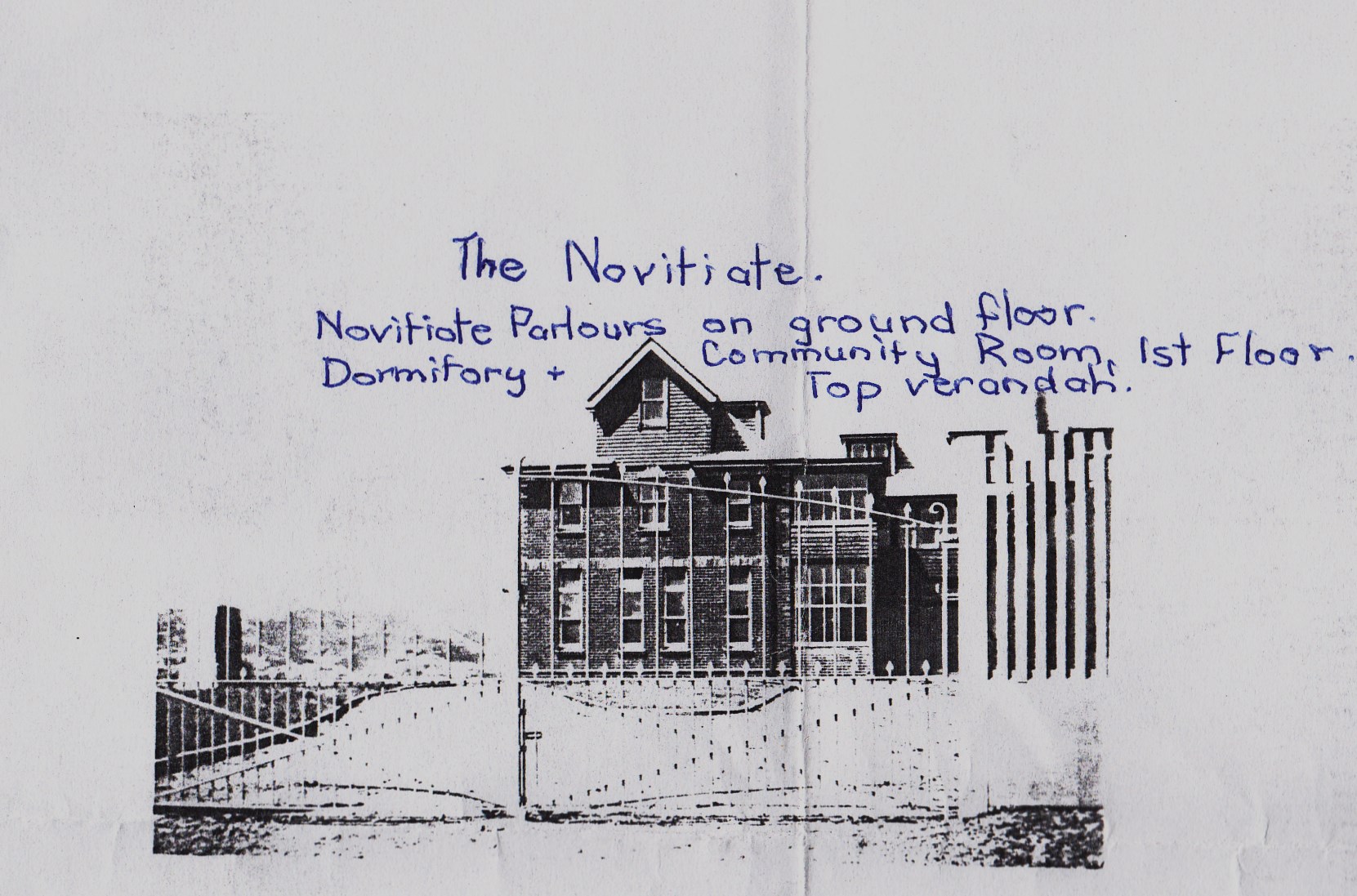
Your mother was 19 years old when she entered the Convent at Island Bay on the 7th December 1939 as a postulant. This is a kind of probationary period to find out whether or not a person is suited to the religious life. There was a separate wing set out as the Novitiate in the red brick building which had been built in the early 1930s, and was where all the novices were trained.

><><><><><

Novitiate Home of Compassion

Sisters of Compassion Convent (Image and text Sister Bernadette Mary)

><><><><><><>

A note made four months later, in April 1940, reveals that the Novice Mistress found Doreen to be a very highly strung person, but her manner was always pleasant. By July, Doreen always seemed to be worried about her family at home, especially her mother. However, she wanted to become a novice and looked forward to her reception into the Novitiate, the next stage of training to be a Sister of Compassion.

In July Doreen had to write to the Superior General asking to be admitted into the Novitiate, and giving her reasons for wanting to do so; that is the usual procedure. Apparently she was formally accepted, for on 15th  September  1940 she was received as a novice, together with four other young women. She was given the name Sister Mary Martina.

><><>><><>

Home of Compassion

Postulants wore a black dress, cape and hat, Novices in white veils as on the front left of photo.  Sisters’ habits were navy blue with  light blue piping. (Image: Sister Bernadette Mary)

><><><><><

We all had to go through the same kind of training that Doreen would have had during her postulancy and Novitiate days, and although looking back, things were hard, we were never unhappy or abused in any way. Most of the time we were kept very busy indeed, either working in the laundry or caring for the babies and children, which didn’t give us much free time for idleness, I can tell you from experience.

>><><><><

Original Home of Compassion

(Image and text: Sister Bernadette Mary)

><><><><><><

At the age of twenty Doreen requested to go home and subsequently left the Convent on 16th November 1940. There are no further comments in the Register. Any medical records were returned to Doreen when she left and there is no record of her being sick or having a nervous breakdown during her eleven months at the Convent.

I believe that Doreen often came to visit the Sisters after she had left the Sisters of Compassion. She rode out to the Convent on her bicycle which she had named ‘Martina’.

Yours Sincerely

Sister Bernadette Mary

><><><><><><><

Doreen & friend

Anne Frandi-Coory’s mother Doreen on right of photo (Image: Parkhill Collection)

><><><

The old Home of Compassion and Convent were demolished in the 1980s.

Read More: Letters To Anne Frandi-Coory

This page, including text and images are copyright to Anne Frandi-Coory 2 August 2015 All Rights Reserved 

…………………………………………………………………………………………………………………………………………………………………………………..

Italia Frandi’s Daughter, Elvira Corich Pengelly, Reminisces  About Her Life Within The Extended Frandi Family. 

Pam Frandi Parkhill, Francesco Frandi’s grand-daughter,  was a great friend to Elvira Corich Pengelly, who was Italia Frandi’s daughter. Pam thought it essential to record these memories on tape as a valuable resource of Frandi Family history.  The story telling took place in the lounge of Elvira’s home at 54 Weld Street, Wellington, not long before she died in 1996.  Anne Frandi-Coory transcribed the interview from the tape recording in September 2005.

><><>><><><><

Copy of IMG_0513

Pam Frandi Parkhill, Tony Pengelly, Elvira’s son, with Anne Frandi-Coory 2005

[Elvira is sometimes referred to as ‘Vera’, and her uncle Francesco as ‘Frank’ in the recording.  Francesco Frandi is Alfredo’s oldest brother. Francesco’s wife, Assunta, ran off with a neighbour and left him with four young children, including William who was Pam Frandi Parkhill’s father.]

Elvira Begins by Talking About Her First Cousin Amelia Frandi.

Francesco’s  only surviving daughter, Amelia, called Millie by her family,  was twelve years older than Elvira.  Elvira’s  mother Italia   included Amelia in many outings with her own daughter.   But Amelia was an embarrassment to Italia in many ways.  Elvira was always well groomed and dressed beautifully, as shown in the many photos of her, while Amelia always appeared unkempt.  Amelia loved food and although there was always plenty to eat, she frequently “stole food and hid it under her bed, and” Elvira went on,  “Amelia wasn’t to be trusted when you took her visiting.”    This was because after their visits “things would be missing from the house.”

In 1913, when Amelia  was 23 years old, she gave birth to a son out of wedlock, Kenneth Maxwell Frandi.  His father’s name was not recorded on any documents.  Kenneth died when he was three years old as the result of recurrent erysipelas (Fever and deep red inflammation of the skin)  toxaemia over  three months.  On 27 July 1917,  Amelia gave birth to another son, Maxwell Lawrence,  who, it is believed,  was later  adopted by  Cecil Taylor, the man Amelia would  eventually marry in 1922.  Elvira describes Cecil as “a first class boozer” although Amelia didn’t drink alcohol as far as she knew.   Maxwell was re-named Albert Taylor, and  their daughter Jean was born in 1925.  Before she was married, Amelia worked for the Richard Seddon household as a house maid.

Francesco, the Pierotti and Russo Families

Francesco’s  wife Assunta Pierotti left him with 9 year old Amelia, and three young sons, the youngest,  4 year old William, after they had been married for 11 years.  They had two other daughters who died in infancy.   Read: Francesco Garibaldi Frandi and Assunta Mary Pierotti.   Assunta  moved in with Charles Barnett in Whiteman’s Valley, Hutt Valley in Wellington, and they  subsequently  moved to Tasmania after the birth of their 11 children there.  Two more children were born to them in Tasmania.  They never married as Francesco and Assunta were both Roman Catholics and could not divorce. Assunta and Charles Barnett’s children did not know their parents  were unmarried, nor did they know that Assunta had left behind four children  and a husband until after Assunta had died.

Francesco’s parents, his sister Italia and his sister-in-law, Italia Pierotti Russo (auntie Kate) helped raise his four children after Assunta’s departure.   Italia Pierotti married Bartolomeo (Bartolo) Russo, who emigrated from Stromboli Italy, and the Russo family bought property at  Rona Bay in Wellington.   As Elvira explains, “it is situated between Days Bay and Muratai,  which was quite classy even then, and Rona Bay was  often called Russo Bay because of the influence the Russo family had in the area”.  Elvira remembers her mother quite often taking her over to the Russo’s, usually on a Sunday.  They were very friendly people and had many visitors.  She recalls that Rona Bay was just a “big beach” in those days, and quite undeveloped, but there was a ferry travelling around the bays.   Elvira’s son Tony Pengelly, elaborates, and tells us that he clearly remembers the trips to Rona Bay with his  mother and grandmother Italia  on the ferry called  Cobar.

Italia Pierotti Russo (auntie Kate) and her parents

Italia Russo’s parents Cesare and Luisa Pierotti embarked from Livorno to New Zealand when she was two years old.  She and Bartolo  lived in “a huge white house with a verandah all the way around it, which all the children used to play on and run around and at times the noise was deafening” recalls Elvira.  All the while “auntie Kate would be working like a slave cooking lovely meals, and she also looked after the garden, which was beautiful, with vegetables and flowers”, remembers Elvira with admiration.  When visitors were about to leave “auntie Kate would load them up with grapes and tomatoes, she had a big heart.”  “It was such a happy place,  and I loved going there”, reminisced Elvira, “because there was music; mandolin, banjo and wind instruments, and I liked playing with auntie Kate’s son Miro who was just a bit younger than me.”

Italia and Bartolo had four other children; Rita who was closer in age  to Elvira’s sister Helena, Caterina, Bartolo and Cesare.  Eventually “the sons moved to a stud farm in Cambridge”.  Some of the family also lived in Tinakori Road for a time, an area where other ethnic groups lived.

The Makara Farm in Karori

Frandi farm at Makara Wgtn

Makara Farm Front row L t R: Aristodemo, Amelia and Helena sitting on front step, Annunziata, Menotte standing beside her, Antonio and Yolande standing in front doorway, Italia seated in front of them.

><><><><><><>

Another favourite place Elvira loved to visit was the farm at Makara on the outskirts of Wellington,  which the Frandi family owned.  It was such a treat for her and there was a girl her age about a mile away who she often played with.  She and her mother and other relatives would often walk down to the beach which was “a horrible beach really, full of rocks and stones” but it was nice to be so close to the sea.  Often when her mother was too busy to go, Francesco and his  son William, would take her out to the farm.  “My mother used to feel so guilty because she did not always have time to take me out there.   We would go out to the farm on Friday night and return to the city at 7am Monday morning  after the men had done the milk run on the horse and cart.”  There is laughter in Elvira’s voice as she relates the story of the farm horse.  “The men would drive the horse and cart to the city to pick us up, and the horse would know where to go, because the men would be so tired after a long day on the farm, that they would nod off, but the horse just kept going until it came to the Makara farm gate, and then stop”.  More giggles.  “The horse always whinnied when it got to the gate, so the men would wake up and jump down to open the farm gates.”

><><><><>

Milk truck

Milk Cart

Then Elvira remembers, with another  chuckle, something else about the horse.   “Granny Frandi (Annunziata) would have all the windows open – and when she baked she would put the scones or the rice buns on the sill to cool.  But of course that horse could smell the baking, and steal the food, while granny was busy elsewhere.  Then suddenly we could all  hear granny shouting ‘that bloody horse!’ at the top of her voice”.

Elvira describes the farmhouse layout.  “At the back of the house, there was a huge vegetable garden,  and [from there] you would walk into a kind of shed where water was boiled in a big copper  and the water [pipes] was attached to the back of the open fire and coal range”.  This shed was where everyone left their coats and shoes before entering the farmhouse  kitchen.   The farm workers slept in the hay loft, “but they didn’t put boys and girls together, that wouldn’t have been right”.

Socialising at the Farm.

After milking was over and the evening meal finished, the adults would play cards.  “The house opposite belonged to the Post Mistress and there was an Anglican and a Catholic church further down the road, so everyone was catered for”, Elvira tells us.   Neighbours would  “congregate outside the Post Mistress’ house when they collected their mail or bought something from the attached small shop”.     Evidently, it was  a good meeting place to stand and chat.  Everyone liked to go to the local dance, but William was so shy “he would just stand there and watch everyone else dance”.  “At the dance hall there was a ladies’ dressing room where mothers could look after babies and put them into the little beds at the hall,  and there was beer and tea available”.    “But”, Elvira suddenly recalled, “the men had to put on their milking gear and go to work straight after the dance!”

Amelia’s Three Brothers.

Describing her cousin Menotte as “happy go lucky, although a shingle short”, Elvira adds,  “but he was very fond of my sister Helena”, intimating  this redeemed his shortcomings.    Menotte’s brothers  “Ricciotti  and William  were very reserved and shy  but everyone got along with each other very well on the farm”.  Ricciotti was a “terrible gambler”, and there was a casino not far from where the family lived in Wingfield Street, “but he was very hard to get to know”.  The extended Frandi family and their friends “loved going to the farm because it was such a happy place”, says Elvira dreamily, “and there used to be singalongs most nights, although everyone usually went to bed very early because the men had to get up about 5am to milk the cows and do the milk run”.  Life at the farm was based on  “a lot of friendships where there was an old record player, you know with the  huge sound trumpet, and the women did embroidery, mending and made cushions.  Granny Frandi was great at mending clothes, she was very, very neat.  There was always a lot of laughter”,  cackles Elvira as she relates those warm, happy times, “and  although Francesco was very quiet he liked company, and there were a lot of sing songs”.   Elvira illustrates, “Uncle Enrico played the clarinet,  Uncle Antonio the trombone and the trumpet, while uncle Ateo played the piano.  Uncle Alfred liked to sing and play the fool!     There is a photo somewhere of uncle Antonio taken at the front door of the farmhouse”   continues Elvira, “where there were two bedrooms there  at the front, two more further down the hall and then a double bedroom which was grandpa and granny’s.  Then you walked into a big room which was the dining  and sitting room combined, and the kitchen was off that”, she finishes.

Elvira, Italia and the Convent.

Italia & Vera

Italia and and her daughter Elvira

><><><><><><><

Elvira once again turns the conversation back to her beloved mother, Italia.  “We were forbidden, as children, to play outside in the street [Wingfield Street, Wellington] but my mother was quite happy for us to play on the huge lawn in the front of the house. She was very kind and my friends were often invited over for treats.  One  day my playmates  were overheard by my mother to say that ‘Vera will get the strap’, and my mother questioned the girl as to why.  My playmate then explained to my mother that on Monday mornings at school the Mother Superior would ask at assembly for those who did not attend Sunday School to raise their hands.  And those who raised their hands got six  straps on the hand which really hurt.  After a couple of times I did not raise my hand any longer, to avoid the strap”.  Elvira says her mother was furious and felt that the convent school was turning her daughter into a liar.  “So”, Elvira carries on, “my mother goes to the convent and says to the Mother Superior, ‘I am Elvira’s mum, is it true that if the girls do not go to Sunday School, they get the strap?’  ‘Yes’,  replied the nun, ‘that is our ruling’.  My mother next explains to the austere nun  ‘I can rarely go out, and the weekend is the only chance my daughter gets to go out to the Makara farm’.  Then my  mother lectures, ‘I think that you should check with each family about what their situation is – you are just encouraging my daughter to lie so she wont get the strap!’ So my mother removed me to a State School”, Elvira tells me with unconcealed pride.   “But my mother did send me back to the convent years later to learn music”,  she adds quickly.

Elvira Growing Up.

Elvira talks of her teenage years which she describes as “good”.  “Cabaret had just started and I had nice things to wear, because mother was more affluent then, she even had a cigarette holder!  These were the days of the Charleston;  good times for me, and life started for me when I was 17 or 18 years old”.  Then she speaks lovingly of Italia again, “The  good things about me were all because of my mother’s upbringing, she was strict but very kind”.   And obviously very talented and a good business woman.   Italia was an accomplished dressmaker and clothes designer, and Elvira says her mother worked long hours, as she was a widow with no other means of support.  “My mother was a great dressmaker and had many clients, who would call on her with descriptions of clothes they had seen at DIC and Kirkcaldies”,  Elvira continues, the pride and love for her mother evident in her voice.  “So she would walk to those stores and look at the respective garments and go home and copy them”.   Italia had a tailor’s table upon which she cut out all the patterns and fabrics,  and Elvira often heard her mother tell her clients, “on the funny phone we had”, ‘please do call in and if you like what I have done I’ll make it for you in the fabric of your choice’.   She was a great dressmaker.”

Shops in the City

16 Murphy St Fernglen

‘FERNGLEN’ 16 Murphy Street, Wellington, where Francesco and his sister Italia lived and ran a boarding house

><><><><><><><><><><><><><><><><><><><><

Elvira then discusses the shops in the vicinity of 20  Wingfield Street where the family lived before moving to 16 Murphy Street, which was  a boarding house as well.  The other streets are “Molesworth, Hill and Aitken Streets”,  The shops include a “shoe repair, Prestons Butchers, horse and cart yard, and a big house with a very long verandah”.  On the corner of Wingfield Street there was a Chinese shop with accommodation.  “Our house had three steps up to the entrance, all the houses seemed to have three steps up to the doors”, noted Elvira as an aside.  “In those days the Chinese had pigtails and they wore black caps, and kids would always try to pull their pigtails or else pull their caps off.  They used to get angry and chase the kids with a knife, awful choppers they were”.  This evokes memories of her dear sister Helena who was 14 years older than she.    Even though most of the memories were happy ones for Elvira, there is obvious poignancy  in her voice when she speaks  of Helena, who died at the age of 30.  The large age difference meant that Helena would have been like a second mother to Elvira, who was sixteen when her sister died and it would have had quite an effect on her young life.  Elvira elicits  that the Chinese  “thought the world of Helena”.

><><><><>

Elvira & Helena Italia's girls

Elvira and Helena in beautiful costumes made by their mother, Italia

><><><><><<

The Neighbourhood

Elvira’s tone picks up again.  “There was a small cake shop, then a wood and coal yard.  Oh, and a fish shop and the grocer’s store.  Opposite was the Prime Minister’s residence [Pipitea St] and the Post Office, and then along further there was the drapers and grocer’s shop combined, they had half of the shop each.   And then there was the driveway and the baker’s shop, with a lane [Collina Tce]  beside it”.  The family was surrounded by all the suppliers they needed.  Elvira then remembered that there was another Street next to the lane called “Hawkestone Street where there was a pub called the Shamrock which also had accommodation and I liked to go into the greengrocer’s shop. There were also lots of shops around Molesworth Street  and a side street led to Tinakori Road which was very primitive, but it was all very friendly.  My mother used to let me buy sixpence worth of broken biscuits as a treat, but she would say ‘now don’t eat the chocolate ones, Elvira’ ”

Doreen’s Life Within Her Family

Frandi girls

Anne Frandi-Coory’s mother, Doreen with her younger sisters Joyce and Betty (photo: Karen Albert)

Italia always felt sorry for her niece Doreen as “she had a pretty hard childhood”, Italia had one day told Elvira.   “She was the eldest girl and was responsible for helping around the house and caring for the three younger  girls, Joyce, Betty and then Anne”  and it was evident that Doreen was very attached to Italia.  Anne, her youngest sister,   also has stories to tell about the hardships of Doreen’s life, and the  heartbreaking  events  she was a witness to.    Although there were 16 years difference in their ages, Doreen and Anne were very close.  Doreen’s son Kevin was also a part of the many  sad times in her life and speaks eloquently of them.  It is attested to by several members of the family, that Doreen’s mother Maria, or Millie as she was known within the family, was a morose woman in looks and in nature, and there are very few photos of her looking happy.  Doreen reminded Tony very much of her mother Maria, in her features  and demeanor; fragile and anxious.

Anne with Freddy and Reggie

Doreen’s youngest sister, Anne Frandi Albert (photo: Karen Albert)

 ><><><><><><><><

Elvira’s First Wedding

Elvira spends some time talking about her first marriage to William (Bill) Meban, whose photos show a very handsome man, with dark swarthy looks.   “We were engaged after only knowing each other for three months”, she explains, with mirth in her voice.  “My mother and both families had set a date, but Bill didn’t want to wait for that date, he wanted to get married straight away”.    Pam states, “your mother didn’t get a chance to make the wedding dress”.   “Well, yes and no”  replies Elvira, and then she tells us that she and Bill decide that  they will get married on a week night and plan for their secret event meticulously.  “Bill was an engineer on the Ripple,  a New Zealand Coastal ship, and we knew it had to be that particular week or we would have to wait for his next trip home”.  Elvira then explains the hectic timetable they had devised for themselves.  “I had a singing lesson that afternoon at the convent, which would explain why I was dressed to go out, and it was my chore to prepare the dinner that night, so I bought something quick to cook.  Bill  would be at our place for dinner, so we  could head down to the Registry Office as soon as dinner was finished.”   Elvira then says with girlish giggle, “I made a dessert for tea,  it was huge – to last two or three days I told everyone”, but in reality it was to be for their wedding breakfast.  “We left separately, and then met up at the Registry Office, and we had  two witnesses, Edith Brown and the ship’s Chief Engineer.  As we prepared for the ceremony, Bill suddenly exclaimed, ‘Vera, look at your frock!’ and I looked down to see blood had dripped onto it from the quick steak meal” she laughs.   “I had borrowed that dress from Uncle Alfred’s wife Maria”, Elvira tells us.  It is unclear  whether Auntie Maria was in on the secret wedding plans.

Time To Own Up

So Elvira and Bill were married in secret, but their consciences soon got the better of them;   “My mother didn’t deserve this treatment”, they had reasoned, “and we were worried someone might notice the ring.  On his next trip home, we were sitting at the dinner table, all chatty and bright, when uncle Frank observed, smiling,  ‘We’re a very jolly family tonight’ and looking over at family friend Skipper Bates, he asked, ‘have you been drinking Bates?’”  Things started to get out of hand, their guilt consuming them, and after six weeks of subterfuge,  Bill insisted to Elvira, “you have to tell your mother!”  Elvira’s cackle filters through the noisy tape as she says “The marriage hadn’t even been consummated, even then.”   Italia took the news well, although surprised and worried, “You wont be well received in Napier”, she cautioned.  “Of course, mother was right, and Bill’s mother was furious!”  and a more serious Elvira continues, “She called me a slut and asked Bill when the baby was due, to which he replied  ‘there is no baby’”.  Elvira and Bill agree to a second wedding ceremony in 1923 at Old St Paul’s Church down the road from  Wingfield Street,  ”because Mrs Meban performed so much.”  Elvira’s  father had died when she was four years old, so  Francesco gave her away.   But Elvira goes on to say  that things were “never really reconciled with the Meban family”. She enlightens us further,   “Bill’s father was a shoemaker and his brother was a sheep farmer in Napier”

Elvira Bill Meban

Bill and Elvira Meban Wedding

><><><><><><><>
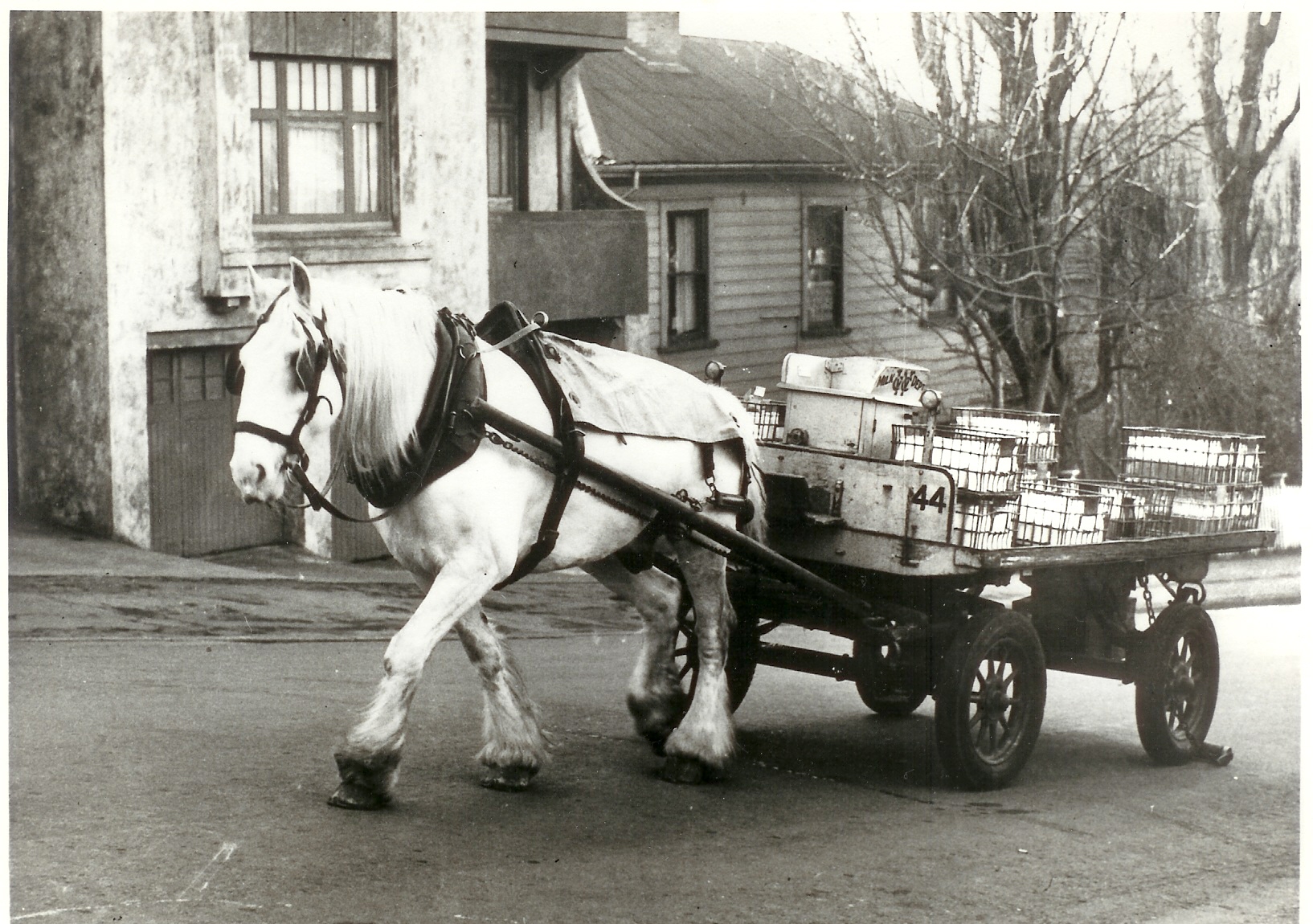
What might have been

Elvira confides that she and Bill had often discussed having children and what faith they might bring the children up in.   And what church would they marry in?   “Well we got married in an Anglican Church, my mother was a Roman Catholic and Bill was a Presbyterian”.  However, Italia was relatively unconcerned, counselling her daughter that  “God means you to be happy, so you decide, it’s up to you”.

Elvira’s Loss

Tragedy was about to strike the young couple.   You could sense the sadness as the details of the tragedy slowly emerge;  “I remember there was a severe storm that night [1924].  Oh there were often bad storms, but this was worse than the others.   I got up in the morning after a sleepless night, and on the way to the bathroom, I could hear my mother talking to a lady,  ‘You had a busy night last night, with the phone ringing constantly’”.    Elvira recalls that the lady had  replied  “Get a good breakfast into Vera, the ship was wrecked with all lives lost in that  terrible storm.”   The news was absolutely devastating for Elvira.  “Bill was in the engine room – not a hope of getting out, and Bill had always told me that the ship was a death trap.   And the strange thing was, the Chief Engineer  died in the night, the same hour as Bill died in the shipwreck, but he was in hospital with peritonitis,”  she finishes quietly, obviously the memory is still painful for her after so many years have passed, and she changes the subject.

By all accounts, Elvira never really got over the heartbreaking loss of her first love, Bill.   But Elvira was no stranger to tragedy, and neither was her mother. They lost a father and husband, Pietro Corich in 1906, a much loved  sister and daughter, Helena, in the 1918 ‘flu epidemic, and the child Helena was carrying. Italia also had to deal with the death of one of her favourite brothers, Ateo, in WW1 at Gallipoli.

Elvira married her second husband Melville Pengelly in 1931.  She died 7 May 1996 and is survived by her only son Anthony John Pengelly.

Postscript:

Thank you to Pam Frandi Parkhill and Tony Pengelly for their contribution to this piece of Frandi Family history.

***This page is copyright to author Anne Frandi-Coory. No text or photograph can be copied or downloaded from this page without the written permission of Anne Frandi-Coory.***

><><><

Francesco Frandi and Assunta Pierotti were married in December 1888 when Assunta was pregnant with their first child, Bella Italia Rosina Satina  who was born 13 July 1889.  Bella died on 20 February 1890 from exhaustion after a severe bout of diarrhea and vomiting. Assunta was about four months pregnant at the time with their second daughter, Amelia Fatima Elena.

The couple then had two sons, Menotte Garibaldi and Ricciotti Orlando.  A third daughter Olivia Stella died shortly after her birth on 11 February 1894. Their last child, William Donald, was only about  four years old when Assunta left and moved in with Charles Barnett.

Assunta’s sister Italia (Kate) Colorinda Pierotti married Bartolomeo Russo whose parents were Domenico and Josephine Castellano Russo. Kate also suffered tragedy; she gave birth to a set of twins who died in infancy.  Kate and Italia Frandi, Francesco’s sister, helped to rear Francesco’s four surviving children. Nevertheless, the four children, and Amelia especially, had a difficult early life, which I document fully in my book Whatever Happened To Ishtar?

Cesare and Luisa Armita Pierotti were Assunta and Kate’s parents.  Cesare’s gravestone bears the inscription, “He fought for the independence of Italy in 1860”. Both are buried in Karori cemetery.

Charles and Assunta eventually left Wellington for Tasmania after the birth of 11 children.  Another two children were born in Tasmania, where
Assunta was the business manager of the successful partnership – Charles could not read as he only attended school for a day. Assunta read the newspapers to him. They owned a boat building company; Charles built a yacht, and they had shares in a timber mill and a hotel. He also built eight houses.

Francesco never agreed to divorce Assunta, so she and Charles Barnett were never married. One day while Assunta’s grand daughter was brushing her hair she suggested to Assunta that she should make a will. Assunta replied that “it would be a bit difficult”. When she died there was no will and the family discovered in disbelief that their mother wasn’t married to their father and then they discovered photos of her four children to Francesco that she had abandoned in New Zealand. The family just didn’t want to believe that their dear mother could abandon her children! Kate and Assunta corresponded regularly and Kate kept her sister fully informed about the children’s lives.  Amelia, one of those four children, contested probate and she and her three brothers received a settlement which was confidential. Marcus, Assunta’s son, helped his father, Charles Barnett, to fight the claims from New Zealand.

Assunta buried money as she did not trust banks-neither did her mother Luisa or sister Italia (Kate). When Luisa died money was found stored in bamboo curtains, a large suitcase and pillows. She often tied money around her legs.

Assunta Pierotti

Assunta Mary Pierotti Frandi

Francesco Frandi

Francesco Garibaldi Frandi

Frandi farm close up

The Frandi farm at Makara, Karori, in Wellington where the extended Frandi family enjoyed some happy days. L to R Aristodemo Frandi, Francesco’s daughter Amelia and Italia’s daughter Helena seated on step, Annunziata, with Menotte standing beside her. Antonio and Yolande are standing in doorway, Italia seated in front of them.

><><><><><><><><><>

Menotte & William Frandi

Two of Francesco and Assunta’s sons Ricciotti and William Frandi

><><>>>><>><><><><><><><><><><><><><>><><><><><><><><><><><><><>

When Assunta left Francesco for Charles, the couple remained in Wellington for some years until they moved to Tasmania. One of the reasons Francesco’s son William moved to Waimate after he was married, was because (according to William’s son Bryan), of the continued embarrassment  William felt about his mother’s abandonment of her first four children and her affair with another man. In those days, Wellington was a small town, and Charles and Assunta originally lived together not far from where Francesco and his children lived. William remained a very shy man who hardly spoke. Bryan told me that when he was a child, he rarely heard his father speak, and as a consequence he didn’t utter a word either.

Assunta Pierotti Frandi 2nd family (Barnett)

Charles Barnett and Assunta with their thirteen children in Scottsdale, Tasmania 1913  (Photo: A Lockwood)

<><><>

LIFE IN TASMANIA

Assunta and Charles Barnett eventually left Wellington New Zealand for Tasmania on 10 December 1910, after the birth of 11 of their children. Another two children were born in Tasmania. The Barnett family had owned land in ‘White Man’s Valley’ near Wellington but had sold most of the farm when they decided to move  to North Eastern Tasmania.

The Barnett family eventually became closely associated with the development of Bridport for the following seventy years after their arrival in Tasmania. Initially the family lived in Scottsdale for two years after which time they purchased one thousand acres in the Cuckoo Valley area. They cleared the land and bought livestock for their new farm.

When the Forester Mill was being established, Charles helped install some of the machinery and lay the railway track to the mill. The tramway extended  from Mt Horror to Bridport from where the timber was shipped. After five years working in the Mt Horror timber industry, Charles built a boarding house, now the town’s hotel. In 1929 he built more rooms onto the boarding house and later built eight houses. Charles built the first store in Bridport.

When the First World War broke out in 1914, the couple’s oldest son George enlisted and took part in the landings at Gallipoli.  In a twist of irony, Francesco Frandi’s three sons Menotte, Ricciotti and William, also enlisted.

In 1912, Charles purchased one of the blocks offered for sale in the then new part of Bridport, near the Timber and Tramway Company’s jetty.  On this he built a substantial family home. Charles was also credited with starting the town’s fishing industry in 1915 and he also played a large role in the establishment of Bridport’s holiday ‘Canvas Town’.  Today, the Barnett family remains closely linked with the fishing industry and descendants own and run a well known restaurant there.

><><><><><><><><>

See Family Tree at bottom of this page……

Charles Barnett & Assunta

Charles Barnett and Assunta Pierotti Frandi at their home in Bridport

><><><><><

ASSUNTA MARY PIEROTTI FRANDI

1-Assunta Mary Pierotti FRANDI b. 15 May 1872, Leghorn Italy, d. 20 Apr 1949, Tasmania
+Francesco Garibaldi FRANDI b. 10 Jan 1866, Lugano, d. 20 Jul 1929, Wellington Hospital
2-Bella Italia Rosina Satina FRANDI b. 13 Jul 1889, Tasman Street Wellington, d. 20 Feb 1890, Tasman Street
2-Amelia Fatima Elena FRANDI b. 31 Jul 1890, Wellington, d. 2 Nov 1967
2-Menotte Garibaldi FRANDI b. 6 Sep 1891, Wellington, d. 5 Apr 1947, Silverstream Hospital Wellington
2-Ricciotti Orlando FRANDI b. 2 Nov 1892, Wellington, d. 18 Jan 1952, 49 Devon St Wellington
2-Olivia Stella FRANDI b. 11 Feb 1894, Wellington, d. 1894
2-William Donald FRANDI b. 28 Apr 1895, Wellington, d. 29 Jul 1971, Post Office At Waimate
+Charles Thomas BARNETT b. 13 Dec 1872, Brighton, Victoria, d. 13 Aug 1963, Tasmania
2-George BARNETT b. 7 Mar 1896, Wellington, d. 23 Apr 1972
2-Rose FRANDI b. 18 Jun 1897, Wellington, d. 18 Jan 1994
2-Marcus BARNETT b. 10 Oct 1898, Wellington, d. 20 Dec 1953
2-Eli BARNETT b. 7 Jan 1900, Wellington, d. 1953
2-Charles BARNETT b. 28 Aug 1901, Wellington, d. 1956
2-Violet (Jo) BARNETT b. 3 Mar 1903, Wellington
2-Remus (Bully) BARNETT b. 20 Mar 1904, Wellington, d. 18 Dec 1971
2-Totara BARNETT b. 20 Mar 1904, Wellington
2-Avena BARNETT b. 29 Apr 1906, Wellington
2-William BARNETT b. 27 Nov 1907, Wellington, d. 29 May 1984
2-Albert (Ab) BARNETT b. 6 Jun 1909, Wellington, d. 6 Feb 1980
2-Miro (Midge) BARNETT b. 27 May 1911, Tasmania, d. 14 Mar 1971
2-Gertrude BARNETT b. 31 Jan 1913, Tasmania

CESARE AND LUISA ARMITA PIEROTTI

1-Cesare PIEROTTI b. 1842, Leghorn Italy, d. 15 Oct 1918, Wellington
+Luisa Armita PIEROTTI b. 1853, Italy, d. 12 Dec 1929, Wellington
2-Italia (Kate) Colorinda Pierotti RUSSO
2-Assunta Mary Pierotti FRANDI b. 15 May 1872, Leghorn Italy, d. 20 Apr 1949, Tasmania