Archive

Tag Archives: Anne Frandi-Coory

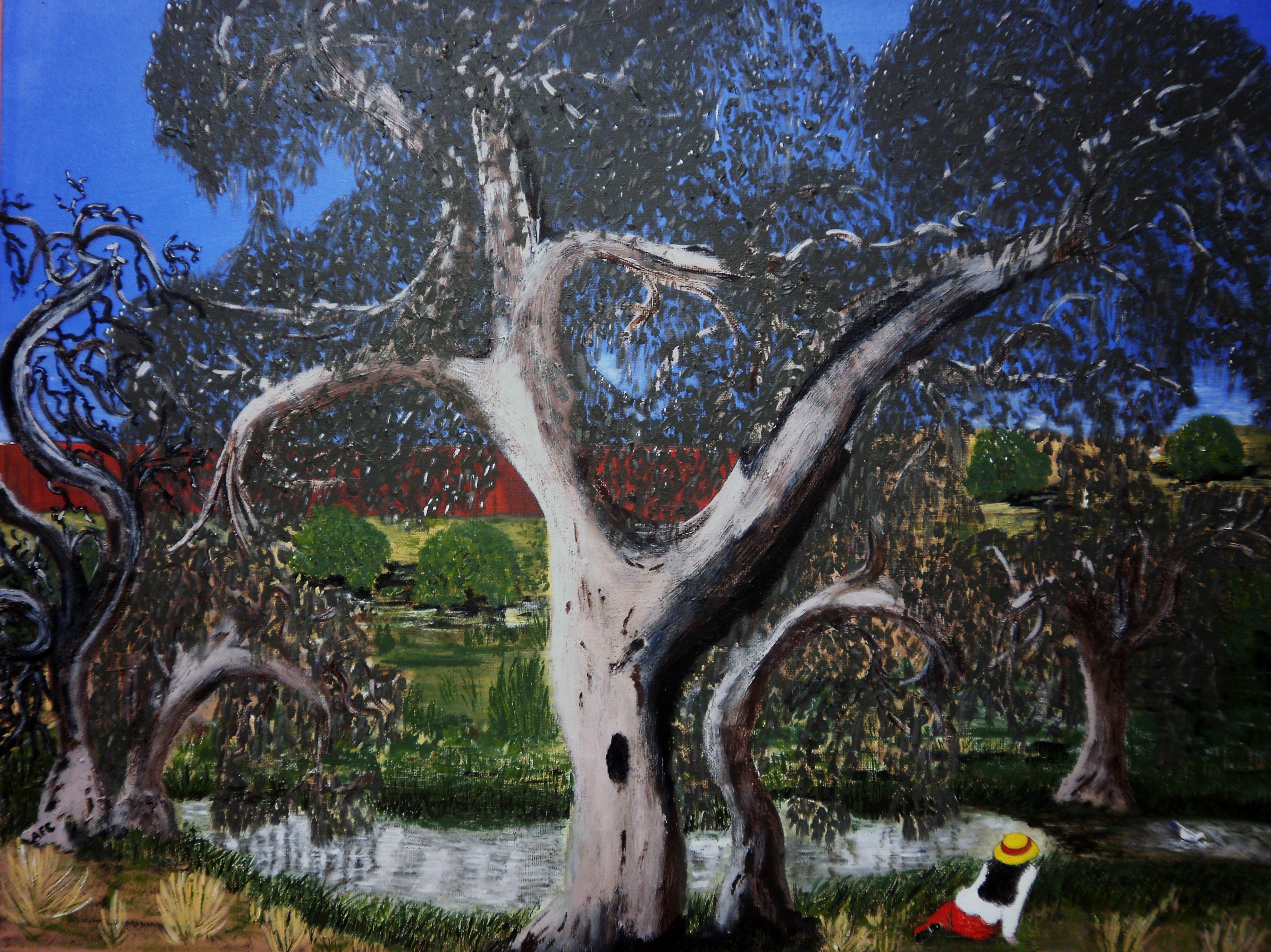
River Of Life 006

*******

THE MUSE OF TERRA AUSTRALIS RIVERINA

*****

Poem  The Muse Of Terra Australis Riverina Copyright To Anne Frandi-Coory  – All Rights Reserved 14 July 2015

Painting River of Life by Anne Frandi-Coory’s brother Bruce McKenzie, who was adopted out at birth.   100cm x 80cm  oil on canvas

**********************

I saw you, a darkened sea

your waters alive and shimmering

yes you, Murray Darling and your

greatest friend, Murrumbidgee

snaking and meandering along

anabranches multitudinous

nature’s grasses anchored deep

gathering around a billabong

Read the rest of my poem *The Muse Of Terra Australis Riverina*

here in DRAGONS DESERTS and DREAMS

*Available here at AMAZON in Kindle e book or paperback *

Our Italian Surnames

****************************

This page and its contents, including photographs is Copyright To Anne Frandi-Coory All Rights Reserved 13 July 2015

…..

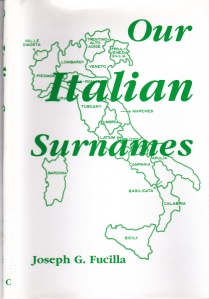
I bought this book to help with my research into the origins of our Italian ancestors’ surnames.

Our Italian Surnames by Dr Joseph G. Fucilla was originally published in 1949 and is still widely regarded as the definitive book on Italian Surnames. Professor Fucilla, who earned a doctorate in Romance Languages (University of Chicago 1928),  has written hundreds of articles and numerous books on Italian, Spanish, and Portuguese linguistics. Onomatology,  the study of the origin and history of proper names and another facet of Dr Fucilla’s vast erudition, was the field out of which emerged Our Italian Surnames.

The information contained in this wonderful book is vast. Many names are derived from animals, occupations, geography, birds, botanica, music and the arts. For the purposes of this post, I am concentrating on the origins of the names Frandi and Greco (later Anglicised to Grego).

****
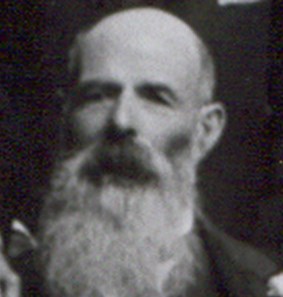
aristodemo-frandi

My maternal great grandfather Aristodemo Giovanni Frandi

********

The Evolution of Italian Surnames

Dr Fucilla writes: A surname or family name may be defined as an identification tag which has legal status and is transmitted by the male members of a family from generation to generation. It is a comparatively recent phenomenon.  It is in Italy perhaps more than any other nation that a person may be identified as a native of a definite section of the country or even of a particular province through his given name. 

Among the Hebrews, only one name used to be employed, but during the Greek and Roman dominations a second temporary name was adopted for individuals, such as Paul of Tarsus, Mary Magdalen (from Magdala). Christianity with its institution of a single baptismal name and the one-name system of the Germanic tribes who were soon to become the masters of Europe, eventually caused the collapse of the whole Roman name system. 

What causes names to be changed over time? Dr Fucilla posits that: These changes can be explained under six headings….

translations, dropping of final vowels, analogical changes, French influences, decompounded and other clipped forms, and phonetic re-spellings. By means of these it will be possible to explain the vast majority of those Italian surnames which we find in Anglicised form.

*********

Aristodemo Giovanni Frandi was born in Pistoia in Tuscany in 1833.  The original ‘Aristodemos’ is a Greco/Roman name. However, the only city in Italy I visited where there were people still living with the name Frandi was in Pisa, where two of Aristodemo’s children,  Ateo and Italia were born. The two men I traced worked for local government in Pisa.

The only historical name I could find that came even close to Frandi is Ferrandy or Ferrandi, which is very common in Italy, especially in the north. However, it does suggest Gallic origins and as was frequent in ancient times, Ferrandy/Ferrandi slowly became Frandi to fit in with other simplified Italian spellings which often end in ‘I’. When speaking to native Italians, they pronounce Frandi as Ferrrrrandi anyway, rolling their rrrs. Conversely, Ferrandi is a very common name in France!

Dr Fucilla studies add more weight to my view that the name Frandi/Ferrandy is a French derivative.  In his chapter headed Topographical Names, he writes: 

We may divide the natural and artificial topographical features that have given rise to Italian surnames …..   among them he lists several mineralogical and agrarian characteristics such as the prefix ferro which is the one we are interested in. This refers to iron (ore) generally but in the agrarian sense it refers specifically to the land and its minerals. We know that as a young man Aristodemo worked on the land as did most of his countrymen. When Aristodemo decided to emigrate with his family to New Zealand in 1875, the very real draw card was the allocation of 10 acres of free land on the West Coast. And later when the family settled in Wellington, their dream was to own a farm, which was eventually fulfilled.

In another chapter under the heading Geographical Names, which are frequently used in Italian surnames, Dr Fucilla  documents the French/Italian name La Fiandra which means ‘from Flanders’ which in parts of its history was ruled by the French. Italians with French connections added ‘La’ to their surnames. Aristodemo called his first born son, Francesco, a derivative of France.  It is possible that Frandi is a compound name of both La Fiandra and Ferrandy/Ferrandi. Dr Fucillo devotes a chapter to such compound names in which place names, nouns, occupations, religious references, and others, were compounded into abbreviated form.

In the mid 19th Century, when Aristodemo was in his 20s, all young men were conscripted into the regular army to protect territory in Northern Italy held at various times in more recent history by the Austrians, Germans, and the French. Most of the men were agricultural workers, and their loss was keenly felt by their families who needed them to tend the land.

Here are excerpts from my book ‘Whatever Happened To Ishtar?’ pages 286-287:

Aristodemo was conscripted into the regular army in 1859, 1865-1866 against the Austrians, at Ancona, a major port city at the base of the Apennines in the Marche region of the strategic East Coast of Italy which faced the Adriatic Sea. Then at Tirolo which is a tiny commune in the province of Bolzano-Bozen in the Italian region of Trentino-Alto-Adige in the far north of Italy, between Austria and Switzerland.

Aristodemo returned to Pisa to prepare for his marriage to Annunziata Gustina Fabbrucci in 1863. A year later the couple travelled north where Aristodemo was barracked with the regular army while Annunziata lived a few miles away in an Italian conclave.  It was during this conscription period that Annunziata gave birth to their first child Francesco, in 1866 at Lake Lugano.  Eventually, Aristodemo left the armed forces and worked for the fledgling Italian railways laying tracks, the best chance for work in an Italy in the throes of the industrial revolution and the confiscation of farmlands, which threw Italy into a new kind of poverty.

I have discounted Frandi as being derived from any form of the occupational prefix Ferra in its relationship to  Ferrari, metal worker, or Ferroviere, railway worker, as a surname. The use of  Ferroviere as a surname is very rare  and its use is a very recent phenomenon.

Interestingly, Aristodemo’s mother was named Caterina Degli Innocenti Cashelli …Italians often used their parents’ names, or other family names,  as middle names depending on where they come in the family hierarchy  eg firstborn etc. Degli Innocenti is not a family name. It is the name given to all babies who are orphaned or abandoned and who are placed as foundlings in convents or ‘foundling hospitals’ (Hospital of the Innocents) .  On one of our visits to Florence we came upon a beautiful building with coloured tiles depicting religious themes embedded above the doorway. Also written on the tiles were the words  ‘Ospedale Degli Innocenti’ and when I inquired as to what the purpose of the hospital was, this was the explanation...a foundling hospital or sanctuary. Children were only baptised with this name if they were foundlings. The origins of Caterina’s given surname, Cashelli, are unclear, but it is possibly related to casella or caselli meaning dairy

In 1928 a law was passed in Italy forbidding the imposition upon foundlings or illegitimates of names and surnames that might cast reflection on their origin. The law has probably stopped the increase of such names, but has hardly affected those already in existence. Ripples in a pond: this sort of stigma can and did affect the fortunes of  those so named.

Pistoia is an ancient city with remnants of Gallic, Ligurian and Etruscan settlements everywhere. It is possible to trace the origins of Pistoia back to the 2nd Century BC when the Romans established a settlement there for the provision of its militia during the wars against the Ligurians. The Oppidum Romano (fortified citadel) achieved a certain importance in the 4th Century AD and its growth was favoured by its position along the Via Cassia the road that connected Rome to Florence and Lucca. The origin of the name Pistoia is  possibly Pistoria Roman for bread oven. Roman troops were garrisoned and replenished there.

******
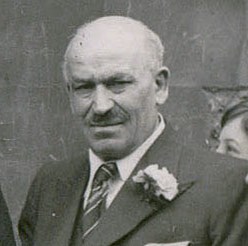
Filippo Grego

My maternal great grandfather, Filippo Grego (Greco)

Filippo Greco was born in 1869 in Amalfi, Italy. Amalfi had close connections with Gaeta, a Greek trading port, and Gaetano and Gaetana were Greco male and female family names respectively, so it’s more than likely Filippo’s extended family originated there. Gaeta has fortifications which date back to Roman times and these fortifications were extended and strengthened in the 15th century, especially throughout the history of the Kingdom of Naples (later the Two Sicilies). There is evidence that Filippo’s early ancestors came from original Greek settlements in Sicily.

Grego is the anglicised version of Greco, which was originally a name given to those living in Greek settlements in Southern Italy. Since the days of the Romans,  Greco has  been a synonym of astuteness and disloyalty and often connotes a stammerer.  Dr Fucilla suggests that some names such as Greco, have acquired a depreciative, figurative meaning which  may now and then have led to their application to native Italians.

To summarise Dr Fucilla’s  conclusions:

Anglicisation of Italian surnames is achieved by the drive of two strong forces converging upon their goal from opposite directions. One force, the most powerful of the two, represents non Italians who consciously or unconsciously in speech or in writing, make Italian names conform to English linguistic patterns, spelling, or individual names or types of names with which they happen to be acquainted. The other force represents the people of Italian origin who deliberately change their names or tolerate modifications made by outsiders as a concession to their new environment.

Finally, a very interesting paragraph from Dr Fucilla’s book:

Greek, Roman, Germanic and Hebrew Patronymical Names.

About 650 BC Ligurians, Illyrians, Umbrians, Etruscans, Sabini, Latini, Greeks, and Carthaginians occupied the various parts of Italy. They were all sooner or later, assimilated by Rome. After the fall of the Roman Empire a number of Germanic peoples including the Lombards, Franks and Normans, overran the peninsula. They too, were assimilated by their environment and with the others, through centuries of cross breeding fused into a fairly close-knit ethnical group now called the Italians. Yet despite fusion, traces still remain particularly in the guise of place names that carry us back to one or another of the stocks just mentioned. However, from the standpoint of personal surnames, a virtual monopoly is enjoyed only by three of the groups: Greeks, Romans and Germans. Their names eventually spread all over the country and from time to time through invasion, immigration, cultural tradition and religion, received reinforcements and accretions. A large mass of personal surnames was later adopted from an outside group, the Hebrews.

 See here: Mansi; My Fascination With Italian Surnames Part 1 

For more information about my book,

Whatever Happened To Ishtar? – A Passionate Quest to Find Answers for Generations of Defeated Mothers and to purchase a copy HERE is the link:  https://frandi.wordpress.com/2010/04/15/publicaton-of-whatever-happened-to-ishtar/


OLYMPUS DIGITAL CAMERA

……………………………………….

I ONLY HAVE EYES FOR YOU

*****

Painting and Poem I Only Have Eyes For You Copyright  To Anne Frandi-Coory  

-All Rights Reserved 30 June 2015

Painting:   Acrylic on canvas

(This painting has been sold)

*****

Read my poem  *I Only Have Eyes For You

Dedicated to all the beloved cats who enriched my life

here in DRAGONS DESERTS and DREAMS

*****

2nd edition (2020) now available in Kindle e book and paperback 

HERE at AMAZON

013 River God

***********************************************************

 GOD OF THE RIVER RED GUM

*****

God of the River Red Gum Poem and Painting Copyright To Anne Frandi-Coory  All Rights Reserved 9 June 2015

Painting 92cm x 61cm acrylic on canvas

***(This painting has been sold)

*****

I met a man

his brow deeply furrowed

sitting down by the

river

his gaze too intense

with trepidation I asked

if he needed my help

without altering his

glance

his voice softly composed

Read the rest of my poem *God Of The River Red Gum

here in DRAGONS DESERTS and DREAMS

 *Available here at AMAZON in Kindle e book or paperback *


><<><><>

Remembering Them in Our Street Names – FRANDI STREET

***********************************************************************************

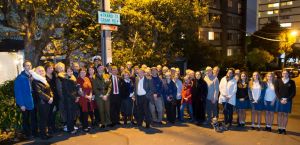
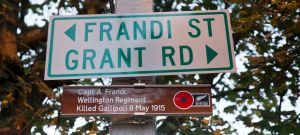
At 5.45pm on Friday 8th May 2015, the 100th anniversary of Ateo Frandi’s death at Gallipoli, a small ceremony to unveil a sign commemorating Captain Frandi was held at Frandi Street, Thorndon in Wellington, New Zealand.

Frandi Street in Thorndon is a quiet little residential cul de sac, once known as Grant Road North, and then briefly as High Street. On 14 June 1917 Wellington City Council confirmed a change of name to Frandi Street.

><<><><><>

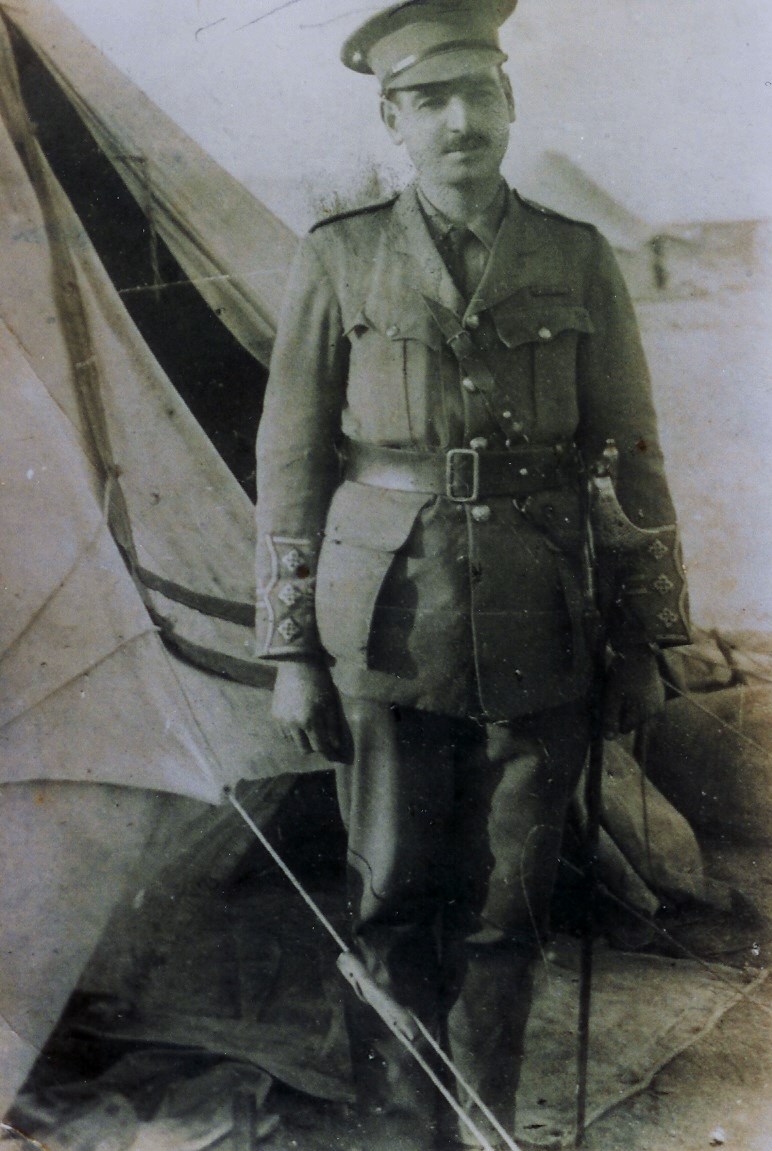
Ateo Giusto Leale Frandi 1873 – 1915

<><><><><><>

Frandi Street is named after Captain Ateo Giusto Leale Frandi, of the Wellington Infantry Battalion, who was killed at the second battle of Krithia. There are several versions of his death at the ’Daisy Patch’, either by machine gun fire or a sniper. Occasional references say he was killed on May 6th but the clear consensus is the 8th of May 1915.

With stalemate in the ANZAC area, ANZAC commander General Birdwood had sent Australian and New Zealand troops to support British, French and Indian troops attempting to capture the village of Krithia which lay between the ANZAC landing beaches and the British and French landings near Cape Helles at the southern end of the Gallipoli peninsula. Repeated attacks across open ground under heavy machine gun and rifle fire achieved temporary gains of barely a few hundred metres of ground and cost some 6300 Allied killed or wounded including 835 New Zealanders over just 4 days. Most of the dead including Captain Frandi were never identified, and were buried near where they died. After the war bodies were re-interred at nearby Twelve Tree Copse cemetery. One hundred and seventy-nine New Zealanders including Captain Frandi are commemorated there on the New Zealand memorial.

Ateo Frandi was born in Pisa, Italy on May 4th 1873, the second son of Annunziata and Aristodemo,  emigrating from Italy with his parents and two siblings to New Zealand in 1876. At the time of enlisting he was single, a piano tuner by trade, and was registered as living at 16 Murphy Street, Wellington. He had also worked for the DIC department store, and was an active member of the Garibaldi Club. See post re Frandi family’s arrival in New Zealand in 1876 OKURU SETTLEMENT

Captain Frandi had spent 24 years in the volunteers and territorials in Wellington, and for many years commanded the 31 Company (Wellington) Senior Cadets. He was rated as ‘one of the first authorities in infantry drill in New Zealand.’ His YMCA Cadets had won the New Zealand competitions for two years straight.

How Ateo Frandi’s lost Long Service medal was re-discovered: https://frandi.wordpress.com/2020/04/23/blog-comments-ateo-frandi-zealandia-rifles-1911-lost-long-service-medal/

In 1912 a dispute between Captain Frandi and the Defence Department over seniority between Captain Frandi and another officer was widely reported throughout the country and even referred to in Parliament on a number of occasions. Captain Frandi originally resigned over the dispute, but retracted his resignation and was able to resume his command of the Cadets.

Wellington was the embarkation port for some 60% of our soldiers, and Captain Frandi’s unit embarked for Egypt on 14 December 1914 with the Second Reinforcements. He arrived in Suez on 28 January 1915 and landed at ANZAC Cove on April 25th.

Major-General Godley, commanding the New Zealand Expeditionary Force at Gallipoli wrote, reporting Captain Frandi’s death – published in the Evening Post, “He did so much good service in Wellington that it should be known how well he did on active service” and “His company all say that they have never known any officer who gained so rapidly the confidence and liking of the men under him, and his bravery and fearlessness and qualities of leadership were most conspicuous.”

All the Frandi brothers enlisted; Lance Corporal Antonio Raffaello Frandi served in the 1st NZRB B Company, Driver.  Alfredo Giusseppe Frandi (Anne Frandi-Coory’s grandfather and youngest brother of Ateo) and nephew, Driver Ricciotti (Richard)  Frandi, were both in the Main Body Field Artillery. Nephew, Gunner William Donald Frandi, was in the 7th Field Artillery, and nephew Menotte Frandi also served. Nephew William Frandi, a gunner with the Field Artillery was reported wounded in the Evening Post of 27 September 1916 which said three others of the family were also serving at that point.

><><><><>

Menotte & William Frandi

Ateo’s nephews Ricciotti and William Frandi

><><><><>

Ateo’s Will named as first beneficiary  his sister Italia Corich and her daughters Helena and Elvira. The Pension Board granted his parents support in November 1915 on receiving confirmation that he had financially supported them. His father Aristodemo died aged 86 in 1919, and mother Annunziata aged 79 in 1920.

Captain Frandi was clearly held in high esteem. A concert in his memory was held by the Senior Cadets on the first of November 1915 in the Wellington Town Hall.

When the Carillon was built as a memorial to those who had served in the War, most of its 49 bells were named for specific battles, and in memory of individual soldiers. Captain Frandi’s sister, Italia, paid for bell number 30, ‘Krithia’, in his memory. His mother donated a memorial shield for the Cadets, now held at the Army Museum in Waiouru.

I saw Captain Frandi’s name on one of the white crosses of remembrance at each of several local school and community commemorations recently. At ANZAC commemorations we say ‘At the going down of the sun and in the morning, we will remember them.’ This Friday 8th as the sun goes down at 5.45, we will remember one of those men, as was intended when the Council of 1917 renamed a little street in Thorndon.

This post is taken from an article specially written by Wellington City Councillor, Andy Foster, for the commemoration of Frandi Street.

Photographs by Neil Price.

><><><><><><

Frandi St 4Frandi St 1

><><

Frandi St 5

Bugler, Andrew Weir, plays The Last Post

Frandi St 7

Left to right: Paul Glennie WCC, Andy Foster WCC, Italian Ambassador His Excellency Carmelo Barbarello, Captain Paul Prouse Officer Commanding Wellington Company 5/7 Battalion RNZ  Infantry Regiment, Sub Lieutenant Sean Audain (HMNZS Olphert)

Frandi St 2

The Last Post following Andy Foster’s reading of the dedication to Ateo Frandi.

><><><><><><><><

Frandi St 3

Wellington City Councillor Andy Foster reads a statement by Anne Frandi-Coory on behalf of descendants of Ateo’s parents, Annunziata and Aristodemo Frandi.

On behalf of all descendants of Aristodemo and Annunziata Frandi, I would like to thank Andy Foster along with Wellington City Council for this commemoration to Ateo Frandi for his long  and dedicated service to the New Zealand Armed Forces. Ateo was greatly influenced  by his father, Aristodemo, in fighting for a country he loved. Aristodemo was a brave fighter in Italy’s struggle to free itself from foreign rulers, before he and Annunziata emigrated to New Zealand in 1876.  Ateo in his turn was so proud to be a part of the  ANZAC contingent to Gallipoli, and he urged his brothers and nephews to join up as a duty owed to their country. Ateo Giusto Leale Frandi, we will never forget you or the ultimate sacrifice you made. —- Anne Frandi-Coory

Updated 12 June 2019

The Hospital By The River

THE HOSPITAL BY THE RIVER exceeded all my expectations. I have always admired Dr Catherine Hamlin as an Australian heroine. What she has achieved in her lifetime, is a superhuman feat.

In her book, Dr Catherine Hamlin begins by writing about the family histories and medical backgrounds of both her and her husband, Dr Reg Hamlin, in Australia, New Zealand, and later in the UK. Both came from privileged backgrounds. Intertwined with the Hamlins’ wonderful work saving the lives of hundreds of mothers and their babies in Ethiopia, are expressions of their deep Christian faith, and the comfort it brings them. Even though I am not a religious person, I can fully understand how their faith kept them going through some very difficult and challenging times, not least of all, a dangerous war. The couple sacrificed a great deal in order to build their hospital and bring healing to hundreds of poor Ethiopian mothers and their babies. However, I felt that in following their God’s mission, their only son Richard, also paid a heavy price.

Dr Hamlin goes on to detail the travelling and begging the couple had to engage in to bring in funds to keep their dream, and the hospital they had built, afloat. She documents the perfection of surgical techniques used in the repair of fistulae to restore quality of life to their frail, and sometimes, dying patients. Many babies were born dead, sometimes jammed in the birth canal for days, because of protracted labours. Cultural practices mean mothers are made to squat for days during labour causing terrible injuries to their bladders, bowels, and vaginas. Some mothers’ uteri burst with devastating consequences. These injuries leave afflicted mothers with a life lived in misery, unable to control their bladders or bowels. They are abandoned by their husbands and families, left to fend for themselves in filth, and near starvation.

The hospital the Hamlins built in Ethiopia, with the help of worldwide financial donations, and the support of powerful Ethiopians, has given hope to thousands of women; more than 90% are fully cured. Those who cannot be cured, perhaps left with minor wounds, are able to live in adjacent hostels within the hospital compound.  Some of those who are cured, stay on to be trained as nurses and midwives. Others progress to operating assistants and surgeons.

The compelling stories of the lives of long suffering patients are truly heart rending, and yet uplifting, due to the vibrant spirit of Ethiopian women. These brave, often under-nourished women, walk for days, months or years, to get to the Hamlin hospital of hope, where they can have life saving surgery.  Be that as it may, I could not but help see the great irony within the pages of this book: The Hamlins, as Anglican Missionaries, worked tirelessly, operating on these poor, rejected mothers with horrific rectovaginal fistulae, mostly caused by giving birth too young, or by being raped. The majority of women they performed surgery on, were of a Christian Orthodox religion which culturally supports child marriages, often girls as young as eight. As an Orthodox priest remarked: “otherwise they will fall into sin like Western women who don’t have children until they are 30”!!  So here we have Christian missionary surgeons repairing horrific injuries which another Christian sect, in essence, fully condones!  No blame whatsoever attached to husbands or rapists.

At the end of the book, I couldn’t help but wonder, in an ideal world, would it not have been wiser and more efficacious for the Christian World to unite, and spend those millions travelling around Ethiopia, educating the men and empowering the women? But then the hallmark of religion has always been more about tradition than visionary reform.

********

Dr Catherine Hamlin celebrates 60 years in

Ethiopia in 2019.

*******************************************************************************

© To Anne Frandi-Coory All Rights Reserved 14 May 2015

Anne blog

Anne Frandi-Coory

I resisted the fear and stood up to racial abuse…but should I have?

<><><><>

Last Tuesday 14 April I was sitting on a train bound for Melbourne’s CBD at about 11am. All around me were voices in various stages of peaceful conversation, when suddenly a very loud male voice disrupted the calm. At first I thought it was a one sided phone conversation, so I turned to see who this inconsiderate person was. About four seats behind me across the aisle sat a well dressed young man wearing sunglasses looking straight at the window opposite his seat. In seats beside him but facing the rear of the carriage sat an Indian couple; I could only see the backs of their heads at this stage. The young man began to yell and scream obscenities obviously referring to the couple which alerted me to what this was all about:

Speak English you f…… c…. you f…… dogs why don’t you go back to your own f…… country you c…. I have to sit here listening to you f…… dogs talking in another language no-one can understand you f…… c….

 This tirade continued in an atmosphere of complete stillness. I was feeling flushed and angry while looking around for an emergency button. Then, the abusive man began to punch with his fist, the window right beside the woman’s head. How is it that window didn’t smash with punches reverberating throughout the carriage? Enough! I stood up and asked:

Does anyone know where the emergency button is?

 A young man right behind my seat pulled out his earplugs and said as he pointed to a spot behind me:

There is one beside that door.

It was an intercom so I pressed the button and a lady answered:

Can I help you?

Could you please send someone down to this carriage, there is a racist abusing a coloured couple and he is banging the window beside them with his fists. It’s becoming violent.

She asked again if I needed help and I replied in a strong voice:

Immediately, please!

 I sat down again. Still no response from other passengers, none of whom was looking anywhere in particular.

The abuser continued yelling: 

 Go on call the cops I don’t f…… care, you f…… dogs ….you f…… c….

Then he stood up threw his backpack over his shoulder and looking straight ahead, walked past me down the aisle muttering to himself, until he heard the click of my phone camera. He turned his head slightly in my direction and shouted

Go on take photos you f…… dogs Call the f…… police  you f…… c….

He then walked through to the next carriage. I watched him through the doors, standing facing his former carriage, his mouth still working.

……..

Annes mobile 065

Annes mobile 065 2

The photos are not very clear as my hands were shaking and I was not brave enough to take a photo lest I should provoke this maniac further while he was in full violence mode. The backpack was quite distinctive though, with a bright blue pattern and he was of medium height and solid build.

At the next stop a young woman with a pram who had been sitting in front of me said as she passed by:

Thank you for what you did.

The Indian woman turned and explained in her very soft voice:

We were speaking very quietly, it’s not as if we were speaking very loudly….

I stood up and replied:

You are free to speak your own language anywhere you please.

As the young mother exited the train the young man behind me suddenly lept up and ran out of the train as two policemen walked past the windows. Just before the door closed I heard him describing the abuser to the policemen.

I wonder why not one other person stood up with me on that train. I know we have to be careful, the man may have been armed, but do we just sit there and allow a woman to be verbally abused and maybe have her head smashed in? This man was angry, and that anger was palpable in the carriage, as was the other passengers’ fear. I wonder too, if anyone would have come to my aid if the abuser had turned his attention to me.  But then I have pale skin. Perhaps my anger was visible and audible too?

As my train journey continued, I wondered if we were all a bunch of cowardly hypocrites. Oh yes, we all share our outrage on social media (in safety) at the injustice of racism, but when it comes down to it, should we just pretend nothing is happening or should we stand up and say ‘enough’! Is there safety in numbers? I certainly don’t have all the answers.

I don’t know what the outcome of this racist attack was, or if cctv was used by police to identify the man, but I do think it was a very serious incident and I can only imagine how terrified that couple was.

Copyright To Anne Frandi-Coory 16 April 2015 All Rights Reserved

Anne blog

Anne Frandi-Coory 2010

<><><><><>

All text and images are ©copyright  To Anne Frandi-Coory. All Rights Reserved 18 March 2015

<><><><><><><><>

During the Royal Commission into Institutional Sexual Abuse of Children in Melbourne, hundreds of victims have come forward to give evidence. Now adults, their testimonies are heart-rending and difficult to listen to. What has made their journey into adulthood so precarious (many have committed suicide) is that at the time, nobody believed they were being abused by those in positions of trust. None of the perpetrators has ever said they are sorry, much less the institutions in which they were incarcerated as children.  Only now can they talk about their traumatic childhoods. They are finally being listened to and believed. How healing it is to have your abuser, or in these cases, your Church, apologise to you, hopefully showing genuine remorse.  The Catholic Church has by far the worst record of any institution for blaming the children for what has happened to them, and for protecting paedophile priests and Christian Brothers.

As George Pell, Cardinal, once stated: “We had no idea the sexual abuse of children would do so much harm”.

Another Catholic Church official at the Vatican stated: “A priest leaving the priesthood to get married, is a far worse sin than a priest sexually abusing children”

I can empathise totally with what these victims have endured over their lifetimes. If only once, even one member of my devout Catholic Lebanese extended family had acknowledged my abandonment by my mother and the abuse meted out to her and me by them, it would have gone a long way to healing the wounds. Instead, I was not allowed to discuss the abuse, or if I did, told I was lying. It was to risk another beating if I dared to ask about my mother, or what happened to her. Many a time I was kicked  while on the floor, or had a swelling the size of an egg on my eyelid caused by a strap wielded by an aunt. Cousins often witnessed this abuse, but still, no apologies or acknowledgment.

Unfortunately, when you turn your back on an abusive family, there really isn’t any group you can join for support. You have to go it alone.

My childhood was filled with fear, abuse and gross neglect; some of it took place in institutions run by the Catholic Church, but most of it was carried out by my Lebanese extended family, herein called “The Family’. Not once has any member of The Family ever acknowledged my abuse and neglect at their hands, much less apologised. In the end, I decided to write a book Whatever Happened To Ishtar?; A Passionate Quest To Find Answers For Generations Of Defeated Mothers.  There were so many different versions of my and my brothers’ fractured childhoods doing the rounds, I wanted to put the record straight. Not only for my mental health, but so my children could breathe in clean air and know the truth.  Neither I nor my two brothers appear together in any family photos.  In fact, I had to put the few childhood photos of us on social media because relatives were placing photos on the site, with our names on them, but who were definitely not us!

There is no doubt that The Family hated my Italian mother. They made her life hell, and my father, a weak man, did nothing to protect her. Two of his brothers preyed on her, and for this she was evicted from the Coory family home. Because she had to work, my mother could not look after two children, so my father placed Kevin and me, then 3½ and 10 months old respectively  in the Mercy Orphanage for the Poor in South Dunedin. My mother was then pregnant with my brother Anthony.

However, I was the scapegoat child who as the only daughter paid dearly for my mother’s ‘sins’. The Family’s hatred for my Italian mother, and by default, me, was evident whenever my father took me to visit in that household. My mother was an ex Catholic nun and very naïve, so was an easy target. They ridiculed her constantly, the favourite word for her was “sharmuta” Aramaic for prostitute. As a very small child I didn’t understand what the word meant, but I knew by the way my aunts and grandmother spat it out, that it was nasty. I was totally devastated when I later discovered what it meant. My mother was never ever a prostitute, but after being sexually harassed and abused by two of my father’s brothers, to whom she had a son each, she was the ‘sinner’! My mother later developed bipolar disorder. Slowly over the years, with the help of occasional visits to a psychologist, I managed to live a mostly fulfilled life. You can never forget an abusive childhood but you can live with it. I still have panic attacks and suffer from periodic depression but I can deal with it by getting passionately involved in projects, like writing and painting. I married at 18 years and escaped Dunedin and largely turned my back on The Family. From time to time I have met relatives who persist in telling me to “get over it” or “move on”!  Funny isn’t it, how people who have had a loving mother and father, and a supportive family, can be so heartless!

<><><

Anne in convent clothes

Anne Frandi-Coory at 8 years old -just removed from the Mercy Orphanage for the Poor in Dunedin

<><><><

Children who have been abused and abandoned during their formative years have exceptional memories. While most people remember episodes of their childhoods from about four years of age, victims of abuse and abandonment can remember vividly, events from their infancy. Memories re-surface throughout adulthood as isolated vignettes of violence and sexual abuse with no context in time or place. For instance, I can remember standing in a cot in a room with many other toddlers in cots squeezed in around me. My father had just visited and I was distraught. I saw him walk past a window and even though it was dark outside, I recognised him and the hat he always wore. Until many years later when I went back to the orphanage to gather evidence for my book, I didn’t know what I was remembering, or even if it actually happened.  As soon as I saw the abandoned nursery, I recognised the windows through which I had watched my father leave; contexts of time and place began a healing process.

Other recurring memories emerge from an incident which involved my mother collecting us two children from the orphanage and taking us to Wellington to live with her parents.  I was eighteen months old at the time. For years a memory kept resurfacing of my mother carrying me onto a small plane. Often accompanying that memory was another memory of me standing in a cot in a tiny room watching my mother getting undressed. The details were vivid. She was smiling at me, and I remember that my cot was pressed up against the foot of her bed. Earlier, I had seen a man holding a little boy’s hand leading him out through the bedroom door. It wasn’t until decades later when Kevin and I were reunited and had sat up all night until the early hours of a morning, talking about our childhoods apart, did pieces of the puzzle come together. I related these latter events to him and he immediately knew the contexts in which they occurred.  He was four and half years old at the time and he was the child holding our Italian grandfather’s hand walking out of mum’s bedroom.  There is a rare photo of us at this time. Kevin is sitting in a little armchair he remembers well, with me sitting on the grass in front of him, in our grandparents’ overgrown rear yard.

><><><

kevin & Anne 2 at grandparent's house in Wadestown

Kevin and Anne, Wellington

><><><>

Apparently, our mother’s parents didn’t want her and her three children (Anthony was a newborn) staying there, so they paid for the airfares for her to “go back to your husband!”  However, it was what occurred beforehand that seared the memories so vividly into my brain, although I don’t consciously remember the events. Kevin told me that while we were all staying at our grandparents’ house, there was a lot of screaming and yelling by our grandmother, at her daughter. This was a household that had seen years of domestic violence from the time my mother was a young girl.

One day, mum, Kevin and I were sitting on mum’s bed while she was nursing Anthony.  She gave birth to him while staying at her parents’ home. Our grandparents entered the room and in Kevin’s words, our grandmother was screaming at mum “enough to wake the dead” while our grandfather ( a very violent man) was belting mum around her head with his hand.  After these and other revelations, many of the fractured memories stopped recurring. It’s as if once they have been acknowledged and verified, they are filed away in the sub-conscious.

<><><><><

the three of us cropped

A very rare photograph taken at St Kilda Beach, Dunedin of the The Three of Us together: Anne, Anthony, Kevin (image: Joseph Coory)

><><>>><>><

I had to research the facts surrounding my childhood before I could write the book, and the truth was devastating, but also liberating.

When I was ten years old, I was sexually abused in a car by the husband of one of my Lebanese aunts.  This episode illustrates the difference in childhood memories which occur after four years of age. I remember the context in which the abuse occurred, so my memory of it wasn’t fractured and it didn’t resurface as much as my infant memories did. I was very frightened of this uncle, but I was just as frightened of The Family, so I couldn’t tell them. I was too scared to tell my father, whom I adored because my uncle was a huge man and I thought he would kill my father; they argued all the time. The sexual harassment continued until I was eighteen and I left Dunedin.  After I published the book with this episode of sexual abuse in it, cousins laughed and said that he was just a “dirty old man”. Obviously, this paedophile was known by some members of the family.  Just recently, a cousin published many photos of the Coory family on social media, and this paedophile was in one of them. I was extremely upset and when I made the comment that this man was a paedophile, I was told once again to “get over it”!  As in the cases of institutional sexual abuse, unless we have zero tolerance for the sexual abuse of children in families, paedophiles will continue to abuse children and the child will continue to be told to “get over it” or will not be believed!  I thought I had managed to file away that particular childhood memory, but as always, it only takes a photograph, a look-alike person walking by or other stories of similar sexual abuse for the memory to flood back.

<><><><><><><><><><

lebanese-gathering

Under the red crosses I penned years ago: the paedophile and the cruel aunt. That’s me at 14 yrs sitting on the ground on the left.

><><><><><><><><><><

An analogy comes to mind when talking about trying to live a normal adult life following an extremely traumatic childhood:

It is as though there is a deep black hole behind you in your past. Unless you find passions in life to keep you busy, or become a workaholic, frightening memories will invade your dreams and many of your waking moments. Often it’s like running on the spot to keep the black hole from dragging you into drug and alcohol addiction, depression, anxiety, suicide, and in some cases becoming the very adult in your memories that you’re running away from.  I can understand why many victims ‘drown’ in that black hole.  Life can be a difficult journey for those who’ve had a happy and loving childhood, but for many so abused, it’s a constant day to day battle.  I am one of the more fortunate.

Please don’t ever tell victims of child sex abuse, gross neglect, or abandonment, to “get over it, move on” You have no idea what you are asking unless you have walked in their shoes!
 

All text and images are copyright  To Anne Frandi-Coory All Rights Reserved 18 March 2015

<><><><><><><><>

><><>

OLYMPUS DIGITAL CAMERA

>><

SUMMER AT LOLLIPOP CREEK

*****

 Painting and Poem Summer At Lollipop Creek Copyright  To Anne Frandi-Coory All Rights Reserved 8 March 2015 

Painting  Summer At Lollipop Creek  76cm x 61cm acrylic on canvas

***(This painting has been sold)

*****

A ribbon of lushness

meanders here and there

dark green of banks

water pure and spare

Ancient river red gums

exquisite to my eye

sun drenched ivory limbs

twisting low and high

Oh you majestic beauties

rising up before stooping

your dark eucalypt leaves

long to caress, drooping

Under blue cloudless skies

your full canopy lures

not just myriad birds

all manner of creatures

Songs permeate the air

some strident, some sweet

wings flapping, beaks snapping

still, a peaceful retreat

Softly splashing, happy ducks

heads bobbing to and fro

complete a picture so divine

only Nature could make it so

*************************

Read my poem *Summer At Lollipop Creek* and others 

HERE in DRAGONS DESERTS and DREAMS

Available here at AMAZON in Kindle e book and paperback 

*****

I have donated this painting to Little River Primary School which was auctioned at its

Country Fair fund raiser Sunday 15 March 2015


Painting prints Fuji 008

BATGIRL DOWN UNDER

*****

Painting and Poem Batgirl Down Under Copyright To Anne Frandi-Coory 

-All Rights Reserved 21 February 2015

Painting: Acrylic on canvas 76 cm x 60 cm  

******

In a famous sunny city Down Under

there played a pretty little girl, one

Princess Amber in bows of frilly pink

blonde pigtails and more than one curl

Amber proudly wore her crown of gems

with her wand she rescued feathered friends

from that dastardly tabby feline, lurking to

pounce, her thoughts on their sticky ends

Then her rowdy brother and his mates

overran the yard, super hero excitement aflame

carrying weapons aloft and yelling, “you are

a girl, we don’t want you in our game!”

Read more of my poem *Batgirl Down Under

Dedicated to Amber 

here in DRAGONS DESERTS and DREAMS

*****

2nd edition (2020) now available in Kindle e book and paperback 

HERE at AMAZON