Archive

Tag Archives: Australia


***********************************************

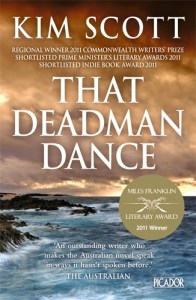
For me, it was a serendipitous  moment when I came across That Deadman Dance – a literary masterpiece by Kim Scott.

During this coronavirus lockdown, I was searching through my home library shelves for books I hadn’t yet read. I received this particular book as part of a prize for having one of my poems accepted for publication in a literary magazine.  It turned out to be one of the most beautifully and poetically crafted books I have ever read. The fact that it is set in the early colonization period of Australian history makes it even more relevant on this 250th anniversary year of James Cook’s arrival on the shores of Australia.

Bobby Wabalanginy is the spiritual protagonist throughout this incredible story; oh, there were others like Wanyeran, Dr Cross’ beloved friend.  Those two were like brothers and were even buried in the same grave on a mound…until settlers trampled and desecrated it instead of allowing Time to whiten the bones and Rain to wash them out to sea together. But even when he was a small child, Bobby could ‘see’ things others missed. He wanted so much to believe in the white colonists, even though not all in his extended family, especially its tribal elders, trusted the ‘Horizon People’ …but wasn’t Dr Cross just like one of his tribal elders, wise and just?

Dr Cross was one of the First Contact leaders; he, Bobby and Wunyeran, were united in their desire to share all things, and to learn from each other. After all, wasn’t that the peaceful, traditional way of Bobby’s tribe, and all other Aboriginal tribes throughout their country? Cross was a teacher of his white man’s history and he wanted to learn about Bobby’s people and their history in return. Bobby and Wunyeran grew close to Cross and could sleep in his hut or eat with him, and at times when they disappeared for days, Cross understood, always, even though it made other settlers nervous.

Cross was to write  of his dear friend Wunyeran; ‘He has the most intelligent curiosity…’ However, it was a characteristic they both shared. Cross and his superior agreed that their colonial outpost needed to build strategic relationships with the Indigenous peoples.  ‘We are outnumbered, and this is their home.’ One wonders at this point what might have been.

After the untimely death of Wunyeran, and subsequently the death of his dear friend Dr Cross due to that settler’s ‘cough’, everything began to change; dark days were emerging across the colonies.  Eventually, Aboriginals were again relegated by the colonizers to mere ‘blacks’ and ‘savages’; they could now be shot for climbing over fences the settlers had built to keep in their livestock and to keep the ‘blacks’ out. In the end, kangaroos disappeared, Aboriginal plants, tubers, were destroyed and their land trampled by livestock, their trees cut down for pasture. Even the whales had disappeared from their waterways.

Bobby was a dancer; light of limb, an actor, a storyteller, who could translate his ancestors’ lives and traditions through dance and cultural language.  In the final, humiliating years Bobby had left to him, he was reduced to ‘entertaining’ settlers  on the streets who sometimes ‘paid’ him a few coins if he pleased them. Yes, this is how Bobby’s ideals of mutual sharing and learning had ended…in a dead man’s dance of finality… evoking a time when the Aboriginal Noongar people of Western Australia first encountered the “Horizon People”: those British colonists, European adventurers, and whalers, ghost-like, intent on colonizing a land both harsh and seemingly of limitless future ‘civilized’ development.

“Bobby Wabalanginy never learned fear, not until he was pretty well a grown man. Sure, he grew up doing the Deadman Dance – those stiff movements, those jerking limbs – as if he’d learned it from their very own selves; but with him it was a dance of life, a lively dance for people to do together…”

Heartbreakingly, Bobby, deep down inside,  knew the outcome from the start. But Bobby being Bobby, embracing two very different cultures as he had, clung desperately to his belief in mutual understanding, until the smallest, remaining whiff of hope had vanished forever into senseless killing, rape of their spiritual land, and the rape of their women.  “We thought making friends was the best thing,” he says. “We learned your words and songs and stories, but you didn’t want to hear ours.”  But the colonizers could  not understand Bobby’s language, or interpret the deep significance of his dance.

“The man, scratching and making marks,” Wunyeran told them, “has hair like flame but keeps it covered. Cross.” It was a difficult word to pronounce. Wunyeran was patient, explaining it… “Yes, Dr Cross they call him. I slept in his shelter,” he said, and accepted the admiration of his fellows. “He is a man who scratches in his book all the time.”

“When Bobby Wabalanginy told the story, perhaps more than his own lifetime later, nearly all his listeners knew of books and the language in them. But not, as we do. You can dive deep into a book and not know just how deep until you return gasping to the surface, and are surprised at yourself, your new and so very sensitive skin.  As if you’re someone else altogether, some new self, trying on the words.”  That Deadman Dance is such a book in my view.

The last foreboding paragraph of the book is abstract in its telling, but we, the intuitive readers, know exactly what it foretells.

That Deadman Dance is set in the first decades of the 19th century in the area around what is now Albany, Western Australia. In poetic prose, it explores the early contact between the Aboriginal Noongar people and the first European settlers.

This is such a moving subject, and Scott’s research is impeccable. He uses settlers’ diary entries and traditional stories passed down through generations of Indigenous elders. However, you will not read about any vivid acts of violence; the words are sheer poetry, even when there is violence. Scott tells us so much with so few words.

Kim Scott has the moral authority to these stories of his country because he is a descendant of the Noongar People who have always lived on the south coast of Western Australia where the early whaling settlements brought in sailors, soldiers and scouting colonists. That Deadman Dance is the winner of the Miles Franklin Prize and many other awards.

**********************************************************

-Anne Frandi-Coory 29 April 2020

********

Bruce Pascoe  is of Bunurong, Tasmanian, and Yuin heritage.

  Award winning Author, Writer and Film Producer.

********

I have lived in Australia for almost fifteen years and I am ashamed to say it is only in the last two or three years I have learned that although Australian Aboriginals were sometimes hunter-gatherers, they also lived in towns of up to a thousand people, they built houses, and they  were sedentary enough to have systems of agriculture and trading, to set large-scale fishing traps, and engaged in crop-saving irrigation practices. Archaeologists are now discovering artefacts, artworks and other evidence of Aboriginal life which attest to the fact that they were not solely hunter-gatherers. Author of Dark Emu,  Bruce Pascoe, through extensive research, has revealed the huge amount of information about the sedentary life of Aboriginals verified by early explorers and settlers in their diaries, in both the written word and sketches.

Dark Emu reveals how colonizers eventually destroyed the very settled Aboriginal way of life; their agriculture, their plants, their houses, their land; these supposedly ‘civilized’ invaders massacred First Australians in their thousands whenever they tried to defend their culture, their women, or their land. To justify this destruction of a culture that had survived in Australia for up to 80,000 years, successive writers and governments have set out to create the myth that Australian aboriginals were “savages” or “blacks” who aimlessly roamed the continent as hunter-gatherers.  Aboriginal children were taken from their families by Christian missionaries and placed in orphanages to “save them” from a “savage” and “heathen” upbringing.

Pascoe has much to say about the deliberate ‘cover-up’ of a pre-colonial Aboriginal democracy which had allowed ‘the great Australian peace’ across the continent for thousands of years. Tribes worked with each other sharing the land and whatever was harvested from it; flora and fauna alike. They stored and preserved food, they ground a type of flour and they baked a basic damper bread. David Maybury-Lewis, was professor of anthropology at Harvard University in the early 1990s when he included these statements about Australian Aboriginals in his book ‘MILLENIUM; Tribal Wisdom and the Modern World’ [pub. 1992]:

*If one were asked to state briefly and succinctly what are the outstanding positive features of Aboriginal civilization, I for one, would have no hesitation in answering:

*Respect for the individual, irrespective of age or sex.

*The amazing degree of social and political integration achieved by them.

*The existence there of a concept of personal security which transcends all governmental forms and all tribal group interests and conflicts.

*The possibility of conceiving of an individual alone in a tribal sense is ridiculous…the very complexity of tribal life and the interdependence of people on one another makes this conception improbable at best, a terrifying loss of identity at worst.

So much of what Pascoe writes about in Dark Emu is in harmony with the above academic statements; but further, he gives us an in depth analysis drawn from his own ancestral knowledge of pre-European Aboriginal life, and backs this up with compelling evidence gained from his research around the early explorers’ and settlers’ diary notes, stories and sketches held in libraries and museums around Australia. He also discusses how Australian Aboriginals managed the threat of bushfires and how they used the best land for agriculture and the poorer, less productive soils for growing trees, planted in specific formations. They had a spiritual and emotional connection to the land; a great understanding of fire and how to control it. Tribes harvested a variety of yam and many other ‘bush tucker’ plants across their land, but later all were destroyed by herds of cattle and sheep brought in by the early settlers.

In Dark Emu, Pascoe brings home to us that we can no longer assume our 21st century ‘developed’ way of life represents the most advanced stage of progress and that Aboriginal society was less successful, less meaningful than our ‘superior’ society today. Surely this knowledge will enlighten us, open up the richness and variety of what it means to be human and perhaps we can learn from the peace and harmony evident in pre-colonial Aboriginal tribal life.

To me, their spiritual beliefs such as ‘Dreamtime’ make far more sense than the religion of Christianity ever did; Aboriginal spiritual beliefs are intertwined with the land, and I wonder if we had followed their path in this regard instead of trampling all over it with introduced cattle and sheep, or by planting out pastures never suited to such a dry continent, would Australia be burning as it is right now, in catastrophic bushfires?

If you haven’t already read  Dark Emu please do so, and encourage your children and grandchildren to read it, or read it to them, like I have done.

– Anne Frandi-Coory.  9 January, 2020

*******************************************************

To some, Dark Emu seemed to come out of nowhere, but Pascoe’s latest book, SALT: Selected Stories And Essays, helps us to see how it grew from the author’s life experience and earlier storytelling. I’ve been a follower of his work since the early 1980s, when I read his fiction and subscribed to the literary magazine he edited and published with Lyn Harwood, Australian Short Stories. When Dark Emu was published in 2014, Bruce became a household name and many readers encountered him for the first time. One of the pleasures of Salt is that it weaves his earlier fiction writing together with his now-celebrated nonfiction. We meet — or rediscover — the pre–Dark Emu Pascoe, and we’re reminded that this powerful voice itself has a history. – Tom Griffiths. [Tom Griffiths is Emeritus Professor of History at the Australian National University.]

© Poetry, photographs and painting Copyright To Anne Frandi-Coory. All Rights Reserved 3 June 2019 

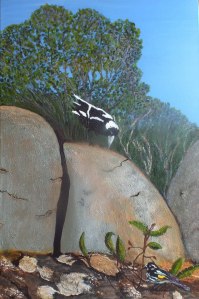
Bird Life In The You Yangs  *Painting acrylic on canvas*

***(This painting has been sold)

*************************************

You Yangs…

Yellow, blue, eucalypts

ancient river red gums,

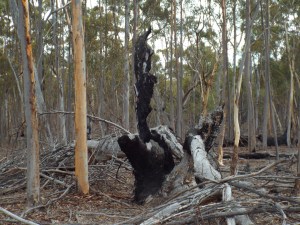
centuries in the making; naked branches,

petrified arms, gnarled and grey

beckoning, pleading, monster-like

awaiting more fire to sprout new life

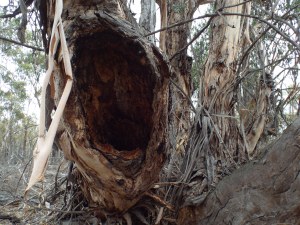
darkened cavities like gaping mouths,

homes for many a creature.

***

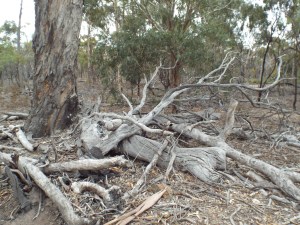
Seems a graveyard for once-thriving

river red gums, companion granite rock

cracked and sentry-like, guarding;

fossilized years of earthly rumblings  

groaning low Wadawurrung mountains 

weathered skeletons hovering, creaking

trunks given up on survival?

Crashed to earth, limbs flailing

***

so dry, roots no longer gripping

many moons of rainless clouds

tortured, pitiful, writhing gums; so

much crumbling charcoal clinging;

kindling amassing for a future

conflagration that one day must come

alas what wildlife lurks beneath?

Koala cling high amongst the thinning gums.

***

Myriad birds thrive in this strange landscape

in harmony and yet, noisy squabbling,

from long shared and distant pasts;  

Magpies’ melodious carolling,

New Holland honey eaters chattering

colourful feathers fleetingly observed

camouflaged in the skyward flowering gums,

laughing Kookaburra and croaking Wattlebird.

***

Silence unobserved atop granite peaks in the midst of a sweeping lava plain.

**********************************

Photos taken in the You Yangs by Anne Frandi-Coory:                                                                                   


Life in Australia in the 1950s and 1960s

This is a great read!   It is a story about two families with very little money who share a large, wooden, rambling house.  The house has been left to  one family in a will,  and they lease half to another family.  Each  family lives in one half of the house with a long hallway the dividing line.  It is set in a time when Australia was a raw country and so were its people.

The author, Tim Winton, makes all the characters come alive on the page and you can almost sense the atmosphere in the house as children and adults clash and tensions build.  Everyone knows what everyone else is up to on the other side of paper thin, dilapidated walls.  Added to that, the house has ghosts.  Tim Winton forgoes standard  punctuation throughout the book, but it doesn’t detract from the story at all, just seems to enhance the settings.

I think this is a truly Australian story with its share of  tragedy, religion, laughter and all too human flaws.

-Anne Frandi-Coory 5 October 2010