Archive

Tag Archives: Bcharre

The comments below were posted here on my Blog  by Miriam Burke, NZ on page:  Lebanese Family Tree and Photos.  

**********

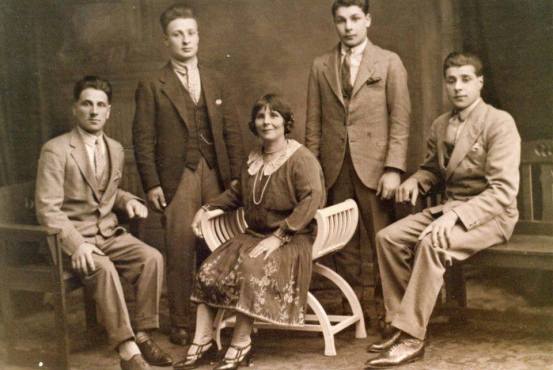
Subjects: My father, Joseph Jacob Habib Eleishah Coory, his brother Michael Patrick Coory, Patrick’s wife, Harriet and their daughter, Yvonne.

Joseph and Michael Coory 1

Brothers Joseph and Michael Coory

The book: Whatever happened To Ishtar? – A Passionate Quest to Find Answers For Generations of Defeated Mothers

Miriam Burke is Michael Patrick Coory’s granddaughter and daughter of Yvonne Coory.

**********

Dear Anne

I just wanted to post you something beautiful and I know you love it:  (Blue Danube Ballet) http://www.youtube.com/watch?v=eSulONzgewQ

Dear Miriam

How did you know about the glass case? You’ve already read my book! The ballet brought tears to my eyes. Thank you so much, Miriam xxxxx

Dear Anne

I wanted to send you something you could keep and play over and over again without it getting taken off you. Yes Anne, I rushed out and got your book and I am part way through. It has touched me so very much, I only wish you had confided in my nanna Harriet, I’m so sad to know how very bad you and your brothers were treated. I relate to the screaming and yelling; I always remember I would get scared when all of a sudden one would start arguing and the rest would jump in like a pack of hyenas attracting prey.

Did you know your dad was my most favourite great uncle? I remember Mum took me to Cherry Farm to visit him and I was so disgusted the family had put him in such an awful place. I told Mum I never want to go back. Uncle Joe was so pale and thin looking, I didn’t want to believe it was him. 😦 I remembered Tim!!!! [Joseph’s beloved dog] Oh how I loved him but when I think of Tim he was very old.

I came across your blog by accident the other day. My sister-in-law Charmaine Burke (nee Coory) Victor Coory’s adopted daughter’s brother John had passed and I was looking on the ‘net for details of his funeral. I was drawn here after names came up that I was familiar with. I’m so very pleased I found you. 🙂 xxx

Dear Miriam

OMG! you knew my dad. He and uncle Mick [Michael Coory] were very close and had similar lives until my dad [Joseph Coory] married my mother [Doreen Frandi], and The Family never forgave him. . I know that uncle Mick was staying with the Coory family at Carroll Street when your Nana Harriet was so ill and after she died. However, he was so horrified by the way the family treated uncle Henry’s children after he died, Mick moved out and stayed with your mum. I am so glad you found me. Xxxxx

Dear Anne

Who could forget Uncle Joe, I was a young girl, Anne when Uncle Joe died but he was someone in the house I felt I connected to and felt comfortable being around….he had sparkling eyes, a friendly smile and a gentle soul. See my brothers and I are out casts also on the Todd side for the stupid reason our Mother and Father got divorced. When we were small children, why did we get the feeling we had done something wrong? Even now I’ve been in touch with my Dad’s side of the family and don’t feel I fit in anywhere. They look at me as though I’m an alien…I know they see Mum when they look at me, Mum did tell me they treated her so bad even when she was married to Bryan. I’ve been blessed with her looks and she lives on in me…oh and the other wonderful thing I’ve been blessed with is my Nanna Harriet’s nature…LOL She was a bit of a rebel, could stand up for herself and a wonderful sense of humour. I remember she did tell lies though, only to keep the peace but she would laugh and giggle like a small child at every time she told one.

I remember.one day Great Aunt Georgina was yelling out to us and Nanna said to me “oh no here’s the fog-horn coming”…I started to giggle and Nanna said just say nothing and go along with me. We were staying up in Wanaka at the holiday home and Nanna and I were in the small scamper on the section. Georgina came over and asked if we had been to church? Nanna said yes of course we had, “we were sitting near the back [of the church]”. Of course we didn’t go to church that day. I wonder if they knew of Nanna’s tattoo?. A small butterfly she had on her thigh…hence my love of anything to do with butterflies. I have one hanging on my wall and when I look up at it I think of Nanna. She was too modern to be a nanna in those days…I thought she was just the coolest Nanna in the world! They both did so much for Mum and us children especially when Dad left. We were so lucky to have wonderful grandparents.

Aunt Alma who really wasn’t our Aunt was Mum’s favourite to talk to…Aunt Alma we had more to do with and visit than the house in Carroll Street in later years when Nanna was in a retirement home. Mum and I would always make sure we called into visit Alma when visiting Granddad while he was living at Carroll St. You know Anne, think of yourself as a caterpillar slowly crawling along in your youth, everything seems a struggle, you don’t feel good about  yourself, you feel like you are going  nowhere, then one day you just get so tired of your struggle you just want to curl up into a ball and sleep forever away from the world; then the moment you awake you feel different, you have grown into a colourful butterfly that can now fly above all those struggles you once had…you’re beautiful…just keep spreading those wings! xx Miriam 

**********

Read more here about Joseph in an excerpt from  Whatever Happened To Ishtar? >>>>>>>>>>>>>> My Father Joseph Jacob Habib Eleishah Coory 


10334276_293513207505781_2346531765896938995_n

L to R: Joseph, Michael, Frederick and Philip Coory with their mother Eva Arida Coory.


The Maronites in History

by Matti Moosa

*************************************

The Maronites in History

**************************************************************************************************************

I bought this very expensive book because I have always been interested in the Maronite religion of my Lebanese Grandparents, Jacob and Eva Coory. They were born and raised in the small village of Bcharre where the Maronite religion appears to have gained a strong footing around the 6th Century. There are very few books written about Lebanon’s  Maronites but I believe I have found a well written and well researched one in Moosa’s original Syracuse University Press publication The Maronites in History. Various essays on this subject can be found on many websites, but I found them to be emotive and with little basis in fact. Certainly no source documents were quoted, and most were based on hearsay passed down through generations. Still more were so badly written, it was difficult to follow the writer’s line of thought.

Matti Moosa opens the Preface of his book The Maronites in History with a question: Who are the Maronites and what is their importance to the existence of the Lebanese Republic?  This is a very good question, because so much folklore has been added to fact that it’s very difficult to know for certain. However, the author has embarked on a marathon investigation after being awarded a scholarship. He has extensively studied source documents housed in the Vatican Library as well as written testimonies from writers who lived in Lebanon from the 5th Century onwards.

The author states: In essence this book is a study and analysis of the origin of the Maronites , indeed of their whole historical heritage, an examination based on ancient and modern sources written in many languages, many of which are still in manuscript form.

Moosa goes on to explain in the preface: This book attempts to place the history of the Maronites in historical perspective. Maronites today suffer from a serious identity problem. They haven’t been able to decide whether or not they are descendants of an ancient people called the Marada  (Mardaites) or Arabs or of Syriac-Aramaic stock. Unless the Maronites solve this identity problem their conflicts with other minority religious groups in Lebanon will never be remedied. 

 Essentially, historical documents show that the Maronites originally professed the faith of Monophysitism, and later through edicts and threats of death or exile by various religious and state rulers, changed their beliefs to Monothelitism, both considered heretical by the Roman Catholic Church. Monothelitism though, is close to Catholic doctrine, so it appears the Church in Rome turned a blind eye to this heresy by Maronites for various strategic reasons which Moosa discusses at length in The Maronites. [My emphasis]

There are even disputes among Maronites and scholars over the origin of the name Maronite. The Maronite’s beloved monk St Marun and a later patriarch John Marun, have question marks over their actual existence. There is nothing in available ancient sources to indicate the name and location of the place where the ascetic Marun lived. However, the author concedes, one might be tempted, upon reading Theodoret of Cyrus, to conclude that a certain Marun lived in the vicinity of Cyrus in what was then known as Syria Prima, many miles to the north-east of Antioch. The failure to positively identify this place has caused much speculation by Maronites  as to its whereabouts. The Maronite Bishop Pierre Dib states that Marun lived on top of a mountain near Apamea  in Syria Secunda, an area far distant from Cyrus. Others claim that Marun lived in a cave near the source of the river Orontes (al-Asi) close to the Hirmil in Lebanon; they cite as evidence the name of the cave known until this day as the cave of Marun.  Other Bishops and writers state with the same certainty various other places in which the cave of Marun may have been situated.  Maronites and others cannot even agree on where or when a monastery of Marun was built but we may conclude that in Syria toward the end of the 6th or early 7th Century there existed more than one monastery bearing the name of Marun. One of them was located in or near Hama and Shayzar. It gained some notoriety in the early 7th Century when it adopted Monothelitism. The abbot of this monastery was named Yuhanna (John) and he became a Monothelite with many followers in Syria leading to the slow spread of Monothelitism into Lebanon. Those who followed him were called Maronites. Whether this monastery had any connection with the fifth century ascetic Marun is doubtful.

***************************************************

Mar-maroun-4

******************************************************

Efforts to date the Monastery of Marun from the 5th Century are sheer speculation. However, we have three documents which refer to a Monastery of Marun in Syria Secunda and all three documents attest that the monastery of Marun related to the doctrine of Monothelitism.

Commemorated on July 31st each year by the Maronite Church is the mythical massacre of 350 monks, ‘martyrs and disciples’ of the ascetic Marun. They were believed to have been slaughtered but this atrocity lacks strong historical substantiation. In fact there is no evidence that these were monks from the monastery of Marun.  Indeed, there is no mention of this in any pope’s correspondence of the times, nor is it mentioned in any Vatican or Church official documents.

There is no evidence that the Maronite Church ever commemorated these ‘martyrs’ before the year 1744. Even the Maronite Council assembled in Lebanon in 1736, which among other matters instituted the festivals and commemoration days for Maronite saints, did not list a commemoration day for these ‘martyrs’.

It is the author’s judgment following extensive research that the Maronites were and are closely linked to Syrian Orthodoxy. Probably for largely political reasons and the Roman Catholic Church’s need to gain a foothold in the Middle East, it overlooked the Maronite’s heretical interpretation of the Council of Chalcedon’s strict canons. [My emphasis]

In the Vatican’s push to gain a foothold in the Middle East, it allowed the Maronites to maintain their traditional patriarchs as head of their Church in Lebanon as they had done since the middle of the 8th Century. But in reality Rome considered them less than a Catholic bishop in status. It appears that only in the 8th Century did ancient church writers refer to the Maronites as a distinct Christian sect. [My emphasis]

Fortified for many generations in their mountain of Lebanon, the Maronites could claim more independence in their ecclesiastical affairs and therefore were and still are in a much more favourable position to revive their Syriac tradition and language. But instead of encouraging the Maronites to retain and cherish their Syriac heritage and revive the Syriac language  in order to become once more the lingua franca of the Maronite people the Latin missionaries (sent by Rome) discouraged the use of this language and denigrated the Syriac heritage and added more woe to the state of the already Arabised Maronites by Latinisng their Church and eventually their prayer books. The Maronites thus almost completely lost their Syriac identity. Since the 16th Century instead of taking pride in their Syriac legacy, the Maronites,in their desperation to find a legitimate origin of their Church and people have claimed that they were the descendants of  Marada (Mardaites) which is historically groundless.

Like the Nestorians the Rum (Byzantine) Orthodox, and the Syrian Orthodox People, the Maronites are of Syriac-Aramaic origin. The Lebanese Council of 1736 emphasised the use of the Syriac language first and Arabic second in the Maronite Church services. But this emphasis was not intended nor did it contribute to the revival of the Syriac language as the national symbol of the Church. Perhaps if the Lebanese Council’s recommendations had been followed, Lebanon may not be suffering the loss of identity it’s suffering from today. The least one can say for certainty is that the names of the villages and towns of Lebanon, especially Bcharre and three neighbouring villages, used the Syriac-Aramaic language as their lingua franca.

At the end of the 16th Century Maronite Patriarchs have often interfered in Lebanon’s political affairs in the belief that they were more than just the head of their Church. This has often exacerbated sectarian rivalries.

Many Maronites maintain vigorously that they have always adhered to the faith of Chalcedon and that their Church has never deviated therefrom; they were always united with the Church of Rome.

Moosa’s  research uncovers documents that clearly refute this argument. It indicates that until the 16th century the Maronites did not separate clearly and decisively from the mother Syrian Orthodox church in its beliefs, rituals and traditions. In fact, according to the calendar of festivals of the Maronite Church, whether in manuscript form or published in Rome since the 16th Century, it shares certain commemorative dates with the Syrian Orthodox Church.

Monophysitism: One incarnate nature of the divine logos – a doctrine which the Syrian Orthodox Church of Antioch has maintained to the present day and which ancient Maronite Syriac-Aramaic ritual and prayer books prove was also the doctrine held by the early Maronites.

Monthelitism: The Incarnation of two natures of Christ, the divine and the human, were united in one will and one energy – Until the late 16th Century Maronite ritual books contained this doctrine, at which time they were ‘purged’ by missionaries from the Roman Catholic Church to restore the Maronites to its fold. 

Catholicism (Chalcedonian): The Incarnation of the two natures of  Christ, the divine and the human, were united in one person yet  remained distinct after the union

Orthodox liturgies, prayer books and prayers themselves also caused friction between the Church of Rome and the Syrian Orthodox Church, which Moosa writes about in detail.

 Moosa sums up:

Several conclusions may be deduced from the foregoing opinions and speculations. The evidence addressed by Maronites and those who support their claims that there existed in the 5th Century in Syria Secunda a Monastery of Marun whose monks were Chalcedonians [followers of Catholicism] is untenable. Maronites (and others) cannot even agree who built the monastery of Marun or its exact location. Most of the evidence they do produce has no historical foundation. Historical fact does indicate , however, that there were several monasteries named Marun in Syria, but not that they were named after the particular ascetic Marun. More important, available evidence does not support that there was a Maronite community in Syria before the 7th or even 8th Century. While historical evidence does support the thesis that the pious anchorite named Marun lived, died, and was buried in the district of Cyrus in northern Syria, there is nothing to indicate that this Marun ever founded a religious community or inspired the name Maronite. Further, there is no evidence that he or his followers ever built a monastery in his name. Those Maronites who describe their ascetic Marun as ‘the Father of the Maronite Nation’ do so from the totally sentimental predisposition rather than assert it as a claim derived from objective fact.

Doctrines found in ancient books reveal that Maronites were of the Syrian Orthodox faith who believed in the Monophysite doctrine before they became a distinct community:

From the time of the Council of the Chalcedon in 451 to the first half of the 7th Century the first Maronites –the monks of the Monastery of Marun – became Monothelites by imposition of Emperor Heraclius. The statement is clear and positive on the point that these Maronite monks had been Monophysites (Syrian Orthodox), and though the heated controversy over the mode of the union of the two natures of Christ was finally thought to have been resolved by the Council of Chalcedon, the monks of the Monastery of Marun were recalcitrant in accepting the Council’s transactions. This recalcitrance was exhibited in anger and defiance on the part of these Monophysite monks who, like the majority of the Church in Syria, renounced the Council of Chalcedon and the definition of the faith. They remained Monophysites until the beginning of the 7th Century when they became Monothelites under the Chalcedonian formula of faith imposed on them by Emperor Heraclius in the interests of religious harmony. Though appearing to accept this faith through coercion the monks remained faithful to their Monophysite faith, which they kept intact in their ritual books. Subsequently the new creed of Monothelitism did not separate them drastically from the bulk of the Syrian Orthodox Monophysites. The point of separation was their apparent acceptance of the Council of Chalcedon under imposition of imperial power. It is through this acceptance of Chalcedon and of Monothelitism  as a doctrine that they became a distinct religious group in the middle of the 8th Century and not before.

This is a mammoth scholarly work by Matti Moosa with full bibliography and notes.

Arab, Byzantine, Ottoman and French states all played their part in the formation and divisions of Lebanon as we know it today. You will have to read this impressive work to fully comprehend 21st Century Lebanon. I can assure you, it is riveting reading. Moosa separates Maronite historical fact from fiction in a format and style that is very easy to read and follow, even allowing for the few minor grammatical and typographical errors.

© To Anne Frandi-Coory All Rights Reserved. Follow my blog: frandi.blog


BOOK REVIEW by Anne Frandi-Coory

>>>>>>>>>>>>

The Crusades

A Brief History of The Crusades; Islam And Christianity In The Struggle For World Supremacy  

by Geoffrey Hindley

“A history of the Christian war for faith and its bitter legacy”.

Were historical religious wars in reality an extension and prolongation of tribal hatreds?  Eventually the rise of the two major religions of Islam and Christianity would convert millions into faithful followers.  Each side would massacre hundreds of thousands of ‘infidels’ in the name of their respective one true god.

Anyone who has any doubts whatsoever that either Islam or Christianity was founded on peace and respect for human life, should read this book. Arabs initiated the Jihad wars of the 7th and 8th Centuries which conquered the Christian lands from Syria to Egypt, and the North African coast from the Christian Roman Empire and the Christian Kingdoms of Spain, also the aggressive conquest of the Greek Orthodox Byzantine Empire.  In the Middle Ages, the Christians initiated four barbaric crusades to fight not only Islam’s followers but also other Christian groups committing heresy.  Let’s not forget that both Christians and Muslims massacred their own followers for what seems to me, the most trivial of doctrinal differences.

Once Christianity became the state religion of the Eastern and Western Roman Empires, the Roman Catholic religion and politics were inextricably intertwined.  Pagans were massacred mercilessly if they didn’t convert to Christianity. It was no different for those who followed Allah. It wasn’t until the Arabs united under their own prophet in the 7th Century, did they have the power to take on the Christian infidels. Before the Arabs rampaged out of the deserts of Arabia, they had languished as disregarded and disunited pagan Arab tribes. In the words of an Arab envoy to the Shah of Persia: “Once the Arabs were a wretched race, whom you could tread underfoot at will….Now for our glory, Allah has raised up a prophet among us.”

Hindley’s book is well written, full of historical fact, and takes readers to wherever Christianity spread its tentacles: Russia, Europe, Middle East, Turkey,  Arabia, and North Africa. Kings, (particularly French) Bishops and Popes were on the forefront of the fight against infidels, and the terrible crime of heresy. During the four crusades and the Inquisition, torture was widespread and horrific. For instance, alarm bells were ringing in Rome that large numbers of heretic communities existed in the south of France, Provence and Aquitaine. In the town of Béziers alone in 1209 the entire population of 15,000 people were massacred in what was actually a frenzy of ethnic cleansing; probably no more than 700 were active Cathars.

The Maronites of Lebanon are another yet contradictory case in point. They are Christian followers of 3rd Century St Maron (St Maroun in Aramaic) who eventually came under the protection of the Roman Catholic Church around the 16th Century. However, the Roman Catholic Church had known about the small pockets of these early Christians hiding from the Muslim onslaught in the mountains of Lebanon, and in Antioch in modern Turkey, but didn’t consider them a threat. The Church expected that they would eventually be killed or die out from hunger and disease. When the Crusaders discovered them centuries later stubbornly hiding in the mountains, in caves and very poor, they were offered protection. The odd thing is that Rome allowed the Maronites to uphold certain doctrinal differences; priests could marry and Maronites held that Christ had a dual and divine human nature governed by a single divine will. Still, they had the full support and financial backing of Rome. This was even though Rome considered other Eastern Orthodox Christians’ doctrinal differences as ‘schismatic’ and a blatant insult to the supreme power of Rome and the Universal Church. But not evidently, heretical?

Excerpt concerning the end of the long and brutal campaign of the first crusade culminating in crusaders running amok in Jerusalem:

The assault was scheduled to start after dark on 13 July [1099] with two simultaneous attacks each led by one of the siege towers…It was the tower commanded by Godfrey of Bouillon on the northern sector that, on the morning of 15 July, established the first foothold. Seeing the enemy secure a bridgehead on the ramparts, the defenders in this sector streamed back to the temple area to rally for a last stand around the al-Aqsa Mosque, but they surrendered to Tancred and flew his banner over the mosque promising to pay a large ransom in the negotiations that should follow the capture. Meantime blood crazed crusaders were streaming over the walls and through the streets of the northern part of the city slaughtering every living thing that crossed their path. No banner was going to save lives in this shambles, while the Jewish population of the city were cut down – man, woman, and child – where they stood hoping for sanctuary in their chief synagogue. They can have had little hope. Months before, news of the pogroms in the Rhineland had reached the city and most of its Jewish community had sided with its Muslim defenders, fearful of their fate should the place fall to the Christians. Now that fate was upon them. …It is doubtful whether any other of the inhabitants of Jerusalem on that dreadful day survived. …The slaughter lasted the best part of two days.  When it was over, the crusade leaders went in solemn procession to the Church of the Holy Sepulchre  to give thanks to God… [my emphasis]

There was surely much to give thanks for. More than once over the years it had seemed that the army had survived only thanks to divine intervention. Even so some blenched at the butchery that had sealed their victory. …When reports did reach the West many churchmen expressed horrified dismay. Accounts of the shocking events reverberated through Muslim Syria.

************************

-Copyright to Anne Frandi-Coory and All rights Reserved  16 January 2015

From Author Halim Barakėt:…
“We are a people who have lost their identity and their sense of manhood. Each of us is suffering from a split personality, especially in Lebanon. We are Arab and yet our education is in some cases French, in some cases Anglo-Saxon, and in others Eastern Mystic. A very strange mixture. We need to go back and search out our roots. We’re all schizophrenic…”

*******

For more ……..https://frandi.wordpress.com/2011/06/30/understanding-the-arab-mind/

*****A short story *Immigration And The Promise*  Copyright To Anne Frandi-Coory – All Rights Reserved 17 January 2013*****

*****This page is copyright to author Anne Frandi-Coory. No text or photographs can be copied or downloaded from this page without the written permission of Anne Frandi-Coory.*****

jacob eva blog

Anne Frandi-Coory’s paternal Lebanese grandparents,        Jacob & Eva Coory (Fahkrey) soon after they arrived in Melbourne c. 1897

…..But you should also be proud that your mothers and fathers came from a land upon which God laid his gracious hand and raised his messengers.From a speech by Khalil Gibran  I believe in you (1926)

*****

Immigration And The Promise – “I love this moving piece on immigration by Anne Frandi-Coory … This is quality story-telling”

-Mark Swain UK. More here about books by Mark Swain: https://www.amazon.com/Mark-Swain/e/B008DRKT2G%3Fref=dbs_a_mng_rwt_scns_share

*********************

More reviews about Anne Frandi-Coory’s poems and short stories here in:

DRAGONS, DESERTS and DREAMS

***********

The first two paragraphs of a short story Immigration and The Promise by Anne Frandi-Coory…

Jacob’s new business venture was all contained in the leather suitcase the Chinaman in Little Bourke Street had made for him. He said goodbye to Eva and set off down the stairs and out into a chilly winter morning. He planned to begin selling his wares to domestic households in and around the suburb of Fitzroy. All he had to say to customers in English was ‘Buy something lady?’ and ‘Thank you lady.’  All was going well until a policeman demanded to see his hawker’s licence. ‘Well, you must get a licence! A licence! No more knocking until you get a licence! Do you understand?’  Jacob just nodded and handed him the piece of paper Mr Kahlil had given him with his address on it and a rough map of city streets. Unbeknown to Jacob, the ‘White Australia Policy’ dictated that all non-Europeans were required to carry ‘Certificates of Exemption’ which enabled them to work temporarily as assistants to local merchants. In any event, Jacob continued with his door to door trade as the policeman walked away in the opposite direction. At dusk he decided to head back home, with his case almost half empty and a reasonable day’s earnings in his pockets. He then realised with alarm that he had given the street map to the policeman. He was so tired he lay down on a street sheltered by a building and took a little nap, resting his head on the suitcase. People had assured him, ‘There are no murderers or robbers here.’

Close to midnight Jacob became aware of a man approaching. He jumped up and opened his case for the stranger to see the display of shirts, socks, hats, silks, towels and small items of haberdashery. He felt no fear when the man looked him up and down and intimated with words and gestures, ‘Hang on, I’ll get my friend, he might buy something as well.’ Jacob waited with a leather belt around his neck attached to the open suitcase ready for the two men to view upon their return. However, four men came back, one with a knife who deftly cut the belt from around Jacob’s neck and after the other three kicked and punched him, all ran off. Jacob called out for police but when he did find one, neither could understand each other. At 1am all the street lights went out and the moonless night smothered any possibility of Jacob navigating his way home. When he found suitable shelter in a doorway, he once again made his aching body as comfortable as he could. For the first time since he had departed his home country, Jacob had plenty of time to reflect on how immensely his and Eva’s lives had changed in only two months…

…This was just the beginning of Jacob’s and Eva’s journey into the 20th Century….read the rest of this short story here in Dragons, Deserts and Dreams.

Buy  DRAGONS, DESERTS and DREAMS

2nd edition (2020) Now available in Kindle e book and paperback

Here at AMAZON

*********

Read more about Anne Frandi-Coory’s paternal Lebanese grandparents in

Whatever Happened To Ishtar? – A Passionate Quest To Find Answers For Generations of Defeated Mothers

LINK HERE

>

OLYMPUS DIGITAL CAMERA

Jacob’s Bridge Across Time

*****

Painting and Poem Jacob’s Bridge Across Time Copyright To Anne Frandi-Coory –

All rights reserved  27 March 2013  –

Painting acrylic on canvas 60cm x 91cm

*****

The poem Jacob’s Bridge Across Time was published in: The Australia Times Poetry Magazine, Volume 4, Issue 24.

32

Granddad, oh how could you leave
before I had time to question?
A child I was too young to grieve;
where have you been, what have you done?

Oh yes, your diary I have read
how you travelled and how you learned.
But there’s so very much left unsaid
from your own lips I long to hear

Along countless streets you have walked
in this fair country and in that.
To many people you have talked
alas, not to the woman I’ve become.

Across vast oceans you have sailed
such a brave soul to take on such.
Through hardships and illness you’ve prevailed
and gave me life through your son

So many if onlys I have in mind
of what we could have discussed.
I’m so sure, granddad, we’re of a kind
kindred spirits still in touch


A bright future you handed down to us
leaving Lebanon’s snowy mountains
where cedars hug like green cumulus
your little village nestled safely within.

Fat grapes clinging to their vine
olive trees abundantly grow there.
For that fertile crescent did you pine
and the family you left behind.

I see you walking across the bridge of time
and I imagine we’re holding hands
what a journey that would have been
sharing together, life’s shifting sands

********

Hi, happy to discover your blog. Just read your poem, ‘Jacob’s Bridge Across Time’…a wonderful tribute it is.   Greetings from India… 🙂  Maniparna Sengupta Marjumder 

Dedicated to my Lebanese grandfather, Jacob Habib El Khouri Eleishah Fahkrey (Coory) as I remember him:

jacob-coory-fb-2

**********

Also published in DRAGONS, DESERTS and DREAMS  in 2017 : Read reviews Here

Available here at AMAZON in Kindle e book or paperback  

<><><><><><><><><><><><><><

Excerpt from ‘Whatever Happened To Ishtar?; A Passionate Quest To Find Answers For Generations Of Defeated Mothers’ 

><><

***This page is copyright to author Anne Frandi-Coory. No text or images can be copied or downloaded from this page without the written permission of Anne Frandi-Coory.***

><><>

Granddad Jacob, that’s an amazing spiritual journey….

jacob coory fb 2

Jacob Coory (Fahkrey), my grandfather, as I remember him. (photo: Wendy Coory Gretton)

><><

My extensive research into the murky past, which was partly buried in the Aramaic language and ancient names, reveals how much I didn’t know about my paternal grandfather, Jacob Habib El Khouri Eleishah Fahkrey. Nevertheless, my limited personal contact with Jacob left a significant impact. I deeply mourn that he died before I ever had the chance to talk with him about our extremely rich genetic and cultural heritage. If only I’d known as a child that he was such a valuable resource for our Lebanese family history. But then, what child can really comprehend such a thing? That, beyond their narrow sphere of existence, a family history has been woven as intricately as any tapestry, replete with human drama, personal tragedy and war, set in countries at opposite ends of the world. As a child my whole world stretched no further than a few urban blocks in Dunedin – The Catholic orphanage at one end and the Coory family home at the other.

Jacob and my grandmother, Eva, both spoke a Semitic language, an ancient form of Aramaic. Jacob’s forebears most likely descended from an ancient tribe of Israelites originating in the ancient Canaan, now known as Israel and Jordan. From there, some Canaanite clans including, I believe, those of Jacob’s distant ancestors, migrated to the rich and ancient area in the plains of Mesopotamia, close to the life-giving Euphrates River. There is linguistic evidence the Semitic tribes first arrived in Mesopotamia around 4000 BCE. The Aramaeans (speakers of Aramaic)  were a nomadic tribe when they first encountered Mesopotamia. Over the centuries they gradually moved in a westerly direction then south down the Euphrates River, eventually settling in to form kingdoms. The consolidation of the Aramaeans into settled kingdoms allowed the re-establishment of the trade routes through Palestine (Philistine) and Syria, and allowed the temporary Israelite expansion. Some of the Aramaean tribes continued to migrate west across Mesopotamia, their fortunes greatly improved due to the relative stability of the settlements in the area.

><<>

jacob&eva

Jacob Fahkrey (Coory) on his arrival in New Zealand c.1898

><><

Early Coory Clan

L to R: Amelia, Jacob with Phillip on his knee, Michael, Joseph (Anne Frandi-Coory’s father), Elizabeth, and standing at rear is Eva holding Neghia

><<><><><><                                                                                                                                                           ><><><><><><>

The Bible mentions the Aramaeans and links the Israelite Patriarchs with them. The ancient Israelites had to profess their faith by pronouncing ‘my father was a wandering Aramaean’. It was probably during their settlement in Mesopotamia that the clans mixed with the seafaring Phoenicians, recorded there as early as 2300 BCE. The first key port of the Phoenicians was at Sidon in Lebanon. For the remainder of the pre-Christian period, around 300 BCE, Mesopotamia was safely in the hands of the Seleucids (Greeks) while the two-millennia-old Babylonian civilisation was dying. Since the turn of the millennium, both socially and linguistically, Aramaeans had been penetrating Babylonia; their tribal systems overtook the cities, and their language eventually superceded the ancient Akkadian.

Some of the native Syriac dialects, as well as ancient Hebrew, merged with Aramaic, one of the Semitic languages which has been known since almost the beginning of human history. The Semitic languages, which include Hebrew, Arabic, Akkadian, Aramaic and Ethiope, were first glimpsed in ancient royal inscriptions around 900-700 BCE. The Aramaeans introduced their language to Syria when they settled there during the second millennia BCE. The Persians gave Aramaic official status, and throughout the Greek and Roman eras it remained the principal vernacular language. Babylonian and Persian Empires ruled from India to Ethiopia, and Assyrians employed Aramaic as their official language from 700-320 BCE, as did the Mesopotamians. The Aramaic script in turn derived from the Phoenicians, who most likely extracted it from the Canaanites. Writing derived from Phoenician, began to appear in Palestine around the tenth century BCE.

><><><><><><><><><><><><><><><><><><

map Middle East

National Geographic Map of Ancient Middle East

><><><><><><><><><>><><><><><><><><><><

There is general agreement among scholars that the linear alphabet had its beginnings somewhere in the Levant during the second millennium BCE. The Etruscans were the first among Italic Peoples to adopt the linear alphabet script and it spread rapidly throughout the Italian peninsula. The Phoenicians and the Etruscans had close trading and religious ritual links. These days, Aramaic is only spoken by small Christian communities in and around Lebanon, and in a small Christian village in Syria. The word Aramaic derives from the word Aram, fifth son of Shem, from which the word shemaya (semitic for ‘high up’ or ‘mountain’) is derived. Around 721-500 BCE, the ancient Hebrew language of the people of Palestine was overtaken by Aramaic, and much later the message of Christianity spread throughout Palestine, Syria, and Mesopotamia via this Semitic vernacular. Aramaic survived the fall of Babylon in 539 BCE and continued to be the predominant language. But Arabic spread and gradually took over as the lingua franca in the Middle East, around the thirteenth century CE. It seems reasonable to assume that, as speakers of this ancient language and in conjunction with their familial names, the Fahkrey forebears were originally members of a Judaic tribe, the Canaanites, who, over the centuries, mixed with other ethnic groups such as Hittites, Phoenicians, Akkadians, Greeks, and Macedonians to name a few. The word Fahkrey probably derives from the Aramaic word fagary, which means ‘the solid one’. There is plenty of evidence to support this, as Jacob and his descendants are of short, stocky build with strong arms and legs.

Many Canaanite menhirs (religious rock emblems) have been found in Lebanon and Syria. It’s interesting to note that at Baalbek, in the mountains of Lebanon, there is evidence of sacred ritual prostitution (male and female); a long-established Phoenician institution, associated with the cult of Astarte, the Goddess, also called Ishtar (Esther). Within the Phoenician realm, the great mother goddess Ishtar/Astarte was venerated in caves and grottos. A number of these sacred caves later evolved into sanctuaries dedicated to the Virgin Mary. Adoration grew into a cult, elevating Mary to the status of ‘Protectress of Lebanon’. My paternal family’s stocky build, soft round features and fairer complexion add a little mystery to their ancestry in a region where many inhabitants have dark features.

We have very little archaeological or written evidence, and so much of this history is conjecture. What we do know is that the Greeks overran and were prominent in the Levant from at least 1200 BCE. The Romans invaded in the first century BCE and Roman rule strengthened after this time. Judea later became a Roman province. And there were other ethnic groups which invaded the area from time to time in between. Ancient Damascus played an important role in the destiny of the Fahkrey tribe. Around the ninth century BCE, Damascus’s political and economic strength enticed both Palestinian Kingdoms , Israel and subsequently Judea, to seek alliance with it. At the time there was a direct and vital communication route between Tyre in Lebanon and Damascus via the Beqa (Bekka) Valley.  In 64 BCE Damascus had become part of the Roman Empire and thrived as a city-state, converting to Christianity very early on in the Christian era. The leaders of the Roman Empire would later see the infrastructure of the Catholic Church as a beneficial conduit of power for their vast empire and name it as their official religion…

During the 630s CE, Jacob’s distant ancestors were on the move again towards Damascus, ahead of the Muslim armies rampaging across the Arabian peninsula. Muslim armies attacked and eventually occupied Damascus in 635 CE, then converted Syria to Islam. Those tribes living in and around Damascus would have been familiar with the safe haven of Bcharre in the hills of Lebanon. Damascus is the oldest continuously inhabited city in the world and was once a central sphere of  influence and prosperity. Around the fourteenth century our Fahkrey ancestors moved on from Damascus and up into Lebanon’s protective mountains…

<><><><><

The Roman Catholic Church aligns itself with the Maronites  (the religion of my grandparents) in the mountains of Lebanon:…

More Here: THE MARONITES IN HISTORY

<><><><><><><

More…..Walking Around Lebanon With 2Famous

Excerpt  from ‘Whatever Happened To Ishtar?; A Passionate Quest To Find Answers For Generations Of Defeated Mothers’ 

><><>

***This page is copyright to author Anne Frandi-Coory. No text or photograph can be copied or downloaded from this page without the written permission of Anne Frandi-Coory.***

><><

[My paternal grandfather] Jacob Habib Eleishah El Khouri Fahkrey tells us in his diary that he was unhappy about going to live in his grandfather’s house when he was seven years old. His grandfather, Eleishah,  had great expectations of him for the future. Eleishah was a very holy and hard-working man who was attached to the [Roman Catholic] Saint Simon Monastery. Even within the peasant classes, selected men could become priests and marry as well. Eleishah’s status afforded Jacob the heredity right to anglicise Fahkrey to Coory (guttural Khouri meaning ‘priest’)

><

jacob&eva

Anne Frandi-Coory’s paternal Lebanese grandparents, Jacob and Eva Coory (Fahkrey)

><

Eleishah’s education of Jacob included teaching him to read and write in four languages and he planned to later school him in the art of translating Assyrian into Arabic. In his first years, Jacob bent to his grandfather’s wishes, working hard at his studies and fully expected to become a priest. The languages he studied were French (his second language) Latin and Greek, and under his grandfather’s dedicated tutelage, Jacob wrote and spoke fluently and eloquently in the ancient Syriac language, Aramaic, Bcharre’s native tongue. This language was, at that time, spoken mostly by Syrian peasants. The religious ideas of the Syrian and Italian peasantry were similar, confirmation of the integration of ideas and beliefs along the charted trade routes between Italy and the Fertile Crescent. Later, once Jacob had emigrated, he made the effort to learn English. The Arab world was a multicultural mix of language and peoples; Jacob’s heritage and talents reflected this. In retrospect, it’s sad to think that Jacob could have achieved so much more for his family and descendents if he had moved out of his cultural and priestly comfort zone.

In any event, Jacob changed his mind about following in The Family tradition of priestly services, but, cautiously at first, made the announcement that he would like to marry. It was not until his marriage to Eva (Khowha) Arida that he told his grandfather he did not wish to follow him into the priesthood, which made his grandfather very angry. Eleishah did not speak to him for sometime afterwards. Jacob’s rebellious change of heart may have had something to do with his frequent sojourns into Beirut with friends, in which he experienced the forbidden fruit of city life away from his grandfather’s strict philosophical and priestly instruction.

Other events transpired to influence Jacob’s fateful decision. When Jacob was twelve years old, his father, Habib, and uncle Tunnous El Khouri, visited Australia and New Zealand. His uncle eventually returned to New Zealand and bought a vineyard there. The family talked often about the exploits of this adventurous uncle and the young fertile country he had travelled to.

…The Fahkrey family in Bcharre must have been heartened then, following their earlier disappointment, by Jacob’s acceptance of their choice of a bride and the wedding was arranged to take place on a Sunday. Within a few months of their betrothal, the young couple had secretly planned to set sail for New Zealand after their wedding. This plan was obviously instigated by Jacob. I don’t believe that Eva fully understood what she was getting herself into, because her early life had been very different to Jacob’s. Eva had spent her early life cooking, cleaning, and praying, and was only 15 years old on her wedding day.

Jacob and Eva’s wedding ceremony was performed by Eleishah Fahkrey, who was still unaware of his grandson’s intentions to abandon his religious training and emigrate. Eleishah spoke after the ceremony, saying how proud he was that he would soon have a priestly grandson. The wedding ceremony lasted fifteen days, truly reminiscent of the pagan love feasts which so scandalised the early Christian Church. There was much celebrating and drinking, and many guests spent the nights sleeping under trees. Soon after the wedding celebrations had ended, Jacob and Eva continued with their plans to migrate to New Zealand to make their fortune, hoping to then return to Lebanon.

><

More….Walking Around Lebanon With 2famous

Updated 30 June 2015

Comment  on my post dated 9/12/2011,  from David Anthony in America:

To Anne Frandi-Coory: – What a touching note.   [from post: My Father, Joseph Jacob Habib Eleishah Coory].

Anne blog

Anne Frandi-Coory

><><><><

David writes: You mention Aramaic: I have a little story for you…

About 30 years ago, about 1978-1980, my jidoo [grandfather] was visiting my house when a distant cousin from Lebanon visited.  My jidoo’s parents came to America in 1892. He was raised speaking what he and we thought was Arabic. He spoke it fluently- after all, it was what was spoken in his household growing up.

Well, when my cousin, who recently came from Lebanon fleeing the civil war, visited, they (my cousin and my grandfather) both spoke to each other in [what they thought was] Arabic. They couldn’t understand one another. My cousin said my grandfather wasn’t speaking Arabic, but a language much older. He said it was like an Italian listening to Latin.

So I came to find out that my jidoo didn’t really speak Arabic. The language he spoke so fluently was ancient Syriac- as you know, a version of Aramaic. The “Arabic” words I picked up as a youth tended much more towards Aramaic. In fact, many years after my jidoo passed away, a very good friend of mine from Zahle told me that the few Lebanese Aramaic words my dad and I spoke had a strong northern (Ehden) accent. :-)

Just one other note: Anxiety runs rampant in the Lebanese side of the family. For some, the levels of anxiety run so high that it’s disabling. I’m wondering if there’s a similar issue in your family.

Two reasons; 1) Lebanese boys were forced to sit in the back of all classes. Italian and Irish boys sat in front. 2) As my dad had terrible nearsightedness, and he wasn’t allowed to sit in the front of the class because of his skin color, he could never see the blackboard. In order to take any notes, he’d copy notes from the student sitting next to him. When he got caught by a nun, which was often, he’d get sent to the Principal for copying notes. The Principal would tell him to put out his hand, which would then get beaten pretty badly.

Finally,one day, when he was in 8th or 9th grade or so, he came home with such a beaten hand that my sitoo [grandmother] noticed. After she insisted he tell her what happened, my dad then explained what happened. Right away they went and bought him his first pair of glasses. After that, he could see the blackboard better- and his grades went sky high.

But the damage was done. By tenth grade, he left school to work in a factory, partly driven, I’m sure, by the beatings.– David Anthony.

><

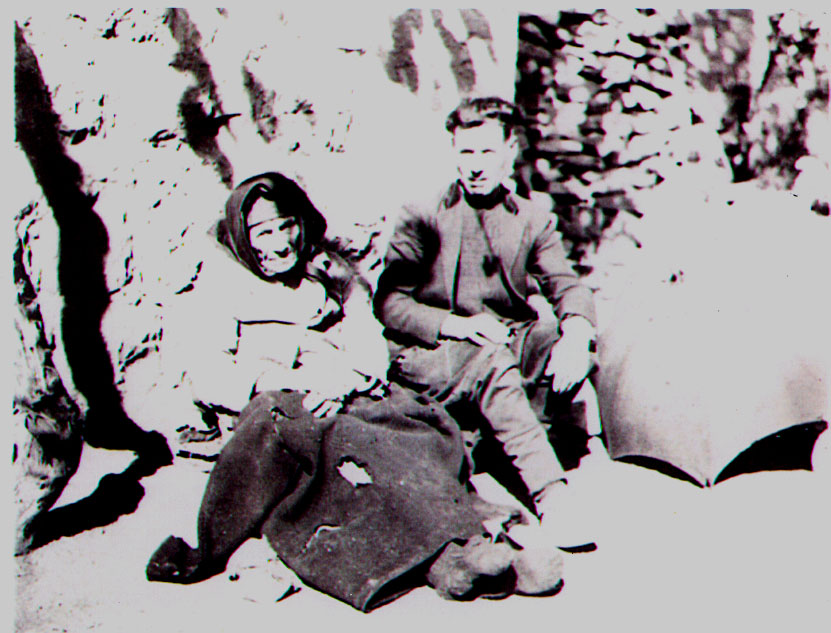
A very old photo of my grandmother, Eva Coory’s mother and brother, taken in Bcharre, Lebanon.

><

Dear David

How wonderful to hear your story. Yes, Aramaic is derived from an ancient form of Syriac and is now spoken only by small pockets of Syrian peasants and by Maronites in Bcharre, Lebanon. It was also the language that Jesus spoke. I did much research into my grandparents’ history and the history of Lebanon in general. My grandfather’s ancestors moved to the hills of Lebanon (Bcharre) around the 14th Century, from Iraq.

It is uncanny how similar are our fathers’ stories. My father, Joseph, was also beaten by the Catholic Brothers at school, and finally one day he ran home and refused to return to school. He was also shortsighted and told me he was often beaten because he couldn’t speak English, only Aramaic!

You may be interested in my book ‘Whatever Happened To Ishtar?’ A personal story, but which also delves deeply into the ancient history of my ancestors and the Aramaic language, which was eventually swamped by the advance of Islam and Arabic, which became the lingua franca of the Middle East.  BTW, Zahle is a name that pops up in my grandfather, Jacob Habib Fahkrey’s family tree.

Anxiety runs deep in my family tree as well.  In both the Lebanese and Italian sides of my family, volatile personalities reign.  My children have inherited the tendency to anxiety, although nowhere near as intense as preceding generations. Of course, both Lebanese and Italian peoples express the whole range of emotions vividly, which can sometimes be quite intimidating to others.

I agree with you about the blatant racism that thrived in those times. Once again, both my Lebanese and Italian ancestors experienced this.

I would love to hear more of your story.

Best wishes,
Anne

Read Here:  The Maronites In History 

Excerpt from ‘Whatever Happened To Ishtar?; A Passionate Quest To Find Answers For Generations Of Defeated Mothers’ 

><

Wherefore hidest thou thy face?…Wilt thou harass a driven leaf?    Job xiii: 24-25

….But you should also be proud that your mothers and fathers came from a land upon which God laid his gracious hand and raised his messengers.  – Kahlil Gibran, I believe in you (1926)

><

***This page is copyright to author Anne Frandi-Coory. No text or photograph can be copied or downloaded from this page without the written permission of Anne Frandi-Coory.***

><><

When I was a child, my father’s was the face I searched for whenever I heard heavy, non-nun-like footsteps echoing on the highly polished floors of the orphanage. I was always and forever tuned into the sound of footsteps. A nun’s footsteps sounded lighter, stress-free, and somehow patient, like they themselves were.  It was as if they had all the time in the world to get where they were going, praying as they went.

Once I was alerted that a nun was on her way, I would strain my ears for the accompanying rhythm, in tune with a particular nun’s footsteps, of the rosary beads clinking with the heavy crucifix hanging from a belt around her waist. I would know who she was before I saw her face. A visitor’s footsteps, on the other hand, were usually more purposeful, more intent on their course. Perhaps it was someone wishing to get the visit over with, to leave as quickly as possible. The fact that there were many children living there didn’t make the place any less sombre. Colours were an unnecessary luxury. ‘Interior décor’ was a phrase out of place and out of mind in that institution. My father, Joseph Jacob Habib Eleishah Coory, rarely visited me and I learned very early on not to expect to see anyone other than the Sisters of Mercy, day in and day out. Occasionally, a priest would visit the orphanage but I rarely had any significant contact with them. They were, as far as my child’s mind could fathom, so close to God and so holy that they would not want to bother with me. The nuns reinforced this perception by their subservient attitude whenever a priest or bishop made an entrance. But when my father came to visit me, I would feel a strange kind of comfort, almost a feeling of surprise, at the sight of him.

*****

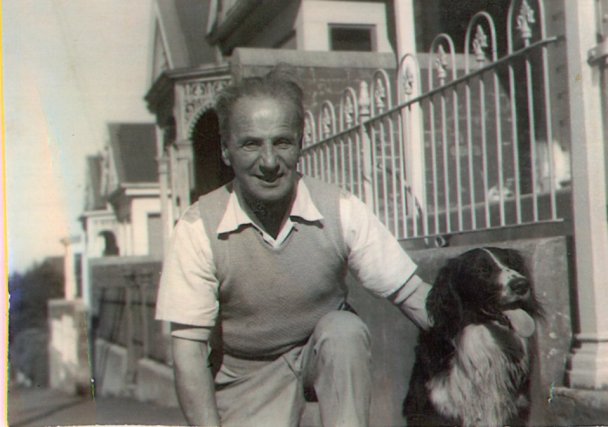
Joseph and Tim 103 Maitland St Dunedin

Anne’s father, Joseph Coory with his beloved dog Tim, outside his house at 103 Maitland Street, Dunedin NZ.

All through my childhood, I would reach out for his emotional support. and in his emotional immaturity, he would reach out for mine. As young as I was, I always sensed that he needed me as much as I needed him. In this way, we both survived my childhood. Perhaps it was my concern for him and his whereabouts when he left me that caused me so much anxiety. He could never stay for long and his leaving always caused my insides to churn, which I never really learned to deal with. A Catholic orphanage  was not the sort of place where your emotional needs were attended to. The most important thing here was the health of your soul. My father always seemed harassed and a bit lost, so eventually I avoided scenes of tears because it would only upset him. I had no idea what was happening to my father on the outside of the orphanage but it didn’t stop me from picking up on his moods and demeanour. Children like me become very adept at internalising emotions and hurts. But there were times when the dam burst, causing me to scream and yell so much that the nuns would lose their patience and lock me in a cupboard or a small room. There was always that air of emotional fragility about Joseph, my very being attuned and attentive to his every nuance. Too soon I would become the adult and he the child. Perhaps this was why I took so long to deal with my own emotional needs.

><

Joseph with his oldest & youngest sisters, Elizabeth & Pearl

><

Jacob and Eva Coory’s firstborn son, Joseph, followed two daughters, Elizabeth and Amelia. But sadly Joseph was not the healthy son his parents longed for. His sickly entry into the world was one of the reasons he suffered ill-health all of his life. According to his father’s diary, written in his native Aramaic, Joseph almost died when he was a newborn. He was so ill during his first two years that his mother wrapped him warmly and tightly and waited for him to die. Joseph suffered ill thrift all through his baby and toddler years because he could only suck small amounts of milk, sometimes bread soaked in milk. I was later to discover that Joseph’s birth had never been registered so there is no doubt that his parents expected that he would die. From his childhood to his death, he never ate a balanced diet, ever. He existed instead on bread and cheese, some fruit, and endless cups of sweet milky tea.  He was a simple man who attained the literacy levels only of a twelve-year-old. But he could speak English and Aramaic fluently. He left school at the age of nine and refused to return because of the beatings he says were meted out to him by the Christian Brothers. As a young boy he only spoke comfortably in Aramaic, so language was definitely a barrier to his learning. It has been confirmed by his cousins that his parents refrained from disciplining him because of his fragile health and that he, quite literally, got away with doing almost whatever he wanted to do at home. He in turn clung to them for the rest of their lives and he never left The Family home at 67 Carroll Street in Dunedin, where he was born.