Archive

Tag Archives: BOOKS In My Non-Fiction Collection-REVIEWS

***************
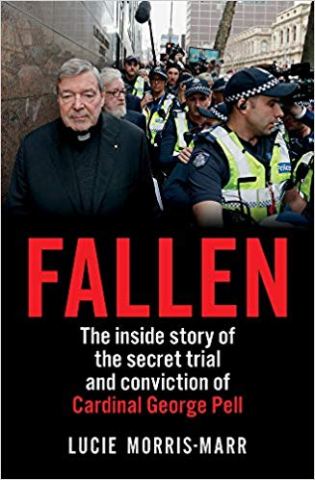
‘FALLEN’ written by investigative journalist Lucie Morris-Marr, follows the courtroom dramas of cardinal George Pell’s two closed court trials. The first trial was abandoned when the jury  could not reach a unanimous decision. Morris-Marr attended every court sitting over both trials. However,  only lawyers and barristers appearing for the Crown and for the Defence, along with the two juries, were permitted to hear the testimony of the surviving choir boy (‘Witness J’) in a closed court . He accused Pell of historical child sexual abuse offences committed when he and his friend were 13 years old.  The other choir boy involved in the sexual abuse offences at St Patrick’s Cathedral in Melbourne, died in 2014 of a heroin overdose.
Pell’s second  five-week trial ended in December 2018, when a jury found Pell guilty of sexual penetration of a child under 16, as well as four counts of committing an indecent act with, or in the presence of, a child. The verdict relates to two different incidents that took place when Pell was the archbishop of Melbourne.  Evidence was presented that Pell abused the two choirboys at St Patrick’s Cathedral after celebrating one of his first Sunday masses as archbishop. He abused Witness J a second time, two months later.  Parts of Witness J’s  testimony were read out by the prosecutor and Pell’s defence barrister during their closing arguments to the jury.
In Witness J’s  statement read by his lawyer outside the court following  the guilty verdict,  he dedicated the guilty verdict to his deceased friend and asked journalists to respect his privacy and that of his family including his young children, by not revealing his identity.
The harrowing accounts Morris-Marr writes about in her book relating to her investigation of George Pell over many months leading up to his secret trials, the loss of the job she loved at a Murdoch Media newsroom, and the physical strain on her mind and body, bear witness to the power that Pell and his supporters, both within and outside  the Catholic Church, wielded in Australia and around the world. The fact that the compelling testimony of  Witness J  swayed the jury to convict  such a powerful man must cement our faith in Australia’s  judicial system.

George Pell had the best Defence team money could buy and the onus was on the prosecution to prove Pell’s guilt, so the stakes were extremely high. When the unanimous guilty verdict was read out by the jury foreman, there was an audible collective gasp around the courtroom. It was evident that none was more shocked by the guilty verdict than Pell’s highly paid and over confident QC Robert Richter.  A subsequent Appeal by George Pell in the Victoria Court of Appeal  failed by two to one.

This book is a valuable record of the weeks and months leading up to the closed court trials and subsequent conviction at the second trial, of Australia’s highest ranking Catholic cleric and the third highest ranked Vatican official at the time of his arrest.

**********

Reviewer’s Note: I am surprised that the editor of the book  ‘FALLEN’   written by author/journalist Lucie Morris-Marr and published by Allen and Unwin,  did not pick up a significant error in the book before its publication. Another important book written by Chrissie Foster about her dealings with a callous George Pell when her two daughters had been repeatedly raped by a Catholic priest, is erroneously referred to in ‘FALLEN’ as  ‘Hell On The Way To Hell’  when in fact the correct book title is: 
Ms Foster also wrote the forward in Lucie Morris-Marr’s book.  Not a good look for either the author or the publisher of ‘FALLEN’. Hopefully this error can be corrected asap.
********
-Anne Frandi-Coory  3 November 2019

I first read In God’s Name in the early 1990s when I was at university, and although I was by then a lapsed, disillusioned Catholic, nothing prepared me for the revelations in the book. Until then I had no idea how deeply corrupt the Vatican/Catholic Church was, and specifically, the Vatican Bank. I have recently read it again.

Then I saw a Daily Mail post:

Mobster claims he helped Poison Pope John Paul I with cyanide and threatened to kill Pope John Paul II because they both tried to expose a billion dollar stock fraud scam involving cardinals and gangsters in Vatican City. (see full post below).

Needless to say, this time I was more prepared, what with the child sexual abuse scandal that has since rocked the Church to its core. The comments by the mobster confirm everything that investigative journalist David Yallop had revealed in  his book about the murder of a  pope… In summary:

During the late evening of September 28th or the early morning of September 29th,1978, Pope John Paul I, Albino Luciani, known as the smiling pope, died only thirty-three days after his election. The cause of death (Vatican officials refused to allow an autopsy) was announced to the world by the Vatican as ” myocardial infarction”. Yallop interviewed many people when he was writing In God’s Name including the pope’s  long  time personal physician. The doctor was absolutely shocked because as he told Yallop, his patient, a relatively young pope in his 60s,  was in perfect health and the only pills he took, were extra vitamins and  mild medication for low blood pressure.

During his research for the book, Yallop uncovered a huge chain of corruption  linking leading figures in financial, political, criminal, and clerical circles around the world in a conspiracy. The new pope was, although a humble man who enjoyed a simple lifestyle, a fierce opponent of corruption with an inner strength that must have alarmed his ‘minders’ when he ordered an investigation into the Vatican Bank, and the  methods employed by its President, Archbishop Paul Marcinkus. Yallop’s intensive research over three years maps the subsequent cover-ups and  upheavals within the Vatican,  and the actions of the mysterious and illegal branch of Freemasonry called P2  extending far beyond Italy in its accumulation of wealth and power , and also penetrating the Vatican.

In God’s Name is an informative and educational  read for Catholics and non-Catholics alike; for anyone who still believes that religious organisations are  in existence purely to set humanity’s moral compass or to direct the worship of culturally specific gods.  -Anne Frandi-Coory 

****************

The Daily Mail Post:
Mobster claims he helped Poison Pope John Paul I with cyanide and threatened to kill Pope John Paul II because they both tried to expose a billion dollar stock fraud scam involving cardinals and gangsters in Vatican City.

A mobster from the Colombo mafia family claims he helped poison Pope John Paul I with cyanide 33 days into his reign to stop the pontiff from exposing a billion dollar stock fraud scam. The startling revelation comes from 69-year-old Anthony Raimondi’s new novel When the Bullet Hits the Bone [published 2019].

Raimondi was a loyal member of the Colombo family – one of the notorious five Italian mafia families in New York City.

The Colombo family dealt in a host of criminal enterprises, including racketeering, contract killing, arms trafficking and loansharking.

The scene begins in 1978 when Raimondi, the nephew of infamous godfather Charles ‘Lucky’ Luciano, was recruited by his cousin Paul Marcinkus, who ran the Vatican bank in Vatican City.

The New York Post reports that Raimondi’s job was to learn the Pope’s daily habits and be there when Marcinkus spiked John Paul’s nightly cup of tea with Valium.

Raimondi notes that the Valium worked so well that the Pope wouldn’t have woken up ‘even if there had been an earthquake.’

He said: ‘I stood in the hallway outside the Pope’s quarters when the tea was served.’

‘I’d done a lot of things in my time, but I didn’t want to be there in the room when they killed the Pope. I knew that would buy me a one-way ticket to hell.’

Meanwhile, Marcinkus prepared a dose of cyanide for the Pope.

‘He measured it in the dropper, put the dropper in the Pope’s mouth and squeezed. When it was done, he closed the door behind him and walked away,’ Raimondi said.

Shortly after, a papal assistant reportedly checked on the Pope and screamed that ‘the Pope was dying!’

At which point, Marcinkus and two other cardinals rushed into the bedroom and pretended to be horrified by what they saw.

Raimondi said if the Pope had kept his mouth shut, ‘he could have had a nice long reign.’

Next on the list was John Paul II, who seemed set on exposing the inside job as well.

Raimondi, a [self] made man, was called back to the Vatican and told to prepare for a second murder at the behest of the fraudsters.

He reportedly told them: ‘No way. What are you going to do? Just keep killing popes?’

Knowing he risked being killed by the mobsters, John Paul II allegedly chose to keep quiet about the illegal dealings.

John Paul II would go on to serve the second longest reign in modern history before he died at age 84 in 2005.

This apparently prompted days of drunken partying for the mobsters and corrupt cardinals in Vatican City.

Raimondi said: ‘We stayed and partied for a week with cardinals wearing civilian clothes, and lots of girls.’

‘If I had to live the rest of my life in Vatican City, it would have been OK with me. It was some setup. My cousins all drove Cadillacs. I am in the wrong business, I thought. I should have become a cardinal.’

Raimondi dismisses those who question his story or say it closely resembles ‘The Godfather III.’

‘It was a terrible movie. To tell you the truth I don’t really remember it,’ Raimondi told The Post.

‘What I said in the book I stand by till the day I die. If they take [the pope’s body] and do any type of testing, they will still find traces of the poison in his system.’

Follow Anne Frandi-Coory’s blog HERE at: Frandi.blog

********

********

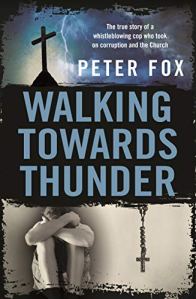
Author Peter Fox acknowledges in his book ‘Walking Towards Thunder’  that so many people supported  him, and joined with him, to pressure the then prime minister Julia Gillard to set  up the Royal Commission into Institutional Responses  into Child Sexual Abuse, but there is no doubt that Fox’s  fight to put children’s safety  ahead of the reputation of the Catholic  Church was the catalyst. As has often been stated since, only an atheist, female prime minister would have listened and acted; whatever the truth, the timing was crucial.

What is truly appalling is that a corrupt NSW Police Force destroyed Detective Chief Inspector Peter Fox’s exemplary career in order to protect the Catholic Church, its wealth and power in Australia. It’s difficult to fathom that this corruption could even take hold and destroy hundreds of children’s lives in a modern secular country like Australia.

Fox’s empathy for the children abused by Catholic clergy and their distraught families shines through the pages of this book.  The heart wrenching stories are even more soul destroying when no matter what Fox did, there was nowhere to turn to get help for these suffering children, while paedophile priests were shifted around from parish to parish, supported by bishops and archbishops. We now know that paedophile priests passed around the names of children they had abused to other priests so that some children were raped repeatedly by more than one priest and yet the NSW Police and the Church continued to attack Peter Fox and deny this was happening.

Fox’s attention to detail in writing reports and conducting interviews showed him to be an outstanding detective, but this did not save him from the endemic corruption within the NSW police force which allowed the Catholic Church to hide the crimes of its clergy for decades.  Peter Fox writes about the similar ‘brotherhoods’ operating within the Church and police force and how they close ranks to protect reputations at all costs, but these costs were too high for child victims, and for Detective Chief Inspector Peter Fox and his family.

The chapter on the NSW commission of inquiry into police corruption with Margaret Cunneen appointed as chief commissioner, will leave readers wondering just how deep corruption is within our justice system. The days of tortuous, seemingly aimless questioning  of Fox, whose health was visibly deteriorating;  a detective  who was doing his job and doing it diligently, is particularly harrowing to read. The intimidation of Fox’s wife in the courtroom during his interrogation is unsettling to say the least; it was devastating for Fox who was well aware of what was happening while he was being interrogated in the dock.

When the Child Abuse Royal Commission was finally announced many had expected the then NSW Premier Barry O’Farrell would abandon the planned  Cunneen NSW Police Inquiry as being a smaller inquiry covering the same matters.  However, the Police Inquiry proceeded.

Around the time the Cunneen Inquiry’s report was being  completed, and the Child Sexual Abuse  Royal Commission was about to begin, George Pell was promoted to cardinal by his Church and a “discreet farewell’ for him was attended by, among other dignitaries, NSW  Attorney General Greg Smith and NSW Premier O’Farrell, who expressed the “greatest respect” for George Pell and his Church.  One can only imagine how this made the victims and their families feel.  And  then O’Farrell made a statement that surely will go down in history as an indictment on the NSW state government which must have been  well aware of the children reportedly raped by Catholic clergy at the time, and in light of Pell’s later conviction for child sexual abuse: “In Australian society the [Catholic] Church always gets priority and central position.”

In my view, after reading ‘Walking Towards Thunder’ the Cunneen Inquiry appears to have been set up solely to destroy Peter Fox, along with the rape victims’ statements he recorded and other documented evidence he had collected.  Documents and statements mysteriously disappeared and police officers giving evidence at the Cunneen Inquiry claimed that those documents and statements never existed, even though victims, journalists and family members all confirmed Fox’s evidence which he gave under cross examination, which I have already noted was brutal.

These are my own assessments after reading ‘Walking Towards Thunder’ and I have no doubt that history will hold the NSW Police Inquiry up for what it was; a sham! The ABC later reported that the four-volume report, three volumes of which had been released by Commissioner Margaret Cunneen SC, uncovered no evidence to show that senior police ever tried to ensure child abuse offences were not properly investigated. History will not be kind to Commissioner Cunneen. We now know that Police did conceal evidence, destroyed or ‘lost’ statements by victims and witnesses, and police had evidence that the Catholic Church was intimidating witnesses and victims so they would not go to the police with their claims.  These matters were all later revealed during the Child Sexual Abuse Royal Commission.

It seems during the time covered in Peter Fox’s book, good priests who tried to expose child sexual abuse by fellow clergy were ostracised in their parishes, honest police were leaving the police force and school principals were driven out of their jobs for trying to protect children under their care. Every one of them paid a heavy price, some tragically more than others.

This is a well written book which may have been enhanced with a reference index notating names, important events and dates to enable the reader to traverse the wealth of information contained in the book.

‘Walking Towards Thunder’ will give readers a close up look at how a hard-working, honest police officer fought the powerful Catholic Church and the NSW police force to protect victims of clergy sexual abuse from further abuse and to stop more children being abused in the future. He and his family have paid a huge price. I have no doubt he will be vindicated. It is also a must read for all victims and survivors of child sexual abuse by Catholic clergy. Simply by victims revealing what had happened to them, meant they were vilified by people in their own parishes for tarnishing the reputation of their beloved church.  Most of the books about Catholic paedophilia I have read and reviewed, were written by victims and survivors or their families. Peter Fox’s book gives us a clear view of this Catholic scourge from a different angle, thereby revealing just how the Church hierarchy in Australia was able to coverup the rapes of hundreds of innocent children for decades.

-Anne Frandi-Coory 24 September 2019


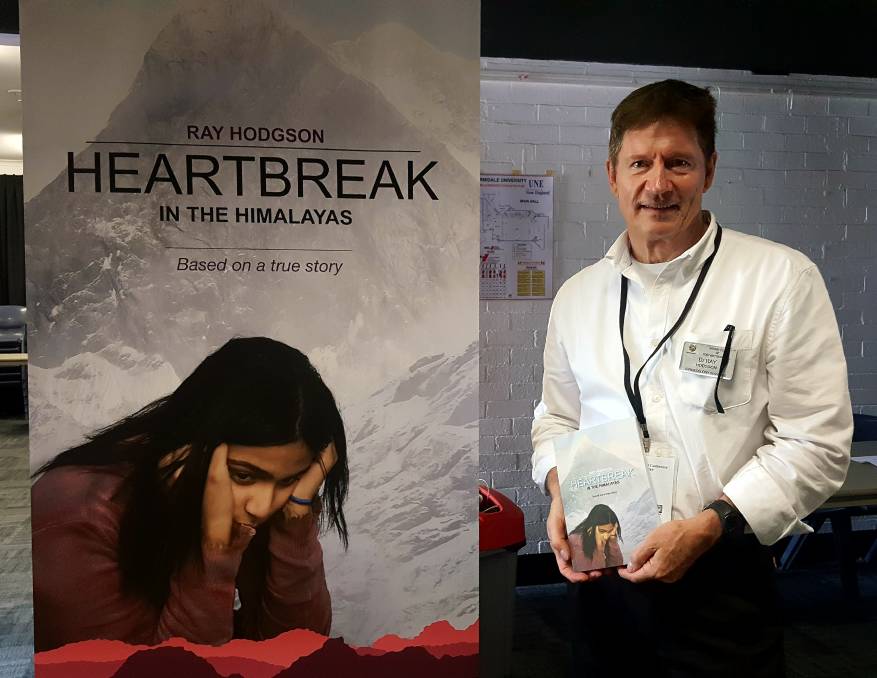
‘Heartbreak In The Himalayas’ by Dr Ray Hodgson


r0_0_3440_2660_w1200_h678_fmax

If nothing else, reading ‘Heartbreak In The Himalayas’ by Dr Ray Hodgson has made me realise how lucky I was to have the best prenatal care and my children delivered by well qualified doctors and nurses in a modern New Zealand hospital, with the best equipment. Postnatal care for mothers and babies is vital for their ongoing health and to detect any abnormalities in the babies’ or their mothers’ recoveries.  Not having ever travelled to Nepal, a patriarchal country with appalling rates of death in childbirth of both mothers and babies, I had no idea of the primitive conditions mothers and their babies still have to endure, even in this 21st century, and it is not surprising that so many do die. There is very scant basic prenatal or post-natal care, and often when women and girls are seen by a doctor, or midwife, it is too late to save their babies.

But this inspiring book is so much more than a reminder of how lucky we are to live in a wealthy and largely egalitarian country, which we take for granted. It is an insight into the enduring spirit of poor rural Nepali women and girls who suffer debilitating pain and social stigma from the horrific effects of pregnancy and childbirth as a result of giving birth too young, too many pregnancies, and with little spacing between those pregnancies. The most common problem among these mothers is uterine prolapse estimated to affect 850,000 females in the country. Amnesty International suggests that the condition impacts around 10 percent of the country’s total female population of almost 14 million and it is considered to be a human rights issue as well as a health issue by Nepal’s Supreme Court. Cultural attitudes favour males over females and as a result, according to the World Economic Forum, the 2016 Global Gender Index ranks Nepal 110th out of 144 countries on gender parity. Girls receive a basic formal education, or none at all, while boys are encouraged to stay at school and later to travel to cities or overseas to further their tertiary studies.

Females grow and harvest crops, take care of children, cook meals. Mothers carry heavy loads while pregnant, and also immediately after giving birth; there is no relief from their punishing workloads.

By comparison, unless men travel to India for seasonal work, their light work load entails selling any excess crops grown and harvested by females.

Dr Ray Hodgson is an associate professor in Obstetrics and Gynaecology based in Australia. Following his discovery of the appalling state of women’s health in Nepal in 2010, he founded the humanitarian organisation ‘Australians For Women’s Health’. As a specialist gynaecological surgeon and obstetrician, Dr Hodgson leads teams of volunteers on medical camps to remote regions of Nepal where they provide surgical care, and treatment of general female health issues, to underprivileged woman and girls. During the temporary camps, each member of the medical team even manages to pass on their skills to Nepali doctors, nurses and midwives.  They often have to work in tents using flashlights during power failures, and at times have had to donate their own blood in order to save dying patients.

Uterine prolapse is a debilitating condition which can cause years of excruciating physical, emotional, not to mention, social pain.  Uterine prolapse is also commonly referred to as pelvic organ prolapse or genital prolapse. Nepali men are generally uninterested in what they perceive as ‘female problems’, comfortable as they are in their total ignorance of what women actually suffer and endure. Added to that, cultural norms dictate that education is ‘wasted’ on girls, because they are expected to work with their mothers in the fields and at home. Their formal education is basic and they often marry too young, before their bodies are fully grown and ready for sex, or for giving birth.

Menstruating women and girls are evicted from their homes, with their babies, and young children, and even exiled from their villages, adding humiliation to their extreme physical suffering.

Nothing demonstrates the disregard men have for their wives’ and daughters’ suffering more than the banishing of menstruating females to the windowless, doorless, menstrual huts or chhaupadi, due to Nepali cultural rituals of impurity or menstrual taboos and Nepal has one of the most brutal cultural practices of this type in the world. The use of chhaupadi continues to cause the deaths of hundreds of women and girls from exposure, dehydration, snake bites, smoke inhalation, starvation, blood loss and many other health issues. One is left to wonder how Nepali husbands and fathers can be so cruel and uncaring about what happens to their wives and daughters banished to the outdoors in one of the harshest climates around the globe. These unfortunate females are expected to walk for hours, sometimes days, with uterine prolapse, and other debilitating internal injuries, to get the most basic health care. The great majority of pregnant women and girls do not receive any prenatal or postnatal care at all, so that their own ignorance in caring for themselves is exasperated and passed on from generation to generation.

Dr Hodgson promises to change that. His camps have already improved the lives of hundreds of mothers and their babies, and he wants to do so much more. Sadly, each day the short-term camps operate, there are endless queues of desperate women who have to be turned away, and this in itself is heart-breaking.  The doctor goes on to say that the severe gender imbalance in rural Nepal is one of the reasons he believes his team’s work is so crucial.  When the first camps were implemented the team focused primarily on helping women with prolapse but the extent of the problem loomed so large, their life-saving work extended to include general women’s, and maternal, health.

The author’s aim is to raise enough money to build a permanent hospital for mothers and babies in remote Nepal, not only as a base for his team’s life-changing surgery and maternal healthcare, and to end the frustration, the inadequacy, of the short-term camps, but also to provide a teaching hospital to train more midwives and surgeons. Dr Ray Hodgson hopes that the sale of his book ‘Heartbreak In The Himalayas’ will generate enough funds to finance his hospital, and perhaps in the future his project will influence cultural change, but he is also realistic: “The challenges are both medical and cultural in what is a highly patriarchal country.”

Dr Ray Hodgson’s story details the adventures and challenges that present themselves during a four-week surgical camp in a remote area of Nepal. The story is based on, and contracts, actual events that he and his volunteer group have faced over the years. But ‘Heartbreak’ is not all about the suffering of women and girls…it is also about hope for a better life for all females in Nepal in the future and Dr Hodgson is right when he says that when girls are better educated, Nepal will become a more equal society. His views are supported by historical evidence that well educated women make better and healthier mothers who in turn are delivered of healthier babies who in their turn pass this on to future generations.

To illustrate his prediction, Dr Hodgson has cleverly incorporated in his beautifully written book, a thread running through the main events, which helps to alleviate the horror the reader finds within these pages; it features an intelligent and resourceful 12 year old girl called Poppy.  Poppy helps in the camp’s kitchen, before and after school, to provide meals for the medical team and its staff, who have all come to love her.  This young girl has a particularly difficult life, living with her brother and father, without her mother who tragically died giving birth to Poppy. By this process, we are given a closeup, insightful view into the hardship young girls face, and what life is like living in a primitive one room hut with no privacy. Poppy’s future appears bleak indeed, but there is hope that Dr Hodgson might find a way to convince Poppy’s father that she deserves a good education, with the help of a scholarship, and that she in turn will be able to help the people of her country appreciate the contribution women could make in transforming Nepal into a more modern and egalitarian society.

**********

Please help author Dr Ray Hodgson raise enough funds to build his teaching hospital for mothers and babies in rural Nepal by buying his  book; you will not only be buying a great read, but most important  of all, you will be helping to save the lives of hundreds of mothers and babies which will in turn set rural Nepal on a path to a more equal society where females are valued  as much as males are.

************

-Anne Frandi-Coory 16  July 2019 


**

The Silk Roads; A New History of the World

by Peter Frankopan, a senior research fellow at Worcester College, Oxford, and Director of the Centre for Byzantine Research at Oxford University.

*******

img20180301_11475993

*******

In 2013, Chinese President Xi Jinping announced the launch of both the Silk Road Economic Belt and the 21st Century Maritime Silk Road, infrastructure development and investment initiatives that would stretch from East Asia to Europe. The project, eventually termed the Belt and Road Initiative (BRI) but sometimes known as the New Silk Road, is one of the most ambitious infrastructure projects ever conceived. It harkens back to the original Silk Road, which connected Europe to Asia centuries ago, enriching traders from the Atlantic to the Pacific.

I think all current politicians and economists should read this book, because history repeats again and again but then, politicians and world leaders never seem to learn. Frankopan’s research is extensive and he presents many source testimonies and documents to support his claims. His writing moves along at a swift and thoroughly engaging pace. I would go so far as to recommend this book to college teachers. It gives a rare and independent insight into the political history of our world.

Historically, the Silk Roads were a network, with their geographical centre in Asia Minor, Central Asia, the Caucasus, China and the Middle East; territories that met, and traded with one another along arterial routes of communication. These routes influenced the world as we know it today. Ideas, cultures and religions were also spread via this network.

Bettany Hughes, whose book A Tale of Three Cities; ISTANBUL is also a great read, says of Frankopan’s ‘The Silk Roads’: How shamefully we in the West have been caught in the 20th and early 21st centuries with our strategic trousers around our ankles, … failing to remember why the map of the Middle East is drawn with such straight lines. Our ancestors would have been horrified by today’s wilful ignorance. Ancient reports of the region (studded, admittedly, with some fantastical nonsense) would put many modern memos to shame. Tellingly, Frankopan includes some recently released diplomatic cables and US political briefings describing Afghanistan, Iraq and Iran that are cringingly callow, and exemplify the danger of living in what the late historian Eric Hobsbawm called the ‘permanent present’, ignorant of our past.

In this vein, to quote Frankopan: The liberation of Christendom seemed to be at hand…it soon became clear how wrong these reports were…what was heading towards Europe was not the road to heaven, but a path that seemed to lead straight to hell. Galloping along it were the Mongols…Later the Mongols became increasingly interested in the techniques that had been pioneered by western Europeans, copying designs for catapults and siege engines created for the crusaders in the Holy Land and using them against targets in East Asia in the late thirteenth century. In this way Control of the Silk Roads gave their masters access to information and ideas that could be replicated and deployed thousands of miles away.

In the sixteenth century the age of empire and the rise of the west were built on the capacity to inflict violence on a major scale eg. the Americas. By then the best money was to be had in human trafficking and it was said to be ‘in league with the crown and with god.’ Before the discovery of the Americas, trading patterns ‘had begun to pick up’ and many scholars argue that this was due to improved access to precious metals and ‘the rising output of mines.’ But other scholars ‘point to the fact that tax collection became more efficient in the second half of the fifteenth century.’ [Perhaps our current political leaders and economists should take note]: ‘Economic contraction had forced lessons to be learned…’ and the collection and setting of taxes paid a crucial part in those valuable lessons.

I thought The Road to Empire a very interesting chapter and one which mirrors much of what is happening in our 21st Century:

Ottoman bureaucrats had proved to be highly skilled administrators, adept at centralising resources …as the empire swallowed up more territory in the fifteenth and sixteenth centuries, this had worked efficiently and smoothly. When the momentum of expansion slowed…the fragility of the system became apparent, under pressure from the cost of sustaining military action on two fronts- in Europe in the west and with Safavid Persia in the east…but also as a result of climatic change that had a particularly severe impact on the Ottoman world. [my emphases].

Frankopan discusses at length the different outcomes relating to the gap between rich and poor in Islamic countries as opposed to Christian countries in the west. It may not surprise many readers that Islamic countries had the more equitable laws which meant less concentration of wealth and property within a few elite families, including royal dynasties, as in the west.

Under the surface, powerful currents were swirling unseen…Robert Orme’s attitudes were typical of the eighteenth century; The first official historian of the East India Company, Orme penned an essay whose title On The Effeminacy of the Inhabitants of Indostan [India], reveals much about how contemporary thinking had toughened. A bullish sense of entitlement was rising fast. Attitudes on Asia were changing from excitement about profits to be made to thoughts of brute exploitation…It was the Wild East – a prelude to similar scenes in the west of North America a century later. Go to India, the memoirist William Hickey’s father told him, and cut off half a dozen rich fellows’ heads… and so return a nabob. Serving the East India Company in India was a one-way ticket to fortune.

The Road To Crisis is an intriguing chapter in which late eighteenth century Russia looms large as a threat to Britain. Anyone interested in the part Russia played in forming the geopolitical landscape of the 21st century, will find this very interesting, as I did. Much of what is happening in our world today, makes more sense, and I understand the reasons why China and Russia do not trust the west. This includes the aftermath of the Crimean war and Russia’s determination to claim back the Crimea peninsula.  The west would eventually help the spread of Islam in the East as a way of curtailing Russian expansionism.

‘In the late nineteenth century, Russian confidence, bullishness even, was rising fast.’ Britain planned to expand its territories into the far East, and in this quest, was in competition with Russia. But once China granted trading privileges to the British, they had little hesitation in using force to preserve and extend their position. Central to the commercial expansion was the sale of opium despite fierce protests by the Chinese, whose outrage at the devastating effects of drug addiction was shrugged off by the British authorities. The opium trade had expanded following the Treaty of Nanking in 1842, which opened up access to ports where the trade had been restricted previously, while also ceding Hong Kong to the British; further concessions were granted after British and French forces marched on Beijing in 1860, looting and burning the Old Summer palace.

Britain was also keeping a watchful eye on Russia which was meddling in one of Britain’s most prized possessions: Persia with its black gold. ‘Russian ghosts were everywhere. Anxious Foreign Office officials pored over a stream of reports on the activities of Tsarist officials, engineers and surveyors in Persia, that was flooding back to London.’

The reasons for the First World War: ‘World leaders go to war for their egos…’ in this case the fight over Persian oil, and the carving up of Ottoman Empire territories. Offerings of an ‘empire’ to leading figures in the Arab world were made in return for their support. The wheeling and dealing, involving Russia, Germany and Britain, while the first world war was raging, is sickening, and all the while Britain was fearful of ‘losing’ India. ‘The former British Prime Minister Arthur Balfour was anxious that ‘a rapid defeat of Germany’ would make Russia more dangerous still by fuelling the ambitions of the latter to the extent that ‘India might be at risk’. There was another worry: Balfour had also heard rumours that a well-connected lobby in St Petersburg was trying to come to terms with Germany; this he reckoned would be ‘as disastrous for Britain as losing the war’.

Both Britain and France passionately claimed to have noble aims at heart and were striving to set free ‘the populations subject to the bloody tyranny of the Turks’, according to The Times of London. ‘It was all bad’ wrote Edward House, President Wilson’s foreign policy adviser, when he found out about the secret agreement from the British Foreign Secretary. ‘The French and the British are making the Middle East a breeding place for future war’. [my emphasis]

…By the end of 1942, the thoughts of the new allies, Britain, the USA, and the Soviet Union were turning to the future…it was clear that the ‘effort, expense and trauma of another massive confrontation had exhausted western Europe’. It was already obvious that the old empires had to be wound down. Such chapter titles as The Road to Genocide, The Road to Super Power Rivalry, and The Road To Catastrophe are a good indication of what followed the Second World War. Most of us know some of this history, but The Silk Roads describes in detail, much of it in newly released source documents, the tragic consequences of this, to my mind, a completely unnecessary war. The claim in this book that world leaders go to war largely for their egos, is as true today as it has been throughout human history.

Post Second World War there was concern across the world for the seemingly out-of- control proliferation of nuclear weapons manufacture. Most readers will by now be well versed in the reasons for the later USA invasion of Iraq, but many will be surprised by the indirect involvement of Israel, USA, England, Italy, France and Russia in the years leading up to the invasion.   Few had doubts that the research reactors, powered by weapons grade uranium and other materials essential for dual use, as well as separation and handling facilities capable of extracting plutonium from irradiated uranium, were solely for energy purposes. The west turned a blind eye as and when needed. As Pakistani scientists noted ruefully: ‘…the western world was sure that an underdeveloped country like Pakistan could never master this technology…and yet at the same time western countries made hectic and persistent efforts to sell everything to Pakistan. They literally begged us to buy their equipment’.

Frankopan writes:

As it was, it was not hard to see how stern talk from countries like the US, Britain and France, which refused to be subject to the inspections and rules of the International Atomic Energy Agency, grated with those that did and had to conduct their research in secret; but the real hypocrisy, in the cold light of day, lay in the enthusiasm with which the developed world rushed to earn hard cash or gain access to cheap oil.

There were half-hearted attempts to curtail the spread of nuclear materials. In 1976, Kissinger suggested that Pakistan should wind down its processing project and rely instead on a US-supplied facility being built in Iran that was part of a scheme devised by none other than Dick Cheney, for the plant in Iran to serve as a hub for energy needs across the region. When the President of Pakistan turned down this offer, the US threatened to cut off the country’s aid package.

In 1980 US President Carter’s handling of the hostage situation and the Iranian oil embargo was a catastrophe. Operation Eagle Claw, the covert mission he authorised to rescue hostages… ‘was a propaganda disaster’… this was but one disaster in a changing world order. Countries were fighting back against the hypocrisy of the west.

In the mid-1980s, when the United Nations reports concluded that Iraq was using chemical weapons against its own civilians, the US responded with silence. Condemnation of Saddam’s brutal and sustained moves against the Kurdish population of Iraq was conspicuous by its absence. It was simply noted in American military reports that ‘chemical agents’ were being used extensively against civilian targets. Iraq was more important to the United States than the principles of International Law – and more important than the victims.

The chapter on the Soviet invasion of Afghanistan, its subsequent withdrawal of troops and weaponry, and the involvement of China, USA and Saudi Arabia in training and supporting Islamic militants is a must read.

Those resisting the Soviet army were supplied with money and weapons by the three countries. The long-term implications and consequences are now well known and documented, if not the initial struggle in ridding Afghanistan of the Soviet invaders.

Men of Saudi extraction who followed their conscience to fight in Afghanistan were highly regarded. Men like Osama Bin Laden – well connected, articulate and personally impressive – were perfectly placed to act as conduits for large sums of money given by Saudi benefactors. The significance of this of course, only became all too apparent later.

Frankopan lays out in detail how these events have made our world much more dangerous, and volatile, than it ever was.

Things were not going well between the USA and Iraq for various reasons, and there was mistrust on both sides. Rumours were rife that the USA was about to overthrow Saddam. Consequently, ‘…in one of the most damning documents of the late twentieth century, a leaked transcript’ of the then ambassador’s meeting with the Iraqi leader in 1990, reveals that she told Saddam that she had ‘direct instructions from President Bush to improve our relations with Iraq…we know you need funds…’. Iraq was running up debts in the war with Iran and the depressed price of oil presented problems for the economy. Saddam subsequently asked the ambassador what USA’s opinion was on his solution: to take over control of the Shatt al-Arab waterway, a region over which Iraq was involved in a long-running dispute with Kuwait. The ambassador answered, [to summarise], that ‘…the Kuwait issue is not associated with America’. Saddam had asked for a green light from the US, and he got one. The following week he invaded Kuwait.  Frankopan:

The consequences proved catastrophic. Over the course of the next three decades, global affairs would be dominated by events in countries running across the spine of Asia. The struggle for control and influence in these countries produced wars, insurrections and international terrorism – but also opportunities and prospects, not just in Iran, Iraq and Afghanistan, but in a belt of countries stretching east from the Black Sea, from Syria to Ukraine, Kazakhstan to Kyrgyzstan, Turkmenistan to Azerbaijan, and from Russia to China too. The story of the world has always been centred on these countries, but since the time of the invasion of Kuwait, everything has been about the emergence of the New Silk Road.

In conclusion, under the chapter The New Silk Road Frankopan warns, and I quote in full: In many ways, the late twentieth and early twentieth centuries have represented something of a disaster for the United States and Europe as they have played out their doomed struggle to retain their position in the vital territories that link east with west. What has been striking throughout the events of recent decades is the west’s lack of perspective about global history – about the bigger picture, the wider themes and the larger patterns playing out in the region. In the minds of policy planners, politicians, diplomats and generals, the problems of Afghanistan, Iran and Iraq seemed distinct, separate, and only loosely linked to each other…While we ponder where the next threat might come from, how best to deal with religious extremism, how to negotiate with states who seem willing to disregard international law, and how to build relations with peoples, cultures and regions about whom we have spent little or no time trying to understand, networks and connections are quietly being knitted together across the spine of Asia; or rather, they are being restored. The Silk Roads are rising again.

********


-Anne Frandi-Coory

A Tale Of Three Cities ISTANBUL 

-Bettany Hughes

*****

A Book Review – 5 stars *****


Byzantion of Greece’s ancient past,  the capital of the Christian Byzantine Empire, famed Constantinople of New Rome and Muslim Ottoman Empire that today goes by the name of Istanbul, Turkish republic.

‘Istanbul is the city of many names’, writes Bettany Hughes: Byzantion, Byzantium, New Rome, Stambol, Islam-bol are just a few of them. And Istanbul today ‘is lapped by the Golden Horn, the Bosphorus, and the Sea of Marmara; to the north is the Black Sea and to the south, through the Hellespont or Dardanelles, the Mediterranean.’

A diamond mounted between two sapphires and two emeralds…the precious stone in the ring of a vast dominion which embraced the entire world as described in ‘The Dream of Osman’ c. AD 1280.

Hughes guides the reader around the city that I wish I had visited. It is obvious from reading this book that the author has walked Istanbul’s streets and knows the city well, and she has meticulously researched  its 8000 years of history. I can assure you that this is no dreary history book the likes of which bored us to tears at school. The ancient town of Byzantion’s King Byzas (legend has it that his father was Poseidon, his grandfather, Zeus) was well located at the intersection of trade routes. Eventually the Roman emperor Constantine decided that ‘Old Rome’ was too far away from all the action and over time the City of Constantine became Constantinople, the New Rome, capital of the Roman Empire itself. The gateway between East and  West. Constantinople’s Christian name was changed to Istanbul around 1923 after the fall of the Ottoman Empire.

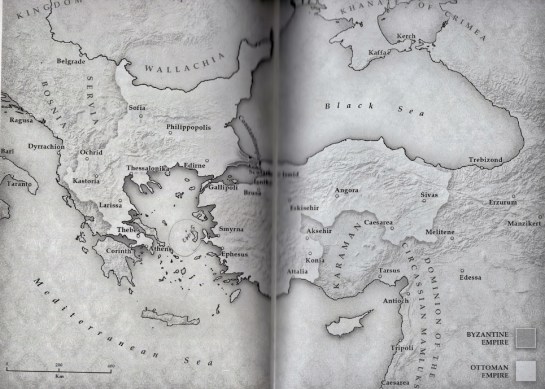
The book has short chapters with clear and helpful titles, dated in both Western and Islamic calendar formats where appropriate.  It enables readers to navigate this vast book in piecemeal fashion, but I found it difficult to  put this book aside; it is so well researched and written, with personal written accounts from people who were present during many of the historical events, which made the book all the more fascinating. I particularly enjoyed the frequent references to current and recent archaeological digs the findings of which verify historical accounts.  Hughes includes several maps and colour plates, which I constantly referred to as I was reading. It is evident that the West owes far more to Eastern cultures than we have been ready to believe in the past. The Roman Empire pillaged much wealth from Egypt and the East and in turn the Ottomans pillaged from Roman territories. It is arguable that the rabble that made up early Western civilisation reached a turning point when it invaded and colonised Egypt.

*****

Ottoman and Byzantine territory in the east Mediterranean c. AD 1451


*****

Muslim and Christian lived in relatively peaceful harmony during the Ottoman era but both sides could be extremely brutal whenever their territories or power were threatened. The Ottomans, however, were far more than their harams and baths, which titillated and attracted travellers; they were skilled diplomats and traders. Christian slave boys ‘harvested’ from the West were trained as interpreters.  Called Dragomans, one of their critical attributes was their facility with languages, and some of them could speak up to seven languages which enabled the empire to spread its culture and bargain with valuable commodities to negotiate peace. When the Ottoman Empire began to crumble at the beginning of the twentieth century, Germany, France and Britain ‘fought over the spoils’ and it is apparent that the after-effects of this breaking up of once cohesive territories helped to turn Christianity and Islam against each other which we are still witnessing in modern times. Millions of refugees were displaced during the carve up of territories, and millions died.

This book, as well as being a great read, informs readers on how the current geo-political era came into being, and it does not always put the West in a good light. We owe so much of the great advances and wealth in our Western civilisation to the East, and let us not forget, to Islam

-Anne Frandi-Coory  27 October 2017

*****

Also here on Anne Frandi-Coory’s Facebook page: 

https://www.facebook.com/myhomelibrary/


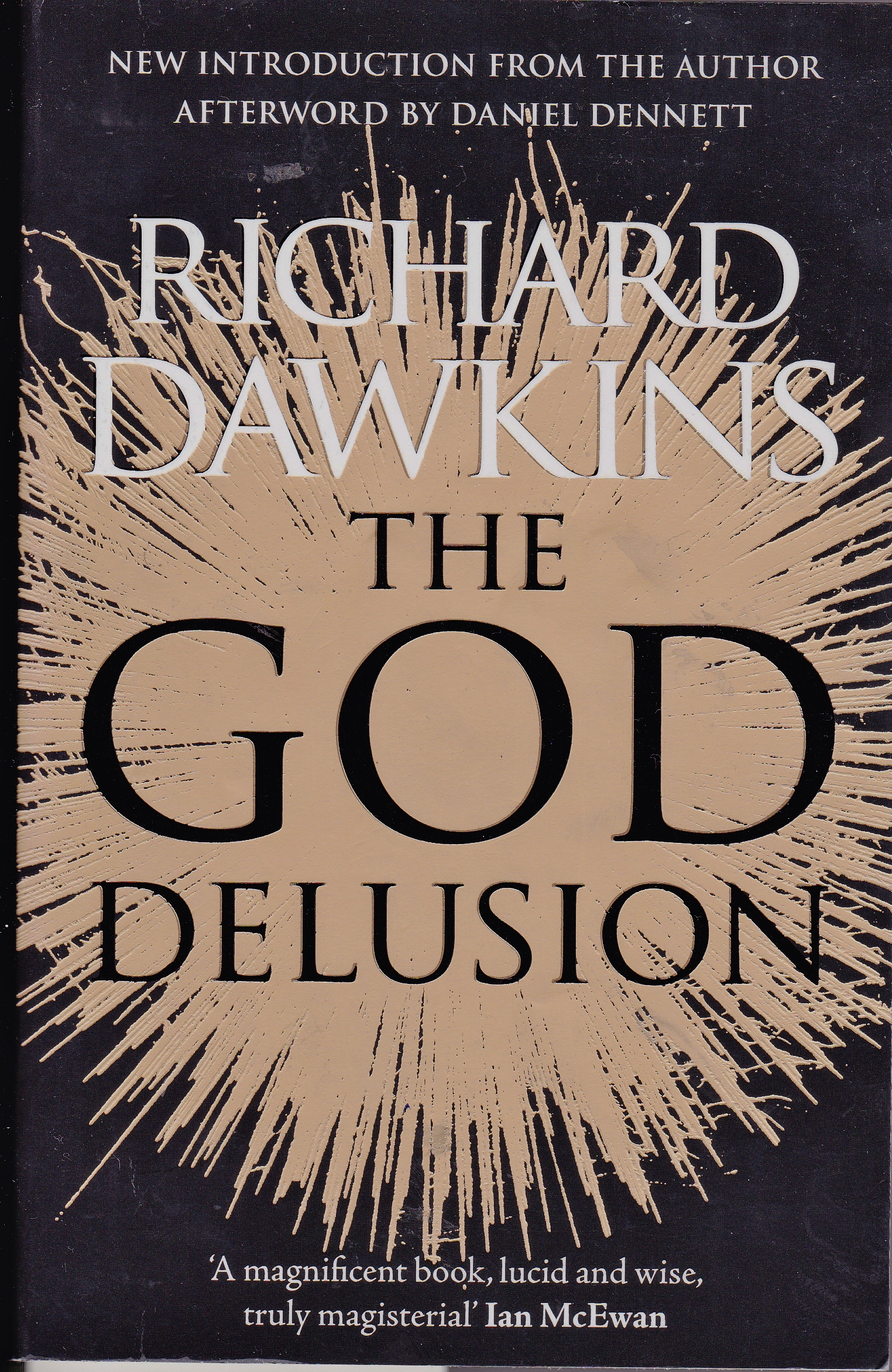
The God Delusion is a great read; funny and witty in places and deadly serious in others. The author, Richard Dawkins is a professor and a scholar of renown and of course the brilliant writer of several significant books.

The God Delusion

**********

The God Delusion is divided into chapters with the several headings within each chapter making the book easy to read.  Dawkins is an atheist who has written, and lectured on, a great deal about the harm religion does to children, by religious indoctrination, which he believes is a form of child abuse. This book was right up my alley, so to speak. Christianity, just as much as Islam, teaches  that unquestioned faith is a virtue.

Religion, whether either one or other of the three Abrahamic religions, Judaism, Christianity or Islam, is full of contradictions…no wonder children are confused. And it’s not just Muslims who are inspired to become martyrs. I can remember as a child revering those Christian martyrs whose stories we heard every day from the pulpit or in catechism classes. These three monotheistic religions have engaged in extreme violence against their respective ‘infidels’ and apostates. One only has to read the Qur’an to know that Islam is not a religion of peace.  Dawkins quotes Ralph Waldo Emerson “ …the religion of one age is the literary entertainment of the next”…Except, writes Dawkins, ‘we are not allowed to laugh at Islam, under threat of fatwas!’ And anyway, Dawkins comforts his fellow atheists by promising us that monotheism is doomed to subtract one more god and become atheism. It cannot come soon enough for me and the millions of other atheists around the world.

Another thing about monotheistic religions that has no place in 21st century in my view, is that they enjoy tax-free status and as Dawkins states: ‘… far better to abandon tax-free status for religions altogether… because it helps to promote them while allowing them to avoid the rigorous vetting imposed on secular charities.’  Dawkins has researched the huge amounts of money amassed by TV evangelists in USA unscrupulously ‘stolen’ from believers. And believe me, the amounts of tax-free ‘donations’ these religious thieves steal from the true believers are the only ‘awe’ inspiring thing about the capitalist religion of televangelists.

I was especially interested in the chapter in which the author, who is a biologist and supporter of the Darwinian theory of evolution, discusses his views on religion as a ‘by-product’ of something else. Once again evolution of the human species comes into play and indeed does make sense to me. A theory that posits a selective advantage to children’s brains that possess a  ‘rule of thumb’ in order to keep children safe and so preserve human life; e.g. the experience of previous generations. Obey your parents, obey your tribal elders, ‘especially when they adopt a solemn minatory tone.’ This makes perfect sense to me having been indoctrinated since infancy into Catholicism which ensures children do not question anything they are told, and never learn to think for themselves. It has perhaps allowed so many children to be sexually abused by clergy with impunity, for centuries. Believe, and obey without question!

I love Dawkins’ description: ‘The god of the Old Testament is arguably the most unpleasant in all fiction: Jealous and proud of it, a petty, unjust, unforgiving control freak. A vindictive, blood thirsty, ethnic cleanser. A misogynistic, homophobic, racist, infanticidal, genocidal, filicidal, pestilential, megalomaniacal, sadomasochistic, capriciously malevolent bully!’  What chance do children have when  they are inculcated from infancy, to believe in, and fear, this vile father figure of a god?

Many scholars, including the author, are of the view that it’s the very moderate inculcation of religious teachings that inspire suicide bombers, and Dawkins discusses this at length. He also enlightens the reader on the many arguments that arise between creationists and atheists, and this was intriguing and at times gobsmacking that creationists actually believe such pie in the sky fairy tales in the face of proven and widely accepted scientific research and findings.

Scientists posit that we humans have evolved and so are products of natural selection; so ‘we should ask what pressure or pressures exerted by natural selection originally favoured the impulse to religion’ and Dawkins gives us compelling answers. The roots of morality and why we are good is also a riveting chapter and I urge all those who believe that religion acts as humanity’s ‘moral compass’ to at least read this chapter. Morality was a factor in human existence long before religions came into being. Dawkins asks  if our moral sense has a Darwinian origin, and he suggests that readers will find no surprises in this chapter if they are well read and open minded, which of course those indoctrinated with religious dogma throughout their childhoods very likely won’t be! In any case, writes Dawkins, his purpose in analysing scriptures is to demonstrate  that most religious people who claim to derive their morals from scripture do not really do so in practice. But, he adds, ‘suicide bombers obviously do.’

As Dawkins states, the Bible and Qur’an are ‘plain weird…as you would expect of chaotically cobbled together anthologies of disjointed documents composed, revised, translated, distorted and improved by hundreds of different authors, writers, copyists, unknown to us and mostly unknown to each other, spanning several centuries.’  He also discusses at length the Old Testament stories taken from much older mythologies, which I found especially interesting.

One of the most ridiculous statements Dawkins elicited from an interview with a well-known televangelist, was that he blamed the disastrous flooding of New Orleans during Hurricane Katrina, on a lesbian who lived in the city at the time. And he recalls the statement by a certain Anglican bishop, ‘thank god Jesus spoke the Queen’s English.’  Historic Mecca, the cradle of Islam is being buried in an unprecedented onslaught by religious zealots, but as Dawkins avows, there isn’t an atheist in the world  who would want to bulldoze Mecca or the Buddhas of Bamiyan,in the mountains of Afghanistan, for example.

And of course we all know that scriptures are blatantly misogynist and the author highlights relevant, horrific passages, full of rapes incest, sodomy, which would have been enough to add to my childhood nightmares if I’d read them at that time. For instance, in one chapter, two male angels (whatever they are) were sent to Sodom to warn Abraham’s nephew, Lot,  to leave that city. Lot invited the angels into his house and when all the men of Sodom gathered around outside and demanded that Lot hand over the angels so they could sodomise them, Lot refused and instead offered his two daughters ‘which have not known men’ to do with whatever they wanted. However, he warned them to do nothing to the two men whom he was protecting under his roof! Eventually Lot’s wife is turned into a pillar of salt and Lot commits incest with his two daughters. Dawkins suggests here that parents do not use the bible to teach their children morality. It’s obvious that zealous protectors of the Bible and Qur’an cherry pick chapters pertaining to peace whenever it suits them, because neither of these books can support their claims  that their religion is a religion of peace and morality. Nothing could be further from the truth. And the latest ludicrous claim by some Muslim women that Islam is not only a religion of peace, but also a ‘feminist’ one, is laughable! And how does it help to engender equality of the sexes, when the men of Jewish faith pray and thank god every day, for not making them a woman?

Dawkins provides the reader with clear and concise reasons why he believes moderation in faith fosters fanaticism,  and I found his reasons for this perfectly feasible. He uses the phrase ‘moral zeitgeist’,  spirit of change, or ‘enlightened consensus’, of which the opposite is the dark side of religious absolutism or extremism. His point is, and this is important in [the 21st century],  that even mild or moderate religion helps to provide the climate of faith in which extremism naturally flourishes. It goes without saying of course, that indoctrination begins in early childhood because parents inflict their religious beliefs onto their children.

In his book, Dawkins quotes respected journalist, Muriel Gray, writing in the Glasgow Herald, 24 July 2005, with reference to the London bombings: Everyone is being blamed, from the obvious villainous duo of George W Bush and Tony Blair, to the inaction of Muslim ‘communities’. But it has never been clearer that there is only one place to lay the blame and it has ever been thus. The cause of all this misery, mayhem, violence, terror and ignorance,  is of course religion itself, and it seems ludicrous to have to state such an obvious reality, the fact is that the government and the media are doing a pretty good job of pretending that it isn’t so.

Religious indoctrination and absolutism  has, in my humble opinion, allowed children of all Abrahamic religions to be sexually abused by their own paedophile clerical minders and others of their own faith. Dawkins writes: ‘More generally, (and  this applies to Christianity no less than to Islam), what is really pernicious is the practice of teaching children that faith itself is a virtue. Faith is an evil precisely because it requires no justification and brooks no argument. Teaching children that unquestioned  faith is a virtue primes them, given certain other ingredients that are not too hard to come by, to grow up into potentially lethal weapons for future jihads or crusades. Faith can be very dangerous, and  deliberately  to implant it into the vulnerable mind of an innocent child is a grievous wrong. It is purely and simply a violation of childhood by religion.’

Dawkins quotes another scholar, Patrick Sookhdeo, director of the Institute for the Study of Islam and Christianity: The mantra, ‘Islam is peace’ is almost 1,400 years out of date. It was only for about 13 years that Islam was peace and nothing but peace…For today’s radical Muslims – just as for the mediaeval jurists who developed classical Islam, it would be truer to say ‘Islam is war’. One of the most radical Islamic groups in Britain, al-Ghurabaa, stated in the wake of the two London bombings, ‘Any Muslim that denies that terror is a part of Islam is kafir.’ A kafir is an unbeliever ( i.e. a non-Muslim), a term of gross insult…Could it be that the young men who committed suicide were neither  on the fringes of Muslim society in Britain, nor following an eccentric or extremist interpretation of their faith, but rather that they came from the very core of the Muslim community and were motivated by a mainstream interpretation of Islam?

Food for thought: Is the reason Muslims murder and torture those who criticise or make fun of Islam and their prophet, because they know that if Islam endures the same scholarly scrutiny that Christianity and Judaism have in recent decades,  that it will be revealed as the sham that it really is? I urge readers to place their Bible, Qur’an or Torah in their home library on shelves alongside other great classics of  literary fiction.

The other night I watched an Australian TV news item showing a Muslim child, barely five years old, at a kindergarten, dressed in a black hijab and full length black dress….while the other children around her were dressed in pretty, colourful clothing, their pretty hair tied up in dainty ribbons and bows  …how is this conducive to a small child feeling a part of the community she lives in? And why do Muslim women insist on wearing clothing that makes them stand out from the crowd and attract negative and sometimes abusive reaction from extremists of other religions? Surely religion is a private matter to be celebrated at home or in a church or mosque?

-Anne Frandi-Coory 20 June 2017


A Letter to Catana Tully, author of

Split At The Root – A Memoir of Love and Lost Identity

Dear Catana

I loved your book; so sad and yet uplifting to know the wonderful person you have become. I could relate to the essence of your story even though our stories are set in different parts of the world. It doesn’t matter what race or creed, life affects us in the same way, for better or for worse, for we are all too human and need love, just as much as nourishment, to thrive.

I find the hardest thing for me is that I cannot return to my childhood and change that which I yearn to do. Our identities were snatched from us and even after a lifetime, we still seem to be searching for something. Oh, we know our family history, I too researched mine for years before I wrote Whatever Happened To Ishtar?

I too was prevented from having any contact with my mother. The reasons are as varied as yours: her shame of unwed motherhood, and of course ethnocentric prejudice.  I know that your German parents loved you, but what right did they have to rob your mother of you, and you of your mother? Your poor mother was used as nothing more than a slave, and that is what my Lebanese father’s family surely wanted of me? You write about your mother Rosa, as being so tired from cooking and cleaning for your German family, that she must have lamented the time that she couldn’t spend with you. I wonder, did she believe that she wasn’t worthy enough to love and care for you, her baby,  as Mutti and Ruth did? My Lebanese extended family didn’t have a black slave, but they had me, a scapegoat child who would surely do the job!

Although your German family appeared to love you, and you had everything you could possibly have wanted, they stole your heritage, purely and simply. I too had a good, formal education, and I am grateful for that, but it could never make up for being separated from my mother as an infant, and never knowing her extended Italian family. A primal cut leaves a primal wound, which never stops bleeding. Our young mothers were vulnerable, both were naïve; more than likely coerced into an act they were not ready for,  by sexually experienced men. I find it interesting that your mother also became pregnant after one sexual encounter with your father. My mother was an innocent ex Catholic nun while the father of her firstborn son  was a soldier returning from the Second World War. He was already married with a young son, so she was left to fend for herself.  It is true that the relationship a mother has with her child is intimately affected by how that child was conceived.

Like your German family convinced you in subtle ways, your mother was to be shunned or even feared, my Lebanese family made sure that I knew my mother was a ‘fallen’ woman and that it was inevitable I would follow in her footsteps unless rigid controls were put in place. No man would want to marry me, so best that I become the family dogsbody who remains unmarried and cares for the household. I too was given another name, which I have now largely rejected.

Your German mother’s life goal was to make sure you married a man who, like her, could ‘frame’ you as being well educated, well brought up, in spite of your black skin. The nickname she gave you absolutely appals me. How could it not enter into your subconscious mind and influence your deep feelings of self-worth later in life?

Even though we had very different upbringings…yours infused with love and mine with hatred, the end result was the same; we lost our souls, our cultural and personal identity. I love that the Carib’s, your mother’s people, embraced you when you finally returned to her village, decades later. This I know takes enormous courage.

You write about dreaming of your mother Rosa being ‘at my bed’ and your Carib siblings talk of being aware of the scent of her favourite Jasmine flower whenever her spirit hovered in the vicinity. While writing Ishtar? my  mother’s nightly spiritual nagging urged me on whenever the book took too much of an emotional toll on my well-being and I just wanted to give the whole thing up. She wanted me to tell her heart-breaking story. I too believe, like your sister Adela does: ‘Back home we believe that there is no death, that when life in the body ends we return to our real essence; that of being spirits.’

All memories of the excluded mother who gave us birth  are erased from the surface of our minds only to be buried deeply within us. Our lives  were controlled, and as one of your reviewers has written: ‘Those who control the present control the past, and those who control the past, control the future.’

I am sure that our mothers’ spirits are now at peace. As I read your beautiful words within the pages of Split at the Root, they evoked vibrant images and enabled me to accompany you on your journey ‘home’. Thank you, Catana for sharing your life with us.

-Anne Frandi-Coory 7 March 2017


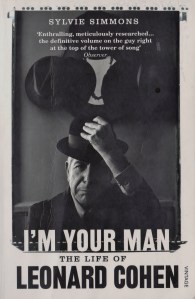
I’m Your Man; The Life Of Leonard Cohen

is an authorised biography by Sylvie Simmons published 2012, four years before Leonard Cohen’s death on 7 November 2016.

*************************************************************************************

leonard-cohen-im-your-man

****************************************************************************************

I have just finished reading this wonderful book which I bought at the Clunes Book Fair earlier this year.

What a book, what a man Leonard Cohen was. Poet, philosopher, author, scholar of the Hebrew Bible and Jewish Kabbalah. Simmons, a renowned music journalist and award winning writer, has written the ultimate Leonard Cohen biography of  531 pages, incorporating his life, his music, poetry and prose, and his deep spirituality. She records word for word, many of the dialogues she had with him, which add to the intimacy of the book. He was a humble man who valued his solitude, a frugal way of life  hidden from the limelight, and of course, his love for women. A man with a magnetic personality, he had many lovers, most of whom he remained close friends with. He could not live too long in a relationship with a woman though, not even with Suzanne Elrod (not the Suzanne who inspired his most famous song), the mother of his two children. But she says that he was a devoted father, generous and loving, although there were recriminations, for a time, following the breakup of their relationship.

The leading rabbi of Montreal’s Jewish community who knew the Cohen family well, understood Cohen’s devotion to a Buddhist monk and to Buddhism, and believed that Cohen would’ve made a brilliant rabbi because of his poetical way with words and his authoritative knowledge of the Hebrew Bible. Cohen was a very disciplined man who also loved to fast. He enjoyed vegetarian food and was always very slim, of quite a slight build; ‘There’s no excess to him at all” observed Simmons.

This is a riveting read for Leonard Cohen fans and anyone who is interested in the music scene of the 1960s through to the 1990s. Such artists as Janis Joplin, Jimmy Hendrix, Bob Dylan, Joni Mitchell, Judy Collins, Jeff Buckley and various music entrepreneurs; people like Phil Spector, John Lissauer, Nick Cave, and background singers such as Jennifer Warnes, Sharon Robinson, the Webb sisters,  and Anjani Thomas to name a few. Cohen preferred subtle musical instrumentation to accompany his works, and many of his songs feature him playing his beloved synthesiser, and his Spanish guitar. He had a ‘good ear’ for the sound he wanted; simple, so that his voice, poetry/lyrics were enhanced, not drowned out.

When Cohen began recording an album with Phil Spector, it developed into a worst nightmare for him.  Simmons recorded a dialogue she had with Cohen:

There were lots of guns in the studio [during the recording of the album ‘Death of a Ladies’ Man 1977] and lots of liquor [and drugs]. It was a somewhat dangerous atmosphere…he liked guns. I liked guns too, but I generally don’t carry one. There was no firing but it’s hard to ignore a .45 lying on the console. The more people in the room the more wilder Phil would get. I couldn’t help but admire the extravagance of his performance. But my personal life [before he entered the monastery] was chaotic, I wasn’t in good shape at the time mentally, and I couldn’t really hold my own in there [the recording studio].

Almost without exception, people who came into contact with Cohen describe him as being very kind, a gentleman and very generous; a seductive man. His friends and family told his biographer that Cohen was constantly writing and sketching. Many of his books and album sleeves are enhanced with his sketches and paintings. Cohen was always beautifully dressed, and he loved wearing suits, with his shoes always highly polished. Cohen’s extended family were tailors and owned up-market clothing stores, and he worked in one or two stores for a short time, but he really hated being involved in the family business. He once said to his biographer, Simmons, “Darling, I was born in a suit”.  But Cohen was too trusting of others. He signed one his most famous songs, Suzanne  over to a record label, believing he was just signing a ‘normal’ recording contract and later in his career, his then manager stole all of his money (approx.7.5 million) while he was living in the Buddhist monastery after he had given her power of attorney over his affairs. He then had to go on tour, which he never enjoyed in the past, to earn money for his retirement years. He was at that stage, aged in his early seventies. The tour, with handpicked musicians and background singers he felt comfortable with, lasted over three years. He and his band played to packed global audiences and he made much more money than had been stolen from him. At that time he had a personal friend, Robert Kory, as his very competent tour manager, who understood Cohen’s shyness and his need for solitude. Only those who had to be backstage were allowed there, no interviews were arranged, and there were  plenty of breaks for Cohen to recharge his batteries somewhere in solitude.

A deeply spiritual man who was proud of his Jewish heritage, Cohen spent about five years  as a monk (he was ordained) in a Buddhist Monastery, and he felt that Buddhism and Judaism complimented each other. Cohen lost his lifelong depression after his sojourn in the  monastery, belatedly in his sixties. For years Cohen had used a variety of drugs like  maxiton/speed, LSD, Mandrax, acid, amphetamines to lift him out of his dark depression, and many of his poems/songs reflect his angst and those dark periods. Then there were his experiences in the famous Chelsea Hotel in New York City, his home away from home in the early years, and which could fill a book on their own. Simmons also explores this time with Cohen throughout the book.

Cohen’s father died when he was nine years old, and he didn’t believe that his father’s death had a profound effect on him, because he was often ill in hospital or away somewhere else. But after having read this book, I believe his father’s death did have a profound effect on his life, even though he had very strong male role models within his family and the Montreal Jewish community. He was very close to his mother, and was also surrounded by loving women, in his private life and later in his musical life.

Cohen liked to live in simple cottage-like homes, and he spent his last years living in Los Angeles in a small sparsely furnished duplex where he lived upstairs while his daughter, Lorca lived downstairs. He also owned a very small cottage on the Greek island, Hydra which he bought in his thirties with money left to him by a relative, and in which he wrote many of his works and spent many happy days with Marianne, his lifelong muse and one time lover.

Always nervous on stage, Cohen preferred to be supported by musicians he knew well and who understood his type of simple music; music that didn’t drown out the lyrical poetry of his songs. He won numerous global and Canadian awards during his lifetime, for literature, poetry and music albums. He didn’t always believe he deserved them. He has written 12 books of poetry and prose.

Something Leonard Cohen said stayed with me while I read his biography. He said he didn’t rebel when he was growing up because essentially he had a privileged life brought up as he was in a wealthy and close Jewish neighbourhood in Canada, and that he had nothing to rebel against. But maybe he was too much the dutiful son, and maybe if he had rebelled, he wouldn’t have spent most of his life taking all manner of drugs to get him through life, the desperate need to spend so much of his time alone, and his fearfulness of making any kind of commitment to another person.  He was too polite, too shy, too forgiving and far too hard on himself. But then we wouldn’t have his legacy of poetry and songs, would we?

-Anne Frandi-Coory 1 December 2016


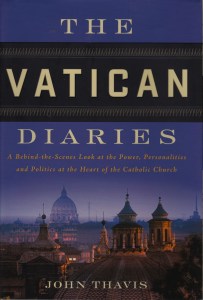
THE VATICAN DIARIES  A Behind-The-Scenes Look At The Power, Personalities and Politics At The Heart Of The Catholic Church

A Book Review by Anne Frandi-Coory

Vatican Diaries


**********************

It really is a joke that the Vatican considers itself a city state in its own right! More like a private boarding institution full of petulant school boys with eccentric masters in control of such departments as Congregation For Catholic EducationCongregation For The Causes of SaintsCongregation For The Clergy, Congregation For Institutes of Consecrated Life And Societies Of Apostolic Life etc. and where the competition for supremacy  over doctrinal matters is fierce.

What bothered me the most about the goings on in the Vatican as revealed in this book, was the total shutdown of any discussion about the thousands of cases of sexual abuse of children in USA, Australia and Ireland; the total lack of any consideration of the harm done to children by paedophile priests. The Vatican is a well-oiled machine that protects the Church at all costs, and I mean ‘all costs’!

The only noteworthy global/political stance the Vatican has taken in recent times, in my view,  was when Pope John Paul ll warned the USA of the terrible consequences if it invaded Iraq: ‘Four years earlier [George W ] Bush had dismissed Pope John Paul’s cautionary warnings about war during the build-up to the invasion of Iraq, leaving deep resentment at the Vatican. In the aftermath of Saddam Hussein’s demise, as terrorism, factional fighting and anti-Christian attacks increased, the Vatican said, essentially, “We told you so.”‘

It is truly incredulous how petty and ridiculous are the secrecy, the bitchiness, and to think this is the headquarters that directs the Catholic Faith for followers around the world! What a waste of time and money!! All the money the Catholic Church rakes in globally would surely feed the world’s poor? Instead it allows the clergy and the pope, to live in palaces, eat like kings, and be waited on day and night!

Just like Mother Teresa was a ‘cash cow’ for the Catholic Church, so too was the Legion of Christ whose Mexican founder, Marcial Maciel Degollado,  fathered several children to several different women but who the Vatican sponsored and feted because of the huge numbers of new priests flocking to his seminaries and the vast amounts of money his order collected in donations. He also embezzled millions for his own private use, and was accused of sexual abuse, but the Vatican protected him until he died.

And heresy isn’t a problem for the Catholic Church either these days, not if it brings in billions of dollars worldwide like the Lefebvrists do. This schism within the Holy Church, for which several bishops and priests were excommunicated, strongly advocates for the pre-Vatican Council ll Tridentine Rites, including the use of Latin for Mass. For this faction of Catholicism, strict Tradition is everything. It does show how little the sexual abuse of children by paedophile priests concerns the Vatican hierarchy when compared to apostasy.

The chapter in the book titled SEX   lays open the arguments within the Church about the problem of homosexuality of priests and it’s  very interesting indeed. There is little doubt that homosexual relationships between priests are condoned within the Vatican, and within parishes. In one case, a priest was caught on a hidden camera, attempting to seduce a young man on a white couch in his office!  It was a set up, and the whole affair was broadcast on Italian TV.  A few years ago, an investigation carried out by the Church,  employing expert psychiatrists, confirmed what the Church has always denied; that the Catholic priesthood is a haven for homosexuals and that teenage seminarians are the attraction. Also, research has revealed that by far the largest numbers of child abuse victims are pre-pubescent boys. One particular psychiatrist believes that celibacy is the prime cause of the fact that so many paedophiles join the priesthood. Many followers are dismayed that the Church will not soften its stance on celibacy, even though it allows its Eastern Orthodox priests to marry. One psychiatrist went so far as to advise the Vatican that allowing priests to marry would encourage more ‘socially mature’ men to become priests. The following is a significant expert opinion quoted by the author: ‘Dr Martin P Kafka, a psychiatry professor at Harvard Medical School, said he thought homosexuality, while not a cause of sexual abuse, was a “likely risk factor” that deserved further study. He stated that in comparison with the general population, abuse cases in the Church disproportionately involved homosexual male adults who’d molested adolescent males. The no-gay-priests faction did its best to ignore the fact that Dr Kafka had also wondered whether celibacy could also be a ‘risk factor’ in sexual abuse.  [My emphasis]

Is there a secret document emanating from the Congregation for Catholic Education, which oversees seminaries around the world, stating the Vatican’s new position on admitting homosexuals into the priesthood? Nothing has been confirmed, but… “The document’s position is negative based in part on what the Catechism of the Catholic Church says in its revised edition, that the homosexual orientation is ‘objectively disordered.’ Therefore independently of  any judgment on the homosexual person, a person of this orientation should not be admitted to the seminary and, if it is discovered later, should not be ordained.” One can’t help wondering whether the Catholic Church is no longer attracting enough priests into its fold because of the dwindling faith of its congregations or perhaps because of its restriction on the ordination of homosexuals?

This chapter also reveals the Vatican’s rules on the use of condoms and other forms of contraception, and once again I am amazed at the ridiculous pettiness of the detail of what is and isn’t allowed! For instance: “condoms are acceptable for prostitutes, because the sex they engage in is already sinful”…but some in the Vatican are concerned because that “would lead the Church to support the use of condoms for all ‘fornicators’ including sexually active teenagers.” I won’t go into the detail of the Vatican’s rules about the use of condoms for the prevention of the spread of HIV/AIDS, but they border on the utterly ludicrous!

The Vatican Diaries is a must read, especially for the faithful, because you really should know the truth of what is happening within your own Church!  It is not just a salacious exposé…John Thavis has written an engaging and at times, very funny book. He obviously has friends within the Vatican whom he trusts and admires, and he has been working as a journalist in this field for over thirty years. I did enjoy the chapters about the Vatican Museum, and the character of an irreverent priest who translated documents into Latin, and who constantly embarrassed tourists and the Vatican hierarchy who  would have dearly loved to have fired him, if he hadn’t been such a brilliant Latinist!

The comings and goings, the antiquated white and black smoke  used to inform an anxiously waiting public about progress in the election of a new pope, are enlightening, humourous, and left me wondering why an extremely wealthy city state still used smoke signals, emitted from a belching, cough inducing stove. Oh that’s right, Tradition.


-Anne Frandi-Coory 31 August 2016

Also here on Facebook: https://www.facebook.com/myhomelibrary/