Archive

Tag Archives: BOOKS In My Non-Fiction Collection-REVIEWS

The Atheist Manifesto

by Michel Onfray

Born to a family of Norman farmers, Michel Onfray was abandoned by his parents to a Catholic institution from age 10 to 14. Overcoming these early hardships, Onfray graduated with a PhD in philosophy. He has written over 80 books and teaches philosophy at a French university.
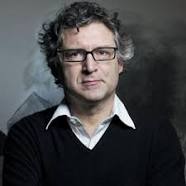
Michel Onfray portrait

Michel Onfray

A friend gave me The Atheist Manifesto not long after he had finished reading Whatever Happened To  Ishtar? which I had written in 2010, a book spawned of seventeen years of an indoctrinated childhood spent in various Catholic institutions.  ‘I know you will enjoy this book’, he told me, ‘but it’s a little too intellectual for me.’  He was right; I have since read it twice.

****************************

Michel Onfray

Was Monotheism born of the sand? Two paragraphs in  Manifesto’s  preface attempt to partly answer this question:

Desert Memory: After a few hours on the trail in the Mauritanian desert, I saw an old herdsman traveling with his family. His young wife and his mother-in-law rode camels; his sons and daughters were on donkeys. The group carried with them everything essential to survival-and therefore to life. The sight of them gave me the impression that I had encountered a contemporary of Muhammad. Burning white sky, scattered, scorched trees, uprooted thorn bushes blown by the desert wind across unending vistas of orange sand…the spectacle evoked the geographical and psychological background of the Koran, in the turbulent period of camel caravans, nomad encampments, and clashing desert tribes.

I thought of the lands of Israel, Judaea, and Samaria, of Jerusalem and Bethlehem, of Nazareth and the Sea of Galilee. Places where the sun bakes men’s heads, desiccates their bodies, afflicts their souls with thirst. Places that generate a yearning for oases where water flows cool, clear and free, where the air is balmy and fragrant, where the food and drink are abundant. The afterlife suddenly struck me as a counter world invented by men exhausted and parched by their ceaseless wanderings across the dunes or up and down rocky trails baked to white heat. Monotheism was born of the sand.

Michel Onfray analyses the fanatical belief in the afterlife by followers of Christianity, Judaism and Islam. The lives of these early followers of one God  were, every single day, a struggle for survival in a harsh and unforgiving climate, where death inflicted different kinds of terror in the living. Was the promise of an afterlife meant to alleviate that terror? For instance the Koran’s fantastic description of paradise: rivers of milk and wine, beautiful virgins, beds of luxurious cloth, celestial music and magnificent gardens? Why wouldn’t a man want to die and leave this endless struggle?

What better way to avoid looking at reality and inevitable death in the face, than to construct fantastical tales that the three religions are built on. And I love this from Onfray, so relevant to our 21st Century concerns over human-made Climate Change: The invention of an afterlife would not matter so much were it not purchased at so high a price: disregard of the real, hence wilful neglect of the only world there is. While religion is often at variance with immanence, with man’s inherent nature, atheism is in harmony with the earth – life’s other name.  For those of us who have given up on believing in the existence of God, saving planet earth is our passion, science our saviour.

The author tells us about the first tentative atheists, who weren’t really fully fledged atheists for one reason or another, which he outlines with some humour and sarcasm. And then along came Nietzsche! Onfray uses the sub-heading Philosophical Earthquake to describe this period  which is a perfect description of the upheaval this one man caused. But so much made sense to intelligent, thinking people!

Onfray goes on to ‘teach’ the case for atheism. He writes: Talmud and Torah, Bible and New Testament, Koran and the Hadith offer insufficient grounds for the philosopher to choose between Jewish, Christian or Muslim misogyny. Or to opt against pork and alcohol but in favour of the veil or the burka, to attend the synagogue, the temple, the church, or the mosque, all places where intelligence is ailing and where, for centuries, the faithful have practiced obedience to dogma and submission to the Law-and therefore obedience and submission to those who claim to be the elect, the envoys and the word of God. He suggests that instead of teaching monotheistic religions in schools we should be teaching atheism. He prefers the teachings of The Genealogy of Morals (1887) rather than the epistles to the Corinthians.  I happen to agree with him. Along with world conservation, less exploitation of this wonderful planet we live on!

In the chapter Towards an Atheology: Thirty centuries from the earliest texts of the Old Testament to the present day, teach us that the assertion of one God, violent , jealous, quarrelsome, intolerant and bellicose, has generated more hate, bloodshed, deaths, and brutality than it has peace…[for example] There is the Jewish fantasy of a chosen people, which vindicates colonialism, expropriation, hatred, animosity between peoples, and finally an authoritarian and armed theocracy.

The author pleads for the world to have an end to the linkage of the world’s woes to atheism:  God’s existence it seems to me, has historically generated in his name more battles, massacres, conflicts and wars than peace, serenity, brotherly love, forgiveness of sins, and tolerance. To my knowledge, no popes, princes, kings, caliphs, or emirs have excelled in the practice of virtue, so outstandingly did Moses, Paul, and Muhammad excel in murder, torture, and orgies of plunder-I call the biographies to witness. So many variations on the theme of loving one’s neighbour.

Onfray suggests that the times we live in are no longer atheist. We instead are in the midst of the era of  nihilism, which stems from the ‘turbulence of the transit zone between still very present Judeo-Christianity and timidly blooming post-Christianity…Jews, Christians and Muslims, construct for themselves, a made-to-measure morality. This implies selective borrowings (tailored to fit their needs) from their holy books in order to establish rules of play and participation by the community.’

Christians, particularly Catholics, know all too well, religious concepts of ‘purity’, and how it relates to sex, and we can mostly thank Paul of Tarsus/St Paul for that! The dichotomy of the female, whore/virgin, is still constantly preached as Canon Law by an ancient and all-male Vatican. The author delves into this topic with relish, and coming from a background of a childhood in Catholic institutions, I could relate to these chapters intimately.

Onfray explains that  Muslims share many of their fixations on purity with Jews; all food must be ritually prepared. Why the absolute prohibition of the consumption of pork, but not camel meat? Even on that matter, there is much disagreement. Some suggest the pig was emblematic of certain unpleasant memories of Roman legions, others believe it was the pig’s omnivorous diet, its consummation of public refuse. I have also read of another theory: the squeals of the pig as it was led to slaughter, was too reminiscent of the darkest days of sacrificial slaughtering of children in attempts to appease more ancient gods. The rituals connected to the cleansing of the body are rational, especially for life in the desert. The author explains in detail the similar ritualistic rules for respect of one’s body and bodily hygiene.

I found the chapter entitled Bonfires of the Intelligence; producing the holy books, particularly interesting. Onfray: The three monotheisms are seen as the religions of the book-but their three books are far from mutually supportive… Naturally they all preach brotherly love. Thus from the very start it seems to appear beyond reproach to our brethren of the Abrahamic religions. None of these books is a work of revelation. Who would have done the revealing? Their pages no more descend from heaven than those of Persian fables or Icelandic sagas.

The Torah is not as old as tradition claims; Moses is improbable. Yahweh dictated nothing-and in any case, Moses could not have written what Yahweh said unless he wrote in hieroglyphics, since the Hebrew script did not exist in the time of Moses. None of the evangelists personally knew Jesus. The testamental canon arose from later political decisions, particularly those reached when Eusebius of Caesarea, mandated by the emperor Constantine, assembled a corpus stitched together from twenty-seven versions of the New Testament in the first half of the fourth century. The apocryphal writings are more numerous than those that constitute the New Testament proper.

Muhammad did not write the Koran. Indeed, that book did not exist until twenty-five years after his death. The second source for Muslim authority, the Hadith, saw the light of day in the ninth century, two centuries after the Prophet’s death. Hence we must infer the very active presence of men in the shadows of these three Gods.

Science does not sit well within the three monotheistic religions, and the author discusses this at length and in detail. If they do embrace science, it is usually to enhance their dogma and this instrumentalisation of science  ‘subjects reason to domestic and theocratic uses’. For example, one Hadith indeed celebrates the quest for scientific knowledge as far afield as China, but always in the logic of its instrumentalisation via religion, never for the human ideal of social progress. The Catholic religion impeded the forward march of Western civilisation, inflicting on it, incalculable damage.

Then there is the female problem that the religions of the book have in common. Only mothers and wives are venerated. Judeo-Christianity promotes the idea that Eve was an afterthought, made from Adam’s rib; ‘an inferior cut off the prime beef, a humble spare rib‘.  She appears in the Koran as Adam’s wife but the fact that she is never named is revealing, because, as Onfray says, ‘the unnamed is unnameable.’

The ridiculous tenets of these three religions engender the worst kind of hypocrisy because we are all too human. The possibility of sex divorced from conception, and thus of sex alone, of pure sexuality-that is absolute evil. For the monotheist there can be no more hideous oxymoron than a barren, sterile woman! In the name of this same principle the three monotheisms condemn homosexuals to death…For his part, Paul of Tarsus saw in the solitary male the perils of lust, adultery and free sexuality. Hence given the impossibility of chastity, his endorsement of marriage –the least objectionable justification for the libido.

Onfray discusses at length the barbaric mutilation of female and male genitalia, practiced by monotheistic religions and their literature abounds in references to the extinction of libido and the destruction of desire. Onfray refers to them as ‘variations on the theme of castration’. From what I’ve read and seen on world news every day, none of these religions is achieving the total sexual control over their adherents that they initially set out to achieve. Catholic paedophile priests, Muslim child marriages, polygamy, Jewish paedophilia, to name a few.

All three religions have burnt books, whole libraries, whole towns, citizens, mosques, temples, churches, synagogues, slaughtered millions, and all for what or who? What God? There is no archaeological proof Jesus existed. The author covers this period in Christianity’s history in depth, with all of its subterfuges.

In the chapter headed Selective Exploitation of the Texts, Onfray writes:

Everyone knows of monotheism’s three books, but very few know their dates of origin, their authors, or the ups and downs attendant on establishing the three texts-the absolutely final, immutable texts. For the Torah, Old Testament, New Testament, and Koran took an unthinkably long time to emerge from history and claim that their texts issued from God alone, that they had no need to explain themselves to those who entered their prayer temples armed only with faith, unburdened of reason and intelligence. Considering Muhammad was illiterate it is ridiculous to believe that he wrote the Koran as God dictated it. And let’s be clear, there were several Korans from different periods which were merged into one, hundreds of years after Muhammad’s death!

We do not possess an official date of birth for the worship of one God…Jean Soler insists on the neighbourhood of the fourth and third century BCE-in other words very late…but the family line is very clear: the Jews invented it to ensure the coherence, cohesion and existence of their small, threatened people. The mythology they fashioned engendered belief in a warrior God, a fighter, blood thirsty, aggressive, a war leader highly effective at mobilising a people without a land. The myth of a chosen people thereafter blessed with a destiny.

Of that labour of invention, several thousand pages of canonical text survive-very few considering their worldwide influence over the course of more than twenty centuries. The Old Testament boasts a total of 3,500 pages, the New Testament 900 pages, the Koran 750, that is, little more than 5000 pages in which everything and its opposite is said once and for all. In each of these three founding texts, contradictions abound and Onfray gives us many examples of these.

Love of one’s neighbour as espoused by all three religions, was non-existent, and still does not exist in the 21st century! The Pauline texts, so useful in justifying submission to de facto authority, triggered results that went far beyond the legitimisation of wars and persecution. In the field of slavery, for example, which Christianity did no more than the other two monotheisms to deter. Indeed, in later centuries the small-scale slavery resulting from tribal raids evolved into the slave trade pure and simple, the sale and deportation of whole populations for use as chattels and beasts of burden.’

More than twenty centuries later has anything changed? Onfray:  ‘The commandments do not advocate any particular respect for one’s neighbour if he looks different, if he is not branded in the flesh by the rabbi’s knife. The non-Jew did not enjoy the same rights as members of the covenant. So that outside the confines of the book, the Other may be called on to account for himself, to be treated like an object, a thing: the goy by the Jew, the polytheist or animist by the Christian, the Christian by the Muslim, and the atheist, needless to say, by everyone.’ [My emphasis]

Onfray likens the three monotheisms to death cults. He asks ‘How can we escape the domination of [the death instinct] after so effectively killing off the life urge both within and outside of ourselves?’ Are we so terrified by the horror and void of death, that we believe in the ‘consoling fables and fictions that incite us to deny the use of our full powers?’ He posits that this ‘false world’ forces us to live in the here and now ‘buttressed by the hopes of a tinsel afterlife.’ Finally, he suggests that we are in the flux of a ‘post-Christian’ era, but that we must beware ‘religious secularism’ in which ‘the essential remains Judeo-Christian.’  He believes that the 21st Century has opened on a merciless war. On one side is a Judeo-Christian West, on the other side, a Muslim world. Monotheist religions are waging this war, and Onfray asks: Must we choose a side? There is much more to read in these chapters, but I will leave you to buy the book.

In the final chapter of MANIFESTO Onfray sums up where we are at in the fight for a genuine post-Christian secularism:

At this hour when the final battle –already lost-looms for the defence of the Enlightenment’s values against magical propositions, we must fight for a post-Christian secularism, that is to say, atheistic, militant and radically opposed to choosing between Western Judeo-Christianity and its Islamic adversary-neither Bible nor Koran. I persist in preferring philosophers to priests, imams, ayatollahs and mullahs. Rather than trust their theological hocus-pocus, I prefer to draw on alternatives to the dominant philosophical historiography: the laughers, materialists, radicals, cynics, hedonists, atheists, sensualists, voluptuaries. They know that there is only one world, and that promotion of an afterlife deprives us of the enjoyment and benefit of the only one there is. A genuinely mortal sin.


-Anne Frandi-Coory  18 August 2016

Also here on Facebook: https://www.facebook.com/myhomelibrary/


   POMPEII – The Living City

by  Alex Butterworth & Ray Laurence

Pompeii book cover

<><><><><p

Reviewed by Anne Frandi-Coory

(Click on images to enlarge)

About the authors:

Alex Butterworth is a writer and dramatist, who holds degrees from the University  of Oxford and the Royal College of Art. Ray Laurence is a Research Fellow in the Institute of Archaeology  and Antiquity at the University of Birmingham. He was previously a Senior Lecturer in Ancient History at the University of Reading. He has published seven academic books on Roman archaeology  and history.

I bought this wonderful book a few years ago and I must admit to only now getting around to reading it. The authors have written a compelling, valuable  book for any treasured collection.  I visited the partially reconstructed Pompeii in the early nineties, and even then I was amazed at how ‘modern’ and well equipped the ancient city had been.

Archaeologists have literally dug up a plethora of data out of what’s left of Pompeii revealing so much about life within the Roman Empire. Although there is a huge amount of excavation still to take place, there is enough information gathered so far, allowing scientists to gain an intimate insight into what life was like in a Roman city at that time.

Authors Butterworth and Laurence tell us that Pompeii contains probably the greatest density of data of any archaeological site in the world, but that only augments the challenge facing contemporary scholars. The sheer volume of material that can be drawn upon, along with the shortcomings in technique and record-keeping  of many of those who have worked on the site in the past, make the task of bringing all the disparate evidence into some meaningful relationship especially difficult. But the authors have managed to achieve that brilliantly,  bringing carefully selected data  together  into an enjoyable and informative read.  

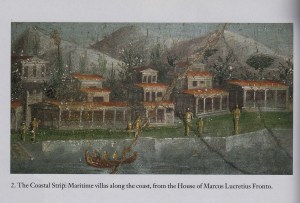
Pompeii was a city ‘full of political tensions, and very strange customs.’ It was a place where competitive merchants vied for the best customers and trade routes.  Wealthy, powerful citizens pursued all manner of pleasures. But pleasures were legal only for the rich; the poor and slaves were denied such luxury. Successful merchants and renowned magistrates owned comfortable villas along the coast, exotic goods and food at their disposal. In the meantime, Emperor Nero sinks further into murder, despotism and debauchery.  Citizens of Pompeii certainly couldn’t rely on help from their Emperor after the earthquake, although he did visit some time later. Even then, although his empire was carrying massive debt because of his spending sprees, including  the building of his golden palace, he was treated to a massive orgiastic feast in one of the few luxurious villas still left standing.

Combining  the most recent archaeological and historical research,  POMPEII’s  story sucks the reader into a vivid portrait of the doomed city during the twenty five years in which the city suffered a massive, devastating  earthquake  followed 17 years later by the eruption of Mt Vesuvius which completely destroyed the city and surrounding areas beneath it. Only the wealthy living in well-built villas could afford to have their homes and water pipes repaired so that fresh water flowed  again, in the years after the earthquake.  Others moved away before the mountain blew its top. What modern scientists have learned  about earthquakes, with the help of the latest technology, is used to compare what the eruption of Vesuvius would have been like to witness and the damage it wreaked upon its environs. There is no doubt that the earthquake caused significant damage to the land on the mountain side as well as below on the plains. The death toll from the quake would have been huge, and those bodies which could not be retrieved, created even more nauseating smells with the high risk of disease . Following the upheaval livestock died from lethal fumes boiling up from the centre of the mountain through fissures opened up by the earthquake. The smell of sulphur added to the other foul odours that citizens of every city had to endure.  And since the earthquake, the people of Pompeii also had to live through frightening aftershocks which continued right up until the eruption 17 years later.

‘The earthquake that struck Pompeii and the surrounding region on 5 February,  AD 62, is thought to have measured over 7.5 on the Richter scale. In all likelihood it was the result of an upward flow of magma within the earth’s crust along the geological fault that ran under Vesuvius: having vented its fury it then subsided before finally forcing its way out in dramatic fashion during the mountain’s eventual eruption… In the cities that bore the brunt of the devastation, Pompeii and Herculaneum, the archaeological evidence suggests that scarcely a single building was left untouched.

Snippets from a couple of paragraphs in chapter entitled ‘Apocalypse’ convey  vividly the eruption of Mt Vesuvius:

‘An eruption of such force occurs, on average, only once in a thousand years: there would have been no precedent in recorded history and mythology afforded the only point of reference. It is greatly to the credit of the Younger Pliny and his scientific training that, even while he watched his uncle set sail to his death, [while attempting to rescue citizens from the erupting volcano] he was able to categorise his observations calmly enough to produce an accurate report sometime later. His account provided the textbook case of volcanic eruptions for decades to come. ..The sight of fire and stone roaring up to the heavens that Pliny witnessed from across the bay “thrusting, bulging and uncoiling , as if the hot entrails of the earth were being drawn out and dragged towards the heavens” would have been massively more terrifying when seen from Pompeii.’


************************************************

Graffiti Pompeii 1

********************************************

Much graffiti written on walls around Pompeii has been found which gives further insight into what ordinary citizens thought of officials and neighbours, among other things.

Rather than the ancient graffiti and political posters that once covered the walls and summoned the flavour of the lost world, the most resonant graffiti still visible in excavated Pompeii today is perhaps that in the toilets of the cafeteria: “If I’d wanted ruins I could have gone to Kabul.” ‘

However, ancient ‘graffiti, signs and especially electoral notices offer clues as to the ownership of particular dwellings within the city walls, but in the villas outside the city evidence is usually in the form of rings with name-stamps that were left there by freedmen who were most probably their bailiffs.’

A visitor seeking directions outside the city would find help in a graffito such as –  “At Nuceria ask for Volvellia  Primigenia in the Vicus Venerius by the Rome Gate.”  According to other graffiti,  Primigenia was an especially desirable prostitute.  Pompeii’s ‘red light’ district was known as the ‘Venus District’. Political graffiti were also very common inside and outside the city walls. “For the health, return, and victory of Gaius Julius Phillipus, here, to his lares, Publius Cornelius Felix and  Vitalis Cuspius make an offering .”

What makes this book even more interesting are the many vignettes of life in real time, in which are revealed the hardships  of a few slaves, freedmen and the money worries and tasks of magistrates, taken from notes  on clay tablets:

Stories had been circulating of the deadly vapours that had poured from the cracks in the hillside the previous year engulfing the flocks but also spreading pestilence to the farms and into the city. Magonimus, a doctor, trusted in his own theories though, and was glad when he and his companion had begun their climb through the vines and towards the thinner air of the mountains.He knew how the shepherds in their hilltop cabins lived to a ripe age while the dwellers on the plain and in the marshes died young and miserable. And he was relieved for awhile to be free of the mosquitos that swarmed down below, endlessly disturbing his sleep with the angry sound of their flight. …Gazing down into the broken city, its walls and gates still in ruins Magonimus’s mind drifted to the many stricken victims of the quake whom his ministrations had failed to save – their limbs twisted and bloody, their breath rasping and their clothes soiled from terror…The doctor could not rid himself of the feeling that the whole world was ailing. Pompeii was full of rumours. It was said that the subterranean cisterns that stored rainfall from the wet months were cracked and seeping, and the landowners unable to afford their repair. Water was  scarce while wine was simply being poured away. Whether from death or sudden impoverishment, buyers were failing to collect their part paid goods and so, as the law allowed, the vignerons were throwing out thousands of gallons to make space for the coming year’s vintage. And this was only the beginning of the landowners’ troubles.

Life for slaves was harsh and many barely survived. Only the luckiest were freed in adulthood and even then, if they were once the object of their master’s sexual proclivities,   some were required to be on call whenever their ex master desired. If a slave worked in the kitchens or as waiters at drunken feasts, the only food they could consume was at the end of a long  day, when they were permitted to eat the leftovers. Slaves were commodities to be traded; men, women and children, it didn’t matter, and during orgiastic feasts, were fair game to be groped, raped, or whatever the drunken guests desired.

It was not until two years earlier when Receptus had been promoted to vilicus at Fannius Synister’s farm that he had grasped the full misery that the master’s arrival could provoke. For eleven months out of twelve, Receptus’s word was law on the estate and he was loathed for it by every slave and hired hand who worked under him. It was he who saved money by cutting the rations to the sick; he who set a day-labourer adrift the instant they’d got their feet under the table; he who drove the slaves out in the face of storms and hailstones to dig pits for manure or scrub the farmstead clean, and who ordered the beatings of those who slackened at the task.

…And now , at dawn on the fourth day of his master’s visit, Receptus found himself at the Vesuvius Gate of Pompeii, dispatched to hire day-labourers from where they gathered beside the muleteers’ inn just inside the walls; specialists to graft the vines, even though he knew that the stems weren’t ready for it and wouldn’t be for another week at least…Knowing that even the best men would fail to win Synistor’s approval, Receptus chose carefully but quickly; better not to give his master time to scrutinise the slave gangs’  performance without him there to drive them on, or to intimidate the young slave girl Chloe who had been nervous for weeks since hearing that she was to meet her master for the first time. Synistor had not yet broken the news that he had decided to take her back to Rome with him as a gift for a friend.

Only certain officials such as magistrates and priests were permitted to wear the special purple of the  toga praetexta, and a man could be put to death for disobeying this law.


****************************************

Pompeii 1


***************************************************************************************************************

The detailed index at the back of the book is a great aid for future references. With an excellent bibliography for follow-up reading. The book contains several coloured plates and helpful maps.

-Anne Frandi-Coory  13 July 2016

Also here on Facebook: https://www.facebook.com/myhomelibrary/

******************************************************

As an aside:

While reading this book, I could not help comparing the Holy Roman Empire and its efficient bureaucracy with the Catholic Church. After all, the Catholic Church was the state religion of the Roman Empire, and the Church had centuries in which  to copy and implement many of the Empire’s cultures and laws [Canon Law]. The Catholic Church is one of the most far reaching and well organised religions in the world. Patriarchal, altar boys/slaves, temple priests, the popes as emperors in silk gowns and hats, purple also a significant colour within the Church’s hierarchy, still  today. That the Church has in modern times been engulfed in scandals relating to the rapes of hundreds of children mostly boys, over  decades, possibly centuries, adds another comparison that cannot really be ignored. – Anne Frandi-Coory

ASHBYGATE  

The plot to destroy Australia’s Speaker 

by Ross Jones 


Ashbygate


Tony Abbott took over the reins as Leader of the Opposition and of the Liberal National Coalition Party on 1 December 2009 and it is my personal opinion that from that day on Australian politics descended into ‘gutter politics’ in which no perceived enemy or opponent of Abbott was spared!  Abbott went on to lead the Coalition to the 2010 general election which resulted in a hung parliament.  Labor  formed  government with the help of the Greens and Independent MPs.  Abbott appears to be a vindictive and spiteful man, who  with the assistance of a large willing and supportive in-house  ‘team’ set about to undermine the Gillard Government, and consequently  destroyed  the Speaker of the House, Peter Slipper.  Abbott was re-elected as Liberal Leader unchallenged  and eventually  led  the Coalition to victory in the 2013 election  and was sworn in as the 28th Prime Minister of Australia on 18 September 2013. (Tony Abbott’s tenure as Prime Minister lasted for a year, when he was deposed by current PM Malcolm Turnbull.)

There is no doubt that a group of LNP politicians and others,   deployed a series of tactics to  undermine PM Gillard during her term of office, but this is beyond the scope of  Jones’ book  ASHBYGATE which deals solely with the destruction of Australia’s Speaker, the vital aspect of the plan to bring down Gillard’s Labor government.

Ross Jones’ book ASHBYGATE  is an account of the results of his investigation into how the Speaker was hounded from the Chair. The Speakership is the most important office in the House of Representatives. The House cannot operate without a Speaker because he/she  is the principal office holder in the House of Representatives. He/she is the House’s representative or spokesperson, the Chair of its meetings and its ‘Minister’ in respect of its support services. By all accounts, Peter Slipper was an efficient Speaker who valued his role dearly, but he also had enemies within…he had the temerity to resign from LNP to take on the role as Speaker in a Labor government. Peter Slipper and Tony Abbott were very close friends until Slipper’s  ‘betrayal’ . There wasn’t much about each’s personal life that the other didn’t know about.

Jones allows primary documents, in chronological order,  such as, emails and other correspondence, text messages, and Ashby vs Slipper court evidence,  to inform readers of the machinations that drove  the Ashbygate  saga and this gives them  the opportunity to form their own opinions about the politicians who were  involved and implicated in this sordid saga. It also gives the book validity as a valuable record of Australia’s political history.

Readers will read in the pages of ASHBYGATE   that Peter Slipper is no  paragon of virtue, and has never claimed to be.  Yes, at  times he acted foolishly, but I don’t believe he deserved the total destruction of his career and his private life which was essentially brought about by former colleagues who have themselves  much in their political histories  and private lives  to hide from scrutiny. In the end, Ashby withdrew all charges of sexual harassment against Slipper.  Slipper was cleared of all dishonesty charges relating to the fraudulent use of Commonwealth  Cabcharge dockets in 2010. Jones writes: This means the highly damaging  cases Mr Slipper had piling up against him – including claims of sexual harassment from his former media adviser, James Ashby, have been either withdrawn or  shown to have had no substance.

After reading   ASHBYGATE   I‘d like to pose  a few questions:

  1. Was Tony Abbott, along with his close advisers, and political colleagues,  the ‘brains’ behind  Ashbygate?  Is it conceivable that he would not have been involved given how and when the documented events took place?
  1. Was James Ashby so stressed during the short time he worked as press secretary for Peter  Slipper, not because of two or three  salacious texts and other real or imagined ‘overtures’ by Slipper, but because Ashby was unsuitable and unqualified for the position? Is there some evidence that his gay lifestyle  may have been a factor in his precarious  emotional state?
  1. Why did Peter Slipper employ Ashby, an ex DJ and strawberry farm advertising agent, for such an important role as press secretary in the first place, given Ashby’s lack of qualifications?
  1. If Peter Slipper had any case to answer, why did the Commonwealth cover the ‘shortfall between Slipper’s legal fees and the costs ultimately recovered as a result of the Rares judgement’?
  1. Why did James Ashby and Mal Brough approach Clive Palmer for funds for legal fees, which would amount to millions of dollars, in the pursuit of Slipper?  In any  event  Palmer refused, so someone  else must have assured Ashby of  financial backing; was it Christopher Pyne, as Ashby claims?
  1. Did Justice Rares make a judgment that Ashby’s sexual harassment claims were vexatious in order to protect the judge’s friends in high political places?  Would  his  finding  in favour of Ashby have led to the exposure of  Tony Abbott and other high profile politicians to a long drawn out trial, involving sworn testimony? [Vexatious litigation is legal action which is brought, regardless of its merits, solely to harass or subdue an adversary]
  1. What was the real reason Karen  Doane  sought to destroy her employer, Peter Slipper? According to her texts and emails, she was hardly ever in Slipper’s office, and spent much of the time leading up to Ashby’s public allegations,  on ‘sick’ leave?  Was Doane simply one of the most dishonest, disloyal, and laziest employees ever, or was there something more sinister in her behaviour? Whatever the reasons, she was on paid sick leave of over $1000.00 per week for years  until she finally received a huge payout of taxpayer funds in settlement for what?

In places,  ASHBYGATE  was an intense  read because of the many phone texts and emails  to work through, even allowing for the different fonts used to differentiate between the various senders and writers.  However, it is very much worth the effort. The comings and goings, the minutiae  of political office, and the effect on family life,  are intriguing . I fully realise  now,  how true is the time worn  cliché  that  ‘a week in politics is a long  time’.

There were a few minor spelling errors in the emails and texts, which may or may not have been senders’  errors, but there were also quite a number of  spelling errors in the author’s prose. Let me assure readers, that while typos  jumped out at me, they in no way detracted from what I consider to be a valuable book and a great read. Jones has obviously spent months accessing relevant documents and records, as well as  undertaking  several  interviews, in his research for this book. I congratulate him for bringing to light the story behind  Ashbygate.

I urge voters to read ASHBYGATE so they may gain insight into the actions of those politicians involved in the destruction of the Speaker of the House.

***************************************************************************

I am not an affiliate of any political party; I bought ASHBYGATE  from one of my favourite bookstores, Readings in Carlton.  I detest any form of injustice, and I believe  that  Peter Slipper has been served a great injustice.

-Anne Frandi-Coory   20 May 2016

Also here on Facebook: https://www.facebook.com/myhomelibrary/
Updated 23 May 2018

*****

THE PLANETS  &   LONGITUDE  –  Book Reviews

I think these two great little books by Dava Sobel go together:

THE PLANETS

Dava Sobel writes about science in a way that young readers and adults alike can enjoy without constantly referring  to a dictionary or a science magazine, although I did find having a simple map of our solar system at hand, very helpful.   “If reading these pages has helped someone befriend the planets, recognising in them the stalwarts of centuries of popular culture and the inspiration for much high-minded human endeavour , then I have accomplished what I set out to do” A quote from Dava Sobel in  The Planets. She could also add: and the inspiration for much romantic poetry.

solar_system_menu


Although I love reading the results of  research and discovery the world of  science brings us, I am not a science buff and too much science jargon can be confusing. I recommend these books to young readers with enquiring minds and adults who don’t read science publications,  because they are enthralling to read and the author takes readers through hundreds of years of brief history with such easy to read, beautiful prose.

I have to admit to being  a little blasé about planets and space travel; I have enough going on here on planet Earth without stressing about what’s happening on Mars and Mercury.  Until I read Dava Sobel’s The Planets, that is!

This is not quite a whodunnit, but I couldn’t put the book down once I read the first couple of pages. I learned in those  first pages the names of the nine planets and their order of distance from  the sun and committed them to memory using Sobel’s “appealing nonsense-sentence mnemonic” … My Very Educated Mother Just Served Us Nine Pies: Mercury Venus Earth Mars Jupiter Saturn Uranus Neptune Pluto  …I’m almost ashamed to admit that I didn’t know any of this before reading The Planets.

Readers will learn how planets were discovered, how they’re named and in recent years, through remarkable discoveries via  satellites, spaceships  and research stations, we have gained intricate information about the makeup of planets, and even when and how they were formed. We now know how long they take to orbit the sun, how often a planet  rotates on its own axis.  The author ventures into mythology and astrology, which adds to the fascinating stories surrounding   each planet.

Now ‘morning star’, now ‘evening star’, the bright ornament of the planet Venus plays a prelude to the rising sun, or post script to the sunset. –  Dava Sobel waxes lyrical about Venus.

Sobel tells us that Ishtar metamorphosed into Aphrodite, the Greek incarnation of love and beauty. She became the Venus of the Romans, revered by the historian Pliny for spreading a vital dew to excite the sexuality of earthly creatures…Only the Mayans and the Aztecs of Central America seem to have seen Venus as consistently male. The rhythmic  association between Venus and the Sun inspired meticulous astronomical observations and complex calendar reckoning in those cultures, as well as blood rituals to recognise the planet’s descent into the underworld and subsequent resurrection. [Obvious inspirations for gods and divine resurrections in so many religions]

But Sobel also brings us back to Earth so to speak, with the reality that is planet Venus: …some of her volcanoes may well be active. Right now, sulphurous gases hissing from Venusian fumaroles could be making their way up to the clouds above the planet, to augment them and sustain them, and thereby ensure the enduring brightness of Venus to our eyes. That fair appearance of unassailable purity once made Venus the darling of poets, whose words  still best express her effect on the night’s blue velvet – ‘a joy forever’, as Keats said , ‘ a cheering light / unto our souls’.

You’ve probably guessed that my favourite planet is Venus, and that’s because she was once thought by ancients to be Ishtar returning to the heavens. Poets wrote beautiful poetry in honour of  Venus:

Thou fair-haired angel of the evening,

Now, whilst the sun rests on the mountains, light

Thy bright torch of love; thy radiant crown

Put on, and smile upon our evening bed!

Smile on our loves, and, while thou drawest the

Blue curtains of the sky, scatter thy silver dew

On every flower that shuts its sweet eyes

In  timely  sleep. Let thy west wind sleep on

The lake; speak silence with thy glimmering eyes,

And wash the dusk with silver.

-William Blake  To The Evening Star

A reviewer for the Independent,  John Gribbin  wrote: ‘If you like your science lyrical, Sobel is the author for you.’  I can assure you though, Sobel knows her science. She is a former science journalist for the New York Times. Sobel informs us that we are very much in a golden age of spacecraft and they are on their way to Mercury, Pluto, and Mars. During  her extensive research for The Planets, the  thing  that was most surprising to Sobel, was the size discrepancy  between the Sun and the rest of the planets and she believes  that ‘really the Solar System is the Sun’. To be honest, there were many wonderful things that surprised and overawed me while  I was reading The Planets!

********************************

 LONGITUDE

Dava Sobel writes:

Here lies the real hard core difference  between latitude and longitude – beyond the superficial difference in  line direction that any child can see: The zero-degree of parallel of latitude is fixed by the laws of nature, while the zero-degree meridian of longitude shifts like the sands of time.  The difference makes finding latitude child’s play, and turns the determination of longitude, especially at sea, into an adult dilemma – one that stumped the wisest minds of the world for the better part of human history. Any sailor worth his salt could  gauge  his latitude well enough by the length of the day, or by the height of the sun or known guide stars above the horizon…the measurement of longitude meridians, in comparison, is tempered by time. To learn one’s longitude at sea, one needs to know what time it is aboard ship and also the time at the home port or another place of known longitude –at that very same moment. The two clock times enable the navigator to convert the hour difference into a geographical  separation…

Precise knowledge of the hour in two different places at once-a longitude prerequisite so easily accessible today from any pair of cheap wristwatches-was utterly unattainable up to and including the era of pendulum clocks. On the deck of a rolling ship, such clocks would slow down, or speed up, or stop running altogether. Normal changes in temperature en route from a cold country of origin to a tropical trade zone thinned or thickened a clock’s lubricating oil and made its metal parts expand or contract with equally disastrous results. A rise or fall in barometric pressure , or the subtle variations in the Earth’s gravity from one latitude to another, could also cause a clock to gain or lose time.

In Longitude, the author  takes us on an historical voyage through time, whipping up a storm of an exciting and intriguing brief history  of astronomy, navigation and clock making  at the centre of which, is the fascinating story of John Harrison the Yorkshire clock maker and his forty year battle to build the perfect time-keeper, changing sea navigation forever. Dava Sobel allows the ghosts of ancient seafarers  to walk through the pages…

Reading THE PLANETS  and LONGITUDE has increased my knowledge of the world around me;  the sea, the land and our solar system.  Thank you, Dava Sobel

-Anne Frandi-Coory 17 April 2016

Also here on Facebook: https://www.facebook.com/myhomelibrary/

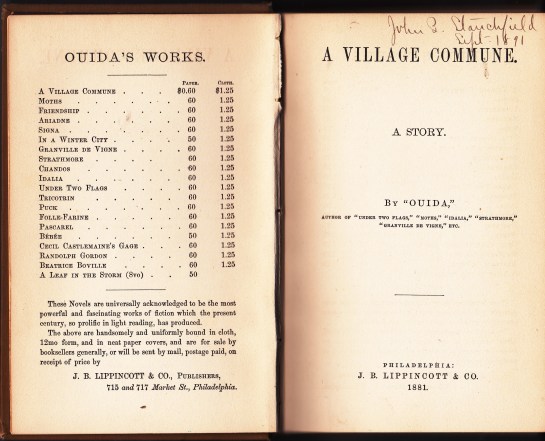
While doing research into my Italian ancestry for my book, Whatever happened To Ishtar? I read somewhere that if you wanted to know what it was like living in 19th Century Italy, you might wish to read Village Commune by Maria Louise Ramé, otherwise known by her pseudonym, Ouida. It turned out to be very good advice. I searched for the book online and found it  in a tiny obscure USA second hand book shop. When I received what is now a prized possession, I discovered it was a First Edition published 1881 by J. B. Lippincott & Co.  Philadelphia/

The Commune 2

Published in 1881

My great grandparents, Aristodemo and Annunziata Frandi experienced similar hardships to those described by Ouida in Village Commune. Many young men from poor families were conscripted into the regular army to fight against the Austrians, as was Aristodemo, who came from a family of farmers. The Frandi family, by then including three young children, emigrated to New Zealand in 1876 and I now fully understand why.  Although Aristodemo talked to family about life in Italy, both of his hated time barracked with the regular army  in the far north of Italy, and his time fighting in the south of Italy with Garibaldi, I had no real understanding of just how difficult life was at that time.

I had always thought of Italy as a wonderful country, full of poetry, art, fabulous food and generous citizens. I have visited the country often and I have never been disappointed. But of course there was, and is, another side to Italy altogether.

Ouida’s eloquently written and absorbing stories of life in northern Italy are heart-rending. Farmers and agriculturists, whose families had lived on the land for generations, had their land taken at the whim of wealthy, corrupt government officials and were left homeless and hungry. The burgeoning Industrial Revolution needed land for factories, and dwellings for workers moving onto the countryside. Land was also needed to build mansions for wealthy officials, and for railways.

<><><><><><><><><><><><><><><><><><><><><><><><><><><><><><><><><><><><><><><><><><><><><><><><><><>

The Commune

Note the prices listed for Ouida’s publications. The handwritten name and date came with the book.


><><><><><><><><><><><><><><><><><><><><><><><><><><><><><><><><><><><><><><><><><><><><><><><><><><><><><><><><>

The author connects on an emotional level with the reader, as she relates beautifully crafted, albeit harrowing, life stories.  One such story is of a young Florentine farming peasant :

He was a peasant who had been taken by conscription just as a young bullock is picked out for the shambles, and he had never understood why very well. His heart has always been with his fields, his homestead, his vines, his sweetheart. He had hated the barrack life, the dusty aimless marches, the drilling and the bullying, the weight of the knapsack and the roar of the guns; he had been a youth, ere the government had made him a machine…If the enemy had come into his country he would have held his own hamlet against them to the last gasp; but to be drafted off to Milan to wear a fool’s jacket and to eat black bread while the fields were half tilled, and the old people sore driven…no, he was not a patriot, if to be one, he must have been a contented conscript. 

 Ouida gives a vivid portrayal of the numerous Roman Catholic and other festivals:

Italian merry-making is never pretty. The sense of colour and of harmony is gone out of our people, whose forefathers were models of Leonardo and Raffaelle, and whose own limbs too, have still so often the mould of the Faun and the Discobolus. Italian merry-making has nothing of the grace and brightness of the French fairs, nor even of the picturesqueness and colour of the German feasts and frolics; even in Carnival, although there are gayety [sic] and grotesqueness, there is little grace and little good colouring. But the people enjoy themselves; enjoy themselves for the most part very harmlessly and very merrily when they forget their tax-papers, their empty stomachs, and their bankrupt shops.

Ouida writes extensively and in detail about the corruption and cronyism of government officials, and the cruelty they meted out to hapless villagers. If citizens had wealth, and were well connected, they had plenty of food and their sons escaped conscription! But peasants lived frugally off the land, and life for them was harsh and often brutal.

One of  Ouida’s famous quotes “petty laws breed great crimes” highlights her intimate knowledge and understanding of what life was like for the peasant landowner (agrario).

The commune of Vezzaja and Ghiralda, whose centre is the village of Santa Rosalia, is, like all Italian communes, supposed to enjoy an independence that is practically a legislative autonomy. So long as it contributes its quota to the Imperial taxes, the Imperial government is supposed to have nothing to do with it, and it is considered to be as free as air to govern itself. So everybody will tell you; and so inviolate is its freedom that even the prefect of its province dare not infringe upon it – or says so when he wants to get out of any trouble.

Anybody who pays five francs’ worth of taxes has a communal vote in this free government and helps to elect a body of thirty persons who in turn elect a council of seven persons, who in turn elect a a single person called a syndic, or as you would call him in English, a mayor. This distilling and condensing process sounds quite admirable in theory. Whoever has the patience to read the pages of this book will see how this system works in practice.

Now, in Vezzaja and Ghiralda the thirty persons do nothing but elect the seven persons, the seven do nothing but elect the one person, and the one person does nothing but elect his secretary; and the secretary, with two assistants dignified respectively by the titles of chancellor and conciliator, does everything in the way of worry to the public that the ingenuity of the official mind can conceive. The secretary’s duties ought to be the duties of a secretary everywhere, but by a clever individual can be brought to mean almost anything you please in the shape of local tyranny and extortion; the chancellor (cancelliere) has the task of executing every sort of unpleasantness against the public in general, and sends out his fidus Achates, the usher, all kinds of summons and warrants at his will and discretion; as for the conciliator (giudice conciliatore) his office as his name indicates, is supposed to consist in conciliation of all local feuds, disputes and debts, but as he is generally chiefly remarkable for an absolute ignorance of law and human nature, and for a general tendency to accumulate fees anywhere and anyhow, he is not usually of the use intended, [my emphasis] and rather is famous for doing what a homely phrase calls setting everybody together by the ears…Power is sweet and when you are a little clerk you love its sweetness quite as much as if you were an emperor, and maybe you love it  a good deal more.   

She elaborates further: Tyranny is a very safe amusement in this liberated country. Italian law is based on that blessing to mankind, the Code Napoleon, and the Code Napoleon is perhaps the most ingenious mechanism for human torture that the human mind has ever constructed. In the cities, its use for torment is not quite so easy, because where there are crowds there is always the fear of a riot and besides there are horrid things called newspapers , and citizens wicked enough and daring enough to write in them. But away in the country, the embellished and filtered Code Napoleon can work like a steam plough; there is nobody to appeal and nobody to appeal to. The people are timid and perplexed; they are as defenceless as the sheep in the hand of the shearer; they are frightened at the sight of the printed papers and the carabinier’s [sic} sword. There is nobody to tell them they have rights , and besides, rights are very expensive luxuries anywhere and cost as much to take care of as a carriage horse.

In Village Commune Ouida dissects the family lives of unfortunate peasants in 19th Century Italy. I believe that many of these soul destroying Italian tragedies are on a par with the famous Greek plays left to us by Aeschylus or Sophocles. There is much irony within the pages of Village Commune

There are far too many long sentences, semi-colons and commas in this book, but they take nothing away from the wit, sarcasm and  beautiful prose flowing from Ouida’s pen. I highly recommend this wonderful little book… if you can find a copy.

* *********************************************************************

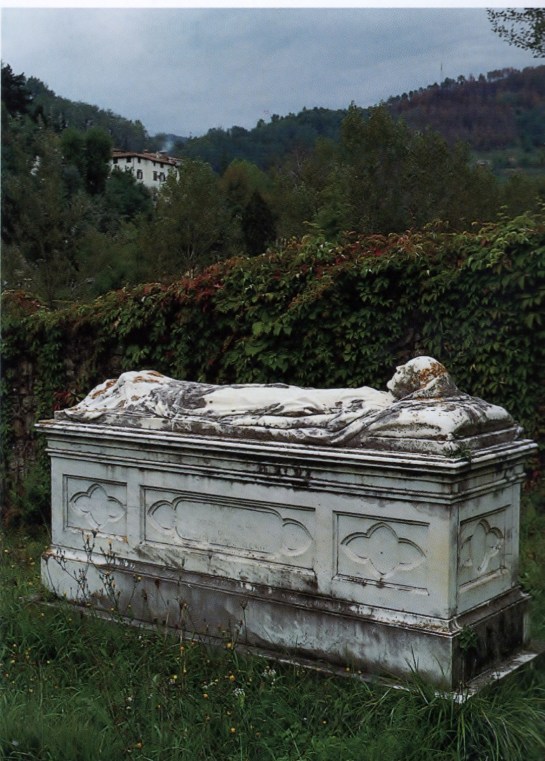
Ouida's headstone.jpg

OUIDA’S HEADSTONE


Ouida Tomb

OUIDA’S TOMB in Bagni di Lucca

**********************************************************************

‘Nature she knew by heart: on birds and flowers
She could discourse for hours and hours and hours.
Sententious, sentimental, repetitious, she
Would never choose one word if there were three. Pith was her weakness;
clichés were her strength. And here she lies now, as she wrote, at length.’
– Christopher Stace, from ‘At first seeing Ouida’s tomb in Bagni di Lucca’ as published in The New Yorker 


*****

Please visit Anne Frandi-Coory’s facebook page here: 

https://www.facebook.com/myhomelibrary/


Fay Eggeling

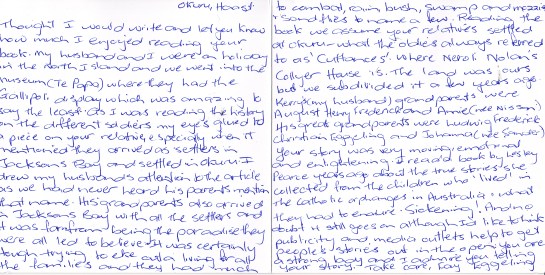
A Card – from Fay Eggeling

letter from Faye Eggeling

Okuru, Haast

I thought I would write and let you know how much I enjoyed reading your book, Whatever Happened To Ishtar? – A Passionate Quest To Find Answers For Generations Of Defeated Mothers.

********************************

Whatever Happened to Ishtar_cover 2020

Updated 4th edition (2020) available in paperback and Kindle ebook from AMAZON 

and here from ABE BOOKS  

***********************************************

My husband and I were on holiday in the North Island and we went into the museum (Te Papa) where they had the Gallipoli display which was amazing to say the least. As I was reading the history of the different soldiers my eyes glued to a piece on your relative,   Ateo Frandi   especially when it mentioned they [Frandi family] arrived as settlers in Jackson Bay and settled in  Okuru. I drew my husband’s attention to the article as we had never heard his parents mention that name [Frandi]. His grandparents also arrived in Jackson Bay with all the settlers and it was far from being the paradise they were all led to believe. It was certainly tough trying to eke out a living for all the families and they had much to combat; rain, bush, swamp, mozzies, and sandflies to name a few.

Reading the book we assume your relatives settled at Okuru – what the oldies always referred to as ‘Cuttances’, where Neroli Nolan’s Collyer House is. The land was ours but we sub-divided it a few years ago.

Kerry’s, (my husband) grandparents were August Henry Frederick and Annie (nee Nisson). His great grandparents were Ludwig Frederick Christian Eggeling and Johanna (nee Sander).

Your story was very moving, emotional and enlightening. I read a book by Lesley Pearce years ago about the true stories she collected from the children who ‘lived’ in the Catholic orphanages in Australia and what they had to endure. Sickening! And no doubt it still goes on although I like to think publicity and media outlets help to get people’s stories out into the open. You are a strong lady and I admire you telling your story.

Take care

– Fay Eggeling – 16 November 2015

Read more about Anne Frandi-Coory

and her Italian family history here:

Also here on Anne Frandi-Coory’s Facebook page 

https://www.facebook.com/myhomelibrary/


*****

img06052017_001

Updated 5 June 2017 

******************

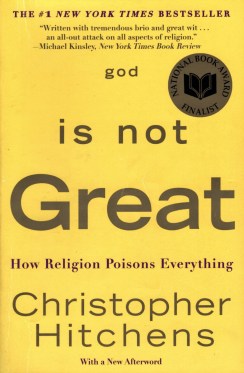
A must read for anyone interested in the background of the three monotheistic religions spawned in the Middle East:

Judaism, Christianity and Islam

Christopher Hitchens’ quotes from the book:

“There would be no such churches in the first place, if humanity had not been afraid of the weather, the dark, the plague, the eclipse, and all manner of other things now easily explicable. And also if humanity had not been compelled, on pain of extremely painful consequences, to pay the exorbitant tithes and taxes that raised the imposing edifices of religion.”

“What is religion, if not political in terms of governing the people?”

“As far as I am aware, there is no country in the world today where slavery is still practiced, where the justification of it is not derived from the Qur’an.”

Read about the blatant plagiarism by Christianity and Islam from ancient Judaism and Paganism, and the violence perpetrated by all of these religions against non-believers. Christopher Hitchens is a gifted writer, historian and philosopher; I could not put this book down once I began reading it. Now more than ever, this is a book for our times, with our world in jeopardy because of the war being waged between the Christian West and Islam.

There can no longer be any doubt that the religious indoctrination of children is child abuse.

– Anne Frandi-Coory

“Merciless…quite comical…trenchant and witty… God Is Not Great is a treasure house of zingers worthy of Mark Twain or Mencken.” – Daniel C. Dennett, Boston Globe

><><><><><><><><><><><><>

Are USA, Australia, Secularist or Theocratic Countries?

Although the following discussion refers to USA, it could easily refer to

LNP far right conservative  government of Australia in 2017: 

The Catholic Church, Jesus, Religion in State Schools, Nazi alliance with the Vatican, Islam, Jihad, Christianity

><><><><><><><><><><><><><><><><><><><><>

dawkins_hitchens in conversation photo Newstatesman

Richard Dawkins’ last interview with Christopher Hitchens in 2011 (photo; New Statesman)

*****

“Never be afraid of stridency”:

Richard Dawkins’ interview with Christopher Hitchens

Is America heading for theocracy?

How worrying is the rise of the Tea Party?

Christopher Hitchens and Richard Dawkins discuss God and US politics.

Transcribed by Richard Dawkins

RD: As an Orwell scholar, you must have a particular view of North Korea, Stalin, the Soviet Union, and you must get irritated – perhaps even more than I do – by the constant refrain we hear: “Stalin was an atheist.”

CH: We don’t know for sure that he was. Hitler definitely wasn’t. There is a possibility that Himmler was. It’s very unlikely but it wouldn’t make any difference, either way. There’s no mandate in atheism for any particular kind of politics, anyway.

RD: The people who did Hitler’s dirty work were almost all religious.

CH: I’m afraid the SS’s relationship with the Catholic Church is something the Church still has to deal with and does not deny.

RD: Can you talk a bit about that – the relationship of Nazism with the Catholic Church?

CH: The way I put it is this: if you’re writing about the history of the 1930s and the rise of totalitarianism, you can take out the word “fascist”, if you want, for Italy, Portugal, Spain, Czechoslovakia and Austria and replace it with “extreme right Catholic party”. Almost all of those regimes were in place with the help of the Vatican and with understandings from the Holy See. It’s not denied. These understandings quite often persisted after the Second World War was over and extended to comparable regimes in Argentina and elsewhere.

RD: But there were individual priests who did good things.

CH: Not very many. You would know their names if there were more of them. When it comes to National Socialism, there’s no question there’s a mutation, a big one – the Nazis wanted their own form of worship. Just as they thought they were a separate race, they wanted their own religion. They dug out the Norse gods, all kinds of extraordinary myths and legends from the old sagas. They wanted to control the churches. They were willing to make a deal with them. The first deal Hitler made with the Catholic Church was the Konkordat. The Church agreed to dissolve its political party and he got control over German education, which was a pretty good deal. Celebrations of his birthday were actually by order from the pulpit. When Hitler survived an assassination attempt, prayers were said, and so forth. But there’s no doubt about it, [the Nazis] wanted control – and they were willing to clash with the churches to get it. There’s another example. You swore on Almighty God that you would never break your oath to the Führer. This is not even secular, let alone atheist.

RD: There was also grace before meals, personally thanking Adolf Hitler.

CH: I believe there was. Certainly, you can hear the oath being taken – there are recordings of it – but this, Richard, is a red herring. It’s not even secular. They’re changing the subject.

RD: But it comes up over and over again.

CH: You mentioned North Korea. It is, in every sense, a theocratic state. It’s almost supernatural, in that the births of the [ruling] Kim family are considered to be mysterious and accompanied by happenings. It’s a necrocracy or mausolocracy, but there’s no possible way you could say it’s a secular state, let alone an atheist one.

Attempts to found new religions should attract our scorn just as much as the alliances with the old ones do. All they’re saying is that you can’t claim Hitler was distinctively or specifically Christian: “Maybe if he had gone on much longer, he would have de-Christianised a bit more.” This is all a complete fog of nonsense. It’s bad history and it’s bad propaganda.

RD: And bad logic, because there’s no connection between atheism and doing horrible things, whereas there easily can be a connection in the case of religion, as we see with modern Islam.

CH: To the extent that they are new religions – Stalin worship and Kim Il-sungism – we, like all atheists, regard them with horror.

RD: You debated with Tony Blair. I’m not sure I watched that. I love listening to you [but] I can’t bear listening to . . . Well, I mustn’t say that. I think he did come over as rather nice on that evening.

CH: He was charming, that evening. And during the day, as well.

RD: What was your impression of him?

CH: You can only have one aim per debate. I had two in debating with Tony Blair. The first one was to get him to admit that it was not done – the stuff we complain of – in only the name of religion. That’s a cop-out. The authority is in the text. Second, I wanted to get him to admit, if possible, that giving money to a charity or organising a charity does not vindicate a cause. I got him to the first one and I admired his honesty. He was asked by the interlocutor at about half-time: “Which of Christopher’s points strikes you as the best?” He said: “I have to admit, he’s made his case, he’s right. This stuff, there is authority for it in the canonical texts, in Islam, Judaism.” At that point, I’m ready to fold – I’ve done what I want for the evening. We did debate whether Catholic charities and so on were a good thing and I said: “They are but they don’t prove any point and some of them are only making up for damage done.” For example, the Church had better spend a lot of money doing repair work on its Aids policy in Africa, [to make up for preaching] that condoms don’t prevent disease or, in some cases, that they spread it. It is iniquitous. It has led to a lot of people dying, horribly. Also, I’ve never looked at some of the ground operations of these charities – apart from Mother Teresa – but they do involve a lot of proselytising, a lot of propaganda. They’re not just giving out free stuff. They’re doing work to recruit.

RD: And Mother Teresa was one of the worst offenders?

CH: She preached that poverty was a gift from God. And she believed that women should not be given control over the reproductive cycle. Mother Teresa spent her whole life making sure that the one cure for poverty we know is sound was not implemented. So Tony Blair knows this but he doesn’t have an answer. If I say, “Your Church preaches against the one cure for poverty,” he doesn’t deny it, but he doesn’t affirm it either. But remember, I did start with a text and I asked him to comment on it first, but he never did. Cardinal Newman said he would rather the whole world and everyone in it be painfully destroyed and condemned for ever to eternal torture than one sinner go unrebuked for the stealing of a sixpence. It’s right there in the centre of the Apologia. The man whose canonisation Tony had been campaigning for. You put these discrepancies in front of him and he’s like all the others. He keeps two sets of books. And this is also, even in an honest person, shady.

RD: It’s like two minds, really. One notices this with some scientists.

CH: I think we all do it a bit.

RD: Do we?

CH: We’re all great self-persuaders.

RD: But do we hold such extreme contradictions in our heads?

CH: We like to think our colleagues would point them out, in our group, anyway. No one’s pointed out to me in reviewing my God book God Is Not Great that there’s a flat discrepancy between the affirmation he makes on page X and the affirmation he makes on page Y.

RD: But they do accuse you of being a contrarian, which you’ve called yourself

CH: Well, no, I haven’t. I’ve disowned it. I was asked to address the idea of it and I began by saying it’s got grave shortcomings as an idea, but I am a bit saddled with it.

RD: I’ve always been very suspicious of the left/right dimension in politics.

CH: Yes; it’s broken down with me.

RD: It’s astonishing how much traction the left/right continuum [has] . . . If you know what someone thinks about the death penalty or abortion, then you generally know what they think about everything else. But you clearly break that rule.

CH: I have one consistency, which is [being] against the totalitarian – on the left and on the right. The totalitarian, to me, is the enemy – the one that’s absolute, the one that wants control over the inside of your head, not just your actions and your taxes. And the origins of that are theocratic, obviously. The beginning of that is the idea that there is a supreme leader, or infallible pope, or a chief rabbi, or whatever, who can ventriloquise the divine and tell us what to do. That has secular forms with gurus and dictators, of course, but it’s essentially the same. There have been some thinkers – Orwell is pre-eminent – who understood that, unfortunately, there is innate in humans a strong tendency to worship, to become abject. So we’re not just fighting the dictators. We’re criticising our fellow humans for trying to short-cut, to make their lives simpler, by surrendering and saying, “[If] you offer me bliss, of course I’m going to give up some of my mental freedom for that.” We say it’s a false bargain: you’ll get nothing. You’re a fool.

RD: That part of you that was, or is, of the radical left is always against the totalitarian dictators.

CH: Yes. I was a member of the Trotskyist group – for us, the socialist movement could only be revived if it was purged of Stalinism . . . It’s very much a point for our view that Stalinism was a theocracy.

RD: One of my main beefs with religion is the way they label children as a “Catholic child” or a “Muslim child”. I’ve become a bit of a bore about it.

CH: You must never be afraid of that charge, any more than stridency.

RD: I will remember that.

CH: If I was strident, it doesn’t matter – I was a jobbing hack, I bang my drum. You have a discipline in which you are very distinguished. You’ve educated a lot of people; nobody denies that, not even your worst enemies. You see your discipline being attacked and defamed and attempts made to drive it out.

Stridency is the least you should muster . . . It’s the shame of your colleagues that they don’t form ranks and say, “Listen, we’re going to defend our colleagues from these appalling and obfuscating elements.” If you go on about something, the worst thing the English will say about you, as we both know – as we can say of them, by the way – is that they’re boring.

RD: Indeed. Only this morning, I was sent a copy of [advice from] a British government website, called something like “The Responsibilities of Parents”. One of these responsibilities was “determine the child’s religion”. Literally, determine. It means establish, cause . . . I couldn’t ask for a clearer illustration, because, sometimes, when I make my complaint about this, I’m told nobody actually does label children Catholic children or Muslim children.

CH: Well, the government does. It’s borrowed, as far as I can see, in part from British imperial policy, in turn borrowed from Ottoman and previous empires – you classify your new subjects according to their faith. You can be an Ottoman citizen but you’re a Jewish one or an Armenian Christian one. And some of these faiths tell their children that the children of other faiths are going to hell. I think we can’t ban that, nor can we call it “hate speech”, which I’m dubious about anyway, but there should be a wrinkle of disapproval.

RD: I would call it mental child abuse.

CH: I can’t find a way, as a libertarian, of saying that people can’t raise their children, as they say, according to their rights. But the child has rights and society does, too. We don’t allow female – and I don’t think we should countenance male – genital mutilation. Now, it would be very hard to say that you can’t tell your child that they are lucky and they have joined the one true faith. I don’t see how you stop it. I only think the rest of society should look at it with a bit of disapproval, which it doesn’t. If you’re a Mormon and you run for office and say, “Do you believe in the golden plates that were dug up by Joseph Smith?” – which [Mitt] Romney hasn’t been asked yet – sorry, you’re going to get mocked. You’re going to get laughed at.

RD: There is a tendency among liberals to feel that religion should be off the table.

CH: Or even that there’s anti-religious racism, which I think is a terrible limitation.

RD: Romney has questions to answer.

CH: Certainly, he does. The question of Mormon racism did come up, to be fair, and the Church did very belatedly make amends for saying what, in effect, it had been saying: that black people’s souls weren’t human, quite. They timed it suspiciously for the passage of legislation. Well, OK, then they grant the right of society to amend [the legislation]. To that extent, they’re opportunists.

RD: But what about the daftness of Mormonism? The fact that Joseph Smith was clearly a charlatan –

CH: I know, it’s extraordinary.

RD: I think there is a convention in America that you don’t tackle somebody about their religion.

CH: Yes, and in a way it’s attributed to pluralism. And so, to that extent, one wants to respect it, but I think it can be exploited. By many people, including splinter-group Mormons who still do things like plural marriage and, very repulsively, compulsory dowries – they basically give away their daughters, often to blood relatives. And also kinship marriages that are too close. This actually won’t quite do. When it is important, they tend to take refuge in: “You’re attacking my fundamental right.” I don’t think they really should be allowed that.

RD: Do you think America is in danger of becoming a theocracy?

CH: No, I don’t. The people who we mean when we talk about that – maybe the extreme Protestant evangelicals, who do want a God-run America and believe it was founded on essentially fundamentalist Protestant principles – I think they may be the most overrated threat in the country.

RD: Oh, good.

CH: They’ve been defeated everywhere. Why is this? In the 1920s, they had a string of victories. They banned the sale, manufacture and distribution and consumption of alcohol. They made it the constitution. They more or less managed to ban immigration from countries that had non-Protestant, non-white majorities. From these victories, they have never recovered. They’ll never recover from [the failure of] Prohibition. It was their biggest defeat. They’ll never recover from the Scopes trial. Every time they’ve tried [to introduce the teaching of creationism], the local school board or the parents or the courts have thrown it out and it’s usually because of the work of people like you, who have shown that it’s nonsense. They try to make a free speech question out of it but they will fail with that, also. People don’t want to come from the town or the state or the county that gets laughed at.

RD: Yes.

CH: In all my tours around the South, it’s amazing how many people – Christians as well – want to disprove the idea that they’re all in thrall to people like [the fundamentalist preacher Jerry] Falwell. They don’t want to be a laughing stock.

RD: Yes.

CH: And if they passed an ordinance saying there will be prayer in school every morning from now on, one of two things would happen: it would be overthrown in no time by all the courts, with barrels of laughter heaped over it, or people would say: “Very well, we’re starting with Hindu prayer on Monday.” They would regret it so bitterly that there are days when I wish they would have their own way for a short time.

RD: Oh, that’s very cheering.

CH: I’m a bit more worried about the extreme, reactionary nature of the papacy now. But that again doesn’t seem to command very big allegiance among the American congregation. They are disobedient on contraception, flagrantly; on divorce; on gay marriage, to an extraordinary degree that I wouldn’t have predicted; and they’re only holding firm on abortion, which, in my opinion, is actually a very strong moral question and shouldn’t be decided lightly. I feel very squeamish about it. I believe that the unborn child is a real concept, in other words. We needn’t go there, but I’m not a complete abortion-on-demand fanatic. I think it requires a bit of reflection. But anyway, even on that, the Catholic Communion is very agonised. And also, [when] you go and debate with them, very few of them could tell you very much about what the catechism really is. It’s increasingly cultural Catholicism.

RD: That is true, of course.

CH: So, really, the only threat from religious force in America is the same as it is, I’m afraid, in many other countries – from outside. And it’s jihadism, some of it home-grown, but some of that is so weak and so self-discrediting.

RD: It’s more of a problem in Britain.

CH: And many other European countries, where its alleged root causes are being allowed slightly too friendly an interrogation, I think. Make that much too friendly.

RD: Some of our friends are so worried about Islam that they’re prepared to lend support to Christianity as a kind of bulwark against it.

CH: I know many Muslims who, in leaving the faith, have opted to go . . . to Christianity or via it to non-belief. Some of them say it’s the personality of Jesus of Nazareth. The mild and meek one, as compared to the rather farouche, physical, martial, rather greedy . . .

RD: Warlord.

CH: . . . Muhammad. I can see that that might have an effect.

RD: Do you ever worry that if we win and, so to speak, destroy Christianity, that vacuum would be filled by Islam?

CH: No, in a funny way, I don’t worry that we’ll win. All that we can do is make absolutely sure that people know there’s a much more wonderful and interesting and beautiful alternative. No, I don’t think that Europe would fill up with Muslims as it emptied of Christians. Christianity has defeated itself in that it has become a cultural thing. There really aren’t believing Christians in the way there were generations ago.

RD: Certainly in Europe that’s true – but in America?

CH: There are revivals, of course, and among Jews as well. But I think there’s a very long running tendency in the developed world and in large areas elsewhere for people to see the virtue of secularism, the separation of church and state, because they’ve tried the alternatives . . . Every time something like a jihad or a sharia movement has taken over any country – admittedly they’ve only been able to do it in very primitive cases – it’s a smouldering wreck with no productivity.

RD: Total failure. If you look at religiosity across countries of the world and, indeed, across the states of the US, you find that religiosity tends to correlate with poverty and with various other indices of social deprivation.

CH: Yes. That’s also what it feeds on. But I don’t want to condescend about that. I know a lot of very educated, very prosperous, very thoughtful people who believe.

RD: Do you think [Thomas] Jefferson and [James] Madison were deists, as is often said?

CH: I think they fluctuated, one by one. Jefferson is the one I’m more happy to pronounce on. The furthest he would go in public was to incline to a theistic enlightened view but, in his private correspondence, he goes much further. He says he wishes we could return to the wisdom of more than 2,000 years ago. That’s in his discussion of his own Jefferson Bible, where he cuts out everything supernatural relating to Jesus. But also, very importantly, he says to his nephew Peter Carr in a private letter [on the subject of belief]: “Do not be frightened from this inquiry by any fear of its consequences. If it ends in a belief that there is no God, you will find incitements to virtue in the comfort and pleasantness you feel in its exercise and the love of others which it will procure you.” Now, that can only be written by someone who’s had that experience.

RD: It’s very good, isn’t it?

CH: In my judgement, it’s an internal reading, but I think it’s a close one. There was certainly no priest at his bedside. But he did violate a rule of C S Lewis’s and here I’m on Lewis’s side. Lewis says it is a cop-out to say Jesus was a great moralist. He said it’s the one thing we must not say; it is a wicked thing to say. If he wasn’t the Son of God, he was a very evil impostor and his teachings were vain and fraudulent. You may not take the easy route here and say: “He may not have been the Son of God and he may not have been the Redeemer, but he was a wonderful moralist.” Lewis is more honest than Jefferson in this point. I admire Lewis for saying that. Rick Perry said it the other day.

RD: Jesus could just have been mistaken.

CH: He could. It’s not unknown for people to have the illusion that they’re God or the Son. It’s a common delusion but, again, I don’t think we need to condescend. Rick Perry once said: “Not only do I believe that Jesus is my personal saviour but I believe that those who don’t are going to eternal punishment.” He was challenged at least on the last bit and he said, “I don’t have the right to alter the doctrine. I can’t say it’s fine for me and not for others.”

RD: So we ought to be on the side of these fundamentalists?

CH: Not “on the side”, but I think we should say that there’s something about their honesty that we wish we could find.

RD: Which we don’t get in bishops . . .

CH: Our soft-centred bishops at Oxford and other people, yes.

RD: I’m often asked why it is that this republic [of America], founded in secularism, is so much more religious than those western European countries that have an official state religion, like Scandinavia and Britain.

CH: [Alexis] de Tocqueville has it exactly right. If you want a church in America, you have to build it by the sweat of your own brow and many have. That’s why they’re attached to them.

RD: Yes.

CH: [Look at] the Greek Orthodox community in Brooklyn. What’s the first thing it will do? It will build itself a little shrine. The Jews – not all of them – remarkably abandoned their religion very soon after arriving from the shtetl.

RD: Are you saying that most Jews have abandoned their religion?

CH: Increasingly in America. When you came to escape religious persecution and you didn’t want to replicate it, that’s a strong memory. The Jews very quickly secularised when they came. American Jews must be the most secular force on the planet now, as a collective. If they are a collective –which they’re not, really.

RD: While not being religious, they often still observe the Sabbath and that kind of thing.

CH: There’s got to be something cultural. I go to Passover every year. Sometimes, even I have a seder, because I want my child to know that she does come very distantly from another tradition. It would explain if she met her great grandfather why he spoke Yiddish. It’s cultural, but the Passover seder is also the Socratic forum. It’s dialectical. It’s accompanied by wine. It’s got the bones of quite a good discussion in it. And then there is manifest destiny. People feel America is just so lucky. It’s between two oceans, filled with minerals, wealth, beauty. It does seem providential to many people.

RD: Promised land, city on a hill.

CH: All that and the desire for another Eden. Some secular utopians came here with the same idea. Thomas Paine and others all thought of America as a great new start for the species.

RD: But that was all secular.

CH: A lot of it was, but you can’t get away from the liturgy: it’s too powerful. You will end up saying things like “promised land” and it can be mobilised for sinister purposes. But in a lot of cases, it’s a mild belief. It’s just: “We should share our good luck.”

RD: I’ve heard another theory that, America being a country of immigrants, people coming from Europe, where they left their extended family and left their support system, were alone and they needed something.

CH: Surely that was contained in what I just . . .

RD: Maybe it was.

CH: The reason why most of my friends are non-believers is not particularly that they were engaged in the arguments you and I have been having, but they were made indifferent by compulsory religion at school.

RD: They got bored by it.

CH: They’d had enough of it. They took from it occasionally whatever they needed – if you needed to get married, you knew where to go. Some of them, of course, are religious and some of them like the music but, generally speaking, the British people are benignly indifferent to religion.

RD: And the fact that there is an established church increases that effect. Churches should not be tax-free the way that they are. Not automatically, anyway.

CH: No, certainly not. If the Church has demanded that equal time be given to creationist or pseudo-creationist speculations . . . any Church that teaches that in its school and is in receipt of federal money from the faith-based initiative must, by law, also teach Darwinism and alternative teachings, in order that the debate is being taught. I don’t think they want this.

RD: No.

CH: Tell them if they want equal time, we’ll jolly well have it. That’s why they’ve always been against comparative religion.

RD: Comparative religion would be one of the best weapons, I suspect.

CH: It’s got so insipid in parts of America now that a lot of children are brought up – as their parents aren’t doing it and leave it to the schools and the schools are afraid of it – with no knowledge of any religion of any kind. I would like children to know what religion is about because [otherwise] some guru or cult or revivalists will sweep them up.

RD: They’re vulnerable. I also would like them to know the Bible for literary reasons.

CH: Precisely. We both, I was pleased to see, have written pieces about the King James Bible. The AV [Authorised Version], as it was called in my boyhood. A huge amount of English literature would be opaque if people didn’t know it.

RD: Absolutely, yes. Have you read some of the modern translations? “Futile, said the preacher. Utterly futile.”

CH: He doesn’t!

RD: He does, honestly. “Futile, futile said the priest. It’s all futile.”

CH: That’s Lamentations.

RD: No, it’s Ecclesiastes. “Vanity, vanity.”

CH: “Vanity, vanity.” Good God. That’s the least religious book in the Bible. That’s the one that Orwell wanted at his funeral.

RD: I bet he did. I sometimes think the poetry comes from the intriguing obscurity of mistranslation. “When the sound of the grinding is low, the grasshopper is heard in the land . . . The grasshopper shall be a burden.” What the hell?

CH: The Book of Job is the other great non-religious one, I always feel. “Man is born to trouble as the sparks fly upward.” Try to do without that. No, I’m glad we’re on the same page there. People tell me that the recitation of the Quran can have the same effect if you understand the original language. I wish I did. Some of the Catholic liturgy is attractive.

RD: I don’t know enough Latin to judge that.

CH: Sometimes one has just enough to be irritated.

RD: Yes [laughs]. Can you say anything about Christmas?

CH: Yes. There was going to be a winter solstice holiday for sure. The dominant religion was going to take it over and that would have happened without Dickens and without others.

RD: The Christmas tree comes from Prince Albert; the shepherds and the wise men are all made up.

CH: Cyrenius wasn’t governor of Syria, all of that. Increasingly, it’s secularised itself. This “Happy Holidays” – I don’t particularly like that, either.

RD: Horrible, isn’t it? “Happy holiday season.”

CH: I prefer our stuff about the cosmos.

***

The day after this interview, I was honoured to present an award to Christopher Hitchens in the presence of a large audience in Texas that gave him a standing ovation, first as he entered the hall and again at the end of his deeply moving speech. My own presentation speech ended with a tribute, in which I said that every day he demonstrates the falsehood of the lie that there are no atheists in foxholes: “Hitch is in a foxhole, and he is dealing with it with a courage, an honesty and a dignity that any of us would be, and should be, proud to muster.” – Richard Dawkins

><><><><><><><><><><><><><>

The 2011 Christmas issue of the New Statesman was guest edited by Richard Dawkins. 

It was to be Christopher Hitchens’ final interview; he died as it was published.

Christopher Hitchens was  a former journalist at the New Statesman

***

-Anne Frandi-Coory  3 September 2015

<><><>><><>


truth in the lie

I enjoyed every minute reading THE TRUTH IN THE LIE  15 captivating short stories by modern day nomad Mark Swain.

Mark is a world traveller of great repute and he weaves his incredible journeys into tales involving characters who are mostly larger than life. Most of all I love that he doesn’t confine his exploration of countries to tourist haunts. I would loved to have accompanied Mark on his quests to visit every corner of the globe!

  • Anne Frandi-Coory  21 August 2015

Also here on Facebook: https://www.facebook.com/myhomelibrary/
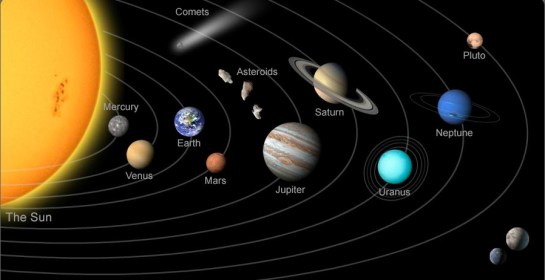


Long Road Hard Lessons

One day Mark Swain left his slippers by the fire and set off with his 18yr old son on a cycle expedition from Ireland to Japan. We will train on the way, he said. Physical challenges, border bureaucracy, health scares and traffic hazards were all anticipated. What they underestimated was the conflict they faced, spending 24hrs a day together under such arduous conditions. On one level, a life-changing travel adventure, this book also takes time to look at the psychological journey made by parents and children. The accounts of the son’s attempts to break away from his father, to find his own individual place in the world are moving and insightful. Yet at every turn, these thoughts are lightened by humour and juxtaposed with vivid descriptions of the countries and people they encounter along their way. We witness how conflict teaches us things that we did not expect to learn, and how much the parent can learn from the child. The book includes 25 glossy colour prints and 7 maps. –  more here on AMAZON


Mark Swain

Read more here about Mark Swain’s travels and follow his fascinating blog:

LONG ROAD HARD LESSONS


Also here on Facebook: https://www.facebook.com/myhomelibrary/

Our Italian Surnames

****************************

This page and its contents, including photographs is Copyright To Anne Frandi-Coory All Rights Reserved 13 July 2015

…..

I bought this book to help with my research into the origins of our Italian ancestors’ surnames.

Our Italian Surnames by Dr Joseph G. Fucilla was originally published in 1949 and is still widely regarded as the definitive book on Italian Surnames. Professor Fucilla, who earned a doctorate in Romance Languages (University of Chicago 1928),  has written hundreds of articles and numerous books on Italian, Spanish, and Portuguese linguistics. Onomatology,  the study of the origin and history of proper names and another facet of Dr Fucilla’s vast erudition, was the field out of which emerged Our Italian Surnames.

The information contained in this wonderful book is vast. Many names are derived from animals, occupations, geography, birds, botanica, music and the arts. For the purposes of this post, I am concentrating on the origins of the names Frandi and Greco (later Anglicised to Grego).

****

aristodemo-frandi

My maternal great grandfather Aristodemo Giovanni Frandi

********

The Evolution of Italian Surnames

Dr Fucilla writes: A surname or family name may be defined as an identification tag which has legal status and is transmitted by the male members of a family from generation to generation. It is a comparatively recent phenomenon.  It is in Italy perhaps more than any other nation that a person may be identified as a native of a definite section of the country or even of a particular province through his given name. 

Among the Hebrews, only one name used to be employed, but during the Greek and Roman dominations a second temporary name was adopted for individuals, such as Paul of Tarsus, Mary Magdalen (from Magdala). Christianity with its institution of a single baptismal name and the one-name system of the Germanic tribes who were soon to become the masters of Europe, eventually caused the collapse of the whole Roman name system. 

What causes names to be changed over time? Dr Fucilla posits that: These changes can be explained under six headings….

translations, dropping of final vowels, analogical changes, French influences, decompounded and other clipped forms, and phonetic re-spellings. By means of these it will be possible to explain the vast majority of those Italian surnames which we find in Anglicised form.

*********

Aristodemo Giovanni Frandi was born in Pistoia in Tuscany in 1833.  The original ‘Aristodemos’ is a Greco/Roman name. However, the only city in Italy I visited where there were people still living with the name Frandi was in Pisa, where two of Aristodemo’s children,  Ateo and Italia were born. The two men I traced worked for local government in Pisa.

The only historical name I could find that came even close to Frandi is Ferrandy or Ferrandi, which is very common in Italy, especially in the north. However, it does suggest Gallic origins and as was frequent in ancient times, Ferrandy/Ferrandi slowly became Frandi to fit in with other simplified Italian spellings which often end in ‘I’. When speaking to native Italians, they pronounce Frandi as Ferrrrrandi anyway, rolling their rrrs. Conversely, Ferrandi is a very common name in France!

Dr Fucilla studies add more weight to my view that the name Frandi/Ferrandy is a French derivative.  In his chapter headed Topographical Names, he writes: 

We may divide the natural and artificial topographical features that have given rise to Italian surnames …..   among them he lists several mineralogical and agrarian characteristics such as the prefix ferro which is the one we are interested in. This refers to iron (ore) generally but in the agrarian sense it refers specifically to the land and its minerals. We know that as a young man Aristodemo worked on the land as did most of his countrymen. When Aristodemo decided to emigrate with his family to New Zealand in 1875, the very real draw card was the allocation of 10 acres of free land on the West Coast. And later when the family settled in Wellington, their dream was to own a farm, which was eventually fulfilled.

In another chapter under the heading Geographical Names, which are frequently used in Italian surnames, Dr Fucilla  documents the French/Italian name La Fiandra which means ‘from Flanders’ which in parts of its history was ruled by the French. Italians with French connections added ‘La’ to their surnames. Aristodemo called his first born son, Francesco, a derivative of France.  It is possible that Frandi is a compound name of both La Fiandra and Ferrandy/Ferrandi. Dr Fucillo devotes a chapter to such compound names in which place names, nouns, occupations, religious references, and others, were compounded into abbreviated form.

In the mid 19th Century, when Aristodemo was in his 20s, all young men were conscripted into the regular army to protect territory in Northern Italy held at various times in more recent history by the Austrians, Germans, and the French. Most of the men were agricultural workers, and their loss was keenly felt by their families who needed them to tend the land.

Here are excerpts from my book ‘Whatever Happened To Ishtar?’ pages 286-287:

Aristodemo was conscripted into the regular army in 1859, 1865-1866 against the Austrians, at Ancona, a major port city at the base of the Apennines in the Marche region of the strategic East Coast of Italy which faced the Adriatic Sea. Then at Tirolo which is a tiny commune in the province of Bolzano-Bozen in the Italian region of Trentino-Alto-Adige in the far north of Italy, between Austria and Switzerland.

Aristodemo returned to Pisa to prepare for his marriage to Annunziata Gustina Fabbrucci in 1863. A year later the couple travelled north where Aristodemo was barracked with the regular army while Annunziata lived a few miles away in an Italian conclave.  It was during this conscription period that Annunziata gave birth to their first child Francesco, in 1866 at Lake Lugano.  Eventually, Aristodemo left the armed forces and worked for the fledgling Italian railways laying tracks, the best chance for work in an Italy in the throes of the industrial revolution and the confiscation of farmlands, which threw Italy into a new kind of poverty.

I have discounted Frandi as being derived from any form of the occupational prefix Ferra in its relationship to  Ferrari, metal worker, or Ferroviere, railway worker, as a surname. The use of  Ferroviere as a surname is very rare  and its use is a very recent phenomenon.

Interestingly, Aristodemo’s mother was named Caterina Degli Innocenti Cashelli …Italians often used their parents’ names, or other family names,  as middle names depending on where they come in the family hierarchy  eg firstborn etc. Degli Innocenti is not a family name. It is the name given to all babies who are orphaned or abandoned and who are placed as foundlings in convents or ‘foundling hospitals’ (Hospital of the Innocents) .  On one of our visits to Florence we came upon a beautiful building with coloured tiles depicting religious themes embedded above the doorway. Also written on the tiles were the words  ‘Ospedale Degli Innocenti’ and when I inquired as to what the purpose of the hospital was, this was the explanation...a foundling hospital or sanctuary. Children were only baptised with this name if they were foundlings. The origins of Caterina’s given surname, Cashelli, are unclear, but it is possibly related to casella or caselli meaning dairy

In 1928 a law was passed in Italy forbidding the imposition upon foundlings or illegitimates of names and surnames that might cast reflection on their origin. The law has probably stopped the increase of such names, but has hardly affected those already in existence. Ripples in a pond: this sort of stigma can and did affect the fortunes of  those so named.

Pistoia is an ancient city with remnants of Gallic, Ligurian and Etruscan settlements everywhere. It is possible to trace the origins of Pistoia back to the 2nd Century BC when the Romans established a settlement there for the provision of its militia during the wars against the Ligurians. The Oppidum Romano (fortified citadel) achieved a certain importance in the 4th Century AD and its growth was favoured by its position along the Via Cassia the road that connected Rome to Florence and Lucca. The origin of the name Pistoia is  possibly Pistoria Roman for bread oven. Roman troops were garrisoned and replenished there.

******

Filippo Grego

My maternal great grandfather, Filippo Grego (Greco)

Filippo Greco was born in 1869 in Amalfi, Italy. Amalfi had close connections with Gaeta, a Greek trading port, and Gaetano and Gaetana were Greco male and female family names respectively, so it’s more than likely Filippo’s extended family originated there. Gaeta has fortifications which date back to Roman times and these fortifications were extended and strengthened in the 15th century, especially throughout the history of the Kingdom of Naples (later the Two Sicilies). There is evidence that Filippo’s early ancestors came from original Greek settlements in Sicily.

Grego is the anglicised version of Greco, which was originally a name given to those living in Greek settlements in Southern Italy. Since the days of the Romans,  Greco has  been a synonym of astuteness and disloyalty and often connotes a stammerer.  Dr Fucilla suggests that some names such as Greco, have acquired a depreciative, figurative meaning which  may now and then have led to their application to native Italians.

To summarise Dr Fucilla’s  conclusions:

Anglicisation of Italian surnames is achieved by the drive of two strong forces converging upon their goal from opposite directions. One force, the most powerful of the two, represents non Italians who consciously or unconsciously in speech or in writing, make Italian names conform to English linguistic patterns, spelling, or individual names or types of names with which they happen to be acquainted. The other force represents the people of Italian origin who deliberately change their names or tolerate modifications made by outsiders as a concession to their new environment.

Finally, a very interesting paragraph from Dr Fucilla’s book:

Greek, Roman, Germanic and Hebrew Patronymical Names.

About 650 BC Ligurians, Illyrians, Umbrians, Etruscans, Sabini, Latini, Greeks, and Carthaginians occupied the various parts of Italy. They were all sooner or later, assimilated by Rome. After the fall of the Roman Empire a number of Germanic peoples including the Lombards, Franks and Normans, overran the peninsula. They too, were assimilated by their environment and with the others, through centuries of cross breeding fused into a fairly close-knit ethnical group now called the Italians. Yet despite fusion, traces still remain particularly in the guise of place names that carry us back to one or another of the stocks just mentioned. However, from the standpoint of personal surnames, a virtual monopoly is enjoyed only by three of the groups: Greeks, Romans and Germans. Their names eventually spread all over the country and from time to time through invasion, immigration, cultural tradition and religion, received reinforcements and accretions. A large mass of personal surnames was later adopted from an outside group, the Hebrews.

 See here: Mansi; My Fascination With Italian Surnames Part 1 

For more information about my book,

Whatever Happened To Ishtar? – A Passionate Quest to Find Answers for Generations of Defeated Mothers and to purchase a copy HERE is the link:  https://frandi.wordpress.com/2010/04/15/publicaton-of-whatever-happened-to-ishtar/


Updated 12 June 2019

The Hospital By The River

THE HOSPITAL BY THE RIVER exceeded all my expectations. I have always admired Dr Catherine Hamlin as an Australian heroine. What she has achieved in her lifetime, is a superhuman feat.

In her book, Dr Catherine Hamlin begins by writing about the family histories and medical backgrounds of both her and her husband, Dr Reg Hamlin, in Australia, New Zealand, and later in the UK. Both came from privileged backgrounds. Intertwined with the Hamlins’ wonderful work saving the lives of hundreds of mothers and their babies in Ethiopia, are expressions of their deep Christian faith, and the comfort it brings them. Even though I am not a religious person, I can fully understand how their faith kept them going through some very difficult and challenging times, not least of all, a dangerous war. The couple sacrificed a great deal in order to build their hospital and bring healing to hundreds of poor Ethiopian mothers and their babies. However, I felt that in following their God’s mission, their only son Richard, also paid a heavy price.

Dr Hamlin goes on to detail the travelling and begging the couple had to engage in to bring in funds to keep their dream, and the hospital they had built, afloat. She documents the perfection of surgical techniques used in the repair of fistulae to restore quality of life to their frail, and sometimes, dying patients. Many babies were born dead, sometimes jammed in the birth canal for days, because of protracted labours. Cultural practices mean mothers are made to squat for days during labour causing terrible injuries to their bladders, bowels, and vaginas. Some mothers’ uteri burst with devastating consequences. These injuries leave afflicted mothers with a life lived in misery, unable to control their bladders or bowels. They are abandoned by their husbands and families, left to fend for themselves in filth, and near starvation.

The hospital the Hamlins built in Ethiopia, with the help of worldwide financial donations, and the support of powerful Ethiopians, has given hope to thousands of women; more than 90% are fully cured. Those who cannot be cured, perhaps left with minor wounds, are able to live in adjacent hostels within the hospital compound.  Some of those who are cured, stay on to be trained as nurses and midwives. Others progress to operating assistants and surgeons.

The compelling stories of the lives of long suffering patients are truly heart rending, and yet uplifting, due to the vibrant spirit of Ethiopian women. These brave, often under-nourished women, walk for days, months or years, to get to the Hamlin hospital of hope, where they can have life saving surgery.  Be that as it may, I could not but help see the great irony within the pages of this book: The Hamlins, as Anglican Missionaries, worked tirelessly, operating on these poor, rejected mothers with horrific rectovaginal fistulae, mostly caused by giving birth too young, or by being raped. The majority of women they performed surgery on, were of a Christian Orthodox religion which culturally supports child marriages, often girls as young as eight. As an Orthodox priest remarked: “otherwise they will fall into sin like Western women who don’t have children until they are 30”!!  So here we have Christian missionary surgeons repairing horrific injuries which another Christian sect, in essence, fully condones!  No blame whatsoever attached to husbands or rapists.

At the end of the book, I couldn’t help but wonder, in an ideal world, would it not have been wiser and more efficacious for the Christian World to unite, and spend those millions travelling around Ethiopia, educating the men and empowering the women? But then the hallmark of religion has always been more about tradition than visionary reform.

********

Dr Catherine Hamlin celebrates 60 years in

Ethiopia in 2019.

*******************************************************************************

© To Anne Frandi-Coory All Rights Reserved 14 May 2015