Archive

Tag Archives: Cardinal George Pell

*******************************************

The Prince   by David Marr, reveals a cleric at ease with power and aggression in asserting the conservative prerogatives of the Vatican. He charts Pell’s response – as a man, a priest, an archbishop and a prince of the church – to the scandal that has engulfed the Catholic world: the sexual abuse of children.

The author initially explores the life of George Pell, from his childhood and family life, his time as a seminarian, through to his rise as the most senior cleric of the Catholic Church in Australia.  Pell achieves his ultimate ambition to become a Cardinal and is eventually promoted by Pope Francis to glorified accountant for the Vatican.  Pell’s obvious skill at accounting has saved the Church in Australia many millions of dollars in compensation to victims of clerical abuse via Pell’s establishment of the Melbourne Response in which victims were dissuaded from reporting to police and awarded paltry sums in compensation. This extremely effective solution would not have escaped the attention of the Pontiff which had the added benefit, for a limited time, of silencing growing numbers of victims.

Pell allowed the payouts of meagre sums to victims while spending hundreds of millions of dollars on the establishment of a Catholic university, other buildings and renovations. Pell’s treatment of the families of victims and of victims themselves is heart rending. In one case, the parent of a young victim was so distraught, they cried and berated Pell for allowing the abuse to happen and his response was : “Have you said your hail Marys?” However, by then the tide was turning.

The last few years have been very difficult for Pell, not least because of his realisation that the Catholic Church can no longer escape secular scrutiny no matter how much he has tried to shield the church and its wealth from the scandal of the sexual abuse of children. This book paints a portrait of a man with an inflated ego and an over-riding ambition for absolute ecclesiastical power over Catholics in Australia. A portrait of hypocrisy which allowed a man to sexually abuse children  while making him blind to the suffering of children and their families.

Pell was convinced that most of the world’s problems could be solved by ensuring that Catholics adhered to the rule of Canon Law of which he was an expert. In his mind, Catholics were becoming too lax in their views regarding marriage, the sins of homosexuality, abortion and contraception. He obviously did not consider clerical paedophilia a sin.

With the revelations worldwide of Catholic clergy paedophilia and homosexual relationships among Catholic clergy, celibacy has to be one of the biggest cons ever perpetrated by the Catholic Church.  “Abortion is a worse moral scandal than priests sexually abusing young people” stated Pell, which was ridiculed around the world and I believe, turned even more Catholics away from their church, especially women.

David Marr explores the possibility that Pell’s lust for power sublimates his instinctual sexual desires. He loves the pomp and ceremony of High Mass, the luxurious gowns and head gear. More compensation for celibacy and the suppression of sexual desire?  Marr writes: “Everything about this man suggests the struggle against sex has come at a terrible price. I wonder how much the strange ordinariness of George Pell began sixty years ago when a robust Ballarat school boy decided as an act of heroic piety, to try to kill sex in himself?  How much empathy was crushed along the way? How ignorant has it left him of the human heart? The gamble priests take struggling with sex is that they may live their whole lives without learning what it is to be an adult in the real world, the world outside the (Catholic Church).”

There can be no doubt that Pell’s claims of being unaware that hundreds of children suffered sexual abuse at the hands of his Catholic clergy, especially in Ballarat in Victoria, were untrue. His professed ignorance of the moving of paedophile priests and brothers around parishes following complaints by parents and teachers was laid bare by the Royal Commission into Institutional Responses into Child Sexual Abuse.

In Australia, politicians and the Police force were breaking away from the power of the Catholic Church, and there is no doubt that Pell’s stature within Australia took a terminal hit. Pell’s appearance during the Royal Commission tarnished his inflated reputation in Australia and prompted more of Pell’s victims to come forward. This time police were prepared to listen and to take action.

Pell hid terrible secrets of his own. The nation’s most powerful Catholic, Cardinal George Pell, was eventually jailed  for child sexual assault. which was uncovered and judged in a “trial that convulsed the nation.” Then there are the allegations by several boys that Pell had sexually abused them, and too many of the boys had such similar stories to tell, it is difficult to believe that Pell is as innocent as he claims he is.

In recent years, thousands of cases of the sexual abuse of children by Catholic clergy, particularly in Ireland and the USA were being exposed by main stream media; three harrowing inquiries held in Ireland,  the explosive documentary, Spotlight and  “the first, best exposé of how the Catholic Church covered for paedophile priests” published by the Boston Globe in early 2002.

This 3rd edition of The Prince encompasses some relevant testimonies from the Royal Commission,  which dramatically altered the once high status of George Pell and his Catholic Church in Australia.  Marr comments on the brutal and effective questioning of Cardinal Pell by Commissioner McClellan on the bench and Gail Furness QC on the floor at the Royal Commission. This left the cardinal floundering for answers at times.  In one such round of questioning, he made the now infamous statement in answer as to whether he knew of the sexual abuse of children by Catholic clergy and the consequential shifting of paedophile priests between parishes, particularly in the case Gerald Ridsdale, Pell replied: “It’s a sad story, but it wasn’t of much interest to me.”

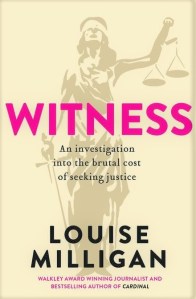
WITNESS; An Investigation Into the Brutal Cost of Seeking Justice

by Louise Milligan.

Louise Milligan is an investigative journalist  with ABC  Four Corners and is the bestselling author of CARDINAL; The Rise and Fall Of George Pell  which won the Walkley Book Award and broke massive international news preceding the court case and successive appeals involving Cardinal George Pell.

In February 2021, WITNESS was awarded the Victorian Premier’s Literary Awards People’s Choice Prize.

In August 2021, WITNESS won the Davitt Award for Best Non-Fiction Crime Book.

*********************************************

*******************************************************************************************

At times, I found WITNESS  very difficult to read. The treatment of victims of sexual abuse in the court room is brutal and intimidating; the seemingly endless humiliation of children in the witness box,  who have come forward to report that they have been sexually abused, is all at once, shocking and heart-breaking.

This book is first and foremost an analysis and critique of the failures of the criminal justice system in sexual assault trials. A masterful and deeply troubling exposé, WITNESS  is the culmination of almost five years’ investigative work for Louise Milligan. Charting the experiences of those who have the courage to come forward and face their abusers in high-profile child abuse and sexual assault cases, Milligan was profoundly disturbed by what she ultimately discovered.

Throughout the book there is a justified sense of outrage at those who choose to treat complainants and witnesses with a hostility causing its own trauma; a special kind of systemic abuse.

Milligan has two decades of experience as an investigative journalist, including her specialist work as a media court reporter and her sustained coverage of the trials of George Pell. Her analysis of the Criminal Justice System in Australia  instructively affirms how the system is outdated and fails to meet the needs of complainants.  She records in-depth interviews with prosecutors, defence counsel, solicitors, judges and academics. It is a gripping revelation of rarely-heard experts’ public opinions about the realities and flaws of criminal judicial procedure.

Why is the cost of seeking justice so monstrously high? Milligan asks.

Her visceral description of the attempted destruction of her own character and credibility in cross-examination by Robert Richter QC relating to her investigative journalism surrounding the case of George Pell, testifies to the brutality of many witnesses’ encounters with the criminal trial process. As Milligan states in the book, she had the ABC legal team supporting her in court and yet she found the experience traumatic. She kept thinking what a deeply traumatic experience it must be for children and young women who have no legal support whatsoever in court.

In her case, virtually every question was asked, she writes, in a belittling or insulting way. By the end of the day, she “had never felt more alone”, despite all her experience, preparation, and team of lawyers. What hope do complainants have, she asks, who lack these resources, and who were already traumatised?

Milligan’s account of her own cross-examination during the Pell committal hearing by Robert Richter QC is exhaustive and compelling. Reflecting on the experience, she repeatedly references the Evidence Act S41 which imposes a duty on the court to disallow improper questions and improper questioning, including questions that are intimidating or humiliating, or are asked in an insulting way.

The author makes it clear that she felt insufficiently protected by this section of the Act, and by other laws giving the court control over how witnesses should be questioned.

“The system is broken. For sex crimes, rates of complaints, prosecutions, and convictions are persistently low. Sexual assault trials require more fundamental changes. Protections against humiliating treatment of witnesses need to be properly enforced by judges and prosecutors. As one QC admits to Milligan, reforms about judicial directions and improper questioning “don’t mean anything if the prosecutor doesn’t intervene and the judge or magistrate isn’t in control of the courtroom.”

Milligan also suggests that complainants would benefit from an expert advisor to assist them in navigating the system, and to protect against unduly “intimidatory tactics”. She argues that sexual abuse victims who are required to give evidence against the accused, should have the right to legal advocates in court. She discusses this issue with several barristers and judges as an integral part of her research and the way forward.

So many of the formal protections that witnesses deserve already exist: judicial intervention powers; legislative protections against demeaning and misleading questioning; complaints mechanisms. She delves into the “emotional architecture” of Australia’s criminal courts, in particular, the trial culture of élite defence barristers, which one source memorably describes as “a very lucrative psycho-politics of humiliation”.

“[Witnesses/Victims] come before the court, to be cross-examined, potentially by a fierce advocate, with years of experience, completely alone.  To have to relive their disgusting trauma and to have it doubted again, with no one to make sure that their human rights are not being abrogated, that the Evidence Act is not being breached, that the barrister isn’t acting in a way that breaks the rules he or she is bound by. “

“Yes, there is a judge and a prosecutor, but so often, for a multitude of reasons, they do not do it as well as they might.”

Dr Mary Iliades, a criminologist from Melbourne’s Deakin University writes in a 2019 paper on the subject: “The reluctance to recognise victims as anything other than a prosecution witness, stems from a concern that victims will invite potentially subjective and thus prejudicial submissions on matters of state concern which could compromise the objective and public nature of the criminal justice system and hinder an accused  person’s due process rights to a fair and impartial trial.”

“Essentially, this means that the law is concerned that elevating the role of the complainant witnesses – victims – will give an unfair advantage to the Crown in proving the prosecution case beyond reasonable doubt and that people accused of, say, child rape, won’t get justice. But the flow-on consequences of these concerns are not good for victims.”  Testament to which this impressive investigation by Milligan lays bare.

***************************

This is a book that had to be written. Thank you, Louise Milligan, for taking on this monumental task.

-Anne Frandi-Coory.  5 February, 2021

Opinion piece by Geoffrey Robertson QC published in The Sydney Morning Herald

1st March 2019

Catholic symbol


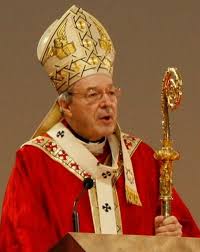
News of George Pell’s conviction was a fitting end to a papal summit on child abuse which achieved nothing and began with other cardinals attributing the problem to homosexuals in the priesthood.

red George Pell

The reality is that priests abuse small boys not because they are gay but because they have the opportunity. Most are not even paedophiles, but rather sexually maladjusted, immature and lonely individuals unable to resist the temptation to exploit their power over children who are taught to revere them as the agents of God.

A church that has tolerated the sexual abuse of tens of thousands of children – a crime against humanity in any definition – needs to face unpalatable truths and to make drastic reforms.

Cover-ups are no longer an option. The magnitude of the crimes is well-established and the evidence of how the Vatican and its bishops hushed them up in order to protect the reputation and finances of the Catholic Church is fully proved.

By insisting upon its right to deal with allegations under medieval Canon Law weighted in favour of the defendant and providing no effective punishment, the church itself became complicit.

It has allowed abusive priests to confess without fear of any report to police; it has encouraged bishops to withhold information from prosecuting authorities; it has refused to allow Vatican envoys (papal nuncios) to co-operate with government inquiries on the excuse that it is a state [which it is not, according to International Law!] and hence they have diplomatic immunity.

The necessary reforms must begin with recognition that child sexual abuse is a crime, not just a sin, and must be reported to and dealt with by prosecuting authorities.

Canon Law, with its pathetic punishments of prayer and penitence, and its obligations to keep proceedings secret, must have no part in dealing with allegations of sex abuse.

Nor can the veil of confidentiality any longer be allowed to shroud the confessions of paedophiles, let alone the absolution of one priest by another (“Brother, can you spare a crime?”) The confessed abuser must be told to confess to the police or else be handed over to them.

Obviously, there should be zero tolerance for clerics who confess or are convicted. They must be defrocked and certainly not allowed any appeal to the Vatican, which in the past has permitted many to remain in holy orders – the sheep’s clothing in which they have often reoffended.

Even in countries where local bishops have announced that public prosecutors will be told of sex abuse allegations, there is always the qualification “only if the victim consents”.

It is all too easy for young victims and trusting parents to be counselled that their child’s best interests lie in allowing the church to deal with the matter “in its own way” without involving the police. They give in easily to pressure and persuasion that their complaints should be dealt with in secret under canon law.

Abolishing the role of Canon Law in dealing with sex crimes will take some papal courage, but will be relatively easy, beside the radical changes necessary to stop the abuse from happening in the first place.  The reform most often suggested is to abandon celibacy. This would not be doctrinally difficult – Christ’s disciples appear to have been married and the rule was a dogma introduced in the 11th century and almost abolished by 16th-century reformers.

But marriage does not “cure” paedophilia. Moreover, many abusive priests are not paedophiles: their disordered personalities can often be ascribed to conditions that would prevent them from forming satisfactory heterosexual relationships. Abuse happens because they are too weak or emotionally immature to resist temptation.

That temptation arises because the church indoctrinates children at an early age – as young as seven or eight – that the priest is the agent of God. Communion is an awesome miracle performed by the God-priest, and then the impressionable and nervous child is made to confess his sins and seek forgiveness, from God, represented again by the priest.

Anne.

The phenomenon of children’s unflinching obedience to sexual requests from the priest is induced by “reverential fear”: the victims have such emotional and psychological dependence on the abuser that they unquestionably obey and do not tell for many years afterwards.

It follows that the only reform that could tackle the evil of clerical sexual abuse at its source would be to raise the age at which children are first given communion and confession to, say, 13. Other churches, and the Jewish faith, leave indoctrination and spiritual commitment rituals until teenage-hood. By this stage young people are much more capable of resisting sexual advances and have more courage to report them.

Could the Pope ever contemplate this reform? The Jesuits say “Give me the boy at seven …” and now we know what this has meant. But if such reforms are not implemented, there must be consequences.

One consequence could be to reconsider, not the state, but the statehood of the Vatican. It is, after all, the only religion allowed this elevated status, with diplomatic immunities, expensive embassies and a role at the UN where it condemns programs that help homosexuals or propose family planning or gender equality.

Yet it is in reality no more than a religious enclave in Rome, without the attributes of sovereignty or even an indigenous population (no one is born there, except by accident). If it continues as an organisation that facilitates the abuse of children, it should have no immunities.

***********************************************************************************

Geoffrey Robertson QC

Geoffrey Robertson QC is a former UN Appeal Judge and author of The Case of the Pope (Penguin). See my review of his book here:  The Case of the Pope

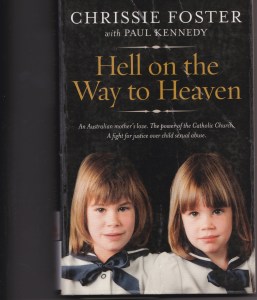
Hell on way to heaven

Emma and Katie Foster 

.Updated 2 November 2016

*****Chrissie Foster, author of  Hell On The Way To Heaven has just been nominated for the 2017 Victorian Local Hero award

At the Royal Commission into Institutional Responses To Child Sexual Abuse, Catholic Archbishop of Melbourne, Denis Hart, made the astonishing statement that “celibacy has worked well for the Church…… men do not need a sexual outlet…..”

He went on to say that if priests couldn’t cope without sex, they were quickly defrocked.  Why were paedophile priests not instantly defrocked, but sent to poor parishes like Ballarat and Doveton, for instance?
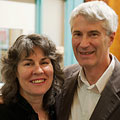
Chrissie&AnthonyFoster1

Chrissie and Anthony Foster

Well, I also want to know why thousands and thousands of girls and boys worldwide, over centuries, have been raped by Catholic priests? Celibacy is the biggest joke the Catholic Church has played on us…priests have mistresses, visit prostitutes and rape children!

 Jesus, if he existed at all, was not a celibate; in fact he married twice. Even the most saintly man finds celibacy difficult!

Former PM Tony Abbott, while LNP Leader of the Opposition, a failed Catholic priest, threatened to demolish the Royal Commission by withholding extra funding. It took an atheist female Prime Minister, Julia Gillard, to set up the Royal Commission into Institutional Responses To Child Sexual Abuse.

…………

I have just finished reading  Hell On The Way To Heaven by Chrissie Foster.

Mrs Foster’s story was highlighted when there was a push in Victoria for an investigation into the sexual assault of hundreds of children throughout the state of Victoria by paedophile Catholic priests and Brothers, over several decades.

In the book, Mrs Foster describes how the lives of her two young daughters, Emma and Katie, were destroyed by a paedophile priest. They were both raped at around 5 years of age by Father Kevin O’Donnell who was then aged in his seventies.  Emma and Katie were raped repeatedly over several years and eventually Emma killed herself with an overdose of drugs. She had attempted suicide many times over the years.

><><><><><><>
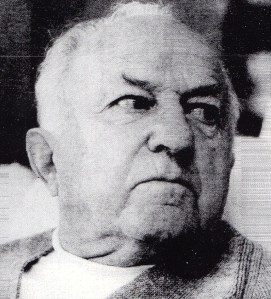
Father Kevin O'Donnell

Paedophile priest Father Kevin O’Donnell

><><><>><>

Katie tried to drown her memories of what Kevin O’Donnell did to her with alcohol and now suffers from severe brain damage.  When Katie was 15 years old she was hit by a car driven by a drunken driver while crossing a road after a drinking binge.  The resultant brain damage left her with no short term memory. The memories of her repeated rape by O’Donnell are the clearest and she lives with them everyday. If that isn’t hell, well I don’t know what is!  The book is harrowing reading because of what a Catholic priest did to these innocent young girls and the hundreds of other boys and girls he raped and sexually assaulted over a period of some 50 years.  There is also evidence that he had young men calling on him in the early hours of the morning for sex. Whether or not he had sexually assaulted these young men when they were boys, we will probably never know.

Mrs Foster blames herself for blindly following her Catholic faith which she believes prevented her from recognising the early signs that her daughters were being sexually assaulted by this beast.  But the really devastating truth about the sexual assault of hundreds of children is that the Catholic Church did nothing to stop it. Over the years several children and their parents complained to Bishops, including George Pell, and other priests, about Kevin O’Donnell’s behaviour, but they were not believed.  Or O’Donnell was shifted elsewhere. One priest told a worried parent to keep her accusation quiet.

Emma and Katie were attending a Catholic school in Victoria when Kevin O’Donnell was the priest in charge of the local diocese. His control was all-encompassing; the local church, local schools, principals and teachers. His commands were law. As Mrs Foster puts it, this was the perfect setup for a paedophile. Without the knowledge of parents, O’Donnell could call into any classroom he liked, request a particular child to go with him on some fictitious errand. Or he would simply walk amongst the children on the playground until he sighted a child who would fulfil his loathsome needs.  He would then take that girl or boy to a locked room at the back of the school hall or a disused Church cottage, and do whatever he liked with them. That was of course after they drank the drugged can of coke he offered them. He was cunning and experienced. To ply these very young children with alcohol would alert their teachers by smell and behaviour, that something was amiss. The children would all have to return to their classrooms after this disgusting excuse for a human being was finished with them. Mrs Foster and her husband, Anthony Foster, never found out what drug O’Donnell used to subdue their daughters, although a doctor did suggest that it was probably some form of valium.

If teachers complained about O’Donnell’s behaviour and his practice of taking children out of classrooms during school hours without parental consent, they bore the brunt of O’Donnell’s foul temper and some even lost their teaching positions. If nuns issued complaints to the Church hierarchy, they were ignored. There was nowhere else to turn; Father Kevin O’Donnell had the diocese and parish in his tight grip. Even when some parishioners were told of O’Donnell’s offending, they refused to believe it and so O’Donnell was able to continue sexually assaulting children with impunity.

Mr Foster is an atheist who had promised to bring his children up as Catholics and send them to Catholic schools as part of the marriage agreement with his future wife, a devout Catholic. Mrs Foster believes it was her own upbringing as a Catholic that allowed her to trust so much in priests. After all, weren’t they the representatives of God here on earth?  Weren’t priests placed in the Catholic community to protect children and support parents?  Even when she thought O’Donnell’s behaviour odd, Mrs Foster believed that he was always right in all things. He took his instruction from the pope who was infallible. To disobey a priest was a mortal sin.

You will be in disbelief, as were the Fosters, at some of the tactics used by the Catholic Church to exonerate itself from any blame for paedophile priests, such as the entrenched loophole in the truth called  Mental Reservation, or mentalis restrictio in the Latin. It is a theological strategy dating back centuries.  In effect, the idea of truths ‘expressed partly in speech and partly in the mind.’ e.g. A priest could answer with lies, obfuscation and ambiguity in court, under oath, but then under his breath tell Jesus that he lied to protect the Church.  This follows Canon Law, but not perjury laws of the Australian Legal system. Survivors of Catholic paedophilia who witnessed Pell and other clergy give evidence,  believe that George Pell, his priests and bishops, used Mental Reservation  time and again to protect paedophile Christian Brothers and Catholic priests, including when answering questions at the Melbourne Royal Commission Into Institutional Responses Into Sexual Abuse Of Children.

I have often wondered over the years if my mother had not been such a devout Catholic, would she have been able to overcome her traumatic childhood? She never stopped praying to God and relying on priests and nuns to help her through all the difficult times. And there were many of those.The Catholic Church always seemed to let her down when she most needed its support. Perhaps if she hadn’t been so indoctrinated, so reliant on a non-existent god, she may have sought some other avenue of support, like professional counselling. When you are in the Catholic system, it is very difficult to get off the treadmill. The spectre of committing a sin, with the prospect of going to hell, is a great deterrent for those with a strong faith. If you needed guidance or counselling, you visited your parish priest.  If you were having problems with your children, you sent them to a priest for a talking to.

Mr & Mrs Foster were hopeful of gaining support and empathy when they were finally given an appointment with Archbishop George Pell after numerous letters, and requests to talk to him, were ignored. They asked him to take action against O’Donnell and had prepared a huge file on the suffering of their two daughters at the hands of O’Donnell. But the newly promoted Archbishop Pell was arrogant, evasive and rude, while refusing to believe that O’Donnell was a paedophile. Pell insisted that…  ‘It’s all gossip until proven in court. And I don’t listen to gossip!’ The Fosters would have to go to court before the Catholic Church would give them financial assistance for all the doctors’, psychiatrists’ and hospital bills that were mounting around the disintegration of their daughters’ lives.  Much later they were offered $50,000 for Emma by Pell, but they would have had to sign a confidentiality clause and would not be able to sue the Church. The Fosters turned it down.

Eventually the Fosters did receive compensation after many years pursuing the Church with the help of lawyers. It’s a testament to this couple that their marriage has survived the years of suffering they and their three daughters have endured at the hands of the Catholic Church. Their youngest daughter only escaped O’Donnell’s debauchery because by the time she was at school, he had retired from the parish.  He died before the Fosters and police could take any action against him.  The Church would protect its priests and the reputation of the Catholic Church at all costs. It was clearly evident in Pell’s actions and his  treatment of the Fosters, that the welfare of the victims of paedophile priests was of no concern to him.  In fact one of the official excuses that the Church relied on was that it was unaware of the harmful effect sexual assault had on children and that’s the reason they hadn’t taken any action against offending priests! Their role was to support priests and shield them from State Law.

I can relate to Mrs Foster’s claim in the book that it was only in the years following the shock of discovering what had happened to her daughters, and the loss of her faith, that she realised how brainwashed she had been by the Catholic system. Going to church every Sunday, regular confessions even though she had committed no sin, prayers every night.  Of course total obedience to priests was mandatory under Canon Law, which she faithfully inculcated into her daughters, as her own mother had done with her. By the time she could see her past without the blinkers of blind trust, she was 40 years old. I was 17 and had just entered the workforce when I began to suspect that what I had been taught in all the Catholic institutions I’d lived in, on and off for the previous 17 years, was not based on reality. But it took much longer to throw off the yoke of indoctrination,

I too had it so clear in my mind, that when I went out into the world, I would be looked after by God because I had been such a good Catholic girl. This is what religious brainwashing does to you. You believe everything priests tell you, even if it overrules what your parents tell you. Or even what common sense might tell you!  I can still remember when I was a little girl in class asking the nun if I had to love God more than my own father. She had just told us that we had to love God more than anyone else in the world because he was our true ‘father’. She insisted that was the case. I never stopped thinking about it and even believed I was committing a sin because I didn’t think I could love God more than my father. But I still trusted in God for everything in life.

Through all that the Fosters were suffering, Mrs Foster researched the way paedophiles groom children for their own sexual gratification. She was part of a group that wanted to alert other parents to the dangers by giving them information to help identify the signs children might exhibit if they were being sexually assaulted. Meanwhile the Catholic Church did nothing to inform parents that O’Donnell may have sexually assaulted their children and to seek help if they had any suspicions.  Mrs Foster also used her daughters’ recollections of how O’Donnell was able to lure them away from safe environments. She tells us that no child can know how to protect themselves from a determined paedophile, and Father Kevin O’Donnell was a paedophile with 50 years’ experience.

Mrs Foster did her best while O’Donnell was still alive, to urge Archbishop Pell to defrock O’Donnell so that he could never use his priesthood to harm other children. But Pell would not hear of it, even though O’Donnell had recently been convicted for several counts of past sexual assaults on young boys. At the time O’Donnell was convicted for these particular sexual offences, the victims were grown men. The police informed the Fosters that these were representative charges only as there were so many it would have taken years for them all to be processed and heard in court! The police were anxious to do what Cardinal Pell & his church would not do; get O’Donnell behind bars where he could no longer sexually assault children. The Fosters’ other concern was that when O’Donnell was released from prison, the fact he was still a priest  would enable him to use his position of trust to go on offending.

When O’Donnell was retired he was sent to live in a unit close to St Mary’s Church in his former parish of Dandenong. He began officiating at Mass on Saturdays. When complaints were made to Father Noel O’Brady that children were visiting O’Donnell at his unit, he took those complaints to the archdiocese.  The ‘appropriate authority’ instructed Father O’Brady that  ‘It’s not happening on Church property…we’re not responsible.’  O’Donnell was supported and protected by the Catholic Church until he died.  It couldn’t have done this if he had been laicised. Obviously the Church knew what O’Donnell had been doing for decades, and right up until the end of his life, his welfare came before the hundreds of children whose lives he had totally destroyed. Many have committed suicide, many will never come forward, most continue to suffer.

I urge all parents who send their children to a Catholic school or intend sending their children to one, please read Chrissie Foster’s book ‘Hell On The Way To Heaven’ if only to be aware of the telling signs that your child might be vulnerable to sexual assault and to ensure that what happened to her beautiful girls will never happen again.

Think clearly and make sure you know what is contained in the Catholic Catechism the schools use to instruct the children in Catholic dogma.

-Anne Frandi-Coory … read more here about ‘Hell On The Way To Heaven’ 

*******************

Visit: Royal Commission Into Sexual Abuse Of Australian Children