
Updated 23 May 2018
*****
THE PLANETS & LONGITUDE – Book Reviews


I think these two great little books by Dava Sobel go together:
THE PLANETS
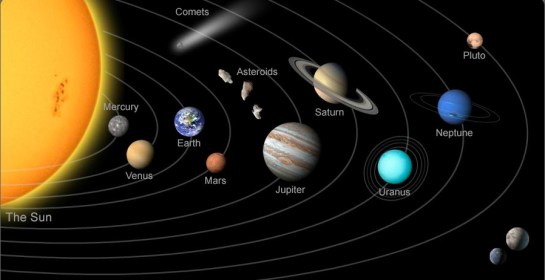
Dava Sobel writes about science in a way that young readers and adults alike can enjoy without constantly referring to a dictionary or a science magazine, although I did find having a simple map of our solar system at hand, very helpful. “If reading these pages has helped someone befriend the planets, recognising in them the stalwarts of centuries of popular culture and the inspiration for much high-minded human endeavour , then I have accomplished what I set out to do” A quote from Dava Sobel in The Planets. She could also add: and the inspiration for much romantic poetry.
Although I love reading the results of research and discovery the world of science brings us, I am not a science buff and too much science jargon can be confusing. I recommend these books to young readers with enquiring minds and adults who don’t read science publications, because they are enthralling to read and the author takes readers through hundreds of years of brief history with such easy to read, beautiful prose.
I have to admit to being a little blasé about planets and space travel; I have enough going on here on planet Earth without stressing about what’s happening on Mars and Mercury. Until I read Dava Sobel’s The Planets, that is!
This is not quite a whodunnit, but I couldn’t put the book down once I read the first couple of pages. I learned in those first pages the names of the nine planets and their order of distance from the sun and committed them to memory using Sobel’s “appealing nonsense-sentence mnemonic” … My Very Educated Mother Just Served Us Nine Pies: Mercury Venus Earth Mars Jupiter Saturn Uranus Neptune Pluto …I’m almost ashamed to admit that I didn’t know any of this before reading The Planets.
Readers will learn how planets were discovered, how they’re named and in recent years, through remarkable discoveries via satellites, spaceships and research stations, we have gained intricate information about the makeup of planets, and even when and how they were formed. We now know how long they take to orbit the sun, how often a planet rotates on its own axis. The author ventures into mythology and astrology, which adds to the fascinating stories surrounding each planet.
Now ‘morning star’, now ‘evening star’, the bright ornament of the planet Venus plays a prelude to the rising sun, or post script to the sunset. – Dava Sobel waxes lyrical about Venus.
Sobel tells us that Ishtar metamorphosed into Aphrodite, the Greek incarnation of love and beauty. She became the Venus of the Romans, revered by the historian Pliny for spreading a vital dew to excite the sexuality of earthly creatures…Only the Mayans and the Aztecs of Central America seem to have seen Venus as consistently male. The rhythmic association between Venus and the Sun inspired meticulous astronomical observations and complex calendar reckoning in those cultures, as well as blood rituals to recognise the planet’s descent into the underworld and subsequent resurrection. [Obvious inspirations for gods and divine resurrections in so many religions]
But Sobel also brings us back to Earth so to speak, with the reality that is planet Venus: …some of her volcanoes may well be active. Right now, sulphurous gases hissing from Venusian fumaroles could be making their way up to the clouds above the planet, to augment them and sustain them, and thereby ensure the enduring brightness of Venus to our eyes. That fair appearance of unassailable purity once made Venus the darling of poets, whose words still best express her effect on the night’s blue velvet – ‘a joy forever’, as Keats said , ‘ a cheering light / unto our souls’.
You’ve probably guessed that my favourite planet is Venus, and that’s because she was once thought by ancients to be Ishtar returning to the heavens. Poets wrote beautiful poetry in honour of Venus:
Thou fair-haired angel of the evening,
Now, whilst the sun rests on the mountains, light
Thy bright torch of love; thy radiant crown
Put on, and smile upon our evening bed!
Smile on our loves, and, while thou drawest the
Blue curtains of the sky, scatter thy silver dew
On every flower that shuts its sweet eyes
In timely sleep. Let thy west wind sleep on
The lake; speak silence with thy glimmering eyes,
And wash the dusk with silver.
-William Blake To The Evening Star
A reviewer for the Independent, John Gribbin wrote: ‘If you like your science lyrical, Sobel is the author for you.’ I can assure you though, Sobel knows her science. She is a former science journalist for the New York Times. Sobel informs us that we are very much in a golden age of spacecraft and they are on their way to Mercury, Pluto, and Mars. During her extensive research for The Planets, the thing that was most surprising to Sobel, was the size discrepancy between the Sun and the rest of the planets and she believes that ‘really the Solar System is the Sun’. To be honest, there were many wonderful things that surprised and overawed me while I was reading The Planets!
********************************
LONGITUDE
Dava Sobel writes:
Here lies the real hard core difference between latitude and longitude – beyond the superficial difference in line direction that any child can see: The zero-degree of parallel of latitude is fixed by the laws of nature, while the zero-degree meridian of longitude shifts like the sands of time. The difference makes finding latitude child’s play, and turns the determination of longitude, especially at sea, into an adult dilemma – one that stumped the wisest minds of the world for the better part of human history. Any sailor worth his salt could gauge his latitude well enough by the length of the day, or by the height of the sun or known guide stars above the horizon…the measurement of longitude meridians, in comparison, is tempered by time. To learn one’s longitude at sea, one needs to know what time it is aboard ship and also the time at the home port or another place of known longitude –at that very same moment. The two clock times enable the navigator to convert the hour difference into a geographical separation…
Precise knowledge of the hour in two different places at once-a longitude prerequisite so easily accessible today from any pair of cheap wristwatches-was utterly unattainable up to and including the era of pendulum clocks. On the deck of a rolling ship, such clocks would slow down, or speed up, or stop running altogether. Normal changes in temperature en route from a cold country of origin to a tropical trade zone thinned or thickened a clock’s lubricating oil and made its metal parts expand or contract with equally disastrous results. A rise or fall in barometric pressure , or the subtle variations in the Earth’s gravity from one latitude to another, could also cause a clock to gain or lose time.
In Longitude, the author takes us on an historical voyage through time, whipping up a storm of an exciting and intriguing brief history of astronomy, navigation and clock making at the centre of which, is the fascinating story of John Harrison the Yorkshire clock maker and his forty year battle to build the perfect time-keeper, changing sea navigation forever. Dava Sobel allows the ghosts of ancient seafarers to walk through the pages…
Reading THE PLANETS and LONGITUDE has increased my knowledge of the world around me; the sea, the land and our solar system. Thank you, Dava Sobel
-Anne Frandi-Coory 17 April 2016


 anne frandi-coory