Archive

Tag Archives: Eva Arida Coory

The Blog Comments below were posted  by David Edward Anthony, USA  on page:

Lebanese Family Tree and Photos.  

More here: My Life and Rhymes – A Life In Two Halves

**********

David Anthony:

I LOVE your website. I’m of two worlds, too, in this case 1/2 Lebanese and 1/2 Irish. The Lebanese side arrived in the USA from Lebanon in 1892.
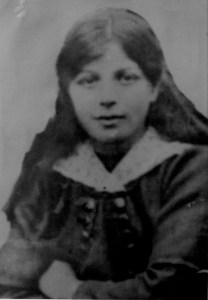
Amelia Coory, Joseph’s sister who died from TB at 17 yrs old.

The photo of Amelia Coory looks so very much like one of my cousins (who is 1/2 Lebanese and 1/2 Italian). Similarly to Amelia, my sitoo’s [grandmother] brother Peter died of “exposure” in the 1890s. He was perhaps 10 years old. In the USA at least, there was a terrible depression (the “Panic of 1892”) that led to widespread unemployment. In my great-grandparents’ case, they couldn’t get work have to live outside in a lean-to in the winter- it probably led to my grandmother’s brother’s death.

I see you have a Khalil Gibran – inspired drawing at the top of your page; interestingly enough, there are Gibrans in my family’s old parish.

Sketch by Khalil Gibran

Anne Frandi-Coory:

Hi David, good to hear your story. Khalil Gibran was born in my grandparents’ village in Bcharre and moved to USA when the Catholic Maronite minority were suffering persecution by muslims. We are related to his family through marriage [Khouri]. If your family came from Bcharre there is a good chance there will be a family connection because my grandfather’s sisters emigrated to the US. Lebanese/Irish combination would make for a volatile mix as does Lebanese/Italian, I would say?

David:

Hi! Thank you so much for the reply.

Yes! Irish-Lebanese is a volatile mix! My Irish mother could be very much the unstoppable force where my Lebanese dad was the immovable object. When she got excited, it was like a tornado was set loose in our living room- and that Tornado came up against the Mt. Everest that was my dad!

My family isn’t from Bcharre. It’s from a very similar town not that far away to the west- a town called Ehden.

I hesitated- strongly- on telling you about Ehden as Bcharre and Ehden are two very similar towns – Maronite Catholic and set in the mountains- photos of both towns make them even look similar- but they historically are two rival towns as well. I suspect you’ve heard in your life how Italian towns are rivals- very similar thing.

Both Ehden and Bcharre are *very* ancient towns. Both rightfully can boast an ancient heritage- with ancient buildings and such. Bcharre, if I remember right, boasts the oldest cedars in existence (and among many things, of course being the birthplace of Khalil Gibran)..while Ehden, for example, hosts Horsh Ehden, a very ancient nature preserve, and also the oldest Maronite church in the world.

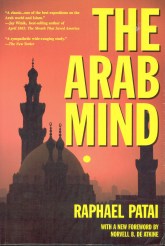
Now, the reaction of many old Bcharre people on hearing from someone from Ehden is usually something like, “Ehden! Those people are NO GOOD.” Which goes back to the book, The Arab Mind* and the author’s conclusion that there’s really not much middle ground between liking and dislike in the Middle East.

I hope (!) that my telling you I’m from Ehden (really Zghorta, which is its mirror town – Zghorta in the winter and Ehden in the summer) doesn’t give you a bad vibe!

Anne:

I was a bit like your mum when I was younger-very fiery, not sure many people understood me. But I didn’t inherit the ethnocentricity that my grandparents brought with them from Lebanon because I spent my formative years in an orphanage. My mother became mentally ill (not surprisingly) and dad’s family didn’t want me because my mother was Italian. However, I love the Lebanese people and the Italian people and consider myself blessed, and I am proud, because of the wonderful positive traits I and my children have inherited. Writing Whatever Happened To Ishtar? helped me to see that. So, David, the fact you are Lebanese is fantastic!

*READ my review here:

‘The Arab Mind’ by Raphael Patai – A Book Review by Anne frandi-Coory
 

David:

I’ve read this book as well – about two years ago. It helped me, too, connect to my Middle Eastern roots. As I’m half of Irish descent, and the Irish side of the family being HUGE, I tended to spend far more time with the Irish side than the Lebanese side. Plus my father, a very kind man, tended to be a very reticent man. As the Lebanese side of the family was very small, I tended to not get hardly any exposure to the Lebanese side; even though, quite frankly, I looked *very* Lebanese. I kind of stuck out when visiting my Irish cousins! 🙂

I remember reading in the above book an account that the author witnessed of Middle Eastern people leaving a movie theater. People leaving the movie often showed no middle ground. They either LOVED the movie, or they HATED it. That lack of a “middle ground” is very close to my own personal experiences- and reading the above, it seems that you had similar experiences? Either they accept you wholeheartedly..or not at all. Growing up, it confused me. I saw people being what I called “favorited” or not favorited at all. It took me many, many years (and some hurt) to figure out what was going on.

That said, I didn’t know that the tidbits of language I had picked up from my jidoo [grandfather] weren’t really Arabic until I was an older teen. What happened was that a distant cousin north Lebanon visited our family. When he spoke to my jidoo, they couldn’t understand a word they were saying to one another. My jidoo was raised to speak what he was believed as Arabic from a young age- in fact, it was his first language. Why couldn’t my cousin from Beirut understand him?

In the end, we figured it out. My cousin spoke modern Arabic. My jidoo spoke a form of Aramaic that was spoken more than a century ago, which was passed onto him in the USA by his family. Not only was my jidoo speaking another, older language, he was speaking a form of it that was about a century old!

I really like your site. I don’t have much time to check it out from top to bottom; I hope it’s okay if I come back and read through it some time! Thank you for posting so much interesting stuff!

Anne:

Here in my review of another book you may be interested in:

The Maronites in History by Matti Moosa 

The comments below were posted here on my Blog  by Miriam Burke, NZ on page:  Lebanese Family Tree and Photos.  

**********

Subjects: My father, Joseph Jacob Habib Eleishah Coory, his brother Michael Patrick Coory, Patrick’s wife, Harriet and their daughter, Yvonne.

Joseph and Michael Coory 1

Brothers Joseph and Michael Coory

The book: Whatever happened To Ishtar? – A Passionate Quest to Find Answers For Generations of Defeated Mothers

Miriam Burke is Michael Patrick Coory’s granddaughter and daughter of Yvonne Coory.

**********

Dear Anne

I just wanted to post you something beautiful and I know you love it:  (Blue Danube Ballet) http://www.youtube.com/watch?v=eSulONzgewQ

Dear Miriam

How did you know about the glass case? You’ve already read my book! The ballet brought tears to my eyes. Thank you so much, Miriam xxxxx

Dear Anne

I wanted to send you something you could keep and play over and over again without it getting taken off you. Yes Anne, I rushed out and got your book and I am part way through. It has touched me so very much, I only wish you had confided in my nanna Harriet, I’m so sad to know how very bad you and your brothers were treated. I relate to the screaming and yelling; I always remember I would get scared when all of a sudden one would start arguing and the rest would jump in like a pack of hyenas attracting prey.

Did you know your dad was my most favourite great uncle? I remember Mum took me to Cherry Farm to visit him and I was so disgusted the family had put him in such an awful place. I told Mum I never want to go back. Uncle Joe was so pale and thin looking, I didn’t want to believe it was him. 😦 I remembered Tim!!!! [Joseph’s beloved dog] Oh how I loved him but when I think of Tim he was very old.

I came across your blog by accident the other day. My sister-in-law Charmaine Burke (nee Coory) Victor Coory’s adopted daughter’s brother John had passed and I was looking on the ‘net for details of his funeral. I was drawn here after names came up that I was familiar with. I’m so very pleased I found you. 🙂 xxx

Dear Miriam

OMG! you knew my dad. He and uncle Mick [Michael Coory] were very close and had similar lives until my dad [Joseph Coory] married my mother [Doreen Frandi], and The Family never forgave him. . I know that uncle Mick was staying with the Coory family at Carroll Street when your Nana Harriet was so ill and after she died. However, he was so horrified by the way the family treated uncle Henry’s children after he died, Mick moved out and stayed with your mum. I am so glad you found me. Xxxxx

Dear Anne

Who could forget Uncle Joe, I was a young girl, Anne when Uncle Joe died but he was someone in the house I felt I connected to and felt comfortable being around….he had sparkling eyes, a friendly smile and a gentle soul. See my brothers and I are out casts also on the Todd side for the stupid reason our Mother and Father got divorced. When we were small children, why did we get the feeling we had done something wrong? Even now I’ve been in touch with my Dad’s side of the family and don’t feel I fit in anywhere. They look at me as though I’m an alien…I know they see Mum when they look at me, Mum did tell me they treated her so bad even when she was married to Bryan. I’ve been blessed with her looks and she lives on in me…oh and the other wonderful thing I’ve been blessed with is my Nanna Harriet’s nature…LOL She was a bit of a rebel, could stand up for herself and a wonderful sense of humour. I remember she did tell lies though, only to keep the peace but she would laugh and giggle like a small child at every time she told one.

I remember.one day Great Aunt Georgina was yelling out to us and Nanna said to me “oh no here’s the fog-horn coming”…I started to giggle and Nanna said just say nothing and go along with me. We were staying up in Wanaka at the holiday home and Nanna and I were in the small scamper on the section. Georgina came over and asked if we had been to church? Nanna said yes of course we had, “we were sitting near the back [of the church]”. Of course we didn’t go to church that day. I wonder if they knew of Nanna’s tattoo?. A small butterfly she had on her thigh…hence my love of anything to do with butterflies. I have one hanging on my wall and when I look up at it I think of Nanna. She was too modern to be a nanna in those days…I thought she was just the coolest Nanna in the world! They both did so much for Mum and us children especially when Dad left. We were so lucky to have wonderful grandparents.

Aunt Alma who really wasn’t our Aunt was Mum’s favourite to talk to…Aunt Alma we had more to do with and visit than the house in Carroll Street in later years when Nanna was in a retirement home. Mum and I would always make sure we called into visit Alma when visiting Granddad while he was living at Carroll St. You know Anne, think of yourself as a caterpillar slowly crawling along in your youth, everything seems a struggle, you don’t feel good about  yourself, you feel like you are going  nowhere, then one day you just get so tired of your struggle you just want to curl up into a ball and sleep forever away from the world; then the moment you awake you feel different, you have grown into a colourful butterfly that can now fly above all those struggles you once had…you’re beautiful…just keep spreading those wings! xx Miriam 

**********

Read more here about Joseph in an excerpt from  Whatever Happened To Ishtar? >>>>>>>>>>>>>> My Father Joseph Jacob Habib Eleishah Coory 


10334276_293513207505781_2346531765896938995_n

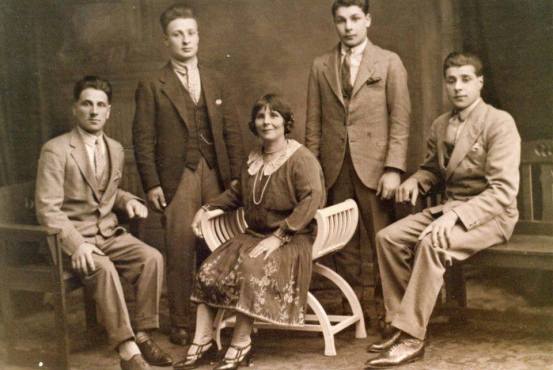
L to R: Joseph, Michael, Frederick and Philip Coory with their mother Eva Arida Coory.


Bcharré And Her King of Trees

Goodbye Bcharré  

*****

Poem and Painting  Goodbye Bcharré  

Copyright To Anne Frandi-Coory All Rights reserved 19 April 2016

Painting 500cm x 410cm  Acrylic on canvas

******************************

There we stood above Bcharré the land of our fathers

in the shadow of a magnificent tree of kings, scarred and riven

beyond which stretched the Qadesha Valley deep below

beckoning, engulfing all with its lonely mists of woe

***

Long have blood thirsty invaders stormed poor Lebanon

fortifications  of rocky cliffs and great King  Cedrus Libani

his powerful roots hidden in caves and rocky outcrops

once protected animal and peasant alike, for millennia

***

Phoenicians and Romans, to name warriors but a few

decimated Lebanon’s cedars for agile fighters’ garrisons

mighty, heavenly temples,  fleets of foreboding ships

their planks they withstood thousands of salty tides

***********************

**Read the rest of my poem in DRAGONS, DESERTS and DREAMS

{SEE BELOW}

Dedicated to my Lebanese grandparents

Jacob Habib El Khouri Eleishah Fahkrey and Eva Arida Fahkrey

**Read more about my poems and short stories …  

Here in DRAGONS, DESERTS and DREAMS  

*Available here at AMAZON  in Kindle e book or paperback 


Excerpt  from ‘Whatever Happened To Ishtar?; A Passionate Quest To Find Answers For Generations Of Defeated Mothers’ 

><><>

***This page is copyright to author Anne Frandi-Coory. No text or photograph can be copied or downloaded from this page without the written permission of Anne Frandi-Coory.***

><><

[My paternal grandfather] Jacob Habib Eleishah El Khouri Fahkrey tells us in his diary that he was unhappy about going to live in his grandfather’s house when he was seven years old. His grandfather, Eleishah,  had great expectations of him for the future. Eleishah was a very holy and hard-working man who was attached to the [Roman Catholic] Saint Simon Monastery. Even within the peasant classes, selected men could become priests and marry as well. Eleishah’s status afforded Jacob the heredity right to anglicise Fahkrey to Coory (guttural Khouri meaning ‘priest’)

><

jacob&eva

Anne Frandi-Coory’s paternal Lebanese grandparents, Jacob and Eva Coory (Fahkrey)

><

Eleishah’s education of Jacob included teaching him to read and write in four languages and he planned to later school him in the art of translating Assyrian into Arabic. In his first years, Jacob bent to his grandfather’s wishes, working hard at his studies and fully expected to become a priest. The languages he studied were French (his second language) Latin and Greek, and under his grandfather’s dedicated tutelage, Jacob wrote and spoke fluently and eloquently in the ancient Syriac language, Aramaic, Bcharre’s native tongue. This language was, at that time, spoken mostly by Syrian peasants. The religious ideas of the Syrian and Italian peasantry were similar, confirmation of the integration of ideas and beliefs along the charted trade routes between Italy and the Fertile Crescent. Later, once Jacob had emigrated, he made the effort to learn English. The Arab world was a multicultural mix of language and peoples; Jacob’s heritage and talents reflected this. In retrospect, it’s sad to think that Jacob could have achieved so much more for his family and descendents if he had moved out of his cultural and priestly comfort zone.

In any event, Jacob changed his mind about following in The Family tradition of priestly services, but, cautiously at first, made the announcement that he would like to marry. It was not until his marriage to Eva (Khowha) Arida that he told his grandfather he did not wish to follow him into the priesthood, which made his grandfather very angry. Eleishah did not speak to him for sometime afterwards. Jacob’s rebellious change of heart may have had something to do with his frequent sojourns into Beirut with friends, in which he experienced the forbidden fruit of city life away from his grandfather’s strict philosophical and priestly instruction.

Other events transpired to influence Jacob’s fateful decision. When Jacob was twelve years old, his father, Habib, and uncle Tunnous El Khouri, visited Australia and New Zealand. His uncle eventually returned to New Zealand and bought a vineyard there. The family talked often about the exploits of this adventurous uncle and the young fertile country he had travelled to.

…The Fahkrey family in Bcharre must have been heartened then, following their earlier disappointment, by Jacob’s acceptance of their choice of a bride and the wedding was arranged to take place on a Sunday. Within a few months of their betrothal, the young couple had secretly planned to set sail for New Zealand after their wedding. This plan was obviously instigated by Jacob. I don’t believe that Eva fully understood what she was getting herself into, because her early life had been very different to Jacob’s. Eva had spent her early life cooking, cleaning, and praying, and was only 15 years old on her wedding day.

Jacob and Eva’s wedding ceremony was performed by Eleishah Fahkrey, who was still unaware of his grandson’s intentions to abandon his religious training and emigrate. Eleishah spoke after the ceremony, saying how proud he was that he would soon have a priestly grandson. The wedding ceremony lasted fifteen days, truly reminiscent of the pagan love feasts which so scandalised the early Christian Church. There was much celebrating and drinking, and many guests spent the nights sleeping under trees. Soon after the wedding celebrations had ended, Jacob and Eva continued with their plans to migrate to New Zealand to make their fortune, hoping to then return to Lebanon.

><

More….Walking Around Lebanon With 2famous