Archive

Tag Archives: First World War

Blog Comments    My Life and Rhymes -A Life In Two Halves

Italian Connections

From Verna Crowley, Otaki, New Zealand.

 The Mystery Surrounding Ateo Frandi’s Colonial Auxiliary Forces Long Service Medal.
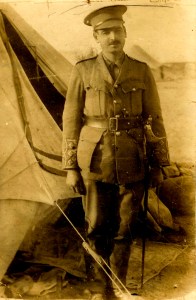


Ateo Giusto Leale Frandi – killed by a sniper at ‘the daisy patch’ Gallipoli 8th May, 1915

*****************************

Verna Crowley

18 May 2014

Hi Anne, I came across your story while I was researching Ateo Frandi, born 04 May 1873, died [8th] May 1915. I have in my possession a WWl medal with his name [inscribed] on it. It was issued in 1911 for his long service in the Colonial Auxiliary Forces. I would dearly love for it to be returned to his family, he has no direct issue but if you know of a family member I can pass it onto I would appreciate it…. Thanks, Verna.

Verna

20 May, 2014 .

Good morning Anne,
I have not heard from you via my email today so I thought I would try again through here.

I realise you might be thinking that maybe this is some sort of hoax, but I can assure you that I do have the medal and I am very much hoping to be able to return it to his family, where it rightfully belongs, (after 100 years).
I can tell you it came into my possession through my grandmother, how she happened to have it I do not know, but she kept it safe along with her first husband’s WWl medals. This year being significant for WWl veterans, I was going through all the paper work and medals and as this medal did not have a ribbon, I was going to have it re-ribboned, it was only then that I noticed Ateo’s name [inscribed] on the side and I thought I would try and locate his family to return it.
The inscription reads: No. 179 COL-SERG. A. FRANDI ZEALANDIA RIFLES (1911). 

Please let me know where you want me to send it
Thanks, Verna

********************************************************
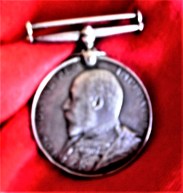
Head inscription reads: EDWARD VS Vll REX IMPERATOR


Reverse and rim inscriptions read: For Long Service In The Auxiliary Forces; No 179

***************************************************************

Anne Frandi-Coory

Hello Verna, lovely to hear from you. I would so love that medal and I would treasure it as would my family. My mother, Doreen Frandi,was very close to Italia, Ateo’s sister, and Italia and Ateo were devoted to each other. Otherwise, I truly don’t know anyone else to recommend. Thank you for making contact.

I am so glad you found me, Verna, and I did not for one moment disbelieve you;  I would so love the medal which I would treasure as would my family.

Because of all the awful things that happened to my mother and me, I don’t have any mementos from the Frandi family, so this medal will mean a lot to me and the wider Frandi family.

The only memento I do have is a set of broken Rosary beads in a tiny leather case cherished by my mother, Doreen. Her father, Alfredo, was Ateo Frandi’s youngest brother and while Ateo died before she was born, Doreen knew Ateo’s sister, Italia, very well. By all accounts, Italia had a soft spot for the troubled Doreen. Ateo and his only sister, Italia, were close in age, both born in Pisa and devoted to each other.  Italia’s two daughters are long deceased and Italia’s only grandchild didn’t have any children. I truly don’t know anyone else to recommend.

Thank you once again, and please let me reimburse you for the cost of postage.

Kind regards, Anne.
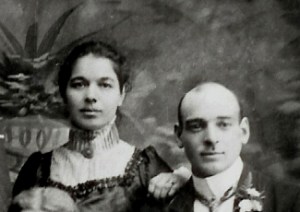
Italia and Ateo Frandi

****************************************************

Verna

Good morning Anne,

Ok …Firstly to answer your question: Where do I fit into the Frandi family? Simple answer , I don’t.

This may take a bit of explaining  but I will try and keep it as short as possible.

I’m sorry…when I did not receive your first email I thought maybe you did not believe I had a medal belonging to Ateo. I had to put myself in your shoes and think, who is this person who says (quite out of the blue) hey…I have a medal, it is more than 100 years old and does anyone in your family want it? So I thought if I told you what the inscription said it would let you know I was for real.

You may now be thinking that  if I don’t fit into your family anywhere, how do I happen to have the medal?

As I said it was in my grandmother’s possessions along with her first husband’s WWl medals and papers. I don’t know how she came to have Ateo’s medal and I don’t know if she knew him. She may have, the time frame fits. Back then in WWl and also in WWll  a lot of things associated with the wars were not kept.  The men did not talk about, or want  any reminders of their time fighting overseas. Well that was the case in our family, so as children we never knew about what our mothers and grandmothers kept hidden. But my grandmother had treasured the reminders of her husband that she had been given (married in 1916); he never came home. He is buried in Cologne cemetery in Germany.  She only had one surviving child to that marriage, my mother. My grandmother later remarried and had more children.

When my grandmother died, what she had in her possession was handed down to my mother, who had a life similar to my grandmother’s.  She also lost her first husband, in WWll;  he also never came home and is buried in Belgium.  My mother later remarried, and had three children. That’s where I come in.  My mother obviously kept her husband’s medals together with her father’s medals. She died in 1971 and my father remarried. We three children from his first marriage were not given anything of our mother’s after she died.

When my father died in 2009, my sister and I (my brother had since passed away) I had to contest his Will to receive some things  that belonged to our mother…long story.

Some of the few things we received were the war medals; not my father’s war medals, but my mother’s first husband’s medals and those of her father’s. The medals have been kept in the original box that my mother kept them in.

Verna continues …

in her letter which accompanied Ateo’s medal which she later posted to me:

I was looking through your blog and read your post, [link]: Letters To Anne Frandi-Coory  which included the two letters from your mother’s youngest sister, Anne Albert.  I was a bit blown away and I truly believe that Ateo’s medal was meant for you all along.   I am convinced a higher power, maybe my mother, encouraged me to find you. If all three circumstances hadn’t come together at around the same time, the medal would probably have been lost forever and never returned to its rightful home:

  • My sister and I received, in 2009, the few things that belonged to our mother:
  • Your memoir and Frandi family history  [link] Whatever Happened To Ishtar? was published in 2010.
  • This significant ANZAC year of 2014 prompted us to scrutinize carefully the papers and medals we received as a result of contesting our late father’s Will, discovering that one of the medals had a different name on it.

I couldn’t get that medal out of my mind and so I decided to research the name and other details inscribed on the medal. I found a few clues and of course your web site and Blog. If we had rightfully received our mother’s treasures years ago, and tried to find Ateo’s descendants at that time, we would not have been able to trace any and that would have been the end of it.

I now know that your mother, Doreen Frandi, lived at 56 Hewer Crescent, Naenae, Lower Hutt,  in Wellington …

56 Hewer Crescent, Naenae, Wellington, NZ


We lived at 28 Hewer Crescent. It seems from your aunty Anne’s letter that Doreen and her son Kevin lived there for some years prior to 1980. She also mentions that Doreen worked at a factory close by. I would think that would be the Philips factory; it was a large employer in Naenae for many years and most of Naenae worked there at some stage. They employed hundreds of people at any given time.  Doreen’s  next door neighbours at number 54 were the Hardies; a father and three children: Trevor, Roberta and Marianne.  Roberta worked at the factory for many years, possibly alongside Doreen.  

 Many connections, but the mystery remains: how did Verna’s mother come to have Ateo Frandi’s war service medal in her possession? Did Doreen give it to Verna’s mother for safe-keeping or perhaps Verna’s grandfather and Ateo were war mates and Italia gave the medal to him? Perhaps someone reading this post could enlighten us?

Verna.

***********************************

READ here about the naming of Frandi Street, Wellington, NZ, named in memory of Ateo Frandi and  the Frandi family who lived nearby for many years:

[Link here]   FRANDI STREET 

RIP Ateo Frandi

*Note: Anne Frandi-Coory has   since passed the medal onto Ateo Frandi’s great nephew who is currently serving in the New Zealand Armed Forces.

Aristodemo and Annunziata Frandi are the parents of Ateo Frandi and Anne Frandi-Coory’s maternal grandfather, Alfredo, who was Ateo’s youngest brother.

Aristodemo Frandi (Aristodemo from the Greek ‘Aristodemos’)

Annunziata Fabbrucci Frandi

The Silk Roads; A New History of the World

by Peter Frankopan, a senior research fellow at Worcester College, Oxford, and Director of the Centre for Byzantine Research at Oxford University.

*******

img20180301_11475993

*******

In 2013, Chinese President Xi Jinping announced the launch of both the Silk Road Economic Belt and the 21st Century Maritime Silk Road, infrastructure development and investment initiatives that would stretch from East Asia to Europe. The project, eventually termed the Belt and Road Initiative (BRI) but sometimes known as the New Silk Road, is one of the most ambitious infrastructure projects ever conceived. It harkens back to the original Silk Road, which connected Europe to Asia centuries ago, enriching traders from the Atlantic to the Pacific.

I think all current politicians and economists should read this book, because history repeats again and again but then, politicians and world leaders never seem to learn. Frankopan’s research is extensive and he presents many source testimonies and documents to support his claims. His writing moves along at a swift and thoroughly engaging pace. I would go so far as to recommend this book to college teachers. It gives a rare and independent insight into the political history of our world.

Historically, the Silk Roads were a network, with their geographical centre in Asia Minor, Central Asia, the Caucasus, China and the Middle East; territories that met, and traded with one another along arterial routes of communication. These routes influenced the world as we know it today. Ideas, cultures and religions were also spread via this network.

Bettany Hughes, whose book A Tale of Three Cities; ISTANBUL is also a great read, says of Frankopan’s ‘The Silk Roads’: How shamefully we in the West have been caught in the 20th and early 21st centuries with our strategic trousers around our ankles, … failing to remember why the map of the Middle East is drawn with such straight lines. Our ancestors would have been horrified by today’s wilful ignorance. Ancient reports of the region (studded, admittedly, with some fantastical nonsense) would put many modern memos to shame. Tellingly, Frankopan includes some recently released diplomatic cables and US political briefings describing Afghanistan, Iraq and Iran that are cringingly callow, and exemplify the danger of living in what the late historian Eric Hobsbawm called the ‘permanent present’, ignorant of our past.

In this vein, to quote Frankopan: The liberation of Christendom seemed to be at hand…it soon became clear how wrong these reports were…what was heading towards Europe was not the road to heaven, but a path that seemed to lead straight to hell. Galloping along it were the Mongols…Later the Mongols became increasingly interested in the techniques that had been pioneered by western Europeans, copying designs for catapults and siege engines created for the crusaders in the Holy Land and using them against targets in East Asia in the late thirteenth century. In this way Control of the Silk Roads gave their masters access to information and ideas that could be replicated and deployed thousands of miles away.

In the sixteenth century the age of empire and the rise of the west were built on the capacity to inflict violence on a major scale eg. the Americas. By then the best money was to be had in human trafficking and it was said to be ‘in league with the crown and with god.’ Before the discovery of the Americas, trading patterns ‘had begun to pick up’ and many scholars argue that this was due to improved access to precious metals and ‘the rising output of mines.’ But other scholars ‘point to the fact that tax collection became more efficient in the second half of the fifteenth century.’ [Perhaps our current political leaders and economists should take note]: ‘Economic contraction had forced lessons to be learned…’ and the collection and setting of taxes paid a crucial part in those valuable lessons.

I thought The Road to Empire a very interesting chapter and one which mirrors much of what is happening in our 21st Century:

Ottoman bureaucrats had proved to be highly skilled administrators, adept at centralising resources …as the empire swallowed up more territory in the fifteenth and sixteenth centuries, this had worked efficiently and smoothly. When the momentum of expansion slowed…the fragility of the system became apparent, under pressure from the cost of sustaining military action on two fronts- in Europe in the west and with Safavid Persia in the east…but also as a result of climatic change that had a particularly severe impact on the Ottoman world. [my emphases].

Frankopan discusses at length the different outcomes relating to the gap between rich and poor in Islamic countries as opposed to Christian countries in the west. It may not surprise many readers that Islamic countries had the more equitable laws which meant less concentration of wealth and property within a few elite families, including royal dynasties, as in the west.

Under the surface, powerful currents were swirling unseen…Robert Orme’s attitudes were typical of the eighteenth century; The first official historian of the East India Company, Orme penned an essay whose title On The Effeminacy of the Inhabitants of Indostan [India], reveals much about how contemporary thinking had toughened. A bullish sense of entitlement was rising fast. Attitudes on Asia were changing from excitement about profits to be made to thoughts of brute exploitation…It was the Wild East – a prelude to similar scenes in the west of North America a century later. Go to India, the memoirist William Hickey’s father told him, and cut off half a dozen rich fellows’ heads… and so return a nabob. Serving the East India Company in India was a one-way ticket to fortune.

The Road To Crisis is an intriguing chapter in which late eighteenth century Russia looms large as a threat to Britain. Anyone interested in the part Russia played in forming the geopolitical landscape of the 21st century, will find this very interesting, as I did. Much of what is happening in our world today, makes more sense, and I understand the reasons why China and Russia do not trust the west. This includes the aftermath of the Crimean war and Russia’s determination to claim back the Crimea peninsula.  The west would eventually help the spread of Islam in the East as a way of curtailing Russian expansionism.

‘In the late nineteenth century, Russian confidence, bullishness even, was rising fast.’ Britain planned to expand its territories into the far East, and in this quest, was in competition with Russia. But once China granted trading privileges to the British, they had little hesitation in using force to preserve and extend their position. Central to the commercial expansion was the sale of opium despite fierce protests by the Chinese, whose outrage at the devastating effects of drug addiction was shrugged off by the British authorities. The opium trade had expanded following the Treaty of Nanking in 1842, which opened up access to ports where the trade had been restricted previously, while also ceding Hong Kong to the British; further concessions were granted after British and French forces marched on Beijing in 1860, looting and burning the Old Summer palace.

Britain was also keeping a watchful eye on Russia which was meddling in one of Britain’s most prized possessions: Persia with its black gold. ‘Russian ghosts were everywhere. Anxious Foreign Office officials pored over a stream of reports on the activities of Tsarist officials, engineers and surveyors in Persia, that was flooding back to London.’

The reasons for the First World War: ‘World leaders go to war for their egos…’ in this case the fight over Persian oil, and the carving up of Ottoman Empire territories. Offerings of an ‘empire’ to leading figures in the Arab world were made in return for their support. The wheeling and dealing, involving Russia, Germany and Britain, while the first world war was raging, is sickening, and all the while Britain was fearful of ‘losing’ India. ‘The former British Prime Minister Arthur Balfour was anxious that ‘a rapid defeat of Germany’ would make Russia more dangerous still by fuelling the ambitions of the latter to the extent that ‘India might be at risk’. There was another worry: Balfour had also heard rumours that a well-connected lobby in St Petersburg was trying to come to terms with Germany; this he reckoned would be ‘as disastrous for Britain as losing the war’.

Both Britain and France passionately claimed to have noble aims at heart and were striving to set free ‘the populations subject to the bloody tyranny of the Turks’, according to The Times of London. ‘It was all bad’ wrote Edward House, President Wilson’s foreign policy adviser, when he found out about the secret agreement from the British Foreign Secretary. ‘The French and the British are making the Middle East a breeding place for future war’. [my emphasis]

…By the end of 1942, the thoughts of the new allies, Britain, the USA, and the Soviet Union were turning to the future…it was clear that the ‘effort, expense and trauma of another massive confrontation had exhausted western Europe’. It was already obvious that the old empires had to be wound down. Such chapter titles as The Road to Genocide, The Road to Super Power Rivalry, and The Road To Catastrophe are a good indication of what followed the Second World War. Most of us know some of this history, but The Silk Roads describes in detail, much of it in newly released source documents, the tragic consequences of this, to my mind, a completely unnecessary war. The claim in this book that world leaders go to war largely for their egos, is as true today as it has been throughout human history.

Post Second World War there was concern across the world for the seemingly out-of- control proliferation of nuclear weapons manufacture. Most readers will by now be well versed in the reasons for the later USA invasion of Iraq, but many will be surprised by the indirect involvement of Israel, USA, England, Italy, France and Russia in the years leading up to the invasion.   Few had doubts that the research reactors, powered by weapons grade uranium and other materials essential for dual use, as well as separation and handling facilities capable of extracting plutonium from irradiated uranium, were solely for energy purposes. The west turned a blind eye as and when needed. As Pakistani scientists noted ruefully: ‘…the western world was sure that an underdeveloped country like Pakistan could never master this technology…and yet at the same time western countries made hectic and persistent efforts to sell everything to Pakistan. They literally begged us to buy their equipment’.

Frankopan writes:

As it was, it was not hard to see how stern talk from countries like the US, Britain and France, which refused to be subject to the inspections and rules of the International Atomic Energy Agency, grated with those that did and had to conduct their research in secret; but the real hypocrisy, in the cold light of day, lay in the enthusiasm with which the developed world rushed to earn hard cash or gain access to cheap oil.

There were half-hearted attempts to curtail the spread of nuclear materials. In 1976, Kissinger suggested that Pakistan should wind down its processing project and rely instead on a US-supplied facility being built in Iran that was part of a scheme devised by none other than Dick Cheney, for the plant in Iran to serve as a hub for energy needs across the region. When the President of Pakistan turned down this offer, the US threatened to cut off the country’s aid package.

In 1980 US President Carter’s handling of the hostage situation and the Iranian oil embargo was a catastrophe. Operation Eagle Claw, the covert mission he authorised to rescue hostages… ‘was a propaganda disaster’… this was but one disaster in a changing world order. Countries were fighting back against the hypocrisy of the west.

In the mid-1980s, when the United Nations reports concluded that Iraq was using chemical weapons against its own civilians, the US responded with silence. Condemnation of Saddam’s brutal and sustained moves against the Kurdish population of Iraq was conspicuous by its absence. It was simply noted in American military reports that ‘chemical agents’ were being used extensively against civilian targets. Iraq was more important to the United States than the principles of International Law – and more important than the victims.

The chapter on the Soviet invasion of Afghanistan, its subsequent withdrawal of troops and weaponry, and the involvement of China, USA and Saudi Arabia in training and supporting Islamic militants is a must read.

Those resisting the Soviet army were supplied with money and weapons by the three countries. The long-term implications and consequences are now well known and documented, if not the initial struggle in ridding Afghanistan of the Soviet invaders.

Men of Saudi extraction who followed their conscience to fight in Afghanistan were highly regarded. Men like Osama Bin Laden – well connected, articulate and personally impressive – were perfectly placed to act as conduits for large sums of money given by Saudi benefactors. The significance of this of course, only became all too apparent later.

Frankopan lays out in detail how these events have made our world much more dangerous, and volatile, than it ever was.

Things were not going well between the USA and Iraq for various reasons, and there was mistrust on both sides. Rumours were rife that the USA was about to overthrow Saddam. Consequently, ‘…in one of the most damning documents of the late twentieth century, a leaked transcript’ of the then ambassador’s meeting with the Iraqi leader in 1990, reveals that she told Saddam that she had ‘direct instructions from President Bush to improve our relations with Iraq…we know you need funds…’. Iraq was running up debts in the war with Iran and the depressed price of oil presented problems for the economy. Saddam subsequently asked the ambassador what USA’s opinion was on his solution: to take over control of the Shatt al-Arab waterway, a region over which Iraq was involved in a long-running dispute with Kuwait. The ambassador answered, [to summarise], that ‘…the Kuwait issue is not associated with America’. Saddam had asked for a green light from the US, and he got one. The following week he invaded Kuwait.  Frankopan:

The consequences proved catastrophic. Over the course of the next three decades, global affairs would be dominated by events in countries running across the spine of Asia. The struggle for control and influence in these countries produced wars, insurrections and international terrorism – but also opportunities and prospects, not just in Iran, Iraq and Afghanistan, but in a belt of countries stretching east from the Black Sea, from Syria to Ukraine, Kazakhstan to Kyrgyzstan, Turkmenistan to Azerbaijan, and from Russia to China too. The story of the world has always been centred on these countries, but since the time of the invasion of Kuwait, everything has been about the emergence of the New Silk Road.

In conclusion, under the chapter The New Silk Road Frankopan warns, and I quote in full: In many ways, the late twentieth and early twentieth centuries have represented something of a disaster for the United States and Europe as they have played out their doomed struggle to retain their position in the vital territories that link east with west. What has been striking throughout the events of recent decades is the west’s lack of perspective about global history – about the bigger picture, the wider themes and the larger patterns playing out in the region. In the minds of policy planners, politicians, diplomats and generals, the problems of Afghanistan, Iran and Iraq seemed distinct, separate, and only loosely linked to each other…While we ponder where the next threat might come from, how best to deal with religious extremism, how to negotiate with states who seem willing to disregard international law, and how to build relations with peoples, cultures and regions about whom we have spent little or no time trying to understand, networks and connections are quietly being knitted together across the spine of Asia; or rather, they are being restored. The Silk Roads are rising again.

********


-Anne Frandi-Coory