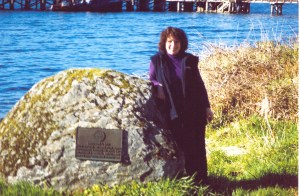
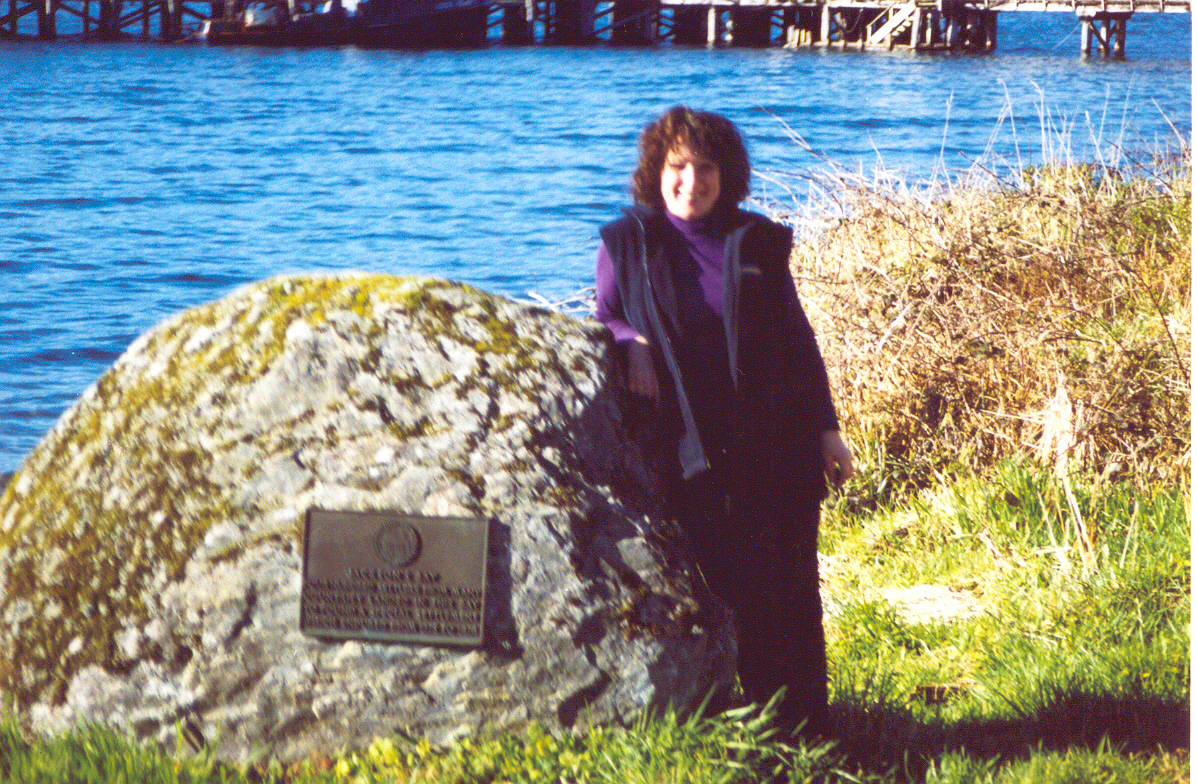
Author beside memorial to the Italians who landed at Jackson Bay, Westland, NZ in 1877 (2003)
>< ***This page, including text, map and photos is © copyright to author Anne Frandi-Coory All Rights Reserved 26 October 2011 and must not be copied in any shape or form without the written permission of the author.
*** ><
Please see here following posts for more information, on the triumphs & tragedies of the Frandi family: ‘WHATEVER HAPPENED TO ISHTAR? – A Passionate Quest to Find Answers for Generations of Defeated Mothers’ ***15+ Reviews***
><><>><
For more information on Grego and Frandi families:
><  ><
><
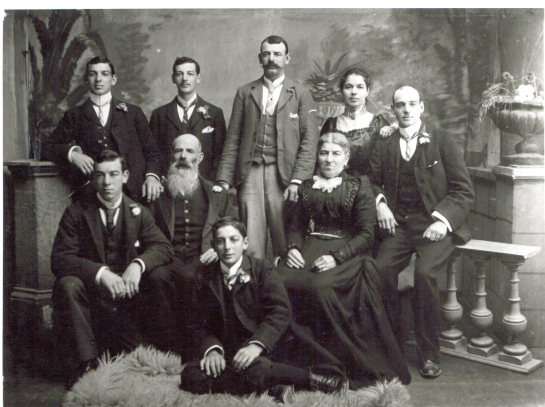
L to R: Antonio, Enrico (Henry), Francesco, Italia, Ateo, Italo, Aristodemo, Annunziata and Anne Frandi-Coory’s grandfather, Alfredo, seated on rug at front. c.1900
>< Aristodemo and Annunziata, with their three Italian born children, Francesco, Italia, and Ateo, left Livorno on the Toscano Coast, Italy on the 15th December 1875 in the SS Gutenberg and arrived in Wellington on 23rd March 1876. The family eventually docked at Jackson Bay, Westland, New Zealand in 1877, and travelled on foot, crossing two rivers, to begin a new life at the settlement at Okuru. The promise of 10 acres of free land to grow grapes and other crops came to nothing; the land was a barren swamp then, and still is today. There were no doctors, no school; hunger was common among families. Letters from the settlers to a Westland newspaper paint a graphic picture of the hardships of, not only the Italian families, but those of other nationalities as well. The settlement was a complete failure. Some of those letters are published in my book Whatever Happened To Ishtar?
><><><><><
As we came into Okuru in 2003, there before us was an awesome sight: a vast desolate sandy swamp, where the Frandi family lived for three years. An emotional confrontation. Trees still fighting for survival, bowing low before the Great Coastal Wind. How could Duncan McFarlane, New Zealand Government agent ever believe grapes and vegetables could be harvested in such a god forsaken place. ><
-
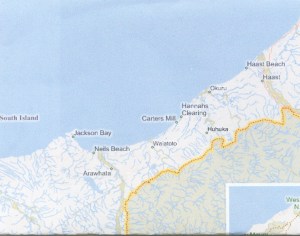
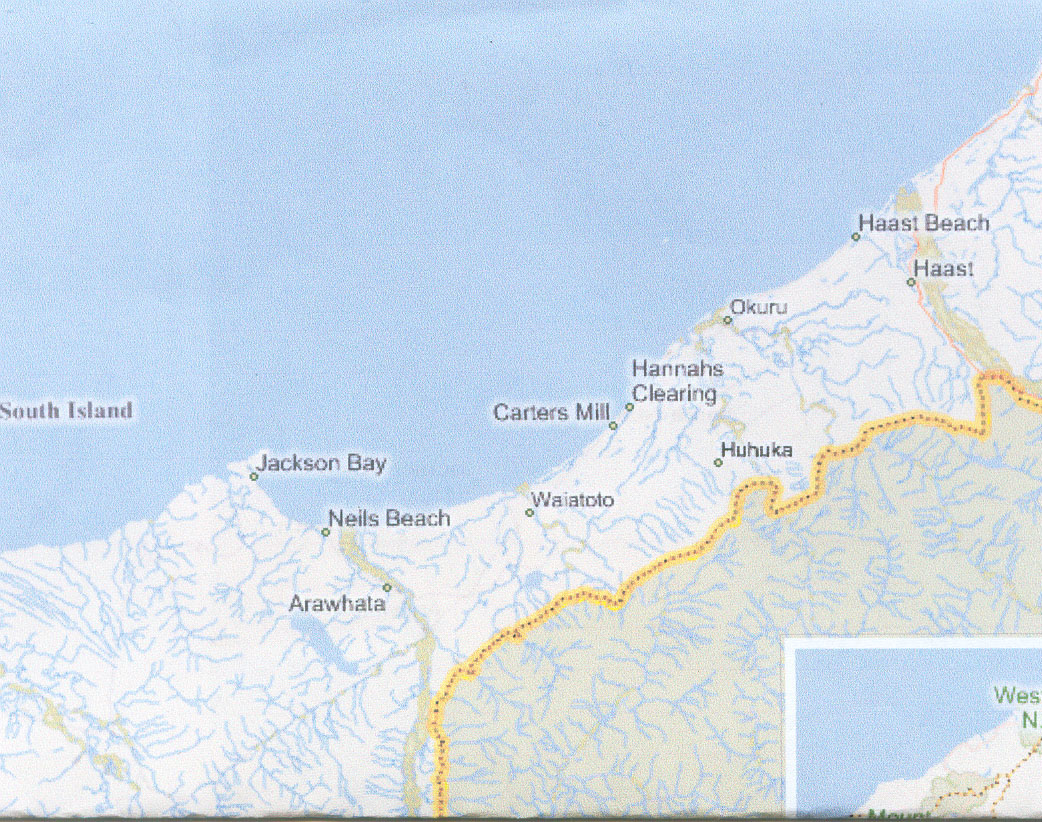
The journey from the landing at Jackson Bay to the new settlement at Okuru; made on foot, and crossing two rivers, by the Frandi family; parents and three children, including a toddler, with all of their possessions (click on map to enlarge)
><
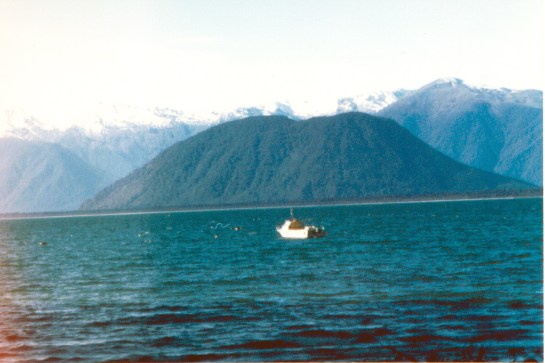
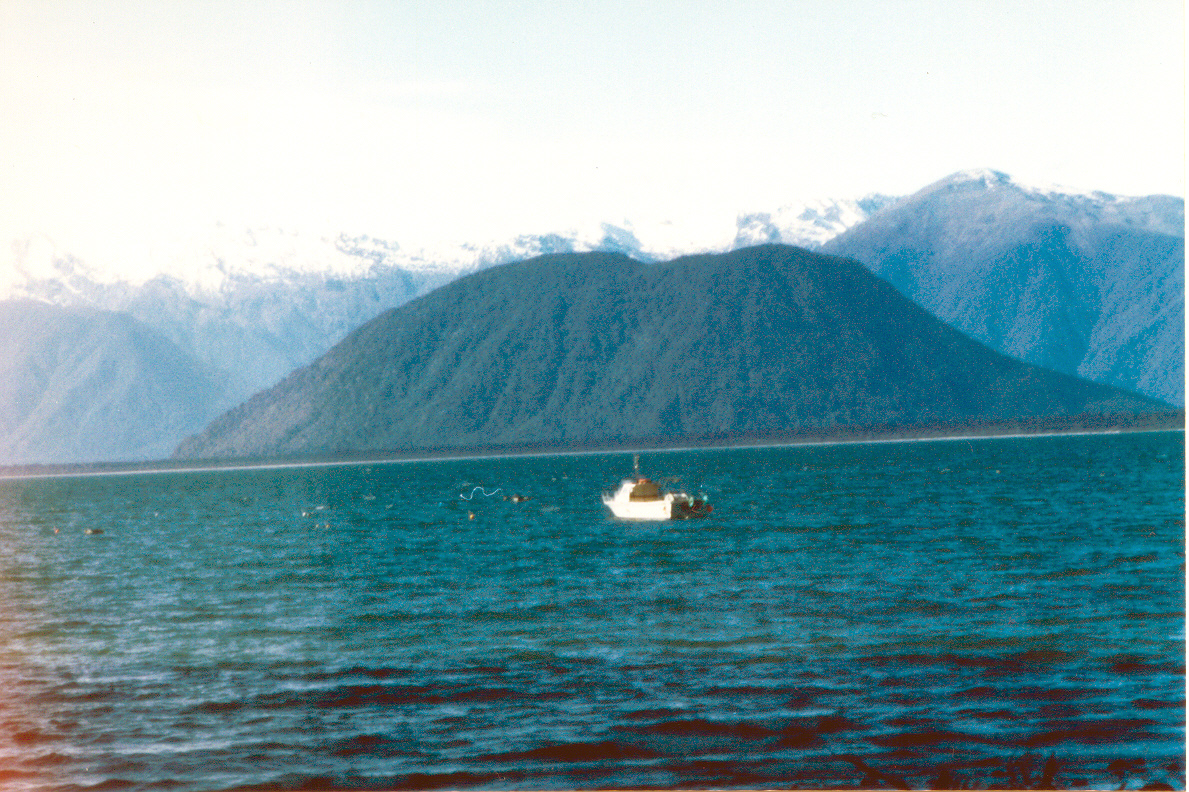
Jackson Bay. Photo: afcoory 2003
><

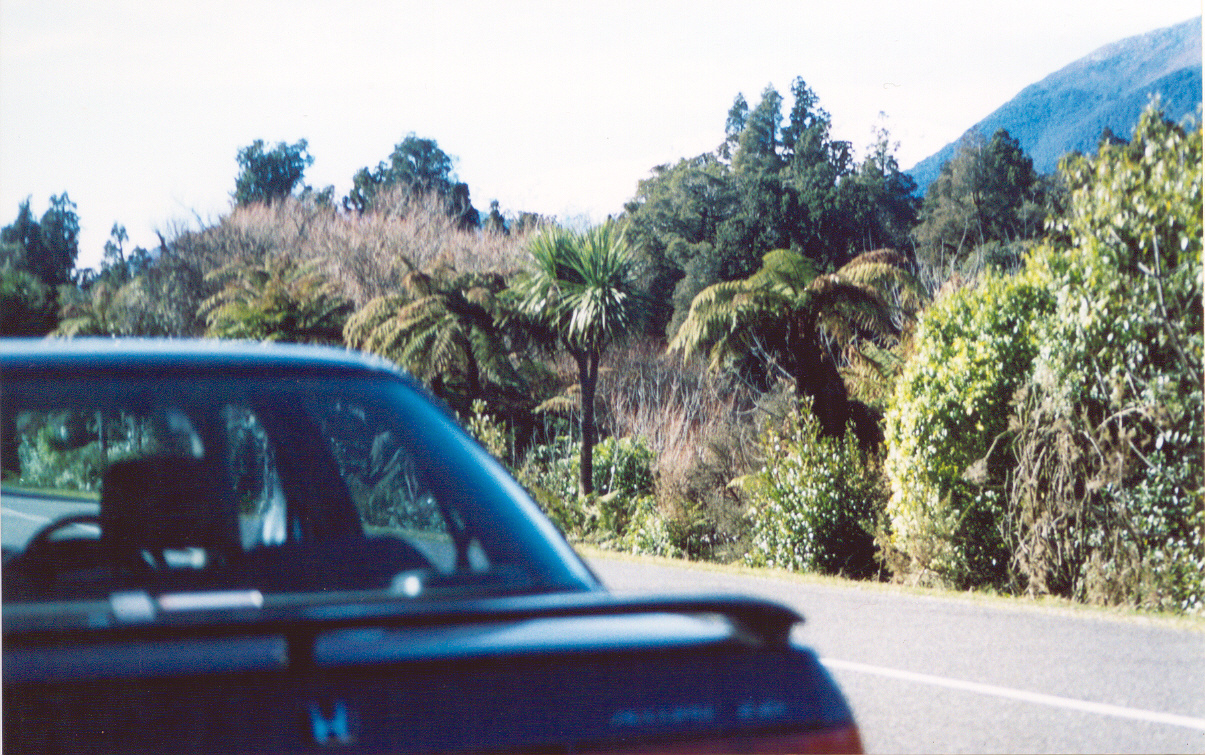
Desolate Okuru. Photo: afcoory 2003
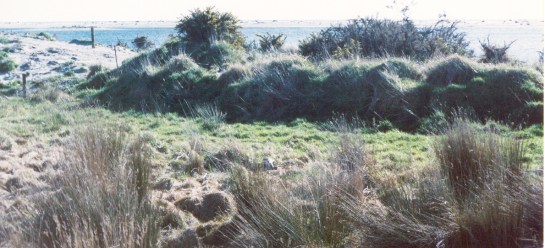
Another view of the swamp land at Okuru Bay. Photo: afcoory 2003
><
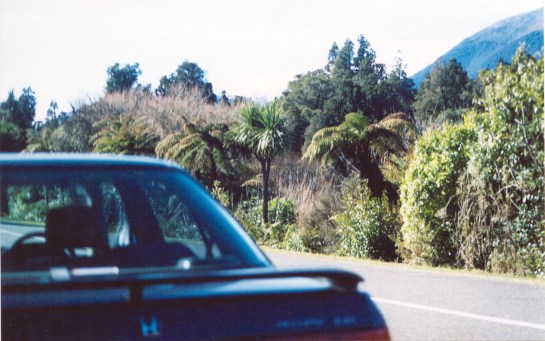
>< 
>>>>>>>>>>>>>>>>>>>>>>>>>>>>>>>>>>>>>>>>>>>>>>>>>>>>>>>>>>>>>>>>>>>>>>>>>>>>>>>>>>>>>>>>>>>>>>>>>>>>>>>>
Above: Bush cemetery near Jackson Bay where the settlers’ babies and children are buried (Photo afcoory 2003) The Graveyard in the Bush – a section of a poem by Dinnie Nolan, descendant of another Okuru settler:
……………………
The place is a wayback countryside,
Just after the golden rush,
The scene is a little graveyard, a clearing in the bush.
The settlers they attended there on sad and mournful days.
I attended on those solemn days, then a little child I’d be
But outlines of those happenings, they still come back to me.
It was sad to view bereaved ones, but the sympathy was kind
And it left a great impression on my little childish mind.
Each time a soul departed the settlers felt they must
Assemble there, one and all, at that graveyard in the bush.
……….
The widower, he’s standing there, his little babe’s at home
It shall never now know its mother’s care, for the mother she has gone.
With grief he’s quite distracted, I heard him cry and rave
I saw stout men lay hands on him and drag him from the grave.
Another time a mother, she had lost a loving son
The rest had gone and left her, he was then the only one.
I don’t like to tell the story, it might make you sad and fret
But the passing at the graveside, I shall never more forget.
……………….
Many more were buried there in those pioneering days
I recall the lovely flowers that flourished near the graves.
All enclosed with wooden railings as neat as it could be
Seemed like a little paradise in its plain simplicity.
I returned there long years after, I was then an aged man
The place was quite deserted, all settlement was gone.
There in my seclusion old memories on me rushed
And my first impulse it was to seek that graveyard in the bush.
………………………………..
I feel that I should tell you what I gazed upon
The tangled scrub, it towered above, and the clearing all was gone.
And those crude wooden crosses which as a child I’d seen
Were buried ’neath that tangled mass, and oblivion reigned supreme.
I tried to force an entrance to locate the place
But blackberry it barred the way, and tore my hands and face.
I sat there sad and lonely, and I could not help ref lect
Is this remembrance after life, is this what we might expect.
When our span of life has ended, our voice forever hushed,
Will we lapse into oblivion in some graveyard in the bush?
-Dinnie Nolan
>< ><><><>><><><><><><><><><
We visited this lonely graveyard in 2003, where souls have finally found peace. Dappled light sneaked through the overgrown foliage, where I felt I could lie down upon the dried leaves and rest comfortably. Such quietness and solitude! Graves of stone circles, wrought iron rails, headstones, wooden engraved crosses, stacks of stones, many wooden markers rotting away… A selection of inscriptions read:
Murdoch McPherson, died 1884 aged one year.
Janet Smith, died 1899 aged 56 years.
In memory of James Heveldt, born 4 July 1881 died 31 July 1901.
William Burmeister.






 anne frandi-coory