
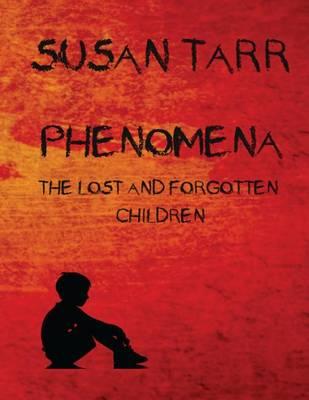
PHENOMENA: The Lost And Forgotten Children
by Susan Tarr.
*****
Updated 3 July 2018 – ‘PHENOMENA has been nominated for several book awards, and the latest is to be shortlisted for Book of the Month Amazon UK, Amazon US and Amazon CA …
*****
*****
…
At the heart of this book is the story of a ‘disabled’ little boy whose journey through life is narrated with empathy and compassion by author, Susan Tarr. Not long after the tragic death of his baby brother, followed closely by the death of his beloved mother, he is abandoned by his father at a railway station. When this severely traumatised little boy is picked up by authorities he can’t or won’t give his name. In fact, he refuses to speak at all. The decision is made to admit him to the Seacliff Lunatic Asylum, a common practise in the 19th and early 20th centuries in New Zealand. Upon admission into Seacliff he is given the name, Malcolm, and there he withdraws completely into himself. He is subsequently diagnosed as being of below normal intelligence as well as having some kind of mental illness. He is incarcerated in the Asylum with other traumatised children; some with their mothers and others, like Malcolm, alone.
*****
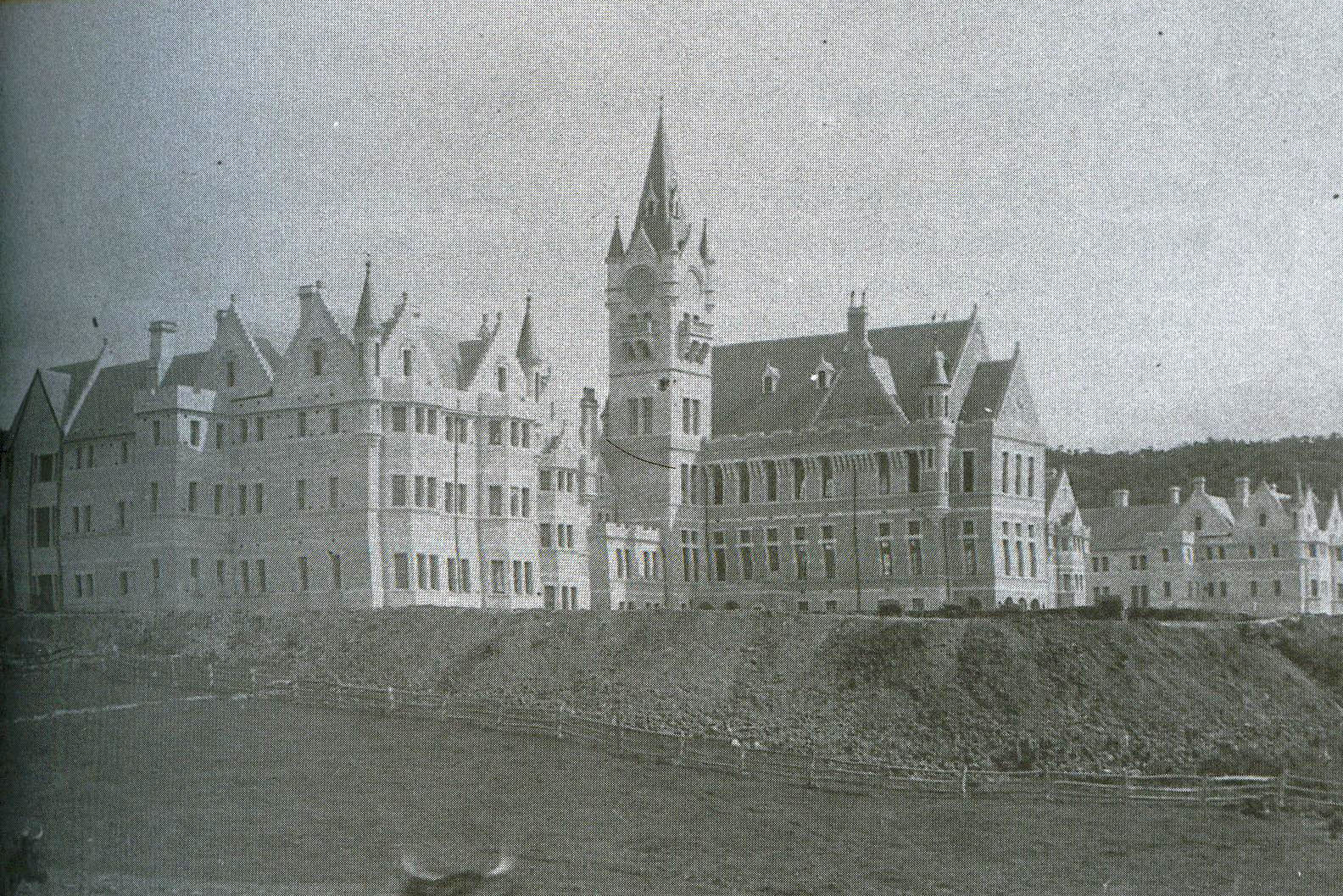
Seacliff Lunatic Asylum in Dunedin, New Zealand. Demolished in 1959.
*****
Although a work of fiction, Malcolm’s story is based on a true story. In actual fact, the author knows ‘Malcolm’ personally and she has made his story a composite of the lives of many children who grew up in the Gothic styled Seacliff Lunatic Asylum. This is partly to protect his true identity and partly to weave into the book the lives of other ‘lost and forgotten children’ in psychiatric institutions.
Susan Tarr lived in a small East Otago coastal settlement near the mouth of the Waikouaiti River, situated approximately 20 miles north of Dunedin city. Seacliff Village relied on Seacliff Lunatic Asylum nestled on the hill above it for its commercial existence. Many residents of the village worked at the asylum as attendants, nurses, cleaners, cooks, gardeners and tradespeople. Susan Tarr had relatives and friends who were employed as staff, and she has herself previously worked at Seacliff Asylum and other psychiatric hospitals.
I grew up in Dunedin and knew of Seacliff the asylum although I knew of no-one who had been a patient there. Whenever anyone spoke of Seacliff, it conjured up for me, images of raving, salivating lunatics. However, I did have a school friend my own age who attended St Dominic’s College at the top of Rattray Street in the city at the same time I was there. She travelled by train to and fro between Waikouaiti train station and the College every school day. On occasion I was invited to her home where I met her parents and siblings. Her father was a psychiatric nurse at Seacliff. It transpired that Susan Tarr also knew my school friend and her family very well; they were near neighbours in the residential settlement at Seacliff/Waikouaiti.
I had never communicated with the author before I saw her post on Twitter with a link to information about Phenomena. So it was very much a chance connection. I bought and downloaded the book immediately onto my tablet and I couldn’t put it down. Not only because it is so well written, but also because it evoked memories of Dunedin which I had left behind many years ago. Susan Tarr writes in detail about the parks and streets in and around Dunedin. She has accessed personal diaries, old letters, and interviewed ex-staff and former patients for the book. Personal and shared experiences with the author’s workmates, family and friends have added to the depth of this work.
To accompany Malcolm on his journey through the pages of Phenomena is to gain a remarkable insight into the thoughts and feelings of sufferers at a time when mental illness was little understood. The harsh treatment of children at Seacliff, an institution completely devoid of love and understanding, is heartrending. Most of the children suffered from nothing more than emotional trauma, or epilepsy. Some patients, admitted as children, spent their whole lives incarcerated at Seacliff, and died there. Women who succumbed to misdiagnosed post-natal depression were declared ‘insane’ and locked away from family support and their children which often deepened their depression, developed into psychotic states or far worse. Ex-soldiers suffering battle fatigue and Post Traumatic Stress Disorder, (not properly diagnosed at the time) were also among patients at Seacliff. There were also many ‘criminally insane’ inmates but they were locked up in a secure section of the hospital.
At the forefront of institutional care for the ‘insane’ in New Zealand in the late 19th and early 20th Centuries was Dr Frederic Truby King, known as Truby King. Malcolm’s story brings to vivid life the day to day existence for patients at Seacliff under the radical ideas instituted by Dr King. The doctor was well qualified at the time, having gained a Bachelor of Medicine and Science, and Master of Surgery at Edinburgh University. In 1894 he returned to Edinburgh to study Brain Pathology, nervous and mental disorders. He became a Member of Psychological Association of Great Britain. During Dr King’s tenure as Medical Superintendent of Seacliff between 1889 and 1920, his energy and compassion towards patients earned him a ‘solid reputation’. But he ran the Asylum with the authoritarian and disciplinarian attitudes of the era. Concurrently, Dr King held the lectureship of mental diseases at Otago University and consultancies in Public Health and Medical Jurisprudence. As if that wasn’t enough, he was also responsible for the overall management of auxiliary institutions at Waitati, and The Camp on the Otago Peninsula. In terms of the horror stories recorded at other lunatic asylums around the world, there is no doubt Dr King began a benign revolution in the care of the mentally ill.
Susan Tarr cleverly weaves the changes Dr King brought to institutional care through Malcolm’s eyes. The detail of his and other children’s lives growing up in the Asylum among severely disturbed and mentally ill adults is harrowing. More so because they were intelligent but had no idea why they were there or of life outside of Seacliff. The treatments and bullying Malcolm endured are frightening and he eventually suppressed any curiosity about life, closing himself off from everybody and everything around him. Because he had been institutionalised since childhood, his perceptions of life outside were incomplete, mystifying and alarming. Some attendants could be aggressive and violent and Malcolm felt the constant scrutiny unnerving. He saw events and heard discussions he had little internal resources to process. In the children’s and adults’ minds, the uniformed staff were wardens, there to be obeyed and to inflict punishments on them when necessary. They were not there to offer comfort or give answers to any questions patients might have.
As Malcolm grew into manhood, life began to evolve even more at Seacliff. The hospital complex had been run as a 900 acre farm, vegetable garden and orchard within its boundaries, with any produce used by the patients and staff as Dr King had envisaged. He firmly believed that mental illness was the result of the maltreatment and malnourishment of infants. So a healthy diet and plenty of fresh air were essential. Dr King had also established a fishing business at Karitane, a small coastal settlement a few miles north of Seacliff. Patients who enjoyed fishing hitched rides in the hospital van and it was said that so much fish was caught on these regular trips that it ‘contributed greatly to the fishing industry’ and of course contributed to the patients’ healthy diet.
Malcolm was eventually allowed much more freedom around and outside the Asylum environs and he benefited greatly from his activities in the gardens and on the farm. His memory and speech slowly returned and he befriended members of staff, particularly the head cook and one of the gardeners, who tried to assist Malcolm with answers to baffling questions which arose out of the return of disturbing memories. These memories were able to surface because Malcolm accumulated the sedative pills he was given daily, after his ‘foggy’ brain slowly realised these were what was befuddling him. He had to be careful though, because if the attendants had found out he would be given ‘the treatment’ again.
The ‘real’ person Malcolm is, for so long buried deeply, becomes evident towards the end of the book after a staff member helps him to recover fully, lost and painful memories, and to research his birth date and his full name. The author skilfully uses Malcolm’s long road to rehabilitation to highlight the later important developments in psychiatric care. Namely the emphasis on the medical classification of patients, the increase in patients’ liberty, the agitation for early and voluntary admission, more highly trained staff, and more female nurses. In the past, drugs, so important today, were used infrequently, mainly to calm patients. And psychoanalysis was seldom in use. One can’t help thinking how psychotherapy could have benefited Malcolm had he had access to this kind of treatment when he was first admitted to the Asylum as a deeply traumatised boy
Some of Dr King’s revolutionary ideas allowed patients to run the farm, orchard and gardens under supervision. Dr King originally replaced the attendant/gardener with a landscape gardener commissioned to develop an attractive bush setting for patients and staff to work and live in, with pleasant views out to sea. The idea was to banish all feelings of imprisonment from the patients’ minds. Dr King also designed and implemented a gravitational system of sewage irrigation which eliminated the foul-smelling gas that permeated the building. But the building itself was erected in 1874, on ‘shifting sands’ so there remained serious structural problems which Malcolm and the other patients had to live with. An ‘add-on’ structure behind the main building was consumed in a horrific fire in which many patients, locked in their rooms, were burned alive. The revivalist Gothic Seacliff Lunatic Asylum was finally demolished in 1959.
With a philosophy of efficiency and economy, Dr King had become actively involved in running the farm at Seacliff. Male patients worked outside on the farm and in the gardens while female patients did sewing and knitting, and worked in the laundry and kitchen although there was a male cook who produced delicious and nourishing meals while Malcolm lived there. Dr King held that farm work was unsuitable for women, but the chief reason for the ‘division of labour’ may have been that there was a concern about intimacy between patients of the opposite sex for various reasons. Of course close relationships between patients did exist, as well as antagonistic ones. Every summer a picnic was held for the patients while recreations and amusements were encouraged. Dr King had to ‘vigorously defend’ the expense of maintaining a staff band, which continued to play at dances for the patients and other celebrations.
By 1895 Dr King was convinced that healthy diets and the general improvements in ventilation, drainage and other hygienic measures implemented at Seacliff were responsible for the almost entire eradication of erysipelas and ulcerated throats. Other doctors and scientists of the era had also known of the importance of hygiene, good nutrition and healthy environments, but Dr King reinforced his knowledge by putting his ideas to work at Seacliff. Dr King has since been proven wrong in many of his beliefs about psychiatric illness, of which there was scant knowledge at the time. Environmental and social engineering could not and cannot, cure deep-seated psychological problems.
-Anne Frandi-Coory 5 August 2014
Also here on Anne Frandi-Coory’s facebook page:
https://www.facebook.com/myhomelibrary/
*****
For More about Seacliff Lunatic Asylum, see previous post




 anne frandi-coory