
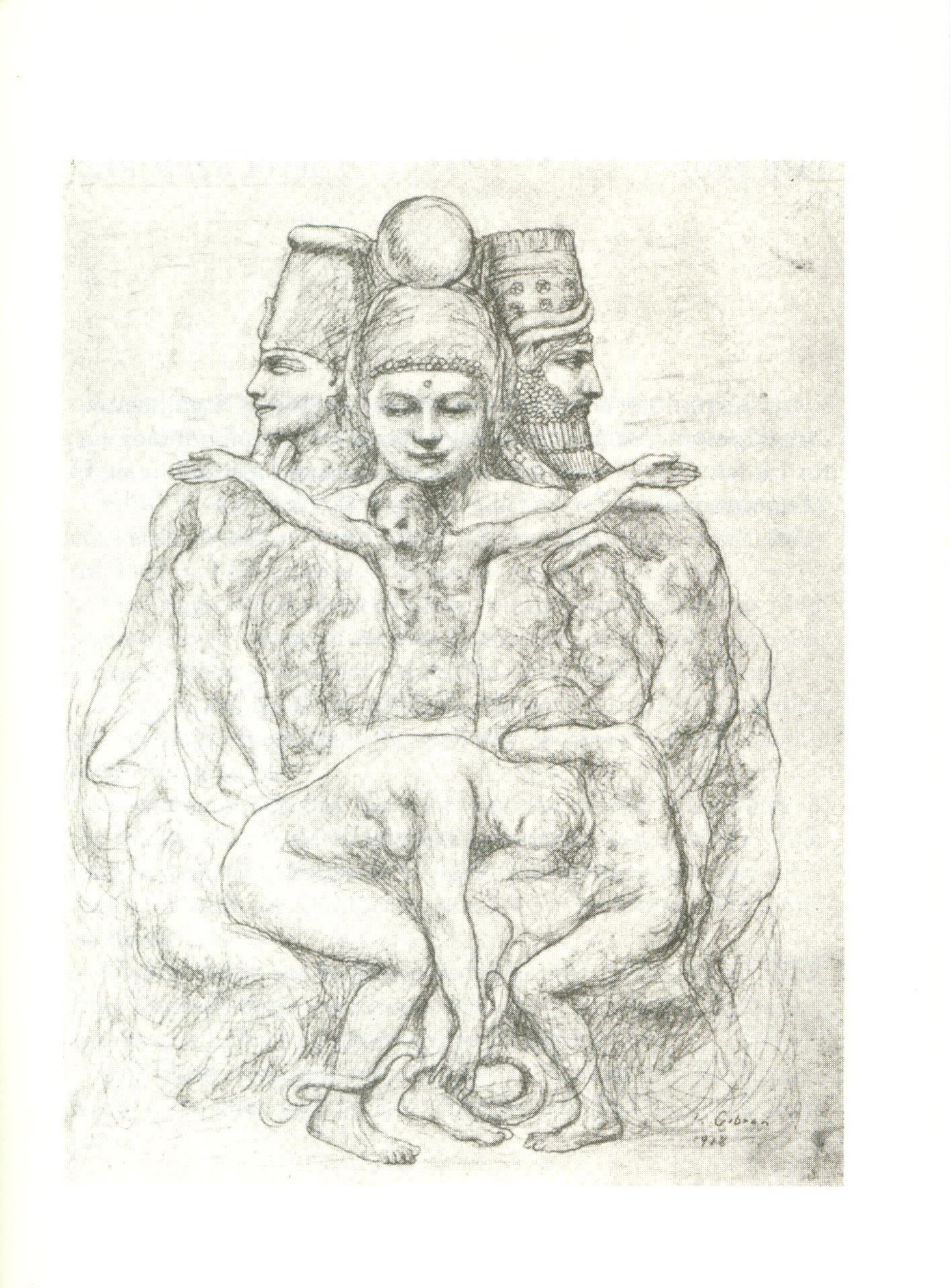
Kahlil Gibran
Kahlil Gibran wrote of Lebanon – ‘Pity the nation divided into fragments, each fragment deeming itself a nation’.
(Garden of the Prophet 1934) (see my post: Lebanon – Pity The nation)
Nothing has changed, it seems. Lebanon is being fought over by Sunnis, Shia, and Hezbollah. Some Christian groups are aligned to Hezbollah. Saudi Arabia jointly with Syria is involved in trying to find a ‘peaceful’ solution. Iran is “vitally supporting Hezbollah”. One has to question these three countries’ motives. Druze is another group putting in its two cents’ worth. The Druze carried out massacres of Christian Maronites because of their increasing power, during the times my grandparents lived in Bcharre. Even Turkey still appears to have a stake in Lebanon.
Jim Muir BBC News, Beirut:
Tensions are rising sharply in Lebanon, amid indications that the international Special Tribunal set up to prosecute the killers of former Prime Minister Rafik Hariri may soon issue indictments of members of the militant Shia movement Hezbollah in connection with the case.
Despite the dense dust-clouds already stirred in Lebanon by the tribunal and reactions to it, there are fears that the indictments, if and when they come, could still cause real trouble. “Nobody knows what is going to happen, but the Shia in general, and Hezbollah in particular, can’t risk being accused, and it is bound to cause tension with the Sunnis,” said the Druze leader, Walid Jumblatt, who recently detached himself from alliance with [current Prime Minister], Saad Hariri, improved relations with Hezbollah and is trying to stay neutral. “If Hezbollah is indicted, that will affect its image in the Muslim world as the heroic resistance against Israel,” he told the BBC. Mr Jumblatt accused the US and other Western powers of cynically using the tribunal to put pressure on Syria, Iran and others, and of trying to head off a compromise understanding among the Lebanese leaders.
“Whoever technically killed Rafik Hariri, those really responsible were [French President Jacques] Chirac and [US President George [W] Bush, who forced him to accept 1559,” he said, referring to the UN resolution passed in late 2004, just a few months before Mr Hariri’s murder. “It had three clauses in it which amounted to death sentences – the demand for Syrian troops to leave Lebanon, and for Hezbollah and the Palestinians to be disarmed,” Mr Jumblatt said. “More important than finding out who killed Hariri, the most important thing now is to get out of this vicious circle which brings more tension every day, how to break this crisis between Sunnis and Shia.”
While the Saudis and Syrians are looked to as the most influential outside powers potentially able to foster an understanding and prevent the Lebanese factions taking to the streets again, others are also in a position to try to help. The Turkish Prime Minister, Recep Tayyip Erdogan, who had a hand in the Saudi-Syrian rapprochement, is currently on a two-day visit to Lebanon. And on Saturday, Prime Minister Hariri visits Tehran, his first such trip to the country that helped establish and still vitally supports Hezbollah.
Tensions have been steadily mounting over recent months as the expected indictments grew imminent, but the situation has been contained by an entente between Saudi Arabia and Syria, who exercise great influence respectively among Lebanon’s Sunnis and Shia. The Iranian ambassador in Beirut has also been co-ordinating with his Saudi and Syrian counterparts to help keep the peace.
[Trying to keep the peace? I would love to be a fly on the wall at these meetings].
Lebanese politicians had been hoping that Saudi-Syrian mediation at top level would very soon produce a formula that could be agreed on by the cabinet in Beirut to deal with the repercussions of the expected indictments. But now there are fears that the Saudi role may fall victim to developments inside the kingdom. The monarch, King Abdullah bin Abdul Aziz, was flown to the US on Tuesday for medical treatment. He was personally overseeing his country’s rapprochement with Damascus and their joint sponsorship of peace efforts in Lebanon. The king has temporarily assigned his powers to his half-brother, Crown Prince Sultan, who is himself ailing.
Lebanese politicians believe that Prince Sultan and other prominent members of his Sudeiri wing of the ruling family are much less keen on cultivating good relations with Syria. CBC said its months-long investigation was based on interviews with sources inside the UN inquiry and on documents leaked from the tribunal.
It said that evidence gathered by the Lebanese police and the UN “points overwhelmingly to the fact that the assassins were from Hezbollah”. To back that allegation, it contained detailed diagrams showing how investigators traced interlinking networks of mobile phones which they believed led from the vicinity of the massive explosion which killed Rafik Hariri and 22 others, ultimately to Hezbollah’s communications centre under a hospital in Beirut’s southern suburbs.
The CBC film had a bombshell effect in Lebanon, where it dominated news bulletins and front pages. It also prompted comments from key players, including Prime Minister Hariri and the international tribunal prosecutor.Israeli Prime Minister Benjamin Netanyahu even held a meeting of his inner cabinet to discuss the possibility that Hezbollah might stage a coup in Lebanon should some of its adherents be indicted.
On Tuesday, shortly after the CBC documentary was aired, the Lebanese communications minister Sherbel Nahhas (a Christian allied to Hezbollah) gave a three-hour news conference at which he and other officials and experts showed detailed technical evidence which they said indicated Israel had complete penetration of Lebanese communications, to the extent of being able to plant parasite lines within existing lines.
><

Hassan Fadlallah, a Hezbollah MP who heads parliament’s communications committee, said three Hezbollah operatives had been detained as suspected Israeli spies until it was realised their mobile phones had been infiltrated. All of this may make it easier for Hezbollah to shrug off possible indictments as Israeli-manipulated falsehoods.
The allegation that Col Wissam al-Hassan fell under suspicion has further muddied the waters. As Rafik Hariri’s chief of protocol, Col Hassan would normally have been in the convoy that was hit by the blast that killed Mr Hariri and his entourage. But he had taken the day off to sit a university exam – an alibi that CBC’s sources said was doubtful, and did not stand up under scrutiny. But Saad Hariri, questioned by journalists about the allegations, said he had always had full confidence in Col Hassan, and still did.
One of the prime minister’s senior aides went as far as to suggest that both Hezbollah and Col Hassan should sue CBC for libel. Another prominent Hariri supporter, MP Iqab Saqr, said the CBC report should be ignored because it contained “poisoned information, aimed at disturbing the desired settlement”. He said everybody was concerned “not to target Hezbollah politically, while Hezbollah should stop the political assassination of Lebanese”.
With both sides apparently impugning the integrity of the court – or at least the CBC leaks – it almost looked as though there were some common ground between them.
The tribunal itself – or its prosecutor, Canadian judge Daniel Bellemare – took the unusual step of responding to the CBC documentary, saying he was “extremely disappointed” by it and was assessing its impact on the investigation. This was widely seen in Beirut as implicit confirmation that the CBC had indeed sourced its report on genuine tribunal documents and information.
The decision on whether and when to issue draft indictments lies in the hands of prosecutor Bellemare, and it is not clear whether the first step – referring them to the pre-trial judge for confirmation – would be made public.
What a mess! All I can say is POOR LEBANON, what will become of you. Kahlil Gibran must be turning in his grave.
 anne frandi-coory