Archive

Tag Archives: Islam

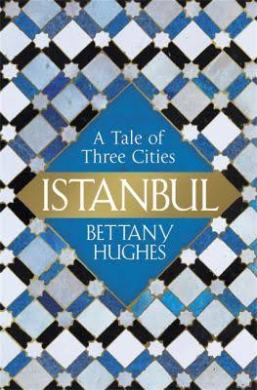
A Tale Of Three Cities ISTANBUL 

-Bettany Hughes

*****

A Book Review – 5 stars *****


Byzantion of Greece’s ancient past,  the capital of the Christian Byzantine Empire, famed Constantinople of New Rome and Muslim Ottoman Empire that today goes by the name of Istanbul, Turkish republic.

‘Istanbul is the city of many names’, writes Bettany Hughes: Byzantion, Byzantium, New Rome, Stambol, Islam-bol are just a few of them. And Istanbul today ‘is lapped by the Golden Horn, the Bosphorus, and the Sea of Marmara; to the north is the Black Sea and to the south, through the Hellespont or Dardanelles, the Mediterranean.’

A diamond mounted between two sapphires and two emeralds…the precious stone in the ring of a vast dominion which embraced the entire world as described in ‘The Dream of Osman’ c. AD 1280.

Hughes guides the reader around the city that I wish I had visited. It is obvious from reading this book that the author has walked Istanbul’s streets and knows the city well, and she has meticulously researched  its 8000 years of history. I can assure you that this is no dreary history book the likes of which bored us to tears at school. The ancient town of Byzantion’s King Byzas (legend has it that his father was Poseidon, his grandfather, Zeus) was well located at the intersection of trade routes. Eventually the Roman emperor Constantine decided that ‘Old Rome’ was too far away from all the action and over time the City of Constantine became Constantinople, the New Rome, capital of the Roman Empire itself. The gateway between East and  West. Constantinople’s Christian name was changed to Istanbul around 1923 after the fall of the Ottoman Empire.

The book has short chapters with clear and helpful titles, dated in both Western and Islamic calendar formats where appropriate.  It enables readers to navigate this vast book in piecemeal fashion, but I found it difficult to  put this book aside; it is so well researched and written, with personal written accounts from people who were present during many of the historical events, which made the book all the more fascinating. I particularly enjoyed the frequent references to current and recent archaeological digs the findings of which verify historical accounts.  Hughes includes several maps and colour plates, which I constantly referred to as I was reading. It is evident that the West owes far more to Eastern cultures than we have been ready to believe in the past. The Roman Empire pillaged much wealth from Egypt and the East and in turn the Ottomans pillaged from Roman territories. It is arguable that the rabble that made up early Western civilisation reached a turning point when it invaded and colonised Egypt.

*****

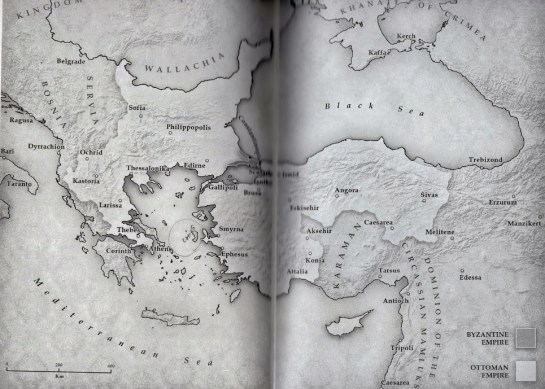
Ottoman and Byzantine territory in the east Mediterranean c. AD 1451


*****

Muslim and Christian lived in relatively peaceful harmony during the Ottoman era but both sides could be extremely brutal whenever their territories or power were threatened. The Ottomans, however, were far more than their harams and baths, which titillated and attracted travellers; they were skilled diplomats and traders. Christian slave boys ‘harvested’ from the West were trained as interpreters.  Called Dragomans, one of their critical attributes was their facility with languages, and some of them could speak up to seven languages which enabled the empire to spread its culture and bargain with valuable commodities to negotiate peace. When the Ottoman Empire began to crumble at the beginning of the twentieth century, Germany, France and Britain ‘fought over the spoils’ and it is apparent that the after-effects of this breaking up of once cohesive territories helped to turn Christianity and Islam against each other which we are still witnessing in modern times. Millions of refugees were displaced during the carve up of territories, and millions died.

This book, as well as being a great read, informs readers on how the current geo-political era came into being, and it does not always put the West in a good light. We owe so much of the great advances and wealth in our Western civilisation to the East, and let us not forget, to Islam

-Anne Frandi-Coory  27 October 2017

*****

Also here on Anne Frandi-Coory’s Facebook page: 

https://www.facebook.com/myhomelibrary/


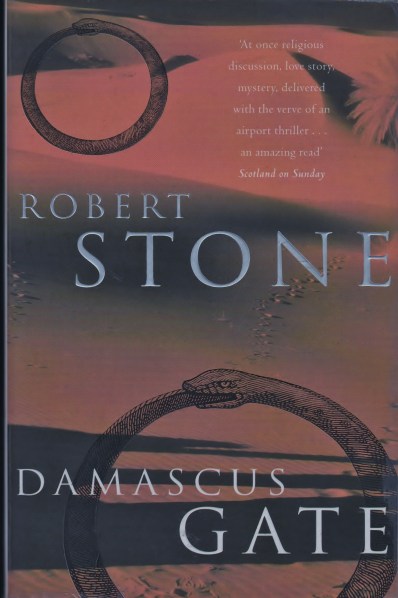
Damascus Gate 

by Robert Stone

damascus-gate


What is it about authors who have been incarcerated in Catholic orphanages and other religious institutions during their formative years? This is another book I found at Clunes Book Festival in Victoria and I wonder, is it the title that attracted me or the intense stories about faith written within its pages? The author Robert Stone has himself a past bathed in religious upheaval and search for identity. He was raised by his schizophrenic mother until he was five, when she was committed to an asylum for the insane. Five year old Robert, whose father abandoned the family, was then taken in by a Catholic Orphanage, who Stone describes as having the ‘social dynamic of a coral reef’. The violence the boy experienced at the hands of men posing as carers, is a heart rending story retold many times over by children raised in religious institutions.  I think it must be the passion and fearlessness with which these authors take on ‘taboo’ subjects that attracts my undivided attention. Someone wrote that books, once written, have no need of their authors. That is true enough, but I must admit to seeking out most books by author, rather than title or genre. I like to know more about the background of the author, particularly if a book has had a deep effect on me, and Damascus Gate is just such a book.   You can never judge a book by its cover in my view, especially when it’s a good read you are looking for.

At the centre of the Damascus Gate story is struggling free-lance journalist, Chris Lucas (Catholic mother, Jewish father), who teams up with a psychiatrist in Jerusalem to write a book about religious zealots, some insane, of all persuasions who come to the Holy City to ‘find the truth’ a condition labelled the ‘Jerusalem Syndrome’. The two men enlist the help of an archaeologist, who himself seems to have caught the ‘combative spiritualism’ endemic in Jerusalem. Little does Lucas realise that he is being followed, photographed and controlled by various groups fulfilling their own agendas. The Jerusalem Syndrome is a label attached to a group of mental phenomena involving the presence of either religiously themed obsessive ideas, delusions or other psychosis-like experiences that are believed to be triggered by a visit to the city of Jerusalem. Followers of the three Abrahamic religions of Judaism, Christianity and Islam can be equally affected by the syndrome. There is no doubt that with the Israeli army surrounding the city, and with its spies everywhere, the religion of Judaism appears to have the upper hand and control of the city and its environs with the help of its watch towers and road blocks at every twist and turn.  The best known manifestation of Jerusalem Syndrome is whereby a person who seems previously balanced and devoid of any signs of psychopathology becomes psychotic after arriving in Jerusalem. The psychosis is characterised by an intense religious mania and most often resolves to full recovery for the afflicted over time or immediately following their departure from the city.

Even those of little faith, or atheists, sense ‘there is something here in Jerusalem’, but what, they cannot say.

Damascus Gate is set in Jerusalem and surrounding areas, is fiction based on fact; we all know what a powder keg Jerusalem is with its struggle to contain the three religions within a relatively harmonious state. Making the situation even more volatile, are the various sects of Christianity, Islam and Judaism competing to have their ‘truth’ realised, even though archaeological proof is yet to be discovered for any of their respective claims. This book is a great read and highlights the sectarian differences between  Christians, Muslims and Jews whose followers all fight for supremacy over this small historically important city. Each sect has its own neighbourhood and if you’re not one of them, you are forewarned to avoid walking through its streets alone without an approved escort. It can be a very dangerous city and riots between Jews and Arabs can erupt at any time for the slightest of motives. Not only that, this fraught city attracts all manner of religious lunatics hell bent on ‘saving’ their respective Messiah’s or Holy Prophet’s relics from the infidel. Drugs, money and sexual favours add to the heady religious mix, and anything can happen at any time. Herman Melville’s quote sits revealingly on the front page of Damascus Gate: ‘Enigma and evasion grow; And shall we never find Thee out?’

A  Jewish extremist underground movement exists in Jerusalem and it aspires to rebuild the Temple. To achieve this, the mosques must be blown sky high. The Israeli Defence Force and Mossad know that if this happens Armageddon will erupt in Jerusalem which will surpass its many past destructions, the effects of which will be felt across the globe. There is not much going on in Jerusalem that these two forces don’t know about.  The tensions are deep and ancient, with their thousands of years of history fought over every day and at every religious festival. Serious political games are being played out at the very highest levels where murder, intrigue and ‘religious  authority’ are used to control and incite violence which is forever simmering at a very shallow depth beneath the surface of this ancient land.

Israelis and Palestinians both claim Jerusalem as their capital, and the state of Israel maintains its primary governmental institutions there. One of Israel’s Basic Laws, the 1980 Jerusalem Law refers to Jerusalem as the country’s undivided capital. All branches of the Israeli government are located in Jerusalem, including the Knesset (Israel’s parliament), the residences of the Prime Minister, President and the Supreme Court while the State of Palestine ultimately foresees the city as its seat of power. However, neither claim is widely recognized internationally. In latter years Muslim extremists have become more powerful and dangerous making Jerusalem even more volatile than ever. Staff of non-government organisations such as the UN and Save the Children, feature in this story and all play an integral part in the intrigue and hidden agendas.

One reviewer says of Damascus Gate: ‘Stone has a journalist’s eye for detail, but a novelist’s eye for irony’…and I believe that this is what makes the book such a great read. Stone manages to capture all the intrigue, all the religious fervour and menace in his words and all the while there is the ‘festering menace of Gaza’.

-Anne Frandi-Coory 23 January 2017


The Atheist Manifesto

by Michel Onfray

Born to a family of Norman farmers, Michel Onfray was abandoned by his parents to a Catholic institution from age 10 to 14. Overcoming these early hardships, Onfray graduated with a PhD in philosophy. He has written over 80 books and teaches philosophy at a French university.

Michel Onfray portrait

Michel Onfray

A friend gave me The Atheist Manifesto not long after he had finished reading Whatever Happened To  Ishtar? which I had written in 2010, a book spawned of seventeen years of an indoctrinated childhood spent in various Catholic institutions.  ‘I know you will enjoy this book’, he told me, ‘but it’s a little too intellectual for me.’  He was right; I have since read it twice.

****************************

Michel Onfray

Was Monotheism born of the sand? Two paragraphs in  Manifesto’s  preface attempt to partly answer this question:

Desert Memory: After a few hours on the trail in the Mauritanian desert, I saw an old herdsman traveling with his family. His young wife and his mother-in-law rode camels; his sons and daughters were on donkeys. The group carried with them everything essential to survival-and therefore to life. The sight of them gave me the impression that I had encountered a contemporary of Muhammad. Burning white sky, scattered, scorched trees, uprooted thorn bushes blown by the desert wind across unending vistas of orange sand…the spectacle evoked the geographical and psychological background of the Koran, in the turbulent period of camel caravans, nomad encampments, and clashing desert tribes.

I thought of the lands of Israel, Judaea, and Samaria, of Jerusalem and Bethlehem, of Nazareth and the Sea of Galilee. Places where the sun bakes men’s heads, desiccates their bodies, afflicts their souls with thirst. Places that generate a yearning for oases where water flows cool, clear and free, where the air is balmy and fragrant, where the food and drink are abundant. The afterlife suddenly struck me as a counter world invented by men exhausted and parched by their ceaseless wanderings across the dunes or up and down rocky trails baked to white heat. Monotheism was born of the sand.

Michel Onfray analyses the fanatical belief in the afterlife by followers of Christianity, Judaism and Islam. The lives of these early followers of one God  were, every single day, a struggle for survival in a harsh and unforgiving climate, where death inflicted different kinds of terror in the living. Was the promise of an afterlife meant to alleviate that terror? For instance the Koran’s fantastic description of paradise: rivers of milk and wine, beautiful virgins, beds of luxurious cloth, celestial music and magnificent gardens? Why wouldn’t a man want to die and leave this endless struggle?

What better way to avoid looking at reality and inevitable death in the face, than to construct fantastical tales that the three religions are built on. And I love this from Onfray, so relevant to our 21st Century concerns over human-made Climate Change: The invention of an afterlife would not matter so much were it not purchased at so high a price: disregard of the real, hence wilful neglect of the only world there is. While religion is often at variance with immanence, with man’s inherent nature, atheism is in harmony with the earth – life’s other name.  For those of us who have given up on believing in the existence of God, saving planet earth is our passion, science our saviour.

The author tells us about the first tentative atheists, who weren’t really fully fledged atheists for one reason or another, which he outlines with some humour and sarcasm. And then along came Nietzsche! Onfray uses the sub-heading Philosophical Earthquake to describe this period  which is a perfect description of the upheaval this one man caused. But so much made sense to intelligent, thinking people!

Onfray goes on to ‘teach’ the case for atheism. He writes: Talmud and Torah, Bible and New Testament, Koran and the Hadith offer insufficient grounds for the philosopher to choose between Jewish, Christian or Muslim misogyny. Or to opt against pork and alcohol but in favour of the veil or the burka, to attend the synagogue, the temple, the church, or the mosque, all places where intelligence is ailing and where, for centuries, the faithful have practiced obedience to dogma and submission to the Law-and therefore obedience and submission to those who claim to be the elect, the envoys and the word of God. He suggests that instead of teaching monotheistic religions in schools we should be teaching atheism. He prefers the teachings of The Genealogy of Morals (1887) rather than the epistles to the Corinthians.  I happen to agree with him. Along with world conservation, less exploitation of this wonderful planet we live on!

In the chapter Towards an Atheology: Thirty centuries from the earliest texts of the Old Testament to the present day, teach us that the assertion of one God, violent , jealous, quarrelsome, intolerant and bellicose, has generated more hate, bloodshed, deaths, and brutality than it has peace…[for example] There is the Jewish fantasy of a chosen people, which vindicates colonialism, expropriation, hatred, animosity between peoples, and finally an authoritarian and armed theocracy.

The author pleads for the world to have an end to the linkage of the world’s woes to atheism:  God’s existence it seems to me, has historically generated in his name more battles, massacres, conflicts and wars than peace, serenity, brotherly love, forgiveness of sins, and tolerance. To my knowledge, no popes, princes, kings, caliphs, or emirs have excelled in the practice of virtue, so outstandingly did Moses, Paul, and Muhammad excel in murder, torture, and orgies of plunder-I call the biographies to witness. So many variations on the theme of loving one’s neighbour.

Onfray suggests that the times we live in are no longer atheist. We instead are in the midst of the era of  nihilism, which stems from the ‘turbulence of the transit zone between still very present Judeo-Christianity and timidly blooming post-Christianity…Jews, Christians and Muslims, construct for themselves, a made-to-measure morality. This implies selective borrowings (tailored to fit their needs) from their holy books in order to establish rules of play and participation by the community.’

Christians, particularly Catholics, know all too well, religious concepts of ‘purity’, and how it relates to sex, and we can mostly thank Paul of Tarsus/St Paul for that! The dichotomy of the female, whore/virgin, is still constantly preached as Canon Law by an ancient and all-male Vatican. The author delves into this topic with relish, and coming from a background of a childhood in Catholic institutions, I could relate to these chapters intimately.

Onfray explains that  Muslims share many of their fixations on purity with Jews; all food must be ritually prepared. Why the absolute prohibition of the consumption of pork, but not camel meat? Even on that matter, there is much disagreement. Some suggest the pig was emblematic of certain unpleasant memories of Roman legions, others believe it was the pig’s omnivorous diet, its consummation of public refuse. I have also read of another theory: the squeals of the pig as it was led to slaughter, was too reminiscent of the darkest days of sacrificial slaughtering of children in attempts to appease more ancient gods. The rituals connected to the cleansing of the body are rational, especially for life in the desert. The author explains in detail the similar ritualistic rules for respect of one’s body and bodily hygiene.

I found the chapter entitled Bonfires of the Intelligence; producing the holy books, particularly interesting. Onfray: The three monotheisms are seen as the religions of the book-but their three books are far from mutually supportive… Naturally they all preach brotherly love. Thus from the very start it seems to appear beyond reproach to our brethren of the Abrahamic religions. None of these books is a work of revelation. Who would have done the revealing? Their pages no more descend from heaven than those of Persian fables or Icelandic sagas.

The Torah is not as old as tradition claims; Moses is improbable. Yahweh dictated nothing-and in any case, Moses could not have written what Yahweh said unless he wrote in hieroglyphics, since the Hebrew script did not exist in the time of Moses. None of the evangelists personally knew Jesus. The testamental canon arose from later political decisions, particularly those reached when Eusebius of Caesarea, mandated by the emperor Constantine, assembled a corpus stitched together from twenty-seven versions of the New Testament in the first half of the fourth century. The apocryphal writings are more numerous than those that constitute the New Testament proper.

Muhammad did not write the Koran. Indeed, that book did not exist until twenty-five years after his death. The second source for Muslim authority, the Hadith, saw the light of day in the ninth century, two centuries after the Prophet’s death. Hence we must infer the very active presence of men in the shadows of these three Gods.

Science does not sit well within the three monotheistic religions, and the author discusses this at length and in detail. If they do embrace science, it is usually to enhance their dogma and this instrumentalisation of science  ‘subjects reason to domestic and theocratic uses’. For example, one Hadith indeed celebrates the quest for scientific knowledge as far afield as China, but always in the logic of its instrumentalisation via religion, never for the human ideal of social progress. The Catholic religion impeded the forward march of Western civilisation, inflicting on it, incalculable damage.

Then there is the female problem that the religions of the book have in common. Only mothers and wives are venerated. Judeo-Christianity promotes the idea that Eve was an afterthought, made from Adam’s rib; ‘an inferior cut off the prime beef, a humble spare rib‘.  She appears in the Koran as Adam’s wife but the fact that she is never named is revealing, because, as Onfray says, ‘the unnamed is unnameable.’

The ridiculous tenets of these three religions engender the worst kind of hypocrisy because we are all too human. The possibility of sex divorced from conception, and thus of sex alone, of pure sexuality-that is absolute evil. For the monotheist there can be no more hideous oxymoron than a barren, sterile woman! In the name of this same principle the three monotheisms condemn homosexuals to death…For his part, Paul of Tarsus saw in the solitary male the perils of lust, adultery and free sexuality. Hence given the impossibility of chastity, his endorsement of marriage –the least objectionable justification for the libido.

Onfray discusses at length the barbaric mutilation of female and male genitalia, practiced by monotheistic religions and their literature abounds in references to the extinction of libido and the destruction of desire. Onfray refers to them as ‘variations on the theme of castration’. From what I’ve read and seen on world news every day, none of these religions is achieving the total sexual control over their adherents that they initially set out to achieve. Catholic paedophile priests, Muslim child marriages, polygamy, Jewish paedophilia, to name a few.

All three religions have burnt books, whole libraries, whole towns, citizens, mosques, temples, churches, synagogues, slaughtered millions, and all for what or who? What God? There is no archaeological proof Jesus existed. The author covers this period in Christianity’s history in depth, with all of its subterfuges.

In the chapter headed Selective Exploitation of the Texts, Onfray writes:

Everyone knows of monotheism’s three books, but very few know their dates of origin, their authors, or the ups and downs attendant on establishing the three texts-the absolutely final, immutable texts. For the Torah, Old Testament, New Testament, and Koran took an unthinkably long time to emerge from history and claim that their texts issued from God alone, that they had no need to explain themselves to those who entered their prayer temples armed only with faith, unburdened of reason and intelligence. Considering Muhammad was illiterate it is ridiculous to believe that he wrote the Koran as God dictated it. And let’s be clear, there were several Korans from different periods which were merged into one, hundreds of years after Muhammad’s death!

We do not possess an official date of birth for the worship of one God…Jean Soler insists on the neighbourhood of the fourth and third century BCE-in other words very late…but the family line is very clear: the Jews invented it to ensure the coherence, cohesion and existence of their small, threatened people. The mythology they fashioned engendered belief in a warrior God, a fighter, blood thirsty, aggressive, a war leader highly effective at mobilising a people without a land. The myth of a chosen people thereafter blessed with a destiny.

Of that labour of invention, several thousand pages of canonical text survive-very few considering their worldwide influence over the course of more than twenty centuries. The Old Testament boasts a total of 3,500 pages, the New Testament 900 pages, the Koran 750, that is, little more than 5000 pages in which everything and its opposite is said once and for all. In each of these three founding texts, contradictions abound and Onfray gives us many examples of these.

Love of one’s neighbour as espoused by all three religions, was non-existent, and still does not exist in the 21st century! The Pauline texts, so useful in justifying submission to de facto authority, triggered results that went far beyond the legitimisation of wars and persecution. In the field of slavery, for example, which Christianity did no more than the other two monotheisms to deter. Indeed, in later centuries the small-scale slavery resulting from tribal raids evolved into the slave trade pure and simple, the sale and deportation of whole populations for use as chattels and beasts of burden.’

More than twenty centuries later has anything changed? Onfray:  ‘The commandments do not advocate any particular respect for one’s neighbour if he looks different, if he is not branded in the flesh by the rabbi’s knife. The non-Jew did not enjoy the same rights as members of the covenant. So that outside the confines of the book, the Other may be called on to account for himself, to be treated like an object, a thing: the goy by the Jew, the polytheist or animist by the Christian, the Christian by the Muslim, and the atheist, needless to say, by everyone.’ [My emphasis]

Onfray likens the three monotheisms to death cults. He asks ‘How can we escape the domination of [the death instinct] after so effectively killing off the life urge both within and outside of ourselves?’ Are we so terrified by the horror and void of death, that we believe in the ‘consoling fables and fictions that incite us to deny the use of our full powers?’ He posits that this ‘false world’ forces us to live in the here and now ‘buttressed by the hopes of a tinsel afterlife.’ Finally, he suggests that we are in the flux of a ‘post-Christian’ era, but that we must beware ‘religious secularism’ in which ‘the essential remains Judeo-Christian.’  He believes that the 21st Century has opened on a merciless war. On one side is a Judeo-Christian West, on the other side, a Muslim world. Monotheist religions are waging this war, and Onfray asks: Must we choose a side? There is much more to read in these chapters, but I will leave you to buy the book.

In the final chapter of MANIFESTO Onfray sums up where we are at in the fight for a genuine post-Christian secularism:

At this hour when the final battle –already lost-looms for the defence of the Enlightenment’s values against magical propositions, we must fight for a post-Christian secularism, that is to say, atheistic, militant and radically opposed to choosing between Western Judeo-Christianity and its Islamic adversary-neither Bible nor Koran. I persist in preferring philosophers to priests, imams, ayatollahs and mullahs. Rather than trust their theological hocus-pocus, I prefer to draw on alternatives to the dominant philosophical historiography: the laughers, materialists, radicals, cynics, hedonists, atheists, sensualists, voluptuaries. They know that there is only one world, and that promotion of an afterlife deprives us of the enjoyment and benefit of the only one there is. A genuinely mortal sin.


-Anne Frandi-Coory  18 August 2016

Also here on Facebook: https://www.facebook.com/myhomelibrary/


Also here on Anne Frandi-Coory’s Facebook page 

https://www.facebook.com/myhomelibrary/


*****

img06052017_001

Updated 5 June 2017 

******************

A must read for anyone interested in the background of the three monotheistic religions spawned in the Middle East:

Judaism, Christianity and Islam

Christopher Hitchens’ quotes from the book:

“There would be no such churches in the first place, if humanity had not been afraid of the weather, the dark, the plague, the eclipse, and all manner of other things now easily explicable. And also if humanity had not been compelled, on pain of extremely painful consequences, to pay the exorbitant tithes and taxes that raised the imposing edifices of religion.”

“What is religion, if not political in terms of governing the people?”

“As far as I am aware, there is no country in the world today where slavery is still practiced, where the justification of it is not derived from the Qur’an.”

Read about the blatant plagiarism by Christianity and Islam from ancient Judaism and Paganism, and the violence perpetrated by all of these religions against non-believers. Christopher Hitchens is a gifted writer, historian and philosopher; I could not put this book down once I began reading it. Now more than ever, this is a book for our times, with our world in jeopardy because of the war being waged between the Christian West and Islam.

There can no longer be any doubt that the religious indoctrination of children is child abuse.

– Anne Frandi-Coory

“Merciless…quite comical…trenchant and witty… God Is Not Great is a treasure house of zingers worthy of Mark Twain or Mencken.” – Daniel C. Dennett, Boston Globe

><><><><><><><><><><><><>

Are USA, Australia, Secularist or Theocratic Countries?

Although the following discussion refers to USA, it could easily refer to

LNP far right conservative  government of Australia in 2017: 

The Catholic Church, Jesus, Religion in State Schools, Nazi alliance with the Vatican, Islam, Jihad, Christianity

><><><><><><><><><><><><><><><><><><><><>

dawkins_hitchens in conversation photo Newstatesman

Richard Dawkins’ last interview with Christopher Hitchens in 2011 (photo; New Statesman)

*****

“Never be afraid of stridency”:

Richard Dawkins’ interview with Christopher Hitchens

Is America heading for theocracy?

How worrying is the rise of the Tea Party?

Christopher Hitchens and Richard Dawkins discuss God and US politics.

Transcribed by Richard Dawkins

RD: As an Orwell scholar, you must have a particular view of North Korea, Stalin, the Soviet Union, and you must get irritated – perhaps even more than I do – by the constant refrain we hear: “Stalin was an atheist.”

CH: We don’t know for sure that he was. Hitler definitely wasn’t. There is a possibility that Himmler was. It’s very unlikely but it wouldn’t make any difference, either way. There’s no mandate in atheism for any particular kind of politics, anyway.

RD: The people who did Hitler’s dirty work were almost all religious.

CH: I’m afraid the SS’s relationship with the Catholic Church is something the Church still has to deal with and does not deny.

RD: Can you talk a bit about that – the relationship of Nazism with the Catholic Church?

CH: The way I put it is this: if you’re writing about the history of the 1930s and the rise of totalitarianism, you can take out the word “fascist”, if you want, for Italy, Portugal, Spain, Czechoslovakia and Austria and replace it with “extreme right Catholic party”. Almost all of those regimes were in place with the help of the Vatican and with understandings from the Holy See. It’s not denied. These understandings quite often persisted after the Second World War was over and extended to comparable regimes in Argentina and elsewhere.

RD: But there were individual priests who did good things.

CH: Not very many. You would know their names if there were more of them. When it comes to National Socialism, there’s no question there’s a mutation, a big one – the Nazis wanted their own form of worship. Just as they thought they were a separate race, they wanted their own religion. They dug out the Norse gods, all kinds of extraordinary myths and legends from the old sagas. They wanted to control the churches. They were willing to make a deal with them. The first deal Hitler made with the Catholic Church was the Konkordat. The Church agreed to dissolve its political party and he got control over German education, which was a pretty good deal. Celebrations of his birthday were actually by order from the pulpit. When Hitler survived an assassination attempt, prayers were said, and so forth. But there’s no doubt about it, [the Nazis] wanted control – and they were willing to clash with the churches to get it. There’s another example. You swore on Almighty God that you would never break your oath to the Führer. This is not even secular, let alone atheist.

RD: There was also grace before meals, personally thanking Adolf Hitler.

CH: I believe there was. Certainly, you can hear the oath being taken – there are recordings of it – but this, Richard, is a red herring. It’s not even secular. They’re changing the subject.

RD: But it comes up over and over again.

CH: You mentioned North Korea. It is, in every sense, a theocratic state. It’s almost supernatural, in that the births of the [ruling] Kim family are considered to be mysterious and accompanied by happenings. It’s a necrocracy or mausolocracy, but there’s no possible way you could say it’s a secular state, let alone an atheist one.

Attempts to found new religions should attract our scorn just as much as the alliances with the old ones do. All they’re saying is that you can’t claim Hitler was distinctively or specifically Christian: “Maybe if he had gone on much longer, he would have de-Christianised a bit more.” This is all a complete fog of nonsense. It’s bad history and it’s bad propaganda.

RD: And bad logic, because there’s no connection between atheism and doing horrible things, whereas there easily can be a connection in the case of religion, as we see with modern Islam.

CH: To the extent that they are new religions – Stalin worship and Kim Il-sungism – we, like all atheists, regard them with horror.

RD: You debated with Tony Blair. I’m not sure I watched that. I love listening to you [but] I can’t bear listening to . . . Well, I mustn’t say that. I think he did come over as rather nice on that evening.

CH: He was charming, that evening. And during the day, as well.

RD: What was your impression of him?

CH: You can only have one aim per debate. I had two in debating with Tony Blair. The first one was to get him to admit that it was not done – the stuff we complain of – in only the name of religion. That’s a cop-out. The authority is in the text. Second, I wanted to get him to admit, if possible, that giving money to a charity or organising a charity does not vindicate a cause. I got him to the first one and I admired his honesty. He was asked by the interlocutor at about half-time: “Which of Christopher’s points strikes you as the best?” He said: “I have to admit, he’s made his case, he’s right. This stuff, there is authority for it in the canonical texts, in Islam, Judaism.” At that point, I’m ready to fold – I’ve done what I want for the evening. We did debate whether Catholic charities and so on were a good thing and I said: “They are but they don’t prove any point and some of them are only making up for damage done.” For example, the Church had better spend a lot of money doing repair work on its Aids policy in Africa, [to make up for preaching] that condoms don’t prevent disease or, in some cases, that they spread it. It is iniquitous. It has led to a lot of people dying, horribly. Also, I’ve never looked at some of the ground operations of these charities – apart from Mother Teresa – but they do involve a lot of proselytising, a lot of propaganda. They’re not just giving out free stuff. They’re doing work to recruit.

RD: And Mother Teresa was one of the worst offenders?

CH: She preached that poverty was a gift from God. And she believed that women should not be given control over the reproductive cycle. Mother Teresa spent her whole life making sure that the one cure for poverty we know is sound was not implemented. So Tony Blair knows this but he doesn’t have an answer. If I say, “Your Church preaches against the one cure for poverty,” he doesn’t deny it, but he doesn’t affirm it either. But remember, I did start with a text and I asked him to comment on it first, but he never did. Cardinal Newman said he would rather the whole world and everyone in it be painfully destroyed and condemned for ever to eternal torture than one sinner go unrebuked for the stealing of a sixpence. It’s right there in the centre of the Apologia. The man whose canonisation Tony had been campaigning for. You put these discrepancies in front of him and he’s like all the others. He keeps two sets of books. And this is also, even in an honest person, shady.

RD: It’s like two minds, really. One notices this with some scientists.

CH: I think we all do it a bit.

RD: Do we?

CH: We’re all great self-persuaders.

RD: But do we hold such extreme contradictions in our heads?

CH: We like to think our colleagues would point them out, in our group, anyway. No one’s pointed out to me in reviewing my God book God Is Not Great that there’s a flat discrepancy between the affirmation he makes on page X and the affirmation he makes on page Y.

RD: But they do accuse you of being a contrarian, which you’ve called yourself

CH: Well, no, I haven’t. I’ve disowned it. I was asked to address the idea of it and I began by saying it’s got grave shortcomings as an idea, but I am a bit saddled with it.

RD: I’ve always been very suspicious of the left/right dimension in politics.

CH: Yes; it’s broken down with me.

RD: It’s astonishing how much traction the left/right continuum [has] . . . If you know what someone thinks about the death penalty or abortion, then you generally know what they think about everything else. But you clearly break that rule.

CH: I have one consistency, which is [being] against the totalitarian – on the left and on the right. The totalitarian, to me, is the enemy – the one that’s absolute, the one that wants control over the inside of your head, not just your actions and your taxes. And the origins of that are theocratic, obviously. The beginning of that is the idea that there is a supreme leader, or infallible pope, or a chief rabbi, or whatever, who can ventriloquise the divine and tell us what to do. That has secular forms with gurus and dictators, of course, but it’s essentially the same. There have been some thinkers – Orwell is pre-eminent – who understood that, unfortunately, there is innate in humans a strong tendency to worship, to become abject. So we’re not just fighting the dictators. We’re criticising our fellow humans for trying to short-cut, to make their lives simpler, by surrendering and saying, “[If] you offer me bliss, of course I’m going to give up some of my mental freedom for that.” We say it’s a false bargain: you’ll get nothing. You’re a fool.

RD: That part of you that was, or is, of the radical left is always against the totalitarian dictators.

CH: Yes. I was a member of the Trotskyist group – for us, the socialist movement could only be revived if it was purged of Stalinism . . . It’s very much a point for our view that Stalinism was a theocracy.

RD: One of my main beefs with religion is the way they label children as a “Catholic child” or a “Muslim child”. I’ve become a bit of a bore about it.

CH: You must never be afraid of that charge, any more than stridency.

RD: I will remember that.

CH: If I was strident, it doesn’t matter – I was a jobbing hack, I bang my drum. You have a discipline in which you are very distinguished. You’ve educated a lot of people; nobody denies that, not even your worst enemies. You see your discipline being attacked and defamed and attempts made to drive it out.

Stridency is the least you should muster . . . It’s the shame of your colleagues that they don’t form ranks and say, “Listen, we’re going to defend our colleagues from these appalling and obfuscating elements.” If you go on about something, the worst thing the English will say about you, as we both know – as we can say of them, by the way – is that they’re boring.

RD: Indeed. Only this morning, I was sent a copy of [advice from] a British government website, called something like “The Responsibilities of Parents”. One of these responsibilities was “determine the child’s religion”. Literally, determine. It means establish, cause . . . I couldn’t ask for a clearer illustration, because, sometimes, when I make my complaint about this, I’m told nobody actually does label children Catholic children or Muslim children.

CH: Well, the government does. It’s borrowed, as far as I can see, in part from British imperial policy, in turn borrowed from Ottoman and previous empires – you classify your new subjects according to their faith. You can be an Ottoman citizen but you’re a Jewish one or an Armenian Christian one. And some of these faiths tell their children that the children of other faiths are going to hell. I think we can’t ban that, nor can we call it “hate speech”, which I’m dubious about anyway, but there should be a wrinkle of disapproval.

RD: I would call it mental child abuse.

CH: I can’t find a way, as a libertarian, of saying that people can’t raise their children, as they say, according to their rights. But the child has rights and society does, too. We don’t allow female – and I don’t think we should countenance male – genital mutilation. Now, it would be very hard to say that you can’t tell your child that they are lucky and they have joined the one true faith. I don’t see how you stop it. I only think the rest of society should look at it with a bit of disapproval, which it doesn’t. If you’re a Mormon and you run for office and say, “Do you believe in the golden plates that were dug up by Joseph Smith?” – which [Mitt] Romney hasn’t been asked yet – sorry, you’re going to get mocked. You’re going to get laughed at.

RD: There is a tendency among liberals to feel that religion should be off the table.

CH: Or even that there’s anti-religious racism, which I think is a terrible limitation.

RD: Romney has questions to answer.

CH: Certainly, he does. The question of Mormon racism did come up, to be fair, and the Church did very belatedly make amends for saying what, in effect, it had been saying: that black people’s souls weren’t human, quite. They timed it suspiciously for the passage of legislation. Well, OK, then they grant the right of society to amend [the legislation]. To that extent, they’re opportunists.

RD: But what about the daftness of Mormonism? The fact that Joseph Smith was clearly a charlatan –

CH: I know, it’s extraordinary.

RD: I think there is a convention in America that you don’t tackle somebody about their religion.

CH: Yes, and in a way it’s attributed to pluralism. And so, to that extent, one wants to respect it, but I think it can be exploited. By many people, including splinter-group Mormons who still do things like plural marriage and, very repulsively, compulsory dowries – they basically give away their daughters, often to blood relatives. And also kinship marriages that are too close. This actually won’t quite do. When it is important, they tend to take refuge in: “You’re attacking my fundamental right.” I don’t think they really should be allowed that.

RD: Do you think America is in danger of becoming a theocracy?

CH: No, I don’t. The people who we mean when we talk about that – maybe the extreme Protestant evangelicals, who do want a God-run America and believe it was founded on essentially fundamentalist Protestant principles – I think they may be the most overrated threat in the country.

RD: Oh, good.

CH: They’ve been defeated everywhere. Why is this? In the 1920s, they had a string of victories. They banned the sale, manufacture and distribution and consumption of alcohol. They made it the constitution. They more or less managed to ban immigration from countries that had non-Protestant, non-white majorities. From these victories, they have never recovered. They’ll never recover from [the failure of] Prohibition. It was their biggest defeat. They’ll never recover from the Scopes trial. Every time they’ve tried [to introduce the teaching of creationism], the local school board or the parents or the courts have thrown it out and it’s usually because of the work of people like you, who have shown that it’s nonsense. They try to make a free speech question out of it but they will fail with that, also. People don’t want to come from the town or the state or the county that gets laughed at.

RD: Yes.

CH: In all my tours around the South, it’s amazing how many people – Christians as well – want to disprove the idea that they’re all in thrall to people like [the fundamentalist preacher Jerry] Falwell. They don’t want to be a laughing stock.

RD: Yes.

CH: And if they passed an ordinance saying there will be prayer in school every morning from now on, one of two things would happen: it would be overthrown in no time by all the courts, with barrels of laughter heaped over it, or people would say: “Very well, we’re starting with Hindu prayer on Monday.” They would regret it so bitterly that there are days when I wish they would have their own way for a short time.

RD: Oh, that’s very cheering.

CH: I’m a bit more worried about the extreme, reactionary nature of the papacy now. But that again doesn’t seem to command very big allegiance among the American congregation. They are disobedient on contraception, flagrantly; on divorce; on gay marriage, to an extraordinary degree that I wouldn’t have predicted; and they’re only holding firm on abortion, which, in my opinion, is actually a very strong moral question and shouldn’t be decided lightly. I feel very squeamish about it. I believe that the unborn child is a real concept, in other words. We needn’t go there, but I’m not a complete abortion-on-demand fanatic. I think it requires a bit of reflection. But anyway, even on that, the Catholic Communion is very agonised. And also, [when] you go and debate with them, very few of them could tell you very much about what the catechism really is. It’s increasingly cultural Catholicism.

RD: That is true, of course.

CH: So, really, the only threat from religious force in America is the same as it is, I’m afraid, in many other countries – from outside. And it’s jihadism, some of it home-grown, but some of that is so weak and so self-discrediting.

RD: It’s more of a problem in Britain.

CH: And many other European countries, where its alleged root causes are being allowed slightly too friendly an interrogation, I think. Make that much too friendly.

RD: Some of our friends are so worried about Islam that they’re prepared to lend support to Christianity as a kind of bulwark against it.

CH: I know many Muslims who, in leaving the faith, have opted to go . . . to Christianity or via it to non-belief. Some of them say it’s the personality of Jesus of Nazareth. The mild and meek one, as compared to the rather farouche, physical, martial, rather greedy . . .

RD: Warlord.

CH: . . . Muhammad. I can see that that might have an effect.

RD: Do you ever worry that if we win and, so to speak, destroy Christianity, that vacuum would be filled by Islam?

CH: No, in a funny way, I don’t worry that we’ll win. All that we can do is make absolutely sure that people know there’s a much more wonderful and interesting and beautiful alternative. No, I don’t think that Europe would fill up with Muslims as it emptied of Christians. Christianity has defeated itself in that it has become a cultural thing. There really aren’t believing Christians in the way there were generations ago.

RD: Certainly in Europe that’s true – but in America?

CH: There are revivals, of course, and among Jews as well. But I think there’s a very long running tendency in the developed world and in large areas elsewhere for people to see the virtue of secularism, the separation of church and state, because they’ve tried the alternatives . . . Every time something like a jihad or a sharia movement has taken over any country – admittedly they’ve only been able to do it in very primitive cases – it’s a smouldering wreck with no productivity.

RD: Total failure. If you look at religiosity across countries of the world and, indeed, across the states of the US, you find that religiosity tends to correlate with poverty and with various other indices of social deprivation.

CH: Yes. That’s also what it feeds on. But I don’t want to condescend about that. I know a lot of very educated, very prosperous, very thoughtful people who believe.

RD: Do you think [Thomas] Jefferson and [James] Madison were deists, as is often said?

CH: I think they fluctuated, one by one. Jefferson is the one I’m more happy to pronounce on. The furthest he would go in public was to incline to a theistic enlightened view but, in his private correspondence, he goes much further. He says he wishes we could return to the wisdom of more than 2,000 years ago. That’s in his discussion of his own Jefferson Bible, where he cuts out everything supernatural relating to Jesus. But also, very importantly, he says to his nephew Peter Carr in a private letter [on the subject of belief]: “Do not be frightened from this inquiry by any fear of its consequences. If it ends in a belief that there is no God, you will find incitements to virtue in the comfort and pleasantness you feel in its exercise and the love of others which it will procure you.” Now, that can only be written by someone who’s had that experience.

RD: It’s very good, isn’t it?

CH: In my judgement, it’s an internal reading, but I think it’s a close one. There was certainly no priest at his bedside. But he did violate a rule of C S Lewis’s and here I’m on Lewis’s side. Lewis says it is a cop-out to say Jesus was a great moralist. He said it’s the one thing we must not say; it is a wicked thing to say. If he wasn’t the Son of God, he was a very evil impostor and his teachings were vain and fraudulent. You may not take the easy route here and say: “He may not have been the Son of God and he may not have been the Redeemer, but he was a wonderful moralist.” Lewis is more honest than Jefferson in this point. I admire Lewis for saying that. Rick Perry said it the other day.

RD: Jesus could just have been mistaken.

CH: He could. It’s not unknown for people to have the illusion that they’re God or the Son. It’s a common delusion but, again, I don’t think we need to condescend. Rick Perry once said: “Not only do I believe that Jesus is my personal saviour but I believe that those who don’t are going to eternal punishment.” He was challenged at least on the last bit and he said, “I don’t have the right to alter the doctrine. I can’t say it’s fine for me and not for others.”

RD: So we ought to be on the side of these fundamentalists?

CH: Not “on the side”, but I think we should say that there’s something about their honesty that we wish we could find.

RD: Which we don’t get in bishops . . .

CH: Our soft-centred bishops at Oxford and other people, yes.

RD: I’m often asked why it is that this republic [of America], founded in secularism, is so much more religious than those western European countries that have an official state religion, like Scandinavia and Britain.

CH: [Alexis] de Tocqueville has it exactly right. If you want a church in America, you have to build it by the sweat of your own brow and many have. That’s why they’re attached to them.

RD: Yes.

CH: [Look at] the Greek Orthodox community in Brooklyn. What’s the first thing it will do? It will build itself a little shrine. The Jews – not all of them – remarkably abandoned their religion very soon after arriving from the shtetl.

RD: Are you saying that most Jews have abandoned their religion?

CH: Increasingly in America. When you came to escape religious persecution and you didn’t want to replicate it, that’s a strong memory. The Jews very quickly secularised when they came. American Jews must be the most secular force on the planet now, as a collective. If they are a collective –which they’re not, really.

RD: While not being religious, they often still observe the Sabbath and that kind of thing.

CH: There’s got to be something cultural. I go to Passover every year. Sometimes, even I have a seder, because I want my child to know that she does come very distantly from another tradition. It would explain if she met her great grandfather why he spoke Yiddish. It’s cultural, but the Passover seder is also the Socratic forum. It’s dialectical. It’s accompanied by wine. It’s got the bones of quite a good discussion in it. And then there is manifest destiny. People feel America is just so lucky. It’s between two oceans, filled with minerals, wealth, beauty. It does seem providential to many people.

RD: Promised land, city on a hill.

CH: All that and the desire for another Eden. Some secular utopians came here with the same idea. Thomas Paine and others all thought of America as a great new start for the species.

RD: But that was all secular.

CH: A lot of it was, but you can’t get away from the liturgy: it’s too powerful. You will end up saying things like “promised land” and it can be mobilised for sinister purposes. But in a lot of cases, it’s a mild belief. It’s just: “We should share our good luck.”

RD: I’ve heard another theory that, America being a country of immigrants, people coming from Europe, where they left their extended family and left their support system, were alone and they needed something.

CH: Surely that was contained in what I just . . .

RD: Maybe it was.

CH: The reason why most of my friends are non-believers is not particularly that they were engaged in the arguments you and I have been having, but they were made indifferent by compulsory religion at school.

RD: They got bored by it.

CH: They’d had enough of it. They took from it occasionally whatever they needed – if you needed to get married, you knew where to go. Some of them, of course, are religious and some of them like the music but, generally speaking, the British people are benignly indifferent to religion.

RD: And the fact that there is an established church increases that effect. Churches should not be tax-free the way that they are. Not automatically, anyway.

CH: No, certainly not. If the Church has demanded that equal time be given to creationist or pseudo-creationist speculations . . . any Church that teaches that in its school and is in receipt of federal money from the faith-based initiative must, by law, also teach Darwinism and alternative teachings, in order that the debate is being taught. I don’t think they want this.

RD: No.

CH: Tell them if they want equal time, we’ll jolly well have it. That’s why they’ve always been against comparative religion.

RD: Comparative religion would be one of the best weapons, I suspect.

CH: It’s got so insipid in parts of America now that a lot of children are brought up – as their parents aren’t doing it and leave it to the schools and the schools are afraid of it – with no knowledge of any religion of any kind. I would like children to know what religion is about because [otherwise] some guru or cult or revivalists will sweep them up.

RD: They’re vulnerable. I also would like them to know the Bible for literary reasons.

CH: Precisely. We both, I was pleased to see, have written pieces about the King James Bible. The AV [Authorised Version], as it was called in my boyhood. A huge amount of English literature would be opaque if people didn’t know it.

RD: Absolutely, yes. Have you read some of the modern translations? “Futile, said the preacher. Utterly futile.”

CH: He doesn’t!

RD: He does, honestly. “Futile, futile said the priest. It’s all futile.”

CH: That’s Lamentations.

RD: No, it’s Ecclesiastes. “Vanity, vanity.”

CH: “Vanity, vanity.” Good God. That’s the least religious book in the Bible. That’s the one that Orwell wanted at his funeral.

RD: I bet he did. I sometimes think the poetry comes from the intriguing obscurity of mistranslation. “When the sound of the grinding is low, the grasshopper is heard in the land . . . The grasshopper shall be a burden.” What the hell?

CH: The Book of Job is the other great non-religious one, I always feel. “Man is born to trouble as the sparks fly upward.” Try to do without that. No, I’m glad we’re on the same page there. People tell me that the recitation of the Quran can have the same effect if you understand the original language. I wish I did. Some of the Catholic liturgy is attractive.

RD: I don’t know enough Latin to judge that.

CH: Sometimes one has just enough to be irritated.

RD: Yes [laughs]. Can you say anything about Christmas?

CH: Yes. There was going to be a winter solstice holiday for sure. The dominant religion was going to take it over and that would have happened without Dickens and without others.

RD: The Christmas tree comes from Prince Albert; the shepherds and the wise men are all made up.

CH: Cyrenius wasn’t governor of Syria, all of that. Increasingly, it’s secularised itself. This “Happy Holidays” – I don’t particularly like that, either.

RD: Horrible, isn’t it? “Happy holiday season.”

CH: I prefer our stuff about the cosmos.

***

The day after this interview, I was honoured to present an award to Christopher Hitchens in the presence of a large audience in Texas that gave him a standing ovation, first as he entered the hall and again at the end of his deeply moving speech. My own presentation speech ended with a tribute, in which I said that every day he demonstrates the falsehood of the lie that there are no atheists in foxholes: “Hitch is in a foxhole, and he is dealing with it with a courage, an honesty and a dignity that any of us would be, and should be, proud to muster.” – Richard Dawkins

><><><><><><><><><><><><><>

The 2011 Christmas issue of the New Statesman was guest edited by Richard Dawkins. 

It was to be Christopher Hitchens’ final interview; he died as it was published.

Christopher Hitchens was  a former journalist at the New Statesman

***

-Anne Frandi-Coory  3 September 2015

<><><>><><>


Hell holes. Man Made by Religion,Politics, or both?

I often contemplate whether there would still be wars if religion didn’t exist.  I guess there would be; the fight for power over people, land, and resources, human nature being what it is. Perhaps these days religion is just an excuse to fight.  But I too dislike the hypocrisy of religious beliefs and the divisions these beliefs cause. Most of all I resent those people who leave their own countries  to live a better life in ours, and then reject the way we live. They seem to believe that they are somehow superior beings, and history has shown us that this is a very dangerous mind-set.  Australia  is not the only country experiencing these problems.

A courageous man, a Muslim himself – Mahfooz Kanwar, Professor Emeritus of sociology at Mount Royal University in Calgary, commented angrily on the complaints made by Muslim families  to the school board  that music is un-Islamic and that physical education (coed) classes should be segregated by gender even in primary schools.  About a dozen immigrant Muslim families were demanding that the Louis Riel School Division in Winnipeg should not teach their children music for religious reasons.   Professor Kanwar stated “I’d tell them, this is Canada, and in Canada, we teach music and physical education in our schools. If you don’t like it, leave. If you want to live under sharia law, go back to the hell hole country you came from or go to another hell hole country that lives under sharia law.”  The Professor went on to say that as always,  the school authorities were trying to figure out a way to fit the demands of the Muslims into the curriculum rather than the other way around.  Is this just another form of segregation?

Perhaps religion is too narrow a focus, and Western Powers and their media are a large part of the problem.  A good place to try to understand the world dilemma is to read a recent history, that of Bosnia.  Bosnia – A Short History by Noel Malcolm “rigorously clarifies the various myths of racial, religious and political history which have so clouded the modern understanding of Bosnia’s past”.   Many recent wars in actual fact, may not have causes as simple as  the inevitable consequences of ancient ethnic and religious hatreds.  And why do so many of these wars result in burning books and destroying the cultural heritage of enemies? Much food for thought.  ><><><

– Anne Frandi-Coory 21 March 2011

*****

Also here on Anne Frandi-Coory’s Facebook Page:

https://www.facebook.com/myhomelibrary/


See post Burning Books Leads To More…

updated 15 November 2013

Mercy: St Bartholomew's Day, Paris, 1572. 'Ill-fated love affair between a Catholic & a Protestant'. John Everett Millais 1829-96. This is the day thousands of Protestants were slaughtered by Catholics.

Mercy: St Bartholomew’s Day, Paris, 1572. ‘Ill-fated love affair between a Catholic & a Protestant’. John Everett Millais 1829-96. This is the day thousands of Protestants were slaughtered by Catholics.

Has Pope Benedict gone completely mad? He recently stated via a Catholic publication that politicians should behave like Joan Of Arc!   “With her deep prayer life and total devotion to serving God and the good of her fellow citizens, St. Joan of Arc is a wonderful model for Christian politicians”, Pope Benedict XVI said. “Hers is a beautiful example of holiness for lay people involved in politics, especially in difficult situations. Faith is the light that guided all her choices,” the pope said January 26 during his weekly general audience.  What a load of b…….  This is just another Church smokescreen to hide its vast problems.

Joan of Arc’s real name Jeanne d’Arc, The Maid of  Orléans, France. Clad in a white suit of armour, and carrying her own standard, Jeanne was leading an array of loyal French fighters to battle against the English, who were trying to take possession of her beloved Orléans.  Jeanne and her followers won that battle but on the way to relieve Compiégne, she was captured and sold to the English by John of Luxembourg, and they handed her over to The Catholic Holy Inquisition.  It seems to me,  Jeanne was burnt at the stake because she was leading a French army against the British. It was politics not religion, but a smokescreen was desperately needed.  Easier to torture and murder a young woman if she was found guilty of heresy and sorcery; less public sympathy.  The British didn’t want the blood of a  heroine on their historical hands.

But, and here’s the rub: Recent historical evidence has challenged the traditional account of Jeanne d’Arc. The contention is that Jeanne d’Arc has been confused with Jehanne, the illegitimate daughter of Queen Isabeau of France and Louis, duc d’Orléans, brother of the King. Now, how is Pope Benedict going to fix this problem given the Church’s teachings on the grave ‘sin’ of sex outside marriage, not to mention illegitimate births and the spectre of purgatory?

The Catholic Church ‘forgave’ Jeanne and made her a saint in 1920.  Perhaps the Church has canonised the wrong woman?  Now wouldn’t that cause ructions at the Holy See?

But let’s get back to what the Pope is actually saying in the 21st Century: “Christian politicians should not worry about doing the best for their country, but rather spend their time praying and fighting for their religion,  ie  Catholicism”.  There have been enough religious wars over millennia, and they’re still going on!

Shouldn’t the Pope and the Vatican be spending their time bringing paedophile priests to justice and helping their abused victims instead of pontificating about a brutal and savage murder committed by the Catholic hierarchy in the 15th Century?  I believe that the reason priests have been brutalising children for centuries is that they have never been brought to justice for their crimes.  Instead the Church has “forgiven them their sins” and allowed them to continue to prey on innocents.   These evil priests have been “indulged” by the Catholic Church.

Quote from The Ethical Nag’s Blog:

John Swales was only 10 years old back in 1969 when he and later his two younger brothers as well were first assaulted by

Father Barry Glendinning at a summer camp for low-income kids in Ontario. He told Maclean’s magazine in its December 7, 2009 issue:

“The real failing here is the institutional response to these deviants. Every culture, every occupation, has these issues of sexual abuse. But few have the ability to conceal sexual abuse of children like the Catholic church does.”

In Catholic theology, an indulgence is the full or partial remission of temporal punishment due for sins which have already been forgiven. The indulgence is granted by the Catholic Church after the sinner has confessed and received absolution. The belief is that indulgences draw “House of Merit” accumulated by Christ’s  superabundantly meritorious sacrifice on the cross (what?!) and the virtues and penance of the saints. They are granted for specific good works, prayers,  and what the Church will not openly admit, money.  Lots of it.  We all know many priests come from wealthy Catholic families.  No wonder deviant priests re-offend time and again!

Indulgences replaced the severe penances of the early Church. More exactly, they replaced the shortening of those penances that was allowed at the intercession of those imprisoned and those awaiting martyrdom for the faith.

Abuses in selling and granting indulgences were a major point of contention when Martin Luther  initiated the Protestant Reformation. (1517).

Biblical Scene: 'Noah's Sacrifice' Giovanni Benedetto Castiglione known as Grechetto (early 17th Century)

The interesting and thought-provoking  article below reinforces musings on my previous post Are We But a Flock of Sheep?

I am sure that the beautiful religious images painted by Italian artists helped persuade many a young mind toward belief in Catholic dogma and biblical stories.  I know I was captivated by their depictions of saints and martyrdom.

Article below. Source: Council for Secular Humanism:

Author: Peter Singer

Freedom of speech is important, and it must include the freedom to say what everyone else believes to be false, and even what many people take to be offensive. Religion remains a major obstacle to basic reforms that reduce unnecessary suffering. Think of issues like contraception, abortion, the status of women in society, the use of embryos for medical research, physician-assisted suicide, attitudes towards homosexuality, and the treatment of animals. In each case, somewhere in the world, religious beliefs have been a barrier to changes that would make the world more sustainable, freer, and more humane.

So, we must preserve our freedom to deny the existence of God and to criticize the teachings of Jesus, Moses, Muhammad, and Buddha, as reported in texts that billions of people regard as sacred. Since it is sometimes necessary to use a little humor to prick the membrane of sanctimonious piety that frequently surrounds religious teachings, freedom of expression must include the freedom to ridicule as well.

Yet, the outcome of the publication of the Danish cartoons ridiculing Muhammad was a tragedy. More than a hundred people died in Syria, Lebanon, Afghanistan, Libya, Nigeria, and other Islamic countries during the ensuing protests and riots. In hindsight, it would have been wiser not to publish the cartoons. The benefits were not worth the costs. But that judgment is, as I say, made with the benefit of hindsight, and it is not intended as a criticism of the actual decisions taken by the editors who published them and could not reasonably be expected to foresee the consequences.

To restrict freedom of expression because we fear such consequences would not be the right response. It would only provide an incentive for those who do not want to see their views criticized to engage in violent protests in the future. Instead, we should forcefully defend the right of newspaper editors to publish such cartoons, if they choose to do so, and hope that respect for freedom of expression will eventually spread to countries where it does not yet exist.

Unfortunately, even while the protests about the cartoons were still underway, a new problem about convincing Muslims of the genuineness of our respect for freedom of expression has arisen because of Austria’s conviction and imprisonment of David Irving for denying the existence of the Holocaust. We cannot consistently hold that it should be a criminal offense to deny the existence of the Holocaust and that cartoonists have a right to mock religious figures. David Irving should be freed.

Before you accuse me of failing to understand the sensitivities of victims of the Holocaust or the nature of Austrian anti-Semitism, I should tell you that I am the son of Austrian Jews. My parents escaped Austria in time, but my grandparents did not. All four of my grandparents were deported to ghettos in Poland and Czechoslovakia. Two of them were sent to Lodz, in Poland, and then probably murdered with carbon monoxide at the extermination camp at Chelmno. Another one fell ill and died in the overcrowded and underfed ghetto at Theresienstadt. My maternal grandmother was the only survivor.

So, I have no sympathy for David Irving’s absurd denial of the Holocaust-which, in his trial, he said was a mistake. I support efforts to prevent any return to Nazism in Austria or anywhere else. But how is the cause of truth served by prohibiting Holocaust denial? If there are still people crazy enough to deny that the Holocaust occurred, will they be persuaded by imprisoning some who express that view? On the contrary, they will be more likely to think that views people are being imprisoned for expressing cannot be refuted by evidence and argument alone.

In the aftermath of World War II, when the Austrian republic was struggling to establish itself as a democracy, it was reasonable, as a temporary emergency measure, for Austrian democrats to suppress Nazi ideas and propaganda. But that danger is long past. Austria is a democracy and a member of the European Union. Despite the occasional resurgence of anti-immigrant and even racist views-an occurrence that is, lamentably, not limited to former Nazi nations-there is no longer a serious threat of any return to Nazism in Austria.

Austria should repeal its law against Holocaust denial. Other European nations with similar laws-for example, Germany, France, Italy, and Poland-should do the same, while maintaining or strengthening their efforts to inform their citizens about the reality of the Holocaust and why the racist ideology that led to it should be rejected.

Laws against incitement to racial, religious, or ethnic hatred, in circumstances where that incitement is intended to, or can reasonably be foreseen to, lead to violence or other criminal acts, are different, and are compatible with the freedom to express any views at all.

In the current climate in Western nations, the suspicion of a particular hostility towards Islam, rather than other religions, is well justified. Only when David Irving has been freed will it be possible for Europeans to turn to the Islamic protesters and say: “We apply the principle of freedom of expression evenhandedly, whether it offends Muslims, Christians, Jews, or anyone else.”


Peter Singer, professor of bioethics at Princeton University, New Jersey, is the author of, among other books: Pushing Time Away: My Grandfather,  and the Tragedy of Jewish Vienna.

Updated 29 October 2018  

Two Princes: Jared Kushner, Donald Trump’s son-in-law and Crown Prince Mohammed bin Salman bin Abdulaziz Al Saud…

by Greg Olear, who asks: How complicit is the U.S. government in the murder of a Saudi journalist?    Read more here: MEDIUM POLITICS

safe_image

*********

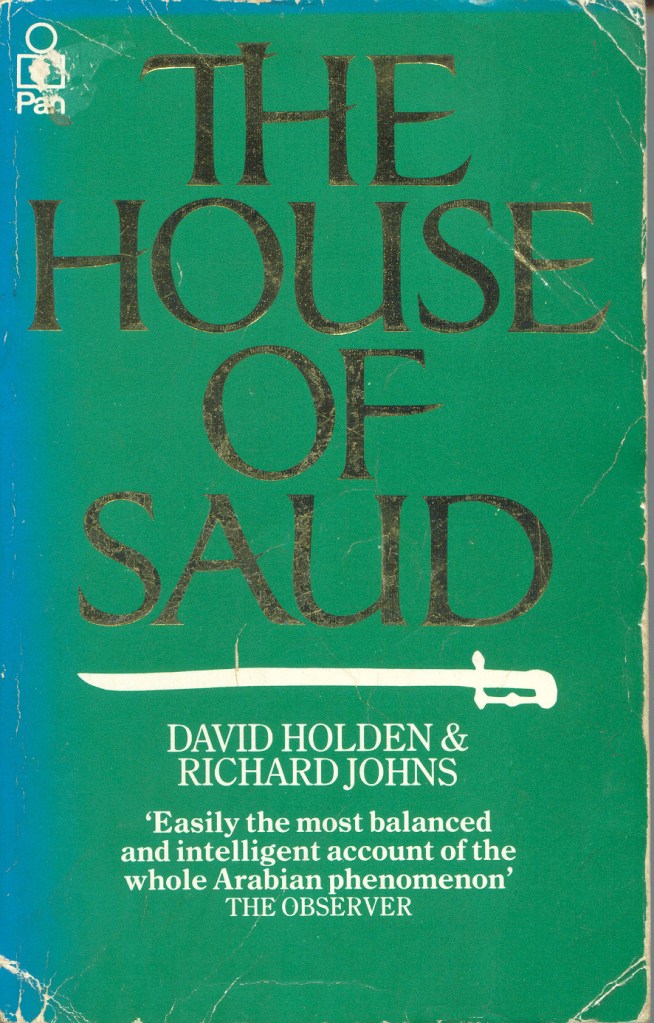
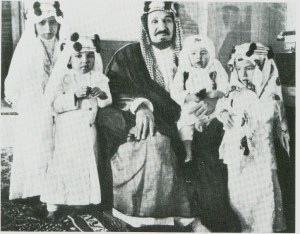
THE HOUSE OF SAUD is a brilliant, well researched, and valuable historical record about the founding of the Kingdom of Saud, [Saudi Arabia], with detailed accounts of its early dealings with the USA,  Britain, what now is Turkey, and other Arab nations, and how it grew from a small desert tribe, into a powerful and obscenely wealthy Islamic state.  The authors also give readers insight into the Shiite disturbances that began in the 1970s  culminating in the seizure of the Grand Mosque, and the bloodshed that followed. “The siege of the Grand Mosque raised more fundamental questions relating to the legitimacy and credibility of the dynasty”.

Published 1981.

*****

house of saud

*****

The authors tell us that Saudi Arabia, as we know it today,  was founded around 1902 by a young, blood thirsty, Emir Abdul Aziz bin Abdul Rahman bin Feisal al Saud, better known by his given name, Abdul Aziz, Servant of the Beloved. Beloved being only one of the ninety-nine synonyms for the sacred name of Allah. Originally born of isolated Bedouin tribes of the desert, the House of Saud attaches great importance to the purity of the bloodline. Marriages between first cousins, or equivalent relations, are preferred, or else carefully selected partners of equal status and purity  in another tribe…

“As Islam permits each man to keep four wives at any one time, and as divorce is made easy for males under Koranic law, so that the magic number of four can be multiplied many times over in one man’s life, this custom begot not only large numbers of children by a single father, but also an immense ramification of family and tribal inter-relationships through several generations.  Nephews married aunts, uncles were wedded to nieces and their children married each other to form a close knit and, to the outsider, impenetrable mesh.” At the time of writing, the authors estimate that with about 500 princes descending from Abdul Aziz, together with wives, daughters and collateral branches of the family, “the House of Saud cannot number less than 20,000 people.” The number of Abdul Aziz’ wives has never been officially computed but official records show that he fathered 45 sons from 22 different women. In addition there were at least as many daughters from an even wider range of women, including no doubt some unacknowledged mothers among the various concubines and slave girls, not to forget ‘wives of the night’ whom it was customary [and still is] for Arabian men to enjoy whenever the opportunity arose. All they had to do was to ‘marry’ the woman or girl for as many hours as they desired, then divorce her by saying ‘I divorce you’.  Today, many women and girls are kidnapped from Yemen, and other surrounding Arab nations, for the purposes of this euphemism for a ‘one night stand’. [On the other hand, they can fly to western countries and pay huge money for the same ‘privilege’.]

In Islamic countries, the Koran and its inherent sharia law, or path to follow, supplies a total and explicit moral code but in Saudi Arabia it is even more than that. It remains there, the only recognised and enforceable code of law, so that the country is held in a ‘1300-year-old corset of town and desert morality that is deemed to be universally and eternally applicable.’ This desert morality is upheld and brutally enforced by Wahhabism:

“In the middle of the eighteenth century, in what now must be regarded as the most fateful meeting of minds in Arabia since  the time of Muhammad, Sheikh Muhammad bin Saud, ruler of Diriya, and great, great grandson of Mani, the first identifiable Saudi ancestor, gave shelter to an itinerant preacher of Nejd, named Sheikh Muhammad bin Abdul Wahhab. The preacher was a Muslim ‘revivalist’ and the world of Islam by then was much in need of rejuvenation and reform…Abdul Wahhab was a true zealot, come to cleanse the ‘stinking stables of Arabia’ once more with the Word of God. But the Word of God proved insufficient for the task. Like the Prophet, Abdul Wahhab needed a sword as well – and to his eternal joy, he found one in Muhammad bin Saud and his family…Although Muhammad bin Saud was only one of the numerous quarrelling Nejdi sheikhs at the time, little more important than the rest, he evidently grasped that a man who had a message would give him an edge over all his rivals, enabling him to unite Bedouin and townsfolk in a new jihad to extend his personal dominion…

…Accordingly, in 1744 Muhammad bin Saud married off his son, Abdul Aziz, to a daughter of the preacher and thus sealed a compact between the two families that has been continued unbroken by their descendants ever since…Contemporary Saudi Arabia, for all its money and the new corruption and idolatry that wealth has encouraged, remains in theory and to a surprising extent in practice, a Wahhabist state, officially dedicated to the preservation of pure Islam as propounded by Muhammad bin Abdul Wahhab.”

“A penetrating analysis and major contribution the the literature of the subject” – The Sunday Times.

“An impressive work by two distinguished British journalists” – New Statesman.

*****************************************************************************

2015

“The House of Saud…wealth and power to make the world tremble”… Saudi Arabia is USA’s partner in the Middle East… 

Saudi Arabia’s King Abdullah died on 23 January 2015  and Western governments lowered their countries’ flag to half mast…WHY? For a King who allowed women to be whipped, stoned, beheaded, or imprisoned for years for such things as being raped, driving a car, or speaking out about the Saudi Arabia’s disgusting treatment of women?  

Oh that’s right, Western Governments loved this King for his wealth and his oil! Who cares how he treats women, even his own daughters and granddaughters, as long as the oil keeps flowing?  And are we really sure slavery has been abolished in Saudi Arabia?

And what of the Saudi’s treatment of gays?

>>>>>>>>>>>>>>>>>>>>>>>>

When are Islamic countries going to face up to the fact that homosexuality exists in their countries  and that the majority of their people are just as human as most Westerners?  In my experience of life, religious righteousness and fervour only encourage hypocrisy.   Suppressing our true natures  and living a lie propped up by constant prayer and ritual can only cause grief and violence in the long run.  As I have stated previously on my blog,  many men from Islamic countries live a huge lie by following and enforcing Islamic laws and religious beliefs within their own countries, but once they step into  secular, liberated Western countries, they rape, or become the homosexuals they desire or pay for  glamorous prostitutes.  Some have mistresses and children in Western countries they would not like their Mullahs at home to find out about.

In their worlds  of make-believe, Islam and Catholicism are alike.

Prince Abdulaziz bin Nasser  Al Saud


News and prince’s photo from Express.Co.UK  and UK News:

The prince once beat his aide Mr Bandar Abdullah Abdulaziz so hard his right ear swelled up to three times its normal size, and after one attack, he had to wear a hat and sunglasses while eating at a top restaurant to hide his injuries, the jury was told.

It is alleged that Al Saud was caught on CCTV subjecting his aide to savage and prolonged beatings in the lifts at the five-star Landmark hotel in Mayfair.  The court had heard that behind closed doors, the hotel staff thought the two men were “just like a couple” who spent their time in bars and nightclubs.

Saud Abdulaziz bin Nasser al Saud, 34, is on trial in London after 32-year-old Bandar died during a brutal attack with a “sexual element” on February 15.  Two male escorts are alleged to have performed sex acts on the prince at the hotel in central London where he and Bandar were staying.  The jury in the case was told gay relationships are illegal under Saudi Arabia’s sharia law code.

In the early hours of February 15, fellow guests heard thuds coming from their room and the body of the servant was later found on a blood-spattered bed. His head and face were badly bruised, his teeth broken and his left eye swollen and closed. Bones in his neck had been fractured as if he had been strangled and there was deep bruising to his back, fractured ribs and “trauma” to his abdomen caused by punches or kicks, the court heard.

He had also suffered brain damage and there were bite marks to his cheeks, left arm and possibly to his ears, the jury was told. It was said that Al Saud stood over the body “very upset and crying” as he spoke on the telephone saying: “I don’t believe it”.

The prince  at first claimed he was not involved in the killing. He told police Bandar had died from injuries suffered in a street robbery three weeks earlier.

But blood stains suggested a series of assaults before the killing, the jury was told. Detectives also seized CCTV film said to show the prince beating him. Al Saud tried to make out that he was not gay and had a girlfriend in Saudi Arabia, the jury heard. Jonathan Laidlaw, QC, prosecuting, said: “The bare fact of his sexuality would ordinarily be of no relevance in a criminal trial.

But it is clear that his abuse of Bandar was not confined simply to physical beatings.” He added: “Concealing the sexual aspect to his abuse of the victim was for all together more sinister reasons.” Al Saud denies murder and causing grievous bodily harm. Mr Laidlaw told the jury the Saudi royal admits being responsible for his manservant’s death.

Follow-up World News Item 21/10/2010:

Saud Bin Abdulaziz Bin Nasir al Saud, 34, was jailed for life by a British court on Wednesday for murdering his male servant in a brutal attack at a London hotel after a long campaign of sexual abuse.  He was ordered to serve a minimum of 20 years by a judge at London’s Old Bailey, also known as the Central Criminal Court.

The court convicted Saud of beating and strangling Bandar Abdullah Abdulaziz to death on February 15 at the culmination of a lengthy period of sexual violence towards his employee. Saud – whose mother is a daughter of Saudi Arabia’s King Abdullah – had tried to claim diplomatic immunity when he was arrested following the discovery of his servant’s body in their shared suite at the luxury Landmark hotel.

The victim, also a Saudi, was left with severe injuries including bite marks on both cheeks which prosecutors said showed a clear “sexual element” to the killing. The prince’s lawyers argued that he could face the death penalty in Saudi Arabia over the revelations of homosexuality aired at the trial. (you mean the Saudi authorities aren’t too bothered about the brutal murder of another Saudi – it is homosexuality that is the major crime here!?) Witnesses had told the court that Bandar – an orphan who was adopted into the family of a low-ranking civil servant in Jeddah – was treated “like a slave”. A post-mortem found Bandar had suffered chipped teeth, heavy blows to the head, injuries to the brain and ears and severe neck injuries consistent with strangulation by hand, the trial heard.

The prince was subsequently sentenced to life imprisonment when in 2010, he was found guilty at the Old Bailey of murdering his servant Bandar Abdulaziz. In March, 2013 he was allowed to return to Saudi Arabia to serve the remainder of his term in a Saudi prison. According to the agreement between the U.K. and Saudi Arabia, he must serve at least 20 years before he can be released. 

Abdul Aziz [Ibn Saud] with the eldest of his grandsons in 1935

Quote from the blurb of  ‘The House of Saud’:

At Riyadh, in 1902 the Desert Raider Ibn Saud [Abdul Aziz] tossed  the head of the town governor from a parapet down to his followers below…thus was the Kingdom of Saudi Arabia founded. Two-thirds of the size of India, it holds a quarter of the world’s oil and has six times more overseas assets than the USA.   A land of desert unchanged for centuries, with wealth and power to make the world tremble…the domain of the House of Saud

-Anne Frandi-Coory – Visit my blog at: frandi.blog


Vatican Library.  Do we need such opulence to preserve books? What a shame the Catholic Church burnt all those books on ‘THE LIST’

UPDATED 13 March 2013

In Doveton, Victoria, Casey Council has approved the building of a Catch the Fires Ministry Christian Church and an Omar Farooq Mosque alongside each other. A petition against the building of the mosque  beside the Church is doing the rounds.  MORE: The Age News

From TGO’s Blog:

Muslims need a place to pray???

I believe Muslims should be provided with a place to pray as soon as they provide Christians, Jews and other denominations with a place to pray in predominantly Muslim countries; how’s that for logic? By the way, one minor detail; this place to pray for non-Muslims cannot be subjected to suicide bombers. Sensible people do not want their lives ended prematurely.

Personally, I couldn’t care less for prayer, which is about as worthless as tits on a bull (for those of you out there who might be confused, bulls don’t have mammary glands, therefore their tits don’t produce milk and are therefore basically useless – just like prayer).

Anyway, why is it that we, the United States, need to cater to the whole world; a world that basically poo-poos on us (to be polite)? Since when have Muslims become such upstanding citizens that this country owes them a place to pray??? TGO

I agree with most of the above.  Anyway, why do the various religions need to build such palaces of grandeur to pray in?  Now, every time I visit  a Roman Catholic cathedral, full of stunning marble and fabulous artworks, I can appreciate the magnificence and beauty of the architecture and art, but at the same time, I can’t help thinking of the blood shed by millions over thousands of years, during the pillaging of the needed resources, not to mention the slave labour!   If I believed in prayer,  I would say a prayer for them.  Instead, I think of them and contemplate the brutality in the name of religion.  St Peter’s in The Vatican, for instance, should be an embarrassment to all Catholics the world over, for its opulent extravagance.  Let’s not just criticise the Muslims here, think of the Christian crusades as an example.   Raping and pillaging licensed by the Catholic Church,  and in ‘God’s Name’.  No better or no worse than the suicide bombing of millions of innocents in ‘Allah’s Name’.

One thing I will say about the Catholic Church, they believe that women and girls should have the same rights to a good education as boys.  I know I did.

See Burning Books…


Exposing the great fraud?

UPDATED 15 MARCH 2016

There is a new pope in the Vatican, Pope Francis, and thousands of cases of sexually abused children at the hands of thousands of paedophile priests, have come to light.  Has anything really changed in the Catholic Church?

ARE WE BUT A MERE FLOCK OF SHEEP?

“Out of all of the sects in the world, we notice an uncanny coincidence: the overwhelming majority just happen to choose the one that their parents belong to. Not the sect that has the best evidence in its favor, the best miracles, the best moral code, the best cathedral, the best stained glass, the best music: when it comes to choosing from the smorgasbord of available religions, their potential virtues seem to count for nothing, compared to the matter of heredity. This is an unmistakable fact; nobody could seriously deny it. Yet people with full knowledge of the arbitrary nature of this heredity, somehow manage to go on believing in their religion, often with such fanaticism that they are prepared to murder people who follow a different one.” – Richard Dawkins (Quote taken from TGO’s Blog)


Michael Baigent  discusses historical fact –  he is enlightening. I have read previous books about the Dead Sea Scrolls and  other books co-authored by Michael Baigent and this book is just as good.  There is much information about the beginnings of Catholicism which will interest many of my blog readers.  The back of the book lists three questions:

  • What if everything we have been told about the origins of Christianity is a lie?
  • What  if a small group had always known the truth and had kept it hidden…until now?
  • What if there is incontrovertible proof that Jesus Christ survived the crucifixion?

I, and I am sure many other Catholics, are asking:

  • Did we suffer all that terrifying threat of hellfire and brimstone as children,  for the sake of a LIE’?
  • Are women being stoned to death for the sake of a LIE?
  • Is this the reason we have been labelled  ‘His flock of sheep’ and He ‘Our Shepherd’?
  • Are the reasons many thousands died during the Inquisition and the Crusades – all based on LIES?

The Inquisition was initiated by the cruel and fanatical Spanish monk, Dominic De Guzman  in the 13th Century and the Catholic Church named  Orders after him;   Dominican nuns and priests.  Guzman  was eventually canonised by the Vatican as a Saint, can you believe it?   As Michael Baigent says in his book, all roads might have led to Rome, but so did vast rivulets of blood!  Question marks still hang over the present German pope, Joseph Ratzinger, who as Cardinal Ratzinger, (from 1981 until 2005) headed the twice re-named Inquisition;   Sacred Congregation of the Holy Office in 1908 and during his reign as Cardinal in Charge (‘Grand Inquisitor’), Congregation for the Doctrine of the Faith in 1965.


-Anne Frandi-Coory 15 March 2015

Read more here:

Australian Royal Commission Into Institutional Responses Into Sexual Abuse Of Children  2013 -2017