
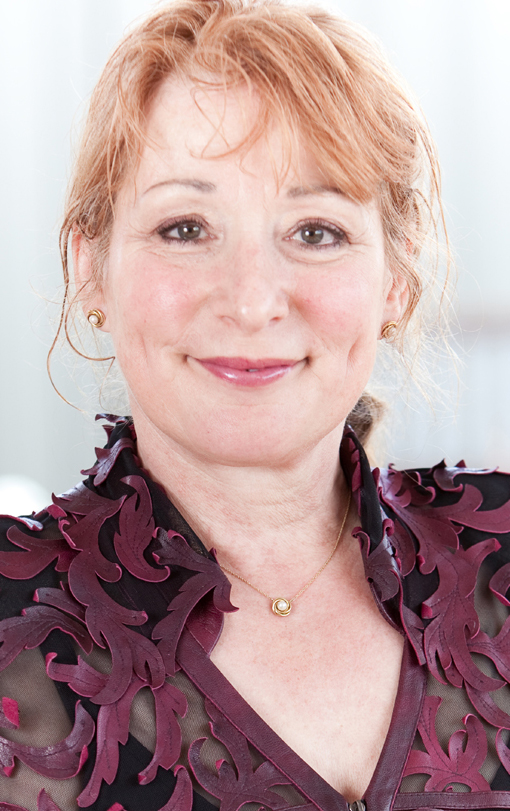
Anne Frandi-Coory 2010
<><><><><>
All text and images are ©copyright To Anne Frandi-Coory. All Rights Reserved 18 March 2015
<><><><><><><><>
During the Royal Commission into Institutional Sexual Abuse of Children in Melbourne, hundreds of victims have come forward to give evidence. Now adults, their testimonies are heart-rending and difficult to listen to. What has made their journey into adulthood so precarious (many have committed suicide) is that at the time, nobody believed they were being abused by those in positions of trust. None of the perpetrators has ever said they are sorry, much less the institutions in which they were incarcerated as children. Only now can they talk about their traumatic childhoods. They are finally being listened to and believed. How healing it is to have your abuser, or in these cases, your Church, apologise to you, hopefully showing genuine remorse. The Catholic Church has by far the worst record of any institution for blaming the children for what has happened to them, and for protecting paedophile priests and Christian Brothers.
As George Pell, Cardinal, once stated: “We had no idea the sexual abuse of children would do so much harm”.
Another Catholic Church official at the Vatican stated: “A priest leaving the priesthood to get married, is a far worse sin than a priest sexually abusing children”
I can empathise totally with what these victims have endured over their lifetimes. If only once, even one member of my devout Catholic Lebanese extended family had acknowledged my abandonment by my mother and the abuse meted out to her and me by them, it would have gone a long way to healing the wounds. Instead, I was not allowed to discuss the abuse, or if I did, told I was lying. It was to risk another beating if I dared to ask about my mother, or what happened to her. Many a time I was kicked while on the floor, or had a swelling the size of an egg on my eyelid caused by a strap wielded by an aunt. Cousins often witnessed this abuse, but still, no apologies or acknowledgment.
Unfortunately, when you turn your back on an abusive family, there really isn’t any group you can join for support. You have to go it alone.
My childhood was filled with fear, abuse and gross neglect; some of it took place in institutions run by the Catholic Church, but most of it was carried out by my Lebanese extended family, herein called “The Family’. Not once has any member of The Family ever acknowledged my abuse and neglect at their hands, much less apologised. In the end, I decided to write a book Whatever Happened To Ishtar?; A Passionate Quest To Find Answers For Generations Of Defeated Mothers. There were so many different versions of my and my brothers’ fractured childhoods doing the rounds, I wanted to put the record straight. Not only for my mental health, but so my children could breathe in clean air and know the truth. Neither I nor my two brothers appear together in any family photos. In fact, I had to put the few childhood photos of us on social media because relatives were placing photos on the site, with our names on them, but who were definitely not us!
There is no doubt that The Family hated my Italian mother. They made her life hell, and my father, a weak man, did nothing to protect her. Two of his brothers preyed on her, and for this she was evicted from the Coory family home. Because she had to work, my mother could not look after two children, so my father placed Kevin and me, then 3½ and 10 months old respectively in the Mercy Orphanage for the Poor in South Dunedin. My mother was then pregnant with my brother Anthony.
However, I was the scapegoat child who as the only daughter paid dearly for my mother’s ‘sins’. The Family’s hatred for my Italian mother, and by default, me, was evident whenever my father took me to visit in that household. My mother was an ex Catholic nun and very naïve, so was an easy target. They ridiculed her constantly, the favourite word for her was “sharmuta” Aramaic for prostitute. As a very small child I didn’t understand what the word meant, but I knew by the way my aunts and grandmother spat it out, that it was nasty. I was totally devastated when I later discovered what it meant. My mother was never ever a prostitute, but after being sexually harassed and abused by two of my father’s brothers, to whom she had a son each, she was the ‘sinner’! My mother later developed bipolar disorder. Slowly over the years, with the help of occasional visits to a psychologist, I managed to live a mostly fulfilled life. You can never forget an abusive childhood but you can live with it. I still have panic attacks and suffer from periodic depression but I can deal with it by getting passionately involved in projects, like writing and painting. I married at 18 years and escaped Dunedin and largely turned my back on The Family. From time to time I have met relatives who persist in telling me to “get over it” or “move on”! Funny isn’t it, how people who have had a loving mother and father, and a supportive family, can be so heartless!
<><><

Anne Frandi-Coory at 8 years old -just removed from the Mercy Orphanage for the Poor in Dunedin
<><><><
Children who have been abused and abandoned during their formative years have exceptional memories. While most people remember episodes of their childhoods from about four years of age, victims of abuse and abandonment can remember vividly, events from their infancy. Memories re-surface throughout adulthood as isolated vignettes of violence and sexual abuse with no context in time or place. For instance, I can remember standing in a cot in a room with many other toddlers in cots squeezed in around me. My father had just visited and I was distraught. I saw him walk past a window and even though it was dark outside, I recognised him and the hat he always wore. Until many years later when I went back to the orphanage to gather evidence for my book, I didn’t know what I was remembering, or even if it actually happened. As soon as I saw the abandoned nursery, I recognised the windows through which I had watched my father leave; contexts of time and place began a healing process.
Other recurring memories emerge from an incident which involved my mother collecting us two children from the orphanage and taking us to Wellington to live with her parents. I was eighteen months old at the time. For years a memory kept resurfacing of my mother carrying me onto a small plane. Often accompanying that memory was another memory of me standing in a cot in a tiny room watching my mother getting undressed. The details were vivid. She was smiling at me, and I remember that my cot was pressed up against the foot of her bed. Earlier, I had seen a man holding a little boy’s hand leading him out through the bedroom door. It wasn’t until decades later when Kevin and I were reunited and had sat up all night until the early hours of a morning, talking about our childhoods apart, did pieces of the puzzle come together. I related these latter events to him and he immediately knew the contexts in which they occurred. He was four and half years old at the time and he was the child holding our Italian grandfather’s hand walking out of mum’s bedroom. There is a rare photo of us at this time. Kevin is sitting in a little armchair he remembers well, with me sitting on the grass in front of him, in our grandparents’ overgrown rear yard.
><><><

Kevin and Anne, Wellington
><><><>
Apparently, our mother’s parents didn’t want her and her three children (Anthony was a newborn) staying there, so they paid for the airfares for her to “go back to your husband!” However, it was what occurred beforehand that seared the memories so vividly into my brain, although I don’t consciously remember the events. Kevin told me that while we were all staying at our grandparents’ house, there was a lot of screaming and yelling by our grandmother, at her daughter. This was a household that had seen years of domestic violence from the time my mother was a young girl.
One day, mum, Kevin and I were sitting on mum’s bed while she was nursing Anthony. She gave birth to him while staying at her parents’ home. Our grandparents entered the room and in Kevin’s words, our grandmother was screaming at mum “enough to wake the dead” while our grandfather ( a very violent man) was belting mum around her head with his hand. After these and other revelations, many of the fractured memories stopped recurring. It’s as if once they have been acknowledged and verified, they are filed away in the sub-conscious.
<><><><><

A very rare photograph taken at St Kilda Beach, Dunedin of the The Three of Us together: Anne, Anthony, Kevin (image: Joseph Coory)
><><>>><>><
I had to research the facts surrounding my childhood before I could write the book, and the truth was devastating, but also liberating.
When I was ten years old, I was sexually abused in a car by the husband of one of my Lebanese aunts. This episode illustrates the difference in childhood memories which occur after four years of age. I remember the context in which the abuse occurred, so my memory of it wasn’t fractured and it didn’t resurface as much as my infant memories did. I was very frightened of this uncle, but I was just as frightened of The Family, so I couldn’t tell them. I was too scared to tell my father, whom I adored because my uncle was a huge man and I thought he would kill my father; they argued all the time. The sexual harassment continued until I was eighteen and I left Dunedin. After I published the book with this episode of sexual abuse in it, cousins laughed and said that he was just a “dirty old man”. Obviously, this paedophile was known by some members of the family. Just recently, a cousin published many photos of the Coory family on social media, and this paedophile was in one of them. I was extremely upset and when I made the comment that this man was a paedophile, I was told once again to “get over it”! As in the cases of institutional sexual abuse, unless we have zero tolerance for the sexual abuse of children in families, paedophiles will continue to abuse children and the child will continue to be told to “get over it” or will not be believed! I thought I had managed to file away that particular childhood memory, but as always, it only takes a photograph, a look-alike person walking by or other stories of similar sexual abuse for the memory to flood back.
<><><><><><><><><><
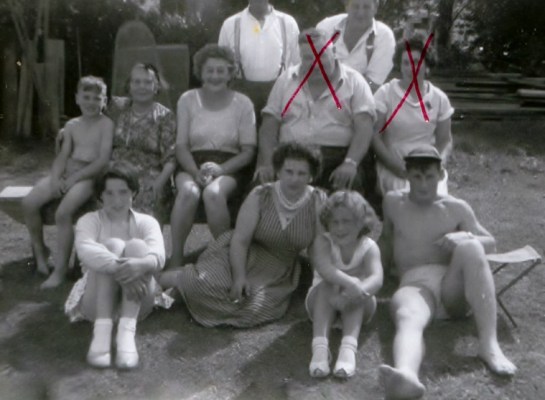
Under the red crosses I penned years ago: the paedophile and the cruel aunt. That’s me at 14 yrs sitting on the ground on the left.
><><><><><><><><><><
An analogy comes to mind when talking about trying to live a normal adult life following an extremely traumatic childhood:
It is as though there is a deep black hole behind you in your past. Unless you find passions in life to keep you busy, or become a workaholic, frightening memories will invade your dreams and many of your waking moments. Often it’s like running on the spot to keep the black hole from dragging you into drug and alcohol addiction, depression, anxiety, suicide, and in some cases becoming the very adult in your memories that you’re running away from. I can understand why many victims ‘drown’ in that black hole. Life can be a difficult journey for those who’ve had a happy and loving childhood, but for many so abused, it’s a constant day to day battle. I am one of the more fortunate.
Please don’t ever tell victims of child sex abuse, gross neglect, or abandonment, to “get over it, move on” You have no idea what you are asking unless you have walked in their shoes!
All text and images are copyright To Anne Frandi-Coory All Rights Reserved 18 March 2015
<><><><><><><><>


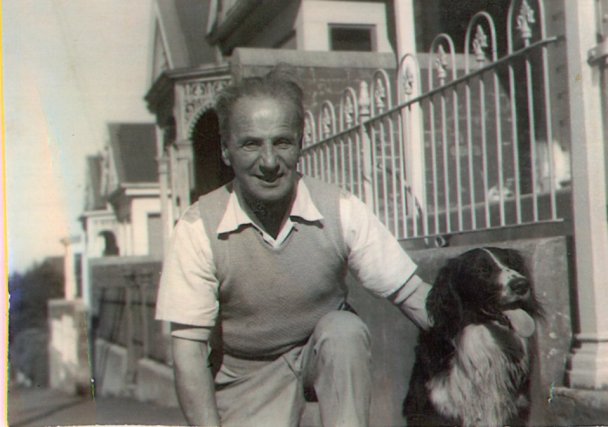

 anne frandi-coory