Archive

Tag Archives: Lebanon

From Lebanon’s poet & writer, Khalil Gibran: Poetry is not an opinion expressed. It is a song that rises from a bleeding wound or a smiling mouth. >< In memory of all the poets, journalists and writers who have died in the Middle East peacefully pursuing freedom for their country. ><

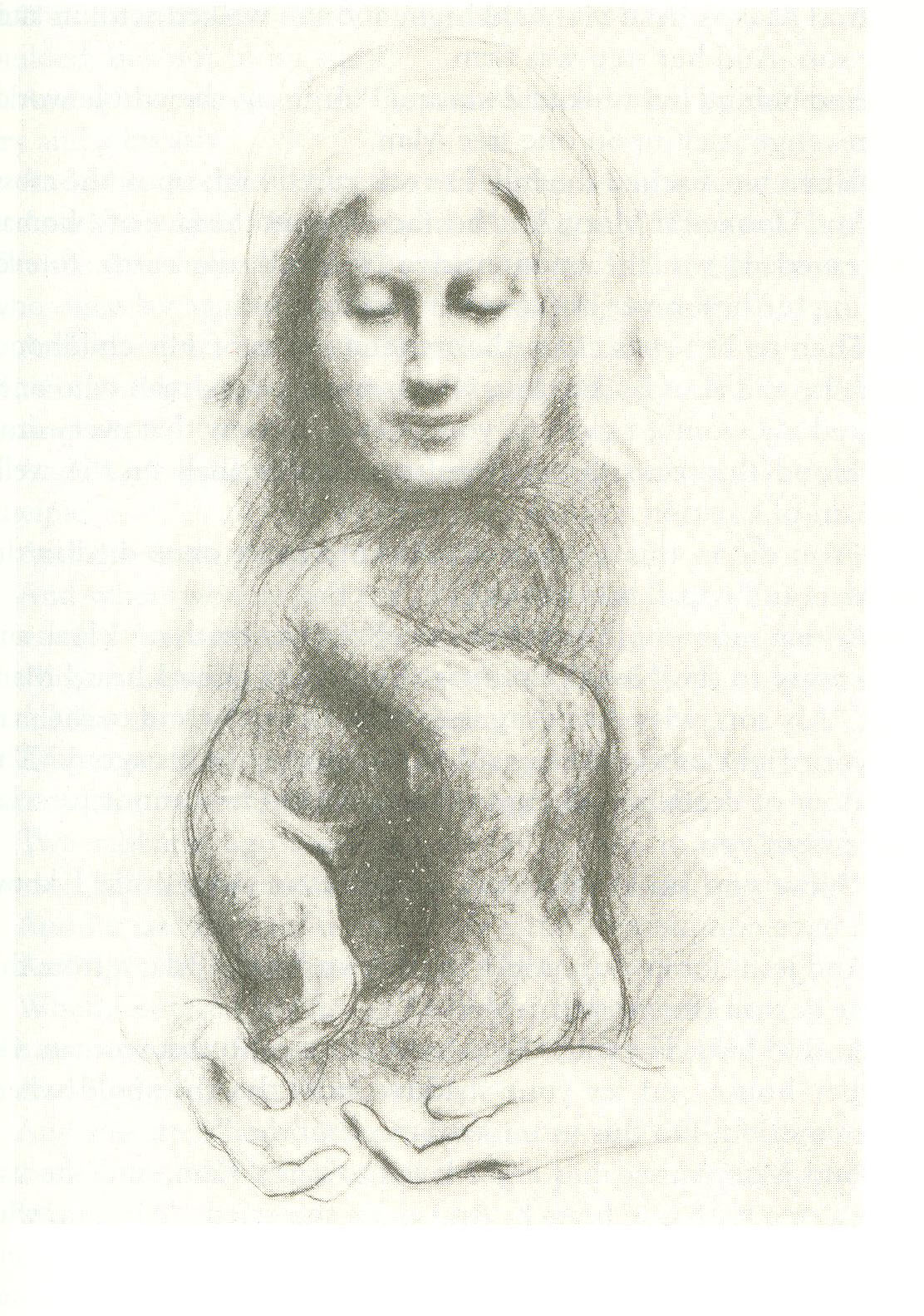
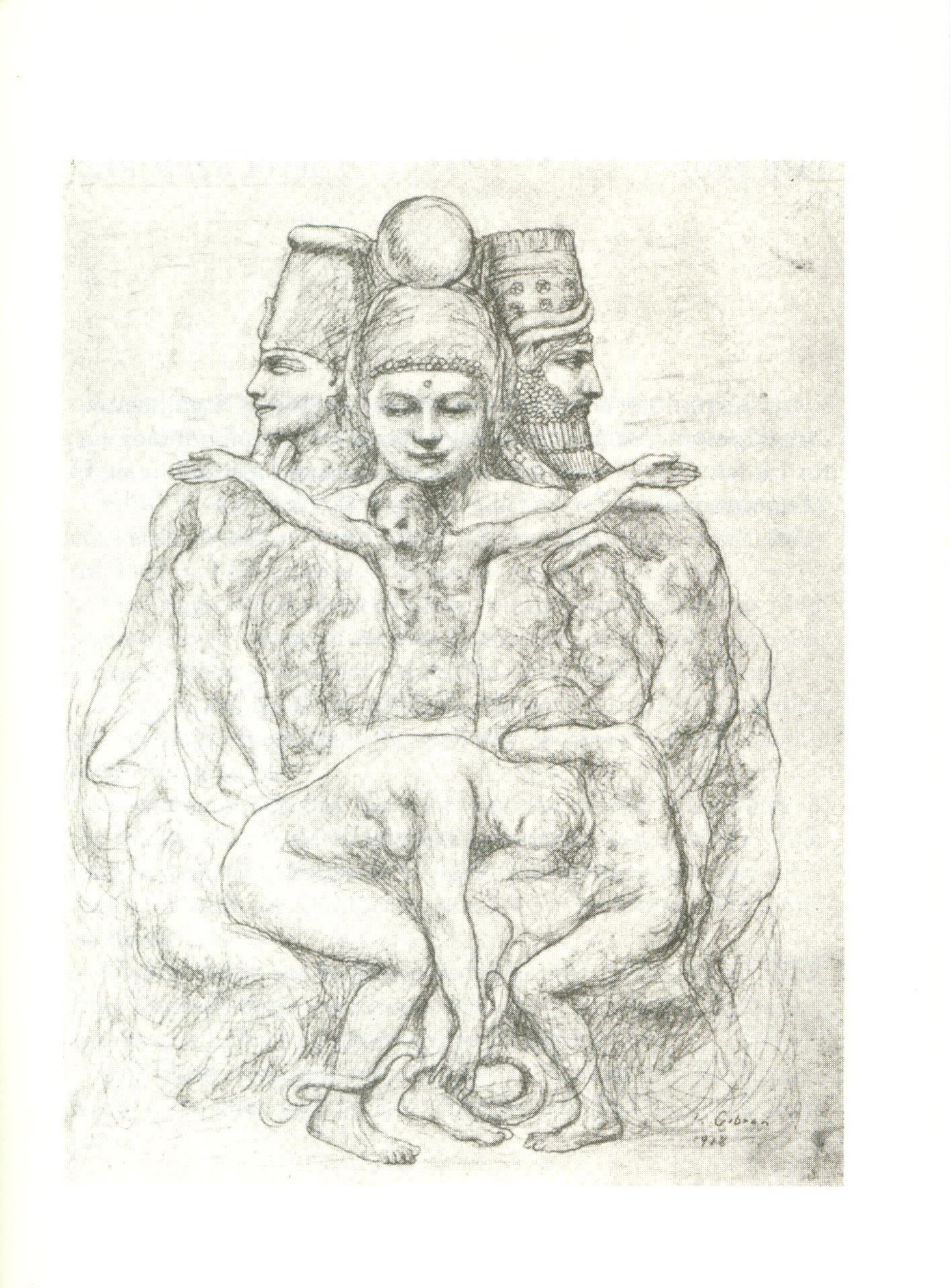
Sketch by Khalil Gibran who understood deeply the pain of his people

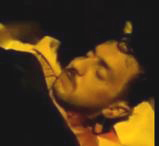
>< Ibrahim Qashoush, whose lyrics moved thousands of protesters in Syria, and who sang his jaunty verses at rallies, has been found dumped in the Orontes river with his voice box cut out.  A symbolic message from Bashar’s brutal regime. Qashoush had been forced into a car while on his way to work in central Hama. ><

Ibrahim Qashoush in peaceful repose

>< The father of three boys, Ibrahim Qashoush, was a fireman in the central Syrian city of Hama who wrote poetry in his spare time. Before the uprising in Syria began in March, he’d write about love or the struggling  times.  His friends say all his poems and songs were  instinctual. He’d sit with his friends and suddenly begin reciting a poem from memory.  Ibrahim’s star rose with protests in the city. At nearly every protest, the crowds were singing his most popular lyric, “Come on, Bashar, time to leave.” His poems and songs rang with a down-to-earth, jokey, rhythm. Obviously, Bashar and his government fear the pen or the poet more than the sword!  It is the same with other current dictatorships around the world; they will kill anyone who dares to write the truth about their corrupt and murderous practises.  Human Rights are a poet’s dream. Journalists, poets, writers,  all fair and easy game.  But despots can’t unwrite was has been written nor tear out what is in people’s hearts. Bashar quote: ”If you say ‘God, Syria and Bashar’, I say ‘God, Syria and My People’. I, Bashar AlAssad, will remain dutiful and faithful to my people…”  Hollow words from a man who will not relinquish power. Another Arab leader who must be terrified in their thinking about  where  and when the Arab Spring will end. As a child, I often heard my Lebanese grandmother, Eva Arida Fahkrey, rail against “Syria” and what it had done to her Lebanon.  I didn’t understand then, but I now know Syria never let Lebanon forget that she had been carved out of Syria’s land mass by the West.   My hope is that a new Syria will cease to interfere in Lebanon’s self-rule;she has enough problems with Iran, but that is another story. RIP Ibrahim Qashoush.

download

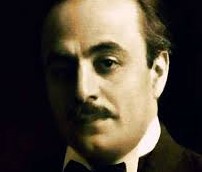
Khalil Gibran

Even Khalil Gibran, Lebanon’s most famous poet, understood his country’s multiple personalities.

****************************************

Khalil Gibran

                                                  One of my favourite books in my home library.

(Unfortunately ‘Khalil’ has been misspelt on the book cover)

**********************************************

The following is a short story and poem taken from:

Khalil Gibran, The Garden of the Prophet (written 1934)

***********************

Sketch by Khalil Gibran

And Almustafa came and found the Garden of his mother and his father, and he entered in and closed the gate that no man might come after him.

And for forty days and forty nights he dwelt alone in that house and that Garden, and none came, not unto the gate, for it was closed, and all the people knew that he would be alone.

And when the forty days and forty nights were ended, Almustafa opened the gate that they might come in.

And there came nine men to be with him in the Garden; three mariners from his  ship; three who had served in the Temple; and three who had been his comrades in play when they were but children together. And these were his disciples.

And on the morning his disciples sat around him, and there were distances and remembrances in his eyes. And that disciple who was called Hafiz, said unto him: “Master, tell us of the city of Orphalese, and of that land wherein you tarried those twelve years.”

And Almustafa was silent and looked away toward the hills and toward the vast ether, and there was a battle in his silence.

Then he said:

My friends and my road-fellows

Pity the nation that is full of beliefs and empty of religion,

Pity the nation that wears a cloth it does not weave, eats a bread it does not harvest,

And drinks a wine that flows not from its own wine press.

Pity the nation that acclaims the bully as hero, and that deems the glittering conqueror bountiful.

Pity the nation that despises a passion in its dream, yet submits in its awakening.

Pity the nation that raises not its voice save when it walks in a funeral, boasts not except among its ruins, and will rebel not save when its neck is laid between the sword and the block.

Pity the nation whose statesman is a fox, whose philosopher is a juggler, and whose art is the art of patching and mimicking.

Pity the nation that welcomes its new ruler with trumpetings and farewells him with hootings, only to welcome another with trumpetings again.

Pity the nation whose sages are dumb with years and whose strong men are yet in the cradle.

Pity the nation divided into fragments, each fragment deeming itself a nation.

***********************************

Sketches by Khalil Gibran, Lebanon’s most famous poet HERE

***************************************

Anne Frandi-Coory’s  Lebanese Family tree and photos HERE: 

Maria Grego cropped 2

EVA Exiles

*****************

EXILES

Exiled from home. The far sea rolls

between them and the country of their birth;

the childhood-turning impulse of their souls

pulls half across the earth. Exiled from home.

No mother to take care that they work too hard,

grieve not too sore;

no older brother nor small sister fair

no father any more.

Exiled from home; from all familiar things;

the low browed roof, the grass surrounded door;

accustomed labours that gave daylight wings;

loved steps on the worn floor.

Exiled from home. Young girls sent forth alone

when most their hearts need close companioning;

no love and hardly friendship may they own,

no voice of welcoming.

Blended with homesick tears the exile stands;

to toil for alien household gods she comes;

a servant and a stranger in our lands,

homeless within our homes.

><

– Charlotte Perkins Gilman. (1914)

********

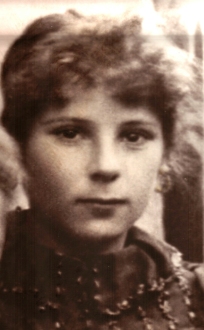
Above left: Anne Frandi-Coory’s maternal Italian grandmother, Maria Cajetan Grego Frandi

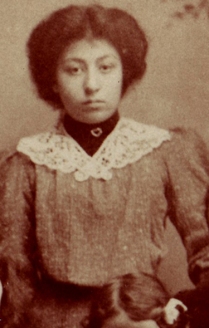
Above right: Anne Frandi-Coory’s paternal Lebanese grandmother, Eva Arida Fahkrey (Coory) 15yrs old & married, in Bcharre, Lebanon, on her way to New Zealand. 

*********

See later post: Italian Villa With Virgin

See Immigration & The Promise

Updated 19 July 2017

The price you pay for a book bears no relation at all to the value of the stories and lessons held within!  I found The Arab Mind by Raphael Patai, [a prolific cultural anthropologist] marked down at a sale in a favourite NZ book shop.  I believe that, like cats, books find you, you don’t find them.  In all my travels I have never seen this book anywhere else.  And I found it while writing the final manuscript for ‘Whatever Happened To Ishtar?’

********

Fayez A. Sayegh comments in The Arab Mind: ‘…yet even more devastating… was the drying up of the creative and adventurous spirit within Arab society itself. The keen intellectual curiosity which characterised the preceding period, the passionate and untiring search for knowledge, and the joy of adventure were smothered under a hard crust of dogma and fundamentalism. Free thought was banished, traditionalism reigned in its place…’

><

One of the most enlightening books (for me) I have ever bought

><

I grew up without knowing my Italian mother as a person.  She suffered from severe bipolar disorder with psychotic episodes. So, at ten months old, I was placed in a Catholic  Orphanage for the poor, and was visited only by my devoted Lebanese father.  His extended family could not find any room in their hearts to love me.

My father often took me to visit his extended family, in the futile hope that  their frozen hearts might thaw, but the quiet, prayerful ways of a nun-studded convent does not prepare a young girl well for the noisy and multi-generational home of  Middle Eastern immigrants.  In their view I was “of another breed”.  I escaped Catholicism and “Little Lebanon” as a teenager and never returned.  However, you can take the girl out of her Lebanese extended family but you can’t take the Lebanese influence out of the girl, as the familiar cliché goes.  I picked up the Aramaic language they spoke and many positive aspects of their lives; great cooks, devotion to family (if you didn’t have a foreign mother that is) but those positives  were buried deep in my soul for many years, under all the negatives.

From The Arab Mind by Albert H. Hourani: To be a  Levantine is to live in two worlds or more at once, without belonging to either; to be able to go through the external forms which indicate the possession of a certain nationality, religion or culture, without actually possessing it. It is no longer to have a standard of values of one’s own, not to be able to create but only able to imitate; and not even to imitate correctly, since that also needs a certain originality. It is to belong to no community and to possess nothing of one’s own. It reveals itself in lostness, pretentiousness, cynicism and despair.

The Arab Mind was such a help in the final stages of writing   Whatever Happened To Ishtar? A Passionate Quest to Find Answers for Generations of Defeated Mothers.  Many of my Lebanese family’s ethnocentric behaviours suddenly took on new meaning; the hatred they exhibited toward my Italian mother and by association, to me, was the result of thousands of years of cultural prejudice.  Necessary in desert and mountain life in sectarian communities where brutal invasion and massacre were a common way of life.

To the Arab, saving face and honour are everything and when your beloved eldest son marries a sharmuta (Aramaic for prostitute-every woman who did not live up to the family’s cultural values was labelled sharmuta) then what can you do but exile from the family the issue of that union!  Being the only girl child made it easy for them to make me the scapegoat of all the family’s ills in a foreign country.

Historian Oswald Spengler: The Arab culture is a discovery . . . Its unity had been suspected by the late Arabs, but it escaped the Western historians so completely that one cannot find even a good designation for it. On the basis of the dominant language one could term the pre-culture and the early period Aramaic, the late period, Arabic . . . The Arab spirit however, mostly under a late-antique mask, cast its spell over the emerging culture of the West, and Arab civilization, which in the folk psyche of Southern Spain, Provence, and Sicily is superimposed that of antiquity…

In this current era of the ‘Arab Spring’, I recommend you find a copy and read The Arab Mind to gain an understanding of how differently we westerners from such very young countries, like Australia and New Zealand, view everyday life.  I think the half of my book that dealt with my father’s family was a much kinder book in the end because I read The Arab Mind before I sent my re-written manuscript off to the publishers.  So many of the events that played out in my childhood took on very different meanings, while suppressed memories re-surfaced.  I understood better, what it must have been like for my naive, fifteen year old Syrian/Lebanese grandmother, from the hills of Bcharre in Lebanon, to marry and follow my grandfather to the other side of the world. She was one tough, superstitious old woman when I met her.

How relevant to the lives of my Maronite Lebanese extended family, and by the same token, to the current Arab Spring,  are the following quotes in the book:

Nabih Amin  Faris and Mohammed Tawfik Husayn  write in The Arab Mind: ‘In some respects Arab absorption [particularly Arab Muslims] in their bygone days tends to be a chronic disease. It stems naturally from the general misery of the majority of the people and the wretched social and political conditions since the fall of the Abbasid empire and the Arab states in Spain and North Africa. They live in a splendid past as an escape from the miserable present…Until the closing years of the eighteenth century, the Arab world was in a state of near stagnation, ingrown, content with its prevailing conditions, resigned to its fate, and blissfully ignorant of the events unfolding around it. Then the West descended upon the Arab world as a conqueror, bringing its culture, civilisation, and science, its missionaries, its mercantile goods and commodities, and political, economic and military domination.’

I found chapter 15, The Question of Arab Stagnation particularly interesting. e.g. the Arab admiration for Israel; its excellence in scientific research, and its brilliant scholars and universities. Its global achievements in weaponry, commerce and banking, not to mention its organisational abilities in all walks of life. ‘The Jews, their rich people and their financial institutions…donate millions for their researches in Israel; but our rich people and our financial institutions,  our leaders, our rulers …do not contribute a single gursh [penny], but ask: Why donate to science?’  This chapter has several publications written by Arabs who are very critical of Arab stagnation since the early 14th century and why they believe Israel won the 1967 war. It may surprise readers to know that upwards of 200,000 Arabs a year regularly visit Israel because they love the place, and everything that it has to offer them, and which they cannot easily access in their own country.

Faris and Husayn further recognise that ‘the cultural famine which ravages Arab life is indeed not novel, nor is it the handiwork of colonial rule, feudal rapacity and local oppression alone…its roots go far back into the history of the Arab people.‘ …the low position in which Arab society keeps its women is an important contributing factor to this sorry state of affairs.  ‘No wonder,’ they exclaim, ‘that the Arab world remains backward, tradition-fettered, and limping behind the procession of human achievement, when women’s status is so low.’ [my emphasis]

It is not enough for Arabs to continue to blame the West for their stagnation…dam butlab dam feuds were so intense among the Arab tribes [blood demands blood or an eye for an eye] in pre-Islamic times, and were such a permanent feature of life…’that an important contributing factor to Muhammad’s success in rallying the people of the Arabian Peninsula around the banner of the new religion he preached was the fact that widespread feuding had weakened the Arab tribes and made it impossible for them to unite against him.’

From author Hisham Sharabi in The Arab Mind: …There is no turning away from Europe. This generation’s psychological duality, its bilingual, bicultural character are clear manifestations of this fact. It has to judge itself, to choose, and to act in terms of concepts and values rooted not in its own tradition but in a tradition that it has still not fully appropriated.

From Author Halim Barakėt in The Arab Mind:…We are a people who have lost their identity and their sense of  manhood. Each of us is suffering from a split personality, especially in Lebanon. We are Arab and yet our education is in some cases French [my grandfather, Jacob Coory’s second language was French], in some cases Anglo-Saxon and in others Eastern Mystic. A very strange mixture. We need to go back and search out our roots. We’re all schizophrenic…

The Arab Mind is a great read, very well written, and draws on accomplished writers and authors who know their topic well.   I urge anyone interested in Arab culture and history, to read this book.

I have lived a life in two halves, so I know what Barakėt means about being schizophrenic. Writing Ishtar? helped me to become one person and to discover the wonderful Italian and Lebanese genetic talents buried within me. The young Arabs of today have so many tools to use in their search for who they are; Facebook, Google, Twitter, blogging, mobile phones, formal education, etc etc.  Let’s hope their search for an identity won’t take as long as it did my generation.

 Follow Anne Frandi-Coory here on her blog:  frandi.blog

Also Here on Anne Frandi-Coory’s Facebook Page:

https://www.facebook.com/myhomelibrary/


Kahlil Gibran

Kahlil Gibran wrote of Lebanon  – ‘Pity the nation divided into fragments, each fragment deeming itself a nation’.

(Garden of the Prophet 1934)  (see my post: Lebanon – Pity The nation)

Nothing has changed, it seems. Lebanon is being fought over by Sunnis, Shia,  and Hezbollah.  Some Christian groups are aligned to Hezbollah.   Saudi Arabia jointly with Syria is involved in trying to find a ‘peaceful’ solution.   Iran is “vitally supporting Hezbollah”.   One has to question these three countries’ motives.  Druze is  another group putting in its two cents’ worth.   The Druze carried out massacres of Christian Maronites because of their increasing power, during the times my grandparents lived in Bcharre.  Even Turkey still appears to have a stake in Lebanon.

Jim Muir BBC News, Beirut:

Tensions are rising sharply in Lebanon, amid indications that the international Special Tribunal set up to prosecute the killers of former Prime Minister Rafik Hariri may soon issue indictments of members of the militant Shia movement Hezbollah in connection with the case.

Despite the dense dust-clouds already stirred in Lebanon by the tribunal and reactions to it, there are fears that the indictments, if and when they come, could still cause real trouble.  “Nobody knows what is going to happen, but the Shia in general, and Hezbollah in particular, can’t risk being accused, and it is bound to cause tension with the Sunnis,” said the Druze leader, Walid Jumblatt, who recently detached himself from alliance with [current Prime Minister],  Saad Hariri, improved relations with Hezbollah and is trying to stay neutral. “If Hezbollah is indicted, that will affect its image in the Muslim world as the heroic resistance against Israel,” he told the BBC. Mr Jumblatt accused the US and other Western powers of cynically using the tribunal to put pressure on Syria, Iran and others, and of trying to head off a compromise understanding among the Lebanese leaders.

“Whoever technically killed Rafik Hariri, those really responsible were [French President Jacques] Chirac and [US President George [W] Bush, who forced him to accept 1559,” he said, referring to the UN resolution passed in late 2004, just a few months before Mr Hariri’s murder. “It had three clauses in it which amounted to death sentences – the demand for Syrian troops to leave Lebanon, and for Hezbollah and the Palestinians to be disarmed,” Mr Jumblatt said.  “More important than finding out who killed Hariri, the most important thing now is to get out of this vicious circle which brings more tension every day, how to break this crisis between Sunnis and Shia.”

While the Saudis and Syrians are looked to as the most influential outside powers potentially able to foster an understanding and prevent the Lebanese factions taking to the streets again, others are also in a position to try to help. The Turkish Prime Minister, Recep Tayyip Erdogan, who had a hand in the Saudi-Syrian rapprochement, is currently on a two-day visit to Lebanon. And on Saturday, Prime Minister Hariri visits Tehran, his first such trip to the country that helped establish and still vitally supports Hezbollah.

Tensions have been steadily mounting over recent months as the expected indictments grew imminent, but the situation has been contained by an entente between Saudi Arabia and Syria, who exercise great influence respectively among Lebanon’s Sunnis and Shia.  The Iranian ambassador in Beirut has also been co-ordinating with his Saudi and Syrian counterparts to help keep the peace.

[Trying to keep the peace?  I would love to be a fly on the wall at these meetings].

Lebanese politicians had been hoping that Saudi-Syrian mediation at top level would very soon produce a formula that could be agreed on by the cabinet in Beirut to deal with the repercussions of the expected indictments.  But now there are fears that the Saudi role may fall victim to developments inside the kingdom. The monarch, King Abdullah bin Abdul Aziz, was flown to the US on Tuesday for medical treatment. He was personally overseeing his country’s rapprochement with Damascus and their joint sponsorship of peace efforts in Lebanon. The king has temporarily assigned his powers to his half-brother, Crown Prince Sultan, who is himself ailing.

Lebanese politicians believe that Prince Sultan and other prominent members of his Sudeiri wing of the ruling family are much less keen on cultivating good relations with Syria.  CBC said its months-long investigation was based on interviews with sources inside the UN inquiry and on documents leaked from the tribunal.

It said that evidence gathered by the Lebanese police and the UN “points overwhelmingly to the fact that the assassins were from Hezbollah”. To back that allegation, it contained detailed diagrams showing how investigators traced interlinking networks of mobile phones which they believed led from the vicinity of the massive explosion which killed Rafik Hariri and 22 others, ultimately to Hezbollah’s communications centre under a hospital in Beirut’s southern suburbs.

The CBC film had a bombshell effect in Lebanon, where it dominated news bulletins and front pages. It also prompted comments from key players, including Prime Minister Hariri and the international tribunal prosecutor.Israeli Prime Minister Benjamin Netanyahu even held a meeting of his inner cabinet to discuss the possibility that Hezbollah might stage a coup in Lebanon should some of its adherents be indicted.

On Tuesday, shortly after the CBC documentary was aired, the Lebanese communications minister Sherbel Nahhas (a Christian allied to Hezbollah) gave a three-hour news conference at which he and other officials and experts showed detailed technical evidence which they said indicated Israel had complete penetration of Lebanese communications, to the extent of being able to plant parasite lines within existing lines.

><

Lebanon's Minister of Telecommunications Sherbel Nahhas (l)
The country’s telecommunications minister said Israel had penetrated Lebanese telephone lines.
><

Hassan Fadlallah, a Hezbollah MP who heads parliament’s communications committee, said three Hezbollah operatives had been detained as suspected Israeli spies until it was realised their mobile phones had been infiltrated. All of this may make it easier for Hezbollah to shrug off possible indictments as Israeli-manipulated falsehoods.

The allegation that Col Wissam al-Hassan fell under suspicion has further muddied the waters. As Rafik Hariri’s chief of protocol, Col Hassan would normally have been in the convoy that was hit by the blast that killed Mr Hariri and his entourage. But he had taken the day off to sit a university exam – an alibi that CBC’s sources said was doubtful, and did not stand up under scrutiny.  But Saad Hariri, questioned by journalists about the allegations, said he had always had full confidence in Col Hassan, and still did.

One of the prime minister’s senior aides went as far as to suggest that both Hezbollah and Col Hassan should sue CBC for libel. Another prominent Hariri supporter, MP Iqab Saqr, said the CBC report should be ignored because it contained “poisoned information, aimed at disturbing the desired settlement”. He said everybody was concerned “not to target Hezbollah politically, while Hezbollah should stop the political assassination of Lebanese”.

With both sides apparently impugning the integrity of the court – or at least the CBC leaks – it almost looked as though there were some common ground between them.

The tribunal itself – or its prosecutor, Canadian judge Daniel Bellemare – took the unusual step of responding to the CBC documentary, saying he was “extremely disappointed” by it and was assessing its impact on the investigation. This was widely seen in Beirut as implicit confirmation that the CBC had indeed sourced its report on genuine tribunal documents and information.

The decision on whether and when to issue draft indictments lies in the hands of prosecutor Bellemare, and it is not clear whether the first step – referring them to the pre-trial judge for confirmation – would be made public.

What a mess!  All I can say is POOR LEBANON, what will become of you. Kahlil Gibran must be turning in his grave.


Lebanon is dying

‘Pity the nation divided into fragments, each fragment deeming  itself a nation’ – Kahlil Gibran.

The above picture illustrates what can happen in a Lebanese street when a fight breaks out over parking space; a four-hour street war leaving three people dead.  Members of  small, well armed private armies roam the streets of Beirut.

Photo from article written byAssociated Press Writer Elizabeth A. Kennedy

Not only are Lebanese separating themselves from the Arab world, but when asked who we are, we answer with “ana Shia” or “ana Sunni” or “ana Maruni” (meaning I am Shia, I am Sunni, I am Maronite). Within the small country of Lebanon there are around 16 major religions. As if  we could make ourselves any more complex, we specify not only if we are Arab or Phoenician, but what kind of Lebanese we are. This demonstrates how complex it is for some people to just say “Ana Libnani” (meaning I am Lebanese).

The separation within the nation has caused many disputes and countless deaths. Is it really that hard to just say you are Lebanese? – contribution from another blog

See  Understanding the Arab Mind

Whatever Happened To Ishtar? – A Passionate Quest To Find Answers For Generations of Defeated Mothers …
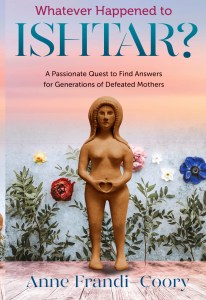
Whatever Happened to Ishtar_cover 2020

Updated 4th edition paperback  plus Kindle ebook 

Now available here on AMAZON BOOKS

***********************************

Whatever happened To Ishtar? 4th Edition Updated Rear Cover:

Anne’s story is one of lost generations…

What is most fascinating about ‘Whatever Happened To Ishtar?’ are the ancestral genealogies of the author’s Lebanese father and her Italian mother. This does assist readers to understand what hardships 19th century immigrants to the United Kingdom and New Zealand endured. With no access to birth control, women faced multiple pregnancies or secretly resorted to self-induced abortions.

The personal stories Anne has researched for this book go some way to explain why her parents were compelled to make the life choices they did. This memoir will stay in your memory as it covers universal issues of female sexuality, women’s roles and limited options, mental illness, and societal harsh judgments that have defeated mothers for generations.

Historical personal stories within the pages of this book explore the emotional pain felt by abandoned, abused children, along with the guilt and helplessness felt by mothers struggling within hostile environments with little or no support. 
The author’s formative years spent in Catholic institutions has given her a heartfelt and very personal insight into the harm Catholicism can inflict on traumatised children. She was abandoned by her mother when she was ten months old, and from then on, she lived a life of abuse and gross neglect in the Mercy Orphanage For The Poor, and at the hands of her paternal extended Coory family in Dunedin, New Zealand.
In the Coory family’s ethnocentric mindset, Anne’s greatest shortcoming was her demonised Italian mother.
***
‘Whatever Happened To Ishtar?’ by Anne Frandi-Coory is a well-written and haunting memoir of a woman who finds herself by exploring her family’s heritage that contributed to her growing up without the love and nurture of a mother she most desperately wanted. What first attracted me to this book was the title; Ishtar was the Ancient Sumerian Mother Goddess who celebrated love, fertility, and sexuality. This title haunted me as I read the memoir because Anne’s mother, like many women of her generation and previous generations, was harshly 
judged for those same attributes. – Linnea Tanner USA.  HERE on Amazon

See *****15 book reviews below….
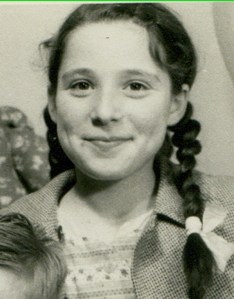
anne-1

Anne Frandi-Coory – 10 years old

This story about an abandoned girl will  lead you to  stories about generations of defeated mothers …
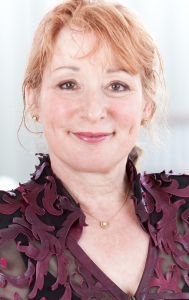
Anne blog

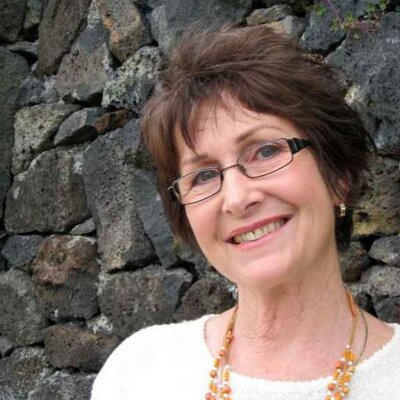
 Anne Frandi-Coory – 2010

><><><><><><><><><><><><><><><><><><><><

 WHATEVER HAPPENED TO ISHTAR?; A Passionate Quest To Find Answers For Generations of Defeated Mothers…

ishtar-front-cover

1st Edition Cover

***********************

Anne Frandi-Coory is interviewed by Chris Morris of the Otago Daily Times November 2018 for project ‘Marked By The Cross’ – Part One and Two Here: 

***********************

************************

Lebanese Settlers Reunion Dunedin, NZ 2011

Photos: Catholic Churches, Schools & Orphanages
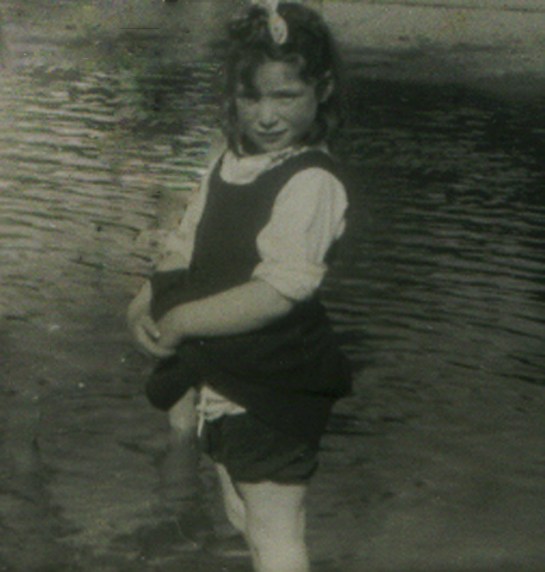
Anne in convent clothes

Anne in Mercy Orphanage clothes aged about eight years old

*****
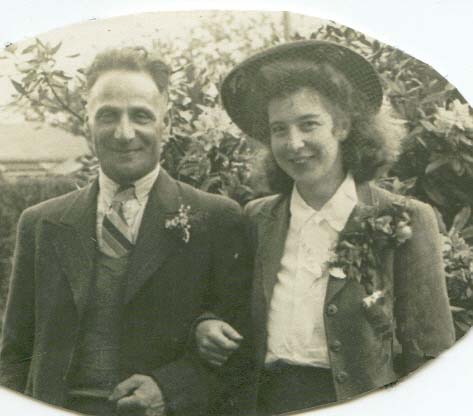
Copy of Doreen &amp; Joseph's wedding day

Joseph Coory and Doreen Frandi at their marriage ceremony

*****

 Whatever Happened to Ishtar? is made up of two books:

  • In Book I, Anne Frandi-Coory traces her father Joseph Coory’s Lebanese family history back through the mists of time to various places in the Middle East, including Iraq and Damascus, then to Bcharre, from  where her paternal grandparents Eva and Jacob Fahkrey (Coory) emigrate to Melbourne in 1897.  Khalil Gibran, Lebanon’s most famous poet,  came from the same village as Jacob and was related to him through marriage. The couple eventually travel to Dunedin, New Zealand and subsequently had twelve children. Family members live on in the same house at 67 Carroll Street for a hundred years.  In many ways it becomes a house of horrors for Anne’s mother Doreen Frandi and her children.

……….
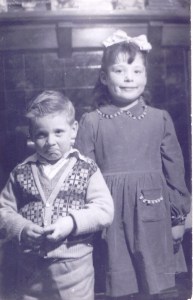
Anne & Tony

Doreen Frandi’s two children Anthony and Anne during their years in Catholic institutions

******************************
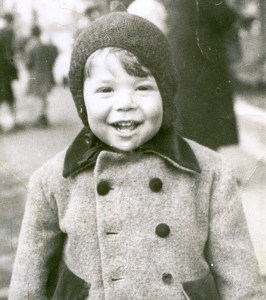
Kevin blog 1

Kevin Coory, son of Phillip Coory and Doreen Frandi, adopted by Joseph Coory after his marriage to Doreen.

******************************

Lebanese Family Tree here

………

In Book II, Anne Frandi-Coory traces her mother Doreen Frandi’s Italian roots back decades to such places as southern Italy, Sicily, Pistoia, Lucca, Pisa, Florence,  and northern Italy’s border with Switzerland.   Anne’s personal story begins when her mother, a former nun, falls pregnant to a Lebanese soldier, Phillip Coory, at the close of WWll.  Phillip, already married with a small son, abandons Doreen, who then decides to follow him to Dunedin, New Zealand. Phillip’s older brother Joseph marries Doreen against the extended Coory family’s wishes, and adopts Phillip’s second son. Anne’s subsequent birth sets off a series of consequences still reverberating through several generations. Anne also documents her mother’s tragic descent into  severe bipolar disorder when her marriage to Joseph disintegrates following Anne’s birth.

………

Italian Family Tree here

><><><><><><><><><><><><><><><>><><

  • 21 Black and white photos in the book
  • Extensive Lebanese and Italian family trees
  • Some of Anne Frandi-Coory’s favourite poems are woven into chapters; each poem relevant and poignant

Song Of Ishtar

><><><><><

Most of all, this book proves two things: Our lives can be pre-ordained by the tragedies of our ancestors’ lives, and a child’s spirit can survive the cruelest of beginnings, to take on the world

*********************FIFTEEN BOOK REVIEWS***********************

5 star ***** AMAZON BOOK REVIEW by Deianira 11 January 2015

When I started reading  Whatever Happened To Ishtar?, I expected to finish it quite quick but in truth, it took time to digest the words and their significance. It is a journey, both biographical and autobiographical in approach. The author seeks to find her place not only in society but who she is. This is an extraordinary search which uncovers the history of her maternal and paternal lineage.

What is revealed is both heart-rending and powerful, a personal narrative. Ms. Frandi-Coory’s pursuit as to why her mother abandoned her while a baby is a difficult journey of self-discovery. How could a mother leave her children is the driving question behind the author’s plight. That, and trying to understand who she is and to identify with the family nexus and her place within it.

Her father, ill equipped mentally and economically to rear his daughter and son, placed them in an orphanage run by catholic nuns. It was not a pleasant time for either and the author gives vivid descriptions of her time incarcerated. Her father’s family weren’t the most pleasant people, abusive both verbally and physically. Why? Her mother was considered a harlot and mentally unstable, therefore she was of the same ilk. The cultural mix of Italian and Lebanese blood, the author is driven to learn more about both sides of the family and why they behaved in such a contrary manner.

I admire Ms. Frandi-Coory for writing this book. She revealed secrets most families would prefer to remain hidden to detriment of those who were and are victims. This is a brave expository, which shows the cycles of abuse can be stopped with determination and strength of character.

**************************************************

4.5 Stars ***** AMAZON BOOK REVIEW by Gerald Gentz USA 30 December 2014

Gerald Gentz

Gerald Gentz

Whatever Happened To Ishtar? is more than a book and more than a story. It is the telling of a remarkable journey of discovery of one person’s difficult life. Anne Frandi-Coory spent much of her life trying to find a place and the love of a family. Book ended between a caring but weak father and mentally ill mother unable to care for her financially or emotionally, Anne and her brother, Kevin, suffered childhoods that no child deserves to experience. In the end, even the scars would not prevent them from making stable and successful lives.

Anne’s long research into both the paternal and maternal sides of her family is remarkable for it’s depth and acceptance. In doing so, she exposed her demons and the dysfunctions of her maternal and paternal families. The result is a culmination of her difficult journey to understand herself. Her greatest victory is her coming to understand the love of her mother and the realization of her love for her mother. Anne’s was a journey of discovery and healing.

This can be a difficult book to read at times because of the emotions it elicits. It was particularly emotional for me because of my realization that Anne is actually my cousin that I was not aware I had, her mother being my mother’s older sister. Anne’s book gave me a deeper awareness of my maternal family, and thus my mother, than I had before. So Anne Frandi-Coory’s journey of discovery was also mine in 373 pages.

><><><><>

“An amazing journey – challenging, painful, and ultimately unforgettable”  

– Tanith Jane McNabb, Owner of Tan’s Bookshop Marlborough NZ, 27 October 2014 on  

><><><>><><

Goodreads 5 Star ***** Book Review by Susan Tarr  – 14 October 2014

https://www.goodreads.com/book/show/11168865-whatever-happened-to-ishtar 

Author, Editor and Proofreader

**********
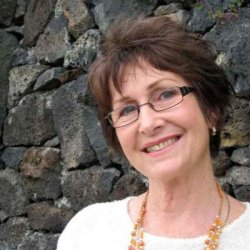
Susan Tarr

Susan Tarr

“WHATEVER HAPPENED TO ISHTAR? By Anne Frandi-Coory is a remarkable portrayal of New Zealand’s earlier Lebanese and Italian Catholic families. Although I was raised in the various vicinities this book covers, I had no idea there were established Lebanese families in New Zealand. And, for me, the whole Catholic religion was shrouded in mystique, so I had very little understanding of what was involved in being a part of the Catholic faith.

Set in New Zealand, the spartan buildings of the Catholic St Vincent’s orphanage mirrored in some part those of Seacliff Mental Asylum (Otago, NZ) in both outlook and care of those in their charge. Both would seem to have lacked a close affection for those who needed it most: the vulnerable and unloved.

This work is an amazing testimony for all mothers, a testimony we can probably all relate to. How many times do we feel inadequate, or feel we could have done better? We should never have such constraints placed on us as a mother to feel either of these. Whatever a mother is capable of at that time, for her child, is sufficient for that time.

As Frandi-Coory bears out, it is always possible to break mindsets, or break the mould, as it is said. I.e. the sins of the father… All it takes is an invincible will, which clearly she had and has.

Frandi-Coory recounts the histories of both her Lebanese and Italian families. She explains how the various mindsets occurred and how they were passed down through the generations.

I found I kept referring to the photographs as I formed opinions on the various players in this tapestry of life.

What is astonishing here, is that Anne Frandi-Coory and I never made a connection until after our respective books were published, in separate countries. It was through reading each others work that we realised our lives were very closely linked. In fact we may well have known each other through a mutual friend (Italian) during our college years in Dunedin, NZ. That is why I can vouch for the events, scenery, time frames and cultures in this amazing work.

It’s absolutely raw in its honesty.

Very well written, it’s a compelling read, from start to finish.

Kudos to Anne Frandi-Coory.” – Susan Tarr HERE on Amazon

************************************************

AMAZON BOOK REVIEW  16 August 2014:

Whatever Happened To Ishtar? is a raw and powerful memoir/family history by author Anne Frandi-Coory.  She spent 15 years travelling, researching her family tree, interviewing extended family members, haunting libraries and museums.  Some of what Anne discovers is devastating, but mostly she is proud of the cultures and heritage of her ancestors.

Anne believes that the Catholic Church’s Dogma with its divine elevation of the ‘Virgin Mary Mother of God’, changed the image and value of the female across the world. Gone forever were the powerful, pagan goddesses. Instead we humans were left with the Roman Catholic black and white dichotomy of whore/virgin. Anne Frandi-Coory was born into a Lebanese Maronite migrant family in Dunedin, New Zealand. Prior to Anne’s birth, her Lebanese father, Joseph,  married Anne’s Italian mother who’d already given birth to a son whose father was Joseph’s younger brother, Phillip. Unfortunately, Phillip was already married with another son! From the time of her birth, Anne is caught up in a vortex of hatred, neglect, physical and sexual abuse. At only ten months old, she is separated from her parents when she is placed in a Catholic orphanage for the poor run by the Sisters Of Mercy.

Anne’s research into her mother’s, grandmothers’ and great-grandmothers’ lives reveal their extreme hardships largely brought about by giving birth to too many children, xenophobia, and abusive husbands.

><><><

Book Review by Roseann Cameron;

Christchurch, New Zealand. 25 November 2013

Roseann Cameron

Whatever Happened to Ishtar? by Anne Frandi-Coory  is a necessary read for any mother in order to help make an adjustment to your mindset in this information age filled with books on how to parent better.

Anne tells, in an honest and direct way, the reality of her childhood where her mother was largely absent; suffering neglect and abuse in the hands of the Catholic Church and her extended family.  Despite this absence by her mother, the rare moments Anne shared with her still gave her something enormous.

It is a balanced account such as she does acknowledge the education the catholic church introduced her to.

Why Anne’s story is one of redemption and healing is that, despite what she reveals of her childhood and subsequent adult quest to reach a place of understanding, Anne has in her, a life blood and intelligence that is vibrant and strong.  Anne knows how to live in the moment and embrace love and laughter to its full.

Anne is giving back to her children the opposite of what she was given which is a massive testament to her strength and sheer force of character.  So if you ever feel you are not giving enough to your child take a read of what Anne didn’t get from her biological parents.  Be encouraged by Anne’s story that even the most meagre rations her parents were able to give did make a difference to her.  How much more so, an available parent with intent to actively love her children, despite the inevitable mistakes you make along the way?  Such a mother  Anne has turned out to be, despite all odds.

><><><><

Note from my nephew, Dean Marshel-Courté 1 May 2013…….

dean

Dean Marshel-Courté

Hi Anne, l’m sitting at a cafe in Sofia, Bulgaria, and thought l’d let you know that l just finished re reading properly, Whatever Happened To Ishtar?  last weekend and like l’ve already mentioned to you, your work is outstanding. l have a complete picture now of yours and Tony’s and my dad’s lives in that difficult time. l just can’t believe how terrible your situation was and the way they treated you all. Just for your info, my adopted mother lived in Dunedin too and was a dress maker for your aunties; she remembers them very well.

 Luv. Deano

><><><><><

MOMOBOOKBLOG REVIEW   of  Whatever Happened To Ishtar? 22 June 2011…  How much can a person endure, especially a little child. This heart-rendering account of Anne-Frandi Coory’s life is a proof that we can live through a lot of hardship and still turn out to be passionate and affectionate people, in this case a wonderful woman and mother of four children even though she was an abandoned and abused child herself.

The author goes back to the history of her Lebanese-Italian family and all the troubles her ancestors went through before reaching New Zealand… MORE

><><><><><

Rita Roberts

Rita Roberts,retired archeologist, Crete, and author of  ‘Toffee Apples & Togas’  –

Whatever Happened to Ishtar?  by  Anne Frandi-Coory  is a book I could not put down. It tells of Anne’s terrifying upbringing as a child and later on in life the long quest to trace her family. Written with such passion that once read one thinks of the old saying, ‘There for the grace of god go I’. This book I would recommend to all families,especially mothers, in fact, to everyone. – Rita Roberts 2011

><><><><><><

I am loving  Whatever Happened To Ishtar? – I started reading it straight away… Isn’t it amazing that when you know someone, you don’t know what is really going on in their life? I always saw you as a fun loving mother of 4 busy kids, with the wonderful Paul by your side. I loved staying with you all. I loved your home and its romantic decoration, I loved your sense of warmth and your zest for life. When you went off to Uni, you inspired me to be a life long learner – its never too late! You are amazing and have had the most incredible journey to become and even more amazing grandmother and mature woman. I love you and will always hold you in such high esteem.- 2011

Rachael Dunphy Van Asch, Marlborough on her facebook page

><><><><><><

MOMO – International Book Group Online 2011– Location: The Netherlands:

Whatever happened to Ishtar? by Anne Frandi-Coory, the biography of a woman from New Zealand with Lebanese-Italian parents. This book was recommended to me by a person in Australia. Not for the faint-hearted but very good.
><><><><><><
__________________
><
dean

Dean Marshel-Courté

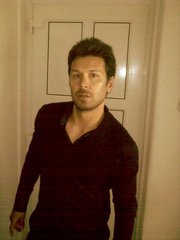
        Dean Marshel-Courté, Hungary  facebook comment:

Reading my Aunty’s [Anne Frandi-Coory] book; Whatever Happened to Ishtar? Its fab and very informative regarding the family history. Dad [Kevin Coory], its worth a read buddy. (-:

><><

_______________________________________

><
Marion Groves’ Tweets:

30/08/2011 > Night girls, dying to get back to my book. Am reading Whatever Happened to Ishtar? by Anne Frandi-Coory @afcoory … Highly recommend! @lunarchic @externallylaws

6/09/2011 > @PhilosophyQuotz @MarionGroves Your descendants shall gather your fruits. Virgil (ping @afcoory ) > Maybe I should have used this title for ‘Whatever Happened To Ishtar?’

6/09/2011 >No, your title is provocative & thought-provoking, as is your book. I was sorry when I had finished it. @afcoory

><

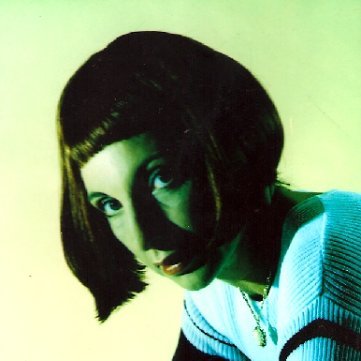
*****Book Review by Wendy O’Hanlon –   Click – A Cultural Connection [September 2010]: Whatever Happened To Ishtar?
Wendy O'Hanlon

Wendy O’Hanlon

ISHTAR, according to Phoenician legend, is the great mother goddess. But author Anne Frandi-Coory grew up without close contact with her mother. In this painful re-telling of her family history, the author explores how generations of her family have lived thwarted, sad and unfulfilled lives because of a cruel twist of fate and even crueller family behaviours.

The author grew up in an orphanage, ostracised by her Lebanese father’s family. She rarely saw her Italian mother who spent many years in asylums and endured horrific shock treatments. She has tried to trace her siblings and re-establish relationships – with and without success, with heart-rending surprises and tragedies.

The author is now living a fulfilled life but needed to face these demons of her family history to try to make sense of life and purpose. There is true courage in her words. Her childhood was very lonely. Hers is such a searing, heart-tearing story.

The author painstakingly documents the history of her family back through the generations of Italian and Lebanese faces and stories. What is ironic is that she uncovers the rich cultural history of these families and the fact that such wonderful traits and traditions were all but lost to modern generations as her family tree fractures again and again.

For the reader, there is much to learn about the history of these great cultures as Frandi-Coory meticulously delves into ancient stories and legends. There is also much to learn about the strength of the human spirit – that a life with purpose can be lived despite a crippling beginning.

–                                               ………………………….

JOHN MORROW’S PICK OF THE WEEK September 2010

This is an autobiography cum family history from a strong woman who has overcome the odds to come out a successful and wonderfully strong person.

There are not many happy childhood memories when Anne recalls her earlier life in Dunedin.   Anne spent her formative years at the Orphanage for the Poor.  There she was indoctrinated into the world of the Roman Catholic religion. Prayers, bible study and chores were not the practical things that would prepare a damaged young girl for life out in the wide world.

Anne’s story is a revelation of cruelty and mind games which set her on a path of self-doubt.  It is little wonder that she has been on a life journey that has been harrowing, but ultimately, triumphant.

Anne’s story is painful and, at times, difficult to read.  However, she has my absolute admiration for rising above the adversity of her childhood to become the confident woman she is today.

Thanks Anne, for sharing your story.

**********

Click Here: for more of the latest reviews for  ‘Whatever Happened To Ishtar?‘ 

**********

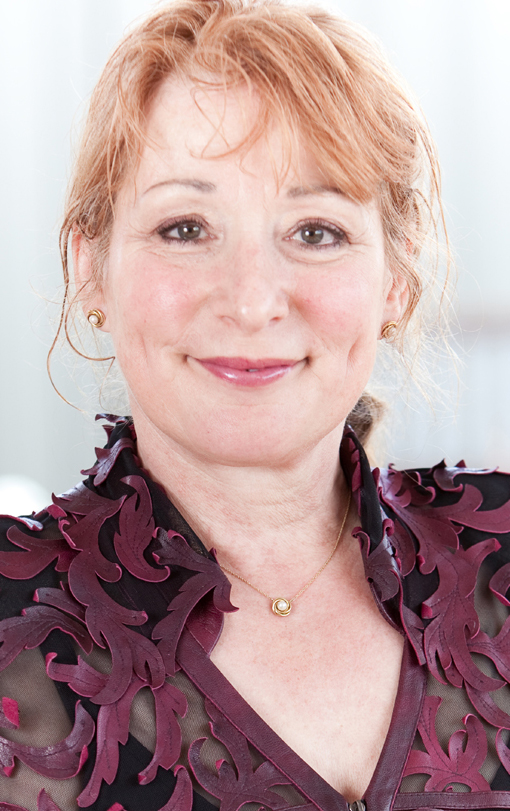
Anne Frandi-Coory… Author Photograph: Robb Duncan 2010

BRIEF BIO OF AUTHOR:

Growing up in an orphanage, raised by strict Catholic nuns, abused by her father’s Lebanese family in Dunedin. This beginning did not prepare Anne Frandi-Coory well for the realities of life.  But she overcame the continual threat of hellfire and brimstone, escaping into marriage and children as a teenager, while trying to find out who she was.  Then followed divorce, and diverse short careers;  interior decorator, estate agent, joint owner of a café/caterer. Always looking for new challenges while becoming bored with the old, Anne then went to university and gained a degree in Sociology after which she worked for a short time as a child case worker in the NZ Dept of Social Welfare.  Not content with that, she travelled the world with her partner and daughter, and then wrote her first book ‘Whatever Happened To Ishtar? – A Passionate Quest To Find Answers For Generations Of Defeated Mothers’.   The book was the result of fifteen years of research, interviews, and note-taking, and is selling worldwide.

******************************************

*Please note: If you have trouble purchasing a 4th edition paperback copy, contact me here on my blog by leaving a comment.*

***********************************