

Introduction to Anne Frandi-Coory
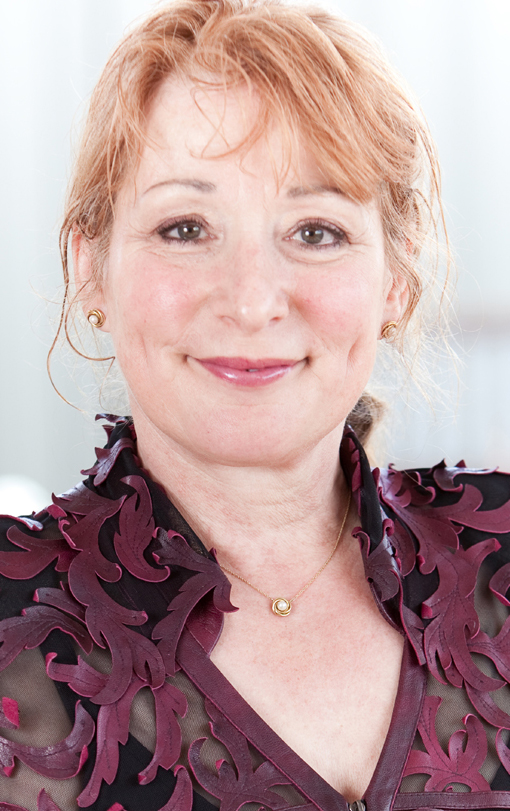
It was my pleasure to interview Anne Frandi-Coory. She is the Australian author of the moving memoir: WHATEVER HAPPENED TO ISHTAR?

The memoir is about Anne’s quest for coming to terms with her traumatic childhood when she lived in a Catholic orphanage and later in her father’s family household. This is also a fascinating journey of Anne’s Italian and Lebanese heritages which provide insight into generations of defeated mothers.
I was first intrigued with the title because Ishtar is a goddess revered for many qualities in ancient civilizations. This book touched my heart as it addressed universal issues that impact women today.
Interview with Anne Frandi-Coory
7 May 2016
What was the defining moment that inspired you to write your memoir?
Anne:
There was no defining moment as such; more a series of events over a long period of time. The continued feedback from my extended Lebanese family that I was ‘backward’ – a label I overheard often throughout my childhood had always left me feeling devastated and depressed. I desperately wanted people to know that I was intelligent, that childhood emotional and psychological trauma didn’t equate to ‘backward’. I tried many times, as a young mother, to communicate with my Lebanese family, but I could barely utter a word, while they continually talked down to me.
On another level, I found it difficult to talk about my childhood, and as a result my children didn’t know anything about my life, or that of my parents. I wanted them to be proud of me. I felt I didn’t have a past, a family history, and I wanted them to have one.
What was the inspiration for the title of your unique book title, WHATEVER HAPPENED TO ISHTAR?
Anne:
I was brought up as a strict Catholic as were most of my Lebanese and Italian relatives and ancestors. I discovered during my research that the women in my family tree suffered terribly at the hands of their men and the Church…too many children, too much abuse and the constant praying that in reality achieved nothing. My extensive reading about ancient goddesses like Ishtar informed me that women were once worshipped for their fertility, but weren’t solely defined by it. Ishtar occupied the highest position in the Babylonian pantheon; she was the favourite goddess of the Babylonians. She was the goddess of fertility, justice, healing and war. However, once the three patriarchal religions of Islam, Judaism and Christianity rampaged across humanity that changed forever. Christian women were then expected to emulate Immaculate Mary, mother of God, an impossible task. In the Catholic system, females had two vocational choices; become a mother (married of course) or a nun! Disastrously, my mother became both.

Sculpting Ishtar for the book cover (Artist: Bruce McKenzie)
Was there any aspect of your Catholic upbringing that still deeply impacts you today?
Anne:
Yes. Fear and hypocrisy. I was so terrorised by stories of the devil and the tortures of hell all through my childhood while incarcerated in Catholic institutions, that most nights I experienced the most horrific nightmares that left me with a racing heart that seemed to shake my whole body. I sometimes imagined I could see the devil watching me in a corner of the room, so my reaction was to hide under my blankets praying that God would save me. The adrenaline rush prevented me from sleeping. I am still afraid of the dark, and although I no longer believe in the devil or hell, I suffer severe panic attacks if my fragile feelings of security and well-being are undermined in any way. Deep down, I have this feeling that at any time, everything I have will be taken from me, including my family.
The belief that anyone who was a good practicing Catholic was automatically a virtual saint, came crashing down around me when I discovered, as a teenager, that they were human like everyone else and just as capable of committing ‘sins’! I remember being utterly devastated but from that moment, slowly over time, my belief in God fizzled out and died. I am now an atheist.
What would you consider some of your most enlightening moments in your research that helped you come to terms with your childhood?
Anne:
I was explaining to a psychologist that I believed I had paid for my mother’s sins. He was silent for a few moments, and then said: “That’s a very interesting choice of words”. We talked about why I believed my mother had sinned. After a couple more sessions, he said to me “Do you think it possible that your Catholic upbringing may have done more harm than the abuse you suffered at the hands of your family?”
All through my research, I kept thinking about the psychologist’s words, and as a result, I wrote a very different book.
I had come to realise that my mother wasn’t a sinner, and that the story of my childhood was merely a tiny inset in a very large picture. That’s why, although I began writing my memoir, I ended up writing an extensive family history spanning generations and countries. That in general, life favoured males over females. With the change in perspective also came acceptance of my traumatic childhood.
Was there a woman in your ancestral history who most sparked your interest and why?
Anne:
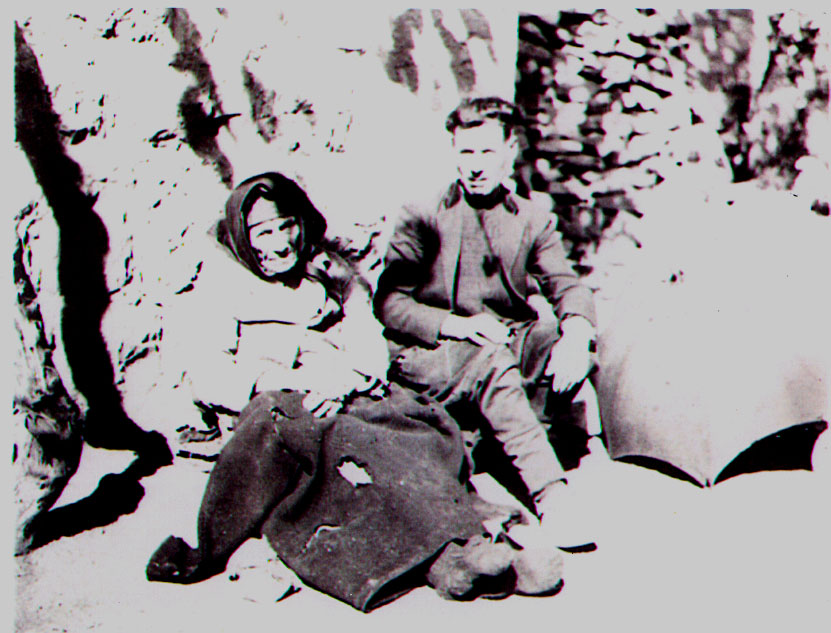
Probably Italia Frandi, my great aunt. She died long before I was born, but I was given a recorded interview with her daughter, in which she talks about Italia’s life and achievements. Italia suffered many tragedies in her life but she never let that prevent her from becoming an astute business woman who wasn’t afraid to stand up to the Catholic Church or a legal system that favoured men.
Based on your experience, what advice would you give young women today?
Anne:
Three pieces of advice:
Feel the fear, and do it anyway. I know that’s a well-worn cliché, but I know it’s the best way to combat fear. I would still be hiding behind locked doors if I hadn’t ignored my fears and taken the plunge into unknown waters. It made me more courageous each time I achieved a goal.
If people make you feel uncomfortable or unhappy, move on. Listen to what your senses are telling you. Life is too short and there is so much you can achieve in your lifetime if you travel without negativity weighing you down. I believe this philosophy has kept me physically safe and mentally healthy.
Always strive to be financially independent…It will empower you to be in control of your life.
Do you plan to write any further books based on the research you’ve done on your Lebanese and Italian heritages?
No, but I have written a series of poems, short stories in themselves, about aspects of my childhood, cultural and family history. I have painted an image for each poem, or attached a photograph. I have also written a few ancestral short stories. I am planning to publish these in a book sometime within the next year, once I complete the series.
Biography Anne Frandi-Coory
Anne Frandi-Coory was abandoned by her Italian mother when she was ten months old and placed in the care of the Catholic Sisters of Mercy in Dunedin, by her Lebanese father. All through her childhood, Anne’s Lebanese extended family, and her strict Catholic upbringing, influenced her to believe that her life of abuse and gross neglect was because she was “paying for my mother’s sins”. Anne married very young and had four children. After they had left home, Anne decided to research her family history to try and understand the reasons why there were so many defeated mothers in her family tree. Over a period of fifteen years, she traveled across the globe, sourced original documents and interviewed many family members, both Lebanese and Italian. Most of the women were devout Catholics, forced to marry brutal and uneducated men and subsequently gave birth to too many children. Seemingly, the women’s sole reason for living was to breed, pray to God for help, attend Mass regularly, and hope that the after- life would reward them for their ‘goodness’. Catholic girls had one other choice for a vocation and that was to become a nun. This had not always been females’ lot in life. Ishtar, the pagan goddess of fertility, love and war, empowered females to emulate her prowess for thousands of years. But patriarchal Christianity usurped Ishtar with its Virgin Mary, and females were stigmatised as whore or venerated as virgin/mother.
****UPDATE 2020:

****4th edition of Whatever Happened To Ishtar HERE: https://frandi.wordpress.com/2010/04/15/publicaton-of-whatever-happened-to-ishtar/
***************************************************************************
Anne Frandi-Coory now lives in Melbourne, Australia with her partner. She works from her home studio as a painter, poet and short story writer. She intends to publish a book of her works.

-Linnea Tanner Writer, Blogger, Author USA
More about Linnea Tanner HERE: https://www.amazon.com/Linnea-Tanner/e/B01N6YEM04%3Fref=dbs_a_mng_rwt_scns_share
*****************************************************

 anne frandi-coory