
><
><
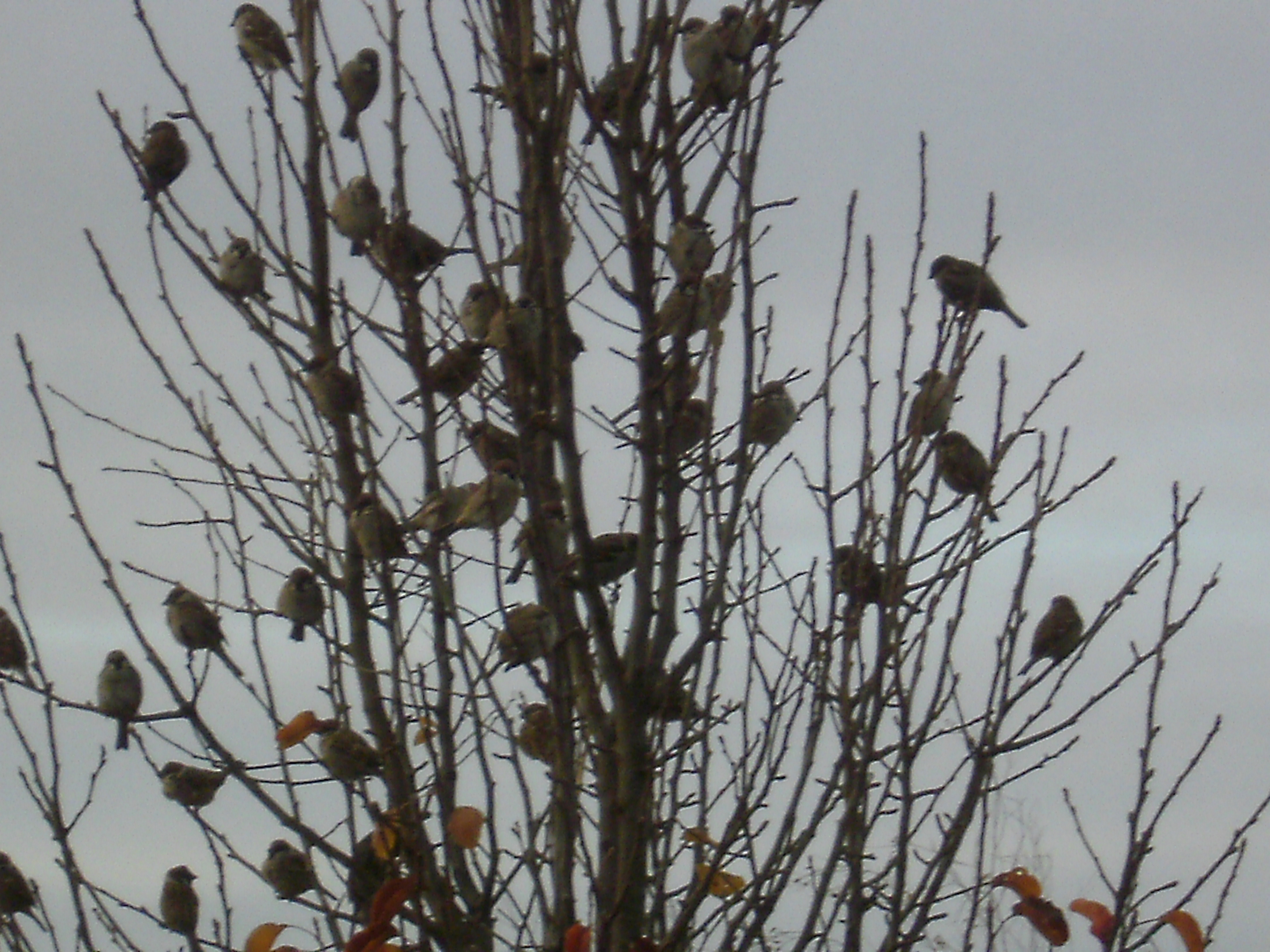
 As much as I prefer spring and summer, winter does have its compensations. Our garden is visible through large windows around the house, including our office, so the bird life entertains us all day. I feed the small birds every morning and the magpies, Maggie and Mac, come around three 0r four times a day and call out to me for my home baked grain bread. They must be nesting at the moment because they are taking mouthfuls of bread away. They are easy to tell apart; males are bigger and have white backs while females have grey speckled backs. They sit on Cleo the cat’s log which does not please her one bit, but they tolerate each other. The trees are full of sparrows today, a couple of bush warblers are singing their morning song on the roof and every so often a willy wagtail flits around on the bird bath or the outside table. The pair of mudlarks who think they own the place, arrive with regular monotony to hover and strut around noisily telling all the other birds to bugger off. Not that they take any notice. Since we built this house three years ago, we have been visited daily by a pair of grey doves who are quite happy to feed with the sparrows and we love the sound of their soft lovey dovey cooing in what I assume is their mating season in warmer weather.
Most days Paul and I do a thirty minute walk around the wetlands across the park from our home, where ducks, swans, swamp hens, spur-winged plovers, and a resident cormorant seem to spend their days in serenity. The silence is broken only by bird chatter and frog sounds. That is until a flock of parrots, such as galahs, corellas or cockatoos, decides to fly over or land in the park; such a cacophony of screeching and squawking. Cheeky, chirpy willy wagtails (black & white fantails) hop and skip all around us on our walk.
><
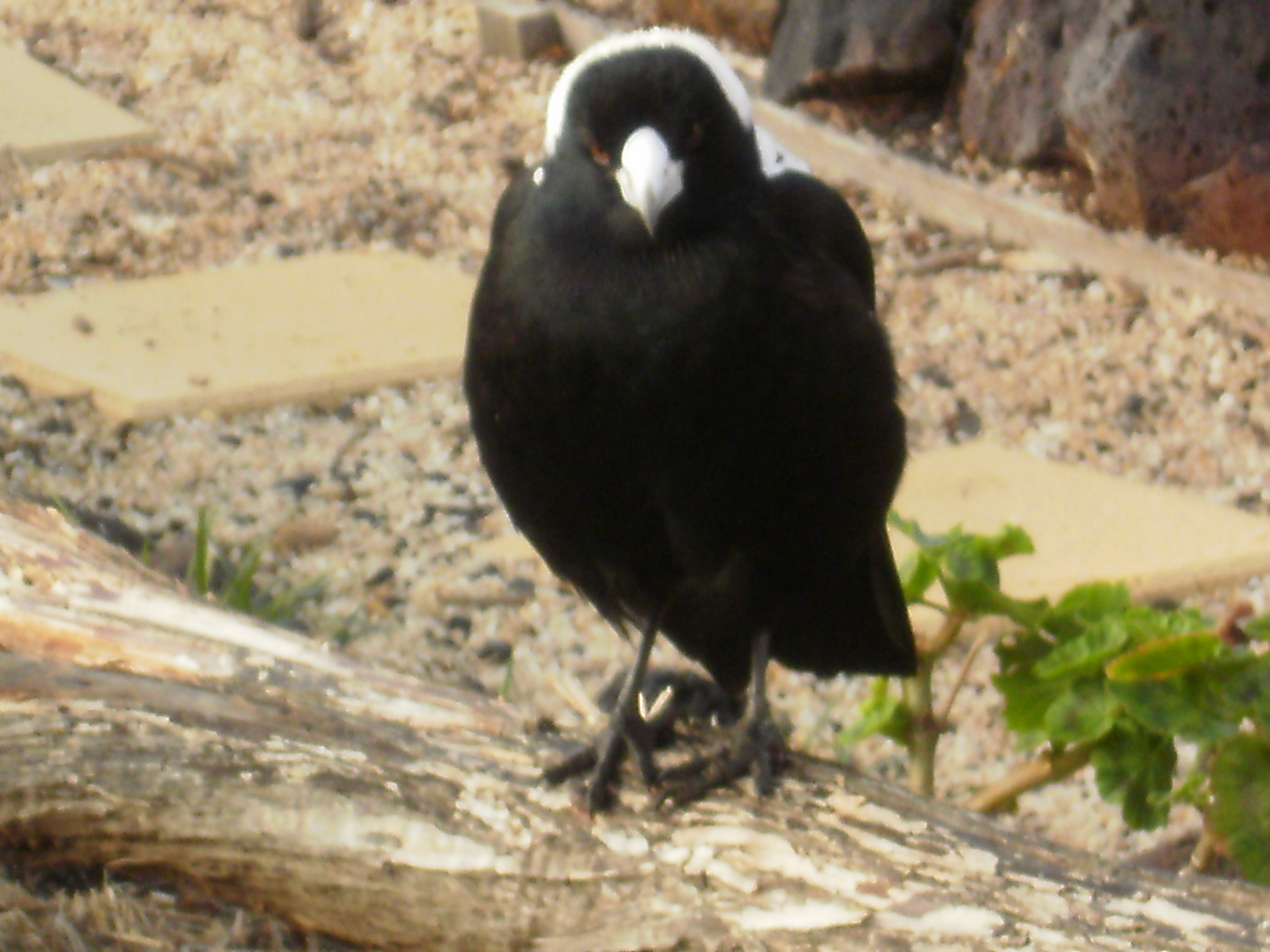
Mac sitting on Cleo’s log waiting for a chat & a morsel
><><

The table of the Fringilline mob in our garden
><><
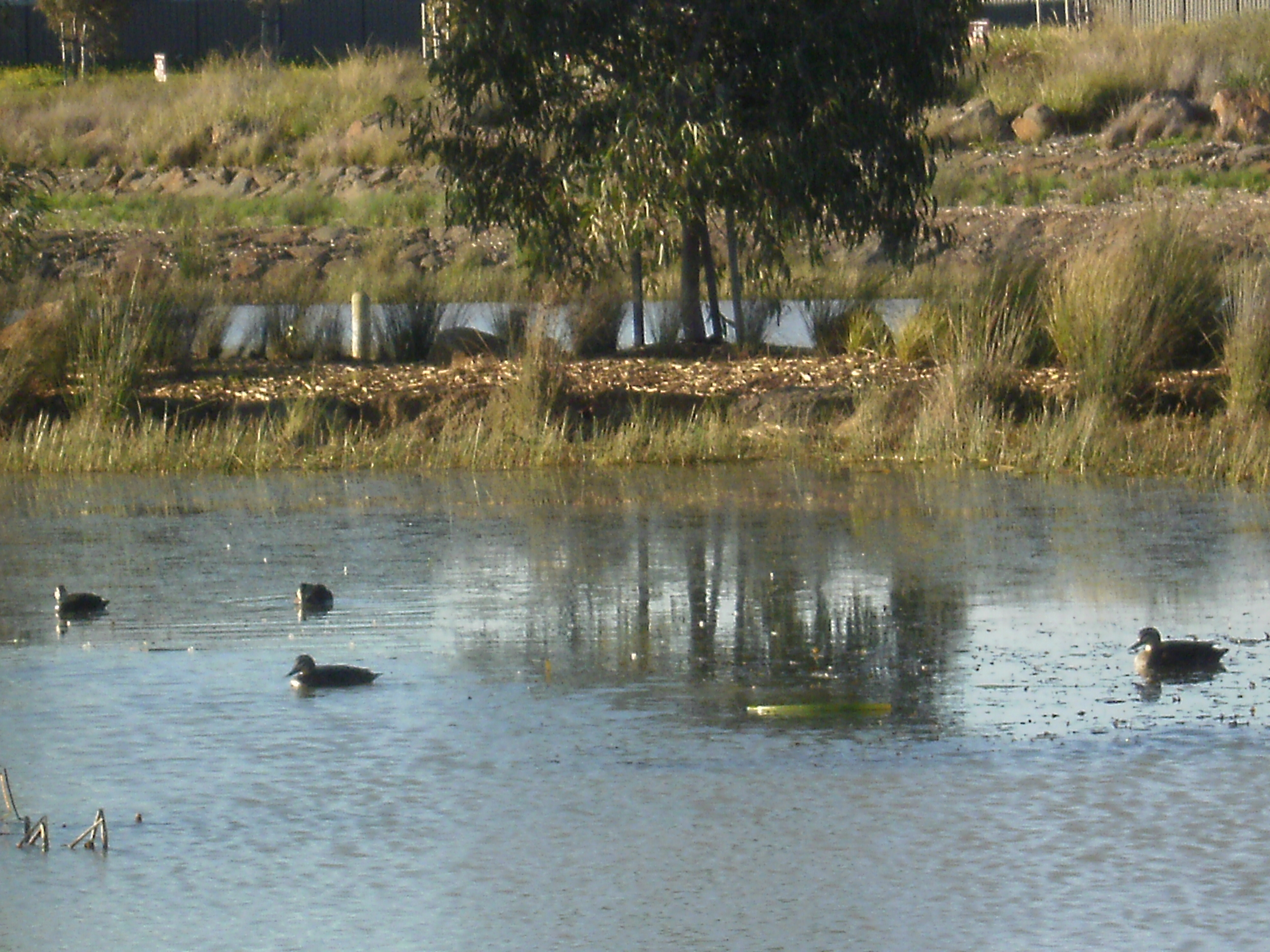
serene wetlands

Cormorant, resident in the wetlands, awaits its supper

Wetlands

 anne frandi-coory