Archive

Tag Archives: Whatever Happened to Ishtar?

Bcharré And Her King of Trees

Goodbye Bcharré  

*****

Poem and Painting  Goodbye Bcharré  

Copyright To Anne Frandi-Coory All Rights reserved 19 April 2016

Painting 500cm x 410cm  Acrylic on canvas

******************************

There we stood above Bcharré the land of our fathers

in the shadow of a magnificent tree of kings, scarred and riven

beyond which stretched the Qadesha Valley deep below

beckoning, engulfing all with its lonely mists of woe

***

Long have blood thirsty invaders stormed poor Lebanon

fortifications  of rocky cliffs and great King  Cedrus Libani

his powerful roots hidden in caves and rocky outcrops

once protected animal and peasant alike, for millennia

***

Phoenicians and Romans, to name warriors but a few

decimated Lebanon’s cedars for agile fighters’ garrisons

mighty, heavenly temples,  fleets of foreboding ships

their planks they withstood thousands of salty tides

***********************

**Read the rest of my poem in DRAGONS, DESERTS and DREAMS

{SEE BELOW}

Dedicated to my Lebanese grandparents

Jacob Habib El Khouri Eleishah Fahkrey and Eva Arida Fahkrey

**Read more about my poems and short stories …  

Here in DRAGONS, DESERTS and DREAMS  

*Available here at AMAZON  in Kindle e book or paperback 


Fay Eggeling

A Card – from Fay Eggeling

letter from Faye Eggeling

Okuru, Haast

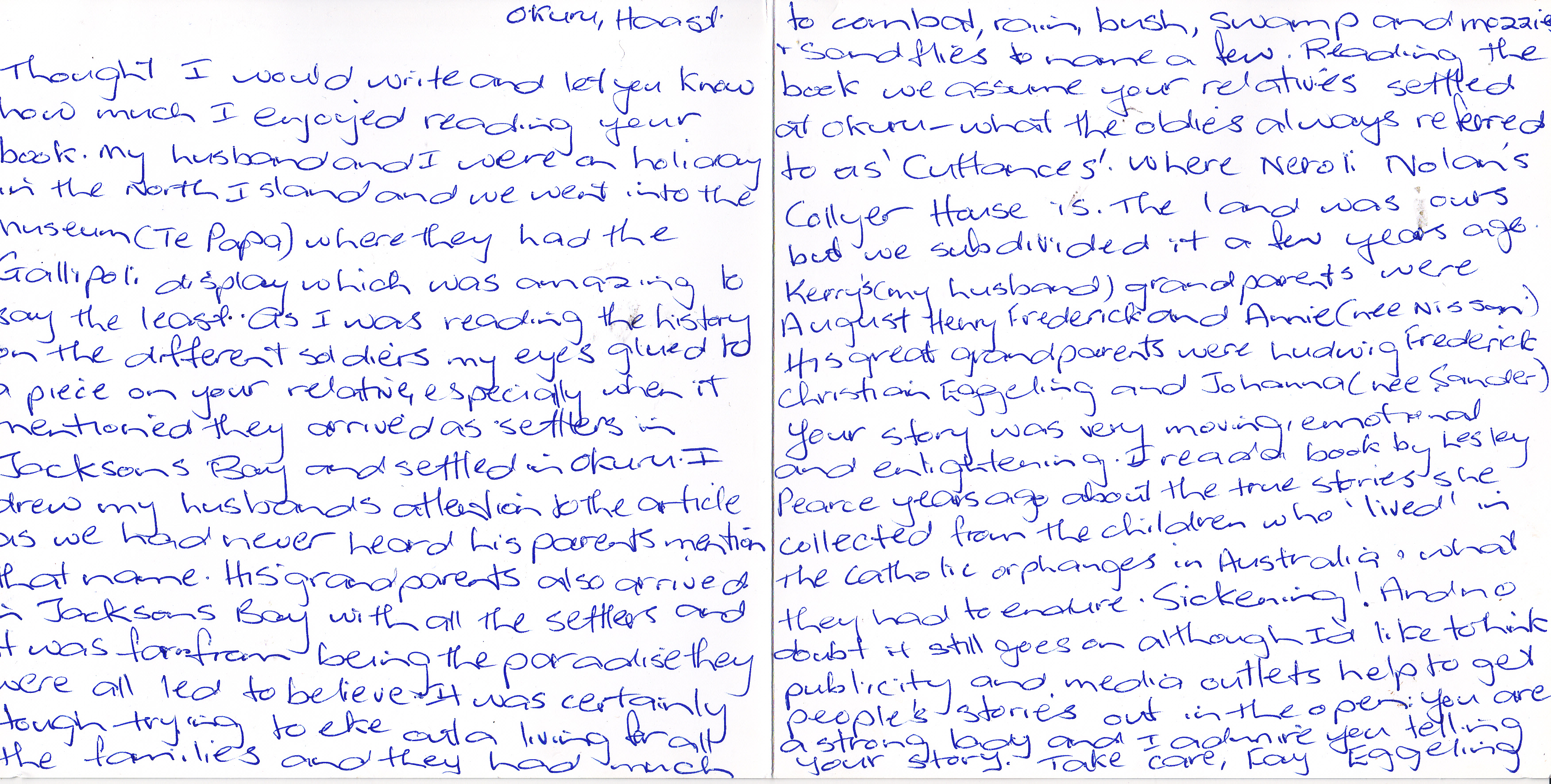
I thought I would write and let you know how much I enjoyed reading your book, Whatever Happened To Ishtar? – A Passionate Quest To Find Answers For Generations Of Defeated Mothers.

********************************

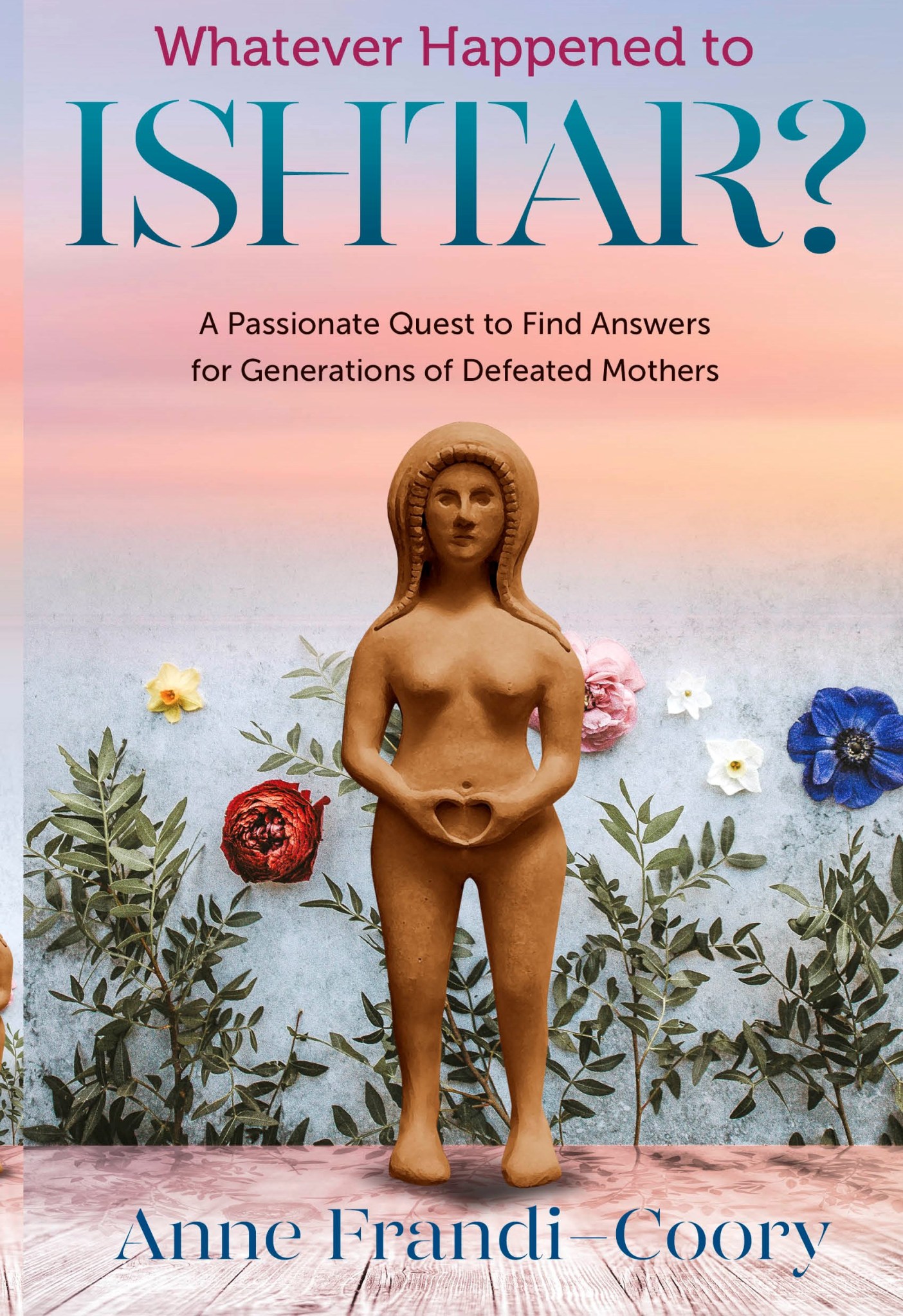
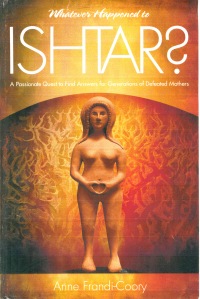
Whatever Happened to Ishtar_cover 2020

Updated 4th edition (2020) available in paperback and Kindle ebook from AMAZON 

and here from ABE BOOKS  

***********************************************

My husband and I were on holiday in the North Island and we went into the museum (Te Papa) where they had the Gallipoli display which was amazing to say the least. As I was reading the history of the different soldiers my eyes glued to a piece on your relative,   Ateo Frandi   especially when it mentioned they [Frandi family] arrived as settlers in Jackson Bay and settled in  Okuru. I drew my husband’s attention to the article as we had never heard his parents mention that name [Frandi]. His grandparents also arrived in Jackson Bay with all the settlers and it was far from being the paradise they were all led to believe. It was certainly tough trying to eke out a living for all the families and they had much to combat; rain, bush, swamp, mozzies, and sandflies to name a few.

Reading the book we assume your relatives settled at Okuru – what the oldies always referred to as ‘Cuttances’, where Neroli Nolan’s Collyer House is. The land was ours but we sub-divided it a few years ago.

Kerry’s, (my husband) grandparents were August Henry Frederick and Annie (nee Nisson). His great grandparents were Ludwig Frederick Christian Eggeling and Johanna (nee Sander).

Your story was very moving, emotional and enlightening. I read a book by Lesley Pearce years ago about the true stories she collected from the children who ‘lived’ in the Catholic orphanages in Australia and what they had to endure. Sickening! And no doubt it still goes on although I like to think publicity and media outlets help to get people’s stories out into the open. You are a strong lady and I admire you telling your story.

Take care

– Fay Eggeling – 16 November 2015

Read more about Anne Frandi-Coory

and her Italian family history here:

Anne blog

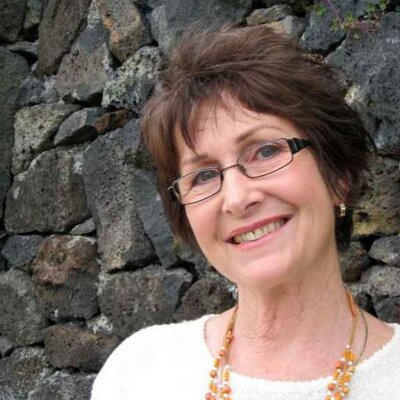
Author Anne Frandi-Coory


In 2010 I wrote a book ‘Whatever Happened to Ishtar?’ – A memoir and family history told in two books entitled  ‘Italian Connections’  ‘Lebanese Connections’ … My Catholic childhood filled with fear, abuse, and gross neglect.

“Give me a child for seven years and I will give you the [woman]”

Anne in convent clothes

Anne Frandi-Coory at 8 years of age – just removed from Mercy Orphanage for the Poor in Dunedin


ishtar-front-cover

The theme running through the book relates to my passionate quest to find answers for generations of defeated mothers on both sides of my family tree. It’s about the brutal men in their lives, the endless pregnancies, and the women’s strict adherence to CathoIicism. In the end, the patriarchal Catholic Church betrayed their trust. Would Ishtar the Babylonian goddess have been a better role model and protector of female rights than the Virgin Mary turned out to be?

I know that in my mother’s case, if she had sought help from professionals rather than endlessly praying to her imaginary god, her life would have been far different.

I now live in Melbourne with my partner, Paul.


ishtar-front-cover‘Whatever Happened to Ishtar?’ by Anne Frandi-Coory  is a necessary read for any mother in order to help make an adjustment to your mindset in this information age filled with books on how to parent better.

Anne tells, in an honest and direct way, the reality of her childhood where her mother was largely absent; suffering neglect and abuse in the hands of the Catholic Church and her extended [Lebanese] family.  Despite this absence by her [Italian] mother, the rare moments Anne shared with her still gave her something enormous.

It is a balanced account such as she does acknowledge the education the Catholic Church introduced her to.

Why Anne’s story is one of redemption and healing is that, despite what she reveals of her childhood and subsequent adult quest to reach a place of understanding, Anne has in her, a life blood and intelligence that is vibrant and strong.  Anne knows how to live in the moment and embrace love and laughter to its full.

Anne is giving back to her children the opposite of what she was given which is a massive testament to her strength and sheer force of character.  So if you ever feel you are not giving enough to your child take a read of what Anne didn’t get from her biological parents.  Be encouraged by Anne’s story that even the most meagre rations her parents were able to give did make a difference to her.  How much more so, an available parent with intent to actively love her children, despite the inevitable mistakes you make along the way?  Such a mother  Anne has turned out to be, despite all odds.

<><><><

roseann cameron

Roseann Cameron, Christchurch New Zealand 25 November 2013

***********************************************************

Read here more about Anne Frandi-Coory’s mother: https://frandi.wordpress.com/2012/04/01/letters-to-anne-frandi-coory/

Read the latest, 4th edition of ‘Whatever Happened To Ishtar?’ published in 2020 HERE:

https://frandi.wordpress.com/category/whatever-happened-to-ishtar-fifteen-reviews/

Our Italian Surnames

****************************

This page and its contents, including photographs is Copyright To Anne Frandi-Coory All Rights Reserved 13 July 2015

…..

I bought this book to help with my research into the origins of our Italian ancestors’ surnames.

Our Italian Surnames by Dr Joseph G. Fucilla was originally published in 1949 and is still widely regarded as the definitive book on Italian Surnames. Professor Fucilla, who earned a doctorate in Romance Languages (University of Chicago 1928),  has written hundreds of articles and numerous books on Italian, Spanish, and Portuguese linguistics. Onomatology,  the study of the origin and history of proper names and another facet of Dr Fucilla’s vast erudition, was the field out of which emerged Our Italian Surnames.

The information contained in this wonderful book is vast. Many names are derived from animals, occupations, geography, birds, botanica, music and the arts. For the purposes of this post, I am concentrating on the origins of the names Frandi and Greco (later Anglicised to Grego).

****

aristodemo-frandi

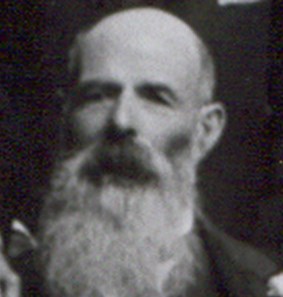
My maternal great grandfather Aristodemo Giovanni Frandi

********

The Evolution of Italian Surnames

Dr Fucilla writes: A surname or family name may be defined as an identification tag which has legal status and is transmitted by the male members of a family from generation to generation. It is a comparatively recent phenomenon.  It is in Italy perhaps more than any other nation that a person may be identified as a native of a definite section of the country or even of a particular province through his given name. 

Among the Hebrews, only one name used to be employed, but during the Greek and Roman dominations a second temporary name was adopted for individuals, such as Paul of Tarsus, Mary Magdalen (from Magdala). Christianity with its institution of a single baptismal name and the one-name system of the Germanic tribes who were soon to become the masters of Europe, eventually caused the collapse of the whole Roman name system. 

What causes names to be changed over time? Dr Fucilla posits that: These changes can be explained under six headings….

translations, dropping of final vowels, analogical changes, French influences, decompounded and other clipped forms, and phonetic re-spellings. By means of these it will be possible to explain the vast majority of those Italian surnames which we find in Anglicised form.

*********

Aristodemo Giovanni Frandi was born in Pistoia in Tuscany in 1833.  The original ‘Aristodemos’ is a Greco/Roman name. However, the only city in Italy I visited where there were people still living with the name Frandi was in Pisa, where two of Aristodemo’s children,  Ateo and Italia were born. The two men I traced worked for local government in Pisa.

The only historical name I could find that came even close to Frandi is Ferrandy or Ferrandi, which is very common in Italy, especially in the north. However, it does suggest Gallic origins and as was frequent in ancient times, Ferrandy/Ferrandi slowly became Frandi to fit in with other simplified Italian spellings which often end in ‘I’. When speaking to native Italians, they pronounce Frandi as Ferrrrrandi anyway, rolling their rrrs. Conversely, Ferrandi is a very common name in France!

Dr Fucilla studies add more weight to my view that the name Frandi/Ferrandy is a French derivative.  In his chapter headed Topographical Names, he writes: 

We may divide the natural and artificial topographical features that have given rise to Italian surnames …..   among them he lists several mineralogical and agrarian characteristics such as the prefix ferro which is the one we are interested in. This refers to iron (ore) generally but in the agrarian sense it refers specifically to the land and its minerals. We know that as a young man Aristodemo worked on the land as did most of his countrymen. When Aristodemo decided to emigrate with his family to New Zealand in 1875, the very real draw card was the allocation of 10 acres of free land on the West Coast. And later when the family settled in Wellington, their dream was to own a farm, which was eventually fulfilled.

In another chapter under the heading Geographical Names, which are frequently used in Italian surnames, Dr Fucilla  documents the French/Italian name La Fiandra which means ‘from Flanders’ which in parts of its history was ruled by the French. Italians with French connections added ‘La’ to their surnames. Aristodemo called his first born son, Francesco, a derivative of France.  It is possible that Frandi is a compound name of both La Fiandra and Ferrandy/Ferrandi. Dr Fucillo devotes a chapter to such compound names in which place names, nouns, occupations, religious references, and others, were compounded into abbreviated form.

In the mid 19th Century, when Aristodemo was in his 20s, all young men were conscripted into the regular army to protect territory in Northern Italy held at various times in more recent history by the Austrians, Germans, and the French. Most of the men were agricultural workers, and their loss was keenly felt by their families who needed them to tend the land.

Here are excerpts from my book ‘Whatever Happened To Ishtar?’ pages 286-287:

Aristodemo was conscripted into the regular army in 1859, 1865-1866 against the Austrians, at Ancona, a major port city at the base of the Apennines in the Marche region of the strategic East Coast of Italy which faced the Adriatic Sea. Then at Tirolo which is a tiny commune in the province of Bolzano-Bozen in the Italian region of Trentino-Alto-Adige in the far north of Italy, between Austria and Switzerland.

Aristodemo returned to Pisa to prepare for his marriage to Annunziata Gustina Fabbrucci in 1863. A year later the couple travelled north where Aristodemo was barracked with the regular army while Annunziata lived a few miles away in an Italian conclave.  It was during this conscription period that Annunziata gave birth to their first child Francesco, in 1866 at Lake Lugano.  Eventually, Aristodemo left the armed forces and worked for the fledgling Italian railways laying tracks, the best chance for work in an Italy in the throes of the industrial revolution and the confiscation of farmlands, which threw Italy into a new kind of poverty.

I have discounted Frandi as being derived from any form of the occupational prefix Ferra in its relationship to  Ferrari, metal worker, or Ferroviere, railway worker, as a surname. The use of  Ferroviere as a surname is very rare  and its use is a very recent phenomenon.

Interestingly, Aristodemo’s mother was named Caterina Degli Innocenti Cashelli …Italians often used their parents’ names, or other family names,  as middle names depending on where they come in the family hierarchy  eg firstborn etc. Degli Innocenti is not a family name. It is the name given to all babies who are orphaned or abandoned and who are placed as foundlings in convents or ‘foundling hospitals’ (Hospital of the Innocents) .  On one of our visits to Florence we came upon a beautiful building with coloured tiles depicting religious themes embedded above the doorway. Also written on the tiles were the words  ‘Ospedale Degli Innocenti’ and when I inquired as to what the purpose of the hospital was, this was the explanation...a foundling hospital or sanctuary. Children were only baptised with this name if they were foundlings. The origins of Caterina’s given surname, Cashelli, are unclear, but it is possibly related to casella or caselli meaning dairy

In 1928 a law was passed in Italy forbidding the imposition upon foundlings or illegitimates of names and surnames that might cast reflection on their origin. The law has probably stopped the increase of such names, but has hardly affected those already in existence. Ripples in a pond: this sort of stigma can and did affect the fortunes of  those so named.

Pistoia is an ancient city with remnants of Gallic, Ligurian and Etruscan settlements everywhere. It is possible to trace the origins of Pistoia back to the 2nd Century BC when the Romans established a settlement there for the provision of its militia during the wars against the Ligurians. The Oppidum Romano (fortified citadel) achieved a certain importance in the 4th Century AD and its growth was favoured by its position along the Via Cassia the road that connected Rome to Florence and Lucca. The origin of the name Pistoia is  possibly Pistoria Roman for bread oven. Roman troops were garrisoned and replenished there.

******

Filippo Grego

My maternal great grandfather, Filippo Grego (Greco)

Filippo Greco was born in 1869 in Amalfi, Italy. Amalfi had close connections with Gaeta, a Greek trading port, and Gaetano and Gaetana were Greco male and female family names respectively, so it’s more than likely Filippo’s extended family originated there. Gaeta has fortifications which date back to Roman times and these fortifications were extended and strengthened in the 15th century, especially throughout the history of the Kingdom of Naples (later the Two Sicilies). There is evidence that Filippo’s early ancestors came from original Greek settlements in Sicily.

Grego is the anglicised version of Greco, which was originally a name given to those living in Greek settlements in Southern Italy. Since the days of the Romans,  Greco has  been a synonym of astuteness and disloyalty and often connotes a stammerer.  Dr Fucilla suggests that some names such as Greco, have acquired a depreciative, figurative meaning which  may now and then have led to their application to native Italians.

To summarise Dr Fucilla’s  conclusions:

Anglicisation of Italian surnames is achieved by the drive of two strong forces converging upon their goal from opposite directions. One force, the most powerful of the two, represents non Italians who consciously or unconsciously in speech or in writing, make Italian names conform to English linguistic patterns, spelling, or individual names or types of names with which they happen to be acquainted. The other force represents the people of Italian origin who deliberately change their names or tolerate modifications made by outsiders as a concession to their new environment.

Finally, a very interesting paragraph from Dr Fucilla’s book:

Greek, Roman, Germanic and Hebrew Patronymical Names.

About 650 BC Ligurians, Illyrians, Umbrians, Etruscans, Sabini, Latini, Greeks, and Carthaginians occupied the various parts of Italy. They were all sooner or later, assimilated by Rome. After the fall of the Roman Empire a number of Germanic peoples including the Lombards, Franks and Normans, overran the peninsula. They too, were assimilated by their environment and with the others, through centuries of cross breeding fused into a fairly close-knit ethnical group now called the Italians. Yet despite fusion, traces still remain particularly in the guise of place names that carry us back to one or another of the stocks just mentioned. However, from the standpoint of personal surnames, a virtual monopoly is enjoyed only by three of the groups: Greeks, Romans and Germans. Their names eventually spread all over the country and from time to time through invasion, immigration, cultural tradition and religion, received reinforcements and accretions. A large mass of personal surnames was later adopted from an outside group, the Hebrews.

 See here: Mansi; My Fascination With Italian Surnames Part 1 

For more information about my book,

Whatever Happened To Ishtar? – A Passionate Quest to Find Answers for Generations of Defeated Mothers and to purchase a copy HERE is the link:  https://frandi.wordpress.com/2010/04/15/publicaton-of-whatever-happened-to-ishtar/


Anne blog

Anne Frandi-Coory 2010

<><><><><>

All text and images are ©copyright  To Anne Frandi-Coory. All Rights Reserved 18 March 2015

<><><><><><><><>

During the Royal Commission into Institutional Sexual Abuse of Children in Melbourne, hundreds of victims have come forward to give evidence. Now adults, their testimonies are heart-rending and difficult to listen to. What has made their journey into adulthood so precarious (many have committed suicide) is that at the time, nobody believed they were being abused by those in positions of trust. None of the perpetrators has ever said they are sorry, much less the institutions in which they were incarcerated as children.  Only now can they talk about their traumatic childhoods. They are finally being listened to and believed. How healing it is to have your abuser, or in these cases, your Church, apologise to you, hopefully showing genuine remorse.  The Catholic Church has by far the worst record of any institution for blaming the children for what has happened to them, and for protecting paedophile priests and Christian Brothers.

As George Pell, Cardinal, once stated: “We had no idea the sexual abuse of children would do so much harm”.

Another Catholic Church official at the Vatican stated: “A priest leaving the priesthood to get married, is a far worse sin than a priest sexually abusing children”

I can empathise totally with what these victims have endured over their lifetimes. If only once, even one member of my devout Catholic Lebanese extended family had acknowledged my abandonment by my mother and the abuse meted out to her and me by them, it would have gone a long way to healing the wounds. Instead, I was not allowed to discuss the abuse, or if I did, told I was lying. It was to risk another beating if I dared to ask about my mother, or what happened to her. Many a time I was kicked  while on the floor, or had a swelling the size of an egg on my eyelid caused by a strap wielded by an aunt. Cousins often witnessed this abuse, but still, no apologies or acknowledgment.

Unfortunately, when you turn your back on an abusive family, there really isn’t any group you can join for support. You have to go it alone.

My childhood was filled with fear, abuse and gross neglect; some of it took place in institutions run by the Catholic Church, but most of it was carried out by my Lebanese extended family, herein called “The Family’. Not once has any member of The Family ever acknowledged my abuse and neglect at their hands, much less apologised. In the end, I decided to write a book Whatever Happened To Ishtar?; A Passionate Quest To Find Answers For Generations Of Defeated Mothers.  There were so many different versions of my and my brothers’ fractured childhoods doing the rounds, I wanted to put the record straight. Not only for my mental health, but so my children could breathe in clean air and know the truth.  Neither I nor my two brothers appear together in any family photos.  In fact, I had to put the few childhood photos of us on social media because relatives were placing photos on the site, with our names on them, but who were definitely not us!

There is no doubt that The Family hated my Italian mother. They made her life hell, and my father, a weak man, did nothing to protect her. Two of his brothers preyed on her, and for this she was evicted from the Coory family home. Because she had to work, my mother could not look after two children, so my father placed Kevin and me, then 3½ and 10 months old respectively  in the Mercy Orphanage for the Poor in South Dunedin. My mother was then pregnant with my brother Anthony.

However, I was the scapegoat child who as the only daughter paid dearly for my mother’s ‘sins’. The Family’s hatred for my Italian mother, and by default, me, was evident whenever my father took me to visit in that household. My mother was an ex Catholic nun and very naïve, so was an easy target. They ridiculed her constantly, the favourite word for her was “sharmuta” Aramaic for prostitute. As a very small child I didn’t understand what the word meant, but I knew by the way my aunts and grandmother spat it out, that it was nasty. I was totally devastated when I later discovered what it meant. My mother was never ever a prostitute, but after being sexually harassed and abused by two of my father’s brothers, to whom she had a son each, she was the ‘sinner’! My mother later developed bipolar disorder. Slowly over the years, with the help of occasional visits to a psychologist, I managed to live a mostly fulfilled life. You can never forget an abusive childhood but you can live with it. I still have panic attacks and suffer from periodic depression but I can deal with it by getting passionately involved in projects, like writing and painting. I married at 18 years and escaped Dunedin and largely turned my back on The Family. From time to time I have met relatives who persist in telling me to “get over it” or “move on”!  Funny isn’t it, how people who have had a loving mother and father, and a supportive family, can be so heartless!

<><><

Anne in convent clothes

Anne Frandi-Coory at 8 years old -just removed from the Mercy Orphanage for the Poor in Dunedin

<><><><

Children who have been abused and abandoned during their formative years have exceptional memories. While most people remember episodes of their childhoods from about four years of age, victims of abuse and abandonment can remember vividly, events from their infancy. Memories re-surface throughout adulthood as isolated vignettes of violence and sexual abuse with no context in time or place. For instance, I can remember standing in a cot in a room with many other toddlers in cots squeezed in around me. My father had just visited and I was distraught. I saw him walk past a window and even though it was dark outside, I recognised him and the hat he always wore. Until many years later when I went back to the orphanage to gather evidence for my book, I didn’t know what I was remembering, or even if it actually happened.  As soon as I saw the abandoned nursery, I recognised the windows through which I had watched my father leave; contexts of time and place began a healing process.

Other recurring memories emerge from an incident which involved my mother collecting us two children from the orphanage and taking us to Wellington to live with her parents.  I was eighteen months old at the time. For years a memory kept resurfacing of my mother carrying me onto a small plane. Often accompanying that memory was another memory of me standing in a cot in a tiny room watching my mother getting undressed. The details were vivid. She was smiling at me, and I remember that my cot was pressed up against the foot of her bed. Earlier, I had seen a man holding a little boy’s hand leading him out through the bedroom door. It wasn’t until decades later when Kevin and I were reunited and had sat up all night until the early hours of a morning, talking about our childhoods apart, did pieces of the puzzle come together. I related these latter events to him and he immediately knew the contexts in which they occurred.  He was four and half years old at the time and he was the child holding our Italian grandfather’s hand walking out of mum’s bedroom.  There is a rare photo of us at this time. Kevin is sitting in a little armchair he remembers well, with me sitting on the grass in front of him, in our grandparents’ overgrown rear yard.

><><><

kevin & Anne 2 at grandparent's house in Wadestown

Kevin and Anne, Wellington

><><><>

Apparently, our mother’s parents didn’t want her and her three children (Anthony was a newborn) staying there, so they paid for the airfares for her to “go back to your husband!”  However, it was what occurred beforehand that seared the memories so vividly into my brain, although I don’t consciously remember the events. Kevin told me that while we were all staying at our grandparents’ house, there was a lot of screaming and yelling by our grandmother, at her daughter. This was a household that had seen years of domestic violence from the time my mother was a young girl.

One day, mum, Kevin and I were sitting on mum’s bed while she was nursing Anthony.  She gave birth to him while staying at her parents’ home. Our grandparents entered the room and in Kevin’s words, our grandmother was screaming at mum “enough to wake the dead” while our grandfather ( a very violent man) was belting mum around her head with his hand.  After these and other revelations, many of the fractured memories stopped recurring. It’s as if once they have been acknowledged and verified, they are filed away in the sub-conscious.

<><><><><

the three of us cropped

A very rare photograph taken at St Kilda Beach, Dunedin of the The Three of Us together: Anne, Anthony, Kevin (image: Joseph Coory)

><><>>><>><

I had to research the facts surrounding my childhood before I could write the book, and the truth was devastating, but also liberating.

When I was ten years old, I was sexually abused in a car by the husband of one of my Lebanese aunts.  This episode illustrates the difference in childhood memories which occur after four years of age. I remember the context in which the abuse occurred, so my memory of it wasn’t fractured and it didn’t resurface as much as my infant memories did. I was very frightened of this uncle, but I was just as frightened of The Family, so I couldn’t tell them. I was too scared to tell my father, whom I adored because my uncle was a huge man and I thought he would kill my father; they argued all the time. The sexual harassment continued until I was eighteen and I left Dunedin.  After I published the book with this episode of sexual abuse in it, cousins laughed and said that he was just a “dirty old man”. Obviously, this paedophile was known by some members of the family.  Just recently, a cousin published many photos of the Coory family on social media, and this paedophile was in one of them. I was extremely upset and when I made the comment that this man was a paedophile, I was told once again to “get over it”!  As in the cases of institutional sexual abuse, unless we have zero tolerance for the sexual abuse of children in families, paedophiles will continue to abuse children and the child will continue to be told to “get over it” or will not be believed!  I thought I had managed to file away that particular childhood memory, but as always, it only takes a photograph, a look-alike person walking by or other stories of similar sexual abuse for the memory to flood back.

<><><><><><><><><><

lebanese-gathering

Under the red crosses I penned years ago: the paedophile and the cruel aunt. That’s me at 14 yrs sitting on the ground on the left.

><><><><><><><><><><

An analogy comes to mind when talking about trying to live a normal adult life following an extremely traumatic childhood:

It is as though there is a deep black hole behind you in your past. Unless you find passions in life to keep you busy, or become a workaholic, frightening memories will invade your dreams and many of your waking moments. Often it’s like running on the spot to keep the black hole from dragging you into drug and alcohol addiction, depression, anxiety, suicide, and in some cases becoming the very adult in your memories that you’re running away from.  I can understand why many victims ‘drown’ in that black hole.  Life can be a difficult journey for those who’ve had a happy and loving childhood, but for many so abused, it’s a constant day to day battle.  I am one of the more fortunate.

Please don’t ever tell victims of child sex abuse, gross neglect, or abandonment, to “get over it, move on” You have no idea what you are asking unless you have walked in their shoes!
 

All text and images are copyright  To Anne Frandi-Coory All Rights Reserved 18 March 2015

<><><><><><><><>

Eleven *****  Book Reviews for  …
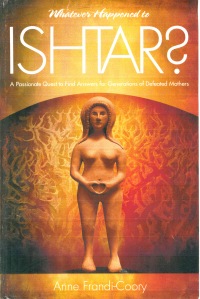
WHATEVER HAPPENED TO ISHTAR? – A Passionate Quest To Find Answers For Generations of Defeated Mothers

ishtar-front-cover

ishtar rear cover

1st edition front and rear cover 2010

More Information about updated 4th edition (2020) of ‘Whatever Happened To Ishtar?’  CLICK HERE: 

************************************************
13532888_1872936609398092_8979311431005462309_n

Bella Albert

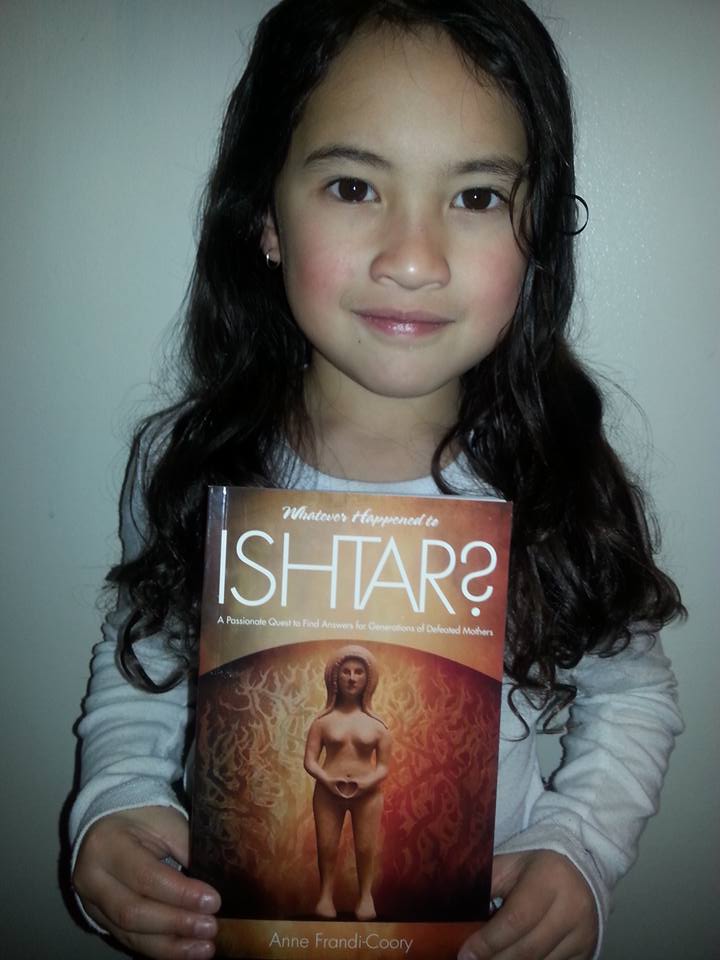
This is an old photo of my precious Bellaboo, holding our copy of a book written by my great aunty, Anne Frandi-Coory, about our italian family;
-I’m honoured to hear from my psychologist and good friend Brett, who has told me he purchased a copy and had received it and is currently reading it; it really warms my heart to know this.
P.S aunty Anne -Brett says you write really well and is very impressed xx Michael Albert. – 2019

Michael Albert

Michael Albert, Bella’s father

Thank you, Michael …that is good to hear. Your psychologist will understand you better after reading my book, ‘Whatever happened To Ishtar?’ The ripples in the generational pond have spread far and wide…❤️💜🧡 I hope to meet you and Bella one day; such a beautiful girl.

*********************

This review originally posted here on AMAZON BOOKS 28 March 2017

New Zealand’s Elena Ferrante?…

I don’t write many book reviews, I don’t usually have the time,  but I felt compelled to write this one. I’ve read both of Anne Frandi-Coory’s books; her memoir Whatever Happened To Ishtar? (2010) and her latest publication Dragons, Deserts and Dreams (2016) and it seems to me both are the kinds of books that you keep in order to read again and again. I also follow her book reviews on Facebook closely because she reads the genres I enjoy and she writes great, honest  book reviews.

The honesty with which Anne Frandi-Coory has written her memoir makes me think of her as New Zealand’s Elena Ferrante. The author is a virtual recluse who writes about her childhood living in Catholic institutions and whose existence is violently shaken up periodically when she is taken by her father into his Lebanese immigrant family’s household not far from the institutions she has lived in for most of her formative years. There she endures what she calls the hypocrisy and brutality the women of the household direct toward her and her absent Italian mother who has long since been banished from the home of her in-laws.  The reasons are complex and include the sexual harassment of the author’s mother, an innocent ex Catholic nun. Frandi-Coory’s story is set in a slightly later era than Ferrante’s and dolls eerily feature in her childhood as well. I felt the need to check Frandi-Coory’s book reviews to ascertain whether she had been influenced at all by the Italian author in any way.  Yes, she had reviewed the Neapolitan Quartet Novels by Ferrante, but she had only read and reviewed those books in 2016 six years after she wrote her memoir.  I am amazed at the similarities in writing style as well as in the content and minutiae of the lives of mothers and daughters, even allowing for the authors living on opposite ends of the world. I suppose at the end of the day, women’s lot is universal.

Frandi-Coory embarks on years of research into the lives of her mother and Italian extended family which she was never permitted to have contact with even though the Coory family didn’t want her living with them after her father’s marriage to her mother broke down when she was an infant. She finds that many women in both the Lebanese and Italian extended families lived in patriarchal cultures reinforced by devotion to the beliefs of the Roman Catholic Church. Too many children, brutal husbands and a blind faith in a god who never seemed to answer any of their prayers.

I wonder if these families had not left their home countries to settle in such a raw and young country as New Zealand would their lives ever have come under such scrutiny?  As another reviewer of Frandi-Coory’s memoir stated, this is a mammoth book and well worth reading. I also recommend the author’s latest book which, although it contains short stories and poems as well as some of her artworks, cleverly connects the reader to many of the topics she writes about in her memoir.

-Zita Barna, Australia.  28 March 2017

                   *****************************************************

Hi Anne, I expect you are thinking what on earth I am on about when I said I would e mail you.
Rita Roberts 2

Rita Roberts-Archaeologist

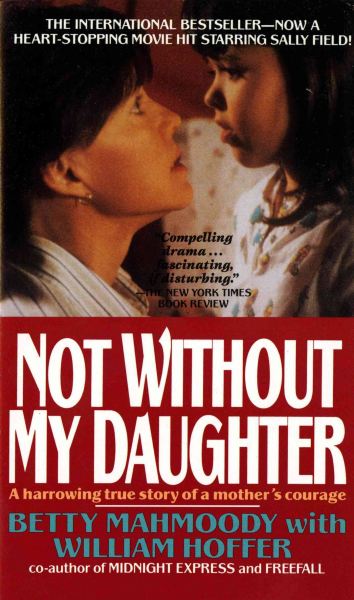
Well, I watched a film called  ‘Not Without My Daughter’.  For some reason it made me think about your book  ‘Whatever Happened to Ishtar?’  documenting your traumatic childhood and I had to begin reading it again, because this film helped me understand my confusion with regard to your extended family. I honestly don’t know how you coped with all that hassle You were so brave and I admire you tremendously. I am also so pleased you have Paul and your lovely children making your life now happy. If you haven’t already seen this film you can see it on U tube, and it is a true story. Take care, Rita Roberts (Crete)

******************************************************
 images

*Anne Frandi-Coory’s reply to Rita Roberts  30 November 2016:

Dear Rita

I finally located a copy of the dvd ‘Not Without My Daughter’ (1990) starring Sally Field. Thank you for recommending it to me. I can see why the Iranian family in the movie reminded you of my immigrant Lebanese family that I wrote about in my memoir ‘Whatever Happened To Ishtar?’ and why it gave you a better insight into what my childhood, and my mother’s life,  must have been like.

The movie brought so much of my childhood flooding back to me. First of all, the women wearing black burqas evoked images of the nuns in the Catholic Mercy orphanage where I spent my infancy and early childhood. I always get a strong visceral reaction whenever I see women dressed like this, or nuns in black habits, and not because the Mercy nuns were especially cruel; in fact the sister who ran the orphanage nursery was very kind to me. But because I was traumatised by being abandoned at the nursery by my mother, I always feel the same distress all these years later.

The hateful looks directed at the American mother, by the Iranian women in the movie also reminded me of my aunts. My paternal Lebanese family, (grandparents and their 11 children),  all lived, and later,  often visited,  in the same three storey house, so that whenever my father took me to visit his family, I not only had one or two adults abusing or yelling and screaming at me, there were several, all at once. My father rarely intervened, and he was born in that Dunedin house, living there most of his life along with his brother and unmarried sister.  A couple of times I sat on my father’s knee when I was a little girl, and the look my aunts gave me frightened me so much, I never hugged him, or sat on his knee ever again! They didn’t like me or my Italian mother, and I can only imagine what it was like for her, living with them all. Of course, you will remember that my mother’s severe bipolar disorder took hold while she lived with her in-laws, after she married my father. The family screamed abuse at me often, and reminded me every other day that my mother was a ‘sharmuta’ (prostitute) because she had an illegitimate son, and her Italian culture was also demonised. The family’s racism was something I remember vividly.

My aunts often attacked me in the streets of Dunedin if they thought my clothing was in any way ‘revealing’; once when I was a teenager, two of my aunts attacked me because I was wearing a dress with a skirt that fell below my knees, had a high neckline, but the long sleeves were made of a see-through flimsy fabric. They were so enraged they almost ripped the sleeves off my arms. In the end, I was afraid to walk down the street in case I met them and all I could think of was moving to another New Zealand city to escape them, which I eventually did.

While my father’s family weren’t Muslim like the family in the movie, they brought their very strict Catholic Maronite religion and culture with them. They went to church every Sunday and often during the week. My grandmother, Eva Arida, had an altar in her bedroom dedicated to the Virgin Mary with a lighted candle 24/7. She prayed constantly from a little Aramaic prayer book and was habitually fingering rosary beads. My grandfather, Jacob Fahkrey, of devout priestly lineage, prayed aloud early every morning while walking around the rear yard of the family home. I can honestly say that it was the women of the family who were the most physically and verbally brutal.

I did a bit more research into the true story behind the movie and book Not Without My Daughter, and that was also very interesting. The little American girl who so loved her Iranian father when they lived in the USA, had such a traumatic experience living with her father’s family in Iran, that she refused to ever see him again after she and her mother barely managed to escape to the States. Her father eventually travelled to Finland, a neutral country, with a documentary team hoping to film a reunion with his adult daughter, but she declined.   

****************************************************************

Another 5***** Book Review by Linnea Tanner…

Whatever Happened To Ishtar?  by Anne Frandi-Coory is a well-written and haunting memoir of a woman who finds herself by exploring her family’s heritage that contributed to her growing up without the love and nurture of a mother she most desperately wanted. What first attracted me to this book was the title, Whatever Happened To Ishtar?. She is the Ancient Sumerian Mother Goddess who celebrates love, fertility, and sexuality. This title haunted me as I read the memoir because Anne’s mother, like many woman of her generation and previous generations, was harshly judged for her sexuality and had limited options to treat her mental illness and to fulfill her potential. The first part of the memoir is Anne’s account of her childhood while the second part provides a historical account of her Lebanese (father’s side) and Italian heritage (mother’s side).

Anne was institutionalized at the Mercy Orphanage of the Poor at South Dunedin in her early childhood. At the time, her father could not adequately care for Anne after he divorced her mother for infidelity. At the age of eight, Anne was removed from the orphanage and introduced to the real world under the care of her father’s family. However, they shamed Anne and associated her with her mentally ill mother they considered a whore. This part of the memoir is gut-wrenching and haunting because Anne had to overcome loneliness and self-doubt to find her full potential after marrying, having four children, and finding her life partner after a divorce.

However, what is most fascinating is the rich heritage and ancestral genealogy of both her father and mother to understand what nineteenth century immigrants to Australia faced. With no access to birth control, women faced multiple pregnancies or secretly resorted to self-induced abortions with crude knitting needles. The historical accounts that Anne researched help explain why her father and her mother were compelled to make their choices. I recommend this memoir because the story will stay in your memory as it covers universal issues of female sexuality, women’s roles and options, mental illness, and society’s harsh judgment that has defeated mothers for generations.

-Linnea Tanner 25 April 2016

Linnea Tanner

Linnea Tanner

****************************************************************

Book Review by FLAXROOTS  14 July 2015

Whatever Happened To Ishtar?  by author Anne Frandi-Coory

Anne.

Anne Frandi-Coory –  7 years old

This book is a memoir of the life of Anne Frandi-Coory the daughter of an Italian mother and a Lebanese father.

Having spent a childhood, peppered with abuse and harassment, between a Dunedin orphanage for the poor and her father’s Lebanese family Anne was regarded as a backward child. She describes the panic she felt as a toddler as her father departed after one of his visits, and goes on to relate episodes from her strict upbringing in the orphanage where she was segregated from her two brothers once the boys turned five years old. Memory of the order of happenings in her early life is sketchy and this is aptly conveyed in her narrative.

She was not well received by her father’s family though she lived with her father at his family’s house intermittently, but never feeling at ease there and alleging various kinds of abuse.
Married in her teens Anne gave birth to four children and devoted herself to nurturing them during which time her marriage failed and she struggled to avoid a mental breakdown.

Later in life Anne devoted herself to researching the Lebanese history of her father’s family and the Italian forebears on her mother’s side, hoping to understand her relationship with her Italian mother who was shunned by Anne’s father’s family and who couldn’t look after her children except for very short periods.
The account of the arrival of the Frandi family as assisted immigrants to New Zealand in 1876, as opposed to those arriving in a self funding capacity, makes interesting reading.
The poems and quotations at the beginning of each chapter have obviously been chosen with care and sensitivity and give an added dimension to the book. The same can be said for the inclusion of family photographs mostly lent by other family members. There is a certain poignancy here as Anne had few, if any, family photos while she was growing up; thus emphasising what she refers to as ‘her paper-thin sense of identity’
There is a freshness about the author’s style and she succeeds in conveying emotion about the lack of emotion and caring shown to her in her formative years.

Having, as a child, lived in fear of dire consequences if she didn’t follow strict rules and try to emulate the saints she may have developed the discipline to achieve a good education which, no doubt, helped in her later endeavours to track her forebears and learn the history of their migration to New Zealand.
The bibliography includes useful references and illuminates the paths she travelled.

With regard to the publication the title is apt and the cover is eye-catching. The paper edition is perfect bound but the biggest drawback is the lack of an adequate gutter making the book difficult to hold open for any length of time. There are three very minor identical grammatical inconsistencies plus an odd discrepancy about two rivers.

The author is to be congratulated on her enterprise in producing a valuable resource for her family and an interesting and instructive read for the rest of us.

It seems Ishtar has risen from the ashes!

***********************************************

WHATEVER HAPPENED TO ISHTAR? by Anne Frandi-Coory – Book Review by Pauline Csuba published in issue no. 387 The Australian Writer March 2015
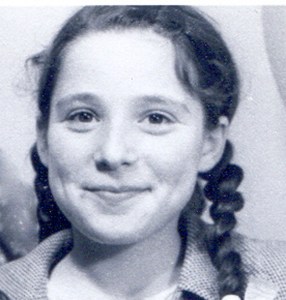
Anne Marie Coory 1958

Anne Frandi-Coory – 10 years old

Haunted by her mother’s restless spirit filtering through every thought and dream, this book was written not only for the appeasement of her mother but for her children and grandchildren.  Anne Frandi-Coory has embarked on a journey of genealogy taking on a rich history, research, and unpleasant memories.

Distressed at the hands of her Lebanese father’s extended family and The Mercy orphanage for the poor – this story of lost generations, abandonment, abuse and gross neglect by those who should have known better – is a story of a personal account and the connection with the Catholic Church and its institutions. Brutality, emotional deprivation and lack of nurturing all culminated in a dark side of two families unable to communicate with one another. With the history of these Lebanese and Italian families and how they settled in New Zealand, this makes for an interesting read.

It is a mammoth book and I felt by removing some areas of repetitions may have freed the flow of emotion that could allow the reader to connect much sooner with the powerful experience being shared. I congratulate Anne for taking on this traumatic journey of her past and the long process of research, writing and editing of her work. It is wonderful to see she now has a loving partner and family who have supported her in this passionate quest. I recommend this book to those who are or have embarked on a similar journey.

-Pauline Csuba

 ************************************************

WHATEVER HAPPENED TO ISHTAR? by Anne Frandi-Coory – 5 star

https://www.goodreads.com/review/show/1165480328

When I started reading this book, I expected to finish it quite quick but in truth, it took time to digest the words and their significance. It is a journey, both biographical and autobiographical in approach. The author seeks to find her place not only in society but who she is. This is an extraordinary search which uncovers the history of her maternal and paternal lineage.

What is revealed is both heart-rending and powerful, a personal narrative. Ms. Frandi-Coory’s pursuit as to why her mother abandoned her while a baby is a difficult journey of self-discovery. How could a mother leave her children is the driving question behind the author’s plight. That, and trying to understand who she is and to identify with the family nexus and her place within it.

Her father, ill equipped mentally and economically to rear his daughter and son, placed them in an orphanage run by catholic nuns. It was not a pleasant time for either and the author gives vivid descriptions of her time incarcerated. Her father’s family weren’t the most pleasant people, abusive both verbally and physically. Why? Her mother was considered a harlot and mentally unstable, therefore she was of the same ilk. The cultural mix of Italian and Lebanese blood, the author is driven to learn more about both sides of the family and why they behaved in such a contrary manner.

I admire Ms. Frandi-Coory for writing this book. She revealed secrets most families would prefer to remain hidden to detriment of those who were and are victims. This is a brave expository, which shows the cycles of abuse can be stopped with determination and strength of character.

-Luciana Cavallaro 11 January 2015

serpent 3

Luciana Cavallaro

More About Luciana Cavallaro here: https://www.amazon.com/Luciana-Cavallaro/e/B009QHIKN2

**************************************************************

Gerald Gentz

Gerald Gentz

WHATEVER HAPPENED TO ISHTAR? by Anne Frandi-Coory – AMAZON BOOK REVIEW by Gerald Gentz USA 30 December 2014   

*4th Edition (pub. 2020) Whatever Happened To Ishtar? now available here at Amazon in paperback and Kindle ebook 

‘Whatever Happened To Ishtar?’ is more than a book and more than a story. It is the telling of a remarkable journey of discovery of one person’s difficult life. Anne Frandi-Coory spent much of her life trying to find a place and the love of a family. Book ended between a caring but weak father and mentally ill mother unable to care for her financially or emotionally, Anne and her brother, Kevin, suffered childhoods that no child deserves to experience. In the end, even the scars would not prevent them from making stable and successful lives.

Anne’s long research into both the paternal and maternal sides of her family is remarkable for it’s depth and acceptance. In doing so, she exposed her demons and the dysfunctions of her maternal and paternal families. The result is a culmination of her difficult journey to understand herself. Her greatest victory is her coming to understand the love of her mother and the realization of her love for her mother. Anne’s was a journey of discovery and healing.

This can be a difficult book to read at times because of the emotions it elicits. It was particularly emotional for me because of my realization that Anne is actually my cousin that I was not aware I had, her mother being my mother’s older sister. Anne’s book gave me a deeper awareness of my maternal family, and thus my mother, than I had before. So Anne Frandi-Coory’s journey of discovery was also mine in 373 pages.

Gerald Gentz

***********************************************

WHATEVER HAPPENED TO ISHTAR? by Anne Frandi-Coory – 5 star *****GOODREADS BOOK REVIEW by Susan Tarr 

https://www.goodreads.com/book/show/11168865-whatever-happened-to-ishtar

“WHATEVER HAPPENED TO ISHTAR? By Anne Frandi-Coory is a remarkable portrayal of New Zealand’s earlier Lebanese and Italian Catholic families. Although I was raised in the various vicinities this book covers, I had no idea there were established Lebanese families in New Zealand. And, for me, the whole Catholic religion was shrouded in mystique, so I had very little understanding of what was involved in being a part of the Catholic faith.

Set in New Zealand, the spartan buildings of the Catholic St Vincent’s orphanage mirrored in some part those of Seacliff Mental Asylum (Otago, NZ) in both outlook and care of those in their charge. Both would seem to have lacked a close affection for those who needed it most: the vulnerable and unloved.

This work is an amazing testimony for all mothers, a testimony we can probably all relate to. How many times do we feel inadequate, or feel we could have done better? We should never have such constraints placed on us as a mother to feel either of these. Whatever a mother is capable of at that time, for her child, is sufficient for that time.

As Frandi-Coory bears out, it is always possible to break mindsets, or break the mould, as it is said. I.e. the sins of the father… All it takes is an invincible will, which clearly she had and has.

Frandi-Coory recounts the histories of both her Lebanese and Italian families. She explains how the various mindsets occurred and how they were passed down through the generations.

I found I kept referring to the photographs as I formed opinions on the various players in this tapestry of life.

What is astonishing here, is that Anne Frandi-Coory and I never made a connection until after our respective books were published, in separate countries. It was through reading each others work that we realised our lives were very closely linked. In fact we may well have known each other through a mutual friend (Italian) during our college years in Dunedin, NZ. That is why I can vouch for the events, scenery, time frames and cultures in this amazing work.

It’s absolutely raw in its honesty.

Very well written, it’s a compelling read, from start to finish.

Kudos to Anne Frandi-Coory.

-Susan Tarr 14 October 2014
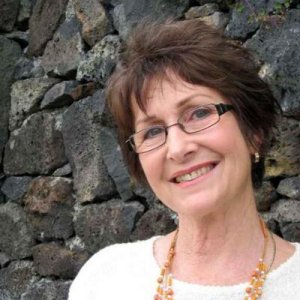
Susan Tarr

Susan Tarr

More about Susan Tarr here:http://www.amazon.com/Susan-Tarr/e/B00I0I3M9U

************************************************

MOMO Photo ABC ‘Let’s Read’…

 I am a member of a photo group where we get a prompt for every day and have to take an appropriate picture. Because we had the alphabet one month, I decided to do a book theme. I always added either the link to my blog or to the books. I have decided to post a picture every week so my booky friends can enjoy them, as well.
A is for … Autobiography.  Two biographies by some very strong women:

Anne Frandi-Coory  Whatever Happened To Ishtar? 
Immaculée Ilibagiza  Left to Tell: Discovering God Amidst the Rwandan Holocaust
 ><><><><

Momo 2014

 ************************************************

‘Whatever Happened To Ishtar?’ is

“An amazing journey – challenging, painful, and ultimately unforgettable”  – Tanith Jane McNabb, Owner of Tan’s Bookshop Marlborough NZ, 27 October 2014 on

************************************************
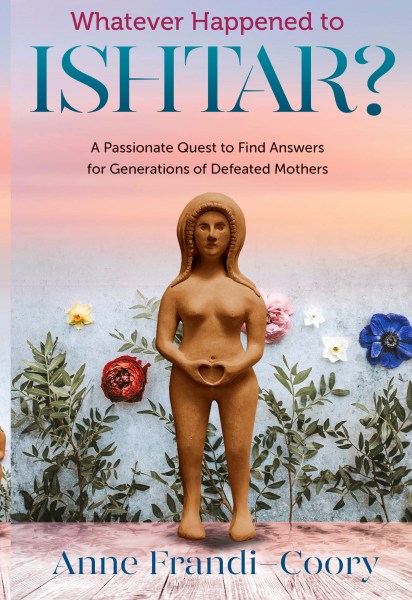
See here

*MORE reviews for Whatever Happened To Ishtar? 

Whatever Happened to Ishtar_cover 2020

You can buy the updated 4th Edition (pub. 2020) in paperback & Kindle e book 

here at AMAZON

And Here from AbeBooks 

BOOK REVIEW –

Susan Tarr


by Susan Tarr – Author, Editor and Proof Reader


><><><>

“WHATEVER HAPPENED TO ISHTAR? by Anne Frandi-Coory is a remarkable portrayal of New Zealand’s earlier Lebanese and Italian Catholic families. Although I was raised in the various vicinities this book covers, I had no idea there were established Lebanese families in New Zealand. And, for me, the whole Catholic religion was shrouded in mystique, so I had very little understanding of what was involved in being a part of the Catholic faith.

><><>><><

ishtar-front-cover

><><><><

Set in New Zealand, the spartan buildings of the Catholic St Vincent’s orphanage mirrored in some part those of Seacliff Mental Asylum (Otago, NZ) in both outlook and care of those in their charge. Both would seem to have lacked a close affection for those who needed it most: the vulnerable and unloved.

This work is an amazing testimony for all mothers, a testimony we can probably all relate to. How many times do we feel inadequate, or feel we could have done better? We should never have such constraints placed on us as a mother to feel either of these. Whatever a mother is capable of at that time, for her child, is sufficient for that time.

As Frandi-Coory bears out, it is always possible to break mindsets, or break the mould, as it is said. I.e. the sins of the father… All it takes is an invincible will, which clearly she had and has.

Frandi-Coory recounts the histories of both her Lebanese and Italian families. She explains how the various mindsets occurred and how they were passed down through the generations.

I found I kept referring to the photographs as I formed opinions on the various players in this tapestry of life.

What is astonishing here, is that Anne Frandi-Coory and I never made a connection until after our respective books were published, in separate countries. It was through reading each others work that we realised our lives were very closely linked. In fact we may well have known each other through a mutual friend (Italian) during our college years in Dunedin, NZ. That is why I can vouch for the events, scenery, time frames and cultures in this amazing work.

It’s absolutely raw in its honesty.

Very well written, it’s a compelling read, from start to finish.

Kudos to Anne Frandi-Coory.

-Susan Tarr 8 October 2014

More REVIEWS for Anne Frandi-Coory’s Memoir/Family History: 

WHATEVER HAPPENED TO ISHTAR?;

A Passionate Quest To Find Answers For Generation of Defeated Mothers

><><><

SEE BOOK REVIEW FOR Susan Tarr’s

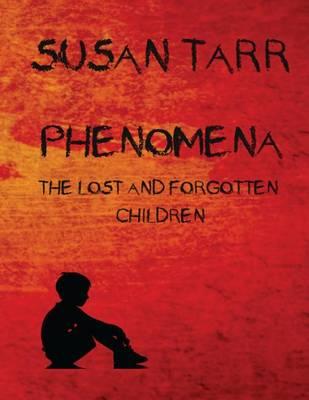
PHENOMENA; The Lost And Forgotten Children 

phenomena susan tarr


Origins Of The Italian Surname ‘Mansi’

This page and its contents, including all images, is Copyright To Anne Frandi-Coory All Rights Reserved 23 November 2013

……………

Manzo Coat of Arms

Original Manzo Coat of Arms

****************************

Raffaela Ishtar Arts

Raffaela Marisi Mansi Grego

********************************

Since doing research for my book ‘Whatever Happened To Ishtar?‘ I have become fascinated with the origins of surnames … My maternal great grandmother’s maiden name is recorded on original documents as Raffaela Marisi Mansi and her father’s name as Johannis Mansi (possibly reflecting Austrian origins).  It’s likely that Raffaela’s mother’s family name was the Italian Marisi. Raffaela was raped by a Catholic Priest in Rome when she was 13 years old. She was sent to London in disgrace when she became pregnant as a result of the rape … creating ripples which affected the fortunes of succeeding generations.

*********************************

*Raffaela and Filippo Grego

**************************************************

*Author Anne Frandi-Coory’s maternal great grandparents.

The first Italian records showing variations of the surname Mansi were found in Venetia, northern Italy. The region of Venetia is named for the Veneti, a race related to the Illyrians who allied themselves with the ancient Romans and consequently prospered. From this famous region in Italy, the name Manzo, or Manso, emerges. Research shows that it is Germanic in origin and means ‘strength’. It is believed that the name became Italianized over time with various spellings according to dialect. For example, documents can be found in Friuli dating as far back as 1083, with such names as Patriarca di Aquileia Volserico Manzano. The history of the Venetia region begins with the invasion of the Ostrogoths and Vandals under Attila the Hun in the mid 5th Century CE.

******************************

The most famous city in the region is Venice which was created on the island of Rialto as a refuge for those fleeing from Attila and his army. The city of Venice remained a refuge for many centuries. After the Lombardi invasion of Italy in the 6th Century, more fled to its relative safety. Venice became a fully fledged city in the 8th Century when Duke Orso was elected and supported by Pope Gregory. However, it wasn’t until the Frankish invasion that Venice felt a true sense of unity, when an alliance was formed in order to retain its independence. In the 9th Century, while Charlemagne was king of Italy, the Eastern Emperor Nicephorus was lord over Venice. Thus Venice retained closer alliances with the East than with the rest of Europe. Venice became a religious rival of Rome when it received the remains of St Mark, for whom the Basilica Cattedrale Patriarcale di San Marco and the Piazza San Marco are so named.

********************************

The famous winged lion, which is considered to be the emblem of Venice, was originally the emblem of St Mark. Venice proved itself to be an economically strong city, noteworthy for its trade overseas and as a gateway to the major trade centres of Central Europe. It also maintained diplomatic ties with the East. Various forms of the surname gradually moved down the peninsula: Manzi, Manzo, Mansi, Manzano, Manzoni, Manzonni, Manzonno, Manzina, Manzino, Manzini, Mansone, Manzolino, Manzolina, Manzone, Manzano, Manzoli, to name a few variations. Artistic prosperity was one of the most important features of Venetian history. Many of the most famous painters in the history of art come from this region. The earliest Coat of Arms for the Manzo dynasty displays a blue shield with a lion holding a bull’s head and three fleur de lis. Prominent members who share the Manzo/Manso heritage include Torpe di Federico del Manzone of Sicily, a priest in Pisa for seven years. His son acquired the position after his death. Pierangelo Manzoli (Marcello Stellato) a poet and philosopher 1500 – c.1543 Cianciano Manzano was commander of the castle of Manzano the remains of which still stand in Friuli. The Manzini family of Modeno was one of the most powerful families in the city during the medieval period. Alessandro Manzoni was born in Milan in 1785. He was a poet and novelist of noble blood and wrote the historical novel I Promessi Sposi (The Betrothed)  published in 1827. It is regarded as the most famous and widely read novel in the Italian language.  In 1860, Manzoni was elected senator for the Kingdom of Italy. Pope Benedicto XlV born Prospero Lorenzo in Bologna 1675 to Marcello Lambertini. He died in Rome in 1758. He was a descendant of the Mansi family.   Lucida Mansi was a descendent of wealthy silk merchants and her family home, the Mansi Palace, still stands today in Lucca, Italy, as a museum owned by the state since 1957.  For more about the legend of Lucida Mansi see Silhouette in Bagni Di Lucca In 1680 the marriage between Arlo Mansi and Eleonora Pepoli, from a wealthy Bolognese family, increased the riches of the Mansi family. This was the first familial Roman/Italian connection with the Germanic Mansi clan. The Mansi family’s commercial enterprises sold silks, and other fabrics throughout France, Italy and Germany. The first members of the Mansi family arrived in Italy from Saxony in the 11th Century.

********************************

See Here: Frandi; My Fascination With Italian Surnames Part 2

For more information about my book,

Whatever Happened To Ishtar? – A Passionate Quest to Find Answers for Generations of Defeated Mothers and to purchase a copy HERE is the link:  https://frandi.wordpress.com/2010/04/15/publicaton-of-whatever-happened-to-ishtar/

….

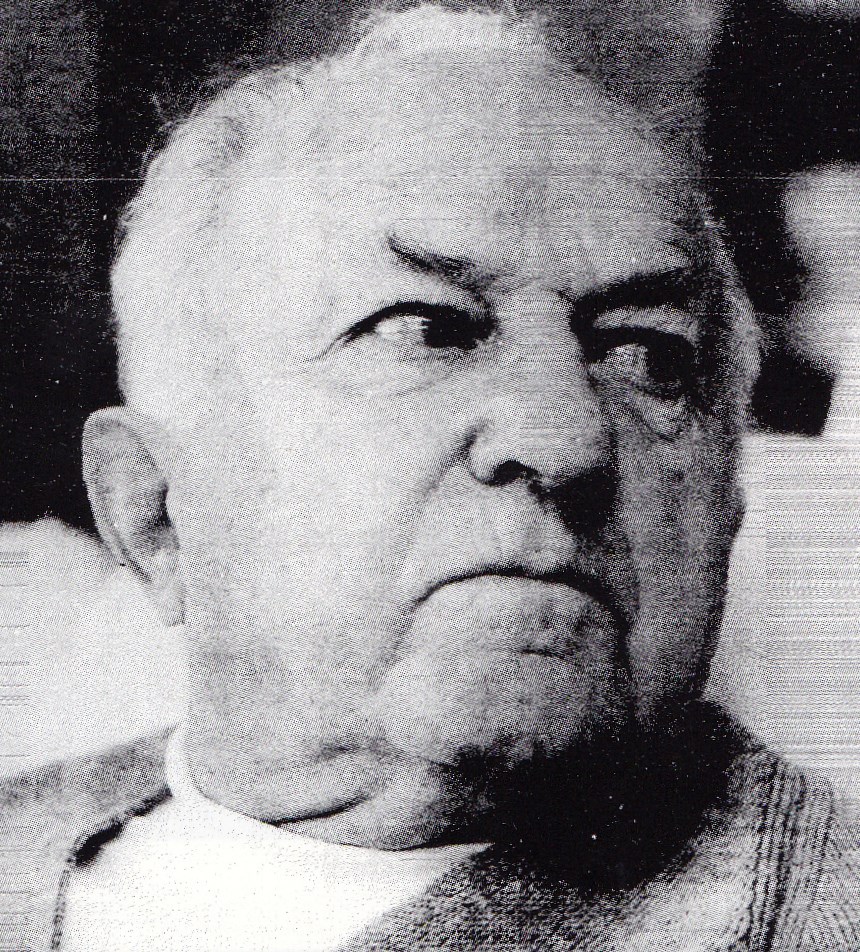
Father Kevin O'Donnell

Paedophile Father Kevin O’Donnell

><><><><><><><><><><><><><><><><><><><><><><><><><><><><

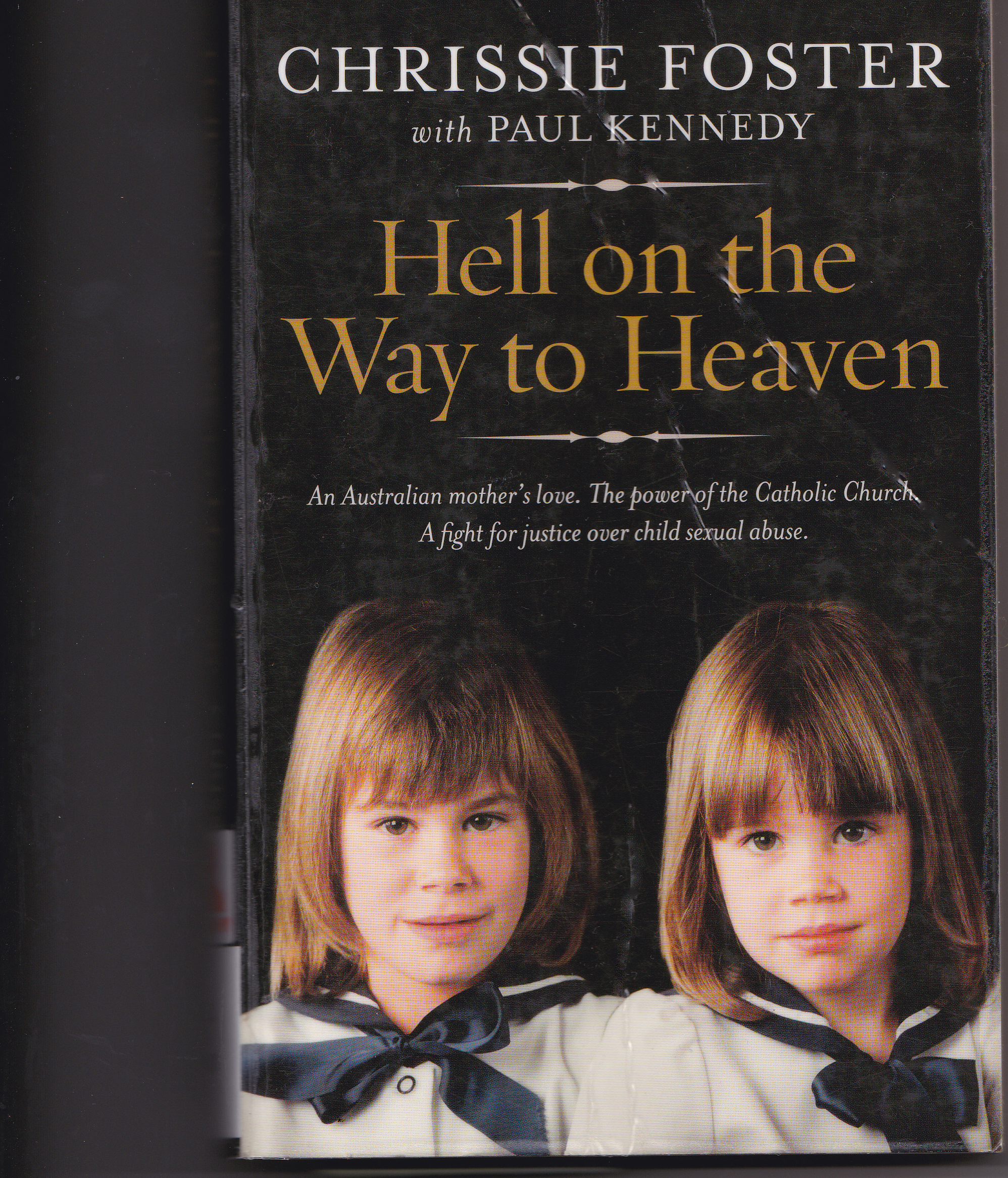
In my blog post dated 2 July 2013 How Catholic Dogma Aided Paedophile Priests’ I wrote about Chrissie and Anthony Foster’s book in which they describe how two of their daughters’ lives were destroyed when they were repeatedly raped from the age of five, by Catholic paedophile priest, Father Kevin O’Donnell.

<><><><><><><><><><><

Hell on way to heaven

><><><><>>><><

During the long battle to save their oldest daughter Emma, from more attempts at suicide by drug overdose and self-harm, she was admitted to one psychiatric unit / detox. clinic after another, over the years. Emma struggled, with some success, along with the loving help of her family, to overcome her addictions. It was a one-step-forward and a two-steps-back progress. Try as she might, Emma could not erase from her memory, what Father Kevin O’Donnell had done to her.

Emma was fast running out of psychiatric unit options because of her continual breaking of the units’ rules. However, one day in desperation, her mother found her a placement in a clinic run by the Catholic Church. Although she was hesitant about sending Emma there, she was comforted after being reassured that all the counsellors were professionals. But Emma had only been in the unit for a few days, when she phoned her mother and told her that a woman at her counselling sessions was a ‘practising Catholic and wore a cross’.  Emma was agitated and anxious. This woman was pressuring Emma to admit she was at fault for the abuse she was subjected to. Later that day, Mrs Foster rang the manager of the unit and explained her concerns about what Emma had told her. The manager stated that it wouldn’t have been a qualified counsellor and she had no idea who the woman was. She suggested Emma may have been speaking to a tea lady or cleaning staff.

A few months before she died at 26 years of age, from an overdose of her medication, Emma refused to see or talk to her mother. Chrissie Foster was hurt and bewildered. She was devoted to her daughter’s welfare and recovery, as was Mr Foster and their extended family. In the past, Emma had written many notes and diary entries, declaring how much she loves her family and how supportive of her they always are. But, she adds, her mother is the one she loves the most; she is always there for her.  That’s why Mrs Foster found it difficult to understand why Emma didn’t want to talk to her. She was hopeful that it meant Emma was trying to stand on her own two feet, and this could be a good turn of events.

Following Emma’s death, Mrs Foster had the heartbreaking task of packing up Emma’s belongings from her bedroom in the house she had loved, had decorated and furnished herself.  Loose sheets of paper were lying about all over the place. After collecting them up in a bundle, Mrs Foster sat reading the many notes Emma had jotted down in her neat hand writing.  A few of the diary notes covered her stay at the Catholic unit. She writes about the counselling sessions she attended and how traumatic they were because the counsellor was very critical and angry:  Why had she not run away? Why had she not told anyone about the abuse at the time? Why didn’t she call out?  Emma wrote: I told her I was five or six, he had all the power. Emma also wrote that she was made to feel it was her fault she had been abused. Anyone who has read Chrissie Foster’s book will know how those options would have been impossible for Emma given her age, the school environment in which the sexual abuse took place and her Catholic upbringing.  But most of all, they would have been impossible because Kevin O’Donnell was a paedophile with over 50 years experience. His victims describe him as an old man who was  frightening and angry. He continuously told them they were evil while he raped them.

Mrs Foster could not stop thinking about this ‘practising Catholic’ who was posing, unchallenged, as a psychiatric counsellor.   She believed no psychiatric unit in the 21st Century in Australia should be employing untrained counsellors. The woman obviously wouldn’t believe a priest was capable of sexually abusing children.  The ‘counsellor’ had intimated to a troubled Emma that she held priests in the highest esteem but despised the victims who claimed that priests had sexually assaulted them.

A distraught Mrs Foster phoned the Catholic Psychiatric Unit on a Sunday morning to enquire after a counsellor.  To her shock and horror, the helpful receptionist informed Mrs Foster that there was a nun on duty 24/7 to talk to patients.  So it was a nun who was employed as a professional counsellor at the unit and who was responsible for turning Emma against her mother. Emma had said to another person not long before her death, that the abuse was her mother’s fault, her own fault, and that the counsellor had angrily told her that Father O’Donnell had not raped her.

It becomes clear in Chrissie Foster’s book ‘Hell On The Way To Heaven’ how much Emma’s stay in the Catholic psychiatric unit affected and undermined her inner resolve to overcome her addictions and get her life back on track once again.  The years of addictions and self harm had taken their toll, but Emma was making progress, albeit slow. However, once she was coerced into severing ties with her family, and to rely completely on the unit for all her support,  she had come full circle; under the control of staff who preached Catholic dogma. Her fragile psychiatric condition could no longer put up a fight. She died alone in the house her parents had helped her buy with her share of the compensation money the Catholic Church had finally awarded to her and her family, after years of legal battles.

chrissieanthonyfoster1

Anthony and Chrissie Foster

I know full well, from my time as an observant and devout Catholic child, the esteem and reverence in which most nuns hold priests. They too believe that priests are representatives of God himself upon this earth, and can do no wrong. Nuns are true brides of Christ.

……….

-Anne Frandi-Coory 7 July 2013  …  Read more here: How Catholic Dogma Aided Paedophile Priests