Archive

Tag Archives: Whatever Happened to Ishtar?

Doreen Frandi during WWll. Photo: afcoory

Dear *Francine

I finished reading your PhD thesis *Virginia’s Story last night.  Thank you for giving me the opportunity to read it in the first place – I feel it was meant to be, like a chance encounter!

While taking in Virginia’s words, I had a little cry, because so much of what she is crying out for – dignity, personhood – is what I so wanted for my mother, Doreen.  She never did receive much of that respect in her life; not from hospitals, men, or from family.  This was my chief motivation for writing Whatever Happened To Ishtar? – A Passionate Quest To Find Answers For Generations of Defeated Mothers’.

By the time I had the chance to really know my mother, it was too late; the drugs and ECT had taken their toll.  Much of what she had experienced in psychiatric wards and throughout the manic, psychotic,  and depressive phases of her life, was passed on to me by my brother, Kevin, who lived with her until he was married.  After that, he spent time with her either at his home or at her council flat in Wellington, otherwise he spoke to her daily by phone.  I tried to obtain her records from Porirua Psychiatric Hospital, but they would not release them to me because I was not listed as her next of kin.  However, as I reveal in Whatever Happened To Ishtar?, Doreen’s psychiatrist did phone me and answered most of the questions I asked of her regarding Doreen’s psychiatric history.  Obviously, she did not volunteer information, so I only have knowledge of a small section of my mother’s official records of the times she was confined at the hospital.

Even though I was never admitted to a psychiatric ward, I came close to a mental breakdown when I was a young woman and my marriage was failing.  I can well understand, therefore, Virginia’s desire to leave her marriage, which was draining her physical and mental strength.   I also experienced what it was like to be denied personhood and dignity, when I was a child and teenager. I was branded and often humiliated by my Lebanese extended family because of who my mother was; her bipolar disorder and her Italian descent.  What I hated most was the way they branded her a “sharmuta” (prostitute) when she was nothing of the sort and could not defend herself.  There are many parallels in my, Doreen’s,  and Virginia’s stories.  I regret so much that Doreen only took Kevin with her when she left Dunedin for Wellington,  and abandoned me.  I believe that as her daughter, I may have been able to empathise more with her, and given support to my brother.  Sadly, I will never know for sure what the outcome would have been in that scenario.  Thank goodness Virginia at least had a loving daughter to look after her welfare.

I was very interested in what you had to say in your thesis about biographies vs autobiographies; about creativity and whether or not bipolar disorder is actually a mental illness.  Many brilliant artists as you know, exhibit facets of the disorder.  I read a medical paper recently which suggested that bipolar disorder and schizophrenia are symptoms brought about through the brain evolving, which of course it has been doing for thousands of years.  An interesting theory.

I intend to contact Bipolar networks in Australia, and perhaps give talks about my and my brother’s experiences with Doreen and her disorder.  If you have any contacts here, I would be grateful if you could pass their name or names on to me.  Alternatively, members of bipolar networks can contact me via this blog and request a copy of the book .

At your suggestion, I called at the  office of the  Bipolar Network after our meeting and donated a copy of ‘Ishtar?‘ which they were very pleased to receive. I told them they could purchase more copies at  University Book Shops. Although the Public Library acquisitions officer requested to buy copies directly from me when I met with her to promote my book, I told her the normal process was that the library purchase copies through  University Book Shops.

Thank you once again for taking the time to meet with me, and for buying copies of my book for the Dunedin University Book Shop.

Kind regards

Anne Frandi-Coory

><

Bipolar Disorder Blog   (The Crazy Rambler)

Bipolar Disorder; The Little We Know

><

*Names have been changed for privacy reasons

><

The Abbess was of noble blood

Catholic Sisters of Mercy; four biological sisters.The nun on the right was the closest Anne Frandi-Coory came to a mother figure; her face is the one she remembers as an infant in a Catholic Orphanage nursery. (see ‘Whatever Happened To Ishtar?’ below.)

But early took the veil and hood

Ere upon life she cast a look

Or knew the world that she forsook

Fair too she was, and kind had been

As she was fair, but ne’er had seen

For her a timid lover sigh

Nor knew the influence of her eye

Love, to her ear, was but a name

Combined with vanity and shame

Her hopes, her fears, her joys, were all

Bounded within the cloister wall:

The deadliest sin her mind could reach

Was of monastic rule the breach;

And her ambition’s highest aim

To emulate St Hilda’s fame

For this she gave her ample dower,

To raise the convent’s eastern tower;

For this, with carving rare and quaint,

She decked the chapel of the saint,

And gave the relic-shrine of cost,

With ivories and gems embost.

The poor her convent’s bounty blest,

The pilgrim in its halls found rest.

Black was her garb, her rigid rule

Reformed on Benedictine school;

Her cheek was pale, her form was spare;

Vigils, and penitence austere,

Had early quenched the life of youth,

But gentle was the dame in Sooth

From: Sir Walter Scott, ‘Marmion’, The Immolation of Constance De Beverley

><

My mother was a defeated nun and a defeated mother. She entered a convent to escape the inescapable: LIFE.  (See Previous Post: My Mother Was A Catholic Nun. 

For hundreds of years, young women and girls have been entering convents for various reasons.  Fathers and other patriarchs sent unmarriageable or unmanageable daughters into a cloistered life. Daughters whose mothers had died were also sentenced to this life of imprisonment, with or without their consent.

“A Drama of Science, Faith and Love”

Even Galileo, that illustrious 17th Century  scientist, and devout Catholic, confined his eldest daughter from the age of thirteen (1616)  to San Matteo convent in Arcetri.  His daughter, Virgina was deemed unmarriageable because her father had never married her mother, the beautiful Marina Gamba of Venice. Virginia (Sister Maria Celeste) lived out her life in poverty and seclusion in the convent (Order of St Clare) , as did her younger sister, Livia. Unlike Virginia, very little is heard from, or about, the “silent and strange” Livia.   Virginia  lost all her teeth by age 27  because of her lack of a nutritious diet.  It is worth reading  ‘Galileo’s Daughter’ by Dava Sobel, a gifted author, for more on these remarkable lives.  We know so much about Galileo and Virginia because of the correspondence between the two.  Ms Sobel also covers the horror of Galileo’s life and his banishment to house arrest in Ravenna, at the hands of the Holy Inquisition headed by Pope Paul V.

The Florentine poet, Dante Alighieri, was exiled from his beloved Florence in the early 14th Century by Pope Boniface Vlll (Cardinal Caetani), with support from the French.  Dante’s only daughter, Antonia, was confined to a convent in Ravenna where he was living at the time in 1320.  Antonia took the name Sister Beatrice, the name of Dante’s beloved.

In this day and age, the numbers of young Catholic women wishing to give up their freedom “for God” is dwindling.

What is worrying is that sexual harassment and abuse from priests and bishops continues, particularly in third world countries.  Rape is common because the clergy believe these nuns to be free from aids, unlike prostitutes. If the nuns’ abuse is uncovered, or they become pregnant, they are the ones to be thrown out onto the roads.

(See previous post  ‘Kiss of Betrayal’)

In an extreme case of double standards, always rife in the catholic Church, a nun at a Catholic hospital in Arizona was excommunicated because she approved an emergency abortion last year to save the life of a critically ill young patient.  Imagine the hundreds of  sexually abused girls and boys who could have been spared lives of misery, if paedophile priests had been excommunicated and reported to police, instead of being shifted around from parish to parish?

><

From the pen of  The Ethical Nag The Vatican has now launched an “apostolic visitation,” or investigation, of every one of America’s 60,000 religious sisters, accused with having what Vatican spokesman Cardinal Franc Rodé calls “a feminist spirit” and “a secular mentality”. At a time when the male leadership can be blamed for bringing the church to a state of global crisis, even the modest roles accorded to female clerics have come under attack from these men.

Not surprisingly, the appeal of joining a Catholic religious order as a career choice is plummeting. Fewer than 4% of North American Catholic women have even considered becoming a nun, according to 2008 data from the Center for Applied Research in the Apostolate. And that’s less than half the number compared to just five years earlier.

And no wonder. Dr. Tina Beattie, who teaches Catholic Studies at Roehampton University in the U.K., gives far more disturbing examples of how the Vatican treats its nuns.  For example:

“In 2001, senior leaders of women’s religious orders presented evidence to Rome of the widespread rape and abuse of nuns by priests and bishops, with a particular problem in Africa which has no cultural tradition of celibacy, and where the threat of HIV and Aids means that priests are more likely to prefer sex with nuns than with prostitutes. The Vatican acknowledged the problem and there was a brief flurry of media interest, but this is a scandal which has disappeared without a trace.”

I don’t know whether any Mercy nuns were sexually abused by Catholic clergy when I was a child  in their care, but I well remember the awe and deference the nuns exhibited in the presence of priests, bishops, and cardinals.  Once I understood the hypocrisy and double standard encouraged by the Church’s teachings, I found these displays sickening.

-Anne Frandi-Coory 3 February 2011

Read more about ‘Whatever Happened To Ishtar?’  

Newly elected Pope John Paul ll uplifting his “pilgrims” in St Peter’s Square at the Vatican

Karol Wojtyla, later  John Paul ll, was passionate about religion. He maintained a devotion to the Blessed Virgin Mary, choosing as his personal motto Totus tuus  which is Latin for “All yours”, (Mary) .   To my mind, this left him with a distorted and unrealistic view of women.  (see my post Catholic Dichotomy of Females). To his detractors, he was a reactionary trying to turn back the clock on modern reality. Some harshly criticized his ultra-conservative theology, which prohibited female ordination, birth control and abortion. He branded the notion of global overpopulation a myth and said the use of condoms as a precaution against AIDS only encouraged the behaviour that led to the spread of the disease. Yet companies associated with the Vatican earn millions from the manufacture of contraceptives.

In a 1993 letter to his bishops, John Paul said both sex before marriage and contraception were intrinsically evil. He also broadened the definition of mortal sins to include abortion, euthanasia, drug dealing and drug taking. No mention here of the abuse of innocent children by Catholic priests being a mortal sin. During his time as Pope and head of the Catholic Church, John Paul worked closely with Joseph Ratzinger (the present Pope Benedict), at the Congregation For The Doctrine of Faith,  to cover up widespread paedophilia within the Catholic clergy and arranged  offending priests to be sent  from one parish to another without warning parishioners of the dangers these evil men posed.  During this time, no priestly child abusers were reported to police and the vast majority have never paid for their crimes.  But of course, the Vatican paid out millions in cash to those victims who wouldn’t shut up!

Many liberal Catholics believed John Paul centralized power during his reign and blocked the democratization of the church. (see my blog  ‘Are We But A Flock Of Sheep?)

In April 2002, John  Paul  called 12 U.S. cardinals to the Vatican for an extraordinary two-day session to discuss the growing scandal of priestly sexual abuse of children in America. The Pope told the visiting cardinals that sexual abuse of children by priests and religious is “rightly considered a crime” and is “an appalling sin in the eyes of God.”   All talk!  Paedophile priests are still protected by the Church.  I wonder how many of those same cardinals had themselves sexually abused children in the past.

The most fabulous smoke screen of all time is being puffed out right now!   John Paul has been canonised a saint, ie: a first miracle has been credited to him.  As usual, it is a woman (nun) who has been cured of some fatal illness.  Now we await his second miracle so that this ex pope can be beatified and so entitled to have the word ‘saint’ installed in front of his name.  Meanwhile, unwanted children continue to be born. Men, women and children die of AIDS in their millions.   The trail of sexual abuse victims left behind is truly gigantic.  This abuse can affect families for generations to come and I write about these consequences in my book ‘Whatever Happened To Ishtar?’


One of the damned being dragged to the fires of hell by demons – Part of Last Judgment hanging in the Sistine Chapel, Vatican


><><  updated 17 July 2014  ><><

Pope Francis is now the Pope and leader of the Catholic Church. Still, nothing has changed!

><><

World News: VATICAN CITY – Pope Benedict XVI baptized 21 newborns in an intimate ceremony in the Sistine Chapel on Sunday that marked the end of the Christmas season.

Standing under Michelangelo’s magnificent “Last Judgment” fresco, the pope poured water on the foreheads of 13 baby boys and eight baby girls. Some babies screamed, others squirmed, some slept through it. Benedict prayed for their “life and health so they can grow and mature in the faith.”

Or perhaps to be molested by paedophile priests.   Until the pope and the Vatican hierarchy make changes within Catholicism, nothing will change! Call me a cynic, but years of being brainwashed with stories of hell-fire and brimstone as a child, have made me so. The nightmares a large part of my childhood. (Whatever Happened To Ishtar?) The Last Judgment fresco is an amazing artistic achievement by Michelangelo, I have seen it for myself in person.  But the scene which covers most of a wall in the Sistine Chapel is horrifying, and is what is promised for our innocent children if we do not baptise them in the ‘Faith’. What he is really saying is: get them young, so they can grow up indoctrinated in the ‘Faith’ and the money will continue to roll in and continue to  enrich the Vatican.

‘The Pope was quoted as saying  that, in an ever-changing society without firm cultural references, it has become more difficult to educate children in the faith, and urged parishes and parents to cooperate. The babies — aged between four weeks and four months — are all children of Vatican employees.’

What a contrast in the two images, but an accurate portrayal. The fact is that not all in Catholicism is light & happiness, that is the problem.  There are too many dark, dark depths that have not been dealt with satisfactorily by the Pope and the Vatican power brokers, and until that is done, they should not be allowed near children.  Anyway, that’ s my opinion.

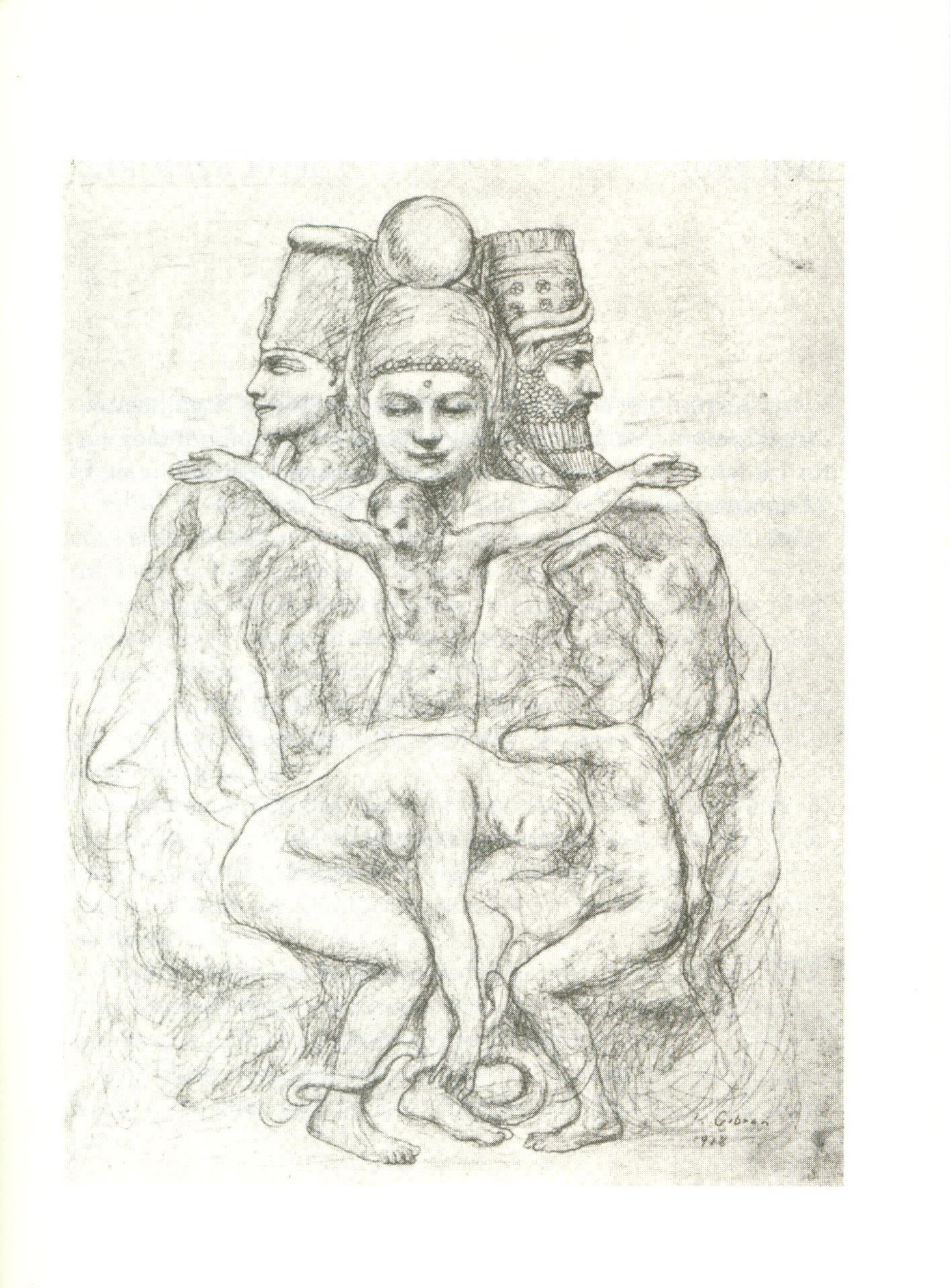
Kahlil Gibran

Kahlil Gibran wrote of Lebanon  – ‘Pity the nation divided into fragments, each fragment deeming itself a nation’.

(Garden of the Prophet 1934)  (see my post: Lebanon – Pity The nation)

Nothing has changed, it seems. Lebanon is being fought over by Sunnis, Shia,  and Hezbollah.  Some Christian groups are aligned to Hezbollah.   Saudi Arabia jointly with Syria is involved in trying to find a ‘peaceful’ solution.   Iran is “vitally supporting Hezbollah”.   One has to question these three countries’ motives.  Druze is  another group putting in its two cents’ worth.   The Druze carried out massacres of Christian Maronites because of their increasing power, during the times my grandparents lived in Bcharre.  Even Turkey still appears to have a stake in Lebanon.

Jim Muir BBC News, Beirut:

Tensions are rising sharply in Lebanon, amid indications that the international Special Tribunal set up to prosecute the killers of former Prime Minister Rafik Hariri may soon issue indictments of members of the militant Shia movement Hezbollah in connection with the case.

Despite the dense dust-clouds already stirred in Lebanon by the tribunal and reactions to it, there are fears that the indictments, if and when they come, could still cause real trouble.  “Nobody knows what is going to happen, but the Shia in general, and Hezbollah in particular, can’t risk being accused, and it is bound to cause tension with the Sunnis,” said the Druze leader, Walid Jumblatt, who recently detached himself from alliance with [current Prime Minister],  Saad Hariri, improved relations with Hezbollah and is trying to stay neutral. “If Hezbollah is indicted, that will affect its image in the Muslim world as the heroic resistance against Israel,” he told the BBC. Mr Jumblatt accused the US and other Western powers of cynically using the tribunal to put pressure on Syria, Iran and others, and of trying to head off a compromise understanding among the Lebanese leaders.

“Whoever technically killed Rafik Hariri, those really responsible were [French President Jacques] Chirac and [US President George [W] Bush, who forced him to accept 1559,” he said, referring to the UN resolution passed in late 2004, just a few months before Mr Hariri’s murder. “It had three clauses in it which amounted to death sentences – the demand for Syrian troops to leave Lebanon, and for Hezbollah and the Palestinians to be disarmed,” Mr Jumblatt said.  “More important than finding out who killed Hariri, the most important thing now is to get out of this vicious circle which brings more tension every day, how to break this crisis between Sunnis and Shia.”

While the Saudis and Syrians are looked to as the most influential outside powers potentially able to foster an understanding and prevent the Lebanese factions taking to the streets again, others are also in a position to try to help. The Turkish Prime Minister, Recep Tayyip Erdogan, who had a hand in the Saudi-Syrian rapprochement, is currently on a two-day visit to Lebanon. And on Saturday, Prime Minister Hariri visits Tehran, his first such trip to the country that helped establish and still vitally supports Hezbollah.

Tensions have been steadily mounting over recent months as the expected indictments grew imminent, but the situation has been contained by an entente between Saudi Arabia and Syria, who exercise great influence respectively among Lebanon’s Sunnis and Shia.  The Iranian ambassador in Beirut has also been co-ordinating with his Saudi and Syrian counterparts to help keep the peace.

[Trying to keep the peace?  I would love to be a fly on the wall at these meetings].

Lebanese politicians had been hoping that Saudi-Syrian mediation at top level would very soon produce a formula that could be agreed on by the cabinet in Beirut to deal with the repercussions of the expected indictments.  But now there are fears that the Saudi role may fall victim to developments inside the kingdom. The monarch, King Abdullah bin Abdul Aziz, was flown to the US on Tuesday for medical treatment. He was personally overseeing his country’s rapprochement with Damascus and their joint sponsorship of peace efforts in Lebanon. The king has temporarily assigned his powers to his half-brother, Crown Prince Sultan, who is himself ailing.

Lebanese politicians believe that Prince Sultan and other prominent members of his Sudeiri wing of the ruling family are much less keen on cultivating good relations with Syria.  CBC said its months-long investigation was based on interviews with sources inside the UN inquiry and on documents leaked from the tribunal.

It said that evidence gathered by the Lebanese police and the UN “points overwhelmingly to the fact that the assassins were from Hezbollah”. To back that allegation, it contained detailed diagrams showing how investigators traced interlinking networks of mobile phones which they believed led from the vicinity of the massive explosion which killed Rafik Hariri and 22 others, ultimately to Hezbollah’s communications centre under a hospital in Beirut’s southern suburbs.

The CBC film had a bombshell effect in Lebanon, where it dominated news bulletins and front pages. It also prompted comments from key players, including Prime Minister Hariri and the international tribunal prosecutor.Israeli Prime Minister Benjamin Netanyahu even held a meeting of his inner cabinet to discuss the possibility that Hezbollah might stage a coup in Lebanon should some of its adherents be indicted.

On Tuesday, shortly after the CBC documentary was aired, the Lebanese communications minister Sherbel Nahhas (a Christian allied to Hezbollah) gave a three-hour news conference at which he and other officials and experts showed detailed technical evidence which they said indicated Israel had complete penetration of Lebanese communications, to the extent of being able to plant parasite lines within existing lines.

><

Lebanon's Minister of Telecommunications Sherbel Nahhas (l)
The country’s telecommunications minister said Israel had penetrated Lebanese telephone lines.
><

Hassan Fadlallah, a Hezbollah MP who heads parliament’s communications committee, said three Hezbollah operatives had been detained as suspected Israeli spies until it was realised their mobile phones had been infiltrated. All of this may make it easier for Hezbollah to shrug off possible indictments as Israeli-manipulated falsehoods.

The allegation that Col Wissam al-Hassan fell under suspicion has further muddied the waters. As Rafik Hariri’s chief of protocol, Col Hassan would normally have been in the convoy that was hit by the blast that killed Mr Hariri and his entourage. But he had taken the day off to sit a university exam – an alibi that CBC’s sources said was doubtful, and did not stand up under scrutiny.  But Saad Hariri, questioned by journalists about the allegations, said he had always had full confidence in Col Hassan, and still did.

One of the prime minister’s senior aides went as far as to suggest that both Hezbollah and Col Hassan should sue CBC for libel. Another prominent Hariri supporter, MP Iqab Saqr, said the CBC report should be ignored because it contained “poisoned information, aimed at disturbing the desired settlement”. He said everybody was concerned “not to target Hezbollah politically, while Hezbollah should stop the political assassination of Lebanese”.

With both sides apparently impugning the integrity of the court – or at least the CBC leaks – it almost looked as though there were some common ground between them.

The tribunal itself – or its prosecutor, Canadian judge Daniel Bellemare – took the unusual step of responding to the CBC documentary, saying he was “extremely disappointed” by it and was assessing its impact on the investigation. This was widely seen in Beirut as implicit confirmation that the CBC had indeed sourced its report on genuine tribunal documents and information.

The decision on whether and when to issue draft indictments lies in the hands of prosecutor Bellemare, and it is not clear whether the first step – referring them to the pre-trial judge for confirmation – would be made public.

What a mess!  All I can say is POOR LEBANON, what will become of you. Kahlil Gibran must be turning in his grave.


There is a debate currently going on in Australia about giving school students the choice between taking either classes in Ethics,  or in Religious Studies.  Apparently the respective Christian Churches are not at all happy about this development.  Well, they wouldn’t be would they? They believe they are losing their grip over young minds.

Ethics clarified

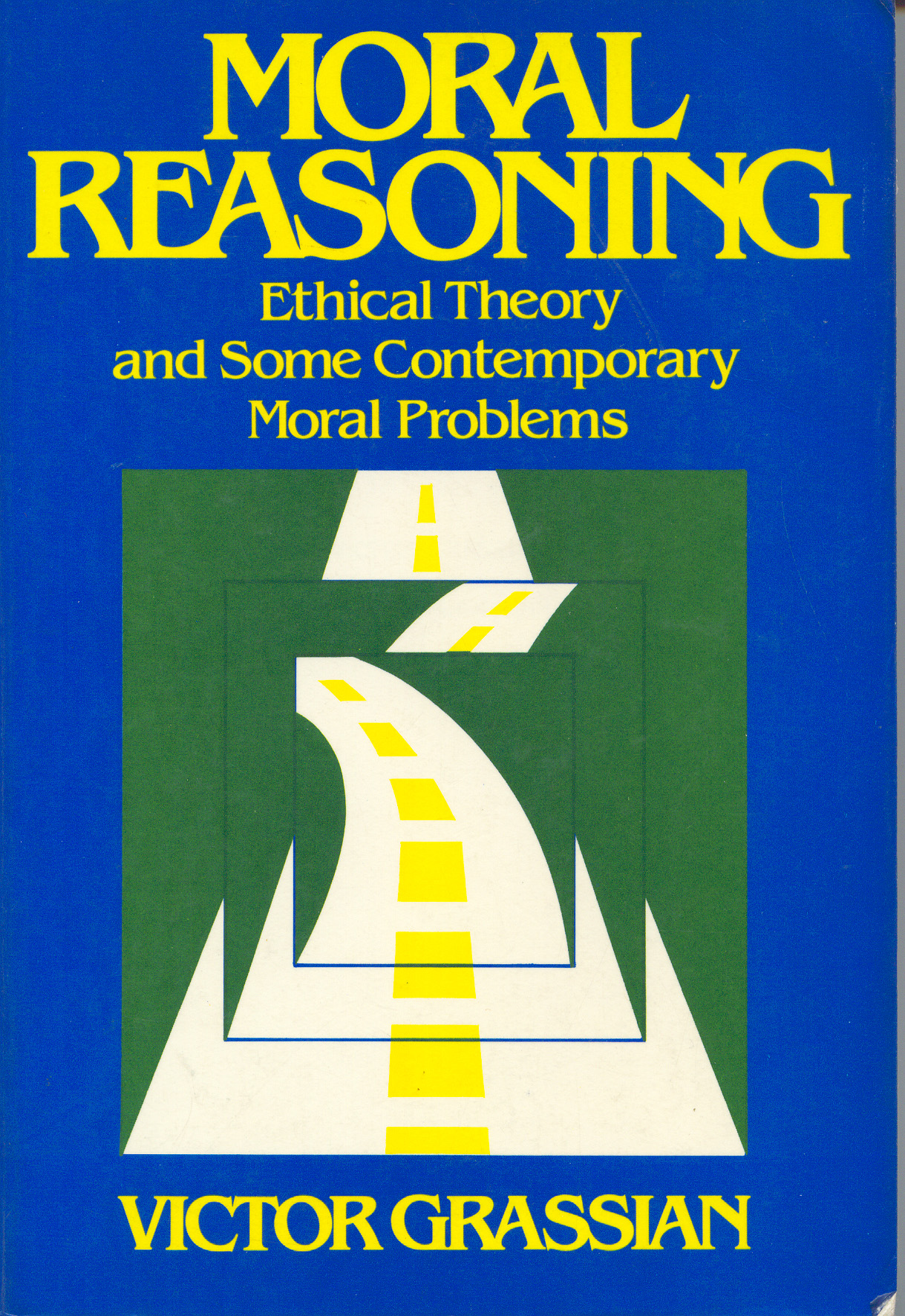
In his book  ‘Moral Reasoning; Ethical Theory And Some Contemporary Moral Problems’ Victor Grassian defines ethics as:

‘Ethics may be defined as the philosophical study of morality-that is, of right conduct, moral obligation, moral character, moral responsibility, moral justice, and the nature of the good life. The philosophical study of morality should be distinguished from the descriptive or scientific study of the same subject matter’.

Mr Grassian goes on to say… ‘Although a study of  ethics will not in itself make one into a good person, it can certainly provide us with more than the knowledge of abstract philosophical theories and terminologies that seem incapable  of aiding us in the solution of our own practical moral problems.  A study of ethics can serve to help us better understand and classify our own moral principles; most of all, it can help refine, develop, and sometimes change these principles’.

In other words it can help us to question and to think for ourselves.  I particularly identify with the following paragraph as I am sure a lot of my readers will do especially those who were indoctrinated with  Catholic dogma  from infancy:

‘The study of ethics can lead one from the blind and irrational acceptance of moral dogmas gleaned from parental and cultural influences, which were never subjected to logical scrutiny, into a development of a critical reflective morality of one’s own’.

Childhood ethics


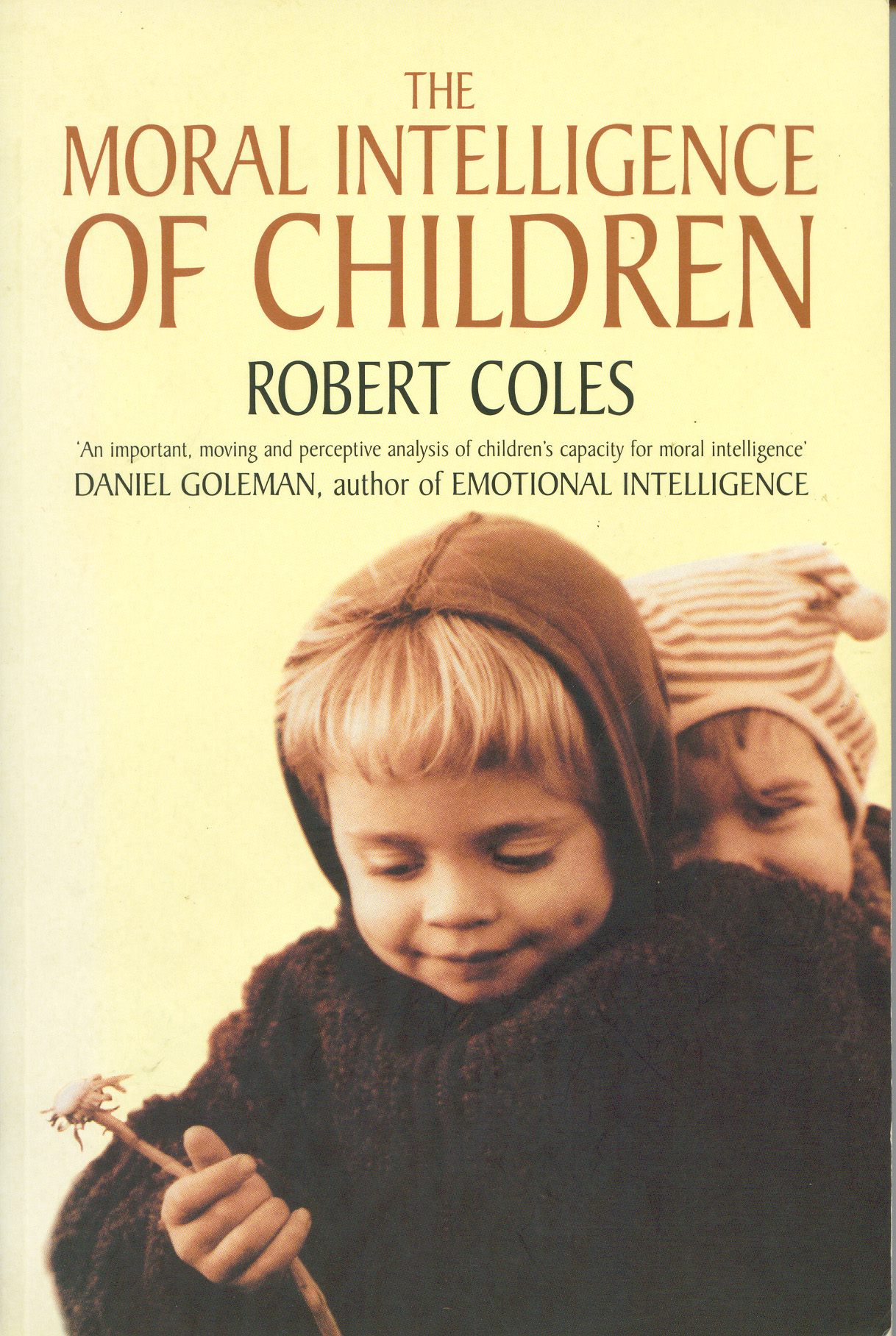
Robert Coles, who was a professor of psychiatry and medical humanities at Harvard Medical School,  also draws on his experience as a teacher and child psychiatrist in his book:

‘The Moral Intelligence of Children’. He writes about the confusion children feel when they are  caught between two parents who have different religious beliefs; who constantly clash over opinions  and values but who never-the-less expect their children to follow in their religious path unquestioningly.  Simply stated,  Mr Coles found in his research that children are morally intelligent and it is therefore beneficial to them to be raised in a home where they are encouraged to question and to think for themselves.  Parents who only see  issues in black and white can have a detrimental effect on their children’s outlook on life.  The problem begins when the child is expected to ‘learn by example’ from the adults in their family but has intelligently worked out for themselves that something is not right.  The atmosphere in the household is one in which the child is not permitted to question any ‘laws’ laid down by their parents and this includes religious beliefs.  At the same time the child is being bombarded by media images and peer group pressure.   Perhaps the high rates of depression in our young people is understandable when there is so much conflict in their world view.

Erik H Erikson, a child psychiatrist who knew only too well the psychological trauma caused by  strict and rigid upbringing in a religious household comments in ‘Moral Intelligence’:

It is a long haul, bringing up our children to be good; you have to keep doing that, bring them up, and that means bringing things up with them: asking; telling; sounding them out; sounding off yourself; teaching them how to go beyond why?……’

Lets hope then, that all schools will eventually allow students to choose Ethics over Religion in schools.  We might then see some changes taking place in the behaviour of young people and their readiness to take responsibility for their own actions.    <><><>

-Anne Frandi-Coory 20 October 2010

><><><

Also here on Anne Frandi-Coory’s Facebook page  

https://www.facebook.com/myhomelibrary/

See previous posts:  God in the Classroom?

&          Access Ministries Want Access to Childrens’ Minds

Updated 15 April 2015

Why is Mental Illness always at the bottom of the Public Health funding list when we all know that mental and physical health are intertwined!?

Mental health expert Patrick McGorry has just been voted Australian of the Year.  It is so good to see such a prevalent disorder as mental illness in the news and highlighted.  Mr McGorry  is also concerned with the plight of refugees, including women and children,  held for years in detention centres or ‘Asylums’.  It has been well documented how detrimental an effect long periods of  institutionalisation has on a person’s  mental health.

Xenophobia is alive and well but not just in Australia.  Western countries as well as developing countries are suspicious of, and fear those from different ethnic groups.  Throw in religion and it becomes a volatile mix which is evident in  the bloodshed in many countries around the world at the present time.

‘Unfortunate Folk; Essays on Mental Health Treatment 1863-1992’ is an  Otago University publication  researched and edited by postgraduate history students at University of Otago between 1972 and 2000.  Attitudes to mental illness in Australasia haven’t really changed that much I don’t think; political correctness has intervened and made the way we speak about mentally ill patients a little less hostile, that’s all.

My mother had a severe bi-polar disorder and spent many years in and out of a mental hospital where she often received Electro-Convulsive Therapy (ECT) in the 1950s and 1960s which eventually left her in a state of permanent mental lethargy.  Apparently it was important to keep her emotions tightly controlled in order to level out her mood swings, but in the process killed off all her creativity.  The right drugs were not available then.  My mother’s traumatic childhood and adolescence probably brought on the disorder and I am sure her stint in a Catholic convent trying unsuccessfully to outrun life in the natural world and become a nun,  added to the intensity of her affliction.  As I write in my book, Whatever Happened to Ishtar?’ mental illness and its attendant prejudices has had a lasting effect on subsequent generations of her family. The fact that she was Italian certainly played its part in other people’s perception of her displays of emotion.

ECT was introduced into mental hospitals in 1943 in Australasia and considerable experimentation with this method of treatment, and new drugs, was carried out on patients.  ECT  was first used without anaesthetic on patients who were suffering from “over excitability” and depression, both of which my mother “suffered” from.

A personal account from a medical student shown around Seacliff Mental Asylum in NZ in 1943:

“A consultant…brought them onto the stage and asked them about things and showed off how tragic they were, but I mean, it was a show and I think they were used to showing off as they were expected to. That was part of it, but the really awful thing was when we went around the wards.  One particular one that I remember…there was this great big ward and there were a whole lot of what looked like old and bedraggled women with white hair all over everywhere and they were all dressed the same, in white hospital things like you put on when you go for a  x-ray and they all came crowding round the trolley, clattering their spoons and tin plates and it was just like feeding the animals, it was absolutely horrendous.  That would have been around 1943 …it was just at the very earliest stages of shock treatment …it was certainly the first time of using unmodified ECT, and no anaesthetic, it was horrific”.

These places were worse than the prisons in which  criminals were incarcerated.  The sad thing is that many people still believe that the mentally ill should be locked away somewhere out of sight and out of mind.

Unfortunate  Folk;                          The Mentally Ill

The above book quotes many interesting statistics:  In 1874,  of in-patients in mental institutions in Otago NZ there were twice as many men as women (mostly gold miners) and the majority of the women were married.  “Most religious denominations were represented but the three major groups were Presbyterian, Anglican and Catholic. The numbers of Presbyterian and Anglican patients roughly mirrored their ratios to the general Otago population”…  “However, there were nearly twice as many Catholic patients as there should have been”… “The Irish, who made up the majority of Catholics,were over-represented to the same degree”.

The married women often had their children incarcerated with them in the mental institution.

In 1903, New Zealand’s then Prime Minister, Richard Seddon reported his genuine concern:

“To see the children in the asylum was heartbreaking.  Children of tender years were to be found with the adults, and, in some cases sitting on the floor. In any of the asylums they would find little boys and girls hopelessly and helplessly insane, and to keep them here with such surroundings as they had was not, to his mind, the right thing to do”.

The next significant group incarcerated in mental institutions were Chinese gold miners and they aroused strongly racist sentiment among some of the authorities.   The following is an inspector’s report which defies belief that it could be written by a government Health Official inspecting the institutions:

“There are seven Chinese lunatic patients in the Asylum [it is interesting that the term asylum is still being used in relation to refugees today] and considering the racial antipathy of the European to the leprous Mongolian, I am of the opinion that it is injurious to the European Lunatic being brought into daily contact with the Chinese, and that an additional ward and airing court should be provided for the latter without delay”


The last paragraph in the book is a summary regarding the boundaries between “madness and reason”:

“Patients, families, the public, politicians, and health professionals all upheld the boundaries between madness and reason. Progress in the decade under question was slow and fragmentary, although the seeds for more radical change were soon being laid. From the later 1950s, de-institutionalisation became the focus of mental health policy, and has remained in controversial favour ever since. Large and isolated mental hospitals became a thing of the past. But although this achieved some alteration in the social status of the mentally ill it has not completely destroyed the boundary between madness and reason. The legacy of madness as a separate world remains. In essence, the psychiatrist is still an ‘alienist’ treating those designated as ‘foreigners’ by their families, the public, and the medical profession”. Mr McGorry  might add here, “and the Australian Government’s  health system”.

-Anne Frandi-Coory  15 April 2015 

Charming book by author of ‘Romulus, My Father’, Raimond Gaita

Raimond Gaita tells illuminating stories about his dog and other animals he has known and loved, and the respect they earned from him.  He asks if we give animals and birds the credit they deserve and whether they are more like us than we think.  Can they think and love, and what of philosophy? He quotes Kato Indian creation story:  ‘ God went forth to create the world, and he took his dog with him’.

Catholic Nuns and priests taught us that we humans were made ‘special’  in the eyes of God and that animals were put on this earth to serve us.  Many of us  grew up with this Christian belief and the world has suffered for it; multiple extinctions, loss of habitats.  As someone said to me “animals and insects can live without us but we cannot live without them”.  Now, we understand ecology, the importance of balance in nature and bio-diversity.  I hope it is not too late.  The only saint I ever heard about who respected and loved animals was the hermit St Francis of Assisi, but I always felt as a child, that he was considered  a little bit strange compared to other saints.  Perhaps he knew more than those humans who lived  around him.

I have seen many instances overseas, where beasts of burden such as donkeys are treated with cruelty and virtually starved even though they are expected to work long hours.   People still believe that animals, if not here to serve us,  then they are here for us to eat, nothing more.  The conditions in which animals in some countries are slaughtered,  for human consumption, are heartbreaking. I cannot imagine how many millions of animals have been massacred in the name of sport; from the Romans and their blood sports in the coliseum to the safaris in Africa where men could prove their maleness and bravery by shooting elephants and lions, to name a few.

In  my book, Whatever Happened to Ishtar? I write about the time my father drowned two white mice in front of me.  I had brought them home from school, excited about my new pets. Without saying a word, he grabbed them from me, one in each hand and held them under a tubful of water, with me clinging to his arm and screaming as  I watched the little pink feet thrashing about.   My Lebanese extended family thought nothing of poisoning animals and I have my suspicions that my uncle killed my pet pigeon.   It wasn’t until I got married and had four children of my own, and we all lived with a menagerie of animals for many years,  with their birthing, sicknesses, and dying, that I learned to love and respect them.  We learned so much about life from our pets. Sometimes, I believe they are much smarter than humans and that they will probably be living on this earth long after humanity has extinguished itself.  I guess it is all about education and perspective;  thank goodness we have  TV,  the internet and science.  There is no excuse now.

Raimond Gaita has a forward in his book written by Cora Diamond:

“The difference between human beings and animals is not to be discovered by studies of Washoe or the activities of dolphins. It is not the sort of study or theology or evolutionary theory that is going to tell us the difference between us and animals; the difference is as I have suggested, a central concept for human life and is  more an  object of contemplation than observation (though that might be misunderstood; I am not suggesting it is a matter of intuition). One source of confusion here is that we fail to distinguish between ‘the difference between animals and people’ and ‘the differences between animals and people’;  the same sort of confusion occurs in discussions of the relationship of men and women. In both cases people appeal to scientific evidence to show that ‘the difference’ is not as deep as we think; but all that such evidence can show, or show directly, is that the differences are less sharp than we think. In the case of the difference between animals and people, it is clear that we form the idea of this difference, create the concept of the difference, knowing perfectly well the overwhelmingly obvious similarities”.

I feel vindicated in writing about the generational sexual abuse in Catholic Lebanese and Italian families which I uncovered during the research for my book ‘Whatever Happened to Ishtar?’ . If  paedophile priests were sexually abusing children why would we be surprised when we find fathers and uncles doing the same thing?  At last the abused can speak out about what has been covered up by the Catholic Church, not for decades, but for centuries!

The woman’s testimony below reminds me how complicit nuns were, if not in the sexual abuse, then certainly in the physical and emotional abuse, of children in Catholic orphanages and schools.    My brother wrote a story in his early teens (Hypocrisy of the Catholic Church; my brother’s story) about the time he and our mother were starving,  yet they were  turned away by a fat priest who was on his way to his roast dinner which the pair could smell wafting from the kitchen of the presbytery.

><

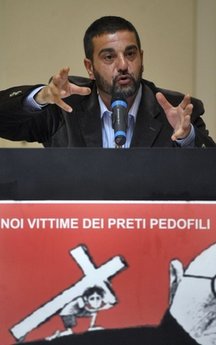
 Italian victim & former priest,  Domolo speaks out. Caption above: “We are victims of paedophile priests”

><

The Vatican, under global pressure,  has just raised the statute of limitations for reporting sexual abuse, to twenty years from the time the victim turns eighteen.  However, most human rights activists agree there should be no statute of  limitation as occurs in most western countries.

Excerpts from Associated Press:

VERONA, Italy – Italian victims of a paedophiliac clergy want such sexual abuse declared a crime against humanity, and they launched an international appeal on Saturday during the first public gathering of such victims in Italy.

Organizer Salvatore Domolo, a former victim and an ex-priest, said the group is looking abroad for solidarity because justice for pedophile victims is hard to come by in Italy with a statute of limitations of 10 years.

“Here there is no hope. By the time a victim arrives at the awareness of having been a victim, legal intervention is not possible,”  Domolo said in a country that has long been reluctant to confront the Vatican in its own backyard.

“The complicity of the hierarchy, together with the enormity of the numbers and vast geography of these crimes, should lead us to consider that we are facing a crime against humanity carried out by a political-religious organization,” Domolo told a news conference before the victims met, his delivery bearing the cadence of a homily.  “With this gathering, we want to ask civilian justice to do its duty in full freedom and truth, without being intimidated by the clerical culture.”

The meeting was held opposite Verona’s heavily visited Roman colosseum and advertised with placards outside. Passers-by were free to enter, but few did.

Another will be held in Rome at the end of October, but Verona was chosen for the first gathering because it is the home of a school for the deaf where 67 former students have alleged suffering sexual abuse, paedophilia and corporal punishment from the 1950s to early 1980s.  About 40 former victims inquired by e-mail — but many are still reluctant to come forward, organizers said.

The Vatican has been reeling for months as thousands of victims around the globe have spoken out about priests who molested children, bishops who covered up for them and Vatican officials who turned a blind eye to the problem for decades. In the latest admission, hundreds of victims came forward in Belgium with tales of horrific abuse linked to at least 13 suicides.

While Italian bishops have acknowledged 100 sexual abuse cases that warranted church intervention in the last decade, victims believe the true number in Italy is much higher because the reluctance to speak out in Italy is especially strong.  “This gathering is fundamental because we live in a social situation in which the presence of the Catholic church reduces the possibility of talking about the situation,” Domolo said. “They do it all over the world, but in Italy even more. That we are just now having the first gathering of victims indicates that only in the recent months is something exploding in Italy.”

Domolo, now 45, said he had been a victim of his parish priest from age 8 to 12, and that he was forced to confess “as if I had sinned.   The church has known for 50 years this has been going on but kept it quiet in a disgusting way,” he said.

Domolo was a priest for 15 years. He renounced both the priesthood and his Roman Catholic faith after meeting another victim on a trip to Ireland in 2001. A man named Francesco from Padova, who did not give his surname, told the group he had been abused both by priests and nuns who used punishment as an excuse to touch him inappropriately. “The worst was my family. They refused to believe it was true,” he told the group, adding he has only been able to come to grips with it through therapy.

A 58-year-old deaf woman, who only gave the nickname given to her by the nuns of Verona’s Antonio Provolo Institute for the Deaf, carefully annunciated her words as she told her story. During her 15 years at the institute, she was only alone with priests once a week for confession. Recalling her first confession, she said she asked the nuns what to say, and they asked her what she had done. “I told them I scratched myself everywhere because I had too much wool clothing. The nuns said, ‘Tell them you touched yourself.”‘

At that, she said, the priest asked her to lift her clothing to show him where. And so it continued, she said, “little by little, week after week. We girls didn’t do anything, and we had to confess. The priests, who sinned, did they ever confess, I ask?”

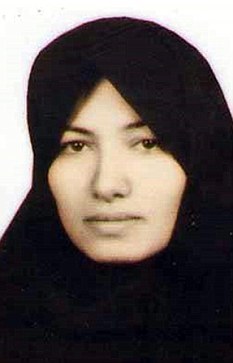
Sakineh Ashtiani

Update: Sakineh Ashtiani’s  death sentence was commuted and she was freed in 2014 after nine years on death row.

*******************************


Carla Bruni has been branded a ‘prostitute and adulteress’, (both biblical terms to be sure), by the Iranian Hierarchy.  They  also pronounced that Ms Bruni “Deserves to Die!”  This is because Ms Bruni, President Sarkozy’s wife,  had the temerity to suggest that the Iranian woman,  Sakineh Ashtiani,  shouldn’t be stoned to death because, in Carla Bruni’s words:

‘Spill your blood, deprive your children of their mother? Why? ‘Because you have lived, because you have loved, because you are a woman, an Iranian? Every part of me refuses to accept this.’

Because there is global condemnation of the sentence of stoning to death, Sakineh is daily subjected to torture; refused visits by her family, daily paraded out to a gallows, since Sharia Law has decreed that she will be hung instead, and lashed.  Still, The Law procrastinates, but only because  it is under the global spotlight.  Sakineh’s children must bear their mother’s pain and her humiliation.

Why don’t these patriarchal, Islamic countries  move into the 21st Century?  But it is not only Islam that lives in the dark ages.   Catholicism does too, only it calls its equivalent to Sharia Law, ‘Office of the Inquisition’, which still exists today albeit under another name.

In my book ‘Whatever Happened to Ishtar?’ I explore the reasons why members of my father’s Catholic Lebanese family called my mother ‘sharmuta’ (prostitute) constantly when I was a child.  It didn’t seem to matter to them that particular men in that same family fathered her children.  I used to wonder as a teenager how a woman could be good enough to have sex with,  yet not good enough to be treated with respect.  My mother was never a prostitute, but those men,  being from the Middle East, were used to blaming women for all their ills; they brought the culture with them to Australasia.

I despair for the daughters of those women in Islamic countries whose mothers are branded with such degrading labels.  As females, they have no power, not over their lives, not over their own bodies.  But their men are free to murder, rape, torture and humiliate with impunity, so long as the victim is female.

Irshad Manji summarises  the “case” against Sakineh:

Stoning cases themselves tend to be built on a pile of indignities. Consider the allegation against Ms. Ashtiani: adultery. The charge is manifestly trumped up and the investigation has been stacked from the get-go — so much so that a loophole had to be invoked to convict her. That loophole lets judges claim special “knowledge” for which there’s no evidence. How convenient.

In May 2006, a criminal court in East Azerbaijan province found Ashtiani guilty of having had an “illicit relationship” with two men following the death of her husband. But that September, during the trial of a man accused of murdering her husband, another court reopened an adultery case based on events that allegedly took place before her husband died, the BBC reported. …Mohammed Mostafaei, an Iranian lawyer who volunteered to represent Ashtiani when her sentence was announced a few months ago, called the planned stoning “an absolutely illegal sentence.”

“Two of five judges who investigated Sakineh’s case in Tabriz prison concluded that there’s no forensic evidence of adultery,” Mostafaei told the Guardian. “According to the law, death sentence and especially stoning needs explicit evidences and witnesses while in her case, surprisingly, the judge’s knowledge was considered as enough,” he said.