
‘A God Strolling in the Cool of the Evening ‘ by Mario De Carvalho. A Book Review
Winner of THE PEGASUS PRIZE FOR LITERATURE …
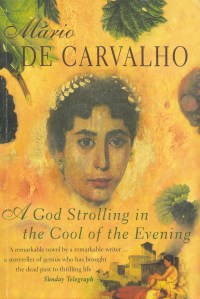
Mario De Carvalho’s book A God Strolling in the Cool of the Evening is well researched which is apparent when he takes the reader back to Rome around the time of Jesus. The narrator is a Roman provincial official with whom we travel on his rounds of duties in the township where he lives, in amongst slaves and the rest of the populace.
We learn how Roman officials spent their days and how they treated their women and their slaves. He describes in detail his living quarters and official buildings and how governing decisions of the time were reached. The book is set in the era of Jesus’ preaching and that of his ragtag bands of followers. Rome was then suspicious of their motives, before the time when Rome would eventually embrace this new religion as the state’s own. Added to that, many felt threatened and alarmed by the way these ‘new sect’ devotees dressed and behaved. It just wasn’t the Roman way. Persecutions and killings of Jesus’ followers was rife but in spite of this, the bands grew in number and they willingly became martyrs for their new beliefs; they felt close to Jesus spiritually, copied his acts of compassion for the poor. His God seemed a more humane one than the various Roman gods.
Rome and her officials were sinking into corruption and the poor suffered greatly at their hands. For a Roman official to speak out for a pleb or a slave, was not self-serving; demotion or exile from one’s town, often both, would be the outcome.
This is a novel which offers a colourful insight into the beginnings of Christianity and the twilight years of the Roman Empire; although the second edition was published in 1999 it is still relevant, and a great read, today. The Roman Catholic Church grew from these humble and dark beginnings into the massive and wealthy ’empire’ it is today.
The Daily Telegraph described Carvalho as: ‘…a storyteller of genius who has brought the dead past to thrilling life.’ That he has.
-Anne Frandi-Coory. 22 January 2020
 anne frandi-coory
This looks like an interesting book Anne. Roman times is one of my favourite periods. How are you Anne, I have read all the news about the fires in your country and have been thinking about you and your family. Are you still carrying on with your paintings. ? Take care and stay in touch Rita.
LikeLike
Hello Rita, so good to hear from you; I often think of you and John and wonder how things are on Crete. Happy 2020 to you both. I am re-reading this book, it’s so good. I think you’d love it. We are all well and my grandchildren are growing up so fast. They are such a joy to us. The closest bushfires are about 350 km from where we live, Rita, but still too close. We are all upset about the loss of life and homes, not to mention Australia’s wildlife and the loss of habitat. It’s devastating. Take care my dear friend. xxx
LikeLike
Hi Anne, I am not sure if I have your e mail address so that I can chat and bring you up to date with us.. A few health issues but also a couple of nice things happening. I will get back here if I do not have your e mail address. O.K.
Rita.
LikeLiked by 1 person
I will be in touch, Rita
LikeLike
Sounds like a good book.
LikeLiked by 1 person
It’s very interesting, Luciana, and well written …I think you’d enjoy reading it.
LikeLike